
- Home
- »
- Research
- »
-
Fertilizers Monthly Pricing Data & Analysis – August 2026
![Fertilizers Monthly Price Assessment – August 2026Report]()
Fertilizers Monthly Price Assessment – August 2026
Nitrogen Fertilizers (Ammonium Salts, Urea), Phosphate Fertilizers (Ammonium Phosphates), and Potash Fertilizers (Muriate of Potash, Nitrate of Potash, Sulphate of Potash)
Fertilizers Pricing Intelligence - Executive Summary
Fertilizer industry recorded flat or softer movement in China during August 2026, while international conditions remained more elevated. Urea prices softened owing to the steady domestic supply with ample of inventory. Ammonium salts including ammonium sulphate and ammonium nitrate also remained broadly stable. However, the constraints of Middle Eastern supply and its associated delivered cost continue to impact the broader sentiment among buyers, leading to a multi-dimensional sourcing strategy.
Phosphate and potash fertilizers also registered softer movements amid lower demand from major agricultural buyers. Ammonium Biphosphate (MAP) and Potassium Chloride (MOP) declined gradually, potassium nitrate recorded a sharper second-half correction, and potassium sulphate (SOP) eased modestly. Despite weaker finished-fertilizer prices, phosphate based fertilizers remained exposed to sulphur, freight, and regional supply-chain uncertainty. The ongoing conflict in the Middle East region is expected to continue its impact on the sulphur prices, thus ultimately adding volatility to the phosphate based fertilizers.
Regional conditions continued shaping procurement. India locked around 1.7 million tons of urea supply at discounted rates as China eased its domestic urea export restrictions. This move by China allowed abundance supply of urea in the international market, thereby allowing Indian buyers to lock urea volume at economical rates. European fertilizer sourcing remained pressured by input energy costs as the natural gas prices spiked in August 2026. Overall, August pricing reflected a mix of geopolitical understanding, stable yet low agriculture demand, and spiking energy costs.
Key Price Developments & Insights
-
Urea remained under downward pressure in China during August, with domestic supply-demand conditions remaining loose. This allowed government to ease its export restrictions, thereby pushing urea export volumes to cross 400 kilotons.
-
Ammonium salts showed steady movement. The prices strengthened during parts of the first half. However, prices recovered modestly towards the month end as producer availability, bidding activity, and export interest changed.
-
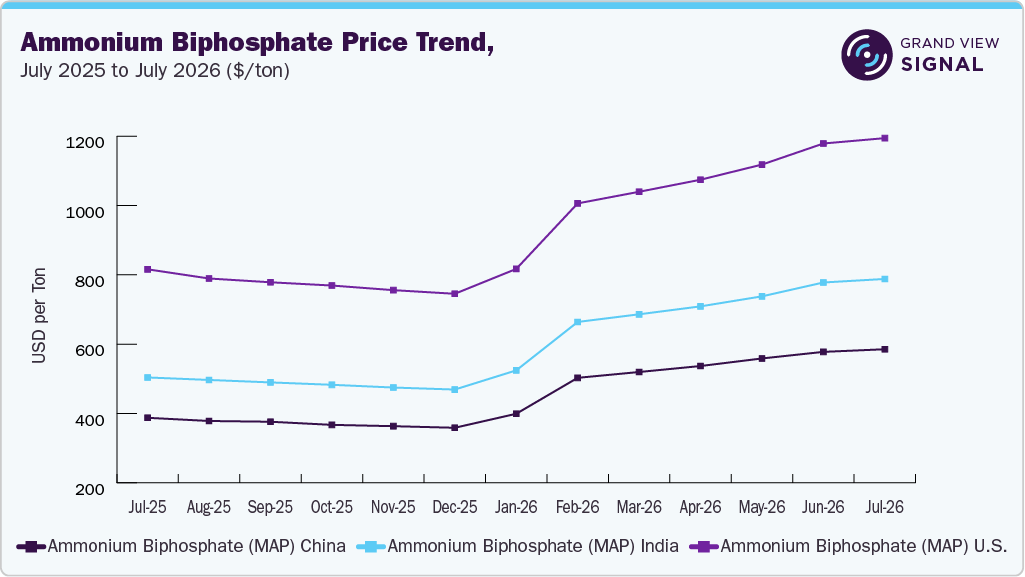
MAP weakened through August, indicating cautious domestic phosphate fertilizer procurement strategy. The continued exposure to sulphur and logistical challenges pushed procurers to ease and adopt wait & watch strategy.
-
MOP and SOP remained comparatively stable to soft, while potassium nitrate recorded a sharper second-half correction, reflecting generally adequate potash availability and selective specialty-fertilizer purchasing.
-
Regional procurement remained highly differentiated, with India securing substantial imported urea for future requirements while European buyers remained sensitive to high energy costs.
Top Performing Fertilizers Commodity
-
Top Mover: Ammonium Sulphate
-
Average MoM Growth (top 3 geographies): 2.6%
-
Volatility Level: Stable
Nitrogen Fertilizers – Pricing Trends, August 2026
Nitrogen fertilizers displayed the greatest divergence during August. China's urea market weakened through most of the month as domestic demand remained insufficient to absorb available supply. However, with ease of export activity limited further decline and allowed suppliers to load off their volumes in the international market. Ammonium salts followed a less consistent pattern in terms of price movement. The prices recovered during parts of early and mid-August before weakening and then stabilizing at the end of the month. International nitrogen conditions remained more volatile owing to the Middle Eastern logistics challenges coupled with spiking energy cost. Thereby, leaving buyers across different geographies to adopt strategies of multi-dimensional sourcing.
Phosphate Fertilizers – Pricing Trends, August 2026
MAP followed a gradual downward pattern during August. Chinese local prices softened during both the opening and latter parts of the month as buyers avoided aggressive inventory accumulation. The finished fertilizer decline contrasted with continued uncertainty around phosphate production inputs especially around sulphur cost. International phosphate availability also remained dependent on a relatively concentrated group of exporters. The trade flows and alternative sourcing proved of high importance even as China's domestic MAP market softened.
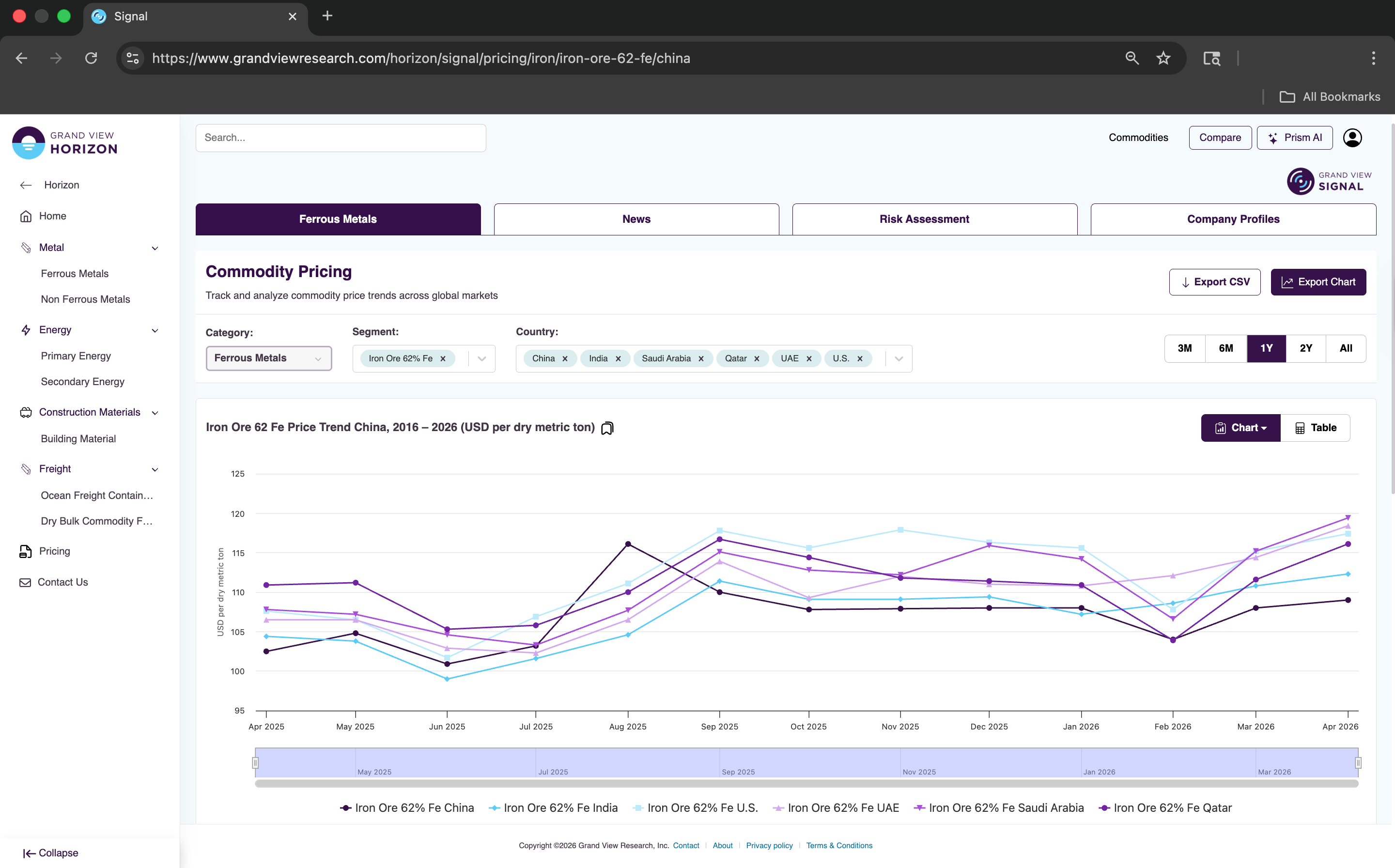
 Pricing Intelligence Platform
- Category & commodity wise real-time price trends and movements
- Latest and impact-making market drivers
- Geographic coverage across key countries
- Impact and Forecasting based on Geopolitical Scenarios.
Potash Fertilizers – Pricing Trends, August 2026
Potash fertilizers remained stable to weak during August. MOP moved gradually lower as available port supply reduced purchasing urgency, while SOP recorded only modest weakness. Potassium nitrate experienced a more visible correction during the second half of the month before stabilizing at a lower level. The segment therefore remained less volatile than nitrogen fertilizers. The purchasing patterns were driven mainly by application timing, existing inventories, and confirmed requirements from chloride sensitive crops.
Fertilizers Price Direction, By Geography And Fertilizers Group, September 2026
Geography
Nitrogen
Phosphate
Potash
China
2.5%
2.4%
0.2%
India
France
Germany
UK
Europe
U.S.
Saudi Arabia
UAE
Qatar
Egypt
Morocco
Fertilizers Pricing - Key Drivers
-
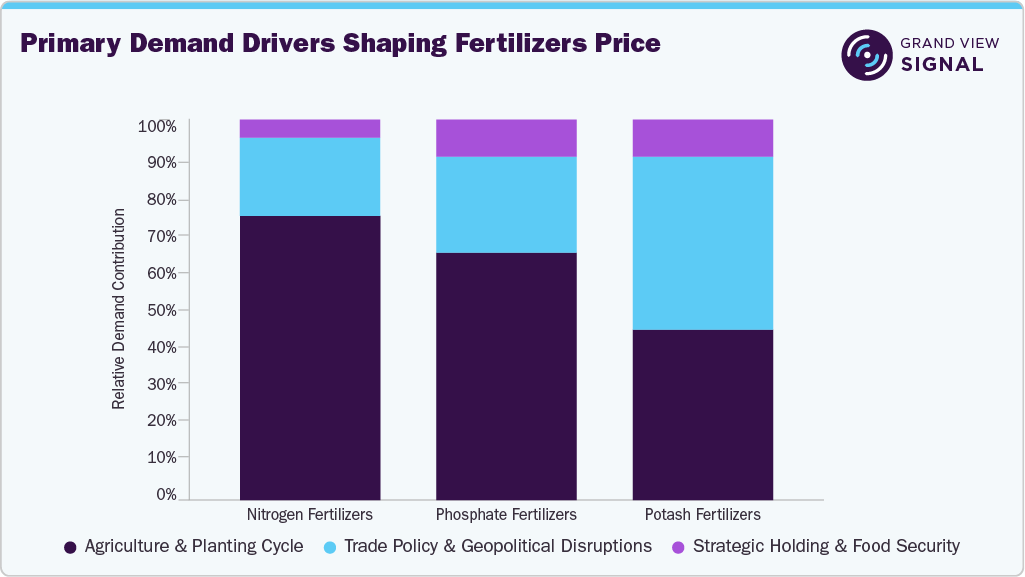
Chinese domestic supply-demand balance - China's domestic fertilizer market remained under pressure during August as available supply exceeded immediate purchasing patterns. Urea, MAP, and MOP all weakened during the opening and middle portions of the month. In urea, easing export activity provided structural support, however weak domestic demand restraint prices to gain sustained momentum. Buyers continued placing orders according to immediate requirements and avoided large inventories hoarding. The same purchasing discipline affected phosphate and potash fertilizers as well. China's softer domestic market therefore reflected an adequate available stock and controlled downstream procurement. This domestic softness also differed from conditions in several international markets where import dependence and logistics added to replacement costs.
-
India's large procurement moves and seasonal supply management - India remained one of the most important fertilizer demand centers during August. The latest fertilizer availability data released at the beginning of the month showed that urea availability remained above assessed Kharif requirements, supported by domestic production, imports, and centrally coordinated distribution. Comfortable supply reduced the likelihood of panic purchasing during the ongoing crop season. India also finalized a major international urea procurement during August for delivery ahead of the Rabi season. The tender attracted significantly more offered material than the quantity required and secured a large volume at considerably lower economical costs. This improved India's forward supply position while demonstrating how large import programmes continued to influence international urea trade and price discovery.
-
Middle Eastern logistics, natural gas, and sulphur costs - Middle Eastern supply conditions continued affecting fertilizer economics during August. The Strait of Hormuz remained severely disrupted compared with pre-conflict traffic, limiting the normal movement of energy, ammonia, urea, sulphur, and other fertilizer cargoes. Gulf exporters increasingly relied on alternative logistics and routing where available, but freight, insurance, and cargo timing risks remained elevated. The impact differed by fertilizer group. Nitrogen fertilizers remained sensitive to natural gas and ammonia availability, particularly in Europe and other import-dependent markets. Phosphate fertilizers were exposed to sulphur and ammonia costs. Sulphur export values remained elevated, while higher freight costs increased delivered prices into major consumer markets. Potash was less directly exposed to gas costs but remained affected by international freight and trade route conditions.
Get in-depth driver impact analysis on fertilizer prices.
Request Free Access
Access Grand View Signal.-
European production costs and fertilizer affordability - European fertilizer economics remained under pressure during August because nitrogen production continued to face high natural-gas costs. Middle East LNG disruption intensified competition from Asian buyers and kept European energy prices elevated. The spot fertilizer prices in some markets stabilized or eased during August but they remained substantially high as compared to the pre-conflict levels. Buyers balanced the need to secure nutrients for upcoming crop cycles against high input costs, weak margins, and weather-related uncertainty. France opened its exceptional nitrogen fertilizer support programme during August. In addition, exceptionally dry and hot conditions across parts of Europe reduced summer crop prospects and reinforced cautious input management. These conditions limited aggressive fertilizer restocking despite concerns over future supply and energy costs.
-
Phosphate supply diversification - Supply diversification remained increasingly important in phosphate and potash fertilizers. Morocco restored an important phosphate fertilizer trade flow to the U.S. during August following temporary tariff relief. Egypt also advanced projects intended to convert domestic phosphate ore into phosphoric acid and phosphate fertilizers, strengthening its prospect for longer-term downstream value chain integration. Saudi fertilizer producers separately expanded cooperation around integrated Agri-nutrients and value-added fertilizer opportunities during August. These developments were structural rather than immediate additions to August physical supply. These efforts demonstrate an increasing focus on integrated production, alternative sourcing, and regional fertilizer security.
Fertilizers Coverage
Nitrogen Fertilizers
The Nitrogen Fertilizers category covers urea and ammonium salts. Urea is a high-nitrogen fertilizer used across cereals, rice, maize, sugarcane and numerous other crops. Ammonium salts supply both nitrogen and sulphur and are used in agriculture as well as selected industrial applications.
Nitrogen Fertilizers Pricing - Key influencers
-
Natural-gas and ammonia availability
-
Domestic production, maintenance and operating rates
-
Export availability and major import tenders
-
Agricultural procurement and inventories
Get historical, current, and forecast nitrogen fertilizers price assessments.
Request Free Access
Access Grand View Signal.Phosphate Fertilizers
The phosphate fertilizers category covers ammonium biphosphate (MAP). MAP provides nitrogen and phosphorus and is used both for direct application and as an input in compound fertilizers.
Phosphate Fertilizers Pricing - Key influencers
-
Phosphate-rock and phosphoric-acid availability
-
Sulphur and ammonia costs
-
Export availability and international trade flows
-
Agricultural and compound-fertilizer demand
Get historical, current, and forecast phosphate fertilizers price assessments.
Request Free Access
Access Grand View Signal.Potash Fertilizers
The Potash Fertilizers category coversmuriate of potash (MOP), nitrate of potash, and sulphate of potash (SOP). MOP is the principal bulk potash fertilizer, while potassium nitrate and SOP are more widely used for horticulture, fertigation, and chloride-sensitive crops.
Potash Fertilizers Pricing - Key influencers
-
Port inventories and major producer availability
-
Crop economics and application timing
-
International freight and import costs
-
Specialty-crop and horticultural requirements
Get historical, current, and forecast potash fertilizers price assessments.
Request Free Access
Access Grand View Signal.Regional Commentary
China - China's fertilizer market remained generally soft during August. Urea, MAP and MOP weakened across the opening and middle parts of the month, while potassium nitrate also corrected more sharply later. Ammonium salts were comparatively less volatile, with temporary strength followed by renewed weakness and a modest late recovery. Adequate availability and controlled purchasing kept domestic conditions softer than those in several import-dependent markets.
India - India entered August with comfortable fertilizer availability for the Kharif season. The latest available data released during the month, covering supplies through 29 July, showed adequate availability of urea and other relatives to assessed requirements. During August, a large urea import tender was also finalized for future deliveries, strengthening supply coverage ahead of the Rabi season despite continued Middle Eastern logistics risk.
Europe - European fertilizer conditions remained shaped by high energy costs and farmer affordability. Natural gas markets remained exposed to restricted Middle East LNG flows and Norway pipeline maintenance. Thus, maintaining pressure on nitrogen-production economics. Persistent heat and water deficits also reduced summer-crop prospects across western and central Europe, reinforcing selective fertilizer purchasing as growers balanced future nutrient requirements against crop economics and high input costs.
France - France's exceptional support programme for purchases of simple mineral nitrogen fertilizers became operational at the start of August. The scheme was designed to offset part of the higher fertilizer costs created by Middle Eastern disruption and support purchasing for the next crop cycle. Its implementation reflected continued affordability pressure rather than a shortage of physical fertilizer.
Germany - Germany remained exposed to elevated European nitrogen-production costs during August. Energy-price inflation accelerated during the month, increasing the cost pressure facing gas-intensive industries. Farmers simultaneously remained focused on efficient nitrogen use and controlled input expenditure, limiting the potential for aggressive fertilizer restocking.
Get region-wise fertilizer price assessment.
Request Free Access
Access Grand View Signal.UK - UK fertilizer prices were comparatively stable to slightly softer during parts of August but remained well above pre-conflict levels. Nitrogen products continued reflecting higher international gas and import costs, while uncertainty around Gulf fertilizer and ammonia flows encouraged farmers to consider forward requirements carefully rather than relying solely on spot availability.
U.S. - U.S. fertilizer markets showed mixed movement during August. Retail urea and several nitrogen products softened from earlier elevated levels, while MAP and potash remained comparatively firm. Purchasing increasingly shifted toward preparation for fall applications, while greater access to Moroccan phosphate fertilizer improved supply diversity in the phosphate segment.
Saudi Arabia - Saudi Arabia remained strategically important to regional nitrogen and phosphate fertilizer supply. During August, leading domestic fertilizer producers agreed to evaluate further cooperation across the integrated Agri-nutrients value chain and value-added products. The initiative was a structural development rather than an immediate addition to August supply, while Gulf shipping disruption continued to influence export logistics.
UAE - The UAE remained important to both nitrogen-fertilizer and Sulphur trade during August. Gulf logistics continued to be affected by disruption around the Strait of Hormuz, while alternative routes and eastern UAE infrastructure gained importance. Sulphur export values remained elevated and higher freight and insurance costs increased delivery costs for phosphate-fertilizer producers in importing regions.
Egypt - Egypt maintained an important role in regional nitrogen-fertilizer supply during August as regular gas deliveries supported fertilizer-plant operations. Authorities also confirmed that the country's annual subsidized fertilizer allocation remained unchanged. Separately, Egypt advanced phosphate-processing projects, including a new phosphoric-acid complex and additional phosphate-fertilizer development, strengthening the longer-term domestic value chain.
Morocco - Morocco strengthened its role in international phosphate fertilizer trade during August. A Moroccan shipment arrived in the U.S. following temporary trade relief. Morocco's integrated phosphate rock, phosphoric-acid, and fertilizer infrastructure continued to provide an important alternative supply base in a market where phosphate trade remained concentrated.
Analyst Commentary
“Fertilizer markets remained highly differentiated during August 2026. China's domestic market was generally soft, with urea, MAP, and MOP weakening as adequate availability and controlled purchasing limited upward momentum. International nitrogen conditions were influenced more heavily by major import programmes, Middle East conflict, and natural-gas economics. India's large urea procurement strengthened its forward supply position while Europe continued facing high production and farm input costs. Phosphate markets remained sensitive to sulphur, ammonia, and trade availability even as Chinese MAP weakened. Regional investment and trade developments in Morocco, Egypt, and Saudi Arabia strengthened longer-term fertilizer supply diversification. Overall, fertilizer pricing during August was shaped by regional inventories, agricultural procurement discipline, energy costs, import programmes, and continued disruption across major fertilizer trade routes.”
Senior Fertilizers Analyst
Frequently Asked Questions
Ammonium sulphate emerged as the top-performing fertilizer commodity, outperforming its counterparts on the back of stable price momentum.
Europe, France and the UK are primary contributor to ammonium sulphate price performance.
Ammonium sulphate prices increased by more than 2% on a MoM basis in Europe, indicating energy driven cost pressure.
Ammonium sulphate prices in Europe are in volatile mode with last three month price observing 4.1% growth.
![Key questions answered by the report]()
-


Coverage
Data Depth
200
Commodities
Multiple
Geographies
6 Months
Forecast
10 Years
Historic Data
Get Free Newsletter
This free newsletter offers a hint of our pricing commodity coverage encompassing executive summary, drivers, and scope of research.
Get FREE NewsletterWe are committed towards customer satisfaction, and quality service.
"The quality of research they have done for us has been excellent."
