
- Home
- »
- Research
- »
-
Plastics Monthly Pricing Data & Analysis – August 2026
![Plastics Monthly Price Assessment – August 2026Report]()
Plastics Monthly Price Assessment – August 2026
Thermoplastics (HDPE, LLDPE, LDPE, PP, ABS, PS, PVC, PA66, PA6, and Polycarbonate), and Polyesters & Copolymers (EVA and PET)
Plastics Pricing Intelligence - Executive Summary
Plastics markets recorded diverse but generally stable conditions during August 2026, with the strongest improvement observed in specific thermoplastics. Polyolefins weakened briefly in early August before recovering during the middle and latter parts of the month. High density polyethylene (HDPE), linear low density polyethylene (LLDPE), low density polyethylene (LDPE), and polypropylene (PP) received support as Asian petrochemical availability tightened and higher crude oil, naphtha, and ethylene costs increased replacement cost pressure. Among styrenics group, acrylonitrile butadiene styrene (ABS) strengthened more visibly as higher styrene costs were transmitted into resin offers. Polystyrene (PS) followed a more moderate late-month recovery. Polyvinyl Chloride (PVC) improved temporarily around the middle of August but remained constrained by comfortable supply and uneven construction related demand.
Within polyamides group, PA6 (nylon 6) strengthened during the second half of August as higher benzene and caprolactam chain costs supported resin pricing. PA66 (nylon 66) weakened early before recovering part of the decline later in August. Polycarbonate followed a sustained upward pattern during the month. Despite stronger feedstock costs, demand remained selective because automotive, appliance, electrical, and industrial users continued managing inventories cautiously.
Polyesters and copolymers were comparatively more stable. Ethylene vinyl acetate (EVA) moved within a narrow range as maintenance and constrained availability provided support. Across the wider plastics market, August strength was therefore primarily driven by feedstock costs, production constraints, and logistics rather than a broad acceleration in end-user consumption.
Key Price Developments & Insights
-
HDPE, LLDPE and PP recovered after early-August weakness, with tighter Asian petrochemical supply and firmer ethylene and propylene costs providing support.
-
ABS recorded one of the clearer increases among commodity thermoplastics, as higher styrene and aromatic feedstock costs lifted replacement values even though consumption from appliances, electronics, and automotive applications remained uneven.
-
PVC remained comparatively subdued, recording only a temporary mid-month improvement as readily available supply and weak construction-linked demand restricted stronger momentum.
-
PA6 and polycarbonate strengthened during August, while PA66 remained more balanced, reflecting differences in feedstock exposure, available supply, and procurement from automotive, electrical, and industrial applications.
-
EVA remained narrow while PET recovered from early weakness, as EVA demand differed sharply between photovoltaic and general-purpose grades and PET markets became increasingly influenced by constrained MEG availability, logistics and operating-rate reductions.
Top Performing Plastics Commodity
-
Top Mover: Polystyrene (PS)
-
Average MoM Growth (top 3 geographies): 2.0%
-
Volatility Level: Stable
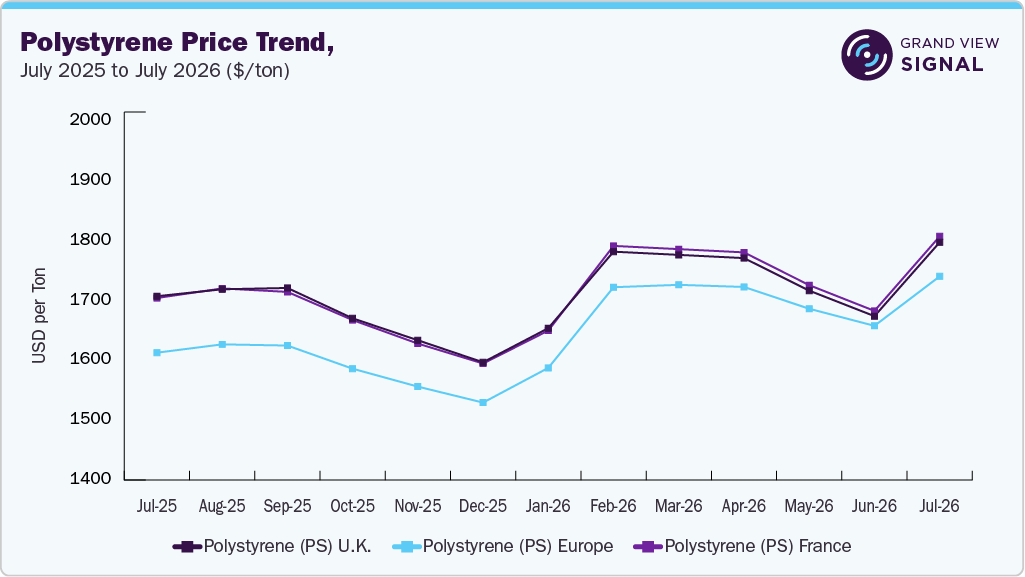
Thermoplastics – Pricing Trends, August 2026
Thermoplastics remained stable during August after a weaker opening. HDPE, LLDPE, and PP recovered progressively as the month developed. Buyers continued purchasing largely against immediate requirements. PS strengthened more substantially as styrene-related cost pressure increased. PVC recorded a brief mid-month rise before easing again, reflecting a market in which supply remained adequate and construction-related consumption offering weak demand.
PA6 strengthened notably during the second half of the month as higher aromatic and caprolactam chain costs increased production pressure. Polycarbonate also moved progressively higher amid rising input cost pressures. PA66 weakened during the early and middle parts of August before recovering later, leaving the market comparatively balanced. Automotive, electronics, electrical equipment, and industrial applications provided underlying consumption but buyers generally remained cautious because final demand differed considerably by geography and application.
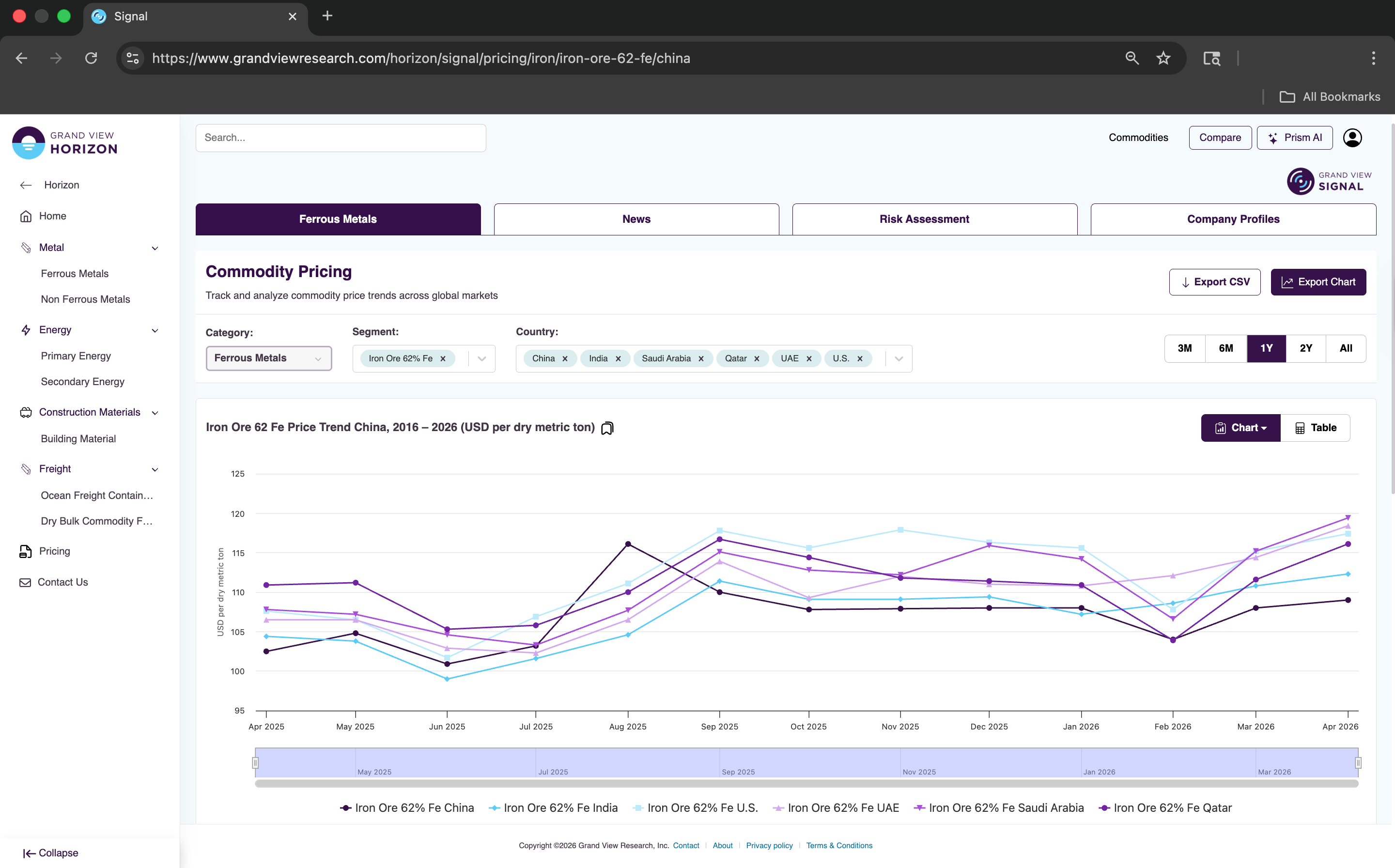
 Pricing Intelligence Platform
- Category & commodity wise real-time price trends and movements
- Latest and impact-making market drivers
- Geographic coverage across key countries
- Impact and Forecasting based on Geopolitical Scenarios.
Polyesters & Copolymers – Pricing Trends, August 2026
EVA remained comparatively stable during August, with early maintenance and low producer inventories supporting the market while weaker general-purpose demand limited upside. Photovoltaic and general-purpose grades continued to perform differently as producers adjusted product mixes. PET weakened at the beginning of the month before recovering during the middle and later stages as MEG availability tightened and some polyester-chain producers reduced operating rates. Packaging demand provided baseline support, but purchasing remained disciplined rather than speculative.
Plastics Price Direction, By Geography And Plastics Group, September 2026
Geography
Thermoplastics
Polyesters & Copolymers
China
0.8%
0.7%
India
France
Germany
UK
Europe
U.S.
Saudi Arabia
UAE
Qatar
Egypt
Morocco
Plastics Pricing - Key Drivers
-
Middle East disruption and elevated feedstock costs - Middle Eastern supply and shipping disruption remained one of the most important influences on plastics markets during August. Restrictions affecting the Strait of Hormuz continued limiting normal energy and petrochemical flows, thus keeping crude oil, naphtha and major olefin costs elevated. Asian producers relying on imported feedstocks faced higher replacement and logistics costs, while polyethylene and polypropylene buyers remained concerned about cargo timing and delivery reliability. The effect extended beyond polyolefins owing to higher crude linked aromatics increased cost pressure across styrenics and engineering plastics. However, producers could not always transfer the full increase downstream because converters remained cautious about final demand.
-
Tight regional supply and reduced producer operating rates - Production constraints provided important support to several resin chains. Weak cracker economics and feedstock disruption encouraged Asian petrochemical producers to reduce operating rates. In addition, tightening availability across selected olefin and derivative markets further imposed restriction on operational rates. EVA availability was constrained as some swing producers reduced the output or prioritized LDPE. MEG supply also tightened significantly, forcing some polyester and PET producers to cut production. These supply adjustments helped strengthen selected plastics even when downstream consumption remained moderate.
-
Weak downstream demand and cautious inventory management - Demand remained the principal constraint on a broader plastics rally. Packaging continued to provide relatively stable resin consumption, however automotive, construction, appliances, and other durable goods applications remained less consistent. Asian automotive related petrochemical demand remained subdued as vehicle producers faced weaker sales, higher input costs, and intense competition. Converters across several polymer chains consequently maintained leaner inventories and purchased smaller volumes rather than building precautionary stocks. This limited producers' ability to translate higher feedstock costs into sustained resin-price increases.
Get in-depth driver impact analysis on plastics prices.
Request Free Access
Access Grand View Signal.-
Expanding Asian capacity and structural oversupply - Capacity growth remained a structural counterweight to short-term supply tightness. China continued moving toward greater self-sufficiency in major polymer chains, particularly polypropylene and polyethylene. In PP, new Chinese capacity and recovering regional production remained important constraints on pricing despite elevated costs. Buyers therefore remained conscious that current supply constraints could coexist with a broader medium-term oversupply problem, encouraging conservative procurement.
-
Packaging regulation, recycling requirements, and trade-policy uncertainty - Regulation became a more immediate influence on packaging plastics during August. New EU packaging rules began applying on 12 August, establishing a common framework covering packaging waste, recyclability, and the future use of recycled plastic content. The UK also updated extended producer responsibility guidance during the month, increasing the importance of packaging-data reporting, recyclability, and producer obligations. At the same time, escalating U.S.-Canada trade tensions created additional uncertainty for integrated North American plastics trade. These developments increased the importance of material selection, recyclability, recycled-content strategies, traceability, and regional sourcing alongside conventional resin-price considerations.
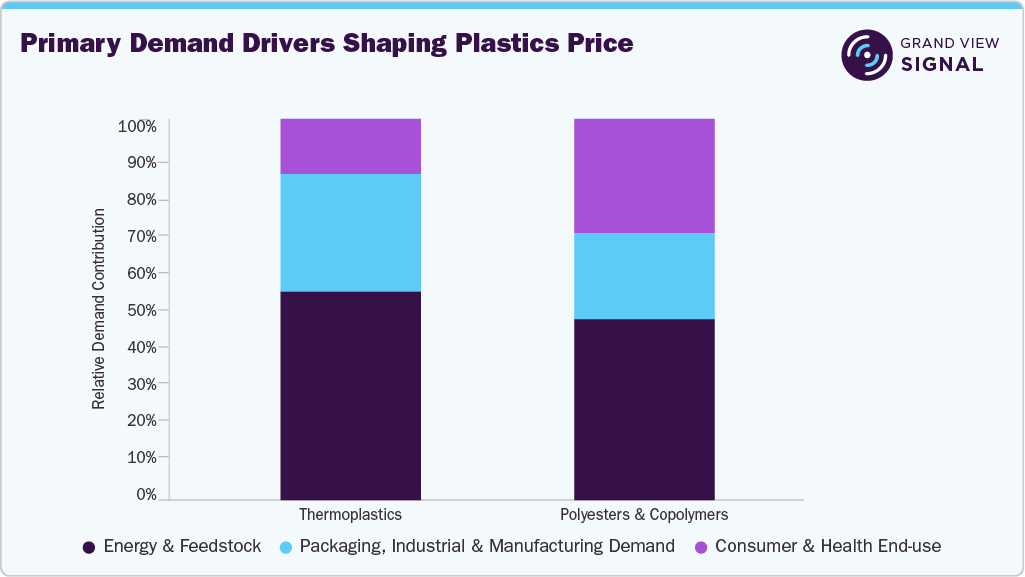
Plastics Coverage
Thermoplastics
The thermoplastics category covers polyolefins, styrenics, vinyls, polyamides, and polycarbonates. These high-volume resins are widely used in films, packaging, pipes, construction products, appliances, automotive components, household goods, and industrial applications.
Thermoplastics Pricing - Key influencers
-
Crude oil, naphtha, ethylene, propylene, benzene, and styrene costs
-
Middle Eastern PP availability and freight reliability
-
Producer operating rates, inventories, and new Asian capacity
-
Packaging, construction, automotive, appliance, and consumer-goods demand
Get historical, current, and forecast thermoplastics price assessments.
Request Free Access
Access Grand View Signal.Polyesters & Copolymers
The polyesters and copolymers category covers ethylene copolymers and polyester resins. EVA is used across solar encapsulation, films, footwear, foam, cable, and adhesive applications. PET demand is concentrated on beverage bottles, food, and pharmaceutical packaging, films, and sheets.
Polyesters & Copolymers Pricing - Key influencers
-
Ethylene, vinyl acetate, PTA, and MEG availability
-
Packaging and beverage requirements
-
Solar-encapsulation and general-purpose EVA demand
-
Producer operating rates, Asian capacity, and recycling requirements
Get historical, current, and forecast polyesters & copolymers price assessments.
Request Free Access
Access Grand View Signal.Regional Commentary
China - China's plastics market strengthened selectively during August. PP, HDPE, and LLDPE recovered after an early-month dip, while ABS, PA6 and polycarbonate recorded clearer increases later in the month. PVC remained comparatively range-bound and EVA showed limited movement. The broader demand environment remained uneven because manufacturing improved but stayed below the expansion threshold, while weak domestic consumption and property activity continued limiting aggressive resin restocking.
India - India remained highly exposed to Middle Eastern polyethylene and polypropylene flows during August. Logistics disruption and feedstock constraints encouraged greater sourcing from China and Southeast Asia, while domestic PP production faced feedstock limitations. Buyers increasingly prioritized cargo reliability and delivery timing but delayed previously booked shipments and monsoon-related demand weakness kept procurement cautious.
Europe - European plastics conditions remained mixed despite stronger manufacturing activity. Feedstock costs increased across selected polymer chains, but summer holidays and adequate supply limited full cost pass-through. The application of the new EU packaging regulation from 12 August also increased attention to recyclability, secondary raw materials, and future recycled-content requirements across the packaging value chain.
France - France's manufacturing climate improved during August, providing a somewhat firmer industrial backdrop, although demand remained uneven across individual sectors. Plastics converters also continued adapting to expanded producer-responsibility requirements for professional packaging, increasing attention to collection, recycling, and material traceability. These regulatory changes remained more important for packaging material strategy than for immediate virgin-resin demand.
Germany - Germany recorded a clearer manufacturing improvement during August, particularly in automotive, electrical, and equipment-related activity. However, the latest available industrial data released during the month showed that June output of rubber and plastic goods had declined, highlighting the weak base from which the recovery started. Engineering and automotive-related polymers therefore faced improving industrial sentiment but still cautious underlying resin consumption.
UK - UK manufacturing remained in expansion during August but grew at a slower rate than in July, with geopolitical uncertainty and elevated input costs continuing to constrain activity. Packaging producers also faced more detailed extended-producer-responsibility reporting and recyclability requirements as updated government guidance took effect during the month. The market therefore balanced modest industrial growth against rising compliance and material-selection requirements.
Get region-wise plastics price assessment.
Request Free Access
Access Grand View Signal.U.S. - U.S. plastics markets continued benefiting from substantial domestic resin production capability, while producers sought high operating rates across polyethylene and PVC assets. Trade policy became a more important risk during August as escalating U.S.-Canada tensions threatened the highly integrated North American plastics supply chain. The immediate effect on polymer flows remained limited, but converters and producers faced greater uncertainty over future cross-border sourcing and costs.
Saudi Arabia - Saudi Arabia remained an important source of global polyethylene, polypropylene and engineering-polymer supply while Middle Eastern logistics remained disrupted. During August, the country's largest diversified petrochemical producer completed the divestment of its Americas and Europe engineering-thermoplastics business, reflecting continued portfolio restructuring in a global market affected by oversupply and weak margins. For commodity polymers, regional route reliability and feedstock availability remained more immediate concerns than the strategic transaction itself.
UAE - The UAE remained a major supplier of polyethylene and polypropylene to Asian and other export markets. Latest second-quarter results available during August from a major UAE polyolefin producer showed lower production and sales volumes following operational damage and Strait of Hormuz disruption, while selling premiums remained elevated amid tight international supply. This reinforced the UAE's importance to global polyolefin availability while highlighting continued logistics sensitivity.
Egypt - Egypt continued advancing plastics-sector localization and circular-economy initiatives during August. New laboratory capability was introduced to assess sustainable alternatives to single-use plastics, while preparations advanced for an extended producer responsibility system covering priority packaging materials. These measures strengthened the policy framework around recycling, packaging, and alternative materials rather than creating an immediate change in virgin-resin pricing.
Morocco - Public August evidence on immediate resin-market developments was limited. The latest foreign-trade indicators released during August continued to show a rapidly expanding import bill, reinforcing the country's exposure to imported raw-material and intermediate-product costs. Plastics procurement therefore remained sensitive to international resin availability, freight and demand from packaging, agriculture, automotive and other converting industries, with no major August-specific resin production change identified.
Analyst Commentary
“Plastics markets recorded mixed but generally firmer movement during August 2026, with the strongest gains concentrated in products exposed to tighter feedstock and supply conditions. HDPE, LLDPE and PP recovered after early weakness as olefin costs and regional availability provided support, while higher styrene costs strengthened PS recovery. PVC remained comparatively subdued because adequate supply and uneven construction demand limited upside. Across regions, Middle Eastern disruption continued affecting feedstock and polymer trade, China remained constrained by uneven domestic demand and expanding capacity. Overall, August plastics pricing was driven more by feedstock costs, supply availability, logistics, and operating rate adjustments than by a broad recovery in end-user demand.”
Senior Plastics Analyst
Frequently Asked Questions
Polystyrene emerged as the top-performing plastics commodity, outperforming its counterparts on the back of stronger price momentum.
China emerged as the primary contributor to polystyrene price performance as the inventory levels plummeted, thereby, supporting price increment.
Polystyrene prices increased by nearly 6% on a MoM basis in the UK, indicating a shifting trade pattern and growing local demand.
Polystyrene is in stable mode with heightened level of volatility amid ongoing energy crisis.
![Key questions answered by the report]()
-


Coverage
Data Depth
200
Commodities
Multiple
Geographies
6 Months
Forecast
10 Years
Historic Data
Get Free Newsletter
This free newsletter offers a hint of our pricing commodity coverage encompassing executive summary, drivers, and scope of research.
Get FREE NewsletterWe are committed towards customer satisfaction, and quality service.
"The quality of research they have done for us has been excellent."
