
- Home
- »
- Plastics, Polymers & Resins
- »
-
Aerospace Foam Market Size & Share Report, 2026-2033GVR Report cover
![Aerospace Foam Market (2026 - 2033)Report]()
Aerospace Foam Market (2026 - 2033)
Size, Share & Trends Analysis Report By Foam Type (Polyurethane Foam, Polyethylene Foam, Melamine Foam, Metal Foam), By Application (Flight Deck Pads, Aircraft Seats, Aircraft Floor), By End-use, By Region, And Segment Forecasts
Market Size, 2025
$6.9BMarket Estimate, 2026
$7.3BMarket Forecast, 2033
$11.7BCAGR, 2026–2033
6.9%Aerospace Foam Market Summary
The global aerospace foam market size was valued at USD 6.9 billion in 2025 and is projected to grow from USD 7.3 billion in 2026 to USD 11.7 billion by 2033, growing at a CAGR of 6.9% from 2026 to 2033. North America dominated the market with the largest revenue share of 39.6% in 2025. Increasing fuel prices have propelled aircraft manufacturers to minimize the aircraft weight and to carry more load in a go.

Key Market Trends & Insights
- By foam type: Polyurethane foam segment led the market with the largest revenue share of 35.1% in 2025.
- By application: Cabin walls & ceilings segment dominated the market with the largest revenue share of 26.9% in 2025.
- By end use: Commercial aviation segment dominated the market with the largest revenue share of 29.9% in 2025.
Regional Highlights
- Largest regional market: North America (39.6% revenue share, 2025)
- By country: The U.S. held the largest market share in 2025.
Market Size & Forecast
- Market size in 2025: USD 6.9 Billion
- Estimated market size in 2026: USD 7.3 Billion
- Projected market size by 2033: USD 11.7 Billion
- CAGR (2026-2033): 6.9%
Hence, these manufacturers have adopted the installation of aerospace foam across various aircraft applications such as flight deck pads, Cabin Walls & Ceilings, aircraft seats, and aircraft floors. Furthermore, the increasing commotion across air travel in recent years has propelled the demand for aircraft across all end uses, including general aviation, commercial aviation, military aircraft, and rotary aircraft. Hence, this has positively impacted the utility for aerospace foam across the aircraft manufacturing industry and is expected to grow prominently during the forecast period.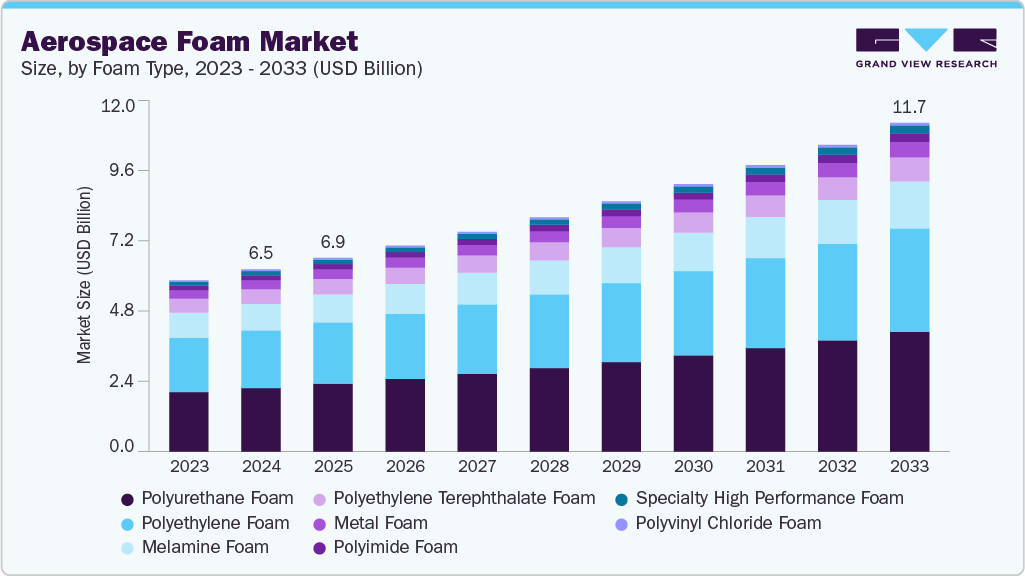
Market Dynamics
The aerospace foam market is witnessing a shift toward advanced insulation and lightweight material technologies as aircraft manufacturers prioritize thermal efficiency, noise reduction, and weight optimization. Next-generation aerogel-based foams are gaining adoption in cryogenic fuel tanks, high-altitude aerospace systems, and cabin insulation applications due to their exceptional thermal performance and low density. At the same time, nanotechnology integration is enhancing foam properties by improving strength-to-weight ratios, thermal stability, and durability without increasing material thickness. These innovations support fuel efficiency targets, enable next-generation aircraft designs, and align with the industry's focus on high-performance, multifunctional materials.
The aerospace foam market is witnessing steady growth, supported by rising disposable incomes, rapid urbanization, and the expansion of the global middle-class population. These factors are driving higher demand for commercial air travel, encouraging airlines to expand fleets and modernize cabin interiors. Aerospace foams are widely used in aircraft seating, insulation systems, overhead storage compartments, and interior panels due to their lightweight structure, durability, and thermal and acoustic insulation properties. Their use helps improve passenger comfort while contributing to overall aircraft weight reduction and operational efficiency.
Demand is further strengthened by increasing aircraft production and growing investments in aviation infrastructure across emerging economies. Rising passenger traffic is prompting airlines to prioritize fuel-efficient aircraft equipped with advanced lightweight materials. Aerospace foams play a critical role in meeting these requirements by supporting weight optimization and compliance with stringent safety and performance standards. As air travel becomes more accessible to a broader consumer base, aerospace foam manufacturers are benefiting from sustained demand across both commercial and regional aviation segments.
The aerospace foam market is challenged by supply chain disruptions and fluctuations in the prices of key raw materials, many of which are petrochemical-based. Changes in the cost and availability of materials such as polyurethane, polyethylene, and other advanced resin systems can increase production costs and create sourcing challenges for manufacturers. These issues may lead to longer production cycles and delays in supplying components to commercial aerospace, defense, and space applications. Additionally, the market’s reliance on global supply chains limits cost predictability and increases exposure to geopolitical events, logistics disruptions, and raw material supply constraints.
The aerospace foam market can benefit from the growing commercial space exploration and space tourism industry. Increasing investments in private spaceflight programs, reusable launch vehicles, and spacecraft development are driving demand for advanced foam materials that provide thermal protection, vibration control, and weight reduction. This trend is supporting the development of high-performance foam solutions with improved heat resistance and durability. At the same time, the market faces challenges from supply chain disruptions and fluctuations in the prices of specialty raw materials, which can increase production costs, delay manufacturing timelines, and impact the consistent supply of aerospace foam products.
Market Concentration & Characteristics
The aerospace foam market is in a medium growth stage, and the pace is accelerating. Innovation is robust, driven by advanced manufacturing technologies, such as enhanced foam formulations with superior flame retardancy, vibration control, and thermal insulation, alongside emerging 3D printing for custom foam parts and nano-reinforced syntactic foams for next-gen aerospace composites.
M&A activity is moderate and targeted, with strategic acquisitions focused on expanding material portfolios and capabilities. For instance, 3A Composites’ acquisition of Solvay’s foam business and Trelleborg's acquisition of 4M indicate consolidation around high-performance foam technologies.
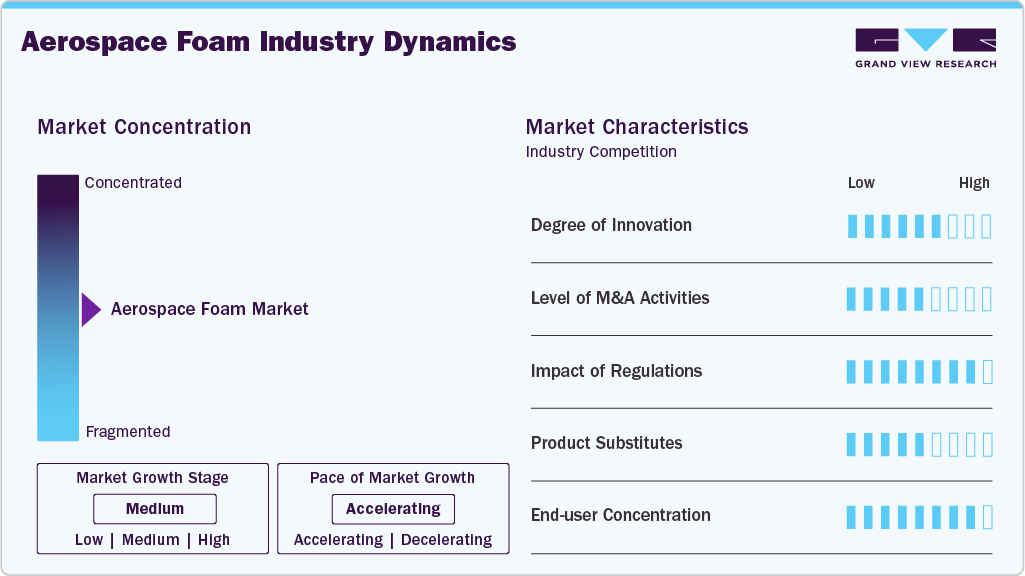
Strict regulatory standards from aviation authorities like the FAA/EASA regarding fire, smoke, and toxicity shape product development and certification, demanding continuous investment in new foam chemistries. Similarly, environmental mandates are fostering eco-friendly bio-based and recyclable foam solutions.
Product substitutes include advanced composites, honeycomb core materials, and foam-metal hybrids offering similar lightweight and structural properties. However, high certification costs and longer qualification timelines often delay their adoption, preserving aerospace foams’ role in thermal, acoustic, and impact applications.
The market shows high end user concentration, with major commercial OEMs like Boeing and Airbus and MRO service providers exerting significant buying influence. Their bulk orders and stringent technical specifications set the tone for suppliers, reinforcing a competitive environment that demands continuous innovation and compliance.
Analyst Perspective
The aerospace foam industry is experiencing consistent growth fueled by the rising need for lightweight materials that improve fuel efficiency, enhance passenger comfort, and boost overall aircraft performance. Aerospace foams are widely utilized in seating systems, insulation, sound damping, overhead storage, and other interior cabin components due to their advantageous strength-to-weight ratio along with their thermal and acoustic insulation capabilities. The expansion is additionally supported by the increasing production of commercial aircraft, modernization efforts for existing fleets, and a heightened emphasis on passenger comfort and noise reduction. However, strict fire, smoke, and toxicity (FST) regulations, together with stringent material qualification standards, continue to influence product innovation and market acceptance across various aerospace platforms.
Drivers, Opportunities & Restraints
Major drivers include the aerospace industry’s aggressive push toward lightweight materials to improve fuel efficiency and reduce emissions, supported by initiatives from NASA and aircraft OEMs. Continued expansion in global air travel and aircraft deliveries, particularly for models like Boeing 737 MAX and Airbus A320neo, is stimulating demand for foam-based interior components-from seats to insulation panels, thereby leading to market growth.
Furthermore, stringent safety and regulatory standards necessitate advanced fire-retardant, acoustic, and vibration-dampening foams, presenting an opportunity for specialized materials that meet FAA and EASA specifications. Furthermore, the expanding space exploration market, along with MRO growth in aging fleets, creates demand for high-performance foams in spacecraft and airframe refurbishment.
However, high production costs tied to specialty raw materials and advanced manufacturing processes act as major restraints, limiting accessibility for budget-conscious airlines and newer players. Additionally, the limited range of qualified foam materials capable of meeting extreme aerospace requirements in flame, toxicity, and environmental toughness further hampers innovation and market expansion.
Foam Type Insights
Based on foam type, the polyurethane foam segment led the market with the largest revenue share of 35.07% in 2025. Growth is supported by strong demand from the automotive industry, where lightweight polyurethane foams are increasingly used to reduce vehicle weight while enhancing passenger comfort and acoustic performance. These materials support improved fuel efficiency in conventional vehicles and help extend driving range in electric vehicles. Rising adoption of electric and hybrid vehicles, supported by sustainability regulations and emission reduction targets, is accelerating foam consumption across seating, interior panels, and insulation applications. In addition, growing automation in automotive manufacturing is increasing the use of precision-engineered foam components, while rapid industrialization and expanding logistics networks are driving commercial vehicle production, further supporting demand for advanced aerospace foam materials.
Followed by specialty high-performance foam, including special polyethylene (PE) and expanded polyethylene (EPE) foam. The EPE foam provides unparalleled dimensional stability and recovery characteristics, making it an ideal alternative to traditional foams used across the aerospace industry. These foams are used across the ceilings of the aircraft to decrease the repeated impacts across the aircraft by providing optimal cushioning.
Polyethylene foam is anticipated to grow at a significant CAGR of 6.8% through the forecast period. PE foam is used across the aisle and walls & ceiling of the aircraft owing to its high insulation and dampening properties. PE foam has recently gained traction across the aerospace market. It is anticipated to grow noticeably during the forecast period due to its properties of maintaining cabin temperature in contrast to colder atmospheric temperature conditions during the flight duration, preventing temperature exchange.
End-use Insights
Based on end use, the commercial aviation segment dominated the market with the largest revenue share of 29.85% in 2025. The demand for Commercial Aviation is increasing due to rising disposable incomes, expanding middle-class populations, growing air passenger traffic, increasing urbanization, and the expansion of low-cost carrier networks, which are making air travel more accessible and driving fleet modernization and aircraft procurement worldwide.
The general aviation segment is expected to grow at a substantial CAGR of 6.6% during the forecast period. In general aviation, aerospace foams are widely used for seating, cabin insulation, and cockpit padding in smaller aircraft such as private jets, light aircraft, and charter planes. With increasing interest in personal and corporate aviation, there is growing adoption of advanced polyurethane and polyethylene foams that offer excellent acoustic dampening and fire-retardant properties.
Aerospace foams are essential for structural insulation, impact absorption, noise reduction, and specialized seating in military aircraft. These applications require foams with enhanced durability, thermal stability, and resistance to extreme environmental conditions. Military-specific requirements often necessitate foams that can withstand harsh operational stresses while providing weight savings critical for mission efficiency.
Rotary aircraft, including helicopters used in civil, defense, and emergency services, rely on aerospace foams for vibration control, cabin insulation, and energy-absorbing seating. Given the higher vibration levels and noise intensity in rotary wing operations, foams with superior acoustic and shock-absorbing properties are particularly valued.
Application Insights
Based on application, the cabin walls & ceilings segment dominated the market with the largest revenue share of 26.88% in 2025. Demand for cabin walls and ceilings is rising due to the expansion of the aviation industry and the growing focus on lightweight aircraft cabin structures. Aerospace foams are extensively utilized in wall panels and ceiling systems because of their low weight, effective thermal insulation, and contribution to overall aircraft weight reduction. Their adoption supports improved fuel efficiency while helping manufacturers meet evolving performance and sustainability requirements.
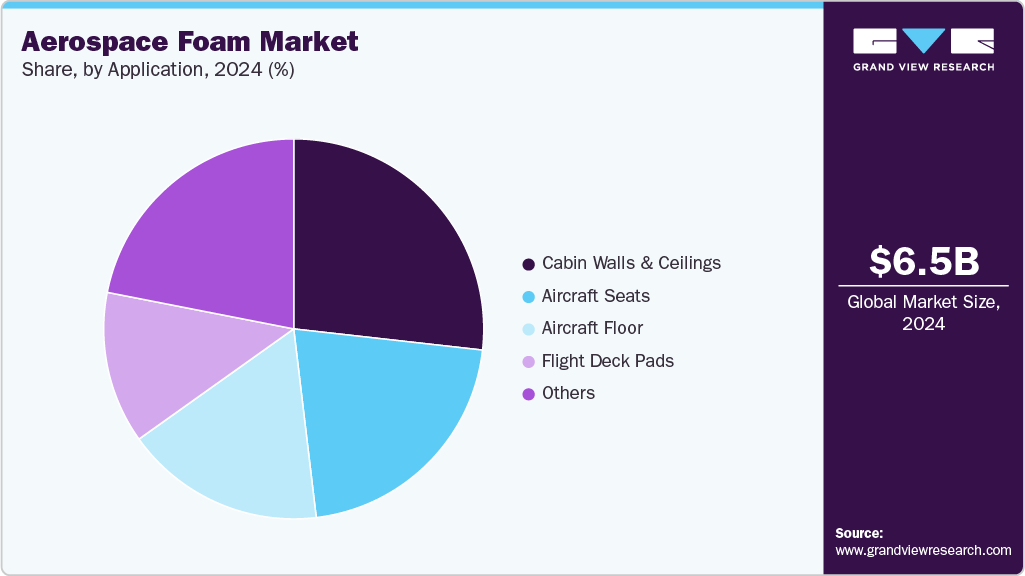
The flight deck pads segment is expected to grow at a substantial CAGR of 6.7% over the forecast period. These pads, typically made from high-performance polyurethane or polyethylene foams, provide cushioning and ergonomic support for pilots during long flights, reducing fatigue and improving operational efficiency. Additionally, aerospace foams in flight deck pads offer excellent thermal insulation and noise dampening, which help minimize cockpit noise from engines and external aerodynamic forces.
Aircraft seats comprise a major part of air travel in terms of comfort and luxury. Since air travel can vary from a journey of about 2 hours to 20 hours and above, the seats must be highly comfortable for passengers and crew on board. Hence, aerospace foam is mainly used for the manufacturing of aircraft seats since this foam provides high impact absorption properties, comfort in terms of seating, and additionally adds to the manufacturer’s objective of lightweight aircraft.
Regional Insights
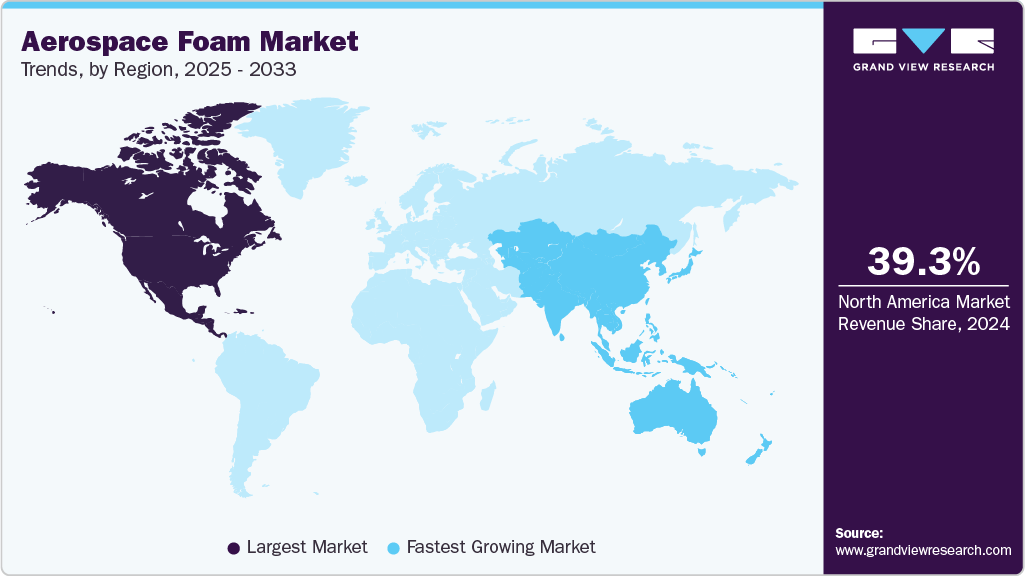
North America dominated the aerospace foam market with the largest revenue share of 39.61% in 2025 and is expected to grow at the fastest CAGR of 7.7% over the forecast period. The market is driven by strong aircraft production, ongoing fleet modernization, and rising demand for lightweight cabin materials. Airlines and OEMs are focusing on weight reduction to improve fuel efficiency and lower operating costs. Growth in commercial aviation, defense spending, and aftermarket replacement activity is also supporting demand. Aerospace foams are widely used in seating, insulation, and interior panels because they offer thermal resistance, noise reduction, and comfort. Regulatory pressure for safer and more sustainable materials is further encouraging adoption across the region.
U.S. Aerospace Foam Market Trends
The U.S. aerospace foam market held the largest share in North America, accounting for 86.14% in 2025. In the US, the aerospace foam market is driven by strong commercial aircraft production, frequent cabin refurbishment, and high demand for lightweight materials that improve fuel efficiency. Large airline fleets, defense procurement, and strict cabin safety standards are also supporting the use of advanced foams in seats, insulation, and interior panels.
Europe Aerospace Foam Market Trends
Europe ranks second globally after North America, accounting for approximately 27% of the aerospace foam industry, with Germany, the UK, and France being key contributors. The region’s focus on passenger comfort, safety certifications under EASA, and innovation in eco-friendly foam materials drive demand, particularly for polyimide and polyurethane foams used in cabin interiors and insulation.
The Germany aerospace foam market plays a pivotal role within Europe, bolstered by its strong aerospace manufacturing industry and firms like BASF and Evonik investing in advanced foam technologies. German innovation in high-performance materials, especially polyimide and metal hybrid foams for cabin walls and acoustic applications, makes it a leading force in sustainable and safety-focused foam solutions.
Asia Pacific Aerospace Foam Market Trends
Asia Pacific, including key markets such as China and India, is the fastest-growing region in the aerospace foam industry, capturing around 11% of global demand. Growth is underpinned by rising aircraft production volumes, expanding defence programs, and rising domestic airline traffic, particularly in China, which leads regional consumption with strong government backing.
The China aerospace foam market dominated Asia Pacific, fueled by rapid expansion in commercial and military aircraft manufacturing. Government initiatives to build a self-reliant aviation ecosystem and aggressive fleet modernization have elevated demand for advanced foam materials in seats, insulation, and structural components.
The aerospace foam market in India is emerging as a high-growth market, benefiting from government defense modernization, increasing commercial aircraft procurements, for instance, the MMRCA 2.0 deal, and investments in aerospace infrastructure. These trends are creating opportunities for suppliers of performance-grade foams tailored to military and commercial aviation needs.
Latin America Aerospace Foam Market Trends
Latin America holds a smaller but stable share in the aerospace foam industry, accounting for roughly 6% of global demand. Brazil and Mexico are the main contributors, driven by regional aircraft production and investments in airline fleet upgrades. However, the growth is moderate due to slower expansion compared to APAC and North America.
Middle East & Africa Aerospace Foam Market Trends
The growth of the Middle East & Africa aerospace foam industry is supported by growth in Gulf nations’ airline fleets, MRO bases, and defense procurement. Demand is driven by new aircraft deliveries and refurbishment programs, particularly in the GCC, although infrastructure limitations in Africa temper overall expansion.
The Saudi Arabia aerospace foam market is witnessing increased demand for aerospace foams due to its ambitious aviation and defence modernization agendas. Investments in national carriers, MRO capabilities, and strategic partnerships in aircraft production are spurring demand for certified, high-performance foam materials in cabin interiors, insulation, and vibration-damping applications.
Key Aerospace Foam Company Insights
The presence of several players such as Boyd Corporation, Evonik Industries AG, ERG Aerospace Corporation, SABIC, BASF SE, ZOTEFOAMS PLC, General Plastics Manufacturing Company, and Solvay characterizes the global aerospace foam market. Key players in the market are actively involved in adopting strategies targeted towards attaining sustainable transition, sales execution, and efficient pricing. Such players offer broad capabilities as well as capacities that enable them to cater to diversified needs arising across multiple end use industries.
Key Aerospace Foam Companies
The following key companies have been profiled for this study on the aerospace foam market.
-
Boyd Corporation
-
Evonik Industries AG
-
ERG Aerospace Corporation
-
SABIC
-
BASF SE
-
ZOTEFOAMS PLC
-
General Plastics Manufacturing Company
-
Solvay
-
UFP Technologies, Inc.
-
Recticel NV/SA
-
NCFI Polyurethanes
-
DuPont
-
Rogers Corporation
-
ARMACELL
Competitive Benchmarking
Category
Operating Strategies
Competitive Edge
Weakness
Established Players (Evonik Industries AG, BASF SE, SABIC, Solvay, DuPont, Rogers Corporation, Armacell)
- Focuses on high-performance aerospace foam innovation, lightweight interior solutions, thermoplastic technologies, thermal and acoustic insulation, OEM collaboration, sustainability, vibration control, and compliance with stringent aerospace safety standards.
- Strong R&D and polymer chemistry expertise, extensive raw material integration, broad aerospace-certified materials and engineering thermoplastics portfolios, deep certification capabilities, global supply networks, strong industry relationships, and specialty foam technology leadership.
- Premium pricing may limit adoption in cost-sensitive aerospace programs, while diversified operations, thermoplastics focus, aerospace cycle dependence, limited foam specialization, and smaller scale constrain competitiveness.
Emerging Players (ERG Aerospace Corporation, General Plastics Manufacturing Company, UFP Technologies, Inc., NCFI Polyurethanes)
- Specializes in engineered aerospace foam solutions, including rigid cores, polyurethane insulation, cushioning, interiors, tooling, structural materials, and protective packaging, emphasizing custom development, application support, and OEM/Tier supplier collaboration.
- Strong technical specialization in high-performance aerospace foams, with customization expertise, flexible manufacturing, polyurethane capabilities, and proven ability to meet demanding, low-volume, high-specification application requirements.
- Limited global presence, narrower product breadth, lower diversification and aerospace exposure, with a smaller market footprint and greater dependence on specialized demand cycles than major multinational competitors.
Recent Developments
-
In April 2025, Insperial, a portfolio company under Adagia Partners, acquired MGR Foamtex, a UK-based manufacturer specializing in advanced soft-goods and passenger upholstery systems for aircraft interiors. The acquisition integrates MGR’s engineering and manufacturing expertise with Insperial’s global sales footprint, positioning the combined group to enhance growth, innovation, and market reach across the aerospace interior segment.
-
In February 2025, Trelleborg Sealing Solutions expanded its aerospace portfolio by acquiring Aero‑Plastics Inc., a U.S. manufacturer specializing in precision injection molding, thermoforming, and machining of high-performance polymers for aircraft interiors, including window reveals and blind assemblies. The deal, valued at approximately SEK 150 million (~USD 15.3 million) and finalized in April 2025, adds significant capacity, technical expertise, and value-added services like assembly, engraving, and painted finishes.
Aerospace Foam Market Report Scope
Report Attribute
Details
Market size value in 2025
USD 6.9 billion
Estimated market size in 2026
USD 7.3 billion
Projected market size by 2033
USD 11.7 billion
Growth rate
CAGR of 6.9% from 2026 to 2033
Base year for estimation
2025
Historical data
2021 - 2024
Forecast period
2026 - 2033
Quantitative units
Volume in kilotons, revenue in USD million/billion, and CAGR from 2026 to 2033
Report coverage
Revenue forecast, company ranking, competitive landscape, growth factors, and trends
Segments covered
Foam Type, application, end use, region
Regional scope
North America; Europe; Asia Pacific; Central & South America; Middle East & Africa
Country scope
U.S.; Canada; Mexico; Germany; UK; France; Italy; China; India, Japan; South Korea, Brazil; Argentina; GCC Countries; South Africa
Key companies profiled
Boyd Corporation, Evonik Industries AG, ERG Aerospace Corporation, SABIC, BASF SE, ZOTEFOAMS PLC, General Plastics Manufacturing Company, Solvay, UFP Technologies, Inc., Recticel NV/SA, NCFI Polyurethanes, DuPont, Rogers Corporation, ARMACELL
Customization scope
Free report customization (equivalent up to 8 analysts' working days) with purchase. Addition or alteration to country, regional & segment scope.
Pricing and purchase options
Avail customized purchase options to meet your exact research needs. Explore purchase options
Global Aerospace Foam Market Report Segmentation
This report forecasts volume & revenue growth at the global, regional, and country levels and provides an analysis of the latest industry trends in each of the sub-segments from 2021 to 2033. For this study, Grand View Research has segmented the global aerospace foam market report based on foam type, application, end-use, and region:
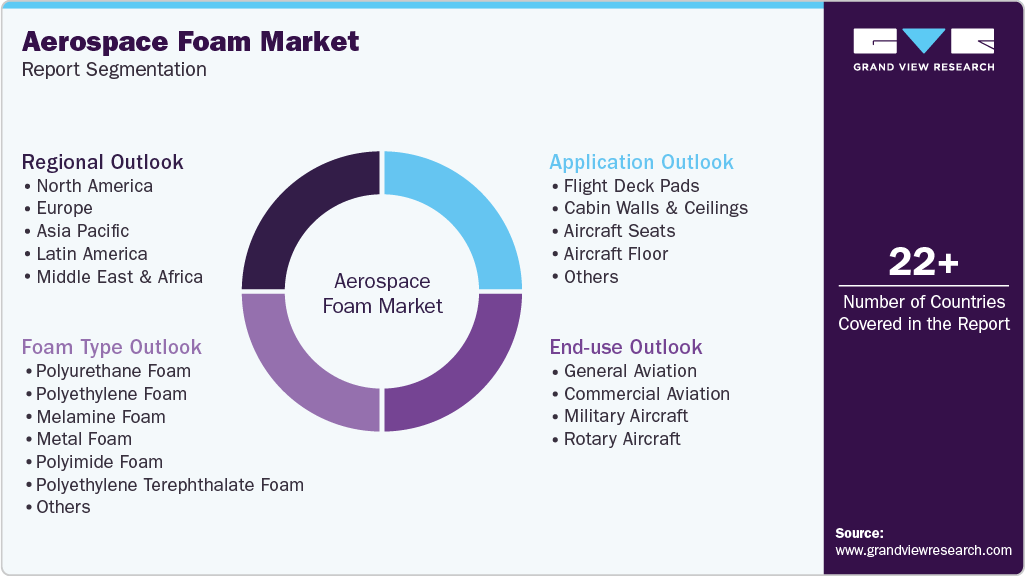
-
Foam Type Outlook (Volume, Kilotons; Revenue, USD Million, 2021 - 2033)
-
Polyurethane Foam
-
Polyethylene Foam
-
Melamine Foam
-
Metal Foam
-
Polyimide Foam
-
Polyethylene Terephthalate Foam
-
Polyvinyl Chloride Foam
-
Specialty High Performance Foam
-
-
Application Outlook (Volume, Kilotons; Revenue, USD Million, 2021 - 2033)
-
Flight Deck Pads
-
Cabin Walls & Ceilings
-
Aircraft Seats
-
Aircraft Floor
-
Others
-
-
End-use Outlook (Volume, Kilotons; Revenue, USD Million, 2021 - 2033)
-
General Aviation
-
Commercial Aviation
-
Military Aircraft
-
Rotary Aircraft
-
-
Regional Outlook (Volume, Kilotons; Revenue, USD Million, 2021 - 2033)
-
North America
-
U.S.
-
Canada
-
Mexico
-
-
Europe
-
Germany
-
UK
-
France
-
Italy
-
-
Asia Pacific
-
China
-
India
-
Japan
-
South Korea
-
-
Latin America
-
Brazil
-
Argentina
-
-
Middle East & Africa
-
GCC Countries
- South Africa
-
-
Research Methodology
The aerospace foam market figures in this report are based on a proven research process that combines executive interviews with secondary research from proprietary databases, company filings, and recognized regulatory and institutional sources. Market size is built through value-chain sizing - reconciling supply-side and demand-side estimates - and triangulated with bottom-up and top-down approaches. Every estimate passes multiple levels of expert validation before publication, with each aerospace foam segment quantified using the revenue-capture definitions in the table below.
Segment Definition
Segment - Form Type
Revenue capture definition
Polyurethane Foam
Revenue is generated through the supply of polyurethane aerospace foams used in aircraft seating, armrests, headrests, cabin insulation, and interior comfort systems. Demand is driven by the material’s lightweight structure, cushioning performance, flame resistance, and ability to enhance passenger comfort while supporting aircraft weight reduction objectives.
Polyethylene Foam
Revenue is captured through the sale of polyethylene foams used in aircraft insulation, protective packaging, vibration damping, and interior structural applications. Demand is supported by the foam’s low density, moisture resistance, impact absorption properties, and suitability for lightweight aerospace designs focused on operational efficiency.
Melamine Foam
Revenue is generated from melamine foams utilized in acoustic insulation systems, cabin noise reduction panels, and thermal management applications. Market demand is driven by stringent aircraft noise control requirements, fire safety compliance standards, and the need for lightweight materials that improve passenger comfort and cabin performance.
Metal Foam
Revenue is captured through the deployment of metal foams in structural reinforcement, energy absorption components, and advanced aerospace engineering applications. Demand is supported by the material’s high strength-to-weight ratio, thermal stability, impact resistance, and increasing use in next-generation aircraft seeking improved structural efficiency.
Polyimide Foam
Revenue is generated through the use of polyimide foams in high-temperature insulation, ducting systems, thermal barriers, and aerospace cabin structures. Demand is driven by exceptional flame resistance, low smoke generation, thermal stability, and compliance with stringent aviation safety regulations for commercial and defense aircraft.
Polyethylene Terephthalate (PET) Foam
Revenue is captured through PET foam applications in aircraft floor panels, sandwich composites, interior structures, and lightweight structural components. Market growth is supported by increasing adoption of composite materials, demand for fuel-efficient aircraft, and the foam’s favorable mechanical strength, recyclability, and dimensional stability.
Polyvinyl Chloride (PVC) Foam
Revenue is generated through PVC foam cores used in composite panels, cabin interiors, partitions, and aerospace structural assemblies. Demand is fueled by the material’s lightweight characteristics, durability, cost effectiveness, and compatibility with composite manufacturing processes employed in modern aircraft production.
Specialty High-Performance Foam
Revenue is captured through advanced aerospace foams engineered for extreme thermal, acoustic, structural, and fire protection requirements. Demand is driven by the development of next-generation aircraft, increasing use of advanced composite structures, and the need for customized solutions that meet rigorous performance, safety, and sustainability standards across commercial, military, and space applications.
Segment - Application
Revenue capture definition
Flight Deck Pads
Revenue is generated through the use of aerospace foams in flight deck padding, cockpit insulation, crew rest supports, and vibration-dampening components. Demand is driven by the need for enhanced pilot comfort, noise reduction, thermal insulation, and lightweight construction that supports operational efficiency and compliance with aircraft safety standards.
Cabin Walls & Ceilings
Revenue is captured through aerospace foam materials used in cabin sidewall panels, ceiling structures, insulation layers, and interior linings. Demand is supported by the aviation industry's focus on lightweight cabin designs, improved thermal and acoustic performance, and passenger comfort. Weight reduction and fuel efficiency remain key value drivers in this application segment.
Aircraft Seats
Revenue is generated from aerospace foams used in seat cushions, headrests, armrests, and ergonomic support systems. Demand is influenced by airline investments in passenger comfort, premium seating configurations, and cabin modernization programs. Lightweight foam solutions that improve durability, fire resistance, and seating performance are key contributors to revenue growth.
Aircraft Floor
Revenue is captured through aerospace foam applications in floor panels, underfloor insulation systems, and structural core materials. Demand is driven by the need to reduce aircraft weight while maintaining strength, impact resistance, and thermal insulation. The increasing adoption of advanced lightweight flooring systems in commercial and military aircraft supports market expansion.
Others
Revenue is generated through aerospace foam usage in overhead storage bins, galley structures, lavatory modules, cargo liners, insulation blankets, and specialty interior components. Demand is supported by aircraft production growth, cabin refurbishment activities, and the increasing focus on lightweight materials that enhance fuel efficiency, operational performance, and passenger experience.
Segment - End Use
Revenue capture definition
General Aviation
Revenue is generated through the use of aerospace foams in business jets, private aircraft, training aircraft, and recreational aviation platforms. Demand is driven by the need for lightweight cabin interiors, thermal and acoustic insulation, seating comfort, and enhanced passenger experience. Growth in private air travel, corporate fleet expansion, and aircraft modernization programs supports foam consumption across general aviation applications.
Commercial Aviation
Revenue is captured through aerospace foam applications in passenger aircraft cabins, including seats, sidewalls, overhead storage compartments, floor panels, and insulation systems. Demand is fueled by rising air passenger traffic, fleet expansion, aircraft deliveries, and airline investments in fuel-efficient and lightweight cabin materials. Comfort, safety compliance, and operating cost reduction remain key purchasing factors.
Military Aircrafts
Revenue is generated through the integration of aerospace foams in military transport aircraft, fighter jets, surveillance aircraft, and special mission platforms. Demand is driven by requirements for weight reduction, impact resistance, vibration dampening, thermal protection, and crew comfort. Ongoing defense modernization programs and increasing investments in advanced military aviation platforms support market growth.
Rotary Aircrafts
Revenue is captured through the use of aerospace foams in helicopters and other rotary-wing aircraft for seating systems, cabin insulation, vibration control, and structural interior components. Demand is supported by expanding applications in defense, emergency medical services, offshore operations, and commercial transport. Lightweight construction, noise reduction, durability, and operational efficiency are critical factors driving adoption.
Estimation Model
Layer Name
Key Question
Description
Aerospace Foam Demand Base Layer
What is the total potential demand pool for aerospace foams?
Captures overall demand for aerospace foams across major aircraft platforms and interior applications such as seating, insulation, wall panels, ceiling systems, flooring, and cushioning, where foam materials support weight reduction, comfort, and performance requirements.
Applicability Layer
Where is aerospace foam technically and functionally suitable?
Identifies the aircraft applications where aerospace foams are preferred due to their low density, thermal insulation, acoustic damping, flame resistance, and durability, primarily in commercial aviation, military aircraft, general aviation, and rotary aircraft interiors.
Competitive Substitution Layer
What share of applications actually use aerospace foams over alternative materials?
Defines the realistic adoption pool where aerospace foams compete with advanced polymers, composites, honeycomb structures, and other lightweight materials based on safety standards, performance needs, pricing, and certification requirements across aviation platforms.
Revenue Realization Layer
How much of the aerospace foam demand is actually monetized?
Represents actual market revenue generated from aerospace foam consumption across cabin interiors, insulation systems, and structural padding, adjusted for aircraft build rates, retrofit activity, regional demand, foam grades, processing methods, and OEM and aftermarket procurement patterns.
Delivered Customizations
This report has been delivered with the following In-depth customizations
Client Request
Customization Delivered
Value Adds
Regional segmentation
Built a regional market view for North America, Europe, Asia Pacific, Latin America, and the Middle East & Africa, with demand mapped by aircraft production, airline activity, defense spending, and aftermarket consumption.
Helped identify region-wise growth pockets, procurement priorities, and supply-side concentration for sharper market entry and expansion planning.
Cross-segmentation
Developed cross-segment analysis by combining region with end use, product type, application, and aircraft platform to show where demand is concentrated and how it shifts by use case.
Enabled a more precise view of demand drivers, segment overlap, and adjacency opportunities across the aerospace foam value chain.
Opportunity Assessment
Identified high-potential opportunities across lightweight cabin interiors, thermal and acoustic insulation, defense platforms, and retrofit demand.
Helped prioritize commercial opportunities, focus investment areas, and align product development with the fastest-growing application areas.
Frequently Asked Questions About This Report
The global aerospace foam market size was estimated at USD 6.9 billion in 2025 and is expected to reach USD 7.3 billion in 2026.
North America dominated the aerospace foam market with a share of 39.6% in 2025.
Some key players operating in the aerospace foam market include Boyd Corporation, Evonik Industries AG, ERG Aerospace Corporation, SABIC, BASF SE, ZOTEFOAMS PLC, General Plastics Manufacturing Company, Solvay, UFP Technologies, Inc., Recticel NV/SA, NCFI Polyurethanes, DuPont, Rogers Corporation, and ARMACELL
Key factors that are driving the market growth include increasing demand for lightweight aircraft in lieu with increasing fuel prices, along with increased air travel in recent years.
Cabin Walls & Ceilings dominated the market across the application segmentation in terms of revenue, accounting for a market share of 26.9% in 2025.
Commercial Aviation dominated the end-use segmentation in terms of revenue, accounting for a market share of 29.9% in 2025.
The specialty high-performance foam segment is anticipated to grow at the fastest CAGR of 7.4% through the forecast period.
The global aerospace foam market is expected to grow at a compound annual growth rate of 6.9% from 2026 to 2033 to reach USD 11.7 billion by 2033.
About the Author(s)
Plastics, Polymers & Resins Research Team
Bulk Chemicals · Plastics, Polymers & ResinsThis report was authored by the plastics, polymers & resins research team at Grand View Research - comprising two research analysts, one senior research analyst, and one industry expert - with specialized expertise in the plastics, polymers & resins segment of the bulk chemicals industry. All findings are based on proprietary bulk chemicals databases, executive interviews, and regulatory analysis, subject to internal peer review prior to publication.
Last Updated:
Speak to Analyst


Customize this report to your needs — add regions, segments, or data points, with 20% free customization.
Or view our licence options:


ISO 9001:2015 & 27001:2022 Certified
We are GDPR and CCPA compliant! Your transaction & personal information is safe and secure. For more details, please read our privacy policy.


