
- Home
- »
- Medical Devices
- »
-
Aesthetic Exosomes Market Size, Share Report, 2026-2033GVR Report cover
![Aesthetic Exosomes Market (2026 - 2033)Report]()
Aesthetic Exosomes Market (2026 - 2033)
Size, Share & Trends Analysis Report By Product (Topical formulations, Injectable Exosome Solutions), By Source, By Application (Skin rejuvenation & anti-aging, Acne scar treatment, Hair restoration), By End Use, By Region, And Segment Forecasts
Market Size, 2025
$39.7MMarket Estimate, 2026
$43.9MMarket Forecast, 2033
$139.8MCAGR, 2026–2033
18.0%Aesthetic Exosomes Market Summary
The global aesthetic exosomes market size was valued at USD 39.7 million in 2025 and is projected to grow from USD 43.9 million in 2026 to USD 139.8 million by 2033, at a CAGR of 18.0% from 2026 to 2033. The Asia Pacific held the largest share of 46.2% of the global market in 2025. The industry growth is driven by increasing demand for non-invasive, biologically active treatments.

Key Market Trends & Insights
- By product: Topical formulations segment held the largest market share of 74.9% in 2025.
- By source: Human-derived exosomes segment held the largest market share of 54.4% in 2025.
- By application: Hair restoration segment held the largest market share in 2025.
- By end use: Medspas segment held the largest market share in 2025.
Regional Highlights
- Largest regional market: Asia Pacific (46.2% revenue share, 2025)
- By country: China held the largest share in 2025
Market Size & Forecast
- Market size in 2025: USD 39.7 Million
- Estimated market size in 2026: USD 43.9 Million
- Projected market size by 2033: USD 139.8 Million
- CAGR (2026-2033): 18.0%
Exosomes are nano-sized extracellular vesicles naturally released by cells, playing a key role in cell-to-cell communication and tissue repair. In aesthetics, they are primarily used for skin rejuvenation, anti-aging, scar reduction, and hair restoration. Unlike traditional cosmetic ingredients, exosomes deliver growth factors, proteins, and genetic material that actively influence skin regeneration processes, positioning them as a next-generation solution in dermatology and cosmetic procedures. One of the primary drivers of market growth is the rising demand for non-invasive and regenerative aesthetic treatments. Consumers are increasingly shifting away from surgical procedures toward minimally invasive solutions that offer faster recovery and natural-looking results. In May 2025, Mayo Clinic highlighted the development of platelet-derived exosomes as a breakthrough in aesthetic medicine, supporting their use as a topical regenerative therapy to improve skin quality and hair health. The innovation focuses on clinically processed, cell-free exosome technology that delivers consistent and measurable biological activity. Clinical observations showed that these exosomes can enhance skin texture, stimulate collagen production, and significantly reduce healing time after aesthetic procedures. This aligns with a broader industry shift toward “regenerative aesthetics,” where treatments focus on stimulating the body’s own repair mechanisms rather than altering appearance artificially.
Another key growth factor is the strong scientific evidence supporting the benefits of skin rejuvenation. In February 2026, a systematic review published in the National Library of Medicine evaluated the clinical efficacy of exosome-based therapies for skin rejuvenation, analyzing 19 human studies. The study reported that exosome treatments showed promising short-term improvements in skin hydration, elasticity, wrinkles, pigmentation, and overall appearance, with a generally favorable safety profile for topical use. However, the research also highlighted the need for standardized protocols and long-term clinical data to validate widespread aesthetic applications. These outcomes are largely attributed to increased collagen and elastin synthesis, along with reduced oxidative stress in skin cells. Such findings are strengthening clinician confidence and encouraging wider adoption in professional aesthetic practices.
Importance of exosomes in aesthetics
Exosomes are transforming aesthetic medicine by moving the focus from surface-level cosmetic enhancement to deep, regenerative skin health as they work at the cellular level to activate natural repair mechanisms. This inside-out approach supports long-term skin regeneration, improved quality, and healthier tissue function.
-
Healing the Root, Not the Surface
Exosomes address the biological causes of aging by delivering growth factors and microRNAs directly into skin cells. This activates collagen and elastin production, supporting long-term, natural skin regeneration.
-
Improved Treatment Outcomes
When combined with procedures like microneedling or lasers, exosomes accelerate healing and reduce inflammation. This results in faster recovery, better skin texture, and enhanced patient satisfaction.
-
Holistic Anti-Aging Approach
Exosomes improve multiple skin concerns, such as fine lines, pigmentation, and laxity, in a single treatment. They support natural repair processes, aligning with demand for subtle, non-surgical rejuvenation.
A further important driver is the growing consumer awareness and demand for anti-aging solutions. Exosomes have gained attention for their ability to target multiple skin concerns simultaneously, including fine lines, pigmentation, inflammation, and texture. The key market players are continuously focusing on developing new products to fulfill the market demand. For instance, in December 2025, Le-Vel announced the launch of its XERA exosome-powered skincare system, incorporating advanced engineered exosome technology to enhance skin repair, regeneration, and anti-aging performance. The system is designed to activate the skin’s natural healing processes through biomimetic signaling, representing a shift toward lab-developed regenerative skincare solutions. This launch highlights the growing commercialization of synthetic and engineered exosome-based cosmetic platforms.
In addition, increasing use in adjunct aesthetic procedures and availability of innovative & advanced exosome-based aesthetic products are further accelerating market expansion. For instance, in June 2025, PYFAESTHETIC announced the launch of its synthetic small extracellular vesicle (sEV)-based skincare product, NEOFOUND BIOS, at AMUSE 2025, marking a significant advancement in exosome-inspired aesthetics. The product utilizes lab-engineered exosome-like vesicles combined with biomimetic actives to enhance skin regeneration, improve texture, and support collagen and elastin production. This launch highlights the industry shift toward synthetic, non-biological exosome technologies offering improved stability, safety, and scalability for aesthetic applications.
Moreover, Exosomes are widely used alongside treatments such as microneedling, laser resurfacing, and chemical peels to enhance outcomes and reduce downtime. Clinical insights suggest that their application post-procedure improves recovery speed and treatment efficacy by promoting faster tissue repair. This complementary role is encouraging dermatologists and aesthetic practitioners to integrate exosomes into standard treatment protocols, thereby increasing procedural demand and product consumption.
Market Concentration & Characteristics:
The aesthetic exosomes market is moderately concentrated, with leading companies such as Croma Pharma, JDBIO Co, Cartessa Aesthetics, and BIO-FD&C accounting for significant shares of the market. These players offer advanced exosome-based solutions, including topical skincare formulations, injectable therapies, and adjunct treatments used alongside microneedling and laser procedures, enabling enhanced skin regeneration, improved collagen synthesis, and faster recovery. The market is continuously evolving due to advancements in exosome isolation, purification technologies, and scalable manufacturing processes, along with increasing focus on plant-derived and synthetic alternatives. In addition, growing consumer preference for regenerative and “cell-free” therapies, and increasing awareness of anti-aging solutions are driving market growth and encouraging new entrants to develop innovative, safe, and clinically validated exosome-based products.
The aesthetic exosomes industry is witnessing significant innovation and technological advancement, particularly in exosome isolation, purification, and bioengineering techniques that enhance product efficacy, safety, and scalability. Advances such as plant-derived and synthetic exosome-like vesicles, targeted delivery systems, and combination therapies with microneedling and laser treatments are improving skin regeneration, collagen synthesis, and post-procedure recovery. According to the study published by Springer Nature in August 2025, engineered exosomes can be optimized for enhanced skin rejuvenation and anti-inflammatory effects, improving treatment outcomes in aesthetic dermatology. These advancements are expected to drive the market growth.
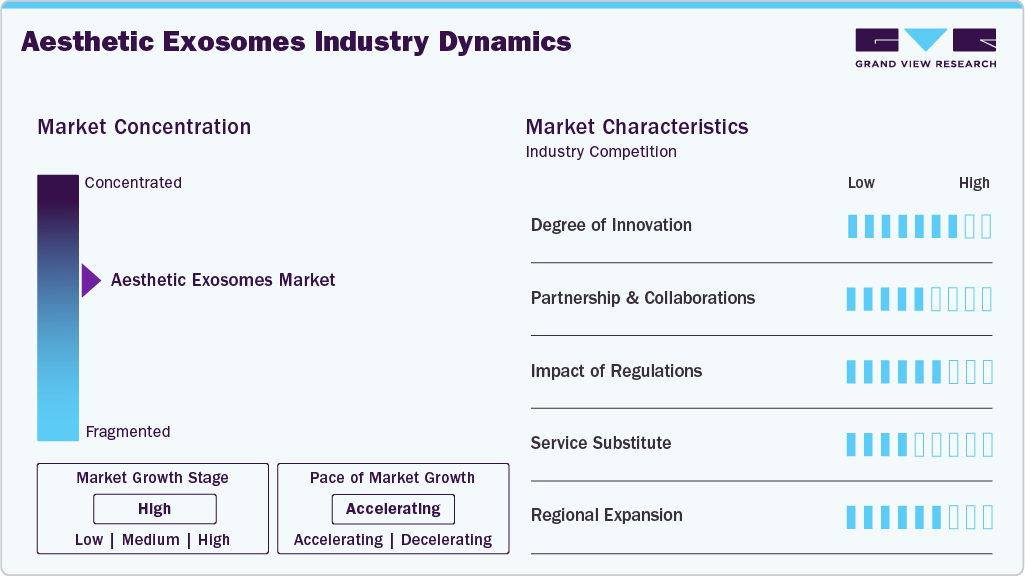
Partnerships and collaborations play a crucial role in the market, enabling companies to accelerate research, enhance product development, and expand clinical adoption of regenerative skincare solutions. For instance, in May 2025, Kimera Labs was named a semifinalist in the prestigious USD 101 million XPRIZE Healthspan competition, recognizing its advancements in exosome-based therapeutic innovation. The development also highlights a key collaboration, as the company partnered with neurologist Dr. Sheldon Jordan and the Regenesis Project to integrate exosome technology with focused ultrasound for enhanced therapeutic delivery. This milestone underscores the growing importance of strategic partnerships in accelerating innovation and clinical translation in the exosome-based regenerative aesthetics and therapeutics space.
Regulatory oversight plays a critical role in shaping the aesthetic exosomes industry by ensuring product safety, quality, and clinical validity before commercialization. Authorities such as the U.S. Food and Drug Administration and the Medicines and Healthcare products Regulatory Agency classify many exosome-based products as biological or medicinal products, requiring rigorous clinical evidence, manufacturing controls, and approval pathways. These regulatory frameworks are fostering a more structured market environment, encouraging companies to invest in clinical trials, standardized production processes, and safer formulations, ultimately driving innovation and building trust among practitioners and consumers.
Product substitutes in the market include established non-invasive and minimally invasive treatments such as platelet-rich plasma (PRP), hyaluronic acid-based dermal fillers, botulinum toxin injections, chemical peels, and energy-based devices like lasers and radiofrequency systems. For instance, Botox remains widely used for wrinkle reduction, while platelet-rich plasma therapy is commonly preferred for skin rejuvenation and hair restoration due to its autologous nature. In addition, laser resurfacing and microneedling procedures are frequently used alternatives to improve skin texture and collagen production.
Regional expansion is gaining momentum across North America, Europe, and Asia-Pacific, driven by rising demand for regenerative, minimally invasive aesthetic treatments and improving access to advanced dermatology services. Companies are actively expanding their global footprint through strategic partnerships, distributor networks, and targeted product launches to strengthen commercialization. These expansion strategies, combined with increasing physician awareness and cross-border knowledge exchange, are accelerating the global adoption of exosome-based aesthetic solutions.
Product Insights
The topical formulations segment dominated the market in 2025 and accounted for the largest share of 74.9% of the overall revenue. The growth is primarily driven by the increasing consumer preference for non-invasive, easy-to-use skincare solutions and the rapid commercialization of exosome-infused serums, creams, and masks. Topical delivery offers significant advantages such as painless application, compatibility with daily skincare routines, and growing use in post-procedure care, which has accelerated its adoption in aesthetic dermatology. Scientific literature highlights that topical exosomes promote skin rejuvenation, collagen synthesis, anti-inflammatory effects, and wound healing, making them highly attractive for anti-aging and regenerative skincare applications. For instance, a March 2024 review published in the Aesthetic Surgery Journal Open Forum reported that topical exosome formulations demonstrated improved collagen deposition, enhanced wound healing, and better overall skin appearance in early clinical and preclinical studies. In addition, experimental studies have shown that topical exosome application can accelerate wound closure and stimulate angiogenesis, further validating their therapeutic potential in skin repair. Collectively, these factors position topical formulations as the leading and fastest-adopted product segment within the aesthetic exosomes market.
The injectable exosome solutions segment is expected to witness the fastest CAGR of 25.5% over the forecast period. The growth of the segment is driven by the rising demand for minimally invasive regenerative aesthetic procedures and the increasing adoption of exosome-based therapies in clinical dermatology. Injectable exosomes are gaining traction due to their ability to deliver high concentrations of bioactive molecules directly into the dermis, enabling targeted skin rejuvenation, enhanced collagen synthesis, angiogenesis, and modulation of inflammation. A February 2026 study published on PMC reported that exosome-based therapies, including injectable approaches, demonstrated notable improvements in skin hydration, elasticity, wrinkles, pigmentation, and overall appearance, indicating strong potential for aesthetic skin rejuvenation. The review analyzed 19 clinical studies and found that exosome interventions showed encouraging early clinical efficacy, although most studies were non-randomized and short-term. These factors highlight the growing importance and consumer preference for injectable exosomes.
Source Insights
The human-derived exosomes segment dominated the market in 2025 and accounted for the largest share of 54.4% of the overall revenue. The growth is attributed to the exosomes' high biological compatibility, superior regenerative potential, and strong clinical relevance in dermatology. Human-derived exosomes, particularly those sourced from dermal fibroblasts, keratinocytes, and mesenchymal stem cells, contain growth factors, proteins, lipids, and genetic material that closely mimic natural skin signaling pathways, enabling enhanced collagen production, tissue repair, and anti-aging effects. A November 2024 study published by the National Library of Medicine highlighted that human fibroblast-derived exosomes and conditioned media have been widely used in regenerative skincare technologies, demonstrating improvements in overall facial rejuvenation and supporting their commercialization in aesthetic practice. These factors collectively drive the growth of the segment and further fuel the growth of the market.
The plant-derived exosomes segment is expected to witness the fastest CAGR of 18.3% over the forecast period. Rising demand for natural, sustainable, and ethically sourced aesthetic ingredients, along with their favorable safety profile and scalability, are the factors contributing to the growth of the segment. Plant-derived exosomes, also known as plant extracellular vesicles, are gaining traction due to their high biocompatibility, low immunogenicity, and rich bioactive cargo, including lipids, proteins, RNA, and phytochemicals, which enable anti-inflammatory, antioxidant, and skin-repair effects. A 2025 study in Molecular Pharmaceutics reported that plant-derived exosomes can accelerate wound healing, promote angiogenesis, and stimulate cell proliferation and migration, reinforcing their potential in regenerative aesthetics. The growth is further supported by increasing adoption of cosmeceuticals and clean beauty products, as manufacturers leverage plant-based sources for easier large-scale production and fewer regulatory concerns than human-derived alternatives. A 2025 publication in Cosmetics (MDPI) emphasized that plant-derived extracellular vesicles are rapidly gaining popularity in skincare due to their natural origin, safety, and applicability in anti-aging and skin-regeneration formulations, though standardization frameworks are still evolving. Collectively, these factors are driving the rapid growth of the plant-derived exosomes segment in the aesthetic exosomes market.
Application Insights
The hair restoration segment dominated the market and held the largest revenue share in 2025. The growth is attributed to the rising global prevalence of hair loss conditions, such as androgenetic alopecia, and the increasing demand for minimally invasive regenerative treatments. Exosome-based therapies are gaining strong traction in this segment due to their ability to stimulate dermal papilla cells, activate hair follicle stem cells, and promote angiogenesis, thereby directly targeting the biological mechanisms of hair growth. An April 2025 clinical review published in Dermatologic Surgery by the National Library of Medicine highlighted that exosomes can significantly influence hair follicle regeneration and cellular signaling pathways, making them a promising alternative to conventional treatments such as minoxidil and finasteride. Supporting this, a September 2025 systematic review analyzing multiple clinical studies reported that exosome-based therapies led to measurable improvements in hair density (up to 9.5–35 hairs/cm²) and hair thickness, with high patient satisfaction and no major adverse effects observed across studies, reinforcing their clinical potential in hair restoration applications. These factors highlight the rising demand for aesthetic exosomes across the hair restoration segment.
The acne scar treatment segment is expected to witness the fastest CAGR over the forecast period. The growth is driven by the rising demand for advanced regenerative solutions that promote skin repair and collagen synthesis. Aesthetic exosomes, known for their ability to enhance cellular communication and accelerate tissue regeneration, are increasingly being adopted as a minimally invasive and effective option for improving the appearance of acne scars. Growing patient preference for non-surgical treatments, coupled with advancements in exosome-based therapies and increasing awareness of their benefits in dermatology, is expected to further support segment growth. In addition, the expanding presence of aesthetic clinics and continuous innovation in skin rejuvenation procedures are contributing to the increasing adoption of exosome-based acne scar treatments globally.
End Use Insights
The medspas segment dominated the industry, accounting for the largest revenue share in 2025. The growth is primarily driven by the growing consumer preference for non-invasive and minimally invasive cosmetic procedures offered in comfortable, outpatient settings. Medspas are increasingly integrating advanced regenerative treatments such as exosome-based therapies into their service portfolios, owing to their effectiveness in skin rejuvenation, anti-aging, and acne scar management. The availability of skilled practitioners, personalized treatment plans, and shorter recovery times has further enhanced patient inclination toward medspa services. Moreover, the rising number of medspa facilities, particularly in urban areas, along with increasing awareness of aesthetic procedures and technological advancements, continues to support the segment’s leading position in the market.

The dermatology centers segment is anticipated to grow at the fastest CAGR over the forecast period. The growth is attributed to the rising adoption of exosome-based therapies in clinical dermatology practices, the growing demand for regenerative aesthetic procedures, and the increasing availability of advanced in-clinic technologies. Dermatology centers are at the forefront of exosome-based treatments, including post-laser recovery, microneedling support, facial rejuvenation, and hair restoration, supported by trained dermatologists and advanced delivery techniques that ensure targeted administration and improved clinical outcomes. Moreover, dermatology centers are increasingly adopting exosome-based therapies due to their ability to accelerate wound healing, enhance collagen synthesis, and improve overall skin regeneration, making them suitable for combination therapies with microneedling, lasers, and injectables. These factors collectively drive the growth of the segment and fuels athe growth of the market.
Regional Insights
The North America aesthetic exosomes industry accounted for the significant revenue share in 2025. The growth is primarily driven by strong demand for advanced, non-invasive skin rejuvenation solutions and a highly developed aesthetic dermatology ecosystem. The region benefits from widespread adoption of procedures such as microneedling and laser therapies, where exosomes are increasingly used to enhance healing and improve outcomes, including collagen stimulation and reduced downtime. Growing scientific validation is also supporting market expansion, with clinical studies showing improvements in skin texture, elasticity, and pigmentation following exosome-based treatments. Additionally, rising consumer interest in next-generation bioactive skincare is accelerating commercialization; recent media coverage highlights exosomes as a major emerging trend in U.S. aesthetics despite ongoing regulatory scrutiny. While the U.S. Food and Drug Administration has not yet approved exosome-based aesthetic therapies and continues to monitor safety concerns, this evolving regulatory landscape is encouraging more structured clinical research and innovation, further strengthening North America’s leadership in the market.
U.S. Aesthetic Exosomes Market Trends
The aesthetic exosomes industry in the U.S.is experiencing steady growth, driven by rising demand for minimally invasive regenerative treatments, the strong presence of advanced dermatology clinics, and the increasing integration of exosomes into procedures such as microneedling and laser therapies to enhance skin repair and collagen production. Clinical evidence indicates that combining exosome-based skin boosters with microneedling can significantly improve facial aging outcomes with high patient satisfaction. In addition, growing commercialization of exosome-based skincare and in-clinic treatments is expanding adoption among practitioners, despite premium pricing.
Europe Aesthetic Exosomes Market Trends
The aesthetic exosomes industry in Europeis being reshaped by a strong shift toward regulated, science-backed regenerative aesthetics, supported by growing clinical research and stricter safety frameworks. Europe has seen a rise in dermatological studies demonstrating the efficacy of exosome-based therapies for skin aging, pigmentation, and scar reduction, with evidence of improved collagen production and long-term skin remodeling when combined with procedures such as microneedling. In addition, increasing collaboration between academia and industry, as highlighted by events such as Exosomes Europe 2025 in Amsterdam, is accelerating commercialization and standardization efforts. However, stringent EU regulations and recent scrutiny of unapproved treatments in countries like the UK are shaping a more cautious but structured market environment, encouraging safer product development and clinical validation.
The UK aesthetic exosomesindustry is growing steadily. The growth is driven by rising demand for non-invasive regenerative skincare solutions and the increasing integration of exosomes into procedures such as microneedling and laser treatments to enhance skin repair and collagen production. Growth is also influenced by strong regulatory oversight, as the Medicines and Healthcare products Regulatory Agency classifies exosome-based injectables as medicinal products and restricts their use, encouraging safer, evidence-based innovation. Recent reports indicate increased scrutiny of unapproved treatments and bans on human-derived exosome cosmetics, shaping a more structured market environment, while ongoing research and clinical interest continue to position exosomes as a promising trend in UK regenerative aesthetics.
The aesthetic exosomes industry in Spain isexperiencing significant growth. The growth is driven by rising demand for minimally invasive anti-aging treatments, increasing consumer awareness of regenerative skincare, and a well-established aesthetic dermatology sector. In addition, Spain’s strong presence of aesthetic clinics and its ongoing professional training initiatives are encouraging wider clinical adoption. Increasing focus on safe, non-invasive, and high-efficacy cosmetic solutions is further fueling steady market expansion across the country.
Asia Pacific Aesthetic Exosomes Market Trends
The aesthetic exosomes industry in the Asia Pacificis gaining traction as it held the largest revenue share of 46.2% in 2025. The growth is driven by rising beauty consciousness, expanding medical aesthetics infrastructure, and strong innovation from countries such as South Korea and Japan. The region benefits from a well-established culture of advanced skincare and minimally invasive procedures, where exosomes are increasingly used alongside microneedling and laser treatments to enhance skin repair and reduce downtime. Clinical evidence also supports this trend, with studies showing that exosome-based skin boosters combined with microneedling significantly improve facial aging outcomes with high patient satisfaction. In addition, growing research activity and regional collaboration highlighted by events such as the Exosomes Asia 2025 conference in Japan are accelerating product development and commercialization across the Asia Pacific. Rising disposable incomes and demand for advanced anti-aging solutions further reinforce the region’s rapid market expansion.

The China aesthetic exosomes industry is benefiting from rapid advancements in regenerative medicine, strong domestic research capabilities, and rising demand for advanced skincare solutions among a large, beauty-conscious population. The country’s well-developed aesthetic ecosystem and increasing adoption of minimally invasive procedures are also accelerating the growth of the market. Clinical evidence shows that combining exosomes with microneedling significantly improves skin texture, pore size, and overall appearance with high patient satisfaction and minimal adverse effects. In addition, continuous innovation and expanding clinical applications are further strengthening China’s position in this evolving market.
The aesthetic exosomes industry in South Korea is largely driven by its globally influential K-beauty industry, strong investment in regenerative medicine, and high consumer demand for advanced, non-invasive skin rejuvenation treatments. In addition, Korea’s innovation ecosystem and government-supported R&D are accelerating product development, while rising medical tourism and premium aesthetic clinics in Seoul are expanding adoption. Recent industry trends also highlight increasing use of exosomes for hair restoration and skin boosters, reflecting strong consumer focus on appearance and regenerative beauty solutions.
Latin America Aesthetic Exosomes Market Trends
The aesthetic exosomes industry in Latin America is an emerging marketand will grow due to rising demand for minimally invasive cosmetic procedures, increasing medical tourism, and expanding dermatology clinics. The region’s strong aesthetic culture and affordability of treatments are attracting both local and international patients, accelerating the adoption of advanced regenerative therapies. The scientific literature indicates that exosome-based treatments can enhance skin rejuvenation, wound healing, and hair restoration by promoting cellular repair and collagen production. These factors, combined with increasing physician awareness and training, are positioning Latin America as a high-growth hub for aesthetic exosome applications.
The Brazil aesthetic exosomes industry growth is supported by rising demand for minimally invasive cosmetic procedures, a strong aesthetic culture, and expanding dermatology clinics across urban centers. Brazil is one of the world’s leading markets for aesthetic treatments, where advanced regenerative solutions, such as exosomes, are increasingly integrated with microneedling and laser therapies to enhance skin repair and reduce downtime. Growing physician adoption and increasing awareness of regenerative aesthetics are further accelerating market expansion in Brazil.
Middle East & Africa Aesthetic Exosomes Market Trends
Theaesthetic exosomes industry in the Middle East and Africa (MEA) is growing steadily, owing to the rising demand for advanced non-invasive cosmetic procedures, increasing medical tourism in countries, and expanding investments in premium dermatology and aesthetic clinics. The region is witnessing growing adoption of regenerative treatments that enhance skin repair and post-procedure recovery, particularly when combined with microneedling and laser therapies. Scientific evidence highlights that exosomes promote tissue repair and collagen production, supporting their use in aesthetic applications. In addition, increasing global commercialization and technological advancements in scalable exosome production are accelerating their adoption in emerging regions. Rising consumer awareness of anti-aging solutions and demand for high-efficacy skincare are further strengthening market growth across MEA.
The aesthetic exosomes industry in Saudi Arabia is experiencing notable growth, driven by rising demand for advanced non-invasive cosmetic procedures, increasing medical tourism, and expanding investments in premium dermatology and aesthetic clinics under healthcare diversification initiatives. The adoption of regenerative treatments is accelerating, particularly as exosomes are increasingly combined with microneedling and laser therapies to enhance collagen production, skin repair, and overall treatment outcomes. In addition, growing regional engagement in aesthetic innovation, highlighted by the participation of dermatologists and companies in events such as Dubai Derma 2025, reflects increasing awareness and commercialization of exosome-based solutions across the Middle East.
Key Aesthetic Exosomes Company Insight
The aesthetic exosomes market is highly competitive, with several key players. The major industry players are focusing on expanding their geographical footprint, forming strategic partnerships to enhance product accessibility and clinical adoption, and advancing regenerative skincare and hair restoration solutions through innovative exosome technologies.
Key Aesthetic Exosomes Companies:
The following key companies have been profiled for this study on the aesthetic exosomes market.
- Croma Pharma
- JDBIO Co
- Cartessa Aesthetics
- BIO-FD&C
- ExoCoBio, Inc. (Benev Therapeutics)
- Kimera Labs
- AnteAGE
- ExoCel Bio
- Rion Aesthetics, Inc.
- Brexogen
Recent Development
-
In October 2025, ExoCoBio announced the launch of 15 new exosome-based skincare products under its ASCE+ brand, each designed to enhance skin regeneration and recovery through advanced exosome technology. The newly introduced portfolio includes products such as Exomist-s and Exobalm, utilizing freeze-dried exosome capsules to maintain stability and maximize efficacy.
-
In June 2024, Rion Aesthetics launched a new regenerative HAIR Serum powered by its proprietary Renewosome (platelet-derived exosome) technology, marking its first application in hair and scalp care. The product, part of the (plated) Skin Science line, is clinically shown to improve scalp coverage, with about 90% of users reporting visible results within 6 months.
-
In March 2024, INNOAESTHETICS announced the launch of INNO-EXOMA EXO-SKIN, the first synthetic exosome created in Europe. This innovation leverages proprietary NARBEX technology to mimic natural exosome signaling via synthetic peptide-based nanostructures, providing a safer, ethically sourced alternative to biological exosomes.
Aesthetic Exosomes Market Report Scope
Report Attribute
Details
Market size in 2025
USD 39.7 million
Estimated market size in 2026
USD 43.9 million
Projected market size by 2033
USD 139.8 million
Growth rate
CAGR of 18.0% from 2026 to 2033
Base year for estimation
2025
Historical data
2021 - 2024
Forecast period
2026 - 2033
Quantitative units
Revenue in USD million and CAGR from 2026 to 2033
Report coverage
Revenue forecast, company ranking, competitive landscape, growth factors, and trends
Segments covered
Product, source, application, end use,region
Regional scope
North America; Europe; Asia Pacific; Latin America; Middle East & Africa
Country scope
U.S.; Canada; Mexico; UK; Germany; France; Italy; Spain; Denmark; Sweden; Norway; Japan; China; India; Australia; Thailand; South Korea; Brazil; Argentina; South Africa; Saudi Arabia; UAE; Kuwait
Key companies profiled
Croma Pharma; JDBIO Co; Cartessa Aesthetics; BIO-FD&C; ExoCoBio, Inc. (Benev Therapeutics); Kimera Labs; AnteAGE; ExoCel Bio; Rion Aesthetics, Inc.; Brexogen
Customization scope
Free report customization (equivalent up to 8 analyst’s working days) with purchase. Addition or alteration to country, regional, and segment scope
Pricing and purchase options
Avail customized purchase options to meet your exact research needs. Explore purchase options
Global Aesthetic Exosomes Market Report Segmentation
This report forecasts revenue growth at global, regional, and country levels and provides an analysis of the latest industry trends in each of the sub-segments from 2021 to 2033. For this study, Grand View Research has segmented the global aesthetic exosomes market report based on product, source, application, end use, and region:
-
Product Outlook (Revenue, USD Million, 2021 - 2033)
-
Topical formulations
-
Injectable exosome solutions
-
-
Source Outlook (Revenue, USD Million, 2021 - 2033)
-
Human-derived exosomes
-
Plant-derived exosomes
-
-
Application Outlook (Revenue, USD Million, 2021 - 2033)
-
Skin rejuvenation & anti-aging
-
Acne scar treatment
-
Hair restoration (androgenetic alopecia)
-
Wound healing & post-procedure recovery
-
Pigmentation & skin brightening
-
-
End Use Outlook (Revenue, USD Million, 2021 - 2033)
-
MedSpas
-
Hospitals
-
Dermatology Centers
-
Homecare
-
Others
-
-
Regional Outlook (Revenue, USD Million, 2021 - 2033)
-
North America
-
U.S.
-
Canada
-
Mexico
-
-
Europe
-
UK
-
Germany
-
France
-
Italy
-
Spain
-
Norway
-
Denmark
-
Sweden
-
-
Asia Pacific
-
China
-
Japan
-
South Korea
-
Thailand
-
Australia
-
India
-
-
Latin America
-
Brazil
-
Argentina
-
-
MEA
-
South Africa
-
Saudi Arabia
-
UAE
-
Kuwait
-
-
About the Author(s)
Medical Devices Research Team
Healthcare · Medical DevicesThis report was authored by the medical devices research team at Grand View Research - comprising two research analysts, one senior research analyst, and one industry expert - with specialized expertise in the medical devices segment of the healthcare industry. All findings are based on proprietary healthcare databases, executive interviews, and regulatory analysis, subject to internal peer review prior to publication.
Last Updated:
Speak to Analyst


Customize this report to your needs — add regions, segments, or data points, with 20% free customization.
Or view our licence options:


ISO 9001:2015 & 27001:2022 Certified
We are GDPR and CCPA compliant! Your transaction & personal information is safe and secure. For more details, please read our privacy policy.


