
- Home
- »
- Pharmaceuticals
- »
-
Allergic Conjunctivitis Market Size, Share Report, 2026-2033GVR Report cover

Allergic Conjunctivitis Market (2026 - 2033)
Size, Share & Trends Analysis Report By Disease Type, By Drug Class, By Route of Administration, By Prescription Type, By Distribution Channel, By Region, And Segment Forecasts
Market Size, 2025
$3.3BMarket Estimate, 2026
$3.5BMarket Forecast, 2033
$5.1BCAGR, 2026–2033
5.7%Allergic Conjunctivitis Market Summary
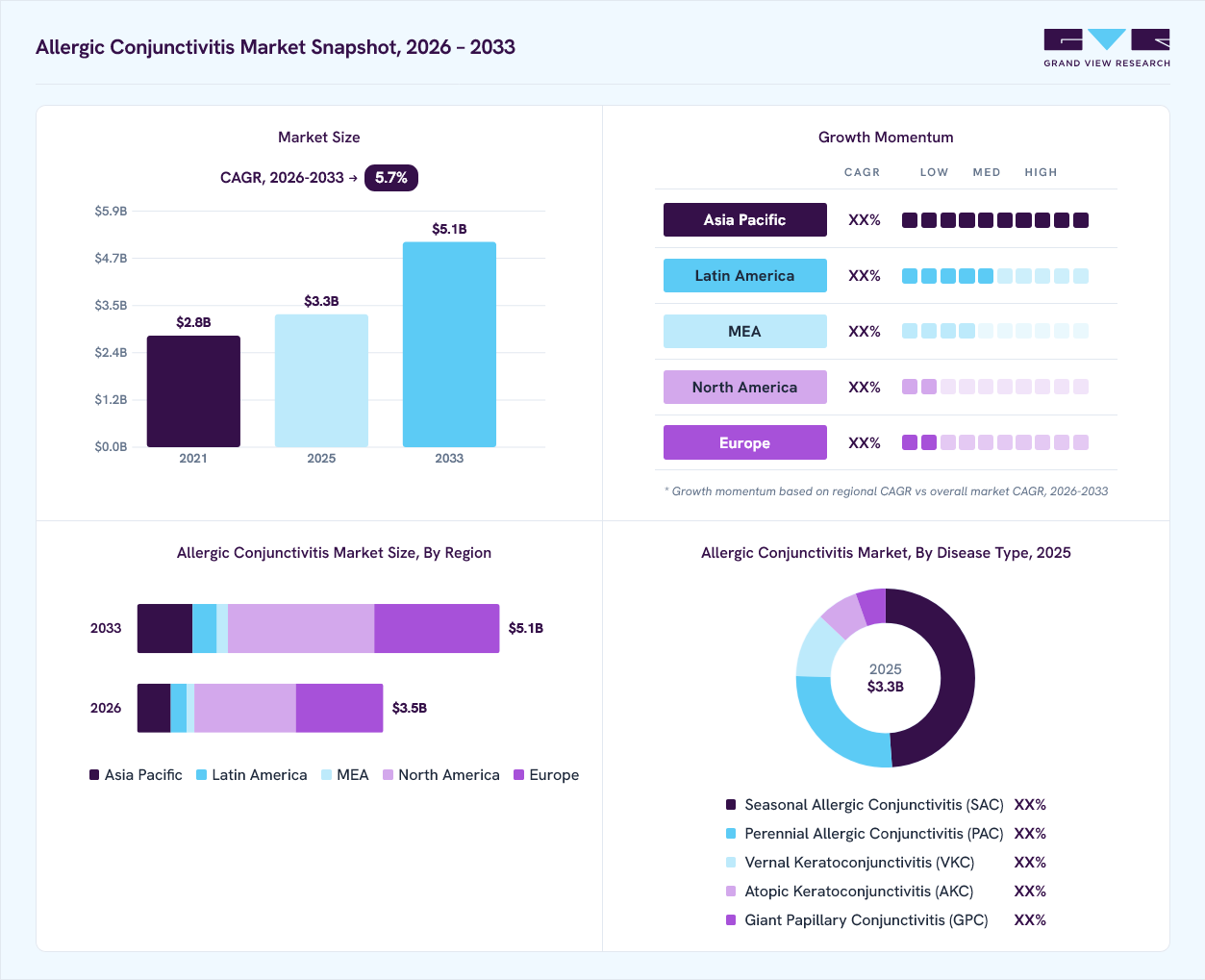
The global allergic conjunctivitis market size was valued at USD 3.3 billion in 2025 and is projected to grow from USD 3.5 billion in 2026 to USD 5.1 billion by 2033, at a CAGR of 5.7% from 2026 to 2033. North America dominated the market, accounting for the largest revenue share of 41.2% in 2025. The allergic conjunctivitis market is supported by the rising prevalence of seasonal and perennial allergies, increasing exposure to environmental allergens such as pollen, dust mites, mold, and air pollution, and growing awareness of eye allergy symptoms among patients and healthcare professionals.
 Source: Grand View Research, IR Documents, Primary Interviews, Paid DatabasesTo learn more about this report,
 Download Free Sample Report
Key Market Trends & Insights
- By disease type: Seasonal allergic conjunctivitis (SAC) segment held the highest market share of 48.8% in 2025.
- By drug class: Dual-action antihistamine & mast cell stabilizers segment held the highest market share of 35.8% in 2025.
- By route of administration: Topical ophthalmic segment held the highest market share of 77.1% in 2025.
- By prescription type: Prescription (Rx) segment held the highest market share of 48.2% in 2025.
- By distribution channel: Retail pharmacies segment held the highest market share in 2025.
Regional Highlights
- Largest regional market: North America (41.2% revenue share, 2025)
- Fastest-growing regional market: Asia Pacific (highest CAGR, 2026-2033)
- By country: The U.S. held the largest market share in 2025.
Market Size & Forecast
- Market size in 2025: USD 3.3 Billion
- Estimated market size in 2026: USD 3.5 Billion
- 2033 Projected Market Size: USD 5.1 Billion
- CAGR (2026-2033): 5.7%
Prism AI by Grand View Research Free to tryAsk a question about the allergic conjunctivitis marketTry asking✓Every figure cited from GVR research Prefer the report? Download free sample →
Changes in climate patterns and longer pollen seasons have contributed to a higher number of allergy episodes in many regions, increasing the demand for medical consultation and treatment. The market includes antihistamines, mast cell stabilizers, dual-action agents, corticosteroids, and lubricating eye drops, with prescription and over-the-counter products serving different patient needs. Pharmaceutical companies continue to focus on improving ocular formulations that provide rapid symptom relief and longer duration of action while maintaining safety for repeated use.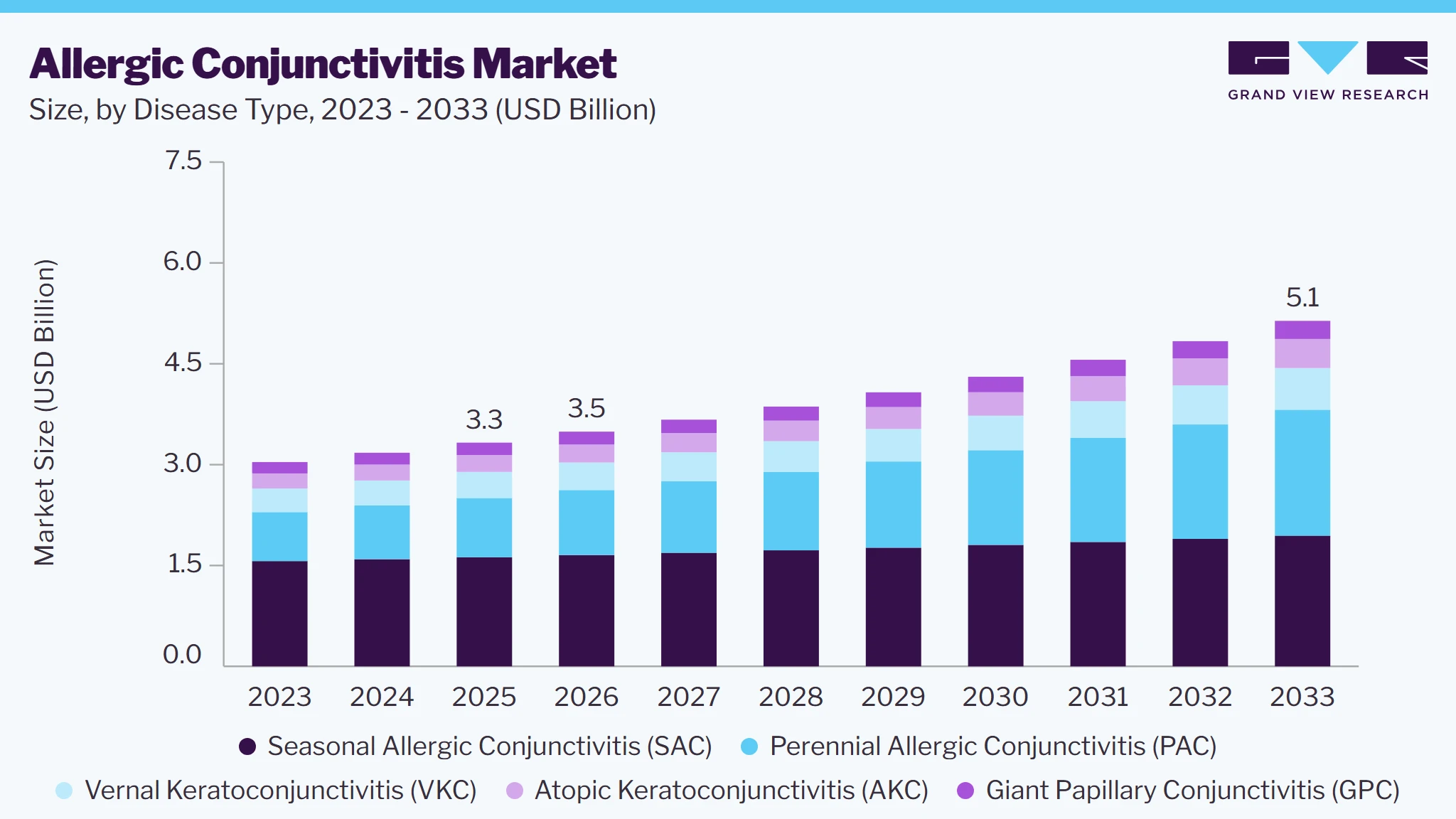 To learn more about this report, Download Free Sample Report
Retail pharmacies, hospital pharmacies, and online pharmacies play an important role in product availability. North America accounts for a significant share due to established diagnosis and treatment practices, while the Asia Pacific is witnessing steady growth supported by urbanization, rising healthcare access, increasing allergy awareness, and improving availability of ophthalmic treatments.
Market Dynamics
The rising prevalence of allergic eye diseases is a key driver of the allergic conjunctivitis market. Seasonal pollen exposure, air pollution, dust mites, pet dander, and changing environmental conditions have increased the number of patients experiencing itchy, red, and watery eyes. Allergic conjunctivitis affects both adults and children, resulting in repeated demand for antihistamine eye drops, mast cell stabilizers, dual-action therapies, corticosteroids for severe cases, and lubricating eye drops. Growing awareness of eye allergy symptoms has encouraged earlier diagnosis and treatment, while wider availability of prescription and over-the-counter ophthalmic products has improved patient access. Pharmaceutical companies are also expanding generic and branded ophthalmic portfolios, increasing product availability across retail and hospital pharmacies. The market continues to benefit from formulations designed to improve patient convenience and treatment adherence through reduced dosing frequency.
The allergic conjunctivitis market faces limitations due to the wide availability of low-cost generic ophthalmic products and the high level of self-medication among patients with mild symptoms. Many individuals manage seasonal eye allergies using over-the-counter antihistamine eye drops without consulting ophthalmologists, reducing prescription demand for newer products. Allergic conjunctivitis is also often confused with dry eye disease, viral conjunctivitis, or bacterial conjunctivitis, which can delay accurate diagnosis and appropriate treatment. In several developing countries, limited access to eye care specialists further affects diagnosis rates. Most patients experience temporary or seasonal symptoms that respond well to established therapies, reducing the need for premium-priced products. In addition, physicians generally reserve corticosteroid eye drops for short-term use because prolonged treatment may increase the risk of elevated intraocular pressure and cataract formation. These factors limit the adoption of newer therapies and create pricing pressure for manufacturers entering markets where multiple generic alternatives are already available.
The market presents opportunities through the development of innovative ophthalmic drug delivery systems that improve patient convenience and treatment adherence. Companies are focusing on formulations that reduce dosing frequency and provide longer ocular surface exposure compared with conventional eye drops. Strategic partnerships are also supporting wider commercialization of existing products by expanding physician outreach and geographic availability. These collaborations enable manufacturers to strengthen their market presence without developing entirely new therapies. Demand for differentiated formulations is increasing as healthcare providers seek options that improve treatment compliance, particularly for patients requiring repeated seasonal therapy. This creates opportunities for companies with novel delivery technologies and established ophthalmology portfolios. For instance, in July 2026, Santen Pharmaceutical Co., Ltd. and KYORIN Pharmaceutical Co., Ltd. entered into a joint marketing agreement in Japan for epinastine hydrochloride eyelid cream 0.5% for allergic conjunctivitis. Under the agreement, Santen continued manufacturing and distribution, while KYORIN expanded promotional activities beyond ophthalmology clinics, supporting broader product access across medical institutions.
Market Concentration & Characteristics
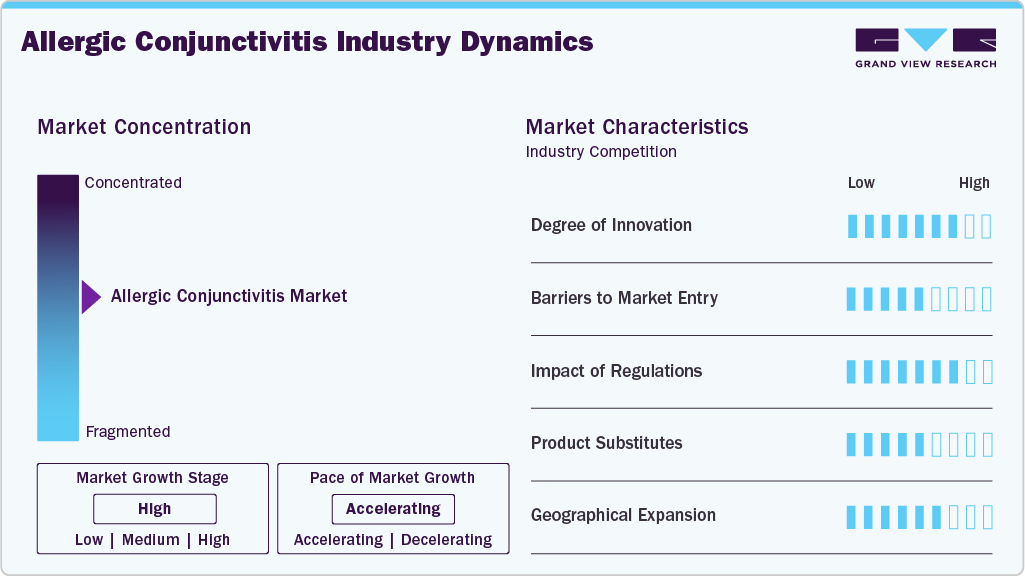
The degree of innovation in the allergic conjunctivitis market is moderate to high as companies continue to improve existing ophthalmic therapies rather than introducing entirely new drug classes. Product development is focused on preservative-free eye drops, dual-action antihistamine and mast cell stabilizer formulations, and drug delivery technologies that provide longer symptom relief with fewer daily doses. Manufacturers are also working on improving ocular bioavailability, reducing irritation after administration, and enhancing patient comfort. Research activities include new formulations for chronic allergy management and therapies with improved safety profiles for repeated seasonal use. In addition, companies are investing in digital manufacturing and advanced packaging to improve product stability and shelf life. While generic products account for a significant portion of the market, branded manufacturers continue to differentiate their products through formulation improvements, regulatory approvals, and expanded ophthalmology portfolios, supporting steady innovation across both developed and emerging markets.
The barriers to market entry in the allergic conjunctivitis market are moderate because manufacturers must comply with strict regulatory and manufacturing requirements while competing against well-established pharmaceutical companies. Developing sterile ophthalmic formulations requires specialized production facilities, validated manufacturing processes, and compliance with Good Manufacturing Practice (GMP) standards. Companies must also generate sufficient quality, safety, and clinical data to obtain regulatory approvals before commercialization. In addition, established companies have strong relationships with ophthalmologists, hospitals, retail pharmacy chains, and distributors, making market penetration more challenging for new entrants. However, the availability of off-patent active pharmaceutical ingredients such as antihistamines and mast cell stabilizers enables generic manufacturers to introduce cost-effective alternatives after patent expiry. Contract manufacturing organizations and licensing agreements also lower development costs for smaller companies, making entry possible despite regulatory and commercial challenges.
 To learn more about this report, Download Free Sample Report
The impact of regulations on the allergic conjunctivitis market is high because ophthalmic products are subject to strict oversight to ensure patient safety, product quality, and manufacturing consistency. Regulatory agencies such as the U.S. FDA, European Medicines Agency (EMA), and other national authorities require detailed evidence on sterility, formulation stability, manufacturing controls, labeling, and clinical performance before granting marketing approval. Manufacturers must comply with Good Manufacturing Practice (GMP) standards throughout production and maintain quality systems that support product consistency. Post-marketing safety monitoring is also required to identify adverse events and maintain regulatory compliance throughout the product lifecycle. Changes in regulatory requirements for preservatives, packaging materials, and manufacturing validation may increase development timelines and compliance costs. At the same time, clear regulatory pathways for generic ophthalmic products support competition and improve patient access to affordable treatment options across different healthcare markets.
The threat of product substitutes in the allergic conjunctivitis market is moderate because several treatment options are available depending on the severity and frequency of symptoms. Patients with mild allergic conjunctivitis often use artificial tears, cold compresses, allergen avoidance measures, or oral antihistamines to manage symptoms without prescription eye drops. Moderate and severe cases are commonly treated with topical antihistamines, mast cell stabilizers, dual-action agents, corticosteroids, or immunomodulatory therapies under medical supervision. The availability of multiple therapeutic approaches provides flexibility for physicians and patients but also increases competition among different treatment categories. Generic ophthalmic products further expand therapeutic choices by offering lower-cost alternatives to branded medicines. Although substitutes are widely available, topical ophthalmic therapies remain the preferred treatment for rapid relief of ocular symptoms because they deliver medication directly to the affected eye and generally produce fewer systemic effects than oral medications.
The geographical expansion of the allergic conjunctivitis market is moderate to high, supported by increasing diagnosis rates, expanding healthcare infrastructure, and wider access to ophthalmic medicines in developing regions. Pharmaceutical companies are strengthening their presence in Asia Pacific, Latin America, and the Middle East through distribution partnerships, local manufacturing, licensing agreements, and broader retail pharmacy networks. Rising urbanization, increasing exposure to environmental allergens, and growing awareness of allergic eye diseases are supporting demand for both prescription and over-the-counter ophthalmic products. Governments in several emerging economies are also improving access to essential medicines and expanding eye care services, creating opportunities for manufacturers to reach larger patient populations. At the same time, established markets such as North America and Europe continue to support business expansion through product line extensions, generic launches, and improved access across hospital, retail, and online pharmacy channels, contributing to balanced regional market development.
Analyst Perspective
The allergic conjunctivitis market is supported by the increasing prevalence of ocular allergies, growing awareness of eye health, and continued demand for prescription and over-the-counter ophthalmic therapies. Product improvements, wider generic availability, and expanding access through retail and online pharmacies are supporting market growth, while Asia Pacific presents significant opportunities for future expansion.
Disease Type Insights
The Seasonal Allergic Conjunctivitis (SAC) segment accounted for the largest market share of 48.8% in the allergic conjunctivitis market. The segment leads due to the high prevalence of seasonal pollen allergies across many regions, increasing exposure to airborne allergens, growing patient awareness of allergy-related eye symptoms, strong availability of prescription and over-the-counter ophthalmic therapies, routine diagnosis in ophthalmology and primary care practices, and broad access to retail pharmacies. The condition affects a large patient population during recurring allergy seasons, resulting in repeated demand for antihistamine and dual-action ophthalmic products. In addition, continued availability of generic medicines and established treatment guidelines supports consistent product utilization across developed and emerging markets. These factors continue to support the leading position of the Seasonal Allergic Conjunctivitis (SAC) segment.
The Perennial Allergic Conjunctivitis (PAC) segment is projected to grow at the fastest CAGR of 9.9% during the forecast period. Growth is supported by increasing exposure to indoor allergens such as dust mites, mold, and pet dander, rising urbanization, greater time spent indoors, and growing awareness of chronic allergic eye conditions. Patients with year-round symptoms require ongoing disease management, resulting in regular use of ophthalmic therapies and follow-up consultations. Improved diagnosis of persistent ocular allergies and wider availability of long-term treatment options are also supporting growth in the segment. Pharmaceutical companies continue to expand their ophthalmic portfolios with products suitable for chronic allergy management, while expanding retail and online pharmacy access improves treatment availability. These factors are expected to support the continued growth of the Perennial Allergic Conjunctivitis (PAC) segment.
Drug Class Insights
The dual-action antihistamine & mast cell stabilizer segment accounted for the largest market share, at 35.8%, in the allergic conjunctivitis market. The segment maintains its leading position by providing rapid symptom relief and preventing future allergic responses through a dual mechanism of action. High physician preference for first-line therapy, broad use across seasonal and perennial allergic conjunctivitis, strong availability of prescription and over-the-counter formulations, good patient compliance due to convenient dosing, and wide product availability across retail and hospital pharmacies continue to support demand in the segment. In addition, established clinical use and broad inclusion in treatment guidelines contribute to consistent product utilization across major markets. Continued product improvements and wider generic availability further strengthen the position of the dual-action antihistamine & mast cell stabilizers segment.
The immunomodulators segment is projected to grow at the fastest CAGR of 11.8% during the forecast period. Growth is supported by increasing diagnoses of chronic and severe allergic eye disorders requiring long-term inflammation control. Greater awareness among ophthalmologists regarding steroid-sparing treatment approaches, rising use of therapies for vernal and atopic keratoconjunctivitis, increasing availability of advanced ophthalmic formulations, growing focus on long-term disease management, and continued clinical research are contributing to segment expansion. Patients with persistent ocular inflammation require therapies that provide sustained immune regulation while reducing the risks associated with prolonged corticosteroid use. Expanding access to specialist eye care services and increasing adoption of immunomodulatory therapies in clinical practice are expected to support the continued growth of the immunomodulators segment.
Route of Administration Insights
The topical ophthalmic segment accounted for the largest market share of 77.1% in the allergic conjunctivitis market. The segment dominates due to direct drug delivery to the affected eye, rapid relief of itching and redness, lower systemic exposure compared to oral therapies, broad availability of prescription and over-the-counter eye drops, strong physician preference for localized treatment, and high patient acceptance for routine allergy management. Topical ophthalmic products are widely used across seasonal, perennial, and chronic allergic conjunctivitis, making them the standard treatment approach in clinical practice. Continuous introduction of preservative-free formulations, combination therapies, and generic products further supports product adoption. Wide availability through hospital, retail, and online pharmacies also contributes to sustained demand. These factors continue to strengthen the leading position of the Topical Ophthalmic segment.
The oral segment is projected to grow significantly at a CAGR of 14.5% during the forecast period. Growth is supported by the increasing prevalence of patients experiencing allergic conjunctivitis together with allergic rhinitis and other systemic allergic conditions, where oral antihistamines provide broader symptom control. Rising preference for convenient once-daily oral medications, growing availability of second-generation antihistamines with reduced sedative effects, increasing self-medication for seasonal allergies, expanding over-the-counter product availability, and improving patient awareness are supporting segment expansion. Oral therapies are also gaining use among patients who prefer systemic treatment or experience symptoms affecting multiple organs. Increasing access through retail and online pharmacies and continued expansion of oral allergy medicine portfolios are expected to support the continued growth of the oral segment.
Prescription Type Insights
The Prescription (Rx) segment accounted for the largest market share of 48.2% in the allergic conjunctivitis market. The segment leads due to the wide use of prescription therapies for moderate to severe allergic conjunctivitis, strong physician preference for clinically proven ophthalmic medicines, availability of advanced drug classes such as dual-action antihistamines, corticosteroids, and immunomodulators, regular ophthalmology consultations for persistent symptoms, and the need for medical supervision during long-term treatment. Prescription products are also preferred for patients with chronic ocular inflammation or inadequate response to over-the-counter therapies. Continued expansion of ophthalmic product portfolios and increasing diagnosis of allergic eye disorders further support prescription product demand. These factors continue to strengthen the leading position of the Prescription (Rx) segment.
The Over-the-Counter (OTC) segment is projected to grow significantly at a CAGR of 4.5% during the forecast period. Growth is supported by increasing awareness of allergic eye conditions, rising preference for self-management of mild seasonal symptoms, wider availability of OTC antihistamine eye drops, expanding retail and online pharmacy networks, and growing consumer demand for convenient and accessible treatment options. Patients with mild allergic conjunctivitis increasingly choose OTC products for rapid symptom relief without visiting a healthcare provider. The availability of generic products and continued expansion of non-prescription ophthalmic portfolios further support market growth. Increasing consumer confidence in approved OTC eye care products is expected to support the continued growth of the Over the Counter (OTC) segment.
Distribution Channel Insights
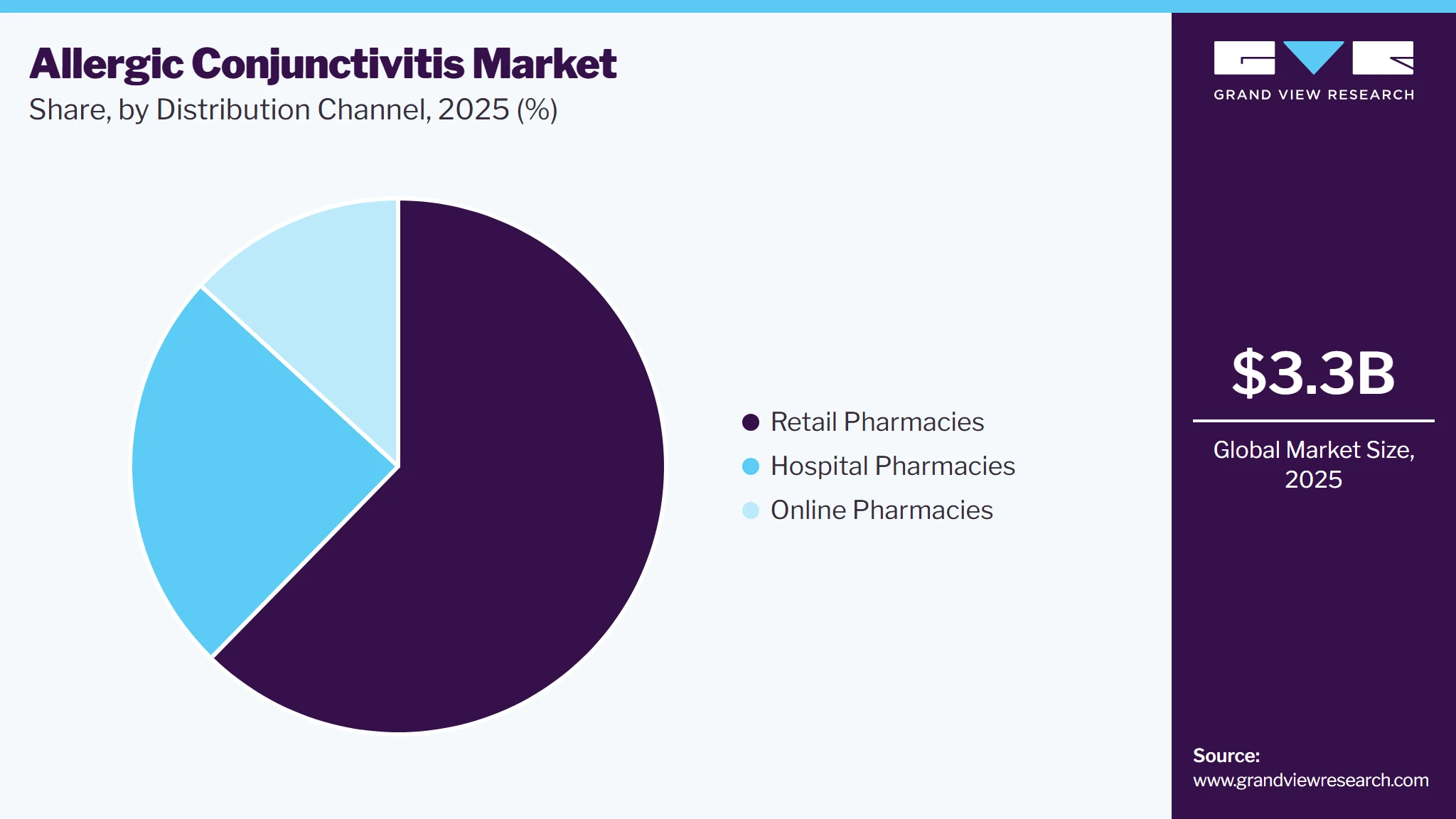
The retail pharmacies segment accounted for the largest market share of 62.3% in the allergic conjunctivitis market. The segment holds its leading position due to broad availability of prescription and over-the-counter ophthalmic products, easy patient access through community pharmacy networks, pharmacist support for product selection, immediate product availability without waiting for delivery, strong partnerships between pharmaceutical companies and retail pharmacy chains, and increasing demand for allergy treatments during seasonal allergy periods. Retail pharmacies also serve as the primary dispensing channel for prescription eye drops prescribed by ophthalmologists and primary care physicians. Their extensive geographic presence and ability to stock a wide range of branded and generic ophthalmic products support consistent product utilization. These factors continue to strengthen the leading position of the retail pharmacies segment.
 To learn more about this report, Download Free Sample Report
The online pharmacies segment is projected to grow significantly at a CAGR of 9.3% during the forecast period. Growth is supported by increasing consumer preference for digital purchasing, expanding e-pharmacy platforms, convenient home delivery services, competitive product pricing, wider availability of prescription refill services, and growing internet and smartphone penetration. Patients increasingly use online pharmacies to purchase both prescription and over-the-counter allergy medications, particularly for recurring seasonal treatment. Secure digital payment options, improved logistics, and access to a broad range of ophthalmic products further support adoption. Pharmaceutical companies are also expanding partnerships with online pharmacy platforms to improve product reach. These factors are expected to support the continued growth of the online pharmacies segment.
Regional Insights
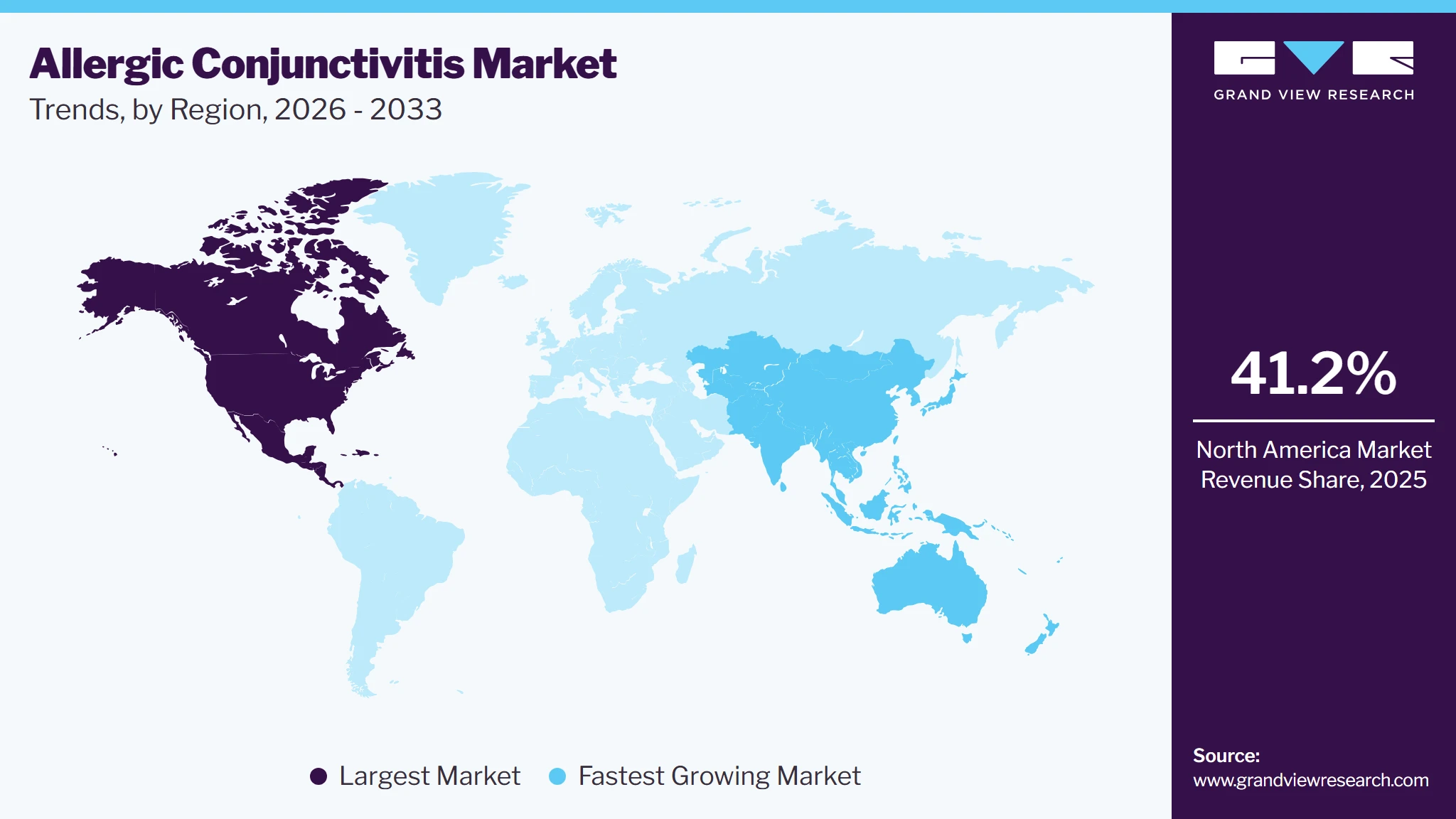
North America dominated the allergic conjunctivitis market with a market share of 41.2% in 2025 due to the high prevalence of seasonal and perennial allergies across the region. Strong awareness of allergic eye diseases encourages early diagnosis and timely treatment. Ophthalmologists and primary care physicians routinely prescribe topical antihistamines and combination therapies for symptom management. Wide availability of prescription and over-the-counter ophthalmic products supports consistent patient access. Established pharmaceutical companies continue to expand their ophthalmology portfolios, strengthening the regional market position.
 To learn more about this report, Download Free Sample Report
U.S. Allergic Conjunctivitis Market Trends
The U.S. accounted for the largest share within North America, supported by a large patient population affected by pollen, dust, and environmental allergens. High utilization of ophthalmic healthcare services increases the diagnosis of allergic conjunctivitis. Retail pharmacy chains and online pharmacies provide broad access to prescription and non-prescription eye care products. Continuous product launches and generic availability improve treatment options across different patient groups. Strong presence of leading ophthalmic manufacturers supports ongoing market growth.
Europe Allergic Conjunctivitis Market Trends
Europe maintained a significant position in the allergic conjunctivitis market due to increasing allergy incidence and established ophthalmic care services. Healthcare professionals widely adopt evidence-based treatment approaches for allergic eye diseases. Growing demand for preservative-free formulations and combination therapies supports product adoption. Expansion of generic ophthalmic products improves treatment accessibility across several countries. Continuous investment in ophthalmology research supports product development and market expansion.
The UK allergic conjunctivitis market is supported by increasing cases of seasonal allergies and growing awareness of eye health. Patients seek medical care earlier for persistent allergy symptoms, improving treatment rates. Community pharmacies play an important role in supplying over-the-counter allergy medications. Ophthalmologists continue to adopt advanced topical therapies for patients with moderate and severe symptoms. The presence of established pharmaceutical companies supports stable product availability.
Germany allergic conjunctivitis market represents an important market due to its advanced ophthalmic care infrastructure and strong pharmaceutical industry. Allergic conjunctivitis diagnosis is supported by broad access to eye care specialists and allergy clinics. Demand for preservative-free ophthalmic products continues to increase among patients requiring repeated treatment. Generic competition improves product accessibility across retail and hospital pharmacies. Continuous research in ophthalmology supports the introduction of improved ocular formulations.
France allergic conjunctivitis market maintains steady demand for allergic conjunctivitis treatments through well-established ophthalmic practice and increasing allergy awareness. Physicians regularly prescribe topical therapies based on disease severity and patient requirements. Availability of both branded and generic ophthalmic products supports treatment access. Rising exposure to environmental allergens contributes to continued demand for allergy medications. Pharmaceutical companies continue expanding their ophthalmology product offerings across the country.
Asia Pacific Allergic Conjunctivitis Market Trends
Asia Pacific is projected to register the fastest CAGR of 7.4% during the forecast period in the allergic conjunctivitis market. Rapid urbanization and increasing exposure to environmental pollution contribute to higher allergy incidence across the region. Expanding healthcare infrastructure improves access to ophthalmic diagnosis and treatment. Rising awareness of allergic eye diseases encourages earlier medical consultation. Increasing availability of branded and generic ophthalmic products supports market expansion across developing economies.
Japan allergic conjunctivitis market remains an important market due to the high occurrence of seasonal pollen allergies and strong patient awareness of allergic eye diseases. Ophthalmologists routinely manage allergic conjunctivitis using advanced topical therapies. Demand for preservative-free and patient-friendly ophthalmic formulations continues to increase. Strong pharmaceutical research supports the development of improved ocular products. Well-developed pharmacy networks ensure broad availability of allergy treatments throughout the country.
China allergic conjunctivitis market is experiencing steady growth in the allergic conjunctivitis market with increasing urbanization and rising exposure to airborne allergens. Growing awareness of eye allergies encourages greater use of ophthalmic healthcare services. Expansion of domestic pharmaceutical manufacturing improves the availability of affordable treatment options. Retail pharmacy networks continue to expand across urban and semi-urban areas. Increasing diagnosis rates support continued demand for ophthalmic allergy therapies.
Latin America Allergic Conjunctivitis Market Trends
The Latin American allergic conjunctivitis market is expanding with increasing recognition of allergic eye diseases across the region. Urban population growth and changing environmental conditions contribute to higher allergy prevalence. Access to ophthalmic medicines continues to improve through expanding pharmacy networks. Generic ophthalmic products support treatment affordability for a broader patient population. International pharmaceutical companies continue strengthening their commercial presence across major Latin American countries.
Brazil allergic conjunctivitis market represents the largest market in Latin America due to its large patient population and increasing burden of allergic diseases. Rising awareness of ocular allergy symptoms supports earlier diagnosis and treatment. The growing availability of ophthalmic medicines improves access across retail pharmacies. Physicians continue to adopt topical antihistamines and combination therapies for symptom control. Expansion of pharmaceutical distribution networks supports continued market development.
Middle East & Africa Allergic Conjunctivitis Market Trends
The Middle East & Africa allergic conjunctivitis market is growing steadily, driven by increasing awareness of allergic eye disorders and improving access to ophthalmic care. Dry climate conditions and airborne dust contribute to frequent allergy symptoms in several countries. Healthcare providers are expanding the use of topical allergy treatments in routine clinical practice. International manufacturers continue strengthening product availability through regional distribution partnerships. Increasing access to ophthalmic medicines supports gradual market expansion.
Saudi Arabia allergic conjunctivitis market is one of the leading markets in the Middle East due to frequent exposure to dust, sand, and airborne allergens. Rising awareness of allergic eye conditions encourages patients to seek medical treatment at an earlier stage. Hospitals and retail pharmacies maintain good availability of prescription and over-the-counter ophthalmic products. Growing presence of international pharmaceutical companies supports access to modern allergy therapies. Expansion of specialized eye care services continues to strengthen the allergic conjunctivitis market in the country.
Key Allergic Conjunctivitis Company Insights
The allergic conjunctivitis market is moderately concentrated, with a mix of global ophthalmology companies and large generic pharmaceutical manufacturers competing across prescription and over-the-counter products. Alcon, Bausch + Lomb, AbbVie Inc. (Allergan), and Santen Pharmaceutical Co., Ltd. hold leading positions through broad ophthalmic portfolios, established physician relationships, and global distribution networks. Sun Pharmaceutical Industries Ltd., Teva Pharmaceutical Industries Ltd., Viatris Inc., Harrow, Johnson & Johnson Vision, and Nicox SA strengthen competition through generic products, specialty ophthalmic medicines, product licensing, and portfolio expansion. Market competition is driven by formulation improvements, regulatory approvals, geographic expansion, and wider pharmacy access. Generic manufacturers compete on product availability and pricing, while branded companies focus on differentiated formulations, ophthalmology expertise, and portfolio expansion. This competitive structure supports steady product availability and continued product development across developed and emerging markets.
Key Allergic Conjunctivitis Companies
The following key companies have been profiled for this study on the allergic conjunctivitis market.
-
Alcon
-
Bausch + Lomb
-
AbbVie Inc. (Allergan)
-
Santen Pharmaceutical Co., Ltd.
-
Sun Pharmaceutical Industries Ltd.
-
Teva Pharmaceutical Industries Ltd.
-
Viatris Inc.
-
Harrow
-
Johnson & Johnson Vision
-
Nicox SA
-
Dr. Reddy’s Laboratories Ltd.
Competitive Benchmarking
Operating Strategies
Competitive Edge
Weaknesses
Mature Players: Alcon
- Mature companies focus on expanding their ophthalmic product portfolios through new product approvals, lifecycle management, and formulation improvements.
- They strengthen their position by investing in ophthalmology research, improving manufacturing capabilities, expanding distribution networks, and increasing collaboration with eye care professionals.
- These companies also focus on geographic expansion, product quality, and wider retail and hospital pharmacy availability to support long-term business growth.
- These companies benefit from established ophthalmology brands, broad product portfolios, and strong relationships with ophthalmologists and healthcare providers.
- Their global manufacturing capabilities, regulatory experience, and extensive commercial networks support consistent product supply across multiple regions.
- Continuous investment in research, product development, and portfolio expansion helps them maintain a strong position in the allergic conjunctivitis market.
- Mature companies face pricing pressure from generic manufacturers and increasing competition across established ophthalmic products.
- They also manage high research, manufacturing, and regulatory compliance costs while maintaining product quality standards.
- Large organizational structures may reduce operational flexibility and increase the time required to introduce new products or respond to changing market demand.
Emerging Players: Viatris Inc.
- Emerging companies focus on expanding their ophthalmic business through generic products, specialty eye care medicines, licensing agreements, acquisitions, and strategic partnerships.
- They emphasize cost-effective manufacturing, portfolio expansion, and entry into new regional markets.
- Many companies also invest in differentiated ophthalmic formulations to strengthen their presence in eye care while improving commercial reach through retail pharmacy and distribution partnerships.
- Emerging companies compete through affordable products, flexible business models, and expanding ophthalmic portfolios.
- Their focus on generic medicines, specialty products, and targeted acquisitions allows them to increase market presence with lower development costs.
- Strategic partnerships and regional expansion further improve product availability and strengthen their competitive position in developing and established markets.
- Emerging companies generally have smaller ophthalmology portfolios and lower brand recognition than established market leaders.
- They face strong competition from companies with larger commercial networks and established physician relationships.
- Limited global distribution in certain regions, dependence on licensing opportunities, and pricing competition from other generic manufacturers can affect business expansion and market penetration.
Recent Developments:
-
In June 2026, Harrow re-launched cyclosporine ophthalmic emulsion 0.1% in the U.S. for the treatment of vernal keratoconjunctivitis (VKC), supported by physician education, patient access, and affordability initiatives.
-
In January 2026, Dr. Reddy's Laboratories Ltd. launched olopatadine hydrochloride ophthalmic solution USP 0.7% in the U.S. following U.S. FDA approval. The over-the-counter ophthalmic antihistamine was introduced for the temporary relief of itchy eyes associated with allergic conjunctivitis caused by pollen, ragweed, grass, animal hair, and dander, expanding access to affordable allergy eye treatments.
-
In December 2025, Santen Pharmaceutical Co., Ltd. launched ciclosporin eye drops in China for the treatment of severe vernal keratoconjunctivitis (VKC) in children and young adults.
Allergic Conjunctivitis Market Report Scope
Report Attribute
Details
Market size in 2025
USD 3.3 billion
Estimated market size in 2026
USD 3.5 billion
Projected market size by 2033
USD 5.1 billion
Growth rate
CAGR of 5.7% from 2026 to 2033
Base year for estimation
2025
Historical data
2021 – 2024
Forecast period
2026 – 2033
Quantitative units
Revenue in USD billion and CAGR from 2026 to 2033
Report coverage
Revenue forecast, company ranking, competitive landscape, growth factors, trends
Segments covered
Disease type, drug class, route of administration, prescription type, distribution channel, region
Regional scope
North America; Europe; Asia Pacific; Latin America; Middle East & Africa
Country scope
U.S.; Canada; Mexico; UK; Germany; France; Italy; Spain; Denmark; Sweden; Norway; China; Japan; India; Australia; South Korea; Thailand; Brazil; Argentina; South Africa; Saudi Arabia; UAE; Kuwait
Key company profiled
Alcon; Bausch + Lomb; AbbVie Inc. (Allergan); Santen Pharmaceutical Co., Ltd.; Sun Pharmaceutical Industries Ltd.; Teva Pharmaceutical Industries Ltd.; Viatris Inc.; Harrow; Johnson & Johnson Vision; Nicox SA; Dr. Reddy’s Laboratories Ltd.
Customization scope
Free report customization (equivalent up to 8 analysts working days) with purchase. Addition or alteration to country, regional & segment scope.
Pricing and purchase options
Avail customized purchase options to meet your exact research needs. Explore purchase options
Global Allergic Conjunctivitis Market Report Segmentation
This report forecasts revenue growth at global, regional, and country levels and provides an analysis of the latest industry trends in each of the sub-segments from 2021 to 2033. For this study, Grand View Research has segmented the global allergic conjunctivitis market report based on disease type, drug class, route of administration, prescription type, distribution channel, and region:
-
Disease Type Outlook (Revenue, USD Million, 2021 – 2033)
-
Seasonal Allergic Conjunctivitis (SAC)
-
Perennial Allergic Conjunctivitis (PAC)
-
Vernal Keratoconjunctivitis (VKC)
-
Atopic Keratoconjunctivitis (AKC)
-
Giant Papillary Conjunctivitis (GPC)
-
-
Drug Class Outlook (Revenue, USD Million, 2021 – 2033)
-
Dual-Action Antihistamine & Mast Cell Stabilizers
-
Mast Cell Stabilizers
-
Corticosteroids
-
Immunomodulators
-
NSAIDs
-
Vasoconstrictor Combinations
-
Oral Antihistamines
-
Others
-
-
Route of Administration Outlook (Revenue, USD Million, 2021 – 2033)
-
Topical Ophthalmic
-
Oral
-
Others
-
-
Prescription Type Outlook (Revenue, USD Million, 2021 – 2033)
-
Prescription (Rx)
-
Over the Counter (OTC)
-
-
Distribution Channel Outlook (Revenue, USD Million, 2021 – 2033)
-
Hospital Pharmacies
-
Retail Pharmacies
-
Online Pharmacies
-
-
Regional Outlook (Revenue, USD Million, 2021 - 2033)
-
North America
-
U.S.
-
Canada
-
Mexico
-
-
Europe
-
UK
-
Germany
-
France
-
Italy
-
Spain
-
Denmark
-
Sweden
-
Norway
-
-
Asia Pacific
-
Japan
-
China
-
India
-
Australia
-
South Korea
-
Thailand
-
-
Latin America
-
Brazil
-
Argentina
-
-
Middle East & Africa
-
South Africa
-
Saudi Arabia
-
UAE
-
Kuwait
-
-
Research Methodology
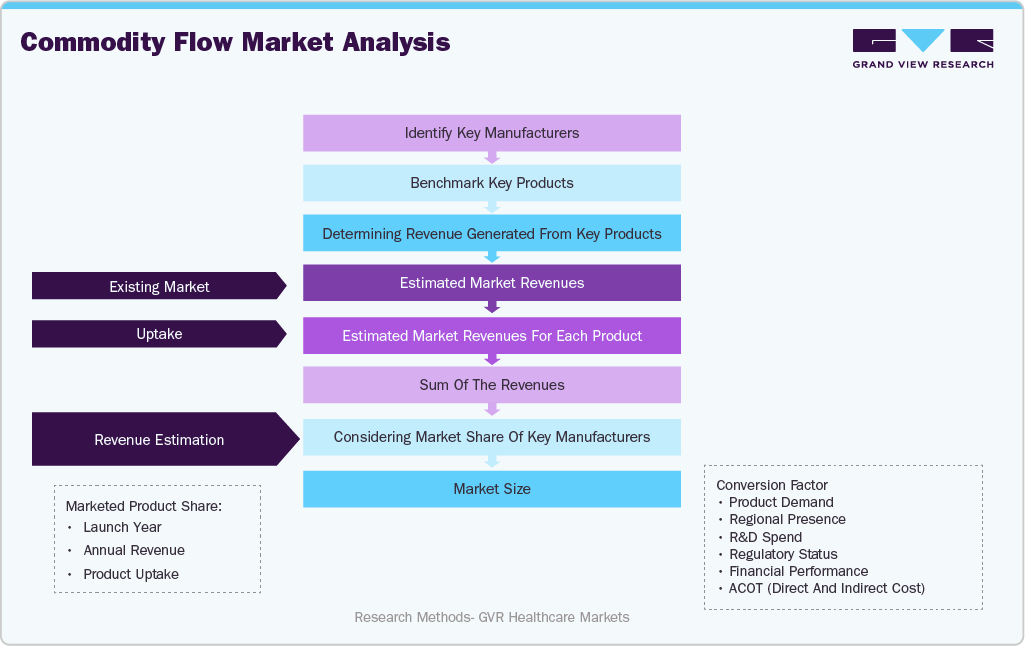
The allergic conjunctivitis market was estimated using a revenue-based (commodity flow) approach. The study identified major manufacturers offering antihistamine eye drops, mast cell stabilizers, dual-action therapies, corticosteroid eye drops, and lubricating ophthalmic products used for allergic conjunctivitis management. Key products were benchmarked based on product type, regional availability, pricing, prescription trends, distribution channels, patent status, and commercial presence. Product-level revenue estimates were developed using company annual reports, investor presentations, regulatory filings, company press releases, healthcare databases, and pharmaceutical industry publications. Revenue generated by major products was aggregated to estimate the existing market and adjusted by considering the market share of leading manufacturers across key regions. The findings were validated through prescription volumes, ophthalmology treatment patterns, pharmacy sales data, product pricing, and interviews with ophthalmologists, distributors, and industry experts to ensure reliable market estimates.
Segment Definition
Segment - Disease Type
Revenue capture definition
Seasonal Allergic Conjunctivitis (SAC)
Includes treatments used for patients diagnosed with seasonal allergic conjunctivitis associated with seasonal airborne allergens such as tree, grass, and weed pollen. This segment covers therapies intended for managing recurrent ocular allergy symptoms occurring during defined allergy seasons.
Perennial Allergic Conjunctivitis (PAC)
Includes treatments used for patients diagnosed with perennial allergic conjunctivitis associated with continuous exposure to indoor allergens such as dust mites, pet dander, and mold. This segment covers therapies used for year-round symptom management.
Vernal Keratoconjunctivitis (VKC)
Includes treatments indicated for patients diagnosed with vernal keratoconjunctivitis, a chronic allergic ocular disorder that commonly affects children and adolescents. The segment covers therapies used to control ocular inflammation and associated clinical symptoms.
Atopic Keratoconjunctivitis (AKC)
Includes treatments indicated for patients diagnosed with atopic keratoconjunctivitis, a chronic allergic eye disorder commonly associated with atopic diseases. The segment covers therapies used for long-term control of ocular inflammation and symptom management.
Giant Papillary Conjunctivitis (GPC)
Includes treatments used for patients diagnosed with giant papillary conjunctivitis associated with contact lens wear, ocular prostheses, or chronic mechanical irritation. This segment covers therapies intended to reduce inflammation and relieve ocular symptoms.
Segment - Drug Class
Revenue capture definition
Dual-Action Antihistamine & Mast Cell Stabilizers
Includes ophthalmic drugs that combine antihistamine activity with mast cell stabilization to provide rapid symptom relief while reducing future allergic responses. This segment covers combination therapies used as first-line treatment for allergic conjunctivitis.
Mast Cell Stabilizers
Includes ophthalmic therapies that prevent mast cell activation and inhibit the release of inflammatory mediators responsible for allergic reactions. These products are primarily used for preventive management in recurrent allergic conjunctivitis.
Corticosteroids
Includes topical ophthalmic corticosteroids indicated for controlling moderate to severe ocular inflammation in patients with allergic conjunctivitis when additional anti-inflammatory treatment is required.
Immunomodulators
Includes ophthalmic therapies that regulate immune responses to control persistent ocular inflammation in chronic or severe allergic conjunctivitis. These products are generally used for long-term disease management under specialist supervision.
NSAIDs
Includes ophthalmic non-steroidal anti-inflammatory drugs indicated for reducing ocular inflammation and discomfort associated with allergic conjunctivitis. These therapies are used in selected clinical situations based on patient needs.
Vasoconstrictor Combinations
Includes ophthalmic products containing vasoconstrictors in combination with other active ingredients to reduce ocular redness while providing temporary relief from allergy-related eye symptoms.
Oral Antihistamines
Includes systemic antihistamine medicines administered orally to manage allergic conjunctivitis, particularly in patients experiencing ocular symptoms together with systemic allergic conditions.
Others
Includes drug classes used in allergic conjunctivitis management that are not classified under the specified categories, including supportive ophthalmic therapies used in selected clinical situations.
Segment - Route of Administration
Revenue capture definition
Topical Ophthalmic
Includes medications administered directly to the eye as ophthalmic solutions, suspensions, gels, or ointments for localized treatment of allergic conjunctivitis.
Oral
Includes systemic medications administered by mouth for managing allergic conjunctivitis, particularly in patients with accompanying systemic allergic disorders.
Others
Includes routes of administration other than topical ophthalmic and oral that are used in selected clinical situations for allergic conjunctivitis management.
Segment - Prescription Type
Revenue capture definition
Prescription (Rx)
Includes allergic conjunctivitis treatments that require authorization from a licensed healthcare professional before dispensing through hospitals, clinics, or pharmacies.
Over the Counter (OTC)
Includes allergic conjunctivitis treatments that can be purchased without a prescription for the management of mild to moderate allergy symptoms according to approved product labeling.
Segment - Distribution Channel
Revenue capture definition
Hospital Pharmacies
Includes allergic conjunctivitis products supplied through hospital pharmacies for inpatient and outpatient dispensing under the supervision of healthcare professionals.
Retail Pharmacies
Includes allergic conjunctivitis products distributed through community pharmacies, chain pharmacies, and independent drug stores for prescription and over-the-counter sales.
Online Pharmacies
Includes allergic conjunctivitis products dispensed through licensed digital pharmacy platforms that provide prescription and over-the-counter ophthalmic therapies through online ordering and home delivery.
Estimation Model
 To learn more about this report, Download Free Sample Report
Delivered Customizations
This report has been delivered with the following In-depth customizations
Client Request
Customization Delivered
Value Adds
Global Allergic Conjunctivitis Market Opportunity Assessment (U.S., Europe & Asia-Pacific)
Conducted a detailed assessment of allergic conjunctivitis treatment opportunities across the U.S., Germany, France, the UK, China, Japan, and India. The study evaluated disease prevalence, seasonal and perennial allergy patterns, treatment practices, product availability, prescribing trends, distribution channels, pricing benchmarks, and patient access across major healthcare markets.
Helped the client identify high-growth regional opportunities, evaluate product positioning, assess pricing strategies, and prioritize regional expansion. The study also supported long-term business planning by identifying unmet patient needs, treatment adoption trends, and commercial opportunities across developed and emerging ophthalmology markets.
Allergic Conjunctivitis Treatment Pipeline & Competitive Benchmarking
Delivered a benchmarking analysis of approved and pipeline allergic conjunctivitis therapies. The assessment covered antihistamines, mast cell stabilizers, dual-action agents, corticosteroids, lubricating eye drops, clinical-stage products, licensing activities, strategic collaborations, manufacturing capabilities, intellectual property positioning, and commercialization opportunities across major global markets.
Enabled the client to identify licensing and acquisition opportunities, evaluate product pipeline strength, and prioritize investment decisions in ophthalmic therapies. The analysis also supported portfolio expansion, partnership evaluation, and competitive intelligence while improving long-term commercialization strategies within the allergic conjunctivitis market.
Emerging Market Allergic Conjunctivitis Accessibility & Distribution Feasibility Study
Conducted a country-level feasibility assessment for expanding allergic conjunctivitis treatment access across Brazil, Saudi Arabia, South Africa, Indonesia, Mexico, and the UAE. The study analyzed ophthalmic care infrastructure, product availability, distribution networks, pharmacy access, regulatory pathways, treatment accessibility, and healthcare delivery capabilities supporting allergic eye disease management.
Supported market entry planning by identifying regions with increasing demand for ophthalmic allergy treatments, distribution opportunities, infrastructure gaps, and patient access requirements. The study also helped improve resource allocation, strengthen regional expansion strategies, and identify commercial opportunities across underserved ophthalmology markets.
Frequently Asked Questions About This Report
Key factors include the rising prevalence of ocular allergies, increasing exposure to pollen, dust, mold, pet dander, and air pollution, longer pollen seasons, growing awareness of eye allergies, and wider availability of prescription and over-the-counter ophthalmic treatments.
North America dominated the allergic conjunctivitis market with a 41.2% revenue share in 2025, supported by high allergy prevalence, established diagnosis and treatment practices, and broad availability of ophthalmic products.
Asia Pacific is the fastest-growing region, with the market projected to register a 7.4% CAGR during the forecast period, supported by urbanization, increasing environmental pollution, expanding healthcare infrastructure, and growing awareness of allergic eye diseases.
The Seasonal Allergic Conjunctivitis (SAC) segment led the market with a 48.8% revenue share in 2025, while Perennial Allergic Conjunctivitis (PAC) is the fastest-growing disease type, with a 9.9% CAGR from 2026 to 2033.
The dual-action antihistamine & mast cell stabilizers segment dominated with a 35.8% revenue share in 2025, while immunomodulators are projected to be the fastest-growing drug class, with an 11.8% CAGR during 2026–2033.
The topical ophthalmic segment led the market with a 77.1% revenue share in 2025, reflecting the widespread use of ophthalmic drops and other locally administered treatments for allergic eye symptoms.
Key players include Alcon; Bausch + Lomb; AbbVie Inc. (Allergan); Santen Pharmaceutical Co., Ltd.; Sun Pharmaceutical Industries Ltd.; Teva Pharmaceutical Industries Ltd.; Viatris Inc.; Harrow; Johnson & Johnson Vision; Nicox SA; Dr. Reddy’s Laboratories Ltd.
The global allergic conjunctivitis market size was valued at USD 3.3 billion in 2025 and is estimated at USD 3.5 billion for 2026.
The global allergic conjunctivitis market is expected to grow at a CAGR of 5.7% from 2026 to 2033, reaching USD 5.1 billion by 2033
About the Author(s)
Pharmaceuticals Research Team
Healthcare · PharmaceuticalsThis report was authored by the pharmaceuticals research team at Grand View Research - comprising two research analysts, one senior research analyst, and one industry expert - with specialized expertise in the pharmaceuticals segment of the healthcare industry. All findings are based on proprietary healthcare databases, executive interviews, and regulatory analysis, subject to internal peer review prior to publication.
Last Updated:
Speak to Analyst

Customize this report to your needs - add regions, segments, or data points, with 20% free customization.
Or view our licence options:


ISO 9001:2015 & 27001:2022 Certified
We are GDPR and CCPA compliant! Your transaction & personal information is safe and secure. For more details, please read our privacy policy.


