
- Home
- »
- Consumer F&B
- »
-
Almond Butter Market Size, Growth Report, 2026-2033GVR Report cover

Almond Butter Market (2026 - 2033)
Size, Share & Trends Analysis Report By Nature (Organic, Conventional), By Distribution Channel (B2B, B2C), By Region, And Segment Forecasts
Market Size, 2025
$900.0MMarket Estimate, 2026
$1,000.0MMarket Forecast, 2033
$1,600.0MCAGR, 2026–2033
7.8%Almond Butter Market Summary
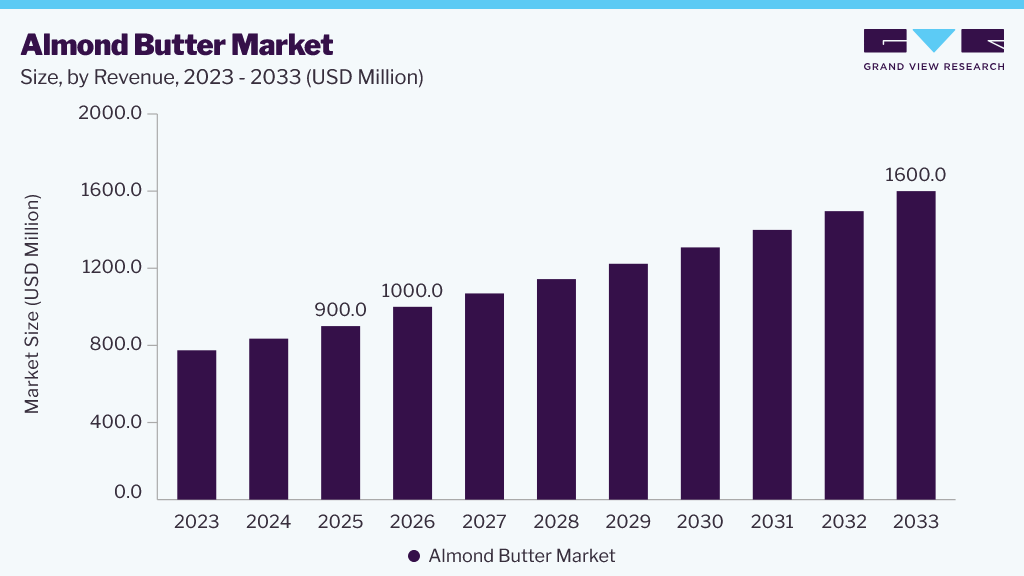
The global almond butter market size was valued at USD 900.0 Million in 2025 and is projected to grow from USD 1,000.0 Million in 2026 to USD 1,600.0 Million by 2033, at a CAGR of 7.8% from 2026 to 2033. Europe dominated the market, accounting for a revenue share of 36.0% in 2025. Almond butter is rich in plant-based protein, monounsaturated fats, and antioxidant properties. It is a popular, nutritious alternative for consumers with peanut allergies. The rise of health-conscious consumers, particularly in developed economies, has been a major driver of almond butter demand in recent years.
 Source: Grand View Research, IR Documents, Primary Interviews, Paid DatabasesTo learn more about this report,
 Download Free Sample Report
Key Market Trends & Insights
- By nature: The conventional segment held the largest market share of around 89.0% in 2025.
- By distribution channel: The B2C segment held the largest market share of over 60.0% in 2025.
Regional Highlights
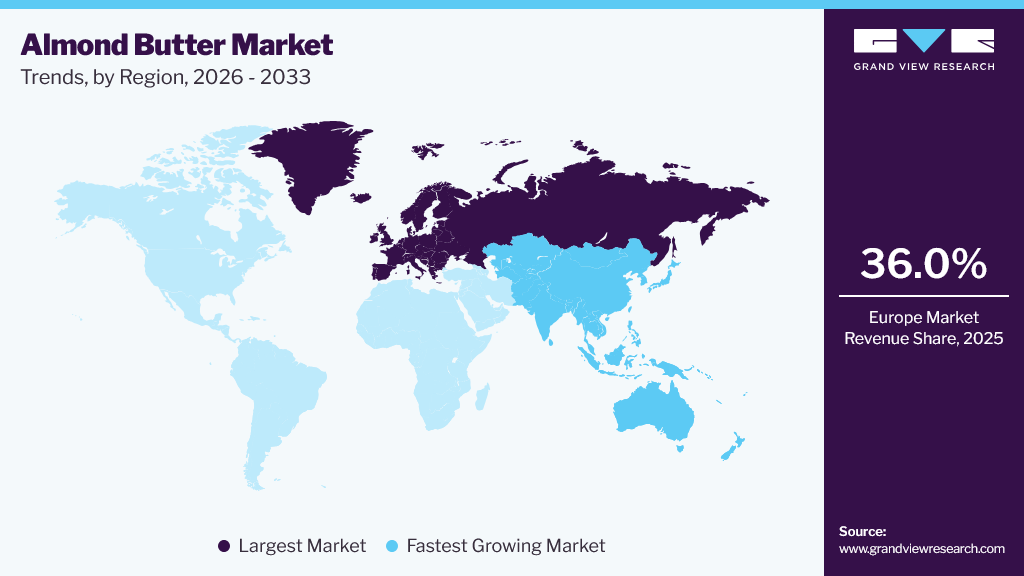
- Largest regional market: Europe (36.0% revenue share, 2025)
- Fastest-growing regional market: Asia Pacific (highest CAGR, 2026-2033)
Market Size & Forecast
- Market size in 2025: USD 900.0 Million
- Estimated market size in 2026: USD 1,000.0 Million
- Projected market size by 2033: USD 1,600.0 Million
- CAGR (2026-2033): 7.8%
Prism AI by Grand View Research Free to tryAsk a question about the almond butter marketTry asking✓Every figure cited from GVR research Prefer the report? Download free sample →The growing popularity of plant-based diets and the broader adoption of healthy eating contribute to market growth. For instance, according to the 2025 Food & Health Survey conducted by the International Food Information Council (IFIC), 57% of Americans followed a specific eating pattern or diet in the past year, reflecting growing consumer focus on health and nutrition and supporting demand for nutrient-dense foods. Moreover, the survey says that, in 2025, the top diets Americans follow are high-protein (23%) and mindful eating (19%). Due to these trends and growing awareness of healthy diets, the almond butter market is growing rapidly.
In addition, the growing number of lactose-intolerant individuals has increased demand for lactose-free products, including almond butter, thereby supporting market expansion. Moreover, the market for almond butter is anticipated to grow rapidly in the coming years due to the rise in the vegan population, particularly in developed nations, and the rapid expansion of online platforms. For instance, the 2024 IFIC Food & Health Survey found that 71% of Americans are actively trying to consume more protein, up from 67% in 2023 and 59% in 2022. Since almond butter is recognized as a plant-based source of protein and healthy fats, this trend supports its growing consumption among health-conscious consumers.
The U.S. almond butter market has grown in recent years, driven by rising adoption of organic products and consumers' growing health consciousness. Moreover, with the increasing concern about heart disease and diabetes in the U.S., the government is also taking initiatives to raise awareness about such diseases and implement control measures.
Market Dynamics
The almond butter market is driven by increasing health awareness, rising adoption of plant-based diets, and growing demand for clean-label, nutrient-rich food products. Consumers are choosing almond butter for its high protein content, healthy fats, and functional health benefits. However, fluctuations in almond supply, raw material prices, and production costs continue to pose challenges for market participants. At the same time, the growing demand for premium, organic, and value-added almond butter products, supported by expanding e-commerce channels, is creating significant opportunities for manufacturers worldwide.
Increasing health awareness and the shift toward plant-based, clean-label diets are driving growth in the almond butter market. The shift toward conscious eating is accelerating, driven by a growing desire to prevent chronic conditions such as cardiovascular disease and diabetes. Plant-based nutrition prioritizes whole, nutrient-dense foods to optimize long-term health and sustainability. Consumers are actively seeking nutrient-dense foods with high protein, healthy fats, and minimal processing, which is significantly boosting demand for almond-based spreads. The growing adoption of vegan, vegetarian, and flexitarian lifestyles is further accelerating consumption across developed economies. In addition, increasing awareness of functional foods that support heart health, weight management, and overall wellness is contributing to sustained market growth. These trends reflect a growing consumer preference for almond-based products, driven by health and wellness.
Fluctuations in almond supply and raw material prices pose a significant challenge for the almond butter market. These challenges are influenced by climatic conditions, water scarcity, and agricultural dependence on specific geographies, thereby impacting production costs and profit margins for manufacturers. In addition, rising transportation and packaging costs further add pressure on pricing stability, limiting affordability for price-sensitive consumers. Seasonal variability in almond harvests and reliance on limited cultivation regions continue to create uncertainty about long-term supply consistency, hindering market expansion. In addition, fluctuations in global almond supply and export volumes have highlighted periodic instability in the availability of almonds from key producing regions. For instance, in April 2026, California's almond exports declined by 11%, while shipments to major markets such as India fell due to weaker demand, currency pressures, and rising shipping and fuel costs. Such variations contribute to uncertainty in raw material sourcing and pricing, further impacting production stability in almond-based products.
Increasing consumer demand for premium, clean-label, and functional food products is expected to create opportunities for the almond butter market. Manufacturers are actively innovating by introducing organic, no-additive, and fortified almond butter variants enriched with protein, vitamins, and superfood ingredients. The growing popularity of e-commerce grocery platforms and direct-to-consumer brands is also enabling wider product accessibility and global expansion. In addition, rising demand for on-the-go healthy snacking solutions is encouraging companies to diversify packaging formats and product positioning, further driving the growth of healthier, plant-based almond butter products.
Analyst Perspective
The global almond butter market is shifting from a niche health-food product to a leading segment within premium functional spreads. This growth is driven by rising consumer demand for plant-based, clean-label, and organic products, which are more nutrient-dense and protein-rich than traditional peanut butters. To capitalize on this trend, leading manufacturers are expanding their portfolios beyond traditional spreads to include organic options, new flavors, and products fortified with probiotics or plant proteins. However, the market faces significant risks from supply challenges, especially from volatile raw almond prices driven by climate-related and water-sustainability concerns. Brands must secure climate-resilient, transparent supply chains, adopt eco-friendly packaging, and strengthen their omni-channel retail presence to balance premium positioning with affordability.
Nature Insights
The conventional segment held the largest market share of around 89.0% in 2025. The segment is driven by its widespread availability, affordability, and strong consumer acceptance across mainstream retail channels. Compared with other variants, conventional almond butter is more cost-effective while still providing the nutritional benefits associated with almonds, including protein, healthy fats, and essential micronutrients. Furthermore, rising demand for plant-based, protein-rich foods, increased consumption of healthy breakfast and snack products, and the expansion of private-label offerings by retailers support the segment growth. These factors improve product accessibility and support volume sales among price-conscious consumers.
The organic segment is expected to grow at the fastest CAGR of about 10.0% over the 2026-2033 forecast period. This growth can be attributed to the rising popularity of vegan and gluten-free products and the growing trend toward veganism, as more consumers shift from meat- and dairy-based products to organic alternatives made without harmful chemicals. In addition, the segment is further benefiting from the expanding adoption of vegan, plant-based, and natural diets, particularly among Millennials and Gen Z consumers who prioritize ingredient transparency and environmental sustainability.
Distribution Channel Insights
The B2C segment accounts for over 60.0% of the almond butter market, driven by strong consumer demand for healthy, convenient, and plant-based food products. The hypermarket and supermarket segments accounted for the largest market share. Supermarkets and hypermarkets are implementing a strong, well-coordinated data analytics management plan. This improves consumer engagement, expedites processes, and fosters loyalty in the supply chain. Supermarkets and hypermarkets find it easier to recognize and meet the needs and expectations of their customers, and the retail chain's growing sales are expected to drive segment growth in the coming year.
The B2B segment is experiencing steady growth as almond butter becomes an increasingly important ingredient across the foodservice and food processing industries. The expanding use of almond butter in the food and beverage processing industry, including dips, dressings, sauces, soups, and other applications, is driving B2B segment growth. In addition, the growth of the sports nutrition and functional food sectors is creating new opportunities for bulk almond butter suppliers, as manufacturers seek high-quality, nut-based ingredients to enhance nutritional value and product positioning.
Regional Insights
Europe dominated the market, accounting for a revenue share of 36.0% of revenue in 2025. This is attributed to the increasing demand for organic products and the growth of almond butter applications across sectors, including food & beverage processing and personal care & cosmetics. As almond butter is extensively utilized as an ingredient in various food and cosmetic products, there is an increasing demand for raw almond butter from manufacturers of different sectors. For instance, according to the U.S. Department of Agriculture (USDA), Germany's organic food market reached USD 20.1 billion in 2024, representing a 5.7% increase from the previous year. Organic sales are projected to rise further to USD 22.2 billion in 2025, supported by strong consumer demand for organic and sustainably produced foods.
 To learn more about this report, Download Free Sample Report
The UKalmond butter market is witnessing strong growth, driven by rising consumer demand for plant-based, clean-label, and nutrient-rich spreads. Almond butter is gaining popularity within the broader nut butter category, supported by health-conscious consumers seeking high-protein options. The expansion of retail channels, including supermarkets, online grocery platforms, and health-focused stores, is further improving product accessibility across the UK. This trend is also reflected in rising sales performance and consumer adoption of almond butter as a staple spread in household diets. For instance, in March 2026, Pip & Nut launched new 425g and 1kg Crunchy Almond Butter tubs in the UK, responding to rising consumer demand in the rapidly growing almond butter segment.
Asia Pacific Almond Butter Market Trends
The almond butter market in the Asia Pacificis expected to grow at the fastest CAGR of around 8.0% over the forecast period. This is attributed to increasing health consciousness, rising disposable incomes, and a growing shift toward plant-based and clean-label food consumption. Consumers in urban areas are increasingly adopting nutrient-rich spreads, such as almond butter, due to their high protein content and perceived health benefits. In addition, the expansion of e-commerce platforms and modern retail channels is improving product availability and accessibility across cities, supporting higher consumption of almond-based products.
Key Almond Butter Company Insights
The almond butter industry features a range of global, regional, and local players, making it a competitive market. The world’s leading companies are using partnerships, collaborations, acquisitions, mergers, and agreements as strategies to withstand the intense competition and increase their market share. Almond butter manufacturers are investing heavily in product enhancements and new product development, such as introducing new flavors. For instance, in July 2025, Meridian Foods (SHS Group) launched a bold new packaging redesign for its nut butter range, featuring clearer color coding to differentiate products such as almond and peanut butter, improving shelf visibility and consumer navigation.
Key Almond Butter Companies
The following key companies have been profiled for this study on the almond butter market:
-
Hormel Foods Corporation
-
Barney Butter
-
Nutty Novelties
-
8th Avenue Food & Provisions
-
The Hain Celestial Group, Inc.
-
Cache Creek Foods
-
Nuts 'N More
-
Once Again
-
Pip & Nut Ltd
-
Artisana Organics
-
Big Spoon Roasters
-
Justin's, LLC
Recent Developments
-
In October 2025, Hormel Foods and Forward Consumer Partners entered into a partnership to establish Justin’s as a standalone company. The partnership focuses on growth in its nut butter portfolio, including almond butter products, to strengthen innovation and expansion in the premium spreads segment.
-
In March 2024, Blue Diamond Growers entered a multi-year partnership with the Big Ten Conference, becoming the Official Almond Snack of the conference. Through increased brand visibility and consumer engagement initiatives, the company strengthened the market presence of its almond-based snack portfolio, reflecting growing consumer interest in nutritious snack options and supporting broader health and wellness trends.
Almond Butter Market Report Scope
Report Attribute
Details
Market size in 2025
USD 900.0 million
Estimated market size in 2026
USD 1,000.0 million
Projected market size by 2033
USD 1,600.0 million
Growth Rate
CAGR of 7.8% from 2026 to 2033
Base year for estimation
2025
Historical data
2021 – 2024
Forecast period
2026 – 2033
Quantitative units
Revenue in USD billion/million, and CAGR from 2026 to 2033
Report coverage
Revenue forecast, company ranking, competitive landscape, growth factors, and trends
Segments covered
Nature, distribution channel, region
Regional Scope
North America; Europe; Asia Pacific; Central & South America; Middle East & Africa
Country Scope
U.S.; Canada; UK; France; Germany; China; India; Japan; Brazil; South Africa
Key companies profiled
Hormel Foods Corporation; Barney Butter; Nutty Novelties; 8th Avenue Food & Provisions; The Hain Celestial Group, Inc.; Cache Creek Foods; Nuts 'N More; Once Again; Pip & Nut Ltd; Artisana Organics; Big Spoon Roasters; Justin's, LLC
Customization scope
Free report customization (equivalent up to 8 analysts working days) with purchase. Addition or alteration to country, regional & segment scope.
Pricing and purchase options
Avail of customized purchase options to meet your exact research needs. Explore purchase options
Global Almond Butter Market Report Segmentation
This report forecasts revenue growth at global, regional, and country levels and provides an analysis of the latest industry trends and opportunities in each of the sub-segments from 2021 to 2033. For this study, Grand View Research has segmented the global almond butter market report based on nature, distribution channel, and region:
-
Nature Outlook (Revenue, USD Billion, 2021 - 2033)
-
Organic
-
Conventional
-
-
Distribution Channel Outlook (Revenue, USD Billion, 2021 - 2033)
-
B2B
-
HoReCa
-
Food & Beverage Processing Industry
-
Personal Care & Cosmetic Industry
-
-
B2C
-
Hypermarkets & Supermarkets
-
Convenience Stores
-
Online
-
Others
-
-
-
Regional Outlook (Revenue, USD Billion, 2021 - 2033)
-
North America
-
U.S.
-
Canada
-
-
Europe
-
UK
-
France
-
Germany
-
-
Asia Pacific
-
China
-
Japan
-
India
-
-
Central & South America
-
Brazil
-
-
Middle East and Africa
-
South Africa
-
-
Frequently Asked Questions About This Report
The global almond butter market size was valued at USD 900.0 Million in 2025 and is estimated at USD 1,000.0 Million for 2026.
The conventional almond butter segment accounted for the largest revenue share of approximately 89.0% in 2025.
The global almond butter market is expected to grow at a CAGR of 7.8% from 2026 to 2033, reaching USD 1,600.0 Million
Europe dominated with an approximately 36.0% revenue share in 2025
Key players in the market include Hormel Foods Corporation, Barney Butter, Nutty Novelties, 8th Avenue Food & Provisions, The Hain Celestial Group, Inc., Cache Creek Foods, Nuts 'N More, Once Again, Pip & Nut Ltd, Artisana Organics, Big Spoon Roasters, Justin's, LLC, and others.
About the Author(s)
Consumer F&B Research Team
Consumer Goods · Consumer F&BThis report was authored by the consumer f&b research team at Grand View Research - comprising two research analysts, one senior research analyst, and one industry expert - with specialized expertise in the consumer f&b segment of the consumer goods industry. All findings are based on proprietary consumer goods databases, executive interviews, and regulatory analysis, subject to internal peer review prior to publication.
Last Updated:
Speak to Analyst

Customize this report to your needs - add regions, segments, or data points, with 20% free customization.
Or view our licence options:


ISO 9001:2015 & 27001:2022 Certified
We are GDPR and CCPA compliant! Your transaction & personal information is safe and secure. For more details, please read our privacy policy.


