
- Home
- »
- Medical Devices
- »
-
Antimicrobial Hydrogel Wound Dressings Market Report, 2033GVR Report cover

Antimicrobial Hydrogel Wound Dressings Market (2026 - 2033)
Size, Share & Trends Analysis Report By Antimicrobial Agent (Silver-based Hydrogels, PHMB, Honey / Natural Bioactives), By Product Form, By Wound Type, By End Use And Segment Forecasts
Market Size, 2025
$164.9MMarket Estimate, 2026
$170.1MMarket Forecast, 2033
$213.7MCAGR, 2026–2033
3.3%Antimicrobial Hydrogel Wound Dressings Market Summary
The global antimicrobial hydrogel wound dressings market size was valued at USD 164.9 million in 2025 and is projected to grow from USD 170.1 million in 2026 to USD 213.7 million by 2033, at a CAGR of 3.3% from 2026 to 2033. North America dominated the market, accounting for a revenue share of 46.8% in 2025. The market is primarily driven by the rising prevalence of chronic wounds, including diabetic foot ulcers, pressure ulcers, and venous leg ulcers. Increasing concerns about wound infections and antimicrobial resistance are driving demand for dressings that help control microbial growth. The growing diabetic population and increasing number of surgical procedures are further supporting the adoption of advanced wound care products. In addition, advancements in hydrogel formulations incorporating antimicrobial agents such as silver and iodine are improving wound management and accelerating market growth.
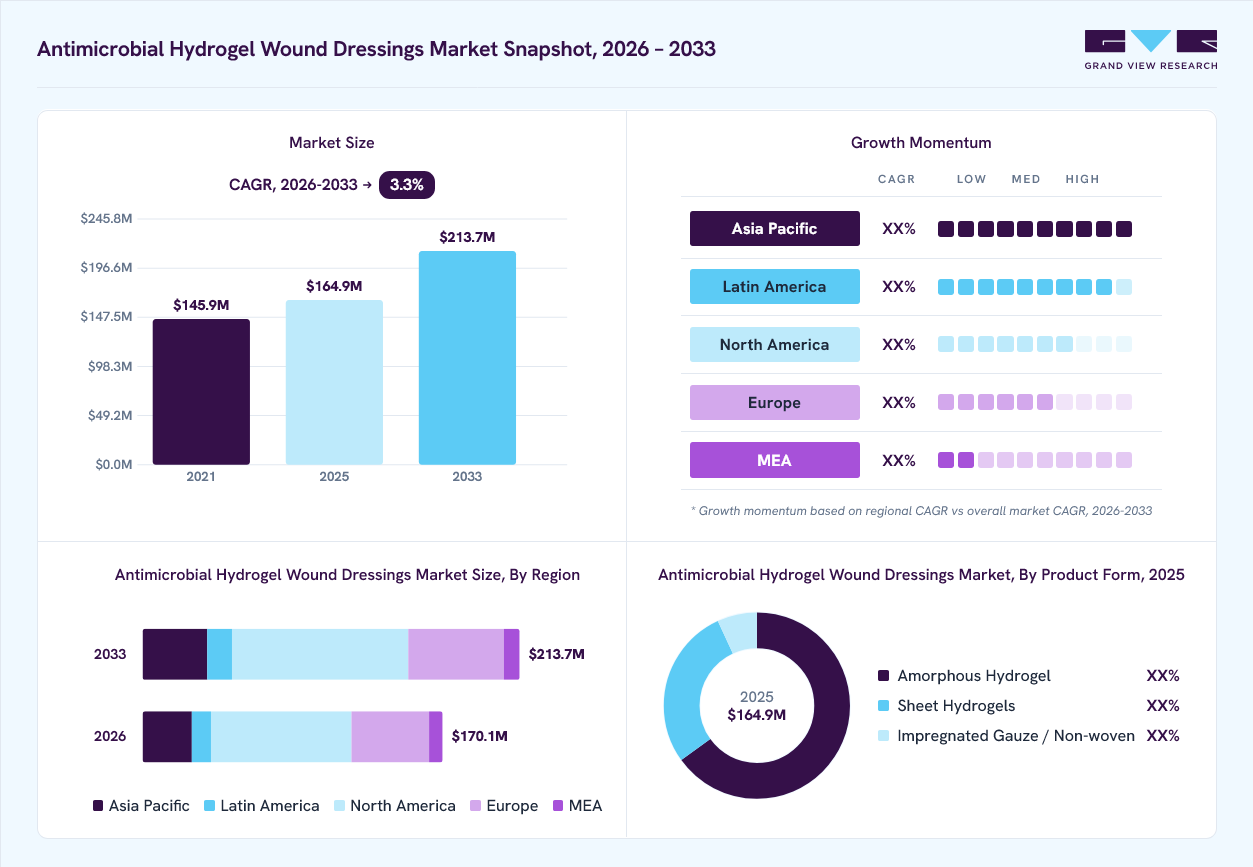 Source: Grand View Research, IR Documents, Primary Interviews, Paid DatabasesTo learn more about this report,
 Download Free Sample Report
Key Market Trends & Insights
- By antimicrobial agent: Silver-based hydrogels segment led the market with the largest revenue share of 44.5% in 2025.
- By product form: Amorphous hydrogel segment led the market with the largest revenue share of 65.0% in 2025.
- By wound type: Chronic wounds segment led the market with the largest revenue share of 61.8% in 2025.
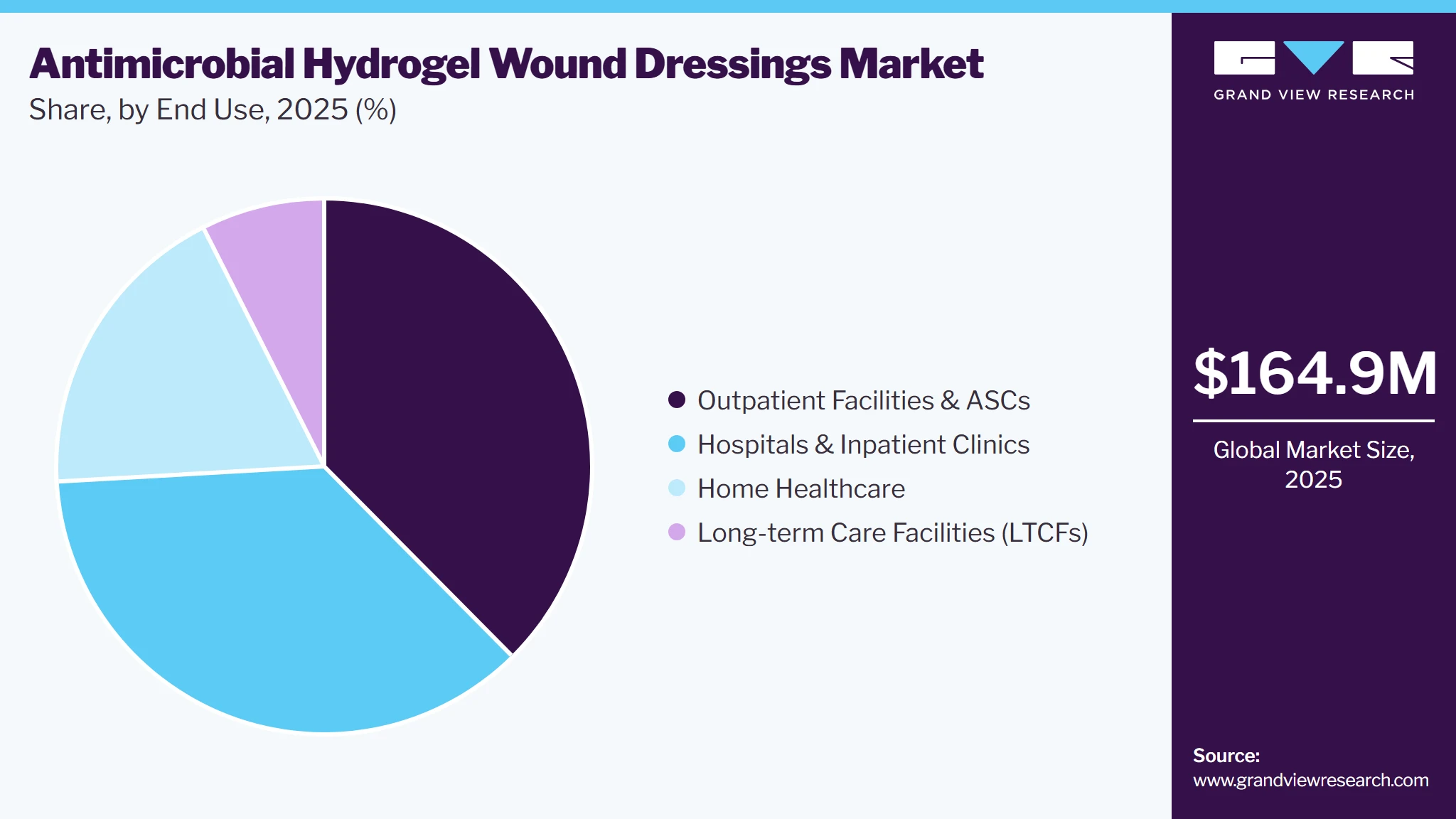
- By end use: Outpatient facilities & ASCs segment led the market with the largest revenue share of 37.6% in 2025.
Regional Highlights
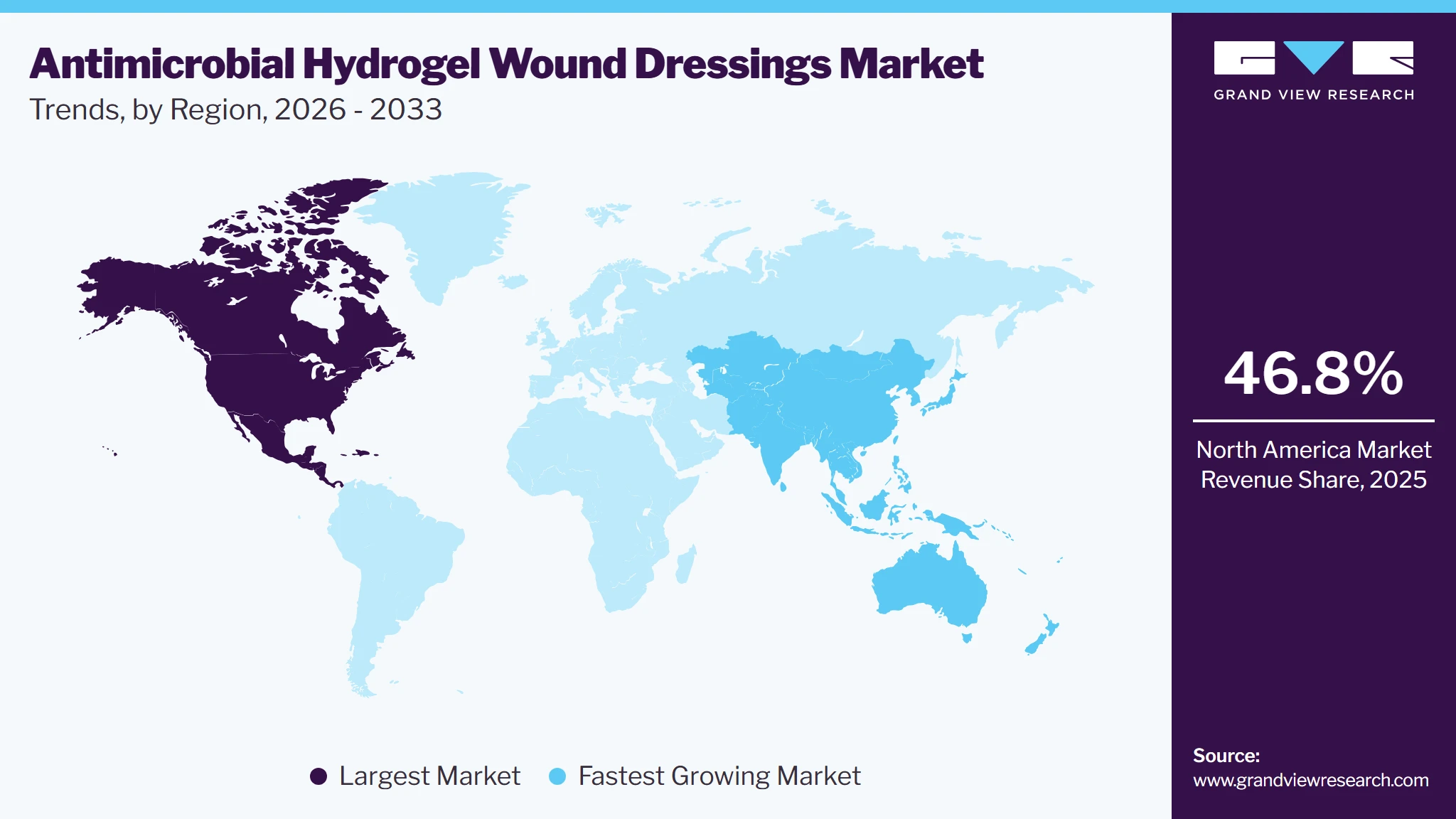
- Largest regional market: North America (46.8% revenue share, 2025)
- Fastest-growing regional market: Asia Pacific (highest CAGR, 2026-2033)
- By country: The U.S. held the largest market share in 2025.
Market Size & Forecast
- Market size in 2025: USD 164.9 Million
- Estimated market size in 2026: USD 170.1Million
- Projected market size by 2033: USD 213.7 Million
- CAGR (2026-2033): 3.3%
Prism AI by Grand View Research Free to tryAsk a question about the antimicrobial hydrogel wound dressings marketTry asking✓Every figure cited from GVR research Prefer the report? Download free sample →
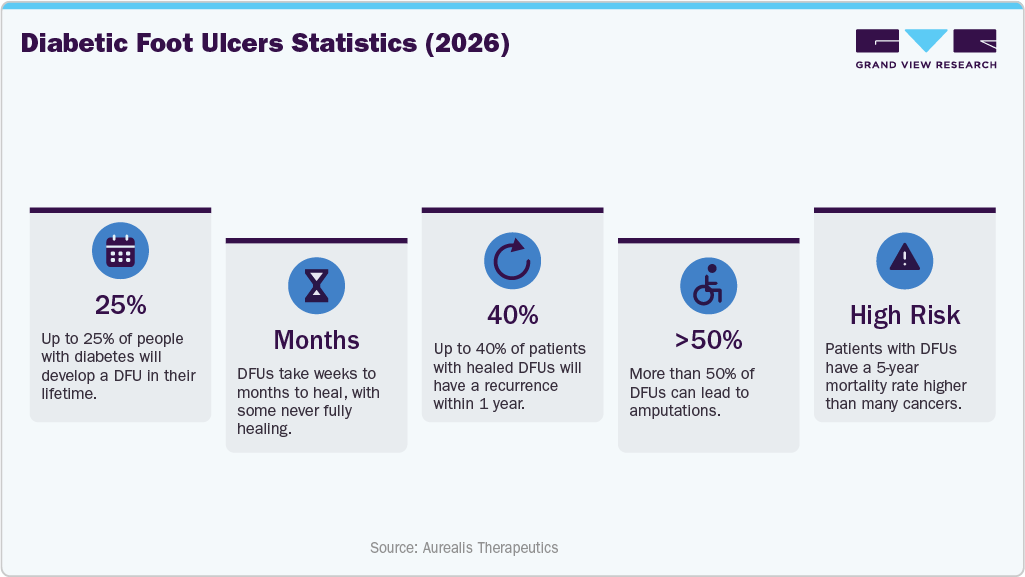
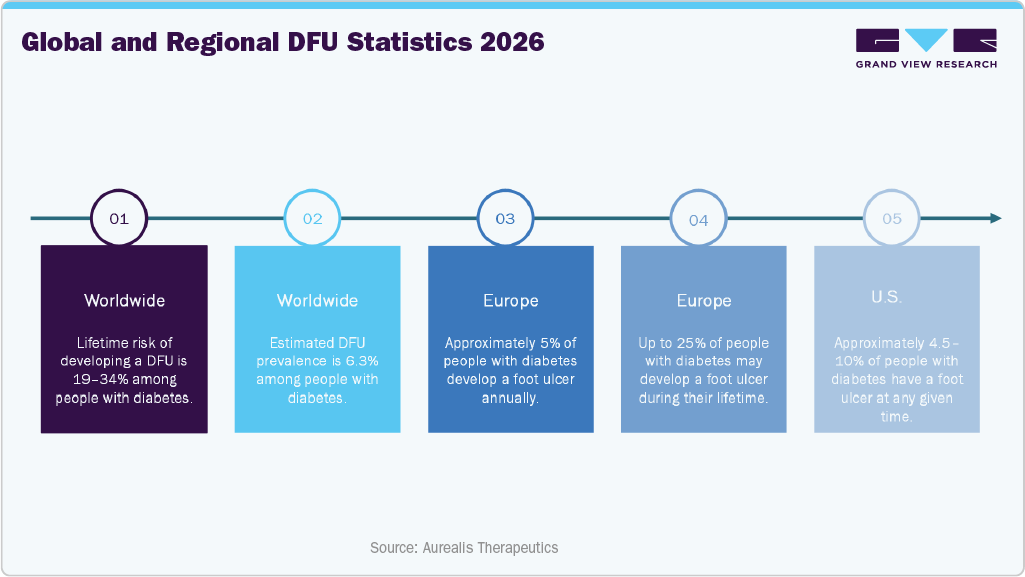
The rising prevalence of chronic and hard-to-heal wounds, including diabetic foot ulcers, venous leg ulcers, and pressure ulcers, is driving demand for advanced wound care solutions. Increasing diabetes prevalence, an aging population, and poor wound healing associated with chronic conditions are contributing to the growing need for effective wound management. To learn more about this report, Download Free Sample Report
Antimicrobial hydrogel wound dressings help maintain a moist wound environment while supporting autolytic debridement and, depending on their antimicrobial formulation, helping control microbial growth. These benefits are expected to support their adoption in managing complex wounds and reducing the risk of wound-related complications.
 To learn more about this report, Download Free Sample Report
 To learn more about this report, Download Free Sample Report
The growing need to manage wound infections and biofilms is a key driver of the antimicrobial hydrogel wound dressings market. Chronic wounds, including diabetic foot ulcers, pressure ulcers, and venous leg ulcers, are vulnerable to microbial colonization and biofilm formation, which can delay healing and reduce Antimicrobial Agent effectiveness. Antimicrobial hydrogel dressings containing agents such as silver or other antimicrobial compounds can help control microbial growth while maintaining a moist wound environment. Increasing demand for effective infection management and improved healing outcomes are expected to support market growth.
For instance, in August 2026, ScienceDirect published a study in Bioactive Materials on a smart, pH-responsive nanocatalytic hydrogel designed to manage biofilm-infected wounds. The hydrogel demonstrated the ability to eliminate more than 99.99% of methicillin-resistant Staphylococcus aureus (MRSA) and Escherichia coli and disperse 87.46% of biofilms under experimental conditions. These findings highlight the growing need for advanced antimicrobial hydrogel dressings that address persistent wound infections, disrupt biofilms, and support tissue regeneration.
Furthermore, the advantages of moist wound healing are driving the adoption of antimicrobial hydrogel wound dressings, as maintaining an optimal moisture balance supports cell migration, tissue regeneration, and autolytic debridement. Hydrogel dressings help prevent wound-bed desiccation while facilitating the removal of dead tissue and reducing dressing adherence, which can minimize trauma during dressing changes. When formulated with antimicrobial agents, these dressings also help manage microbial growth, making them suitable for chronic wounds and supporting demand for advanced wound care solutions.
Market Dynamics
The antimicrobial hydrogel wound dressings market is driven by the increasing prevalence of chronic wounds, including diabetic foot ulcers, pressure ulcers, and venous leg ulcers, which require effective wound management. Growing concerns about wound infections and antimicrobial resistance are encouraging the adoption of dressings that help control microbial growth while maintaining a moist healing environment. Technological advancements in hydrogel formulations, including the incorporation of silver, iodine, and other antimicrobial agents, are improving dressing functionality and supporting product innovation. However, high product costs, regulatory requirements, and the need for clinical evidence demonstrating safety and effectiveness may influence market adoption.
The growing risk of wound infections is a key driver of the antimicrobial hydrogel wound dressings market, as bacterial contamination can delay healing and increase the risk of complications in acute and chronic wounds. Patients with diabetic foot ulcers, pressure ulcers, and surgical wounds often require effective wound management to control microbial growth and support tissue repair. Antimicrobial hydrogel dressings containing agents such as silver or iodine help manage the wound environment while maintaining moisture, encouraging their adoption across healthcare settings.
In August 2026, Polaroid Therapeutics announced that its POLTX_Fiber antimicrobial wound dressing had received approval from the UK Medicines and Healthcare products Regulatory Agency (MHRA), allowing it to be prescribed in the United Kingdom. The approval expands the product’s availability beyond its existing European markets and supports plans for an evaluation program with the University of Hull involving more than 100 patients. This development is expected to support the adoption of advanced antimicrobial wound dressings for infection management and wound healing.
“Chronic wounds and antimicrobial resistance are two of the biggest unmet challenges in healthcare, and this approval will enable us to tackle them together for the first time in the UK,” said Ran Frenkel, CEO, Polaroid Therapeutics. “It is an exciting step in moving POLTX_Fiber out of the lab and into a real world evaluation with the patients who need it most, in partnership with Professor Hardman and the University of Hull Wound Innovation Institute.”
High costs associated with advanced antimicrobial dressings can influence purchasing decisions across hospitals, wound care clinics, and home healthcare settings. Specialized hydrogel formulations, antimicrobial agents, and manufacturing processes can increase product prices compared with conventional wound dressings. These expenses may limit adoption in cost-sensitive healthcare systems, particularly where reimbursement coverage is limited. Manufacturers are focusing on cost-effective formulations and scalable production methods to improve product accessibility.
The development of next-generation antimicrobial hydrogel formulations presents a significant opportunity in the antimicrobial hydrogel wound dressings market. Manufacturers are exploring advanced materials, including antimicrobial peptides, biocompatible polymers, and controlled-release technologies, to improve bacterial control while maintaining a moist wound environment. These innovations may enhance tissue compatibility and support the management of complex wounds, including diabetic foot ulcers, burns, and pressure ulcers. Continued research and clinical validation of these formulations can help manufacturers introduce differentiated products and expand their market presence.
Market Concentration & Characteristics
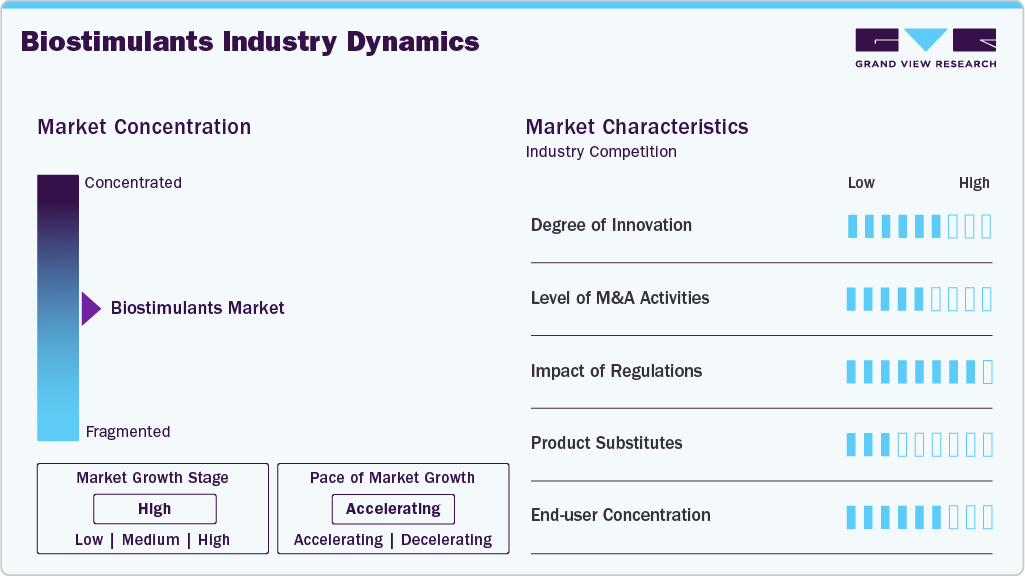
The antimicrobial hydrogel wound dressings market demonstrates a moderate to high degree of innovation, driven by advancements in hydrogel formulations and antimicrobial delivery technologies. Manufacturers are developing dressings incorporating silver, iodine, and other antimicrobial agents to improve infection control while maintaining a moist wound-healing environment. Innovations in stimuli-responsive hydrogels, bioactive materials, and controlled-release systems are enhancing dressing performance and supporting faster wound healing. In addition, research into biodegradable and multifunctional hydrogels is expanding opportunities for next-generation wound care solutions. For instance, in April 2026, the Royal Society of Chemistry published a study on a pH-responsive smart hydrogel dressing incorporating hyaluronic acid and silver nanoparticles for controlled antimicrobial delivery. The hydrogel demonstrated antibacterial activity against S. aureus, MRSA, and E. coli, while helping suppress biofilm formation. This innovation highlights advances in infection-responsive drug delivery and wound healing, supporting the development of next-generation antimicrobial hydrogel dressings.
The antimicrobial hydrogel wound dressings market exhibits a moderate level of merger and acquisition activity, as established wound care companies seek to expand their advanced dressing portfolios and strengthen their antimicrobial technologies. Market participants pursue strategic acquisitions and partnerships to access innovative hydrogel formulations, improve product development capabilities, and expand geographic reach. However, limited availability of specialized hydrogel technology providers and regulatory requirements may constrain large-scale consolidation. M&A activity is expected to remain focused on acquiring differentiated wound care technologies and strengthening product portfolios.
 To learn more about this report, Download Free Sample Report
Regulatory requirements have a moderate to high impact on the antimicrobial hydrogel wound dressings market, as manufacturers must demonstrate product safety, antimicrobial effectiveness, and biocompatibility before commercialization. Regulatory bodies such as the U.S. FDA and the European Medicines Agency (EMA), alongside the EU Medical Device Regulation (MDR), influence product approval, clinical evidence requirements, and market entry timelines. Stricter regulations can increase development costs and delay product launches, particularly for advanced dressings incorporating novel antimicrobial agents. However, clear regulatory pathways help strengthen product quality, patient safety, and healthcare provider confidence.
The antimicrobial hydrogel wound dressings market exhibits moderate to high end-use concentration, with hospitals and specialized wound care centers representing key users due to their high patient volumes and demand for advanced wound management. These settings commonly treat complex wounds, including diabetic foot ulcers, burns, surgical wounds, and pressure ulcers, requiring effective infection control. Home healthcare and outpatient clinics also contribute to demand as chronic wound management increasingly shifts toward community-based care. However, adoption varies across end users depending on product costs, clinical expertise, and product availability.
Analyst Perspective
The antimicrobial hydrogel wound dressings market is anticipated to witness steady growth over the forecast period, driven by the rising prevalence of chronic wounds, increasing incidence of wound infections, and growing demand for advanced wound-care solutions. Continuous product innovations, including silver-, PHMB-, honey-, and iodine-based hydrogels, are enhancing antimicrobial effectiveness while maintaining a moist wound environment. Furthermore, increasing adoption across hospitals, specialty wound-care centers, and home healthcare settings, coupled with growing awareness of advanced wound management, is expected to support market expansion.
Antimicrobial Agent Insights
Silver-based hydrogels dominated the antimicrobial hydrogel wound dressings market in 2025, owing to the broad use of silver's antimicrobial properties in wound infection management. These hydrogels help control the growth of a wide range of microorganisms while maintaining a moist environment that supports wound healing. Their application across chronic wounds, burns, diabetic foot ulcers, and surgical wounds further contributes to segment demand. Growing emphasis on infection prevention and advanced wound care is expected to support the continued adoption of silver-based hydrogel dressings.
The bio-engineered & peptide agents segment is expected to grow at the fastest rate in the antimicrobial hydrogel wound dressings market during the forecast period, driven by increasing research into advanced antimicrobial technologies. Bioengineered materials and antimicrobial peptides offer potential for targeted bacterial control while supporting tissue compatibility and wound healing. Growing concerns about antimicrobial resistance are further encouraging the development of alternative antimicrobial approaches. Continued investment in research, product innovation, and clinical validation is expected to create new growth opportunities for this segment.
Product Form Insights
The amorphous hydrogel segment dominated the antimicrobial hydrogel wound dressings market in 2025, owing to its ease of application and ability to conform to wounds with irregular shapes and depths. These hydrogels help maintain a moist wound environment, support autolytic debridement, and facilitate the management of wound beds. Their compatibility with various wound types, including chronic ulcers and cavity wounds, contributes to their widespread use in clinical settings. Growing demand for flexible and effective wound management solutions continues to support segment dominance.
The sheet hydrogels segment is expected to grow at the fastest rate in the antimicrobial hydrogel wound dressings market during the forecast period, driven by increasing demand for convenient and easy-to-apply wound care solutions. These dressings provide consistent wound coverage, help maintain moisture balance, and can incorporate antimicrobial agents to support infection management. Their suitability for burns, surgical wounds, and superficial ulcers is expected to encourage adoption across hospitals and outpatient care settings. Ongoing improvements in sheet flexibility, adhesion, and antimicrobial delivery are likely to create further growth opportunities for the segment.
Wound Type Insights
The chronic wounds segment dominated the antimicrobial hydrogel wound dressings market in 2025 and is also expected to grow fastest in the forecast period, driven by the increasing prevalence of diabetic foot ulcers, pressure ulcers, and venous leg ulcers. These wounds often require prolonged antimicrobial agent and are susceptible to infection, increasing the demand for antimicrobial dressings that help manage microbial growth and maintain a moist healing environment. The growing burden of diabetes and the aging population further contribute to segment demand. Ongoing adoption of advanced wound care products is expected to support the segment's continued prominence.
The acute wounds segment is expected to grow significantly in the antimicrobial hydrogel wound dressings market, driven by the increasing number of surgical procedures, traumatic injuries, and burn-related wounds. The need to manage infection risks and maintain an optimal moist environment for healing is encouraging the adoption of antimicrobial hydrogel dressings. Their conformability and ability to support wound moisture management make them suitable for various acute wound types. Growing emphasis on postoperative wound care and infection prevention is expected to further support segment growth.
End Use Insights
The outpatient facilities & ASCs segment dominated the antimicrobial hydrogel wound dressings market in 2025, supported by the growing volume of outpatient procedures and the increasing need for effective postoperative wound management. These facilities require convenient wound care solutions that help maintain moisture balance and manage infection risks while supporting recovery. The rising preference for minimally invasive procedures and same-day discharge is further increasing demand for advanced wound dressings. Growing adoption of outpatient wound management services is expected to sustain demand for antimicrobial hydrogel dressings in this segment.
 To learn more about this report, Download Free Sample Report
The home healthcare segment is expected to grow at the fastest rate in the Antimicrobial Hydrogel Wound Dressings Market during the forecast period, driven by the increasing preference for home-based wound management and reduced hospital visits. The growing elderly population and rising prevalence of chronic wounds are increasing demand for convenient dressing solutions suitable for home use. Antimicrobial hydrogel dressings offer ease of application and help maintain a moist wound environment while supporting infection management. Improvements in home nursing services and access to advanced wound care products are expected to further accelerate segment growth.
Regional Insights
North America Antimicrobial Hydrogel Wound Dressings Market Trends
North America dominated the antimicrobial hydrogel wound dressings market in 2025, driven by the high prevalence of chronic wounds, diabetes, and surgical procedures across the region. The presence of established wound care manufacturers, advanced healthcare infrastructure, and growing adoption of innovative antimicrobial dressings further supports market growth. In addition, increasing awareness of wound infection prevention and favorable access to advanced wound care antimicrobial agents in the U.S. and Canada are driving demand. Continuous product innovation and investments in wound management technologies are expected to strengthen the region's market position.
 To learn more about this report, Download Free Sample Report
U.S. Antimicrobial Hydrogel Wound Dressings Market Trends
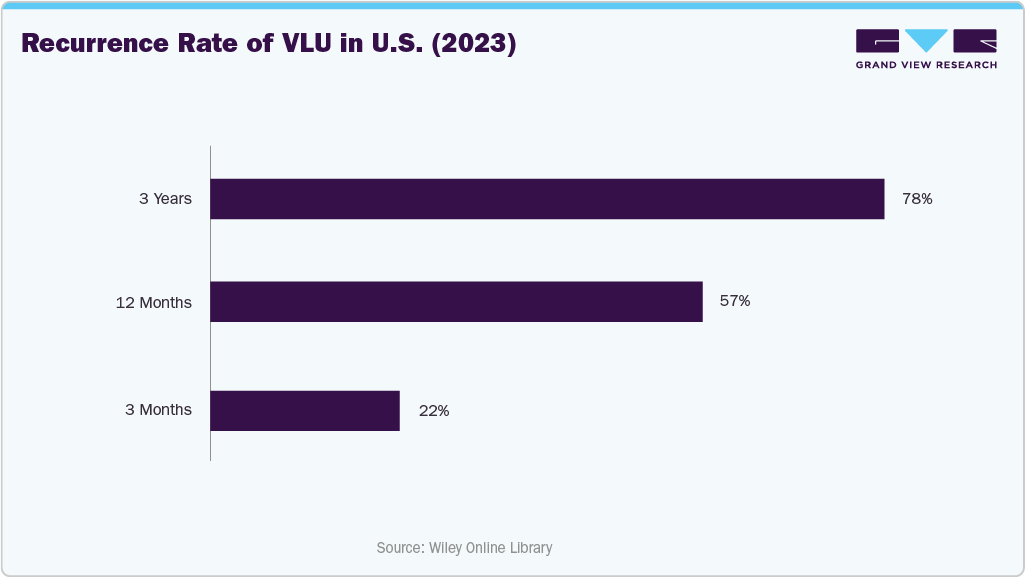
The U.S. antimicrobial hydrogel wound dressings market is driven by the rising prevalence of diabetes, chronic wounds, burns, and surgical site infections. Increasing demand for advanced wound care products that maintain a moist healing environment while controlling microbial growth is supporting market adoption. The presence of established wound care manufacturers, advanced healthcare infrastructure, and ongoing innovation in antimicrobial formulations further contributes to market growth. In addition, growing emphasis on infection prevention and effective management of complex wounds is expected to create opportunities for market expansion.
 To learn more about this report, Download Free Sample Report
Europe Antimicrobial Hydrogel Wound Dressings Market Trends
The Europe antimicrobial hydrogel wound dressings market is driven by the increasing prevalence of chronic wounds, an aging population, and rising demand for advanced wound care solutions. Growing awareness of wound infection prevention and the benefits of maintaining a moist healing environment are encouraging the adoption of antimicrobial hydrogel dressings. The presence of established medical dressing manufacturers and supportive healthcare infrastructure across countries such as Germany, the UK, and France further supports market development. In addition, ongoing product innovation and emphasis on patient safety are expected to create growth opportunities across the region.
UK Antimicrobial Hydrogel Wound Dressings Market Trends
The UK antimicrobial hydrogel wound dressings market is driven by the increasing burden of chronic wounds, diabetes, and an aging population requiring long-term wound management. Growing demand for advanced dressings that help control microbial growth and maintain a moist healing environment is supporting market adoption. The National Health Service (NHS) focus on effective wound management and infection prevention further encourages the use of innovative wound care products. In addition, continued advancements in antimicrobial materials and hydrogel formulations are expected to support market growth.
Average Annual Cost and total Antimicrobial Agent cost of VLU in UK (2022)
Country
Average Annual Antimicrobial Agent Cost per Patient
Total Antimicrobial Agent Cost
UK
£5,488
£300 million
Source: Science Direct
France Antimicrobial Hydrogel Wound Dressings Market Trends
The France antimicrobial hydrogel wound dressings market is driven by the rising prevalence of chronic wounds, an aging population, and increasing demand for advanced wound management solutions. Growing emphasis on infection prevention and effective management of diabetic foot ulcers, burns, and surgical wounds is supporting the adoption of antimicrobial hydrogel dressings. The country's established healthcare infrastructure and access to specialized wound care services further contribute to market development. In addition, ongoing innovation in antimicrobial materials and moisture-retentive dressing technologies is expected to create growth opportunities.
Asia Pacific Antimicrobial Hydrogel Wound Dressings Market Trends
The Asia Pacific antimicrobial hydrogel wound dressings market is expected to grow rapidly, driven by the rising prevalence of diabetes, chronic wounds, and burn injuries across the region. Increasing healthcare expenditure, expanding hospital infrastructure, and growing awareness of advanced wound care products are supporting market adoption. Countries such as China, India, and Japan are creating growth opportunities through improving access to healthcare and increasing demand for effective wound infection management. In addition, expanding local manufacturing capabilities and technological advancements in antimicrobial dressings are expected to accelerate regional market growth.
Japan Antimicrobial Hydrogel Wound Dressings Market Trends
The Japan antimicrobial hydrogel wound dressings market is driven by the country’s aging population and increasing need for effective management of chronic wounds, pressure ulcers, and surgical wounds. The growing focus on infection prevention and advanced wound healing technologies is supporting the adoption of antimicrobial hydrogel dressings. Japan’s well-developed healthcare infrastructure and emphasis on high-quality medical products further contribute to market development. In addition, ongoing innovation in biomaterials and advanced wound care formulations are expected to create new growth opportunities.
Latin America Antimicrobial Hydrogel Wound Dressings Market Trends
The Latin America antimicrobial hydrogel wound dressings market is driven by the rising prevalence of diabetes, chronic wounds, and burn injuries, increasing the need for effective wound management solutions. Improving healthcare infrastructure and growing awareness of infection prevention are supporting the adoption of advanced wound care products. Countries such as Brazil and Mexico offer growth opportunities due to expanding healthcare access and increasing demand for specialized wound antimicrobial agents. However, affordability constraints and uneven access to advanced medical products may limit market penetration in some areas.
MEA Antimicrobial Hydrogel Wound Dressings Market Trends
The MEA antimicrobial hydrogel wound dressings market is driven by the increasing prevalence of diabetes, chronic wounds, and burn injuries, particularly in countries with growing healthcare needs. Investments in healthcare infrastructure and rising awareness of advanced wound care solutions are supporting market development. Countries such as Saudi Arabia, the UAE, and South Africa offer growth opportunities through improved access to specialized wound management and infection prevention products. However, affordability challenges and limited access to advanced wound care technologies in some areas may restrain market growth.
Key Antimicrobial Hydrogel Wound Dressings Company Insights
Key companies in the antimicrobial hydrogel wound dressings market include Smith+Nephew, Mölnlycke Health Care, Solventum, ConvaTec, and Coloplast, which offer advanced wound care products and technologies. The market comprises established wound care manufacturers and specialized innovators; however, company-specific market share data for antimicrobial hydrogel dressings are not publicly available from verified primary sources, making precise share comparisons difficult.
Key Antimicrobial Hydrogel Wound Dressings Companies:
Some prominent players in the antimicrobial hydrogel wound dressings market include:
-
Medline
-
EltaMD, Inc. (Colgate-Palmolive)
-
Bravida Medical
-
Mölnlycke AB
-
MPM Medical
-
Cardinal Health
-
American Biotech Labs (Silver Biotics)
-
Silver Genesis
-
Amferia
-
SionBrands / DermaRite Medical
-
ABL Medical, LLC
-
Dynarex Corporation
-
KeriCure Inc.
-
Smith+Nephew
-
Convatec Inc.
-
Solventum
-
B. Braun SE
Competitive Benchmarking
Category
Operating Strategies
Competitive Edge
Weakness
Established Players (Solventum, Smith & Nephew plc, Mölnlycke Health Care)
- Focus on expanding advanced wound-care portfolios through the integration of antimicrobial agents into hydrogel and other dressing formulations.
- Invest in product innovation to improve moisture management, exudate absorption, wound healing, and infection prevention capabilities.
- Established brand recognition, extensive distribution networks, strong hospital relationships, and established relationships with healthcare professionals.
- Strong financial resources, manufacturing capabilities, regulatory expertise, and established clinical evidence supporting product adoption.
- High dependence on conventional antimicrobial technologies, including silver-based formulations, which may limit differentiation against next-generation antimicrobial solutions.
- Higher operational and product development costs, which may affect pricing competitiveness, particularly in emerging markets.
Emerging Players (Bravida Medical
MPM Medical, American Biotech Labs (Silver Biotics), Silver Genesis)
- Focus on developing innovative antimicrobial hydrogel formulations using advanced biomaterials, antimicrobial peptides, and polymer-based technologies.
- Prioritize research and development to develop hydrogel dressings offering sustained antimicrobial activity, improved biocompatibility, and enhanced wound-healing properties.
- Differentiated product technologies with the potential to improve antimicrobial effectiveness while addressing concerns associated with conventional antimicrobial agents.
- Greater technological flexibility and ability to rapidly develop specialized products targeting unmet clinical requirements.
- Limited financial resources, manufacturing infrastructure, and commercialization capabilities compared with established manufacturers.
- Limited long-term clinical evidence, relatively low brand recognition, and challenges in establishing confidence among healthcare professionals.
Recent Developments:
-
In October 2026, Amferia highlighted the development of its innovative antibacterial wound dressing, which uses antimicrobial peptides embedded in a protective hydrogel to eliminate bacteria, including antibiotic-resistant strains. The product received FDA De Novo authorization in February 2026, establishing a new regulatory category for antibacterial wound dressings in the U.S.
-
In September 2026, the U.S. Food and Drug Administration (FDA) granted 510(k) clearance to Magic Science Supply, LLC for its SkinSmart Antimicrobial HydroGel under application K254041. The product was classified as a drug-containing wound dressing and received a substantially equivalent (SESE) decision, allowing it to be marketed in the U.S. This regulatory clearance represents a development in the commercialization of antimicrobial hydrogel-based wound-care products.
-
In November 2025, Amferia introduced its innovative antimicrobial hydrogel wound dressing incorporating peptide-based technology that targets, binds to, and rapidly disrupts bacteria upon contact. The dressing is designed to provide antibacterial activity without releasing antimicrobial substances into the wound, supporting its use in animal wound care. The technology addresses the growing need for effective wound management and bacterial control in small and large animals, particularly amid rising concerns about antibiotic-resistant infections.
Antimicrobial Hydrogel Wound Dressings Market Report Scope
Report Attribute
Details
Market size in 2026
USD 164.9 million
Estimated market size in 2026
USD 170.1 million
Projected market size by 2033
USD 213.7 million
Growth Rate
CAGR of 3.3% from 2026 to 2033
Base year for estimation
2025
Historical data
2021 – 2024
Forecast period
2026 – 2033
Quantitative units
Revenue in USD million and CAGR from 2026 to 2033
Report coverage
Revenue forecast, company ranking, competitive landscape, growth factors, and trends
Segments covered
Antimicrobial agent, product form, wound type, end use, region
Regional scope
North America, Europe, Asia Pacific, Latin America, MEA
Country scope
U.S., Canada, Mexico, Germany, UK, France, Norway, Italy, Denmark, Sweden, Spain, China, Japan, India, South Korea, Australia, Brazil, UAE, South Africa, Thailand, Argentina, Kuwait
Key companies profiled
Medline, EltaMD, Inc. (Colgate-Palmolive), Bravida Medical, Mölnlycke AB, MPM Medical, Cardinal Health, American Biotech Labs (Silver Biotics), Silver Genesis, Amferia, SionBrands / DermaRite Medical, ABL Medical, LLC, Dynarex Corporation, KeriCure Inc., Smith+Nephew, Convatec Inc., Solventum, B. Braun SE
Customization scope
Free report customization (equivalent up to 8 analysts working days) with purchase. Addition or alteration to country, regional & segment scope.
Pricing and purchase options
Avail customized purchase options to meet your exact research needs. Explore purchase options
Global Antimicrobial Hydrogel Wound Dressings Market Report Segmentation
This report forecasts revenue growth at global, regional, and country levels and provides an analysis on the latest industry trends in each of the sub-segments from 2021 to 2033. For the purpose of this study, Grand View Research has segmented the global antimicrobial hydrogel wound dressings market report on the basis of antimicrobial agent, product form, wound type, end use and region:
-
Antimicrobial Agent Outlook (Revenue, USD Million, 2021 - 2033)
-
Silver-based Hydrogels
-
PHMB
-
Honey / Natural Bioactives
-
Iodine-based / Cadexomer Iodine
-
Bio-engineered & Peptide Agents
-
-
Product Form Outlook (Revenue, USD Million, 2021 - 2033)
-
Amorphous Hydrogel
-
Impregnated Gauze / Non-woven
-
Sheet Hydrogels
-
-
Wound Type (Revenue, USD Million, 2021 - 2033)
-
Acute Wounds
-
Surgical & Post-operative Site Wounds
-
Traumatic Wounds & Lacerations
-
First- & Second-degree Burns
-
-
Chronic Wounds
-
Diabetic Foot Ulcers (DFUs)
-
Venous Leg Ulcers (VLUs)
-
Pressure Ulcers
-
Others
-
-
-
End Use Outlook (Revenue, USD Million; 2021 - 2033)
-
Hospitals & Inpatient Clinics
-
Outpatient Facilities & ASCs
-
Home Healthcare
-
Long-term Care Facilities (LTCFs)
-
-
Regional Outlook (Revenue, USD Million, 2021 - 2033)
-
North America
-
U.S.
-
Canada
-
Mexico
-
-
Europe
-
Germany
-
UK
-
France
-
Italy
-
Spain
-
Sweden
-
Denmark
-
Norway
-
-
Asia Pacific
-
Japan
-
China
-
India
-
Australia
-
South Korea
-
Thailand
-
-
Latin America
-
Brazil
-
Argentina
-
-
Middle East & Africa
-
South Africa
-
Saudi Arabia
-
UAE
-
Kuwait
-
-
Research Methodology
The antimicrobial hydrogel wound dressings market figures in this report are based on a proven research process that combines executive interviews with secondary research from proprietary databases, company filings, and recognized regulatory and institutional sources. Market size is built through value-chain sizing-reconciling supply-side and demand-side estimates-and triangulated with bottom-up and top-down approaches. Every estimate passes multiple levels of expert validation before publication, with each antimicrobial hydrogel wound dressings segment quantified using the revenue-capture definitions in the table below.
Segment Definition
Segment – Product Type
Revenue capture definition
Silver-based Hydrogels
Revenue generated from the sale of silver-based antimicrobial hydrogel dressings containing ionic or nanocrystalline silver, which help control bacterial growth, reduce the risk of wound infection, and maintain a moist wound environment for healing.
PHMB-based Hydrogels
Revenue generated from the sale of polyhexamethylene biguanide (PHMB)-based antimicrobial hydrogel dressings used to reduce microbial burden, control bacterial growth, and support wound healing in acute and chronic wounds.
Honey / Natural Bioactive Hydrogels
Revenue generated from the sale of honey-based and other natural bioactive hydrogel dressings formulated with antimicrobial ingredients to help manage wound bioburden, maintain moisture, and support the healing of acute and chronic wounds.
Iodine-based / Cadexomer Iodine Hydrogels
Revenue generated from the sale of iodine-based and cadexomer iodine hydrogel dressings that release iodine into the wound to control microbial growth, manage wound infections, and maintain a moist healing environment.
Bio-engineered & Peptide Agent Hydrogels
Revenue generated from the sale of hydrogel dressings incorporating bio-engineered antimicrobial agents, peptides, and other advanced bioactive ingredients designed to inhibit microbial growth, protect the wound from infection, and support tissue repair.
Estimation Model
Approach No.
Methodology
Description
01
Bottom-Up Procedure Volume and Product Consumption Modeling
BMI-related market revenue is calculated by estimating the number of antimicrobial hypoglycemia dressings used across hospitals, specialty wound care centers, ambulatory surgical centers, and home healthcare settings. The model considers wound prevalence, including diabetic foot ulcers, pressure injuries, leg ulcers, surgical wounds, and burns. Dressing utilization per patient, replacement frequency, reimbursement, product adoption, and average selling prices (ASP) are used to model revenue based on the defined antimicrobial types.
02
Top-Down Revenue Triangulation
Aggregate revenue from manufacturers of antimicrobial hydrogel wound dressings is analyzed using company disclosures, product portfolios, annual reports, regulatory filings, product pricing, and geographic sales data. Revenue is divided across distribution channels (hospital, retail, online) and hydrogel, non-hydrogel, advanced, and bioengineered hydrogel dressing segments. Unrealized wound-care products, conventional dressings, and standalone antimicrobial solutions are excluded.
03
Demand-Side Healthcare Utilization Modeling
Assesses product purchasing and utilization across hospitals, specialty wound-care centers, ambulatory surgical centers, long-term care facilities, and home healthcare providers. The model considers chronic wound burden, infection prevalence, antimicrobial dressing adoption, reimbursement coverage, healthcare expenditure, purchasing budgets, and dressing replacement frequency to validate end-user demand and market revenue.
Customization Table
Client request
Customization delivered
Value adds
Epidemiology Analysis
Assessed the prevalence of chronic wounds, diabetic foot ulcers, pressure ulcers, venous leg ulcers, surgical wounds, and burns to evaluate the potential demand for antimicrobial hydrogel dressings.
Identifies key patient populations and wound-related demand drivers supporting market growth.
Competitive & Product Share Analysis
Evaluated key manufacturers, product portfolios, recent launches, regulatory approvals, and strategic developments. Analyzed market shares by product type, including silver-based, PHMB-based, honey-based, iodine-based, and bio-engineered hydrogel dressings.
Provides insights into competitive positioning, leading product categories, market concentration, and emerging product opportunities.
Regional Analysis
Assessed regional market dynamics across North America, Europe, Asia Pacific, Latin America, and the Middle East & Africa, including wound-care adoption, healthcare infrastructure, reimbursement scenarios, and product penetration.
Highlights regional growth opportunities and supports geographic expansion strategies.
Frequently Asked Questions About This Report
Key players include Medline, Gentell, EltaMD, Inc. (Colgate-Palmolive), Bravida Medical, Mölnlycke AB, MPM Medical, Cardinal Health, American Biotech Labs (Silver Biotics), Silver Genesis, Amferia, SionBrands / DermaRite Medical, ABL Medical, LLC, Dynarex Corporation, KeriCure Inc., Smith+Nephew, Convatec Inc., Solventum and B. Braun SE
The outpatient facilities & ASCs segment led the market with the largest revenue share of 37.6% in 2025.
The silver-based hydrogels segment led the market with the largest revenue share of 44.5% in 2025.
Chronic wounds segment led the market with the largest revenue share of 61.8% in 2025.
Asia Pacific is the fastest-growing region over the forecast period.
The global antimicrobial hydrogel wound dressings market size was valued at USD 164.9 million in 2025 and is projected to grow from USD 170.1 million in 2026.
The global antimicrobial hydrogel wound dressings market is expected to grow at a CAGR of 3.3% from 2026 to 2033, reaching USD 213.7 million by 2033.
Key factors include the rising prevalence of chronic wounds, including diabetic foot ulcers, pressure ulcers, and venous leg ulcers. Increasing concerns about wound infections and antimicrobial resistance are driving demand for dressings that help control microbial growth.
North America dominated the antimicrobial hydrogel wound dressings market with the largest revenue share of 46.8% in 2025.
About the Author(s)
Medical Devices Research Team
Healthcare · Medical DevicesThis report was authored by the medical devices research team at Grand View Research - comprising two research analysts, one senior research analyst, and one industry expert - with specialized expertise in the medical devices segment of the healthcare industry. All findings are based on proprietary healthcare databases, executive interviews, and regulatory analysis, subject to internal peer review prior to publication.
Last Updated:
Speak to Analyst

Customize this report to your needs - add regions, segments, or data points, with 20% free customization.
Or view our licence options:


ISO 9001:2015 & 27001:2022 Certified
We are GDPR and CCPA compliant! Your transaction & personal information is safe and secure. For more details, please read our privacy policy.


