
- Home
- »
- Biotechnology
- »
-
Aptamers Market Size, Share And Growth Report, 2026-2033GVR Report cover

Aptamers Market (2026 - 2033)
Size, Share & Trends Analysis Report By Type (Nucleic Acid Aptamer, Peptide Aptamer), By Application (Diagnostics, Research & Development), By Region (North America, Europe, APAC, Latin America, MEA), And Segment Forecasts
Market Size, 2025
$1.4BMarket Estimate, 2026
$1.6BMarket Forecast, 2033
$5.3BCAGR, 2026–2033
18.3%Aptamers Market Summary
The global aptamers market size was valued at USD 1.4 billion in 2025 and is projected to grow from USD 1.6 billion in 2026 to USD 5.3 billion by 2033, at a CAGR of 18.3% from 2026 to 2033. The market in North America dominated with a revenue share of 44.6% in 2025. The global aptamers market is witnessing significant growth driven by increasing demand for targeted therapeutics, precision medicine, and advanced molecular diagnostics.
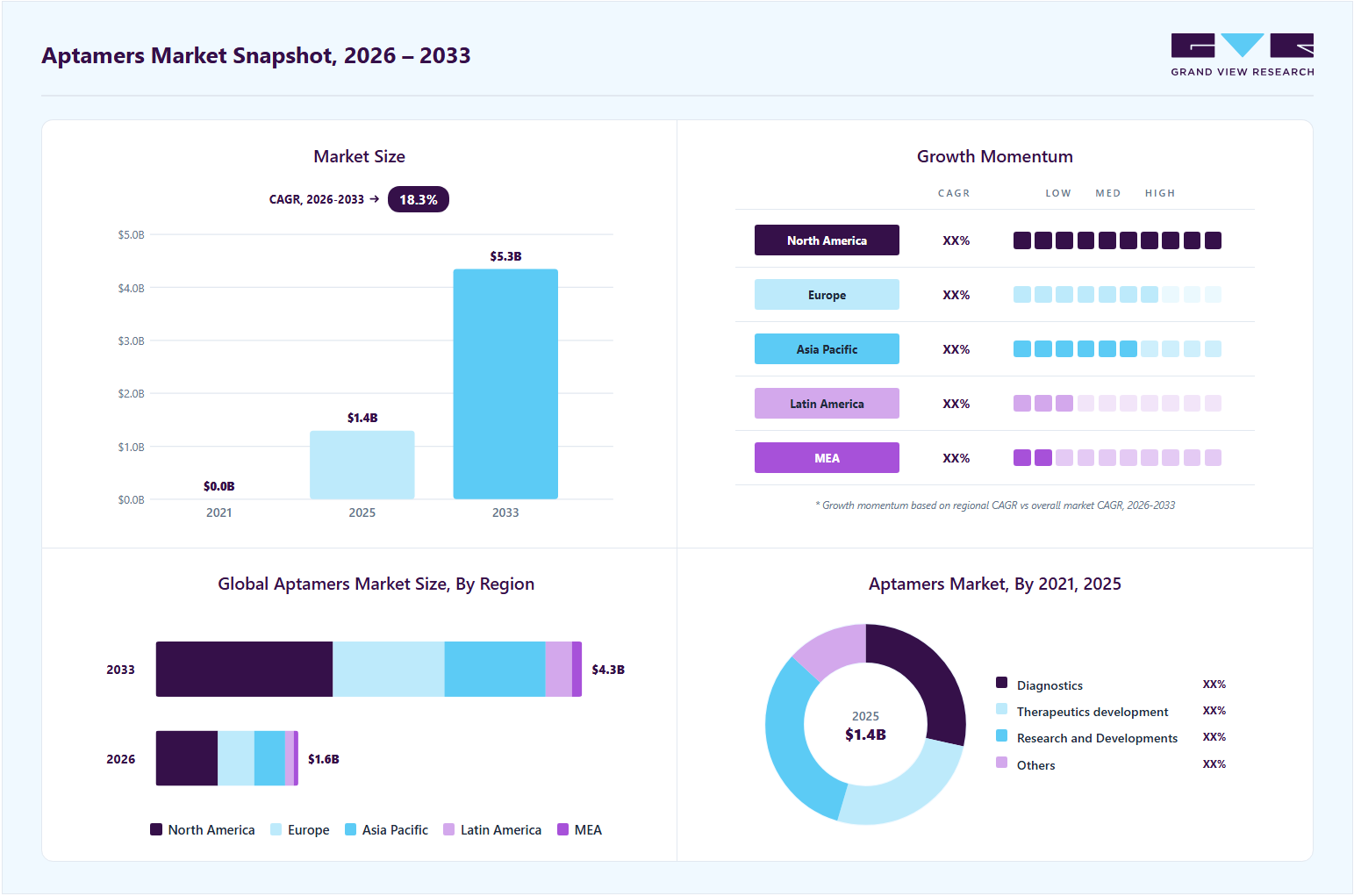 Source: Grand View Research, IR Documents, Primary Interviews, Paid DatabasesTo learn more about this report,
 Download Free Sample Report
 Key Market Trends & Insights
- By type: Nucleic acid aptamer segment held the largest market share of 79.0% in 2025.
- By application: Research and development segment held the largest market share of 32.7% in 2025.
Regional Highlights
- Largest regional market: North America (44.6% revenue share, 2025)
- Fastest-growing regional market: Asia Pacific (highest CAGR, 2026-2033)
- By country: The U.S. held the largest market share in 2025
Market Size & Forecast
- Market size in 2025: USD 1.4 Billion
- Estimated market size in 2026: USD 1.6 Billion
- Projected market size by 2033: USD 5.3 Billion
- CAGR (2026-2033): 18.3%
Three ways to get this report
Buy it, customize it, or ask a question.Ask an Analyst
Analyst response in 1 business day
- AccessReport author, directly
- Reply timeWithin 1 working day
- No sales callDirect answer only
- FormatEmail reply
- CostFree, no cost
Get the Full Report
What the study covers
- FormatsPDF · Excel · Dashboard
- Timeline2026–2033 annual, 2025 base
- Coverage20+ countries, 5 regions
- Companies10+ key players profiled
Customize the Report
20% free customization
- IncludeCountries, segments, points
- TailorTo your product definition
- ExtendDeeper competitor detail
- OrA fully bespoke study
- Turnaround5–10 working days
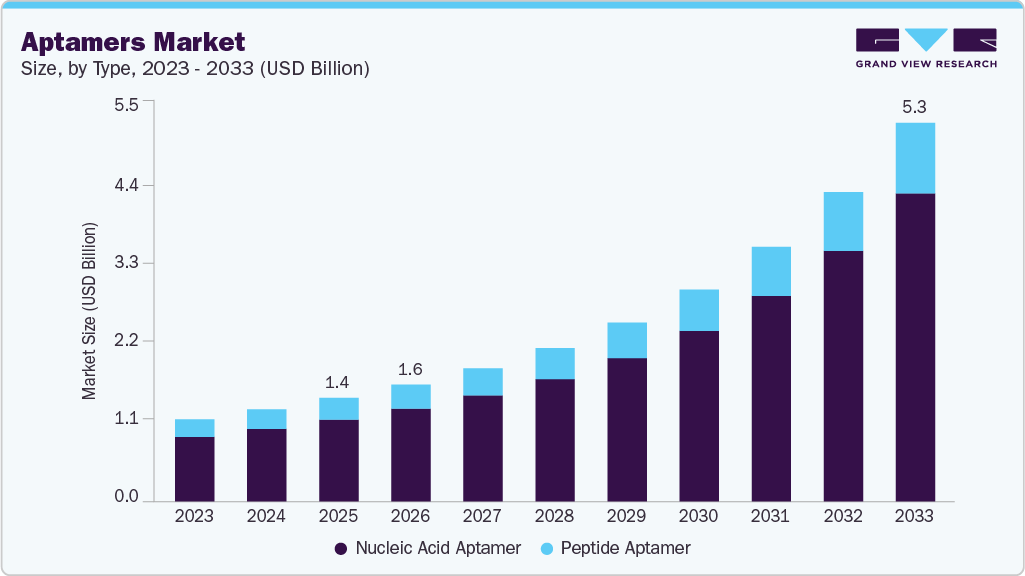 To learn more about this report, Download Free Sample Report
In addition, advancements in SELEX technologies, AI-enabled aptamer discovery platforms, and high-throughput screening methods are improving the efficiency, specificity, and scalability of aptamer development, thereby accelerating their adoption across pharmaceutical, biotechnology, and clinical research applications.Market Dynamics
The aptamers market is witnessing steady growth, driven by the increasing adoption of aptamer-based technologies in diagnostics, therapeutics, drug discovery, and biomarker research. Growing investments in precision medicine, the rising prevalence of chronic diseases, and expanding applications in oncology, infectious diseases, and targeted drug delivery are driving market growth. Moreover, increasing research activities across pharmaceutical, biotechnology, and academic institutions, coupled with the growing demand for highly specific molecular recognition tools, are expected to drive market growth over the forecast period.
Advancements in SELEX (Systematic Evolution of Ligands by Exponential Enrichment) and high-throughput screening technologies are significantly driving the growth of the aptamers market. Traditional aptamer selection methods were time-consuming and labor-intensive; however, integrating automated platforms, microfluidics, next-generation sequencing (NGS), and AI-assisted data analysis has significantly improved the speed, accuracy, and efficiency of aptamer discovery. These technologies enable researchers to identify highly specific and stable aptamers with enhanced binding affinity for a broad range of targets, including proteins, pathogens, and cancer biomarkers.
As a result, pharmaceutical and biotechnology companies are increasingly adopting advanced SELEX technologies to support therapeutic and diagnostic development while reducing overall R&D timelines and costs. According to a study published in Nature Communications in August 2024, researchers introduced “Blocker-SELEX,” a structure-guided SELEX strategy developed for inhibitory aptamer discovery targeting complex transcription factor interactions, highlighting ongoing advancements in next-generation aptamer engineering.
The high cost of aptamer development and commercialization is a significant restraint on market growth. The development process requires advanced SELEX technologies, high-throughput screening systems, next-generation sequencing (NGS), and extensive validation studies, which increase overall research and development expenditures. In addition, manufacturing chemically modified aptamers with improved stability, specificity, and bioavailability involves complex synthesis and purification processes, further raising production costs. Regulatory approval procedures and clinical trial requirements further increase commercialization costs, particularly for therapeutic applications. These high expenses may limit adoption among small and mid-sized biotechnology companies and research institutions, thereby restraining broader market growth.
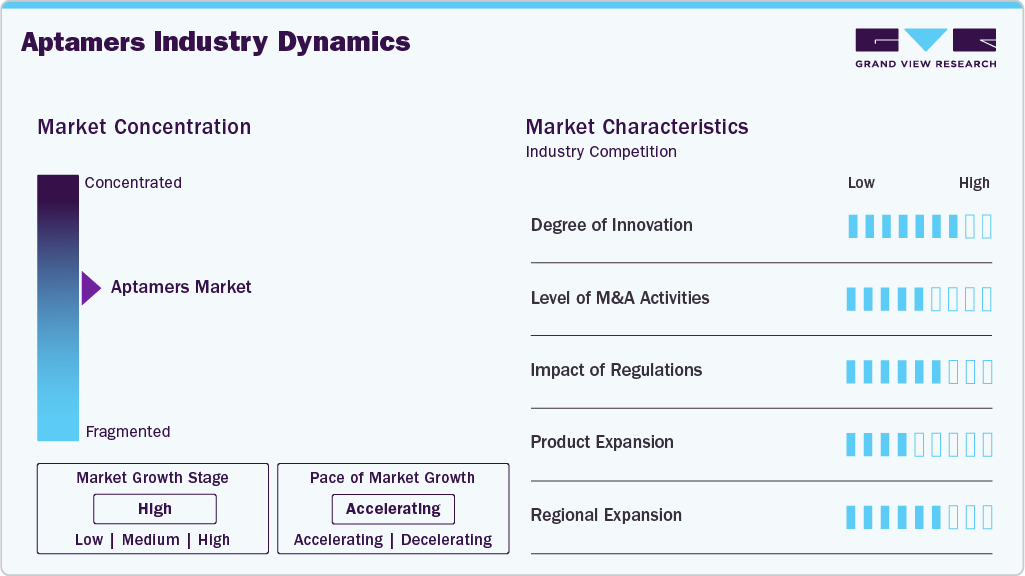
Market Concentration & Characteristics
The aptamers industry is witnessing rapid technological advancements, including the integration of automated SELEX platforms, AI-assisted screening, and next-generation sequencing (NGS), which are improving the speed and accuracy of aptamer discovery. AI-driven tools are enhancing target identification, binding analysis, and molecular optimization while reducing development timelines. These innovations are supporting the development of highly specific aptamers for diagnostic and therapeutic applications. For instance, in May 2025, Aptamer Group presented new data on its Optimer platform at the ASGCT Annual Meeting, highlighting its potential for targeted therapeutic delivery.
The aptamers market is witnessing moderate M&A and strategic partnership activity as companies focus on strengthening their aptamer discovery, synthetic binder, and diagnostic development capabilities. Market participants are increasingly engaging in acquisitions, licensing agreements, and collaborations to expand their technology portfolios and accelerate commercialization. These strategic initiatives are supporting advancements in AI-assisted aptamer screening, next-generation sequencing, and targeted therapeutic development. For instance, in June 2025, NanoGroup acquired DOTO MEDICAL and an innovative aptamer platform from PURE BIOLOGICS to strengthen its biotechnology R&D capabilities and expand its aptamer technology portfolio.
 To learn more about this report, Download Free Sample Report
 Regulations significantly influence the aptamers industry by shaping product development, validation processes, and clinical commercialization pathways. Compliance with GMP, FDA, and EMA regulatory guidelines is essential to ensure the safety, efficacy, and quality of aptamer-based diagnostics and therapeutics. Regulatory frameworks also govern manufacturing consistency, clinical trial procedures, and quality control standards for aptamer technologies. Although stringent approval requirements may increase development costs and commercialization timelines, they improve product reliability and market credibility. Overall, evolving regulatory standards are supporting standardized innovation and broader clinical adoption of aptamer-based applications.
Product expansion in the aptamers industry is driven by increasing demand for advanced aptamer discovery, diagnostics, and targeted therapeutic solutions across biotechnology and pharmaceutical applications. To address this demand, companies are expanding their portfolios with AI-assisted screening platforms, next-generation sequencing-enabled SELEX technologies, and application-specific aptamer products. These advancements are improving development efficiency, enhancing binding accuracy, and accelerating aptamer selection processes. As a result, aptamer technologies are increasingly being utilized for faster biomarker detection, molecular targeting, and precision medicine applications, supporting broader commercialization opportunities in the market.
Regional expansion in the aptamers industry is driven by the growing adoption of molecular diagnostics, targeted therapeutics, and precision medicine across both emerging and developed regions. Companies are strengthening their presence in Asia-Pacific, Latin America, and the Middle East & Africa through strategic collaborations, distribution partnerships, and localized research activities. Growth is further supported by increasing biotechnology investments, expanding pharmaceutical R&D, and improving healthcare infrastructure. In addition, rising demand for cost-effective and highly specific diagnostic solutions is accelerating aptamer adoption across clinical and research applications. Overall, regional expansion is enhancing the accessibility, commercialization, and global reach of advanced aptamer technologies.
Analyst Perspective
The aptamers market is expected to witness strong growth, driven by the increasing adoption of aptamer-based technologies in diagnostics, drug discovery, targeted therapeutics, and biomarker research. Rising demand for highly specific, stable, and cost-effective alternatives to antibodies is accelerating the use of aptamers across life science research and clinical applications. Advancements in SELEX technologies, expanding investments in precision medicine, and growing applications in oncology, infectious diseases, and personalized healthcare are expected to support long-term market growth. Market participants are focusing on technological innovation, strategic collaborations, and expanding therapeutic and diagnostic applications to strengthen their competitive position.
Market Challenge Analysis
Difficulty in targeted delivery and cellular uptake remains a key challenge in the aptamers market. Aptamers often struggle to efficiently penetrate cell membranes and reach specific intracellular targets, thereby reducing their therapeutic effectiveness. In addition, rapid degradation by nucleases and quick renal clearance in biological environments may impact their stability and bioavailability. These challenges require advanced delivery systems and chemical modifications, thereby increasing development complexity and costs. As a result, overcoming targeted-delivery barriers remains critical to the broader commercialization of aptamer-based therapeutics.
Case Study:
“Unlocking Precision in Aptamer Engineering: A Case Study of the Thrombin Binding Aptamer Illustrates Why Modification Size, Quantity, and Position Matter”
Objective:
The study aimed to evaluate how the size, number, and placement of chemically modified nucleotides influence aptamer stability, structural behavior, and target-binding affinity. Researchers used the thrombin binding aptamer (TBA) as a model system to better understand the optimization of aptamers for therapeutic and biotechnology applications.
Research Approach:
Researchers conducted long-time-scale molecular dynamics (MD) simulations on modified thrombin-binding aptamers containing tryptophan-based nucleotide derivatives. The study analyzed how different chemical modifications altered aptamer-protein interactions, structural conformations, and binding orientations. The computational analysis provided detailed insights into aptamer engineering and optimization strategies.
Key Findings:
-
Modification size and positioning significantly influenced aptamer-target binding efficiency.
-
Larger chemical modifications enhanced binding interactions by creating stronger nucleic acid-protein contact networks.
-
Multiple nucleotide modifications demonstrated synergistic effects, improving aptamer stability and target affinity.
-
The study identified critical structural design principles necessary for next-generation aptamer engineering.
-
Computational modeling proved highly effective for predicting aptamer performance and accelerating therapeutic aptamer development.
Market Relevance:
This case study highlights the growing importance of chemically modified aptamers in targeted therapeutics, biosensors, and precision medicine applications. The findings support the increasing adoption of AI-assisted computational modeling, molecular simulations, and advanced SELEX technologies in aptamer discovery workflows. The research also demonstrates how rational aptamer engineering can improve drug targeting, biological stability, and commercialization potential across pharmaceutical and biotechnology industries.
Industry Impact:
The study reinforces the market trend toward highly optimized aptamer platforms that can compete with antibody-based technologies. Improved aptamer stability and binding specificity are expected to expand applications in oncology, molecular diagnostics, targeted drug delivery, and biomarker detection. These advancements are anticipated to support future innovation and product development in the global market.
Conclusion:
The research demonstrates that precise chemical modification strategies play a critical role in enhancing aptamer functionality and therapeutic performance. The integration of computational biology and molecular engineering is expected to accelerate the development of next-generation aptamer technologies, creating significant growth opportunities in precision diagnostics and targeted therapeutics.
Type Insights
Based on type, the nucleic acid aptamer segment held the largest revenue share of over 79.0% in 2025, and it is expected to grow with the fastest CAGR over the forecast period, owing to the global use of DNA- and RNA-based aptamers in diagnostics, therapeutics, biosensors, and targeted drug delivery applications. Nucleic acid aptamers offer high specificity, low immunogenicity, ease of chemical synthesis, and strong binding affinity toward a wide range of molecular targets, making them increasingly preferred over conventional antibodies in several applications. In addition, growing adoption in precision medicine, cancer diagnostics, and molecular research is further supporting segment growth across the pharmaceutical and biotechnology industries.
The peptide aptamer segment is expected to grow significantly over the forecast period, driven by increasing demand for targeted therapeutics, molecular diagnostics, and precision medicine applications. Peptide aptamers offer high specificity, strong binding affinity, and improved stability, making them suitable for cancer research, drug discovery, and biomarker detection. In addition, advancements in peptide engineering and high-throughput screening technologies are further supporting segment growth across pharmaceutical and biotechnology applications.
Application Insights
Based on application, the research and development segment held the largest revenue share of over 32.7% in 2025, and it is expected to grow with the fastest CAGR over the forecast period. The growth of this segment is driven by rising demand for aptamers and by increasing research activities focused on their applications in diagnostics and therapeutics, which have collectively supported segment expansion. In addition, various strategic initiatives undertaken by key players, including collaborations, partnerships, and agreements, are further strengthening the R&D of novel aptamer-based diagnostic and therapeutic products. Overall, continuous innovation and strong investment in research are accelerating advancements in the aptamers market.
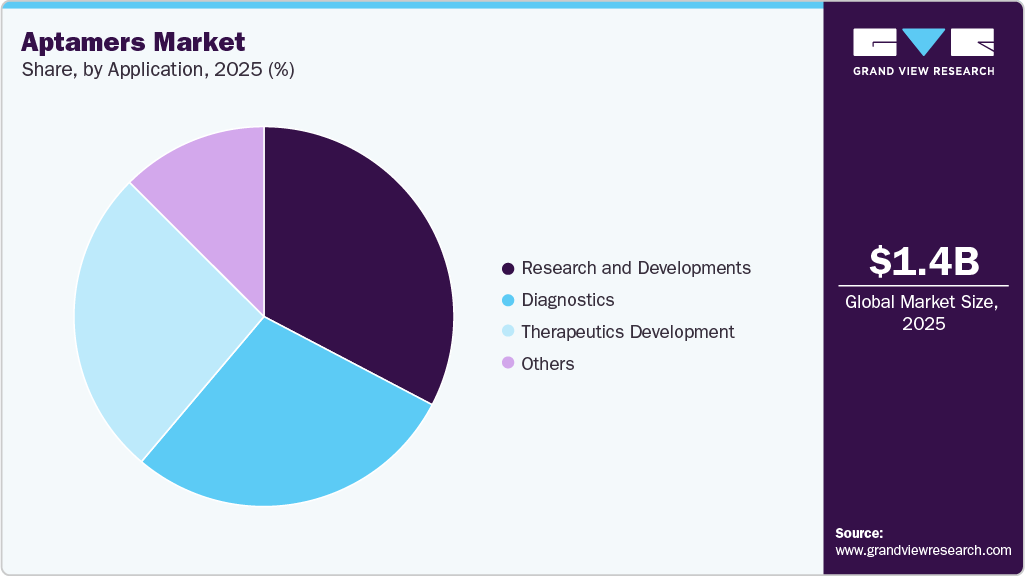 To learn more about this report, Download Free Sample Report
 The therapeutics development segment is expected to grow significantly over the forecast period, owing to the ability to design antidotes rationally (which is difficult with antibodies) and is considered the better alternative for protein therapeutics in terms of synthetic accessibility, size, and modification by medicinal chemistry. These facts collectively help the therapeutics segment build a strong market presence in the future.
Regional Insights
North America dominated the aptamers market with the largest revenue share of 44.6% in 2025. The region’s strong healthcare infrastructure, significant R&D investments, and high burden of chronic diseases support market growth. The increasing adoption of precision medicine and personalized therapeutics is driving demand for advanced aptamer technologies. At the same time, the presence of leading industry players and growing automation in research and diagnostics further reinforces the region’s market leadership.
 To learn more about this report, Download Free Sample Report
 U.S. Aptamers Market Trends
The aptamers market in the U.S. held the largest share in the North America region in 2025. The U.S. aptamers industry is characterized by strong innovation, high healthcare expenditure, and a well-established biopharmaceutical ecosystem. Growing adoption of aptamer-based technologies in diagnostics, targeted therapeutics, and drug discovery is being driven by the country’s focus on precision medicine and advanced biologics development. In addition, continuous R&D investments, coupled with active collaborations between academic institutes and industry players, are accelerating the development and commercialization of novel aptamer applications across healthcare and life sciences.
Europe Aptamers Market Trends
The Europe aptamers industry held a substantial revenue share in 2025, driven by a strong biotechnology ecosystem and the increasing prevalence of chronic and infectious diseases. The region benefits from significant public and private funding in life sciences, fostering active research and development in aptamer-based diagnostics and therapeutics. In addition, the growing adoption of biologics and precision medicine approaches is accelerating the demand for highly specific molecular recognition tools, thereby strengthening the uptake of aptamer technologies across clinical and research applications.
The UK aptamers market is driven by strong biomedical research capabilities and increasing use of aptamers in diagnostics and therapeutics, especially in oncology and regenerative medicine. Active collaborations between academia and biotech firms are supporting innovation, while the rising adoption of precision medicine continues to boost demand.
The Germany aptamers market is expected to grow rapidly over the forecast period, driven by its advanced healthcare infrastructure, robust life sciences research ecosystem, and high burden of chronic and complex diseases. The country benefits from the strong presence of leading biotechnology companies and world-class academic and research institutions that are actively developing innovative aptamer-based diagnostics and therapeutics.
Asia Pacific Aptamers Market Trends
The Asia Pacific aptamers industry is expected to grow at the fastest CAGR of 19.8% over the forecast period, driven by the rising prevalence of chronic and infectious diseases and increasing demand for precise diagnostic and therapeutic solutions. The expansion of the biopharmaceutical sector, along with supportive government initiatives to improve healthcare infrastructure and expand access to advanced technologies, is further accelerating regional market growth.
The China aptamers market is growing rapidly, driven by strong biotech investments, expanding healthcare infrastructure, and rising demand for advanced diagnostics. Government support for precision medicine and increasing R&D in life sciences is further accelerating the adoption of aptamer-based technologies.
The aptamers market in Japan is supported by strong biotech R&D and growing use in precision diagnostics and targeted therapeutics. The rising demand for advanced molecular tools in chronic disease management and ongoing innovation in the life sciences are key factors driving adoption in the region.
MEA Aptamers Market Trends
The MEA aptamers industry is witnessing gradual growth driven by improving healthcare infrastructure and rising investments in life sciences research. The increasing adoption of advanced diagnostic technologies and the growing focus on cost-effective molecular tools are supporting regional market expansion.
The Kuwait aptamers market is experiencing steady growth, supported by increasing healthcare modernization and rising adoption of advanced molecular diagnostics. The expanding focus on precision medicine and biomedical research is driving the adoption of aptamer-based applications in the country.
Key Aptamers Company Insights
The aptamers market is moderately consolidated, with key players such as SomaLogic, Aptamer Group, Aptadel Therapeutics, Base Pair Biotechnologies, Noxxon Pharma, Vivonics Inc., Aptagen, LLC, TriLink Biotechnologies, Altermune LLC, and AM Biotechnologies focusing on expanding aptamer discovery platforms and enhancing molecular binding technologies. Continuous R&D investments, alongside collaborations and advancements in therapeutic and diagnostic applications, are strengthening their market position across biomedical research and precision medicine segments.
Key Aptamers Companies
The following key companies have been profiled for this study on the aptamers market.
-
SomaLogic
-
Aptamer Group
-
Aptadel Therapeutics
-
Base Pair Biotechnologies
-
Noxxon Pharma
-
Vivonics Inc.
-
Aptagen, LLC
-
TriLink Biotechnologies
-
Altermune LLC
-
AM Biotechnologies
Competitive Benchmarking
Category
Operating Strategies
Competitive Edge
Weakness
Established Players (SomaLogic, Noxxon Pharma, TriLink Biotechnologies, etc.)
- Expand market presence through strategic collaborations with pharmaceutical companies, biotechnology firms, and research institutions to accelerate clinical and commercial adoption.
- Strong proprietary platforms for high-affinity aptamer discovery and optimization, supported by robust R&D capabilities.
- Limited commercialization of approved aptamer-based products compared to antibody-based technologies.
Emerging Players (Aptamer Group, Aptadel Therapeutics, Base Pair Biotechnologies)
- Strengthen market presence through niche technology innovation and partnerships with academic institutions and early-stage biotechnology companies.
- High flexibility in developing customized aptamers for specific research and diagnostic applications.
- Limited financial resources and global commercial reach compared to established industry leaders.
Recent Developments
-
In October 2025, Aptamer Group entered a development agreement with a top-three global pharmaceutical company to engineer Optimer binders for targeted radiopharmaceutical and PET imaging applications, expanding the therapeutic potential of aptamer-based technologies in oncology and precision medicine.
-
In August 2025, Aptamer Group launched a biomarker discovery service integrating Optimer technology with proteomic analysis to enable high-throughput identification and validation of disease biomarkers. The platform simultaneously generated corresponding aptamer-based affinity ligands, accelerating translational research and targeted therapeutic development.
“Our biomarker discovery service addresses a fundamental challenge in life sciences research, which is the need for faster, more efficient identification of clinically relevant molecular targets. By combining our Optimer libraries with proteomic capabilities, we can deliver validated biomarkers alongside functional binding tools, significantly accelerating the translation from discovery to application. The strong interest we’ve received from pharmaceutical and biotechnology partners demonstrates the value of this integrated approach.”
-Dr Arron Tolley, Chief Executive Officer of Aptamer Group
Aptamers Market Report Scope
Report Attribute
Details
Market size in 2025
USD 1.4 billion
Estimated market size in 2026
USD 1.6 billion
Projected market size by 2033
USD 5.3 billion
Growth rate
CAGR of 18.3% from 2026 to 2033
Historical data
2021 - 2025
Forecast period
2026 - 2033
Quantitative units
Revenue in USD million, and CAGR from 2026 to 2033
Report coverage
Revenue forecast, company ranking, competitive landscape, growth factors, and trends
Segments covered
Type, application, region
Regional scope
North America; Europe; Asia Pacific; Latin America; MEA
Country scope
U.S., Canada, Mexico, UK, Germany, France, Italy, Spain, Norway, Denmark, Sweden, China, Japan, India, South Korea, Australia, Thailand, Brazil, Argentina, Saudi Arabia, South Africa, UAE, and Kuwait
Key companies profiled
SomaLogic; Aptamer Group; Aptadel Therapeutics; Base Pair Biotechnologies; Noxxon Pharma; Vivonics Inc.; Aptagen, LLC; TriLink Biotechnologies; Altermune LLC; AM Biotechnologies
Customization scope
Free report customization (equivalent up to 8 analysts' working days) with purchase. Addition or alteration to country, regional & segment scope.
Pricing and purchase options
Avail customized purchase options to meet your exact research needs. Explore purchase options
Global Aptamers Market Report Segmentation
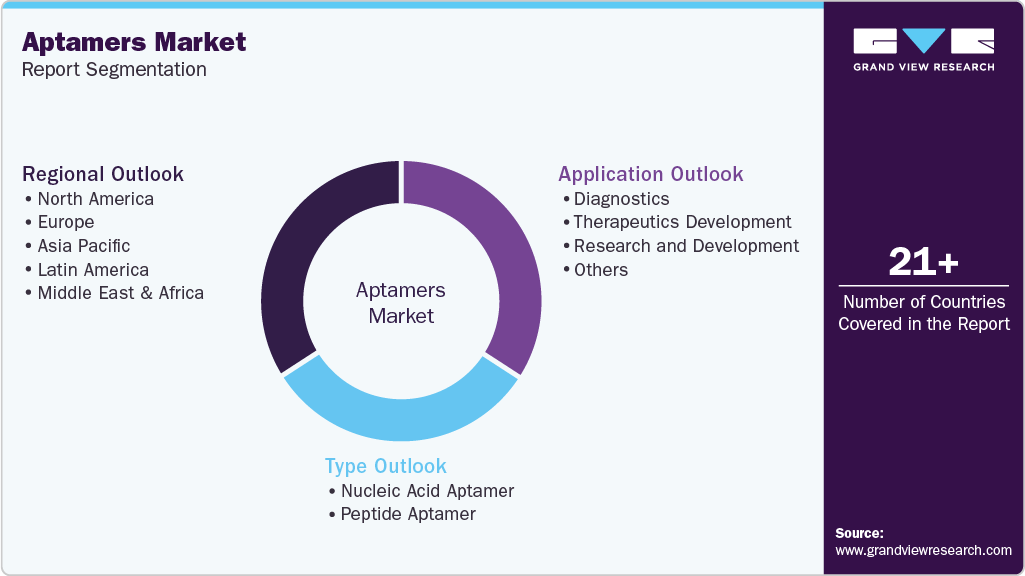
This report forecasts revenue growth and provides an analysis of the latest trends in each of the sub-segments from 2021 to 2033. For this study, Grand View Research has segmented the global aptamers market report based on type, application, and region:
 To learn more about this report, Download Free Sample Report
 -
Type Outlook (Revenue, USD Million/Billion, 2021 - 2033)
-
Nucleic Acid Aptamer
-
Peptide Aptamer
-
-
Application Outlook (Revenue, USD Million/Billion, 2021 - 2033)
-
Diagnostics
-
Therapeutics Development
-
Research and Development
-
Others
-
-
Regional Outlook (Revenue, USD Million/Billion, 2021 - 2033)
-
North America
-
U.S.
-
Canada
-
Mexico
-
-
Europe
-
UK
-
Germany
-
France
-
Italy
-
Spain
-
Denmark
-
Sweden
-
Norway
-
-
Asia Pacific
-
Japan
-
China
-
India
-
Australia
-
South Korea
-
Thailand
-
-
Latin America
-
Brazil
-
Argentina
-
-
Middle East & Africa
-
South Africa
-
Saudi Arabia
-
UAE
-
Kuwait
-
-
Research Methodology
The aptamers market figures in this report are based on a proven research process that combines executive interviews with secondary research from proprietary databases, company filings, and recognized regulatory and institutional sources. Market size is built through value-chain sizing - reconciling supply-side and demand-side estimates - and triangulated with bottom-up and top-down approaches. Every estimate passes multiple levels of expert validation before publication, with each aptamers segment quantified using the revenue-capture definitions in the table below.
Segment Definition
Segment - Type
Revenue Capture Definition
Nucleic Acid Aptamer
Revenue generated from DNA- and RNA-based aptamers engineered to bind specific molecular targets with high affinity and specificity. These aptamers are widely utilized in diagnostics, therapeutics development, biomarker discovery, biosensing, targeted drug delivery, and life science research owing to their stability, ease of synthesis, and molecular recognition capabilities.
Peptide Aptamer
This segment captures income from peptide-based aptamers comprising short, conformationally constrained peptide sequences designed to selectively bind target proteins and other biomolecules. These aptamers are increasingly employed in protein interaction studies, drug discovery, therapeutic development, molecular imaging, and functional genomics research.
Segment - Application
Revenue Capture Definition
Diagnostics
Revenue generated from aptamers used in diagnostic applications, including biomarker detection, molecular diagnostics, point-of-care testing, biosensors, clinical assays, and disease monitoring. Their high specificity and affinity make them valuable alternatives to antibodies in diagnostic platforms.
Therapeutics Development
This segment captures income from aptamers utilized in the discovery and development of therapeutic agents, including targeted drug delivery systems, precision medicine approaches, immunotherapies, and treatments for oncology, cardiovascular, infectious, and other chronic diseases.
Research and Development
Market value in this category stems from the use of aptamers in basic and translational research for target validation, molecular recognition studies, biomarker discovery, cell biology, proteomics, and functional genomics applications across academic and industrial laboratories.
Others
Revenue originates from emerging and specialized applications of aptamers beyond mainstream diagnostics and therapeutics, including environmental monitoring, food safety testing, veterinary diagnostics, biosecurity, industrial biotechnology, and other novel analytical applications.
Estimation Model
Stage
Description
Top-Down
Commodity Flow Analysis: Market size was estimated by analyzing revenues generated by key aptamer manufacturers and developers, supported by company annual reports, investor presentations, licensing agreements, product portfolios, and premium industry databases. Revenue contributions from private companies were assessed through secondary research and validated through primary interviews to derive the overall market value.
Parent Market
Parent Market & Penetration-Based Analysis: The aptamers market was evaluated within the broader oligonucleotide therapeutics market. Adoption rates of aptamer-based therapeutics, diagnostics, drug delivery platforms, and research applications were analyzed alongside the growth of precision medicine, nucleic acid therapeutics, and molecular diagnostics to estimate the addressable market and segment-level opportunities.
Segmentation
Country-Level Segment Share Modeling: Market shares for type and application segments were derived using country-specific biotechnology R&D investments, oligonucleotide therapeutic development activities, clinical trial landscape, regulatory approvals, and adoption of nucleic acid-based technologies. Weighted-average calculations were used to determine regional and global segment distributions.
Validation
Data Triangulation & Validation Model: Market estimates were validated through triangulation of secondary research, primary interviews, company-level revenue assessments, clinical pipeline analysis, technology adoption trends, and end-user demand evaluation to ensure consistency and accuracy across all market segments and geographies.
Forecasting
Forecasting & CAGR Modeling: Market forecasts were developed using historical trends in oligonucleotide therapeutics, expansion of precision medicine, increasing investments in nucleic acid drug development, advancements in aptamer discovery technologies, growth in companion diagnostics, and strategic collaborations across the biotechnology and pharmaceutical industries. Regression-based analysis and trend modeling were applied to project future market growth and CAGR.
Delivered Customizations
This report has been delivered with the following In-depth customizations
Client Request
Customization Delivered
Value Adds
Application & End-user Opportunity Assessment for Aptamers Market
Detailed cross-segmentation analysis of aptamer applications across diagnostics, therapeutics development, research & development, and emerging applications, benchmarked by pharmaceutical & biotechnology companies, CROs, academic institutes, diagnostic laboratories, and regional adoption trends.
Identifies high-growth application areas, evaluates commercialization potential across end users, supports R&D prioritization, and enables clients to target the most attractive customer segments.
Competitive Benchmarking & Technology Landscape Analysis
Comprehensive benchmarking of leading aptamer companies based on technology platforms (SELEX, AI-enabled aptamer discovery, high-throughput screening), product pipeline, therapeutic focus, partnerships, licensing activities, geographic presence, patent landscape, and commercialization strategies.
Enables clients to evaluate competitive positioning, identify technology gaps, assess partnership and acquisition opportunities, and formulate differentiation and market entry strategies.
Target Biomarker & Therapeutic Area Opportunity Assessment
Customized analysis of aptamer adoption across key disease areas including oncology, infectious diseases, cardiovascular disorders, neurological disorders, autoimmune diseases, and rare diseases. Assessment includes target biomarker trends, clinical research activity, unmet needs, and commercial potential by therapeutic area.
Helps clients prioritize high-value therapeutic areas, identify emerging biomarker opportunities, optimize R&D investments, and align product development with evolving clinical and commercial demand.
Frequently Asked Questions About This Report
The global aptamers market size was valued at USD 1.4 billion in 2025 and is estimated at USD 1.6 billion for 2026.
The global aptamers market is expected to grow at a CAGR of 18.3% from 2026 to 2033, reaching USD 5.3 billion by 2033.
The nucleic acid aptamer segment led with a 79.0% revenue share in 2025, and is the fastest-growing type.
Some key players operating in the aptamers market include SomaLogic; Aptamer Group; Aptadel Therapeutics; Base Pair Biotechnologies; Noxxon Pharma; Vivonics Inc.; Aptagen, LLC; TriLink Biotechnologies; Altermune LLC; AM Biotechnologies
Key factors driving the aptamers market growth include high advantage of aptamers compared to antibodies, advancements in the field of aptamer development technologies, growing interest of many companies to invest in aptamers market, and promising pipeline therapeutics.
The research and development segment led with a 32.7% revenue share in 2025, and is the fastest-growing application.
The North America aptamers market dominated with a share of 44.6% in 2025.
Asia Pacific is the fastest-growing region over the forecast period.
About the Author(s)
Biotechnology Research Team
Healthcare · BiotechnologyThis report was authored by the biotechnology research team at Grand View Research - comprising two research analysts, one senior research analyst, and one industry expert - with specialized expertise in the biotechnology segment of the healthcare industry. All findings are based on proprietary healthcare databases, executive interviews, and regulatory analysis, subject to internal peer review prior to publication.
Last Updated:
Speak to Analyst

Customize this report to your needs - add regions, segments, or data points, with 20% free customization.
Or view our licence options:


ISO 9001:2015 & 27001:2022 Certified
We are GDPR and CCPA compliant! Your transaction & personal information is safe and secure. For more details, please read our privacy policy.


