
- Home
- »
- Medical Devices
- »
-
Autologous Stem Cell & Non-Stem Cell Therapies Market Report, 2033GVR Report cover

Autologous Stem Cell & Non-stem Cell Therapies Market
Size, Share & Trends Analysis Report By Type (Autologous Stem Cells, Autologous Non-Stem Cells), By Application (Cancer, Neurodegenerative Disorders, Cardiovascular Disease), By End User, By Region, And Segment Forecasts
Market Size, 2025
$6.3BMarket Estimate, 2026
$7.1BMarket Forecast, 2033
$17.5BCAGR, 2026–2033
13.8%Autologous Stem Cell & Non-stem Cell Therapies Market Summary
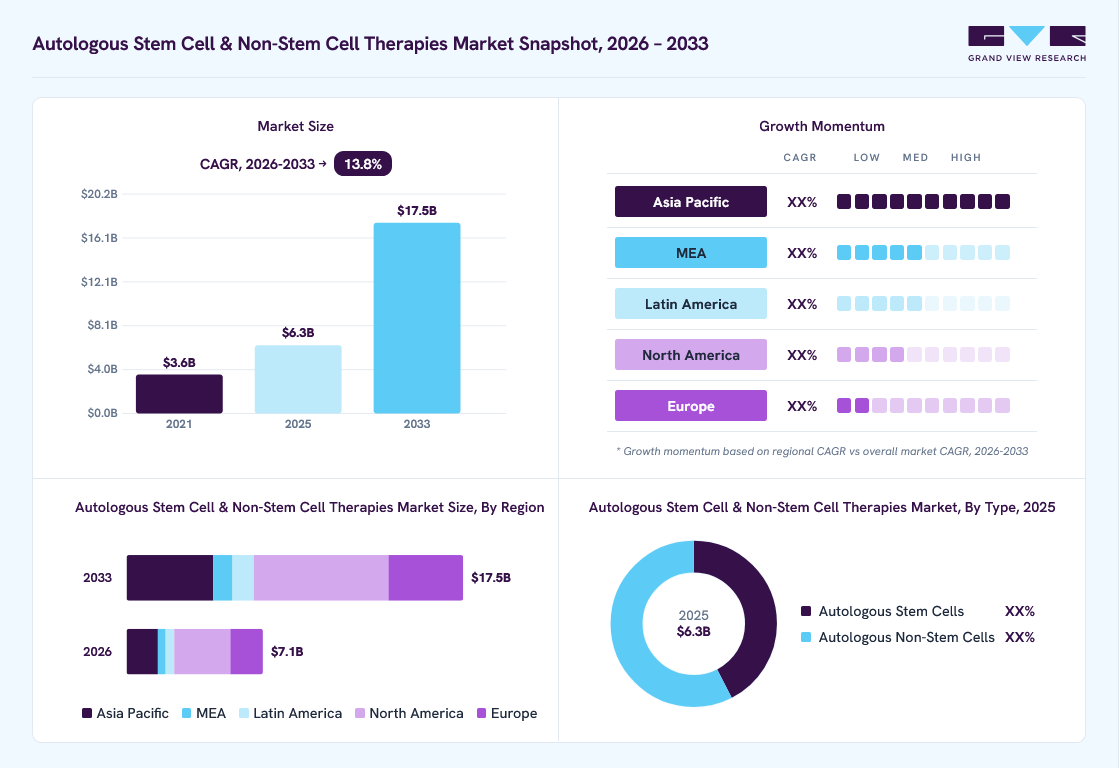
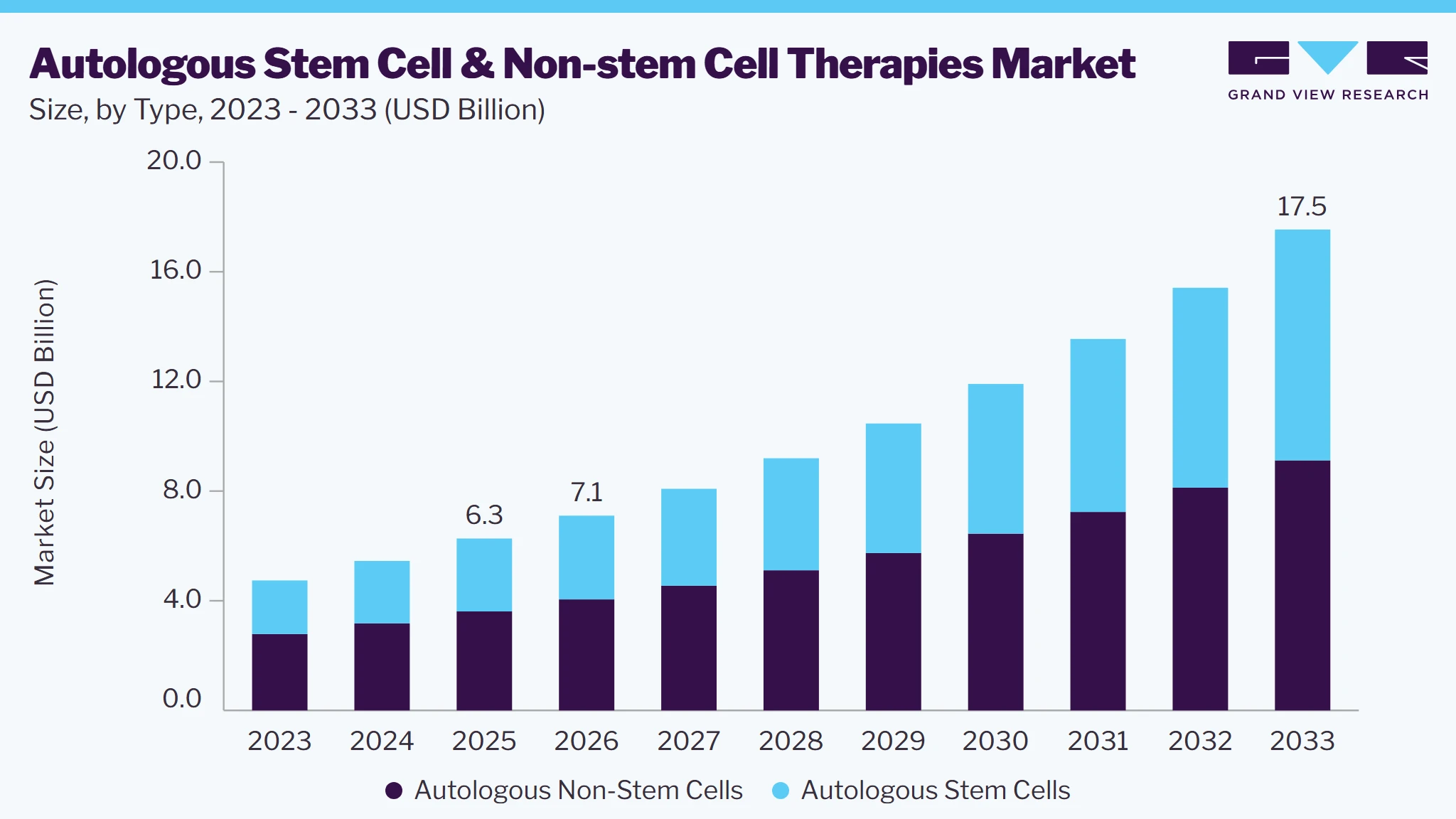
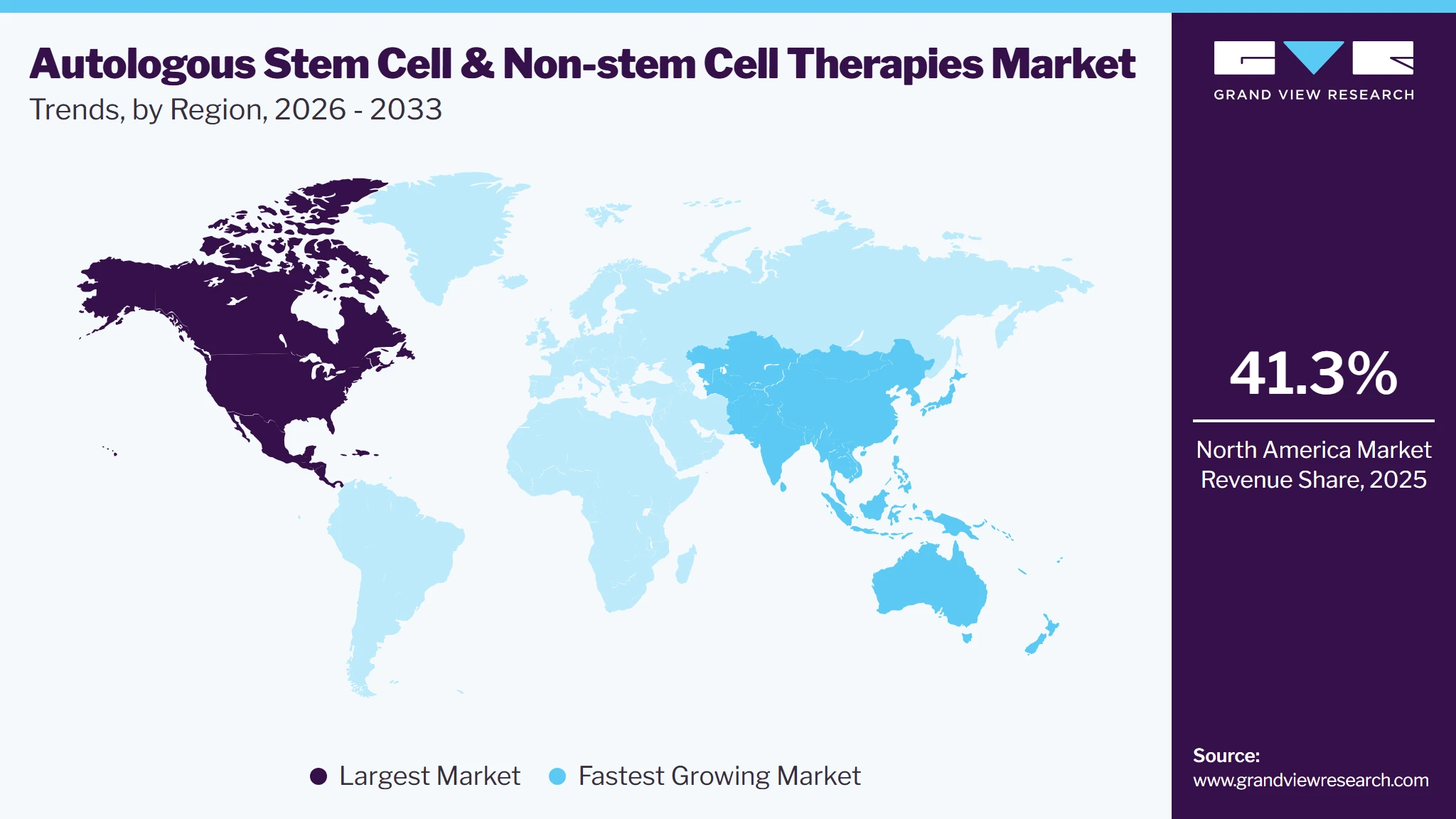
The global autologous stem cell & non-stem cell therapies market size was valued at USD 6.3 billion in 2025 and is projected to grow from USD 7.1 billion in 2026 to USD 17.5 billion by 2033, at a CAGR of 13.8% from 2026 to 2033. North America dominated the market, accounting for a revenue share of 41.3% in 2025. Market growth is driven by increasing adoption of personalized therapies, rising prevalence of chronic diseases, and advancements in cell processing, manufacturing, and therapeutic applications.
 Source: Grand View Research, IR Documents, Primary Interviews, Paid DatabasesTo learn more about this report,
 Download Free Sample Report
 Key Market Trends & Insights
- By type: Autologous non-stem cells segment held the highest market share of 57.6% in 2025.
- By application: Cancer segment held the highest market share in 2025.
- By end user: Hospitals segment held the highest market share in 2025.
Regional Highlights
- Largest regional market: North America (41.3% revenue share in 2025)
- Fastest-growing regional market: Asia Pacific (highest CAGR, 2026 - 2033)
- By Country: The U.S. held the largest market share in 2025
Market Size & Forecast
- Market Size in 2025: USD 6.3 Billion
- Estimated Market Size in 2026: USD 7.1 Billion
- Projected Market Size by 2033: USD 17.5 Billion
- CAGR (2026-2033): 13.8%
Three ways to get this report
Buy it, customize it, or ask a question.Ask an Analyst
A direct answer, usually in 1 working day
- AccessReport author, directly
- Reply timeWithin 1 working day
- No sales callDirect answer only
- FormatEmail reply
- CostFree, no cost
Get the Full Report
What the study covers
- FormatsPDF · Excel · Dashboard
- Timeline2026–2033 annual, 2025 base
- Coverage20+ countries, 5 regions
- Companies10+ key players profiled
Customize the Report
20% free customization
- IncludeCountries, segments, points
- TailorTo your product definition
- ExtendDeeper competitor detail
- OrA fully bespoke study
- Turnaround5–10 working days
 To learn more about this report, Download Free Sample Report
 Market Dynamics
The autologous stem cell & non-stem cell therapies market is experiencing significant growth driven by advancements in cell processing and manufacturing technologies, expanding clinical research, and increasing adoption of cell-based treatments across oncology, regenerative medicine, and tissue repair. Growing investments in cell therapy infrastructure, improvements in cell collection and processing systems, and the development of streamlined manufacturing workflows are expected to enhance treatment accessibility and scalability, creating new opportunities for market growth.
The growing demand for personalized and patient-specific therapies is supporting the adoption of autologous stem cell and non-stem cell therapies, as these approaches utilize a patient’s own cells to develop treatments tailored to individual biological characteristics. Autologous therapies can reduce concerns about donor compatibility and immune rejection while enabling the development of targeted treatment strategies across oncology, regenerative medicine, and other therapeutic areas. Increasing emphasis on precision medicine and individualized treatment approaches is therefore encouraging research and clinical development of autologous cell-based therapies.
For instance, in February 2026, the U.S. FDA issued draft guidance establishing a framework for developing individualized therapies, including recommendations for demonstrating safety, efficacy, and manufacturing quality when conventional randomized trials are challenging due to small patient populations. Although the framework primarily addresses individualized genetic therapies, it reflects growing regulatory support for tailored therapeutic approaches and is expected to facilitate innovation in developing patient-specific treatments.
The complexity of cell collection, processing, and handling is a key restraint in the autologous stem cell & non-stem cell therapies market, as patient-derived cells require careful collection, transportation, isolation, processing, expansion, and quality assessment before administration. Variations in cell characteristics, limited processing windows, and the need to maintain cell viability and functionality throughout the workflow can increase operational complexity and affect treatment consistency.
Moreover, autologous therapies require coordinated workflows between collection centers, processing facilities, and treatment sites, often involving strict chain-of-identity and chain-of-custody controls. The requirement for specialized equipment, controlled processing environments, and skilled personnel increases manufacturing complexity and costs, particularly for facilities seeking to scale patient-specific therapies across multiple locations.
Advancements in automated cell processing technologies are creating significant opportunities in the autologous stem cell & non-stem cell therapies market by reducing manual intervention and improving the consistency, reproducibility, and scalability of patient-specific cell manufacturing. Automated platforms for cell isolation, washing, activation, expansion, concentration, and formulation can minimize processing variability and contamination risks while improving workflow efficiency. The adoption of closed and integrated systems is further supporting the standardization of complex cell therapy manufacturing processes.
For instance, in March 2026, Sartorius AG launched the Eveo Cell Therapy Platform, an integrated automated system designed for autologous cell therapy production. The platform combines multiple cell-processing steps within a closed workflow and supports parallel manufacturing, enabling higher production throughput and improved process efficiency. Such advancements are expected to facilitate scalable manufacturing and support the broader adoption of autologous cell-based therapies.
Market Concentration & Characteristics
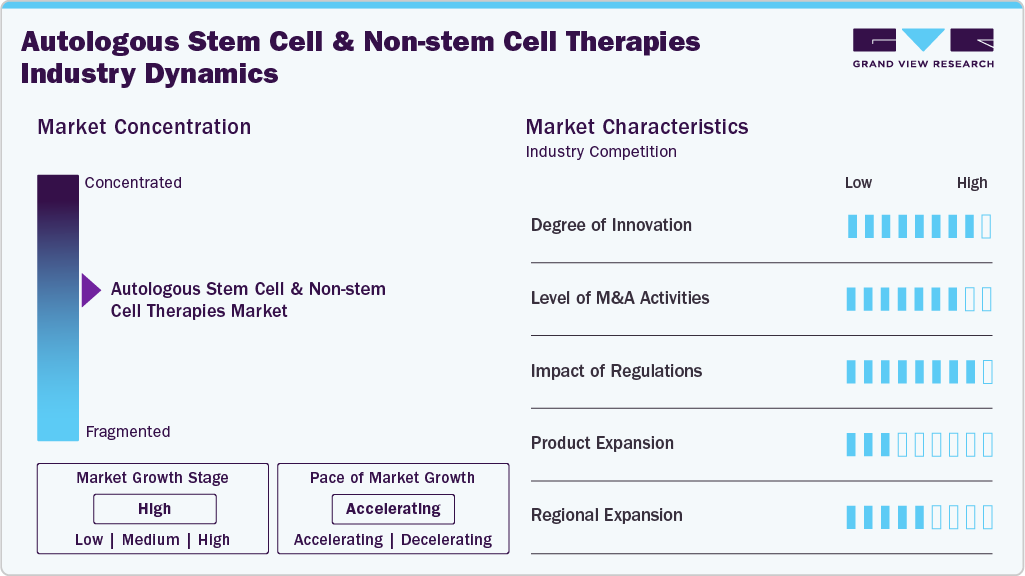
The autologous stem cell & non-stem cell therapies industry is characterized by a high degree of innovation, driven by advances in cell engineering, automated processing, closed manufacturing systems, and cryopreservation technologies. Companies are increasingly developing integrated platforms to improve cell quality, manufacturing consistency, and turnaround time for patient-specific therapies. For instance, in March 2026, the U.S. FDA approved Kresladi (marnetegragene autotemcel), a gene therapy for severe leukocyte adhesion deficiency type I, highlighting continued advancement of patient-specific cellular therapies.
The autologous stem cell & non-stem cell therapies industry is experiencing high M&A activity, with pharmaceutical companies acquiring cell therapy developers to strengthen their regenerative medicine and cellular immunotherapy pipelines. For instance, in April 2026, UCB agreed to acquire Neurona Therapeutics for up to approximately USD 1.15 billion, gaining access to its neuronal cell therapy candidate NRTX-1001 for drug-resistant epilepsy.
The industry is significantly influenced by stringent regulatory and quality requirements governing cell collection, processing, manufacturing, clinical evaluation, and product safety. Regulatory frameworks increasingly emphasize chemistry, manufacturing, and controls (CMC), product characterization, and long-term safety monitoring. For instance, in May 2026, the U.S. FDA issued final guidance outlining greater flexibility in CMC requirements for human cellular and gene therapy products, supporting more efficient development while maintaining product quality and safety.
 To learn more about this report, Download Free Sample Report
 The autologous stem cell & non-stem cell therapies industry is witnessing high product expansion, supported by the growing number of autologous cell therapies receiving regulatory approvals across oncology, rare diseases, and regenerative medicine. Companies are broadening their product portfolios across different cell types and therapeutic indications, increasing the range of commercially available patient-specific therapies. For instance, in December 2025, the U.S. FDA approved Breyanzi (lisocabtagene maraleucel) for the treatment of adults with marginal zone lymphoma, representing an expansion of the application of an autologous CAR-T cell therapy into an additional hematological malignancy.
The autologous stem cell & non-stem cell therapies industry is witnessing a moderate to high regional expansion, supported by the establishment of cell therapy manufacturing facilities and process development capabilities across emerging and established biotechnology hubs. Companies are expanding their geographic footprints to provide localized manufacturing and reduce logistical challenges associated with patient-specific therapies. For instance, in June 2025, AGC Biologics announced the expansion of its cell therapy development and clinical manufacturing operations to Yokohama, Japan, enabling the company to provide autologous and allogeneic cell therapy manufacturing services across Asia, Europe, and North America. The company also planned a new Yokohama manufacturing facility scheduled to begin operations in 2027.
Analyst Perspective
The autologous stem cell & non-stem cell therapies market is expected to grow significantly, driven by increasing adoption of patient-derived cell therapies across regenerative medicine, oncology, autoimmune disorders, and other therapeutic applications. Growing clinical research, advancements in cell processing and manufacturing technologies, and increasing focus on personalized treatment approaches are supporting market expansion. Rising investments in cell therapy development and improving clinical infrastructure are further creating opportunities for market participants to enhance treatment accessibility and scalability.
Type Insights
The autologous non-stem cells segment accounted for the largest revenue share, over 57.6% in 2025, driven by the increasing application of patient-derived immune and differentiated cells in cell-based therapies. The growing adoption of tumor-infiltrating lymphocytes (TILs) and other autologous immune cell therapies is expanding the use of non-stem cells across oncology applications. For instance, in February 2024, Iovance Biotherapeutics received FDA approval for AMTAGVI (lifileucel), a tumor-derived autologous T-cell immunotherapy for adults with unresectable or metastatic melanoma. The therapy uses T cells isolated from the patient’s tumor, expanded ex vivo, and returned to the same patient for treatment.
The autologous stem cells segment is expected to register the fastest CAGR over the forecast period, owing to the increasing development of patient-specific stem cell therapies for regenerative medicine. For instance, in June 2026, Aspen Neuroscience announced completion of dosing in Cohorts 3 and 4 of its Phase 1/2a ASPIRO trial evaluating sasineprocel, an autologous induced pluripotent stem cell-derived therapy for Parkinson’s disease. The therapy is manufactured from a patient’s own cells and differentiated into dopaminergic neuron precursor cells for transplantation.
Application Insights
The cancer segment dominated the market with a 30.4% share in 2025, driven by the increasing use of autologous cell therapies for treating hematological and solid tumors. For instance, in August 2024, the U.S. FDA granted accelerated approval to TECELRA (afamitresgene autoleucel), a genetically modified autologous T-cell therapy for adults with unresectable or metastatic synovial sarcoma. The therapy uses the patient’s own T cells, which are genetically modified and administered back to the patient to target cancer cells.
The neurodegenerative disorders segment is expected to register the fastest CAGR over the forecast period, driven by the increasing prevalence of neurological disorders, growing unmet medical needs associated with progressive neurodegenerative conditions, and rising research into cell-based approaches for neuronal repair and regeneration. Increasing clinical investigations of autologous stem cell therapies for conditions such as Parkinson’s disease, multiple sclerosis, and amyotrophic lateral sclerosis are further supporting segment growth.
End User Insights
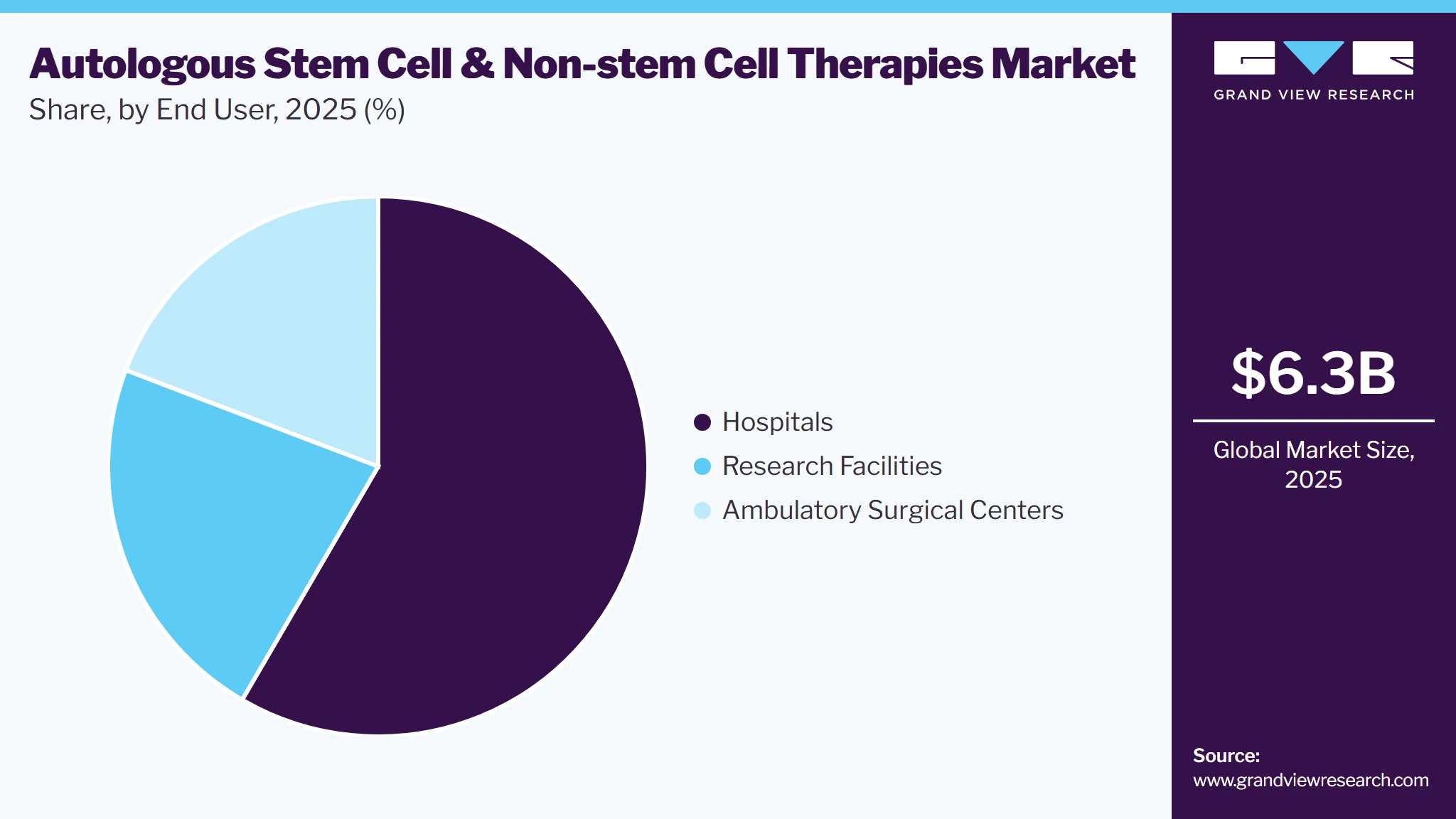
The hospitals segment dominated the market with a share of 58.4% in 2025, supported by the increasing use of specialized hospital facilities for administering autologous cell therapies. For instance, in June 2025, the U.S. FDA eliminated REMS requirements for approved autologous CAR T-cell therapies, removing the requirement for hospitals and associated clinics to maintain special certification and immediate access to tocilizumab. In addition, it is expected to facilitate broader administration of these therapies across healthcare facilities.
 To learn more about this report, Download Free Sample Report
 The research facilities segment is projected to witness the fastest CAGR, owing to the increasing use of specialized facilities for stem cell research and development of personalized cell therapies. For instance, in April 2025, RCSI University of Medicine and Health Sciences opened the RCSI Patient Stem Cell Discovery Core, a dedicated research facility supporting patient-derived stem cell research and personalized drug testing. The facility is integrated with Beaumont Hospital and enables researchers to study patient samples and develop personalized treatment approaches.
Regional Insights
North America dominated the autologous stem cell & non-stem cell therapies industry, accounting for the largest revenue share of 41.3% in 2025, supported by established cell therapy infrastructure, strong clinical research activity, and increasing investment in commercial manufacturing capabilities. For instance, in April 2026, Cellares entered a 10-year agreement with Cabaletta Bio to manufacture rese-cel, an investigational autologous CAR-T therapy, using its automated Cell Shuttle platform, highlighting the region’s shift toward scalable and automated autologous cell therapy manufacturing.
 To learn more about this report, Download Free Sample Report
 “Cell therapy has proven it has the potential to transform patients’ lives. For years, autologous cell therapies were constrained by manual processes that had difficulty scaling to meet commercial demand. This 10-year agreement represents a fundamental shift toward automated manufacturing that is demonstrably ready. That is exactly what we built Cellares for.”
- Fabian Gerlinghaus, Co-founder and Chief Executive Officer, Cellares
U.S. Autologous Stem Cell & Non-stem Cell Therapies Market Trends
The autologous stem cell & non-stem cell therapies industry in the U.S. is expected to grow over the forecast period, supported by a broad clinical pipeline, advanced manufacturing infrastructure, and increasing development of autologous therapies beyond hematological malignancies. For instance, in July 2026, Kyverna Therapeutics and ElevateBio entered into a manufacturing agreement for U.S. commercial and global clinical supply of miv-cel, an autologous CD19-directed CAR-T therapy being developed for autoimmune diseases.
Europe Autologous Stem Cell & Non-stem Cell Therapies Market Trends
Europe represents a significant market for autologous cell therapies, supported by established advanced therapy medicinal product infrastructure and collaborative research programs. For instance, in July 2026, the EU-funded S.O.L.A.R.I.S. project was launched with EUR 8.0 million to develop more automated and scalable CAR-T manufacturing approaches across European ATMP hubs, supporting broader access to autologous therapies.
The UK autologous stem cell & non-stem cell therapies market is supported by established academic cell manufacturing capabilities and increasing clinical translation of autologous therapies. The UCL CAR-T program manufactures clinical-grade CAR-T products through GMP facilities at the Royal Free Hospital and collaborates with Cell Therapy Catapult for selected products, strengthening the country's clinical manufacturing ecosystem.
The autologous stem cell & non-stem cell therapies market in Germany is anticipated to grow significantly over the forecast period, supported by specialized GMP infrastructure and technology development. For instance, in July 2026, PROVIREX consolidated its Hamburg operations under the S3LTEC facility, which includes 230 m² of cleanroom space and capacity for up to seven automated CAR-T manufacturing platforms.
Asia Pacific Autologous Stem Cell & Non-stem Cell Therapies Market Trends
Asia-Pacific is expected to grow at the fastest CAGR of 15.6% during the forecast period, driven by increasing cell therapy research, domestic manufacturing capabilities, and improving access to advanced therapies. For instance, in May 2026, a Phase III trial of REGEND001, an autologous cell therapy for chronic obstructive pulmonary disease, formally commenced in Shanghai across multiple Chinese clinical research centers, demonstrating expansion of autologous cell therapy development beyond oncology.
China autologous stem cell & non-stem cell therapies market is expected to expand significantly, supported by increasing domestic cell therapy research, expanding clinical development programs, and growing investments in advanced therapy manufacturing capabilities. The country’s expanding pipeline of autologous CAR-T and other cell-based therapies, together with improvements in regulatory and clinical infrastructure, is expected to support the commercialization and broader adoption of autologous therapies.
The autologous stem cell & non-stem cell therapies market in Japan is expected to grow steadily, supported by government-backed regenerative medicine programs, specialized regulatory pathways, and increasing clinical development of cellular therapies. For instance, in March 2026, Japan's Ministry of Health, Labour and Welfare approved two iPS cell-based regenerative medicine products, marking a major milestone for the country's cell therapy commercialization ecosystem.
Latin America Autologous Stem Cell & Non-stem Cell Therapies Market Trends
The Latin America autologous stem cell & non-stem cell therapies market is expected to grow gradually, as countries strengthen local cell therapy research, manufacturing, and regulatory capabilities. For instance, in April 2026, Brazil's Instituto Butantan signed an agreement with IASO Bio to develop a CAR-T therapy locally, with production planned at the Núcleo de Terapias Avançadas de São Paulo, supporting domestic manufacturing of patient-derived cell therapies.
"This partnership with Butantan is a pivotal milestone in IASO Bio's global strategy to bring our innovative cell therapies to patients in Latin America. By combining our proprietary cell therapy technology with Butantan's exceptional development and manufacturing capabilities as a public institution, we have a unique opportunity to significantly reduce costs and make this life-saving treatment accessible to many more patients in Brazil through the public health system."
- Jinhua Zhang, Founder, Chairwoman and CEO of IASO Bio
MEA Autologous Stem Cell & Non-stem Cell Therapies Market Trends
MEA autologous stem cell & non-stem cell therapies market is expected to grow steadily, as healthcare systems expand access to advanced cellular therapies and strengthen treatment capabilities. Increasing investments in cell therapy infrastructure, growing clinical research activities, and efforts to develop advanced healthcare capabilities are expected to support the adoption and commercialization of autologous stem cell and non-stem cell therapies across the region.
Key Autologous Stem Cell & Non-stem Cell Therapies Company Insights
Some of the prominent players in the autologous stem cell & non-stem cell therapies market include Kite Pharma (acquired by Gilead Sciences, Inc.); Bristol-Myers Squibb Company; Novartis AG; Janssen Pharmaceuticals, Inc. (a subsidiary of Johnson & Johnson); Vericel; IOVANCE Biotherapeutics, Inc.; JW Therapeutics (Shanghai) Co., Ltd.; PHARMICELL Co., Ltd; GC Cell; ImmunoACT; Tegoscience; and Anterogen Co., Ltd. Several companies are undertaking strategic initiatives, such as product approvals, clinical development, partnerships, manufacturing expansions, and geographic expansion, which are anticipated to strengthen their market presence and support the growth of the autologous stem cell & non-stem cell therapies market over the forecast period.
Key Autologous Stem Cell & Non-stem Cell Therapies Companies
The following key companies have been profiled for this study on the autologous stem cell and non-stem cell therapies market.
-
Kite Pharma (acquired by Gilead Sciences, Inc.)
-
Bristol-Myers Squibb Company
-
Novartis AG
-
Janssen Pharmaceuticals, Inc. (a subsidiary of Johnson & Johnson)
-
Vericel
-
IOVANCE Biotherapeutics, Inc.
-
JW Therapeutics (Shanghai) Co., Ltd.
-
PHARMICELL Co., Ltd
-
GC Cell
-
ImmunoACT
-
Tegoscience
-
Anterogen Co., Ltd.
Competitive Benchmarking
Category
Operating Strategies
Competitive Edge
Weakness
Established Players (Bristol-Myers Squibb Company, Novartis AG, Janssen Pharmaceuticals, Inc. (a subsidiary of Johnson & Johnson), Kite Pharma (acquired by Gilead Sciences, Inc.), Vericel, IOVANCE Biotherapeutics, Inc., etc.)
Focus on expanding autologous cell therapy pipelines through clinical development, commercialization, and strategic collaborations across oncology and regenerative medicine.
Strong financial resources, established clinical development capabilities, and extensive expertise in cell therapy manufacturing and commercialization.
Complex manufacturing and patient-specific logistics can result in longer production timelines and higher treatment costs.
Emerging Players (JW Therapeutics (Shanghai) Co., Ltd., PHARMICELL Co., Ltd, GC Cell, ImmunoACT, Tegoscience, Anterogen Co., Ltd.)
Focus on developing specialized autologous stem cell and non-stem cell therapies targeting oncology, regenerative medicine, and other unmet clinical needs.
Greater agility in advancing innovative cell therapy candidates and addressing region-specific clinical and therapeutic requirements.
Dependence on successful clinical outcomes, regulatory approvals, and commercialization of relatively limited therapy pipelines.
Recent Developments
-
In April 2026, Gilead Sciences completed the acquisition of Arcellx for approximately USD 7.8 billion, obtaining full control of anito-cel, an investigational BCMA-directed autologous CAR T-cell therapy for multiple myeloma, thereby strengthening its cell therapy portfolio and commercialization capabilities.
-
In August 2026, Bristol Myers Squibb terminated its blood cancer drug manufacturing agreement with Cellares, affecting plans to utilize its automated Cell Shuttle platform for Breyanzi production and highlighting persistent manufacturing, scalability, and cost challenges associated with autologous CAR T-cell therapies.
Autologous Stem Cell & Non-stem Cell Therapies Market Report Scope Table
Report Attribute
Details
Market size in 2025
USD 6.3 billion
Estimated market size in 2026
USD 7.1 billion
Projected market size by 2033
USD 17.5 billion
Growth rate
CAGR of 13.8% from 2026 to 2033
Historical data
2021 - 2025
Forecast period
2026 - 2033
Quantitative units
Revenue in USD million, and CAGR from 2026 to 2033
Report coverage
Revenue forecast, company ranking, competitive landscape, growth factors, and trends
Segments covered
Type, application, end user, and region
Regional scope
North America; Europe; Asia Pacific; Latin America; MEA
Country scope
U.S.; Canada; Mexico; UK; Germany; France; Italy; Spain; Norway; Denmark; Sweden; China; Japan; India; South Korea; Australia; Thailand; Brazil; Argentina; Saudi Arabia; South Africa; UAE; Kuwait
Key companies profiled
Kite Pharma (acquired by Gilead Sciences, Inc.); Bristol-Myers Squibb Company; Novartis AG; Janssen Pharmaceuticals, Inc. (a subsidiary of Johnson & Johnson); Vericel; IOVANCE Biotherapeutics, Inc.; JW Therapeutics (Shanghai) Co., Ltd.; PHARMICELL Co., Ltd; GC Cell; ImmunoACT; Tegoscience; Anterogen Co., Ltd.
Customization scope
Free report customization (equivalent up to 8 analysts' working days) with purchase. Addition or alteration to country, regional & segment scope.
Pricing and purchase options
Avail customized purchase options to meet your exact research needs. Explore purchase options
Global Autologous Stem Cell & Non-stem Cell Therapies Market Report Segmentation
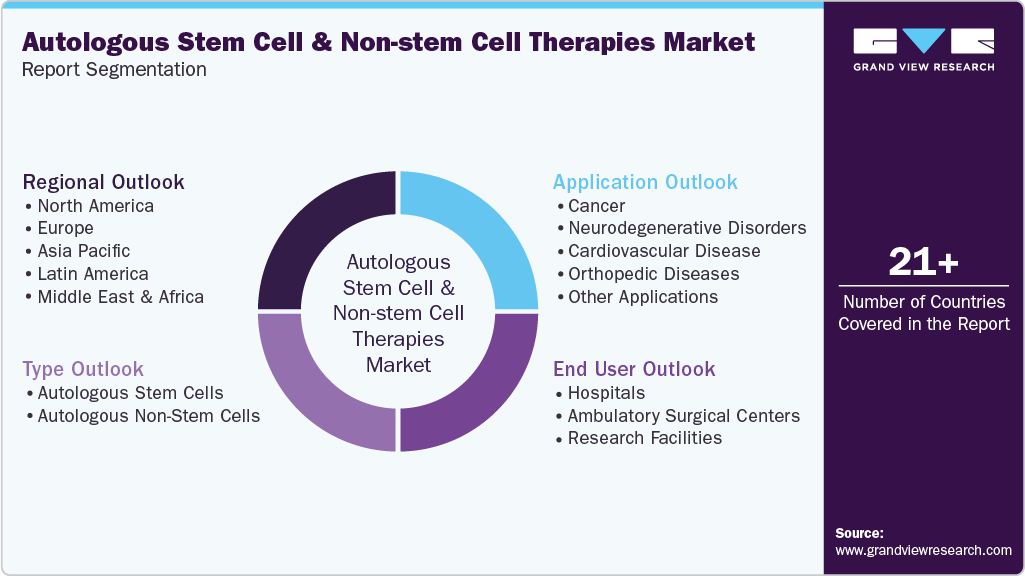
This report forecasts revenue growth and provides an analysis on the latest trends in each of the sub-segments from 2021 to 2033. For this report, Grand View Research has segmented the global autologous stem cell & non-stem cell therapies market report on the basis of type, application, end user, and region
 To learn more about this report, Download Free Sample Report
 -
Type Outlook (Revenue, USD Million, 2021 - 2033)
-
Autologous Stem Cells
-
Autologous Non-Stem Cells
-
-
Application Outlook (Revenue, USD Million, 2021 - 2033)
-
Cancer
-
Neurodegenerative Disorders
-
Cardiovascular Disease
-
Orthopedic Diseases
-
Other Applications
-
-
End User Outlook (Revenue, USD Million, 2021 - 2033)
-
Hospitals
-
Ambulatory Surgical Centers
-
Research Facilities
-
-
Regional Outlook (Revenue, USD Million, 2021 - 2033)
-
North America
-
U.S.
-
Canada
-
Mexico
-
-
Europe
-
UK
-
Germany
-
France
-
Italy
-
Spain
-
Denmark
-
Sweden
-
Norway
-
-
Asia Pacific
-
Japan
-
China
-
India
-
Australia
-
Thailand
-
South Korea
-
-
Latin America
-
Brazil
-
Argentina
-
-
Middle East and Africa (MEA)
-
South Africa
-
Saudi Arabia
-
UAE
-
Kuwait
-
-
Research Methodology
The autologous stem cell & non-stem cell therapies market figures in this report are based on a proven research process that combines executive interviews with secondary research from proprietary databases, company filings, and recognized regulatory and institutional sources. Market size is built through value-chain sizing - reconciling supply-side and demand-side estimates - and triangulated with bottom-up and top-down approaches. Every estimate passes multiple levels of expert validation before publication, with each autologous stem cell & non-stem cell therapies segment quantified using the revenue-capture definitions in the table below.
Segment Definition
Segment- Type
Revenue Capture Definition
Autologous Stem Cells
Revenue generated from therapies utilizing stem cells collected from the patient's own body and subsequently processed and administered for therapeutic purposes. This segment includes autologous hematopoietic, mesenchymal, and other stem cell-based approaches used to support tissue repair, immune modulation, and treatment of various diseases and disorders.
Autologous Non-Stem Cells
This segment captures income from therapeutic approaches involving non-stem cells harvested from the same patient for subsequent processing and administration. These therapies utilize cell populations such as immune cells and other differentiated cells to support disease treatment, tissue repair, and personalized therapeutic interventions.
Segment- Application
Revenue Capture Definition
Cancer
Revenue derived from autologous cell therapies used in oncology for cancer treatment, immune system modulation, and development of personalized therapeutic approaches. Applications include the use of patient-derived immune and stem cell populations in cancer management and supportive therapeutic strategies.
Neurodegenerative Disorders
This segment reflects income from autologous cell-based therapies investigated or utilized for neurological conditions involving progressive neuronal damage. Such approaches aim to support neural repair, replace or protect damaged cells, and modulate disease-associated biological processes.
Cardiovascular Disease
Market value in this category stems from autologous cell therapies applied to cardiovascular conditions, with approaches focused on tissue repair, vascular regeneration, myocardial recovery, and restoration of cardiac function.
Orthopedic Diseases
Revenue originates from autologous cell-based interventions used in orthopedic applications such as cartilage, bone, tendon, and musculoskeletal tissue repair. These therapies leverage patient-derived cells to support regeneration and recovery following injury or degenerative disease.
Other Applications
Includes revenue from autologous stem and non-stem cell therapies applied to indications outside the major therapeutic categories, including autoimmune disorders, wound healing, ophthalmic conditions, and other regenerative medicine applications.
Segment- End User
Revenue Capture Definition
Hospitals
Revenue generated from the adoption and administration of autologous cell therapies within hospitals, where patient-derived cells may be collected, processed, and administered as part of specialized treatment programs and multidisciplinary clinical care.
Ambulatory Surgical Centers
This segment captures income from autologous cell therapy procedures performed in outpatient surgical facilities, particularly treatments involving cell collection, processing, and administration that do not require prolonged inpatient hospitalization.
Research Facilities
Market value in this category arises from the use of autologous stem and non-stem cell technologies in research institutions and specialized facilities conducting clinical investigations, translational studies, therapeutic development, and evaluation of emerging cell-based treatment approaches.
Estimation Model
Top-Down
Parent Market
Segmentation
Validation
Forecasting
Commodity Flow Analysis
Market size was estimated by analyzing revenues generated by key autologous stem cell and non-stem cell therapy manufacturers and developers, supported by company annual reports, investor presentations, product pipelines, regulatory filings, and premium databases. Revenue contributions from private and emerging companies were assessed using industry databases and validated through primary research to derive the overall market value.
Parent Market & Penetration-Based Analysis
The autologous stem cell and non-stem cell therapies market was evaluated within the broader cell therapy market. The analysis considered the penetration of autologous therapies across clinical applications, disease areas, treatment settings, and therapeutic modalities, along with the adoption of cell-based treatments, clinical pipeline activity, and commercialization trends to estimate the addressable market and segment-level opportunities.
Country-Level Segment Share Modeling
Market shares for type, application, and end user segments were derived using country-specific cell therapy adoption, disease prevalence, clinical trial activity, healthcare infrastructure, regulatory frameworks, reimbursement conditions, and availability of specialized cell processing and treatment facilities. Weighted average calculations were applied to determine regional and global segment distributions.
Data Triangulation & Validation Model
Market estimates were validated through triangulation of secondary research, primary interviews, company-level revenue assessments, clinical pipeline analysis, treatment volume estimates, and demand-side adoption trends to ensure consistency and accuracy across therapy types, applications, end uses, and geographies.
Forecasting & CAGR Modeling
Market forecasts were developed using historical adoption trends, growth in cell therapy clinical pipelines, increasing prevalence of target diseases, regulatory advancements, expansion of cell therapy manufacturing infrastructure, treatment approvals, and investments in regenerative medicine. Regression-based analysis and trend modeling were applied to project future market growth and CAGR.
Delivered Customizations
This report has been delivered with the following In-depth customizations
Client Request
Customization Delivered
Value Adds
Autologous Cell Therapy Manufacturing Workflow & Process Assessment
Evaluation of autologous cell therapy workflows across cell collection, transportation, isolation, activation, expansion, formulation, cryopreservation, and administration, including turnaround time, cell yield, viability, automation requirements, and chain-of-identity considerations for different therapy types.
Helps clients identify process bottlenecks, assess manufacturing efficiency, optimize patient-to-product workflows, and prioritize investments in cell processing technologies and infrastructure.
Autologous Cell Therapy Technology & Cost Assessment
Comparative assessment of manual, semi-automated, and fully automated cell processing platforms based on equipment requirements, processing capacity, labor intensity, consumable usage, closed-system capabilities, scalability, and manufacturing costs across stem cell and non-stem cell therapies.
Enables clients to compare technology alternatives, evaluate manufacturing economics, identify cost-reduction opportunities, and select processing platforms aligned with therapy-specific production requirements.
Autologous Cell Therapy Clinical Pipeline & Manufacturing Capacity Analysis
Assessment of clinical-stage and commercial autologous therapies, manufacturing facilities, processing capacity, technology adoption, planned facility expansions, and outsourcing activity across oncology, regenerative medicine, immunotherapy, and tissue repair applications.
Helps clients identify emerging therapy opportunities, assess manufacturing capacity gaps, evaluate CDMO and outsourcing potential, and prioritize investments in high-growth therapeutic and geographic markets.
Frequently Asked Questions About This Report
The cancer segment dominated the market with a 30.4% share in 2025.
The hospitals segment dominated the market with a share of 58.4% in 2025.
North America dominated with a 41.3% revenue share in 2025.
Asia Pacific is the fastest-growing region over the forecast period.
The global autologous stem cell & non-stem cell therapies market is expected to grow at a CAGR of 13.8% from 2026 to 2033, reaching USD 17.5 billion by 2033.
The autologous non-stem cells segment accounted for the largest revenue share, over 57.6% in 2025.
Key players includes Kite Pharma (acquired by Gilead Sciences, Inc.), Bristol-Myers Squibb Company, Novartis AG, Janssen Pharmaceuticals, Inc. (a subsidiary of Johnson & Johnson), Vericel, IOVANCE Biotherapeutics, Inc., JW Therapeutics (Shanghai) Co., Ltd., PHARMICELL Co., Ltd, GC Cell, ImmunoACT, Tegoscience, and Anterogen Co., Ltd.
Market growth is driven by increasing adoption of personalized therapies, rising prevalence of chronic diseases, and advancements in cell processing, manufacturing, and therapeutic applications.
The global autologous stem cell & non-stem cell therapies market size was estimated at USD 6.3 billion in 2025 and is projected to grow from USD 7.1 billion in 2026.
About the Author(s)
Medical Devices Research Team
Healthcare · Medical DevicesThis report was authored by the medical devices research team at Grand View Research - comprising two research analysts, one senior research analyst, and one industry expert - with specialized expertise in the medical devices segment of the healthcare industry. All findings are based on proprietary healthcare databases, executive interviews, and regulatory analysis, subject to internal peer review prior to publication.
Last Updated:
Speak to Analyst

Customize this report to your needs - add regions, segments, or data points, with 20% free customization.
Or view our licence options:


ISO 9001:2015 & 27001:2022 Certified
We are GDPR and CCPA compliant! Your transaction & personal information is safe and secure. For more details, please read our privacy policy.


