
- Home
- »
- Biotechnology
- »
-
Automated Sample Storage Systems Market Report 2026-2033GVR Report cover
![Automated Sample Storage Systems Market (2026 - 2033)Report]()
Automated Sample Storage Systems Market (2026 - 2033)
Size, Share & Trends Analysis Report By Product (Automated Compound Storage Systems, Automated Liquid Handling Systems, Others), By Sample, By End Use, By Region, And Segment Forecasts
Market Size, 2025
$1.7BMarket Estimate, 2026
$1.9BMarket Forecast, 2033
$4.1BCAGR, 2026–2033
12.1%Automated Sample Storage Systems Market Summary
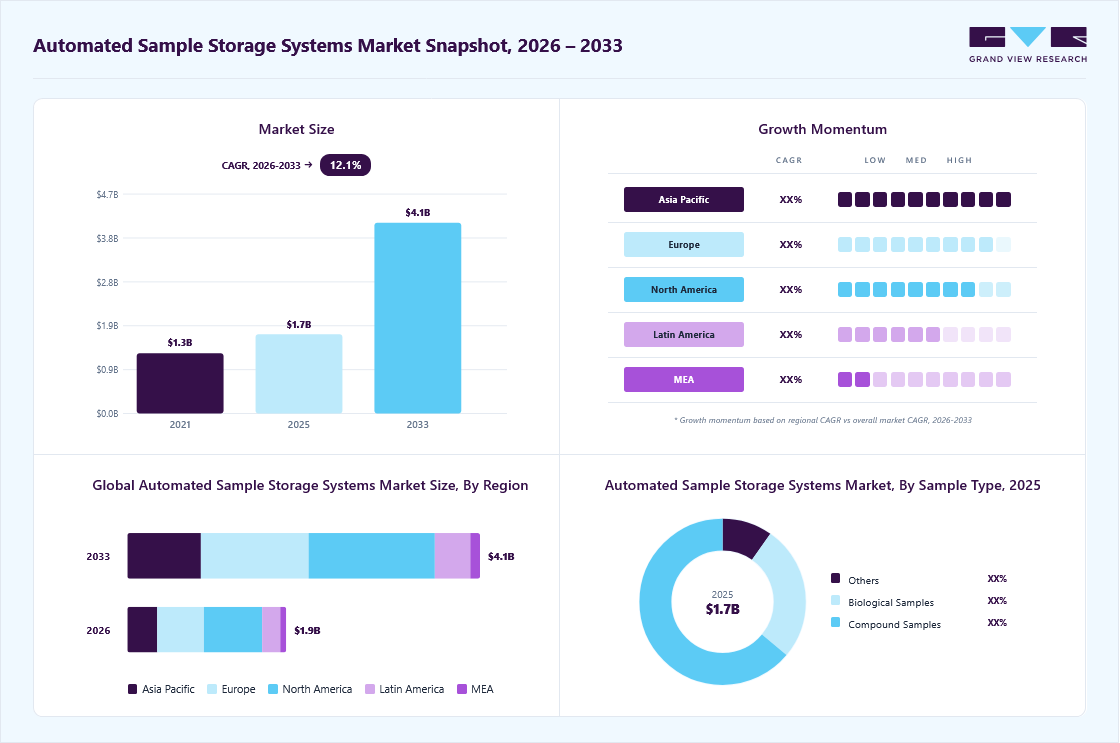
The global automated sample storage systems market size was valued at USD 1.7 billion in 2025 and is projected to grow from USD 1.9 billion in 2026 to USD 4.1 billion by 2033, at a CAGR of 12.1% from 2026 to 2033. The market in North America dominated with a revenue share of 36.7% in 2025. Increasing investments in the pharmaceutical and biopharmaceutical sectors are expected to drive the global market for automated sample storage systems.
Key Market Trends & Insights
- By product: Automated compound storage system segment held the largest market share of 48.9% in 2025.
- By sample: Compound samples segment held the largest market share of 64.0% in 2025.
- By end use: Pharmaceutical and biotech companies segment held the largest market share of 41.6% in 2025.
Regional Highlights
- Largest regional market: North America (36.7% revenue share, 2025)
- Fastest-growing regional market: Asia Pacific (highest CAGR, 2026-2033)
- By country: The U.S. held the largest market share in 2025
Market Size & Forecast
- Market size in 2025: USD 1.7 Billion
- Estimated market size in 2026: USD 1.9 Billion
- Projected market size by 2033: USD 4.1 Billion
- CAGR (2026-2033): 12.1%
Three ways to get this report
Buy it, customize it, or ask a question.Get the Full Report
What the study covers
- FormatsPDF · Excel · Dashboard
- Timeline2026–2033 annual, 2025 base
- Coverage20+ countries, 5 regions
- Companies10+ key players profiled
Customize the Report
20% free customization
- IncludeCountries, segments, points
- TailorTo your product definition
- ExtendDeeper competitor detail
- OrA fully bespoke study
- Turnaround5–10 working days
Ask Prism AI
A cited answer in seconds
- Corpus30K studies, 1.2M points
- ScopeAll markets, not just this
- CitationTraced to report & table
- HonestySays "not covered" if so
- SpeedSeconds, not days
Moreover, the rising demand for automation across industries to reduce labor costs and increase process efficiency further fuels industry uptake. The growing adoption of automated sample management systems is driven by the need for increased throughput, enhanced sample integrity, and reduced human error in laboratories. These systems streamline sample handling, enhance traceability, and enable efficient integration with LIMS and laboratory automation workflows. The increasing demand in biobanking, pharmaceutical R&D, and clinical diagnostics further accelerates their adoption, supporting faster decision-making and enhanced regulatory compliance.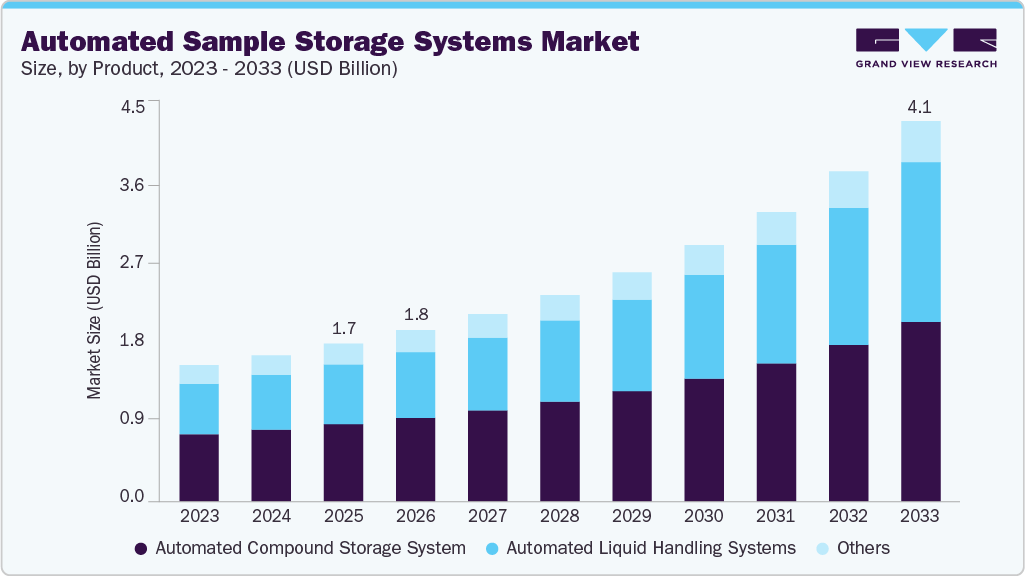
Growth in Biobanking and Life Science
The rapid expansion of biobanking and life sciences research is a key driver fueling demand for automated sample storage systems worldwide. With the rise of high-throughput research in genomics, proteomics, metabolomics, and cell biology, research institutions and pharmaceutical companies are generating and handling vast quantities of biological samples. For instance, in February 2025, the UK Biocentre launched Azenta’s automated BioArc Ultra -80 °C storage system in the UK, enhancing sample preservation, sustainability, and operational efficiency across its biobanking operations. These samples, ranging from DNA and RNA to plasma, tissue and cell cultures, require long-term preservation under strictly controlled conditions to maintain their stability and research value. Manual storage methods are increasingly inadequate for managing such scale and complexity, especially in large biobanks that may house millions of samples. Automated storage systems provide the necessary infrastructure to store, organize, and retrieve specimens with speed, precision, and minimal human error, allowing researchers to focus more on scientific discovery and less on operational logistics.
Moreover, maintaining sample integrity and traceability is critical for scientific validity and regulatory compliance. Automated systems offer superior environmental control. This ensures full traceability and minimizes the risks of contamination, mislabeling, or degradation caused by manual handling. As life sciences increasingly converge with data-intensive technologies like AI and machine learning, accessing high-quality, well-preserved biological samples at scale becomes a competitive advantage. These factors are accelerating investment in automated sample storage infrastructure across academic research centers, pharmaceutical R&D pipelines, and commercial biobanks, making it a central enabler for the next generation of biomedical innovation.
Rising Clinical and Diagnostic Needs
The growing complexity and volume of clinical diagnostic testing drive demand for automated sample storage systems. As healthcare systems increasingly adopt advance testing for chronic diseases, infectious conditions, and personalized medicine, laboratories are overwhelmed with vast biological samples that must be stored securely, accurately tracked, and accessed quickly. Manual storage methods are no longer sufficient to meet the demands of 24/7 operations, rapid turnaround times, and stringent regulatory compliance. Automated systems address these challenges by offering high-density, temperature-controlled storage with minimal human intervention, reducing errors and ensuring sample integrity.
Moreover, the rise of precision medicine and genomic diagnostics requires long-term, ultra-low temperature storage with the capability for repeated, accurate retrieval of samples. Automated sample storage integrates seamlessly with Laboratory Information Management Systems (LIMS), enabling complete traceability and digital audit trails essential for regulatory standards such as CLIA, CAP, and ISO 15189. With increasing pressure on healthcare providers to deliver faster, more reliable diagnostics while managing operational costs and labor shortages, automated storage systems have become a strategic investment-pushing demand across hospitals, research institutions, and diagnostic labs globally.
Market Concentration & Characteristics
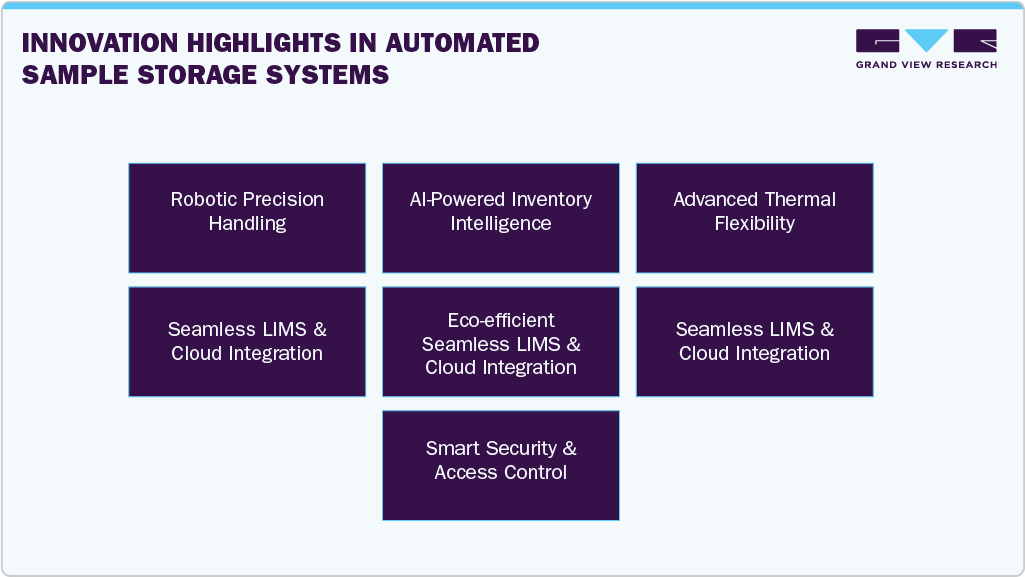
The automated sample storage systems industry exhibits a high degree of innovation, driven by advancements in robotics, ultra-low-temperature control, and smart data integration. Modern systems go beyond simple storage by incorporating AI-powered inventory management, predictive maintenance, and seamless connectivity with Laboratory Information Management Systems (LIMS) and cloud platforms. For instance, in March 2025, Azenta launched centralized, automated ULT storage systems in the UK, addressing scalability, efficiency, and sustainability while overcoming major limitations of manual freezer farms in biopharmaceutical storage. These innovations enable real-time sample tracking, improved space utilization, and enhanced compliance with regulatory standards. Features such as robotic arms for precise sample retrieval, RFID/barcode identification, and modular designs for scalability are transforming storage into a strategic asset for laboratories, biobanks, and pharmaceutical R&D environments, making automation a key enabler of efficiency, security, and scientific accuracy.
The global market has witnessed moderate to high levels of M&A activity in recent years, reflecting growing industry consolidation and strategic expansion by key players. Established life sciences and laboratory automation companies are acquiring specialized firms to enhance their technological capabilities, expand product portfolios, and gain access to new markets, particularly biobanking, pharmaceutical R&D, and clinical diagnostics.

Regulations play a crucial role in shaping the automated sample storage systems market by enforcing strict standards for sample integrity, traceability, and data security. Compliance requirements from the FDA, EMA, CLIA, CAP, and ISO 15189 mandate accurate temperature control, robust audit trails, and secure handling processes to prevent sample contamination or loss. These regulatory demands drive laboratories, biobanks, and pharmaceutical companies to adopt automated storage solutions, ensuring consistent environmental conditions and maintaining detailed electronic records. Moreover, patient privacy laws, such as HIPAA, require integration with secure data management systems, further emphasizing the role of automation in meeting regulatory obligations. As regulations become more stringent worldwide, adherence is a key factor boosting the demand for advanced automated storage technologies.
Product expansion is driven by the need to address diverse storage requirements across sectors, such as biobanking, clinical diagnostics, pharmaceuticals, and research institutions. Innovations include integrating advanced robotics for faster sample retrieval, enhancing software capabilities for better inventory management and LIMS integration, and introducing flexible storage temperatures from refrigerated to ultra-low and cryogenic levels. For instance, in December 2023, ABB Robotics and XtalPi launched a strategic partnership in China to develop intelligent automated laboratories. Leveraging over 100 ABB GoFa collaborative robots, the collaboration aims to enhance R&D productivity in biopharmaceuticals, chemical engineering, and new energy materials. The automated workstations, customizable with various modules, perform tasks such as sample preparation, filtration, and UPLC testing, operating continuously to accelerate experimentation and data generation. This initiative supports the Design-Make-Test-Analyze research cycle, facilitating AI-driven scientific advancements. This continuous product diversification enables providers to meet evolving customer needs and regulatory standards, expanding their global market reach.
Regional expansion is a key growth strategy for companies in the market as demand surges globally, particularly in emerging markets. North America and Europe remain the largest markets due to their advanced healthcare infrastructure and strong R&D activities. The Asia Pacific region is witnessing rapid growth, driven by increasing investments in biotechnology, pharmaceutical manufacturing, and clinical diagnostics. Countries such as China, India, Japan, and South Korea are expanding their biobanking facilities and clinical labs, fueling demand for automated storage solutions. Rising government initiatives supporting life sciences research and improving healthcare standards in Latin America and the Middle East are opening new opportunities. To capitalize on this growth, companies establish regional offices, partner with local distributors, and tailor their products to meet regional regulatory requirements and market preferences.
Product Insights
The automated compound storage system segment accounted for the largest market share of 48.9% in 2025 and is expected to grow significantly during the forecast period. Factors such as rising demand from end users, including the pharmaceutical and food industries, coupled with the ability to store large volumes of samples, are projected to drive the segment market throughout the forecast period. Moreover, a robust product portfolio of products capable of storing media at various temperatures and several benefits offered by compound handling systems propel market growth. These devices' benefits include high sample integrity, high storage capacity, and easy LIMS integration with the products.
The automated liquid handling system segment is projected to register the fastest growth rate throughout the projected period. Liquid handling is a crucial stage for the movement of liquid from one place to another. With scalable, versatile, and affordable solutions that cater to a wide range of applications, laboratories across the pharmaceutical and biotech industries are now automating their liquid handling and dispensing capabilities. For instance, in September 2024, Hamilton Company released a video detailing the evolution from manual pipetting to fully integrated automated systems. Experts Gabriela Boza-Moran and Cristina Grecea discuss Hamilton's range of pipetting products, including the Microlab STAR, Microlab VANTAGE, and Microlab 300, highlighting their applications and benefits in laboratory workflows.
Sample Insights
The compound samples segment accounted for the largest market share of 64.0% in 2025. The rising demand for compound sample management across biobanks and academic & research institutions drives segment growth. With the development of high-throughput screening techniques capable of analyzing many agents in a single experimental run, the size and the scope of compound libraries have been significantly leveraged, alongside the logistical requirements for compound management. The higher demand from pharmaceutical industries for automating compound management with the help of advanced storage devices and robotic instruments has driven segment uptake forward.
The biological samples segment is expected to grow at the fastest rate throughout the forecast period. The increasing demand for high-quality biological samples for various research purposes, such as genomics, proteomics, drug discovery, and personalized medicine, has driven the need for efficient and automated sample storage systems. Furthermore, rising research activities have created a significant demand for this system to store biological specimens. Biological samples such as cells, tissues, and DNA must be stored under controlled conditions to maintain their viability and integrity over time. These tools offer necessary environmental controls to ensure long-term preservation.
End Use Insights
The pharmaceutical and biotech companies segment captured the largest market share of 41.6% in 2025. Biotech and pharmaceutical companies require precise, automation-based storage solutions to support high-throughput drug discovery efforts. These systems allow the storage, retrieval, and management of large samples, improving the speed and efficiency of the drug development process. Moreover, increasing emphasis on R&D by pharmaceutical companies to accelerate their drug discovery efforts is another factor fueling segment expansion. For instance, in March 2025, Vetter Pharma expanded its Ravensburg, Germany warehouse with 16,000 new pallet spaces, enhancing cool storage capacity and adding advanced automation, aiming for completion by 2028, further driving the demand in the automated sample storage systems industry.

The biobanks segment is projected to grow at the fastest CAGR over the forecast period. Automated sample storage in biobanks enhances the biobank workflow in both qualitative and quantitative ways, including improved sample traceability, enhanced sample preservation, secure storage, and expedited sample retrieval. Also, automation in biobank specimen storage offers several benefits over manual storage methods. Moreover, increasing developments in bio-banking storage space have given significant growth momentum to the industry.
Regional Insights
The North America automated sample storage systems industry dominated the industry with the largest revenue share of 36.7% in 2025. The large number of market players, supportive government legislation, and high demand for laboratory automation are the major factors driving the North American market. Moreover, the easy availability of technologically advanced products and a strong network of suppliers are projected to drive the regional market. In recent times, the North American region has seen a growing demand for automation-based liquid handling systems to expedite the process and minimize the risk of cross-contamination. For instance, in April 2025, IVI RMA North America partnered with TMRW Life Sciences to digitize IVF specimen management and storage across all clinics in North America, enhancing safety and operational efficiency.

U.S. Automated Sample Storage Systems Market Trends
The U.S. automated sample storage systems industry remains at the forefront of pharmaceutical automation and biobanking solutions, with numerous deployments of advanced automated storage systems and robotics to accelerate drug development and diagnostics. Regulatory incentives and robust biotech ecosystems drive ongoing innovation.
Europe Automated Sample Storage Systems Market Trends
The automated sample storage systems industry in Europe has benefited from the region remaining a key hub for pharmaceutical manufacturing and biobanking, with significant investments in warehouse expansions, automation technologies, and regional expansion. Countries like Germany and the UK drive innovation through advanced cold chain logistics and regulatory frameworks that foster automation adoption. For instance, in April 2025, Astoriom appointed a new global head of Sales to accelerate the expansion of its R&D sample stability and biorepository storage services across Europe and North America.
The UK automated sample storage systems industry held a significant share in 2025. The country adopts automated lab solutions and integrated cold storage to maintain competitiveness in biopharma R&D. Investment in smart warehouse technology and sustainable storage supports the growing biologics and precision therapies pipeline.
The automated sample storage systems industry in Germany is anticipated to grow significantly over the forecast period. Major investments in warehouse infrastructure, such as Vetter Pharma’s Ravensburg expansion, underscore the country’s commitment to supporting biopharmaceutical growth with state-of-the-art cold chain and digital monitoring technologies.
Asia Pacific Automated Sample Storage Systems Market Trends
The automated sample storage systems industry in the Asia Pacific is expected to depict a significant CAGR of 13.74% over the forecast period. The region is experiencing rapid growth in biopharmaceuticals and the adoption of automation, supported by increasing investments in healthcare infrastructure and government initiatives. China and Japan are leading large-scale automated storage deployments to meet increasing biologics and gene therapy demands.
The China automated sample storage systems industry is expected to grow robustly over the forecast period. Strategic partnerships and government support are accelerating the adoption of intelligent robotics and high-density cold storage to meet the growing needs of biologics production. For instance, in April 2024, MGI Tech Co., Ltd. showcased its latest automated sample storage solutions at ISBER 2024 in Melbourne, Australia. The product lineup included the MGICLab-LT ultra-low temperature biorepository, MGICLab-LN55K liquid nitrogen storage system, and the MGICLab-LN55K Pro, designed for high-capacity, secure, and efficient sample management. These innovative systems feature robotic automation, barcode scanning, IoT-enabled real-time tracking, and intelligent data management to ensure sample integrity and streamline biobanking operations, reinforcing the country's global commitment to advancing life science storage technologies.
The automated sample storage systems industry in Japan is witnessing significant growth over the forecast period. The country emphasizes precision and efficiency in pharmaceutical storage automation. The country prioritizes smart, compact automated systems for sample handling and liquid dispensing, reinforcing its position as a leader in life sciences innovation within Asia.
Middle East and Africa Automated Sample Storage Systems Market Trends
The automated sample storage systems industry in the Middle East and Africa is emerging as a growth market for pharmaceutical storage and lab automation, with countries like Kuwait investing in infrastructure to support biotech advancements. The region focuses on enhancing cold storage capacity and adopting sustainable automated systems to improve research and clinical trial capabilities.
The Kuwait automated sample storage systems industry is advancing pharmaceutical storage capabilities by investing in automated cold chain facilities. The focus is on integrating sustainable and scalable solutions to enhance research support and pharmaceutical distribution across the Middle East region.
Key Automated Sample Storage Systems Company Insights
The market is characterized by a competitive mix of established technology leaders and emerging innovators, each contributing to market growth through robust product portfolios, strategic global partnerships, and ongoing investments in automation and digital transformation. Leading companies such as Thermo Fisher Scientific, Inc., Beckman Coulter, Inc. (Danaher), Hamilton Company, Azenta US, Inc., and Haier Biomedical have sustained a significant market presence due to their comprehensive range of automated biobanking and sample management solutions, trusted performance, and extensive global distribution capabilities.
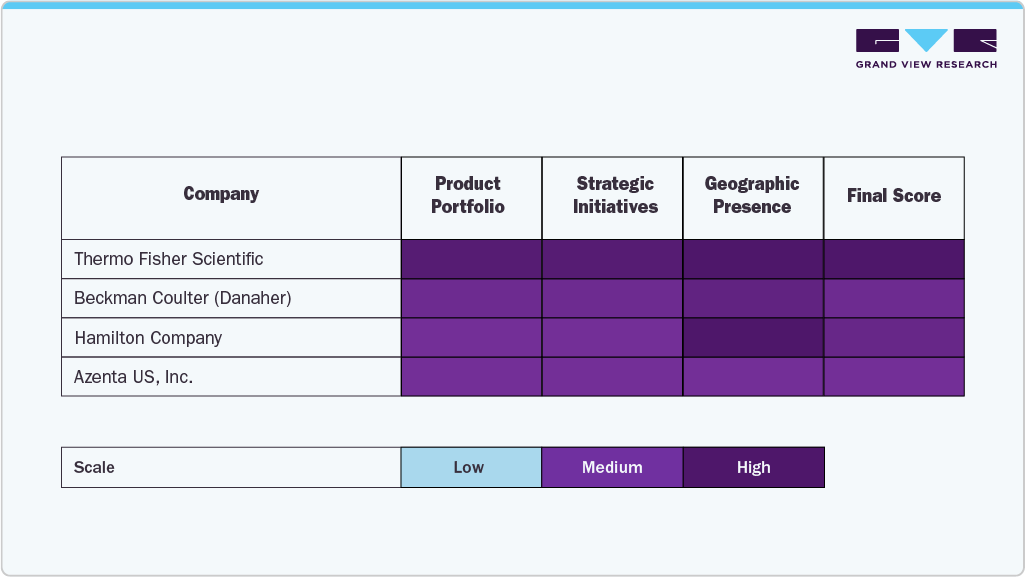
Prominent players, including Hamilton Company, Azenta US, Inc., and Thermo Fisher Scientific, continue to dominate the landscape by delivering high-throughput, scalable systems designed for enhanced precision, security, and regulatory compliance. These firms focus on integrating cutting-edge technologies such as AI-enabled inventory tracking, robotic retrieval systems, and advanced cold-chain capabilities to address the growing demand from sectors including genomics, biopharma, clinical diagnostics, and cell and gene therapy.
Innovative companies such as MEGAROBO, SPT Labtech Ltd., LiCONiC AG, MICRONIC, and ASKION GmbH are increasingly capturing market share by introducing modular, compact systems that meet specific research and clinical requirements. These players emphasize flexibility, customization, and sustainability, making them attractive partners in rapidly evolving sectors that require agile and cost-effective sample management solutions.
The market is witnessing a surge in strategic collaborations, mergers and acquisitions (M&A), and technology licensing agreements aimed at expanding geographic reach and enhancing automation capabilities. Consumer-driven trends such as sustainable design, energy efficiency, and smart inventory management continue to shape innovation.
Key Automated Sample Storage Systems Companies:
The following are the leading companies in the automated sample storage systems market. These companies collectively hold the largest market share and dictate industry trends.
- Thermo Fisher Scientific, Inc.
- Beckman Coulter, Inc. (Danaher)
- Hamilton Company
- Azenta US, Inc.
- MEGAROBO
- SPT Labtech Ltd
- LiCONiC AG
- MICRONIC
- ASKION GmbH
- Haier Biomedical
Recent Developments
-
In February 2025, Thermo Fisher Scientific introduced advanced liquid dispensing technologies, enabling precise delivery of volumes ranging from microliters to picoliters. These innovations enhance accuracy and efficiency in genomics, diagnostics, and pharmaceutical research applications. These systems support the growing demand for high-precision liquid handling in scientific workflows by minimizing reagent usage and maximizing throughput.
-
In June 2024, Thermo Fisher Scientific debuted the Heracell VIOS 250i AxD CO₂ incubators in the U.S., purpose-built for fully automated and modular laboratories. These industry-first models feature patent-pending automated door control that integrates with robotic workflows, enabling seamless vessel loading and unloading. Key enhancements include in-chamber HEPA filtration, THRIVE active airflow, and the Steri‑Run sterilization cycle, which offers a 12-log sterility assurance level ensuring optimal culturing conditions, reduced contamination risk, and scalable cell therapy production
-
In February 2024, Azenta Life Sciences launched the BioArc Ultra, an automated -80 °C storage system with eco-friendly cooling, 70% lower energy use, and capacity for 16 million samples ideal for large-scale, sustainable biorepositories.
-
In October 2023, Haier Biomedical launched its TwinCool Frequency Conversion ULT Freezers, offering dual cooling systems, low energy use, eco-friendly refrigerants, and advanced security for sustainable, ultra-low temperature sample storage.
Automated Sample Storage Systems Market Report Scope
Report Attribute
Details
Market size in 2025
USD 1.7 billion
Estimated market size in 2026
USD 1.9 billion
Projected market size by 2033
USD 4.1 billion
Growth rate
CAGR of 12.1% from 2026 to 2033
Actual data
2021 - 2025
Forecast period
2026 - 2033
Quantitative units
Revenue in USD million/billion and CAGR from 2026 to 2033
Report coverage
Revenue forecast, company ranking, competitive landscape, growth factors, and trends
Segments covered
Product, sample, end use, region
Regional scope
North America; Europe; Asia Pacific; Latin America; Middle East & Africa
Country scope
U.S.; Canada; Mexico; UK; Germany; France; Italy; Spain; Denmark; Sweden; Norway; India; China; Japan; Australia; South Korea; Thailand; Brazil; Argentina; Saudi Arabia; UAE; South Africa; Kuwait
Key companies profiled
Thermo Fisher Scientific, Inc.; Beckman Coulter, Inc. (Danaher); Hamilton Company; Azenta US, Inc.; MEGAROBO; SPT Labtech Ltd.; LiCONiC AG; MICRONIC; ASKION GmbH; Haier Biomedical
Customization scope
Free report customization (equivalent up to 8 analyst’s working days) with purchase. Addition or alteration to country, regional & segment scope.
Global Automated Sample Storage Systems Market Report Segmentation
This report forecasts revenue growth and provides an analysis on the latest trends in each of the sub-segments from 2021 to 2033. For this report, Grand View Research has segmented the global automated sample storage systems market report on the basis of product, sample, end use, and region:

-
Product Outlook (Revenue, USD Million, 2021 - 2033)
-
Automated Compound Storage System
-
Automated Liquid Handling Systems
-
Others
-
-
Sample Outlook (Revenue, USD Million, 2021 - 2033)
-
Biological Samples
-
Compound Samples
-
Others
-
-
End-user Outlook (Revenue, USD Million, 2021 - 2033)
-
Pharmaceutical and Biotech Companies
-
Academic and Research Institutions
-
Biobanks
-
Others
-
-
Regional Outlook (Revenue, USD Million, 2021- 2033)
-
North America
-
U.S.
-
Canada
-
Mexico
-
-
Europe
-
Germany
-
UK
-
France
-
Italy
-
Spain
-
Denmark
-
Sweden
-
Norway
-
-
Asia Pacific
-
China
-
India
-
Japan
-
South Korea
-
Australia
-
Thailand
-
-
Latin America
-
Brazil
-
Argentina
-
-
Middle East and Africa (MEA)
-
South Africa
-
Saudi Arabia
-
UAE
-
Kuwait
-
-
Frequently Asked Questions About This Report
Asia Pacific is the fastest-growing region over the forecast period.
Automated compound storage system segment led with a 48.9% revenue share in 2025, while automated liquid handling system is the fastest-growing segment.
Compound samples segment led with a 64.0% revenue share in 2025, while biological samples is the fastest-growing area.
Pharmaceutical and biotech companies segment led with a 41.6% revenue share in 2025 and biobanks is the fastest-growing.
The global automated sample storage systems market size was valued at USD 1.7 billion in 2025 and is estimated at USD 1.9 billion in 2026.
The global automated sample storage systems market is expected to grow at a CAGR of 12.1% from 2026 to 2033, reaching USD 4.1 billion by 2033.
North America dominated with a 36.7% revenue share in 2025.
Key players include Thermo Fisher Scientific, Inc.; Beckman Coulter, Inc. (Danaher); Hamilton Company; Azenta US, Inc.; MEGAROBO; SPT Labtech Ltd.; LiCONiC AG; MICRONIC; ASKION GmbH; Haier Biomedical.
Key factors that are driving the market growth include increasing demand for bio-banking and compound management, technological advancements in sample storage systems, and increasing demand from various end-user industries.
About the Author(s)
Biotechnology Research Team
Healthcare · BiotechnologyThis report was authored by the biotechnology research team at Grand View Research - comprising two research analysts, one senior research analyst, and one industry expert - with specialized expertise in the biotechnology segment of the healthcare industry. All findings are based on proprietary healthcare databases, executive interviews, and regulatory analysis, subject to internal peer review prior to publication.
Last Updated:
Speak to Analyst


Customize this report to your needs - add regions, segments, or data points, with 20% free customization.
Or view our licence options:


ISO 9001:2015 & 27001:2022 Certified
We are GDPR and CCPA compliant! Your transaction & personal information is safe and secure. For more details, please read our privacy policy.


