
- Home
- »
- Medical Devices
- »
-
Automatic Pill Dispenser Machine Market Size Report, 2033GVR Report cover
![Automatic Pill Dispenser Machine Market (2026 - 2033)Report]()
Automatic Pill Dispenser Machine Market (2026 - 2033)
Size, Share & Trends Analysis Report By Product (Standalone Automatic Pill Dispensers, Smart/Connected Automatic Pill Dispensers), By End Use (Hospital, Senior Care Facilities), By Region, And Segment Forecasts
Market Size, 2025
$3.1BMarket Estimate, 2026
$3.4BMarket Forecast, 2033
$6.1BCAGR, 2026–2033
8.9%Automatic Pill Dispenser Market Summary
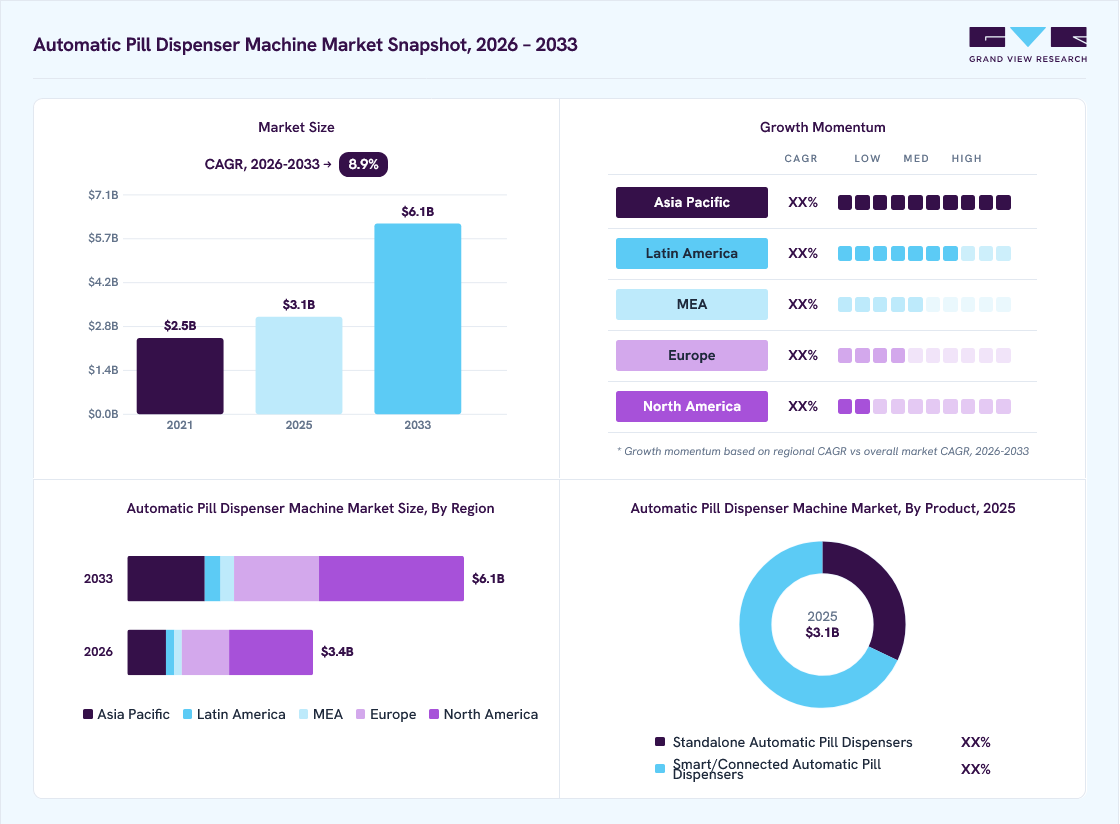
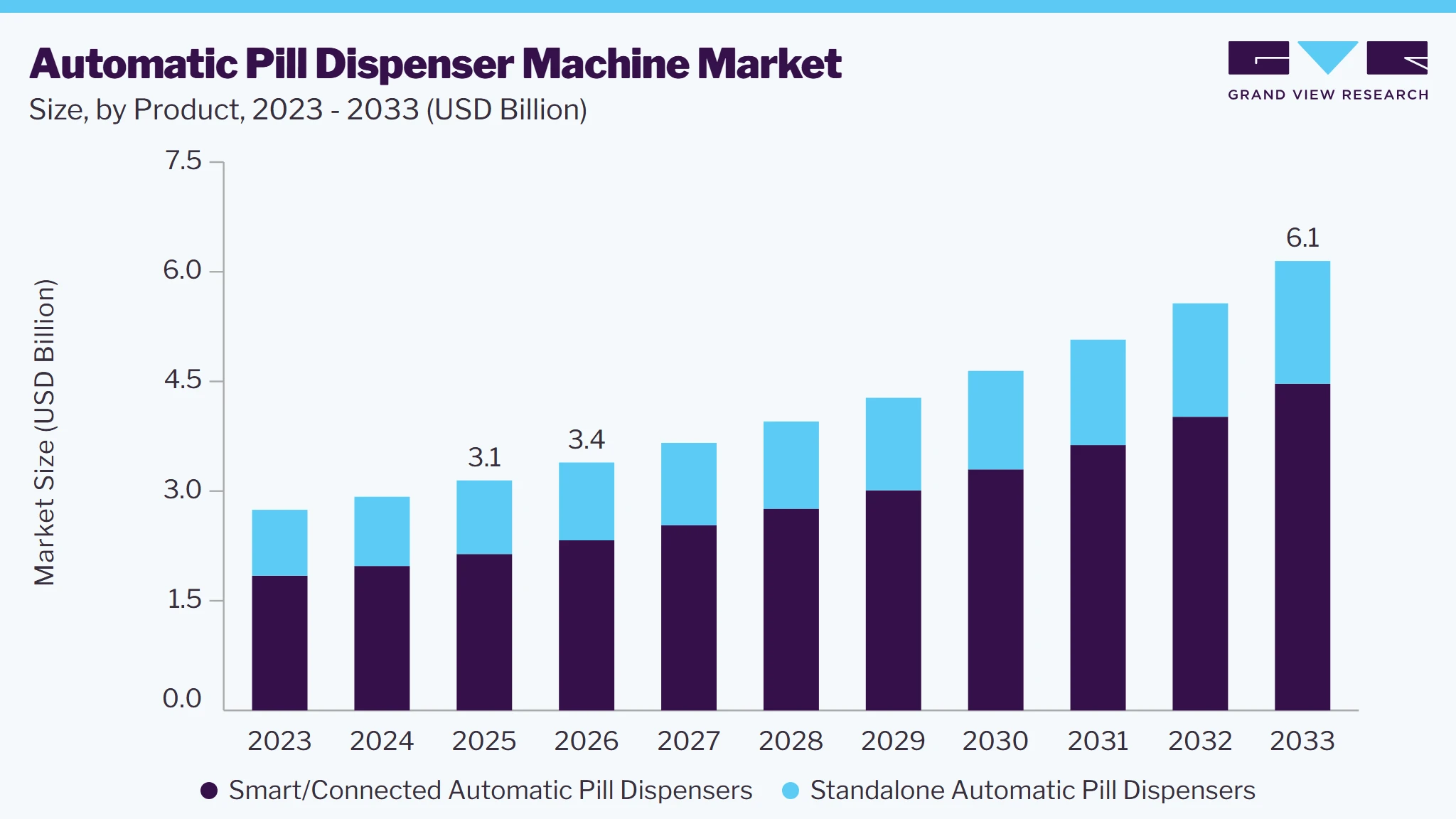
The global automatic pill dispenser machine market size was valued at USD 3.1 billion in 2025 and is projected to grow from USD 3.4 billion in 2026 to USD 6.1 billion by 2033, at a CAGR of 8.9% from 2026 to 2033. North America dominated the market, accounting for a revenue share of 45.5% in 2025. Rising demand for medication adherence solutions, an aging population, and increasing rates of chronic diseases require long-term treatment. The adoption of automated medication management systems in senior care facilities, homecare, pharmacies, and healthcare institutions is driving market expansion.
Key Market Trends & Insights
- By product: The smart/connected automatic pill dispensers segment held the largest market share of 68.0% in 2025.
- By end use: The hospitals segment held the largest market share of 65.9% in 2025.
Regional Highlights
- Largest regional market: North America (45.5% revenue share, 2025)
- Fastest-growing regional market: Asia Pacific (highest CAGR, 2026-2033)
- By country: The U.S. held the largest market share in 2025.
Market Size & Forecast
- Market size in 2025: USD 3.1 Billion
- Estimated market size in 2026: USD 3.4 Billion
- Projected market size by 2033: USD 6.1 Billion
- CAGR (2026-2033): 8.9%
Market Dynamics
The automatic pill dispenser machine industry is driven by the need for efficient medication management, growth in home-based care, and advances in smart dispensing technologies. The adoption of connected devices enables scheduled dispensing, medication alerts, remote monitoring, and caregiver notifications, which help manage complex medication regimens. Demand for independent living among older adults is also increasing the use of automated dispensing systems in homes and assisted living facilities. However, high device costs, limited awareness, interoperability issues, and the need for accurate dispensing may limit adoption in price-sensitive markets.
The growing adoption of technology-enabled home care is driving demand for automatic pill dispensers by enabling more efficient and reliable medication administration. These systems help reduce manual intervention, support scheduled dose dispensing, and enable caregivers to remotely monitor medication adherence, particularly for elderly and home-care patients who require regular supervision. For instance, in May 2026, the City of Helsinki reported that more than 1,200 home-care clients were using automatic medicine dispensers, with the systems dispensing more than 1 million medication doses annually. The increasing use of automated dispensing in home-care services is expected to reduce routine medication-related visits, improve caregiver efficiency, and support the wider adoption of connected automatic pill dispensers.
Moreover, Evondos reports that more than 20,000 clients currently use its automated medication dispensing service, demonstrating the growing adoption of automated medication management in home-care settings. The systems support timely medication administration while allowing caregivers to monitor dispensing remotely, thereby improving medication safety and reducing the need for routine medication-related visits.
High out-of-pocket costs and inconsistent reimbursement for automated pill dispensers are expected to limit market growth, as many devices rely on subscription models rather than established medical equipment reimbursement pathways. For instance, Hero Health offers its smart dispenser through subscription plans starting at USD 29.99 per month, while similar devices for outright purchases can cost around USD 1,999. Although Hero has enabled access through Medicare’s Remote Therapeutic Monitoring programs, eligibility and out-of-pocket expenses such as copays, coinsurance, and deductibles vary. Private insurance coverage also differs by plan. Furthermore, CMS previously determined that a programmable, lockable pill dispenser did not qualify for Medicare reimbursement, highlighting ongoing challenges for medication-dispensing technologies. This reimbursement uncertainty, along with recurring subscription or high upfront costs, increases the financial burden on users and limits adoption among elderly and price-sensitive patients.
Company
Product / Model
Product
Publicly available price
LiveFine
28-Day Automatic Pill Dispenser
Automatic home pill dispenser
USD 89.99
LiveFine
Smart WiFi 28-Day Automatic Pill Dispenser
Connected automatic dispenser
USD 199.99
e-pill Medication Reminders
MedSmart Voice Pro
Locked automatic pill dispenser
USD 324.95
e-pill Medication Reminders
MedSmart Voice Bluetooth
Locked automatic pill dispenser
USD 1,657.24
e-pill Medication Reminders
MedTime Plus Advanced
Locked automatic pill dispenser
USD 885.12
Source: Company Website, Grand View Research Analysis
The growing need for home-based medication management among older adults and patients with chronic conditions is creating an opportunity for automatic pill dispenser manufacturers to develop connected dispensing systems that combine automated dosing, real-time adherence tracking, and caregiver alerts. This opportunity is supported by the emergence of products such as MedMinder’s automatic pill dispenser, which uses cellular connectivity to track medication use and alerts caregivers when doses are missing.
Moreover, in March 2026, researchers at the Indian Institute of Information Technology Allahabad (IIIT-A) also developed and patented a smart pill dispenser incorporating medication identification and dispensing confirmation, with commercialization initiated through a newly formed company. Such developments indicate an opportunity to move beyond basic reminder devices toward connected medication-management platforms, enabling manufacturers to target home healthcare providers, family caregivers, and elderly patients requiring long-term medication support.
Case Study 1: Published by Semantic Scholar in March 2026: IoT-Based Automated Pill Dispenser with Remote Monitoring
Objective
To develop an IoT-enabled automated pill dispenser that improves medication adherence, enables remote monitoring, and supports early identification of abnormal health conditions.
Problem Identified
Medication non-adherence is a significant challenge, particularly among elderly patients and individuals with chronic conditions. Irregular medication intake can contribute to health complications, disease progression, hospitalization, and increased healthcare costs.
Key Challenges
- Maintaining accurate medication schedules
- Ensuring the patient actually takes the dispensed medication
- Providing timely alerts for missed doses
- Remotely monitoring patients
- Identifying potential health abnormalities at an early stage
Proposed Solution
The study proposed an IoT-based automated pill dispenser with remote monitoring and intelligent health prediction to automate medication dispensing and provide real-time information to caregivers or healthcare providers.
- Technology Developed
The system integrates an ESP32 microcontroller, a real-time clock (RTC), a servo motor, an infrared (IR) sensor, a GSM module, and physiological sensors.
- How the System Works
Schedule medication → Dispense pills → Verify intake → Monitor vital signs → Transmit data to cloud → Analyze health data → Generate alerts
- Medication Dispensing
The RTC controls the medication schedule, while the servo motor provides controlled access to the prescribed pills at the scheduled time.
- Intake Verification
An IR sensor verifies actual pill intake, helping distinguish between medication being dispensed and medication actually being taken.
- Remote Monitoring
The system transmits medication and physiological data to a cloud platform, enabling real-time monitoring and long-term assessment.
- AI-Based Health Prediction
An Artificial Neural Network (ANN) analyzes physiological parameters, including body temperature and pulse rate, to predict abnormal health conditions and support early intervention.
Key Results
Experimental results demonstrated high dispensing accuracy, reliable intake verification, timely alert generation, and effective health-condition prediction.
Key Benefits
- Improves medication adherence
- Reduces the risk of missed doses
- Enables remote patient monitoring
- Supports early detection of abnormal conditions
- Improves patient safety
- Reduces dependence on manual medication management
Conclusion
The case study demonstrates how combining automated medication dispensing, IoT connectivity, remote monitoring, and AI-based health prediction can enable more intelligent, automated medication management, particularly for elderly patients and individuals with chronic conditions.
Market Concentration & Characteristics
The automatic pill dispenser machine industry is moderately fragmented, with several global and regional players competing across medication management applications. The degree of innovation and product expansion is high, while the impact of regulations is medium to high. Furthermore, geographical expansion is moderate, and M&A activities remain low to medium due to the specialized nature of the market.
Innovation is high, driven by connected dispensing, real-time adherence monitoring, and remote medication management. For instance, in April 2025, Centor, a Gerresheimer company, launched a connected smart pill organizer that transmits medication-intake data in real time through LTE without requiring a smartphone app, enabling pharmacies and clinical partners to support medication adherence.
Partnerships are moderate, as companies increasingly collaborate with pharmacies and healthcare providers to expand access. For Instance, in February 2025, Spencer Health Solutions partnered with PharMerica to bring its smart medication dispenser to senior living communities and other patients with complex medication needs
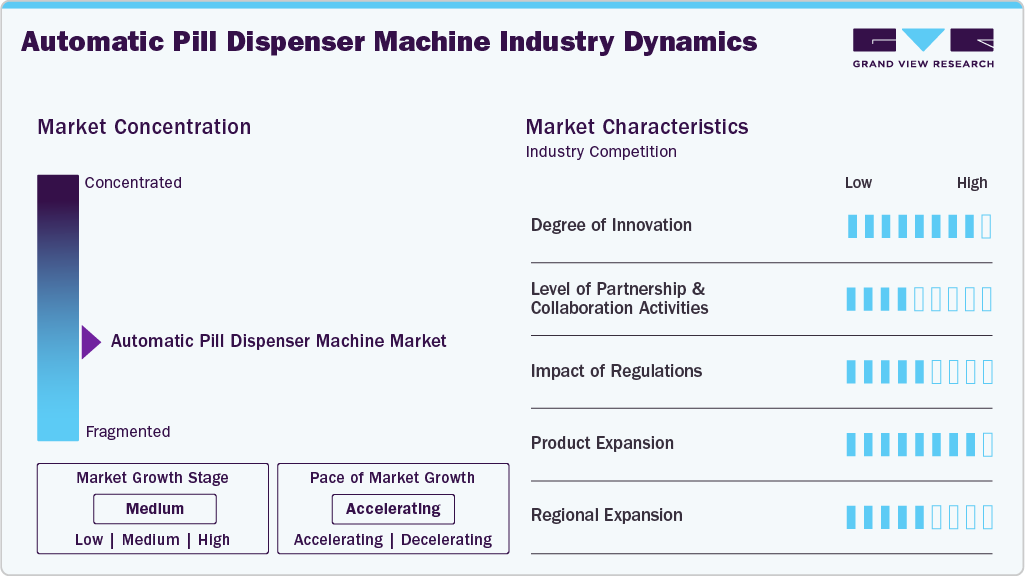
Regulatory impact is medium, as automatic pill dispensers intended for medical purposes fall under medical-device regulations in key markets. For instance, the U.S. FDA classifies solid medication dispensers as Class I medical devices under Regulation 890.5050, requiring manufacturers to meet applicable device requirements before commercialization.
Regional expansion is moderate, as manufacturers and healthcare providers are extending automated medication-dispensing technologies into new markets. For instance, in April 2026, BD launched its AI-enabled Pyxis Pro medication dispensing solution in Europe, expanding its automated medication-management portfolio beyond North America.
Analyst Perspective
The automatic pill dispenser machine industry is expected to witness significant growth, supported by the rising need for medication adherence among elderly and chronic-care populations. Increasing adoption of home-based care and connected healthcare technologies are encouraging demand for automated dispensing solutions. Smart and connected dispensers combine scheduled release with reminders, caregiver alerts, and remote monitoring capabilities. Similarly, pharmacies and senior care facilities are adopting automated dispensing technologies to improve medication handling and reduce dispensing-related errors. Overall, the market is expected to move toward connected, remotely monitored, and patient-centric dispensing systems, creating opportunities for companies that can combine reliable dispensing with simple digital interfaces.
Product Insights
Based on product, the smart/connected automatic pill dispensers’ segment held the largest revenue share of 68.0% in 2025, driven by integration of remote monitoring, real-time adherence tracking, and caregiver connectivity. In April 2025, Centor, a Gerresheimer company, launched a connected smart weekly pill organizer that transmits medication-intake data in real time over LTE without requiring a smartphone application, enabling pharmacies and clinical partners to monitor adherence remotely. In addition, in August 2025, AARDEX Group and Pill Connect partnered to integrate Pill Connect's connected dispensing technology with AARDEX's adherence-monitoring platform for real-time medication intake tracking in clinical trials, highlighting the expanding use of connected dispensing technologies beyond home medication
The standalone automatic pill dispenser segment is expected to register significant growth during the forecast period. The segment growth is supported by growing demand for simple, reliable medication management solutions among elderly users and patients with multiple or complex medication schedules. These systems provide scheduled dispensing, medication reminders, and controlled access without requiring integration with broader connected-care platforms, making them suitable for home-based medication management. For instance, e-pill introduced its 2025 MedTime Station, featuring a locked dispensing mechanism, up to 28 programmable daily alarms, and automated rotation to the scheduled medication compartment.
End Use Insights
Based on end use, the hospitals segment held the largest revenue share of 65.9% in 2025, supported by the high volume of medication administration and the need to improve medication safety, dispensing efficiency, and pharmacy workflow. Hospitals are increasingly using automated dispensing technologies to reduce manual medication handling and optimize the time of nursing and pharmacy staff. For instance, a 2025 quality-improvement study at King’s College Hospital in London evaluated the implementation of automated dispensing cabinets across clinical wards and reported that their use streamlined controlled-drug dispensing workflows and reduced manual workload for nursing and pharmacy teams.
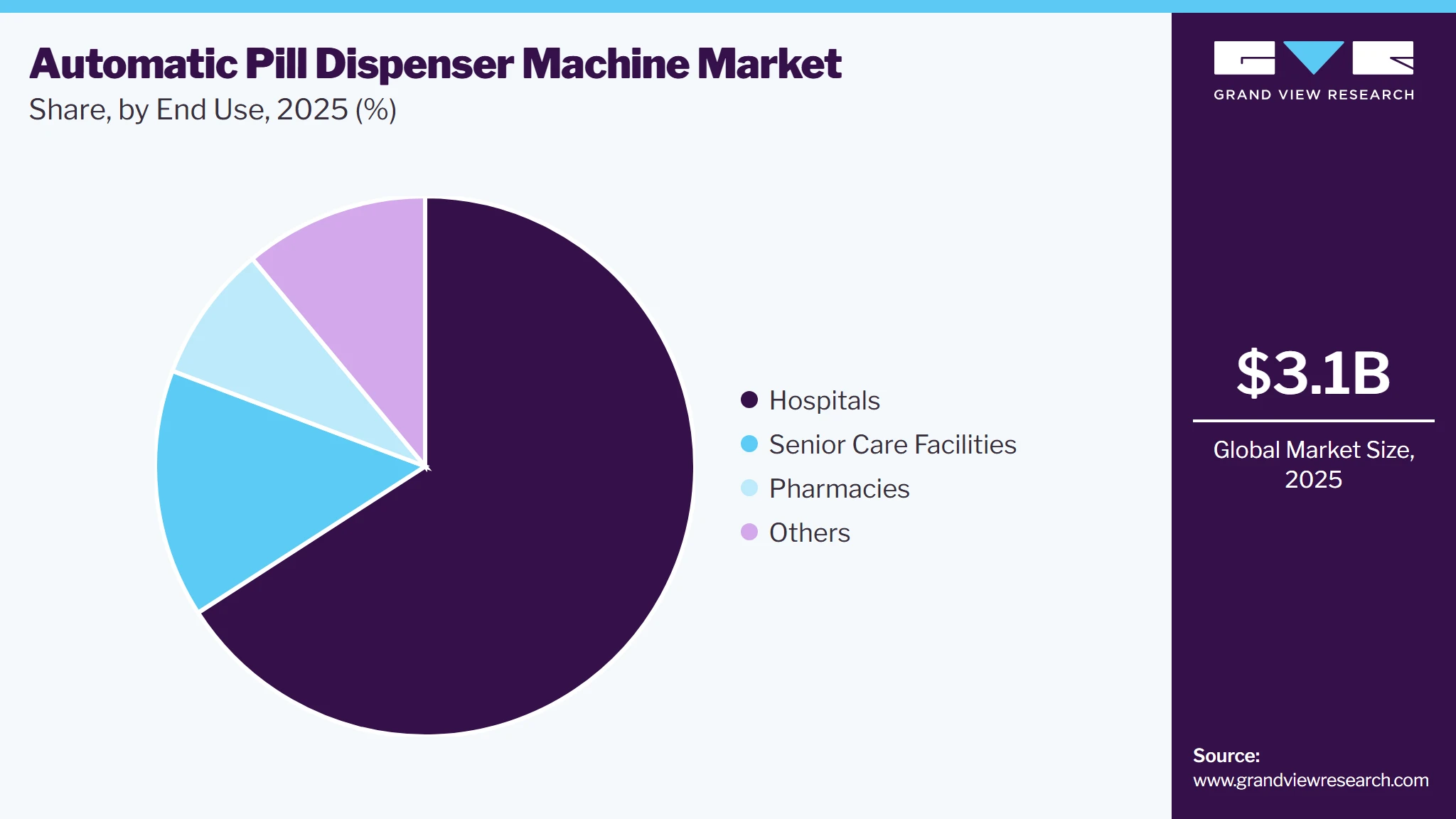
The senior care facilities segment is expected to register the fastest CAGR of 10.1% during the forecast period, supported by increasing medication-management needs among older adults and workforce constraints in elderly care. In May 2026 study published in the Journal of Nursing Management found that 84% of Finnish assisted-living units used medicine-dispensing technology, with the technology reducing medication-management time by approximately 10 minutes per work shift, demonstrating its potential to improve efficiency in senior care facilities.
Regional Insights
North America automatic pill dispenser machine industry accounted for the largest global revenue share of 45.5% in 2025. The market is supported by a large aging population, established home healthcare infrastructure, and high adoption of smart medication-management technologies.

U.S. Automatic Pill Dispenser Machine Market Trends
The U.S. automatic pill dispenser machine industry accounted for the largest share of the North American region in 2025. Market growth is supported by rising demand for home-based medication management and connected adherence solutions. In April 2025, U.S.-based MedMinder highlighted its automated pill dispenser with pharmacy-sorted medications, dose alerts, and caregiver notifications, supporting the adoption of automated medication management solutions in the country.
Europe Automatic Pill Dispenser Machine Market Trends
Europe automatic pill dispenser machine industry is expected to witness significant growth during the forecast period, supported by the rapidly aging population, rising demand for home healthcare services, and increasing adoption of digital medication-management solutions.
The UK automatic pill dispenser machine industry is expected to grow steadily, supported by NHS adoption of technology for medication management and increasing demand for independent care at home. In May 2025, the UK Health Research Authority approved the Robot-Assisted Medication Dispensing (RAM-D) study to assess automated medication dispensers in patients’ homes, including their impact on medication adherence and healthcare efficiency.
The automatic pill dispenser machine industry in Germany is expected to witness steady growth, supported by the increasing adoption of automated medication dispensing in hospitals and by the technology's ability to reduce nursing staff workload. For instance, in October 2025, the University Hospital of Cologne expanded its automated pill dispensing system to cover up to 600 patient beds. Under the system, medications are individually packaged and labeled with the patient’s name, active ingredient, and a QR code containing usage instructions before being delivered to hospital wards. The system eliminates the need for nursing staff to manually unpack and prepare medications, thereby reducing workload and medication errors.
Asia Pacific Automatic Pill Dispenser Machine Market Trends
Asia Pacific automatic pill dispenser machine industry is expected to register the fastest CAGR during the forecast period. Growth is supported by rising demand for home-based elderly care and medication adherence solutions. In Australia, MedReady offers automatic medication dispensers with audible and visual reminders, while its connected models transmit missed-dose information to caregivers through SMS and email, indicating growing adoption of remote medication-management solutions in the region.
India automatic pill dispenser machine industry is expected to register significant growth over the forecast period, supported by increasing innovation in automated medication management and connected healthcare devices. In August 2025, Alliance University, Bengaluru developed a smart pill dispenser designed for elderly patients and people with cognitive impairments, with the objective of improving medication adherence and ensuring medicines are taken at the correct time. The development indicates growing interest in smart dispensing technologies within India’s healthcare ecosystem.
China automatic pill dispenser machine industry is expected to witness significant growth over the forecast period, driven by rapid healthcare automation and rising demand for elderly medication management. In November 2025, Ruijin Hospital Taicang Branch launched a smart pharmacy equipped with a fully automated medicine dispenser that processes prescriptions and dispenses medicines in about 10 seconds. The system also automates inventory replenishment, demonstrating increasing deployment of automated dispensing technologies in China’s healthcare facilities.
The automatic pill dispenser machine industry in Japan is expected to grow steadily, supported by Japan’s aging population, rising medication-management needs, and increasing automation in hospital and pharmacy operations. The growing use of automated dispensing and packaging technologies is helping healthcare facilities improve dispensing accuracy, reduce pharmacists’ workload, and enhance medication safety. For instance, in June 2026, Japan’s National Hospital Organization Takasaki General Medical Center issued a procurement notice for a fully automatic tablet PTP dispensing machine, indicating continued investment in automated medication-dispensing infrastructure within Japanese hospitals.
Latin America Automatic Pill Dispenser Machine Market Trends
Latin America automatic pill dispenser machine industry is anticipated to witness significant growth in the market during the forecast period. Growth is supported by increasing pharmacy automation and demand for more efficient medication dispensing. In August 2024, a retail pharmacy in Brazil implemented a robotic dispensing system, reducing medication receiving time by 70% and online-order separation time by 75%. The adoption demonstrates growing use of automated dispensing technologies in the region’s pharmacy sector.
Middle East and Africa Automatic Pill Dispenser Machine Market Trends
Middle East and Africa automatic pill dispenser machine industry is expected to witness significant growth during the forecast period. Growth is supported by healthcare modernization, rising demand for elderly care, and increasing adoption of pharmacy automation. In the UAE, Dubai Health has expanded automated pharmacy services, including robotic medication dispensing and delivery systems, to improve dispensing efficiency and reduce medication errors. Such investments in automated medication management are expected to create opportunities for automatic pill dispensing technologies across the region
Key Automatic Pill Dispenser Machine Company Insights
Key players operating in the automatic pill dispenser machine industry are undertaking various strategic initiatives to strengthen their market presence and expand their product reach. Companies are focusing on product launches, technological advancements, partnerships, and geographic expansion to address the growing demand for automated medication management solutions. These initiatives are expected to intensify competition and support market growth during the forecast period.
Key Automatic Pill Dispenser Machine Companies
The following key companies have been profiled for this study on the automatic pill dispenser machine market.
-
Evondos Group
-
ARxIUM
-
BD
-
Capsa Healthcare
-
Hero Health, Inc.
-
InstyMeds.
-
PharmRx Pty Ltd
-
swisslog healthcare
-
MedMinder Systems, Inc.
-
Omnicell, Inc.
-
PharmaCell
-
Livi Healthcare
-
Philips
-
LiveFine
-
e-pill Medication Reminders
Competitive Benchmarking
Operating Strategies
Competitive Edge
Weaknesses
Mature Players: Omnicell, Inc.; BD; Swisslog Healthcare; Capsa Healthcare; Evondos Group; ARxIUM; Philips
- Expand automated medication dispensing through connected hardware, pharmacy automation, and medication-management platforms.
- Strengthen hospital, pharmacy, long-term care, and home-care distribution networks through partnerships and integrated solutions.
- Invest in cloud-based platforms, AI-enabled inventory management, remote monitoring, and workflow automation.
- Broaden product portfolios from dispensing hardware to end-to-end medication management solutions.
- Established customer relationships with hospitals, pharmacies, and healthcare organizations.
- Broad product portfolios covering dispensing, inventory management, pharmacy automation, and medication adherence.
- Strong integration capabilities with pharmacy and healthcare information systems.
- Greater financial resources support product development, regulatory compliance, and geographic expansion.
- Higher system costs and implementation requirements can limit adoption among smaller providers and individual users.
- Complex enterprise solutions may require technical training, integration, and ongoing service support.
- Greater exposure to healthcare IT, cybersecurity, regulatory, and data-protection requirements.
- Institutional-focused solutions may have limited suitability for simple home-use requirements.
Emerging Players: Hero Health, Inc.; MedMinder Systems, Inc.; LiveFine; e-pill Medication Reminders; PharmRx Pty Ltd; Livi Healthcare
- Focus on compact, user-friendly, connected dispensers for home-based medication management.
- Integrate mobile applications, caregiver alerts, remote dispensing, and adherence monitoring.
- Target elderly patients, chronic-care users, caregivers, and independent home users.
- Use subscription, direct-to-consumer, and pharmacy-supported models to improve market access.
- Greater product flexibility and faster adoption of connected and consumer-oriented technologies.
- Strong focus on convenience, medication adherence, and caregiver engagement.
- Lower infrastructure requirements compared with hospital-scale automation systems.
- Ability to address underserved home-care and aging-population applications.
- Smaller geographic presence and lower brand recognition than established healthcare technology companies.
- Limited financial resources can constrain large-scale commercialization and international expansion.
- Dependence on internet connectivity, smartphones, and caregiver participation may affect usability.
- Limited medication capacity or compatibility with certain dosage forms can restrict use in complex regimens.
Recent Developments
-
In March 2026, researchers at the Indian Institute of Information Technology Allahabad (IIIT-A) developed and patented a smart pill dispensing system designed to deliver the correct medication at the prescribed time and dosage. The system incorporates medicine identification and dispensing-confirmation technology, along with a touchscreen and speaker interface. A company has also been established to support commercialization, indicating increasing efforts to commercialize smart medication dispensing technologies.
-
In January 2026, Bangkok Hospital invested USD 3.0 million in automatic drug dispensing machines to improve medication quality and patient safety. The systems used AI-enabled automation to accurately handle loose pills, blister packs, and cut blister packs, while also automating pill counting and checking drug expiration dates and production lot numbers. The investment also enabled detailed medication recordkeeping and supported the recall of medications dispensed to patients.
-
In December 2025, Omnicell, Inc. launched Titan XT, a next-generation automated dispensing system designed to support autonomous medication management across healthcare organizations. The system integrates automated dispensing with Omnicell’s cloud-based OmniSphere platform, providing medication management, inventory control, and workflow capabilities. The launch reflects the increasing integration of connected software and automation into medication dispensing systems.
Automatic Pill Dispenser Machine Market Report Scope
Report Attribute
Details
Market Size in 2025
USD 3.1 billion
Estimated market size in 2026
USD 3.4 billion
Projected market size by 2033
USD 6.1 billion
Growth rate
CAGR of 8.9% from 2026 to 2033
Actual data
2021 - 2025
Forecast period
2026 - 2033
Quantitative units
Revenue in USD billion and CAGR from 2026 to 2033
Report coverage
Revenue forecast, company ranking, competitive landscape, growth factors, and trends
Segments covered
Product, end use, region
Regional scope
North America; Europe; Asia Pacific; Latin America; MEA
Country scope
U.S.; Canada; Mexico; Germany; UK; France; Italy; Spain; Denmark; Sweden; Norway; China; Japan; India; South Korea; Australia; Thailand; Brazil; Argentina; South Africa; Saudi Arabia; UAE; Kuwait
Key companies profiled
Evondos Group; ARxIUM; BD; Capsa Healthcare; Hero Health, Inc.; InstyMeds; PharmRx Pty Ltd; Swisslog Healthcare; MedMinder Systems, Inc.; Omnicell, Inc.; PharmaCell; Livi Healthcare; Philips; LiveFine; e-pill Medication Reminders
Customization scope
Free report customization (equivalent to 8 analysts working days) with purchase. Addition or alteration to country, regional & segment scope.
Pricing and purchase options
Avail customized purchase options to meet your exact research needs. Explore purchase options
Global Automatic Pill Dispenser Machine Market Report Segmentation
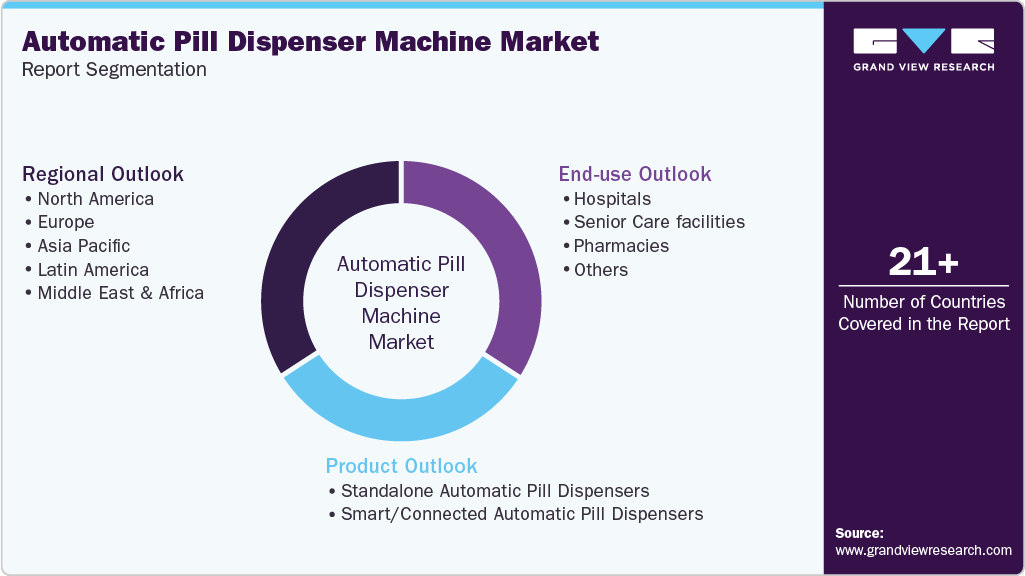
This report forecasts revenue growth at global, regional, and country levels and provides an analysis of the latest industry trends in each of the sub-segments from 2021 to 2033. For this study, Grand View Research has segmented global automatic pill dispenser machine market report based on product, end use, and region.
-
Product Outlook (Revenue, USD Billion, 2021 - 2033)
-
Standalone Automatic Pill Dispensers-
-
Smart/Connected Automatic Pill Dispensers-
-
-
End Use Outlook (Revenue, USD Billion, 2021 - 2033)
-
Hospitals
-
Senior Care facilities
-
Pharmacies
-
Others
-
-
Regional Outlook (Revenue, USD Billion, 2021 - 2033)
-
North America
-
U.S.
-
Canada
-
Mexico
-
-
Europe
-
Germany
-
UK
-
France
-
Italy
-
Spain
-
Denmark
-
Sweden
-
Norway
-
-
Asia Pacific
-
China
-
Japan
-
India
-
South Korea
-
Australia
-
Thailand
-
-
Latin America
-
Brazil
-
Argentina
-
-
MEA
-
South Africa
-
Saudi Arabia
-
UAE
-
Kuwait
-
-
Research Methodology
The automatic pill dispenser machine market figures in this report are based on a proven research process that combines executive interviews with secondary research from proprietary databases, company filings, and recognized regulatory and institutional sources. Market size is built through value-chain sizing-reconciling supply-side and demand-side estimates-and triangulated with bottom-up and top-down approaches. Every estimate passes multiple levels of expert validation before publication, with each automatic pill dispenser machine segment quantified using the revenue-capture definitions in the table below.
Segment Definition
Segment
Revenue capture definition
Standalone Automatic Pill Dispensers
Automatic medication dispensing devices that operate independently to store, schedule, remind, and dispense prescribed doses at predetermined times without requiring integration with external digital health platforms.
Smart/Connected Automatic Pill Dispensers
Automated pill dispensers equipped with connectivity features such as Wi-Fi, Bluetooth, cellular connectivity, mobile applications, or cloud platforms to enable remote monitoring, medication reminders, adherence tracking, and caregiver notifications.
Hospitals
Healthcare facilities that use automatic pill-dispensing systems to support medication management, improve dispensing accuracy, reduce medication errors, and streamline pharmacy or patient-care workflows.
Senior Care Facilities
Residential or assisted-care facilities serving elderly individuals where automatic pill dispensers are used to support scheduled medication administration, improve adherence, and reduce the workload associated with routine medication management.
Pharmacies
Retail, hospital, or institutional pharmacy settings where automated pill dispensing technologies are used for medication preparation, counting, packaging, dispensing, and improving pharmacy workflow efficiency.
Others
Other settings using automatic pill dispensers, including homecare environments, rehabilitation centers, assisted-living settings, and other healthcare or residential facilities not classified under hospitals, senior care facilities, or pharmacies.
Estimation Model
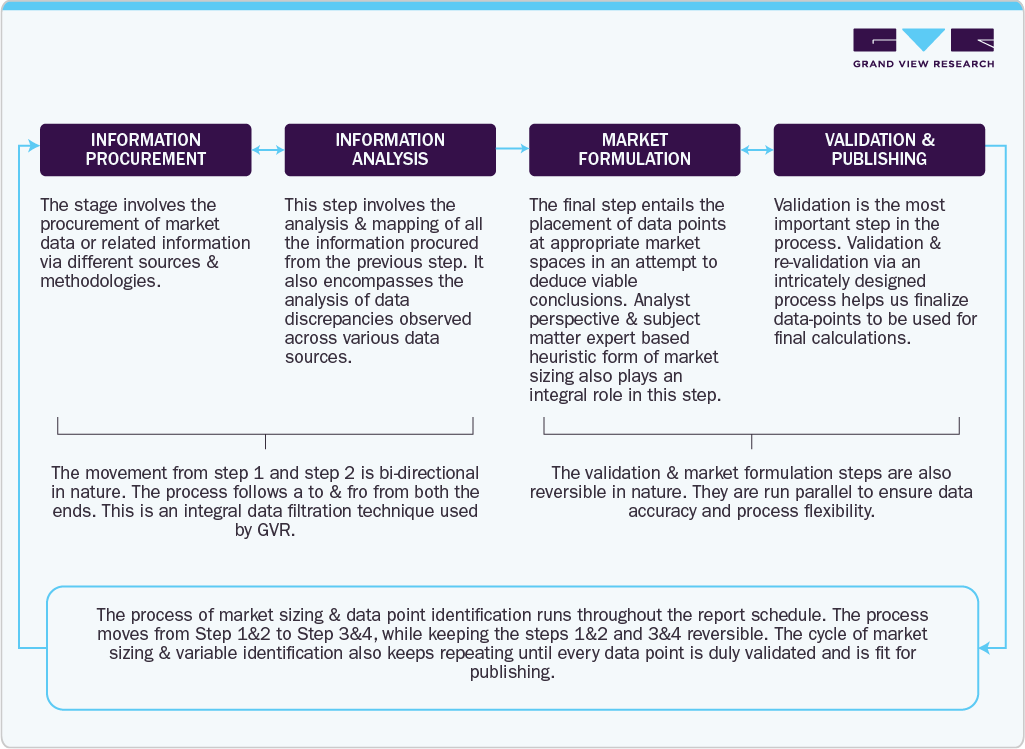
Consensus-Based Estimates & Forecasting
The automatic pill dispenser machine market presents dominant emerging opportunities, featuring global key players such as Evondos Group, ARxIUM, BD, Capsa Healthcare, Hero Health, Inc., InstyMeds, PharmRx Pty Ltd, Swisslog Healthcare, MedMinder Systems, Inc., Omnicell, Inc., PharmaCell, Livi Healthcare, Philips, LiveFine, e-pill Medication Reminders. To ensure a holistic approach, the GVR research team adopted a comprehensive methodology, considering multiple companies worldwide and using various variables to improve data accuracy.
Our methodology included:
Model 1: Commodity Flow Analysis - For public players, annual reports were referenced. For private players, premium-paid data sources, such as S&P Global, Crunchbase, ZoomInfo, and RocketReach, were used to obtain the latest revenue insights.
Model 2: Parent Market Analysis
Model 3: Country-level Multivariate Analysis Assumptions
Model 4: Segment-level Multivariate Analysis Assumptions
Model 5: Automatic Pill Dispenser Machine Market CAGR Calculations
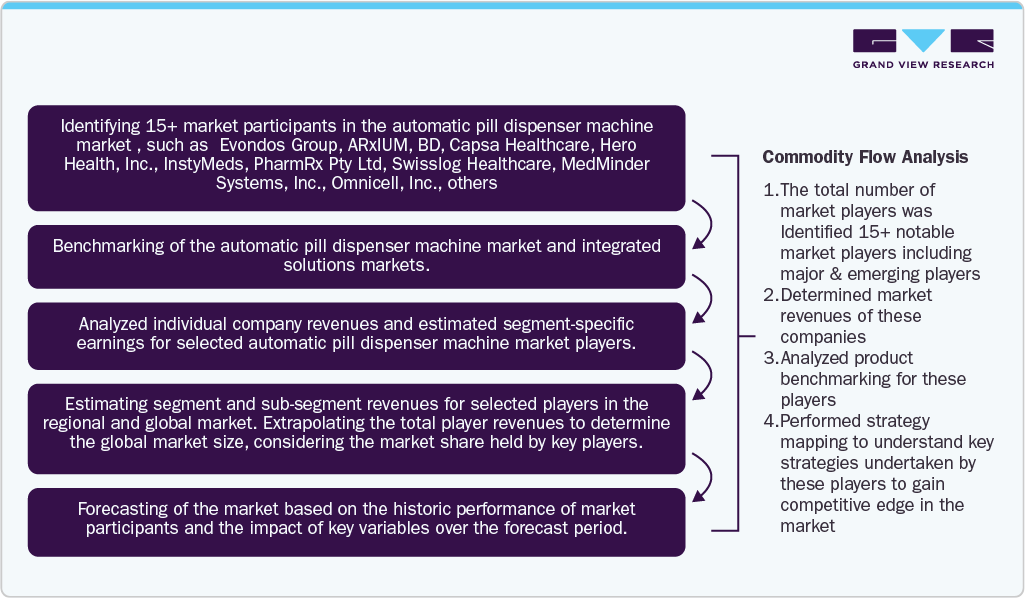
Commodity flow analysis was employed to track the movement of automatic pill dispenser machine through the value chain, from technology providers to end users. This analysis provided insights into demand generation points, intermediary roles, and ultimate consumption patterns.
Delivered Customizations
This report has been delivered with the following In-depth customizations
Client Request
Customization Delivered
Value Adds
Device volume analysis
Estimated the number of automatic pill dispenser units/devices deployed or sold, alongside the revenue market size. The analysis can be assessed by product type, country/region, and historical and forecast years.
Provides a unit-based view of market adoption, allowing the client to distinguish revenue growth from actual increases in device deployment and penetration.
Device pricing analysis
Assessed pricing across standalone and smart/connected automatic pill dispensers, considering differences in technology, connectivity, dispensing capacity, monitoring capabilities, and subscription-based versus one-time purchase models.
Helps evaluate average selling prices, affordability, pricing gaps, and premium opportunities, while supporting a more accurate conversion of device volumes into market revenue.
Technology-level analysis
Evaluated the integration of IoT, AI, sensors, GSM/cellular connectivity, mobile applications, cloud platforms, remote monitoring, and automated medication verification across automatic pill dispenser products.
Identifies the technology adoption trajectory, differentiates basic versus advanced devices, and highlights opportunities for product innovation and smart/connected dispenser development.
Frequently Asked Questions About This Report
Asia Pacific is the fastest-growing region over the forecast period.
The global automatic pill dispenser machine market size was valued at USD 3.1 billion in 2025 and is estimated at USD 3.4 billion for 2026.
The global automatic pill dispenser machine market is expected to grow at a CAGR of 8.9% from 2026 to 2033, reaching USD 6.1 billion by 2033.
The hospitals segment held the largest market share of 65.9% in 2025, while the senior care facilities segment is the fastest-growing end use segment.
North America dominated with a 45.5% revenue share in 2025.
Rising demand for medication adherence solutions, an aging population, and increasing rates of chronic diseases require long-term treatment. The adoption of automated medication management systems in senior care facilities, homecare, pharmacies, and healthcare institutions is driving market expansion.
Some of the key players operating in the automatic pill dispenser machine market include Evondos Group, ARxIUM, BD, Capsa Healthcare, Hero Health, Inc., InstyMeds, PharmRx Pty Ltd, Swisslog Healthcare, MedMinder Systems, Inc., Omnicell, Inc., PharmaCell, Livi Healthcare, Philips, LiveFine, e-pill Medication Reminders.
The smart/connected automatic pill dispensers segment held the largest market share of 68.0% in 2025,driven by integration of remote monitoring, real-time adherence tracking, and caregiver connectivity.
About the Author(s)
Medical Devices Research Team
Healthcare · Medical DevicesThis report was authored by the medical devices research team at Grand View Research - comprising two research analysts, one senior research analyst, and one industry expert - with specialized expertise in the medical devices segment of the healthcare industry. All findings are based on proprietary healthcare databases, executive interviews, and regulatory analysis, subject to internal peer review prior to publication.
Last Updated:
Speak to Analyst


Customize this report to your needs — add regions, segments, or data points, with 20% free customization.
Or view our licence options:


ISO 9001:2015 & 27001:2022 Certified
We are GDPR and CCPA compliant! Your transaction & personal information is safe and secure. For more details, please read our privacy policy.


