
- Home
- »
- Medical Devices
- »
-
Belgium Ophthalmic Devices Market Size Report, 2027-2035GVR Report cover

Belgium Ophthalmic Devices Market (2027 - 2035)
Size, Share, & Trends Analysis Report By Product (OCT Devices - Commercial Grade, OCT devices - Hospital Grade), By Application, By End Use, By Region, And Segment Forecasts
Market Size, 2026
$14.1MMarket Estimate, 2027
$14.5MMarket Forecast, 2035
$18.8MCAGR, 2027–2035
3.3%Belgium Ophthalmic Devices Market Summary
The Belgium ophthalmic devices market size was valued at USD 14.1 million in 2026 and is projected to grow from USD 14.5 million in 2027 to USD 18.8 million by 2035, at a CAGR of 3.3% from 2027 to 2035. Belgium ophthalmic devices market is experiencing notable growth due to increasing incidences of cataract, glaucoma, diabetic retinopathy, and age-related macular degeneration. These diseases are prevalent in elderly people.
Key Market Trends & Insights
- By product, the OCT devices - commercial grade segment held the highest market share of 22.9% in 2026.
- By application, the cataract segment held a leading market share in 2026.
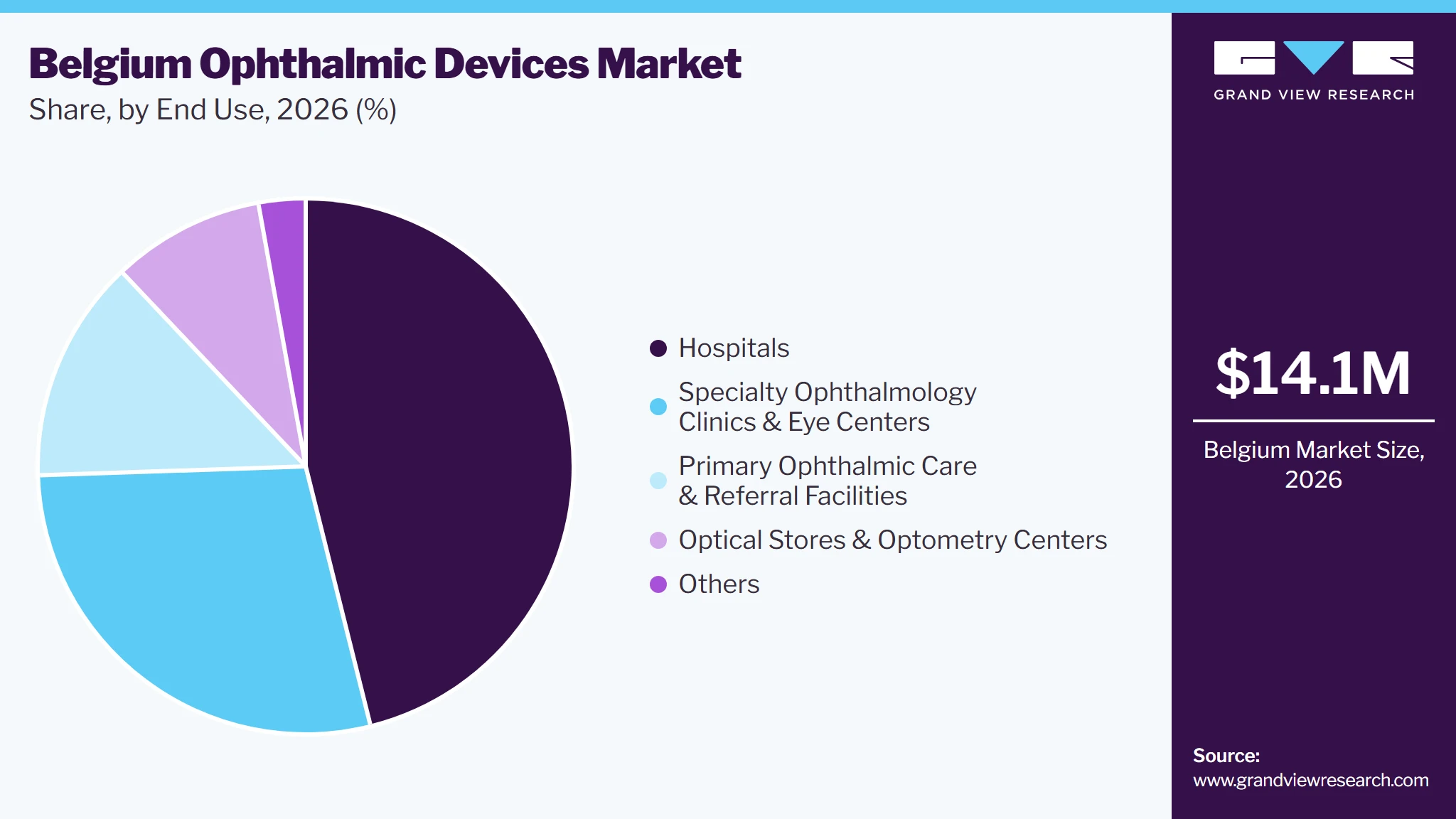
- By end-use, the hospitals segment held the highest market share in 2026.
Market Size & Forecast
- Market Size in 2026: USD 14.1 Million
- Estimated Market Size in 2027: USD 14.5 Million
- Projected Market Size by 2035: USD 18.8 Million
- CAGR (2027-2035): 7.5%
Prism AI by Grand View Research Free to tryAsk a question about the belgium ophthalmic devices marketTry asking✓Every figure cited from GVR research Prefer the report? Download free sample →Moreover, increased awareness regarding eye health, along with the presence of ophthalmic screening, diagnostic and surgical devices are driving the market. Furthermore, increasing acceptance of less invasive ophthalmic procedures, advanced intraocular lenses, optical coherence tomography (OCT) systems and laser technologies, is also contributing to market growth. In addition, the presence of a well-developed healthcare infrastructure, medical facilities, and specialized ophthalmology centers in Belgium, is boosting the adoption of ophthalmic devices in the region.
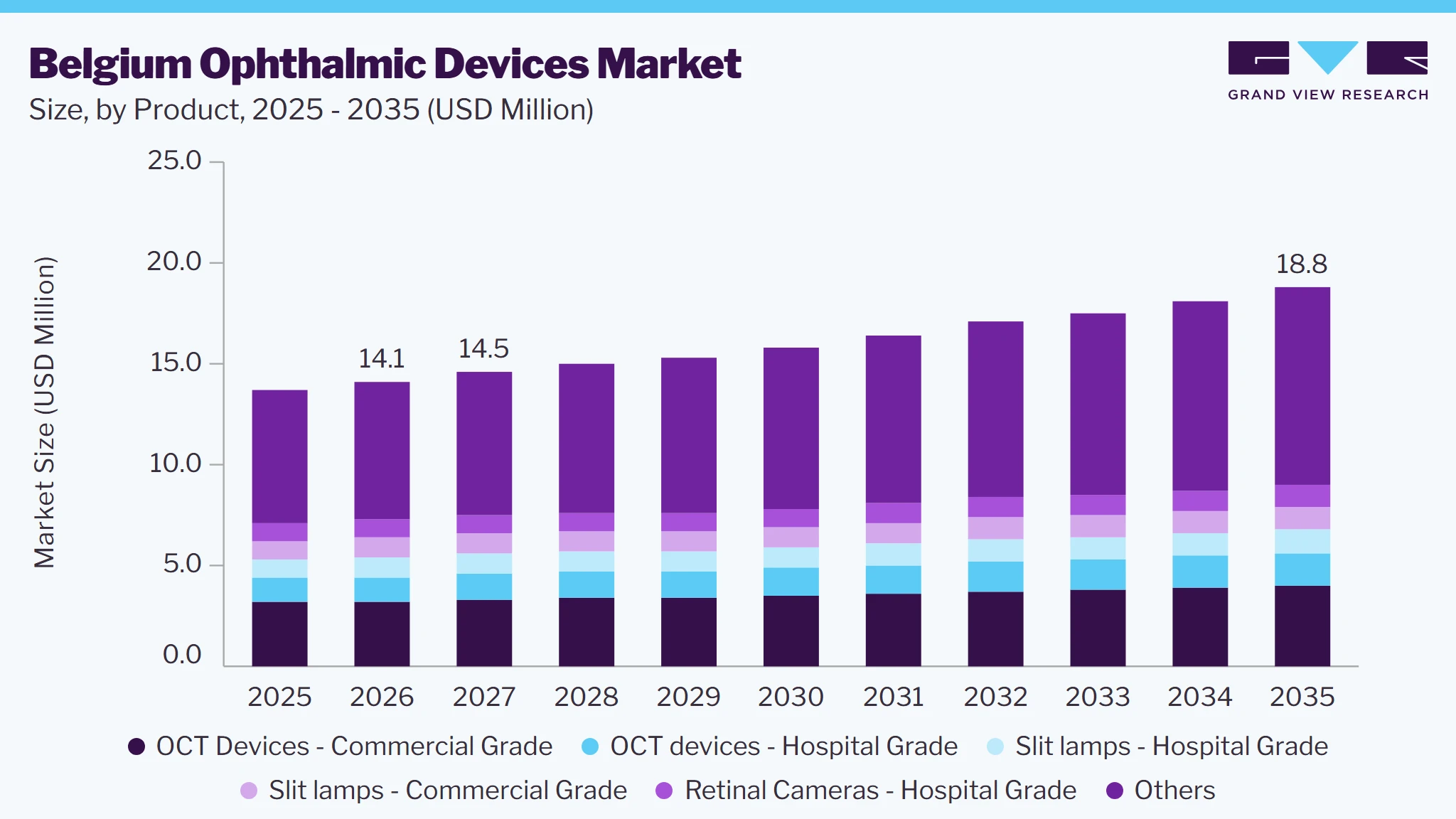 Source: Grand View Research, IR Documents, Primary Interviews, Paid DatabasesTo learn more about this report,
 Download Free Sample Report
The rise in the occurrence of age-related eye diseases such as cataracts, glaucoma, AMD (age related macular degeneration) and diabetic retinopathy is driving the Belgium ophthalmic devices market. An ageing population in the country is driving demand for ophthalmic diagnostic and surgical devices. In 2025 there were around 2.41 million people aged 65 and over in Belgium (20.3% of the population). People in this age group are more at risk of age related eye conditions, which increases the demand for regular eye checks, early detection, monitoring and surgical treatments. In 2025, 5.6% of the population were aged 80+.
The high volume of cataract procedures contributes to the demand for ophthalmic surgical devices such as Phacoemulsifier instruments, Ophthalmic Surgical Microscopes, and Intraocular Lens devices. Belgium performs between 1,400-1,500 cataract procedures per 100,000 people (Eurostat), meaning that it is one of the European countries where cataract surgery is relatively high. In 2024, Belgium performed around 172,180 cataract procedures, a 3.2% increase compared to the previous year (166,800 cataract procedures) (OECD Health Statistics). This shows that there is a strong demand for cataract diagnosis and treatment within the country and therefore ophthalmic surgical equipment.
Demand for ophthalmology equipment continues to be driven by increased cataract treatment services. According to For A Healthy Belgium, there are around 166,359 patients receiving cataract surgery each year. This leads to 269,429 services being recorded. A standardised rate of 1,424 patients per 100,000 insured individuals. Patients were aged on average 75 years old. Outpatient workup for cataract constitutes a large proportion with 97.89% of care being delivered in an outpatient setting. For A Healthy Belgium has also shown that there is an increasing trend in patient usage with an increase of 2.75% between 2023-2025. With such a large proportion of outpatient care, efficient systems are needed to perform cataract surgeries. This includes ophthalmic microscopes, phacoemulsification equipment, and diagnostic equipment within hospitals and day surgery units.
The market sees significant growth due to technological advances. Technologies such as Optical Coherence Tomography (OCT), digital fundus imaging, automated refractometers, advanced tonometers and AI-assisted diagnostic systems provide accurate and efficient eye exams. OCT systems provide greater insight into retinal layers and optic nerve structures making it easier to diagnose and track diseases such as glaucoma, diabetic retinopathy and AMD. Improvements in digital retinal imaging and automated diagnostic systems help ophthalmologists detect abnormalities at an early stage. Increased access to specialist ophthalmology services and investment in advanced diagnostic systems means that healthcare providers want to upgrade their current ophthalmology equipment.
Moreover, an increase in the surgical activity and the use of advanced treatment technologies in the country is creating lucrative opportunities for ophthalmic devices manufacturers. Belgium has well-developed cataract treatment infrastructure and high usage rate of surgeries. Hence, there is a rising demand for ophthalmic surgical instruments, intraocular lenses, diagnostic devices, and related technologies. Furthermore, the aging population and high volumes of cataract surgeries, along with increasing focus on early diagnosis of eye diseases and advancement in technology are expected to drive the Belgium ophthalmic devices market.
Market Dynamics
Growing cases of various eye diseases such as cataract, glaucoma, diabetic retinopathy, age-related macular degeneration, refractive error are driving the demand for ophthalmic devices in Belgium. The aging population in the country is leading to an increased incidence of age-related eye disorders, thus promoting the usage of diagnostic and surgical devices. Optical coherence tomography (OCT), fundus camera, slit lamp, tonometer, and visual field analyzers are widely used in the early detection, tracking and management of the diseases. Increasing awareness regarding regular eye check-ups and preventative care, along with availability of specialist ophthalmology services are further driving the demand for high-end diagnostic devices in hospitals, ophthalmology clinics and specialist eye care centers.
Technological progresses are further driving the growth of this market. Adoption of high-resolution OCT imaging, digital retinal imaging, automatic refractometer and AI powered diagnostics is enabling more accurate and efficient ophthalmic examination. This helps in early detection of retinal irregularities, progression of glaucoma and other visual impairments. This is encouraging healthcare providers to upgrade their existing equipment base. Furthermore, Belgium has a mature healthcare system, good network of Universities hospitals and availability of high-end ophthalmology services. This is encouraging adoption of high-end diagnostic and surgical devices. High volumes of cataract procedures performed in the country is further driving demand for phaco-emulsification devices, ophthalmic surgical microscope and high-end intra-ocular lenses.
Despite increased demand for complex eye care, the Belgium ophthalmic devices market is facing issues due to expensive purchasing and maintenance of complex devices. Devices such as advanced OCT, retinal imaging devices, femtosecond lasers, phacoemulsification devices and others used for ophthalmic surgeries are expensive to purchase. In addition to the initial cost, there are ongoing costs involved with servicing the device, software upgrades/updates, calibrations, parts replacements and staff training. This can cause issues for smaller ophthalmology clinics, standalone eye care providers and outpatient surgery centers who may struggle to meet the costs.
The differences in purchasing power between the public hospitals, university hospitals, private clinics and small healthcare facilities may cause inequalities in access to ophthalmic technology. The funding and purchasing regulations of the hospital, and the reimbursement system in Belgium will affect the speed that new technology is purchased. Although more advanced diagnostic and surgical equipment can improve clinical efficiency, there is a need for healthcare professionals to consider the cost associated with the equipment along with the expected usage, reimbursements and long-term gains of the technology. This can mean that due to the high costs involved in the initial investment and maintenance of more advanced ophthalmic devices, these may not be embraced by smaller providers due to budget constraints.
Market Concentration & Characteristics
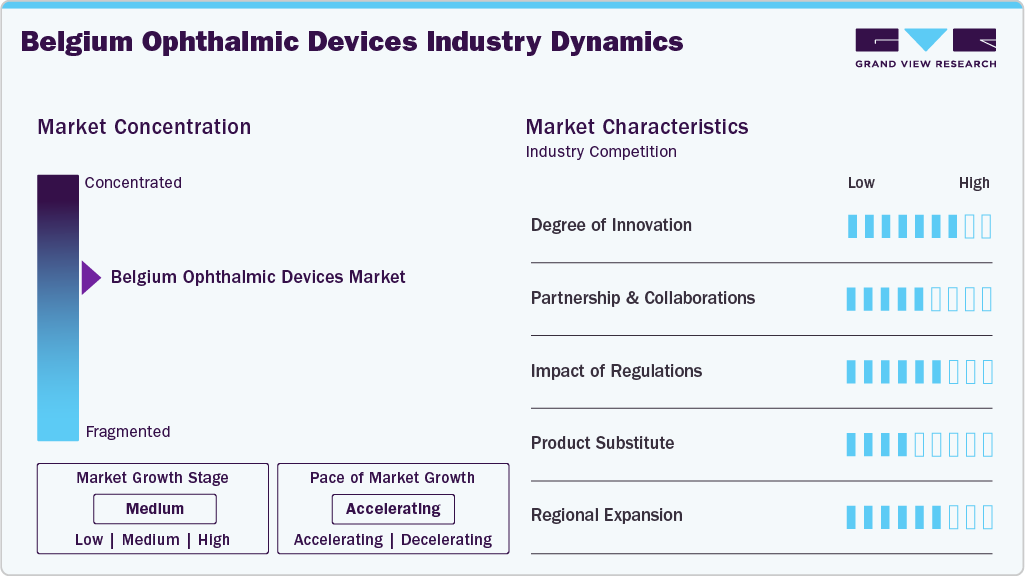
The Belgium ophthalmic devices market is highly competitive due to large multinational medical technologies companies and specialised ophthalmic companies providing innovative devices. The key players include Carl Zeiss Meditec, Alcon, Bausch + Lomb, Topcon, NIDEK, Haag-Streit and Heidelberg Engineering who provide devices for ophthalmic diagnostics, surgery, vision devices and monitoring. Due to increasing demand for cataract treatment, glaucoma diagnosis, retinal imaging and refractive correction, the growing aged population and developed healthcare infrastructure, there is a growing requirement for these devices. However, due to high costs and strict regulations under the European Medical Device Regulation (EU MDR), clinical validation and hospital purchasing, this can act as barrier to market entry. Competitive advantage is being taken by companies due to new advances in OCT, retinal imaging, AI diagnostic devices and cataract surgery technology.
Innovations in the Belgium ophthalmic devices market are becoming very focused around advanced retinal imaging systems, smart ophthalmic devices, and AI enabled diagnostic tools. The CHU de Liège was awarded Belgium's first DREAM OCT system for its ophthalmic technology distribution services. The device was supplied by Medical DevEyes and was acquired in 2026. This shows that there is an increasing uptake of advanced retinal imaging systems within ophthalmology in Belgium. Another example of innovation includes Azalea Vision based out of Ghent, who are developing ALMA. This innovative smart contact lens uses adaptive optics, microelectronics and sensor technology to provide a medical device to help correct vision. Azalea Vision will receive up to €7.5million in funding after being selected for the European Innovation Council Accelerator in July 2026. This shows that there is an increasing focus on new imaging systems, personal vision correction and smart devices within ophthalmology in Belgium.
 To learn more about this report, Download Free Sample Report
Collaboration between ophthalmic technology developers, healthcare providers and clinicians is helping drive the adoption of new diagnostic and surgical technologies in Belgium. With strong networks in place, there are many initiatives driven by specialist professionals to improve practices within the Belgium ophthalmology market. For example, in September 2026, Azalea Vision announced the recruitment of its first patient in a proof-of-concept trial to test the effectiveness of a novel optical aperture for patients with keratoconus and presbyopia. The trial is being run alongside Visser Contact Lenses (Netherlands) and University Hospital Antwerp (UZA) (Belgium). This demonstrates the collaboration between a new ophthalmic technology developer and clinicians to test cutting edge vision correction technologies. In addition, the Academia Ophthalmologica Belgica held their annual OB 2025 conference allowing ophthalmologists and specialists to share knowledge on topics such as cataract surgery, glaucoma, retinal disease and refractive innovation.
Ophthalmic devices are subject to regulations during their development, approval and commercialization in Belgium. As part of the European Union, Belgium implements its regulations according to the EU Medical Device Regulation (MDR 2017/745). Therefore, manufacturers need to ensure that their devices are safe and perform well, whilst maintaining technical files and fulfilling the appropriate conformity assessment procedures. Devices must have CE marking to be marketed, and devices of the relevant class will also require a notified body. This applies to all ophthalmic medical devices including diagnostic equipment, instruments and implantable devices such as intraocular lenses. The FAMHP also regulate the implementation of medical devices regulations within the country. On the 28 May 2026, there was an important update in relation to medical devices. Economic operators and medical devices must now be registered through the relevant module(s) in EUDAMED according to the relevant MDRs. This can impact the time to market and expansion of products due to the compliance requirements, clinical evidence requirements and post-marketing surveillance.
Demand in Belgium for cutting-edge ophthalmic devices is affected by traditional ophthalmic technologies and alternative diagnostic tools. Some retinal diagnostics are performed using direct ophthalmoscopy and traditional fundus photography; however, OCT technology can provide more detailed cross-sectional images of the retina and optic nerve. In terms of cataract surgery, phacoemulsification is a traditional alternative to femtosecond laser-assisted cataract surgery. As such, it may still be used depending on clinical needs, personal preferences and cost. However, they cannot completely be substituted for each other due to the differences in accuracy, image quality, precision and patient suitability. The large volume of cataract surgery carried out in Belgium supports demand for specialist products. In 2024 there were around 172,180 cataract surgeries carried out in the country, which is a 3.2% increase from the previous year (OECD Health Statistics). This has supported demand for phacoemulsification, ophthalmic microscopes and intraocular lenses to be used. Newer technologies have also been incorporated.
Ophthalmology device manufacturers and eye care service providers are expanding their reach by partnering with local healthcare networks, specialist clinics and technology partners in Belgium. In December 2025, local network Signifeye partnered with global eye care provider Optegra to improve their ability to adapt to evolving healthcare environments in Belgium and implement new technologies like AI and data analytics. This partnership will help develop ophthalmology services and ensure new technology can be incorporated into their eye care practices. Additionally, Azalea Vision, based in Belgium have multiple clinical development initiatives including partnering with University Hospital Antwerp. This shows how locally developed ophthalmology technologies can progress through clinical trials and be commercialised across Europe. This then helps drive the growth of specialist eye care services in Belgium and increases the country's role in the European ophthalmology technology landscape.
Analyst Perspective
Belgium ophthalmic devices market is witnessing growth due to rising prevalence of eye disorders, ageing population and rising demand for advanced diagnostic and surgical treatments. In 2026, around 20.67% of the Belgium population were aged 65 years and over (Statbel). This has led to an increased demand for ophthalmic devices to assist with diagnosing, monitoring and treating eye related conditions including cataracts, glaucoma, diabetic retinopathy, age related macular degeneration and refractive errors. There is significant demand for ophthalmic devices due to the high number of cataract procedures performed. Around 166,359 patients underwent cataract surgery per year. Optical coherence tomography (OCT), retina imaging, digital refraction and AI based diagnostic technology are being developed which is supporting market growth. Opportunities for growth are being seen due to increased investment in ophthalmic treatment facilities, minimally invasive surgical techniques and increased focus on early diagnosis. However, high costs of equipment, limited budgets by healthcare professionals, regulation relating to European Medical Device Regulation (EU MDR) and limited reimbursement are posing as challenges.
Product Insights
The OCT devices - commercial grade segment dominated the Belgium ophthalmic devices market with the largest revenue share of 22.9% in 2026, owing to the increasing demand for advanced retinal imaging and early diagnosis of eye disorders. The growing prevalence of age-related macular degeneration, diabetic retinopathy, and glaucoma is supporting the adoption of OCT systems across ophthalmology clinics and diagnostic centers. Commercial-grade devices offer high-resolution imaging, faster scanning, and efficient clinical workflows at relatively accessible costs. Their suitability for routine examinations and follow-up monitoring further supports segment growth.
The myopia control devices segment is anticipated to grow at a significant CAGR of 5.9% from 2027 to 2035, driven by the increasing prevalence of childhood myopia, rising awareness of the long-term complications associated with progressive myopia, and growing adoption of specialized vision correction products. Increasing exposure to digital screens, prolonged near-work activities, and limited outdoor exposure among children are creating greater demand for early diagnosis and interventions to slow myopia progression. This is encouraging ophthalmologists, optometrists, and opticians in Belgium to recommend specialized myopia management solutions, including defocus-based spectacle lenses, multifocal soft contact lenses, and orthokeratology lenses. Furthermore, increasing awareness among parents regarding the risk of high myopia and associated complications, such as retinal detachment, glaucoma, and myopic maculopathy, is supporting the adoption of preventive eye-care solutions. Professional education and product innovation are also strengthening segment growth. For instance, in September 2024, CooperVision expanded its myopia management awareness initiatives in Belgium by developing an information kit for ophthalmologists and distributing it to 250 selected specialists to encourage greater collaboration between optometrists and ophthalmologists in the early management of childhood myopia.
Application Insights
The cataract segment accounted for the largest market share in 2026, attributed to the high prevalence of age-related cataracts and the growing demand for surgical treatment among Belgium’s aging population. Increasing life expectancy and the rising proportion of individuals aged 65 and above are contributing to a larger patient pool requiring cataract diagnosis, monitoring, and treatment. The widespread adoption of phacoemulsification systems, intraocular lenses, and advanced ophthalmic surgical instruments further supports segment revenue. Additionally, established ophthalmic care infrastructure, experienced surgeons, and the availability of specialized eye clinics are facilitating access to cataract procedures and strengthening the segment's market position.
The refractive errors and myopia segment is projected to be the fastest-growing segment over the forecast period, driven by the increasing prevalence of myopia and other vision disorders, particularly among children, adolescents, and working-age adults in Belgium. Rising digital screen exposure, prolonged near-work activities, and reduced outdoor time are increasing concerns regarding childhood myopia and creating demand for routine eye examinations and corrective vision assessment. According to Belgium's National Food Consumption Survey (2022-2023), approximately 81% of adolescents aged 10-17 years exceeded the recommended weekday screen-time limits, highlighting the growing need for preventive eye care and regular vision assessments.
End Use Insights
The hospitals segment held the largest revenue share in 2026 due to the availability of comprehensive ophthalmic care facilities, advanced diagnostic infrastructure, and specialized surgical departments. Hospitals manage a high volume of complex eye conditions, including cataracts, glaucoma, retinal disorders, and other age-related vision problems, driving demand for ophthalmic diagnostic and surgical equipment in Belgium. The availability of skilled ophthalmologists, advanced imaging systems, phacoemulsification equipment, and intraocular lens implantation facilities further supports the segment's dominance. In addition, Belgium's well-established hospital infrastructure, including university hospitals and specialized ophthalmology departments, enables the delivery of integrated diagnosis, surgical treatment, and post-operative care. The growing volume of cataract procedures and increasing adoption of advanced diagnostic and minimally invasive surgical technologies further strengthen hospitals' position as major procurement centers for ophthalmic devices across Belgium.
 To learn more about this report, Download Free Sample Report
The specialty ophthalmology clinics and eye centers segment is anticipated to experience the fastest growth during the forecast period. This growth can be attributed to a rise in demand for specialized ophthalmology services and the availability of advanced diagnostic and treatment options. An increase in cataract, glaucoma, diabetic retinopathy, and age-related macular degeneration cases is also driving individuals to seek dedicated ophthalmology consultations, routine exams, and follow-up appointments. Ophthalmology centers are investing in OCT systems, fundus cameras, slit lamps, tonometers, and automated refraction machines to provide accurate diagnoses. In addition, Belgium has an established base of specialized ophthalmology providers, an increase in out-patient ophthalmology treatments, lower waiting times, and consultations with specialists are all supporting the growth of specialty ophthalmology clinics and centers in the region.
Key Companies & Market Share Insights
The Belgium ophthalmic devices market is characterized by the presence of established global medical technology companies, specialized ophthalmic equipment manufacturers, and regional distributors, including Alcon, Carl Zeiss Meditec, Bausch + Lomb, Johnson & Johnson Vision, Topcon, NIDEK, Haag-Streit, and Heidelberg Engineering. Market participants focus on product innovation, technological advancements, regulatory compliance, and strategic partnerships to strengthen their market positions and expand their product portfolios across diagnostic, surgical, and vision correction applications. The presence of specialized suppliers and distributors further supports the availability of advanced ophthalmic equipment across Belgian hospitals, ophthalmology clinics, and eye-care centers. Increasing demand for advanced retinal imaging, cataract surgery, glaucoma diagnosis, and minimally invasive ophthalmic procedures is further shaping the competitive landscape. Advancements in optical coherence tomography (OCT), digital imaging, premium intraocular lenses, and AI-enabled diagnostic platforms are creating opportunities for manufacturers to differentiate their product offerings.
Key U.S. Electric Water Heater Companies
-
Carl Zeiss Meditec AG
-
Topcon Corporation
-
Johnson & Johnson Vision
-
NIDEK Co., Ltd.
-
Haag-Streit Group
-
Heidelberg Engineering GmbH
-
Alcon, Inc.
-
Bausch + Lomb
-
BVI Medical
-
CooperVision
Competitive Benchmarking
Category
Operating Strategies
Competitive Edge
Weakness
Established Global Ophthalmic Technology Leaders (Carl Zeiss Meditec AG, Alcon, Inc., Bausch + Lomb, Johnson & Johnson Vision)
- Expand ophthalmic product portfolios across diagnostic imaging, surgical equipment, refractive technologies, and vision care. Invest in advanced imaging, digital workflows, AI-enabled diagnostics, product innovation, and global distribution networks.
- Strong brand recognition, broad product portfolios, established hospital and ophthalmology clinic relationships, extensive distribution and service networks, and significant R&D capabilities support market penetration.
- High R&D and regulatory compliance costs, premium product pricing, complex technology development, and dependence on hospital and clinic capital expenditure can constrain growth.
Emerging Players (BVI Medical)
- Focus on specialized diagnostic equipment, including OCT systems, retinal imaging devices, slit lamps, visual field analysers, tonometers, and corneal topography systems. Strengthen product capabilities through technological innovation, software integration, and clinical partnerships.
- Specialized ophthalmic expertise, established relationships with eye care professionals, differentiated diagnostic technologies, and comprehensive equipment portfolios support adoption across hospitals and specialty eye clinics.
- Dependence on ophthalmic equipment procurement cycles, competition from larger diversified manufacturers, product upgrade requirements, and pricing pressures may affect market expansion.
Recent Developments
-
In October 2026, Belgium's Jan Yperman Hospital published a procurement notice for the purchase, installation, and maintenance of a vitrectomy system, alongside a framework agreement for equipment-specific consumables.
-
In September 2026, a Belgian hospital in the Province of Liège published a public procurement tender for the acquisition of optical coherence tomography (OCT) devices for its ophthalmology department. The tender, published on September 16, 2026, had a submission deadline of October 15, 2026. The procurement highlights continued investment in advanced retinal imaging equipment to support ophthalmic diagnosis, patient monitoring, and clinical assessment.
Belgium Ophthalmic Devices Market Report Scope
Report Attribute
Details
Market size in 2026
USD 14.1 million
Estimated market size in 2027
USD 14.5 million
Projected market size by 2035
USD 18.8 million
Growth rate
CAGR of 3.3% from 2027 to 2035
Actual period
2023 - 2025
Forecast period
2027 - 2035
Quantitative units
Revenue in USD million and CAGR from 2027 to 2035
Report coverage
Revenue forecast, company ranking, competitive landscape, growth factors, and trends
Segments covered
Product, application, end use, and region
Key companies profiled
Carl Zeiss Meditec AG; Topcon Corporation; Johnson & Johnson Vision; NIDEK Co., Ltd.; Haag-Streit Group; Heidelberg Engineering GmbH; Alcon, Inc.; Bausch + Lomb; BVI Medical; CooperVision
Customization scope
Free report customization (equivalent up to 8 analysts working days) with purchase. Addition or alteration to country, regional & segment scope.
Pricing and purchase options
Avail customized purchase options to meet your exact research needs. Explore purchase options
Belgium Ophthalmic Devices Market Report Segmentation
This report forecasts revenue growth at country levels and provides an analysis of the latest industry trends and opportunities in each of the sub-segments from 2023 to 2035. For the purpose of this study, Grand View Research has segmented the Belgium ophthalmic devices market report on the basis of product, application, end use, and region:
-
Product Outlook (Revenue, USD Million, 2023 - 2035)
-
Biometers
-
Dual keratometer/Refractometer and Phoropter Devices
-
Dual keratometer/Refractometer and Tonometer Devices
-
Dual Keratometer/Refractometer and Topographer Devices
-
Keratometers/Refractometers - Digital
-
Keratometers/Refractometers - Manual
-
Keratometers/Refractometers With Subjective Eye Examination Functions
-
Lasers for Glaucoma and Retinal Disease Treatment
-
Lensmeters - Digital
-
Lensmeters - Manual
-
Myopia Control Devices
-
OCT Devices - Commercial Grade
-
OCT devices - Hospital Grade
-
Operation Microscopes - Low End
-
Operation Microscopes - High End
-
Phoropters - Digital
-
Phoropters - Manual
-
Retinal Cameras - Hospital Grade
-
Retinal Cameras - Manual
-
Slit lamps - Commercial Grade
-
Slit lamps - Hospital Grade
-
Specular Microscopes for Ocular Diagnostics
-
Tonometers - Digital
-
Tonometers - Manual
-
Topographers
-
Visual Field Analysers
-
-
Application Outlook (Revenue, USD Million, 2023 - 2035)
-
Cataract
-
Glaucoma
-
Retinal Disorders
-
Refractive Errors and Myopia
-
Corneal Disorders
-
Other Ophthalmic Conditions
-
-
End Use Outlook (Revenue, USD Million, 2023 - 2035)
-
Hospitals
-
Specialty ophthalmology clinics and eye centers
-
Primary Ophthalmic Care and Referral Facilities
-
Optical Stores and Optometry Centers
-
Others (R&D Labs, educational institutions)
-
Research Methodology
The Belgium ophthalmic devices market figures in this report are based on a proven research process that combines executive interviews with secondary research from proprietary databases, company filings, and recognized regulatory and institutional sources. Market size is built through value-chain sizing - reconciling supply-side and demand-side estimates - and triangulated with bottom-up and top-down approaches. Every estimate passes multiple levels of expert validation before publication, with each Belgium ophthalmic devices segment quantified using the revenue-capture definitions in the table below.
Segment Definition
Segment - Product
Revenue capture definition
Biometers
Captures revenue from ophthalmic devices used to measure ocular dimensions, including axial length, corneal curvature, and anterior chamber depth, primarily for intraocular lens power calculations.
Dual keratometer/Refractometer and Phoropter Devices
Captures revenue from integrated ophthalmic instruments combining objective refraction and corneal curvature measurement with subjective vision testing to determine refractive errors and prescription requirements.
Dual keratometer/Refractometer and Tonometer Devices
Captures revenue from integrated ophthalmic instruments combining corneal curvature, refractive error, and intraocular pressure measurements for comprehensive eye examinations and glaucoma screening.
Dual Keratometer/Refractometer and Topographer Devices
Captures revenue from integrated ophthalmic systems combining refractive and keratometric measurements with corneal mapping to evaluate corneal shape, curvature, and irregularities.
Keratometers/Refractometers - Digital
Captures revenue from electronic ophthalmic instruments used to measure corneal curvature and determine refractive errors through automated optical measurement and digital analysis.
Keratometers/Refractometers - Manual
Captures revenue from manually operated ophthalmic instruments used to assess corneal curvature and refractive errors through examiner-controlled measurements and optical adjustments.
Keratometers/Refractometers With Subjective Eye Examination Functions
Captures revenue from ophthalmic instruments combining objective keratometry and refraction with subjective examination capabilities to refine prescriptions based on patient visual responses.
Lasers for Glaucoma and Retinal Disease Treatment
Captures revenue from ophthalmic laser systems used to treat glaucoma and retinal disorders through procedures such as trabeculoplasty, photocoagulation, and retinal photocoagulation.
Lensmeters - Digital
Captures revenue from electronic instruments used to measure the optical power, prescription, and alignment of spectacle lenses through automated digital measurement systems.
Lensmeters - Manual
Captures revenue from manually operated instruments used to determine spectacle lens power, optical center, and prescription parameters through examiner-controlled measurement techniques.
Myopia Control Devices
Captures revenue from ophthalmic devices designed to monitor or manage myopia progression, including specialized diagnostic and treatment-support systems used in pediatric and adult eye care.
OCT Devices - Commercial Grade
Captures revenue from commercially deployed optical coherence tomography systems used in ophthalmology practices and diagnostic centers for cross-sectional imaging of retinal and anterior eye structures.
OCT devices - Hospital Grade
Captures revenue from advanced optical coherence tomography systems used in hospitals for detailed retinal, optic nerve, and anterior segment imaging, supporting complex diagnosis and treatment monitoring.
Operation Microscopes - Low End
Captures revenue from basic ophthalmic surgical microscopes providing magnification and illumination for routine eye procedures performed in hospitals, clinics, and surgical facilities.
Operation Microscopes - High End
Captures revenue from advanced ophthalmic surgical microscopes featuring enhanced magnification, illumination, visualization, and imaging capabilities for complex and precision eye surgeries.
Phoropters - Digital
Captures revenue from electronically controlled ophthalmic instruments used to determine refractive prescriptions through automated lens selection and digital adjustment during subjective eye examinations.
Phoropters - Manual
Captures revenue from manually operated refractive examination instruments that enable eye care professionals to assess visual acuity and determine spectacle prescriptions using interchangeable lenses.
Retinal Cameras - Hospital Grade
Captures revenue from advanced retinal imaging systems used in hospitals to photograph and assess retinal structures for diagnosing and monitoring ocular diseases.
Retinal Cameras - Manual
Captures revenue from manually operated fundus cameras used to capture retinal images for routine ophthalmic examinations, screening, and documentation of eye conditions.
Slit lamps - Commercial Grade
Captures revenue from standard slit lamp microscopes used in ophthalmology practices and optical centers to examine anterior eye structures through magnified illumination.
Slit lamps - Hospital Grade
Captures revenue from advanced slit lamp systems used in hospitals for detailed examination of anterior and posterior eye structures, supporting diagnosis and clinical assessment.
Specular Microscopes for Ocular Diagnostics
Captures revenue from ophthalmic imaging instruments used to examine and quantify corneal endothelial cells, supporting assessment of corneal health and preoperative evaluation.
Tonometers - Digital
Captures revenue from electronic ophthalmic instruments used to measure intraocular pressure through automated or digitally assisted methods for glaucoma screening and monitoring.
Tonometers - Manual
Captures revenue from manually operated ophthalmic instruments used to measure intraocular pressure through examiner-controlled techniques, including applanation and indentation tonometry.
Topographers
Captures revenue from ophthalmic diagnostic systems used to map corneal curvature, elevation, and surface irregularities for assessing corneal conditions and planning refractive procedures.
Visual Field Analysers
Captures revenue from ophthalmic diagnostic instruments used to evaluate peripheral and central visual fields, identifying functional vision loss associated with glaucoma and neurological disorders.
Segment - Application
Revenue capture definition
Cataract
Captures revenue from ophthalmic devices used for cataract diagnosis, surgical treatment, and post-operative assessment, including biometers, surgical microscopes, lasers, and other related equipment.
Glaucoma
Captures revenue from ophthalmic devices used for glaucoma screening, diagnosis, treatment, and monitoring, including tonometers, visual field analysers, OCT systems, and glaucoma treatment lasers.
Retinal Disorders
Captures revenue from ophthalmic devices used to diagnose, monitor, and treat retinal conditions, including diabetic retinopathy, age-related macular degeneration, and retinal vascular disorders.
Refractive Errors and Myopia
Captures revenue from ophthalmic devices used to detect, measure, correct, and monitor refractive conditions, including myopia, hyperopia, astigmatism, and presbyopia.
Corneal Disorders
Captures revenue from ophthalmic devices used to examine, diagnose, and monitor corneal conditions, including keratoconus, corneal dystrophies, and other abnormalities affecting corneal structure.
Other Ophthalmic Conditions
Captures revenue from ophthalmic devices used to diagnose, monitor, and treat other eye conditions, including ocular surface disorders, uveitis, strabismus, and optic nerve abnormalities.
Segment - End Use
Revenue capture definition
Hospitals
Captures revenue from ophthalmic devices procured and used by hospitals for comprehensive eye diagnosis, surgical procedures, treatment, and post-operative monitoring across ophthalmology departments.
Specialty ophthalmology clinics and eye centers
Captures revenue from ophthalmic devices used by specialized eye care facilities for advanced diagnostics, disease management, surgical procedures, and monitoring of ocular conditions.
Primary Ophthalmic Care and Referral Facilities
Captures revenue from ophthalmic devices used for routine eye examinations, initial disease screening, basic diagnosis, and referral of patients requiring specialized ophthalmic treatment.
Optical Stores and Optometry Centers
Captures revenue from ophthalmic devices used for vision testing, refractive error assessment, spectacle prescription determination, and routine eye health screening.
Others (R&D Labs, educational institutions)
Captures revenue from ophthalmic devices procured by research laboratories and educational institutions for ophthalmic research, clinical studies, professional training, and academic demonstrations.
Estimation Model
Scope Definition
Build the Product Base
Estimate Penetration
Revenue Conversion
Which products and applications are included in the Belgium ophthalmic devices market?
How are ophthalmic devices distributed across diagnostic, surgical, and vision assessment procedures in Belgium?
What factors influence product adoption across surgical procedures and healthcare facilities?
How does surgical utilization translate into market revenue?
PROCESS STEPS
PROCESS STEPS
PROCESS STEPS
PROCESS STEPS
1. Define market coverage across diagnostic, imaging, surgical, and vision assessment devices.
2. Segment the market by product, application, and end use, covering OCT devices, retinal cameras, tonometers, slit lamps, biometers, surgical microscopes, and other equipment.
3. Establish Belgium market coverage, including hospitals, specialty eye centers, optometry facilities, and other ophthalmic care settings.
4. Define the historical period, base year, and forecast period (2023–2035).
1. Estimate annual ophthalmic procedures and diagnostic examination volumes across relevant specialties.
2. Analyze product distribution across commercial-grade and hospital-grade devices, digital and manual systems, and integrated diagnostic platforms.
3. Assess ophthalmic disease prevalence, procedure volumes, equipment procurement, replacement cycles, and purchasing trends.
4. Develop a product-level demand base using equipment installations, procedure volumes, and replacement assumptions.
1. Assess the utilization of ophthalmic devices across cataract, glaucoma, retinal, refractive, and corneal procedures.
2. Evaluate device penetration across hospitals, specialty ophthalmology clinics, primary ophthalmic care facilities, and optical stores.
3. Analyze the impact of aging demographics, clinical adoption, technological advancements, reimbursement, and healthcare infrastructure investments.
4. Forecast future adoption based on ophthalmic disease trends, technological innovation, and expansion of specialized eye care services.
1. Collect product pricing and average selling price (ASP) data by device category.
2. Estimate product utilization and revenue contribution across applications and end-use settings.
3. Calculate revenue using installed equipment base, new installations, replacement demand, utilization rates, and ASP assumptions.
4. Validate estimates against company disclosures, product-level sales information, import/export indicators, and industry benchmarks.
DATA SOURCES: CMS, Medicare claims and payment data, CDC, ophthalmology associations, hospital and ASC.
DATA SOURCES: CMS Medicare claims, CDC, ophthalmology associations, healthcare utilization databases, hospital and ASC records.
DATA SOURCES: CMS reimbursement policies, Medicare claims, commercial payer policies, ASC databases, hospital reports, industry interviews.
DATA SOURCES: CMS ASC payment rates, hospital outpatient payment data, Medicare claims, payer fee schedules.
Delivered Customizations
This report has been delivered with the following In-depth customizations
CLIENT REQUEST
CUSTOMIZATION DELIVERED
VALUE ADDS
Competitive Landscape & Company Benchmarking
Conducted a detailed competitive assessment of key ophthalmic device manufacturers and suppliers operating in Belgium, including Carl Zeiss Meditec AG, Alcon, Johnson & Johnson Vision, Bausch + Lomb, Topcon Corporation, NIDEK, Haag-Streit, Heidelberg Engineering, BVI Medical, and CooperVision. The assessment also considered local ophthalmic distributors and suppliers, including Van Hopplynus Ophtalm, Medical DevEyes, De Ceunynck Ophthalmology, and Visionix. The analysis evaluated company portfolios, diagnostic and surgical device offerings, flagship technologies, distribution networks, and competitive positioning across the Belgian market.
Enables stakeholders to benchmark leading manufacturers, identify product-level differentiation, and understand competitive strengths across ophthalmic diagnostics, imaging, surgical equipment, and vision correction. Supports competitor monitoring, partnership evaluation, portfolio development, and strategic positioning.
Market Segmentation & Revenue Opportunity Assessment
Developed a detailed market segmentation covering ophthalmic device categories, applications, and end-use settings. The assessment included biometers, keratometers/refractometers, OCT devices, retinal cameras, tonometers, slit lamps, surgical microscopes, lasers, and other diagnostic devices. Applications included cataracts, glaucoma, retinal disorders, refractive errors and myopia, corneal disorders, and other ophthalmic conditions. Revenue contribution and growth potential were evaluated across hospitals, university hospitals, specialty ophthalmology clinics, eye centers, optical stores, and other end users.
Helps stakeholders identify major revenue-generating segments and emerging growth opportunities. Supports product portfolio prioritization, identification of high-growth diagnostic and surgical categories, commercial resource allocation, and evaluation of opportunities across different ophthalmic care settings.
Clinical, Regulatory & Market Development Analysis
Evaluated the influence of technological advancements, clinical adoption, regulatory requirements, and healthcare infrastructure investments on ophthalmic device demand in Belgium. The assessment covered developments in OCT imaging, AI-enabled diagnostics, digital refraction, retinal imaging, glaucoma monitoring, and advanced ophthalmic surgical systems. It also examined the impact of an aging population, rising prevalence of eye disorders, cataract procedure volumes, equipment acquisition costs, and healthcare facility procurement practices. Recent developments, including the installation of Intalight's DREAM OCT system at CHU de Liège and advancements in Belgium-based ophthalmic technology development, were reviewed to understand evolving market dynamics.
Enables stakeholders to understand how clinical needs, technological innovation, and regulatory developments influence market adoption. Supports identification of commercialization opportunities, evaluation of unmet diagnostic and treatment needs, assessment of market entry barriers, and development of future product and market expansion strategies.
About the Author(s)
Medical Devices Research Team
Healthcare · Medical DevicesThis report was authored by the medical devices research team at Grand View Research - comprising two research analysts, one senior research analyst, and one industry expert - with specialized expertise in the medical devices segment of the healthcare industry. All findings are based on proprietary healthcare databases, executive interviews, and regulatory analysis, subject to internal peer review prior to publication.
Last Updated:
Speak to Analyst

Customize this report to your needs - add regions, segments, or data points, with 20% free customization.
Or view our licence options:


ISO 9001:2015 & 27001:2022 Certified
We are GDPR and CCPA compliant! Your transaction & personal information is safe and secure. For more details, please read our privacy policy.


