
- Home
- »
- Pharmaceuticals
- »
-
Benzodiazepine Drugs Market Size, Industry Report, 2033GVR Report cover
![Benzodiazepine Drugs Market Size, Share & Trends Report]()
Benzodiazepine Drugs Market (2025 - 2033) Size, Share & Trends Analysis Report By Application (Anxiety Disorders, Insomnia & Sleep Disorders), By Product (Diazepam, Lorazepam, Alprazolam, Clonazepam), By Distribution Channel, By Region, And Segment Forecasts
- Report ID: GVR-4-68040-181-0
- Number of Report Pages: 150
- Format: PDF
- Historical Range: 2021 - 2023
- Forecast Period: 2025 - 2033
- Industry: Healthcare
- Report Summary
- Table of Contents
- Segmentation
- Methodology
- Download FREE Sample
-
 Download Sample Report
Benzodiazepine Drugs Market Summary
The global benzodiazepine drugs market size was estimated at USD 2.83 billion in 2024 and is projected to reach USD 3.85 billion by 2033, growing at a CAGR of 3.48% from 2025 to 2033. The industry is driven by the increasing prevalence of anxiety disorders, insomnia, and seizure-related conditions across global populations.
Key Market Trends & Insights
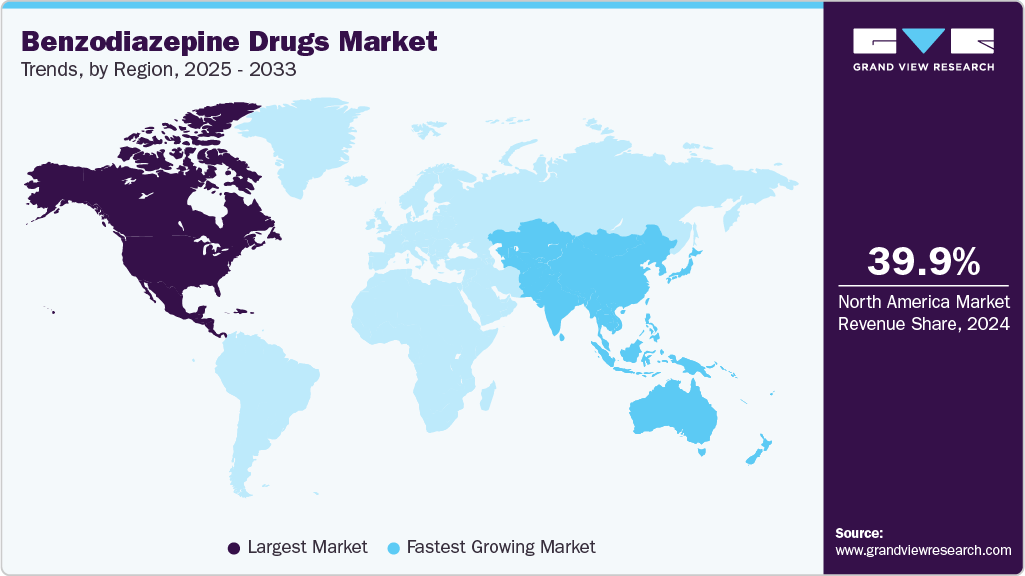
- North America benzodiazepine drugs market held the largest share of 39.87% of the global market in 2024.
- The benzodiazepine drugs market in the U.S. represents the largest market within North America.
- By application, the anxiety disorders segment held the highest market share of 42.96% in 2024.
- By product, the alprazolam segment held the highest market share of 30.98% in 2024.
- By distribution channel, the hospital pharmacies segment held the highest market share of 53.70% in 2024.
Market Size & Forecast
- 2024 Market Size: USD 2.83 Billion
- 2033 Projected Market Size: USD 3.85 Billion
- CAGR (2025-2033): 3.48%
- North America: Largest market in 2024
- Asia Pacific: Fastest growing market
Rising stress levels and mental health challenges associated with modern lifestyles have accelerated demand for fast-acting anxiolytic and hypnotic therapies. Growing geriatric demographics contribute significantly to market expansion, as elderly patients often experience sleep disturbances and anxiety symptoms. Benzodiazepines remain a preferred treatment option due to their rapid onset and established clinical efficacy. For instance, in February 2023, MDPI published a retrospective study that analyzed data from 7,836 patients with anxiety disorders who generated 42,842 prescriptions for benzodiazepine-receptor agonists over four years from 2018 to 2021. The study found that 63.1% of patients were women, 36.9% were men, and 73.6% were aged 25-64 years, highlighting the wide clinical use of benzodiazepines among adults. The growing adoption of short-acting formulations has further supported prescription volumes. Increasing diagnostic awareness and improved access to mental healthcare have expanded the treated patient pool. These factors collectively sustain steady demand across both hospital and retail pharmacy channels.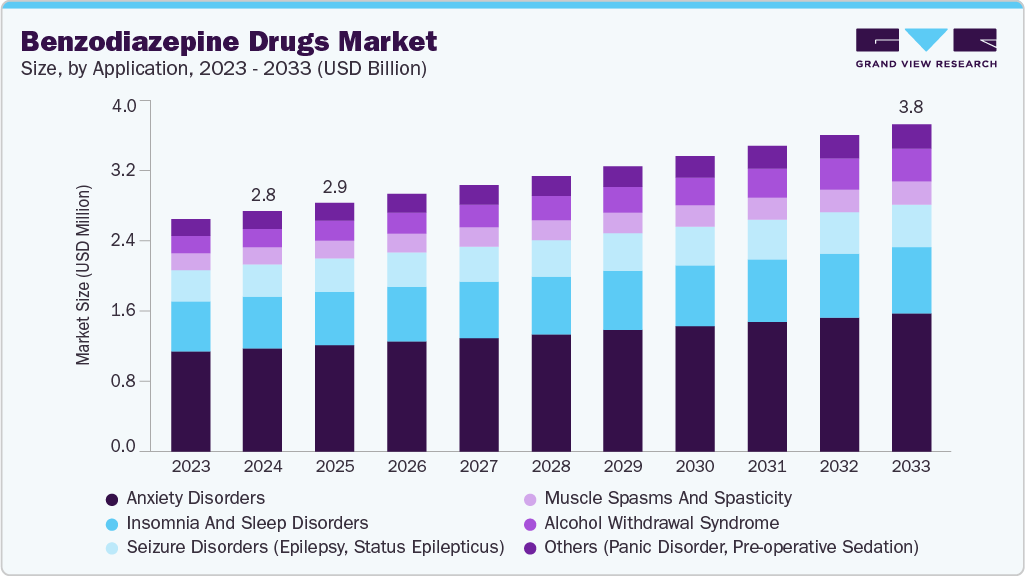
Expanding use of benzodiazepines in surgical and critical care settings enhances their clinical relevance and commercial adoption. They are frequently used for procedural sedation, preoperative anxiety management, and seizure emergencies, strengthening their role in hospital formularies. For instance, in January 2024, StatPearls (via NCBI Bookshelf) reported that benzodiazepines accounted for 1% to 2% of all emergency department visits in the U.S. annually, underlining their essential role in acute care management. The continuous development of improved dosage forms, including extended-release and combination products, has enhanced therapeutic compliance. Pharmaceutical companies are focusing on optimizing pharmacokinetic profiles to minimize dependency risks while maintaining therapeutic efficacy. The introduction of safer prescribing guidelines and controlled dispensing mechanisms has stabilized long-term utilization patterns. The growing emphasis on short-term prescriptions supports a balanced market environment with sustained patient reliance. Enhanced product differentiation through formulation advancements continues to drive physician preference and patient acceptance.
The increasing availability of generic benzodiazepines following patent expirations has significantly influenced market growth by improving affordability and accessibility. Major pharmaceutical players are investing in portfolio diversification to capture unmet needs in anxiety and sleep disorder management. Expanding distribution networks and online pharmacy penetration have facilitated easier patient access to therapies across developed and emerging regions. Rising healthcare expenditure and a higher rate of psychiatric consultations are further fueling market progression. Ongoing research on receptor-specific compounds aims to deliver targeted efficacy with reduced adverse events. The integration of benzodiazepines into combination regimens for psychiatric and neurological conditions reinforces their therapeutic significance.
Pipeline Analysis
The current clinical pipeline for benzodiazepine drugs reflects ongoing efforts to optimize their therapeutic use and safety profile across multiple neurological and psychiatric indications. According to data from ClinicalTrials.gov, several academic and hospital-led studies are evaluating both established and next-generation benzodiazepine formulations.
NCT Number
Sponsor
Phases
Start Date
Completion Date
NCT05935553
Hospices Civils de Lyon
PHASE2|PHASE3
12/1/2024
9/1/2027
NCT06757517
St. Olavs Hospital
PHASE2
3/1/2022
12/31/2025
NCT06004115
Laureate Institute for Brain Research, Inc.
PHASE4
11/8/2023
11/30/2027
Source: ClinicalTrials.gov
Pricing Analysis
The pricing landscape for benzodiazepine drugs varies significantly based on formulation type, dosage strength, brand status, and insurance coverage. Generic formulations remain widely accessible and substantially more affordable compared to branded versions, reflecting high market genericization and price competition across therapeutic classes such as anxiety, insomnia, and seizure management.
Product
Reported Price Range (USD)
Diazepam (generic tablets, e.g., 5 mg)
~USD 4.95 for 30 tablets (2 mg dose)
~USD 17 for 30 tablets of 5 mg without insurance
Diazepam (injectable, 5 mg/mL)
USD 164.38 for 20 mL injectable solution
Alprazolam (generic)
Starting at ~USD 0.21 per tablet for 30 of 0.25 mg dose
Retail price ~USD 103 for unspecified strength/trial without insurance
Alprazolam (brand, Xanax)
~USD 556 for 100 tablets of 0.25 mg brand Xanax.
Alprazolam ODT 0.25 mg
Discount prices start at ~USD 0.48 per tablet for 30 tablets
Market Concentration & Characteristics
Innovation within the industry remains moderate, primarily focused on formulation improvements and optimized delivery mechanisms rather than new molecule development. Most research efforts target reducing dependency potential and enhancing therapeutic duration. Advances in pharmacokinetics and receptor selectivity aim to achieve improved safety outcomes. Companies are developing modified-release and low-dose combinations to maintain clinical effectiveness. Digital health tools supporting prescription monitoring have further improved usage safety. Despite limited breakthrough innovation, steady formulation enhancement sustains market competitiveness. The overall innovation landscape prioritizes safety, compliance, and accessibility improvements.
The industry presents significant entry barriers due to stringent manufacturing standards and regulatory classification as controlled substances. High investment requirements in clinical validation and compliance with drug safety protocols deter smaller entrants. Established brand loyalty and physician familiarity with existing products create competitive challenges for new players. Complex licensing and controlled distribution networks further restrict market penetration. Intellectual property protections on formulations and delivery technologies strengthen incumbent positions. Ongoing scrutiny from healthcare authorities limits aggressive expansion strategies. These combined factors make market entry achievable only for well-capitalized and compliant pharmaceutical firms.
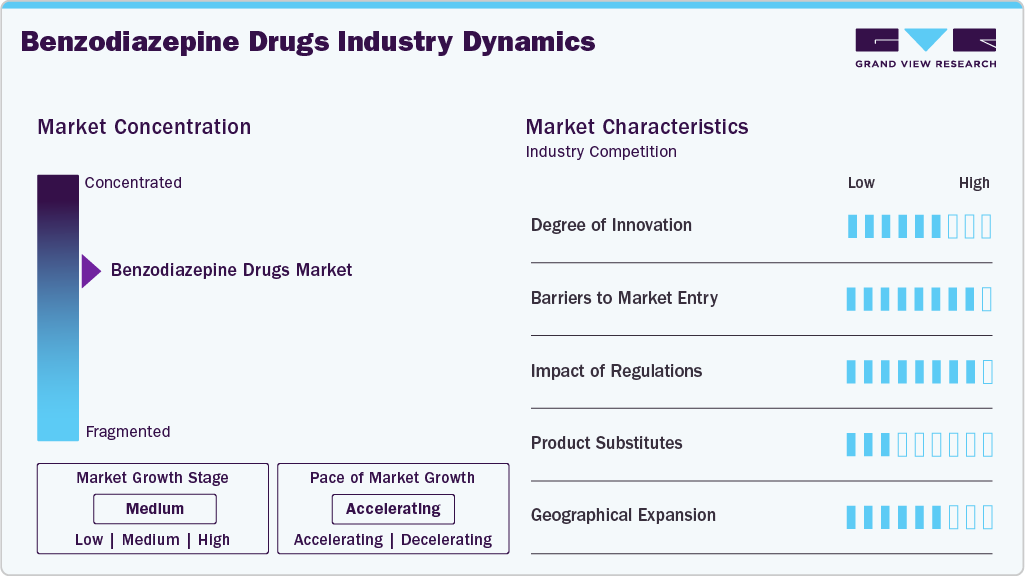
Regulations exert a defining influence on the industry, ensuring controlled prescribing and responsible use. National health authorities enforce strict scheduling and dispensing limits to prevent misuse and dependency. Compliance with pharmacovigilance and safety reporting requirements is mandatory for all market participants. Regular review of prescription trends maintains oversight of potential abuse patterns. Regulatory frameworks also govern marketing, labeling, and online sales to safeguard patient welfare. Variations in international regulatory standards impact cross-border product availability. The regulatory environment ensures balanced market growth with a strong emphasis on patient safety and ethical distribution.
Product substitution in the industry arises from growing adoption of non-benzodiazepine anxiolytics, antidepressants, and behavioral therapies. Selective serotonin reuptake inhibitors and non-sedative hypnotics are increasingly prescribed for chronic anxiety and insomnia. Cognitive behavioral therapy offers non-pharmacological management for anxiety-related conditions. Herbal and natural sleep aids have also gained popularity for mild symptoms. These alternatives limit long-term benzodiazepine dependence but retain complementary roles in severe cases. Pharmaceutical innovation in alternative CNS modulators continues to reshape treatment preferences. The availability of effective substitutes exerts moderate competitive pressure on traditional benzodiazepine sales.
Geographical expansion of the industry is driven by rising mental health awareness and broader treatment accessibility across regions. North America and Europe maintain dominant positions due to advanced healthcare systems and high prescription rates. Asia-Pacific shows strong growth potential supported by urbanization and expanding psychiatric care infrastructure. Latin America and the Middle East are emerging markets with increasing awareness of anxiety and sleep disorders. Multinational companies are strengthening distribution networks and local partnerships to enhance market penetration. Generic drug availability supports affordability in developing economies. Global expansion remains guided by regulatory alignment, economic capacity, and healthcare modernization trends.
Application Insights
The anxiety disorders segment dominated the market with the largest revenue share of 42.96% in 2024, driven by the rising global burden of generalized anxiety and panic disorders. Growing stress levels, sleep disturbances, and heightened mental health awareness have boosted diagnosis and treatment rates. For instance, in September 2025, the World Health Organization reported that anxiety disorders affected 359 million people globally in 2021, representing 4.4% of the world’s population, with only 27.6% receiving treatment. The report highlighted that women were more frequently affected, with symptoms often beginning in childhood or adolescence. The proven efficacy and rapid onset of benzodiazepines make them preferred for acute relief, while short-acting agents such as alprazolam and lorazepam support consistent prescription demand worldwide.
The alcohol withdrawal syndrome segment is projected to grow at the fastest CAGR of 6.71% over the forecast period, due to increasing alcohol dependency and growing awareness of effective withdrawal management. Benzodiazepines remain the primary therapeutic option for managing acute withdrawal symptoms and preventing seizures during detoxification. For instance, in August 2025, Healio reported that among approximately 3 million adult surgical patients, 0.5% (16,504) developed alcohol withdrawal syndrome (AWS) and 0.2% (6,591) progressed to delirium tremens (DT). Patients with AWS had a median hospital stay of 11 days compared with 6 days for non-AWS patients and incurred average hospitalization costs of USD 44,300 versus USD 28,800, reflecting an adjusted excess cost of USD 10,030 per patient. Expanding use of diazepam and chlordiazepoxide in hospitals and rehabilitation centers supports structured detoxification approaches. Continuous refinement of dosing protocols and growing clinical emphasis on safe withdrawal practices continue to strengthen segment growth.
Product Insights
The alprazolam segment dominated the market with the largest revenue share of 30.98% in 2024, driven by its high prescription volume and broad clinical acceptance for anxiety and panic disorders. Rapid onset of action and proven efficacy drove strong physician and patient preference. Availability in multiple formulations, including extended-release and orally disintegrating tablets, enhanced treatment flexibility and adherence. For instance, in April 2023, StatPearls (via NCBI Bookshelf) reported that alprazolam had a mean plasma half-life of 11.2 hours in healthy adults, with 80-100% bioavailability and 80% protein binding, primarily to albumin. The report also highlighted dosage strengths of 0.25 mg-2 mg for immediate-release and 0.5 mg-3 mg for extended-release forms, with adult dosing for anxiety ranging from 0.25-0.5 mg three times daily and panic disorder doses up to 10 mg/day. Widespread use in both outpatient and primary care settings maintained consistent market demand, while cost-effective generics and strong pharmacy distribution networks continued to reinforce segment leadership.
The diazepam segment is projected to grow at the fastest CAGR of 5.33% over the forecast period, owing to its extensive clinical applications across anxiety, muscle spasms, and seizure management. Long duration of action and versatile dosing make it a preferred option in hospitals and critical care. Increasing use in procedural sedation and alcohol withdrawal treatment has broadened its therapeutic scope. For instance, in April 2025, PR Newswire reported that VALTOCO (diazepam nasal spray) was approved by the U.S. Food and Drug Administration (FDA) for short-term treatment of seizure clusters in children aged 2 years and older, extending the indication from 6 years and older. This intranasal, non-invasive formulation utilizing INTRAVAIL technology with orphan drug exclusivity demonstrates diazepam’s expanding clinical utility. The rising prevalence of neurological and musculoskeletal conditions enhances the need for diazepam-based therapies. Availability of multiple branded and generic products ensures wide patient coverage and competitive pricing, while sustained physician confidence and established clinical guidelines further reinforce its growth potential.
Distribution Channel Insights
The hospital pharmacies segment dominated the market with the largest revenue share of 53.70% in 2024, which can be attributed to the extensive use of benzodiazepines in inpatient and surgical care. High adoption of injectable and controlled formulations for anesthesia, sedation, and seizure control supports strong sales. Hospitals maintain strict inventory systems, ensuring reliable supply and patient safety compliance. Increasing hospitalization rates and emergency admissions continue to elevate inpatient benzodiazepine usage. Clinical dependence on rapid-acting formulations drives consistent procurement by hospital pharmacies. Availability of specialized storage and controlled substance handling capabilities enhances operational efficiency. Integration with electronic prescription systems further streamlines distribution and monitoring processes.
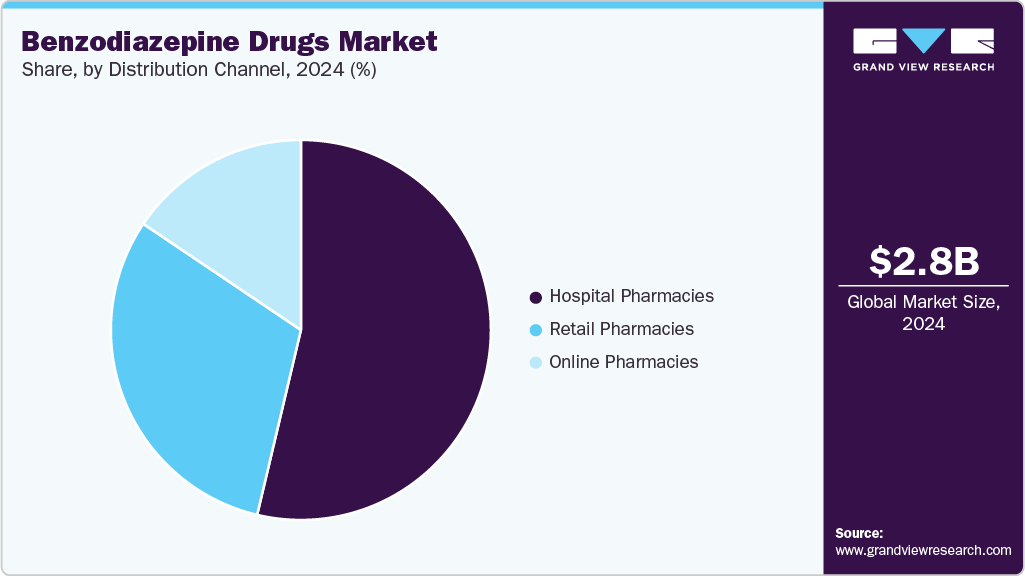
The online pharmacies segment is projected to grow at a fastest CAGR of 5.56% over the forecast period, driven by expanding preference for digital health platforms and remote prescription services. Rising patient convenience and access to medication refills through verified e-pharmacies have accelerated adoption. Growing awareness of mental health treatment has increased online consultation demand, supporting digital distribution. Competitive pricing and doorstep delivery encourage patient retention and medication adherence. Expansion of secure e-commerce frameworks enhances controlled-substance tracking and verification. Widening internet penetration and smartphone use facilitate access to prescription medications globally. Partnerships between pharmaceutical manufacturers and digital pharmacy networks strengthen long-term market visibility.
Regional Insights
North America benzodiazepine drugs market held the largest share in 2024, accounting for 39.87% of global revenue, driven by high mental health awareness and established clinical guidelines for anxiety and sleep disorders. The region’s advanced healthcare infrastructure ensures widespread access to prescription treatments. Rising cases of insomnia and panic disorders among adults continue to strengthen therapeutic demand. Strong manufacturing and distribution networks guarantee reliable product availability. Clinical preference for short-acting benzodiazepines supports steady prescription activity. High diagnostic rates and insurance coverage keep the region at the forefront of global market revenue.
U.S. Benzodiazepine Drugs Market Trends
The benzodiazepine drugs market in the U.S. represents the largest market within North America, due to its broad clinical adoption across psychiatric, emergency, and surgical care settings. The increasing prevalence of stress-induced conditions and chronic insomnia sustains strong prescription volumes. Established digital health and e-prescribing platforms enhance accessibility for patients under monitored care. Greater focus on short-term therapy maintains physician reliance on benzodiazepines for rapid symptom control. Competitive availability of generics ensures affordability and consistent supply across hospitals and retail chains. The presence of major pharmaceutical players and distributors secures stable market performance.
Europe Benzodiazepine Drugs Market Trends
The benzodiazepine drugs market in Europe holds a significant share, supported by mature healthcare systems and consistent psychiatric service availability. Rising anxiety and sleep disorder prevalence among elderly populations contribute to continuous demand. Physician familiarity with established therapies underpins prescription stability across major European markets. Enhanced clinical oversight ensures responsible prescribing without limiting therapeutic access. Broader diagnostic infrastructure across Western and Central Europe sustains treatment utilization. Expanding access to outpatient mental health care maintains steady market progression.
The UK benzodiazepine drugs market shows stable demand driven by growing recognition of anxiety and panic disorders within public and private healthcare settings. Rising mental health consultations have encouraged structured short-term benzodiazepine therapy. Expanding telehealth access enables prescription renewals and monitoring for eligible patients. Hospitals maintain consistent procurement for anesthesia and procedural sedation applications. The adoption of gradual tapering strategies supports ongoing responsible clinical use. Efficient supply chains across hospital and retail pharmacies ensure continued product availability.
The benzodiazepine drugs market in Germany maintains a solid position with high prescription rates across hospital and outpatient care. Strong healthcare infrastructure supports accurate diagnosis and safe administration of controlled drugs. Widespread use in neurological and musculoskeletal conditions sustains ongoing consumption. Preference for long-acting formulations in rehabilitation settings contributes to consistent demand. Growing elderly populations with anxiety and sleep issues drive further therapeutic utilization. Collaboration between healthcare providers and local manufacturers enhances market efficiency.
France benzodiazepine drugs market demonstrates consistent growth underpinned by comprehensive access to mental health services and established prescribing frameworks. Increasing cases of anxiety and insomnia among working professionals contribute to market expansion. Hospitals depend on injectable formulations for acute seizure and sedation management. Availability of both branded and generic versions promotes affordability and patient adherence. Continuous medical education reinforces safe and evidence-based prescribing. Efficient pharmaceutical distribution ensures uninterrupted drug availability across the country.
Asia Pacific Benzodiazepine Drugs Market Trends
The benzodiazepine drugs market in Asia Pacific is expected to register the fastest CAGR of 4.69% over the forecast period, fueled by improving healthcare access and growing mental health awareness. Urbanization and lifestyle stress have intensified the prevalence of anxiety and insomnia disorders. Expanding hospital infrastructure enhances the reach of prescription-based treatments. Rising affordability of generics drives wider therapy adoption across developing nations. Increasing diagnostic activity through mental health initiatives supports growth in prescription volumes. Strong distribution and manufacturing expansion across regional markets secure long-term potential.
Japan benzodiazepine drugs market records steady growth, led by high mental health awareness and a strong focus on elderly care. Physicians widely prescribe both short-acting and long-acting benzodiazepines for controlled symptom management. Hospitals retain significant usage for surgical sedation and seizure emergencies. Rising workplace stress and changing lifestyles contribute to prescription growth. Introduction of convenient dosage forms improves adherence and patient satisfaction. The country’s sophisticated healthcare infrastructure ensures a stable supply and monitored consumption.
The benzodiazepine drugs market in China shows robust growth with rising diagnosis rates for anxiety and sleep disorders among urban populations. Expansion of psychiatric services and outpatient clinics has boosted treatment adoption. Affordable generic formulations support widespread accessibility across both rural and metropolitan regions. Young adults increasingly seek pharmacologic intervention for stress-related conditions, enhancing demand. Expanding hospital capacity and improved supply chains facilitate strong product distribution. Domestic manufacturing advancements ensure reliable and scalable production.
Latin America Benzodiazepine Drugs Market Trends
The benzodiazepine drugs market in Latin America exhibits positive growth momentum driven by increasing anxiety and substance withdrawal cases. Broader access to mental health consultations has supported rising prescription volumes. Expanding availability of low-cost generics enhances treatment reach in middle-income populations. Hospitals maintain demand for injectable formulations in acute care settings. Mexico, Argentina, and Brazil contribute major revenue due to expanding urban patient bases. Ongoing improvements in healthcare infrastructure sustain overall market development.
Brazil leads the Latin American market with widespread therapeutic usage for anxiety, insomnia, and withdrawal management. Growth in private healthcare facilities supports rising prescription volumes. Competitive pricing among local generic manufacturers improves accessibility. Hospitals rely on injectable products for preoperative and emergency sedation applications. Rapid urbanization has increased the diagnosis of stress-related mental conditions. Enhanced domestic production capacity ensures a reliable supply and market stability.
Middle East & Africa Benzodiazepine Drugs Market Trends
The benzodiazepine drugs market in the Middle East & Africa shows moderate expansion with gradual improvement in psychiatric service delivery. Rising recognition of anxiety and sleep disorders in urban centers has increased therapeutic adoption. Expansion of pharmaceutical distribution channels improves regional product availability. Hospitals demonstrate growing utilization of injectable benzodiazepines for procedural care. Collaboration between international suppliers and local distributors supports consistent inventory flow. Increasing healthcare investments across Gulf countries sustain steady market progress.
Saudi Arabia benzodiazepine drugs market continues to expand due to a rising prevalence of anxiety and sleep disorders in younger demographics. Growth in private hospital capacity enhances access to psychiatric care and prescription drugs. High demand for oral and injectable formulations supports hospital and retail pharmacy sales. Increasing clinical attention toward short-duration therapies drives consistent prescribing. Efficient distribution and digital health integration improve access across regions. Continuous expansion of specialized healthcare services underpins long-term market advancement.
Key Benzodiazepine Drugs Company Insights
Key players operating in the benzodiazepine drugs market are undertaking various initiatives to strengthen their presence and increase the reach of their products and services. Strategies such as expansion activities and partnerships are key in propelling the market growth.
Key Benzodiazepine Drugs Companies:
The following are the leading companies in the benzodiazepine drugs market. These companies collectively hold the largest market share and dictate industry trends.
- AbbVie Inc.
- Amneal Pharmaceuticals LLC.
- Bausch Health Companies Inc.
- Boehringer Ingelheim International GmbH
- F. Hoffmann-La Roche Ltd.
- GlaxoSmithKline Plc.
- Hikma Pharmaceuticals PLC
- Mylan N.V.
- Novartis AG
- Pfizer Inc.
- Sanofi
- Teva Pharmaceutical Industries Ltd.
Recent Developments
-
In May 2024, Purdue Pharma L.P. announced an agreement with MMCAP Infuse to supply about 1.25 million buprenorphine/naloxone tablets to correctional facilities at USD 0.01 per tablet (totaling USD 12,500). The initiative addressed substance use disorder affecting 65 percent of inmates and the 40-times higher post-release overdose death risk.
-
In May 2024, Hikma Pharmaceuticals PLC announced the launch of Midazolam Injection, USP in the U.S. in 2 mg/2 mL and 10 mg/2 mL prefilled syringes. The company reported that U.S. sales for these formulations totaled approximately USD 20 million in the 12 months ending February 2024. Hikma ranked among the top three suppliers of generic injectable medicines by volume in the U.S., supported by a portfolio exceeding 150 injectable products.
-
In September 2023, Pharmanovia announced the acquisition of 11 CNS brands from Sanofi, including Frisium (clobazam) and Gardenal (phenobarbital). The portfolio spanned four therapeutic areas—psycholeptics, anxiolytics, anticonvulsants, and antipsychotics. The deal expanded Pharmanovia’s reach to over 60 countries, strengthening its neurology portfolio and reinforcing its commitment to lifecycle management and patient access worldwide.
Benzodiazepine Drugs Market Report Scope
Report Attribute
Details
Market size value in 2025
USD 2.92 billion
Revenue forecast in 2033
USD 3.85 billion
Growth rate
CAGR of 3.48% from 2025 to 2033
Base year for estimation
2024
Historical data
2021 - 2023
Forecast period
2025 - 2033
Quantitative units
Revenue in USD million/billion and CAGR from 2025 to 2033
Report coverage
Revenue forecast, company ranking, competitive landscape, growth factors, trends
Segments covered
Application, product, distribution channel, region
Regional scope
North America; Europe; Asia Pacific; Latin America; Middle East & Africa
Country scope
U.S.; Canada; Mexico; UK; Germany; France; Italy; Spain; Denmark; Sweden; Norway; China; Japan; India; Australia; South Korea; Thailand; Brazil; Argentina; South Africa; Saudi Arabia; UAE; Kuwait
Key company profiled
AbbVie Inc.; Amneal Pharmaceuticals LLC.; Bausch Health Companies Inc.; Boehringer Ingelheim International GmbH; F. Hoffmann-La Roche Ltd.; GlaxoSmithKline Plc.; Hikma Pharmaceuticals PLC; Mylan N.V.; Novartis AG; Pfizer Inc.; Sanofi; Teva Pharmaceutical Industries Ltd.
Customization scope
Free report customization (equivalent up to 8 analysts working days) with purchase. Addition or alteration to country, regional & segment scope.
Pricing and purchase options
Avail customized purchase options to meet your exact research needs. Explore purchase options
Global Benzodiazepine Drugs Market Report Segmentation
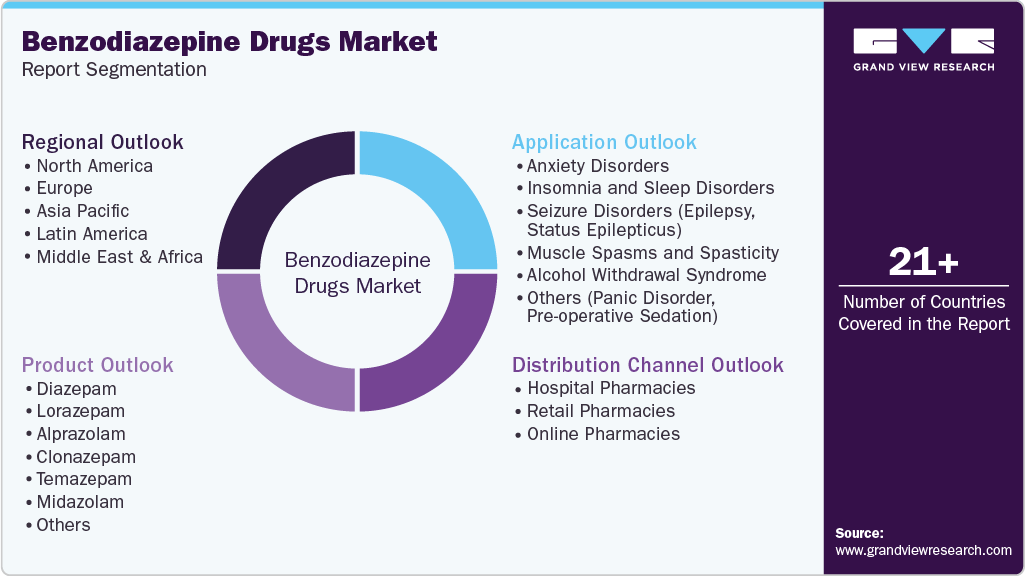
This report forecasts revenue growth at global, regional, and country levels and provides an analysis of the latest industry trends in each of the sub-segments from 2021 to 2033. For this study, Grand View Research has segmented the global benzodiazepine drugs market report based on application, product, distribution channel, and region:
-
Application Outlook (Revenue, USD Million, 2021 - 2033)
-
Anxiety Disorders
-
Insomnia and Sleep Disorders
-
Seizure Disorders (Epilepsy, Status Epilepticus)
-
Muscle Spasms and Spasticity
-
Alcohol Withdrawal Syndrome
-
Others (Panic Disorder, Pre-operative Sedation)
-
-
Product Outlook (Revenue, USD Million, 2021 - 2033)
-
Diazepam
-
Lorazepam
-
Alprazolam
-
Clonazepam
-
Temazepam
-
Midazolam
-
Others (Oxazepam, Triazolam, Chlordiazepoxide, Clobazam, Estazolam, Flurazepam)
-
-
Distribution Channel Outlook (Revenue, USD Million, 2021 - 2033)
-
Hospital Pharmacies
-
Retail Pharmacies
-
Online Pharmacies
-
-
Regional Outlook (Revenue, USD Million, 2021 - 2033)
-
North America
-
U.S.
-
Canada
-
Mexico
-
-
Europe
-
UK
-
Germany
-
France
-
Italy
-
Spain
-
Denmark
-
Sweden
-
Norway
-
-
Asia Pacific
-
Japan
-
China
-
India
-
Australia
-
South Korea
-
Thailand
-
-
Latin America
-
Brazil
-
Argentina
-
-
Middle East & Africa
-
South Africa
-
Saudi Arabia
-
UAE
-
Kuwait
-
-


Share this report with your colleague or friend.
Need a Tailored Report?
Customize this report to your needs — add regions, segments, or data points, with 20% free customization.


ISO 9001:2015 & 27001:2022 Certified
We are GDPR and CCPA compliant! Your transaction & personal information is safe and secure. For more details, please read our privacy policy.
Trusted market insights - try a free sample
See how our reports are structured and why industry leaders rely on Grand View Research. Get a free sample or ask us to tailor this report to your needs.













