
- Home
- »
- Medical Devices
- »
-
Biopsy Gun Market Size, Share & Growth Report, 2026-2033GVR Report cover
![Biopsy Gun Market (2026 - 2033)Report]()
Biopsy Gun Market (2026 - 2033)
Size, Share & Trends Analysis Report By Product (Reusable, Disposable), By Mechanism (Automatic-fire Mode, Semi-Automatic), By Application (Breast, Prostate, Liver), By Guidance Technique, By End Use, By Region, And Segment Forecasts
Market Size, 2025
$1.2BMarket Estimate, 2026
$1.3BMarket Forecast, 2033
$2.4BCAGR, 2026–2033
9.5%Biopsy Gun Market Summary
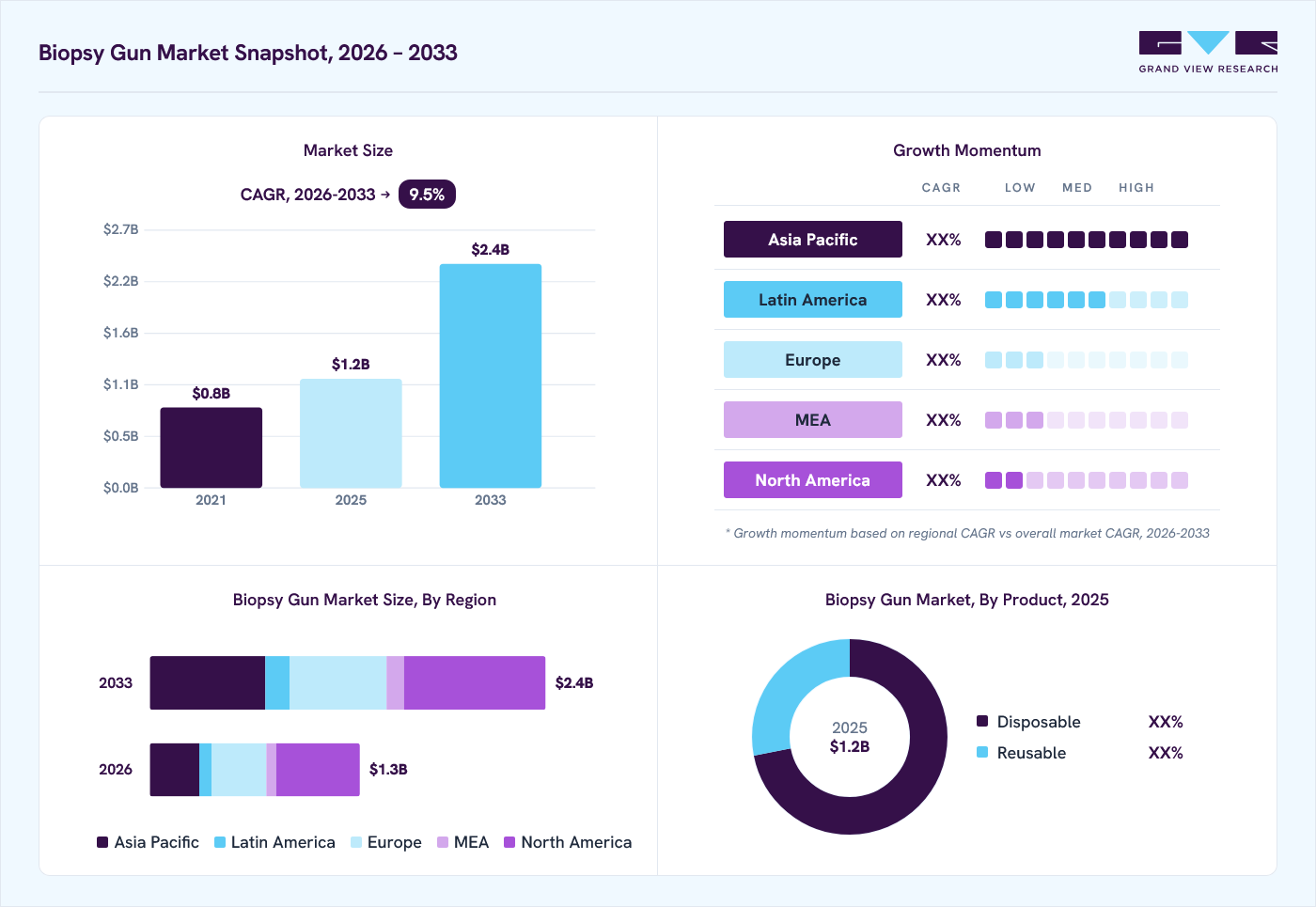
The global biopsy gun market size was valued at USD 1.2 billion in 2025 and is projected to grow from USD 1.3 billion in 2026 to USD 2.4 billion by 2033, at a CAGR of 9.5% from 2026 to 2033. The market in North America dominated with a revenue share of 40.5% in 2025. The market is driven by the rising incidence of cancer and other conditions requiring tissue diagnosis, increasing the need for accurate and minimally invasive biopsy procedures.
Key Market Trends & Insights
- By product: Disposable segment held the largest market share of 71.9% in 2025.
- By mechanism: Automatic-fire mode segment held the largest market share of 59.8% in 2025.
- By application: Breast segment held the largest market share of 30.7% in 2025.
- By guidance technique: Ultrasound segment held the largest market share of 54.3% in 2025.
- By end use: Hospitals segment held the largest market share of 50.4% in 2025.
Regional Highlights
- Largest regional market: North America (40.5% revenue share, 2025)
- By country: The U.S. held the largest market share in 2025
Market Size & Forecast
- Market size in 2025: USD 1.2 Billion
- Estimated market size in 2026: USD 1.3 Billion
- Projected market size by 2033: USD 2.4 Billion
- CAGR (2026-2033): 9.5%
Three ways to get this report
Buy it, customize it, or ask a question.Ask an Analyst
A direct answer, usually in 1 working day
- AccessReport author, directly
- Reply timeWithin 1 working day
- No sales callDirect answer only
- FormatEmail reply
- CostFree, no cost
Get the Full Report
What the study covers
- FormatsPDF · Excel · Dashboard
- Timeline2026–2033 annual, 2025 base
- Coverage20+ countries, 5 regions
- Companies10+ key players profiled
Customize the Report
20% free customization
- IncludeCountries, segments, points
- TailorTo your product definition
- ExtendDeeper competitor detail
- OrA fully bespoke study
- Turnaround5–10 working days
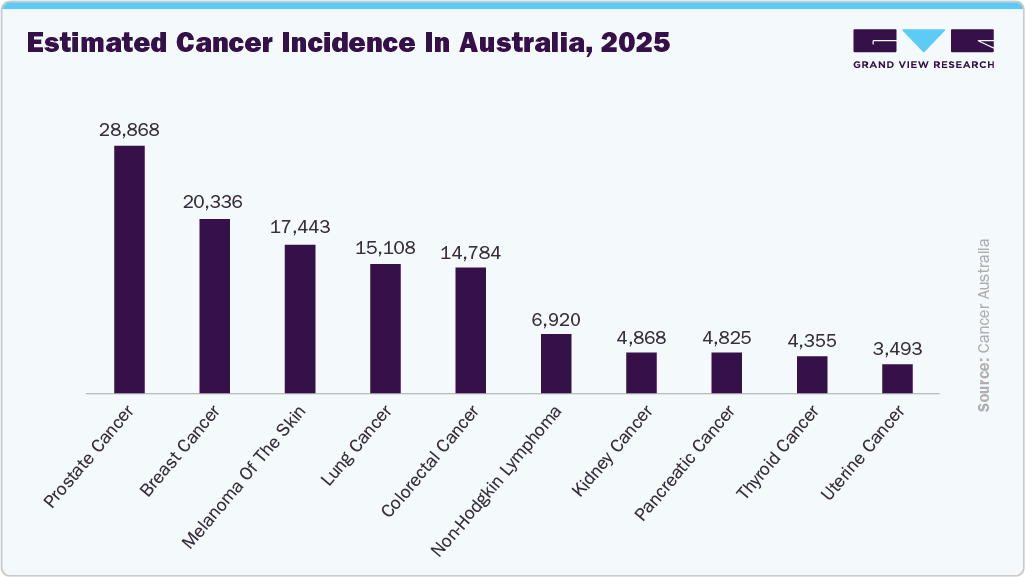
Growing adoption of image-guided biopsies, along with advances in automated biopsy guns that improve sampling precision, speed, and ease of use, is further supporting market growth. The rising incidence of cancer is driving demand for biopsy gun devices by increasing the need for timely and accurate tissue sampling for diagnosis and treatment planning. The growing number of patients with breast, prostate, liver, lung, and other cancers is contributing to higher volumes of biopsy procedures. As healthcare providers increasingly emphasize early cancer detection, the use of automated biopsy guns for obtaining adequate core tissue samples is expected to expand.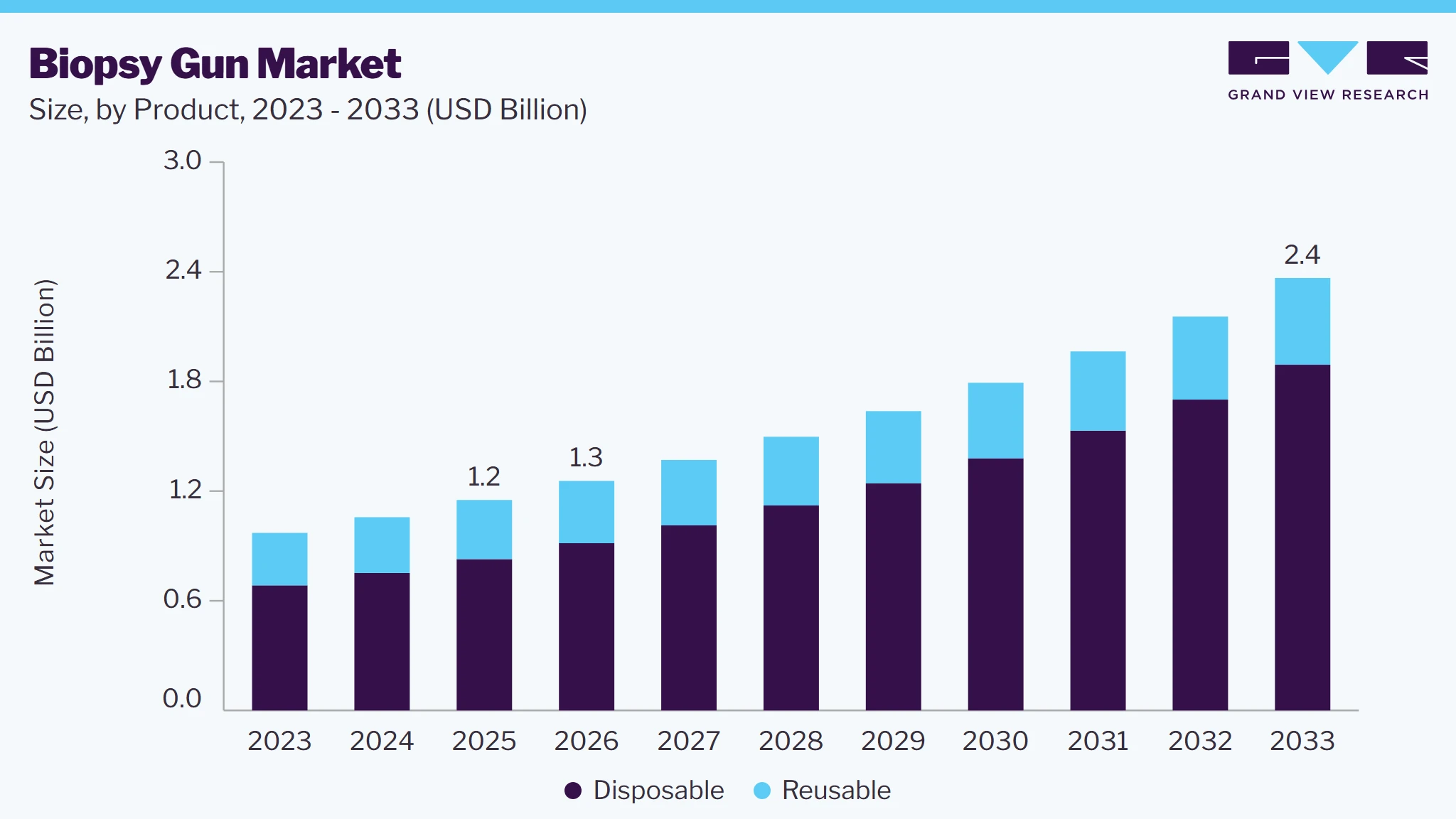
The increasing adoption of minimally invasive procedures is driving the biopsy gun market as healthcare providers seek diagnostic techniques that reduce tissue trauma, procedural discomfort, and recovery time. Biopsy guns enable the controlled collection of core tissue samples through small needle punctures, making them suitable for a wide range of image-guided procedures. The growing preference for less invasive alternatives to surgical biopsy is therefore supporting the use of automated biopsy devices across hospitals and diagnostic centers.
-
In October 2025, the Times of India reported that Mahavir Cancer Sansthan became the first medical institution in Bihar to introduce vacuum-assisted breast biopsy, a minimally invasive technology for early breast cancer detection. The procedure, performed under local anesthesia in just 30-35 minutes on a day-care basis, enables accurate diagnosis of small breast lesions and removal of benign tumors up to 3-5 cm without open surgery, reflecting the growing global preference for minimally invasive breast biopsy procedures.
-
In October 2025, the University of Chicago Medical Center launched the “BIOPSY NOW” initiative to provide same-day minimally invasive breast and lymph node biopsy procedures for patients with highly suspicious mammogram and ultrasound findings. The program reduced diagnostic timelines from nearly three weeks to less than one week by using image-guided biopsy procedures and streamlined care pathways, highlighting the growing adoption of minimally invasive breast biopsy technologies to improve early cancer diagnosis, patient convenience, and treatment planning.
Furthermore, advancements in automated biopsy guns are driving the biopsy gun industry by improving the speed, precision, and consistency of tissue sample collection. Features such as automated firing mechanisms, adjustable needle penetration, improved needle design, and enhanced tissue-core retrieval can support more controlled biopsy procedures. These technological improvements are encouraging healthcare providers to adopt newer biopsy guns and replace conventional devices, supporting market growth. For instance, the ASTER biopsy gun uses a two-stage firing mechanism and adjustable penetration depths, designed to provide consistent sampling and controlled needle advancement.
Market Dynamics
The biopsy gun market is shaped by the growing need for minimally invasive and reliable tissue-sampling procedures for cancer diagnosis and other clinical conditions. The increasing use of image-guided biopsies, advances in automated and semi-automated biopsy devices, and the demand for improved sample quality are supporting market growth. Factors such as device cost, regulatory requirements, healthcare infrastructure, and physician preference influence adoption across hospitals, diagnostic centers, and specialty clinics.
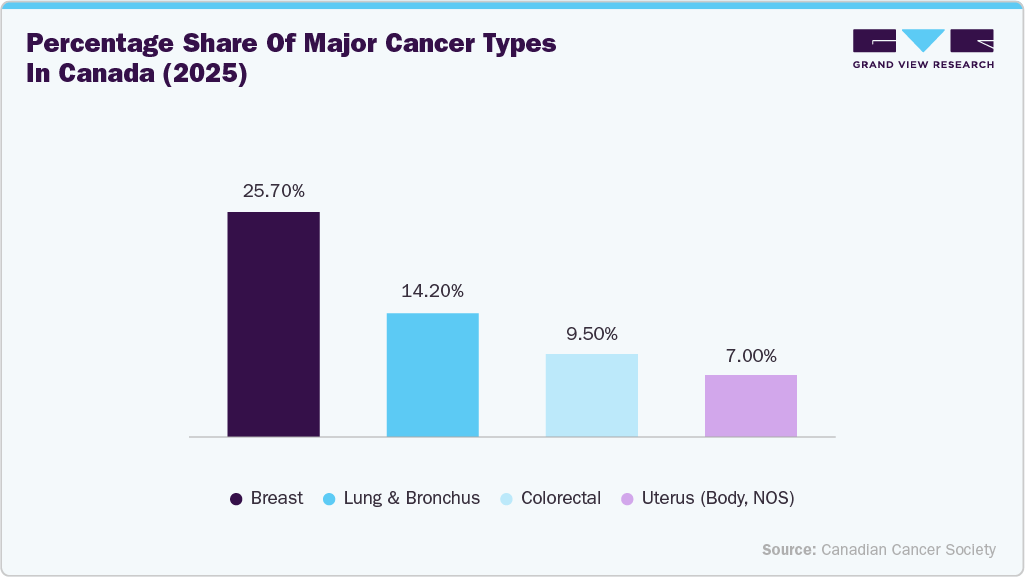
The rising incidence of cancer is driving the biopsy gun industry by increasing the need for tissue sampling to confirm suspected malignancies and guide treatment decisions. In 2024, an estimated 20.6 million new cancer cases were reported globally, with incidence projected to reach 34.4 million cases by 2050. As pathological confirmation is an important part of cancer diagnosis, the growing patient pool is expected to increase demand for core needle biopsy procedures and biopsy gun devices.
High device and procedure costs can restrain the breast biopsy gun market, particularly in cost-sensitive healthcare systems where hospitals and diagnostic centers have limited capital budgets. Breast biopsy procedures may require not only the biopsy device and disposable needles but also imaging equipment, trained personnel, and supporting infrastructure, increasing the overall cost of diagnosis. For instance, NICE reports that image-guided breast biopsy systems can require dedicated consoles and disposable components costing hundreds of pounds per procedure. These cost considerations can encourage healthcare providers to favor lower-cost biopsy methods or defer investment in advanced biopsy technologies, particularly in emerging markets.
Increasing demand for high-quality tissue samples is creating an opportunity for the breast biopsy gun companies, as accurate diagnosis often requires sufficient tissue for histopathological assessment and additional testing. Core needle biopsy provides larger tissue samples than fine-needle aspiration and can preserve tissue architecture, supporting the differentiation of benign, in-situ, and invasive breast lesions. This creates opportunities for manufacturers to develop biopsy guns with improved tissue-core retrieval, consistent sample size, and greater sampling precision.
Market Concentration & Characteristics
The degree of innovation in the biopsy gun market is moderate to high, driven by improvements in needle design, firing mechanisms, sample quality, and device ergonomics. Manufacturers are developing biopsy guns with enhanced precision, reduced tissue trauma, improved spring-loaded or semi-automatic mechanisms, and compatibility with image-guided procedures. Innovation is also advancing toward disposable, user-friendly systems that improve procedural efficiency and reduce the risk of cross-contamination.
The level of mergers and acquisitions (M&A) is relatively moderate, as the market comprises established medical-device companies alongside specialized biopsy-device manufacturers. M&A activity primarily targets expanding minimally invasive diagnostic portfolios, strengthening access to healthcare providers, and adding complementary biopsy technologies. Larger medical-device companies pursue acquisitions of specialized firms to accelerate product development and broaden geographic reach. Strategic acquisitions are more prominent than large-scale consolidation, allowing market participants to expand capabilities while maintaining specialized product offerings.
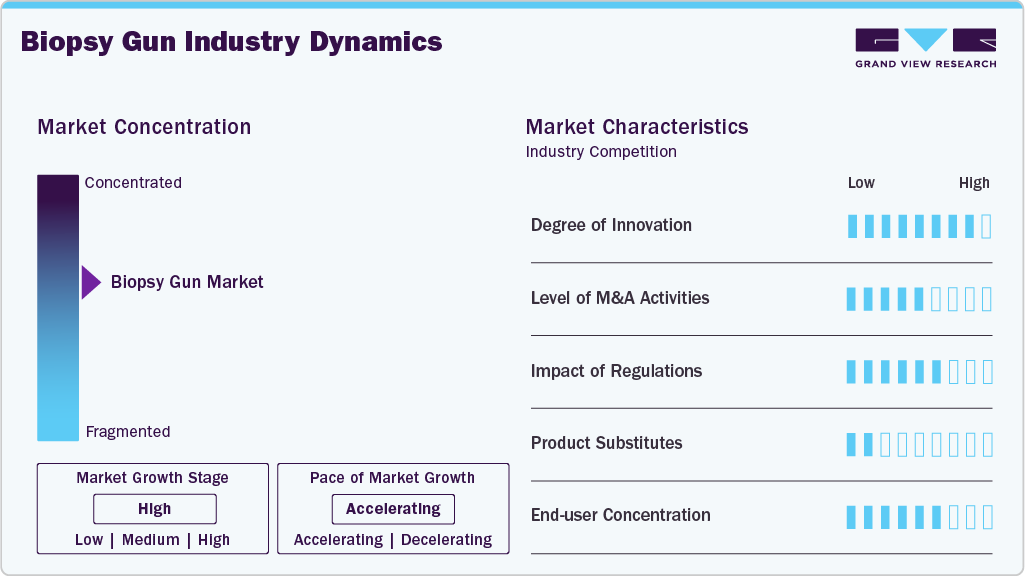
The impact of regulations on the biopsy gun market is significant, as manufacturers must comply with regulatory requirements related to device safety, performance, quality systems, labeling, and manufacturing practices. In the U.S., several biopsy instruments are classified as Class II medical devices, subjecting them to applicable regulatory controls and, where required, premarket notification requirements. These requirements can increase product development, testing, and compliance costs, while also supporting product safety, quality, and healthcare-provider confidence.
The industry has relatively high end-use concentration, with hospitals and diagnostic centers accounting for a major share of demand due to the availability of specialized imaging, pathology, and trained healthcare professionals. Hospitals are particularly important end users because biopsy procedures are routinely performed across oncology, breast, prostate, and other diagnostic applications. Specialized clinics and ambulatory care facilities also contribute to demand, particularly where minimally invasive diagnostic procedures are increasingly performed outside hospital settings.
Analyst Perspective
The biopsy gun market is expected to expand as demand for minimally invasive tissue sampling and early disease diagnosis increases globally. Technological improvements in automatic and semi-automatic devices, needle design, and image-guided biopsy procedures are supporting product adoption. Hospitals remain the primary end users, while growing diagnostic and imaging infrastructure is creating additional opportunities for market expansion.
Product Insights
The disposable segment dominated the biopsy gun market in 2025 and is also expected to grow the fastest over the forecast period, driven by its ability to reduce cross-contamination and infection risks associated with repeated use. Growing preference among healthcare providers for sterile, single-use devices also supports streamlined biopsy procedures and eliminates the need for reprocessing and sterilization. Increasing biopsy volumes across hospitals and diagnostic centers further contribute to the segment’s leading position.
The reusable segment is expected to grow significantly, supported by demand for cost-efficient devices in healthcare facilities with high procedure volumes. Reusable biopsy guns can reduce per-procedure equipment costs when properly reprocessed and maintained, making them attractive to hospitals seeking to optimize medical device spending. Their durable construction and suitability for repeated procedures also support adoption where established sterilization and infection-control infrastructure is available.
Mechanism Insights
The automatic-fire mode segment dominated the market in 2025 and is expected to witness significant growth during the forecast period, driven by its ability to deliver rapid, consistent tissue sampling with minimal manual intervention. Automatic firing mechanisms support greater procedural efficiency and help physicians obtain standardized core samples during image-guided biopsies. Their ease of operation and increasing adoption in hospitals and diagnostic centers further supported the segment’s leading position.
The semi-automatic segment is expected to grow robustly, fueled by its balance between controlled needle positioning and rapid tissue sampling. These devices allow clinicians to manually position and advance the needle while using a spring-loaded firing mechanism for consistent specimen collection. Their flexibility, ease of handling, and suitability for ultrasound- and other image-guided procedures are supporting wider adoption across healthcare facilities.
Application Insights
The breast segment led the industry in 2025, supported by the continued need for tissue sampling to evaluate suspicious breast lesions and abnormalities detected through screening and diagnostic imaging. Growing breast cancer screening and diagnostic activity has increased the volume of breast biopsy procedures, boosting the demand for biopsy guns. The use of biopsy guns with ultrasound and stereotactic guidance further strengthens their adoption in breast diagnostics.
The lung segment is expected to witness considerable growth during the forecast period, driven by the increasing demand for tissue sampling to diagnose and characterize pulmonary lesions and suspected lung cancer. Rising use of image-guided biopsy procedures, particularly CT-guided techniques, is increasing the need for precise and reliable biopsy devices. Growing emphasis on early and accurate diagnosis of lung abnormalities is expected to further support segment expansion.
Guidance Technique Insights
The ultrasound guidance technique segment spearheaded the industry in 2025, spurred by the widespread use of ultrasound guidance for real-time lesion visualization and needle positioning during biopsy procedures. Ultrasound-guided biopsy offers advantages such as the absence of ionizing radiation, portability, and relatively low procedural costs, making it suitable for hospitals and diagnostic centers. Increasing use in breast, thyroid, liver, and soft-tissue biopsies further contributed to the segment’s leading position.
The CT guidance technique segment is expected to exhibit notable growth during the forecast period, driven by the increasing use of CT guidance for sampling lesions located deep within the body or in anatomically complex areas. CT provides detailed cross-sectional imaging that enables precise target localization and accurate needle placement. Growing demand for minimally invasive diagnosis of lung, liver, bone, and other internal lesions is expected to support the adoption of CT-guided biopsy guns.
End Use Insights
The hospitals segment dominated with 50.4% revenue share in 2025, driven by the high volume of diagnostic and image-guided biopsy procedures performed in hospital settings. Hospitals have access to advanced imaging technologies, specialized healthcare professionals, and comprehensive surgical and pathology facilities, supporting the adoption of biopsy guns. The growing burden of cancer and other conditions requiring tissue diagnosis has further increased the demand for biopsy procedures in hospitals.
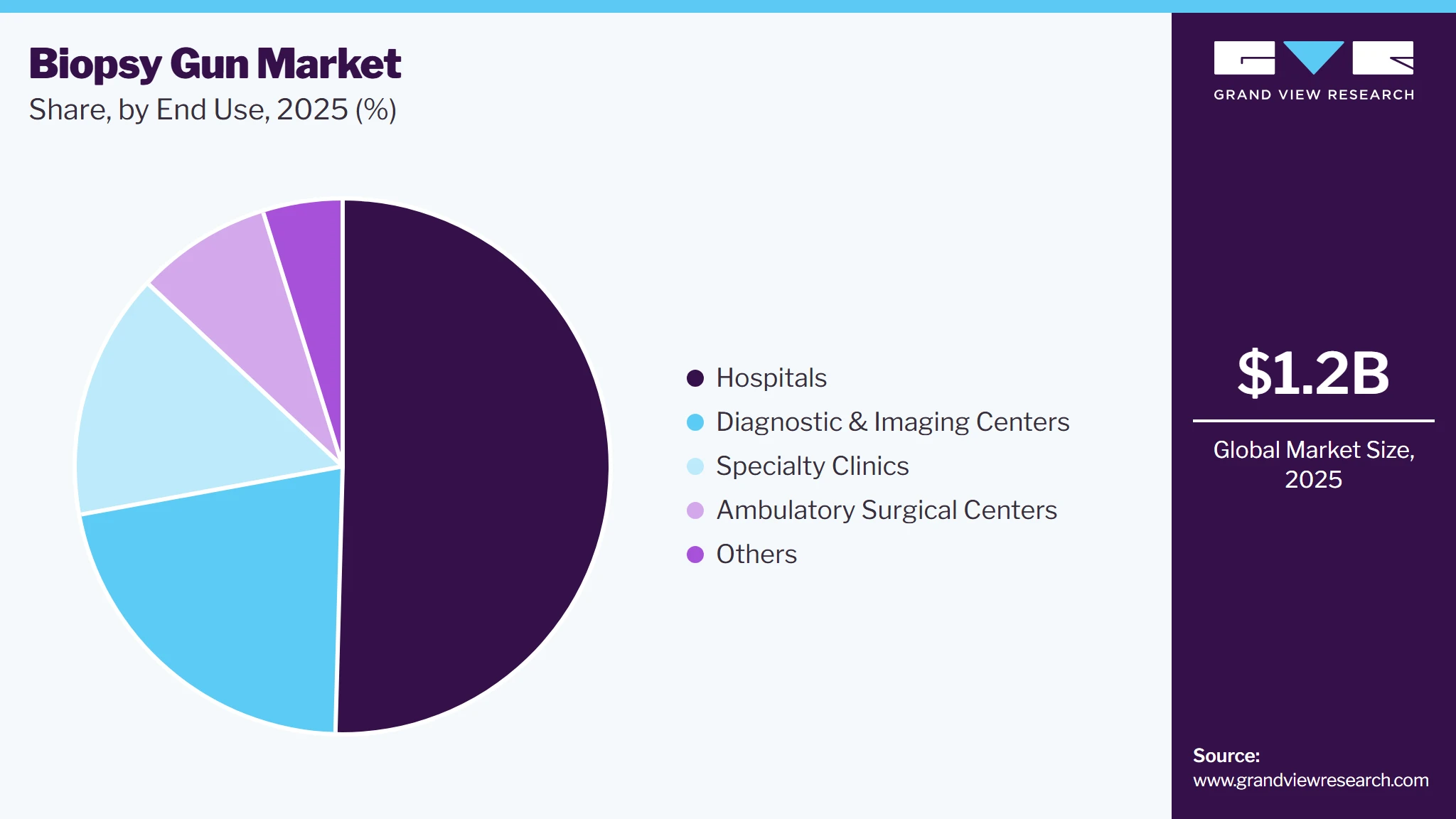
The diagnostic & imaging centers segment is expected to witness significant growth over the forecast period, supported by the increasing shift toward outpatient and minimally invasive diagnostic procedures. The expansion of advanced imaging capabilities, including ultrasound and CT, enables these centers to perform image-guided biopsies with greater precision. Rising demand for early cancer detection and shorter diagnostic turnaround times is further expected to increase the use of biopsy guns in diagnostic and imaging centers.
Regional Insights
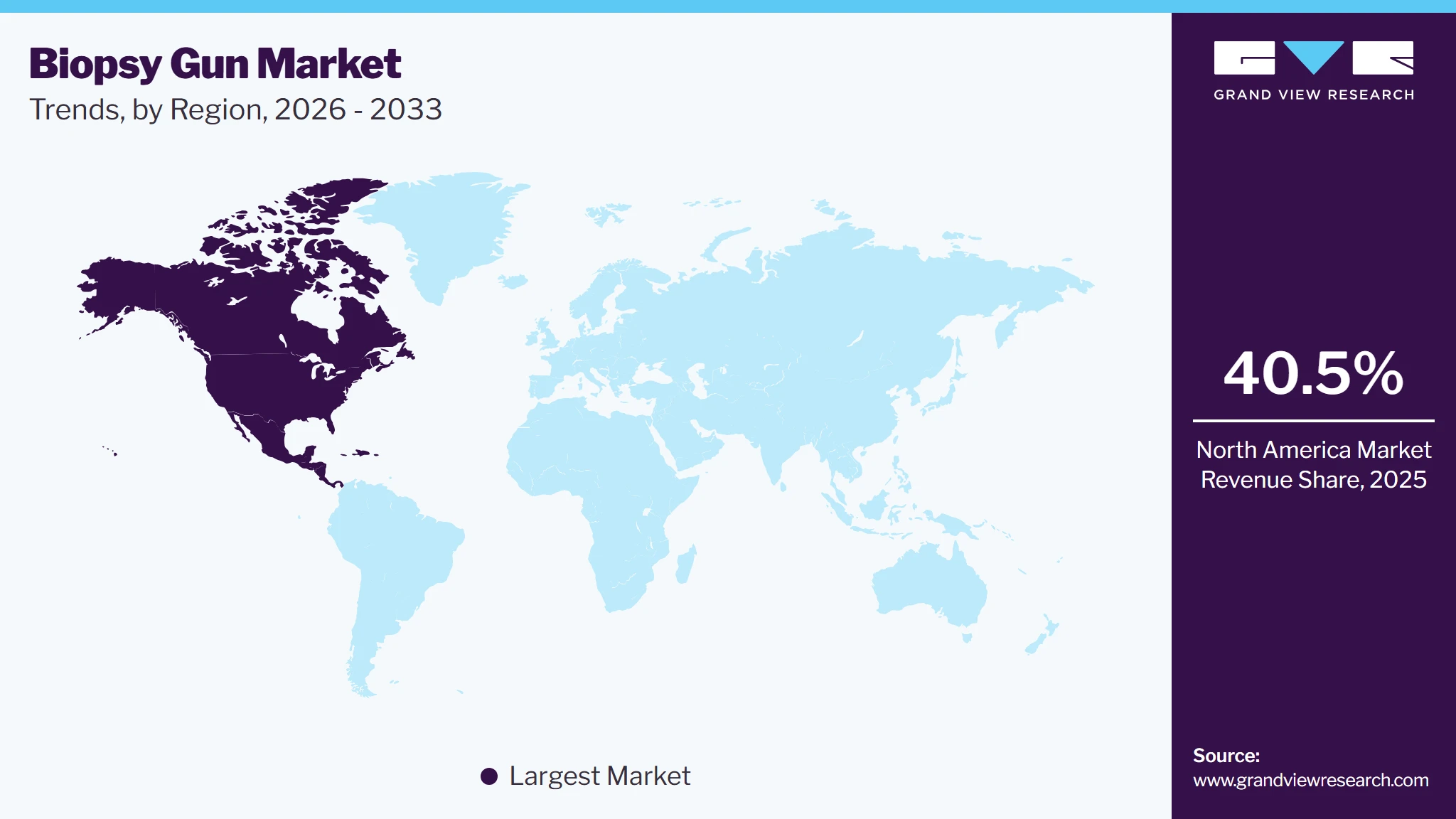
The biopsy gun market in North America held the largest share, accounting for 40.5% of the global revenue in 2025. The growth is driven by advanced healthcare infrastructure, widespread adoption of image-guided biopsy procedures, and strong demand for minimally invasive tissue sampling. The U.S. is a major regional market, particularly because core-needle biopsy is widely used to diagnose suspicious breast lesions and other cancers. Continued technological development and access to advanced imaging modalities such as ultrasound, mammography, and MRI are also supporting the adoption of automated biopsy devices. In addition, the region's established medical-device ecosystem and ongoing product activity create opportunities for manufacturers of automated and semi-automated biopsy guns.
U.S. Biopsy Gun Market Trends
The biopsy gun market in the U.S. is supported by the country’s high cancer burden, advanced diagnostic infrastructure, and widespread use of image-guided tissue sampling. The NCI estimated the diagnosis of more than 2.04 million new cancer cases in the U.S. in 2025, increasing the need for diagnostic biopsy procedures. The market has gained further traction from continued regulatory activity and product development, including recent FDA clearances for breast biopsy systems in 2026. In addition, the FDA’s 2026 identification of a shortage of stereotactic breast biopsy needles highlights the substantial clinical demand for biopsy devices in the U.S.
Europe Biopsy Gun Market Trends
The biopsy gun market in Europe is growing on the back of a well-established healthcare system, increasing demand for minimally invasive diagnostic procedures, and a substantial cancer burden across the region. The European Cancer Information System continues to report a significant burden of cancer in EU countries, supporting the need for tissue-based diagnosis. Adoption is also influenced by the region’s advanced medical-device ecosystem and established use of imaging and pathology services. In addition, the EU’s Medical Device Regulation framework emphasizes device safety, clinical evidence, performance, and post-market surveillance, shaping the development and commercialization of biopsy guns.
The UK biopsy gun market is well-positioned due to established cancer screening and diagnostic services, increasing demand for tissue-based diagnosis, and widespread use of core biopsy procedures. In England, 352,015 new cancer cases were recorded in 2023-24, sustaining demand for diagnostic procedures. The breast screening program also reported that 52.0% of women referred for assessment in 2024-25 underwent core biopsy and/or fine-needle aspiration, highlighting the role of needle-based tissue sampling. Continued investment in cancer diagnosis and advanced imaging services is expected to support the adoption of biopsy guns across UK hospitals and diagnostic centers.
The biopsy gun market in France is supported by a substantial cancer burden, established diagnostic infrastructure, and continued emphasis on early cancer detection. France recorded an estimated 433,000 new cancer cases in 2023, while tumors were the leading cause of death in 2024, accounting for 27.1% of all deaths. The country’s organized breast cancer screening program and growing use of advanced breast imaging support demand for tissue-sampling procedures and related biopsy devices.
Asia Pacific Biopsy Gun Market Trends
The biopsy gun market in the Asia Pacific is supported by the rising cancer burden, increasing demand for early diagnosis, and improving healthcare and diagnostic infrastructure across countries such as China, India, Japan, and South Korea. The growing adoption of minimally invasive and image-guided biopsy procedures is driving the demand for automated and semi-automated biopsy guns. The region also presents significant growth opportunities as access to cancer screening, imaging, pathology, and specialized healthcare services expands. The WHO highlights the importance of improving access to diagnostic technologies across Southeast Asia, while the region's growing cancer burden continues to increase the need for diagnostic services.
The China biopsy gun market growth has witnessed an uptick due to the country’s substantial cancer burden, expanding diagnostic services, and increasing emphasis on early detection and diagnosis. China recorded an estimated 5.15 million new cancer cases in 2024, with lung, colorectal, thyroid, breast, and liver cancers among the leading cancer types, creating substantial demand for tissue-based diagnosis. The expansion of cancer screening and diagnostic services, including breast and cervical cancer screening, is further supporting demand for biopsy procedures and related devices. Continued expansion of healthcare services across hospitals and primary care facilities also provides opportunities for the adoption of biopsy guns.
Latin America Biopsy Gun Market Trends
The biopsy gun market in Latin America is witnessing a growing cancer burden, an increasing focus on early diagnosis, and efforts to expand access to diagnostic services. Nearly 1.5 million new cancer cases were estimated in Latin America and the Caribbean in 2024, creating a substantial need for tissue-based diagnosis. The expansion of screening, imaging, pathology, and other diagnostic capabilities is expected to support the adoption of biopsy guns. However, differences in healthcare access and infrastructure across countries may influence market penetration.
Middle East & Africa Biopsy Gun Market Trends
The biopsy gun market in the Middle East & Africa, similar to the Latin American industry, is supported by the rising cancer burden, growing emphasis on early diagnosis, and gradual expansion of diagnostic and oncology infrastructure. The Eastern Mediterranean region is experiencing a rapidly increasing cancer burden, encouraging investments in cancer surveillance and diagnostic capacity. In Africa, the need for improved access to cancer diagnosis is particularly significant, with breast and cervical cancers representing important disease burdens. Expanding imaging, pathology, and specialized healthcare services is therefore expected to create opportunities for the adoption of biopsy guns, although disparities in infrastructure and trained personnel remain challenges.
Key Biopsy Gun Company Insights
The biopsy gun market is supported by established medical device manufacturers and specialized biopsy device providers. Competition is driven by product quality, technological innovation, precision, reliability, regulatory compliance, and broad distribution networks, while market players continue to expand their product portfolios to address growing diagnostic biopsy requirements.
Key Biopsy Gun Companies
The following key companies have been profiled for this study on the biopsy gun market.
-
MedX Healthcare
-
Advin Health Care
-
St. Stone Medical
-
JDmeditech
-
ACE Medical Devices Pvt. Ltd.
-
Argon Medical Devices
-
Aster Medispro
-
Suretech Medical
-
Manish Medi Innovation
-
Chamfond Group
-
Edges Medicare Private Limited
-
Changfeng Medical Industry
Competitive Benchmarking
Player Category
Operating Strategies
Competitive Edge
Weaknesses
Argon Medical Devices, Aster Medispro, Suretech Medical
- Expand established biopsy portfolios, invest in automatic and semi-automatic technologies, strengthen hospital relationships, and pursue regulatory clearances for product enhancements.
- Strong brand reputation, established clinical adoption, broad distribution networks, regulatory expertise, and extensive manufacturing capabilities.
- Higher operating and compliance costs, relatively higher product prices, and complex organizational structures can limit flexibility in price-sensitive markets.
MedX Healthcare, Advin Health Care, JDmeditech
- Focus on application-specific biopsy guns, cost-efficient product development, product customization, regulatory approvals, and regional distribution partnerships.
- Greater flexibility, competitive pricing, faster adaptation to customer requirements, and ability to target specific clinical applications.
- Limited brand recognition, smaller distribution networks, fewer clinical references, and comparatively limited resources for R&D and global expansion.
Recent Developments
-
In February 2025, the U.S. FDA granted 510(k) clearance to Xaga Surgical’s Forsvall Biopsy Needle System, comprising the Forsvall biopsy gun and biopsy needle, for prostate biopsy applications. The device was determined to be substantially equivalent to a legally marketed predicate device.
-
For instance, in May 2023, Argon Medical Devices launched the SuperCore Advantage Semi-Automatic Biopsy Instrument in the United States, expanding its soft-tissue biopsy product portfolio. The device was introduced to support tissue sampling procedures and strengthen the company’s offering of biopsy solutions for interventional radiology and oncology applications.
Biopsy Gun Market Report Scope
Report Attribute
Details
Market size in 2025
USD 1.2 billion
Estimated market size in 2026
USD 1.3 billion
Projected market size by 2033
USD 2.4 billion
Growth rate
CAGR of 9.5% from 2026 to 2033
Historical data
2021 - 2024
Forecast period
2026 - 2033
Quantitative units
Revenue in USD billion and CAGR from 2026 to 2033
Report coverage
Revenue forecast, company ranking, competitive landscape, growth factors, and trends
Segments covered
Product, mechanism, application, guidance technique, end use, region
Regional scope
North America; Europe; Asia Pacific; Latin America; MEA
Country scope
U.S.; Canada; Mexico; Germany; UK; France; Italy; Spain; Norway; Denmark; Sweden; China; Japan; India; South Korea; Australia; Thailand; Brazil; Argentina; Saudi Arabia; South Africa; UAE; Kuwait
Key companies profiled
MedX Healthcare; Advin Health Care; St. Stone Medical; JDmeditech; ACE Medical Devices Pvt. Ltd.; Argon Medical Devices; Aster Medispro; Suretech Medical; Manish Medi Innovation; Chamfond Group; Edges Medicare Private Limited; Changfeng Medical Industry
Customization scope
Free report customization (equivalent up to 8 analysts' working days) with purchase. Addition or alteration to country, regional & segment scope.
Pricing and purchase options
Avail customized purchase options to meet your exact research needs. Explore purchase options
Global Biopsy Gun Market Report Segmentation
This report forecasts revenue growth at global, regional, and country levels and provides an analysis on the latest industry trends in each of the sub-segments from 2021 to 2033. For this study, Grand View Research has segmented the global biopsy gun market report on the basis of product, mechanism, application, guidance technique, end use, and region:
-
Product Outlook (Revenue, USD Billion, 2021 - 2033)
-
Reusable
-
Disposable
-
-
Mechanism Outlook (Revenue, USD Billion, 2021 - 2033)
-
Automatic-fire mode
-
Semi-Automatic
-
-
Application Outlook (Revenue, USD Billion, 2021 - 2033)
-
Breast
-
Prostate
-
Liver
-
Lung
-
Kidney
-
Others
-
-
Guidance Technique Outlook (Revenue, USD Billion, 2021 - 2033)
-
Ultrasound
-
CT
-
MRI
-
-
End Use Outlook (Revenue, USD Billion; 2021 - 2033)
-
Hospitals
-
Diagnostic & Imaging Centers
-
Specialty Clinics
-
Ambulatory Surgical Centers
-
Others
-
-
Regional Outlook (Revenue, USD Billion, 2021 - 2033)
-
North America
-
U.S.
-
Canada
-
Mexico
-
-
Europe
-
Germany
-
UK
-
France
-
Italy
-
Spain
-
Sweden
-
Denmark
-
Norway
-
-
Asia Pacific
-
Japan
-
China
-
India
-
Australia
-
South Korea
-
Thailand
-
-
Latin America
-
Brazil
-
Argentina
-
-
Middle East & Africa
-
South Africa
-
Saudi Arabia
-
UAE
-
Kuwait
-
-
Research Methodology
The biopsy gun market figures in this report are based on a proven research process that combines executive interviews with secondary research from proprietary databases, company filings, and recognized regulatory and institutional sources. Market size is built through value-chain sizing - reconciling supply-side and demand-side estimates - and triangulated with bottom-up and top-down approaches. Every estimate passes multiple levels of expert validation before publication, with each biopsy gun segment quantified using the revenue-capture definitions in the table below
Segment Definition
Product
Revenue capture definition
Reusable
Revenue generated from biopsy gun devices designed for multiple procedures, where the same core instrument is reprocessed, sterilized, and reused, excluding separately purchased disposable needles or accessories unless included in the device sale.
Disposable
Revenue generated from single-use biopsy gun devices intended to be used for one procedure and then discarded, including the complete disposable instrument where the gun and needle are supplied as an integrated unit.
Estimation Model
Stage
Description
Bottom-Up Procedure Volume Modeling
Estimates the market based on the number of biopsy procedures performed across breast, lung, liver, prostate, and other applications. Procedure volumes are derived from cancer incidence, biopsy rates, imaging-guided procedures, replacement cycles, and average biopsies used per procedure across hospitals and diagnostic centers.
Top-Down Revenue Triangulation
Estimates market revenue by aggregating manufacturer-level revenues and biopsy gun product sales across automatic and semi-automatic devices and disposable and reusable formats. Company disclosures, product portfolios, regulatory filings, distributor information, and pricing analysis are used to validate market size and avoid double counting.
Demand-Side Care-Setting Modeling
Estimates demand by analyzing biopsy procedures across hospitals, diagnostic and imaging centers, specialty clinics, and ambulatory surgical centers. The approach incorporates disease prevalence, diagnostic infrastructure, imaging-guided biopsy adoption, procedure volumes, healthcare utilization, and regional healthcare expenditure to estimate product consumption across major markets.
Delivered Customizations
This report has been delivered with the following In-depth customizations
Client’s Request
Customization Delivered
Value Adds
Product Share Analysis
Customized market sizing by biopsy gun type, including automatic and semi-automatic, with further analysis by disposable/reusable formats and application areas.
Identifies the leading product segments and helps assess shifting demand and growth opportunities.
Competitive Analysis
Customized assessment of manufacturers based on product portfolio, biopsy-gun technology, regulatory clearances, product launches, geographic presence, and strategic developments.
Provides a clearer view of competitive positioning, product differentiation, and technology strategies.
Country-Level Analysis
Customized analysis across key countries, including the U.S., Canada, Germany, U.K., France, China, Japan, India, Australia, Brazil, and UAE, covering market size, growth prospects, healthcare infrastructure, and adoption factors.
Helps identify high-value and high-growth countries and supports regional expansion and market-entry decisions.
About the Author(s)
Medical Devices Research Team
Healthcare · Medical DevicesThis report was authored by the medical devices research team at Grand View Research - comprising two research analysts, one senior research analyst, and one industry expert - with specialized expertise in the medical devices segment of the healthcare industry. All findings are based on proprietary healthcare databases, executive interviews, and regulatory analysis, subject to internal peer review prior to publication.
Last Updated:
Speak to Analyst


Customize this report to your needs - add regions, segments, or data points, with 20% free customization.
Or view our licence options:


ISO 9001:2015 & 27001:2022 Certified
We are GDPR and CCPA compliant! Your transaction & personal information is safe and secure. For more details, please read our privacy policy.


