
- Home
- »
- Medical Devices
- »
-
Birthing Chairs Market Size & Share Report, 2026-2033GVR Report cover
![Birthing Chairs Market (2026 - 2033)Report]()
Birthing Chairs Market (2026 - 2033)
Size, Share & Trends Analysis Report By Operation Mechanism (Manual Birthing Chairs, Electric/Motorized Birthing Chairs), By Product Class, By End-use, By Distribution Channel, By Region, And Segment Forecasts
Market Size, 2025
$101.2MMarket Estimate, 2026
$105.7MMarket Forecast, 2033
$149.9MCAGR, 2026–2033
5.1%Birthing Chairs Market Summary
The global birthing chairs market size was valued at USD 101.2 million in 2025 and is projected to grow from USD 105.7 million in 2026 to USD 149.9 million by 2033, at a CAGR of 5.1% from 2026 to 2033. The market in North America dominated with a revenue share of 32.5% in 2025. The birthing chairs industry is primarily driven by the increasing focus on maternal healthcare and safe childbirth practices across healthcare systems.

Key Market Trends & Insights
- By operation mechanism: The electric/motorized birthing chairs segment led the market with the largest revenue share in 2025.
- By product class: The standard (basic) chairs segment led the market with the largest revenue share in 2025.
- By end use: The hospital obstetric departments segment led the market with the largest revenue share in 2025.
Regional Highlights
- Largest regional market: North America (32.5% revenue share, 2025)
- Fastest-growing regional market: Asia Pacific (highest CAGR, 2026-2033)
- The birthing chairs industry in the U.S. held the largest revenue share in 2025.
Market Size & Forecast
- Market size in 2025: USD 101.2 Million
- Estimated market size in 2026: USD 105.7 Million
- Projected market size by 2033: USD 149.9 Million
- CAGR (2026-2033): 5.1%
Growing awareness of the benefits of upright, ergonomic birthing positions that improve maternal comfort and labor efficiency is also driving market growth. In addition, expanding maternity care infrastructure and hospital deliveries in developing regions is further increasing the demand for specialized birthing equipment.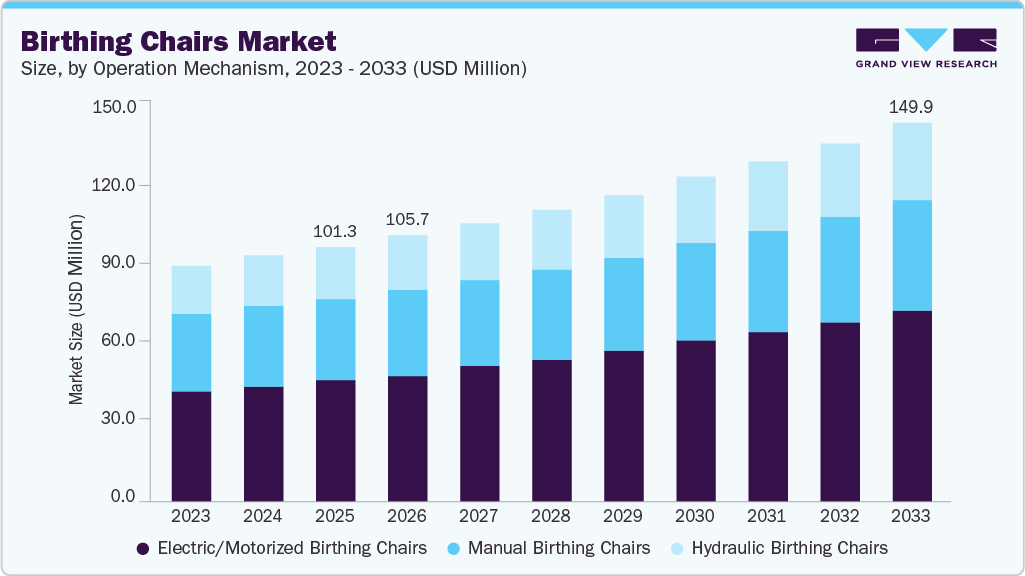
The increasing focus on maternal health and safe childbirth is a key driver of the birthing chairs market. Healthcare systems and medical professionals are placing greater emphasis on improving maternal outcomes and providing safer delivery environments. Birthing chairs support ergonomic, upright delivery positions, which can enhance maternal comfort and support the natural progression of labor. As a result, hospitals and maternity centers are adopting specialized birthing equipment to improve the quality of obstetric care. According to the World Health Organization, around 260,000 women died from pregnancy and childbirth-related causes globally in 2023, highlighting the continued need for improved obstetric care and delivery infrastructure.
Regional Distribution of Global Maternal Deaths and Income-Level Burden (2023)
Category
Statistics (2023)
Share of Maternal Deaths in Low & Lower-Middle Income Countries
Approximately 92% of all maternal deaths occurred in low- and lower-middle-income countries, and most were preventable.
Regions with the Highest Maternal Deaths
Sub-Saharan Africa and Southern Asia together accounted for about 87% (225,000) of global maternal deaths.
Sub-Saharan Africa
Contributed around 70% of global maternal deaths (182,000).
Southern Asia
Accounted for around 17% of global maternal deaths (43,000).
Source: World Health Organization
The growing number of childbirths globally is a significant driver of the birthing chairs industry. Increasing birth rates in developing regions and expanding maternal healthcare services are raising the demand for specialized obstetric equipment in hospitals and maternity centers. As healthcare facilities handle a higher volume of deliveries, the need for ergonomic and supportive birthing solutions, such as birthing chairs, continues to increase to improve maternal comfort and clinical efficiency.
Global Childbirth Statistics and Birth Trends (2025)
Category
Statistics
Global Births per Day
Around 370,000 babies are born each day worldwide, which equals roughly four babies every second.
Births in the U.S.
Approximately 9,800 babies are born each day in the U.S., or about one birth every 10 seconds.
Birth Patterns
Planned inductions and C-sections contribute to a higher number of births occurring on weekdays compared to weekends.
Birth Rate Trends
Global and U.S. birth rates are gradually declining, with fewer births among teenagers and women in their 20s.
Changing Maternal Age Trend
Women in their 30s and 40s are having children, reflecting a shift toward later-age pregnancies.
Source: The Bump
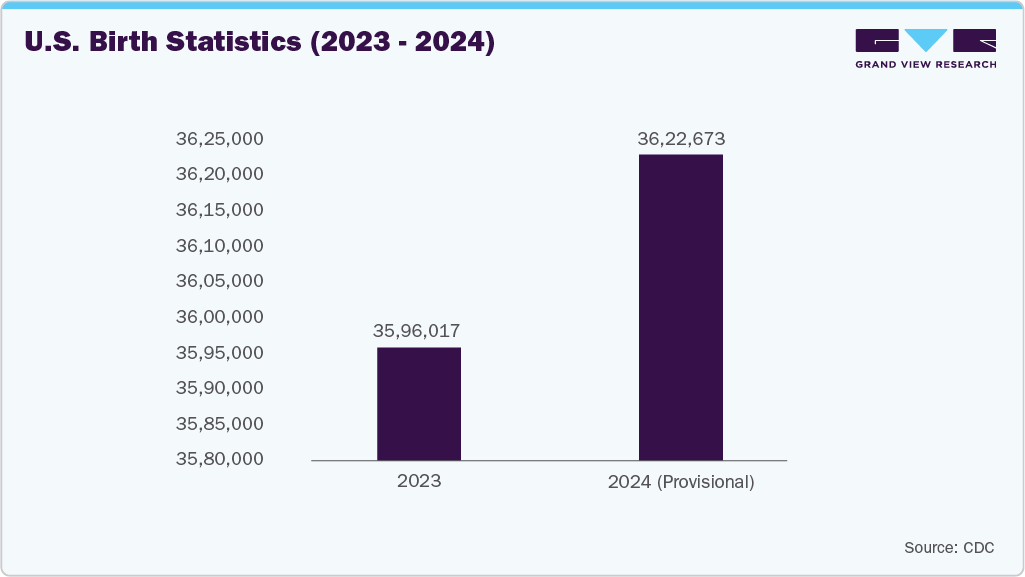
Therefore, the increasing emphasis on maternal health and safe childbirth practices, high global birth volume, and growth in hospital and maternity center infrastructure are significantly driving demand for specialized obstetric equipment. Healthcare facilities are adopting ergonomic birthing chairs to improve maternal comfort, support safer delivery positions, and enhance clinical efficiency. These factors contribute to the growing adoption of birthing chairs across hospitals and maternity centers worldwide.
Market Concentration & Characteristics
The degree of innovation in the market is moderate, with manufacturers focusing on improving patient comfort, safety, and clinical efficiency. Modern birthing chairs incorporate ergonomic designs, adjustable height and positioning systems, and removable or flexible components to support multiple labor positions. Some models also feature integrated mobility, easy-clean materials, and compatibility with obstetric accessories to enhance workflow in maternity wards. Continuous product development aims to promote natural birth practices and improve overall maternal care experiences.
The level of mergers and acquisitions remains relatively limited, as the market is highly specialized and dominated by established medical furniture manufacturers. Companies typically prioritize product development, regional expansion, and distribution partnerships rather than large-scale acquisitions. Consolidation mainly occurs within the broader hospital furniture and obstetric equipment industry, where larger healthcare equipment firms acquire smaller manufacturers to strengthen their maternity care product portfolios. Overall, organic growth and technological upgrades are more common strategies than frequent M&A activities in this market.
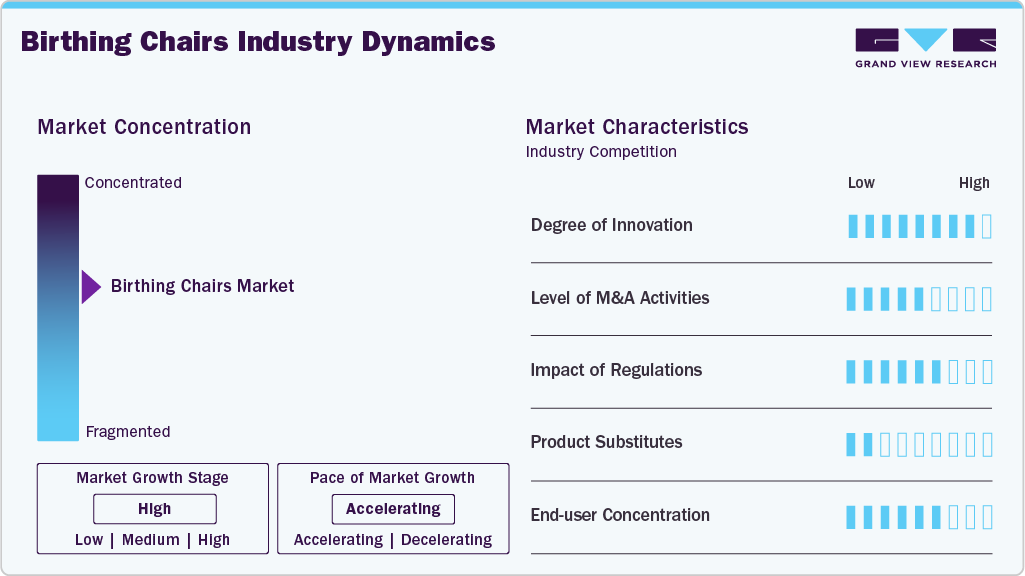
Regulations have a moderate impact on the market, as these products must comply with medical device safety and quality standards before commercialization. Regulatory frameworks require manufacturers to meet guidelines related to patient safety, durability, hygiene, and ergonomic design to ensure safe use during childbirth procedures. Compliance with standards such as medical device regulations and hospital equipment safety certifications can increase development costs and approval timelines. However, these regulations also help ensure product reliability and improve trust among healthcare providers and maternity care facilities.
End-use concentration is primarily centered in hospitals and maternity clinics, as these facilities handle most childbirth procedures and require specialized obstetric equipment. Large hospitals and dedicated obstetric departments account for a significant share, driven by higher patient volumes and better infrastructure. Birthing centers and midwife-led clinics are also emerging end users, particularly in regions that promote natural, patient-centered childbirth practices. However, adoption remains comparatively lower in small healthcare facilities due to cost and limited awareness.
Operation Mechanism Insights
The electric/motorized birthing chairs segment dominated in 2025 and is expected to grow at the fastest rate during the forecast period, driven by their ability to provide precise positioning and enhanced comfort during labor and delivery. These chairs enable caregivers to easily adjust height, backrest, and leg supports through motorized controls, improving clinical access and reducing physical strain on healthcare staff. Their capability to support multiple birthing positions has increased their adoption across hospitals and advanced maternity care facilities.
The hydraulic birthing chairs segment is witnessing significant growth due to their cost-effectiveness and reliable manual adjustment mechanisms. These chairs allow caregivers to adjust height and position using hydraulic systems without electricity, making them suitable for hospitals and maternity clinics with budget or infrastructure constraints. Their durability and ease of maintenance further support their adoption in developing healthcare facilities.
Product Class Insights
The standard (basic) birthing chairs segment dominated in 2025 due to their affordability and widespread availability in maternity wards and small healthcare facilities. These chairs provide essential support for upright or seated delivery positions while requiring minimal maintenance and training. Their lower cost compared with advanced electric or hydraulic models has contributed to their continued adoption in many hospitals and birthing centers.
The premium (integrated) birthing chair systems segment is expected to grow at the fastest rate, driven by increasing demand for advanced maternity care solutions in modern healthcare facilities. These systems combine multiple features, including motorized adjustments, ergonomic support, integrated monitoring compatibility, and enhanced patient comfort. Hospitals and specialized maternity centers are increasingly adopting these systems to improve clinical workflow and support patient-centered childbirth practices. Rising investments in healthcare infrastructure and maternity wards are further supporting the growth of this segment.
Distribution Channel Insights
The direct tender/institutional sales segment dominated the market in 2025 as most purchases are made by hospitals, maternity centers, and public healthcare institutions through formal procurement processes. Large healthcare facilities often acquire medical furniture in bulk through tenders to ensure standardized equipment and cost efficiency. This procurement model allows manufacturers to secure long-term supply contracts with healthcare institutions, contributing to the strong share of direct institutional sales in the market.
The online/e-commerce segment is expected to grow at the fastest rate, driven by increasing digitalization in medical equipment procurement. Healthcare providers and small maternity clinics are increasingly using online platforms to compare product specifications, pricing, and supplier options. E-commerce channels also enable manufacturers and distributors to expand their reach, particularly in emerging markets where direct distribution networks are limited.
End Use Insights
The hospital obstetric departments segment dominated the industry in 2025 due to the high volume of childbirth procedures performed in hospitals and the availability of specialized maternity care infrastructure. Hospitals prioritize advanced obstetric equipment to support safe deliveries and improve patient comfort, which has driven the widespread adoption of birthing chairs in these settings.
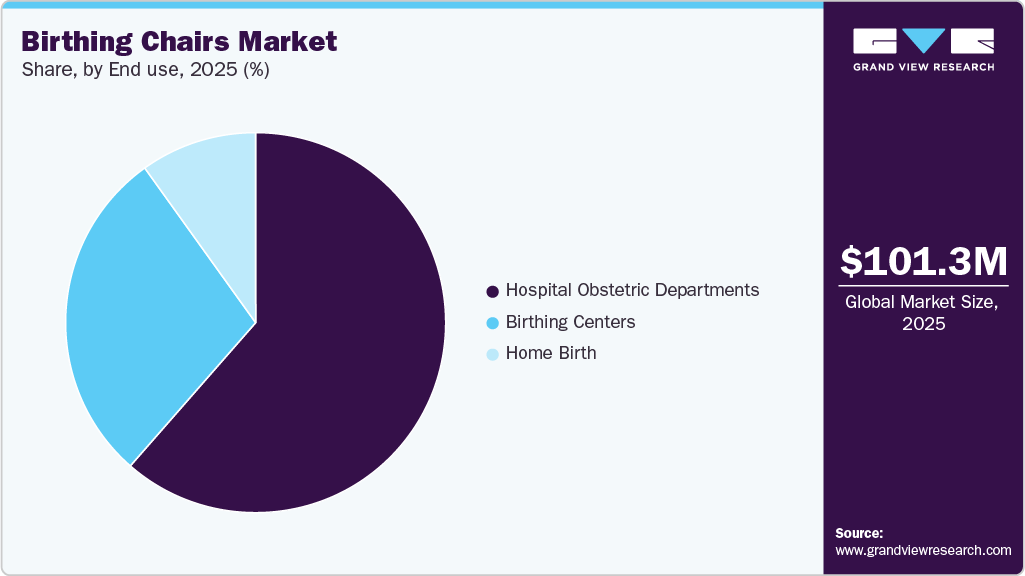
The birthing centers segment is expected to grow at the fastest rate, driven by increasing preference for natural, patient-centered childbirth environments. These centers often emphasize upright, mobility-supported labor positions, which drives demand for specialized birthing chairs. In addition, the rising number of midwife-led facilities and growing awareness of alternative delivery settings are contributing to the rapid adoption of birthing chairs in birthing centers.
Regional Insights
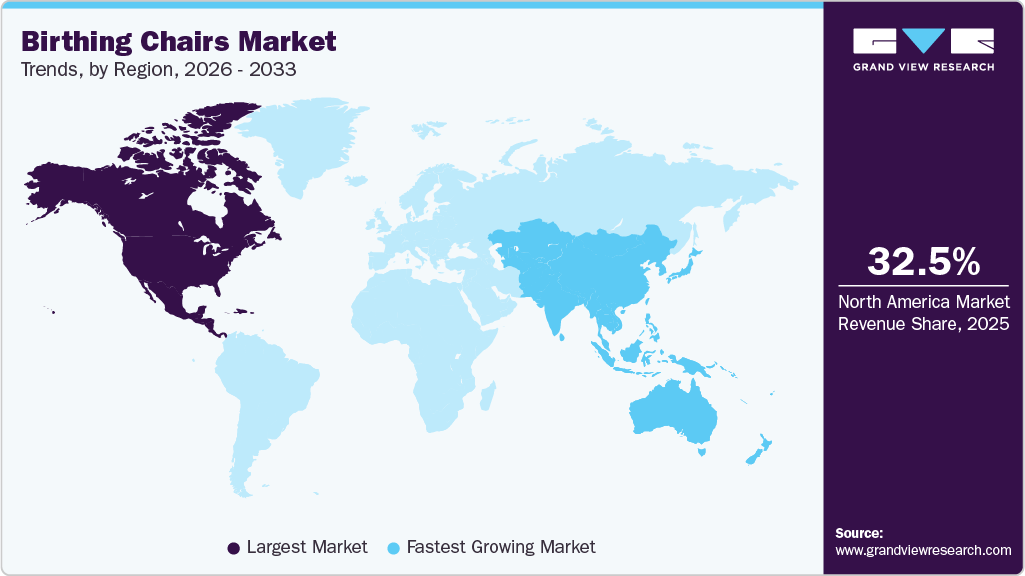
North America dominated the birthing chairs market with the largest revenue share of 32.55% in 2025 influenced by the region’s strong healthcare infrastructure and increasing emphasis on improving maternal care and delivery outcomes. Hospitals and maternity units are gradually adopting ergonomic birthing chairs to support upright labor positions and enhance patient comfort during childbirth. In addition, the growing preference for patient-centered maternity care and the modernization of labor and delivery units are contributing to the steady adoption of advanced obstetric equipment across the region.
U.S. Birthing Chairs Market Trends
The birthing chairs market in the U.S. is influenced by the growing focus on improving maternal healthcare outcomes and upgrading hospital labor and delivery units. Hospitals and maternity centers are adopting ergonomic birthing chairs to support patient-centered childbirth practices and enhance comfort during delivery. In addition, the significant volume of births-about 3.6 million births recorded in the United States in 2024-continues to drive demand for obstetric equipment in healthcare facilities.
Furthermore, increasing awareness of maternal safety, rising cesarean and high-risk pregnancy management, and investments in modern maternity infrastructure are encouraging the adoption of advanced delivery furniture and equipment across U.S. hospitals and birthing centers.
Europe Birthing Chairs Market Trends
The birthing chairs market in Europe is witnessing significant growth due to the region’s strong emphasis on maternal healthcare and patient-centered childbirth practices. Hospitals and maternity clinics are adopting birthing chairs to support upright, natural delivery positions, improving maternal comfort and labor efficiency. In addition, well-established healthcare systems and ongoing upgrades in maternity wards are encouraging the adoption of modern obstetric equipment across several European countries.
The UK birthing chairs market is influenced by ongoing improvements in maternity care infrastructure and the growing emphasis on safe and patient-centered childbirth practices. For instance, according to the NHS, the country records a high volume of institutional deliveries, with about 545,000 deliveries in NHS hospitals during 2023-2024, supporting steady demand for obstetric equipment. In addition, increasing investments in maternity services and the rising complexity of pregnancies are prompting hospitals and midwife-led units to adopt ergonomic delivery equipment, such as birthing chairs, to improve maternal comfort and clinical efficiency.
The birthing chairs market in France is supported by the country’s strong public healthcare system and structured maternity care services. Hospitals and maternity units are increasingly focusing on improving childbirth experiences by adopting equipment that supports comfortable and flexible delivery positions. In addition, the modernization of maternity wards and the growing emphasis on maternal well-being are encouraging healthcare facilities to incorporate ergonomic birthing solutions such as birthing chairs.
Asia Pacific Birthing Chairs Market Trends
The birthing chairs market in Asia Pacific is witnessing notable growth due to the region’s large population and high childbirth rates in countries such as India, China, and Indonesia. Rapid improvements in healthcare infrastructure and increasing investments in maternal health programs are encouraging hospitals to adopt modern obstetric equipment. In addition, governments and international organizations are actively promoting safe childbirth and skilled birth attendance to reduce maternal mortality, thereby further supporting demand for delivery equipment, such as birthing chairs, across the region.
The China birthing chairs market is influenced by the country’s extensive hospital-based maternity care system and continuous improvements in maternal healthcare services. According to the State Council of China, over 99% of births in the country occur in hospitals, supporting strong demand for obstetric equipment used during labor and delivery. Additionally, China reported about 9.54 million births in 2024, highlighting the substantial number of births handled by healthcare facilities. These factors, along with ongoing upgrades in hospital infrastructure and maternal care programs, are encouraging the adoption of modern delivery equipment such as birthing chairs in Chinese maternity units.
Latin America Birthing Chairs Market Trends
The birthing chairs market in Latin America is experiencing gradual growth due to improvements in maternal healthcare services and expanding access to hospital-based childbirth. Governments and healthcare providers across the region are focusing on upgrading maternity wards and enhancing the quality of obstetric care. In addition, the increasing emphasis on patient comfort and safer delivery practices is encouraging hospitals and maternity clinics to adopt specialized delivery equipment such as birthing chairs.
MEA Birthing Chairs Market Trends
The birthing chairs market in the Middle East & Africa is gradually expanding as efforts to strengthen maternal healthcare services and improve childbirth outcomes across the region intensify. Governments and international health organizations are investing in maternity care infrastructure, skilled birth attendance, and hospital-based deliveries to reduce maternal mortality. In several parts of Africa and the Middle East, maternal mortality rates remain relatively high, highlighting the need for better obstetric care and delivery facilities. As a result, healthcare facilities are adopting specialized equipment such as birth chairs to enhance maternal comfort and support safer childbirth practices.
Key Birthing Chairs Company Insights
The birthing chairs market is moderately fragmented, with several regional and international manufacturers competing based on product quality, ergonomic design, and pricing. Companies are focusing on product innovation, expanding distribution networks, and partnerships with hospitals and maternity centers to strengthen their market presence.
Key Birthing Chairs Companies:
The following key companies have been profiled for this study on the birthing chairs market.
- Adequate Electro Mechanical Engineering Private Limited
- Medzer
- Shanghai PAX Medical Instrument Co., Ltd.
- Croyde Medical Ltd
- BirthRite
- ND Medical S.R.L.
- Midmark India Pvt Ltd.
Recent Developments
-
In May 2025, University Hospitals announced the implementation of the TeamBirth model across all five of its labor and delivery locations to enhance maternity care. This patient-centered approach is designed to improve communication and collaboration between expectant families and healthcare teams, ensuring that mothers are actively involved in decision-making throughout their childbirth experience.
-
In September 2025, Governor JB Pritzker, Lieutenant Governor Juliana Stratton, and the Illinois Department of Public Health (IDPH) released the Illinois Birth Equity Blueprint, a strategic roadmap to improve maternal healthcare and birth outcomes across the state. The blueprint builds on the Illinois Birth Equity Initiative and was highlighted during a panel discussion on MSNBC's Morning Joe, hosted by Mika Brzezinski and featuring Lt. Governor Stratton, Chicago Beyond Founder and CEO Liz Dozier, and actress and Baby Yams founder Tatyana Ali.
Birthing Chairs Market Report Scope
Report Attribute
Details
Market size in 2025
USD 101.2 million
Estimated market size in 2026
USD 105.7 million
Projected market size by 2033
USD 149.9 million
Growth rate
CAGR of 5.1% from 2026 to 2033
Base year for estimation
2025
Historical data
2021 - 2024
Forecast period
2026 - 2033
Quantitative units
Revenue in USD million/billion and CAGR from 2026 to 2033
Report coverage
Revenue forecast, company ranking, competitive landscape, growth factors, and trends
Segments covered
Operation mechanism, product class, end use, distribution channel, region
Regional scope
North America; Europe; Asia Pacific; Latin America; MEA
Country scope
U.S.; Canada; Mexico; Germany; UK; France; Norway; Italy; Denmark; Sweden; Spain; China; Japan; India; South Korea; Thailand; Australia; Brazil; Argentina; Saudi Arabia; UAE; South Africa; Kuwait
Key companies profiled
Adequate Electro Mechanical Engineering Private Limited; Medzer; Shanghai PAX Medical Instrument Co., Ltd.; Croyde Medical Ltd; BirthRite; ND Medical S.R.L.; Midmark India Pvt Ltd.
Customization scope
Free report customization (equivalent up to 8 analysts working days) with purchase. Addition or alteration to country; regional & segment scope.
Pricing and purchase options
Avail customized purchase options to meet your exact research needs. Explore purchase options
Global Birthing Chairs Market Report Segmentation
This report forecasts revenue growth at global, regional, and country levels and provides an analysis of the latest industry trends in each of the sub-segments from 2021 to 2033. For this study, Grand View Research has segmented the global birthing chairs market report on the basis of operation mechanism, product class, end use, distribution channel and region:
-
Operation Mechanism Outlook (Revenue, USD Million, 2021 - 2033)
-
Manual Birthing Chairs
-
Electric/Motorized Birthing Chairs
-
Single motor
-
Multi-motor
-
-
Hydraulic Birthing Chairs
-
-
Product Class Outlook (Revenue, USD Million, 2021 - 2033)
-
Standard (Basic) Chairs
-
Premium (Integrated) Systems
-
Bariatric Birthing Chairs
-
-
End Use Outlook (Revenue, USD Million, 2021 - 2033)
-
Hospital Obstetric Departments
-
Birthing Centers
-
Home Birth
-
-
Distribution Channel Outlook (Revenue, USD Million, 2021 - 2033)
-
Direct Tender/Institutional Sales
-
Third-Party Distributors
-
Online/E-commerce
-
-
Regional Outlook (Revenue, USD Million, 2021 - 2033)
-
North America
-
U.S.
-
Canada
-
Mexico
-
-
Europe
-
Germany
-
UK
-
France
-
Italy
-
Spain
-
Sweden
-
Denmark
-
Norway
-
-
Asia Pacific
-
Japan
-
China
-
India
-
Australia
-
South Korea
-
Thailand
-
-
Latin America
-
Brazil
-
Argentina
-
-
Middle East & Africa
-
South Africa
-
Saudi Arabia
-
UAE
-
Kuwait
-
-
Frequently Asked Questions About This Report
The global birthing chairs market is expected to grow at a compound annual growth rate of 5.1% from 2026 to 2033, reaching USD 149.9 million by 2033.
The standard (basic) chairs segment led the market with the largest revenue share in 2025.
Some key players operating in the birthing chairs market include Adequate Electro Mechanical Engineering Private Limited, Medzer, Shanghai PAX Medical Instrument Co., Ltd., Croyde Medical Ltd, BirthRite, ND Medical S.R.L., Midmark India Pvt Ltd, and others.
The birthing chair market is driven by the growing preference for natural and patient-centered childbirth practices, along with increasing awareness of maternal comfort and improved delivery outcomes. Rising investments in maternal healthcare infrastructure and the adoption of advanced delivery equipment in hospitals and birthing centers further support market growth.
The global birthing chairs market size was valued at USD 101.2 million in 2025 and is expected to reach USD 105.7 million in 2026.
North America dominated with a 32.5% revenue share in 2025.
Electric/motorized birthing chairs segment held the largest revenue share in 2025.
Hospital obstetric departments held the largest share in 2025 and birthing centers is the fastest-growing market.
The direct tender/institutional sales segment led with a revenue share in 2025, while online/e-commerce is the fastest-growing segment.
About the Author(s)
Medical Devices Research Team
Healthcare · Medical DevicesThis report was authored by the medical devices research team at Grand View Research - comprising two research analysts, one senior research analyst, and one industry expert - with specialized expertise in the medical devices segment of the healthcare industry. All findings are based on proprietary healthcare databases, executive interviews, and regulatory analysis, subject to internal peer review prior to publication.
Last Updated:
Speak to Analyst


Customize this report to your needs — add regions, segments, or data points, with 20% free customization.
Or view our licence options:


ISO 9001:2015 & 27001:2022 Certified
We are GDPR and CCPA compliant! Your transaction & personal information is safe and secure. For more details, please read our privacy policy.


