
- Home
- »
- Medical Devices
- »
-
Bladder Scanner Market Size & Share Report, 2027-2035GVR Report cover

Bladder Scanner Market (2027 - 2035)
Size, Share & Trends Analysis Report By Product (Console-based Bladder Scanners, Handheld Bladder Scanners), By Technology (2D Ultrasound, 3D Ultrasound, Other), By Application, By End Use (Urology Clinics And Physician Offices), By Region And Segment For
Market Size, 2026
$225.7MMarket Estimate, 2027
$236.4MMarket Forecast, 2035
$326.9MCAGR, 2027–2035
4.1%Bladder Scanner Market Summary
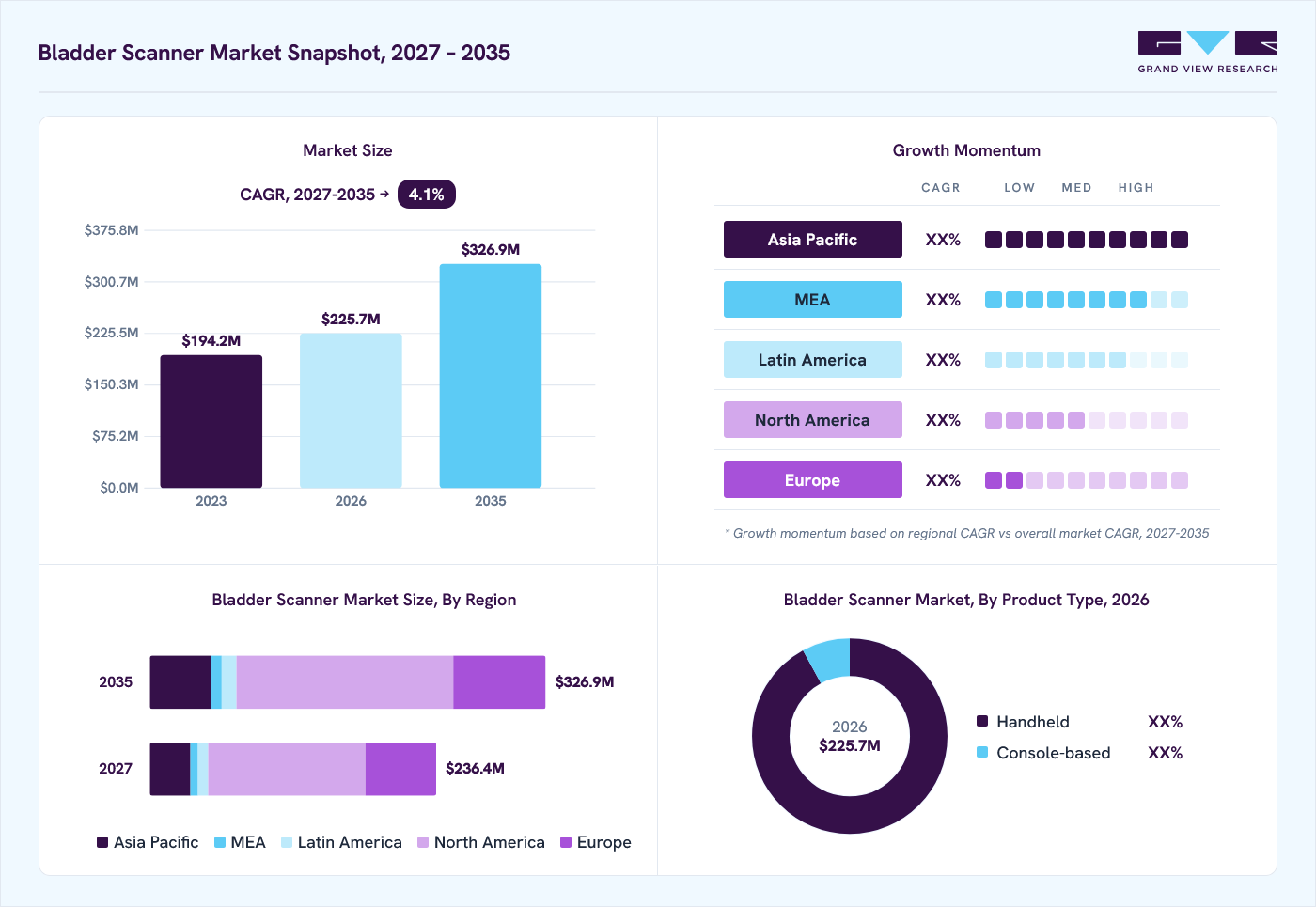
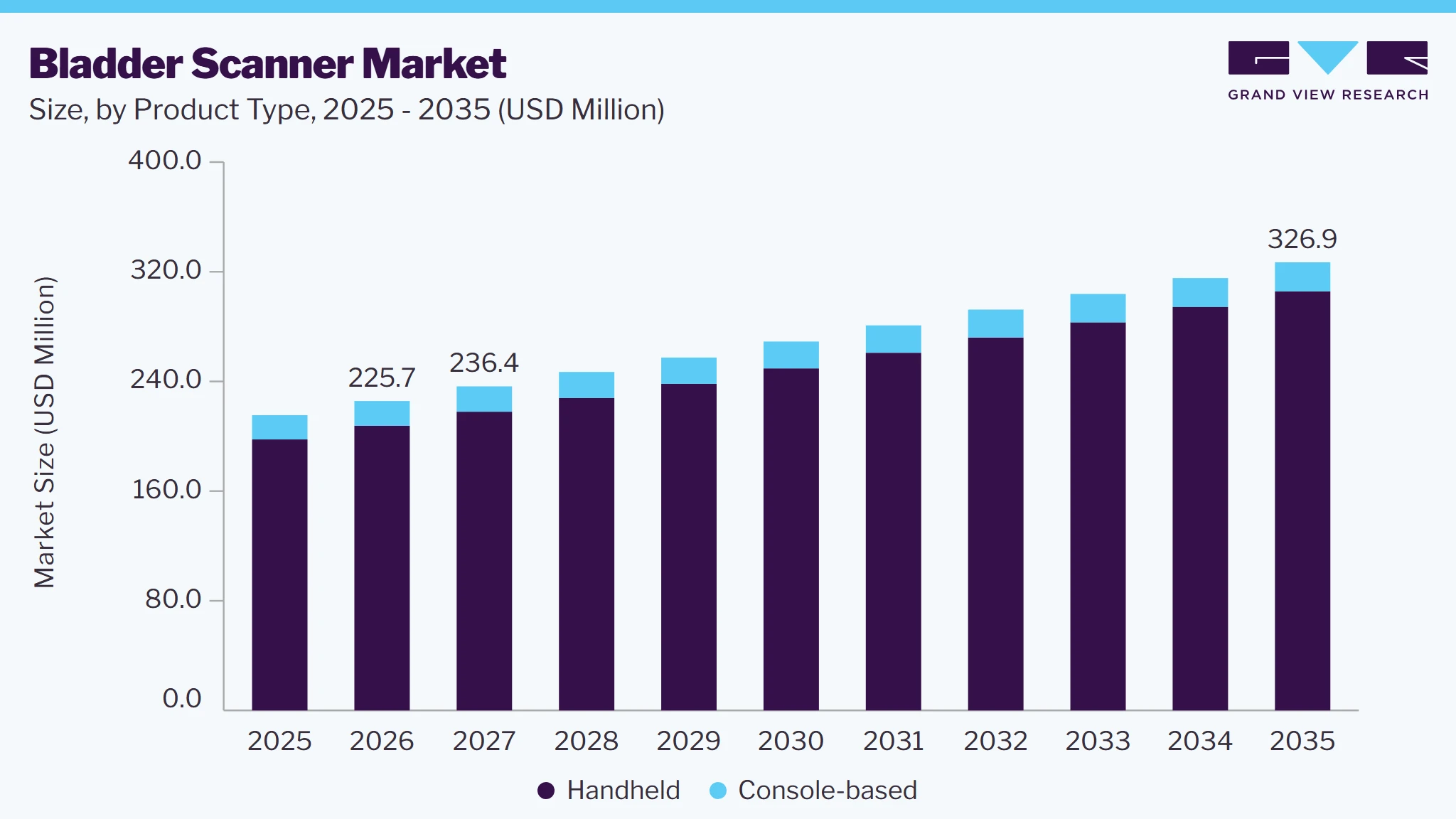
The global bladder scanner market size was valued at USD 225.7 million in 2026 and is projected to grow from USD 236.4 million in 2027 to USD 326.9 million by 2035, at a CAGR of 4.1% from 2027 to 2035. North America dominated the market, accounting for a revenue share of 54.9% in 2026. A bladder scanner is a non-invasive ultrasound device that shows how much urine is in the bladder without inserting a catheter.
 Source: Grand View Research, IR Documents, Primary Interviews, Paid DatabasesTo learn more about this report,
 Download Free Sample Report
Key Market Trends & Insights
- By product, the handheld bladder scanners segment led the market with the largest revenue share of 92.0% in 2026.
- By technology, the 3D ultrasound segment led the market with the largest revenue share of 88.6% in 2026.
- By application, the acute urinary retention and catheter management (non-surgical) segment led the market with the largest revenue share of 43.8% in 2026.
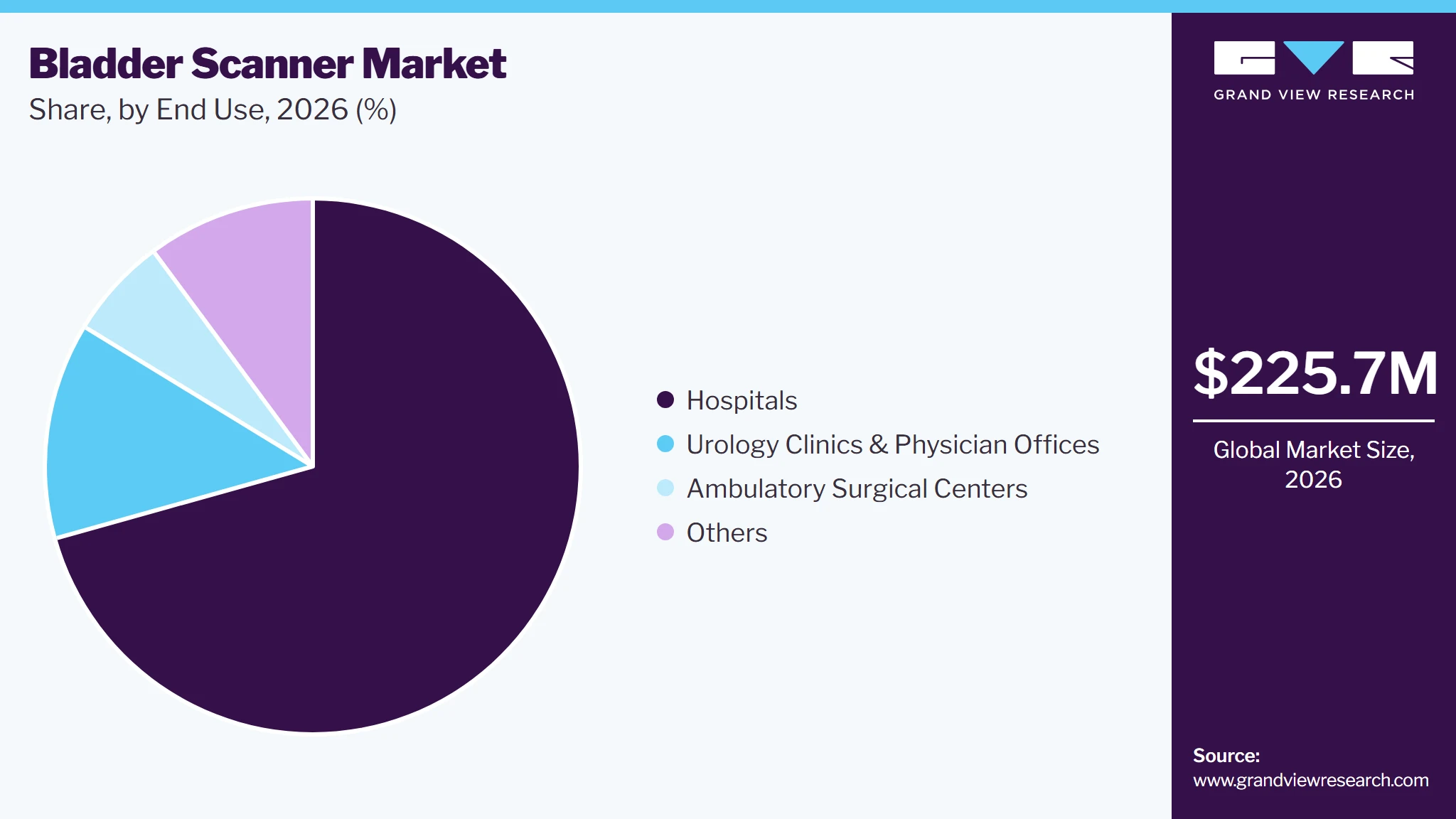
- By end use, the hospitals segment led the market with the largest revenue share of 70.7% in 2026.
Regional Highlights
- Largest regional market: North America (54.9% revenue share, 2026)
- By country: The U.S. held the largest market share in 2026.
Market Size & Forecast
- Estimated market size in 2027: USD 236.4 Million
- Projected market size by 2035: USD 326.9 Million
- CAGR (2027-2035): 4.1%
Prism AI by Grand View Research Free to tryAsk a question about the bladder scanner marketTry asking✓Every figure cited from GVR research Prefer the report? Download free sample →Demand is supported by the push to prevent catheter-associated urinary tract infections (CAUTI), the growing number of older people with urinary retention and incontinence, the spread of portable and AI-guided devices, and the expansion of hospital, aged-care, and home-care services. Hospitals want quick and objective bladder readings at the bedside so that nurses can decide whether a catheter is really needed. The focus on preventing catheter-associated urinary tract infections is driving demand for bladder scanners because they let nurses check the bladder without inserting a catheter. When a patient cannot pass urine or has just had surgery or childbirth, staff may place a catheter to be safe.
 To learn more about this report, Download Free Sample Report
Every catheter adds a risk of infection, discomfort, and a longer hospital stay. A bladder scanner shows the amount of urine in a few seconds, so the care team can place a catheter only when the bladder is truly full and can remove a catheter sooner when the bladder is empty. Hospitals are therefore adding scanners to emergency departments, general wards, post-surgery recovery areas, and maternity units, and are writing “scan before you catheterize” steps into nursing protocols. When more units follow these protocols, more scanners are needed so that a device is available at the bedside and staff do not have to search other wards to borrow one. Older scanners are also replaced as they wear out or no longer fit the workflow.
Key U.S. CAUTI Surveillance Indicators in General Acute-Care Hospitals, 2024
Indicator
Latest reported data
CAUTI cases reported in general acute-care hospitals
15,347 cases
General acute-care hospitals reporting CAUTIs
3,782 hospitals
National CAUTI standardized infection ratio (SIR)
0.56
Reduction in CAUTI SIR compared with 2015 baseline
44%
Change in CAUTI SIR from 2023 to 2024
10% decrease
Hospitals with significantly higher SIR than national SIR
8%
Source: CDC 2024
The expansion and replacement of scanner fleets across hospital wards and community services is also supporting demand. Many nurses on many wards use bladder scanners, so one device per hospital is not enough. Hospital groups buy extra units to place devices in acute wards, outpatient clinics, and community nursing teams, and they replace older units when warranties and service contracts end. Community nursing, urgent care at home, and continence services are also taking scanners out of the hospital building, which creates demand for light, easy-to-carry devices.
Bladder Scanners Purchased by the Southern Health and Social Care Trust (Northern Ireland, UK) by Year of Purchase
Year of Purchase
Number of Scanners
2021
4
2022
1
2023
8
2024
6
2025
5
2026 (as of May 2026)
11
Source: Southern Health and Social Care Trust 2026
The expansion of long-term care facilities, nursing homes, rehabilitation centers, and outpatient surgical facilities supports demand for bladder scanners by extending the need for non-invasive urinary assessment beyond conventional hospital settings. Long-term care residents with urinary retention, neurogenic bladder, and incomplete bladder emptying require post-void residual measurements to guide clinical management and decisions regarding catheterization. Outpatient surgical facilities and ambulatory surgery centers use bladder scanners to assess postoperative urinary retention during recovery and determine the need for further intervention before patient discharge. The portability and point-of-care functionality of these devices support their deployment across different healthcare environments, contributing to broader adoption of dedicated bladder scanning systems.
U.S. Residential Care Communities, Bed Capacity, and Resident Population, 2025
Indicator
2025
Residential care communities
31,415
Total residential care beds
1,297,134
Current residents
1,001,118
Source: CDC 2025
Market Dynamics
The bladder scanner market is shaped by the growing adoption of non-invasive urinary assessment, increasing demand for postoperative bladder monitoring, and the expansion of outpatient and long-term care services. Hospitals, ambulatory surgery centers, nursing homes, rehabilitation centers, and specialty clinics are adopting bladder scanners to assess bladder volume, measure post-void residual urine, and identify urinary retention without catheterization. Healthcare facilities are also replacing aging scanning equipment and upgrading to portable systems with improved measurement accuracy, ease of use, and bedside functionality to support efficient clinical workflows. Growing attention to catheter-associated urinary tract infection prevention and appropriate catheter utilization further supports the adoption of bladder scanners, as these devices help clinicians make informed decisions regarding catheterization and urinary management.
The growing older population increases demand for bladder scanners because age-related changes in bladder function and the higher prevalence of urinary disorders increase the need for regular urinary assessment. Older adults experience a higher incidence of conditions such as benign prostatic hyperplasia (BPH), overactive bladder, urinary incontinence, and urinary retention. These conditions require measurement of post-void residual (PVR) urine volume to identify incomplete bladder emptying and guide appropriate clinical management. Bladder scanners provide a non-invasive method of measuring bladder volume, reducing the need for diagnostic catheterization and supporting decisions regarding catheter use.
- For instance, China’s National Bureau of Statistics reported in January 2026 that the country’s population ended 2025 at about 1.405 billion, with about 23% of people aged 60 years or older. A large and growing older group means more patients with bladder-emptying problems, which supports demand for bladder scanners in Chinese hospitals, community health centers, and elderly care facilities.
The high cost of devices is restraining the bladder scanner market because advanced 3D and AI-guided systems require a large upfront payment and ongoing spending on probes, software updates, servicing, and staff training. Small clinics, nursing homes, and public hospitals with limited budgets delay purchases or share one device across several wards. Some facilities also use general ultrasound machines or simple clinical checks instead of a dedicated scanner, which lowers the use of bladder scanners. Thus, replacement cycles can be long, and purchase decisions depend on budget approvals and tenders.
The expansion of aged care, home care, and community healthcare services creates opportunities for bladder scanner manufacturers to extend product adoption beyond hospital settings. Residential care facilities manage older adults with urinary incontinence and bladder-emptying difficulties, creating demand for portable devices that support regular assessment of post-void residual urine volume. The integration of diagnostic equipment into community-based healthcare services supports the use of bladder scanners during home visits and urgent community assessments. For instance, NHS England's March 2026 urgent community care framework specifically identifies bladder scanners as diagnostic equipment for community care services. This development creates opportunities for manufacturers to supply compact and portable scanning systems to aged care providers, community nursing teams, and home healthcare organisations.
Bladder scanner readings can change with the way the probe is placed, the size of the patient, the amount of urine, and the training of the person scanning. Scans can be less reliable in patients who are very large, have scars or fluid in the abdomen, are pregnant, or have a very full bladder that does not fit in one picture. A wrong reading can lead to an unneeded catheter or to a missed case of retention. Manufacturers therefore need to improve on-screen guidance, automatic bladder detection, and training, while keeping the device simple and affordable.
Market Characteristics
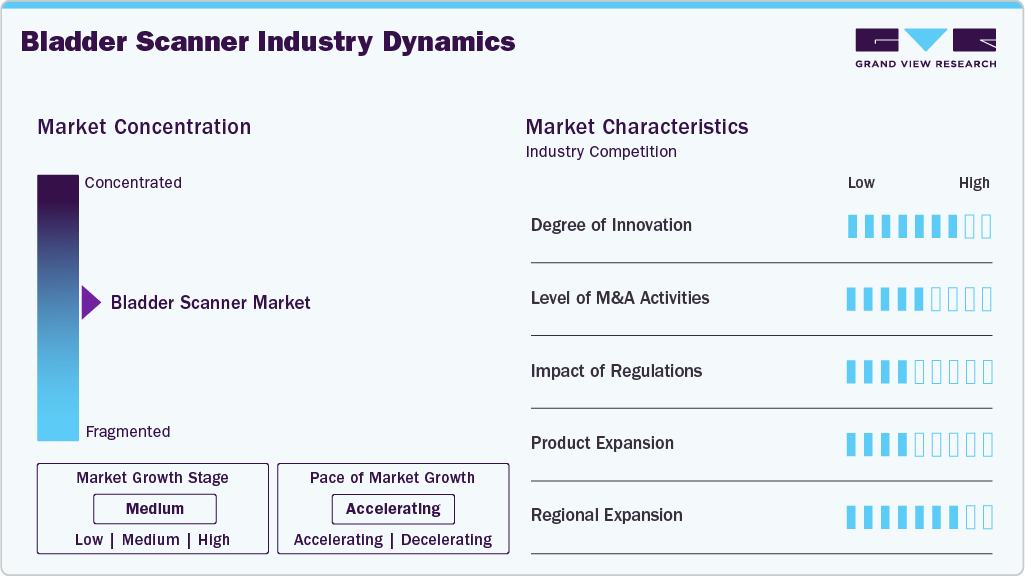
The bladder scanner market comprises a range of non-invasive ultrasound devices designed to measure bladder volume, assess post-void residual urine, and support the diagnosis and management of urinary retention. Product configurations vary according to clinical application, portability, scanning technology, display systems, and healthcare facility requirements. Manufacturers differentiate their products through measurement accuracy, automated bladder detection, 2D and 3D imaging capabilities, touchscreen interfaces, probe design, data storage, and connectivity with electronic medical records. Device portability, ease of operation, scanning speed, patient comfort, infection control, maintenance requirements, and total ownership costs influence purchasing decisions across hospitals, urology clinics, ambulatory surgery centers, and long-term care facilities.
The bladder scanner market demonstrates ongoing technological innovation, with manufacturers focusing on automated bladder detection, improved measurement accuracy, portable designs, and digital connectivity. Product advancements include 3D ultrasound imaging, automated bladder volume calculations, touchscreen displays, wireless data transfer, and integration with electronic health record (EHR) systems. Manufacturers are also developing compact and lightweight devices that support bedside assessments and use across hospitals, ambulatory surgery centres, nursing homes, and community healthcare settings. Improvements in scanning speed, probe design, user interfaces, data management, and infection control are supporting more efficient urinary assessment and clinical workflows.
- For instance, Astrasono Technology received U.S. FDA 510(k) clearance for its A3Pro bladder scanner on September 30, 2025. The device uses B-mode pulsed-echo ultrasound technology, with FDA documentation covering bladder boundary segmentation and volume measurement performance testing.
 To learn more about this report, Download Free Sample Report
Mergers and acquisitions in the bladder scanner market support product portfolio expansion, technological advancement, and access to broader healthcare provider networks. Manufacturers can combine complementary capabilities in ultrasound imaging, bladder volume measurement, automated scanning technologies, and point-of-care diagnostic systems. These activities also support expansion into adjacent diagnostic equipment categories and strengthen market access across hospitals, urology clinics, ambulatory surgery centres, nursing homes, and community healthcare settings. Acquisitions provide opportunities to enhance product development capabilities, manufacturing operations, distribution networks, and the availability of bladder scanning solutions across different clinical settings.
Bladder scanners are regulated as medical devices. In the U.S., ultrasound bladder scanners usually need FDA 510(k) clearance and must meet labeling, quality system, and post-market reporting rules. In Europe, devices must comply with the Medical Device Regulation (EU) 2017/745 and carry the CE mark. In the UK, the Medicines and Healthcare products Regulatory Agency (MHRA) oversees device marking and market access. India regulates devices through the Central Drugs Standard Control Organization (CDSCO) under the Medical Devices Rules, 2017, China through the National Medical Products Administration (NMPA), Japan through the Pharmaceuticals and Medical Devices Agency (PMDA), and Saudi Arabia through the Saudi Food and Drug Authority (SFDA). Automatic bladder-volume features may need extra evidence on accuracy, and electrical safety, acoustic output, and cleaning requirements also affect design and cost.
End use is spread across hospitals, long-term care homes, ambulatory surgery centers and clinics, and home care. Hospitals use scanners in emergency departments, general wards, intensive care, urology, gynecology and maternity, surgical and orthopedic wards, and post-anesthesia recovery. Long-term care and community nursing teams use them to check for retention and to avoid unnecessary catheters. Rehabilitation centers use them for patients with spinal cord or nerve conditions. Hospitals remain the largest group because of higher patient volumes and more wards.
The bladder scanner market comprises established dedicated device manufacturers, including Verathon, Laborie, Mcube Technology, Vitacon, Caresono, and dBMEDx, alongside emerging entrants such as Lilium Otsuka, Butterfly Network, EchoNous, and Vave Health. GE HealthCare represents an established medical imaging company with an adjacent bladder-scanning offering through its multipurpose ultrasound platform. Competitive differentiation focuses on measurement accuracy, automated bladder detection, portability, ease of operation, imaging capabilities, and integration with clinical workflows. Established specialists maintain dedicated bladder scanner portfolios, while newer entrants and broader ultrasound manufacturers expand competition through handheld and multipurpose imaging platforms.
Product Insights
By product, the handheld bladder scanners segment led the market with the largest revenue share of 92.0% in 2026. Their compact design allows healthcare professionals to perform bladder volume and post-void residual measurements at the patient's bedside without transferring individuals to dedicated imaging departments. These devices are widely applicable across hospital departments, including emergency care, intensive care, urology, and postoperative recovery, and ambulatory surgery centers and long-term care facilities. Their ease of handling, relatively simple operation, and flexibility across different clinical settings support their preference over larger, cart-based bladder scanning systems.
Console-based bladder scanners are expected to witness significant growth due to their advanced imaging capabilities, larger display interfaces, and suitability for repeated clinical assessments in high-volume healthcare settings. These systems provide healthcare professionals with detailed ultrasound images, automated bladder volume calculations, and visual guidance for probe positioning, supporting accurate assessment of urinary retention and post-void residual urine. Their integration into hospital departments, including urology, emergency care, intensive care, and postoperative recovery units, supports their use in complex clinical workflows and frequent patient monitoring.
Technology Insights
Based on technology, the 3D ultrasound segment led the market with the largest revenue share of 88.6% in 2026, due to its ability to provide three-dimensional bladder visualization and automated volume measurement. Unlike conventional 2D scanning, 3D technology captures bladder dimensions across multiple planes, supporting more comprehensive assessment of bladder volume and post-void residual urine. Automated bladder boundary detection and volume calculation reduce dependence on manual measurements and operator interpretation, supporting consistent clinical assessments. These systems are used across hospital departments, including urology, emergency care, intensive care, and postoperative recovery, where accurate bladder volume assessment is required. Advances in 3D imaging and automated volume calculation are strengthening the ultrasonic bladder scanner market.
2D ultrasound is expected to be the fastest-growing technology segment in the bladder scanner market due to its cost-effectiveness, simpler imaging architecture, and suitability for routine bladder volume assessment. These systems provide real-time cross-sectional images of the bladder and support measurement of post-void residual urine volume, helping healthcare professionals assess urinary retention and incomplete bladder emptying. Their relatively affordable equipment requirements and straightforward operation support adoption among smaller hospitals, physician offices, urology clinics, and community healthcare facilities.
Application Insights
Based on application, the acute urinary retention and catheter management (non-surgical) segment led the market with the largest revenue share of 43.8% in 2026, due to the frequent need for rapid assessment of bladder volume and post-void residual urine in patients experiencing difficulty emptying their bladder. Bladder scanners help healthcare professionals identify urine accumulation, assess the severity of retention, and determine whether catheterization is clinically required. These devices also support monitoring of bladder emptying following catheter removal and help guide decisions regarding intermittent catheterization, reducing unnecessary catheter insertions and associated catheter-related complications.
Non-neurogenic lower urinary tract assessment is expected to be the fastest-growing application segment in the bladder scanner market due to the increasing diagnosis and management of common urinary conditions, including benign prostatic hyperplasia (BPH), overactive bladder, urinary incontinence, and incomplete bladder emptying. The growing older population and higher prevalence of these conditions increase the need for routine measurement of post-void residual urine volume to evaluate bladder emptying and guide treatment decisions. Bladder scanners provide a non-invasive assessment method that helps urologists and healthcare professionals monitor urinary function without requiring catheterization for diagnostic measurement.
End Use Insights
Based on end use, the hospitals segment led the market with the largest revenue share of 70.7% in 2026, due to the high volume of patients requiring urinary retention assessment, post-void residual measurement, and postoperative bladder monitoring. These facilities use bladder scanners across emergency departments, urology units, intensive care units, general wards, and postoperative recovery departments to evaluate bladder emptying and guide catheterization decisions. The high number of inpatient admissions, surgical procedures, and patients with chronic urinary disorders increases the need for regular bladder volume assessment. Hospitals also require bladder scanners to support catheter management protocols and reduce unnecessary catheterization, helping limit the risk of catheter-associated urinary tract infections (CAUTIs).
 To learn more about this report, Download Free Sample Report
Ambulatory surgical centers (ASCs) are expected to be the fastest-growing end-use segment in the bladder scanner market due to the increasing shift of surgical procedures from hospitals to outpatient settings. Patients undergoing procedures under anesthesia require postoperative monitoring for urinary retention, as anesthetic agents and perioperative medications can affect bladder function and emptying. Bladder scanners provide rapid, non-invasive measurement of bladder volume and post-void residual urine, helping healthcare professionals identify postoperative urinary retention and determine the need for catheterization before patient discharge.
Regional Insights
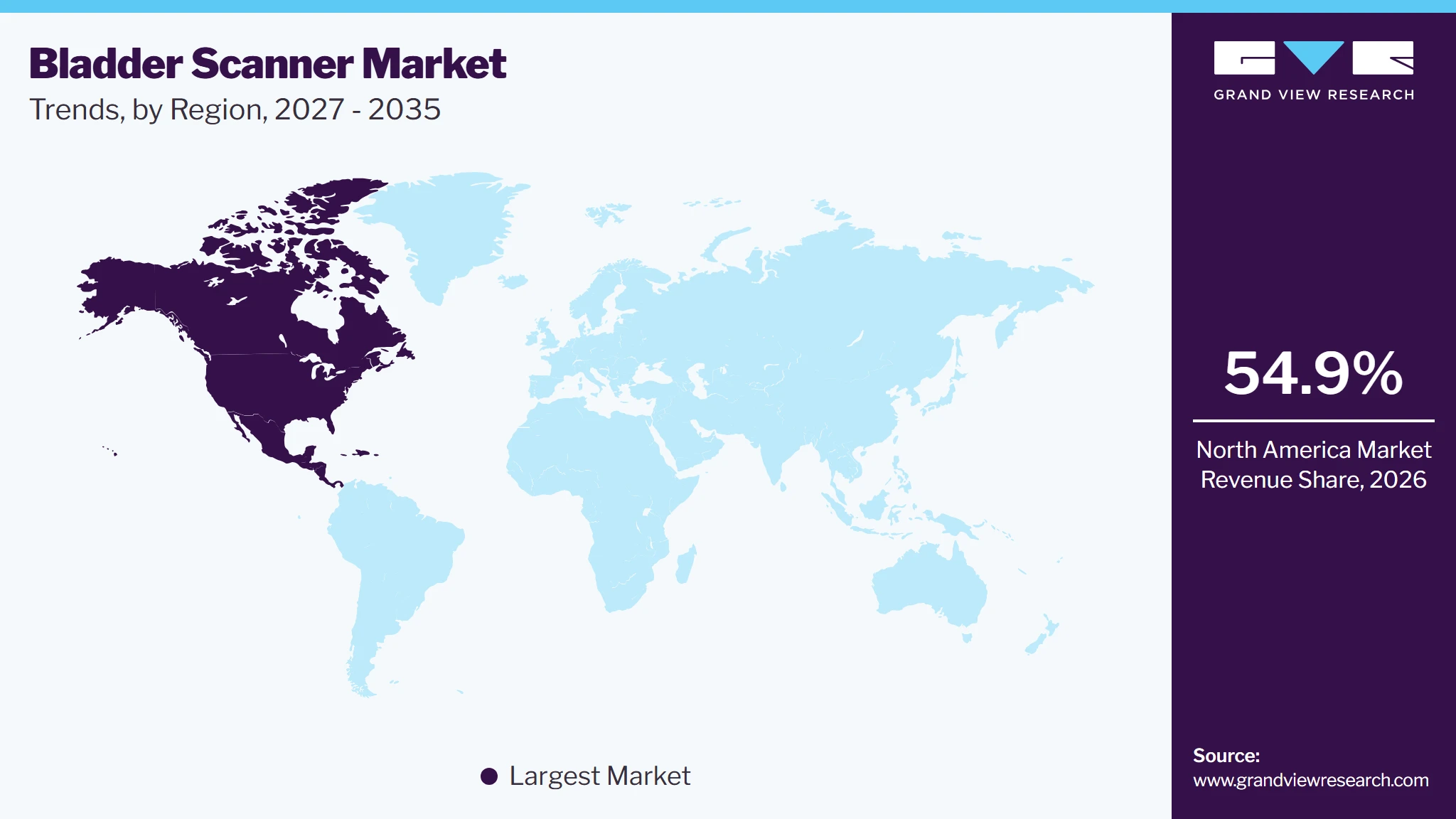
North America dominated the bladder scanner market with the largest share of 54.9% in 2026, supported by established healthcare infrastructure, high adoption of non-invasive diagnostic technologies, and growing emphasis on patient safety and urinary retention management. The rising prevalence of age-related urological conditions, including benign prostatic hyperplasia, urinary incontinence, and incomplete bladder emptying, is increasing the need for post-void residual (PVR) assessment across hospitals, urology clinics, and outpatient facilities. Healthcare providers across the U.S. and Canada are adopting portable and automated bladder scanners to support bedside assessment, postoperative urinary retention monitoring, and catheterization decisions. In addition, initiatives focused on reducing catheter-associated urinary tract infections (CAUTIs), expanding outpatient surgical services, and improving clinical workflow efficiency are supporting the use of bladder scanners across acute-care and ambulatory settings.
 To learn more about this report, Download Free Sample Report
U.S. Bladder Scanner Market Trends
The U.S. bladder scanner market is supported by strong hospital-infection prevention requirements, wide use of nurse-driven catheter protocols, and quick uptake of handheld ultrasound devices. Hospitals use scanners in emergency departments, post-surgery recovery, and general wards, and long-term care facilities use them to check for retention. The U.S. Food and Drug Administration (FDA) regulates ultrasound bladder scanners as medical devices, and most new devices reach the market through the 510(k) pathway, which requires showing that the device is as safe and effective as a legally marketed device.
In 2026, the Centers for Medicare & Medicaid Services (CMS) introduced the Catheter-Associated Urinary Tract Infection Standardized Infection Ratio Stratified for Oncology Locations (CAUTI-Onc) measure under the Hospital Inpatient Quality Reporting Program. Reporting began on January 1, 2026, with the first-quarter data submission deadline set for August 17, 2026. Performance data from the 2026 reporting period will contribute to the fiscal year 2028 payment determination. The measure covers oncology-designated wards, intensive care units, step-down units, and mixed-acuity units. This reporting requirement places additional emphasis on monitoring and preventing catheter-associated infections in oncology care settings.
Europe Bladder Scanner Trends
Europe's bladder scanner market is supported by an aging population, a rising burden of urinary disorders, and established hospital and urology care infrastructure. The prevalence of urinary incontinence, benign prostatic hyperplasia, and other age-related lower urinary tract conditions increases the need for non-invasive bladder volume measurement and post-void residual (PVR) assessment. Hospitals, urology departments, rehabilitation centers, and outpatient facilities use bladder scanners to assess urinary retention, monitor bladder function after surgery, and guide catheterization decisions. Greater emphasis on preventing catheter-associated urinary tract infections (CAUTIs), along with the expansion of outpatient and community-based care, further supports product adoption across healthcare settings. From a regulatory perspective, bladder scanners marketed in the European Union must comply with the Medical Device Regulation (EU) 2017/745 (MDR), overseen by the European Commission and implemented through national competent authorities.
The UK bladder scanner market is supported by NHS initiatives to reduce avoidable catheterization, strengthen community-based healthcare, and improve access to patient assessments outside hospital settings. Hospitals, NHS trusts, continence services, and urology departments use bladder scanners to identify urinary retention, measure post-void residual urine, and guide catheterization decisions. The expansion of outpatient services, postoperative monitoring, and community care increases the need for portable, non-invasive bladder assessment devices. In addition, efforts to prevent catheter-associated urinary tract infections (CAUTIs) support the use of bladder scanners in clinical workflows. From a regulatory perspective, the Medicines and Healthcare products Regulatory Agency (MHRA) oversees medical device regulation in the UK, including applicable registration, conformity assessment, and UKCA or CE marking requirements for market access.
For instance, East Suffolk and North Essex NHS Foundation Trust awarded a contract to Butterfly Network Limited for the purchase of a bladder scanner, with the contract concluded on December 22, 2025, and the award notice published on February 5, 2026. Valued at approximately USD 21,073, excluding VAT, the procurement was conducted through a direct award under the NHS Supply Chain Framework for Bladder Scanners and Associated Options and Related Services (reference 2021/S 000-007768).
The Germany bladder scanner market is being shaped by hospital restructuring, expansion of outpatient care, and healthcare digitalization. The Federal Ministry of Health (BMG) is implementing hospital reforms that introduce standardized service groups and quality requirements, influencing the organization of hospital-based diagnostic and patient care services. The Federal Institute for Drugs and Medical Devices (BfArM) oversees relevant medical device regulatory responsibilities, while the Medical Devices Operator Ordinance (MPBetreibV) establishes requirements for the safe operation and use of medical devices in healthcare facilities. Germany's electronic patient record (ePA) framework is also supporting digital integration across healthcare settings, encouraging the use of connected diagnostic devices and digital clinical documentation. These developments, alongside the need for non-invasive assessment of urinary retention and post-void residual urine, support bladder scanner adoption across hospitals, urology clinics, physician practices, and outpatient care facilities.
Asia Pacific Bladder Scanner Market Trends
The Asia Pacific bladder scanner market is supported by the expansion and modernization of healthcare facilities, rising demand for outpatient and primary care services, and greater adoption of non-invasive diagnostic technologies. Hospitals, urology clinics, and healthcare centers are incorporating bladder scanners to assess urinary retention, measure post-void residual urine, monitor postoperative bladder function, and guide catheterization decisions. The growing elderly population and rising prevalence of urinary disorders, including benign prostatic hyperplasia and urinary incontinence, further increase the need for bladder volume assessment. Regulatory development is also supporting product standardization and market access. The ASEAN Medical Device Directive (AMDD) establishes a common framework covering medical device safety, performance, risk classification, conformity assessment, and post-market surveillance, while individual member states retain national regulatory requirements.
The India bladder scanner market is supported by the expansion of healthcare infrastructure, a growing elderly population, and rising demand for non-invasive diagnostic technologies. The increasing prevalence of age-related urinary conditions, including benign prostatic hyperplasia, urinary incontinence, and urinary retention, is driving the need for post-void residual (PVR) assessment across hospitals, urology clinics, and outpatient facilities. India's elderly population is projected to reach approximately 230 million by 2036, representing nearly 15% of the total population. The expansion of digital healthcare through the Ayushman Bharat Digital Mission (ABDM) is also supporting connectivity and electronic health record integration across healthcare facilities. From a regulatory perspective, the Central Drugs Standard Control Organization (CDSCO) regulates medical devices under the Medical Devices Rules, 2017, covering licensing, safety, quality, and performance requirements.
The Japan bladder scanner market is supported by the country's ageing population, established healthcare infrastructure, and rising demand for non-invasive urinary assessment technologies. The increasing prevalence of age-related urological conditions, including benign prostatic hyperplasia, overactive bladder, urinary incontinence, and urinary retention, is driving the need for post-void residual (PVR) measurement across hospitals, urology clinics, and long-term care facilities. For instance, Japan’s Ministry of Internal Affairs and Communications estimated that people aged 65 years and above made up 29.4% of the population, or about 36.19 million people, as of 15 September 2025, a record high. Japan's focus on improving elderly care and reducing the burden on healthcare professionals is also supporting the use of portable bladder assessment technologies. Domestic innovation in ultrasound-based urinary monitoring further supports market development, as demonstrated by Japanese companies developing devices for bladder volume monitoring and incontinence management. From a regulatory perspective, the Pharmaceuticals and Medical Devices Agency (PMDA) and the Ministry of Health, Labour and Welfare (MHLW) oversee medical device review, approval, and regulatory compliance under the Pharmaceuticals and Medical Devices Act (PMD Act).
Latin America Bladder Scanner Market Trends
The Latin America bladder scanner market is supported by the modernization of healthcare infrastructure, expansion of private hospital networks, and rising demand for specialized urology services. The growing elderly population and increasing prevalence of age-related urinary conditions, including benign prostatic hyperplasia, urinary incontinence, and urinary retention, are increasing the need for non-invasive bladder volume measurement and post-void residual (PVR) assessment. Hospitals, urology clinics, rehabilitation centers, and outpatient facilities are adopting portable bladder scanners to support postoperative monitoring, assess urinary retention, and guide catheterization decisions. Brazil and Argentina represent important regional markets, supported by investments in healthcare facilities and the expansion of private healthcare services. Regulatory oversight by Brazil's National Health Surveillance Agency (ANVISA) and Argentina's National Administration of Drugs, Foods and Medical Technology (ANMAT) governs medical device registration, safety, and market access in these countries.
Middle East and Africa Bladder Scanner Market Trends
The Middle East and Africa (MEA) bladder scanner market is supported by healthcare infrastructure development, rising investments in hospital facilities, and growing demand for non-invasive diagnostic technologies. The increasing burden of age-related urinary conditions, including benign prostatic hyperplasia, urinary incontinence, and urinary retention, is driving the need for bladder volume measurement and post-void residual (PVR) assessment across hospitals and urology clinics. Healthcare providers are adopting portable bladder scanners to support postoperative monitoring, evaluate urinary retention, and guide catheterization decisions. Investments in hospital modernization, expansion of private healthcare networks, and improvements in specialized urology services across countries such as Saudi Arabia, the UAE, and South Africa are supporting market development. From a regulatory perspective, the Saudi Food and Drug Authority (SFDA), UAE Ministry of Health and Prevention (MOHAP), and South African Health Products Regulatory Authority (SAHPRA) oversee medical device registration, safety, and market authorization in their respective countries.
Key Companies & Market Share Insights
Bladder scanner manufacturers are focusing on developing and supplying non-invasive ultrasound devices for measuring bladder volume and assessing post-void residual urine across healthcare facilities. Companies are emphasizing portable designs, automated bladder detection, improved measurement accuracy, 2D and 3D imaging capabilities, touchscreen interfaces, and simplified probe operation to support efficient urinary assessment. Integration of digital connectivity and data storage also supports clinical documentation and patient monitoring workflows. The development of lightweight handheld scanners further facilitates bedside assessments across hospitals, urology clinics, ambulatory surgical centres, and long-term care facilities, while improvements in scanning speed and ease of operation support their use in different clinical environments.
Key Bladder Scanner Companies:
The following key companies have been profiled for this study on the bladder scanner market.
-
dBMEDx, Inc.
-
Laborie Medical Technologies (Patricia Industries)
-
Mcube Technology
-
Vitacon AS
-
Caresono Technology
-
Verathon Inc. (Roper Technologies, Inc.)
-
Butterfly Network, Inc.
-
EchoNous, Inc.
-
GE HealthCare Technologies Inc.
-
Vave Health, Inc.
- Lilium Otsuka Co., Ltd.
Competitive Benchmarking
Category
Operating Strategies
Competitive Edge
Weakness
Established Players (Verathon Inc. (Verathon Inc. (Roper Technologies, Inc.), Laborie Medical Technologies (Patricia Industries), Mcube Technology, Vitacon AS, Caresono Technology Co., Ltd., GE HealthCare Technologies Inc.)
- Established companies sell bladder scanners and ultrasound systems through direct sales teams, distributors, group purchasing contracts, and national frameworks.
- They keep adding probe, software, and workflow upgrades, and offer training, warranty, and service plans to keep hospitals in their fleet.
- Established players benefit from known brands, large installed bases, clinical studies, and service networks that hospitals trust for 24/7 wards.
- Broad portfolios and contract experience help them win large multi-site purchases and standard protocols.
- Larger organizations can be slower to bring new features, such as AI tools and low-cost handheld formats, to market.
- Higher prices and fixed device formats can leave room for lower-cost handheld alternatives.
Emerging Players (dBMEDx, Inc., Butterfly Network, Inc., EchoNous, Inc., Vave Health, Inc., Lilium Otsuka Co., Ltd.)
- Emerging companies focus on handheld and wireless probes, AI bladder-volume software, wearable monitors, and software-based updates.
- They use direct sales, distributors, national frameworks, and partnerships with care providers to reach new users such as nurses, aged-care homes, and home-care teams.
- Emerging players offer lighter and lower-cost devices, fast software updates, and designs that fit nurse-led workflows.
- Their focus on one tool or one care setting lets them adapt quickly to what users ask for.
- Emerging players normally have smaller service networks and fewer long-term hospital contracts than established companies.
- Smaller product ranges and limited clinical evidence in some markets can slow adoption in large hospital systems.
Recent Developments
-
In June 2026, Lilium Otsuka exhibited its Lilium one handheld bladder scanner at the American Urological Association (AUA) Annual Meeting 2026. The device features a palm-sized design, one-button operation, and bladder-volume measurement in approximately five seconds. Designed for point-of-care use, it focuses on portability, simplified operation, and workflow efficiency. The product is marketed in Japan, while its U.S. FDA 510(k) clearance remains pending; therefore, it is not currently available for sale in the U.S.
-
In September 2025, Astrasono received U.S. FDA 510(k) clearance (K250331) for its A3Pro Bladder Scanner, a Class II B-mode pulsed-echo ultrasound device designed for non-invasive bladder-volume measurement. This regulatory clearance represents a product development milestone for the company and supports its entry into the U.S. bladder scanner market.
-
In September 2025, Vave Health released software version 4.4 for its Vave Universal Probe, introducing guided two-plane bladder-volume measurement with automatic volume output. The update enhances the device's bladder assessment capabilities and supports faster point-of-care scanning.
Bladder Scanner Market Report Scope
Report Attribute
Details
Market size value in 2026
USD 225.7 million
Market size value in 2027
USD 236.4 million
Revenue forecast in 2035
USD 326.9 million
Growth rate
CAGR of 4.1% from 2027 to 2035
Base year for estimation
2026
Historical data
2023 - 2025
Forecast period
2027 - 2035
Quantitative units
Revenue in USD million and CAGR from 2027 to 2035
Report coverage
Revenue forecast, company ranking, competitive landscape, growth factors, and trends
Segments covered
Product type, technology, application, end use, region
Regional scope
North America; Europe; Asia Pacific; Latin America; MEA
Country scope
U.S.; Canada; Mexico; Germany; UK; France; Italy; Spain; Norway; Denmark; Sweden; China; Japan; India; South Korea; Australia; Thailand; Brazil; Argentina; Saudi Arabia; South Africa; UAE; Kuwait.
Key companies profiled
dBMEDx, Inc., Laborie Medical Technologies (Patricia Industries), Mcube Technology, Vitacon AS, Verathon Inc. (Roper Technologies, Inc.), Butterfly Network, Inc., EchoNous, Inc., GE HealthCare Technologies Inc., Vave Health, Inc., Caresono Technology Co., Ltd., and Lilium Otsuka Co., Ltd., among others.
Customization scope
Free report customization (equivalent up to 8 analysts' working days) with purchase. Addition or alteration to country, regional & segment scope.
Pricing and purchase options
Avail customized purchase options to meet your exact research needs. Explore purchase options
Bladder Scanner Market Report Segmentation
This report forecasts revenue growth at the regional and country levels and provides an analysis of the latest industry trends across each sub-segment from 2023 to 2035. For this study, Grand View Research has segmented the bladder scanner market report based on product type, technology, application, end use, and region.
-
Bladder Scanner Market Product Type Outlook (Revenue, USD Million, 2023 - 2035)
-
Console-based Bladder Scanners
-
Handheld Bladder Scanners
-
Wired Handheld
-
Wireless Handheld
-
-
-
Bladder Scanner Market Technology Outlook (Revenue, USD Million, 2023 - 2035)
-
2D Ultrasound
-
3D Ultrasound
-
Other (A-mode / non-imaging)
-
-
Bladder Scanner Market Application Outlook (Revenue, USD Million, 2023 - 2035)
-
Postoperative Bladder Assessment
-
Neurogenic Bladder Assessment and Monitoring
-
Acute Urinary Retention and Catheter Management (non-surgical)
-
Non-neurogenic Lower Urinary Tract Assessment
-
Other Applications
-
-
Bladder Scanner Market End Use Outlook (Revenue, USD Million, 2023 - 2035)
-
Hospitals
-
Urology Clinics and Physician Offices
-
Ambulatory Surgical Centers
-
Others
-
-
Regional Outlook (Revenue, USD Million, 2023 - 2035)
-
North America
-
U.S.
-
Canada
-
Mexico
-
-
Europe
-
Germany
-
UK
-
France
-
Italy
-
Spain
-
Denmark
-
Sweden
-
Norway
-
-
Asia Pacific
-
China
-
Japan
-
India
-
South Korea
-
Australia
-
Thailand
-
-
Latin America
-
Brazil
-
Argentina
-
-
Middle East & Africa
-
South Africa
-
Saudi Arabia
-
UAE
-
Kuwait
-
-
Research Methodolog
The bladder scanner market figures in this report are based on a proven research process that combines executive interviews with secondary research from proprietary databases, company filings, and recognized regulatory and institutional sources. Market size is built through value-chain sizing - reconciling supply-side and demand-side estimates - and triangulated with bottom-up and top-down approaches. Every estimate passes multiple levels of expert validation before publication, with each bladder scanner segment quantified using the revenue-capture definitions in the table below.
Segment Definition
Product type
Revenue capture definition
Console-based Bladder Scanners
Revenue generated from the sale of bladder scanning systems featuring a dedicated console or main processing unit connected to an ultrasound probe. These systems typically include a display screen, control interface, and software for bladder imaging, volume calculation, and measurement results. Revenue includes complete console-based scanner units and associated standard components supplied as part of the system.
Handheld Bladder Scanners
Revenue generated from the sale of compact, hand-operated bladder scanning devices designed for portable and point-of-care bladder-volume assessment. These devices feature an integrated or compact display and processing unit, with a connected or integrated ultrasound probe for measuring bladder volume and post-void residual urine. Revenue includes complete handheld scanner units and associated standard components supplied with the device.
Estimation Model
Bottom-Up Procedure Volume
and Product Consumption
ModelingTop-Down Revenue
TriangulationDemand-Side Healthcare
Utilization ModelingEstimates market revenue by calculating bladder scanner sales across hospitals, ambulatory surgical centers, urology clinics, physician offices, nursing homes, and other healthcare facilities. The model considers demand for console-based and handheld bladder scanners, annual unit sales, installed device base, replacement cycles, product adoption, and average selling prices (ASPs). Revenue is calculated by multiplying estimated units sold by the corresponding ASP across product types, end users, and geographic markets.
Aggregates bladder scanner revenue by analyzing company annual reports, product portfolios, regulatory filings, product approvals, pricing information, distributor disclosures, and geographic sales data. Revenue is assessed across dedicated bladder scanner manufacturers and companies offering ultrasound platforms with bladder-volume measurement capabilities. Company-level revenue is allocated to bladder scanner products based on product-specific disclosures, portfolio contribution, geographic presence, and estimated sales mix. Revenue from unrelated ultrasound systems, general diagnostic equipment, and other medical devices is excluded..
Assesses bladder scanner purchasing and utilization across hospitals, ambulatory surgical centers, urology clinics, physician offices, and long-term care facilities. The model considers the prevalence of urinary retention, benign prostatic hyperplasia, urinary incontinence, and other bladder-related conditions; patient volumes, post-void residual (PVR) assessment frequency, postoperative monitoring, catheterization protocols, availability of urology services, healthcare infrastructure, and device replacement requirements. These parameters are used to validate end-user demand, estimated device requirements, product adoption, and overall market revenue.
Delivered Customizations
This report has been delivered with the following In-depth customizations
Client Request
Customization Delivered
Value Adds
ASP and Volume Analysis (Historical & Forecast)
Comprehensive ASP and volume analysis for bladder scanners across the forecast period, segmented by product type (console-based and handheld bladder scanners), technology (2D and 3D ultrasound), application, and end user (hospitals, ambulatory surgical centers, urology clinics, physician offices, nursing homes, and other healthcare facilities). The analysis incorporates annual device sales, installed device base, replacement cycles, average selling prices, product adoption, and regional pricing differences. Forecasts are developed based on healthcare facility expansion, patient volumes, urinary disorder prevalence, postoperative monitoring requirements, and adoption of portable bladder scanning devices.
Enables accurate revenue and unit-volume forecasting, pricing strategy development, procurement planning, assessment of premium versus standard devices, identification of high-value product categories, replacement-market assessment, and regional investment decisions for manufacturers, distributors, and investors.
Application and Consumption Volume Analysis
Detailed assessment of bladder scanner utilization across urinary retention assessment, post-void residual (PVR) measurement, non-neurogenic lower urinary tract assessment, postoperative bladder monitoring, and catheterization management. The analysis evaluates scanning frequency, patient volumes, device utilization across healthcare facilities, bladder-related conditions, catheterization protocols, clinical workflows, and differences in purchasing and utilization patterns across hospitals, ambulatory surgical centers, urology clinics, physician offices, and long-term care facilities.
Supports demand forecasting, estimation of addressable device volumes, identification of high-utilization applications, assessment of replacement requirements, facility-level procurement planning, capacity expansion analysis, and evaluation of recurring demand from device replacement and upgrades.
Competitive Benchmarking and Market Share Analysis
Comprehensive competitive assessment of bladder scanner manufacturers, including product portfolio benchmarking, console-based and handheld scanner offerings, 2D and 3D ultrasound technologies, automated bladder detection, measurement accuracy, portability, display configurations, connectivity, software capabilities, regulatory approvals, distribution networks, geographic presence, pricing, product launches, and strategic partnerships. Market share is evaluated across major geographic markets and defined product segments, considering dedicated bladder scanner manufacturers and companies offering multipurpose ultrasound platforms with bladder-volume measurement capabilities.
Enables competitive positioning, market gap identification, product feature benchmarking, pricing optimization, product differentiation, distribution strategy development, partnership and acquisition evaluation, commercialization planning, and geographic expansion assessment for established and emerging manufacturers.
About the Author(s)
Medical Devices Research Team
Healthcare · Medical DevicesThis report was authored by the medical devices research team at Grand View Research - comprising two research analysts, one senior research analyst, and one industry expert - with specialized expertise in the medical devices segment of the healthcare industry. All findings are based on proprietary healthcare databases, executive interviews, and regulatory analysis, subject to internal peer review prior to publication.
Last Updated:
Speak to Analyst

Customize this report to your needs - add regions, segments, or data points, with 20% free customization.
Or view our licence options:


ISO 9001:2015 & 27001:2022 Certified
We are GDPR and CCPA compliant! Your transaction & personal information is safe and secure. For more details, please read our privacy policy.


