
- Home
- »
- Advanced Interior Materials
- »
-
Blanket Insulation Market Size And Share Report, 2026-2033GVR Report cover

Blanket Insulation Market (2026 - 2033)
Size, Share & Trends Analysis Report By Application (Building & Construction, Transportation, Industrial, Appliances), By Region (North America, Europe, Asia Pacific, Latin America, MEA), And Segment Forecasts
Market Size, 2025
$16.7BMarket Estimate, 2026
$17.6BMarket Forecast, 2033
$27.0BCAGR, 2026–2033
6.3%Blanket Insulation Market Summary
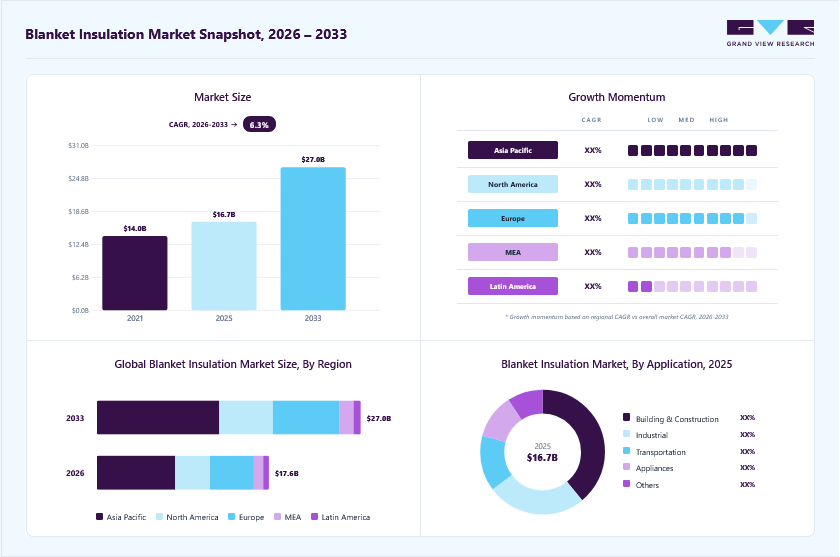
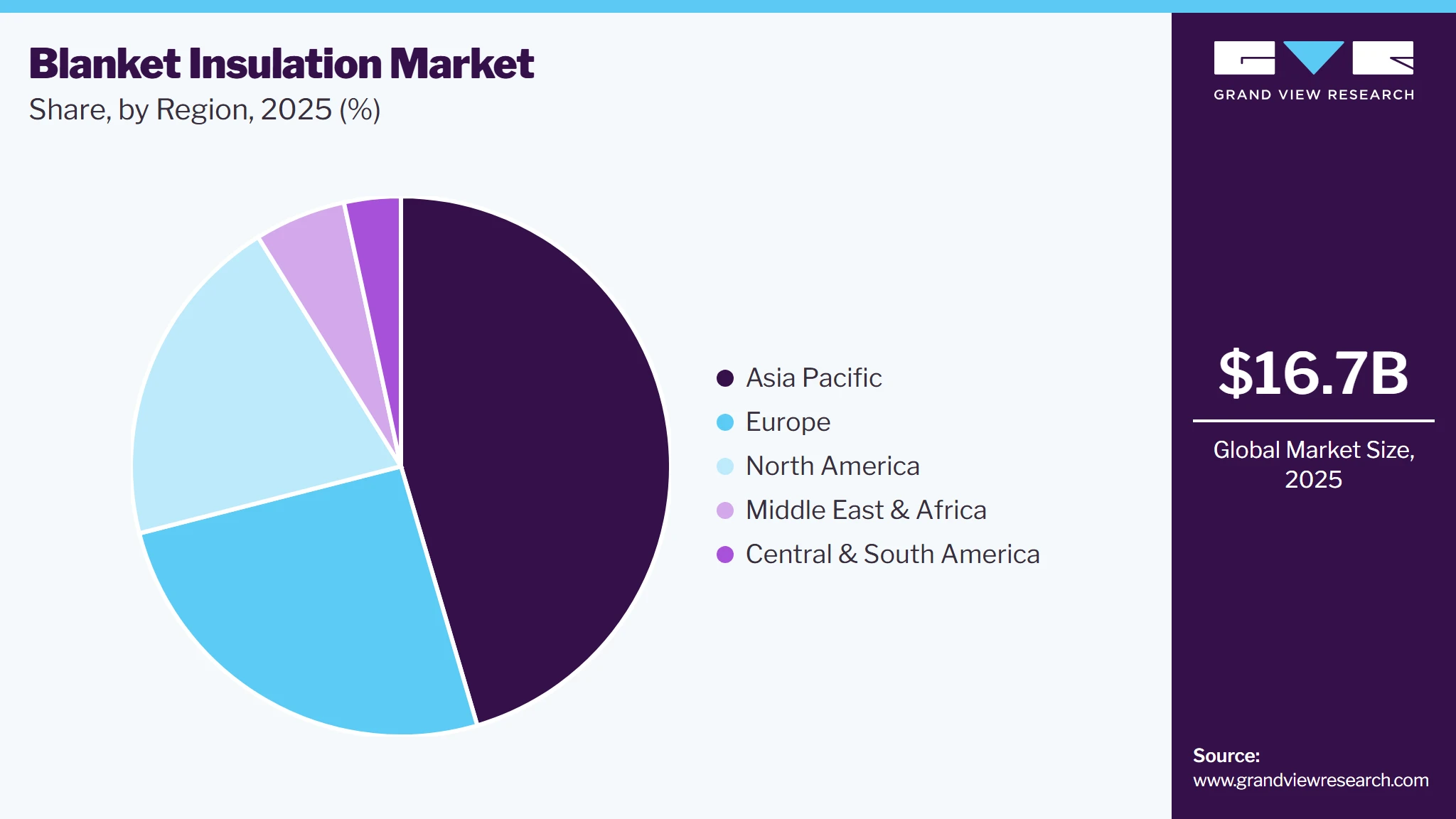
The global blanket insulation market size was valued at USD 16.7 billion in 2025 and is projected to grow from USD 17.6 billion in 2026 to USD 27.0 billion by 2033, at a CAGR of 6.3% from 2026 to 2033. The market in Asia Pacific dominated with a revenue share of 45.4% in 2025. This growth can be attributed to the increasing use of insulation in building & construction and industrial applications.
 Source: Grand View Research, IR Documents, Primary Interviews, Paid DatabasesTo learn more about this report,
 Download Free Sample Report
 Key Market Trends & Insights
- By application: Building & construction segment held the largest market share of 39.0% in 2025.
- By application: Industrial segment is expected to grow at the fastest CAGR of 6.8% from 2026 to 2033.
Regional Highlights
- Largest regional market: Asia Pacific (45.4% revenue share, 2025)
- By country: China held the largest market share in 2025.
Market Size & Forecast
- Market size in 2025: USD 16.7 Billion
- Estimated market size in 2026: USD 17.6 Billion
- Projected market size by 2033: USD 27.0 Billion
- CAGR (2026-2033): 6.3%
Three ways to get this report
Buy it, customize it, or ask a question.Ask an Analyst
A direct answer, usually in 1 working day
- AccessReport author, directly
- Reply timeWithin 1 working day
- No sales callDirect answer only
- FormatEmail reply
- CostFree, no cost
Get the Full Report
What the study covers
- FormatsPDF · Excel · Dashboard
- Timeline2026–2033 annual, 2025 base
- Coverage20+ countries, 5 regions
- Companies10+ key players profiled
Customize the Report
20% free customization
- IncludeCountries, segments, points
- TailorTo your product definition
- ExtendDeeper competitor detail
- OrA fully bespoke study
- Turnaround5–10 working days
Blanket insulation can also be utilized for acoustic fabrication in warehouses and other commercial buildings and thermal insulation in interior spaces. The construction industry is expected to reach about USD 14 trillion by the end of 2030 due to increasing urbanization and increased spending on housing and remodeling across the globe. Urbanization and population growth have led to a surge in construction activities, fueling the demand for insulation materials. Blanket insulation products are widely used in new builds and renovations due to their ease of installation and versatility. As more developers prioritize energy-efficient building designs, the adoption of blanket insulation continues to rise, contributing to market expansion.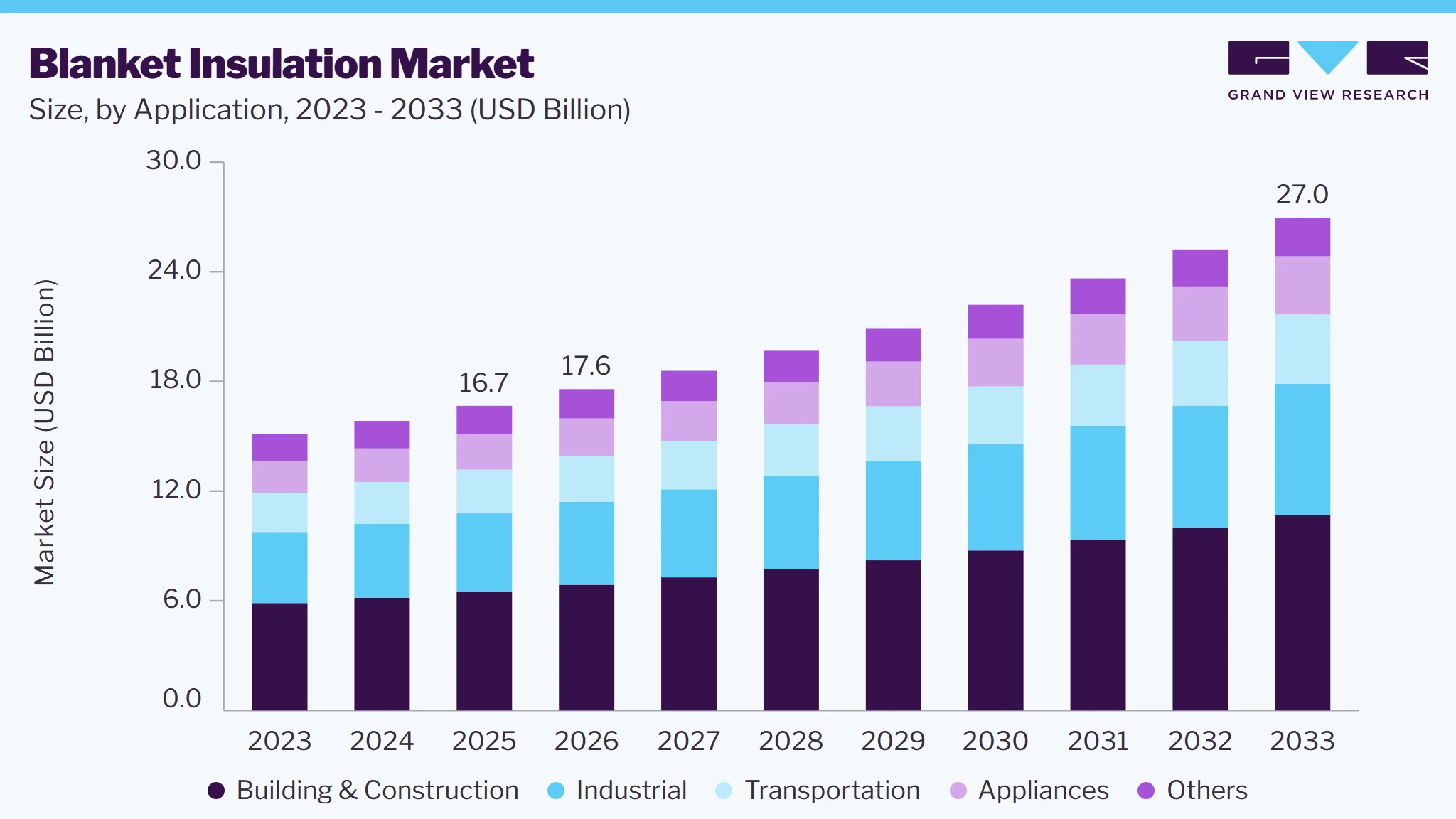 To learn more about this report, Download Free Sample Report
 As energy costs continue escalating, homeowners and businesses increasingly seek solutions that minimize energy consumption. Blanket insulation, known for its thermal performance, helps reduce heating and cooling expenses, making it an attractive option for new constructions and retrofitting existing buildings. Innovations have led to the development of high-performance blanket insulation that offers better thermal resistance and improves soundproofing and fire resistance. Manufacturers are investing in research and development to enhance the properties of insulation materials, making them lighter, easier to install, and more environmentally friendly.
Market Dynamics
The blanket insulation market is witnessing steady growth due to increasing demand for energy-efficient buildings, stringent building energy regulations, and rising investments in residential, commercial, and industrial infrastructure development. Blanket insulation products, including fiberglass and mineral wool blankets, are widely used for thermal and acoustic insulation owing to their cost-effectiveness, ease of installation, and strong thermal performance. Growing urbanization, renovation activities, and retrofitting of aging buildings are further supporting market expansion. Additionally, rising emphasis on sustainability, green building certifications, and the adoption of recycled and eco-friendly insulation materials are creating favorable conditions for long-term market growth.
The increasing focus on reducing energy consumption in residential, commercial, and industrial buildings is a major driver for the blanket insulation market. Governments worldwide are implementing stricter building energy codes and carbon reduction targets, encouraging the adoption of high-performance insulation materials. Blanket insulation helps minimize heat transfer, lower heating and cooling costs, and improve indoor comfort, making it an essential component in modern construction projects. The rising popularity of green building initiatives and net-zero energy buildings is further accelerating demand.
Rapid urbanization and infrastructure development, particularly across Asia Pacific, are creating significant opportunities for blanket insulation manufacturers. The expansion of residential housing projects, commercial complexes, industrial facilities, and transportation infrastructure is increasing the need for effective thermal and acoustic insulation solutions. Furthermore, growing retrofitting and renovation activities aimed at improving energy efficiency in existing buildings continue to support blanket insulation adoption across developed and developing economies.
The availability of alternative insulation products such as rigid foam boards, spray foam insulation, and advanced insulation materials presents a significant challenge for the blanket insulation market. Many of these alternatives offer higher thermal resistance, moisture resistance, and space-saving benefits, making them attractive for applications requiring superior insulation performance. As construction standards continue to evolve, some end users may prefer advanced insulation systems over traditional blanket insulation products.
The growing global emphasis on sustainable infrastructure development presents a substantial opportunity for the blanket insulation market. Governments, property developers, and facility owners are increasingly investing in energy-efficient building upgrades to reduce carbon emissions and operational costs. Large-scale retrofit programs targeting older residential and commercial buildings are generating strong demand for easy-to-install insulation solutions such as blanket insulation. Furthermore, manufacturers are focusing on developing eco-friendly insulation products utilizing recycled glass, mineral wool, and other sustainable materials. Innovations aimed at improving thermal efficiency, fire resistance, acoustic performance, and environmental sustainability are expected to enhance product adoption across construction, transportation, industrial, and HVAC applications.
Analyst Perspective
The blanket insulation market is evolving into a technology-driven segment focused on energy efficiency, fire safety, sustainability, and advanced material performance. Growth is driven by green buildings, energy-efficient infrastructure, industrial optimization, HVAC upgrades, and building retrofits. Companies offering high-performance, sustainable, compliant, and cost-effective solutions, supported by strong distribution and certifications, are likely to gain competitive advantages. However, smaller players may face challenges from raw material price volatility, alternative technologies, regulatory changes, pricing pressures, and fluctuations in construction and industrial investments.
Application Insights
Based on application, the building & construction segment led the market with the largest revenue share of 39.0% in 2025 and is expected to grow at a CAGR of 6.5% over the forecast period. As global populations rise and urbanization accelerates, the demand for new housing and commercial properties intensifies. This surge in construction activities necessitates efficient thermal insulation solutions to enhance energy efficiency and ensure compliance with stringent building codes to reduce energy consumption. The integration of blanket insulation into building designs not only supports sustainability efforts but also meets consumer expectations for comfort and cost savings. The renovation and retrofitting of existing buildings present another opportunity for the blanket insulation market. Older buildings often lack adequate insulation, so there is a significant push to upgrade these structures to improve energy efficiency and comfort. Blanket insulation is particularly well-suited for such projects, as it can be easily integrated into walls, attics, and ceilings without extensive modifications.
The industrial segment is anticipated to grow at the fastest CAGR of 6.8% over the forecast period. Effective thermal management in manufacturing, chemical processing, and power generation becomes critical as industries ramp up production to meet rising consumer demands. Blanket insulation helps maintain optimal temperatures in equipment and piping systems, ensuring efficient operations. This increased industrial output drives the demand for insulation materials and encourages manufacturers to innovate and develop more efficient products tailored for specific industrial applications.
In the transportation sector, these materials are used in vehicles ranging from automobiles to aircraft and marine vessels. As electric and hybrid cars gain popularity, the need for effective thermal management systems has become paramount. Blanket insulation protects batteries and electric components from extreme temperatures, ensuring optimal performance and longevity. Blanket insulation is widely used in various household appliances such as refrigerators, water heaters, and HVAC systems. The demand for energy-efficient appliances has surged as consumers seek to reduce their energy bills and minimize their environmental impact.
Regional Insights
The North American Blanket Insulation market is anticipated to grow significantly over the forecast period. There is a growing awareness among consumers and builders regarding sustainable building practices, propelling the blanket insulation market in the region. Many stakeholders are now prioritizing eco-friendly materials that contribute to energy savings over the lifecycle of a building. Blanket insulation options made from recycled or natural materials are gaining traction as they align with sustainability goals. This shift towards green building practices enhances energy efficiency and reduces environmental impact, thus attracting environmentally conscious consumers who prefer products that support sustainable living.
 To learn more about this report, Download Free Sample Report
 U.S. Blanket Insulation Market Trends
The U.S. Department of Energy (DOE) has established various standards that mandate higher insulation R-values in residential and commercial buildings. These regulations encourage builders and homeowners to invest in high-performance insulation products, including blanket insulation, known for its effectiveness in thermal resistance. According to data from the U.S. Census Bureau, new housing starts have been on an upward trend, leading to a corresponding rise in demand for insulation materials.
Asia Pacific Blanket Insulation Market Trends
Asia Pacific dominated the blanket insulation market with the largest revenue share of 45.4% in 2025. Countries such as China and India are witnessing extensive infrastructure development, including residential, commercial, and industrial projects. This boom in construction is a primary driver for the blanket insulation market, as builders increasingly recognize the importance of energy efficiency and thermal comfort in buildings. Blanket insulation materials, such as fiberglass and mineral wool, are widely used in walls, roofs, and floors to enhance energy performance and reduce heating and cooling costs.
China Blanket Insulation Market Trends
The blanket insulation market in China held the largest share in the Asia Pacific region in 2025. The Chinese government has implemented stringent regulations to improve energy efficiency in buildings. These regulations mandate high-performance insulation materials to reduce energy consumption for heating and cooling purposes. The “13th Five-Year Plan for Ecological and Environmental Protection” emphasizes energy-saving measures, which include enhancing building insulation standards. As a result, manufacturers are focusing on developing advanced blanket insulation products that meet these regulatory requirements.
Europe Blanket Insulation Market Trends
The European Union has set ambitious targets to reduce greenhouse gas emissions and improve energy efficiency across various sectors, including residential, commercial, and industrial buildings. These regulations often mandate higher insulation standards for new constructions and renovations, driving demand for effective insulation solutions like blanket insulation. As a result, manufacturers are focusing on developing high-performance blanket insulation products that meet or exceed these regulatory requirements.
Key Blanket Insulation Company Insights
Some of the key players operating in the market include Refmon, Apronor, Armacell, and others:
-
Refmon provides high-quality blanket insulation solutions to enhance energy efficiency and thermal performance across various applications. Refmon’s offerings include products tailored to meet specific needs, such as soundproofing, fire resistance, and moisture control. Their blanket insulation products are engineered to comply with industry standards and regulations, ensuring safety and effectiveness in reducing heat loss or gain.
-
Apronor product offerings include fiberglass, mineral wool, and foam insulation blankets engineered to meet the diverse needs of residential, commercial, and industrial sectors. These insulation materials are known for their excellent thermal resistance (R-value), sound absorption properties, and fire resistance capabilities. Apronor’s blanket insulation products are available in various thicknesses and densities to accommodate different installation requirements, ensuring optimal performance in various environments.
Key Blanket Insulation Companies:
The following key companies have been profiled for this study on the blanket insulation market.
-
Refmon
-
Apronor
-
Insul-fab
-
Armacell
-
Thermaxx jackets
-
Ravani ceramics
-
Hudson's bay company
-
Urbanara gmbh
-
American blanket company
-
Medline industries Inc.
-
Jarden corporation
-
Pendleton woolen mills
-
Chellco industries limited
-
Biddeford blankets llc
-
Shanghai easun group
Competitive Benchmarking
Category
Operating Strategies
Competitive Edge
Weakness
Established Players (Armacell, Thermaxx Jackets, Medline Industries, Inc., Jarden Corporation, Pendleton Woolen Mills, Hudson's Bay Company, Shanghai Easun Group)
- Focus on large-scale manufacturing and global distribution networks.
- Expand product portfolios with high-performance thermal, acoustic, and fire-resistant insulation solutions.
- Pursue long-term contracts with construction firms, industrial operators, and OEMs to ensure recurring revenue streams.
- Strong brand recognition, extensive distribution channels, and established customer relationships.
- Advanced R&D capabilities enabling development of energy-efficient and sustainable insulation materials.
- Ability to meet large-volume orders while complying with stringent international quality and safety standards.
- Higher operational and compliance costs due to global manufacturing footprints.
- Slower response to niche market opportunities because of complex organizational structures.
- Dependence on raw material price stability and large-scale demand cycles.
Emerging Players (Refmon, Apronor, Insul-Fab, Ravani Ceramics, Urbanara GmbH, American Blanket Company, Chellco Industries Limited, Biddeford Blankets LLC)
- Focus on niche applications such as customized thermal blankets, removable insulation systems, and specialty insulation products.
- Target regional markets with flexible production capabilities and tailored customer support.
- Compete through faster delivery times, customized solutions, and application-specific expertise.
- Greater flexibility in serving specialized customer requirements and low-volume projects.
- Ability to rapidly innovate and adapt products to evolving end-user needs.
- Competitive pricing and focused expertise in specific insulation technologies or regional markets.
- Limited production capacity and lower economies of scale compared to established players.
- Restricted geographic presence and weaker distribution networks.
- Lower R&D budgets and reduced ability to compete for large infrastructure or industrial contracts.
Blanket Insulation Market Report Scope
Report Attribute
Details
Market size in 2025
USD 16.7 billion
Estimated market size in 2026
USD 17.6 billion
Projected market size by 2033
USD 27.0 billion
Growth rate
CAGR of 6.3% from 2026 to 2033
Base year for estimation
2025
Historical data
2021 - 2024
Forecast period
2026 - 2033
Quantitative units
Volume in Kilotons and Revenue in USD million/billion and CAGR from 2026 to 2033
Report coverage
Revenue forecast, company ranking, competitive landscape, growth factors, and trends
Segments covered
Application, region
Regional scope
North America; Europe; Asia Pacific; Latin America; MEA
Country scope
U.S.; Canada; Mexico; Germany; UK; France; Italy; Spain; China; India; Japan; South Korea; Australia.
Key companies profiled
Refmon; Apronor; Insul-fab; Thermaxx jackets; Ravani ceramics; Hudson's bay company; Urbanara gmbh; American blanket company; Medline industries inc.; Armacell; Jarden corporation; Pendleton woolen mills; Chellco industries limited; Biddeford blankets llc; Shanghai easun group
Customization scope
Free report customization (equivalent up to 8 analysts' working days) with purchase. Addition or alteration to country, regional & segment scope.
Pricing and purchase options
Avail customized purchase options to meet your exact research needs. Explore purchase options
Global Blanket Insulation Market Report Segmentation
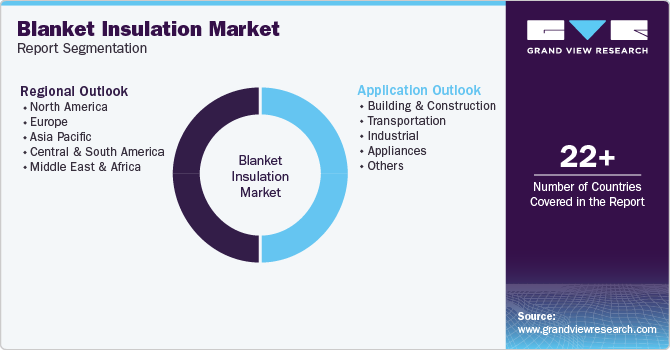
This report forecasts revenue growth at regional & country levels and provides an analysis on the industry trends in each of the sub-segments from 2021 to 2033. For this study, Grand View Research has segmented the blanket insulation market based on application and region:
 To learn more about this report, Download Free Sample Report
 -
Application Outlook (Volume, Kilotons; Revenue, USD Million; 2021 - 2033)
-
Building & Construction
-
Transportation
-
Industrial
-
Appliances
-
Others
-
-
Region Outlook (Volume, Kilotons; Revenue, USD Million, 2021 - 2033)
-
North America
-
U.S.
-
Canada
-
Mexico
-
-
Europe
-
Germany
-
Italy
-
U.K.
-
France
-
Spain
-
-
Asia Pacific
-
China
-
Japan
-
India
-
South Korea
-
Australia
-
-
Central & South America
-
Middle East & Africa
-
Research Methodology
The blanket insulation market figures in this report are based on a proven research process that combines executive interviews with secondary research from proprietary databases, company filings, and recognized regulatory and institutional sources. Market size is built through value-chain sizing - reconciling supply-side and demand-side estimates - and triangulated with bottom-up and top-down approaches. Every estimate passes multiple levels of expert validation before publication, with each blanket insulation segment quantified using the revenue-capture definitions in the table below.
Segment Definition
Segment - Application
Revenue capture definition
Building & Construction
Revenue generated from the sale of blanket insulation materials used for thermal insulation, acoustic control, and energy efficiency enhancement in residential, commercial, and institutional buildings. This segment captures revenues from fiberglass, mineral wool, and other blanket insulation products supplied to construction companies, contractors, building owners, and renovation service providers for applications including walls, roofs, attics, floors, ceilings, and HVAC systems across new construction and retrofit projects.
Transportation
Revenue generated from the sale of blanket insulation materials used for thermal management, acoustic insulation, and passenger comfort in transportation applications. This segment captures revenues from insulation products supplied to automotive manufacturers, rail operators, marine vessel builders, and aerospace companies for use in vehicle cabins, engine compartments, exhaust systems, cargo areas, and noise reduction systems requiring lightweight and energy-efficient insulation solutions.
Industrial
Revenue generated from the sale of blanket insulation materials used for process temperature control, equipment protection, and energy conservation in industrial facilities. This segment captures revenues from insulation products supplied to manufacturing plants, power generation facilities, oil & gas operators, chemical processing companies, and industrial equipment manufacturers for applications including boilers, furnaces, pipes, tanks, ducts, turbines, and process equipment operating under varying temperature conditions.
Appliances
Revenue generated from the sale of blanket insulation materials used to improve thermal efficiency, safety, and noise reduction in household and commercial appliances. This segment captures revenues from insulation products supplied to appliance manufacturers for use in refrigerators, ovens, water heaters, dishwashers, freezers, washing machines, and HVAC equipment where effective temperature regulation and energy efficiency are critical performance requirements.
Others
Revenue generated from the sale of blanket insulation materials used in diverse applications outside the primary end-use sectors. This segment captures revenues from insulation products supplied for agricultural facilities, data centers, telecommunications infrastructure, cold storage units, defense installations, renewable energy projects, and specialty applications requiring thermal protection, fire resistance, acoustic insulation, or energy management capabilities.
Estimation Model
Layer Name
Key Question
Description
Global Construction and Industrial Activity Assessment
What is the overall demand potential for blanket insulation across major end-use industries?
Evaluates global construction spending, industrial output, infrastructure development, residential and commercial building activity, manufacturing expansion, and energy efficiency initiatives that drive the consumption of blanket insulation materials worldwide.
End-Use Industry Penetration Analysis
How extensively is blanket insulation adopted across different application sectors?
Assesses the penetration of blanket insulation in building & construction, transportation, industrial, appliances, and other applications. The analysis considers insulation requirements, energy efficiency standards, thermal performance needs, and replacement demand across each end-use sector.
Material Type and Product Mix Evaluation
Which blanket insulation materials contribute most significantly to market revenues?
Examines demand for fiberglass blanket insulation, mineral wool blanket insulation, natural fiber insulation blankets, ceramic fiber blankets, and other insulation materials. The layer evaluates pricing trends, performance characteristics, regulatory compliance, and adoption rates across different applications.
Revenue Modeling and Market Validation
What is the final revenue generated by the blanket insulation market globally and regionally?
Aggregates revenues generated from blanket insulation sales across all end-use industries, material types, and geographic regions. The model validates market estimates through manufacturer revenues, distributor sales, construction activity data, insulation consumption trends, and industry expert assessments to determine the final market size.spending trends, and expert interviews to ensure accurate estimation and forecasting.
Delivered Customizations
This report has been delivered with the following In-depth customizations
Client Request
Customization Delivered
Value Adds
Insulation Material Technology Benchmarking
Comprehensive evaluation of fiberglass, mineral wool, ceramic fiber, natural fiber, and other blanket insulation materials based on thermal performance, fire resistance, sustainability, and cost-effectiveness.
Assisted stakeholders in understanding technology positioning, product differentiation opportunities, and future material adoption trends.
Regulatory and Energy Efficiency Framework Analysis
Assessment of building energy codes, fire safety regulations, sustainability standards, green building certifications, and insulation-related compliance requirements across key regions.
Provided strategic insights into regulatory impacts, compliance risks, and market opportunities arising from increasingly stringent energy-efficiency mandates.
Regional Growth Opportunity Analysis
Comprehensive assessment of blanket insulation demand across major regions, including analysis of construction activity, industrialization trends, infrastructure investments, energy-efficiency initiatives, regulatory frameworks, urbanization rates, retrofit and renovation spending, and country-level growth opportunities. The study further evaluates key demand centers, investment pipelines, competitive intensity, distribution networks, and emerging application areas influencing regional market expansion.
Enabled clients to identify high-growth geographies, prioritize market entry and expansion strategies, optimize regional investment allocation, understand country-specific demand drivers, evaluate competitive positioning, and capitalize on emerging opportunities arising from sustainable construction, industrial modernization, and energy-efficiency regulations.
Frequently Asked Questions About This Report
The global blanket insulation market size was valued at USD 16.7 billion in 2025 and is estimated at USD 17.6 billion for 2026.
The building & construction segment held the highest revenue market share of 39.0% in 2025, driven by increasing construction activity and growing demand for energy-efficient thermal insulation in residential and commercial buildings.
Some of the key players operating in the blanket insulation market include Refmon, Apronor, Insul-fab, Thermaxx jackets, Ravani ceramics, Hudson's bay company, Urbanara GmbH, American Blanket Company, Medline Industries Inc.; Armacell, Jarden Corporation, Pendleton Woolen Mills, Chellco Industries Limited, Biddeford Blankets LLC, and Shanghai Easun Group.
Key factors driving the blanket insulation market include rising demand for energy-efficient buildings, increasing construction and renovation activities, stringent energy-efficiency regulations, and growing focus on sustainability and thermal comfort.
Asia Pacific held the highest revenue market share of 45.4% in 2025, supported by rapid infrastructure development, expanding construction activities, and growing demand for energy-efficient insulation solutions.
The industrial segment is the fastest growing application in the blanket insulation market.
Asia Pacific is the fastest growing region in the blanket insulation market.
China dominated the Asia Pacific blanket insulation market.
The global blanket insulation market is expected to grow at a CAGR of 6.3% from 2026 to 2033, reaching USD 27.0 billion by 2033.
About the Author(s)
Advanced Interior Materials Research Team
Advanced Materials · Advanced Interior MaterialsThis report was authored by the advanced interior materials research team at Grand View Research - comprising two research analysts, one senior research analyst, and one industry expert - with specialized expertise in the advanced interior materials segment of the advanced materials industry. All findings are based on proprietary advanced materials databases, executive interviews, and regulatory analysis, subject to internal peer review prior to publication.
Last Updated:
Speak to Analyst

Customize this report to your needs - add regions, segments, or data points, with 20% free customization.
Or view our licence options:


ISO 9001:2015 & 27001:2022 Certified
We are GDPR and CCPA compliant! Your transaction & personal information is safe and secure. For more details, please read our privacy policy.


