
- Home
- »
- Clinical Diagnostics
- »
-
Blood Bank Serology Market Size & Share Report 2026-2033GVR Report cover

Blood Bank Serology Market (2026 - 2033)
Size, Share & Trends Analysis Report By Testing Area (Immunohematology Serology, Transfusion-Transmissible Infection Serology), By Product, By Technology, By End Use, By Region, And Segment Forecasts
Market Size, 2025
$3.3BMarket Estimate, 2026
$3.6BMarket Forecast, 2033
$5.9BCAGR, 2026–2033
7.5%Blood Bank Serology Market Summary
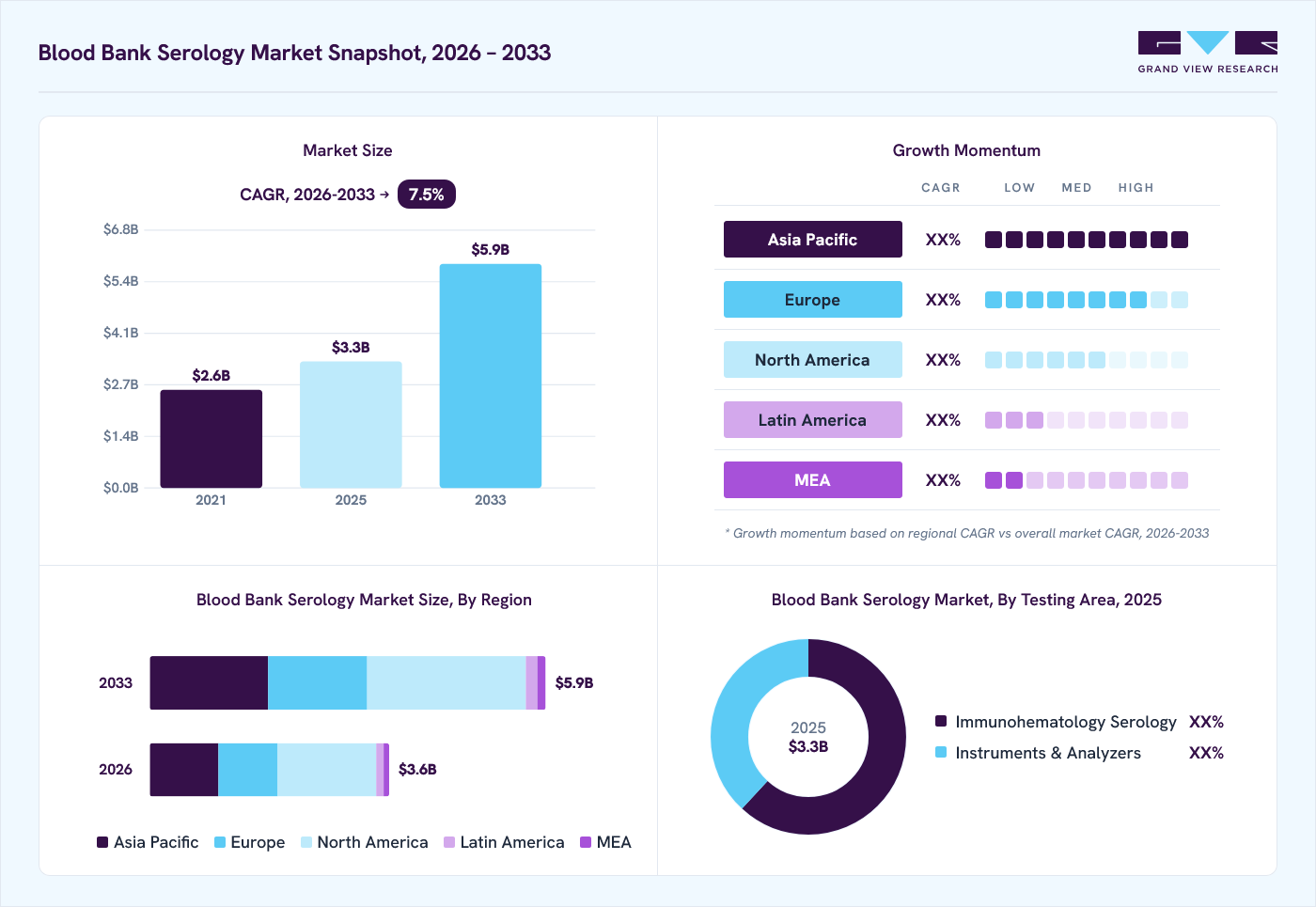
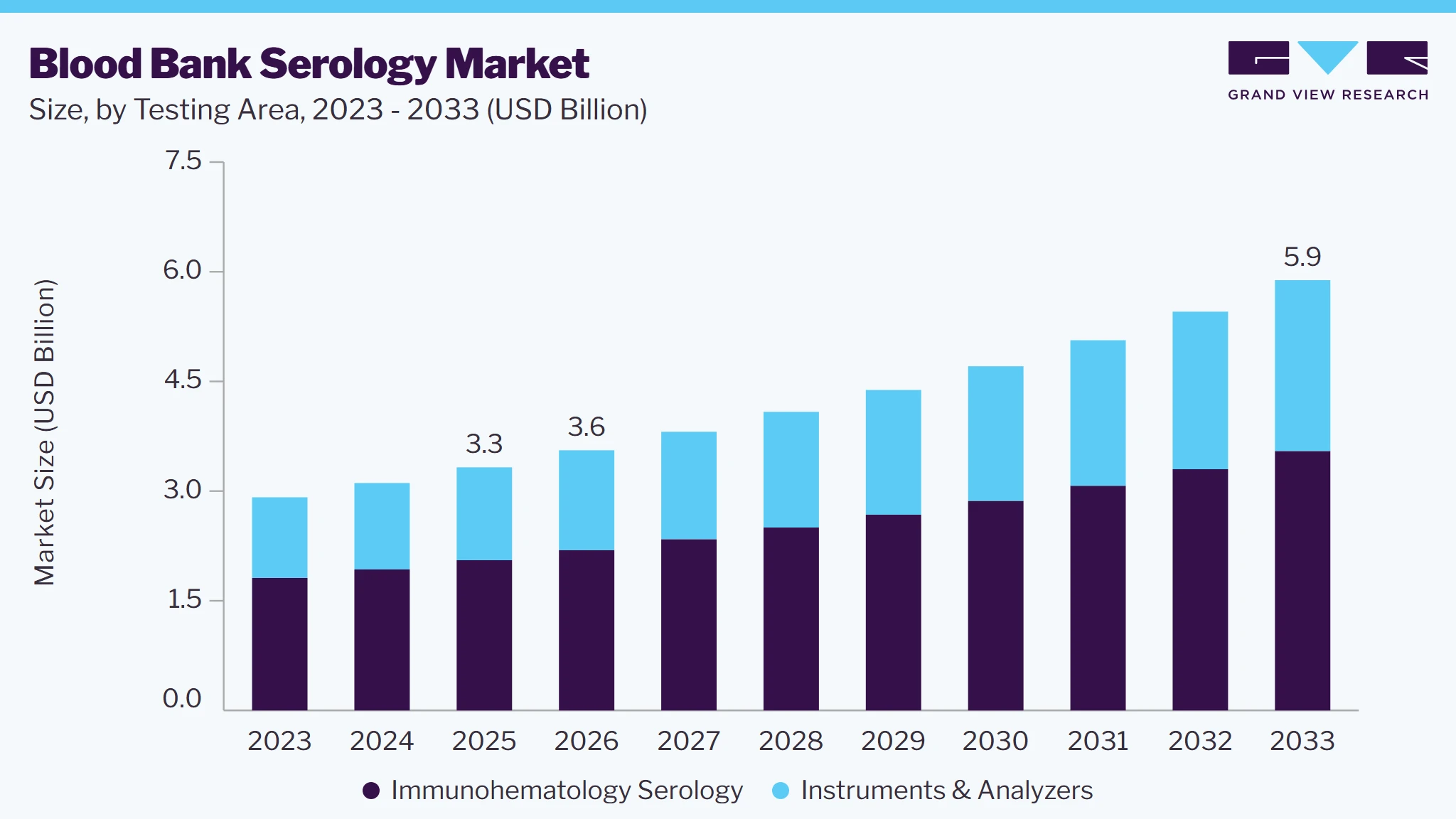
The global blood bank serology market was valued at USD 3.3 billion in 2025 and is projected to grow from USD 3.6 billion in 2026 to USD 5.9 billion by 2033, at a CAGR of 7.5% from 2026 to 2033. North America dominated the market, accounting for a revenue share of 41.3% in 2025. Market growth is primarily driven by mandatory donor screening requirements, the continuing need for blood grouping and compatibility testing, rising transfusion activity, and the adoption of automated serology systems across blood banks, hospitals, transfusion laboratories, and plasma collection facilities.
 Source: Grand View Research, IR Documents, Primary Interviews, Paid DatabasesTo learn more about this report,
 Download Free Sample Report
Key Market Trends & Insights
- By testing area: Immunohematology serology led the market with the largest revenue share of 61.8% in 2025.
- By product: Reagent & consumables led the market with the largest revenue share of 51.0% in 2025.
- By technology: Immunoassay led the market with the largest revenue share of 30.5% in 2025.
- By end use: Hospital-based blood banks & transfusion laboratories led the market with the largest revenue share of 42.5% in 2025.
Regional Highlights
- Largest regional market: North America (41.3% revenue share, 2025)
- Fastest-growing regional market: Asia Pacific (highest CAGR, 2026-2033)
- By country: The U.S. held the largest market share in 2025.
Market Size & Forecast
- Market size in 2025: USD 3.3 Billion
- Estimated market size in 2026: USD 3.6 Billion
- Projected market size by 2033: USD 5.9 Billion
- CAGR (2026-2033): 7.5%
Three ways to get this report
Buy it, customize it, or ask a question.Ask an Analyst
Analyst response in 1 business day
- AccessReport author, directly
- Reply timeWithin 1 working day
- No sales callDirect answer only
- FormatEmail reply
- CostFree, no cost
Get the Full Report
What the study covers
- FormatsPDF · Excel · Dashboard
- Timeline2026–2033 annual, 2025 base
- Coverage20+ countries, 5 regions
- Companies10+ key players profiled
Customize the Report
20% free customization
- IncludeCountries, segments, points
- TailorTo your product definition
- ExtendDeeper competitor detail
- OrA fully bespoke study
- Turnaround5–10 working days
 To learn more about this report, Download Free Sample Report
Market Dynamics
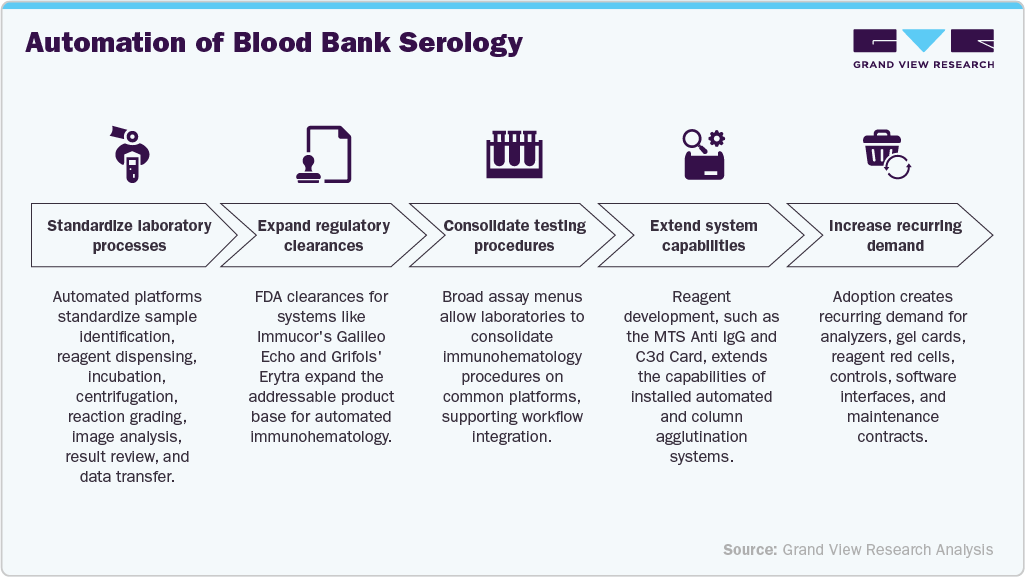
Automation is increasingly supporting the adoption of blood bank serology products as blood centers and hospital transfusion laboratories seek to manage high testing volumes while improving workflow consistency, traceability, and operational efficiency. Automated platforms integrate key processes, including sample identification, reagent dispensing, incubation, centrifugation, reaction grading, image interpretation, result validation, and laboratory information system connectivity. These systems support ABO and Rh typing, red blood cell phenotyping, antibody screening and identification, serologic crossmatching, and direct antiglobulin testing, enabling multiple immunohematology procedures to be consolidated within standardized workflows. Adoption is particularly relevant across centralized blood centers and high-volume transfusion laboratories, where reduced manual intervention and standardized result interpretation can improve laboratory productivity. The expanding installed base of automated platforms also supports recurring demand for gel and microcolumn cards, reagent red cells, controls, platform-specific reagents, software solutions, maintenance services, and technical support, thereby contributing to overall market growth.
 To learn more about this report, Download Free Sample Report
Regulatory clearance of automated immunohematology platforms is further supporting their integration into transfusion laboratory workflows. In June 2025, the U.S. FDA cleared Grifols’ Erytra Eflexis and Erytra automated blood grouping and antibody testing systems, which use DG Gel 8 cards and support blood grouping, antigen typing, antibody screening and identification, antibody titration, compatibility testing, and direct antiglobulin testing. The systems incorporate digital image processing and laboratory information system connectivity, enabling laboratories to manage a broad range of immunohematology procedures through an integrated platform. The availability of systems with broad testing menus is supporting purchasing decisions based on throughput, workflow integration, traceability, data management, and reagent availability. In parallel, expansion of automated testing creates recurring requirements for compatible gel cards, controls, reagents, software support, instrument servicing, and staff training. Continued modernization of transfusion laboratories is therefore expected to support demand for integrated blood bank serology systems and associated consumables through 2033.
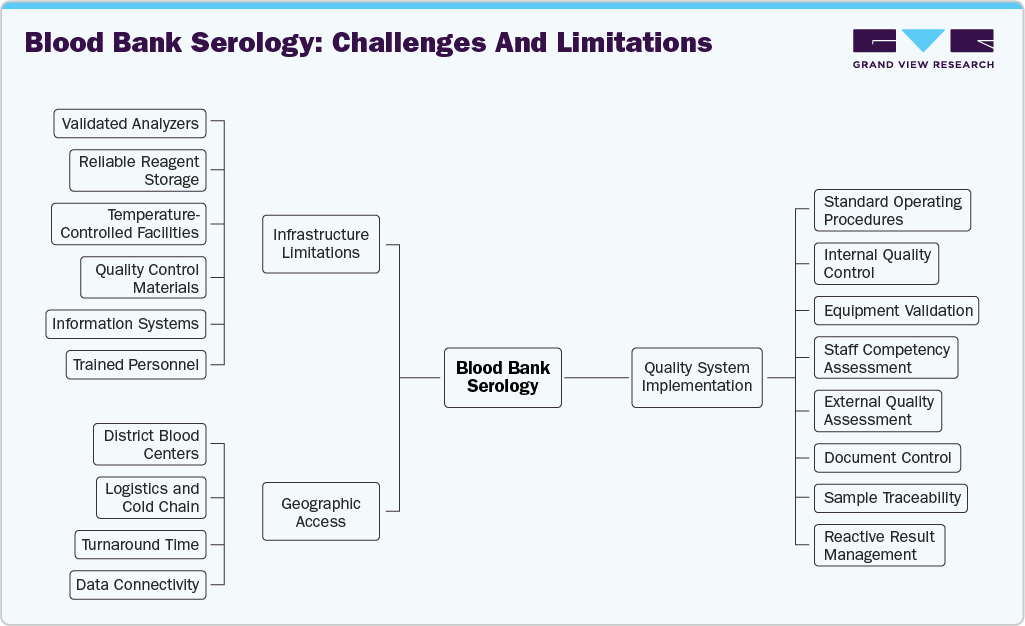
Blood bank serology depends on validated testing systems, appropriate reagent storage, temperature-controlled infrastructure, quality control materials, laboratory information systems, and trained personnel. The limited availability of these resources in low-resource and decentralized blood services restricts the adoption of advanced serology platforms. Smaller blood establishments often prioritize donor collection, component storage, and essential transfusion services over investment in automated immunohematology systems, expanded testing menus, and laboratory connectivity. Consequently, manual and semi-automated testing remains relevant across several markets, while advanced systems are concentrated in national reference laboratories, tertiary hospitals, and high-volume urban blood centers. This disparity reduces the addressable market for automated analyzers, integrated software, and specialized consumables and can extend equipment replacement cycles. Moreover, fragmented procurement budgets and limited technical support capacity can restrict laboratories from standardizing testing across multiple facilities, resulting in uneven adoption of modern serology workflows despite continued demand for donor screening and pretransfusion compatibility testing.
 To learn more about this report, Download Free Sample Report
Differences in quality assurance capacity further constrain the pace of market development. In June 2026, the World Health Organization reported that only 64% of countries had systems for regular inspection of blood services, 62% had licensing systems, and 40% reported accreditation of at least some blood transfusion services, indicating substantial variation in blood-system oversight and quality infrastructure globally. Implementation of standardized serology workflows requires laboratories to maintain internal quality controls, equipment validation, staff competency assessment, external quality assessment, document control, sample traceability, and procedures for managing reactive or discrepant results. These requirements increase the financial, technical, and organizational burden for smaller and lower-volume facilities, where investment in advanced automated platforms may be difficult to justify. Infrastructure and quality-system disparities can therefore delay the procurement of analyzers, reagents, controls, software, and related services, concentrating adoption within well-resourced blood centers and hospital laboratories and thereby limiting the geographic breadth and consistency of blood bank serology market expansion.
Expansion of plasma collection and fractionation programs is creating opportunities for infectious disease serology assays and laboratory systems used to qualify plasma for manufacturing. Plasma obtained through apheresis or recovered from whole-blood donations requires infectious disease screening and documented release procedures before entering the fractionation supply chain. Core serological testing includes markers such as HBsAg, HIV antibodies, and anti-HCV, with additional requirements determined by national regulations and fractionator specifications. Growth in plasma collection therefore generates recurring demand for assays, controls, calibrators, automated instruments, and associated laboratory services that are directly linked to donation volumes. The opportunity extends beyond established fractionation markets, as countries strengthen domestic plasma collection and enter into contract fractionation arrangements with overseas manufacturers. These models require standardized testing, traceability, documented assay performance, and reliable quality systems, creating opportunities for serology suppliers across collection centers, centralized testing laboratories, and integrated plasma manufacturing networks.
The development of integrated plasma collection networks further increases the need for standardized donor screening and laboratory infrastructure. In December 2025, Grifols announced European Medicines Agency certification covering the plasma value chain of Grifols Egypt for Plasma Derivatives, supported by a network of 16 plasma donation centers, a dedicated testing laboratory, and an integrated logistics center, with four additional donation centers planned for 2026. The establishment of dedicated collection and testing infrastructure demonstrates the laboratory capacity required to maintain traceability and qualify plasma within an integrated fractionation model. As collection networks expand, centralized laboratories can generate recurring demand for infectious disease serology assays, automated sample processing, quality controls, result management systems, and technical services. The commercial opportunity remains concentrated in infectious disease markers required for plasma qualification rather than routine compatibility testing. Consequently, the expansion of domestic plasma programs and contract fractionation arrangements is expected to broaden procurement opportunities for suppliers that offer validated donor-screening assays and integrated laboratory support.
Market Concentration & Characteristics
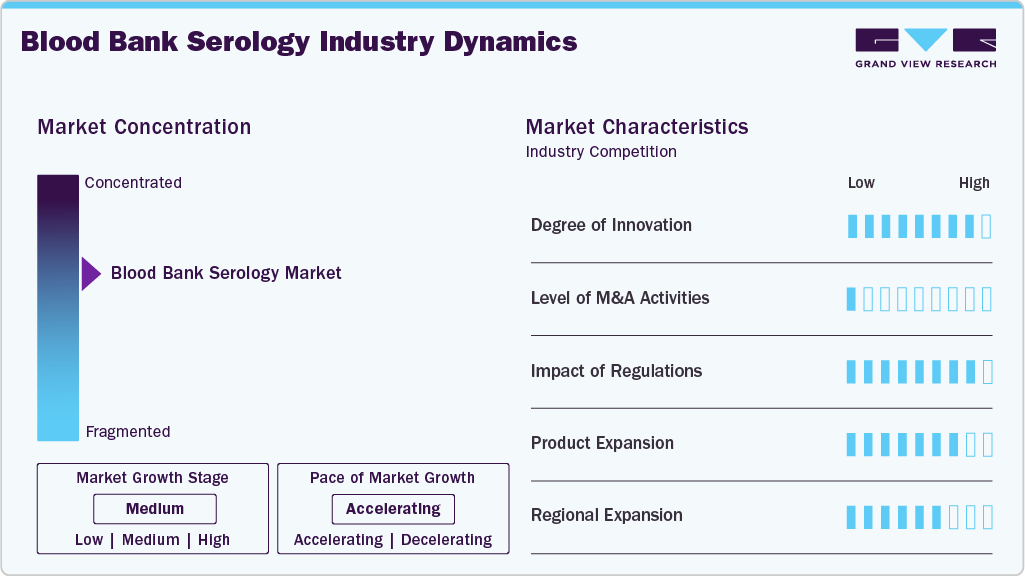
The blood bank serology market demonstrates a high degree of innovation, driven by advances in immunohematology automation, digital interpretation of results, laboratory connectivity, and integrated testing workflows. Innovation is increasingly focused on reducing manual intervention, standardizing interpretation of reactions, improving traceability, and consolidating multiple immunohematology procedures into automated platforms. Manufacturers are also developing systems that combine scalable throughput with digital imaging, bidirectional laboratory information system connectivity, automated sample and reagent handling, and broader assay menus. For instance, in June 2026, Grifols launched the Evanzys IH automated immunohematology system, expanding its blood typing solutions with a platform designed to automate pretransfusion testing workflows. The system complements the company’s existing DG Gel technology portfolio and reflects continued investment in workflow automation and laboratory efficiency. Increasing integration of automation, digital interpretation, and connectivity is shifting innovation from individual serology reagents toward comprehensive testing ecosystems comprising instruments, consumables, software, and technical services.
The blood bank serology market demonstrates a low level of M&A activity. The market is characterized by an established group of global and specialized diagnostics companies with well-developed immunohematology and transfusion-transmissible infection serology portfolios. Competitive strategies are primarily centered on organic product development, assay portfolio expansion, regulatory approvals, laboratory automation, strategic collaborations, and geographic commercialization rather than acquisition-led consolidation. High regulatory requirements, established analyzer installed bases, platform-specific reagent ecosystems, and long-standing relationships with blood centers and hospital transfusion laboratories also create barriers to portfolio integration through acquisitions. Companies with established platforms can strengthen their competitive positions by expanding assay menus, improving workflow automation, and increasing recurring reagent utilization without pursuing large-scale transactions. Consequently, M&A remains a relatively limited strategic mechanism, while organic innovation, portfolio development, partnerships, and commercial expansion continue to shape competition within the blood bank serology market.
 To learn more about this report, Download Free Sample Report
Regulations have a significant impact on the blood bank serology market. Market entry requires manufacturers to demonstrate the safety, specificity, performance, manufacturing consistency, and intended use of blood grouping and immunohematology reagents, while ongoing compliance includes labeling, quality controls, manufacturing oversight, and post-market requirements. For instance, in November 2025, the U.S. FDA approved eight Biologics License Applications from the American National Red Cross for monoclonal blood grouping reagents targeting C, E, c, k, Jkᵃ, Jkᵇ, S, and s antigens. The applications were submitted in January 2025 and received approval on November 21, 2025. These requirements increase the evidence and quality-system obligations associated with commercialization while ensuring that blood bank serology products meet defined performance standards. Regulatory oversight therefore directly influences product development timelines, market entry, portfolio availability, and competition among serology suppliers.
Product expansion is strengthening the blood bank serology market. Manufacturers are extending immunohematology portfolios through new analyzers, expanded reagent menus, automated interpretation, and digital connectivity, enabling laboratories to standardize additional pretransfusion procedures while generating recurring consumable demand. For instance, in September 2025, Bio-Rad introduced the IH-500 Next System at the IBMS Congress in the UK, expanding its automated blood bank analyzer portfolio with enhanced software and greater workflow flexibility. The system supports automated immunohematology workflows and was presented alongside new independent quality-control reagents, broadening Bio-Rad’s offering across instrumentation and supporting consumables. The IH-500 platform accommodates 24 samples and 28 reagent vials on board, supporting continuous access testing for routine blood bank applications. Such portfolio expansion strengthens laboratory workflow integration, increases reagent utilization, and supports competition among suppliers offering connected analyzer, reagent, and quality-control ecosystems.
Regional expansion is broadening the global footprint of the blood bank serology market. Suppliers are strengthening manufacturing, distribution, and technical support networks across geographies to improve access to blood grouping reagents, immunohematology systems, and associated consumables, while increasing supply chain resilience. This global push is reflected in recent activity: For instance, in October 2025, Grifols expanded its U.S. diagnostics manufacturing footprint by initiating production of DG Gel cards and reagent red blood cells at its San Diego facility following FDA approvals. The 196,000-square-foot facility employs more than 230 professionals and complements existing production of these products across Spain, Switzerland, and Australia. Localized manufacturing increases supply capacity for pretransfusion blood typing and antibody testing while reducing dependence on individual production locations. Such geographic diversification supports product availability, strengthens regional supply continuity, and enables suppliers to serve expanding blood-center and hospital laboratory networks more effectively.
Analyst Perspective
The blood bank serology market is expected to witness steady growth over the forecast period, supported by increasing automation of transfusion laboratory workflows and continued demand for standardized blood safety testing. Market development is likely to be shaped by innovation in automated immunohematology platforms, digital interpretation of results, laboratory connectivity, and expanding assay portfolios, while stringent regulatory requirements will continue to influence product development and commercialization timelines. Relatively low M&A activity suggests competitive positioning will likely remain centered on organic innovation, portfolio enhancement, strategic partnerships, and installed-platform expansion rather than acquisition-led consolidation. Geographic diversification of manufacturing and commercial capabilities is also expected to improve product availability and supply continuity across established and developing markets. In the near term, competition is expected to increasingly focus on integrated testing ecosystems that combine automation, recurring consumables, connectivity, and technical support.
Testing Area Insights
The immunohematology serology segment accounted for the largest share of 61.8% of the blood bank serology market in 2025. Its leading position is supported by routine requirements for ABO and Rh blood grouping, red blood cell phenotyping, antibody screening and identification, serologic crossmatching, and direct antiglobulin testing across hospital blood banks and transfusion laboratories. These procedures are essential for establishing blood compatibility, identifying clinically significant red cell antibodies, and reducing transfusion-related risks. For instance, in August 2025, the U.S. FDA approved a labeling supplement for Immucor's Anti-D blood grouping reagent, supporting its continued regulated use in immunohematology testing. Consistent testing requirements across blood centers and hospital transfusion laboratories sustain demand for blood grouping reagents, reagent red cells, gel cards, and automated immunohematology systems, reinforcing the segment's market position.
The instruments & analyzers segment is expected to grow at the fastest CAGR over the forecast period, supported by increasing adoption of automated blood grouping, antibody screening, antibody identification, and compatibility testing systems. These instruments enable laboratories to standardize sample processing, reduce manual intervention, improve result traceability, and manage increasing testing workloads. For instance, in January 2025, the U.S. FDA cleared Immucor's Galileo Echo and Echo Lumena automated blood grouping and antibody testing systems, supporting automated immunohematology procedures across transfusion laboratories. Increasing demand for high-throughput testing, integrated data management, and laboratory information system connectivity is expected to encourage equipment modernization across blood centers and hospitals. Expansion of automated testing infrastructure is also expected to generate recurring demand for compatible reagents, controls, software, and technical services, supporting overall market growth.
Product Insight
The reagent & consumables segment dominated the global blood bank serology market, accounting for the largest revenue share of 51.0% in 2025. Its leading position is supported by the recurring demand for blood grouping antisera, reagent red blood cells, antibody screening and identification panels, gel cards, donor infectious disease assays, calibrators, and quality controls. These products are essential for routine immunohematology testing and transfusion-transmissible infection screening across hospital blood banks, blood centers, and plasma collection facilities. Unlike instruments, reagents and consumables require continuous replenishment, generating consistent revenue streams. Increasing blood donation volumes, stringent transfusion safety requirements, and expanding automated testing workflows further support product utilization. The growing installed base of immunohematology analyzers and donor screening platforms is expected to sustain consumable demand and reinforce the segment's market dominance.
The software and services segment is expected to demonstrate the fastest growth over the forecast period, supported by increasing integration of laboratory information systems, automated result interpretation, instrument connectivity, and digital traceability solutions. Blood banks increasingly require software to manage immunohematology test results, quality control, compatibility testing workflows, and regulatory documentation. For instance, in October 2025, Immucor, Inc. received U.S. FDA 510(k) clearance for ImmuLINK (v3.3), a blood bank data management software solution supporting instrument connectivity, automated reflex testing, remote result validation, and integration with laboratory information systems. Growing adoption of connected immunohematology platforms is expanding demand for middleware, software maintenance, technical support, and system validation services. Continued digitalization of transfusion laboratories is expected to strengthen recurring software revenues and support segment growth.
Technology Insights
The immunoassay segment dominated the global blood bank serology market, accounting for the largest revenue share of 30.5% in 2025. Its leading position is supported by widespread utilization of enzyme-linked immunosorbent assays (ELISA), chemiluminescent immunoassays (CLIA/CMIA), and electrochemiluminescent immunoassays (ECLIA) for transfusion-transmissible infection screening. These technologies enable detection of HIV, hepatitis B, hepatitis C, syphilis, and other infectious disease markers in donated blood and plasma. For instance, in March 2025, Abbott Laboratories received U.S. FDA approval for a supplement to its Alinity s HTLV I/II assay, a chemiluminescent microparticle immunoassay designed to detect antibodies to HTLV-I and HTLV-II in blood and plasma donors. Increasing requirements for transfusion safety, expanding plasma collection activities, and growing adoption of automated, high-throughput donor screening platforms are expected to sustain immunoassay utilization and reinforce the segment's market position.
The column agglutination/gel technology segment is expected to demonstrate the fastest growth over the forecast period, supported by increasing adoption of automated immunohematology testing and standardized pretransfusion compatibility procedures. Gel-based systems support ABO and Rh blood grouping, red cell phenotyping, antibody screening and identification, serologic crossmatching, and direct antiglobulin testing. These platforms offer consistent reaction grading, reduced manual intervention, improved result traceability, and compatibility with automated laboratory workflows. Growing utilization of gel cards across hospital blood banks and centralized transfusion laboratories generates recurring consumable demand alongside analyzer installations. Integration with digital imaging and laboratory information systems further improves workflow efficiency and testing consistency, supporting the transition from conventional tube methods to automated column agglutination platforms and strengthening segment growth.
End Use Insights
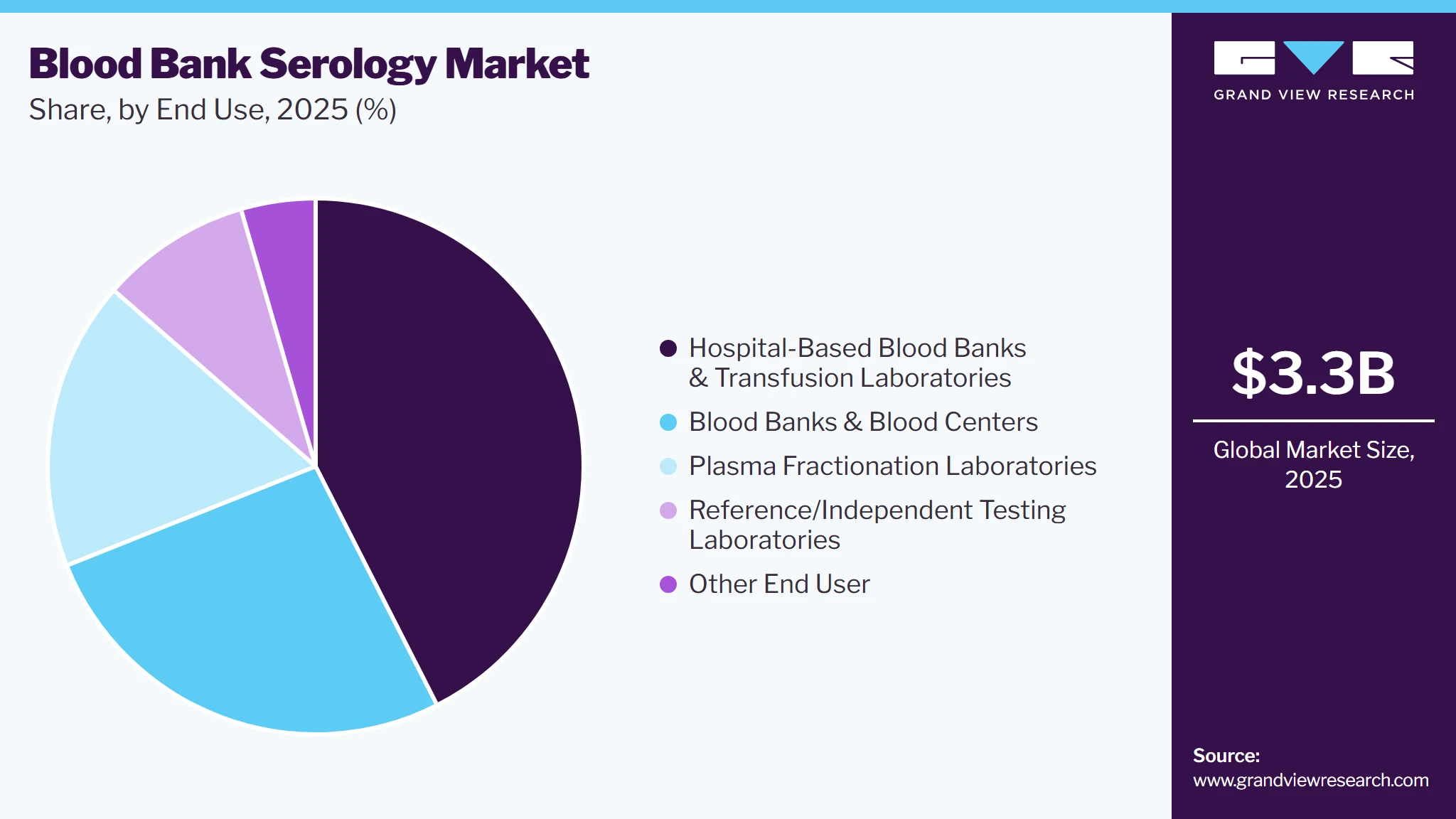
The hospital-based blood banks & transfusion laboratories segment accounted for the largest revenue share of 42.5% in 2025. Its leading position is supported by routine requirements for ABO and Rh blood grouping, antibody screening and identification, serologic crossmatching, and direct antiglobulin testing across hospital transfusion services. Increasing numbers of surgical procedures, trauma cases, oncology treatments, and hematological disorders sustain demand for timely compatibility testing and reliable availability of blood components. Hospital laboratories increasingly use automated immunohematology systems, gel cards, reagent red blood cells, and integrated laboratory information systems to improve testing efficiency and traceability of results. Stringent transfusion safety protocols, continuous testing requirements, and recurring reagent consumption further strengthen the segment's revenue contribution. Continued modernization of hospital blood banks is expected to reinforce its market dominance.
 To learn more about this report, Download Free Sample Report
The plasma fractionation laboratories segment is expected to witness the fastest growth over the forecast period, driven by expanding plasma collection networks, increasing demand for plasma-derived medicinal products, and stringent donor screening requirements. These laboratories rely on serological assays for HIV, hepatitis B, hepatitis C, syphilis, and other transfusion-transmissible infections to ensure plasma quality and safety before fractionation. Increasing plasma collection volumes are supporting demand for automated immunoassay platforms, validated reagents, quality controls, and integrated laboratory information systems. Growing investment in plasma fractionation infrastructure and centralized donor testing facilities is further encouraging the adoption of high-throughput serology solutions. Regulatory emphasis on donor eligibility, infectious disease screening, and plasma traceability is expected to sustain recurring testing requirements and support segment growth through 2033.
Regional Insights
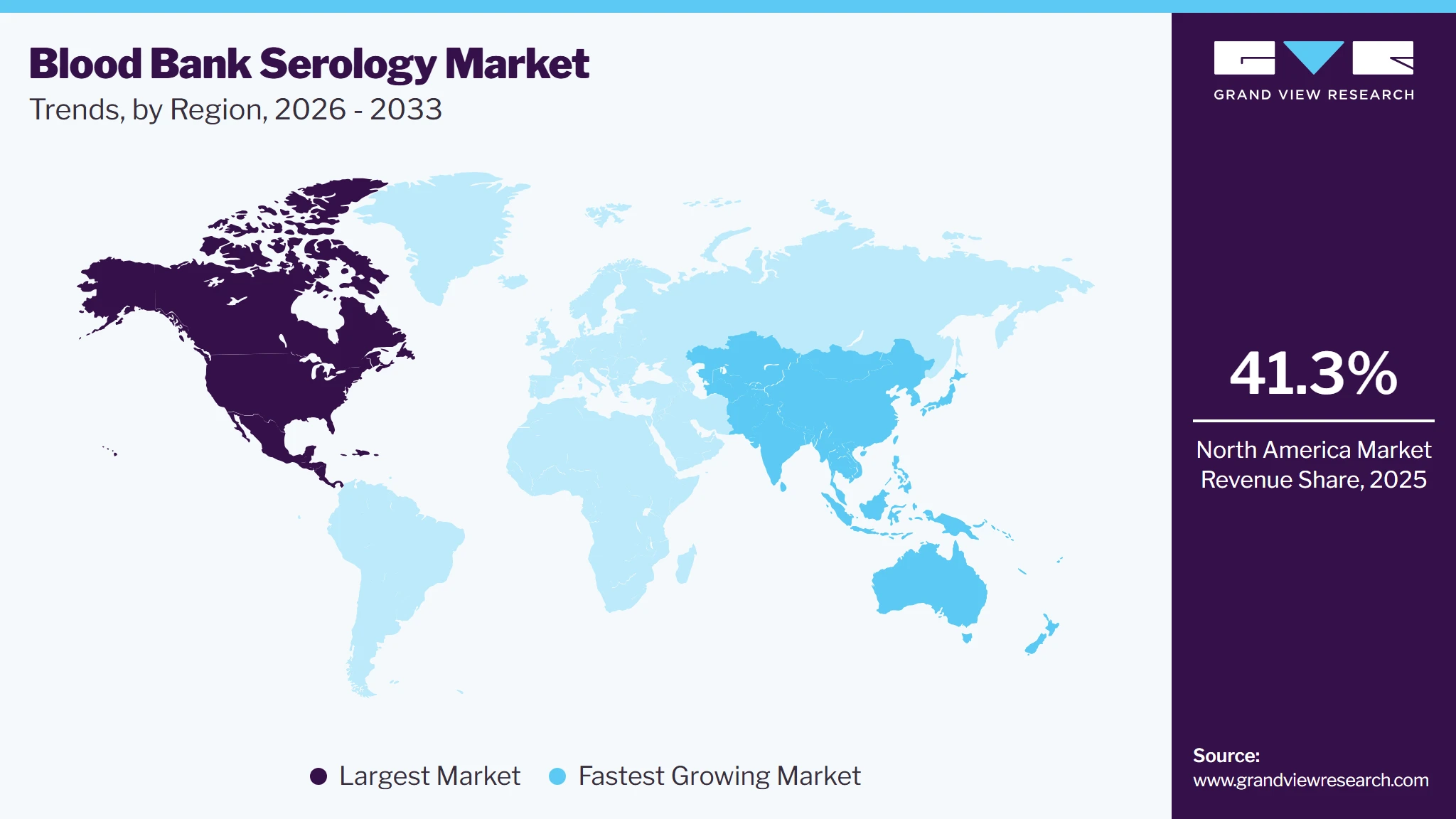
North America dominated the global blood bank serology market, accounting for the largest revenue share of 41.3% in 2025. Established blood-center networks and advanced transfusion laboratories support demand for automated immunohematology and donor infectious-marker testing. Within the region, an estimated 214,000 people in Canada were living with chronic hepatitis C in 2021 (Public Health Agency of Canada, 2025), underscoring the importance of donor screening without representing donor positivity. For instance, in October 2025, the FDA approved Micro Typing Systems’ MTS DAT Card configuration for distinguishing IgG and complement coating on red blood cells. The approval broadens licensed direct antiglobulin testing options, supporting reagent portfolio expansion and laboratory adoption within established blood-bank workflows.
 To learn more about this report, Download Free Sample Report
U.S. Blood Bank Serology Market Trends
The U.S. accounted for the largest share of the North America blood bank serology market, driven by extensive transfusion infrastructure and specialized care for patients requiring repeated transfusions. These services sustain demand for antibody screening, extended antigen typing, and compatible red-cell selection. An estimated 100,000 people live with sickle cell disease, supporting continuing requirements for specialized transfusion testing. For instance, in November 2025, the FDA approved the American National Red Cross Anti-c blood-grouping reagent for detecting the c (RH4) antigen through manual tube agglutination. This authorization expands the licensed serological phenotyping options available to transfusion laboratories. Commercial opportunities encompass specialized antisera, reagent red cells, and automated systems, with adoption influenced by analytical performance, laboratory validation, service coverage, and institutional purchasing requirements.
Europe Blood Bank Serology Market Trends
Europe represents a significant blood bank serology market, supported by established blood services and harmonized oversight of diagnostic devices. Routine donor screening and specialist transfusion care underpin recurring consumption of immunoassay reagents, gel cards, and quality controls. An estimated 3.2 million people were living with hepatitis B in the EU/EEA at the end of 2023, reinforcing the importance of reliable infectious-marker screening. For instance, in December 2025, the European Commission designated reference laboratories for additional Class D diagnostic categories, including blood-grouping markers, under Regulation (EU) 2025/2526. Their responsibilities include performance verification and batch testing. This framework strengthens independent assessment of relevant reagents and supports confidence in compliant products, while increasing the importance of technical documentation, manufacturing consistency, and coordinated conformity assessment.
The UK blood bank serology market is supported by specialist hemoglobinopathy services and established NHS transfusion laboratory networks. Repeated transfusions sustain demand for antibody investigation, extended antigen typing, and compatible blood selection among patients with complex requirements. Estimates published in 2025 identified approximately 17,000 people living with sickle cell disease in England. For instance, in June 2025, strengthened post-market surveillance requirements took effect in Great Britain, covering in vitro diagnostic devices as well as other medical devices. Manufacturers must maintain surveillance systems and respond to emerging safety information. For serology suppliers, these obligations reinforce the importance of documented performance monitoring, technical assistance, and corrective-action procedures. Laboratory adoption, therefore, depends on reliable testing performance and ongoing compliance support throughout the product lifecycle.
The Germany blood bank serology market is expected to represent significant growth, driven by specialized hospital care and established quality-assurance infrastructure. Oncology and transfusion services sustain requirements for blood grouping, antibody investigation, and compatibility assessment when transfusion is clinically indicated. Germany recorded an estimated 517,800 new cancer cases in 2023, highlighting the scale of its oncology care requirements. For instance, in July 2025, the Paul-Ehrlich-Institut’s WHO Collaborating Center for Quality Assurance of Blood Products and In-Vitro Diagnostic Devices received renewed designation through July 2029. Its activities include reference preparation to support biological and immunological test standardization. This maintains technical infrastructure for assay evaluation and quality assurance, reinforcing the importance of reproducible reagent performance, documented validation, and specialist laboratory support.
Asia Pacific Blood Bank Serology Market Trends
Asia Pacific is expected to see fastest growth in the blood bank serology market, driven by blood service modernization and improved access to standardized transfusion testing. Infectious-marker screening remains a priority, with an estimated 96.8 million people living with hepatitis B in the WHO Western Pacific sub-region. This burden reinforces requirements for reliable donor screening across participating national blood services. For instance, in July 2025, Australia’s National Blood Authority introduced renewed standing-offer arrangements for red-cell diagnostic products, removing the funding cap and separate delivery charges. The arrangements serve approved recipients, including public and blood-banking laboratories. This purchasing reform improves access to blood-typing and antibody-testing reagents, supporting supplier participation through publicly financed procurement and strengthening the continuity of essential laboratory consumables.
The China blood bank serology market represents a high potential growth opportunity, driven by substantial transfusion requirements and domestic diagnostic-product development. Specialized hematology services support recurring demand for antibody screening, compatibility testing, and reliable blood-grouping reagents. China had an estimated 81,946 new leukemia cases, highlighting the clinical population potentially requiring transfusion support during treatment. For instance, in April 2025, the National Medical Products Administration listed approval documentation for InTec’s solid-phase ABO blood-group antigen detection card, registration number 20253400791. This authorization supports domestic participation in a core segment of immunohematology. Commercial adoption depends on method verification, procurement eligibility, reagent consistency, and technical assistance, creating opportunities for manufacturers that combine regulatory compliance with dependable local distribution and responsive application support.
The Japan blood bank serology market is an important market, supported by established transfusion services and demand for precise compatibility testing in specialist care. Hematology treatment and repeated transfusions sustain requirements for antibody investigation and appropriate red-cell selection. National cancer registry data recorded 15,165 new leukemia diagnoses in 2023, reinforcing the need for dependable transfusion support. For instance, in March 2026, the Ministry of Health, Labour and Welfare notified healthcare institutions of the consolidated Transfusion Therapy Practice Guide, replacing earlier guidance documents. The guide addresses ABO testing, irregular antibodies, compatibility assessment, and laboratory quality assurance. These provisions support standardized examination procedures and continued use of validated reagents and controls. Suppliers can differentiate through consistent analytical performance, implementation assistance, and technical support aligned with recognized transfusion practice.
Latin America Blood Bank Serology Market Trends
Latin America represents an emerging market for blood bank serology, supported by efforts to strengthen blood-service organization and improve access to safe transfusion care. Estimates published in 2025 indicate that 60,000-100,000 people in Brazil live with sickle cell disease, supporting requirements for antibody screening and appropriate antigen matching among patients receiving transfusions. For instance, in June 2025, PAHO urged governments to invest in efficient national blood systems, promote voluntary donation, and strengthen oversight alongside its updated regional blood-supply findings. Implementation would support more consistent donor screening and laboratory quality assurance. Commercial opportunities consequently center on dependable reagents, accessible automation, and application support. Institutional budgets, procurement arrangements, and technical-service coverage remain important determinants of adoption across individual national healthcare systems.
Middle East and Africa Blood Bank Serology Market Trends
The Middle East & Africa blood bank serology market is expected to develop gradually, supported by blood-service modernization and efforts to close screening gaps. Clinical requirements encompass infectious-marker testing, blood grouping, and compatibility assessment. Within the WHO African Region, an estimated 65 million people were living with chronic hepatitis B, reinforcing the importance of quality-assured donor screening. For instance, in August 2025, the WHO Regional Committee for Africa adopted a blood-products framework for 2026-2030 addressing screening, quality assessment, and regulatory oversight. Implementation could expand access to validated serology reagents and laboratory services. Procurement funding, workforce capacity, and dependable consumable supply remain central to translating these priorities into routine testing capacity and sustainable commercial opportunities across participating health systems.
Key Blood Bank Serology Company Insights
The global blood bank serology market is characterized by established diagnostic companies and specialized immunohematology manufacturers competing through automated testing platforms, assay breadth, diagnostic performance, and laboratory workflow integration. Key market participants include QuidelOrtho Corporation, Immucor, Inc. (Werfen), Grifols, S.A., Bio-Rad Laboratories, Inc., Abbott Laboratories, F. Hoffmann-La Roche Ltd., DiaSorin S.p.A., DIAGAST, AliveDx Suisse S.A. (ALBA), Fujirebio Holdings, Inc., Fortress Diagnostics Limited, BAG Diagnostics GmbH, Tulip Diagnostics Private Limited, and Valiant Co., Ltd. (MP Biomedicals). These companies are strengthening their competitive positions through blood grouping and phenotyping systems, antibody screening and identification products, gel and solid-phase technologies, donor infectious disease serology, reagent red cells, automated analyzers, software connectivity, and laboratory workflow solutions. Continued investment in automation, regulatory approvals, assay portfolio expansion, regional distribution, and integrated transfusion testing systems is expected to support competitive development across the market.
Key Blood Bank Serology Market Companies
The following key companies have been profiled for this study on the blood bank serology market.
-
QuidelOrtho Corporation
-
Immucor, Inc. (Werfen)
-
Grifols, S.A.
-
Bio-Rad Laboratories, Inc.
-
Abbott Laboratories
-
F. Hoffmann-La Roche Ltd.
-
DiaSorin S.p.A.
-
DIAGAST
-
AliveDx Suisse S.A. (ALBA)
-
Fujirebio Holdings, Inc.
-
Fortress Diagnostics Limited
-
BAG Diagnostics GmbH
-
Tulip Diagnostics Private Limited
Competitive Benchmarking
Operating Strategies
Competitive Edge
Weaknesses
Mature Players: Grifols, S.A.
- Expand automated immunohematology platforms, gel card systems, reagent red cells, antisera, and compatibility testing solutions. Integrate analyzers, reagents, software, laboratory connectivity, and workflow automation.
- Broaden infectious disease serology portfolios covering HIV, hepatitis B, hepatitis C, syphilis, HTLV, Chagas disease, and other transfusion-transmissible infections.
- Strengthen presence in plasma collection and fractionation laboratories through donor screening systems and specialized serology assays. Pursue regulatory approvals, automation partnerships, product upgrades, regional distribution, and blood-service contracts.
- Broad portfolios covering blood grouping, phenotyping, antibody screening, antibody identification, crossmatching, direct antiglobulin testing, and infectious disease serology.
- Established installed bases across blood banks, hospitals, transfusion laboratories, and plasma collection networks.
- Strong regulatory experience and validated products used in routine transfusion workflows.
- Integrated instruments, reagents, software, technical services, and laboratory connectivity.
- Global commercial infrastructure and long-term relationships with national blood services and hospital systems.
- High capital requirements for automated analyzers, connectivity, maintenance, and workflow integration.
- Product adoption may require lengthy validation, staff training, procurement, and regulatory procedures.
- Dependence on institutional tenders and public-sector purchasing cycles.
- Mature markets may limit volume growth and increase pricing pressure.
- Different national testing algorithms and regulatory requirements increase localization and compliance costs.
Emerging Players: DIAGAST
- Focus on specialized blood grouping, phenotyping, antibody screening, reagent, and infectious disease serology products.
- Expand through regional distributors, blood-service contracts, reference laboratories, and selected hospital markets.
- Develop complementary reagents, controls, manual kits, and compact systems for laboratories with different automation levels.
- Extend product availability across Europe, Asia Pacific, Latin America, the Middle East, and Africa through local registrations.
- Target laboratories seeking flexible and cost-conscious alternatives to integrated multinational platforms.
- Specialized expertise in immunohematology reagents, antisera, reagent red cells, gel cards, controls, and donor screening products.
- Greater flexibility in serving smaller blood banks, reference laboratories, and decentralized testing environments.
- Focused portfolios support adaptation to national testing practices.
- Competitive positioning in manual, semi-automated, and selected automated workflows.
- Regional relationships and distributor networks support access to markets with lower penetration of large integrated systems.
- Smaller installed bases and lower brand visibility than multinational suppliers.
- Limited ability to provide complete analyzer, reagent, software, and service ecosystems.
- Dependence on distributors and country-specific registrations can lengthen market expansion.
- Lower financial and operational resources may restrict large-scale product development and global service coverage.
- Limited disclosure of company-level financial performance and market penetration in several countries.
Recent Developments
-
In June 2026, Grifols launched Evanzys IH, a next-generation modular and fully automated system for immunohematology sample processing. The platform is designed to streamline transfusion medicine laboratory workflows, reduce manual intervention, and support safer and faster blood typing and transfusion results. The launch expands Grifols’ portfolio of scalable blood typing solutions and strengthens its position in automated blood bank serology and immunohematology testing.
-
In October 2025, The U.S. FDA approved Micro Typing Systems’ supplement to its Biologics License Application for Anti-Human Globulin to manufacture a new ID MTS Gel Card configuration: Anti-Human Globulin Anti-IgG (Rabbit)/Anti-C3b, -C3d (Murine Monoclonal)/DAT Control, MTS DAT Card. The product supports immunohematology testing by helping distinguish IgG and/or C3 coating on red blood cells, strengthening direct antiglobulin testing workflows in blood banks and transfusion laboratories.
-
In October 2025, QuidelOrtho showcased its FDA-approved MTS DAT Card and ORTHO VISION platform at the AABB 2025 Annual Meeting. The MTS DAT Card completes the company’s gel-based direct antiglobulin testing solution and, when paired with ORTHO VISION, supports column agglutination-based immunohematology testing, reflex testing, quality control, and faster transfusion decision-making in blood banks and transfusion medicine laboratories.
Blood Bank Serology Market Report Scope
Report Attribute
Details
Market size in 2025
USD 3.3 billion
Estimated market size in 2026
USD 3.6 billion
Projected market size by 2033
USD 5.9 billion
Growth rate
CAGR of 7.5% from 2026 to 2033
Actual data
2021-2025
Forecast period
2026 - 2033
Quantitative units
Revenue in USD million/billion and CAGR from 2026 to 2033
Report coverage
Revenue forecast, company ranking, competitive landscape, growth factors, and trends
Segments covered
Testing Area, product, technology, end use, region
Regional scope
North America; Europe; Asia Pacific; Latin America; MEA
Country scope
U.S.; Canada; Mexico; UK; Germany; France; Italy; Spain; Norway; Denmark; Sweden; China; Japan; India; Australia; Thailand; South Korea; Brazil; Argentina; South Africa; Saudi Arabia; UAE; Kuwait
Key companies profiled
QuidelOrtho Corporation; Immucor, Inc. (Werfen); Grifols, S.A.; Bio-Rad Laboratories, Inc.; Abbott Laboratories; F. Hoffmann-La Roche Ltd.; DiaSorin S.p.A.; DIAGAST; AliveDx Suisse S.A. (ALBA); Fujirebio Holdings, Inc.; Fortress Diagnostics Limited; BAG Diagnostics GmbH; Tulip Diagnostics Private Limited
Customization scope
Free report customization (equivalent up to 8 analyst working days) with purchase. Addition or alteration to country, regional & segment scope.
Pricing and purchase options
Avail customized purchase options to meet your exact research needs. Explore purchase options
Global Blood Bank Serology Market Report Segmentation
This report forecasts revenue growth at country levels and provides an analysis on the latest industry trends and opportunities in each of the sub-segments from 2021 to 2033. For the purpose of this study, Grand View Research has segmented the Blood bank serology market report on the basis of Testing Area, Product, Technology, End Use and region:
-
Testing Area Outlook (Revenue, USD Million, 2021 - 2033)
-
Immunohematology Serology
-
ABO & Rh Blood Grouping
-
Red Blood Cell Phenotyping
-
Red Blood Cell Antibody Screening
-
Red Blood Cell Antibody Identification
-
Serologic Crossmatching
-
Direct Antiglobulin Testing
-
Other Specialized Immunohematology Serology
-
-
Transfusion-Transmissible Infection Serology
-
HIV Combo (Ag/Ab)
-
Anti-HCV
-
HBsAg
-
Anti-HBc
-
Syphilis (Treponema pallidum)
-
HTLV I/II
-
Anti-CMV
-
Anti-T. Cruzi (Chagas)
-
Other Markers
-
-
-
Product Outlook (Revenue, USD Million, 2021 - 2033)
-
Reagent & Consumables
-
Instruments & Systems
-
Software and Services
-
-
Technology Outlook (Revenue, USD Million, 2021 - 2033)
-
Immunoassay
-
ELISA/EIA
-
CLIA/CMIA
-
ECLIA
-
FIA
-
Other Immunoassays
-
-
Agglutination
-
Hemagglutination
-
Latex/Particle Agglutination
-
Other Agglutination
-
-
Column Agglutination / Gel Technology
-
Solid-Phase Technology
-
Immunofluorescence
-
Immunochromatography / Lateral Flow
-
Complement-Based Assays
-
Other Technologies
-
-
End Use Outlook (Revenue, USD Million, 2021 - 2033)
-
Blood Banks & Blood Centers
-
Hospital-Based Blood Banks & Transfusion Laboratories
-
Plasma Fractionation Laboratories
-
Reference/Independent Testing Laboratories
-
Other End User (Academic institutes, etc.)
-
-
Regional Outlook (Revenue, USD Million, 2021 - 2033)
-
North America
-
U.S.
-
Canada
-
Mexico
-
-
Europe
-
UK
-
Germany
-
France
-
Italy
-
Spain
-
Norway
-
Denmark
-
Sweden
-
-
Asia Pacific
-
Japan
-
China
-
India
-
Australia
-
South Korea
-
Thailand
-
-
Latin America
-
Brazil
-
Argentina
-
-
Middle East & Africa
-
South Africa
-
Saudi Arabia
-
UAE
-
Kuwait
-
-
Research Methodology
The blood bank serology market figures in this report are based on a proven research process that combines executive interviews with secondary research from proprietary databases, company filings, and recognized regulatory and institutional sources. Market size is built through value-chain sizing - reconciling supply-side and demand-side estimates - and triangulated with bottom-up and top-down approaches. Every estimate passes multiple levels of expert validation before publication, with each blood bank serology segment quantified using the revenue-capture definitions in the table below.
Segment Definition
Testing Area
Revenue capture definition
ABO & Rh Blood Grouping
Identifies ABO type by forward grouping (red cell antigens, using anti-A/anti-B) and reverse grouping (plasma antibodies against reagent A1/B cells). It also determines RhD status with anti-D. This is the baseline test for every donor unit and every patient.
Red Blood Cell Phenotyping
Typing for clinically important antigens beyond ABO/RhD, such as C, c, E, e, K, Kidd, Duffy and MNS. Used for extended matching in patients who are alloimmunized or chronically transfused (e.g., sickle cell, thalassemia) and for building antigen-negative donor inventories.
Red Blood Cell Antibody Screening
Tests patient or donor plasma against a small set of group O reagent cells with known antigens. Detects unexpected, clinically significant red cell alloantibodies before transfusion or pregnancy.
Red Blood Cell Antibody Identification
Follow-up to a positive screen. The plasma is tested against a larger panel of reagent cells to determine antibody specificity, often with enzyme treatment, adsorption or elution.
Serologic Crossmatching
Mixes donor red cells with recipient plasma, by immediate-spin or antiglobulin phase, to confirm compatibility before issuing blood. Covers reagent-based and instrument-based testing, not purely electronic crossmatch.
Direct Antiglobulin Testing (DAT)
Uses antihuman globulin (Coombs reagent) to detect IgG or complement already bound to a patient's red cells. Central to investigating hemolytic disease of the newborn, autoimmune hemolytic anemia, transfusion reactions and drug-induced hemolysis.
Other Specialized Immunohematology Serology
Residual specialty tests, such as antibody titration, weak D testing, adsorption/elution studies and enzyme or chemical treatment of cells.
HIV Combo (Ag/Ab)
Fourth-generation assay that detects antibodies to HIV-1/2 and the p24 antigen together, shortening the window period compared with antibody-only tests.
Anti-HCV
Detects antibodies to hepatitis C virus. Indicates exposure and is typically followed by confirmatory or molecular testing.
HBsAg
Detects hepatitis B surface antigen, the primary marker of acute or chronic hepatitis B infection.
Anti-HBc
Detects antibody to the hepatitis B core antigen. Indicates past or ongoing infection and can identify occult infections where HBsAg is negative. Many countries require it for donor screening.
Syphilis (Treponema pallidum)
Screening for syphilis exposure using treponemal tests (EIA/CLIA, particle agglutination) and, in some settings, non-treponemal tests.
HTLV I/II
Detects antibodies to human T-lymphotropic virus types I and II. Mandatory in some countries and not in others.
Other Markers
additional pathogens tracked in select countries (e.g., WNV, HAV, HEV, T. cruzi), reported only where data availability supports it.
Product
Revenue capture definition
Reagent & Consumables
Everything used up per test: red cell reagents (screening/panel and reverse-grouping cells), antisera (anti-A, B, D and others), antiglobulin reagents, enhancement media (LISS/PEG), gel cards, microplates, immunoassay kits, calibrators and controls, and plastics. The recurring-revenue core of the market.
Instruments & Systems
Capital equipment that performs or automates testing, such as automated immunohematology analyzers, immunoassay and blood-screening platforms, semi-automated readers, centrifuges, incubators and cell washers. Revenue comes from instrument sales and placements.
Software and Services
Middleware, laboratory/blood-bank information system interfaces and data management, plus associated services such as installation and validation, preventive maintenance, service contracts, training and quality-control support.
Technology
Revenue capture definition
ELISA/EIA
Enzyme-linked assay with colorimetric readout, usually in microplates. Established and lower-cost; common in manual and semi-automated labs.
CLIA/CMIA
Chemiluminescent assays where a light-emitting reaction signals binding; CMIA uses microparticles as the solid phase. Fully automated and high-throughput, and the standard in large blood centers.
ECLIA
Electrochemiluminescence, where light emission is triggered electrically at an electrode surface. Offers high sensitivity and a wide dynamic range.
FIA
Fluorescence-labeled detection, with the signal measured by a fluorescence reader. Often used in compact or point-of-care formats.
Other Immunoassays
Less common formats such as multiplex or bead-based assays and radioimmunoassay.
Hemagglutination
Red cells clump directly, read in tubes, on slides or in microplates. The classical method for blood grouping and crossmatching.
Latex/Particle Agglutination
Latex or gelatin particles coated with antigen or antibody clump in the presence of the target. Used for some syphilis, HTLV and other serological tests.
Other Agglutination
Variants outside the two above, such as enhanced agglutination systems.
Column Agglutination / Gel Technology
Reagent cells and sample are centrifuged through a gel matrix in a microtube. Agglutinated cells are trapped at the top or within the gel, while unagglutinated cells pass to the bottom. Gives stable, standardized, easily automated reads and is widely used for typing, screening and crossmatching.
Solid-Phase Technology
Red cells or antigens are immobilized on microplate wells. Antibody binding is detected by indicator cells that either spread across the well (positive) or form a button (negative). Suits high-volume automation and is common in donor testing.
Immunofluorescence
Fluorescent-labeled antibodies are read under a microscope or imager. Used mainly for confirmatory or specialized testing rather than primary screening.
Immunochromatography / Lateral Flow
Rapid, single-use strip or cassette tests that give a result in minutes with no instrument. Used for point-of-care testing and in settings with limited laboratory infrastructure.
Complement-Based Assays
Tests that use complement activation or fixation as the detection principle, such as complement fixation tests. A niche, legacy segment.
Other Technologies
Anything not captured above, such as immunoblot or line assays and microarray-based methods.
End Use
Revenue capture definition
Blood Banks & Blood Centers
Organizations that collect, test, process and distribute donated blood (national blood services, regional blood centers, Red Cross-type organizations). They carry the largest volumes of donor TTI screening and donor grouping/phenotyping.
Hospital-Based Blood Banks &
Transfusion Laboratories
Hospital labs that perform pre-transfusion testing on patients: grouping, antibody screening, crossmatching and DAT. Volume is smaller per site but spread across many sites.
Plasma Fractionation Laboratories
Facilities that collect, pool and process plasma into plasma-derived therapies such as immunoglobulins, albumin and clotting factors. Serology is applied to donations and plasma pools for viral markers. The SOW leaves open whether this will be a fully sized revenue segment or a qualitative overview.
Reference/Independent
Testing LaboratoriesCommercial or specialist laboratories handling complex immunohematology work-ups and send-out testing for hospitals and blood centers.
Other End User
Academic and research institutes, and similar users outside the groups above.
Estimation Model
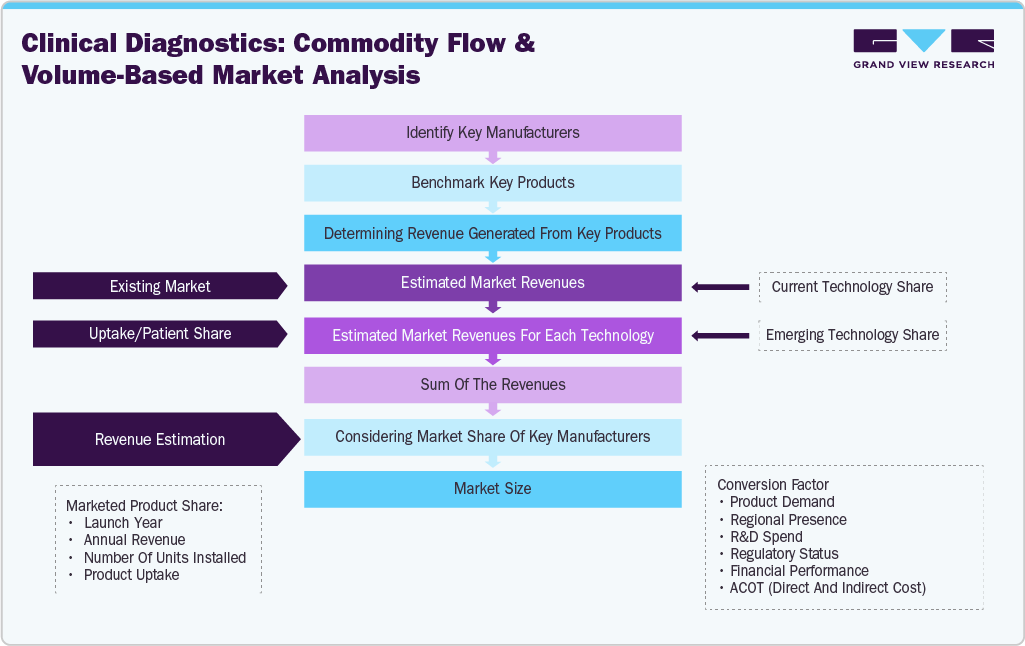
The blood bank serology market was estimated by identifying key manufacturers, benchmarking major immunohematology and transfusion-transmissible infection (TTI) serology products, and assessing product-level revenues across relevant testing areas, product categories, and technologies. Market estimates were further validated using existing market size, blood donation and serology testing volumes, testing adoption, technology-level revenues, and key manufacturers’ market shares to derive the overall market size. Revenue estimates incorporated reagents & consumables, instruments & systems, and software & services, with testing demand assessed across blood centers, hospital-based blood banks, and other transfusion testing facilities. The resulting estimates were reconciled through supply-side and demand-side analysis to determine the overall blood bank serology market size.
 To learn more about this report, Download Free Sample Report
Delivered Customizations
This report has been delivered with the following In-depth customizations
Client Request
Customization Delivered
Value Adds
Blood Bank Serology Market Competitive Landscape & Technology Assessment
Assessed the competitive landscape across immunohematology serology and transfusion-transmissible infection serology. Evaluated market participants based on blood grouping and phenotyping portfolios, antibody screening and identification assays, compatibility testing solutions, infectious disease marker coverage, automation capabilities, installed-base reach, regulatory positioning, partnerships, clinical adoption, and geographic presence.
Enables benchmarking of established blood bank serology suppliers against specialized and regional manufacturers, assessment of competitive concentration and technology differentiation, identification of portfolio gaps, and evaluation of supplier positioning across blood banks, hospitals, transfusion laboratories, plasma collection facilities, and reference laboratories.
Blood Bank Serology Product & Technology Benchmarking Analysis
Conducted comparative benchmarking of analyzers and systems, reagents, reagent red cells, gel cards, antisera, assay kits, controls, consumables, software, connectivity solutions, maintenance, and laboratory services. Products were assessed based on testing principle, marker coverage, automation level, throughput, sample requirements, assay menu, workflow compatibility, compatibility with blood bank procedures, regulatory status, intended use, and application across immunohematology and infectious disease serology.
Supports comparison of blood bank serology platforms and workflows, identification of product and assay-menu gaps, assessment of recurring reagent and consumable opportunities, evaluation of automation and software requirements, and comparison of technologies used for ABO and Rh grouping, phenotyping, antibody testing, crossmatching, direct antiglobulin testing, and infectious disease screening.
Blood Bank Serology Commercialization & Market Entry Assessment
Assessed commercialization strategies, regulatory and validation requirements, procurement and tender models, distribution networks, reference-laboratory relationships, instrument placement practices, technical-service requirements, reimbursement considerations, and market-entry conditions across North America, Europe, Asia Pacific, Latin America, and the Middle East & Africa. Evaluated adoption across blood banks, hospital-based transfusion laboratories, plasma fractionation laboratories, and independent or reference testing laboratories.
Supports market-entry and geographic-expansion planning by identifying priority customer groups and markets, assessing regulatory and validation requirements, evaluating distributor and blood-service partnerships, analyzing procurement and instrument-placement opportunities, and defining commercialization priorities across immunohematology and transfusion-transmissible infection serology applications.
Frequently Asked Questions About This Report
North America dominated the global blood bank serology market with a revenue share of 41.27% in 2025.
Asia Pacific is the fastest-growing region over the forecast period.
The immunohematology serology segment accounted for the largest share of 61.8% of the blood bank serology market in 2025.
Key growth drivers include increasing adoption of automated blood bank serology workflows, mandatory donor screening, continued blood grouping and compatibility testing, rising transfusion activity, and laboratory digitalization. Automation also generates recurring demand for gel cards, reagent red blood cells, controls, software, maintenance, and technical support.
Reagent & consumables led the market with the largest revenue share of 51.0% in 2025, supported by recurring demand for blood grouping antisera, reagent red blood cells, antibody screening and identification panels, gel cards, donor infectious disease assays, calibrators, and quality controls.
Major market participants include QuidelOrtho Corporation, Immucor, Inc. (Werfen), Grifols, S.A., Bio-Rad Laboratories, Inc., Abbott Laboratories, F. Hoffmann-La Roche Ltd., DiaSorin S.p.A., DIAGAST, AliveDx Suisse S.A. (ALBA), Fujirebio Holdings, Inc., Fortress Diagnostics Limited, BAG Diagnostics GmbH, and Tulip Diagnostics Private Limited, among others.
The immunoassay segment dominated the global blood bank serology market, accounting for the largest revenue share of 30.5% in 2025. Its leading position is supported by widespread utilization of enzyme-linked immunosorbent assays (ELISA), chemiluminescent immunoassays (CLIA/CMIA), and electrochemiluminescent immunoassays (ECLIA) for transfusion-transmissible infection screening.
The global blood bank serology market size was valued at USD 3.3 billion in 2025 and is estimated at USD 3.6 billion by 2033.
The global blood bank serology market is expected to grow at a CAGR of 7.5% from 2026 to 2033,reaching USD 5.9 billion by 2033.
About the Author(s)
Clinical Diagnostics Research Team
Healthcare · Clinical DiagnosticsThis report was authored by the clinical diagnostics research team at Grand View Research - comprising two research analysts, one senior research analyst, and one industry expert - with specialized expertise in the clinical diagnostics segment of the healthcare industry. All findings are based on proprietary healthcare databases, executive interviews, and regulatory analysis, subject to internal peer review prior to publication.
Last Updated:
Speak to Analyst

Customize this report to your needs - add regions, segments, or data points, with 20% free customization.
Or view our licence options:


ISO 9001:2015 & 27001:2022 Certified
We are GDPR and CCPA compliant! Your transaction & personal information is safe and secure. For more details, please read our privacy policy.


