
- Home
- »
- Consumer F&B
- »
-
Carbonated Soft Drink Market Size, Share Report, 2026-2033GVR Report cover

Carbonated Soft Drink Market (2026 - 2033)
Size, Share & Trends Analysis Report By Flavor (Cola, Citrus), By Distribution Channel (Hypermarkets, Supermarkets & General Merchandisers, Online & D2C), By Region, And Segment Forecasts
Market Size, 2025
$285.4BMarket Estimate, 2026
$297.0BMarket Forecast, 2033
$378.3BCAGR, 2026–2033
3.5%Carbonated Soft Drink Market Summary
The global carbonated soft drink market size was valued at USD 285.4 billion in 2025 and is projected to grow from USD 297.0 billion in 2026 to USD 378.3 billion by 2033, at a CAGR of 3.5% from 2026 to 2033. The Asia Pacific held the largest share of 25.6% of the global market in 2025. The market continues to show resilience and selective growth, even as consumer behavior evolves.
 Source: Grand View Research, IR Documents, Primary Interviews, Paid DatabasesTo learn more about this report,
 Download Free Sample Report
 Key Market Trends & Insights
- By flavor: Cola-flavored segment held the largest market share of 52.6% in 2025.
- By distribution channel: Food service outlets segment held the largest market share of 25.0% in 2025.
Regional Highlights
- Largest regional market: Asia Pacific (25.6% revenue share, 2025)
- By country: China held the largest share in 2025
Market Size & Forecast
- Market size in 2025: USD 285.4 Billion
- Estimated market size in 2026: USD 297.0 Billion
- Projected market size by 2033: USD 378.3 Billion
- CAGR (2026-2033): 3.5%
Three ways to get this report
Buy it, customize it, or ask a question.Ask an Analyst
Analyst response in 1 business day
- AccessReport author, directly
- Reply timeWithin 1 working day
- No sales callDirect answer only
- FormatEmail reply
- CostFree, no cost
Get the Full Report
What the study covers
- FormatsPDF · Excel · Dashboard
- Timeline2026–2033 annual, 2025 base
- Coverage20+ countries, 5 regions
- Companies10+ key players profiled
Customize the Report
20% free customization
- IncludeCountries, segments, points
- TailorTo your product definition
- ExtendDeeper competitor detail
- OrA fully bespoke study
- Turnaround5–10 working days
While traditional full-sugar carbonated drinks face pressure in several mature markets due to health awareness and sugar-reduction policies, overall market demand is being sustained and, in some regions, expanded through product reformulation, premiumization, and geographic diversification.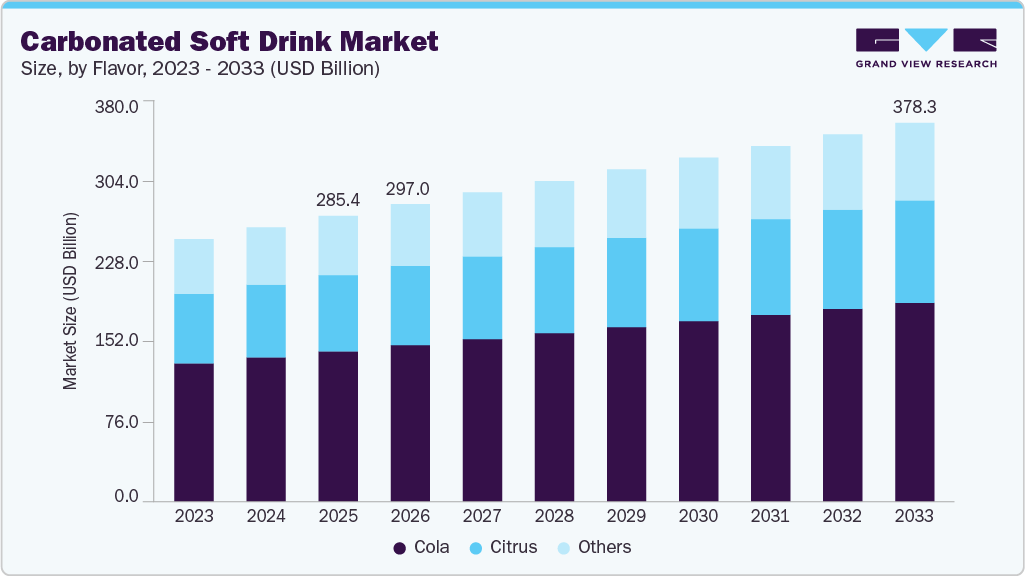 To learn more about this report, Download Free Sample Report
 A key factor supporting the market is the shift toward zero-sugar and low-calorie carbonated beverages. Consumers increasingly seek the familiar taste, mouthfeel, and refreshment of carbonated drinks but with fewer health trade-offs. As a result, diet and zero variants are no longer niche offerings; they are now central to brand portfolios and are helping retain existing consumers who might otherwise exit the category altogether.
In India’s soft drinks landscape, the popularity of low-sugar and no-added sugar beverages has been rising sharply in recent years. Sales of low-sugar and no-sugar drinks in India more than doubled in 2024 to about ₹700 - 750 crore, and these healthier alternatives now make up around 10% of the overall beverages category, reflecting growing health-oriented purchasing behavior. Reflecting this shift, Varun Beverages, one of the largest bottlers in India, reported that 55% of its sales volume in the first half of calendar year 2025 came from low-sugar or no-added-sugar carbonated drinks such as Pepsi Black and 7Up No Sugar, underscoring the strong consumer uptake of zero-sugar options.
Another important driver is the role of carbonated soft drinks as an affordable indulgence. Compared with premium café beverages, functional drinks, or alcoholic options, CSDs remain relatively low-cost and widely accessible. This makes them resilient during periods of economic uncertainty, as consumers continue to seek small, everyday treats. Strategic packaging, such as mini cans, single-serve bottles, and value multipacks, also supports consumption by addressing both price sensitivity and portion-control preferences.
Consumer Insights
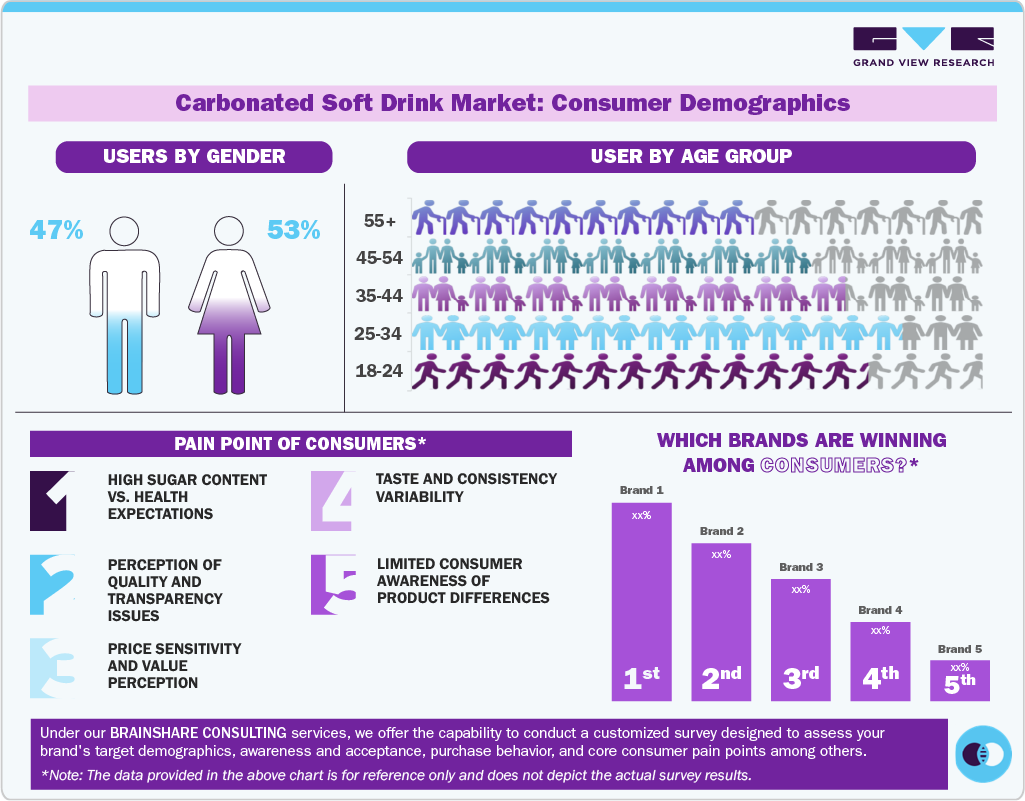
Consumer interest in new and diverse flavors is a major trend shaping the market. Modern beverage consumers, particularly younger demographics, display strong variety-seeking behavior and are less loyal to a single flavor for long periods. This has led to a steady stream of fruit-based, tropical, citrus, spice-infused, and dessert-inspired flavor launches. Limited-time editions and seasonal flavors further stimulate trial and repeat purchases, while localized flavors help brands resonate more strongly with regional tastes in high-growth markets.
 To learn more about this report, Download Free Sample Report
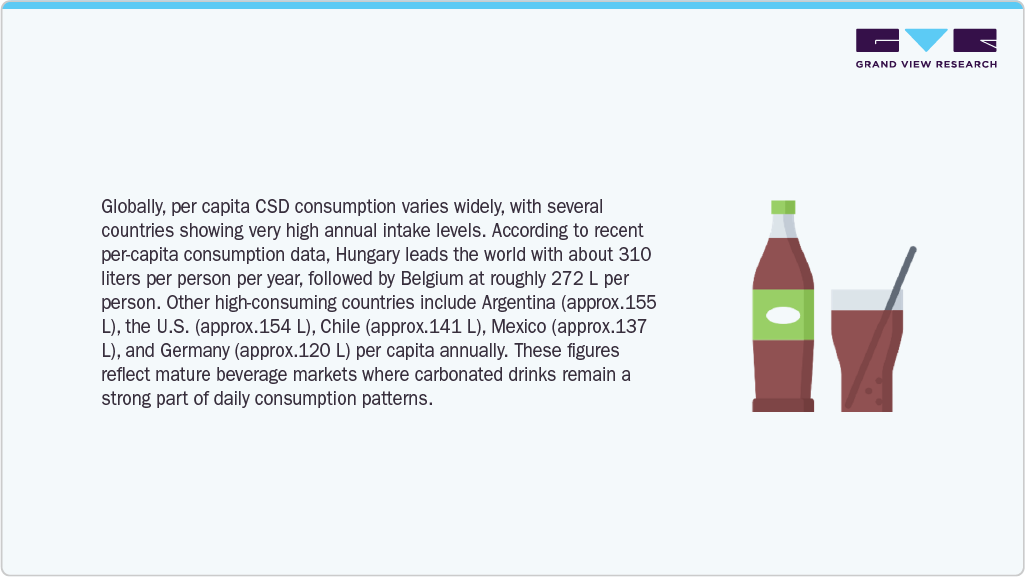
 Globally, per capita CSD consumption varies widely, with several countries showing very high annual intake levels. According to recent per-capita consumption data, Hungary leads the world with about 310 liters per person per year, followed by Belgium at roughly 272 L per person. Other high-consuming countries include Argentina (approx.155 L), the U.S. (approx.154 L), Chile (approx.141 L), Mexico (approx.137 L), and Germany (approx.120 L) per capita annually. These figures reflect mature beverage markets where carbonated drinks remain a strong part of daily consumption patterns.
 To learn more about this report, Download Free Sample Report
 Companies are moving beyond traditional cola and citrus profiles toward fruit-forward, fusion, and experiential flavors, including tropical fruits such as mango, guava, and passion fruit; citrus blends with herbal or floral notes like yuzu, ginger, or hibiscus; and limited-edition seasonal offerings. These flavor strategies are complemented by packaging innovations designed to match evolving consumption occasions and sustainability expectations. Manufacturers are rolling out smaller portion packs (mini cans, single-serve bottles) for portion control and on-the-go consumption, alongside resealable and multipack formats for home use. Sustainability-driven packaging, such as lightweight bottles, higher recycled PET content, and fully recyclable materials, is gaining prominence.
For instance, in October 2025, Franklin & Sons launched a new Yuzu Soda made with fresh yuzu juice and Lake District water, offering a sharp yet sweet citrus flavor that can be enjoyed straight or as a mixer with spirits. The drink targets growing demand for exotic, Asian-inspired fruity flavors, with yuzu alone seeing strong value market growth.
Flavor Insights
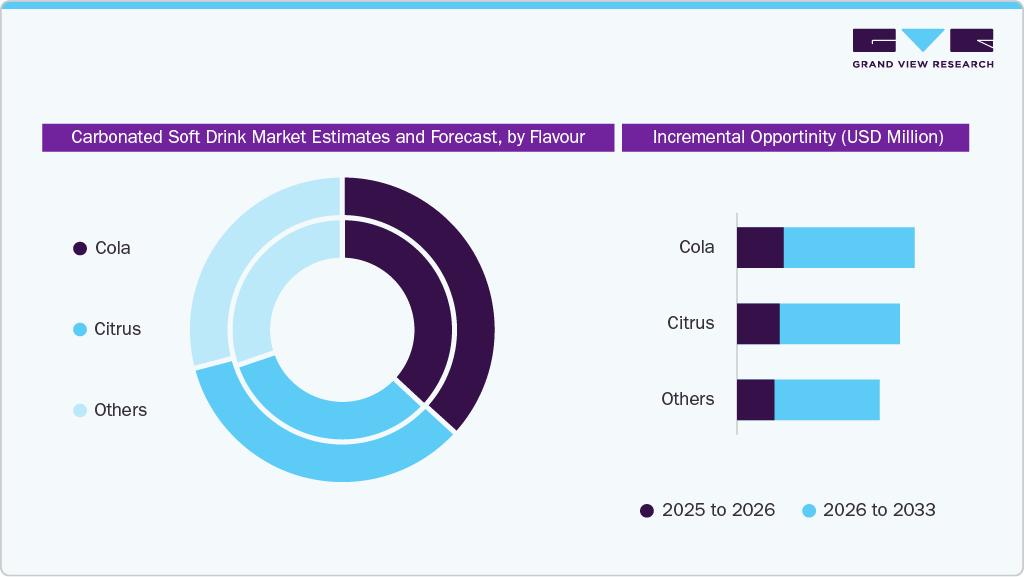
The cola-flavored carbonated soft drink dominated the market with a share of 52.6% in 2025. Cola remains a widely accepted “default” choice across age groups due to its balanced sweetness, caffeine content, and versatility for both standalone consumption and pairing with meals or mixers. Growth is further supported by product innovation, including zero-sugar, low-calorie, and natural-ingredient variants that address health-conscious preferences without sacrificing taste. In addition, strong brand equity, aggressive marketing, and expanding availability across on-the-go, foodservice, and home-consumption channels continue to reinforce cola’s relevance in an increasingly competitive beverage landscape.
 To learn more about this report, Download Free Sample Report
 The citrus-flavored carbonated soft drinks are expected to have a CAGR of 3.7% from 2026 to 2033. Citrus profiles such as lemon, lime, and orange are widely perceived as crisp and thirst-quenching, making them especially appealing in warm climates and for everyday consumption. Growing consumer interest in cleaner taste profiles, reduced sweetness, and a more “natural” flavor perception often associated with citrus has further supported demand. In addition, citrus sodas benefit from strong mixability with food and mocktails, alignment with on-the-go lifestyles, and frequent innovation around low-sugar, zero-calorie, and functional variants, reinforcing their relevance among both younger and health-conscious consumers.
Distribution Channel Insights
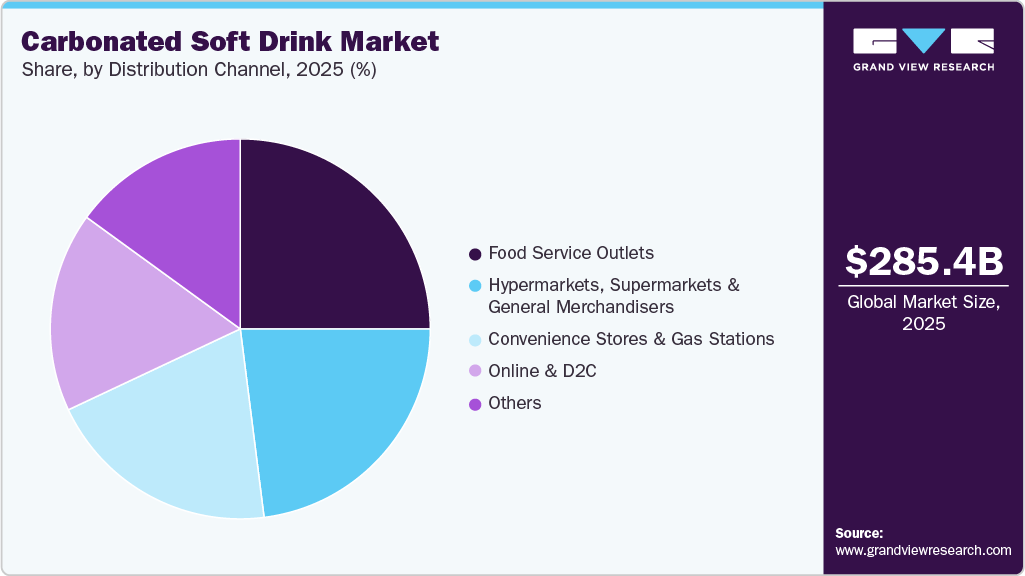
Sales of carbonated soft drinks through the food service outlets accounted for a share of 25.0% in 2025. Restaurants, quick-service chains, and cafés continue to drive volumes through combo meals, free refills, and fountain-dispensed formats, which offer higher perceived value compared to retail purchases. In addition, rising urbanization, busy lifestyles, and higher frequency of social dining have strengthened on-premise consumption, while partnerships between beverage brands and major foodservice chains enable exclusive flavors, seasonal offerings, and promotional pricing that further encourage consumers to choose carbonated soft drinks when eating out.
 To learn more about this report, Download Free Sample Report
 Sales of carbonated soft drinks through the online & D2C distribution channel are expected to grow at a CAGR of 9.4% from 2026 to 2033. E-commerce platforms and brand-owned D2C websites make it easier for households to stock up on multi-packs and variety bundles that are often less accessible in physical stores. At the same time, urban, digitally native consumers are more comfortable ordering beverages online alongside groceries, especially through quick-commerce and subscription models. Brands are also leveraging D2C channels to launch limited editions, zero-sugar variants, and personalized packs, directly engaging consumers through promotions and loyalty programs. In addition, improved last-mile logistics and packaging innovations have reduced concerns around breakage and delivery costs, further supporting the shift toward online and D2C sales of carbonated soft drinks.
Regional Insights
The carbonated soft drink market in North America is expected to register a CAGR of 3.3% from 2026 to 2033. Growth is being supported by product premiumization, including craft-style sodas, exotic flavors, and natural or functional variants with reduced sugar, botanicals, or caffeine alternatives. At the same time, zero-sugar and low-calorie formulations have broadened appeal among health-conscious consumers without sacrificing taste. Increased at-home consumption, impulse purchases through convenience and foodservice channels, and a strong brand.
U.S. Carbonated Soft Drink Market Trends
The carbonated soft drink industry in the U.S. is rising as consumer preferences shift toward convenient and indulgent beverage options that fit busy lifestyles. Innovations in flavor variety, packaging formats, and sugar-reduced or “better-for-you” formulations are attracting a broader range of consumers, including health-conscious buyers who previously avoided sodas.
Europe Carbonated Soft Drink Market Trends
The carbonated soft drink market in Europe is expected to register a CAGR of 2.5% from 2026 to 2033. Increasing urbanization and on-the-go consumption habits are driving demand for convenient, refreshing beverages. At the same time, manufacturers are expanding their portfolios with lower-sugar, functional, and “better-for-you” options that appeal to health-conscious buyers who still want fizzy taste experiences. Effective marketing campaigns, seasonal promotions, and growing availability through modern retail and horeca channels further stimulate trial and repeat purchases. In addition, younger demographics continue to view carbonated drinks as an affordable treat and social staple, helping sustain category growth despite broader shifts toward healthier diets.
Germany carbonated soft drink industry held a share of 21.6% in Europe, reflecting its strong consumer base and well-established beverage industry. The demand is driven by a wide variety of product offerings, including traditional colas, flavored sodas, and low- or zero-sugar alternatives. Changing consumer preferences toward healthier options have encouraged manufacturers to innovate with reduced-calorie formulations and natural ingredients. In addition, effective marketing strategies and widespread retail distribution channels support market growth. Despite increasing health awareness, carbonated drinks remain popular, particularly among younger consumers, ensuring steady sales and continued market presence across the country.
Asia Pacific Carbonated Soft Drink Market Trends
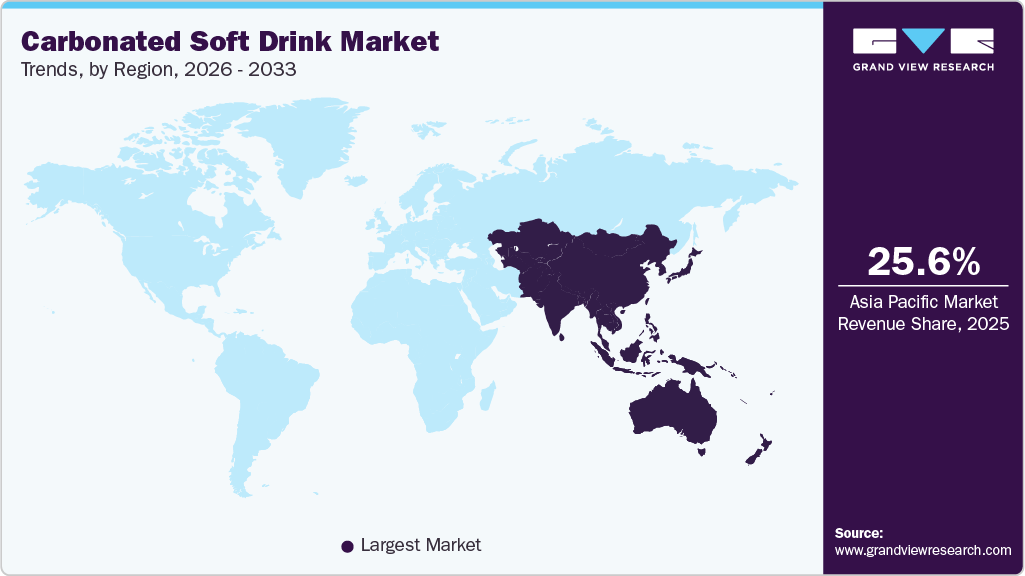
The carbonated soft drink industry in the Asia Pacific dominated the global market by accounting 25.6% market share in 2025. The market for carbonated soft drinks is rising among consumers in the Asia Pacific due to a combination of rapid urbanization, rising disposable incomes, and evolving consumption habits driven by younger demographics. Increasing exposure to Western lifestyles, expanding modern retail and foodservice channels, and the growth of on-the-go consumption have strengthened demand, particularly in urban centers. In addition, manufacturers are actively innovating with new flavors, localized taste profiles, smaller pack sizes, and low-sugar or functional variants, which are helping carbonated soft drinks remain relevant amid growing health awareness.
 To learn more about this report, Download Free Sample Report
 India carbonated soft drink market is expected to grow at a CAGR of 4.8% during 2026 to 2033, driven by rising urbanization, increasing disposable incomes, and changing lifestyle patterns. The growing youth population and expanding middle class are key contributors to the demand for convenient and ready-to-drink beverages. In addition, aggressive marketing campaigns and the expansion of retail networks, including e-commerce platforms, are supporting market growth. However, increasing health consciousness is encouraging a shift toward low-sugar and healthier beverage options, prompting manufacturers to innovate and diversify their product portfolios to maintain consumer interest and sustain long-term growth.
Key Carbonated Soft Drink Company Insights
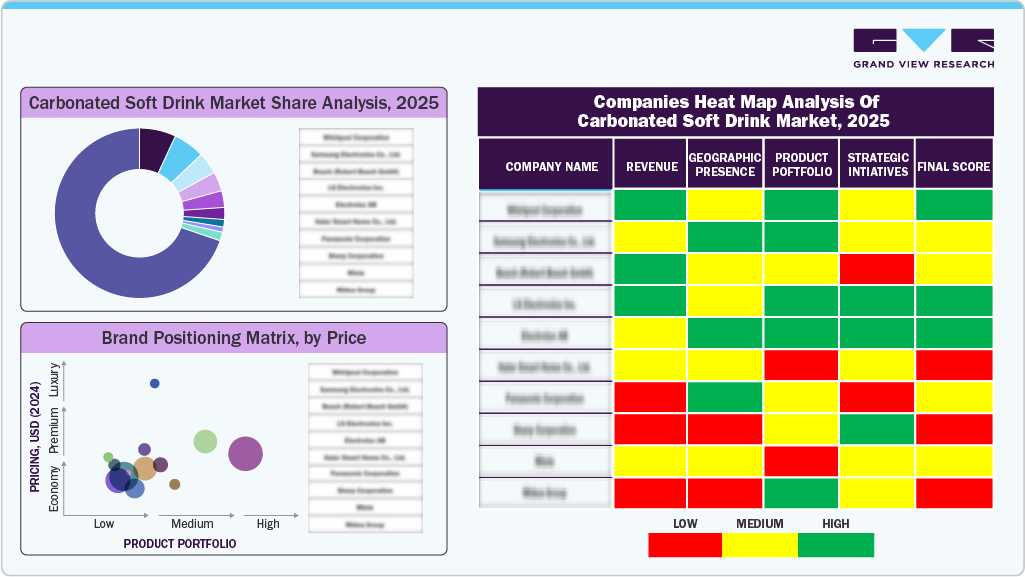
The presence of a few established players and new entrants characterizes the market. Many big players are increasing their focus on the growing market trend. Players in the market are diversifying their service offerings in order to maintain market share.
 To learn more about this report, Download Free Sample Report
 Key Carbonated Soft Drink Companies:
The following key companies have been profiled for this study on the carbonated soft drink market.
- Danone
- PepsiCo Inc.
- The Coca-Cola Company
- Keurig Dr Pepper Inc.
- Monster Energy Company
- National Beverage Corp.
- Refresco Group
- Jones Soda Co.
- Suntory Beverage & Food Limited
- SodaStream International Ltd.
Recent Developments
-
In September 2025, Keurig Dr Pepper Canada signed an exclusive national agreement with Cove Drinks Inc. to handle sales, distribution, and marketing of Cove Soda, a zero-sugar, probiotic soft drink brand, across Canada. The deal, expected to fully transition by the end of 2025, will use KDP Canada’s retail reach to expand the availability of Cove’s functional sodas, which contain 1 billion CFUs of probiotics per can and come in nostalgic flavors like Classic Cola and Orange Cream.
-
In August 2025, Manchester United signed a new three-year deal with The Coca-Cola Company, making Coca-Cola the club’s Official Carbonated Soft Drink Partner in the UK and Europe, with pouring rights at Old Trafford for multiple Coca-Cola and related brands. The partnership focuses on matchday refreshments, fan activations, digital content, and community initiatives to bring supporters closer to the club and complements Coca-Cola’s existing league-wide agreement with the Premier League.
Carbonated Soft Drink Market Report Scope
Report Attribute
Details
Market size in 2025
USD 285.4 billion
Estimated market size in 2026
USD 297.0 billion
Projected market size by 2033
USD 378.3 billion
Growth rate
CAGR of 3.5% from 2026 to 2033
Base year
2025
Historical data
2021 - 2024
Forecast period
2026 - 2033
Quantitative units
Revenue in USD million/billion, and CAGR from 2026 to 2033
Report coverage
Revenue forecast, company ranking, competitive landscape, growth factors, and trends
Segments covered
Flavor, distribution channel, region
Regional scope
North America, Europe, Asia Pacific, CSA, MEA
Country scope
U.S.; Canada; Mexico; UK; Germany; France; Italy; Spain; China; India; Japan; South Korea; Australia & New Zealand; Brazil; South Africa
Key companies profiled
Danone; PepsiCo Inc.; The Coca-Cola Company; Keurig Dr Pepper Inc.; Monster Energy Company; National Beverage Corp.; Refresco Group; Jones Soda Co.; Suntory Beverage & Food Limited; SodaStream International Ltd.
Customization scope
Free report customization (equivalent up to 8 analysts working days) with purchase. Addition or alteration to country, regional & segment scope.
Pricing and purchase options
Avail customized purchase options to meet your exact research needs. Explore purchase options Global Carbonated Soft Drink Market Report Segmentation
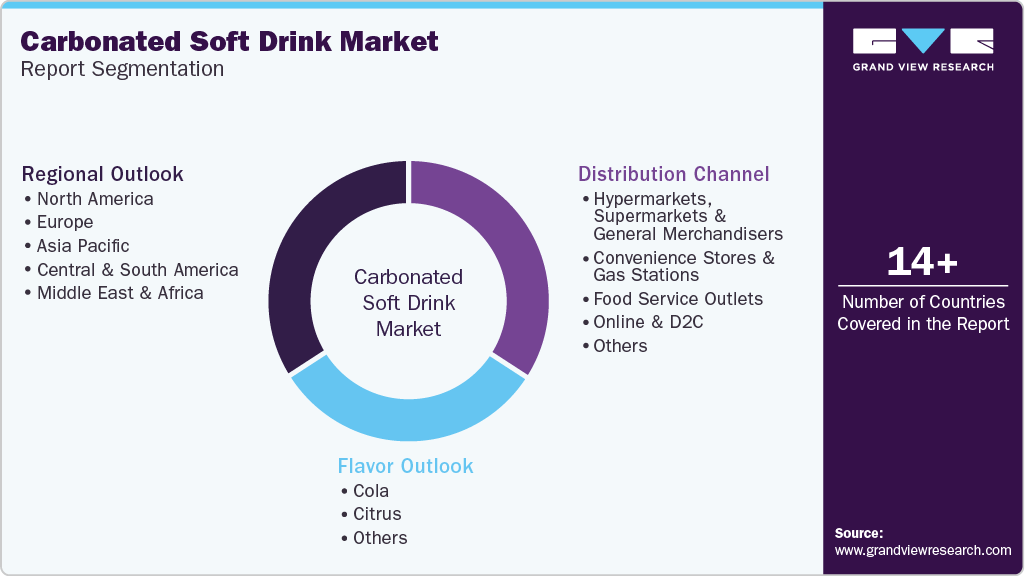
This report forecasts revenue growth at global, regional & country levels and provides an analysis of the latest trends and opportunities in each of the sub-segments from 2021 to 2033. For this study, Grand View Research has segmented the global carbonated soft drink market report based on flavor, distribution channel, and region:
 To learn more about this report, Download Free Sample Report
 -
Flavor Outlook (Revenue, USD Million, 2021 - 2033)
-
Cola
-
Citrus
-
Others
-
-
Distribution Channel Outlook (USD Million; 2021 - 2033)
-
Hypermarkets, Supermarkets & General Merchandisers
-
Convenience Stores & Gas Stations
-
Food Service Outlets
-
Online & D2C
-
Others
-
-
Regional Outlook (Revenue, USD Million; 2021 - 2033)
-
North America
-
U.S.
-
Canada
-
Mexico
-
-
Europe
-
UK
-
Germany
-
France
-
Italy
-
Spain
-
-
Asia Pacific
-
China
-
India
-
Japan
-
Australia & New Zealand
-
South Korea
-
-
Central & South America
-
Brazil
-
-
Middle East & Africa (MEA)
-
South Africa
-
-
Frequently Asked Questions About This Report
Some key players operating in the carbonated soft drink market include ANADOLU GRUBU A.Ş., COCA-COLA FEMSA, Danone, JONES SODA CO., Keurig Dr Pepper Inc., Monster Energy Company, National Beverage Corp., PepsiCo, Refresco Group, SODASTREAM INTERNATIONAL LTD., SUNTORY BEVERAGE & FOOD LIMITED., The Coca-Cola Company.
Key factors that are driving the carbonated soft drink market growth include the demand for convenience, shelf-stable innovations, eco-friendly packaging, made with clean, renewable materials, and fewer preservatives and chemicals.
The food service outlets segment led with a 25.0% revenue share in 2025, while the online & D2C segment is expected to grow at a CAGR of 9.4% from 2026 to 2033.
Asia Pacific dominated with a 25.6% revenue share in 2025.
The global carbonated soft drink market size was estimated at USD 285.4 billion in 2025 and is expected to reach USD 297.0 billion in 2026.
The global carbonated soft drink market is expected to grow at a compound annual growth rate of 3.5% from 2026 to 2033 to reach USD 378.3 billion by 2033.
The cola-flavored carbonated soft drink dominated the market with a share of 52.6% in 2025. Cola remains a widely accepted “default” choice across age groups due to its balanced sweetness, caffeine content, and versatility for both standalone consumption and pairing with meals or mixers.
About the Author(s)
Consumer F&B Research Team
Consumer Goods · Consumer F&BThis report was authored by the consumer f&b research team at Grand View Research - comprising two research analysts, one senior research analyst, and one industry expert - with specialized expertise in the consumer f&b segment of the consumer goods industry. All findings are based on proprietary consumer goods databases, executive interviews, and regulatory analysis, subject to internal peer review prior to publication.
Last Updated:
Speak to Analyst

Customize this report to your needs - add regions, segments, or data points, with 20% free customization.
Or view our licence options:


ISO 9001:2015 & 27001:2022 Certified
We are GDPR and CCPA compliant! Your transaction & personal information is safe and secure. For more details, please read our privacy policy.


