Report Overview
The global cardiovascular anastomosis devices market size was valued at USD 1.10 billion in 2021 and is expected to expand at a compound annual growth rate (CAGR) of 6.5% from 2022 to 2030. Anastomotic devices are becoming popular as a safe and faster solution for saphenous aortic anastomosis. Medical technology companies are introducing innovative products in the market in line with the rising awareness and demand related to these devices. During the peak of the COVID-19 pandemic, only emergency cases such as acute aortic dissections were allowed to be treated, with patients being treated based on surgical priority while all elective procedures were canceled. In the U.S., there was around a 52% reduction in adult cardiac surgery volume, and almost a 65% reduction in elective cases, based on the database by the Society of Thoracic Surgeons Adult Cardiac Surgery.
Cardiac surgery patients have an increased risk of complications from COVID-19 and need vital resources including ICU beds, also required by COVID-19 patients. Therefore, hospital admissions for elective procedures were reduced to prevent potential hospital-acquired infections.
Effective long-term patency of the graft is crucial during any surgical coronary revascularization procedure. Graft patency and patient outcomes can be largely impacted by the quality of the anastomosis and inter- & intra-surgeon variability in the surgical techniques. Anastomotic devices can facilitate the creation of reproducible, rapid, and compliant anastomoses in potentially difficult-to-access areas, on- or off-pump, through minimal access incisions, with neuroprotective advantages.
The usage of anastomotic devices decreases the extent of aortic manipulation required for creating a graft based on aortic inflow. This allows surgeons to safely construct aortocoronary grafts. Anastomosis devices have paved the way for better outcomes in cardiovascular surgeries.
Off-pump coronary artery bypass (OPCAB) grafting is considered the gold standard for cardiac surgeries. It helps to decrease the incidences of postoperative complications caused by aortic intubation. It is most effective in minimally invasive surgeries and aids in avoiding multiple organ malfunctions caused by cardiopulmonary bypass.
Cardiovascular diseases are one of the leading causes of death across the globe. According to the WHO, cardiovascular diseases accounted for over 17.9 million deaths in 2019, accounting for 32% of all global deaths. According to CDC, 18.2 million adults have coronary artery diseases (CAD) in the U.S. CADs are the cause of around 20% of deaths in adults aged below 65 years. The rise in sedentary lifestyle, along with increasing smoking, tobacco, and alcohol consumption is expected to contribute to the number of cardiovascular surgeries in the coming years.
Product Type Insights
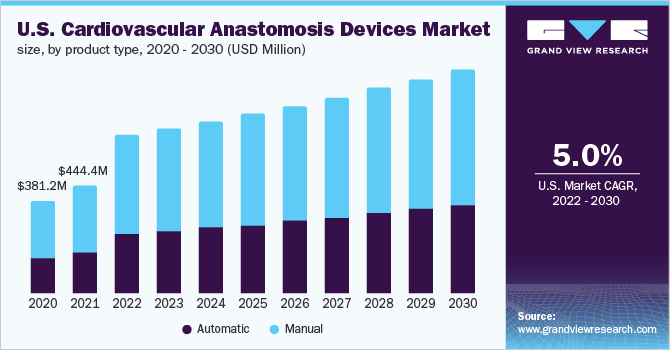
In 2021, the manual anastomosis devices segment dominated the market with 62.8% of the revenue share, as they allow traditional hand-sewing running sutures. Manual devices create a bloodless field around the aortic hole, where an anastomosis procedure needs to be performed.
The automatic anastomosis devices segment is likely to witness the fastest CAGR of 7.2% over the forecast period. These devices use metal mechanisms to replace hand-sewing sutures. They are generally used in critical situations and require no clamps, hence reducing aortic manipulation. Automatic devices are publicized as being noninvasive and can be helpful in the case of the diseased aorta, not further damaging the endothelium.
Automatic anastomotic devices are termed as a non-invasive alternative to creating anastomoses. The manufacturers in the cardiovascular anastomosis devices market are expected to gain a strong research base for automatic devices to prevent the risk of neurological events and mortality. Moreover, more awareness should be created about its advantages such as satisfactory one-year graft patency and low incidence of adverse cardiovascular events.
End-use Insights
The hospital segment held a majority revenue share of 63% in the global market in 2021. Hospitals are introducing cardiac surgery programs in the U.S.
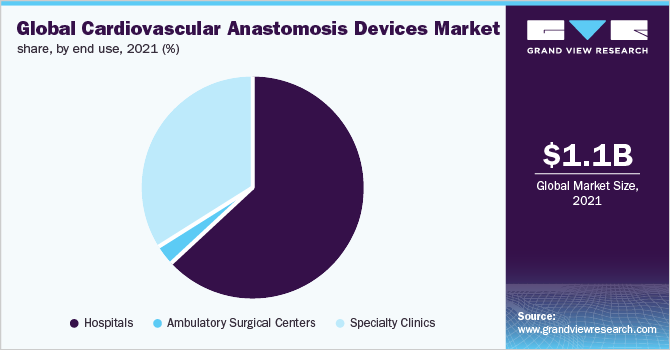
The specialty clinics segment is anticipated to witness the fastest CAGR of 7.9 % during the forecast period. Patients prefer specialty clinics when they are less likely to have coexisting conditions. Specialty clinics provide a specific kind of treatment completely focusing on cardiac treatments.
Regional Insights
North America dominated the cardiovascular anastomosis devices market with a share of more than 43% in 2021 and is expected to continue to grow further, owing to the high prevalence of cardiac disorders in the region. Furthermore, the improving healthcare expenditure and the growing disposable incomes of patients are expected to contribute to the market growth.
Asia Pacific is expected to witness the fastest growth rate of 8.9% during the forecast period, owing to the rising prevalence of cardiovascular diseases, improving treatment options, growing healthcare expenditure, supportive government initiatives, rising focus on the R&D activities, and technological developments in the region to improve the healthcare infrastructure.
Key Companies & Market Share Insights
Major strategic initiatives undertaken by the market players include new product launches, regulatory approvals by the authorities, mergers, and acquisitions, among others. The growing demand for advancements in technological developments in the healthcare sector has further fueled the adoption of innovative cardiovascular surgical solutions.
In March 2019, Medtronic plc signed an agreement to acquire a medical device company, EPIX Therapeutics, Inc., that manufactures a catheter-based cardiac ablation system to treat cardiac arrhythmias. This acquisition expanded Medtronic’s cardiac ablation portfolio of a comprehensive suite of tools to treat cardiac arrhythmias. In November 2018, Peters Surgical invested around USD 5 million, after the acquisition of the Gurgaon-based Stericat, to further expand its existing manufacturing facility in India. Some of the prominent players in the global cardiovascular anastomosis devices market are:
-
Abbott
-
B. Braun Melsungen AG
-
Getinge AB
-
Medtronic
-
Peters Surgical
Cardiovascular Anastomosis Devices Market Report Scope
|
Report Attribute
|
Details
|
|
Market size value in 2022
|
USD 1.63 billion
|
|
Revenue forecast in 2030
|
USD 2.54 billion
|
|
Growth rate
|
CAGR of 6.5% from 2022 to 2030
|
|
Base year for estimation
|
2021
|
|
Actual estimates/Historic data
|
2017 - 2020
|
|
Forecast period
|
2022 - 2030
|
|
Quantitative units
|
Revenue in USD million & CAGR from 2022 to 2030
|
|
Report coverage
|
Revenue forecast, company share, competitive landscape, growth factors & trends
|
|
Segments covered
|
Product type, end-use, region
|
|
Regional scope
|
North America; Europe; Asia Pacific; Latin America; MEA
|
|
Country scope
|
U.S.; Canada; UK; Germany; France; Italy; Spain; Japan; China; India; Brazil; Mexico; South Africa
|
|
Key companies profiled
|
Abbott; B. Braun Melsungen AG; Getinge AB; Medtronic; Peters Surgical
|
|
Customization scope
|
Free report customization (equivalent up to 8 analysts working days) with purchase. Addition or alteration to country, regional & segment scope
|
|
Pricing and purchase options
|
Avail customized purchase options to meet your exact research needs. Explore purchase options
|
Segments Covered in the Report
This report forecasts revenue growth at the global, regional, and country levels and provides an analysis of the latest industry trends in each of the sub-segments from 2017 to 2030. For this study, Grand View Research has segmented the global cardiovascular anastomosis devices market report based on product type, end-use, and region:
-
Product Type Outlook (Revenue, USD Million, 2017 - 2030)
-
End-Use Outlook (Revenue, USD Million, 2017 - 2030)
-
Regional Outlook (Revenue, USD Million, 2017 - 2030)
-
North America
-
Europe
-
UK
-
Germany
-
France
-
Italy
-
Spain
-
Asia Pacific
-
Latin America
-
Middle East & Africa
Frequently Asked Questions About This Report
b. The global cardiovascular anastomosis devices market size was estimated at USD 1.10 billion in 2021 and is expected to reach USD 1.63 billion in 2022.
b. The global cardiovascular anastomosis devices market is expected to grow at a compound annual growth rate of 6.5% from 2022 to 2030 to reach USD 2.54 billion by 2030.
b. North America dominated the cardiovascular anastomosis devices market with a share of 43% in 2021. This is attributable to the prevalence of cardiac disorders in the region.
b. Some key players operating in the cardiovascular anastomosis devices market include Abbott, B.Braun, Getinge AB, Medtronic, and Peters Surgical.
b. Key factors that are driving the cardiovascular anastomosis devices market growth include the benefits offered by these devices and technological advancements.

 Download Sample Report