
- Home
- »
- Plastics, Polymers & Resins
- »
-
Cellulose Film Market Size, Share & Trends Report, 2033GVR Report cover

Cellulose Film Market (2026 - 2033)
Size, Share & Trends Analysis Report By Product Type (Cellophane, Coated Cellulose Films, Uncoated Cellulose Films), By Application (Personal Care, Agriculture), By Region, And Segment Forecasts
Market Size, 2025
$922.1MMarket Estimate, 2026
$964.4MMarket Forecast, 2033
$1,505.1MCAGR, 2026–2033
6.6%Cellulose Film Market Summary
The global cellulose film market size was valued at USD 922.1 million in 2025 and is projected to grow from USD 964.4 million in 2026 to USD 1,505.1 million by 2033, at a CAGR of 6.6% from 2026 to 2033. Asia Pacific dominated the market, accounting for a revenue share of 40.5% in 2025. Growing demand for sustainable packaging across food, personal care, pharmaceutical, and consumer goods industries, together with stringent environmental regulations and increasing preference for renewable materials, is accelerating cellulose film adoption.
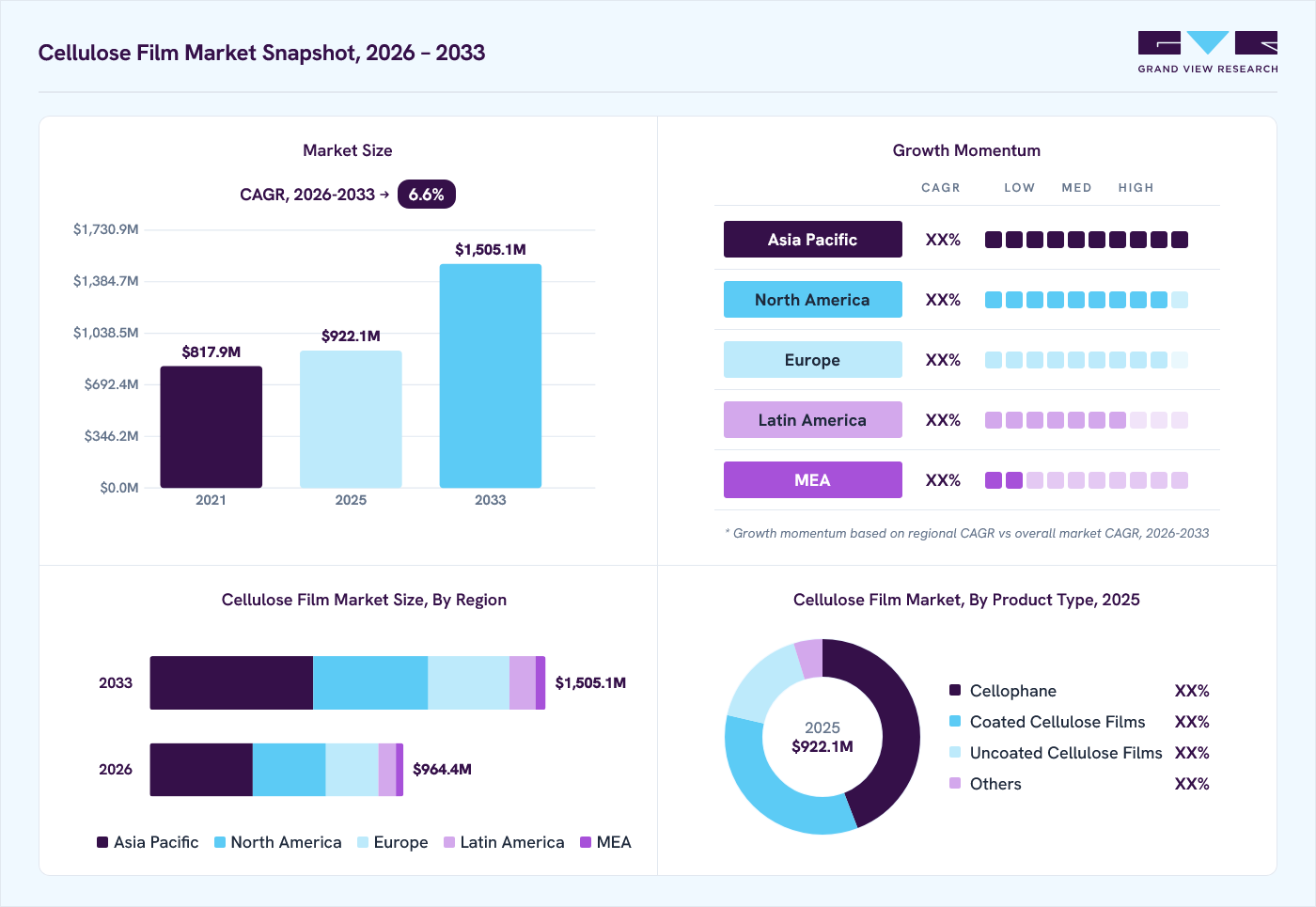 Source: Grand View Research, IR Documents, Primary Interviews, Paid DatabasesTo learn more about this report,
 Download Free Sample Report
Key Market Trends & Insights
- By product type: Cellophane cellulose film segment led the market with the largest revenue share of 44.1% in 2025.
- By application: Food & beverage cellulose film segment led the market with the largest revenue share of 54.5% in 2025.
Regional Highlights
- Largest regional market: Asia Pacific (40.5% revenue share, 2025)
- By country: China held the largest market share in 2025.
Market Size & Forecast
- Market size in 2025: USD 922.1 Million
- Estimated market size in 2026: USD 964.4 Million
- Projected market size by 2033: USD 1,505.1 Million
- CAGR (2026-2033): 6.6%
Prism AI by Grand View Research Free to tryAsk a question about the cellulose film marketTry asking✓Every figure cited from GVR research Prefer the report? Download free sample →
The growing consumer and regulatory demand for sustainable, eco-friendly packaging solutions propels the market. As industries and governments increasingly recognize the environmental burden of traditional plastics, cellulose films, which are biodegradable and derived from renewable resources, have emerged as a promising alternative. This trend is evident in sectors such as food packaging and personal care, where companies are shifting to greener options to align with both consumer preferences and stricter environmental regulations. Continuous advancements in coating and film processing technologies, expanding production capacities, and rising investments in sustainable packaging innovation are further strengthening cellulose film demand for high-performance, biodegradable, and versatile packaging applications across developed and emerging markets. Technological advancements and improvements in manufacturing processes have also significantly influenced the market. Innovations in the production of cellulose films have enhanced their barrier properties, durability, and versatility, making them suitable for a wider range of applications, from flexible packaging to specialty industrial uses.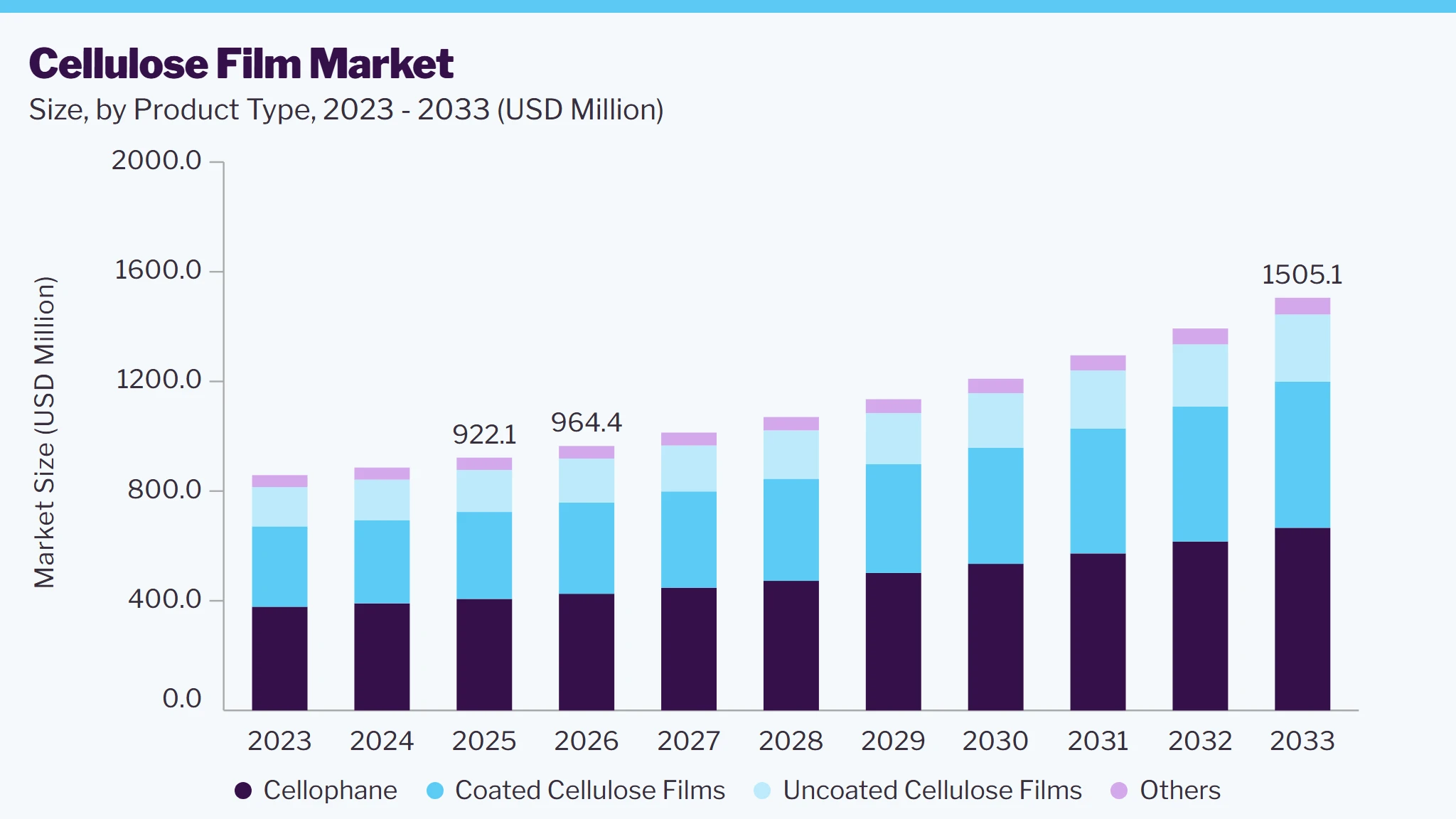 To learn more about this report, Download Free Sample Report
Economic factors and the expansion of global supply chains further contribute to market growth. With rising raw material availability and the development of efficient production technologies, manufacturers can now offer cellulose films at more competitive prices. This cost-effectiveness, combined with growing investments in research and development, has encouraged key players to expand their production capacities and explore new markets, particularly in emerging economies where the demand for sustainable packaging is rising. Such strategic initiatives broaden the market reach and promote innovation and sustainability in product development.
Moreover, the market is experiencing a shift driven by consumer behavior and corporate responsibility initiatives. As awareness of environmental issues increases, businesses across various industries integrate sustainability into their core strategies. This has led to collaborations between cellulose film manufacturers and large multinational corporations, fostering innovation through joint ventures and partnerships.
Market Dynamics
The cellulose film market is shaped by the shift toward compostable packaging across food, personal care, and pharmaceutical formats. Demand is concentrated in the Asia Pacific, where manufacturing scale and export-oriented packaging chains support high-volume conversion, while North America and Europe remain important adoption centers due to sustainability regulation and brand-owner pressure. Commercial activity is led by cellophane and coated grades, which serve visibility-driven and barrier-sensitive applications. The supplier base is also split between global film specialists and regional converters, creating competition on compostability, printability, and application fit.
Food and beverage packaging is the clearest demand engine for cellulose films because converters need transparent, biodegradable alternatives for snacks, confectionery, ready-to-eat meals, beverage labels, and flexible wraps. The report identifies food & beverage as the largest application, while cellophane remains the leading product type. This combination reflects procurement demand for shelf appeal, moisture control, and compostability in one format. As major brands redesign packaging around sustainability targets, cellulose films are increasingly used in repeat supply programs rather than one-off niche launches.
Growth is reinforced by the regulatory and commercial shift in North America and Europe toward lower-plastic packaging. Europe’s packaging rules and single-use plastic restrictions, together with U.S. retail and brand sustainability commitments, are pushing converters toward cellulose-based materials that can support consumer-facing packaging without sacrificing appearance. Asia Pacific adds scale, with industrialization and strong demand from food, pharmaceuticals, and consumer goods making the region the largest market base. Suppliers that can deliver coated and uncoated grades with stable machinability, printability, and compostability are best placed to convert this demand into long-term contracts.
The main restraint is the performance-cost balance versus conventional plastic films. Cellulose films are valued for biodegradability and clarity, but many applications still require stronger moisture resistance, gas barrier control, and sealing performance than base film can provide. Coated grades address part of this gap, yet they add process complexity and cost. This limits adoption in price-sensitive packaging, especially where existing plastic structures already meet shelf-life and distribution requirements. The result is a market that can grow steadily, but still faces conversion friction in high-barrier and high-volume formats.
The clearest opportunity is in coated cellulose films for premium food, personal care, and pharmaceutical packaging. These formats allow brands to improve barrier performance, printability, and product presentation while keeping a compostable positioning. As sustainability messaging becomes a purchasing criterion, suppliers that pair functional coatings with regional production capacity can move up the value chain and capture higher-margin applications.
Analyst Perspective
The cellulose film market is moving from a conventional packaging substitute to a value-led sustainable materials segment. Food & beverage remains the largest demand base, but personal care and pharmaceutical packaging are becoming more important as brands prioritize premium appearance, compostability, and regulatory alignment. Coated films will likely create the strongest value creation opportunity because they address the performance gap that often limits broader cellulose adoption. Over the next five to ten years, differentiation will depend less on basic film supply and more on coating technology, conversion compatibility, regional manufacturing access, and partnerships with brand owners and packaging converters. The strongest players will be those that combine stable quality, application-specific performance, and sustainability credibility. The main risks remain raw material and processing cost pressure, competition from low-cost regional suppliers, and substitution by advanced plastic structures where barrier demands remain high.
Product Insights
Based on product type, the cellophane cellulose film segment led the market with the largest revenue share of 44.1% in 2025. Cellophane is a thin, transparent film derived from regenerated cellulose, known for its excellent moisture barrier properties and biodegradability. This segment’s growth is driven by increasing consumer demand for sustainable and biodegradable packaging solutions, especially in the food and consumer goods industries. In addition, its unique optical clarity and excellent moisture barrier properties make it highly attractive for packaging applications where product visibility is paramount.
The coated cellulose films segment is projected to grow at the fastest CAGR of 6.0% from 2026 to 2033. Coated cellulose films are produced by applying one or more layers of functional coatings, such as polymers or metallic layers, over a cellulose base. These coatings enhance properties such as moisture resistance, gas barrier performance, and printability, making them ideal for specialized packaging, labeling, and industrial applications. The need for enhanced functional properties in packaging and industrial applications primarily fuels the adoption of coated cellulose films.
Application Insights
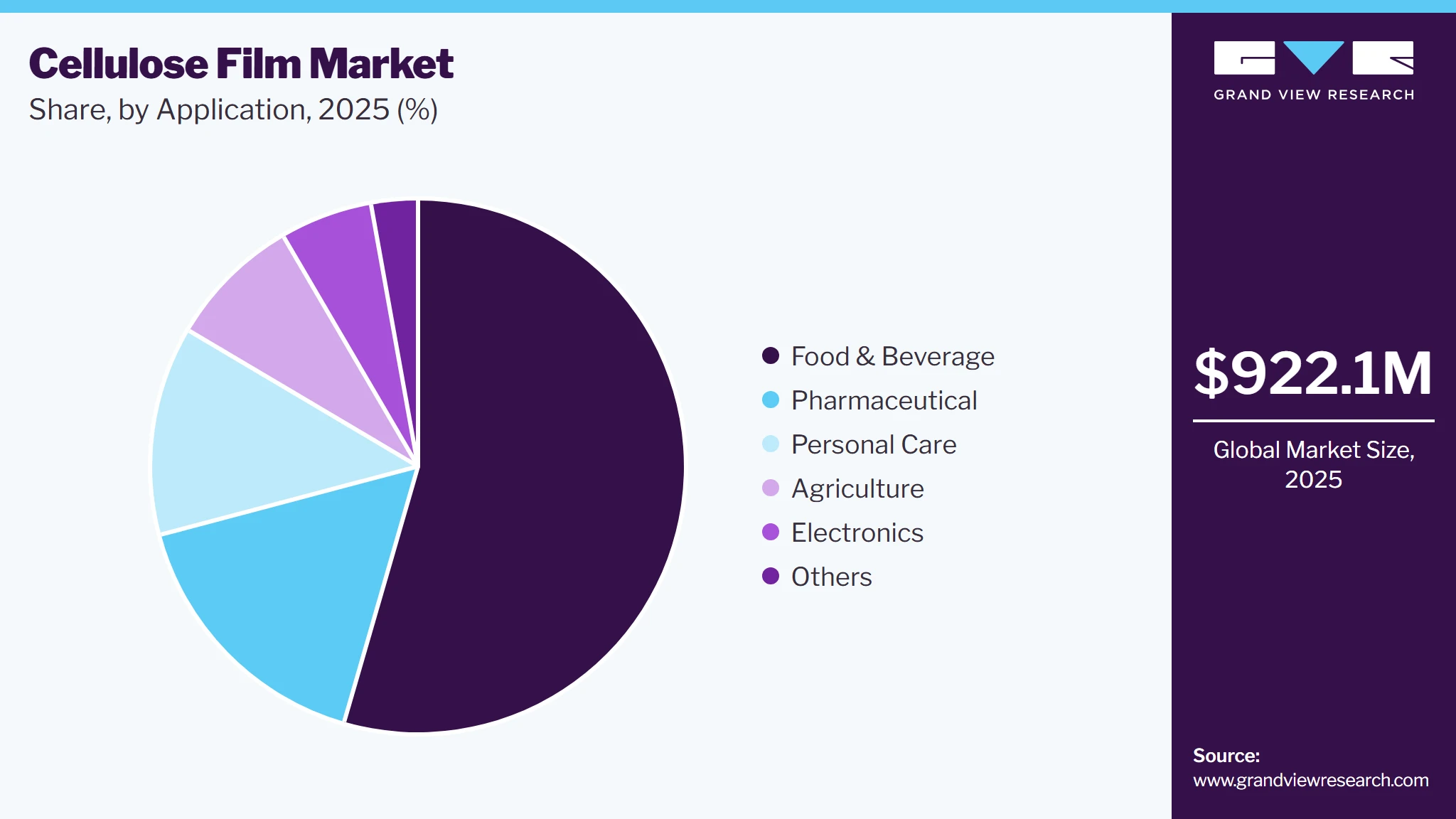
Based on application, the food & beverage cellulose film segment led the market with the largest revenue share of 54.5% in 2025. In this sector, cellulose films are used predominantly for packaging applications due to their excellent barrier properties, biodegradability, and flexibility. They help extend shelf life and maintain the quality and safety of perishable items, making them a popular choice for food wrappers, beverage labels, and flexible packaging solutions.
 To learn more about this report, Download Free Sample Report
The personal care segment is projected to grow at the fastest CAGR of 6.7% during the forecast period. Cellulose films are often used in cosmetic and hygiene product packaging, such as sachets, blister packs, and protective coverings. Their clarity, flexibility, and biodegradable nature add value by enhancing product aesthetics and sustainability, which is crucial in a market where performance and appearance matter.
In agriculture, cellulose films are employed in applications such as mulch films, greenhouse coverings, and crop protection films. These films help manage soil moisture, control weed growth and improve overall crop productivity by creating a microenvironment conducive to plant growth while reducing reliance on synthetic plastics.
Region Insights
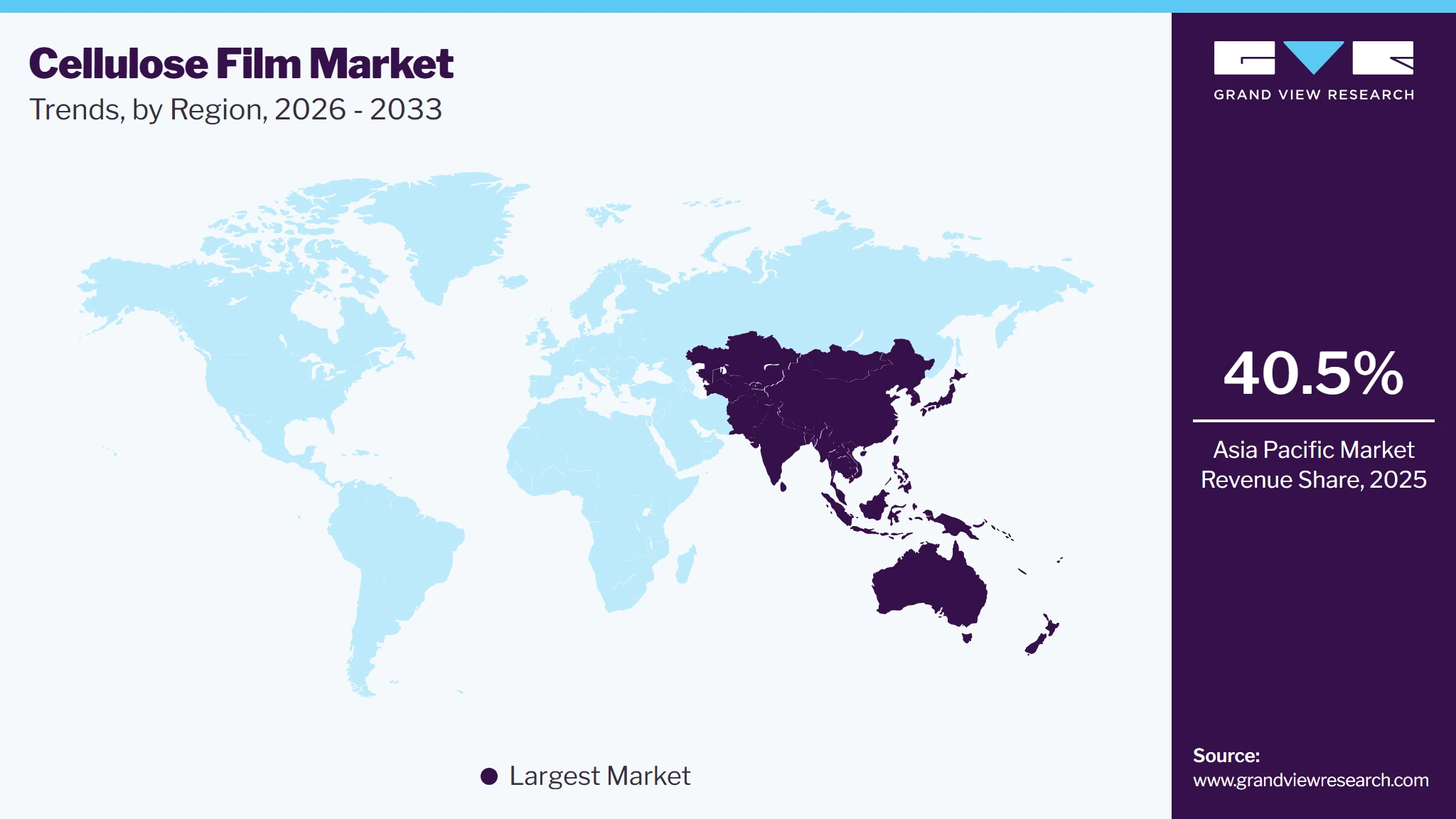
Asia Pacific dominated the cellulose film market with the largest revenue share of 40.5% in 2025 and is anticipated to grow at the fastest CAGR of 5.8% over the forecast period. This positive outlook is due to rapid industrialization and expanding manufacturing sectors across countries such as China, India, Japan, and South Korea. These nations have experienced strong economic development, creating substantial demand for sustainable packaging solutions in food, pharmaceuticals, and consumer goods industries where cellulose films are increasingly preferred, thus driving market growth in the region.
 To learn more about this report, Download Free Sample Report
The cellulose film market in China accounted for the largest market revenue share in the Asia Pacific in 2025. China cellulose film market is experiencing robust growth, driven by the country's massive manufacturing infrastructure combined with government policies promoting sustainable materials. This outlook has positioned China as Asia Pacific's largest producer and consumer of cellulose film. Moreover, the country's robust export market for consumer goods has also strengthened its position in the global cellulose film industry.
North America Cellulose Film Market
The cellulose film market in North America is showing considerable growth due to its robust packaging industry, particularly in the food and pharmaceutical sectors, which creates substantial demand for biodegradable and sustainable packaging solutions. In addition, the region's stringent regulations regarding single-use plastics, particularly in states such as California and New York, have further catalyzed this market growth, compelling manufacturers to seek biodegradable alternatives such as cellulose films.
The U.S. cellulose film market growth is majorly driven by its robust food packaging industry. Besides, major food companies such as Kraft Heinz and General Mills have shifted toward sustainable packaging solutions, creating significant demand for cellulose-based films. The pharmaceutical sector also contributes substantially to the country's market growth.
Europe Cellulose Film Market
The cellulose film market in Europe is primarily driven by stringent environmental regulations and strong consumer demand for sustainable packaging alternatives. The European Union's Single-Use Plastics Directive and other waste reduction policies have accelerated the transition from conventional plastics to biodegradable options such as cellulose films. This regulatory environment has created both pressure and incentives for businesses to adopt eco-friendly packaging solutions, thus driving market growth in the region.
Germany cellulose film market is primarily driven by a strict regulatory framework promoting sustainable materials. The German Packaging Act (Verpackungsgesetz) has incentivized businesses to adopt eco-friendly packaging solutions, driving demand for cellulose films. This regulatory push, combined with environmentally conscious German consumers, has created a robust domestic market that supports continued innovation and scale in production capabilities.
Key Cellulose Film Company Insights
The global cellulose film market is marked by a competitive and dynamic manufacturing landscape. Key players are investing heavily in research and development to produce sustainable, biodegradable films that serve a wide range of applications-from food packaging to specialized industrial uses. Major manufacturers across North America, Europe, and the Asia Pacific are leveraging advanced processing techniques and forging strategic partnerships to enhance product quality, improve barrier properties, and reduce environmental impact.
Key Cellulose Film Companies:
The following key companies have been profiled for this study on the cellulose film market.
-
Futamura Group
-
SHAOXING KEDE NEW MATERIAL CO., LTD.
-
Qingdao Cloud film Packaging materials Co., Ltd.
-
Rotofil
-
HuiZhou YITO Packaging Co., Ltd.
-
Rengo Co., Ltd.
-
Shandong Henglian New Materials Co., Ltd.
-
NUFAB GREEN PVT. LTD.
-
Wanpu Industrial Products Co., Ltd.
-
Cankey Technology Co., Ltd
-
Rathna Packaging India Pvt Ltd
-
SINO- FILM
Competitive Benchmarking
Category
Operating Strategies
Competitive Edge
Weakness
Established Players ( Futamura Group, Rengo Co., Ltd., SINO-FILM, SHAOXING KEDE NEW MATERIAL CO., LTD., Qingdao Cloud film Packaging materials Co., Ltd., HuiZhou YITO Packaging Co., Ltd. )
- Invest in capacity, coating capability, and packaging grade expansion for food, personal care, and industrial conversion.
- Build export-linked supply chains and work with converters that need consistent compostable film supply.
- Use product development to improve barrier performance, sealing behavior, and print quality.
- Wider market presence and stronger commercial visibility across multiple end-use segments.
- Better ability to supply standardized grades at scale and support repeat procurement.
- Greater credibility in long-term supply relationships with packaging converters and brand owners.
- Higher exposure to price competition in commoditized film grades.
- Slower response to niche application changes compared with smaller specialists.
- Greater dependency on high-utilization manufacturing to sustain margins..
Emerging Players (Rotofil, Shandong Henglian New Materials Co., Ltd., NUFAB GREEN PVT. LTD., Wanpu Industrial Products Co., Ltd., Cankey Technology Co., Ltd, Rathna Packaging India Pvt Ltd.)
- Target narrow application windows such as regional food packaging, labels, and smaller-format sustainable packs.
- Compete through flexible production, distributor-led reach, and selective customer customization.
- Position around speed, service, and local commercial responsiveness.
- Faster decision-making and easier adaptation to customer-specific packaging needs.
- Lower operating overheads that support competitive pricing in regional markets.
- Better room to build niche positioning around compostable and differentiated packaging.
- Limited scale and weaker global supply visibility.
- Lower bargaining power with large converters and multinational buyers.
- More dependence on a narrow customer set and regional demand cycles.
Recent Developments
-
In September 2023, Futamura, a major manufacturer of sustainable cellulose films, commissioned a new cellulose film production line at its Wigton facility in Cumbria, England. This strategic investment addresses the increasing demand for Futamura's renewable and compostable NatureFlex films, which are derived from renewable wood pulp and meet global composting standards.
-
In March 2023, VTT Technical Research Centre of Finland significantly advanced the production of sustainable cellulose-based films, aiming to replace traditional plastic wraps in food packaging. This initiative is part of their USD 1.56 million investment in the Cellulose Films pilot facility, designed to scale up renewable cellulose alternatives and address the growing environmental challenges of plastic waste.
Cellulose Film Market Report Scope
Report Attribute
Details
Market size in 2025
USD 922.1 million
Estimated market size in 2026
USD 964.4 million
Projected market size by 2033
USD 1,505.1 million
Growth rate
CAGR of 6.6% from 2026 to 2033
Base year for estimation
2025
Historical data
2021 - 2024
Forecast period
2026 - 2033
Quantitative units
Revenue in USD million/billion, volume in kilotons, and CAGR from 2026 to 2033
Report coverage
Revenue forecast, company ranking, competitive landscape, growth factors, and trends
Segments covered
Product type, application, region
RegioFinal scope
North America; Europe; Asia Pacific; Central & South America; Middle East & Africa
Country scope
U.S., Canada, Mexico, Germany, France, Italy, UK, China, Japan, India, Australia, Brazil, Argentina, Colombia, Saudi Arabia, UAE, and South Africa
Key companies profiled
Futamura Group; SHAOXING KEDE NEW MATERIAL CO., LTD.; Qingdao Cloud film Packaging materials Co., Ltd.; Rotofil; HuiZhou YITO Packaging Co., Ltd.; Rengo Co., Ltd.; Shandong Henglian New Materials Co., Ltd.; NUFAB GREEN PVT. LTD.; Wanpu Industrial Products Co., Ltd.; Cankey Technology Co., Ltd.; Rathna Packaging India Pvt Ltd; SINO-FILM
Customization scope
Free report customization (equivalent to up to 8 analysts' working days) with purchase-addition or alteration to country, regional & segment scope.
Pricing and purchase options
Avail customized purchase options to meet your exact research needs. Explore purchase options
Global Cellulose Film Market Report Segmentation
This report forecasts volume & revenue growth at a global level and provides an analysis of the latest industry trends in each of the sub-segments from 2021 to 2033. For this study, Grand View Research has segmented the global cellulose film market report based on product, application, and region:
 To learn more about this report, Download Free Sample Report
-
Product Type Outlook (Volume, Kilotons; Revenue, USD Million, 2021 - 2033)
-
Cellophane
-
Coated Cellulose Films
-
Uncoated Cellulose Films
-
Others
-
-
Application Outlook (Volume, Kilotons; Revenue, USD Million, 2021 - 2033)
-
Food & Beverage
-
Pharmaceutical
-
Personal Care
-
Agriculture
-
Electronics
-
Others
-
-
Region Outlook (Volume, Kilotons; Revenue, USD Million, 2021 - 2033)
-
North America
-
U.S.
-
Canada
-
Mexico
-
-
Europe
-
Germany
-
France
-
UK
-
Italy
-
Spain
-
-
Asia Pacific
-
China
-
India
-
Japan
-
South Korea
-
Australia
-
-
Central & South America
-
Brazil
-
Argentina
-
-
Middle East & Africa
-
South Africa
-
Saudi Arabia
-
UAE
-
-
Research Methodology
The cellulose film market figures in this report are based on a proven research process that combines executive interviews with secondary research from proprietary databases, company filings, and recognized regulatory and institutional sources. Market size is built through value-chain sizing-reconciling supply-side and demand-side estimates-and triangulated with bottom-up and top-down approaches. Every estimate passes multiple levels of expert validation before publication, with each cellulose film segment quantified using the revenue-capture definitions in the table below.
Segment Definition
Segment - Product Type
Revenue capture definition
Cellophane
Revenue is captured through sales of transparent regenerated cellulose film used in food wraps, labels, and visibility-led packaging where biodegradability and moisture resistance justify premium placement.
Coated Cellulose Films
Revenue is generated from higher-value film sales with polymer or functional coatings that improve moisture barrier, gas barrier, sealing, and printability for branded packaging and specialty use.
Uncoated Cellulose Films
Revenue comes from base film volumes sold for general wrapping, lamination, and secondary packaging where compostability and conversion ease matter more than advanced barrier performance.
Others
This segment captures revenue from specialty cellulose film formats outside the main product lines, including treated, laminated, and custom-engineered film constructions.
Segment - Application
Revenue capture definition
Food & Beverage
Revenue is earned from packaging for snacks, confectionery, ready-to-eat meals, beverage labels, and flexible wraps supplied to converters and brand owners.
Pharmaceutical
Revenue is captured from blister overwraps, unit-dose packs, and protective secondary packaging where clarity, tamper visibility, and controlled barrier performance are important.
Personal Care
Revenue flows from sachets, hygiene wrappers, cosmetic packs, and premium outer packaging that combines sustainability with strong shelf presentation.
Agriculture
Revenue is generated from mulch films, greenhouse coverings, and crop protection films used to improve soil moisture control, weed management, and crop yield support.
Electronics
Revenue is captured from specialty protective films, labels, and temporary wrap applications for components, accessories, and sensitive finished goods.
Others
This residual segment includes household, logistics, industrial, and niche packaging uses not covered in the core application categories.
Estimation Model
Layer Name
Key Question
Description
Base Market Layer
Why establish a market baseline?
The model begins with the reported market size, forecast period, and growth trajectory to establish the revenue base before segment allocation.
Product Split Layer
Why classify product revenue?
Product shares are then applied to distribute revenue across cellophane, coated, uncoated, and specialty formats based on commercialization.
Application Layer
Why evaluate end-use demand?
Application weighting captures procurement concentration in food & beverage, personal care, and pharmaceutical packaging, where cellulose films are adopted most consistently.
Regional Layer
Why assess regional distribution?
Regional allocation reflects Asia Pacific leadership and the mature demand profiles in North America and Europe, which shape the final revenue mix.
Delivered Customizations
This report has been delivered with the following In-depth customizations
Client Request
Customization Delivered
Value Adds
Country-level market split
Expanded the regional section to include country-level demand cues for the major consumption hubs in North America, Europe, and Asia Pacific, aligned to packaging adoption patterns.
Improves geographic targeting and supports regional go-to-market planning.
End-use buyer mapping
Added end-user procurement logic across food, personal care, pharma, agriculture, and electronics to clarify where revenue is captured and why demand differs by application.
Strengthens commercial relevance and buyer prioritization.
Competitive landscape notes
Added a clearer company positioning view that separates established producers from emerging regional suppliers based on scale, integration, and market presence.
Helps users read competitive intensity and supplier maturity faster.
Frequently Asked Questions About This Report
The cellulose film market was valued at USD 922.1 million in 2025 and is estimated at USD 964.4 million in 2026.
The cellulose film market is expected to grow at a CAGR of 6.6% from 2026 to 2033, reaching USD 1,505.1 million by 2033.
The key players in the cellulose film market include Futamura Group, SHAOXING KEDE NEW MATERIAL CO., LTD., Qingdao Cloud Film Packaging Materials Co., Ltd., Rotofil, HuiZhou YITO Packaging Co., Ltd., Rengo Co., Ltd., Shandong Henglian New Materials Co., Ltd., NUFAB GREEN PVT. LTD., Wanpu Industrial Products Co., Ltd., Cankey Technology Co., Ltd., Rathna Packaging India Pvt Ltd, and SINO-FILM
The cellulose film market is driven by increasing environmental concerns, regulatory restrictions on plastic waste, and the shift toward sustainable packaging solutions. Advancements in material science, rising consumer demand for eco-friendly packaging, and strong adoption by major brands further accelerate market growth.
Asia Pacific market dominated, with a revenue share of 40.5% in 2025.
Cellophane cellulose film segment led the market with the largest revenue share of 44.1% in 2025.
Food & beverage cellulose film segment led the market with the largest revenue share of 54.5% in 2025.
About the Author(s)
Plastics, Polymers & Resins Research Team
Bulk Chemicals · Plastics, Polymers & ResinsThis report was authored by the plastics, polymers & resins research team at Grand View Research - comprising two research analysts, one senior research analyst, and one industry expert - with specialized expertise in the plastics, polymers & resins segment of the bulk chemicals industry. All findings are based on proprietary bulk chemicals databases, executive interviews, and regulatory analysis, subject to internal peer review prior to publication.
Last Updated:
Speak to Analyst

Customize this report to your needs - add regions, segments, or data points, with 20% free customization.
Or view our licence options:


ISO 9001:2015 & 27001:2022 Certified
We are GDPR and CCPA compliant! Your transaction & personal information is safe and secure. For more details, please read our privacy policy.


