
- Home
- »
- Beauty & Personal Care
- »
-
Clean Beauty Market Size, Share & Trends Report, 2026-2033GVR Report cover

Clean Beauty Market (2026 - 2033)
Size, Share & Trends Analysis By Product (Skincare, Haircare, Color Cosmetics, Shower & Bath, Perfume/Fragrances), By End User (Men, Women), By Distribution Channel (Hypermarkets & Supermarkets), By Region, And Segment Forecasts
Market Size, 2025
$10.5BMarket Estimate, 2026
$11.9BMarket Forecast, 2033
$35.3BCAGR, 2026–2033
16.8%Clean Beauty Market Summary
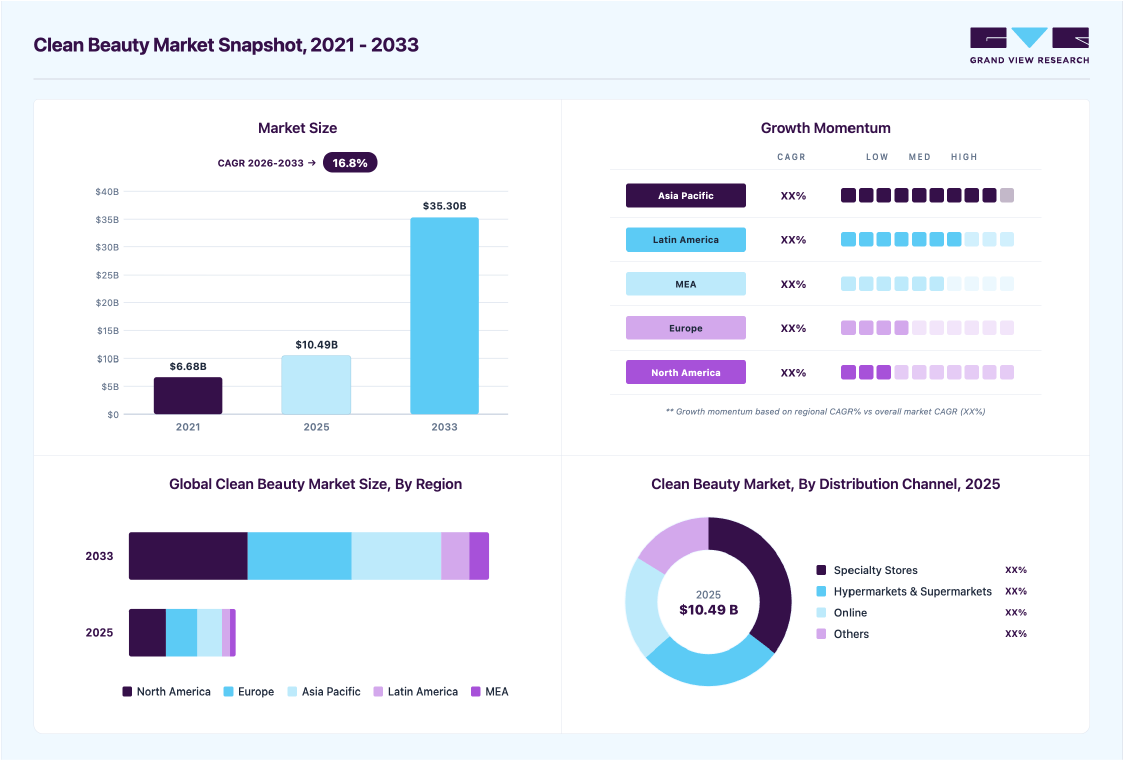
The global clean beauty market size was valued at USD 10.5 billion in 2025 and is projected to grow from USD 11.9 billion in 2026 to USD 35.3 billion by 2033, at a CAGR of 16.8% from 2026 to 2033. The North America market held the largest share of 34.7% of the global market in 2025. The global market has gained strong traction as consumer expectations shift toward transparency, safety, and sustainability in personal care.
 Source: Grand View Research, IR Documents, Primary Interviews, Paid DatabasesTo learn more about this report,
 Download Free Sample Report
 Key Market Trends & Insights
- By end user: The women held the largest revenue share of the clean beauty industry in 2025.
- By product: The skin care products held the largest revenue share of the clean beauty industry in 2025, accounting for a share of 41.4%.
- By distribution channel: The specialty stores held the largest revenue share of the clean beauty industry in 2025
Regional Highlights
- Largest regional market: North America (34.7% revenue share, 2025)
- By country: The U.S. held the largest market share in 2025.
Market Size & Forecast
- Market size in 2025: USD 10.5 Billion
- Estimated market size in 2026: USD 11.9 Billion
- Projected market size by 2033: USD 35.3 Billion
- CAGR (2026-2033): 16.8%
Three ways to get this report
Buy it, customize it, or ask a question.Ask an Analyst
Analyst response in 1 business day
- AccessReport author, directly
- Reply timeWithin 1 working day
- No sales callDirect answer only
- FormatEmail reply
- CostFree, no cost
Get the Full Report
What the study covers
- FormatsPDF · Excel · Dashboard
- Timeline2026–2033 annual, 2025 base
- Coverage20+ countries, 5 regions
- Companies10+ key players profiled
Customize the Report
20% free customization
- IncludeCountries, segments, points
- TailorTo your product definition
- ExtendDeeper competitor detail
- OrA fully bespoke study
- Turnaround5–10 working days
Government and regulatory bodies have played a pivotal role in shaping this evolution: for example, the European Chemicals Agency’s (ECHA) REACH regulation has restricted thousands of potentially harmful substances, prompting brands to clean up formulations and communicate ingredient integrity. Major retailers adopted stricter ingredient policies in response, elevating consumer confidence and accelerating category adoption across skincare, haircare, and color cosmetics. In regions such as North America and Western Europe, clean beauty lines increasingly occupy premium display space, reflecting both demand and retail endorsement of safer, eco-aligned products.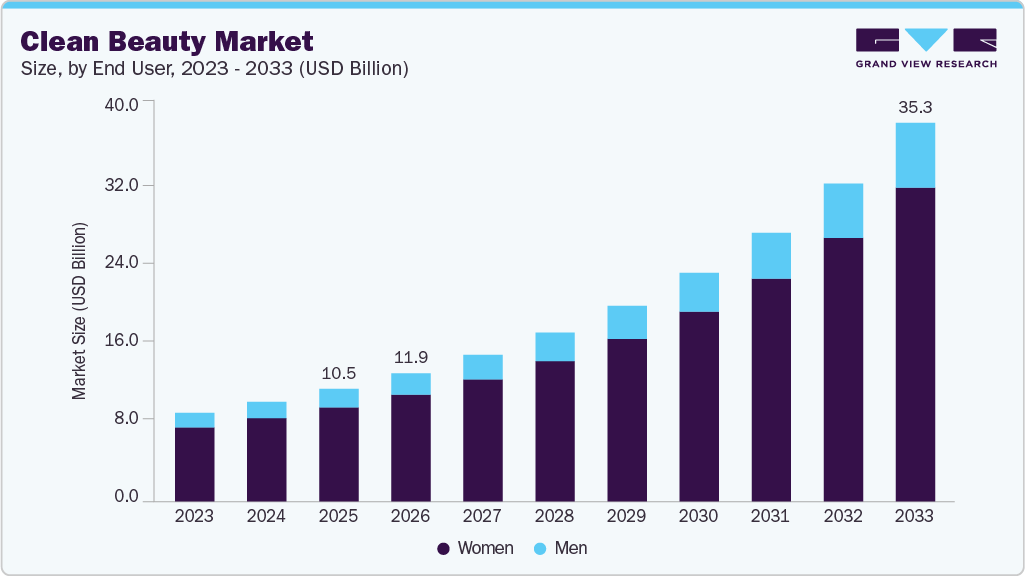 To learn more about this report, Download Free Sample Report
 Public health agencies and consumer advocacy organizations have also contributed to the market’s momentum by highlighting the impact of long-term exposure to certain chemicals. For instance, the U.S. Food & Drug Administration (FDA) has underscored the importance of ingredient transparency and safe formulation practices, encouraging voluntary reformulations among legacy brands and supporting independent safety research. High-profile reformulations by established companies-where synthetic preservatives or controversial fragrance components were replaced with botanically derived alternatives-have reinforced market legitimacy. As a result, both emerging indie brands and global players have seized opportunities to differentiate through certified clean labels, cruelty-free badges, and vegan credentials, accelerating broader consumer adoption.
Rising consumer awareness around health and wellness has made ingredient transparency and safety a central trend in the clean beauty industry. Shoppers increasingly expect brands to disclose complete ingredient lists, sourcing practices, and formulation standards, driving demand for non-toxic, dermatologist-tested, and clearly labeled products. As concerns about allergens, harmful chemicals, and long-term skin health grow, companies are prioritizing safe formulations, clinical validation, and ethical production practices, shifting purchasing decisions from brand loyalty toward trust, credibility, and product safety. In recent years, the beauty industry has undergone a transformative shift towards sustainability, driven by a growing awareness among consumers of the environmental impact of traditional beauty products. This shift is related to the rising number of conscious consumers, prioritizing transparency, ethical practices, and eco-friendly choices. Companies are responding to this demand by reevaluating their formulations, incorporating natural and ethically sourced ingredients, and adopting innovative technologies to create high-performance, eco-friendly beauty products.
Collaborations and partnerships with retailers, celebrities & social media influencers, and other brands are helping the market participants to expand their reach and gain exposure to new customer segments. For instance, in November 2025, MGA Entertainment partnered with Target to launch Mini Glam, a new clean beauty brand created specifically for children, marking a growing shift toward age-appropriate cosmetics for younger consumers. Designed to be both playful and parent-approved, the collection features safe, paraben- and sulfate-free makeup products, such as lip glosses, shimmer lotions, and collectible cosmetics, packaged in fun shapes, combining self-expression with the safety standards families expect.
Market Dynamics
The clean beauty market is being strongly supported by increasing regulatory focus on cosmetic safety, ingredient transparency, and consumer protection. Governments and regulatory bodies are tightening compliance frameworks to ensure safer formulations and ingredient disclosure. For instance, the U.S. Food and Drug Administration (FDA) has expanded oversight through the Modernization of Cosmetics Regulation Act (MoCRA) 2022, which strengthens requirements around product safety substantiation, adverse event reporting, and facility registration.
Additionally, regulatory disparities across regions are pushing brands toward “clean” formulations; the European Union has banned over 1,400–2,400 chemical substances in cosmetics, compared to a significantly lower number in the U.S., creating a stricter benchmark for ingredient safety. Furthermore, EU regulations mandate product registration in centralized systems and enforce strict market surveillance and bans on animal testing, reinforcing consumer trust in safer products. These regulatory developments are compelling manufacturers to adopt non-toxic, transparent, and compliant formulations, thereby accelerating the adoption of clean beauty products across skincare, cosmetics, and personal care categories.
A key restraint for the clean beauty market is the absence of a universally accepted regulatory definition of “clean beauty,” leading to inconsistencies in product claims and consumer confusion. Government frameworks such as the FDA do not formally define or approve the term “clean,” and cosmetic products (except color additives) do not require pre-market approval in the U.S., placing responsibility on manufacturers for safety compliance. This creates variability in how brands interpret and market “clean” formulations. Additionally, regulatory standards differ significantly across regions, with varying restrictions on ingredients, labeling requirements, and safety thresholds. This lack of harmonization increases compliance complexity for global brands and allows for inconsistent product positioning, sometimes leading to misleading claims. As a result, consumer trust can be affected, and market growth may be constrained by ambiguity about what qualifies as truly “clean” beauty.
Consumer Insights
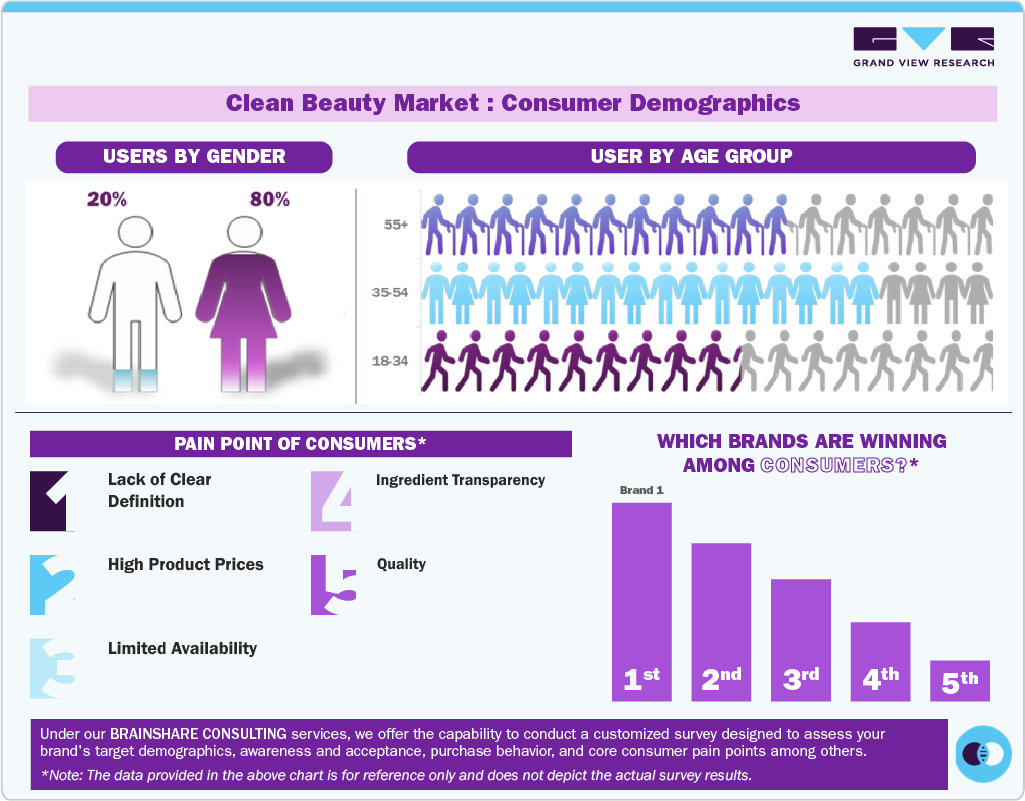
Consumer surveys highlight the growing importance of clean beauty in purchasing decisions, with 63% of beauty consumers considering it extremely or very important when selecting cosmetics. This shift reflects broader lifestyle changes toward health, wellness, and ingredient safety, as consumers increasingly evaluate products beyond performance and brand reputation. Seasonal buying trends also reinforce strong market demand, with around 26% of U.S. consumers planning beauty purchases during the holiday season, particularly in skincare, makeup, fragrance, and haircare. The findings indicate that clean beauty has transitioned from a niche preference to a mainstream expectation, influencing overall beauty consumption patterns.
 To learn more about this report, Download Free Sample Report
 Sustainability expectations are also reshaping consumer behavior: 81% of respondents believe brands should actively reduce plastic packaging, though nearly half remain comfortable with recyclable plastic solutions, highlighting a preference for practical sustainability rather than complete material elimination. At the same time, 54% of consumers actively seek to prevent products from ending up in landfills, demonstrating a growing commitment to environmental responsibility. However, skepticism remains a key challenge, with more than half questioning the authenticity of clean beauty claims, prompting brands to adopt greater transparency and accountability. Supporting this trend, 70% of consumers research a company’s environmental credentials, showing that sustainability communication, verified claims, and genuine eco-initiatives are becoming critical factors in building consumer trust and long-term brand loyalty.
End User Insights
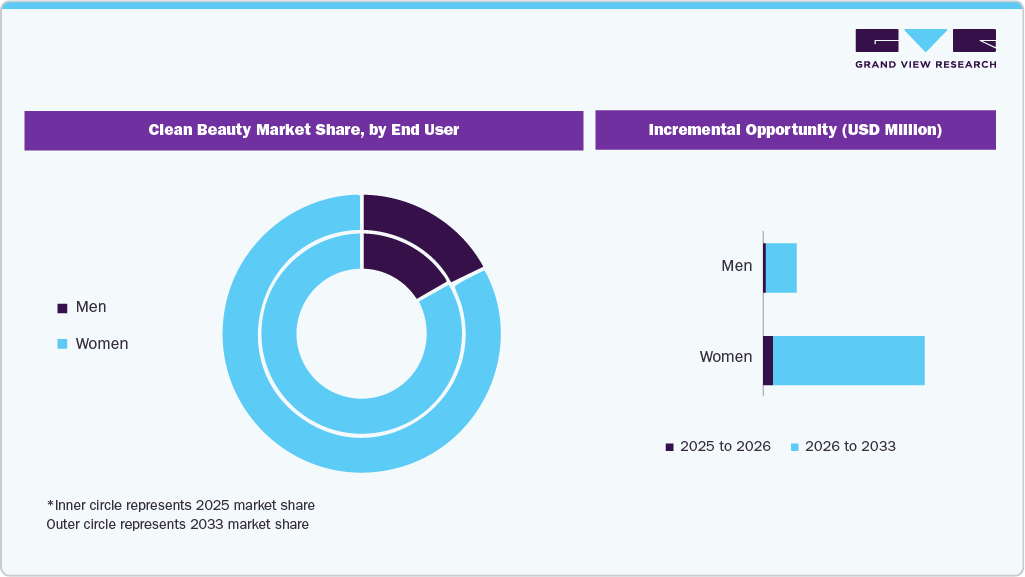
Women held the largest revenue share of the clean beauty industry in 2025, accounting for a share of 83.5%. Women, increasingly mindful of the ingredients in their skincare and cosmetic products, are actively seeking formulations free of harmful chemicals and emphasizing transparency in ingredient sourcing and production practices. The beauty products marketed as clean are highly appealing among the women's consumer group, as they prioritize health, sustainability, and ethical practices in their beauty routines.
 To learn more about this report, Download Free Sample Report
 The demand for clean beauty products among men is anticipated to witness a CAGR of 17.3% from 2026 to 2033. Modern male consumers are becoming more conscious about ingredient safety, skin health, and sustainability, leading to greater interest in non-toxic, dermatologist-tested, and environmentally responsible products. Increased exposure through social media, celebrity influence, and wellness trends has normalized skincare and personal care routines among men, while brands are expanding gender-inclusive product lines tailored to concerns such as sensitive skin, shaving irritation, acne, and aging.
Product Insights
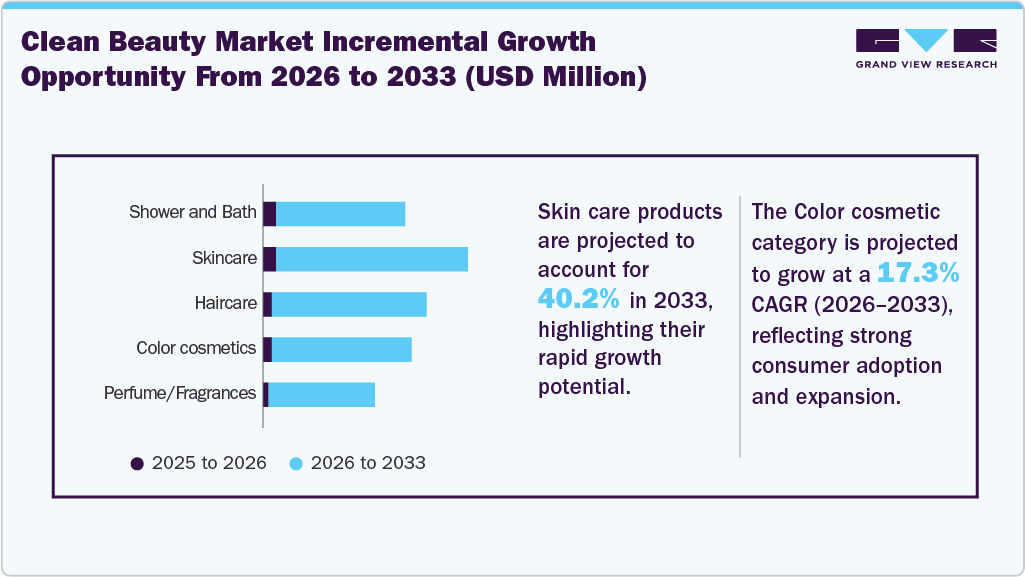
Skin care products held the largest revenue share of the clean beauty industry in 2025, accounting for a share of 41.4%. Skincare products are used daily and remain on the skin for longer durations, increasing awareness of potential exposure to harsh chemicals, allergens, and toxins. Rising concerns about sensitive skin, acne, aging, and pollution-related damage have encouraged consumers to shift toward non-toxic, dermatologist-tested, and naturally derived formulations. In addition, the growing popularity of preventive skincare, minimalist routines, and science-backed clean ingredients has strengthened demand, positioning clean skincare as the core category driving overall market growth.
 To learn more about this report, Download Free Sample Report
 The clean color cosmetic is anticipated to witness a CAGR of 17.3% from 2026 to 2033. Modern consumers, particularly Gen Z and millennials, prefer cosmetics formulated without harmful chemicals, heavy metals, or synthetic irritants, leading to a strong interest in non-toxic, vegan, and skin-friendly makeup. The rise of hybrid makeup-meets-skincare products, such as SPF foundation, nourishing lip products, and breathable formulations, has further accelerated adoption. In addition, growing awareness of ingredient safety, sustainability concerns, social media influence, and the clean beauty movement’s expansion into mainstream retail have encouraged consumers to switch from traditional makeup to clean color cosmetics that align with wellness, transparency, and ethical consumption values.
Distribution Channel Insights
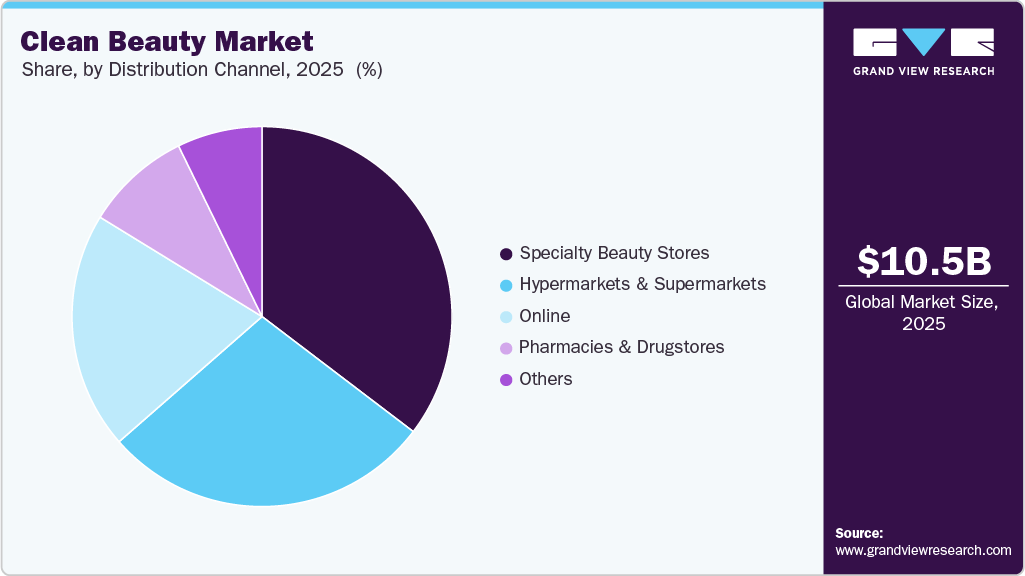
Specialty stores held the largest revenue share of the clean beauty industry in 2025, accounting for a share of 35.4%. Beauty products such as skincare, makeup, and fragrances are highly sensory categories, where customers want to test shades, textures, fragrances, and skin compatibility in person. Retail environments such as specialty beauty stores, department stores, pharmacies, and salons offer product demonstrations, expert consultations, and professional recommendations, which increase consumer confidence and reduce purchase risk.
 To learn more about this report, Download Free Sample Report
 Online sales are anticipated to witness a CAGR of 17.6% from 2026 to 2033. E-commerce platforms allow consumers to browse a wide range of beauty products anytime and compare prices, ingredients, and reviews before purchasing, making decision-making easier and more informed. Online channels also provide access to international brands, niche clean beauty labels, and exclusive product launches that may not be available in physical stores, attracting digitally active consumers.
Regional Insights
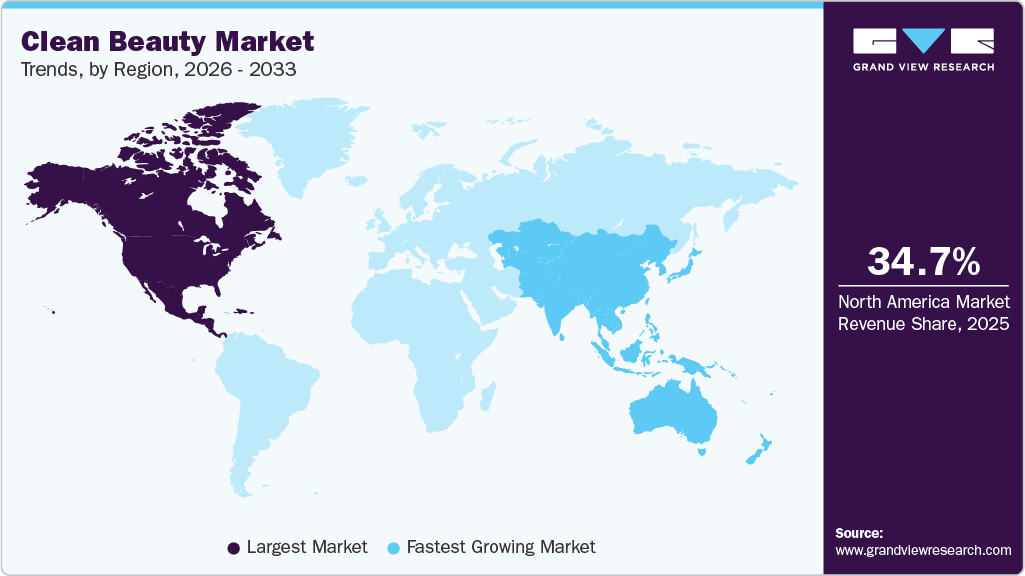
The clean beauty market in North America held the largest revenue share of the global clean beauty industry in 2025, accounting for a share of 34.7%. The beauty and cosmetics industry in North America has witnessed continuous innovation and the introduction of new and advanced products, catering to diverse consumer needs and preferences. Consumers in the region are shifting from traditional beauty products to clean formulations that feature natural, sustainable, and non-toxic ingredients. The market in North America is also supported by the consumer base with strong purchasing power and a well-established retail infrastructure, driving sales.
 To learn more about this report, Download Free Sample Report
 U.S. Clean Beauty Market Trends
The clean beauty market in the U.S. held the revenue share of 78.5% in the North American clean beauty industry in 2025. Social media platforms have become key drivers of the clean beauty movement's growth. On platforms such as TikTok and Instagram, hashtags like #CleanBeauty have reached over 1.9 billion views and accumulated more than 6.1 billion posts, demonstrating the strong influence of digital communities in shaping beauty trends in 2025. Influencers, skincare experts, and user-generated content help educate consumers about ingredient safety and sustainable practices, significantly increasing awareness and encouraging the adoption of safer skincare products.
At the same time, consumer attitudes are increasingly centered on transparency and conscious purchasing. In 2025, nearly 63% of U.S. consumers prefer products made with natural ingredients, and about 65% of women aged 35-54 carefully review ingredient lists before buying beauty products. This behavior reflects a growing expectation for brands to provide clear information, honest marketing, and clean formulations that align with health, safety, and ethical values.
Canada clean beauty market is anticipated to witness a CAGR of 15.0% from 2026 to 2033. Sustainability is a defining factor shaping Canada’s market, with consumers placing strong emphasis on environmentally responsible purchasing decisions. Canadian shoppers increasingly prefer products packaged in recyclable or refillable materials, formulated with ethically sourced ingredients, and produced by local brands that demonstrate transparency and responsible business practices. Growing support for Canadian-made beauty products reflects consumer efforts to reduce environmental impact, support local economies, and align personal care choices with broader sustainability and ethical values.
Asia Pacific Clean Beauty Market Trends
The clean beauty market in the Asia Pacific is anticipated to witness a CAGR of 17.9% from 2026 to 2033. The Asia Pacific market is strongly influenced by K-beauty and J-beauty trends that merge clean formulations with advanced skincare technology. Brands across the region emphasize mild yet effective active ingredients, multifunctional skincare-makeup hybrids, and innovative delivery systems designed to enhance product performance while maintaining safety and skin compatibility. By combining traditional beauty philosophies with modern scientific research, Asia Pacific continues to strengthen its position as a global hub for cutting-edge beauty innovation.
China clean beauty market held the revenue share of 27.4% in the Asia Pacific clean beauty industry in 2025. China’s market is shaped by its digital-first consumer ecosystem, where online research and social commerce significantly influence purchasing behavior. Consumer surveys in 2025 show that more than 70% of beauty shoppers research products online before buying, demonstrating the dominance of digital platforms in product evaluation and decision-making. Livestream shopping has also emerged as a significant sales driver, with nearly one-third of online consumers purchasing beauty products through livestream sessions. Platforms such as Xiaohongshu and Douyin serve not only as entertainment spaces but also as trusted channels for skincare education, ingredient awareness, and peer recommendations, reinforcing the close connection between social media engagement and the rapid growth of clean beauty adoption in China.
The clean beauty market in Japan is anticipated to witness a CAGR of 18.3% from 2026 to 2033. Japan’s market is shaped by a minimalist, skin-first philosophy combined with advanced technological innovation. Consumers prefer simplified skincare routines that focus on long-term skin health, using gentle, multifunctional products formulated with fewer but highly effective ingredients. At the same time, Japanese beauty brands integrate cutting-edge research, fermentation technology, and dermatologically tested actives to ensure both safety and performance. This balance between minimalism and scientific precision allows Japan’s clean beauty sector to deliver high-quality, effective formulations while preserving its traditional emphasis on subtle, healthy beauty.
South Korea clean beauty market is anticipated to witness a CAGR of 17.1% from 2026 to 2033. The global expansion of K-beauty has significantly strengthened South Korea’s market, supported by rising international demand for innovative, skin-focused skincare products. Korean beauty brands have successfully expanded into North America, Europe, and Southeast Asia, driven by strong exports, advanced formulations, and the global popularity of Korean culture. South Korea has established itself as a leading beauty exporter, leveraging clean ingredients, cutting-edge technology, and trend-setting product innovation to shape global beauty standards and accelerate worldwide adoption of clean beauty concepts.
Europe Clean Beauty Market Trends
The clean beauty market in Europe held the revenue share of the clean beauty industry in 2025, accounting for a share of 29.36%. Ingredient transparency and strict regulatory standards are crucial to shaping Europe’s market. Strong cosmetic regulations across the region encourage brands to eliminate potentially harmful substances and ensure high levels of product safety, labeling accuracy, and consumer protection. As a result, European consumers place significant importance on clear ingredient disclosure, scientific validation, and ethical formulation practices, driving demand for clean-label products that emphasize safety, quality, and trust.
The UK clean beauty market held a revenue share of 15.22% in the European clean beauty industry. Ingredient transparency has become a key market driver as consumers grow increasingly informed and cautious about product formulations. With greater access to ingredient research and online education, beauty shoppers are more aware of substances that may negatively affect skin health. A study published by the National Library of Medicine in 2024 found that 40% of consumers are aware of potential health impacts linked to toxic cosmetic ingredients, while 21.3% recognize side effects such as rashes and skin irritation. This heightened awareness has strengthened demand for clean-label products featuring clear ingredient disclosure, safer formulations, and honest brand communication, encouraging companies to prioritize transparency and consumer trust.
The clean beauty in France is anticipated to witness a CAGR of 17.1% from 2026 to 2033. Dermocosmetics and science-backed skincare play a central role in France’s market, where consumers prioritize product efficacy alongside ingredient safety. French shoppers firmly trust pharmacy-based skincare brands that combine clean formulations with dermatological research and clinical testing. This preference reflects a balanced approach to clean beauty, emphasizing proven performance, skin health, and scientifically validated ingredients rather than purely natural claims.
Central & South America Clean Beauty Market Trends
The clean beauty market in Central & South America is anticipated to witness a CAGR of 17.4% from 2026 to 2033. Consumers are increasingly drawn to clean beauty products formulated with natural and botanical ingredients, driven by growing awareness of product safety and environmental sustainability. The region’s rich biodiversity, including Amazonian plants, herbal extracts, and mineral-based components, supports the development of nature-inspired formulations that emphasize fewer synthetic chemicals. This preference reflects a broader shift toward holistic wellness and traditional beauty practices, encouraging brands to highlight locally sourced ingredients and to position their products in an eco-conscious way.
Middle East & Africa Clean Beauty Market Trends
The clean beauty market in the Middle East & Africa held a prominent revenue share of 5.4% in 2025. The Middle East & Africa market is increasingly shaped by the integration of premium beauty and wellness trends, as consumers view skincare as part of a broader self-care and healthy lifestyle approach. Rising disposable incomes, particularly in Gulf countries, are driving demand for high-quality beauty products that combine luxury positioning with clean, skin-friendly formulations. Consumers are showing strong interest in products focused on skin health, relaxation, and preventive care, encouraging brands to develop premium clean beauty solutions that align with wellness, personalization, and holistic beauty experiences.
Key Clean Beauty Company Insights
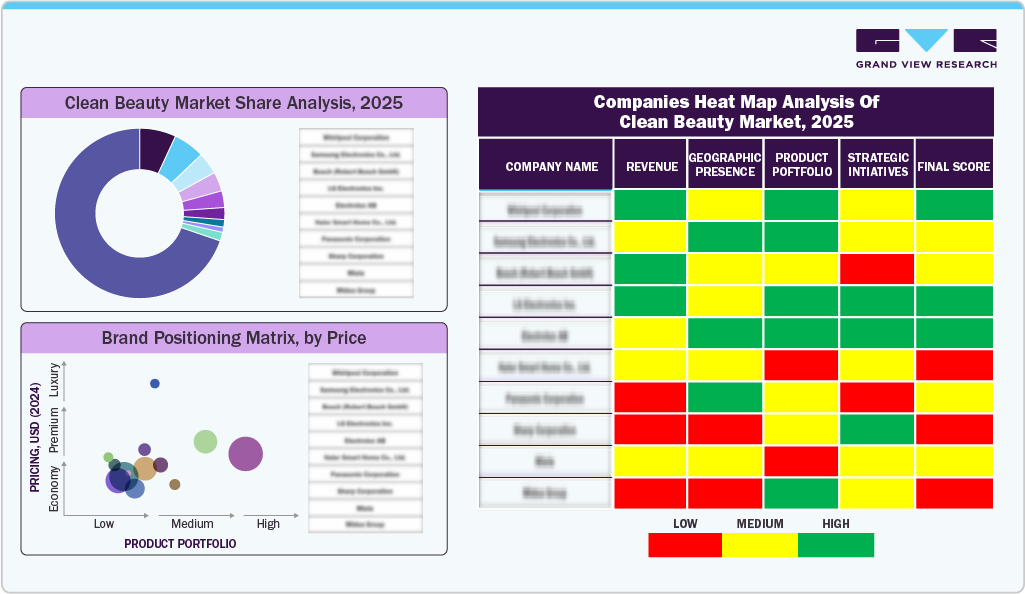
Leading players in the clean beauty market include ILIA Beauty, The Estée Lauder Companies, and L'Oreal Paris. The global market is highly competitive, with established cosmetics companies, indie beauty brands, dermatology-focused skincare players, and digital direct-to-consumer platforms expanding across specialty beauty retailers, pharmacies, department stores, and online marketplaces. Companies are increasingly focusing on transparent ingredient sourcing, sustainable packaging, clinically backed formulations, and innovative product development to align with evolving consumer demand for non-toxic, eco-conscious, and skin-friendly products.
 To learn more about this report, Download Free Sample Report
 Key Clean Beauty Companies:
The following key companies have been profiled for this study on the clean beauty market.
- ILIA Beauty
- The Estée Lauder Companies
- L'Oreal Paris
- Olaplex, Inc.
- Grown Alchemist
- John Paul Mitchell Systems
- Versed
- RMS Beauty
- e.l.f. Cosmetics, Inc.
- The Honest Company, Inc.
Recent Developments
-
In November 2025, Tira made its entry into the makeup category with the launch of PepTints, marking the brand’s first foray beyond its skincare portfolio. The new range was positioned as a fusion of beauty and innovative skincare science, featuring tint products formulated with peptides intended to support hydration and enhance natural complexion. Tira emphasized that PepTints were designed to blur the lines between cosmetic color and skincare benefits, appealing to consumers seeking multifunctional makeup solutions. The launch was supported by a digital-first campaign that highlighted the brand’s ethos of clean, skin-nurturing ingredients and aesthetic simplicity.
-
In November 2025, MGA Entertainment partnered with Target to launch Mini Glam, a new clean beauty brand created specifically for children, marking a growing shift toward age-appropriate cosmetics for younger consumers. Designed to be both playful and parent-approved, the collection features safe, paraben- and sulfate-free makeup products, such as lip glosses, shimmer lotions, and collectible cosmetics, packaged in fun shapes, combining self-expression with the safety standards families expect.
-
In August 2025, California-based clean beauty brand Tower 28 expanded into the Middle East through an exclusive partnership with Sephora Middle East, marking a key milestone in its global growth strategy. The brand launched online, followed by availability across 55 Sephora stores in the Gulf region, introducing its dermatologist-tested, sensitive-skin-focused makeup and skincare range to a rapidly growing beauty market.
-
In May 2025, Jones Road Beauty, the clean makeup brand founded by renowned makeup artist Bobbi Brown, launched in Australia, expanding its international footprint and giving local consumers direct access to its minimalist, skincare-infused cosmetics.
Clean Beauty Market Report Scope
Report Attribute
Details
Market size in 2025
USD 10.5 billion
Estimated market size in 2026
USD 11.9 billion
Projected market size by 2033
USD 35.3 billion
Growth rate (revenue)
CAGR of 16.8% from 2026 to 2033
Actuals
2021 - 2025
Forecast period
2026 - 2033
Quantitative units
Revenue in USD million/billion, and CAGR from 2026 to 2033
Report coverage
Revenue forecast, company ranking, competitive landscape, growth factors, and trends
Segments covered
Product, end user, distribution channel, region
Region Covered
North America; Europe; Asia Pacific; Central & South America; Middle East & Africa
Country Covered
U.S.; Canada; Mexico; UK; Germany; France; Italy; Spain; China; India; Japan; Australia; Brazil; UAE; South Africa
Key companies profiled
ILIA Beauty; The Estée Lauder Companies; L'Oreal Paris; Olaplex, Inc.; Grown Alchemist; John Paul Mitchell Systems; Versed; RMS Beauty; e.l.f. Cosmetics, Inc.; The Honest Company, Inc.
Customization scope
Free report customization (equivalent to up to 8 analysts’ working days) with purchase. Addition or alteration to country, regional & segment scope.
Pricing and purchase options
Avail customized purchase options to meet your exact research needs. Explore purchase options
Global Clean Beauty Market Report Segmentation
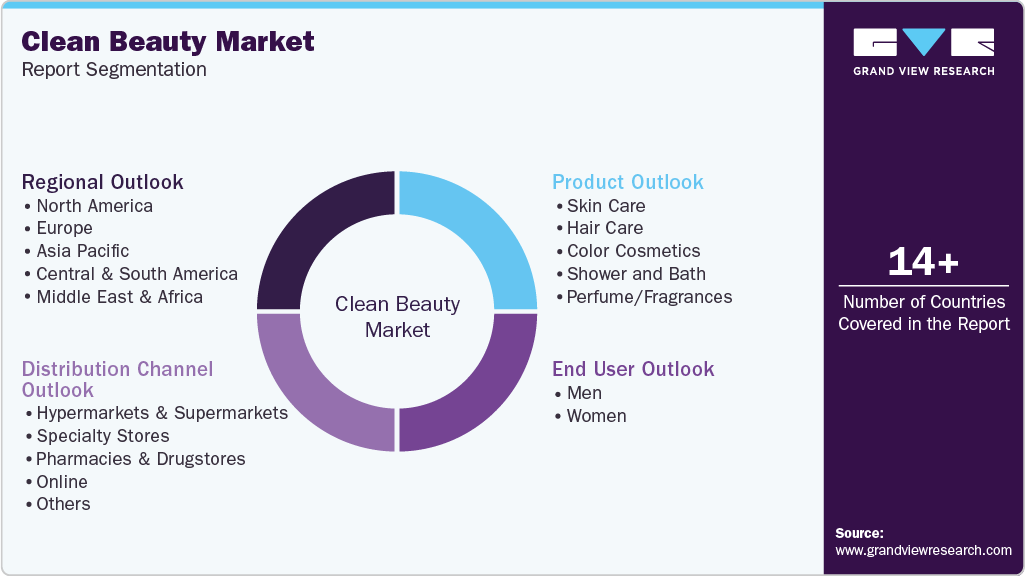
This report forecasts revenue growth at global, regional & country levels and provides an analysis of the latest trends and opportunities in each of the sub-segments from 2021 to 2033. For this study, Grand View Research has segmented the global clean beauty market based on product, end user, distribution channel, and region:
 To learn more about this report, Download Free Sample Report
 -
Product Outlook (Revenue, USD Million, 2021 - 2033)
-
Skin Care
-
Face Skin Care
-
Lotions, Face Creams, & Moisturizers
-
Cleansers & Face Wash
-
Facial Serums
-
Sunscreen/Sun Care
-
Others (Scrub, etc.)
-
-
Body Skin Care
-
Lotions, Creams, & Moisturizers
-
Body Sunscreen/Sun Care
-
Body Scrub
-
Others (Serum, Oils, etc.)
-
-
-
Hair Care
-
Shampoo
-
Conditioner
-
Oils
-
Serums
-
Others (Hair Masks, Peels, Etc.)
-
-
Color Cosmetics
-
Face Color Cosmetics
-
Lip Color Cosmetics
-
Eye Color Cosmetics
-
Nail Color Cosmetics
-
-
Shower and Bath
-
Perfume/Fragrances
-
-
End User Outlook (Revenue, USD Million, 2021 - 2033)
-
Men
-
Women
-
-
Distribution Channel Outlook (Revenue, USD Million, 2021 - 2033)
-
Hypermarkets & Supermarkets
-
Specialty Stores
-
Pharmacies & Drugstores
-
Online
-
Others
-
-
Regional Outlook (Revenue, USD Million, 2021 - 2033)
-
North America
-
U.S.
-
Canada
-
Mexico
-
-
Europe
-
Germany
-
UK
-
France
-
Italy
-
Spain
-
-
Asia Pacific
-
China
-
India
-
Japan
-
Australia
-
-
Central & South America
-
Brazil
-
-
Middle East and Africa
-
UAE
-
South Africa
-
-
Delivered Customizations
This report has been delivered with the following In-depth customizations
Client Request
Customization Delivered
Value Adds
Detailed Product Segmentation Analysis
Developed a comprehensive product segmentation framework for the clean beauty market, categorizing products by type (skincare, haircare, makeup, fragrances), ingredient profile (organic, natural, vegan, cruelty-free), and price tiers, aligned with client-specific definitions and market scope.
This enables the client to identify high-growth product categories, refine portfolio strategy based on ingredient and pricing trends, and align product development with evolving consumer demand for transparency and sustainability.
Brand Landscape and Market Share
Mapped the competitive landscape by analyzing key clean beauty brands, their market share, product positioning, pricing strategies, and distribution channels across regions.
This helps the client benchmark against leading brands, identify emerging challengers, understand competitive intensity, and refine brand positioning and go-to-market strategies to capture market share.
Regional and Country Opportunity Assessment
Conducted a detailed regional and country-level analysis, evaluating demand trends, regulatory frameworks, consumer preferences, and market maturity across key clean beauty markets.
This enables the client to prioritize high-potential regions, tailor market entry and expansion strategies, and allocate resources effectively based on country-specific growth drivers and regulatory environments.
Frequently Asked Questions About This Report
The women segment accounted for the largest revenue share of 83.5% in 2025.
The skin care products segment led with a 41.4% revenue share in 2025.
Specialty stores segment held the largest share (over 35.0%) in 2025.
The global clean beauty market size was valued at USD 10.5 billion in 2025 and is estimated at USD 11.9 billion for 2026.
Key players include ILIA Beauty; The Estée Lauder Companies; L'Oreal Paris; Olaplex, Inc.; Grown Alchemist; John Paul Mitchell Systems; Versed; RMS Beauty; e.l.f. Cosmetics, Inc.; The Honest Company, Inc.
Key factors that are driving the clean beauty market growth include a rising consumer focus on the safety of skincare and beauty products, its environmental consequences, and the potential presence of harmful ingredients in beauty products.
The global clean beauty market is expected to grow at a CAGR of 16.8% from 2026 to 2033, reaching USD 35.3 billion by 2033.
North America dominated the clean beauty market with a share of 34.7% in 2025. The growth of the regional market is driven on account of growing demand for natural and sustainable beauty products.
About the Author(s)
Beauty & Personal Care Research Team
Consumer Goods · Beauty & Personal CareThis report was authored by the beauty & personal care research team at Grand View Research - comprising two research analysts, one senior research analyst, and one industry expert - with specialized expertise in the beauty & personal care segment of the consumer goods industry. All findings are based on proprietary consumer goods databases, executive interviews, and regulatory analysis, subject to internal peer review prior to publication.
Last Updated:
Speak to Analyst

Customize this report to your needs - add regions, segments, or data points, with 20% free customization.
Or view our licence options:


ISO 9001:2015 & 27001:2022 Certified
We are GDPR and CCPA compliant! Your transaction & personal information is safe and secure. For more details, please read our privacy policy.


