
- Home
- »
- Healthcare IT
- »
-
Clinical Trials Matching Software Market Size Report, 2033GVR Report cover

Clinical Trials Matching Software Market (2026 - 2033)
Size, Share & Trends Analysis Report By Deployment Mode (Web & Cloud-based, On-premise), By End Use (Pharmaceutical & Biotechnology Companies, Medical Device Companies), By Region, And Segment Forecasts
Market Size, 2025
$210.7MMarket Estimate, 2026
$237.9MMarket Forecast, 2033
$595.3MCAGR, 2026–2033
14.0%Clinical Trials Matching Software Market Summary
The global clinical trials matching software market size was valued at USD 210.7 million in 2025 and is projected to grow from USD 237.9 million in 2026 to USD 595.3 million by 2033, at a CAGR of 14.0% from 2026 to 2033. North America dominated the market, accounting for a revenue share of 50.1% in 2025. The market growth can be attributed to the increasing complexity of clinical trials, the rising adoption of AI and machine learning in patient recruitment, and the growing need to enhance trial efficiency.
 Source: Grand View Research, IR Documents, Primary Interviews, Paid DatabasesTo learn more about this report,
 Download Free Sample Report
 Key Market Trends & Insights
- By deployment mode: Web & cloud segment dominated the market, with a revenue share of 92.8% in 2025.
- By end use: Pharmaceutical & biotechnology companies segment accounted for the largest revenue share of 43.2% in 2025.
Regional Highlights
- Largest regional market: North America (50.1% revenue share, 2025)
- Fastest-growing regional market: Asia Pacific (highest CAGR, 2026-2033)
- By country: The U.S. held the largest market share in 2025.
Market Size & Forecast
- Market size in 2025: USD 210.7 Million
- Estimated market size in 2026: USD 237.9 Million
- Projected market size by 2033: USD 595.3 Million
- CAGR (2026-2033): 14.0%
Three ways to get this report
Buy it, customize it, or ask a question.Ask an Analyst
Analyst response in 1 business day
- AccessReport author, directly
- Reply timeWithin 1 working day
- No sales callDirect answer only
- FormatEmail reply
- CostFree, no cost
Get the Full Report
What the study covers
- FormatsPDF · Excel · Dashboard
- Timeline2026–2033 annual, 2025 base
- Coverage20+ countries, 5 regions
- Companies10+ key players profiled
Customize the Report
20% free customization
- IncludeCountries, segments, points
- TailorTo your product definition
- ExtendDeeper competitor detail
- OrA fully bespoke study
- Turnaround5–10 working days
According to myTomorrows, February 2025 insights, the increasing number of disease subtypes has led to a surge in clinical trials with complex eligibility criteria. With over 500,000 registered trials globally and 8,000+ drugs in development, navigating this landscape is challenging for physicians. Limited trial visibility further hampers sponsors and sites, making patient recruitment, and retention difficult. Pharmaceutical and biotechnology companies are leveraging advanced matching solutions to accelerate participant enrollment, reduce costs, and improve trial success rates. To learn more about this report, Download Free Sample Report
 As clinical trials become more intricate due to the incorporation of advanced methodologies and diverse patient populations, there is a heightened need for efficient patient recruitment strategies. According to statistics published by Antidote Technologies, Inc., in January 2024, approximately 80% of clinical trials fail to meet their enrollment timelines. This complexity necessitates sophisticated matching software that can quickly analyze vast datasets to identify suitable candidates. The ability to streamline this process not only enhances operational efficiency but also reduces costs associated with prolonged trial durations.
Technological innovations such as artificial intelligence (AI), machine learning (ML), and big data analytics are revolutionizing clinical trial management. These technologies enable more accurate patient matching by processing large volumes of data from electronic health records (EHRs) and other sources. Integrating these technologies into clinical trial matching software enhances efficiency and improves the overall quality of data collected during trials, leading to more reliable results. For instance, in February 2025, myTomorrows, a global health technology company, launched its next-generation AI platform to enhance clinical trial recruitment. The platform streamlines how physicians search, pre-screen, and refer patients, enabling trial sponsors to accelerate enrollment, improve diversity, and optimize operations. At its core, the AI-powered pre-screening tool automates eligibility checks with 98% accuracy, surpassing industry standards and outperforming medical professionals in precision.
"Physicians are committed to providing the best care for their patients, yet many lack the necessary time to navigate the often confusing and complicated process of identifying suitable clinical trials. This gap results in increased workloads for both physicians and site staff, a reduced likelihood of successful screening and enrollment, and missed opportunities for patients. Our next-generation AI platform will lower barriers for physicians by streamlining the clinical trial search, pre-screening, and referral process - all in one secure place. Built as a strong foundation for future agentic AI applications, we're taking a bold step in leading the future of clinical trial access."
-Michel van Harten, MD, CEO of my Tomorrows
Regulatory bodies worldwide emphasize the need for expedited drug development processes to bring new therapies to market more quickly. Initiatives such as the FDA’s Breakthrough Therapy Designation aim to accelerate the review process for promising drugs. Hence, sponsors are pressured to optimize their trial designs and recruitment strategies. This environment demands adequate clinical trial-matching solutions to help organizations comply with regulatory expectations while ensuring timely patient enrollment.
Case Study & Insights
Case Study: Evaluation of an artificial intelligence-based clinical trial matching system in Chinese patients with hepatocellular carcinoma
-
The study assessed an AI-driven clinical trial matching system (CTMS) capable of automatically extracting medical information from electronic health records and aligning it with appropriate clinical trials.
-
The study reported that the CTMS proved highly efficient in excluding ineligible patients for clinical trials. It was noted to perform effectively, significantly reducing the time required for this process by 98.7%.
Market Dynamics
Patient recruitment remains one of the most significant operational challenges in clinical research, often leading to trial delays, increased costs, and study failures. According to an article by Les Laboratoires Servier published in May 2025, approximately 18% of clinical trials fail to recruit sufficient participants. The challenge is particularly pronounced in oncology, where among more than 10,000 actively recruiting clinical trials worldwide, 60% enroll fewer than five patients per site and over 20% fail to enroll any participants. These statistics underscore the growing need for more efficient and scalable approaches to identifying and engaging eligible patients.
As a result, demand for clinical trial matching software is increasing across sponsors, CROs, healthcare providers, and research institutions. These solutions utilize electronic health records (EHRs), genomic data, patient registries, and AI-driven analytics to identify suitable candidates and match them with relevant clinical studies. By streamlining patient identification, improving enrollment rates, and reducing recruitment timelines, clinical trial matching platforms help mitigate one of the leading causes of trial delays and failures, thereby supporting faster study execution and improving overall clinical trial success rates.
Clinical trial matching platforms rely on structured clinical, demographic, and genomic data to accurately identify eligible participants. However, a significant portion of patient information remains stored in unstructured formats, fragmented across multiple healthcare systems, or incomplete, making it difficult to perform precise matching. Inconsistent data quality and lack of standardization can result in missed patient-trial matches, reduced platform effectiveness, and additional data processing requirements. Consequently, these challenges can impede adoption among healthcare providers and research organizations, limiting the growth potential of the clinical trials matching software market.
The growing adoption of AI-powered clinical trial matching platforms across hospitals, cancer centers, and healthcare networks presents a significant growth opportunity for the clinical trials matching software market. These solutions leverage artificial intelligence, machine learning, and advanced analytics to analyze patient records, identify eligible participants, and accelerate enrollment processes, thereby improving trial accessibility and recruitment efficiency. As healthcare organizations increasingly seek to reduce manual screening efforts and enhance patient participation in clinical research, demand for intelligent trial matching platforms is expected to rise across therapeutic areas, particularly in oncology. For instance,
• In January 2026, The Mount Sinai Tisch Cancer Center launched PRISM, an AI-powered clinical trial matching platform developed by Triomics and powered by its oncology-focused OncoLLM technology. The platform is designed to identify eligible cancer patients across the Mount Sinai Health System and connect them to relevant clinical trials more efficiently.
“Clinical trials are essential to advancing cancer care, but too often patients and their treating physicians are not aware of studies that may be appropriate for them,By deploying an AI platform trained specifically for oncology, we can identify trial opportunities earlier, more consistently, and more equitably, allowing clinicians to focus on meaningful conversations with patients rather than manual chart review.”
- Karyn Goodman, MD, MS, Professor and Vice Chair of Clinical Research in the Department of Radiation Oncology at the Icahn School of Medicine at Mount Sinai and Associate Director of Clinical Research at TCC.
• In December 2025, Anova Enterprises launched AnovaOS, an AI-based software-as-a-service platform designed to improve patient matching for clinical trials. The platform leverages AI-driven screening and matching capabilities to accelerate patient recruitment and reduce enrollment bottlenecks across complex studies.
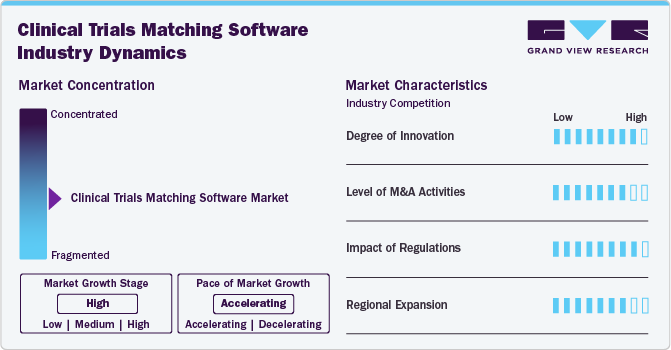
Market Concentration & Characteristics
The industry growth is high and accelerating. This industry is characterized by the increasing complexity of clinical trials, the growing demand for personalized medicine, advancements in technology, and regulatory pressures for faster drug development.
The market is highly innovative, with continuous advancements in AI, machine learning, and data analytics. For instance, in June 2024, Lokavant launched Spectrum, the first AI-powered clinical trial feasibility software that helps optimize trial timelines and costs in real-time. It enables study teams to predict, adjust, and perform iterative feasibility analysis for better decision-making throughout the trial process.
 To learn more about this report, Download Free Sample Report
 Merger and acquisition activities in this market are moderately high as companies seek to strengthen their technological capabilities and expand market reach. For instance, in January 2024, PharmAlliance acquired Monitorforhire, a clinical research monitoring service. This acquisition provides access to a web-based platform that connects sponsors with trial monitors, supporting PharmAlliance's expansion of its consulting business.
The impact of regulations on the market is assessed as high. Regulatory bodies such as the U.S. FDA and EMA have established guidelines for conducting and reporting clinical trials. Compliance with these regulations is critical for software providers, as it ensures that their solutions meet industry standards for data security and patient privacy. The increasing emphasis on regulatory compliance drives investment in advanced software solutions that facilitate adherence to these requirements.
The market's regional expansion is considered high and emerging regional markets such as Asia-Pacific and Latin America are adopting digital health technologies, leading to the rise in healthcare demands and government initiatives supporting innovation and growth. The digitization of research processes is opening doors for new players in these regions, creating opportunities for growth as they seek efficient patient recruitment strategies and enhanced trial management capabilities.
Analyst Perspective
The clinical trials matching software market is expected to witness significant growth over the forecast period, driven by increasing clinical trial complexity, persistent patient recruitment challenges, and the growing adoption of AI-enabled screening technologies. Sponsors, CROs, and healthcare providers are increasingly leveraging clinical trial matching platforms to accelerate participant identification, improve enrollment rates, and reduce study timelines. The integration of electronic health records (EHRs), real-world data, and advanced analytics is further enhancing matching accuracy and operational efficiency. As precision medicine and biomarker-driven trials continue to expand, demand for intelligent patient-trial matching solutions is expected to strengthen, positioning these platforms as a critical component of modern clinical research infrastructure.
Deployment Mode Insights
Based on deployment mode, the web & cloud segment held the largest revenue share of 92.8% in 2025 and is expected to grow with the fastest CAGR over the forecast period owing to the cloud computing model, which is easy to maintain with no upkeep expenditures. These platforms allow real-time data sharing, collaboration, and seamless integration across multiple stakeholders, including researchers, hospitals, and patients. Drivers include the increasing adoption of cloud technologies, the demand for faster clinical trial recruitment, and the need for remote accessibility.
On-premises segment is expected to grow significantly over the forecast period. This segment is driven by concerns over data privacy, regulatory requirements, and the preference of larger organizations that need custom configurations and robust security measures. In addition, some companies with sensitive patient information or those in highly regulated industries prefer on-premises deployment. Pharmaceutical companies managing complex clinical trials may choose on-premises systems to ensure strict adherence to industry standards and safeguard patient data.
End Use Insights
Based on end use, the pharmaceutical & biotechnology companies segment held the largest revenue share of 43.2% in 2025 due to their substantial involvement in clinical research and drug development. These companies rely on clinical trial matching software to streamline patient recruitment, reduce trial costs, and ensure regulatory compliance. Drivers include the increasing complexity of clinical trials, the need for faster time-to-market for new drugs, and the demand for personalized medicine. Pharmaceutical companies leverage AI-driven platforms to efficiently match patients with appropriate trials, accelerating their clinical development pipeline while enhancing trial accuracy and success rate.
 To learn more about this report, Download Free Sample Report
 CROs segment is expected to grow with the fastest CAGR over the forecast period. CROs provide end-to-end drug development services, including commercialization, pharmacovigilance, and post-approval support, catering to manufacturing organizations with limited R&D budgets. The increasing trend of outsourcing clinical trials and the rising complexity of drug development are key factors driving market growth. This has also encouraged new entrants in the market. For example, in November 2023, AstraZeneca launched Evinova, a company dedicated to offering CROs and major pharmaceutical firms access to its proven digital solutions for conducting clinical trials. This development is expected to further accelerate market expansion.
Regional Insights
North America dominated the clinical trials matching software market with the largest revenue share of 50.1% in 2025. Advanced technological innovations and the increasing complexity of clinical trials drive the trials. Artificial intelligence (AI) and machine learning are increasingly integrated to enhance patient recruitment and optimize trial timelines. North America's strong healthcare infrastructure and regulatory environment, with standards set by the FDA and Health Canada, encourage digital solutions to improve trial efficiency and compliance. The growing trend of patient-centric trials and the rise of telemedicine further boost the adoption of clinical trial matching software, as these tools align with the region's focus on personalized medicine.
 To learn more about this report, Download Free Sample Report
 U.S. Clinical Trials Matching Software Market Trends
The clinical trials matching software market in the U.S. held the largest share in the North America region in 2025. The FDA has been encouraging innovation in clinical trial design and recruitment, influencing the development of digital solutions for trial matching. The increasing use of real-world data (RWD) and artificial intelligence in trial recruitment is a significant trend, with platforms improving the speed and accuracy of matching patients to trials. The U.S. government’s investment in digital health technologies and regulations, such as the 21st Century Cures Act, encouraged growth in the clinical trials matching software market.
Asia Pacific Clinical Trials Matching Software Market Trends
The clinical trials matching software industry in the Asia Pacific is anticipated to grow at the fastest CAGR from 2026 to 2033. The clinical trials matching software market in Asia Pacific is fueled by the increasing number of clinical trials conducted in the region and the adoption of advanced technologies such as artificial intelligence and cloud-based solutions. Expanding healthcare infrastructure and government initiatives to support clinical research are facilitating the adoption of these technologies. Japan's and South Korea's regulatory frameworks have become more aligned with global standards, promoting international collaborations and boosting the demand for trial-matching software.
The clinical trials matching software market in China is expanding due to a growing demand for efficient clinical trial management and China's increasing role in global drug development. Regulatory reforms, such as the China National Medical Products Administration (NMPA) aligning closely with ICH-GCP standards, are helping create a more conducive environment for clinical trials. In addition, innovations in digital health technologies, such as using big data analytics and AI in patient recruitment, are transforming clinical trial processes. China's large population and diverse patient pool offer significant opportunities for trial matching software to streamline recruitment efforts.
India clinical trials matching software market is witnessing substantial growth driven by the country's expanding pharmaceutical and biotechnology sectors. The rise in clinical trials outsourcing to India, combined with a tech-savvy healthcare ecosystem, is spurring demand for advanced trial matching software. The government's initiatives, such as the Drugs and Cosmetics (Amendment) Act 2020, aim to make clinical trials efficient, align with global standards, and improve the regulatory environment.
Europe Clinical Trials Matching Software Market Trends
The clinical trials matching software market in Europe is seeing strong innovation, particularly in integrating AI and machine learning technologies to optimize patient recruitment. The regulatory landscape, shaped by the European Medicines Agency (EMA) and GDPR, influences software development, ensuring data privacy and compliance. For instance, the UK’s National Health Service (NHS) is adopting digital tools to streamline clinical trial participation, reflecting a shift toward more personalized medicine and patient-centric trials. This trend is supported by significant government investment in healthcare IT infrastructure, which is expected to enhance adoption rates in the coming years.
Latin America Clinical Trials Matching Software Market Trends
The clinical trial matching software market in Latin America is driven by the increasing demand for efficient trial processes and greater access to clinical research. Regional expansion is fueled by partnerships between local institutions and global pharmaceutical companies aiming to conduct clinical trials more effectively. The region’s regulatory environment, including adherence to ICH-GCP standards, is evolving, with governments focusing on improving clinical trial infrastructure to attract more international studies and drive the adoption of trial-matching technologies.
Middle East & Africa Clinical Trials Matching Software Market Trends
The clinical trials matching software market in the Middle East and Africa is witnessing rapid expansion in usage, spurred by growing investment in healthcare infrastructure and an increasing number of clinical trials in the region. Innovation in this market is focused on overcoming logistical challenges, such as remote patient recruitment and monitoring in underserved areas. In addition, the expansion of healthcare technology ecosystems, including the rise of telemedicine, is expected to drive the adoption of trial-matching software solutions across MEA.
Key Clinical Trials Matching Software Company Insights
Key companies offer cloud-based platforms with advanced algorithms and artificial intelligence to streamline the recruitment process, improve efficiency, and enhance patient outcomes. The market is characterized by competition, with major players holding a substantial share, contributing to the increasing adoption of these solutions by hospitals, research institutions, and pharmaceutical companies. The market's growth is driven by the rising demand for personalized medicine and the growing complexity of clinical trial designs.
Key Clinical Trials Matching Software Companies:
The following key companies have been profiled for this study on the clinical trials matching software market.
-
IBM
-
Antidote Technologies, Inc.
-
Ofni Systems
-
Clario
-
Advarra
-
ArisGlobal
-
BSI Business Systems Integration AG
-
Teckro Limited
-
Evidation Health, Inc.
-
HealthMatch
-
Microsoft
-
Deep6.ai
-
Inspirata, Inc.
-
Mendel Health Inc.
-
MatchTrial
-
Curewiki
-
Inteliquet (IQVIA)
-
Tempus Labs
Competitive Benchmarking
Category
Operating Strategies
Competitive Edge
Weakness
Established Players (IQVIA (Inteliquet)
Advarra, etc.)
- Focus on integrating trial matching capabilities with broader clinical research, real-world data, EHR, and patient recruitment ecosystems through strategic partnerships and platform expansion.
- Extensive clinical data networks, established sponsor relationships, strong regulatory expertise, and proven scalability across global clinical trials.
- Higher implementation complexity and relatively lower agility in adapting to niche therapeutic areas or emerging recruitment models.
Emerging Players (HealthMatch
Mendel Health. etc.)
- Focus on AI-driven patient matching, disease-specific recruitment solutions, and direct-to-patient engagement models to improve enrollment efficiency.
- High innovation agility, advanced AI capabilities, faster platform enhancements, and strong focus on patient-centric recruitment workflows.
- Limited market reach, smaller clinical data ecosystems, and greater dependence on partnerships and external funding for expansion.
Recent Developments
-
In May 2026, Massive Bio announced its next-generation Reticulum Nexus™ AI product suite, integrating patient-trial matching, referral workflows, patient navigation, and AI agents.
-
In September 2024, Massive Bio unveiled its Patient Connect portal, a new initiative designed to personalize access to cancer clinical trials. The platform utilizes AI-driven technology to match patients with suitable trials based on their specific medical and genetic profiles.
-
In September 2024, Carta Healthcare acquired Realyze Intelligence to strengthen its AI-driven clinical trial matching capabilities. The acquisition aims to integrate the advanced data analytics and machine learning technologies of the company with Carta's platform, enhancing the ability to match patients with relevant clinical trials more efficiently.
Clinical Trials Matching Software Market Report Scope
Report Attribute
Details
Market size in 2025
USD 210.7 million
Estimated market size in 2026
USD 237.9 million
Projected market size by 2033
USD 595.3 million
Growth rate
CAGR of 14.0% from 2026 to 2033
Historical data
2021 - 2025
Forecast period
2026 - 2033
Quantitative units
Revenue in USD million, and CAGR from 2026 to 2033
Report coverage
Revenue forecast, company ranking, competitive landscape, growth factors, and trends
Segments covered
Deployment mode, end use, region
Regional scope
North America; Europe; Asia Pacific; Latin America; MEA
Country scope
U.S., Canada, Mexico, UK, Germany, France, Italy, Spain, Russia, Norway, Denmark, Sweden, Japan, China, India, Australia, Thailand, Singapore, Malaysia, Indonesia, South Korea, Philippines, Brazil, Argentina, Saudi Arabia, South Africa, UAE, Kuwait
Key companies profiled
Antidote Technologies, Advarra, Evidation Health, HealthMatch, Mendel Health, MatchTrial, Curewiki, Tempus AI, IQVIA (Inteliquet), Massive Bio, CtrlTrial, Exmplr, Novyra AI, Almara
Customization scope
Free report customization (equivalent up to 8 analysts' working days) with purchase. Addition or alteration to country, regional & segment scope.
Pricing and purchase options
Avail customized purchase options to meet your exact research needs. Explore purchase options
Global Clinical Trials Matching Software Market Report Segmentation
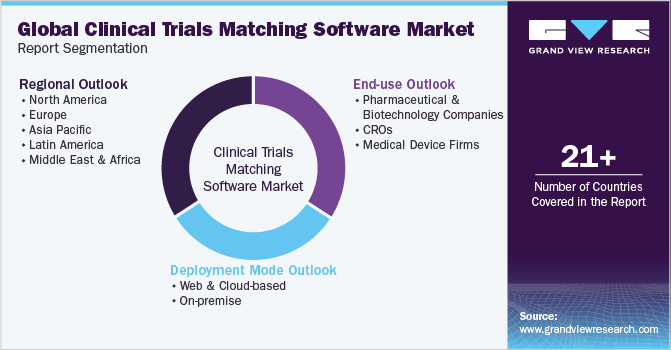
This report forecasts revenue growth at global, regional, and country levels and provides an analysis of the latest industry trends in each of the sub-segments from 2021 to 2033. For this study, Grand View Research has segmented the global clinical trials matching software market report based on deployment mode, end use, and region.
 To learn more about this report, Download Free Sample Report
 -
Deployment Mode Outlook (Revenue, USD Million, 2021 - 2033)
-
Web & Cloud-based
-
On-premise
-
-
End-use Outlook (Revenue, USD Million, 2021 - 2033)
-
Pharmaceutical & Biotechnology Companies
-
CROs
-
Medical Device Companies
-
-
Regional Outlook (Revenue, USD Million, 2021 - 2033)
-
North America
-
U.S.
-
Canada
-
Mexico
-
-
Europe
-
UK
-
Germany
-
France
-
Italy
-
Spain
-
Sweden
-
Norway
-
Denmark
-
-
Asia Pacific
-
China
-
Japan
-
India
-
Australia
-
Thailand
-
South Korea
-
-
Latin America
-
Brazil
-
Argentina
-
-
Middle East and Africa
-
Saudi Arabia
-
South Africa
-
UAE
-
Kuwait
-
-
Research Methodology
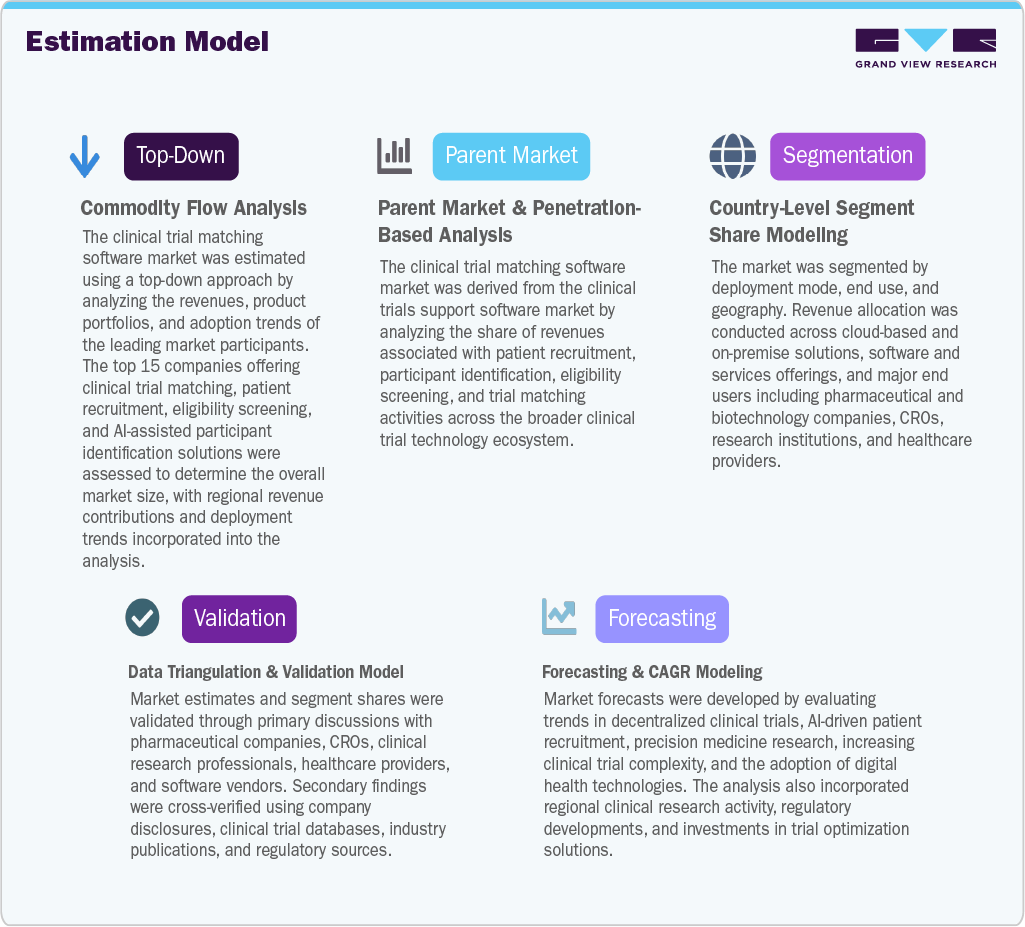
The clinical trials matching software market figures in this report are based on a proven research process that combines executive interviews with secondary research from proprietary databases, company filings, and recognized regulatory and institutional sources. Market size is built through value-chain sizing - reconciling supply-side and demand-side estimates - and triangulated with bottom-up and top-down approaches. Every estimate passes multiple levels of expert validation before publication, with each clinical trials matching software segment quantified using the revenue-capture definitions in the table below.
Segment Definition
Segment- Deployment Mode
Revenue Capture Definition
Web & Cloud
Revenue generated from subscription-based, SaaS, hosted, and cloud-deployed clinical trial matching software platforms, including licensing, platform access fees, maintenance, upgrades, analytics, and related cloud services.
On-premise
Revenue generated from clinical trial matching software installed and operated on customer-owned infrastructure, including perpetual licenses, implementation, customization, maintenance, support, and upgrade services.
Segment- End Use
Revenue Capture Definition
Pharmaceutical & Biotechnology Companies
Spending on clinical trial matching software by pharmaceutical and biotechnology companies to support patient identification, recruitment optimization, site selection, feasibility assessment, and enrollment management activities across clinical development programs.
CROs
Revenue attributed to the adoption of clinical trial matching software by contract research organizations (CROs) to support patient recruitment, study feasibility, site performance optimization, and enrollment management services for sponsors.
Medical Device Companies
Revenue contributed by the use of clinical trial matching software by medical device manufacturers to identify eligible participants, accelerate enrollment, and support clinical studies conducted for device development, validation, and regulatory approval.
 To learn more about this report, Download Free Sample Report
 Delivered Customizations
This report has been delivered with the following In-depth customizations
Client Request
Customization Delivered
Value Adds
Pricing model and procurement analysis
Evaluation of subscription-based, per-study, per-patient, enterprise licensing, and outcome-based pricing models adopted by software vendors
Supported vendor selection, budgeting decisions, contract negotiations, and total cost of ownership assessment
Company market share analysis and competitive landscape assessment
Estimation of company-level market shares, competitive positioning, customer footprint, and strategic developments of key market participants
Provided visibility into market leadership, competitive intensity, and potential acquisition or partnership targets
Case study and implementation analysis
Assessment of real-world deployment case studies, enrollment outcomes, recruitment efficiency improvements, and platform adoption across clinical trials
Offered insights into solution effectiveness, implementation best practices, and measurable business and clinical benefits
Frequently Asked Questions About This Report
The global clinical trials matching software market size was estimated at USD 210.7 million in 2025 and is projected to grow from USD 237.9 million in 2026
The global clinical trials matching software market is expected to grow at a compound annual growth rate of 14.0% from 2026 to 2033 to reach USD 595.3 million by 2033
Key factors driving the growth of the clinical trials matching software market include the rising need for developing advanced treatment solutions due to the increasing incidence of chronic diseases, the growing complexity of clinical trials, the adoption of AI and machine learning in patient recruitment, and the need to enhance trial efficiency.
Asia Pacific is the fastest-growing region over the forecast period
Based on deployment mode, the web & cloud segment held the largest revenue share of 92.8% in 2025
Some key players operating in the clinical trials matching software market include Antidote Technologies, Advarra, Evidation Health, HealthMatch, Mendel Health, MatchTrial, Curewiki, Tempus AI, IQVIA (Inteliquet), Massive Bio, CtrlTrial, Exmplr, Novyra AI, Almara
Based on end use, the pharmaceutical & biotechnology companies segment held the largest revenue share of 43.2% in 2025.
North America dominated the clinical trials matching software market with a share of over 50.1 in 2025.
About the Author(s)
Healthcare IT Research Team
Healthcare · Healthcare ITThis report was authored by the healthcare it research team at Grand View Research - comprising two research analysts, one senior research analyst, and one industry expert - with specialized expertise in the healthcare it segment of the healthcare industry. All findings are based on proprietary healthcare databases, executive interviews, and regulatory analysis, subject to internal peer review prior to publication.
Last Updated:
Speak to Analyst

Customize this report to your needs - add regions, segments, or data points, with 20% free customization.
Or view our licence options:


ISO 9001:2015 & 27001:2022 Certified
We are GDPR and CCPA compliant! Your transaction & personal information is safe and secure. For more details, please read our privacy policy.


