
- Home
- »
- Medical Devices
- »
-
Compression Stockings Market Size, Share Report, 2033GVR Report cover

Compression Stockings Market (2026 - 2033)
Size, Share & Trends Analysis Report By Product Type, By Indication, By Class, By Style, By Knitting Construction, By Toe Configuration, By Distribution Channel, By End Use, By Region and Segment Forecasts
Market Size, 2025
$792.8MMarket Estimate, 2026
$825.8MMarket Forecast, 2033
$1,051.4MCAGR, 2026–2033
3.5%Compression Stockings Market Summary
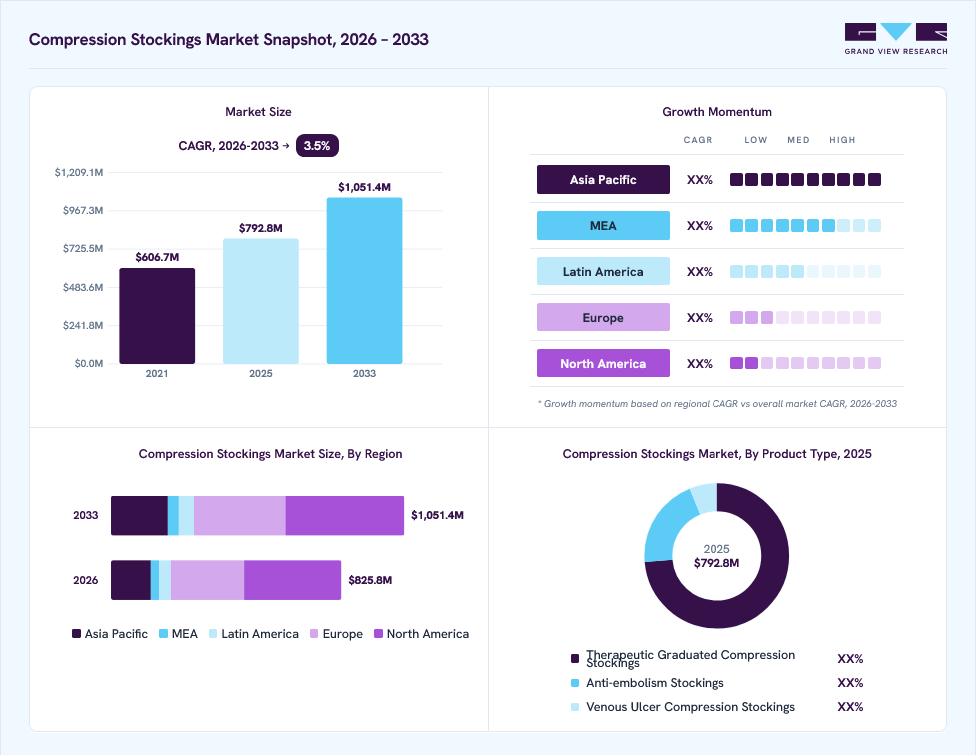
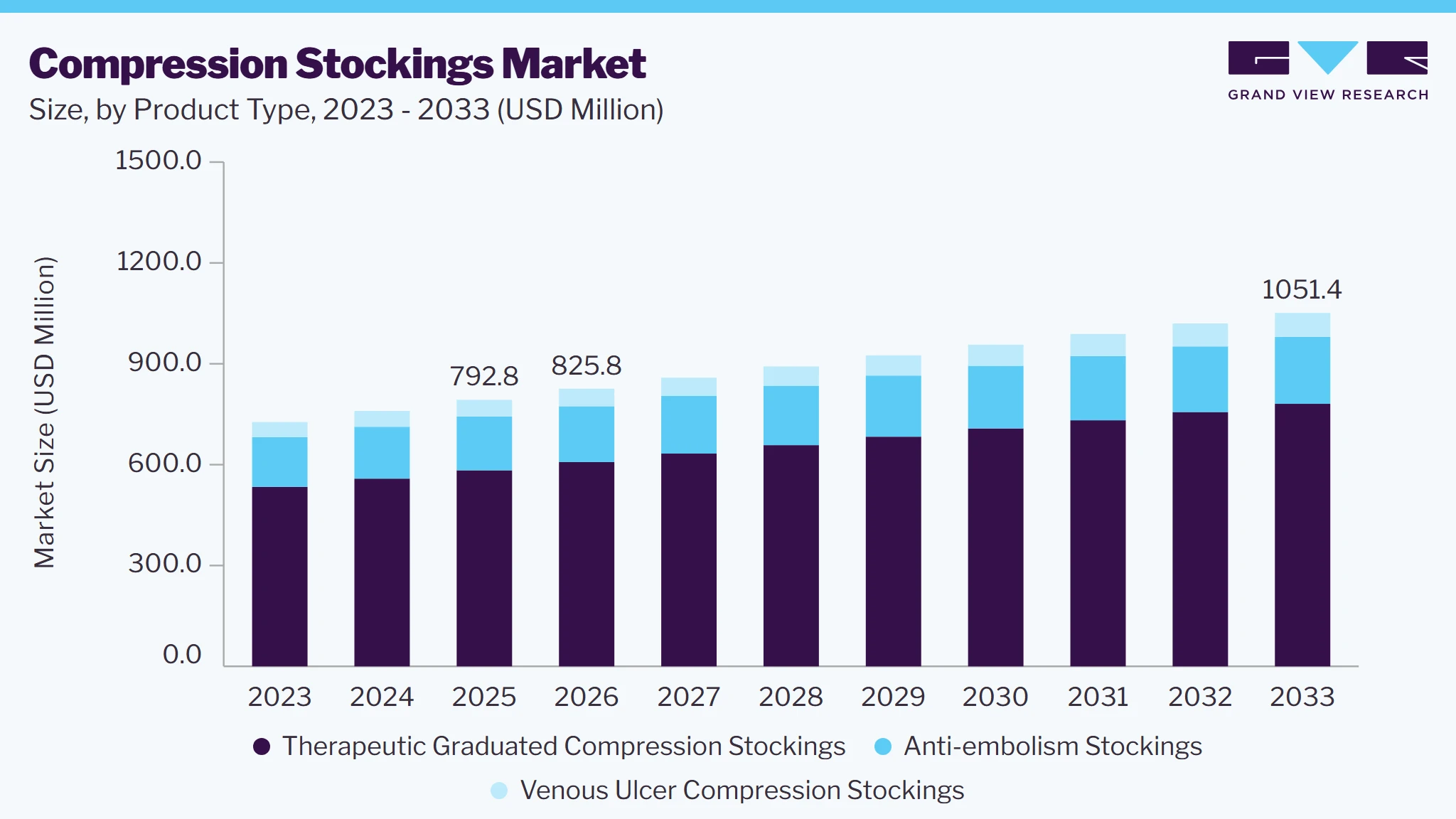
The global compression stockings market size was valued at USD 792.8 million in 2025 and is projected to grow from USD 825.8 million in 2026 to USD 1,051.4 million by 2033, at a CAGR of 3.5% from 2026 to 2033. North America dominated the market, accounting for the largest revenue share of 42.5% in 2025. The growth of the market is driven by the high prevalence of chronic venous disease and varicose veins, growing geriatric and obese populations, rising surgical volumes that require venous thromboembolism (VTE) prophylaxis, and expanding reimbursement coverage for medical compression garments.
 Source: Grand View Research, IR Documents, Primary Interviews, Paid DatabasesTo learn more about this report,
 Download Free Sample Report
Key Market Trends & Insights
- By product type: Therapeutic graduated compression stockings segment led the market with the revenue share of 73.5% in 2025.
- By indication: DVT prevention and post-surgical/peri-operative use segment led the market with the revenue share of 23.5% in 2025.
- By class: Class 2 segment led the market with the revenue share of 42.5% in 2025.
- By style: Knee-high/below-knee segment led the market with the revenue share of 61.1% in 2025.
- By knitting construction: Circular-knit segment led the market with the revenue share of 82.5% in 2025.
- By toe configuration: Closed-toe segment led the market with the revenue share of 50.9% in 2025.
- By distribution channel: Medical supply & orthotic stores segment led the market with the revenue share of 32.1% in 2025.
- By end use: Home/community care segment led the market with the revenue share of 69.6% in 2025.
Regional Highlights
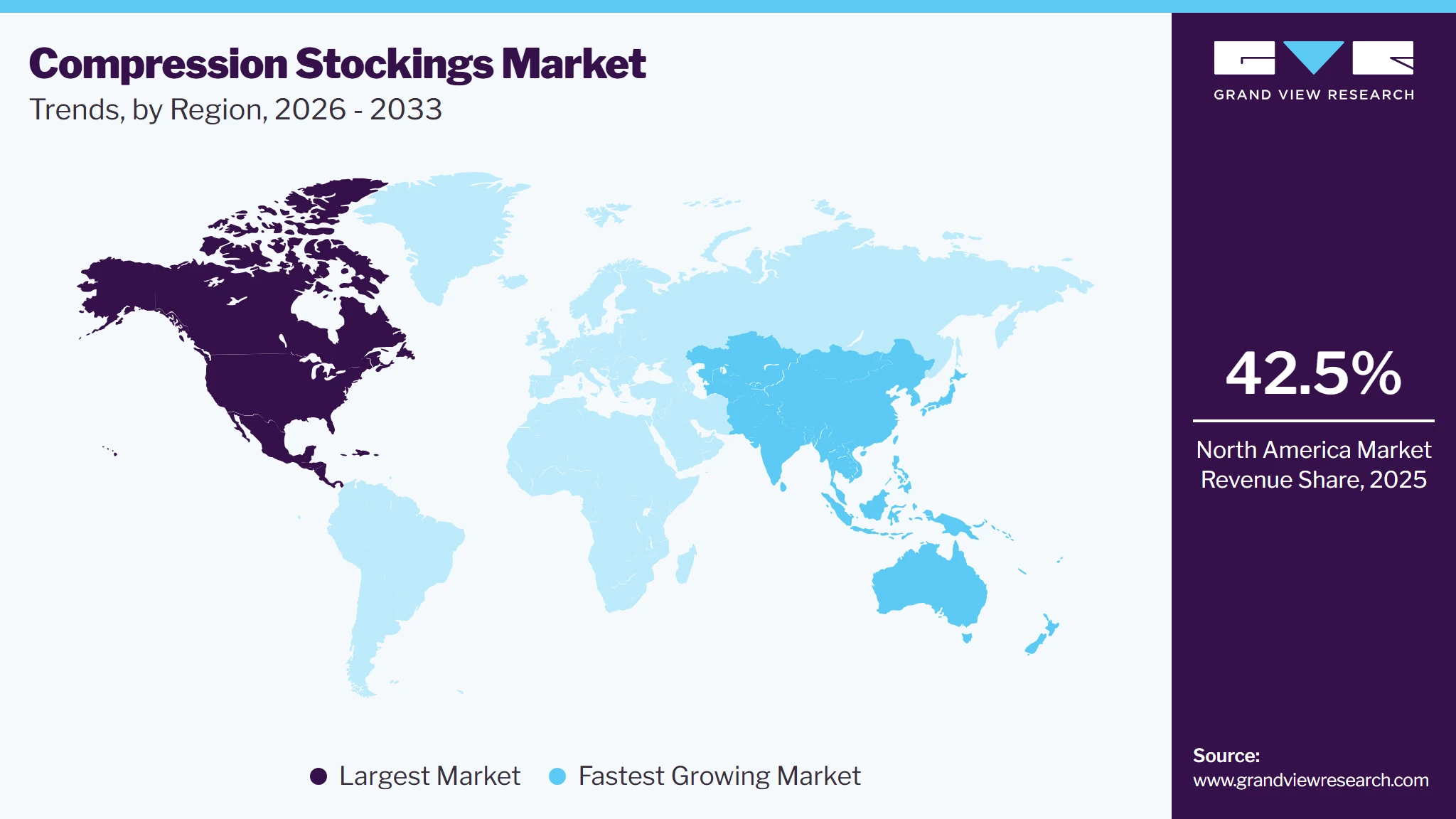
- Largest regional market: North America (42.5% revenue share, 2025)
- Fastest-growing regional market: Asia Pacific (highest CAGR, 2026-2033)
- By country: The U.S. held the largest market share in 2025.
Market Size & Forecast
- Market size in 2025: USD 792.8 Million
- Estimated market size in 2026: USD 825.8 Million
- Projected market size by 2033: USD 1,051.4 Million
- CAGR (2026-2033): 3.5%
Prism AI by Grand View Research Free to tryAsk a question about the compression stockings marketTry asking✓Every figure cited from GVR research Prefer the report? Download free sample →Healthcare providers and patients are focusing on products that offer accurate graduated pressure, comfort for long-term daily wear, easier donning and doffing, and better therapy adherence. The high and rising prevalence of chronic venous disease (CVD) is driving demand for compression stockings, as graduated compression remains a first-line, non-invasive therapy for managing symptoms of varicose veins, chronic venous insufficiency (CVI), edema, and venous leg ulcers.
 To learn more about this report, Download Free Sample Report
Compression stockings help improve venous return, reduce leg swelling, heaviness, and pain, and support the prevention of disease progression and ulcer recurrence. A large share of the venous disease population remains undiagnosed and self-treats, creating high demand across pharmacies, medical supply stores, and online channels. In addition, risk factors such as aging, obesity, sedentary lifestyles, prolonged standing, and pregnancy are expanding the patient pool requiring long-term compression therapy. As venous disease management is typically chronic and stockings require regular replacement to maintain therapeutic pressure, the growing patient base translates into recurring demand for compression stockings.
“Chronic venous disease afflicts 1.5 times as many people as all cardiovascular diseases combined, and five times more than those with diabetes.” said Mary L. Yost, President of THE SAGE GROUP
“For lymphedema patients, compression garments are a need, not a luxury, and this need is finally being met.” said Congressman Buddy Carter, on the implementation of the Lymphedema Treatment Act
Medicare HCPCS Codes for Lower-Extremity Gradient Compression Stockings, 2026
HCPCS Code
Descriptor
A6530
Gradient compression stocking, below knee, 18-30 mmHg
A6552
Gradient compression stocking, below knee, 30-40 mmHg
A6554
Gradient compression stocking, below knee, 40 mmHg or greater
A6533
Gradient compression stocking, thigh length, 18-30 mmHg
A6534
Gradient compression stocking, thigh length, 30-40 mmHg
A6535
Gradient compression stocking, thigh length, 40 mmHg or greater
A6536
Upgrade report license to gain access to the complete analysis.
A6537
A6538
A6539
A6540
A6541
A6610
A6553
A6555
A6556
A6557
A6558
A6559
A6560
A6561
A6562
A6563
A6564
A6544
Source: Centers for Medicare & Medicaid Services (CMS)
The wider reimbursement coverage for medical compression garments is contributing to the growing demand for compression stockings by lowering the expenses that patients have when they need long-term compression treatment. In addition, as compression stockings need to be replaced regularly, usually every few months, in order to maintain the required therapeutic pressure, the cost of having several pairs has restricted access to and encouraged adherence to the treatment, especially among older patients and those who have chronic lymphatic conditions. Reimbursement through both public and private health insurance schemes, such as the statutory reimbursement available in several European countries and the introduction of new benefit categories in the U.S., is making the garments more affordable and is prompting doctors to prescribe both standard and custom-made ones. In addition, the use of defined coding systems for gradient compression stockings according to their length, pressure range, and degree of custom fabrication enables the billing of higher-compression and custom flat-knit products, which is of benefit to the manufacturers and fitters who serve patients with lymphedema and those with advanced venous disease.
For instance, in January 2024, the U.S. Centers for Medicare & Medicaid Services (CMS) implemented the Lymphedema Treatment Act, from January 1, 2024, under which Medicare Part B covers compression garments, compression bandaging systems, gradient compression wraps, and related accessories for each affected body part. The benefit is expected to improve access to compression treatment items for nearly 3 million lymphedema patients on Medicare.
Market Dynamics
The compression stockings market is driven by the growing burden of venous and lymphatic disorders, an aging population, rising surgical volumes, and the increasing use of compression therapy across hospital and home care settings. Hospitals and surgical facilities procure anti-embolism stockings for thromboprophylaxis, while patients with varicose veins, CVI, venous leg ulcers, lymphedema, and lipedema use therapeutic graduated compression stockings for long-term management. Manufacturers are focused on improving product comfort, durability, size ranges, and aesthetics to address adherence challenges, while expanding their custom flat-knit portfolios to accommodate complex limb shapes. The growth in online sales, pharmacy retail, and medical supply and orthotic store networks with measurement and fitting services is further contributing to the expanding patient access to compression stockings.
The growth of the compression stockings market is driven by the growing number of surgical procedures and the increasing focus on venous thromboembolism (VTE) prevention among hospitalized and post-operative patients. Patients undergoing orthopedic, general, gynecological, oncological, and cardiovascular surgeries face a high risk of deep vein thrombosis due to reduced mobility, necessitating mechanical thromboprophylaxis. Anti-embolism stockings are widely used alone or in combination with pharmacological prophylaxis and intermittent pneumatic compression as part of hospital VTE prevention protocols. The rising volume of elective procedures, longer life expectancy, and growth of joint replacement surgeries are increasing institutional procurement of anti-embolism and post-surgical compression stockings. In addition, the use of compression after venous interventions, such as endovenous ablation and sclerotherapy, supports demand for therapeutic stockings during recovery.
The low level of patient adherence is hindering growth in the compression stocking market, as many patients stop using them due to discomfort, difficulty putting them on and taking them off, skin irritation, heat, and aesthetic concerns. Compression stockings of a higher class are especially difficult for older patients and those who have arthritis, are obese, or have limited mobility to put on, which in turn results in irregular use or in patients stopping the treatment early. Non-adherence reduces repeat purchases and limits the replacement cycle that supports recurring demand. As a result, a section of the patient group who should be receiving treatment does not get consistent compression therapy even though it is recommended by clinicians.
The need to improve long-term adherence is creating opportunities for manufacturers to develop compression stockings that combine therapeutic performance with comfort and everyday aesthetics. Patients increasingly prefer stockings that resemble regular hosiery or socks, with softer yarns, breathable and moisture-wicking materials, sheer and opaque fabrics, and a wider choice of colors and patterns. Manufacturers can differentiate products by offering seasonal fashion colors, digital print designs, gender-specific ranges, broader cuffs, and easier-to-don constructions while maintaining graduated pressure. These solutions can also expand demand among younger patients, pregnant women, and active users who manage venous symptoms through self-care.
Market Concentration & Characteristics
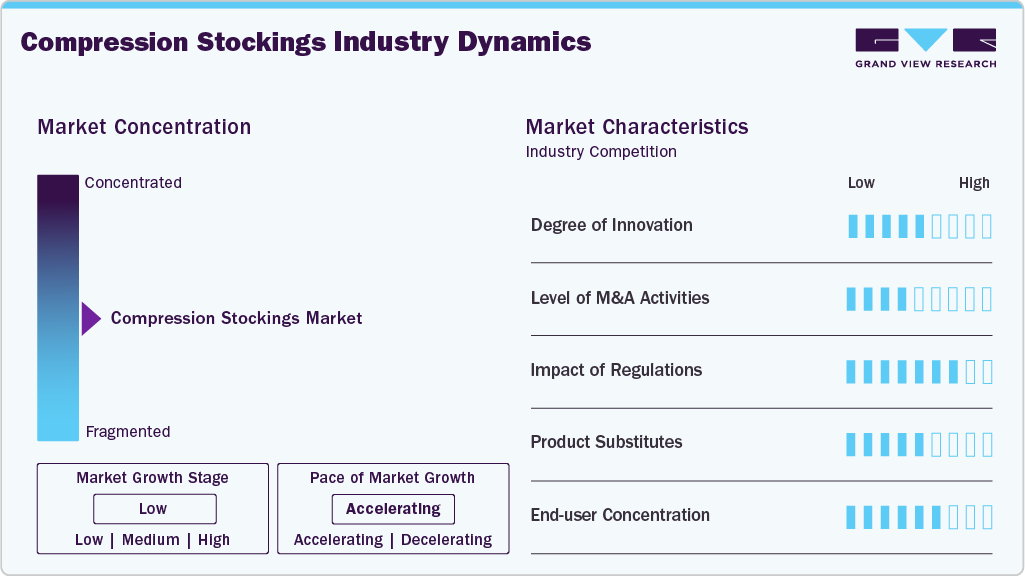
The compression stockings market is characterized by a broad range of medical compression products designed to support venous return, reduce edema, and prevent thrombosis across acute and chronic care settings. The market includes therapeutic graduated compression stockings, anti-embolism stockings, and venous ulcer stocking systems, with product configurations varying by compression class, length, knitting construction, toe design, and size range. Manufacturers differentiate products through pressure accuracy, yarn and material selection, comfort features, durability, color and design options, and custom-made capabilities.
The compression stockings market exhibits a moderate degree of innovation, with manufacturers focusing on comfort-enhancing materials, improved knitting technologies, custom-made flat-knit garments, and aesthetic designs that support adherence to therapy. Innovation involves the use of softer and more breathable yarns, blends of merino wool and microfiber, flatter seams, silicone top bands, digital print technologies, and donning aids which make the application process easier. For instance, in February 2025, Bauerfeind expanded the VenoTrain Classic compression stockings portfolio with two new fashion colors, Irish Green and French Lavender, to offer greater choice for patients seeking stylish medical compression products. The colors are available for two years across the VenoTrain soft, VenoTrain soft S, VenoTrain micro, and VenoTrain impuls ranges. The update broadens the portfolio’s visual appeal while maintaining its therapeutic focus, offering patients additional options for everyday, professional, and occasion wear.
 To learn more about this report, Download Free Sample Report
Mergers and acquisitions in the compression stockings market support portfolio expansion, geographic diversification, and access to established distribution networks. Manufacturers combine complementary capabilities across venous and lymphatic compression garments, adjustable compression wraps, orthopedic supports, and wound care products. These activities also support entry into new regional markets, particularly North America, and expansion across pharmacy, medical supply, and institutional channels.
Regulatory requirements impact product design, manufacturing processes, market entry, and compliance practices within the compression stockings market. In the U.S., medical support stockings are regulated by the U.S. Food and Drug Administration (FDA) based on classification and intended use, while in the European Union, medical compression stockings are regulated as medical devices under Regulation (EU) 2017/745 (MDR). Quality frameworks, such as Germany’s RAL-GZ 387 standard, define pressure classes and testing requirements for medical compression hosiery. Reimbursement rules and coding requirements also influence product specifications, documentation, and fitting practices, which can affect development timelines and compliance costs.
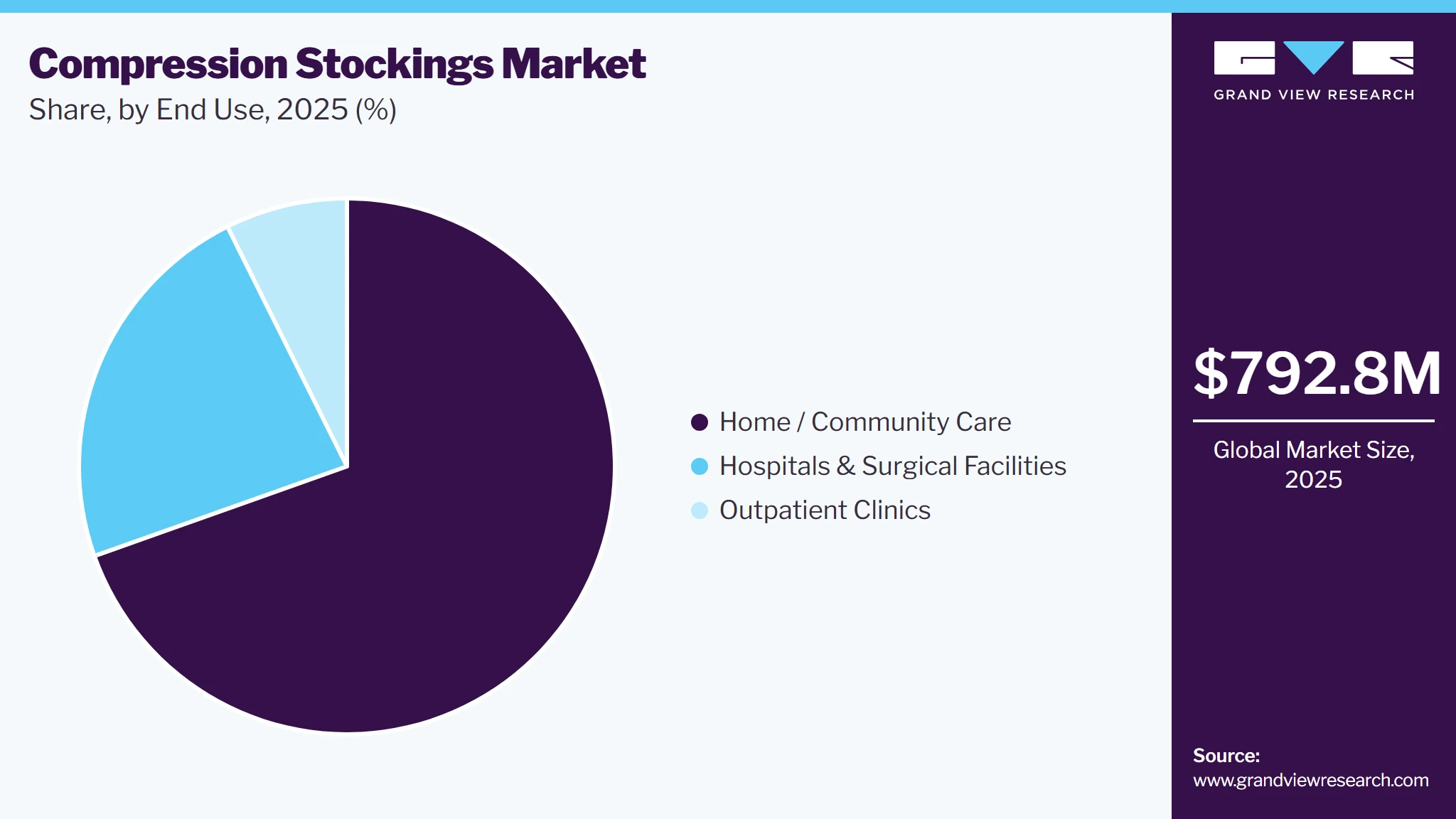
The main area of use for compression stockings is in home and community care, where patients look after their chronic venous and lymphatic conditions by wearing the stockings everyday over a long period. Hospitals and surgical facilities mainly use anti-embolism stockings for the purpose of thromboprophylaxis in patients who are immobilized or have just undergone surgery; the stockings generally being obtained through institutional contracts and tenders. Outpatient clinics, such as vein centers, wound care clinics and lymphedema clinics, prescribe and fit therapeutic and ulcer compression stockings as part of treatment and follow-up care.
Analyst Perspective
The compression stockings market is moderately consolidated, with manufacturers differentiated by the range of product offerings, pressure accuracy, comfort and aesthetics, their ability to offer custom-made items, and the extent of their distribution. Established companies such as medi, SIGVARIS GROUP, Juzo, Essity (JOBST), Bauerfeind, and Thuasne compete by offering broad portfolios of circular-knit and flat-knit stockings across compression classes, lengths, sizes, and colors, supported by fitter networks and clinical education. Companies also differentiate themselves through softer, breathable materials, fashion-oriented designs, donning aids, and products for lymphedema and lipedema. Smaller and emerging manufacturers compete by offering affordable products, building regional distribution networks, and selling online. Competition also extends beyond individual products, as reimbursement eligibility, fitting services, and patient adherence support influence purchasing decisions.
Product Type Insights
By product type, the therapeutic graduated compression stockings segment led the market with the largest revenue share of 73.5% in 2025. The growth of the segment is supported by its broad use in managing varicose veins, chronic venous insufficiency, edema, lymphedema, lipedema, and pregnancy-related venous symptoms. Patients require these stockings for long-term daily wear, creating recurring demand through regular replacement of worn garments. Availability in multiple compression classes, lengths, sizes, colors, and standard and custom-made formats across pharmacies, medical supply stores, and online channels also supports adoption. Modern therapeutic stockings incorporate softer yarns, improved breathability, and easier donning features, supporting their use across different patient groups.
Venous ulcer compression stockings are expected to be the fastest-growing product type segment during the forecast period. This growth is supported by the high burden of venous leg ulcers among elderly patients, high recurrence rates after healing, and increasing adoption of stocking-based ulcer kits as an alternative to multilayer bandaging. Two-component systems, which consist of an inner liner and an outer stocking, allow for easier application, facilitate self-care, and maintain compression after healing in order to reduce recurrence.
Indication Insights
Based on indication, the DVT prevention and post-surgical/peri-operative use segment led the market with the largest revenue share of 23.5% in 2025. This is supported by the widespread use of anti-embolism stockings in hospital VTE prevention protocols for immobilized, surgical, and critically ill patients. The large volume of orthopedic, general, gynecological, and oncological surgical procedures creates consistent institutional demand, while post-operative compression is also used after venous interventions to manage swelling and support recovery. In addition, the growth in the number of surgical facilities, together with the greater focus on assessing peri-operative risk, places further pressure on the need for medically appropriate compression stockings.
Lipedema is expected to be the fastest-growing indication segment during the forecast period. The growth of the segment is supported by rising awareness and diagnosis of lipedema, increasing recognition of compression therapy as a core component of conservative management, and the expansion of specialized clinics and patient advocacy. Patients with lipedema often require flat-knit and custom-made garments, supporting demand for higher-value products.
Class Insights
Based on class, the class 2 segment led the market with the largest revenue share of 42.5% in 2025. This is supported by its broad clinical use in managing varicose veins, CVI, edema, post-thrombotic syndrome, and the prevention of recurrence of venous leg ulcers. Class 2 stockings strike a balance between therapeutic effectiveness and patient tolerability, supporting their frequent prescription across venous clinics, primary care, and lymphedema management. In addition, availability in standard sizes and different styles supports access through pharmacies and medical supply stores. Regular replacement by patients receiving long-term treatment also supports repeat sales.
Class 4 is expected to be the fastest-growing segment of the compression class during the forecast period. Growth is supported by the increasing diagnosis and treatment of severe lymphedema and advanced venous disease that require very high compression, along with the growing availability of custom-made flat-knit garments and reimbursement coverage for higher-compression products.
Style Insights
Based on style, the knee-high / below-knee segment led the market with the largest revenue share of 61.1% in 2025. Their dominance is supported by their suitability for most venous indications, as venous disease and edema commonly affect the lower leg, as well as their ease of donning, comfort, and better patient adherence compared with longer garments. Knee-high stockings are widely prescribed for varicose veins, CVI, venous leg ulcer management, and travel and occupational use. A wide range of choices of style, materials, and compression levels supports their use across different patient groups. Their relatively affordable prices also encourage regular replacement and continued use.
Single-leg with waist attachment is expected to be the fastest-growing stocking length/style segment during the forecast period. Growth is supported by increasing use among patients with unilateral lymphedema, lipedema, and post-thrombotic conditions affecting the entire limb, for whom secure fixation is required to prevent slipping and maintain consistent compression.
Knitting Construction Insights
Based on knitting construction, the circular-knit segment led the market with the largest revenue share of 82.5% in 2025. This is supported by its suitability for standard limb shapes, high-volume production, seamless construction, cosmetic appearance, and lower cost compared with flat-knit products. Circular-knit stockings are widely used for varicose veins, CVI, pregnancy-related venous disorders, and anti-embolism applications across retail and institutional channels. Large-scale manufacturing allows suppliers to maintain broad product availability and competitive prices. A wide range of ready-to-wear options supports convenient purchasing and replacement.
Flat-knit is expected to be the fastest-growing construction segment during the forecast period. Growth is supported by increased treatment of lymphedema and lipedema, which require stiffer fabrics, higher working pressure, and custom-made garments for irregular limb shapes. Expanding reimbursement for custom compression items and growing product launches in flat-knit ranges are further supporting segment growth.
Toe Configuration Insights
Based on toe configuration, the closed-toe segment led the market with the largest revenue share of 50.9% in 2025. The growth of the segment is supported by patient preference for the appearance and warmth of closed-toe designs, which resemble regular hosiery and socks and support everyday wear. Closed-toe stockings are widely used in therapeutic graduated compression for varicose veins and CVI, as well as in travel and occupational compression. In addition, familiar sock-like designs make these products easier to include in daily clothing choices. Availability in different colors, fabrics, and sizes supports repeat purchases for everyday medical use.
Open-toe is expected to be the fastest-growing toe configuration segment during the forecast period. Growth is supported by the suitability of open-toe designs for patients with toe deformities, foot conditions, or diabetes, as well as for warm climates and use with toe caps in lymphedema management. Open-toe stockings also allow easier donning with donning aids and are commonly used in higher compression classes.
Distribution Channel Insights
Based on distribution channel, the medical supply & orthotic stores segment led the market with the largest revenue share of 32.1% in 2025. Their dominance is supported by the availability of professional measurement and fitting services, which are important for appropriate selection of size and compression class, especially for higher-compression and custom-made garments. These outlets also support reimbursement processing, patient education, and repeat purchases for patients on long-term compression therapy. Referrals from healthcare professionals help these stores attract patients requiring specialized products, and the provision of follow-up fitting and replacement services helps to strengthen customer relationships and leads to recurring sales.
Online sales are expected to be the fastest-growing distribution channel segment during the forecast period. Growth is supported by convenience, wider product choice, competitive pricing, home delivery, and the growth of brand websites, online pharmacies, and e-commerce marketplaces. Online sizing tools and virtual fitting support are also encouraging repeat purchases among patients with established prescriptions.
End Use Insights
Based on end use, the home/community care segment led the market with the largest revenue share of 69.6% in 2025 and is expected to register the fastest growth during the forecast period. Their dominance is supported by the chronic nature of venous and lymphatic disorders, which require long-term daily use of compression stockings at home following prescription and fitting. Self-management of varicose veins, CVI, lymphedema, lipedema, and pregnancy-related venous symptoms, along with community nursing support for elderly patients and for preventing recurrence of venous leg ulcers, sustains recurring demand.
 To learn more about this report, Download Free Sample Report
Outpatient clinics are expected to register steady growth during the forecast period. Growth is supported by the expansion of vein centers, wound care clinics, and lymphedema clinics where compression stockings are prescribed, fitted, and used during treatment and follow-up care. The shift of venous procedures such as endovenous ablation and sclerotherapy to outpatient settings is further supporting the use of post-procedural compression stockings.
Regional Insights
North America dominated the compression stockings market with the largest revenue share of 42.5% in 2025, supported by the high prevalence of chronic venous disease, a large aging and obese population, and a high volume of surgical procedures requiring VTE prophylaxis. In the U.S., more than 190 million people are estimated to be affected by chronic venous disease, with over 50 million suffering from CVI and more than 2 million individuals affected by venous ulcers in 2025, reflecting a large patient base requiring compression therapy. The region also has a well-established network of medical supply and orthotic stores, certified fitters, pharmacies, and online retailers, along with strong presence of leading manufacturers such as Essity (JOBST), SIGVARIS GROUP, medi, Juzo, Cardinal Health, and Medline. Expanding reimbursement coverage for gradient compression garments is further improving patient access to standard and custom-made stockings.
 To learn more about this report, Download Free Sample Report
U.S. Compression Stockings Market Trends
The U.S. compression stockings market is supported by the high burden of venous and lymphatic disorders, increasing surgical volumes, and expanding reimbursement for compression therapy. Healthcare providers prescribe compression stockings for varicose veins, CVI, venous leg ulcer management, lymphedema, lipedema, and post-thrombotic syndrome, while hospitals use anti-embolism stockings as part of VTE prevention protocols. Demand spans therapeutic graduated compression stockings across classes, anti-embolism stockings, and venous ulcer stocking kits in standard and custom-made formats. Patients are also increasingly adopting compression stockings with improved comfort and aesthetics, purchased through medical supply stores, pharmacies, and online channels. From a regulatory perspective, the U.S. Food and Drug Administration (FDA), through its Center for Devices and Radiological Health (CDRH), regulates medical support stockings, with applicable requirements covering device classification, establishment registration and device listing, labeling, and post-market reporting.
Europe Compression Stockings Market Trends
The Europe compression stockings market is supported by the high prevalence of venous disorders, an aging population, well-established phlebology and lymphology care practices, and reimbursement of medical compression stockings in several countries. The region is home to many leading manufacturers, including medi, Juzo, Bauerfeind, Ofa Bamberg, SIGVARIS GROUP, Thuasne, and SWISSLASTIC (VENOSAN), along with a dense network of medical supply stores, pharmacies, and certified fitters. Regulatory oversight is governed at the European Union level by the European Commission under Regulation (EU) 2017/745 on medical devices (MDR), with national competent authorities and notified bodies responsible for conformity assessment, registration, and market surveillance.
The UK compression stockings market is supported by the high burden of venous leg ulcers and lower-limb wounds, increasing focus on community-based leg ulcer management, and NHS-led initiatives to improve lower-limb care. Compression hosiery is available on prescription through the NHS Drug Tariff, and national wound care recommendations promote compression therapy for the treatment of venous leg ulcers and the prevention of recurrence. This creates requirements for therapeutic graduated compression stockings, venous ulcer stocking kits, and donning and doffing aids that support patient self-care and adherence in community settings.
In June 2026, SIGVARIS GROUP announced that its DOFF N’ DONNER CONE became available through the NHS Wales Shared Services Partnership. The product works with the DOFF N’ DONNER ROLLY to support the application and removal of compression garments, reduce physical effort for clinicians and carers, and potentially improve adherence to compression therapy.
Asia Pacific Compression Stockings Market Trends
The Asia Pacific compression stockings market is supported by rapidly aging populations, rising prevalence of venous disorders, increasing surgical volumes, and growing awareness of compression therapy among patients and healthcare professionals. Occupational risk factors such as prolonged standing in manufacturing, retail, and service sectors, along with rising obesity, are expanding the patient population with varicose veins and CVI. Healthcare providers are increasingly adopting anti-embolism stockings in hospital VTE prevention practices, while e-commerce and pharmacy retail are improving access to therapeutic stockings. Regulatory development is also supporting market access and product standardization. The ASEAN Medical Device Directive (AMDD) provides a common framework that covers essential safety and performance requirements, risk classification, conformity assessment, and post-market surveillance, while individual member states continue to maintain their national requirements.
The Japan compression stockings market is supported by the country’s rapidly aging population and the resulting increase in venous disorders, lymphedema, and surgical procedures requiring VTE prophylaxis. Japan’s Ministry of Health, Labour and Welfare indicates that the population aged 65 years and above, particularly those aged 75 years and above, continues to shape healthcare demand. Elastic stockings and sleeves for the treatment of lymphedema following cancer surgery are covered by public health insurance, supporting adoption among post-cancer patients. Hospitals also widely use anti-embolism stockings as part of perioperative VTE prevention, while the growing elderly population living at home is creating demand for comfortable, easy-to-don therapeutic stockings.
Latin America Compression Stockings Market Trends
The Latin America compression stockings market is supported by the high prevalence of varicose veins and chronic venous disease, increasing awareness of compression therapy, and the expansion of private healthcare and surgical capacity across the region. Rising obesity, aging populations, and occupational risk factors are expanding the patient pool requiring compression stockings, while pharmacies and online retail are improving product availability. Regulatory development is also supporting the medical-device environment. National authorities such as ANVISA in Brazil and ANMAT in Argentina oversee medical-device registration, safety, quality, and market access, while PAHO promotes regional cooperation in medical-device regulation and health-technology management.
Middle East and Africa Compression Stockings Market Trends
Healthcare infrastructure development, rising surgical activity, and increasing recognition of venous and lymphatic disorders are supporting demand for medical compression stockings across the MEA region. In the Middle East, healthcare systems are investing in hospital capacity and medical technology procurement, supporting the use of anti-embolism stockings in VTE prevention, supported by regulatory frameworks overseen by authorities such as the Saudi Food and Drug Authority (SFDA) in Saudi Arabia and the Ministry of Health and Prevention (MOHAP) in the UAE. The SFDA regulates medical device registration, marketing authorization, establishment licensing, and post-market surveillance. In Africa, the South African Health Products Regulatory Authority (SAHPRA) regulates medical device establishments and device registration in South Africa. Limited reimbursement and lower awareness in parts of the region continue to restrict access, creating opportunities for affordable products and distribution expansion.
Key Compression Stockings Company Insights
Key compression stockings companies are operating in the market by developing and supplying therapeutic graduated compression stockings, anti-embolism stockings, and venous ulcer stocking systems for hospitals, outpatient clinics, and patients managing venous and lymphatic disorders at home. Companies are focusing on comfort-oriented materials, accurate graduated pressure, custom-made flat-knit garments, extended size and color ranges, and donning aids to support therapy adherence. Partnerships with medical supply stores, pharmacies, and certified fitters, along with clinician education programs and expansion of online sales channels, also support market presence, while institutional contracts help suppliers serve hospital VTE prevention requirements.
Key Compression Stockings Companies:
The following key companies have been profiled for this study on the compression stockings market.
-
medi GmbH & Co. KG
-
SIGVARIS GROUP
-
Julius Zorn GmbH (Juzo)
-
Essity (JOBST)
-
Bauerfeind AG
-
Thuasne
-
SWISSLASTIC AG (VENOSAN)
-
Ofa Bamberg GmbH
-
Gloria Med
-
Calzificio Pinelli (Solidea)
-
Cardinal Health
-
Medline Industries, LP
-
Cizeta Medicali
-
Sanyleg
-
Tynor Orthotics
-
Dynamic Techno Medicals
Competitive Benchmarking
Category
Operating Strategies
Competitive Edge
Weakness
Established Players (medi GmbH & Co. KG, SIGVARIS GROUP, Julius Zorn GmbH (Juzo), Essity (JOBST), Bauerfeind AG, Cardinal Health, Medline Industries, LP)
- These manufacturers maintain broad product portfolios covering therapeutic graduated compression stockings, anti-embolism stockings, venous ulcer stocking systems, and custom-made flat-knit garments across multiple compression classes and styles.
- Companies expand through medical supply and orthotic store networks, pharmacies, institutional contracts, online channels, clinician education programs, and continuous product development across established regional markets.
- Established players benefit from recognized brands, extensive distribution networks, established relationships with fitters and healthcare providers, and experience serving hospitals and long-term compression users.
- Broad product portfolios and in-house knitting capabilities enable companies to offer standard and custom-made garments while supporting reimbursement and standardized procurement across multiple care settings.
- Large established organizations can face longer product development and decision-making cycles due to complex organizational structures and approval processes.
- Premium pricing and dependence on reimbursement can limit competitiveness against lower-cost products in price-sensitive and emerging markets.
Emerging Players (Gloria Med, Cizeta Medicali, Sanyleg, Tynor Orthotics, Dynamic Techno Medicals)
- Emerging manufacturers focus on specialized compression products, affordable ready-to-wear stockings, fashion-oriented designs, and targeted regional customer segments.
- Companies use regional distributors, pharmacies, online channels, direct sales, and partnerships to expand market access while maintaining comparatively lean operations.
- Emerging players offer adaptable product designs, competitive pricing, shorter customization cycles, and focused portfolios that address specific patient requirements.
- Regional market knowledge enables emerging companies to tailor product specifications, pricing structures, and service models to local healthcare providers and patients.
- Emerging players normally have narrower distribution networks and fewer established relationships with fitters, clinicians, and payers than companies with longer market histories.
- Limited product portfolios and smaller service infrastructure can limit their ability to support large institutional tenders and custom-made garment requirements.
Recent Developments
-
In May 2026, medi expanded its mediven comfort print range of circular-knitted medical compression knee stockings with eight new designs in two color variants, available from July 2026, increasing the collection to 14 styles. The stockings feature 360° digital print technology, broader cuffs for enhanced comfort, and soft materials for easier donning and doffing, and are available in compression classes 1 and 2.
-
In November 2025, Essity’s JOBST brand entered a strategic partnership with the Toronto Raptors in Canada to promote active and confident living for individuals managing venous and lymphatic diseases, including arena presence, digital campaigns, and in-app visibility.
Compression Stockings Market Report Scope
Report Attribute
Details
Market size in 2025
USD 792.8 million
Estimated market size in 2026
USD 825.8 million
Projected market size by 2033
USD 1,051.4 Million
Growth rate
CAGR of 3.5% from 2026 to 2033
Base year for estimation
2025
Actual estimates/Historical data
2021 - 2024
Forecast period
2026 - 2033
Quantitative units
Revenue in USD Million and CAGR from 2026 to 2033
Report coverage
Revenue forecast, company ranking, competitive landscape, growth factors, and trends
Segments covered
Product type, indication, class, style, knitting construction, toe configuration, distribution channel, end use, region
Regional scope
North America; Europe; Asia Pacific; Latin America; Middle East & Africa
Country scope
U.S.; Canada; Mexico; UK; Germany; France; Italy; Spain; Denmark; Sweden; Norway; Japan; China; India; Thailand; Australia; South Korea; Brazil; Argentina; South Africa; Saudi Arabia; UAE; Kuwait
Key companies profiled
medi GmbH & Co. KG; SIGVARIS GROUP; Julius Zorn GmbH (Juzo); Essity (JOBST); Bauerfeind AG; Thuasne; SWISSLASTIC AG (VENOSAN); Ofa Bamberg GmbH; Gloria Med; Calzificio Pinelli (Solidea); Cardinal Health; Medline Industries, LP; Cizeta Medicali; Sanyleg; Tynor Orthotics; Dynamic Techno Medicals
Customization scope
Free report customization (equivalent up to 8 analyst’s working days) with purchase. Addition or alteration to country, regional & segment scope
Pricing and purchase options
Avail customized purchase options to meet your exact research needs. Explore purchase options
Global Compression Stockings Market Report Segmentation
This report forecasts revenue growth at the regional and country levels and provides an analysis of the latest industry trends across each sub-segment from 2021 to 2033. For this study, Grand View Research has segmented the compression stockings market report based on product type, indication, class, style, knitting construction, toe configuration, distribution channel, end use, and region.
-
Product Type Outlook (Revenue, USD Million, 2021 - 2033)
-
Therapeutic Graduated Compression Stockings
-
Anti-embolism Stockings
-
Venous Ulcer Compression Stockings
-
-
Indication Outlook (Revenue, USD Million, 2021 - 2033)
-
Varicose Veins (Early-stage Venous Disease)
-
Chronic Venous Insufficiency
-
Venous Leg Ulcer Management (Active or Healed)
-
DVT Prevention and Post-surgical / Peri-operative Use
-
Lymphedema
-
Lipedema
-
Pregnancy-related Venous Disorders
-
Other Medical Conditions
-
-
Class Outlook (Revenue, USD Million, 2021 - 2033)
-
Class 1
-
Class 2
-
Class 3
-
Class 4
-
Others
-
-
Style Outlook (Revenue, USD Million, 2021 - 2033)
-
Knee-high / Below-knee
-
Thigh-high
-
Single-leg with Waist Attachment
-
Pantyhose / Waist-high (Standard and Maternity)
-
-
Knitting Construction Outlook (Revenue, USD Million, 2021 - 2033)
-
Circular-knit
-
Flat-knit
-
-
Toe Configuration Outlook (Revenue, USD Million, 2021 - 2033)
-
Open-toe
-
Closed-toe
-
Inspection-opening / Other Configurations
-
-
Distribution Channel Outlook (Revenue, USD Million, 2021 - 2033)
-
Direct Institutional Sales
-
Pharmacies
-
Medical Supply & Orthotic Stores
-
Online Sales
-
Other Retail Channels
-
-
End Use Outlook (Revenue, USD Million, 2021 - 2033)
-
Hospitals & Surgical Facilities
-
Outpatient Clinics
-
Home / Community Care
-
-
Regional Outlook (Revenue, USD Million, 2021 - 2033)
-
North America
-
U.S.
-
Canada
-
Mexico
-
-
Europe
-
UK
-
Germany
-
France
-
Italy
-
Spain
-
Denmark
-
Sweden
-
Norway
-
-
Asia Pacific
-
Japan
-
China
-
India
-
South Korea
-
Australia
-
Thailand
-
-
Latin America
-
Brazil
-
Argentina
-
-
Middle East & Africa
-
South Africa
-
Saudi Arabia
-
UAE
-
Kuwait
-
-
Research Methodology
The compression stockings market figures in this report are based on a proven research process that combines executive interviews with secondary research from proprietary databases, company filings, and recognized regulatory and institutional sources. Market size is built through value-chain sizing-reconciling supply-side and demand-side estimates-and triangulated with bottom-up and top-down approaches. Every estimate passes multiple levels of expert validation before publication, with each compression stockingssegment quantified using the revenue-capture definitions in the table below.
Segment Definition
Product Type
Revenue capture definition
Therapeutic Graduated Compression Stockings
Revenue generated from the sale of medical stockings that apply greater pressure at the ankle and progressively lower pressure upward to support venous return and manage venous or lymphatic conditions. Excludes separately counted anti-embolism and dedicated ulcer products.
Anti-embolism Stockings
Revenue generated from the sale of medical stockings providing graduated compression primarily for clot prevention in patients with reduced mobility, particularly during hospitalization or surgical care.
Venous Ulcer Compression Stockings
Revenue generated from the sale of stockings and dedicated stocking systems designed for venous leg ulcer treatment or recurrence prevention, including only the stocking components of systems that combine an inner liner with an outer compression stocking.
Estimation Model
Layer
Analysis
Bottom-Up Estimation
The market is estimated using treated patient populations for venous and lymphatic disorders and surgical cases requiring anti-embolism stockings across countries. The assessment applies stocking adoption rates, annual purchase and replacement frequency, and average selling prices by product type, compression class, style, and standard versus custom-made format. Patient populations are adjusted for overlapping indications to avoid double counting, and country revenues are aggregated into regional and global totals.
Top-Down Approach
The estimation begins with reported revenues from manufacturers’ medical compression and related healthcare businesses. Product portfolios, financial disclosures, and geographic sales information are used to estimate the proportion attributable to therapeutic graduated compression stockings, anti-embolism stockings, and venous ulcer compression stockings. Revenues from wraps, bandages, sports products, and other excluded categories are removed, with adjustments for manufacturers not covered by available disclosures.
Supply-Side Analysis
The analysis evaluates manufacturers’ stocking production capacity, capacity utilization, annual shipments, and average selling prices. It considers product mix, manufacturing locations, exports, distribution networks, and institutional procurement. Shipment volumes are adjusted for inventory changes and excluded products, while manufacturer and distributor transactions are reconciled to avoid double counting. All estimates use a consistent revenue basis across countries and segments.
Delivered Customizations
This report has been delivered with the following In-depth customizations
CLIENT REQUEST
CUSTOMIZATION DELIVERED
VALUE ADDS
ASP and Volume Analysis (Historical & Forecast)
Comprehensive ASP and unit-volume (pairs) analysis for compression stockings across the forecast period, segmented by product type (therapeutic graduated compression stockings, anti-embolism stockings, and venous ulcer compression stockings), compression class, stocking length/style, knitting construction (circular-knit and flat-knit), standard vs. custom-made products, and distribution channel. The analysis incorporates patient pools, prescription and replacement frequency, wear-time compliance, reimbursement rates, average selling prices, and regional pricing differences.
Enables accurate revenue and unit-volume forecasting, pricing strategy development, assessment of premium vs. standard and custom vs. ready-to-wear demand, reimbursement impact analysis, and regional investment decision-making for manufacturers, distributors, and investors.
Indication and Patient Pool Analysis
Detailed assessment of compression stocking use across varicose veins, chronic venous insufficiency, venous leg ulcer management, DVT prevention and post-surgical use, lymphedema, lipedema, pregnancy-related venous disorders, and other medical conditions. The analysis evaluates diagnosed and treated populations, surgical volumes, prescribing patterns, adherence rates, and care settings across hospitals, outpatient clinics, and home/community care.
Supports demand forecasting, estimation of addressable patient volumes, identification of high-growth indications, assessment of repeat-purchase requirements, and evaluation of institutional and retail demand.
Competitive Benchmarking and Market Share Analysis
Comprehensive competitive assessment of compression stocking manufacturers, including product portfolio benchmarking, compression classes and pressure profiles, knitting technologies, materials and yarns, size and color ranges, measurement and fitting services, regulatory status, distribution networks, geographic presence, pricing, product launches, and strategic partnerships. Market share analysis is evaluated across major geographic markets and the defined product segments.
Enables competitive positioning, market gap identification, product feature benchmarking, pricing optimization, distribution strategy development, partnership and acquisition evaluation, and geographic expansion assessment for established and emerging manufacturers.
Frequently Asked Questions About This Report
The global compression stockings market is expected to grow at a CAGR of 3.5% from 2026 to 2033, reaching USD 1,051.4 million by 2033
The global compression stockings market size was valued at USD 792.8 million in 2025 and is estimated at USD 825.8 million for 2026.
Key factors include the high prevalence of chronic venous disease and varicose veins, growing geriatric and obese populations, rising surgical volumes that require venous thromboembolism (VTE) prophylaxis, and expanding reimbursement coverage for medical compression garments. Healthcare providers and patients are focusing on products that offer accurate graduated pressure, comfort for long-term daily wear, easier donning and doffing, and better therapy adherence.
North America dominated with a 42.5% revenue share in 2025.
Asia Pacific is the fastest-growing region over the forecast period.
The therapeutic graduated compression stockings segment held the largest share of 73.5% in 2025, while venous ulcer compression stockings is the fastest-growing segment over the forecast period.
The DVT prevention and post-surgical / peri-operative use held the largest share of 23.5% in 2025 while lipedema is the fastest-growing segment over the forecast period.
Class 2 held the largest share of 42.5% in 2025, while class 4 is the fastest-growing segment over the forecast period.
The home / community care held the largest share of 69.6% in 2025 and is the fastest-growing segment over the forecast period.
Key players include medi GmbH & Co. KG, SIGVARIS GROUP, Julius Zorn GmbH (Juzo), Essity (JOBST), Bauerfeind AG, Thuasne, SWISSLASTIC AG (VENOSAN), Ofa Bamberg GmbH, Gloria Med, Calzificio Pinelli (Solidea), Cardinal Health, Medline Industries, LP, Cizeta Medicali, Sanyleg, Tynor Orthotics, Dynamic Techno Medicals, among others.
About the Author(s)
Medical Devices Research Team
Healthcare · Medical DevicesThis report was authored by the medical devices research team at Grand View Research - comprising two research analysts, one senior research analyst, and one industry expert - with specialized expertise in the medical devices segment of the healthcare industry. All findings are based on proprietary healthcare databases, executive interviews, and regulatory analysis, subject to internal peer review prior to publication.
Last Updated:
Speak to Analyst

Customize this report to your needs - add regions, segments, or data points, with 20% free customization.
Or view our licence options:


ISO 9001:2015 & 27001:2022 Certified
We are GDPR and CCPA compliant! Your transaction & personal information is safe and secure. For more details, please read our privacy policy.


