
- Home
- »
- Medical Devices
- »
-
Condom Market Size, Share & Trends Report, 2026-2033GVR Report cover

Condom Market (2026 - 2033)
Size, Share & Trends Analysis Report By Material Type (Latex, Non-latex), By Product (Male Condom, Female Condom), By Distribution Channel (Public Health Distribution, E-commerce), By Region, And Segment Forecasts
Market Size, 2025
$13.6BMarket Estimate, 2026
$14.8BMarket Forecast, 2033
$27.0BCAGR, 2026–2033
9.0%Condom Market Summary
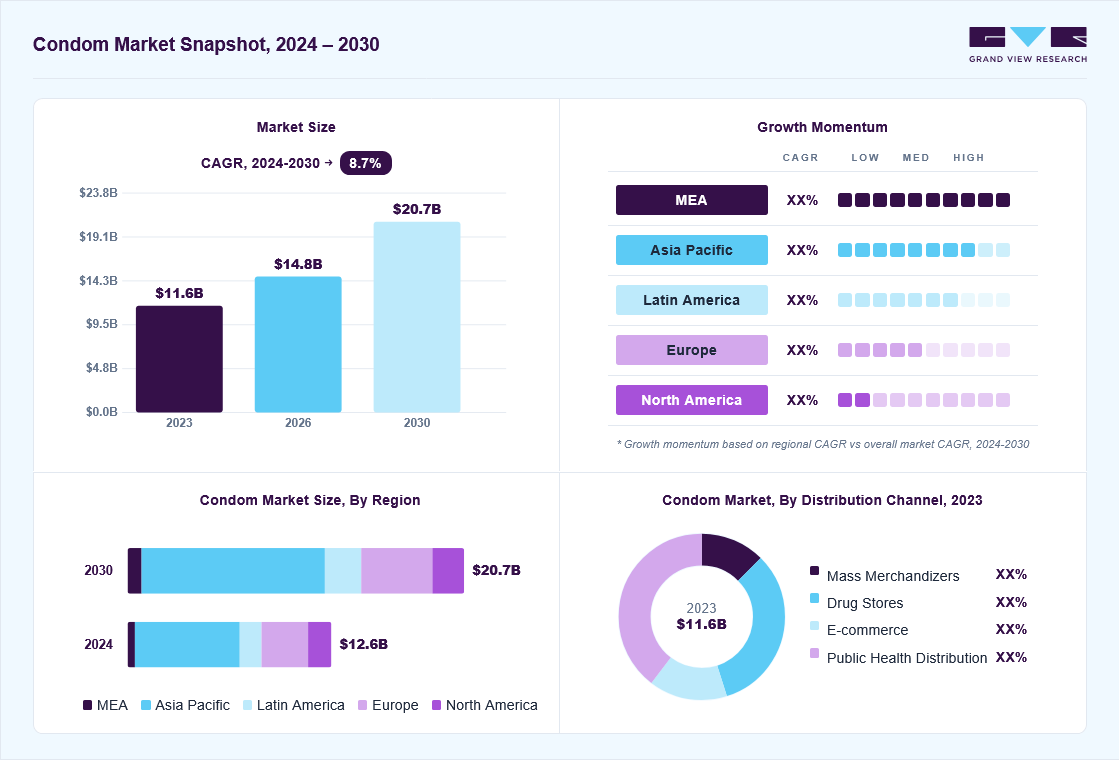
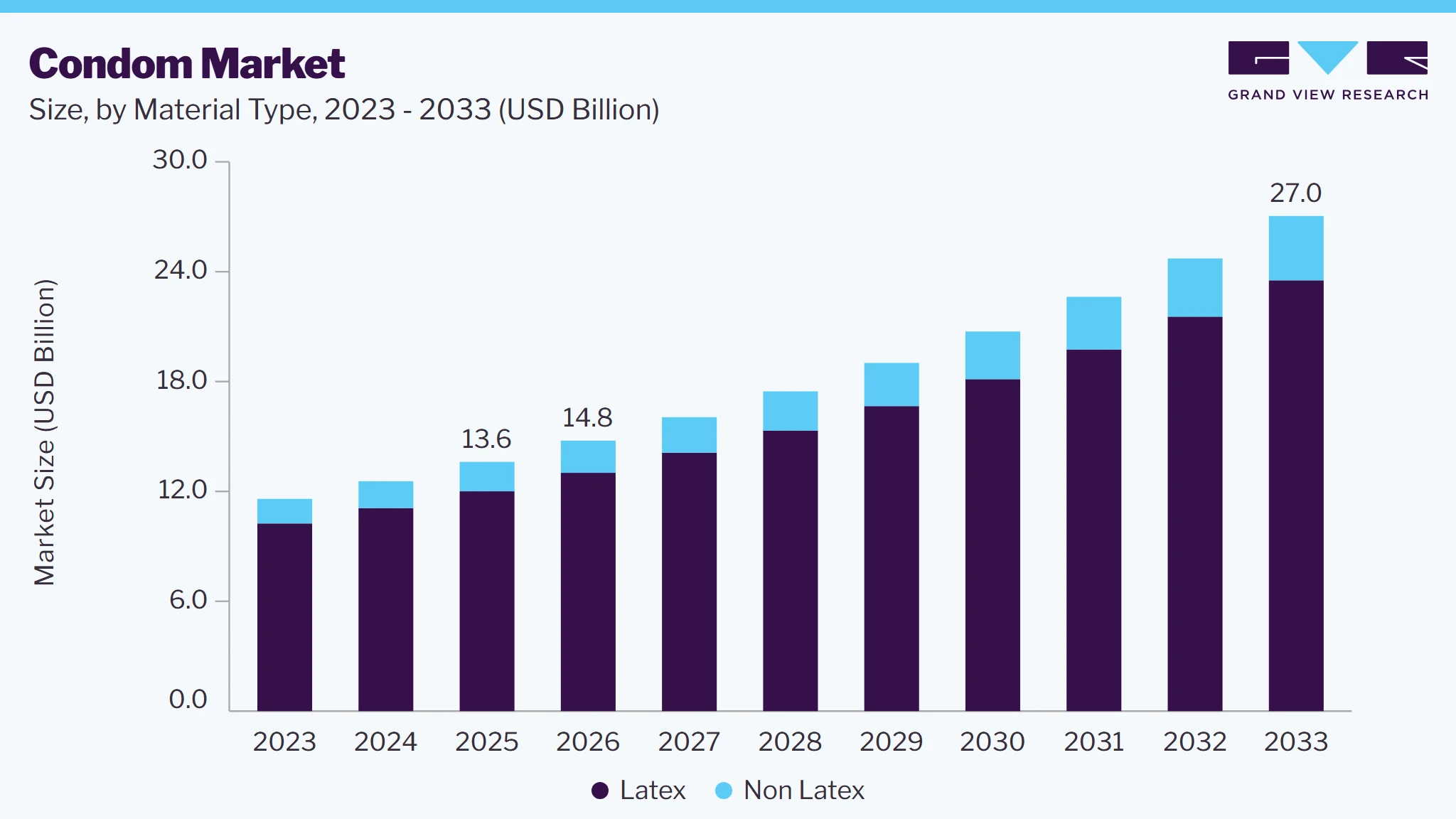
The global condom market size was valued at USD 13.6 billion in 2025 and is projected to grow from USD 14.8 billion in 2026 to USD 27.0 billion by 2033, at a CAGR of 9.0% from 2026 to 2033. Asia Pacific dominated the market, accounting for a revenue share of 51.9% in 2025.
 Source: Grand View Research, IR Documents, Primary Interviews, Paid DatabasesTo learn more about this report,
 Download Free Sample Report
 Key Market Trends & Insights
- By material type: Latex segment held the highest market share of 88.2% in 2025.
- By product: Male condoms segment held the highest market share of 98.6% in 2025.
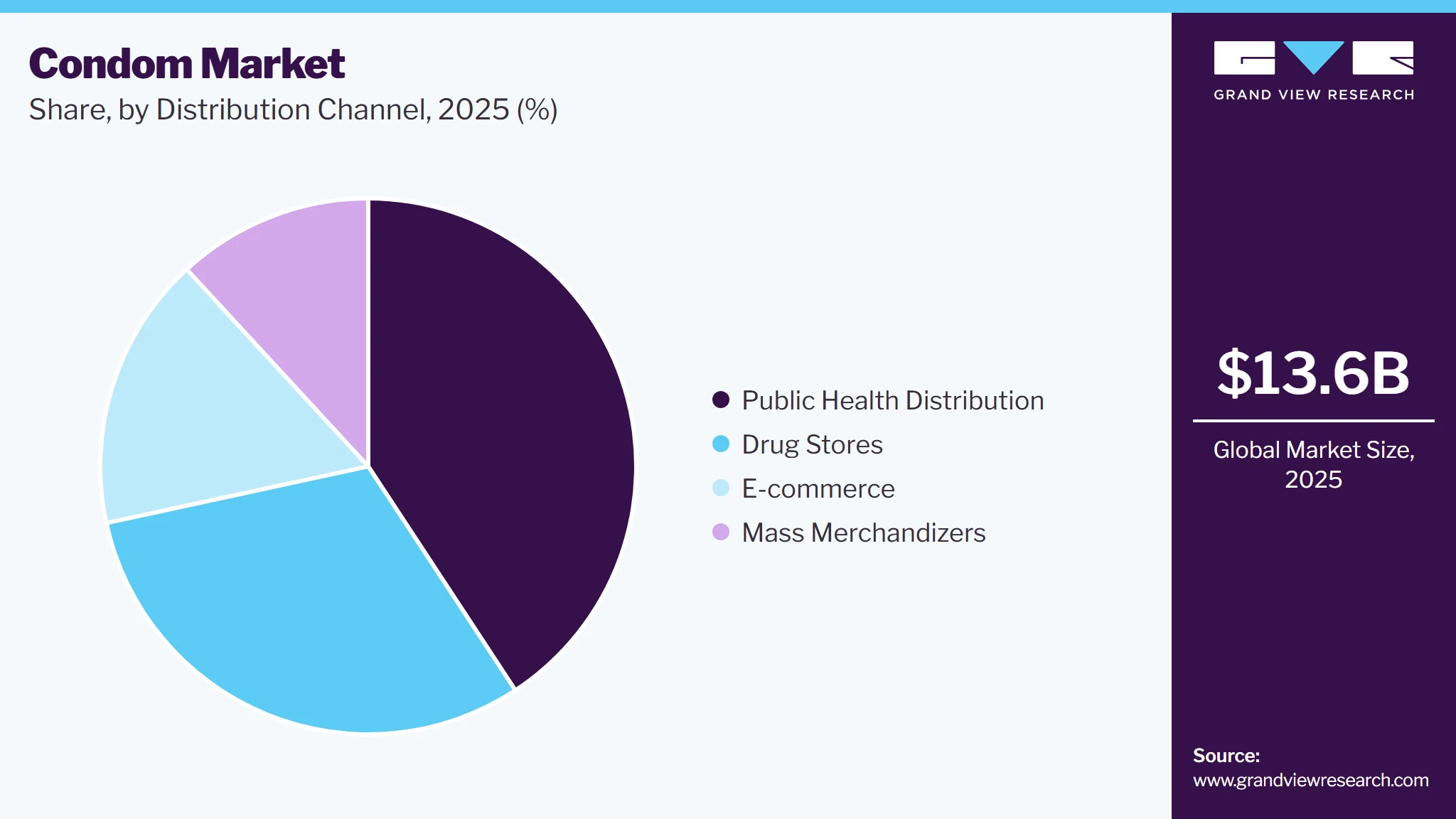
- By distribution channel: Public health distribution segment held the highest market share of 40.7% in 2025.
Regional Highlights
- Largest regional market: Asia Pacific (51.9% revenue share, 2025)
- Fastest-growing regional market: Middle East & Africa (highest CAGR, 2026-2033)
- By country: China held the largest market share in 2025.
Market Size & Forecast
- Market Size in 2025: USD 13.6 Billion
- Estimated Market Size in 2026: USD 14.8 Billion
- Projected Market Size by 2033: USD 27.0 Billion
- CAGR (2026-2033): 9.0%
Three ways to get this report
Buy it, customize it, or ask a question.Ask an Analyst
Analyst response in 1 business day
- AccessReport author, directly
- Reply timeWithin 1 working day
- No sales callDirect answer only
- FormatEmail reply
- CostFree, no cost
Get the Full Report
What the study covers
- FormatsPDF · Excel · Dashboard
- Timeline2026–2033 annual, 2025 base
- Coverage20+ countries, 5 regions
- Companies10+ key players profiled
Customize the Report
20% free customization
- IncludeCountries, segments, points
- TailorTo your product definition
- ExtendDeeper competitor detail
- OrA fully bespoke study
- Turnaround5–10 working days
 To learn more about this report, Download Free Sample Report
 Market Dynamics
The continued burden of HIV and sexually transmitted infections remains a key driver for condom demand globally. According to UNAIDS, 40.9 million people were living with HIV globally in 2025, while 1.2 million people newly acquired HIV during the same year. Women and girls accounted for 41% of new HIV acquisitions in 2025, highlighting the continued need for accessible prevention tools, including condoms.
STIs also remain a major public health concern. In July 2025, WHO released new STI guidance and policy implementation data to strengthen prevention, screening, diagnosis, and treatment, especially in high-burden and resource-limited settings. WHO also recommended targeted screening for gonorrhoea and chlamydia in high-prevalence settings, including among pregnant women, sexually active adolescents and young people aged 10-24, sex workers, and men who have sex with men.
Moreover, country-level surveillance data continues to highlight the importance of STI prevention. According to the CDC’s Sexually Transmitted Infections Surveillance, 2024 (Provisional), the combined number of reported chlamydia, gonorrhea, and syphilis cases in the U.S. declined by 9% from 2023, marking the third consecutive year of decline. However, the overall burden remains high, with more than 2.2 million reported STI cases in 2024. Compared with a decade ago, total reported cases were still 13% higher, while congenital syphilis cases were nearly 700% higher. Similarly, the UKHSA 2025 report for England continued to report STI diagnoses among key populations, including cases of gonorrhoea, chlamydia, and infectious syphilis among gay, bisexual, and other men who have sex with men.
Favorable government and public health initiatives continue to support condom access and use. UNAIDS’ 2025 HIV targets include the 95-95-95 treatment cascade, while the HIV Prevention 2025 Road Map also emphasizes combination prevention services, including condoms, for people at higher risk of HIV. WHO also states that condoms are safe, inexpensive, widely available, and effective in preventing HIV, most STIs, and unplanned pregnancy when used correctly and consistently. These initiatives continue to position condoms as an important public health product.
Free and subsidized condom distribution remains an important part of government-led prevention programs, especially for young people and high-risk groups. UNFPA continues to support access to quality-assured reproductive health products, including condoms, through procurement, supply chain support, and prequalification programs. In 2025, Sierra Leone launched its National Strategy for Condom Programming 2025-2029, aimed at ensuring uninterrupted access to male condoms, female condoms, and lubricants for key populations, young people, and the general public.
Regulatory requirements are considered major barriers in African countries for condom manufacturers in addition to the availability of free and subsidized condoms and lack of purchasing power of target customers. Technical regulations regarding brand registration, taxes & tariffs, condom testing, and trade policy represent the greatest challenges for market entry. Registration of each brand in each African country is required to be done separately, which is time consuming and costly process. Thus, the majority of condom manufacturers avoid entering the market in these countries.
Moreover, regulatory oversight and lack of strong distribution channels may limit the distribution of free and subsidized condoms in these countries. This can lead to stock-out in countries that have a significant gap in demand and supply of condoms. In many of these countries, free and subsidized condoms have a strong presence in the market; however, insufficient government funding and uneven procurement batches of these brand raises the question of sustainability of these programs. Furthermore, commercial brands are largely sold by regional importers and local partners. Due to the financial instability of these importers as well as macroeconomic challenges, import of commercial brands is impacted, which leads to fluctuations in condom prices. These factors minimize access and affordability of brands to target customers, limiting the overall use of condoms.
The condom market is expected to see new opportunities arising from the integration of technological advancements, including the introduction of smart condoms, as well as the development of eco-friendly and sustainable condom options. These innovations could lead to a shift in consumer preferences and behaviors, resulting in future growth of the market. The i.Con Smart Condom, marketed as the “world's first smart condom,” is actually a ring that fits over a traditional condom and tracks various metrics related to sexual activity. This device measures parameters like thrust speed, calories burned, duration of the session, & span and even compares performance through an app.
Technological advancements in condom design, such as the use of hydrogels and origami-style condoms, are aimed at enhancing pleasure, comfort, & effectiveness. The development of next-generation condoms is aimed at preserving or enhancing pleasure to promote regular use and improve global health outcomes related to unplanned pregnancies & prevention of Sexually Transmitted Diseases (STDs). These advancements reflect a growing interest in leveraging technology to enhance sexual health products, offering users new ways to monitor and engage with their sexual experiences.
Average Regional Pricing Analysis of Different Variants of Condoms
Latex Vs Non-Latex
Prices of condoms vary depending on their material type & brand. Latex and non-latex condoms are the types of condoms considered for the pricing analysis. The significant availability of these products on e-commerce platforms also adds to the change in prices. This is due to the market comprising products from local brands with limited features and top brands offering advanced & innovative features. The drug stores offer a more in-person experience to the customers. The shift of customers from physical retail shops to online shopping has affected the sales of drug stores. However, some drug stores are entering the online business to compete with the existing e-commerce players.
TABLE 1 Average per unit selling price of condom, by region, by material type
Region
Latex Condom (USD)
Non-Latex Condom (USD)
North America
1.16
1.54
Europe
1.23
1.71
Source: Company Website, E-commerce Website, Product Brochures
Luxury Condom Vs Regular Condom
Luxury condoms are priced higher than regular condoms due to their premium features, such as unique designs, added texture, and high-quality materials. The high-end branding and marketing of luxury condoms also contribute to the higher cost. On the other hand, regular condoms are priced lower due to their basic design and standard materials. They are more widely available and are generally considered a more affordable option for most consumers. Luxury condoms offer additional features that can enhance pleasure and provide a more enjoyable experience, which can justify the higher price point for some consumers.
TABLE 2 Average per unit selling price of condom, by region, by type
Region
Luxury Condom (USD)
Regular Condom (USD)
North America
4.49
1.35
Europe
5.90
1.47
Source: Company Website, E-commerce Website, Product Brochures
Market Concentration & Characteristics
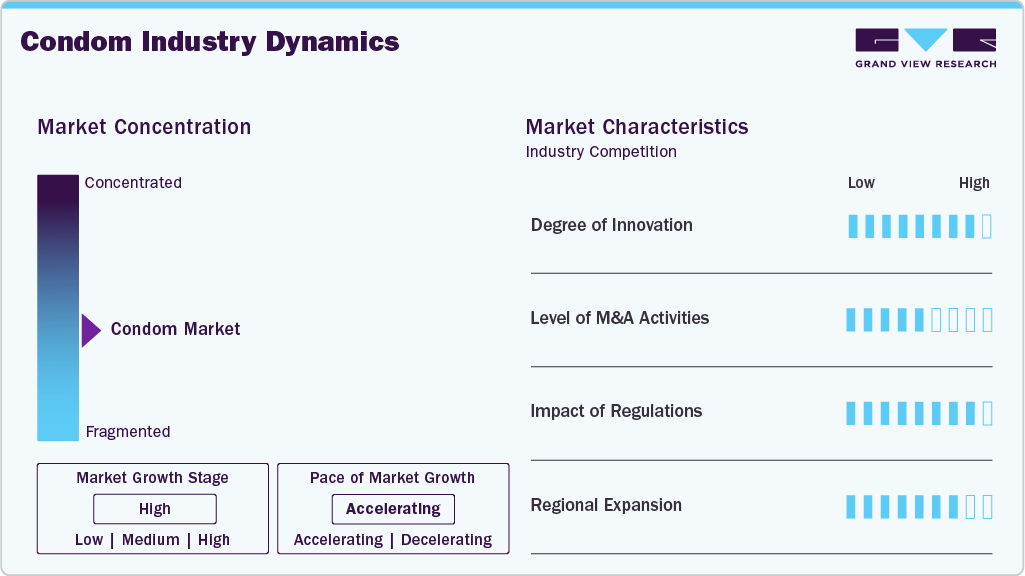
The chart below illustrates the relationship between market concentration, characteristics, and participants. The x-axis represents the level of market concentration, ranging from low to high. The y-axis represents various market characteristics, including industry competition, degree of innovation, level of M&A activities, impact of regulations, and geographic expansion. For instance, the condom market is highly competitive with the presence of well-established global brands, such as Durex and Trojan. The degree of innovation is medium, and the level of M&A activities is low. The impact of regulations is medium, and the geographic expansion of the market is high. However, product expansion is high as many local companies in various countries are trying to gain market share with the launch of innovative products, packaging, and promotion to cater to the demand of local customers.
The continuous innovation, and improvements in product materials and designs have led to enhanced product quality, comfort, and effectiveness. The market is expected to see new opportunities arising from the integration of technological advancements, including the introduction of smart condoms, as well as the development of eco-friendly and sustainable condom options. For instance, in October 2025, Church & Dwight Co., Inc. launched Trojan G.O.A.T. (Greatest of All Trojan), a premium non-latex condom engineered with patent-pending UltraFlex material that is odorless, colorless, and designed for superior body heat transfer and enhanced flexibility.
 To learn more about this report, Download Free Sample Report
 Several companies in the market are currently involved in merger and acquisition activities. These companies want to expand their reach and explore new territories through M&A deals.
Condoms are highly regulated in the U.S. and are classified as Class II medical devices by the U.S. FDA. These Class II medical devices have to comply with specific performance and labeling standards. As per the FDA standards, 996 out of 1,000 condoms should pass the water leak test to receive FDA approval, which accounts for at least a 99.6% efficacy rate in laboratory tests. Latex condom manufacturing and testing are governed by FDA regulations with stringent standards.
Companies are focusing on developing novel product designs to attract consumers, such as condoms with innovative flavors, textures, and lubricants. For example, flavored products designed for oral sex aim to enhance the user experience and increase demand.
The condom industry is growing globally due to its potential to improve accessibility, cost-effectiveness, and outcomes. This growth is fueled by established industry leaders expanding into emerging marketplace and indigenous startups experiencing growth. Companies are expanding by launching facilities or plants in new geographies merging with or acquiring companies based in different locations. For instance, in June 2026, Reckitt Durex launched Durex 001 in Singapore, its thinnest condom ever at 0.01 mm (about one-third the thickness of a human hair), made from medical-grade, latex-free polyurethane.
Analyst Perspective
The condom market is evolving beyond conventional contraception into a broader sexual wellness category. This shift is driven by rising awareness of STI prevention, family planning, and demand for premium, personalized products. Innovation in ultra-thin, latex-free, textured, and sustainable condoms is reshaping product offerings. Expanding e-commerce channels and discreet home delivery are changing consumer purchasing behavior. Public health initiatives promoting safe sex remain key market drivers. Government-supported contraceptive distribution programs further boost expansion, especially in developing economies. Competition is shifting from price-based rivalry to differentiation through product and material innovation. Established manufacturers rely on global brands, large-scale production, and institutional procurement contracts. Specialized players focus on premiumization, customization, and digital-first engagement strategies. Vendors combining regulatory compliance, quality manufacturing, sustainability, and strong omnichannel distribution will strengthen their competitive position.
Material Type Insights
The latex condoms held the largest share of 88.2% of in 2025. Latex condoms are 82%-98% effective; therefore, most of the brands available in the market are made with latex, a form of natural rubber. It is more durable, flexible, and provides effective contraception and protection against Sexually Transmitted Diseases (STDs). Moreover, according to the CDC, latex condoms’ popularity is driven by their effectiveness in reducing the risk of STDs and Human Immunodeficiency Virus (HIV) transmission when consistently and correctly used. Latex condoms are crucial in the fight against STDs, including HIV, making them a key tool in disease prevention efforts, thereby further contributing to segment growth.
Non-latex segment is expected to witness lucrative growth during the forecast period. This can be attributed to various advantages, such as its thinness, lack of odor, and its nonallergenic nature over latex. The demand for non-latex condoms surged due to the growing need for latex alternatives and the increasing number of allergy cases reported for latex condoms. Latex contains proteins that result in allergic symptoms, such as swelling, itchiness, sneezing, and breathlessness. According to the Allergy & Asthma article, around 1% to 6% of the global population has a latex allergy.
Moreover, non-latex condoms conduct heat well, and oil exposure does not damage them, making them a great option, especially for latex allergy, which is expected to boost their demand.
Some of the top brands that provide non-latex condoms include:
-
SKYN Elite non-latex condoms, recommended for their quality and effectiveness.
-
Trojan Supra BareSkin non-latex condoms, known for their reliability and performance.
-
Durex Real Feel Avanti Bare Polyisoprene non-latex condoms, offering a latex-free option for protection.
-
Okamoto Zero One 001, one of the popular choice for non-latex condoms.
-
Sagami Original 0.01, known for its ultra-thin design and reliability.
Product Insights
The male condom segment dominated the market with revenue share 98.6% of in 2025. Male condoms are a commonly used method of contraception. According to WHO study published in February 2025, an estimated 374 million new cases of the four majors curable STIs syphilis, chlamydia, gonorrhea, and trichomoniasis were reported among adults aged 15-49, many of which could have been prevented through consistent and correct condom use.
The female condom segment is estimated to witness the fastest growth rate during the forecast period. Increasing awareness among women and government policies promoting the use of female condoms are expected to drive segment growth. Furthermore, numerous companies have developed female condoms in recent years. However, most have failed to receive FDA approval. WHO has set a stringent prequalification procedure for female condoms, which has been cleared by very few companies, leaving a huge scope for companies in this market.
Top Brands for Female Condoms
Brand
Description
FC2 Condom
An internal condom manufactured by Veru Inc. developed from Nitrile Butadiene Rubber (NBR).
Trojan Supra Non-Latex Bareskin Condoms
Trojan Supra is recognized as a top brand for female condoms, offering non-latex options for reliable protection.
Ormelle, VA W.O.W, Pasante:
These brands offer female condoms that are designed from a woman’s perspective, providing hormone-free protection.
Original Condoms, Bareskin Premium Latex Condoms
These brands are highlighted as top picks for female condoms, offering comfortable and worry-free protection.
TROJAN ENZ Classic Reservoir End
Trojan is known for its classic reservoir end condoms, which are recommended as the best overall condom choice.
SKYN Elite
SKYN is recognized for its non-latex condoms like SKYN Elite, offering an alternative for those with latex allergies
LifeStyles Skyn
LifeStyles Skyn is considered as the best average-fit condom, providing a comfortable and reliable option for women
Okamoto 004
Okamoto’s 004 condoms are recommended for their quality and fit, making them a top choice for female condom users.
Distribution Channel Insights
The public health distribution segment dominated the market with largest revenue share of 40.7% in 2025. Condom distribution plays a crucial role in public health, particularly in preventing HIV, STIs, and unplanned pregnancies. Organizations such as CDC and WHO emphasize the effectiveness of condom distribution programs as a cost-effective structural intervention. Moreover, community-based condom distribution interventions have been highlighted for their effectiveness in preventing HIV transmission. Overall, these initiatives are vital components of public health strategies aimed at promoting safe sexual practices and reducing the spread of infections.
 To learn more about this report, Download Free Sample Report
 Moreover, the e-commerce segment is expected to have the fastest growth rate during the forecast period. The preference for online purchases has surged due to the easy availability and to save time & energy. Thus, the key players in the condom marker are collaborating with leading e-commerce industries due to the growing preference for online purchases. For instance, in March 2024, Snapdeal, India’s largest value-focused e-commerce marketplace, reported a 30% increase in condom sales in 2023, primarily fueled by rising demand from non-metro areas. This surge in sales is notably driven by customers in smaller cities purchasing condoms online, as stated by Snapdeal’s recent data analysis. Popular condom brands on Snapdeal include Kohinoor, Kamasutra, Durex, Skore, and Manforce.
MEA Condom Market: Distribution Channel Insights
The social marketing segment held the largest share of 37.1% in 2025. The social marketing sector is a major driver of the Middle East and Africa (MEA) condom market, supported by government health agencies, international donors, and non-governmental organizations (NGOs) working to improve access to affordable condoms and promote safer sexual practices. Public awareness campaigns, free or subsidized condom distribution through healthcare facilities, schools, and community outreach programs, and initiatives targeting high-risk populations have significantly increased condom adoption.
Social marketing condom brands include Trust, Maximum, Protector Plus, and Gold Circle, which are sold at low prices and available in pharmacies, retail stores, & local supermarkets. Some of the brands are also sold through online channels. Moreover, increasing promotion of social marketing brands on various platforms is expected to drive the growth of the private distribution sector in MEA condom market.
The public sector segment is expected to grow significantly from 2026 to 2033. In Africa countries, condoms are distributed free of cost by the public sector. Governments allocated budgets and funding from global healthcare bodies such as UNFPA help increase access to condoms in rural & high-risk areas. Each country has a special brand under which free condoms are distributed. For instance, the Kenyan government distributes condoms of Sure brand under its HIV prevention and control initiatives. Moreover, improvements in supply chain and scale-up of condom distribution with additional funding are important to manage free distribution and sustainable growth of the public sector in the condom market.
Regional Insights
Asia Pacific dominated the global condom market with a share of 51.9% in 2025. Asia Pacific has the highest number of cases of HIV, second in place after East and Southern Africa. Manufacturers contributing a significant volume of products to the global market are present in countries such as Japan and Malaysia (Karex). Moreover, China is a major manufacturer of condoms in the region. Launch of products, entry of foreign manufacturers, and increasing awareness regarding the use of condoms are among the factors contributing to the market growth in the region. Leading companies in the APAC condom market include Reckitt Benckiser Group Plc and Ansell Ltd.
 To learn more about this report, Download Free Sample Report
 China Condom Market Trends
China condom market held the largest share in 2025. Chinese consumers are more aware of sexual health and are adopting safe & effective brands, which is encouraging manufacturers to adopt strategies for increasing their market presence. The brands available in the country are Jissbon, Okamoto, OneTouch, and Durex, among others. Moreover, in recent years, premium condom brands such as Durex and Okamoto have gained popularity in China due to consumer preference for ultra-thin, comfortable, and technologically advanced products.
India condom market is expected to witness growth in the near future. India has potential for growth, as 50% of its population is below 24 years of age and 65% is below 35 years. Moreover, there is a significant prevalence of HIV infection & other STDs, unsafe abortions, unplanned pregnancies, and a rise in the prevalence of STIs. India’s continued focus on HIV/AIDS prevention and reproductive health programs is creating a favorable environment for condom adoption.
North America Condom Market Trends
North America condom market held a significant market share in 2025. The demand for condoms in North America is primarily driven by increasing awareness of sexual health, the rising prevalence of sexually transmitted infections (STIs), and the growing emphasis on preventing unintended pregnancies. Public health campaigns by government agencies, educational institutions, and healthcare organizations have promoted safer sexual practices, encouraging consistent condom use among sexually active individuals.
U.S. Condom Marketheld the largest share in 2025.The continued burden of HIV in the U.S. is a key factor driving demand for condoms as an effective and accessible method of HIV and STI prevention. According to CDC report published in May 2026 more than 1.2 million people are living with HIV and nearly 39,000 new HIV diagnoses in 2024, public health agencies continue to emphasize prevention alongside testing and treatment. Thus, sustained investments in HIV prevention and sexual health education continue to support stable demand for condoms across the U.S. market by reinforcing their role as a cost-effective, non-prescription barrier against HIV transmission and other sexually transmitted infections.
Europe Condom Market Trends
The Europe condom market is expected to grow significantly during the forecast period. The rising prevalence of HIV/AIDS & STD, growing presence of the LGBTQ community, increasing use of contraceptive measures against unplanned pregnancies, and rising awareness among the young population about sexual health have increased the adoption of condoms in European countries. In November 2025, the European Centre for Disease Prevention and Control (ECDC) reported 105,922 HIV diagnoses across 49 countries in the WHO European Region during 2024, while 11 countries recorded an increase in cases compared with 2023, highlighting the continued need for strengthened HIV prevention strategies.
Germany condom market held the largest share in 2025. The increasing focus on sexual health awareness and the prevention of sexually transmitted infections is supporting the adoption of condoms in Germany. For instance, in January 2026, the German Federal Ministry of Health reaffirmed its BIS 2030 Strategy to reduce the burden of HIV, hepatitis B and C, and other sexually transmitted infections by strengthening integrated prevention, testing, treatment, and awareness programs across the country.
Norway condom market is expected to witness the fastest CAGR over the forecast period. The increasing emphasis on improving access to condoms and promoting safer sexual practices is expected to drive the growth of the Norway condom market. The Norwegian government continues to expand free condom distribution programs to reduce the transmission of HIV and other sexually transmitted infections (STIs), particularly among adolescents and high-risk populations.
Latin America Condom Market Trends
The Latin America condom market is expected to grow significantly during the forecast period. Countries in Latin America have committed to condom programming, ensuring easy access to condoms and their consistent use by sexually active individuals. PAHO has established targets for 90% condom use at the last sexual encounter among key populations, including gay men and other men who have sex with men (MSM), transgender women, and female sex workers.
MEA Condom Market Trends
The MEA condom market is expected to have the fastest growth rate during the forecast period. The Middle East & Africa (MEA) market is largely impacted by a lack of awareness regarding HIV transmission through unprotected sex, inadequate promotion of condoms, and limited distribution in the majority of the countries in this region. The demand for condoms from sex workers and the LGBTQ community is increasing, with rising awareness regarding STIs and HIV transmission.
Nigeria condom market is anticipated to witness high growth during the forecast period. According to the 2025 UNAIDS Global AIDS Update, Nigeria continues to have the largest HIV epidemic in West and Central Africa. Although condom awareness and use among key populations have improved over the years, inconsistent condom use remains common among adolescents, young adults, and individuals with multiple or casual sexual partners. Young men continue to report lower condom use than young women, who are more likely to use condoms to prevent unintended pregnancies.
Key Condom Company Insights
The market is highly competitive, with the presence of multiple major players. The market is witnessing the presence of numerous country-level players, alongside the introduction of smaller competitors poised to gain a substantial market share. This trend is reflective of the competitive landscape in industry.
Key Condom Companies:
The following key companies have been profiled for this study on the condom market:
-
FUJILATEX CO.,LTD
-
Reckitt
-
Church & Dwight Co., Inc.
-
Karex Berhad
-
LELO iAB
-
Lifestyles
-
Okamoto Industries, Inc
-
MAYER LABORATORIES, INC.
-
Cupid Limited
-
RITEX GMBH
-
Pasante Healthcare Ltd. (a subsidiary of Karex Berhad)
-
CPR GmbH
-
Mankind Pharma
-
Sagami Rubber Industries Co., Ltd.
-
rrtMedcon
Competitive Benchmarking
Category
Operating Strategies
Competitive Edge
Weakness
Established Players (Reckitt, Karex Berhad, Church & Dwight Co., Inc., Okamoto Industries, Inc., Sagami Rubber Industries Co., Ltd., FUJILATEX CO., LTD.)
Expand condom portfolios through continuous product innovation, premium product launches, strategic partnerships with retailers, pharmacies, e-commerce platforms, and public health organizations. Invest in ultra-thin condoms, non-latex materials, textured variants, flavored products, sustainable manufacturing, and digital marketing campaigns to strengthen brand positioning and increase consumer adoption across developed and emerging markets.
Strong global brand recognition, extensive distribution networks, diversified product portfolios, and established consumer trust in sexual wellness products. Large-scale manufacturing capabilities, strong R&D investments, regulatory expertise, and long-standing relationships with retailers, pharmacies, NGOs, and government procurement agencies support broad market penetration and consistent product availability.
High marketing and regulatory compliance costs, along with intense pricing competition, may pressure profitability in mature markets. Premium product pricing and dependence on brand positioning may limit penetration in price-sensitive markets where low-cost local manufacturers compete aggressively.
Emerging & Specialized Players (LELO iAB, Lifestyles, Mayer Laboratories, Inc., Cupid Limited, Pasante Healthcare Ltd., RITEX GmbH, CPR GmbH, Mankind Pharma, rrtMedcon)
Focus on premium, specialty, and value-based condom offerings targeting specific consumer segments through product differentiation, e-commerce expansion, private-label manufacturing, and regional market penetration. Invest in ultra-thin technologies, latex-free materials, customized sizing, wellness-focused branding, and direct-to-consumer (DTC) sales channels to enhance customer engagement and expand market presence.
Greater agility in introducing niche products, innovative materials, and consumer-centric designs tailored to evolving preferences. Ability to rapidly respond to changing market trends through flexible manufacturing, targeted branding, competitive pricing, and strong online retail strategies enables expansion within specialized sexual wellness segments.
Limited global brand recognition, smaller manufacturing capacity, and lower marketing budgets compared with multinational competitors. Narrower distribution networks, dependence on regional markets or contract manufacturing, and limited bargaining power with large retail chains may restrict international expansion and market share growth.
Recent Developments
-
In March 2026, Cupid commenced development of nitrile (NBR) female condoms, targeting the premium nitrile segment currently served by a single global supplier.
-
In April 2026, LifeStyles Healthcare launched Skyn Supreme Feel, a polyisoprene (non‑latex) condom in Australia.
-
In February 2025, Cupid Limited received orders for female condoms from Brazil, South Africa, and Angola.
Condom Market Report Scope
Report Attribute
Details
Market size in 2025
USD 13.6 billion
Estimated market size in 2026
USD 14.8 billion
Projected market size in 2033
USD 27.0 billion
Growth rate
CAGR of 9.0% from 2026 to 2033
Actual data
2021 - 2024
Forecast period
2026 - 2033
Quantitative units
Revenue in USD million, volume in ‘000, and CAGR from 2026 to 2033
Report coverage
Revenue and volume forecast, company ranking, competitive landscape, growth factors, and trends
Segments covered
Material type, product, distribution channel, distribution channel, and region
Regional scope
North America; Europe; Asia Pacific; Latin America; MEA
Country scope
U.S.; Canada; Mexico; Germany; UK; France; Italy; Spain; Norway; Denmark; Sweden; Netherlands; Switzerland; Portugal; China; Japan; India; South Korea; Australia; Thailand; Brazil; Argentina; South Africa; Nigeria; Saudi Arabia; UAE; Kenya; Zambia; Zimbabwe; Uganda; Egypt; Turkey; Kuwait; Ghana
Key companies profiled
FUJILATEX CO.,LTD; Reckitt; Church & Dwight Co., Inc.; Karex Berhad; LELO iAB; Lifestyles; Okamoto Industries, Inc; MAYER LABORATORIES, INC.; Cupid Limited; RITEX GMBH; Pasante Healthcare Ltd. (a subsidiary of Karex Berhad); CPR GmbH; Mankind Pharma; Sagami Rubber Industries Co., Ltd.; rrtMedcon.
Customization scope
Free report customization (equivalent up to 8 analysts working days) with purchase. Addition or alteration to country, regional & segment scope.
Pricing and purchase options
Avail customized purchase options to meet your exact research needs. Explore purchase options
Global Condom Market Report Segmentation
This report forecasts revenue growth at global, regional, and country levels and provides an analysis of the latest industry trends in each of the sub-segments from 2021 to 2033. For this study, Grand View Research has segmented the global condom market report based on material type, product, distribution channel, MEA condom market by distribution channel, and region:
-
Material Type Outlook (Revenue, USD Million, 2021 - 2033)
-
Latex Condoms
-
Non-latex Condoms
-
Polyurethane and Polyisoprene
-
Lambskin
-
Nitrile Butadiene Rubber (NBR)
-
-
-
Product Outlook (Revenue, USD Million, 2021 - 2033)
-
Male Condoms
-
Female Condoms
-
-
Distribution Channel Outlook (Revenue, USD Million, 2021 - 2033)
-
Public Health Distribution
-
Drug Stores
-
E-commerce
-
Mass Merchandizers
-
-
MEA Condom Market by Distribution Channel (Revenue, USD Million, 2021 - 2033)
-
Public Sector
-
Social Marketing
-
Commercial Sector
-
-
Regional Outlook (Revenue, USD Million, 2021 - 2033)
-
North America
-
U.S.
-
Canada
-
Mexico
-
-
Europe
-
UK
-
Germany
-
France
-
Italy
-
Spain
-
Sweden
-
Denmark
-
Norway
-
Netherlands
-
Switzerland
-
Portugal
-
-
Asia Pacific
-
Japan
-
China
-
India
-
Australia
-
Thailand
-
South Korea
-
-
Latin America
-
Brazil
-
Argentina
-
-
MEA
-
South Africa
-
Saudi Arabia
-
UAE
-
Kuwait
-
Nigeria
-
Kenya
-
Zambia
-
Zimbabwe
-
Uganda
-
Egypt
-
Turkey
-
Ghana
-
-
Research Methodology
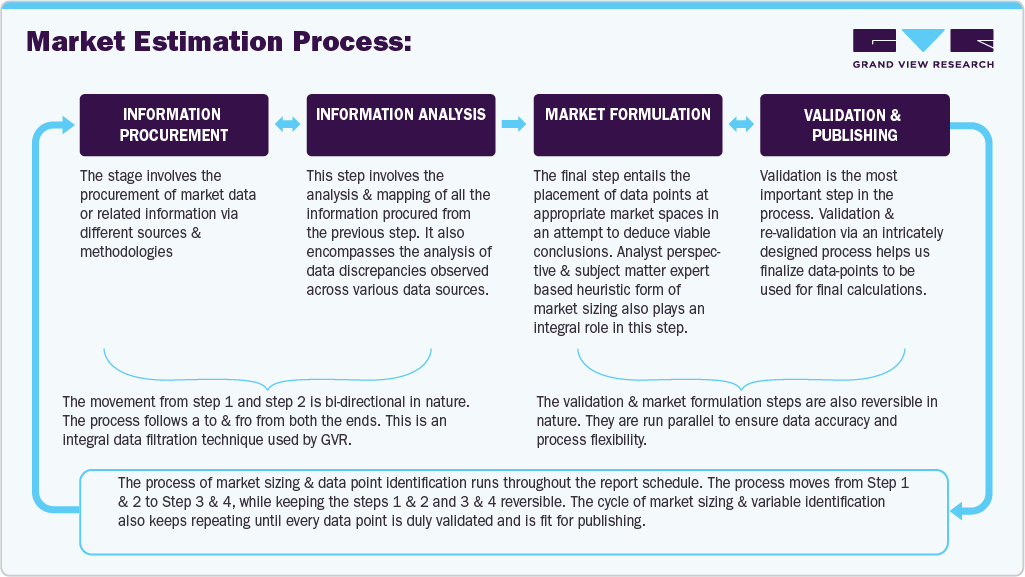
The condom market figures in this report are based on a proven research process that combines executive interviews with secondary research from proprietary databases, company filings, and recognized regulatory and institutional sources. Market size is built through value-chain sizing-reconciling supply-side and demand-side estimates-and triangulated with bottom-up and top-down approaches. Every estimate passes multiple levels of expert validation before publication, with each condom segment quantified using the revenue-capture definitions in the table below.
Segment Definition
Segment - Material Type
Revenue capture definition
Latex Condoms
Condoms manufactured from natural rubber latex, offering high elasticity, durability, and effective protection against sexually transmitted infections (STIs) and unintended pregnancies. Latex condoms are the most widely used type due to their affordability, broad availability, and compatibility with water-based and silicone-based lubricants.
Non-latex Condoms
Condoms manufactured from alternative materials for individuals with latex allergies or sensitivities. These condoms provide comparable contraceptive protection while offering different material properties such as improved heat transfer or hypoallergenic characteristics.
Polyurethane
Non-latex condoms made from thin, durable polyurethane plastic. They provide effective protection against pregnancy and STIs, conduct heat efficiently for enhanced sensitivity, and are compatible with both oil-based and water-based lubricants.
Polyisoprene
Condoms made from synthetic polyisoprene rubber that closely resembles natural latex but does not contain latex proteins responsible for allergic reactions. These condoms offer high elasticity, comfort, and reliable protection while remaining suitable for individuals with latex allergies.
Lambskin
Natural membrane condoms manufactured from lamb cecum (intestinal membrane). These condoms effectively prevent pregnancy but do not provide reliable protection against sexually transmitted infections because the natural membrane contains microscopic pores that may permit pathogen transmission.
Nitrile Butadiene Rubber (NBR)
Condoms manufactured from synthetic nitrile butadiene rubber, primarily used in female condoms. NBR offers excellent strength, puncture resistance, flexibility, and hypoallergenic properties while providing protection against pregnancy and sexually transmitted infections.
Segment - Product
Revenue capture definition
Male Condoms
Barrier contraceptive devices worn over the penis during sexual intercourse to prevent sperm from entering the partner's reproductive tract. Male condoms are available in various materials, sizes, textures, thicknesses, and lubricated or non-lubricated variants, providing protection against unintended pregnancies and sexually transmitted infections.
Female Condoms
Internal barrier contraceptive devices inserted into the vagina before sexual intercourse. Female condoms create a protective barrier that helps prevent pregnancy and reduces the risk of sexually transmitted infections while offering women greater control over contraceptive protection.
Segment - Distribution Channel
Revenue capture definition
Public Health Distribution
Distribution of condoms through government healthcare programs, public health agencies, non-governmental organizations (NGOs), sexual health clinics, family planning programs, and community outreach initiatives aimed at improving contraceptive access and preventing sexually transmitted infections.
Drug Stores
Retail pharmacies, independent drug stores, and pharmacy chains that sell condoms directly to consumers through prescription-free, over-the-counter channels, often alongside other personal healthcare and wellness products.
E-commerce
Online retail platforms, manufacturer websites, digital pharmacies, and e-commerce marketplaces that enable consumers to purchase condoms conveniently with greater product variety, privacy, subscription options, and home delivery services.
Mass Merchandizers
Large retail outlets such as supermarkets, hypermarkets, convenience stores, department stores, warehouse clubs, and general merchandise retailers that offer condoms as part of their consumer healthcare and personal care product portfolios.
Segment - MEA Condom Market Distribution Channel
Revenue capture definition
Public Sector
Government-funded healthcare systems, ministries of health, public hospitals, primary healthcare centers, and international donor-supported programs that procure and distribute condoms free of charge or at subsidized prices to support family planning and HIV/STI prevention initiatives.
Social Marketing
Distribution of subsidized condoms through nonprofit organizations, international health agencies, NGOs, and social marketing programs that combine affordable pricing with public awareness campaigns to encourage safe sexual practices and increase contraceptive accessibility among underserved populations.
Commercial Sector
Private-sector sales through pharmacies, supermarkets, convenience stores, online retailers, wholesalers, distributors, and specialty stores offering branded and premium condom products directly to consumers at market prices.
Estimation Model
 To learn more about this report, Download Free Sample Report
 Market-specific Research Models:
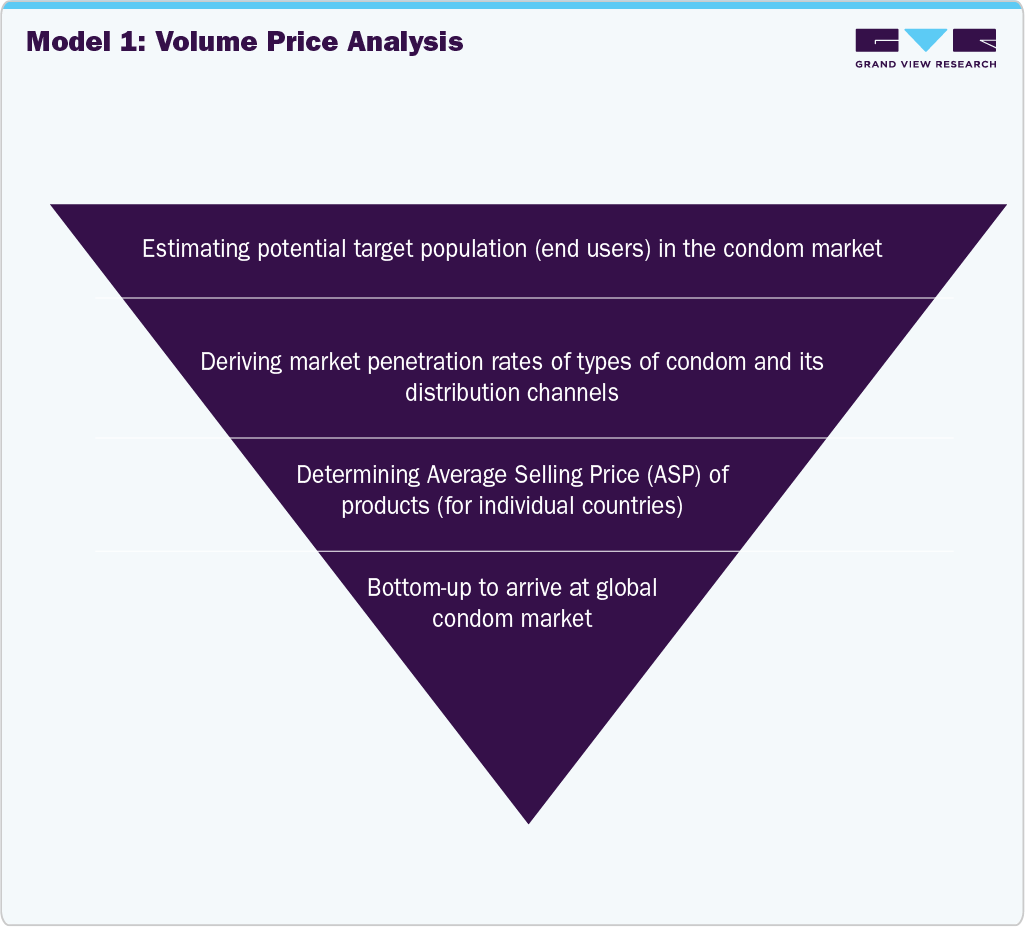
Our methodology included:
Model 1: Volume Price Analysis.
Model 2: Country-level Multivariate Analysis Assumptions
Model 3: Segment-level Multivariate Analysis Assumptions
Model 4: Condom Market CAGR Calculations
 To learn more about this report, Download Free Sample Report
 Delivered Customizations
This report has been delivered with the following In-depth customizations
Client Request
Customization Delivered
Value Adds
Condom Market Adoption & Consumer Sexual Wellness Analysis
Developed a tailored analysis of the global condom market focused on male condoms, female condoms, latex and non-latex condoms, premium condoms, textured condoms, flavored variants, ultra-thin products, and sustainable condom offerings. The study assessed adoption trends across retail pharmacies, supermarkets and hypermarkets, convenience stores, e-commerce platforms, family planning programs, and healthcare institutions while evaluating increasing awareness of sexual health, rising prevalence of sexually transmitted infections (STIs), government-led family planning initiatives, and growing acceptance of sexual wellness products driving market growth.
Identify ESG hotspots and improvement areas across the polyester staple fiber value chain. Enables stakeholders to understand evolving sexual wellness trends, identify high-growth product categories, assess consumer demand opportunities, and evaluate the impact of public health initiatives, product innovation, and changing consumer preferences on long-term market expansion.
Product Innovation, Consumer Preferences & Distribution Channel Assessment
Delivered a customized evaluation of condom market dynamics across contraception, STI prevention, family planning, and sexual wellness applications. The analysis assessed advancements in ultra-thin materials, non-latex formulations, polyisoprene and polyurethane condoms, ergonomic designs, enhanced lubrication technologies, textured and specialty products, eco-friendly manufacturing, and digital-first marketing strategies. Additionally, it evaluated consumer purchasing behavior, premium product adoption, e-commerce expansion, and innovations introduced by leading companies including FUJILATEX Co., Ltd., Reckitt, Church & Dwight Co., Karex Berhad, LELO iAB, Lifestyles, Okamoto Industries, Mayer Laboratories, Cupid Limited, RITEX GmbH, Pasante Healthcare (Karex Berhad), CPR GmbH, Mankind Pharma, Sagami Rubber Industries, and rrtMedcon.
Provides actionable insights into commercially attractive product segments, emerging material technologies, evolving consumer purchasing patterns, and growth opportunities associated with premiumization, online retail expansion, sustainable product development, enhanced user experience, and broader sexual wellness adoption.
Manufacturing, Regulatory Environment & Competitive Landscape Assessment
Conducted a focused assessment of the global condom market ecosystem, including raw material sourcing, manufacturing technologies, quality assurance, regulatory compliance, distribution networks, public procurement programs, branding strategies, and competitive positioning. The analysis evaluated market access barriers, pricing dynamics, product certification requirements, sustainability initiatives, supply chain resilience, technology adoption trends, and competitive differentiation strategies among leading manufacturers including FUJILATEX Co., Ltd., Reckitt, Church & Dwight Co., Karex Berhad, LELO iAB, Lifestyles, Okamoto Industries, Mayer Laboratories, Cupid Limited, RITEX GmbH, Pasante Healthcare, CPR GmbH, Mankind Pharma, Sagami Rubber Industries, and rrtMedcon.
Supports strategic planning for product development, manufacturing expansion, geographic market entry, regulatory compliance, distribution partnerships, and commercialization initiatives by identifying demand drivers, operational challenges, consumer trends, revenue opportunities, innovation priorities, and competitive advantages across the global condom market value chain.
Frequently Asked Questions About This Report
The latex condoms dominated the condom market with share of 88.4% of in 2023. This is attributed to its effectiveness, durability, and flexibility of latex condoms.
Some key players operating in the speech therapy servics market include FUJI LATEX CO., LTD.; Reckitt Benckiser Group PLC; Church & Dwight Co., Inc.; Karex Berhad; LELO iAB; Lifestyles; Veru Inc.; Okamoto Industries, Inc.; MAYER LABORATORIES, INC.; Cupid Limited; RITEX GMBH; Pasante Healthcare Ltd.; CPR GmbH.
Key factors that are driving the condom market growth include rising awareness among adolescents about Sexually Transmitted Diseases (STDs) and HIV, easy availability, and increased access to drug stores.
The global condom market is expected to grow at a CAGR of 9.0% from 2026 to 2033, reaching USD 27.0 billion by 2033.
Asia Pacific dominated the market, accounting for a revenue share of 51.9% in 2025.
Male condoms segment held the highest market share of 98.6% in 2025, while female condom segment is fastest growing product.
Public health distribution segment dominated the market with largest revenue share of 40.7% in 2025, while e-commerce is fastest growing segment.
The global condom market size was valued at USD 13.6 billion in 2025 and is estimated at USD 14.8 billion for 2026.
About the Author(s)
Medical Devices Research Team
Healthcare · Medical DevicesThis report was authored by the medical devices research team at Grand View Research - comprising two research analysts, one senior research analyst, and one industry expert - with specialized expertise in the medical devices segment of the healthcare industry. All findings are based on proprietary healthcare databases, executive interviews, and regulatory analysis, subject to internal peer review prior to publication.
Last Updated:
Speak to Analyst

Customize this report to your needs - add regions, segments, or data points, with 20% free customization.
Or view our licence options:


ISO 9001:2015 & 27001:2022 Certified
We are GDPR and CCPA compliant! Your transaction & personal information is safe and secure. For more details, please read our privacy policy.


