
- Home
- »
- Medical Devices
- »
-
Coronary Drug-Coated Balloon Catheter Market Report, 2033GVR Report cover

Coronary Drug-Coated Balloon Catheter Market (2026 - 2033)
Size, Share & Trends Analysis Report By Indication (In-Stent Restenosis, De-novo Coronary Lesions), By Drug Type (Paclitaxel, Sirolimus), By End Use (Hospitals, Specialty Cardiac/Vascular Centers), By Region, And Segment Forecasts
Market Size, 2025
$342.4MMarket Estimate, 2026
$374.9MMarket Forecast, 2033
$727.2MCAGR, 2026–2033
9.9%Coronary Drug-Coated Balloon Catheter Market Summary
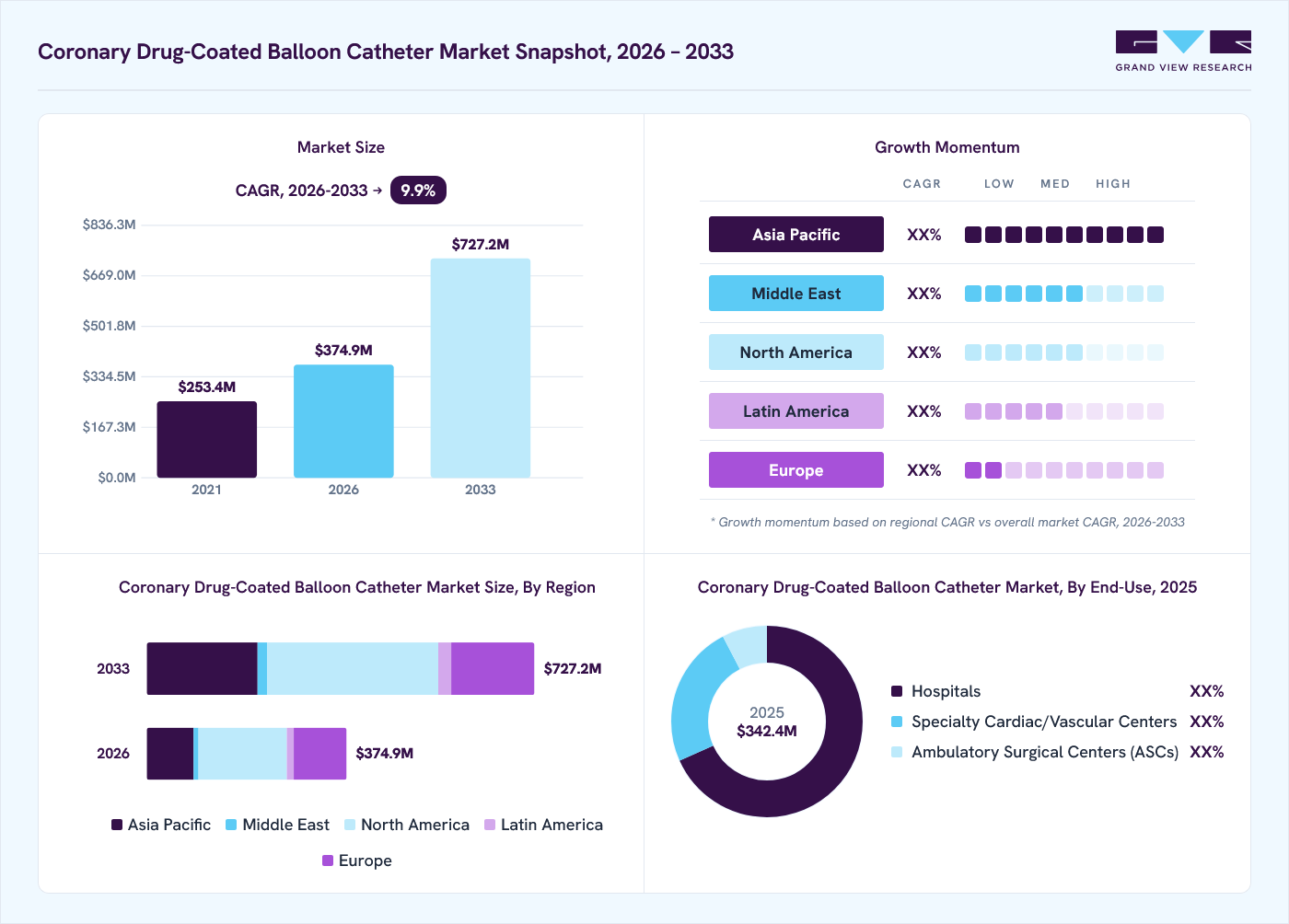
The global coronary drug-coated balloon catheter market size was valued at USD 342.4 million in 2025 and is projected to grow from USD 374.9 million in 2026 to USD 727.2 million by 2033, at a CAGR of 9.9% from 2026 to 2033. North America dominated the market, accounting for a share of 44.1% in 2025. Increasing Percutaneous Coronary Intervention (PCI) volumes globally are driving the demand for coronary drug-coated balloon catheters, particularly for treating in-stent restenosis and complex coronary lesions.
 Source: Grand View Research, IR Documents, Primary Interviews, Paid DatabasesTo learn more about this report,
 Download Free Sample Report
Key Market Trends & Insights
- By indication: the in-stent restenosis (ISR) segment held the largest market share of 65.0% in 2025.
- By drug type: the paclitaxel segment held a dominant market share in 2025.
- By end use: the hospitals segment held a dominant market share in 2025.
Regional Highlights
- Largest market: North America (44.1% share in 2025)
- Fastest growing market: Asia Pacific (highest CAGR, 2026-2033)
Market Size & Forecast
- 2025 Market Size: USD 342.4 Million
- 2026 Market Size: USD 374.9 Million
- 2033 Projected Market Size: USD 727.2 Million
- CAGR (2026-2033): 9.9%
Prism AI by Grand View Research Free to tryAsk a question about the coronary Drug-Coated balloon catheter marketTry asking✓Every figure cited from GVR research Prefer the report? Download free sample →
In addition, comprehensive reimbursement coverage for coronary interventions in countries such as the U.S., Germany, and Japan is improving patient access and accelerating the adoption of drug-coated balloon technologies.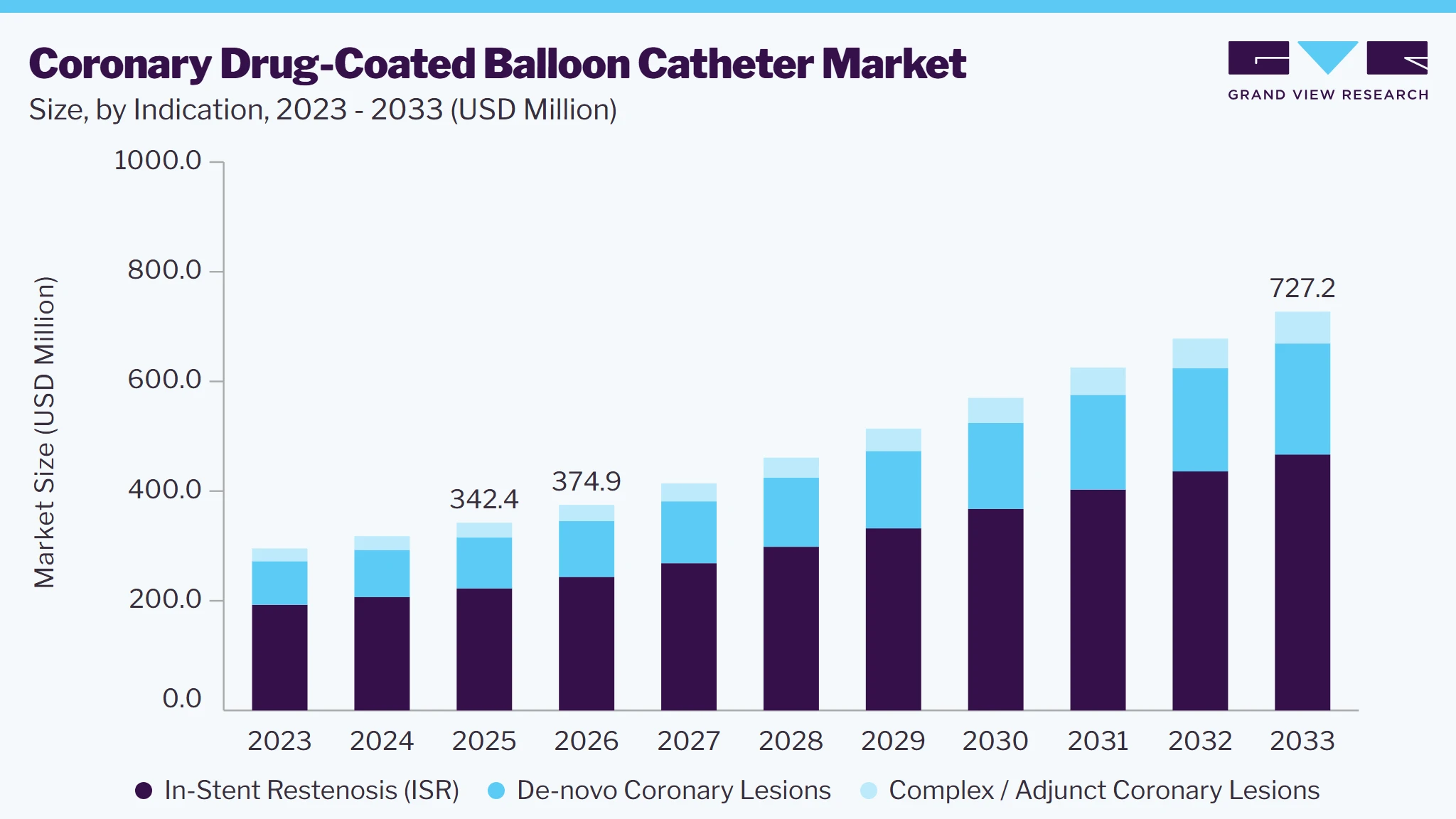 To learn more about this report, Download Free Sample Report
Market Dynamic
The rising prevalence of coronary artery disease (CAD), increasing volumes of PCI procedures, and growing adoption of minimally invasive coronary revascularization techniques are driving the growth of the coronary drug-coated balloon catheter market. Increasing incidences of in-stent restenosis (ISR), small vessel disease, and complex coronary lesions are accelerating the demand for an effective alternative to repeat stenting. Continuous advancements in drug-coating technologies, particularly the development of next-generation sirolimus-coated balloons, along with expanding clinical evidence and favorable regulatory approvals, are further supporting market adoption.
However, stringent regulatory approval requirements, extensive clinical trial obligations, and the high cost of advanced interventional procedures continue to restrain market growth. Expanding commercialization of innovative technologies, increasing physician preference for "leave nothing behind" treatment strategies, and growing adoption across emerging healthcare markets are expected to create significant growth opportunities during the forecast period.
Lifestyle-related risk factors such as obesity, diabetes, hypertension, smoking, and physical inactivity continue to increase globally, contributing to a growing number of patients requiring coronary interventions. In December 2025, the Centers for Disease Control and Prevention (CDC) released the 2024 adult obesity prevalence data, reporting obesity rates ranging from 25% to over 40% across U.S. states and territories. As obesity significantly increases the risk of heart disease, diabetes, and hypertension, the growing burden of these conditions is expected to drive demand for minimally invasive coronary treatment procedures.
The global burden of cardiovascular disease is projected to rise substantially over the coming decades. According to a study published by the National Center for Biotechnology Information (NCBI) in July 2024, the number of people living with cardiovascular diseases in Asia is expected to reach approximately 729.5 million by 2050, representing a 109.0% increase over 2025 levels. Furthermore, in January 2024, the American Heart Association (AHA) reported that cardiovascular disease remained the leading cause of death in the U.S., accounting for 931,578 deaths, exceeding the combined deaths from all cancers and chronic respiratory diseases. The growing incidence of coronary artery disease and the increasing number of PCI procedures are expected to accelerate the adoption of coronary drug-coated balloon catheters, particularly for the treatment of ISR, small vessel disease, and selected de novo coronary lesions, thereby supporting market growth over the forecast period.
Before commercialization, manufacturers must obtain approvals from regulatory authorities such as the U.S. Food and Drug Administration (FDA), the European Medicines Agency (EMA) under the Medical Device Regulation (EU MDR), the National Medical Products Administration (NMPA, China), and the Pharmaceuticals and Medical Devices Agency (PMDA, Japan). These agencies require comprehensive preclinical testing, biocompatibility evaluations, manufacturing quality assessments, and large-scale multicenter clinical trials to demonstrate the long-term safety and efficacy of the coronary drug-coated balloon catheter.
For instance, in the U.S., coronary drug-coated balloon catheters are generally required to undergo the Premarket Approval (PMA) pathway, one of the FDA's most stringent regulatory processes for Class III medical devices. Manufacturers must submit extensive clinical evidence demonstrating safety and effectiveness, often through randomized controlled trials with long-term follow-up.
Similarly, under the European Union Medical Device Regulation (EU MDR 2017/745), manufacturers must meet enhanced clinical evidence, post-market surveillance, and quality management requirements before obtaining CE marking. These rigorous regulatory pathways increase development costs, prolong product approval timelines, and delay the commercialization of innovative coronary drug-coated balloon catheter technologies, thereby restraining market growth over the forecast period.
Drug-Coated Balloons for the Treatment of Coronary Artery Disease
Device
Manufacturer
Drug
Drug Dose (µg/mm²)
Excipient / Coating
Availability
Agent
Boston Scientific
Paclitaxel
2
ATBC
Europe, Asia, U.S., Latin America
BioStream
Biosensors International
Paclitaxel
3
Shellac
Europe
Danubio
Minivasys
Paclitaxel
2.5
BTHC
Europe
Dior
Eurocor
Paclitaxel
3
Shellac
Europe, Asia
Elutax SV
Aachen Resonance
Paclitaxel
2.2
Dextran coating (without excipient)
Europe
Essential Pro
iVascular
Paclitaxel
3
Organic ester
Europe, Asia
Magic Touch
Concept Medical
Sirolimus
1.3
Phospholipid
Europe, Asia
Pantera Lux
Biotronik
Paclitaxel
3
BTHC
Europe, Asia
Expanding clinical evidence supporting the use of drug-coated balloons for de novo coronary lesions, small vessel disease, bifurcation lesions, and high-bleeding-risk patients is encouraging broader physician adoption and increasing their incorporation into clinical practice. The development of next-generation sirolimus-coated balloon technologies is expected to further expand treatment options by offering improved drug delivery, enhanced safety profiles, and long-term clinical outcomes.
For instance, in September 2025, Concept Medical received commercial approval from Brazil's National Health Surveillance Agency (ANVISA) for its MagicTouch Sirolimus-Coated Balloon to treat CAD. The approval enabled the commercial launch of the product in Brazil, expanding patient access to next-generation coronary drug-coated balloon therapy in Latin America and strengthening the company's global commercialization strategy.
“Latin America bears a high burden of cardiovascular disease as a leading cause of mortality, with nearly half a million PCI procedures annually and Brazil alone accounting for ~200,000, making it the region’s largest market. While DES has long dominated, DCBs are emerging as a strong alternative, driven by demand for safer, metal-free therapies like MagicTouch. We are proud to bring this innovation to patients and physicians in Brazil. ANVISA’s approval marks a milestone for Concept Medical and a turning point for DCB adoption, reinforcing our commitment to advancing safer, more effective therapies worldwide.”
Dr. Manish Doshi, Founder & MD, Concept Medical Group.
Market Concentration & Characteristics
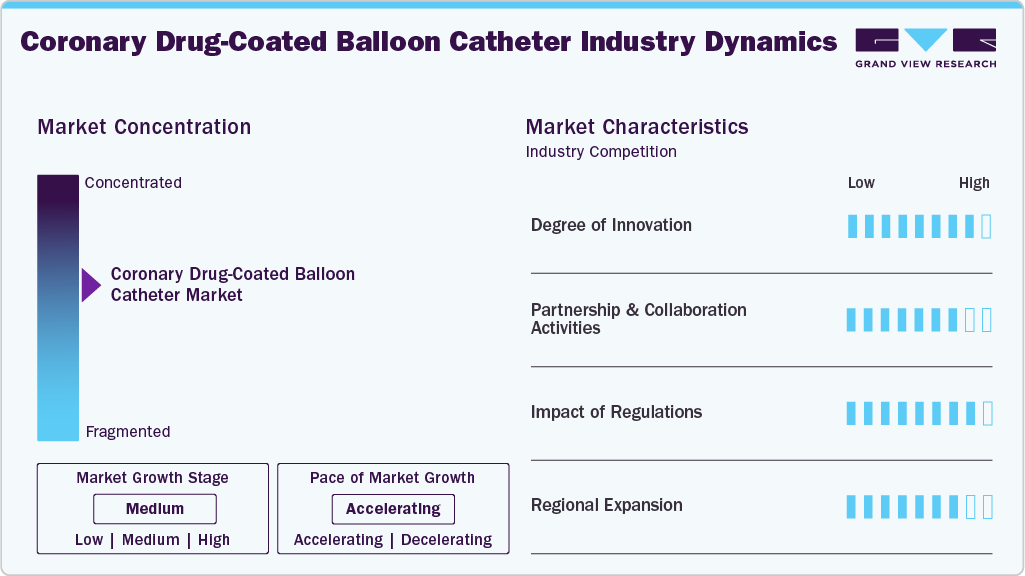
The market is witnessing a high degree of innovation due to the coating formulations, balloon designs, and clinical applications to improve restenosis prevention and procedural outcomes. Companies are focusing on next-generation drug-coated balloon platforms using advanced antiproliferative drugs and optimized drug-transfer mechanisms. In February 2024, Boston Scientific received U.S. FDA approval for its AGENT Paclitaxel-Coated Balloon Catheter, marking the first FDA-approved coronary drug-coated balloon for treating coronary in-stent restenosis and expanding innovation beyond conventional drug-eluting stents.
Strategic collaborations between medical device manufacturers, hospitals, and clinical research organizations are increasing to accelerate clinical validation, regulatory approvals, and market adoption. Companies are investing in physician-led studies and international trials to expand indications of coronary drug-coated balloon catheter technologies. In February 2021, Cardiovascular Systems, Inc. partnered with Chansu Vascular Technologies, LLC (CVT) to develop coronary everolimus drug-coated balloons. The partnership combined CSI’s expertise in treating calcified arterial lesions with Dr. Philippe Marco’s experience in developing several successful drug-coated devices.
 To learn more about this report, Download Free Sample Report
The industry operates under a high regulatory environment, requiring approvals such as FDA clearance in the U.S. and CE marking in Europe, along with adherence to regional medical device regulations globally. While these requirements help ensure safety, effectiveness, and clinical reliability, they increase development expenses and extend approval timelines. Moreover, regulatory bodies are evolving their frameworks to support emerging digital and software-enabled technologies, encouraging innovation while maintaining high patient safety standards.
The industry is experiencing steady regional expansion as manufacturers strengthen their presence in high-growth regions such as Asia-Pacific, Latin America, and the Middle East. Companies are prioritizing local regulatory approvals, distribution partnerships, and physician training to improve access to advanced endovascular therapies. For instance, in 2025, MicroPort received market approval in China for its Firelimus sirolimus-coated drug-coated balloon, supporting broader commercialization across the Asia Pacific region. Such regional expansions are improving the availability of minimally invasive vascular treatments in emerging healthcare systems and reinforcing long-term global market growth.
Analyst Perspective
The industry is driven by increasing adoption of "leave nothing behind" treatment strategies and expanding clinical evidence supporting DCB use in coronary in-stent restenosis (ISR) and selected de novo lesions. Technological advancements, particularly in sirolimus-coated balloon platforms, are improving safety and long-term clinical outcomes, encouraging wider physician acceptance. Stronger clinical adoption, regulatory approvals, and ongoing clinical trials are expected to accelerate commercialization in additional markets. Moreover, companies are focusing on product innovation, coating technologies, and indication expansion to strengthen their competitive position.
Indication Insights
The in-stent restenosis (ISR) segment held the largest market share of 65.0% in 2025. Drug-coated balloon catheters are widely preferred for ISR treatment as they deliver antiproliferative drugs without placing an additional permanent stent, helping preserve vessel anatomy. This approach reduces the risk of recurrent restenosis and simplifies repeat interventions. Growing clinical evidence supporting drug-coated balloon efficacy, along with recommendations in international treatment guidelines, has further strengthened its adoption. The increasing volume of PCI procedures and rising preference for minimally invasive coronary interventions continue to support the dominance of the ISR segment.
The de-novo coronary lesions segment is expected to grow at the fastest CAGR of 10.3% over the forecast period. Drug-coated balloons are increasingly used in small-vessel de novo coronary lesions as they deliver antiproliferative drugs without leaving a permanent scaffold. This helps preserve vessel anatomy, reduce restenosis, and avoid additional metal layers in narrow arteries. In bifurcation lesions, DCBs enable side-branch treatment while maintaining blood flow and reducing procedural complexity. Their ability to improve long-term vessel function is driving adoption in complex coronary interventions.
Drug Type Insights
The paclitaxel segment held the largest market share of 80.4% in 2025 owing to its extensive clinical evidence, established physician familiarity, and broad regulatory approvals across major markets. Continuous advancements in balloon coating formulations, excipient technologies, and drug transfer efficiency are further improving procedural success and long-term vessel patency. For instance, in May 2025, Medtronic received expanded CE Mark indications for its Prevail paclitaxel-coated PTCA balloon catheter, including treatment of complex bifurcation lesions. Such regulatory milestones continue to broaden the clinical applicability of paclitaxel-coated DCBs and support their adoption across increasingly complex coronary interventions.
“The Prevail DCB’s acute performance, clinical data, and expanded indications support the needs of physicians who treat increasingly complex patients. We are taking the same approach we've taken over the years with our drug-eluting stents. By bringing real-world clinical data to the forefront, we can expand the use of the Prevail DCB in new patient populations. We look forward to helping even more physicians across the globe access the tools they need to give their patients best-in-class care.”
- Jason Weidman, senior vice president and president of the Coronary & Renal Denervation business, part of the Cardiovascular Portfolio at Medtronic.
The sirolimus is expected to grow at the fastest CAGR of 10.8% over the forecast period. The segment is advancing rapidly, with manufacturers generating strong evidence for the safety and efficacy. Multiple randomized clinical trials and real-world registries have shown positive results for late lumen loss, target lesion revascularization, and procedural safety, reinforcing the technology’s growing role in coronary interventions. In January 2023, MedAlliance received conditional FDA Investigational Device Exemption (IDE) approval to begin a pivotal clinical trial of its Selution SLR sirolimus drug-eluting balloon for de novo coronary lesions. This marks the company’s fourth FDA IDE, following approvals for below-the-knee, superficial femoral artery, and coronary ISR indications.
End Use Insights
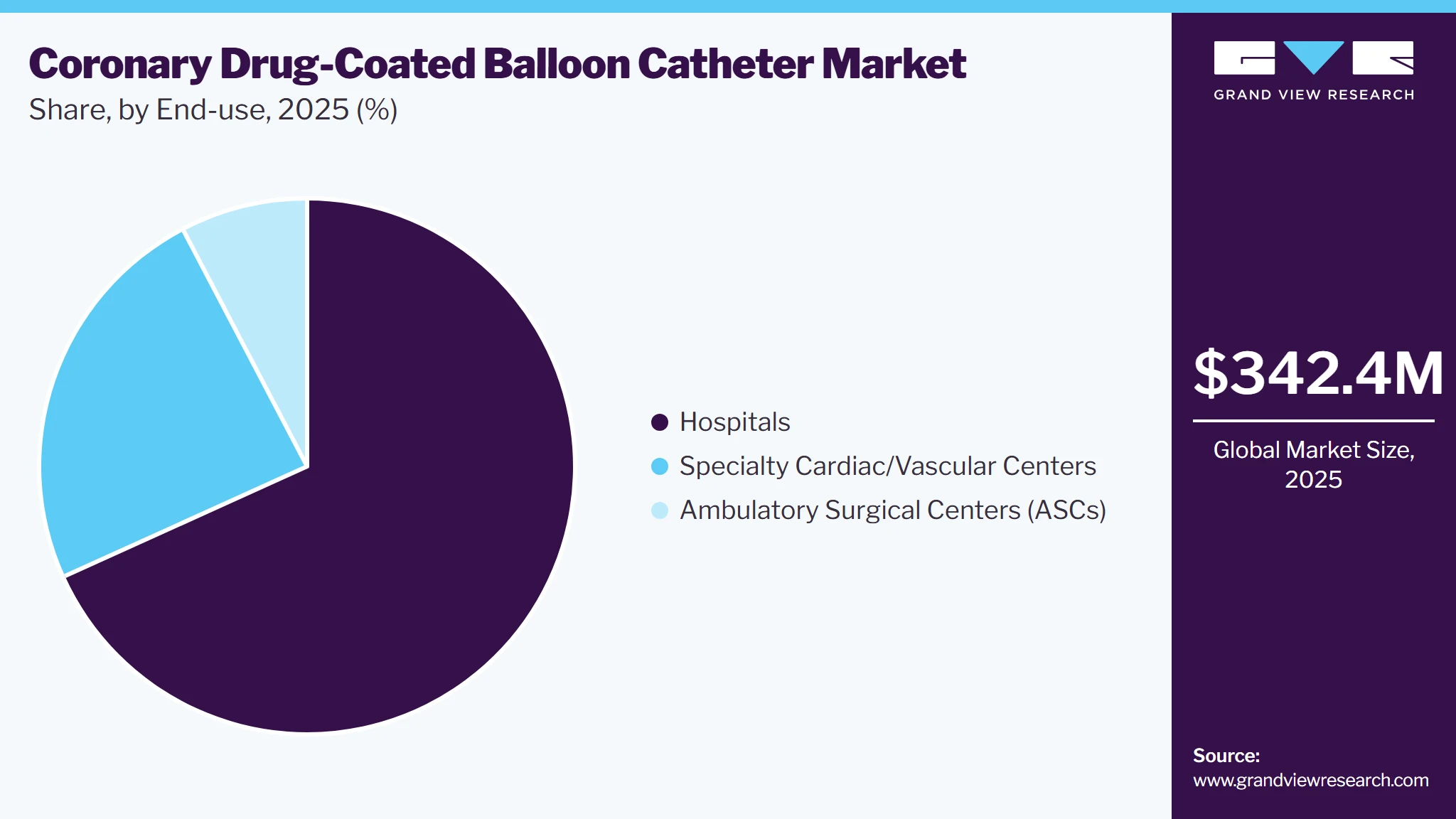
The hospitals segment held the largest revenue share of 68.2% in 2025. The rising prevalence of cardiovascular disease, demand for minimally invasive revascularization, and expanded catheterization laboratory infrastructure are driving adoption in hospitals. Large tertiary and academic medical centers are increasingly using drug-coated balloons to preserve native vessel anatomy and reduce permanent implant use. Hospitals also serve as primary sites for clinical trials, physician training, and early adoption of next-generation technologies, reinforcing their role as the leading end-use segment. For instance, in June 2025, Government Wenlock Hospital in Mangaluru reported over 1,000 cardiac procedures within nine months of opening its catheterization laboratory, demonstrating the growing use of minimally invasive cardiovascular interventions and the demand for advanced endovascular technologies.
 To learn more about this report, Download Free Sample Report
The ambulatory surgical centers (ASCs) segment is expected to grow at the fastest CAGR of 11.7% over the forecast period. The expansion of ASCs in cardiovascular care is driven by favorable reimbursement policies, advancements in minimally invasive treatments, and the demand for cost-effective care. Coronary drug-coated balloon catheters support this shift by reducing the need for permanent implants and simplifying outpatient procedures. For instance, at the May 2025 SCAI Scientific Sessions, an analysis of over 400,000 Medicare patients showed comparable 30-day adverse event rates for PCI performed in ASCs and hospital outpatient departments, supporting the growing adoption of ASC-based cardiovascular interventions.
Regional Insights
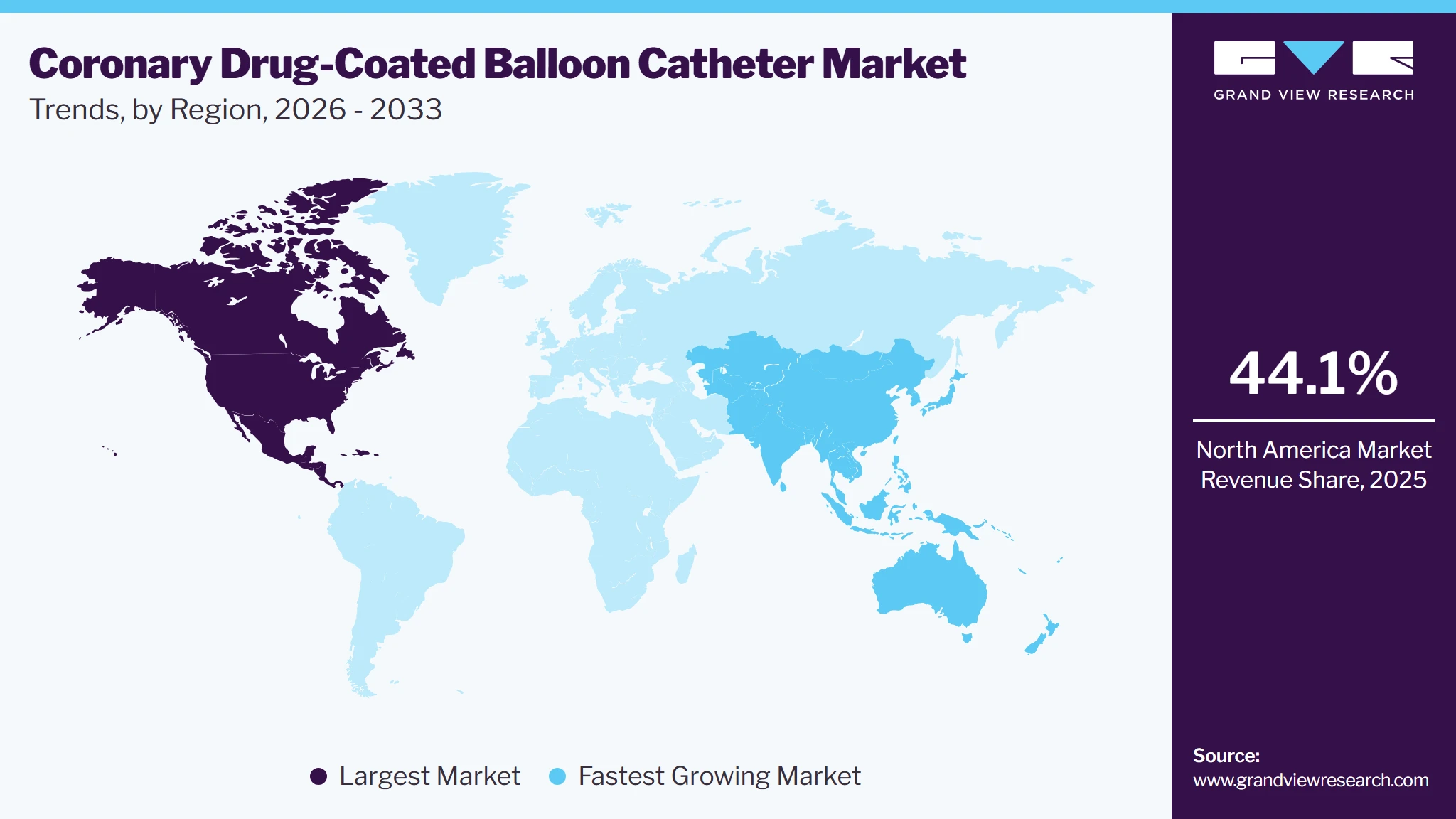
North America coronary drug-coated balloon catheter market accounted for the largest revenue share of 44.1% in 2025. The market growth is supported by the rising burden of cardiovascular diseases, increasing adoption of minimally invasive revascularization procedures, and the availability of advanced healthcare infrastructure. The presence of major manufacturers in the U.S. and Canada is also contributing to market growth through product innovation, regulatory advancements, and competitive differentiation. In November 2025, the Merck Foundation launched the Collaborative for Equity in Cardiac Care, a USD 22 million, five-year initiativeto improve access to high-quality cardiovascular services in the U.S. Grants were awarded to several healthcare organizations to address disparities in timely cardiac interventions and enhance clinical outcomes.
 To learn more about this report, Download Free Sample Report
U.S. Coronary Drug-Coated Balloon Catheter Market Trends
The coronary drug-coated balloon catheter market in the U.S. dominated North America in 2025. Rising awareness of early diagnosis and timely intervention is further increasing procedure volumes across hospitals and cardiac centers. For instance, in April 2024, Michigan Medicine reported that over 500,000 PCI procedures are performed annually in the U.S., highlighting the growing need for advanced coronary intervention technologies, including coronary drug-coated balloon catheters for selected applications such as in-stent restenosis and small-vessel disease.
Asia Pacific Coronary Drug-Coated Balloon Catheter Market Trends
The coronary drug-coated balloon catheter market in Asia Pacific is anticipated to grow at the fastest CAGR over the forecast period, owing to the rising geriatric population, increasing burden of cardiovascular diseases, improving healthcare infrastructure, and higher healthcare spending. Growing awareness of minimally invasive cardiac treatments is further supporting market expansion. For instance, in April 2025, the Asia-Pacific Consensus Group published updated recommendations in JACC: Asia, expanding the use of drug-coated balloons for coronary artery disease, reflecting the increasing clinical adoption across the region.
The China coronary drug-coated balloon catheter market held a significant share in 2025. Continuous investments in cardiovascular infrastructure and physician training are strengthening China's capabilities in advanced coronary interventions. The country's large cardiovascular disease burden is further driving demand for drug-coated balloons. For instance, according to the Cardiovascular Health and Disease Report in China: Two Decades of Progress (August 2025), around 330 million people in China are living with cardiovascular disease, including 11.39 million with coronary heart disease.
The coronary drug-coated balloon catheter market in India is growing with the increasing adoption of minimally invasive coronary interventions and expanding catheterization laboratory infrastructure. Rising procedural volumes are supporting greater use of advanced angioplasty devices. For instance, in July 2025, Coimbatore Medical College Hospital (CMCH) successfully performed drug-coated balloon angioplasty on two women with coronary blockages after heart attacks, demonstrating the growing clinical adoption of coronary drug-coated balloon catheter technology in India.
Europe Coronary Drug-Coated Balloon Catheter Market Trends
The coronary drug-coated balloon catheter market in Europe is driven by an aging population and the rising number of patients undergoing coronary angiography and percutaneous coronary interventions. Increasing demand for catheter-based coronary treatments is driving the adoption of drug-coated balloon technologies. For instance, a March 2026 study published in the European Heart Journal Supplements, based on Poland's ORPKI registry, analyzed 749,235 coronary angiographies performed between 2014 and 2024, highlighting the growing volume of coronary diagnostic and interventional procedures across the region.
The UK coronary drug-coated balloon catheter market is supported by its well-established NHS, specialist cardiac centers, and increasing adoption of evidence-based minimally invasive coronary interventions. Rising volumes of cardiovascular procedures continue to drive demand for drug-coated balloon technologies. For instance, a June 2024 BMJ study covering 22 million people in the UK reported that despite a decline in major atherosclerotic diseases, the overall cardiovascular disease burden remains high due to increasing cases of arrhythmias, valvular heart disease, and thromboembolic disorders.
The coronary drug-coated balloon catheter market in Germany is strongly shaped by high healthcare expenditure, an extensive network of catheterization laboratories, and strong clinical research activity. Rapid adoption of innovative coronary devices and active participation in multicenter clinical studies continue to accelerate the integration of coronary drug-coated balloon catheters into routine clinical practice.
Latin America Coronary Drug-Coated Balloon Catheter Market Trends
The drug-coated balloon catheter market in Latin America is experiencing growth through product expansion by market players. Companies are introducing innovative devices such as DCBs and imaging technologies, catering to the region's increasing demand for advanced cardiovascular treatments. The expansion of companies such as Terumo Cardiovascular into Latin America contributes to the growth of the drug-coated balloon catheter market, enhancing access to advanced cardiovascular technologies & improving patient outcomes
Brazil coronary drug-coated balloon catheter market is driven by the high prevalence of cardiovascular diseases and the ongoing expansion of interventional cardiology infrastructure. For instance, in December 2025, Brazil's Ministry of Health announced that Rede D'Or joined the Agora Tem Especialistas program to provide interventional cardiology procedures for public patients, improving access to advanced cardiac care and reducing waiting times for complex cardiovascular interventions.
Middle East & Africa Coronary Drug-Coated Balloon Catheter Market Trends
The coronary drug-coated balloon catheter market in the Middle East & Africa is driven by the high prevalence of cardiovascular diseases and the increasing adoption of advanced interventional cardiology procedures. For instance, at the Gulf Interventional Society's 8th Annual Conference in November 2025, nine unified cardiovascular treatment guidelines were introduced across GCC countries, recommending wider use of drug-coated balloons and reinforcing standardized, advanced coronary intervention practices across the region.
The South Africa coronary drug-coated balloon catheter market is driven by rapid urbanization, lifestyle changes, and the rising prevalence of hypertension, diabetes, obesity, and other cardiovascular risk factors. The growing number of patients requiring diagnostic angiography and percutaneous coronary interventions, along with increasing preference for minimally invasive treatments, is expected to support continued market growth.
Key Coronary Drug-Coated Balloon Catheter Company Insights
Market players are actively pursuing strategic initiatives, including product innovation, clinical collaborations, regulatory approvals, and geographic expansion, to strengthen their presence. Increasing physician adoption, expanding clinical indications, and favorable regulatory developments in emerging economies are expected to create significant growth opportunities.
Key Coronary Drug-Coated Balloon Catheter Companies
The following key companies have been profiled for this study on the coronary drug-coated balloon catheter market.
-
Boston Scientific Corporation
-
Medtronic
-
B. Braun SE
-
Concept Medical
-
Teleflex Incorporated (BIOTRONIK)
-
MicroPort Scientific Corporation
-
iVascular S.L.U.
-
Lepu Medical
Competitive Benchmarking
Operating Strategies
Competitive Edge
Weakness
Established Players: B. Braun SE, Boston Scientific Corporation, Medtronic plc, Terumo Corporation, MicroPort Scientific Corporation
- Expand product portfolios through acquisitions, strategic collaborations, and continuous product launches.
- Strengthen market position by investing in large-scale clinical trials, regulatory approvals, and global distribution networks.
- Strong brand reputation, extensive physician relationships, and well-established global sales and service networks.
- Broad cardiovascular product portfolios and significant financial resources support continuous innovation and market expansion.
- Larger organizational structures can delay innovation and commercialization of niche coronary DCB technologies.
- Greater focus on diversified cardiovascular portfolios may limit dedicated investment in the coronary DCB segment.
Emerging Player: BrosMed Medical Co., Ltd., Concept Medical Inc., MedAlliance SA, Translumina GmbH
- Develop differentiated coronary DCB technologies, particularly sirolimus-coated balloons, to address unmet clinical needs.
- Expand into new geographic markets through distributor partnerships, regulatory approvals, and targeted commercialization strategies.
- Faster product innovation with advanced coating technologies and specialized coronary DCB portfolios.
- Competitive pricing and greater flexibility enable quicker adoption in emerging and price-sensitive markets.
- Limited global brand recognition and smaller commercial infrastructure compared to multinational competitors.
- Dependence on regulatory approvals, distributor networks, and clinical evidence can slow large-scale market expansion.
Recent Developments
-
In January 2026, Terumo Corporation announced the commercial launch of the Kanshas Drug-Coated Balloon Catheter in Japan for endovascular treatment of lower-limb peripheral artery disease. The device features the proprietary Unicoat coating technology and a 200 cm shaft supporting radial access procedures.
-
In October 2025, ANVISA approved Cardionovum’s Aperto over‑the‑wire (OTW) drug‑coated balloon for commercial use, enabling dialysis patients to access a therapy that prolongs arteriovenous fistula lifespan and improves treatment outcomes.
"The approval of Aperto DCB by ANVISA is not only a significant achievement for our company but, most importantly, a meaningful step forward for dialysis patients in Brazil, who will now have access to a therapy that prolongs vascular access survival and enhances their quality of life."
- Miquel Craven-Bartle Capella, CEO of Cardionovum GmbH.
-
In September 2025, ANVISA granted commercial approval in Brazil for Concept Medical’s MagicTouch sirolimus‑coated balloon for coronary artery disease, making it the country’s first sirolimus‑coated balloon for CAD.
“Great news to hear that ANVISA has approved the use of the first Sirolimus Coated Balloon, MagicTouch, in Brazil. Backed by robust clinical trials and innovative technology, MagicTouch will surely provide a safer alternative to treat patients with coronary obstructions.”
- Dr. Manish Doshi, Founder & MD, Concept Medical Group
-
In February 2025, Shanghai MicroPort Scientific Corporation Medical's Firelimus Rapamycin Drug-Coated Balloon Catheter received NMPA market approval. This excipient-free DCB treats primary coronary bifurcation lesions using a proprietary microcrystalline coating for rapid drug transfer and sustained release, minimizing the risk of inflammation.
Coronary Drug-Coated Balloon Catheter Market Report Scope
Report Attribute
Details
Market size in 2025
USD 342.4 million
Estimated market size in 2026
USD 374.9 million
Projected market size by 2033
USD 727.2 million
Growth rate
CAGR of 9.9% from 2026 to 2033
Actual data
2021 - 2025
Forecast period
2026 - 2033
Quantitative units
Revenue in USD million/billion and CAGR from 2026 to 2033
Report coverage
Revenue forecast, company ranking, competitive landscape, growth factors, and trends
Segments covered
Indication, drug type, end use, region
Regional scope
North America; Europe; Asia Pacific; Latin America; MEA
Country scope
U.S.; Canada; Mexico; UK; Germany; France; Italy; Spain; Denmark; Sweden; Norway; Japan; China; Australia; India; South Korea; Thailand; Indonesia; Malaysia; Vietnam; Brazil; Argentina; Colombia; Chile; South Africa; Saudi Arabia; UAE; Kuwait
Key companies profiled
Boston Scientific Corporation; Medtronic; B. Braun SE; Concept Medical; Teleflex Incorporated (BIOTRONIK); MicroPort Scientific Corporation; iVascular S.L.U.; Lepu Medical
Customization scope
Free report customization (equivalent up to 8 analysts working days) with purchase. Addition or alteration to country, regional & segment scope.
Pricing and purchase options
Avail customized purchase options to meet your exact research needs. Explore purchase options
Global Coronary Drug-Coated Balloon Catheter Market Report Segmentation
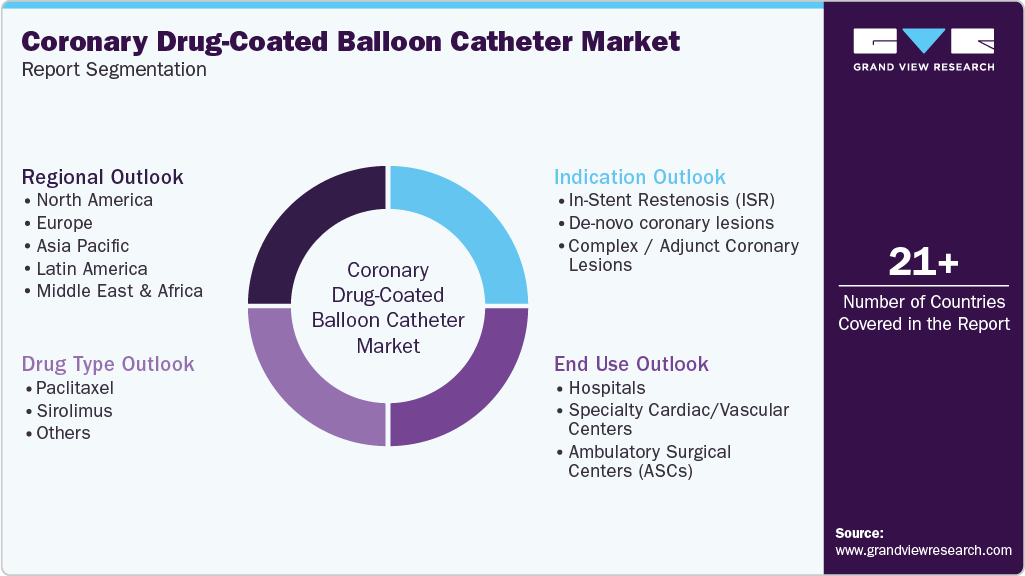
This report forecasts revenue growth at global, regional, & country levels, and provides an analysis of the industry trends in each of the sub-segments from 2021 to 2033. For this study, Grand View Research has segmented the global coronary drug-coated balloon catheter market report on the basis of indication, drug type, end use, and region:
 To learn more about this report, Download Free Sample Report
-
Indication Outlook (Revenue, USD Million, 2021 - 2033)
-
In-Stent Restenosis (ISR)
-
De-novo coronary lesions
-
Complex / Adjunct Coronary Lesions
-
-
Drug Type Outlook (Revenue, USD Million, 2021 - 2033)
-
Paclitaxel
-
Sirolimus
-
Others
-
-
End Use Outlook (Revenue, USD Million, 2021 - 2033)
-
Hospitals
-
Specialty Cardiac/Vascular Centers
-
Ambulatory Surgical Centers (ASCs)
-
-
Regional Outlook (Revenue, USD Million, 2021 - 2033)
-
North America
-
U.S.
-
Canada
-
Mexico
-
-
Europe
-
UK
-
Germany
-
France
-
Italy
-
Spain
-
Denmark
-
Sweden
-
Norway
-
-
Asia Pacific
-
Japan
-
China
-
Australia
-
India
-
-
South Korea
-
Thailand
-
Indonesia
-
Malaysia
-
Vietnam
-
-
Latin America
-
Brazil
-
Argentina
-
Colombia
-
Chile
-
-
Middle East & Africa
-
South Africa
-
Saudi Arabia
-
UAE
-
Kuwait
-
-
Research Methodology
The coronary drug-coated balloon catheter market figures in this report are based on a proven research process that combines executive interviews with secondary research from proprietary databases, company filings, and recognized regulatory and institutional sources. Market size is built through value-chain sizing - reconciling supply-side and demand-side estimates - and triangulated with bottom-up and top-down approaches. Every estimate passes multiple levels of expert validation before publication, with each coronary drug-coated balloon catheter segment quantified using the revenue-capture definitions in the table below.
Segment Definition
Segment - Indication
Revenue capture definition
In-Stent Restenosis (ISR)
Includes the use of coronary DCBs to treat restenosis occurring within previously implanted coronary stents in both small and large vessels. The therapy delivers antiproliferative drugs without implanting additional stents, thereby preserving future treatment options.
De-novo coronary lesions
Refers to the treatment of newly developed coronary lesions, particularly in small vessels and bifurcation anatomies. DCBs provide localized drug delivery while avoiding permanent implants, making them suitable for anatomically challenging lesions.
Complex / Adjunct Coronary Lesions
Includes the use of DCBs for complex coronary lesions, including calcified lesions, bifurcation lesions, and adjunctive treatment alongside other interventional devices. DCB therapy reduces restenosis while preserving vessel anatomy.
Segment - Drug Type
Revenue capture definition
Paclitaxel
Utilizes paclitaxel as the antiproliferative drug to inhibit vascular smooth muscle cell proliferation, reduce restenosis, and maintain long-term vessel patency following balloon angioplasty.
Sirolimus
Employs sirolimus as the therapeutic agent using advanced carrier technologies to improve drug retention and controlled release. These devices are increasingly adopted as next-generation coronary DCBs.
Others
Includes coronary DCBs utilizing alternative antiproliferative drugs or emerging coating technologies that are currently under development or in limited clinical use.
Segment - End Use
Revenue capture definition
Hospitals
Hospitals perform a wide range of coronary angioplasty procedures using drug-coated balloon catheters for the treatment of coronary artery disease. They are equipped with catheterization laboratories and multidisciplinary cardiology teams for interventional procedures.
Specialty Cardiac/Vascular Centers
Specialty cardiac and vascular centers provide focused diagnosis and treatment for cardiovascular conditions using advanced minimally invasive technologies. These facilities frequently utilize drug-coated balloon catheters for complex coronary interventions.
Ambulatory Surgical Centers (ASCs)
Ambulatory Surgical Centers (ASCs) offer same-day minimally invasive cardiovascular procedures in an outpatient setting. Their use of drug-coated balloon catheters is increasing with the growing preference for efficient, cost-effective coronary interventions.
Estimation Model
Commodity Flow Analysis:
The coronary drug-coated balloon catheter market was estimated using a bottom-up company revenue analysis based on sales of coronary DCB products. Revenue data was obtained from annual reports, SEC filings, investor presentations, and paid databases for private companies. Market estimates were validated through company market share analysis, parent market benchmarking, and primary research.
Parent Market Analysis
The market was validated within the broader cardiovascular device ecosystem to ensure consistency with coronary intervention volumes and industry revenues.
-
Level 1: Global Cardiovascular Medical Devices Market
-
Level 2: Interventional Cardiology Devices Market
-
Level 3: Coronary Balloon Catheter Market
-
Level 4: Coronary Drug-Coated Balloon Catheter Market
Parent market benchmarking ensured alignment with PCI volumes, product adoption, and overall market trends.
Device Demand-Based Market Sizing Framework
The demand-side model estimated market size based on coronary procedure volumes, physician adoption, device utilization, and pricing.
Step 1: Device Consumption Universe
Estimated the addressable market using hospital infrastructure, catheterization laboratory density, CAD prevalence, and PCI capacity.
Step 2: Device Utilization and Penetration Analysis
Assessed DCB utilization across coronary in-stent restenosis (ISR), de novo lesions, small vessel disease, and bifurcation lesions based on clinical guidelines and physician adoption.
Step 3: Unit Demand Estimation
Estimated annual device demand using PCI volumes, DCB penetration rates, clinical indication mix, and average devices used per procedure.
Step 4: Pricing Benchmark and Revenue Estimation
Applied regional average selling prices (ASPs), procurement data, distributor pricing, and reimbursement benchmarks to estimate market revenue.
Primary Research Methodology
Primary interviews with interventional cardiologists, hospital procurement managers, manufacturers, distributors, and reimbursement experts were conducted to validate utilization rates, pricing, procurement trends, technology adoption, and market forecasts.
CAGR Calculation and Forecast Modeling
Forecasts were developed based on the growing prevalence of coronary artery disease, increasing PCI volumes, rising adoption of DCBs for ISR and selected de novo lesions, advancements in coating technologies, expanding catheterization laboratories, favorable reimbursement policies, and increasing adoption of "leave nothing behind" treatment strategies. The forecasts were validated using company revenues, demand modeling, and primary research.
Delivered Customizations
This report has been delivered with the following In-depth customizations
Client Request
Customization Delivered
Value Adds
Country-Level Revenue & Volume Estimates
Detailed country-wise market size estimates for coronary DCB catheters in terms of revenue (USD million) and volume (units), including historical data and forecasts by major countries and regions. The analysis will quantify procedure-driven demand, product utilization, and market opportunity across developed and emerging markets.
Enables stakeholders to quantify addressable market opportunities, benchmark demand across countries, identify high-growth markets, support sales forecasting, optimize resource allocation, and develop data-driven market expansion strategies.
Innovation & Product Development Analysis
Comprehensive evaluation of the innovation ecosystem covering new product launches, product pipeline analysis, emerging coating technologies, ongoing R&D investments, patent activity, and competitive technology benchmarking across major manufacturers.
Provides visibility into competitive innovation, emerging technologies, pipeline strength, and future product differentiation, enabling informed strategic planning and investment decisions.
Company-Level Market Share Estimates
Detailed company-wise market share estimates for the global and regional coronary DCB market, including revenue share (USD Million) and volume share (Units) of leading manufacturers. The analysis will include competitive positioning, estimated installed customer base, regional strengths, product portfolio benchmarking, and market share by major geography where applicable.
Enables competitive benchmarking, identifies market leaders and emerging players, evaluates competitive positioning, supports sales strategy development, facilitates partnership and acquisition assessments, and provides a comprehensive understanding of the competitive landscape.
Frequently Asked Questions About This Report
The market is anticipated to grow at a CAGR of 9.9% over the forecast period from 2026 to 2033 and reach USD 727.2 million by 2033.
By indication, the in-stent restenosis (ISR) segment held the largest market share of 65.0% in 2025. Drug-coated balloon catheters are widely preferred for ISR treatment as they deliver antiproliferative drugs without placing an additional permanent stent, helping preserve vessel anatomy.
North America dominated the market and accounted for the largest revenue share of 44.1% in 2025. The market growth is supported by the rising burden of cardiovascular diseases, increasing adoption of minimally invasive revascularization procedures, and the availability of advanced healthcare infrastructure.
Increasing Percutaneous Coronary Intervention (PCI) volumes globally are driving the demand for coronary drug-coated balloon catheters, particularly for treating in-stent restenosis and complex coronary lesions.
Some of the key participants in the global coronary drug-coated balloon catheter market include Boston Scientific, Corporation, Medtronic, B. Braun SE, Concept Medical, Teleflex Incorporated (BIOTRONIK), MicroPort Scientific Corporation, iVascular S.L.U., Lepu Medical
The global coronary drug-coated balloon catheter market size was valued at USD 342.4 million in 2025 and is expected to reach USD 374.9 million in 2026.
About the Author(s)
Medical Devices Research Team
Healthcare · Medical DevicesThis report was authored by the medical devices research team at Grand View Research - comprising two research analysts, one senior research analyst, and one industry expert - with specialized expertise in the medical devices segment of the healthcare industry. All findings are based on proprietary healthcare databases, executive interviews, and regulatory analysis, subject to internal peer review prior to publication.
Last Updated:
Speak to Analyst

Customize this report to your needs - add regions, segments, or data points, with 20% free customization.
Or view our licence options:


ISO 9001:2015 & 27001:2022 Certified
We are GDPR and CCPA compliant! Your transaction & personal information is safe and secure. For more details, please read our privacy policy.


