
- Home
- »
- Alcohol & Tobacco
- »
-
Craft Rum Market Size, Share & Growth Report, 2026-2033GVR Report cover
![Craft Rum Market (2026 - 2033)Report]()
Craft Rum Market (2026 - 2033)
Size, Share & Trends Analysis Report By Distribution Channel (On-trade, Off-trade), By Region (North America, Europe, Asia Pacific, Latin America, MEA), And Segment Forecasts
Market Size, 2025
$1.4BMarket Estimate, 2026
$1.5BMarket Forecast, 2033
$2.2BCAGR, 2026–2033
5.9%Craft Rum Market Summary
The global craft rum market size was valued at USD 1.4 billion in 2025 and is projected to grow from USD 1.5 billion in 2026 to USD 2.2 billion by 2033, at a CAGR of 5.9% from 2026 to 2033. The market in Europe dominated with a revenue share of 38.3% in 2025. The growing inclination of millennial consumers towards the authenticity and quality of ingredients used in alcoholic drinks has been the major driving factor for the craft spirits market, including craft rum. The consistently growing popularity of cocktail culture and the use of rum as a versatile spirit for making cocktails is also promoting the demand for craft rum.
Key Market Trends & Insights
- By distribution channel: On-trade segment held the largest market share of 62.1% in 2025.
Regional Highlights
- Largest regional market: Europe (38.3% revenue share, 2025)
- Fastest-growing regional market: Asia Pacific (highest CAGR, 2026-2033)
- By country: Germany held the largest market share in 2025.
Market Size & Forecast
- Market size in 2025: USD 1.4 Billion
- Estimated market size in 2026: USD 1.5 Billion
- Projected market size by 2033: USD 2.2 Billion
- CAGR (2026-2033): 5.9%
The introduction of craft rum in different flavors and product promotions through social media and print media are also positively impacting the craft rum industry at the global level. Over the past two decades, the spirits industry has undergone significant changes, marked by increased alcohol consumption and a growing demand for high-quality spirits. Consumers worldwide are willing to pay more for high-quality products with a distinct taste and experience. Craft spirits, a unique niche, offer distinct flavors and stand apart from mass-produced liquors. Craft rum, typically made from high-quality molasses or sugarcane juice, is aged in various types of barrels to develop complex flavor profiles. The use of local ingredients, small-batch production, and a focus on sustainability are key factors driving the popularity of craft rum.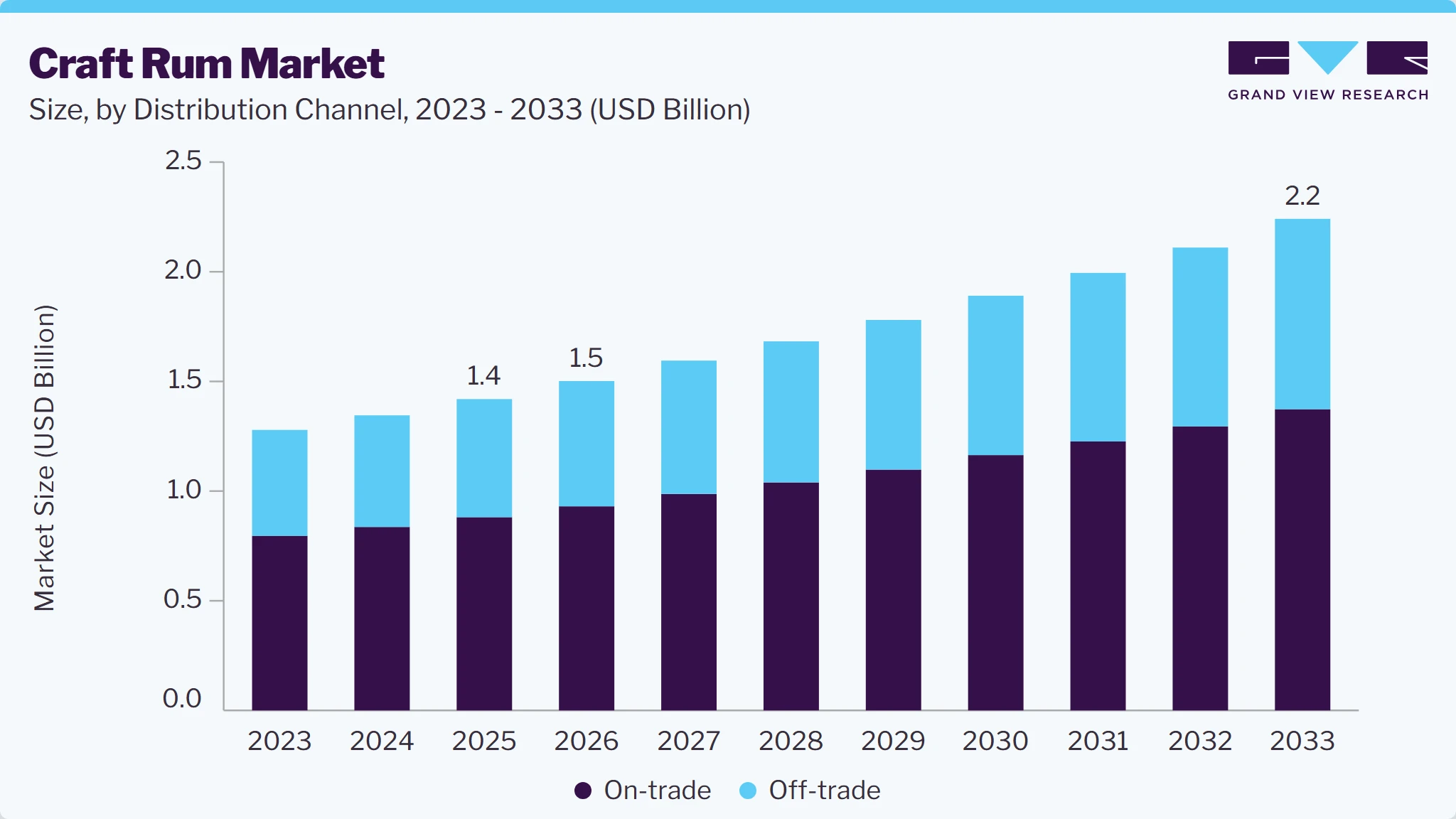
Consumers prefer craft rum over commercial rum due to its smooth taste, high quality, and authentic flavor. According to the Bacardi Global Brand Ambassador Survey 2022, 32% of bartenders expect to witness increased premiumization in aged rums over the coming years. Manufacturers have continuously improved their craftsmanship and quality to cater to evolving tastes. Distilleries such as Puget Sound Rum Company and Plank Road Distillery offer flavored craft rum, promoting their use in cocktails. Craft rum is a versatile spirit, serving as a base for various cocktail recipes. Industry professionals, including bartenders and sommeliers, frequently share craft rum cocktail recipes on social media, showcasing their skills and educating consumers about cocktail mixing. This has consistently boosted the demand for craft rum-based cocktails, ranging from simple to complex and premium mixes
As the craft rum industry grows, distilleries and liquor companies seek to innovate and shape the market. Major players are expanding their presence into new markets, driven by increasing global demand for craft rum from regions like the Caribbean, Latin America, and Asia. In response to growing consumer environmental consciousness, companies are prioritizing sustainability. Practices such as waste reduction, responsible packaging, and using renewable energy in distillation processes are becoming increasingly common. Additionally, distilleries are adopting advanced technologies like AI and IoT to optimize production processes and create unique, high-quality spirits.
Market Dynamics
Craft rum products are witnessing growing consumer interest as they offer distinctive flavor profiles, small-batch production methods, premium ingredients, and authentic craftsmanship. These products appeal to consumers seeking unique drinking experiences, artisanal spirits, and premium alcoholic beverages with strong heritage and provenance. The increasing demand for premium and craft spirits, along with rising consumer interest in cocktail culture and experimental flavors, is expected to continue driving growth in the craft rum market.
The growing preference for premium alcoholic beverages and authentic craft products is a key factor propelling the craft rum industry. Consumers are increasingly moving away from mass-produced spirits and seeking high-quality alternatives that offer superior taste, unique production methods, and distinctive regional characteristics. Craft rum producers are capitalizing on this trend by emphasizing small-batch distillation, locally sourced ingredients, traditional production techniques, and innovative aging processes.
The expansion of cocktail culture and mixology trends has further strengthened demand for craft rum, particularly among younger consumers who value experimentation and premium drinking experiences. Bars, restaurants, and specialty liquor retailers are increasingly expanding their craft spirits offerings to meet evolving consumer preferences. In addition, tourism activities centered around distilleries and rum-producing regions are enhancing brand awareness and consumer engagement. Manufacturers are also introducing flavored, spiced, aged, and limited-edition rum varieties to attract consumers seeking new and differentiated products. As consumers continue to prioritize quality, authenticity, and premium experiences, demand for craft rum products is expected to grow steadily over the coming years.
Regulatory requirements and elevated production expenses remain significant challenges for the craft rum market. Craft rum manufacturers often operate on a smaller scale compared to large multinational spirit producers, resulting in higher per-unit production costs. Premium ingredients, longer aging periods, specialized distillation equipment, and handcrafted production processes contribute to increased operational expenses and higher retail prices.
In addition, alcoholic beverage producers must comply with stringent regulations related to production, labeling, taxation, distribution, advertising, and import-export activities, which vary significantly across countries and regions. These regulatory complexities can create barriers to market entry and expansion, particularly for smaller craft distilleries. Fluctuations in the prices of sugarcane, molasses, packaging materials, and energy can further impact profitability. Furthermore, increasing health-consciousness among consumers and stricter regulations on alcohol consumption and marketing may limit growth opportunities in certain markets. These factors can create challenges for manufacturers seeking to maintain product quality, brand differentiation, and competitive pricing.
The increasing consumer focus on premiumization and unique consumption experiences is creating substantial opportunities for the craft rum market. Consumers are becoming more willing to pay premium prices for spirits that offer authenticity, craftsmanship, transparency, and distinctive flavor characteristics. This trend is encouraging producers to invest in premium aged rums, single-origin offerings, cask-finished variants, and limited-edition releases that cater to sophisticated consumers and spirit enthusiasts.
The growing popularity of premium cocktails, rum tasting events, and experiential tourism is further expanding market opportunities. Craft distilleries are increasingly leveraging storytelling, heritage branding, and direct consumer engagement to strengthen brand loyalty and create differentiated market positions. In addition, the expansion of e-commerce platforms and direct-to-consumer sales channels is improving product accessibility and enabling craft rum brands to reach broader domestic and international audiences.
Manufacturers are also exploring sustainable production practices, eco-friendly packaging, and locally sourced ingredients to align with evolving consumer values regarding environmental responsibility. As demand for premium spirits, authentic craftsmanship, and immersive drinking experiences continues to rise, innovative craft rum offerings are expected to generate significant long-term growth opportunities for market participants worldwide.
Analyst Perspective
The craft rum market is benefiting from several long-term growth drivers, including rising consumer interest in premium spirits, growing appreciation for artisanal production methods, and increasing demand for authentic and distinctive drinking experiences. The key competitive advantage will belong to producers that successfully combine product authenticity, craftsmanship, premium ingredients, and innovative aging or finishing techniques. As consumers continue to explore premium and craft alcoholic beverages, brands capable of delivering consistent quality, strong heritage positioning, and memorable consumer experiences are expected to strengthen their market presence. In the years ahead, product innovation, sustainability initiatives, experiential marketing, and premiumization trends are likely to remain critical factors shaping competition and long-term growth within the craft rum industry.
Distribution Channel Insights
Based on distribution channel, the On-trade channel led the market with the largest revenue share of 62.1% in 2025.. Bars, pubs, and restaurants are the key distribution channels of the product. Distilleries often introduce their unique and niche products at high-end bars and restaurants before launching them on other retail channels. These channels encourage consumers to try new products for direct consumption or in the form of cocktails and have been focusing on improving the cocktail experience. This boosts the sales of craft rum-based cocktails from the on-trade platform. Furthermore, willingness to try an innovative drink and luxury alcoholic beverages and share on social media are also driving the on-trade sales of the product. According to the Bacardi Consumer Survey 2022, six out of ten consumers believed that trying something new and different is important in choosing a cocktail at a bar, club, or restaurant.
The off-trade segment is expected to expand at the fastest CAGR of 6.2% from 2026 to 2033. The increasing availability of drinks in supermarkets, liquor shops, and online retail stores has fueled the growth of the off-trade segment. Post-COVID-19 pandemic, consumers are more inclined to buy their preferred spirit and enjoy it in the comfort of their homes. Recently, a surge in the cost of on-trade drinking has diverted some budget-sensitive consumers towards off-trade drinking. The consumption of specialty and high-quality spirits via ordering through online portals or consuming in the form of ready-to-drink has further boosted the growth of the off-trade segment within the craft spirit industry, including rum. Besides, the growing sense among consumers to support local breweries and distilleries further complements the growth of the craft rum industry. According to a survey conducted by LendingTree, 50% of shoppers in the U.S. are willing to spend more to support local businesses. Buyers also seek craft distilleries and local producers fueled by the stories and authenticity behind small-batch production.
Regional Insights
Europe dominated the craft rum market with the largest revenue share of 38.3% in 2025. The U.K., Germany, and France are the region's major markets. European consumers are some of the most aware consumers with respect to Rum’s diversity. The European rum market recovered relatively faster to register sales of 24.6 million cases in 2021. The sales grew by 6% to reach 26 million cases in 2022. Growing cocktail culture also positively impacts premium rum sales, including craft rum in the region. Furthermore, the increasing number of micro distillers producing craft spirits in Germany has been gaining traction over the years.
Italy craft rum market is projected to experience the fastest growth in the regional market over the forecast period. Italy is one of the largest rum exporters in the world. The country exported USD 226 million worth of rum globally in 2022, claiming 11.2% of the global market share. However, consumer in Italy consumes considerable amounts of premium rum. In 2022, Italy imported USD 125 million in Rum and tafia, majorly from the U.S., Venezuela, the Netherlands, and France, becoming the 6th largest importer of Rum and tafia in the world.
Asia Pacific Craft Rum Market Trends
Asia Pacific craft rum market is expected to expand at the fastest CAGR of 6.2% from 2026 to 2033. Several major countries, including Indonesia, India, Philippines, and Japan, have a rich history of regular and craft rum. These countries are undertaking serious innovation in distilling rums and are receiving acclamation for their flavors and fresh, tropical appeal.This has boosted the sales of craft rum in the region. The growing trend of the Tiki cocktail culture in Asian countries is also expected to fuel the product's consumption in the upcoming years.
India emerged as the dominant country in the regional craft rum market. The country has celebrated the history of consuming rum from its colonial era. Factors including rapid urbanization, increasing purchasing power, and growing pub and bar culture are the key factors boosting the growth of craft rum industry in the country. Additionally, the rise of craft cocktails and mixology among Gen Z and millennials is further encouraging the consumption of craft rum.
Key Craft Rum Company Insights
Some of the key companies operating in the global craft rum industry are Bacardi Limited, Suntory Holdings Limited, Diageo, Maine Craft Distilling, LLC, Charles Merser & Co., Drum & Black Rum Company, Wicked Dolphin Rum, Domaines Ellam and Arizona Craft Beverage, Rockstar Spirits Ltd., Belize Spirits Marketing, Inc. and others. The introduction of a new product is the key strategy adopted by almost all major players in the market. Additionally, the incorporation of advanced technologies, including AI, is further helping the distilleries to improve the quality of their products.
-
Bacardi Limited, a global leader in the spirits industry, has embraced the growing trend of craft rum. To capitalize on the increasing consumer demand for high-quality, artisanal spirits, Bacardi has invested in acquiring and developing craft rum brands.
Key Craft Rum Companies:
The following key companies have been profiled for this study on the craft rum market.
-
Bacardi Limited
-
Suntory Holdings Limited
-
Diageo
-
Maine Craft Distilling, LLC
-
Charles Merser & Co.
-
Drum & Black Rum Company
-
Wicked Dolphin Rum
-
Domaines Ellam and Arizona Craft Beverage
-
Rockstar Spirits Ltd.
-
Belize Spirits Marketing, Inc.
Competitive Benchmarking
Category
Operating Strategies
Competitive Edge
Weakness
Established Players (Bacardi Limited, Suntory Holdings Limited, Diageo)
Expand premium and craft-inspired rum portfolios through limited-edition releases, aged expressions, and innovative cask-finishing techniques
Strengthen global distribution networks, premium hospitality partnerships, and direct-to-consumer engagement while investing in brand storytelling and sustainability initiatives
Strong brand recognition, extensive international distribution capabilities, and substantial marketing resources
Ability to leverage established supply chains, production expertise, and financial strength to scale premium rum offerings globally
Greater exposure to fluctuations in sugarcane and molasses prices, as well as changing alcohol regulations across markets
Large organizational structures may reduce agility in responding to niche craft-spirit trends and emerging consumer preferences
Emerging Players (Maine Craft Distilling, LLC, Charles Merser & Co., Drum & Black Rum Company, Wicked Dolphin Rum, Domaines Ellam and Arizona Craft Beverage, Rockstar Spirits Ltd., Belize Spirits Marketing, Inc.)
Focus on small-batch production, locally sourced ingredients, unique aging methods, and handcrafted rum expressions targeting premium consumers
Utilize e-commerce, experiential tasting events, tourism partnerships, and authentic brand narratives to build customer loyalty and differentiation
Strong differentiation through artisanal production methods, distinctive flavor profiles, and authentic heritage-driven branding
Greater flexibility to experiment with innovative ingredients, finishes, and limited-edition releases that appeal to craft-spirit enthusiasts
Limited production capacity and distribution reach compared to multinational beverage companies
Lower marketing budgets and greater dependence on specialty retailers, regional markets, and direct consumer engagement for growth
Recent Developments
-
In September 2024, the Good Craft Co., a division of Diageo India, opened its first sensorial experience home in Bengaluru, India, named The Flavour Lab. The experience home was built to initiate a direct-to-consumer experiential ecosystem to promote craft spirit in India.
-
In June 2024, Tidal Rum, a premium craft rum brand in the U.K., achieved its goal of raising approximately USD 315 thousand through crowdfunding.
-
In January 2023, Diageo, a British liquor giant, announced the acquisition of Filipino rum brand Don Papa. Don Papa was founded in 2012 in the Philippines and made their rum in Negros Occidental using local sugarcane and aged in American oak barrels, which provided a rich taste and texture to the craft.
Craft Rum Market Report Scope
Report Attribute
Details
Market size in 2025
USD 1.4 billion
Estimated market size in 2026
USD 1.5 billion
Projected market size by 2033
USD 2.2 billion
Growth rate
CAGR of 5.9% from 2026 to 2033
Base year for estimation
2025
Historical data
2021 - 2025
Forecast period
2026 - 2033
Quantitative units
Revenue in USD million/billion and CAGR from 2026 to 2033
Report coverage
Revenue forecast, company ranking, competitive landscape, growth factors, and trends
Segments covered
Distribution channel, region
Regional scope
North America, Europe, Asia Pacific, Latin America, MEA
Country scope
U.S.; Canada; Mexico; Germany; UK; France; Italy; Spain; China; Japan; India; South Korea; Australia & New Zealand; Brazil; Argentina; UAE; South Africa
Key companies profiled
Bacardi Limited; Suntory Holdings Limited; Diageo; Maine Craft Distilling, LLC; Charles Merser & Co.; Drum & Black Rum Company; Wicked Dolphin Rum; Domaines Ellam and Arizona Craft Beverage; Rockstar Spirits Ltd.; and Belize Spirits Marketing, Inc.
Customization scope
Free report customization (equivalent up to 8 analysts' working days) with purchase. Addition or alteration to country, regional & segment scope.
Pricing and purchase options
Avail customized purchase options to meet your exact research needs. Explore purchase options
Global Craft Rum Market Report Segmentation
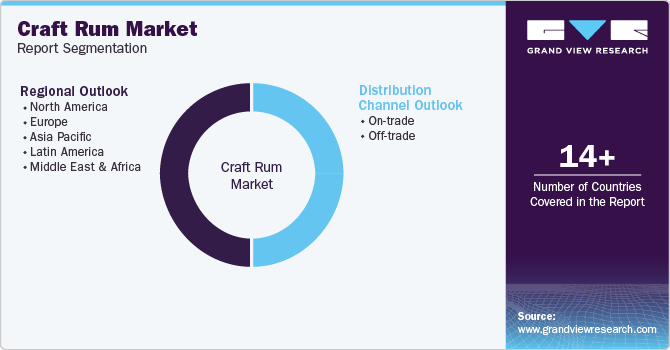
This report forecasts revenue growth at global, regional, and country levels and provides an analysis of the latest industry trends in each of the sub-segments from 2021 to 2033. For this study, Grand View Research has segmented the global craft rum market report based on distribution channel, and region.
-
Distribution Channel Outlook (Revenue, USD Billion, 2021 - 2033)
-
On-trade
-
Off-trade
-
-
Regional Outlook (Revenue, USD Billion, 2021 - 2033)
-
North America
-
U.S.
-
Canada
-
Mexico
-
-
Europe
-
UK
-
Germany
-
France
-
Italy
-
Spain
-
-
Asia Pacific
-
China
-
India
-
Japan
-
Australia & New Zealand
-
-
Latin America
-
Brazil
-
Argentina
-
-
MEA
-
South Africa
-
UAE
-
-
Research Methodology
The craft rum market figures in this report are based on a proven research process that combines executive interviews with secondary research from proprietary databases, company filings, and recognized regulatory and institutional sources. Market size is built through value-chain sizing - reconciling supply-side and demand-side estimates - and triangulated with bottom-up and top-down approaches. Every estimate passes multiple levels of expert validation before publication, with each craft rum segment quantified using the revenue-capture definitions in the table below.
Segment Definition
Segment - Distribution Channel
Revenue capture definition
On trade
This segment includes sales of craft rum through on-trade channels, such as bars, restaurants, hotels, pubs, etc.
Off trade
This segment includes sales of craft rum through off-trade channels, such as supermarkets, liquor stores, specialty retailers, online platforms, etc.
Estimation Model
Layer Name
Key Question
Description
Spirits Consumer Layer
Who consumes distilled alcoholic beverages?
Identify the legal drinking-age population that consumes spirits across target markets. Analyze alcohol consumption patterns, premium spirits demand, cocktail culture, and consumer interest in artisanal beverages to define the potential consumer pool for craft rum products.
Market Access Layer
Who can access craft rum products?
Apply region-specific alcohol retail penetration, specialty liquor store presence, bars and restaurants, premium beverage outlets, and e-commerce alcohol sales availability (where permitted) to the eligible consumer base to estimate the addressable craft rum market.
Craft Rum Adoption Layer
Who actively purchases craft rum?
Apply craft rum penetration rates and consumer preferences for premium, small-batch, artisanal, aged, flavored, and locally produced spirits. Factor in demand from cocktail enthusiasts, premium spirit consumers, millennials, Gen Z drinkers, and consumers seeking unique drinking experiences to convert the addressable population into active craft rum buyers.
Monetization Layer
How much revenue is generated?
Multiply active craft rum consumers by average annual consumption volume and spending per consumer. Add revenue contributions from premium retail channels, specialty liquor stores, bars, restaurants, cocktail lounges, tourism-driven sales, distillery direct-to-consumer sales, and limited-edition product offerings to estimate total market revenue.
Delivered Customizations
This report has been delivered with the following In-depth customizations
Client Request
Customization Delivered
Value Adds
Premium Spirits Trends & Consumer Preference Analysis
Conducted a focused analysis of craft rum consumption across aged, spiced, white, dark, flavored, and premium small-batch rum categories, covering evolving consumer preferences, premiumization trends, artisanal production methods, and demand for authentic spirits experiences.
Helps stakeholders identify high-growth product categories, evaluate changing consumer drinking preferences, and assess commercialization opportunities in the premium and craft spirit segment.
Craft Distillation Innovation & Experiential Consumption Trends
Evaluated adoption trends for handcrafted, locally produced, organic, sustainably sourced, and limited-edition craft rums, including consumer purchasing behavior, cocktail culture influence, premium spirit consumption patterns, and demand among millennials and affluent consumers.
Provides insights into emerging beverage trends, unmet consumer needs, and commercially attractive product segments to support product innovation, brand differentiation, and premium positioning strategies.
On-Trade Expansion, Tourism & Market Opportunity Assessment
Assessed demand across bars, lounges, restaurants, hotels, specialty liquor stores, distillery tasting rooms, duty-free channels, and e-commerce platforms, along with trends in rum tourism, premium packaging, cask-finishing techniques, and regional flavor innovation.
Supports investment and expansion strategies by identifying high-potential sales channels, evaluating consumer acceptance of premium craft rum offerings, and strengthening long-term growth opportunities across both on-premise and off-premise markets.
Frequently Asked Questions About This Report
The global craft rum market size was valued at USD 1.4 billion in 2025 and is expected to reach USD 1.5 billion in 2026.
Europe dominated with a 38.3% revenue share in 2025.
On-trade channels held the largest revenue share in 2025, while off-trade channels are the fastest-growing area.
Some key players operating in the craft rum market include Bacardi Limited; Suntory Holdings Limited; Diageo; Maine Craft Distilling, LLC; Charles Merser & Co.; Drum & Black Rum Company; Wicked Dolphin Rum; Domaines Ellam and Arizona Craft Beverage; Rockstar Spirits Ltd.; and Belize Spirits Marketing, Inc.
The global craft rum market is expected to grow at a CAGR of 5.9% from 2026 to 2033, reaching USD 2.2 billion by 2033.
The craft rum market is primarily driven by factors such as rising demand for premium spirits, artisanal production, unique flavor profiles, cocktail culture growth, consumer preference for authentic products, and increasing interest in locally sourced beverages.
Asia Pacific is the fastest-growing region in the craft rum market.
About the Author(s)
Alcohol & Tobacco Research Team
Consumer Goods · Alcohol & TobaccoThis report was authored by the alcohol & tobacco research team at Grand View Research - comprising two research analysts, one senior research analyst, and one industry expert - with specialized expertise in the alcohol & tobacco segment of the consumer goods industry. All findings are based on proprietary consumer goods databases, executive interviews, and regulatory analysis, subject to internal peer review prior to publication.
Last Updated:
Speak to Analyst


Customize this report to your needs — add regions, segments, or data points, with 20% free customization.
Or view our licence options:


ISO 9001:2015 & 27001:2022 Certified
We are GDPR and CCPA compliant! Your transaction & personal information is safe and secure. For more details, please read our privacy policy.


