
- Home
- »
- Consumer F&B
- »
-
Craft Soda Market Size, Share & Growth Report, 2026-2033GVR Report cover

Craft Soda Market (2026 - 2033)
Size, Share & Trends Analysis Report By Flavor (Cola, Tropical Fruits, Berries), By Packaging (Glass, Cans), By Distribution Channel (On-Trade, Off-Trade), By Region, And Segment Forecasts
Market Size, 2025
$785.8MMarket Estimate, 2026
$825.2MMarket Forecast, 2033
$1,189.3MCAGR, 2026–2033
5.4%Craft Soda Market Summary
The global craft soda market size was valued at USD 785.8 million in 2025 and is projected to grow from USD 825.2 million in 2026 to USD 1,189.3 million by 2033, at a CAGR of 5.4% from 2026 to 2033. The North America market held the largest share of 32.8% of the global market in 2025. Rising demand for natural and clean-label beverages, growing interest in unique, artisanal flavors, and the increasing popularity of premium, locally produced products are among the factors driving the market.
 Source: Grand View Research, IR Documents, Primary Interviews, Paid DatabasesTo learn more about this report,
 Download Free Sample Report
 Key Market Trends & Insights
- By flavor: The cola-flavored craft soda market accounted for the largest share of 49.0% in 2025.
- By packaging: The Glass packaging accounted for the largest revenue share of 55.9% in 2025 in the global craft soda industry.
- By distribution channel: The sales of craft soda through the off-trade channels held the largest revenue share of 57.9% in 2025.
Regional Highlights
- Largest regional market: North America (32.8% revenue share, 2025)
- By country: The U.S. held the largest market share in 2025.
Market Size & Forecast
- Market size in 2025: USD 785.8 Million
- Estimated market size in 2026: USD 825.2 Million
- Projected market size by 2033: USD 1,189.3 Million
- CAGR (2026-2033): 5.4%
Three ways to get this report
Buy it, customize it, or ask a question.Ask an Analyst
Analyst response in 1 business day
- AccessReport author, directly
- Reply timeWithin 1 working day
- No sales callDirect answer only
- FormatEmail reply
- CostFree, no cost
Get the Full Report
What the study covers
- FormatsPDF · Excel · Dashboard
- Timeline2026–2033 annual, 2025 base
- Coverage20+ countries, 5 regions
- Companies10+ key players profiled
Customize the Report
20% free customization
- IncludeCountries, segments, points
- TailorTo your product definition
- ExtendDeeper competitor detail
- OrA fully bespoke study
- Turnaround5–10 working days
The growing preference for flavor-forward yet health-conscious carbonation is boosting the demand for craft sodas around the region. While carbonated beverages remain popular, consumers are actively moderating their intake of sugar and artificial ingredients. Craft sodas often position themselves as reduced-sugar, natural-sweetener options with real fruit extracts, botanicals, and functional cues such as prebiotics or digestive benefits. This enables consumers to retain the sensory appeal of carbonation while aligning with broader wellness and clean-label expectations, particularly among younger demographics. These evolving preferences are also contributing to the expansion of the craft beverage market, where innovation and premiumization are key drivers of growth. To learn more about this report, Download Free Sample Report
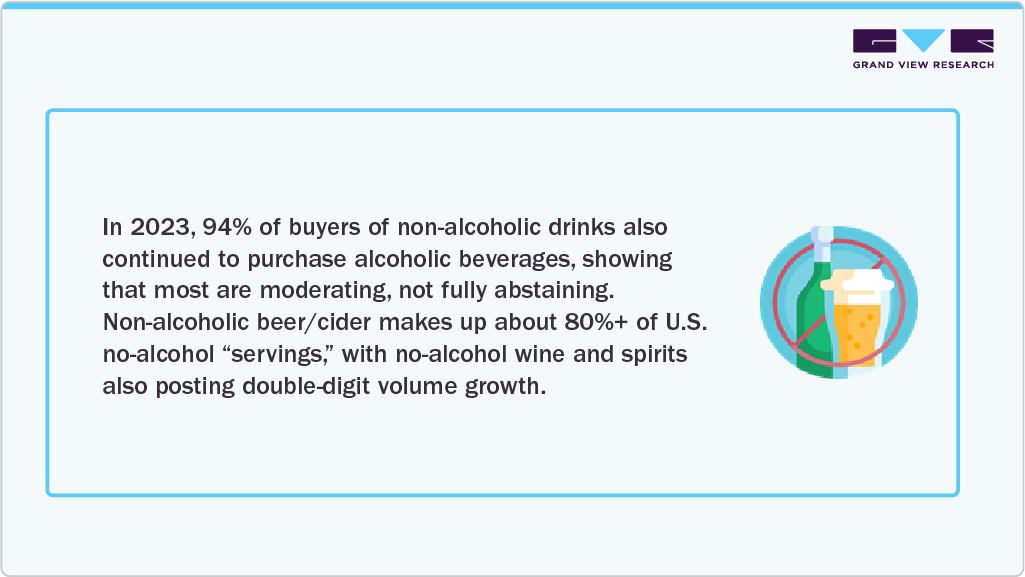
 Changing alcohol consumption patterns have further strengthened demand for craft and flavored sodas. In 2024, U.S. consumer studies indicated a continued decline in alcohol participation, with the share of adults reporting alcohol consumption falling to the high-50% range, down from above 60% levels observed earlier in the decade. This moderation trend is most pronounced among Gen Z and younger millennials, who increasingly favor sober-curious or “occasionally drinking” lifestyles. As a result, consumers are seeking non-alcoholic beverages that still provide complexity, sophistication, and social relevance, a role that craft sodas are well-positioned to fill.
 To learn more about this report, Download Free Sample Report
 Consumers who reduce alcohol intake often also reduce sugar and artificial additives, creating a strong overlap with the craft soda value proposition. Products positioned around prebiotics, botanicals, natural flavors, lower sugar content, and clean labels resonate strongly with wellness-oriented consumers. This convergence of health moderation and indulgence has enabled craft sodas to compete with traditional soft drinks, flavored sparkling waters, and alcohol-free beers, while also influencing innovation in the soda market, where consumers increasingly experiment with homemade, healthier carbonated beverages.
The rise of cocktail-inspired and globally influenced flavors has also played an important role in market expansion. Craft sodas increasingly mimic classic and contemporary cocktail profiles such as citrus spritzes, herbal tonics, tropical blends, and spice-infused formulations without alcohol. This aligns with the growth of at-home mixology and premium non-alcoholic menus in cafés, restaurants, and bars. In parallel, global beverage and foodservice data from 2024 indicate double-digit growth in non-alcoholic beverage sales, reflecting rising acceptance of zero-proof options as standalone choices rather than substitutes.
Consumer Insights
The craft soda market is experiencing sustained growth as consumers increasingly seek premium, differentiated beverage experiences beyond mass-produced carbonated soft drinks. Consumers are placing greater value on provenance, ingredient transparency, and storytelling, allowing craft soda brands to command premium pricing while appealing to consumers seeking alternatives to conventional colas and lemon-lime sodas.
 To learn more about this report, Download Free Sample Report
 Consumers are becoming more experimental, actively exploring bold flavors, botanical infusions, and regional specialties that reflect authenticity. Younger demographics, particularly millennials and Gen Z, show a strong preference for beverages that align with their values, such as sustainability and clean-label formulations. Convenience also shapes purchasing behavior, with growing demand for ready-to-drink, single-serve craft sodas in cafés, gourmet stores, and online platforms, where curated assortments encourage product discovery and repeat purchases.
Flavor Insights
The cola-flavored craft soda market accounted for the largest share of 49.0% in 2025. Unlike mass-produced colas, craft versions emphasize natural sweeteners, botanical extracts (such as kola nut, vanilla, citrus peel, and spices), and lower sugar formulations, aligning with clean-label and premiumization trends. Growing skepticism toward artificial additives in mainstream colas, combined with rising demand for small-batch, artisanal beverages, is prompting consumers, especially Millennials and Gen Z, to rediscover cola in a more authentic, customizable format. In addition, cola-flavored craft sodas benefit from versatility, serving as a standalone premium soft drink and as a popular mixer in low- and no-alcohol cocktails, further supporting their rising consumer appeal.
 To learn more about this report, Download Free Sample Report
 The tropical fruit-flavored craft soda is expected to grow at a CAGR of 6.4% over the forecast period from 2026 to 2033. The demand for tropical soda-flavored craft sodas is rising as consumers increasingly seek experiential, flavor-forward beverages that offer an escape from conventional cola profiles. Tropical flavors such as mango, pineapple, passion fruit, and coconut are perceived as refreshing, vibrant, and mood-enhancing, aligning well with consumer preferences for novelty and indulgence without alcohol. This trend is further supported by the growth of craft and premium soda brands that emphasize small-batch production, natural ingredients, and reduced artificial additives, positioning tropical sodas as a cleaner, more sophisticated alternative to mass-market soft drinks.
Packaging Insights
Glass packaging accounted for the largest revenue share of 55.9% in 2025 in the global craft soda industry. The demand for craft soda packaged in glass is rising as consumers increasingly associate glass bottles with premium quality, authenticity, and clean labeling. Glass is perceived as a safer and more sustainable packaging option, as it is non-reactive, preserves flavor integrity better than plastic or cans, and aligns with eco-conscious values through recyclability. In addition, craft soda brands leverage glass packaging to reinforce artisanal positioning, nostalgic appeal, and small-batch credibility, resonating strongly with health-aware and experience-driven consumers seeking natural ingredients, unique flavors, and a more elevated beverage experience.
 To learn more about this report, Download Free Sample Report
 The canned craft soda market is expected to grow at a CAGR of 5.3% from 2026 to 2033. The demand for craft soda packaged in cans is rising as consumers increasingly seek premium, artisanal beverages that offer flavor innovation without alcohol. Craft sodas appeal to health- and ingredient-conscious buyers through small-batch production, real sugar or natural sweeteners, and unique flavor profiles featuring botanicals, spices, and nostalgic blends. Cans can further strengthen this trend by offering superior portability, faster chilling, light and oxygen protection, and high recyclability, aligning with sustainability preferences.
Distribution Channel Insights
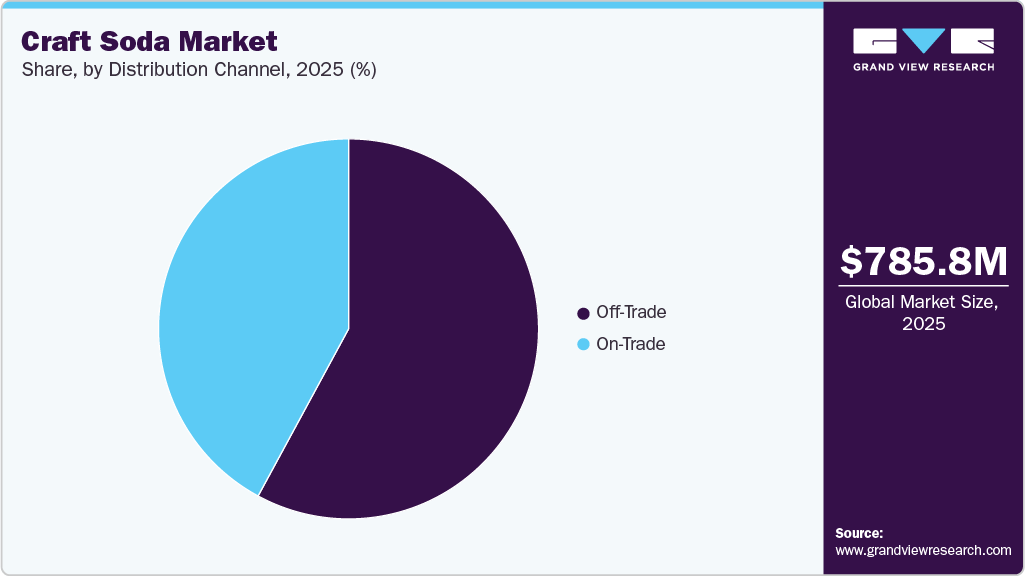
Sales of craft soda through the off-trade channels held the largest revenue share of 57.9% in 2025. Sales through this channel are rising as consumers increasingly prefer to discover, purchase, and consume premium beverages at home, driven by convenience, value, and broader product access. Supermarkets, specialty stores, and online platforms offer greater shelf variety, flavor experimentation (botanical, low-sugar, functional blends), and multipack formats, allowing consumers to trial niche craft brands at lower per-unit costs than on-trade outlets. In addition, the growth of health-conscious consumption, home entertaining, and e-commerce has positioned off-trade retail as the primary channel for repeat purchases, supporting sustained volume growth for craft sodas beyond occasional café or bar consumption.
 To learn more about this report, Download Free Sample Report
 Sales of craft soda through on-trade channels are expected to grow at a CAGR of 5.0% over the forecast period. Sales of craft soda through the on-trade channel are rising as consumers increasingly seek experiential, premium, and alcohol-alternative beverages when dining out or socializing. Bars, cafés, and restaurants are using craft sodas to differentiate menus, offering small-batch flavors, natural ingredients, and house-made mixers that align with clean-label and wellness trends. Growth is also supported by the rise of non-alcoholic and low-ABV drinking occasions, where craft sodas serve as standalone premium drinks or as mixers for mocktails. For consumers, the on-trade setting enhances perceived value through presentation, customization, and pairing with food, making craft sodas a lifestyle choice rather than a packaged refreshment.
Regional Insights
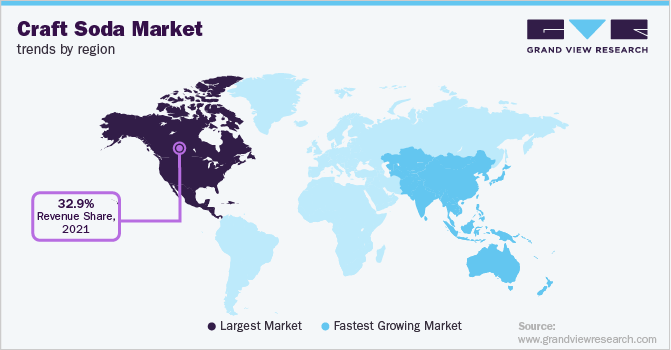
The North America craft soda industry dominated the market and accounted for a share of 32.8% in the global market in 2025. Consumption of craft soda is rising across North America as consumers increasingly seek clean-label, flavorful alternatives to mass-produced carbonated drinks. Shoppers are moving away from high-fructose corn syrup and artificial additives, favoring craft sodas made with cane sugar, natural botanicals, fruit extracts, and functional ingredients such as herbs and spices. The trend is further reinforced by premiumization and localism, with consumers, especially Millennials and Gen Z, showing strong interest in small-batch, locally produced brands that emphasize authenticity and transparency. In addition, craft sodas are benefiting from the “sober-curious” movement, as they serve as sophisticated, alcohol-free beverage options in social settings, supporting sustained demand growth across the region.
 To learn more about this report, Download Free Sample Report
 U.S. Craft Soda Market Trends
The craft soda industry in the U.S. is expected to grow at a CAGR of 4.4% in the forecast period. The consumption of craft soda is rising in the U.S. as consumers increasingly seek clean-label, flavor-forward alternatives to mass-produced carbonated drinks. Craft sodas emphasize real ingredients such as cane sugar, botanicals, fruit extracts, and spices, aligning with growing concerns around artificial sweeteners and high-fructose corn syrup. The category is also benefiting from premiumization trends, with consumers, particularly Millennials and Gen Z, willing to pay more for small-batch products that offer unique flavors, regional authenticity, and brand storytelling.
Europe Craft Soda Market Trends
The craft soda industry in Europe is expected to grow at a CAGR of 4.6% over the forecast period from 2026 to 2033. Craft sodas appeal through natural ingredients, reduced sugar formulations, botanical flavors, and clean-label positioning, differentiating them from mass-produced carbonated drinks. In addition, Europe’s strong café culture and growing interest in artisanal, locally produced beverages are driving demand, with consumers valuing authenticity, sustainability, and unique flavor profiles such as elderflower, rhubarb, blood orange, and herbal infusions. The expansion of craft sodas as mixers for low- and no-alcohol cocktails has further accelerated adoption, particularly among younger urban consumers seeking sophistication without alcohol.
The UK craft soda industry is expected to grow at a CAGR of 3.7% over the forecast period from 2026 to 2033, driven by rising consumer interest in premium, artisanal beverages and a shift away from traditional mass-produced soft drinks. Demand for natural ingredients, botanical flavors, and low-sugar formulations is fueling adoption across younger demographics. Expanding availability through specialty cafés, gourmet retailers, and online platforms is further supporting steady market growth across the country.
Asia Pacific Craft Soda Market Trends
The craft soda industry in the Asia Pacific is expected to grow at a CAGR of 6.3% from 2026 to 2033. Urban millennials and Gen Z consumers are driving demand for small-batch sodas made with natural ingredients, reduced sugar, botanical extracts, and locally inspired flavors such as yuzu, calamansi, ginger, lemongrass, and pandan. This shift is further supported by growing health consciousness, skepticism toward artificial additives, and the influence of café culture, mixology trends, and Western premium beverage imports. In markets such as Japan, Australia, South Korea, and Singapore, craft sodas are also gaining traction as alcohol alternatives and cocktail mixers, aligning well with the region’s rising interest in moderation, functional ingredients, and artisanal food and beverage products.
The China craft soda industry is expected to grow at a CAGR of 5.4% over the forecast period from 2026 to 2033, because of rising preference for premium beverages, growing urban middle-class spending, and increasing interest in unique, internationally inspired flavors. Younger consumers are driving demand for clean-label, aesthetically branded products that offer novelty and authenticity. Expanding café culture, strong e-commerce penetration, and social media visibility are further accelerating the adoption of craft sodas across major Chinese cities.
Central & South America Craft Soda Market Trends
The craft soda industry in Central & South America accounted for a revenue market share of over 12.8% in 2025, as consumer interest is growing in premium, locally crafted beverage options. Rising demand for natural ingredients, expanding urban retail networks, and increased visibility of artisanal brands in cafés and specialty stores have contributed to this strong regional presence. Social media promotion and lifestyle-driven consumption trends also continue to support market momentum.
Middle East & Africa Craft Soda Market Trends
The craft soda industry in Middle East & Africa is expected to grow at a CAGR of 4.2% over the forecast period from 2026 to 2033. The growth is driven by rising consumer interest in premium, natural beverages and increasing exploration of unique flavor profiles. Growing café culture, urbanization, and higher disposable incomes are supporting demand across major cities. Additionally, expanding availability through specialty retailers, restaurants, and online platforms is helping artisanal soda brands reach broader audiences in the region.
Key Craft Soda Company Insights
Mature craft soda brands are expanding through innovative flavors, clean-label positioning, and stronger retail partnerships. Market share is concentrated among premium players, while emerging local brands gain traction through niche targeting and regional authenticity.
 To learn more about this report, Download Free Sample Report
 Key Craft Soda Companies:
The following key companies have been profiled for this study on the craft soda market.
- Jones Soda Co.
- Appalachian Brewing Co.
- Reed’s Inc.
- PepsiCo, Inc.
- The Original Craft Soda Company
- The Coca-Cola Company
- Crooked Beverage Co.
- SIPP eco beverage co. Inc.
- Boylan Bottling Co.
- Wild Poppy Company
Recent Developments
-
In February 2025, Lady Bird Soda Co., a craft soda company from Nashville, expanded its distribution through a new partnership that will bring its products into more retail and on-premise locations in the Metro Atlanta area, strengthening its presence in the Southeast and supporting its growth plans.
-
In July 2024, Jones Soda introduced two new canned products, Jones Craft Cola (with cane sugar) and Jones Craft Zero Cola (no calories), marking its first move into the cola category through a multi-year collaboration with Nitrocross Motorsports, part of Thrill One Sports & Entertainment. The colas will debut September 6-7 at the Nitrocross season opener in Richmond, Virginia, be sold at other Nitrocross events, and later roll out nationwide, supporting Jones Soda’s broader growth initiatives and extending its existing action-sports partnerships, including Street League Skateboarding and the SLS youth development program.
Craft Soda Market Report Scope
Report Attribute
Details
Market size in 2025
USD 785.8 million
Estimated market size in 2026
USD 825.2 million
Projected market size by 2033
USD 1,189.3 million
Growth rate
CAGR of 5.4% from 2026 to 2033
Base year for estimation
2025
Historical data
2021 - 2024
Forecast period
2026 - 2033
Quantitative units
Revenue in USD million and CAGR from 2026 to 2033
Report coverage
Revenue forecast, company ranking, competitive landscape, growth factors, and trends
Segments covered
Flavor, packaging, distribution channel, region
Regional scope
North America; Europe; Asia Pacific; Central & South America; Middle East & Africa
Country scope
U.S.; Canada; Mexico; UK; Germany; France; Italy; Spain; China; India; Japan; South Korea; Australia & New Zealand; Brazil; South Africa; UAE
Key companies profiled
Jones Soda Co.; Appalachian Brewing Co.; Reed’s Inc.; PepsiCo, Inc.; The Original Craft Soda Company; The Coca-Cola Company; Crooked Beverage Co.; SIPP eco beverage co. Inc.; Boylan Bottling Co.; Wild Poppy Company
Customization scope
Free report customization (equivalent up to 8 analysts working days) with purchase. Addition or alteration to country, regional & segment scope.
Pricing and purchase options
Avail customized purchase options to meet your exact research needs. Explore purchase options
Global Craft Soda Market Report Segmentation
This report forecasts revenue growth at global, regional & country levels and provides an analysis of the latest trends and opportunities in each of the sub-segments from 2021 to 2033. For this study, Grand View Research has segmented the craft soda market report on the basis of flavor, packaging, distribution channel, and region:
 To learn more about this report, Download Free Sample Report
 -
Flavor Outlook (Revenue, USD Million, 2021 - 2033)
-
Cola
-
Tropical Fruits
-
Berries
-
Others
-
-
Packaging Outlook (Revenue, USD Million, 2021 - 2033)
-
Glass
-
Cans
-
Plastic
-
Others
-
-
Distribution Channel Outlook (Revenue, USD Million, 2021 - 2033)
-
On-Trade
-
Off-Trade
-
-
Regional Outlook (Revenue, USD Million, 2021 - 2033)
-
North America
-
U.S.
-
Canada
-
Mexico
-
-
Europe
-
UK
-
Germany
-
France
-
Italy
-
Spain
-
-
Asia Pacific
-
China
-
India
-
Japan
-
South Korea
-
Australia & New Zealand
-
-
Central & South America
-
Brazil
-
-
Middle East & Africa
-
South Africa
-
UAE
-
-
Frequently Asked Questions About This Report
The global craft soda market size was estimated at USD 785.8 million in 2025 and is expected to reach USD 825.2 million in 2026.
The global craft soda market is expected to grow at a compound annual growth rate of 5.4% from 2026 to 2033 to reach USD 1,189.3 million by 2033.
North America dominated with a 32.8% revenue share in 2025.
Asia Pacific is the fastest-growing region over the forecast period.
The glass packaging segment led with a 55.9% revenue share in 2025, while the canned craft soda segment is expected to grow at a CAGR of 5.3% from 2026 to 2033.
The off-trade segment led with a 57.9% revenue share in 2025, while the on-trade segment is expected to grow at a CAGR of 5.0%.
The cola-flavored craft soda market accounted for the largest share of 49.0% in 2025. Unlike mass-produced colas, craft versions emphasize natural sweeteners, botanical extracts (such as kola nut, vanilla, citrus peel, and spices), and lower sugar formulations, aligning with clean-label and premiumization trends.
Some of the key players in the craft soda market are Jones Soda Co.; Appalachian Brewing Co.; Reed’s Inc.; PepsiCo, Inc.; The Original Craft Soda Company; The Coca-Cola Company; Crooked Beverage Co.; SIPP eco beverage co. Inc.; Boylan Bottling Co.; and Wild Poppy Company.
Rising demand for natural and clean-label beverages, growing interest in unique, artisanal flavors, and increasing popularity of premium and locally produced products are some of the factors driving the market.
About the Author(s)
Consumer F&B Research Team
Consumer Goods · Consumer F&BThis report was authored by the consumer f&b research team at Grand View Research - comprising two research analysts, one senior research analyst, and one industry expert - with specialized expertise in the consumer f&b segment of the consumer goods industry. All findings are based on proprietary consumer goods databases, executive interviews, and regulatory analysis, subject to internal peer review prior to publication.
Last Updated:
Speak to Analyst

Customize this report to your needs - add regions, segments, or data points, with 20% free customization.
Or view our licence options:


ISO 9001:2015 & 27001:2022 Certified
We are GDPR and CCPA compliant! Your transaction & personal information is safe and secure. For more details, please read our privacy policy.


