
- Home
- »
- Medical Devices
- »
-
Cyanoacrylate Surgical Sealants & Adhesives Market Report, 2033GVR Report cover

Cyanoacrylate Surgical Sealants And Adhesives Market (2026 - 2033)
Size, Share & Trends Analysis Report By Product (n-Butyl Cyanoacrylate-based Sealants, 2-Octyl Cyanoacrylate-based Sealants), By Application, By End-use, By Region, And Segment Forecasts
Market Size, 2025
$1.5BMarket Estimate, 2026
$1.6BMarket Forecast, 2033
$2.2BCAGR, 2026–2033
5.4%Cyanoacrylate Surgical Sealants And Adhesives Market Market Summary
The global cyanoacrylate surgical sealants and adhesives market size was valued at USD 1.5 billion in 2025 and is projected to grow from USD 1.6 billion in 2026 to USD 2.2 billion by 2033, at a CAGR of 5.4% from 2026 to 2033. North America dominated the market, accounting for the largest global share of 32.9% in 2025. The growth of the cyanoacrylate surgical sealants and adhesives market is driven by the increasing demand for minimally invasive surgeries, which has led to the adoption of advanced wound closure technologies, as these sealants provide quick and effective solutions.
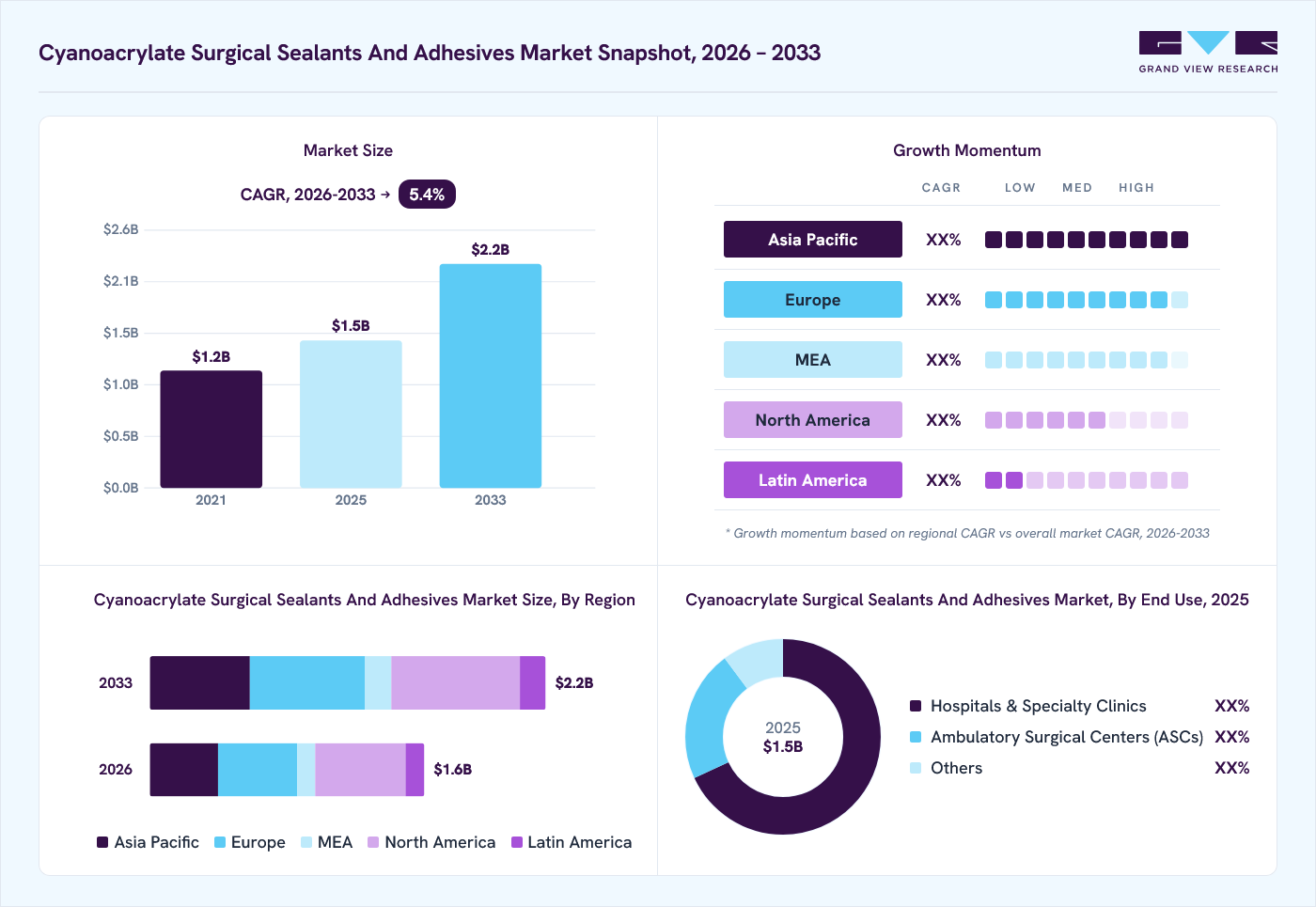 Source: Grand View Research, IR Documents, Primary Interviews, Paid DatabasesTo learn more about this report,
 Download Free Sample Report
Key Market Trends & Insights
- By product: n-butyl cyanoacrylate-based sealants segment held the largest share of 44.5% in 2025.
- By application: Cardiovascular surgery segment held the largest revenue share of 30.7% in 2025.
- By end-use: Hospitals & specialty clinics segment held the largest revenue share of 68.0% in 2025.
Regional Highlights
- Largest regional market: North America (32.9% revenue share, 2025)
- By country: The U.S. held the largest share of North America in 2025.
Market Size & Forecast
- Market size in 2025: USD 1.5 Billion
- Estimated market size in 2026: USD 1.6 Billion
- Projected market size by 2033: USD 2.2 Billion
- CAGR (2026-2033): 5.4%
Prism AI by Grand View Research Free to tryAsk a question about the cyanoacrylate surgical sealants and adhesives marketTry asking✓Every figure cited from GVR research Prefer the report? Download free sample →
Moreover, the increasing prevalence of chronic diseases necessitates more surgical interventions, which further accelerates market growth. In addition, expanding investments in healthcare infrastructure worldwide enable greater availability and usage of these products. The market is witnessing significant expansion, driven by the global surge in surgical procedure volumes and the accelerating adoption of minimally invasive surgery (MIS) techniques.There is an important shift from traditional wound closure methods such as sutures and staples, particularly in complex or delicate procedures, where cyanoacrylates offer superior sealing capabilities and reduced tissue trauma. The advantages of cyanoacrylate, such as rapid polymerization, strong adhesion to moist tissues, and the ability to create a watertight seal, are increasing their role in specialties ranging from general surgery to cardiovascular and neurosurgery.
 To learn more about this report, Download Free Sample Report
This demand is further fueled by an aging global population and the rising prevalence of chronic diseases necessitating surgical interventions, increasing the overall demand for efficient and effective wound management solutions. According to the World Health Organization (WHO), the global geriatric population aged 60 years and above is expected to increase from 1.1 billion in 2023 to reach around 1.4 billion by 2030. The market's growth is also influenced by the clinical benefits these adhesives provide, including decreased operative time, reduced risk of leakage, and potentially lower rates of post-operative complications. These are critical considerations for healthcare providers aiming to improve patient outcomes and optimize resource utilization. Moreover, diversifying different types of cyanoacrylate surgical sealants and adhesives enables cyanoacrylates to penetrate new surgical domains, including ophthalmology for corneal repair and orthopedics for bone fragment stabilization, significantly broadening their applications.
The rising prevalence of chronic diseases and traumatic injuries has significantly contributed to the growing application of cyanoacrylate surgical sealants and adhesives. Globally, the increasing incidence of diabetes, vascular disorders, and obesity-related complications has led to a higher number of surgical interventions requiring efficient wound closure solutions. According to the International Diabetes Federation (IDF), around 589 people aged 20-79 were living with diabetes in 2024, and this prevalence of diabetes is expected to reach around 853 million by 2050. Similarly, cyanoacrylate surgical adhesives have become increasingly integral to trauma and emergency medicine due to their rapid application, strong tissue adhesion, and reduced infection risk. In high-pressure emergency settings, such as accident and trauma centers, these adhesives offer a fast and efficient alternative to traditional sutures for superficial lacerations, scalp wounds, and facial injuries. According to the WHO, approximately 1.19 million people lose their lives annually due to road traffic crashes, with an additional 20-50 million suffering non-fatal injuries, many of whom incur disabilities. Thus, the demand for cyanoacrylate surgical sealants and adhesives is expected to be driven by the rising number of road traffic accidents and occupational injuries, particularly in countries where trauma admissions are significantly increasing.
 To learn more about this report, Download Free Sample Report
Market Dynamics
The cyanoacrylate surgical sealants and adhesives market is experiencing significant growth as healthcare providers increasingly adopt advanced wound closure technologies that improve surgical efficiency, reduce procedure times, and enhance patient outcomes. Cyanoacrylate surgical sealants and adhesives are synthetic tissue-bonding agents used to close surgical incisions, traumatic wounds, and skin lacerations without the need for conventional sutures or staples in selected procedures. These products are widely utilized across general surgery, cardiovascular surgery, plastic and reconstructive surgery, orthopedic procedures, neurosurgery, trauma care, and minimally invasive surgical interventions. Their ability to provide rapid wound closure, microbial barrier protection, reduced tissue trauma, and improved cosmetic outcomes has contributed to growing adoption across hospitals, ambulatory surgical centers, and specialty surgical clinics.
The market is further supported by the increasing volume of surgical procedures worldwide, rising prevalence of chronic diseases requiring surgical intervention, and growing emphasis on reducing healthcare-associated infections and postoperative complications. Advancements in adhesive formulations, enhanced flexibility, improved biocompatibility, antimicrobial properties, and faster polymerization technologies are strengthening product performance and expanding clinical applications. In addition, growing demand for minimally invasive procedures, increasing healthcare expenditure, and expanding access to advanced surgical care continue to support market growth. Furthermore, the need for efficient wound management solutions that improve patient comfort and reduce hospital stays is driving demand for cyanoacrylate surgical sealants and adhesives across both developed and emerging healthcare markets.
The increasing preference for advanced wound closure technologies and minimally invasive surgical procedures is a major factor driving growth in the global cyanoacrylate surgical sealants and adhesives market. Healthcare providers are increasingly seeking alternatives to traditional sutures and staples that can improve procedural efficiency, reduce wound complications, and enhance cosmetic outcomes. Cyanoacrylate-based surgical adhesives offer several advantages, including rapid application, strong tissue bonding, reduced procedure time, improved patient comfort, and the creation of a protective microbial barrier that may lower the risk of surgical site infections. These benefits have contributed to their growing adoption across various surgical specialties, including general surgery, plastic surgery, orthopedics, and cardiovascular procedures.
Technological advancements in adhesive formulations are further expanding clinical utilization. Newer products offer improved flexibility, enhanced biocompatibility, stronger adhesion strength, and better performance in challenging surgical environments. In addition, the growing shift toward outpatient and minimally invasive procedures is increasing demand for wound closure solutions that facilitate faster recovery and reduced healthcare resource utilization. As surgical volumes continue to rise globally and healthcare systems prioritize improved clinical outcomes and operational efficiency, demand for cyanoacrylate surgical sealants and adhesives is expected to increase significantly.
One of the key restraints affecting the mesotherapy market is the absence of globally standardized treatment protocols and the limited availability of large-scale long-term clinical evidence supporting many mesotherapy formulations and indications. Treatment outcomes can vary significantly depending on practitioner expertise, injection techniques, ingredient combinations, treatment frequency, and patient characteristics. While numerous studies have reported favorable aesthetic and therapeutic outcomes, many investigations involve relatively small patient populations, short follow-up periods, and limited comparative analyses.
For example, despite promising 2025 findings demonstrating substantial rosacea improvements following hyaluronic acid and succinic acid mesotherapy, researchers acknowledged limitations including small sample size, lack of randomization, single-center design, and short-term follow-up. Such evidence gaps may contribute to regulatory uncertainty and varying physician acceptance across healthcare markets. Additionally, concerns regarding inconsistent product quality, off-label use of injectable formulations, and differing regional regulatory requirements can create challenges for broader clinical adoption. These factors may slow market expansion, particularly in highly regulated healthcare environments where robust evidence-based validation is required before widespread treatment acceptance.
Market Concentration & Characteristics
The cyanoacrylate surgical sealants and adhesives market exhibits notable industry concentration, with key players focusing on innovation and product differentiation. Key characteristics include growing demand for minimally invasive surgeries, increased adoption in wound closure applications, and advancements in adhesive formulations enhancing efficacy and safety. The rising prevalence of chronic diseases drives market growth, as does the rise in the number of trauma injuries, the aging population, and growing investments in healthcare infrastructure globally.
The cyanoacrylate surgical sealants and adhesives industry is characterized by a medium pace of innovation, with most products being based on established formulations. However, there are opportunities for future innovation, particularly in developing adhesives with improved biocompatibility, biodegradability, and antimicrobial properties. Additionally, companies could focus on collaborating with research institutions and clinicians to identify unmet needs and develop novel solutions. The potential for innovation lies in developing next-generation cyanoacrylate adhesives that address the limitations of current products, such as toxicity concerns and limited flexibility.
 To learn more about this report, Download Free Sample Report
The cyanoacrylate surgical sealants and adhesives industry is witnessing significant activity in mergers and acquisitions, reflecting the growing demand for advanced surgical solutions. Major players are consolidating to enhance their product portfolios and expand market reach. For instance, in December 2024, H.B. Fuller acquired two medical adhesive companies, GEM S.r.l. and Medifill Ltd., expanding its medical adhesive technologies business globally. Medifill specializes in medical-grade cyanoacrylate adhesives for fast, safe wound closure. These acquisitions enhance H.B. Fuller’s portfolio in high-growth tissue adhesives, building on expertise in cyanoacrylate chemistry. As competition intensifies, such strategic alliances are expected to play a crucial role in shaping the future landscape of the cyanoacrylate surgical sealants and adhesives market.
The cyanoacrylate surgical sealants and adhesives industry is significantly influenced by regulations, which impose strict guidelines to guarantee safety and effectiveness in medical applications. Agencies such as the U.S. Food and Drug Administration (FDA) and the European Medicines Agency (EMA) implement rigorous testing protocols that products must meet before entering the market. These regulations mandate comprehensive clinical evaluations and continuous post-market surveillance, enhancing patient safety and affecting market dynamics by requiring manufacturers to invest resources in research and development to adhere to compliance standards.
The cyanoacrylate surgical adhesives industry faces competition from various product substitutes that offer alternative wound closure solutions. These substitutes include sutures, staples, and other tissue adhesives like fibrin glue. Sutures, for instance, are a traditional and widely used method for wound closure, offering high tensile strength and versatility in various surgical procedures. Staples are another common substitute, particularly in surgeries where speed is crucial, such as in certain gastrointestinal or skin closure procedures. However, the competition from these substitutes drives innovation in cyanoacrylate adhesives, with manufacturers focusing on improving their products' performance, safety, and ease of use.
Regional expansion in the cyanoacrylate surgical adhesives industry is driven by the increasing healthcare investments and rising surgical procedures, which are anticipated to drive demand. As healthcare infrastructure improves and awareness of advanced surgical adhesives grows, these regions could see significant adoption rates. Furthermore, the ongoing development of innovative formulations for specific surgical applications may enhance market growth.
Analyst Perspective
The cyanoacrylate surgical sealants and adhesives market is expected to grow steadily, driven by rising adoption of minimally invasive and outpatient procedures, increasing surgical volumes, and demand for faster, safer wound closure. These adhesives offer benefits such as reduced tissue trauma, shorter procedure times, improved cosmetic outcomes, and lower infection risks compared with traditional sutures and staples. Continuous innovation in biocompatibility, flexibility, adhesion strength, and antimicrobial properties is expanding their use across various surgical specialties. Despite regulatory, cost, and high-tension application challenges, technological advancements and the growing focus on efficient, patient-centered care are expected to support long-term market growth.
Product Insights
Based on product, the n-butyl cyanoacrylate-based sealants segment led the market with the largest revenue share of 44.5% in 2025. This is attributed to their high tensile strength, rapid adhesion, and proven clinical effectiveness in internal surgeries such as cardiovascular and general procedures. Their ability to provide strong, immediate hemostasis has made them a go-to choice for surgeons dealing with high-pressure blood vessels and internal tissue closure. In February 2024, Henkel AG & Co. KGaA launched two innovative medical-grade cyanoacrylate adhesives-Loctite 4011S and Loctite 4061S-tailored for medical device applications. These adhesives provide robust bonding capabilities on plastics, rubber, and metals, improving surgical safety and performance.
The combinations (blended formulations) segment is witnessing significant growth. These sealants offer balance, strength, and flexibility by combining n-butyl and 2-octyl cyanoacrylates. These hybrid products are gaining traction due to their improved biocompatibility and reduced brittleness, making them increasingly suitable for a broader range of surgical applications, including delicate and cosmetic procedures.
Application Insights
Based on application, the cardiovascular surgery segment led the market with the largest revenue share of 30.7% in 2025. This dominance is due to the critical need for strong, reliable tissue sealing and hemostasis in high-risk, high-pressure surgical environments. Cyanoacrylate-based adhesives, particularly n-butyl variants, are especially valued for their ability to seal vascular structures and decrease operative time quickly. For instance, as of 2023, between 1 and 1.5 million cardiac surgical procedures are estimated to be performed globally annually. This encompasses a range of surgeries, including coronary artery bypass grafting (CABG), valve replacements, and congenital heart defect repairs. Cyanoacrylate-based sealants, particularly those formulated with n-butyl cyanoacrylate, are widely adopted due to their strong adhesive strength, quick polymerization, and secure seal in dynamic surgical environments. As the global burden of cardiovascular disease rises and surgical volumes increase, especially in high-growth regions like Asia-Pacific, the use of cyanoacrylate adhesives in cardiovascular applications continues to expand.
Theplastic and reconstructive surgery segment is expected to witness the fastest growth of 7.1% over the forecast period. This growth is driven by the rising number of elective and cosmetic procedures globally. Surgeons in this field prioritize aesthetic outcomes and minimal scarring, making 2-octyl cyanoacrylate-based products and blended formulations highly desirable due to their superior flexibility and cosmetic finish. According to the International Society of Aesthetic Plastic Surgery (ISAPS), over 15.8 million surgical aesthetic procedures were performed worldwide in 2023, marking a 5.5% increase from the previous year. As demand for aesthetic surgeries continues to grow, particularly for minimally invasive and cosmetic procedures, so does the need for effective wound closure solutions that ensure minimal scarring and quick recovery. Cyanoacrylate-based adhesives, especially 2-octyl and blended formulations, are increasingly favored in plastic and reconstructive surgery due to their strong tissue bonding, antimicrobial properties, and superior cosmetic outcomes compared to traditional sutures.
End Use Insights
Based on end-use, the hospitals & specialty clinics segment led the market with the largest revenue share of 68.0% in 2025. In recent years, the number of hospitals and clinics utilizing surgical sealants and adhesives has increased. Advantages such as lowered infection rates, reduced operating times, enhanced cosmetic results, decreased costs, ease of use, rapid wound sealing, and reduction of needle stick injuries are some of the key factors responsible for the increasing adoption of these products.
 To learn more about this report, Download Free Sample Report
The hospital segment is expected to grow significantly over the forecast period. This can be attributed to the rising focus on patient-centered care within hospitals and clinics, as these facilities aim to improve treatment outcomes through innovative medical devices. Furthermore, the volume and complexity of procedures conducted in hospital settings often require advanced wound closure technologies. Hospitals are typically the first to adopt innovative surgical tools and materials, including blended cyanoacrylate adhesives. Their ability to handle high patient throughput and more invasive surgeries ensures they remain the primary consumers of surgical adhesives. Additionally, ongoing investments in surgical infrastructure and rising demand for effective hemostatic agents further accelerate the adoption of cyanoacrylate sealants in hospitals worldwide.
Regional Insights
North America dominated the cyanoacrylate surgical sealants and adhesives market with the largest revenue share of 32.9% in 2025. The market growth in North America is driven by the high adoption of advanced wound closure technologies across surgical disciplines, particularly in cardiovascular, orthopedic, and cosmetic surgeries. The region benefits from well-established healthcare infrastructure, a strong presence of key manufacturers, and supportive regulatory pathways for product approvals. Rising emphasis on minimally invasive procedures, shorter hospital stays, and cost-effective surgical solutions further supports demand.
 To learn more about this report, Download Free Sample Report
U.S. Cyanoacrylate Surgical Sealants And Adhesives Market Trends
The cyanoacrylate surgical sealants and adhesives market in the U.S. held the largest share in the North America region in 2025. In the U.S., the cyanoacrylate surgical sealants and adhesives market is driven by the healthcare sector's emphasis on minimally invasive procedures and rapid wound closure, shaped by the country’s advanced surgical infrastructure, high surgical volumes, and strong regulatory support for innovative wound closure products. The U.S. Food and Drug Administration (FDA) has approved multiple cyanoacrylate-based adhesives, facilitating their routine use in clinical settings. U.S.-based manufacturers and distributors play a key role in maintaining consistent product availability, with domestic production capabilities supporting rapid market growth.
Europe Cyanoacrylate Surgical Sealants And Adhesives Market Trends
The European market for cyanoacrylate surgical sealants and adhesivesis driven by the region’s stringent regulatory environment, centralized procurement systems, and emphasis on standardizing surgical protocols. The European Medicines Agency (EMA) and Medical Device Regulation (MDR) frameworks have created a structured pathway for market entry, encouraging manufacturers to align with high safety and efficacy standards. Hospitals and surgical centers across Europe prioritize clinically validated and CE-marked adhesives, enhancing consistent adoption within public healthcare systems. The region's focus on reducing hospital-acquired infections and promoting minimally invasive surgical procedures drives demand.
The UK cyanoacrylate surgical sealants and adhesives market is driven by the National Health Service’s (NHS) push for efficiency in surgical outcomes and the wider adoption of non-invasive closure techniques across public and private healthcare facilities. The NHS’s centralized procurement practices encourage consistent product utilization, particularly those that meet stringent clinical safety and cost-effectiveness standards. Additionally, academic research collaborations and government funding for surgical innovation support the ongoing evaluation and refinement of adhesive products, reinforcing their clinical relevance.
The cyanoacrylate surgical sealants and adhesives market in Germany is driven by the country's high volume of surgical procedures, particularly in orthopedic and cardiovascular specialties, necessitating efficient wound closure solutions. The aging population contributes to an increased incidence of chronic conditions, leading to a higher demand for surgeries and surgical adhesives. Germany's advanced healthcare infrastructure and emphasis on adopting innovative medical technologies further support integrating cyanoacrylate-based products in surgical practices.
Asia Pacific Cyanoacrylate Surgical Sealants And Adhesives Market Trends
Demographic and healthcare factors drive the Asia Pacific cyanoacrylate surgical sealants and adhesives market. The rising prevalence of chronic diseases, such as cardiovascular ailments, kidney disorders, and neurological conditions, necessitates a higher number of surgical interventions, thereby increasing the demand for effective surgical adhesives. Additionally, the region faces a significant incidence of road traffic accidents, leading to a surge in emergency surgeries that require rapid and reliable wound closure solutions. The aging population further contributes to market as older individuals are more susceptible to health issues requiring surgical procedures.
Japan cyanoacrylate surgical sealants and adhesives market is expected to witness significant growth, driven by the country's aging population, which increases the demand for surgical interventions. Japan's elderly population surged to 36.25 million, accounting for a record high 29.3 percent of the population in September 2023, according to government figures released by the Ministry of Internal Affairs and Communications. The healthcare system's focus on advanced medical technologies supports the adoption of cyanoacrylate-based products, known for their rapid polymerization and antimicrobial properties.
The cyanoacrylate surgical sealants and adhesives market in China is expected to grow in the Asia Pacific region in 2024, driven by the country's increasing surgical procedures and rising healthcare expenditures. The country's growing prevalence of chronic diseases further increases the number of surgical interventions, thereby increasing the demand for effective surgical adhesives. The country's aging population also contributes to the increased need for surgical procedures, further fueling market growth.
India cyanoacrylate surgical sealants and adhesives market is driven by the increasing prevalence of chronic diseases such as cardiovascular disorders, diabetes, and cancer has led to a rise in surgical interventions, thereby boosting the demand for effective wound closure solutions. A 2023 study by the Indian Council of Medical Research - India Diabetes (ICMR INDIAB) estimates that 101 million people in India have diabetes. Furthermore, the nation’s significant rate of road traffic accidents necessitates considerable surgical interventions, thereby increasing the use of cyanoacrylate-based adhesives, which are recognized for their quick polymerization and antimicrobial characteristics.
 To learn more about this report, Download Free Sample Report
Latin America Cyanoacrylate Surgical Sealants And Adhesives Market Trends
The rising prevalence of chronic diseases, such as cardiovascular disorders and diabetes fuels the Latin American cyanoacrylate surgical sealants and adhesives industry. Additionally, the region experiences many road traffic accidents, increasing the demand for cyanoacrylate-based adhesives known for their rapid polymerization and antimicrobial properties. Moreover, the aging population further contributes to the market's growth, as older individuals are more vulnerable to health issues requiring surgical procedures.
Brazil cyanoacrylate surgical sealants and adhesives market is driven by the country's high incidence of road traffic accidents and developing healthcare infrastructure, with growing investments in medical facilities and technologies. Moreover, the country's emphasis on minimally invasive surgeries and the need for efficient postoperative recovery further increases demand for cyanoacrylate adhesives.
Middle East and Africa Cyanoacrylate Surgical Sealants And Adhesives Market Trends
The cyanoacrylate surgical sealants and adhesives market in the MEA is witnessing significant growth, driven by region-specific healthcare challenges and infrastructural developments. The rising prevalence of chronic diseases, such as cardiovascular disorders, obesity, and diabetes, has led to an increase in surgical interventions in the region. Additionally, the region faces many road traffic accidents, increasing the demand for effective surgical sealants and adhesives. Integrating advanced medical technologies and increased healthcare investments in countries across the MEA region also significantly drive the market growth.
The cyanoacrylate surgical sealants and adhesives market in Saudi Arabia is anticipated to expand in the forecast period. This can be attributed to the country's high prevalence of diabetes and related complications, which often necessitate complex wound care and frequent surgical interventions. The Kingdom’s rapid urbanization and increasing road traffic accidents drive demand for efficient surgical adhesives used in trauma and emergency surgeries. Additionally, Saudi Arabia’s healthcare system is undergoing significant modernization under Vision 2030, with substantial investments to upgrade medical infrastructure and expand access to advanced surgical technologies, which is expected to benefit the market growth over the forecast period.
Key Cyanoacrylate Surgical Sealants And Adhesives Company Insights
The competitive scenario in the cyanoacrylate surgical sealants and adhesives market is significantly competitive, with key players such as Ethicon (Johnson & Johnson); B. Braun Melsungen AG; Advanced Medical Solutions Group plc; and GEM Srl holding significant positions. The major companies are undertaking various organic and inorganic strategies such as new product development, collaborations, acquisitions, mergers, and regional expansion to serve the unmet needs of their customers. Some of the major participants in the
Key Cyanoacrylate Surgical Sealants And Adhesives Companies:
The following key companies have been profiled for this study on the cyanoacrylate surgical sealants and adhesives market.
- Ethicon (Johnson & Johnson)
- B. Braun Melsungen AG
- Advanced Medical Solutions Group plc
- GEM Srl
- Zhejiang PerfectSeal New Material Co., Ltd.
- Adhezion Biomedical, LLC
- Medline Industries, LP
- Meyer-Haake GmbH Medical Innovations
- GluStitch Inc.
- Cartell Chemical Co., Ltd.
Competitive Benchmarking
Category
Operating Strategies
Competitive Edge
Weakness
Established Players (Ethicon (Johnson & Johnson); B. Braun Melsungen AG; Advanced Medical Solutions Group plc; GEM Srl; Zhejiang PerfectSeal New Material Co. Ltd.; Adhezion Biomedical, LLC; Medline Industries)
- Established companies focus on expanding comprehensive surgical wound closure portfolios comprising cyanoacrylate surgical sealants, tissue adhesives, hemostatic agents, wound care products, and surgical closure solutions. They emphasize clinical validation, surgeon education programs, global distribution expansion, strategic partnerships with hospitals and surgical centers, and continuous formulation innovation to improve adhesion strength, flexibility, biocompatibility, and antimicrobial performance.
- Strong brand recognition, extensive distribution networks, and long-standing relationships with hospitals, surgeons, ambulatory surgical centers, and healthcare procurement organizations support sustained market leadership. Broad product portfolios, proven safety profiles, extensive clinical evidence, and significant R&D investments enable continuous innovation and successful penetration across multiple surgical specialties and geographic markets.
- Dependence on premium product positioning may create pricing challenges in cost-sensitive healthcare environments. Regulatory compliance requirements and clinical validation processes across multiple regions can increase operational complexity and commercialization timelines. Large organizational structures may reduce flexibility in responding rapidly to emerging technologies and niche surgical requirements.
Emerging Players (Meyer-Haake GmbH Medical Innovations; GluStitch Inc.; Cartell Chemical Co., Ltd.)
- Emerging companies prioritize innovative cyanoacrylate formulations, specialty-focused tissue adhesives, cost-effective wound closure solutions, and differentiated products targeting specific surgical applications. Many focus on improving product performance, expanding regional distribution, establishing partnerships with healthcare providers, and addressing unmet clinical needs in minimally invasive and outpatient surgical procedures.
- Agile product development processes enable faster innovation and adaptation to evolving surgical requirements. Competitive pricing strategies, niche product specialization, and the ability to rapidly incorporate advanced adhesive technologies provide opportunities to gain market share. Their focused approach allows efficient targeting of underserved markets and specialized surgical applications.
- Limited global brand recognition and smaller distribution infrastructures may restrict international expansion. Lower financial resources can constrain large-scale clinical trials, regulatory approvals, manufacturing scale-up, and marketing activities. Dependence on distributor partnerships and intense competition from established wound closure manufacturers may challenge long-term market penetration and growth.
Recent Developments
-
In July 2023, HB Fuller acquired Adhezion Biomedical, a US-based company specializing in cyanoacrylate adhesives, expanding its medical adhesive portfolio. This acquisition enhances HB Fuller's presence in the medical industry, leveraging Adhezion's expertise in formulating cyanoacrylate adhesives for various medical applications.
-
In February 2023,Admedus' subsidiary, Admedus Surgical, acquired Connexicon Medical, a medical device company that develops innovative products, including those using cyanoacrylate, a key component in certain medical adhesives. This acquisition expands Admedus' product portfolio and enhances its presence.
Cyanoacrylate Surgical Sealants And Adhesives Market Report Scope
Report Attribute
Details
Market size value in 2025
USD 1.5 billion
Market size value in 2026
USD 1.6 billion
Revenue forecast in 2033
USD 2.2 billion
Growth rate
CAGR of 5.4% from 2026 to 2033
Historical data
2021 - 2024
Forecast period
2026 - 2033
Quantitative units
Revenue in USD million/billion, and CAGR from 2026 to 2033
Report coverage
Revenue forecast, company ranking, competitive landscape, growth factors, and trends
Segments covered
Product, application, end-use, region
Regional scope
North America; Europe; Asia Pacific; Latin America; MEA
Country scope
U.S.; Canada; Mexico; Germany; UK; France; Italy; Spain; China; Japan; India; South Korea; Thailand; Brazil; Argentina; Colombia; Saudi Arabia; South Africa; UAE
Key compa6nies profiled
Ethicon (Johnson & Johnson); B. Braun Melsungen AG; Advanced Medical Solutions Group plc; GEM Srl; Zhejiang PerfectSeal New Material Co. Ltd.; Adhezion Biomedical, LLC; Medline Industries, LP; Meyer-Haake GmbH Medical Innovations; GluStitch Inc.; Cartell Chemical Co., Ltd.
Customization scope
Free report customization (equivalent up to 8 analysts' working days) with purchase. Addition or alteration to country, regional & segment scope.
Pricing and purchase options
Avail customized purchase options to meet your exact research needs. Explore purchase options
Global Cyanoacrylate Surgical Sealants And Adhesives Market Report Segmentation
This report forecasts revenue growth at country levels and provides an analysis on the latest industry trends and opportunities in each of the sub-segments from 2021 to 2033. For this study, Grand View Research has segmented the cyanoacrylate surgical sealants and adhesives market report based on product, application, end use, and region:
 To learn more about this report, Download Free Sample Report
-
Product Outlook (Revenue, USD Million, 2021 - 2033)
-
n-Butyl Cyanoacrylate-Based Sealants
-
2-Octyl Cyanoacrylate-Based Sealants
-
Combinations (Blended Formulations)
-
-
Application Outlook (Revenue, USD Million, 2021 - 2033)
-
Cardiovascular Surgery
-
Plastic and Reconstructive Surgery
-
Neurosurgery
-
Others
-
-
End Use Outlook (Revenue, USD Million, 2021 - 2033)
-
Hospitals & Specialty Clinics
-
Ambulatory Surgical Centers (ASCs)
-
Others
-
-
Region Outlook (Revenue, USD Million, 2021 - 2033)
-
North America
-
U.S.
-
Canada
-
Mexico
-
-
Europe
-
UK
-
Germany
-
France
-
Italy
-
Spain
-
Denmark
-
Sweden
-
Norway
-
-
Asia Pacific
-
Japan
-
China
-
India
-
Australia
-
South Korea
-
Thailand
-
-
Latin America
-
Brazil
-
Argentina
-
-
Middle East & Africa
-
South Africa
-
Saudi Arabia
-
UAE
-
Kuwait
-
-
Research Methodology
The cyanoacrylate surgical sealants and adhesives Market market figures in this report are based on a proven research process that combines executive interviews with secondary research from proprietary databases, company filings, and recognized regulatory and institutional sources. Market size is built through value-chain sizing - reconciling supply-side and demand-side estimates - and triangulated with bottom-up and top-down approaches. Every estimate passes multiple levels of expert validation before publication, with each cyanoacrylate surgical sealants and adhesives segment quantified using the revenue-capture definitions in the table below.
Segment Definition
Segment - Product
Revenue capture definition
n-Butyl Cyanoacrylate-Based Sealants
Revenue captured from surgical sealants and tissue adhesives formulated primarily with n-butyl cyanoacrylate. These products are widely used for vascular embolization, wound closure, tissue approximation, and surgical sealing applications due to their strong adhesive properties and rapid polymerization. Revenue includes product sales across hospitals, specialty clinics, and surgical centers.
2-Octyl Cyanoacrylate-Based Sealants
Revenue generated from 2-octyl cyanoacrylate-based surgical adhesives used for external skin closure, surgical incision management, and trauma wound repair. These products offer greater flexibility and improved cosmetic outcomes compared to earlier cyanoacrylate formulations, making them widely utilized in surgical and dermatological procedures.
Combinations (Blended Formulations)
Revenue derived from advanced cyanoacrylate sealants incorporating blended formulations, antimicrobial agents, plasticizers, or other performance-enhancing components. These products are designed to improve flexibility, adhesion strength, biocompatibility, durability, and clinical performance across a wider range of surgical applications.
Segment - Application
Revenue capture definition
Cardiovascular Surgery
Revenue captured from cyanoacrylate surgical sealants and adhesives utilized in cardiovascular procedures for tissue sealing, hemostasis support, vascular repair, graft fixation, and prevention of blood leakage. This segment benefits from increasing cardiovascular surgical volumes and growing adoption of advanced surgical adjuncts.
Plastic and Reconstructive Surgery
Revenue generated from surgical adhesives used in cosmetic, reconstructive, and dermatological procedures where precise wound closure, reduced scarring, improved cosmetic outcomes, and faster healing are critical. The segment includes both aesthetic and medically necessary reconstructive interventions.
Neurosurgery
Revenue derived from cyanoacrylate sealants used in neurosurgical procedures for tissue bonding, dura repair support, cerebrospinal fluid leakage prevention, and surgical wound closure. These products help improve procedural efficiency and support postoperative healing in complex neurological surgeries.
Others
Revenue captured from additional therapeutic and aesthetic applications, including rosacea management, pigmentation disorders, skin hydration, cellulite reduction, wound healing, and other emerging dermatological indications.
Segment - End-use
Revenue capture definition
Hospitals & Specialty Clinics
Revenue generated from cyanoacrylate surgical sealants and adhesives utilized in hospitals, specialty surgical centers, and tertiary care facilities. These institutions represent the largest end-user segment due to high surgical procedure volumes, advanced infrastructure, and broad adoption of modern wound closure technologies.
Ambulatory Surgical Centers (ASCs)
Revenue captured from products used in ambulatory surgical centers for outpatient and minimally invasive procedures. Growing demand for cost-effective wound closure solutions, reduced procedure times, and faster patient recovery is driving adoption within ASC settings.
Others
Revenue derived from the use of cyanoacrylate surgical sealants and adhesives in physician offices, emergency care centers, military healthcare facilities, trauma units, academic research institutions, and other healthcare environments performing surgical or wound management procedures.
Estimation Model
01
Scope Definition02
Build the Product Base03
Estimate Penetration04
Revenue ConversionWhat is being sized?
PROCESS STEPS
1. Triangulate data from surgical adhesive manufacturers
2. Scope Product, Application, and End-Use Segments
3. Establish Geographic Coverage (Global/Regional)
4. Align on base year & forecast horizon (2026-2033)
DATA SOURCES
ASCRS, ESCP, WHO, FDA, CE MarkHow large is total addressable market?
PROCESS STEPS
1. Gather data on global surgical procedure volumes
2. Estimate product utilization rates across hospitals, specialty clinics, ambulatory surgical centers, and outpatient facilities.
3. Apply assumptions related to surgical volumes, wound closure preferences, healthcare infrastructure, and physician adoption patterns.
4. Forecast demand based on rising surgical procedures
DATA SOURCES
National inpatient databases, hospital procurement databases, health ministry surgery registriesWhat portion of procedures use disposable devices?
PROCESS STEPS
1. Assess adoption rates of cyanoacrylate surgical sealants and adhesives relative to sutures
2. Analyze penetration across surgical specialties, healthcare facilities, and geographic markets.
3. Evaluate the impact of infection prevention initiatives
4. Validate adoption estimates using clinical studies
DATA SOURCES
Primary interviews, company filings, trade surveysHow does volume become revenue?
PROCESS STEPS
1. Determine ASPs by Product Category
2. Segment revenues by product, application, end user, and geography.
3. Apply Regional Pricing Variations
4. Cross-check with Company Revenues and Trade Data
DATA SOURCES
Distributor pricing sheets, procurement data, import/export databases, expert interviewsDelivered Customizations
This report has been delivered with the following In-depth customizations
Client Request
Customization Delivered
Value Adds
Technology and Product Innovation Assessment
Conducted a comprehensive evaluation of technological advancements in cyanoacrylate surgical sealants and adhesives, including next-generation formulations, antimicrobial adhesive technologies, high-flexibility tissue adhesives, fast-polymerization products, and enhanced biocompatibility developments. The analysis assessed product performance, wound closure efficiency, infection prevention capabilities, regulatory approvals, and recent product launches by leading manufacturers.
Enables stakeholders to identify innovation trends, emerging product opportunities, and technological advancements influencing market growth. The findings support product development strategies, investment decisions, and competitive positioning while highlighting opportunities for differentiation through enhanced safety, efficacy, and ease of use.
Competitive Landscape and Product Benchmarking Analysis
Conducted a detailed assessment of key market participants based on product portfolios, clinical evidence, pricing strategies, regulatory approvals, geographic presence, distribution networks, and strategic initiatives. The study benchmarked products according to adhesive strength, polymerization speed, flexibility, antimicrobial properties, ease of application, and clinical outcomes across various surgical specialties.
Provides stakeholders with actionable insights into competitor positioning, product differentiation opportunities, and strategic developments within the market. The analysis supports market entry planning, partnership evaluation, acquisition opportunities, and long-term growth strategies.
Geographical Expansion and Market Opportunity Analysis
Performed an extensive regional assessment covering North America, Europe, Asia Pacific, Latin America, and the Middle East & Africa. The study evaluated surgical procedure volumes, healthcare infrastructure development, reimbursement frameworks, adoption of advanced wound closure technologies, regulatory environments, and country-level growth opportunities.
Helps stakeholders identify high-growth regions and prioritize expansion strategies. The analysis highlights regional demand patterns, regulatory requirements, healthcare spending trends, and market penetration opportunities, enabling more informed business and investment decisions.
Frequently Asked Questions About This Report
Asia Pacific is the fastest-growing region over the forecast period.
North America dominated the cyanoacrylate surgical sealants and adhesives market with the largest revenue share of 32.9% in 2025.
Based on application, the cardiovascular surgery segment led the market with the largest revenue share of 30.7% in 2025.
Based on product, the n-butyl cyanoacrylate-based sealants segment led the market with the largest revenue share of 44.5% in 2025.
The global cyanoacrylate surgical sealants and adhesives market is expected to grow at a compound annual growth rate of 5.4% from 2026 to 2033 to reach USD 2.2 billion by 2033.
Some key players operating in the cyanoacrylate surgical sealants and adhesives market include Ethicon (Johnson & Johnson); B. Braun Melsungen AG; Advanced Medical Solutions Group plc; GEM Srl; Zhejiang PerfectSeal New Material Co., Ltd.; Adhezion Biomedical, LLC; Medline Industries, LP; Meyer-Haake GmbH Medical Innovations; GluStitch Inc.; Cartell Chemical Co., Ltd.
The global cyanoacrylate surgical sealants and adhesives market size was valued at USD 1.5 billion in 2025 and is estimated at USD 1.6 billion in 2026.
Key factors that are driving the market growth include the increasing demand for minimally invasive surgeries, which has led to the adoption of advanced wound closure technologies. Additionally, the rising prevalence of chronic diseases, and growing investments in healthcare infrastructure globally, further drives the market growth.
About the Author(s)
Medical Devices Research Team
Healthcare · Medical DevicesThis report was authored by the medical devices research team at Grand View Research - comprising two research analysts, one senior research analyst, and one industry expert - with specialized expertise in the medical devices segment of the healthcare industry. All findings are based on proprietary healthcare databases, executive interviews, and regulatory analysis, subject to internal peer review prior to publication.
Last Updated:
Speak to Analyst

Customize this report to your needs - add regions, segments, or data points, with 20% free customization.
Or view our licence options:


ISO 9001:2015 & 27001:2022 Certified
We are GDPR and CCPA compliant! Your transaction & personal information is safe and secure. For more details, please read our privacy policy.


