
- Home
- »
- Medical Devices
- »
-
CyberKnife Market Size, Share And Trends Report, 2033GVR Report cover

CyberKnife Market (2026 - 2033)
Size, Share & Trends Analysis Report By Application (Tumor, Cancer, Vascular Malformation), By End-use (Hospitals, Outpatient Facilities, Research & Manufacturing), By Region, And Segment Forecasts
Market Size, 2025
$795.2MMarket Estimate, 2026
$922.8MMarket Forecast, 2033
$2,398.3MCAGR, 2026–2033
14.6%CyberKnife Market Summary
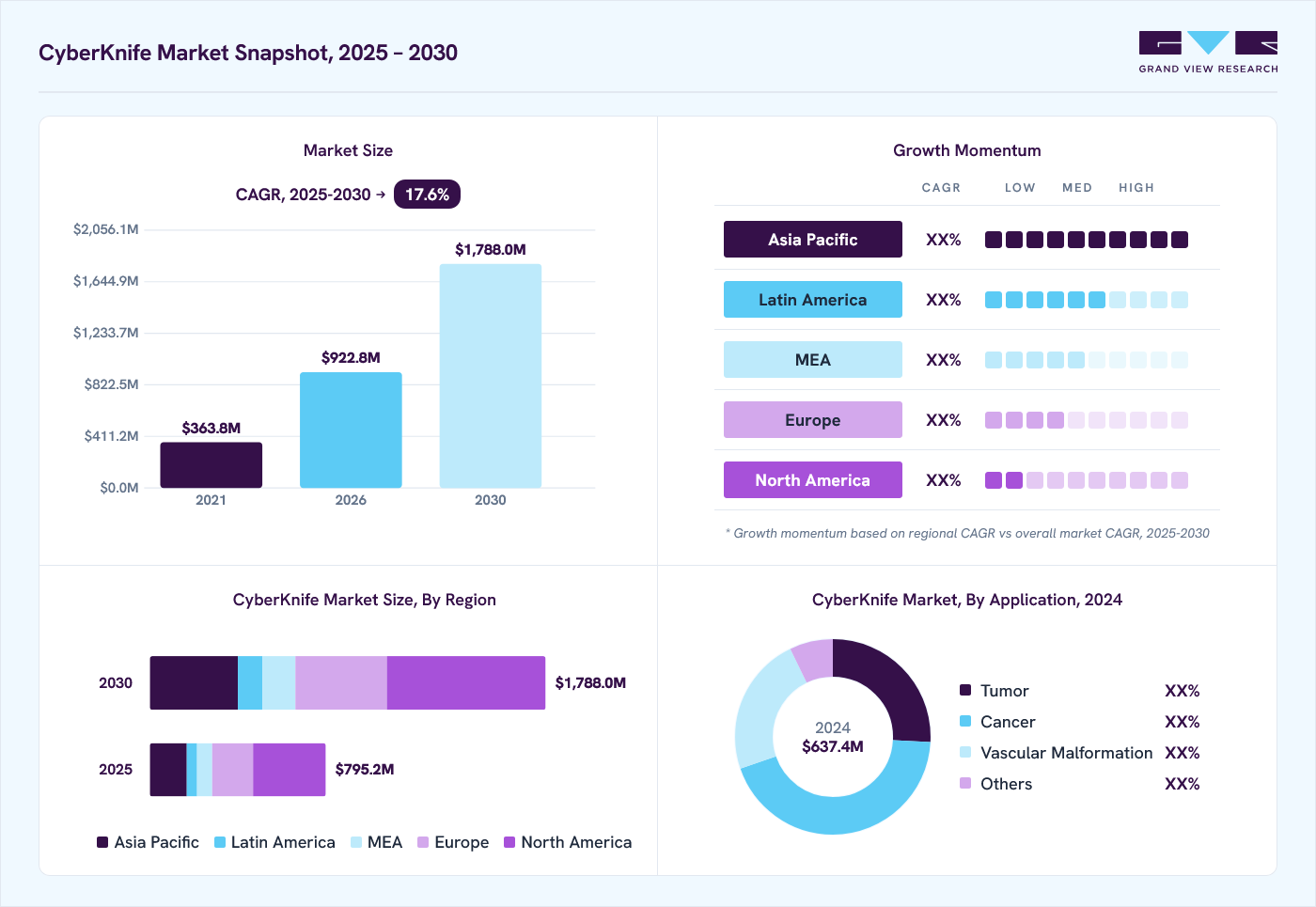
The CyberKnife market size was valued at USD 795.2 million in 2025 and is projected to grow from USD 922.8 million in 2026 to USD 2398.3 million by 2033, at a CAGR of 14.6% from 2026 to 2033. North America dominated the market, accounting for a revenue share of 41.6% in 2025. The increasing prevalence of cancer, recent product launches, and growing preference for non-invasive or minimally invasive procedures over surgery are the factors propelling the growth of the industry.
 Source: Grand View Research, IR Documents, Primary Interviews, Paid DatabasesTo learn more about this report,
 Download Free Sample Report
 Key Market Trends & Insights
- By application: Cancer segment led the market with the largest revenue share of 41.5% in 2025.
- By end use: Hospitals segment led the market with the largest revenue share of 49.2% in 2025.
Regional Highlights
- Largest regional market: North America (41.6% revenue share, 2025)
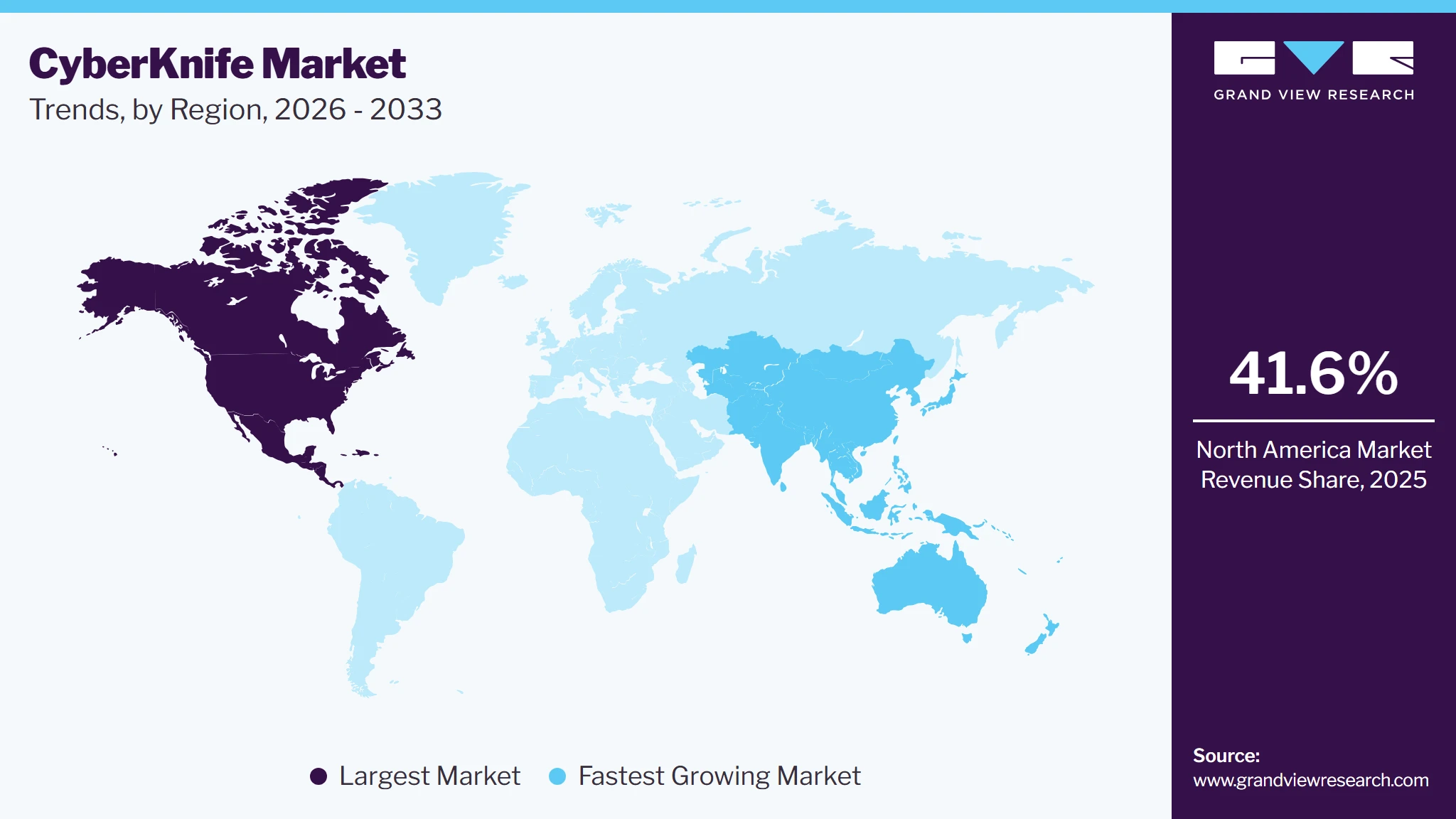
- Fastest-growing regional market: Asia Pacific (highest CAGR, 2026-2033)
- By country: The U.S. held the largest market share in 2025.
Market Size & Forecast
- Market size in 2025: USD 795.2 Million
- Estimated market size in 2026: USD 922.8 Million
- Projected market size by 2033: USD 2398.3 Million
- CAGR (2026-2033): 14.6%
Three ways to get this report
Buy it, customize it, or ask a question.Ask an Analyst
A direct answer, usually in 1 working day
- AccessReport author, directly
- Reply timeWithin 1 working day
- No sales callDirect answer only
- FormatEmail reply
- CostFree, no cost
Get the Full Report
What the study covers
- FormatsPDF · Excel · Dashboard
- Timeline2026–2033 annual, 2025 base
- Coverage20+ countries, 5 regions
- Companies10+ key players profiled
Customize the Report
20% free customization
- IncludeCountries, segments, points
- TailorTo your product definition
- ExtendDeeper competitor detail
- OrA fully bespoke study
- Turnaround5–10 working days
The increasing prevalence of cancer is the most prominent factor driving the market growth. Factors contributing to the rise of the prevalence of cancer include increasing tobacco use, rising alcohol consumption, lack of physical activity, and growing adoption of unhealthy diets by individuals.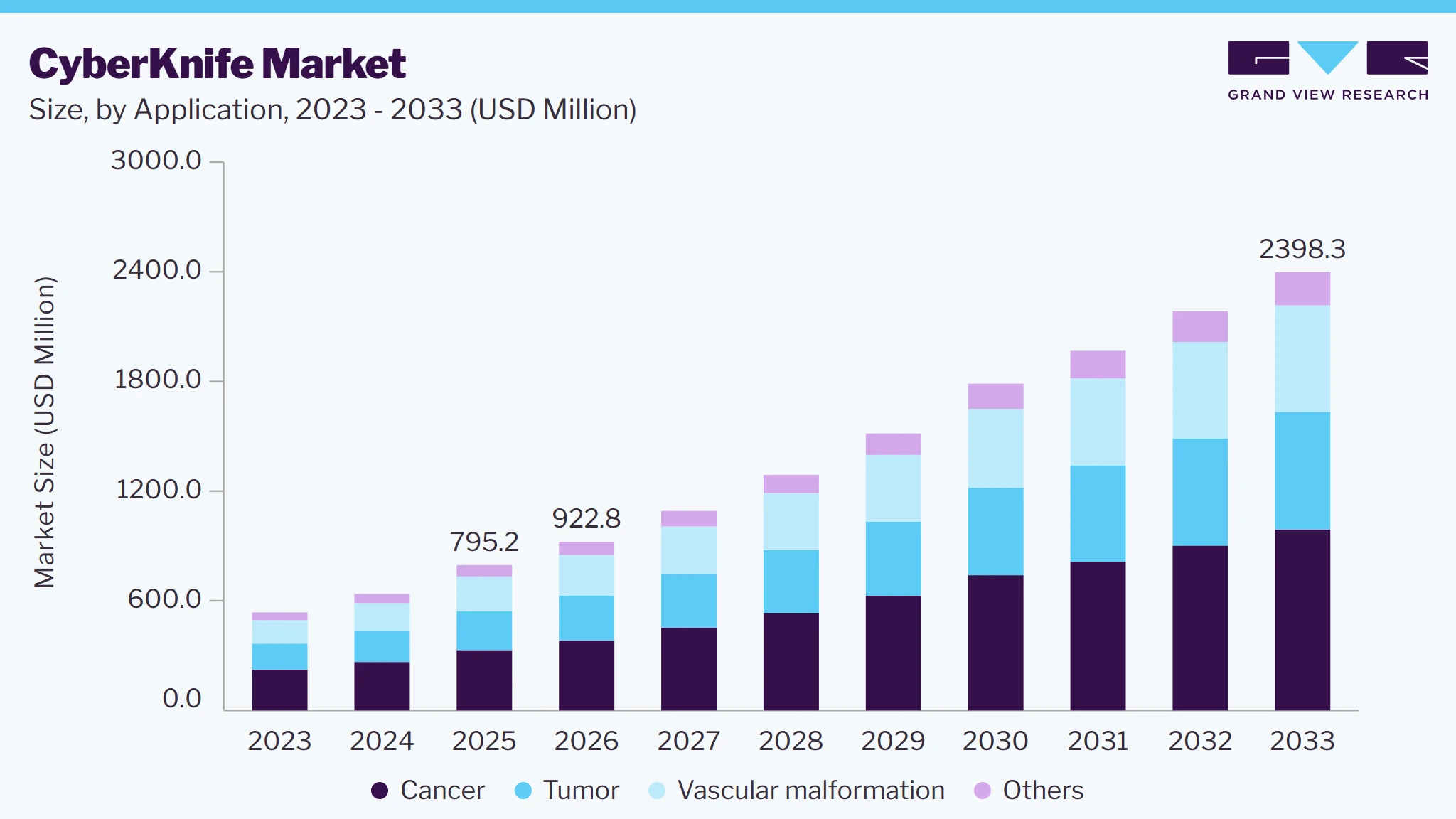 To learn more about this report, Download Free Sample Report
 A 2024 CDC study highlights that nearly 90% of lung cancer fatalities are attributable to smoking or exposure to secondhand smoke. This underscores that tobacco consumption significantly elevates cancer risk. Consequently, a growing smoking population correlates with an increased number of individuals at risk of developing lung cancer, emphasizing the urgent need for targeted public health interventions.
New product launches by the key players are also substantially contributing to market growth. For instance, in August 2024, Apollo Cancer Centre Bengaluru launched South Asia’s first CyberKnife*S7 FIM Robotic Radio Surgery System in India. This next-generation platform offers non-invasive radiation therapy to effectively treat both cancerous and benign tumors throughout the body, enhancing the operational efficiency of clinicians.
Several factors, including reduced hospital stays, lower trauma, quicker recovery times, and cost-effectiveness compared to surgical procedures, encourage more patients to choose non-invasive or minimally invasive options. These procedures effectively target cancer cells, damaging their DNA and inhibiting spread. Consequently, ongoing technological advancements in cancer treatment are anticipated to drive market growth for these modalities.
Market Dynamics
The CyberKnife market is experiencing significant growth due to growing healthcare providers adoption of robotic stereotactic radiosurgery (SRS) and stereotactic body radiation therapy (SBRT) systems to deliver highly precise, non-invasive radiation treatments for complex medical conditions. CyberKnife system is one that makes use of high-tech technology to ensure accurate delivery of radiation treatments in the form of highly localized treatments that minimize exposure of radiation on the surrounding healthy tissues through image guidance, real-time tumor tracking, and robotic radiation delivery. The treatment systems are commonly used in the management of tumors, cancers, vascular malformations, and other complex health complications. Some of the key factors propelling market growth include the increased global prevalence of cancer, higher need for non-invasive alternatives, advancements in precision oncology, and preference for outpatient treatment solutions. Advancements in motion tracking technologies, adaptive radiotherapy, AI-assisted treatment planning, and image-guided radiation delivery are some of the factors that are helping to improve treatment outcomes. Growing investment in advanced oncology infrastructure, increased awareness about stereotactic radiotherapy, and personalized cancer care approach are some of the other factors supporting the demand for CyberKnife systems.
Cancer prevalence and the increasing need for precision treatments have emerged as important factors driving the CyberKnife market. Providers are adopting radiosurgery and stereotactic body radiotherapy systems that can help pinpoint the location of the tumor and minimize damage to the normal tissues surrounding it. The use of the CyberKnife system in medicine provides several advantages, such as fewer treatment complications, faster recovery times, and treatment of tumors that are close to important anatomical structures. Precision medicine has been increasingly gaining prominence, along with the preference for minimally invasive methods among patients.Despite its clinical advantages, CyberKnife adoption remains constrained due to the high financial demands involved in technology. CyberKnife systems involve significant acquisition costs, facility modifications, radiation shielding requirements, software licensing expenses, and ongoing maintenance costs. Healthcare facilities must also invest in specialized personnel training, treatment planning expertise, and quality assurance programs. These financial and operational requirements can limit adoption among smaller healthcare institutions and facilities in resource-constrained markets. Additionally, reimbursement variability across regions may influence purchasing decisions and utilization rates.Application Insights
Based on application, the cancer segment led the market with the largest revenue share of 41.5% in 2025, approximately 1,958,310 new cancer cases will be diagnosed in the U.S., with the five most prevalent types being breast, prostate, lung, bronchial, and colorectal cancers. Furthermore, the increasing adoption of CyberKnife technology for treating various cancer types is contributing to significant growth in this market segment. This trend highlights the growing recognition of innovative treatment options in enhancing patient outcomes and advancing cancer care.
Vascular malformation is expected to grow at the fastest CAGR of 17.8% over the forecast period, owing to their effectiveness in managing arteriovenous malformations. This non-surgical, non-invasive procedure utilizes a precisely targeted beam of radiation to damage the blood vessel walls, effectively closing the AVM. These treatments are performed with exceptional accuracy by leveraging cutting-edge technology, underscoring their potential to enhance patient outcomes.
End-use Insights
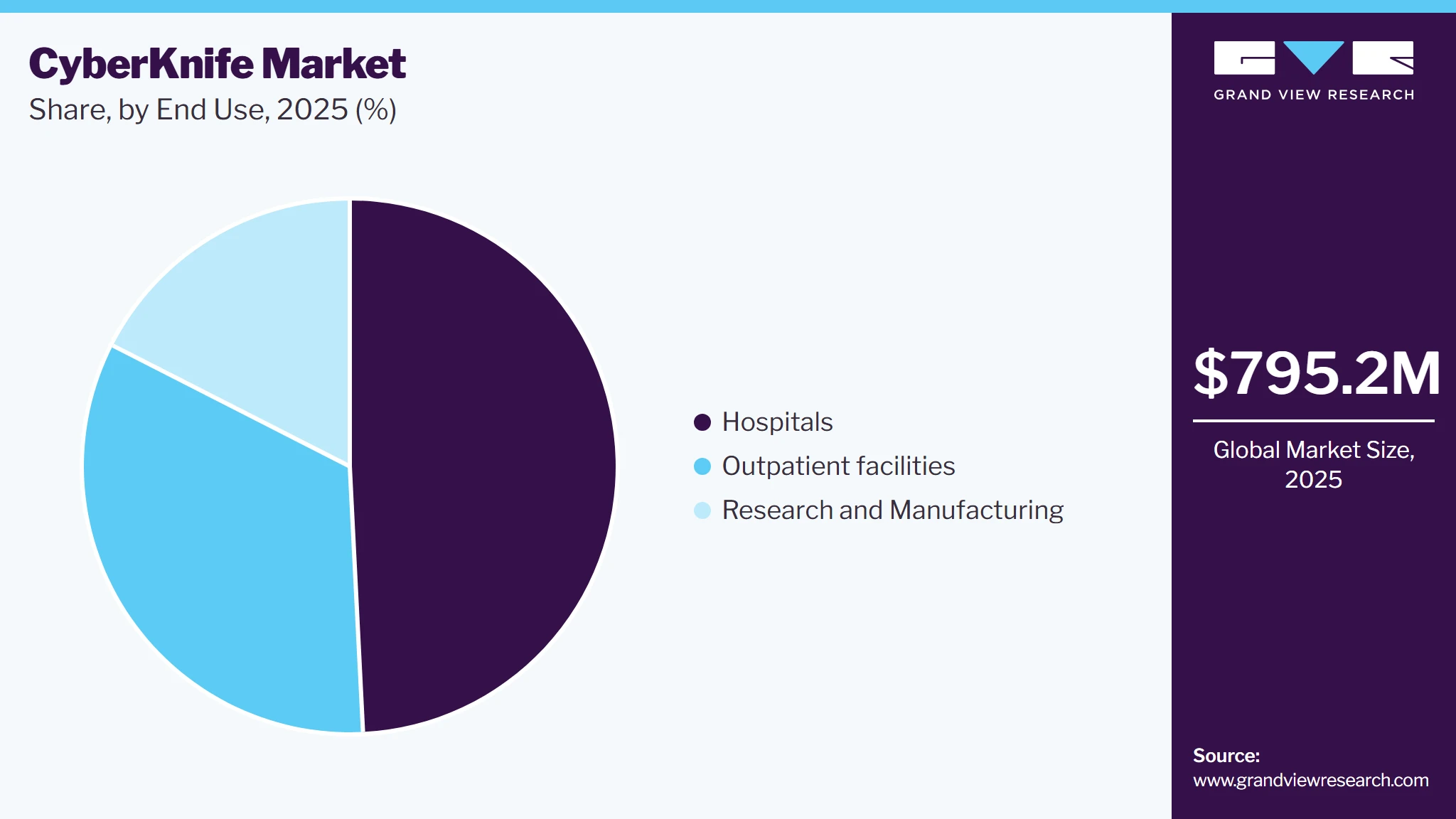
Based on end use, the hospitals segment led the market with the largest revenue share of 49.2% in 2025, fueled by highly skilled professionals and an increasing volume of patient visits. Moreover, the rise in the number of hospitals aimed at accommodating the growing patient demand further contributes to segment growth. These factors highlight the evolving healthcare landscape and the commitment to enhancing patient care through expanded resources and expertise.
 To learn more about this report, Download Free Sample Report
 Outpatient facilities are projected to grow at the fastest CAGR of 17.8% over the forecast period. Ambulatory surgical centers and specialty clinics are anticipated to grow significantly during the forecast period. This growth is primarily attributed to advantages such as shorter waiting times and lower overall costs, including reduced out-of-pocket patient expenses. These factors enhance accessibility and affordability, positioning these facilities as increasingly attractive options for patients seeking efficient and cost-effective surgical care.
Regional Insights
North America dominated the cyberknife market with the largest revenue share of 41.6% in 2025. Factors such as the rising prevalence of chronic diseases, a significant shift towards painless and non-invasive surgical procedures, and increasing demand for efficient treatments are driving market growth in the region. According to the American Society for Radiation Oncology, the number of radiation facilities in the U.S. grew from 1,987 in 2005 to 2,332 in 2020, reflecting a 17.0% increase. Investments in healthcare infrastructure and favorable reimbursement policies further enhance patient access to innovative treatments.
 To learn more about this report, Download Free Sample Report
 U.S. CyberKnife Market Trends
The cyberknife market in the U.S. held the largest share in the North America region in 2025, fueled by the high incidence of cancer cases, with approximately 1.96 million new diagnoses in 2023. Technological advancements in CyberKnife systems and a shift towards outpatient treatment options drive demand for these innovative therapies, providing patients greater accessibility and satisfaction.
Europe CyberKnife Market Trends
Europe cyberknife market held a substantial market share in 2025, driven by the rising cancer burden, with approximately 3.7 million new cases reported annually. Advanced radiation therapies, rising healthcare expenditures, and a growing preference for minimally invasive procedures among patients and healthcare providers contribute to market growth.
The cyberknife market in Germany is expected to grow lucratively in the forecast period, aided by its aging population, with approximately 22% of citizens aged 65 and older. The high prevalence of chronic diseases, including cancer, alongside advanced healthcare infrastructure and investment in cutting-edge technologies, drives the adoption of CyberKnife systems for effective treatment options.
Latin America CyberKnife Market Trends
Latin America cyberknife market is expected to register the fastest CAGR of 19.1% in the forecast period. The region is experiencing an increasing incidence of cancer, with projections indicating over 1 million new cases annually. Enhanced government initiatives to improve healthcare access and affordability and growing awareness of advanced treatment options among patients contribute to the market’s growth.
The cyberknife market in Brazil dominated the Latin America cyberknife market in 2025, supported by a growing population of over 213 million people. The number of cancer cases is expected to rise to 600,000 annually by 2025. Investments in healthcare infrastructure and advancements in medical technology promote the adoption of innovative treatments such as CyberKnife for effective cancer management.
Key CyberKnife Company Insights
Some key companies operating in the market include Microsoft Corporation, IBM Corporation, Amazon.com, Inc., and Google LLC (Alphabet Inc.). In an attempt to establish a strong position in the market, key players are carrying out various strategic initiatives such as mergers and acquisitions, partnerships, collaboration, and expansion. These strategies help companies expand the reach of their products and enhance the overall quality of their products with additional expertise.
- Accuray is a leading entity in the CyberKnife market, offering the CyberKnife® S7 system for precise stereotactic radiosurgery (SRS) and stereotactic body radiation therapy (SBRT). It leverages advanced technologies to improve patient outcomes and optimize clinical workflows.
- Koninklijke Philips contributes to the CyberKnife market by providing advanced imaging and diagnostic technologies that enhance radiation therapy. While not a primary manufacturer of CyberKnife systems, Philips’ solutions support precise tumor targeting during radiosurgery procedures.
Key CyberKnife Companies:
The following key companies have been profiled for this study on the cyberKnife market.
-
Advanced Micro Devices
-
AiCure
-
Arm Limited
-
Atomwise, Inc.
-
Ayasdi AI LLC
-
Baidu, Inc.
Competitive Benchmarking
Category
Operating Strategies
Competitive Edge
Weakness
Established Players (Accuray Inc.; Stanford Health Care; Stanford Medicine; NYU Langone Health; Mount Vernon Cancer Centre; CyberKnife Center Munich; Charité - Universitätsmedizin Berlin)
- These institutions focus on providing advanced multidisciplinary cancer care through integrated oncology programs, precision radiotherapy, clinical research, physician training, and participation in international clinical trials. They continuously invest in next-generation radiosurgery technologies and evidence-based treatment protocols.
- Extensive distribution networks and strong brand recognition and decades of expertise in medical optics enable these companies to command premium pricing and high customer loyalty. Established players benefit from advanced optical engineering capabilities, broad product portfolios, customization services, regulatory expertise, and global sales infrastructure. Their ability to provide comprehensive visualization ecosystems and after-sales support strengthens clinician retention and recurring revenue generation.
- Strong clinical reputation, high patient referral volumes, access to cutting-edge research, multidisciplinary expertise, and ability to treat highly complex cases. Academic affiliations facilitate innovation, physician training, and early adoption of advanced treatment approaches.
Emerging Players (Apollo Hospitals; CyberKnife Center Munich; Fuda Cancer Hospital; Nordwest Hospital)
- These organizations focus on expanding access to advanced radiosurgery services, strengthening oncology networks, increasing patient throughput, and developing specialized treatment programs for domestic and international patients. Many emphasize integrated cancer care pathways and multidisciplinary treatment planning.
- Agile product development processes allow faster adaptation to evolving clinician preferences and ergonomic requirements. Competitive pricing, niche specialization, lightweight designs, and innovative optical configurations provide opportunities to compete effectively against larger incumbents. Emerging players can target high-growth segments and establish strong positions within specific specialties or geographic regions.
Strong regional market presence, established oncology infrastructure, large patient pools, and growing expertise in stereotactic radiosurgery. Their ability to combine diagnosis, treatment, and follow-up care supports comprehensive patient management.
Recent Developments
-
In January 2025, Accuray Incorporated announced the approval of the Radixact SynC and CyberKnife S7 Systems by China’s National Medical Products Administration, enhancing its radiation therapy portfolio in the region.
-
In June 2024, Heidelberg University Hospital in Germany invested in the Radixact System, enhancing cancer patient care with advanced radiation therapy technology from Accuray Incorporated.
-
In September 2023, Kenyatta University Teaching, Referral, and Research Hospital in Kenya commissioned the first CyberKnife radiotherapy system in Sub-Saharan Africa, advancing access to high-precision cancer treatment.
CyberKnife Market Report Scope
Report Attribute
Details
Market size in 2025
USD 795.2 million
Estimated market size in 2026
USD 922.8 million
Projected market size by 2033
USD 2398.3 million
Growth rate
CAGR of 14.6% from 2026 to 2033
Historical data
2021 - 2024
Forecast period
2026 - 2033
Quantitative units
Revenue in USD million/billion and CAGR from 2026 to 2033
Report coverage
Revenue forecast, company ranking, competitive landscape, growth factors, and trends
Segments covered
Application, end use, region
Regional scope
North America; Europe; Asia Pacific; Latin America; MEA
Country scope
U.S.; Canada; Mexico; Germany; UK; France; Italy; Spain; Denmark; Sweden; Norway; China; Japan; India; South Korea; Thailand; Australia; Brazil; Argentina; South Africa; Saudi Arabia; UAE; Kuwait
Key companies profiled
Accuray Inc.; Stanford Health Care; Stanford Medicine; NYU Langone Health; Mount Vernon Cancer Centre; Apollo Hospitals; CyberKnife Center Munich; Fuda Cancer Hospital; Nordwest Hospital; Charité - Universitätsmedizin Berlin
Customization scope
Free report customization (equivalent up to 8 analysts' working days) with purchase. Addition or alteration to country, regional & segment scope.
Pricing and purchase options
Avail customized purchase options to meet your exact research needs. Explore purchase options
Global CyberKnife Market Report Segmentation
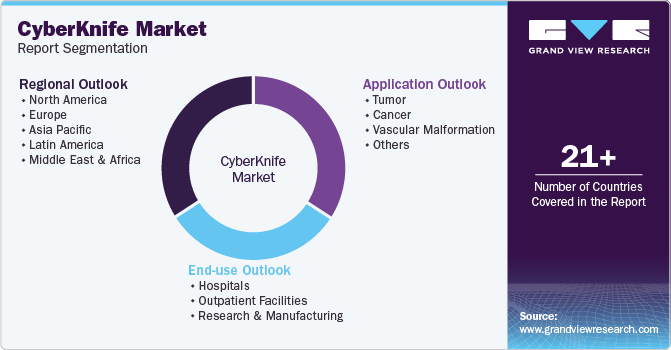
This report forecasts revenue growth at global, regional, and country levels and provides an analysis of the latest industry trends in each of the sub-segments from 2021 to 2033. For this study, Grand View Research has segmented the global cyberknife market report based on application, end-use, and region:
 To learn more about this report, Download Free Sample Report
 -
Application Outlook (Revenue, USD Million, 2021 - 2033)
-
Tumor
-
Cancer
-
Vascular Malformation
-
Others
-
-
End-use Outlook (Revenue, USD Million, 2021 - 2033)
-
Hospitals
-
Outpatient Facilities
-
Research & Manufacturing
-
-
Regional Outlook (Revenue, USD Million, 2021 - 2033)
-
North America
-
U.S.
-
Canada
-
Mexico
-
-
Europe
-
UK
-
Germany
-
France
-
Italy
-
Spain
-
Denmark
-
Sweden
-
Norway
-
-
Asia Pacific
-
Japan
-
China
-
India
-
Australia
-
South Korea
-
Thailand
-
-
Latin America
-
Brazil
-
Argentina
-
-
Middle East & Africa
-
South Africa
-
Saudi Arabia
-
UAE
-
Kuwait
-
-
Research Methodology
The cyberKnife market figures in this report are based on a proven research process that combines executive interviews with secondary research from proprietary databases, company filings, and recognized regulatory and institutional sources. Market size is built through value-chain sizing - reconciling supply-side and demand-side estimates - and triangulated with bottom-up and top-down approaches. Every estimate passes multiple levels of expert validation before publication, with each cyberKnife segment quantified using the revenue-capture definitions in the table below.
Segment Definition
Segment - Application
Revenue capture definition
Tumor
Revenue is generated through the utilization of CyberKnife systems for the treatment of benign and non-malignant tumors located in the brain, spine, lung, liver, pancreas, prostate, and other anatomical regions. Healthcare providers capture value through treatment planning, image-guided radiosurgery procedures, and follow-up care associated with precision tumor management.
Cancer
Revenue is derived from CyberKnife treatments performed for primary and metastatic cancers across multiple disease indications. The segment represents the largest revenue contributor, driven by increasing cancer incidence, growing adoption of stereotactic body radiotherapy, and demand for non-invasive treatment alternatives that support precision oncology initiatives.
Vascular malformation
Revenue is generated through CyberKnife utilization in the treatment of arteriovenous malformations (AVMs) and other vascular abnormalities requiring highly precise radiation delivery. Market participants benefit from growing adoption of radiosurgical approaches for complex vascular conditions where conventional surgery may pose elevated risks.
Others
Revenue is captured through the use of CyberKnife systems for trigeminal neuralgia, functional neurological disorders, recurrent lesions, and other specialty clinical applications requiring accurate, non-invasive radiosurgical treatment.
Segment - End use
Revenue capture definition
Hospitals
Revenue is generated through procurement and utilization of CyberKnife systems by public and private hospitals, comprehensive cancer centers, and academic medical institutions. Manufacturers benefit from capital equipment sales, software upgrades, service agreements, treatment planning platforms, and long-term maintenance contracts.
Outpatient facilities
Revenue is derived from CyberKnife adoption in ambulatory oncology centers, outpatient radiation therapy facilities, and specialized treatment centers focused on delivering non-invasive stereotactic radiosurgery and radiotherapy procedures. The segment benefits from growing demand for outpatient cancer treatment and reduced hospitalization requirements.
Research and Manufacturing
Revenue is captured through utilization of CyberKnife systems by research institutions, academic centers, clinical trial organizations, and technology development facilities conducting treatment optimization studies, radiation research, clinical investigations, and technology validation activities.
Estimation Model
Step
Guiding Question
Process Steps
Data Sources
Scope Definition
What is being sized?
• Define CyberKnife Technology and Radiosurgery Categories. • Scope Application and End Use Segments. • Establish Geographic Coverage (Global/Regional). • Align on base year & forecast horizon (2020-2030).
FDA, CF, market, AUA, ASTRO, WHO
Build the Installed Base
How large is total addressable market?
• Collect Number of Installed Base of CyberKnife. • Assess New System Installations and Replacement Cycles. • Evaluate Treatment Capacity per System Installed. • Develop Installed Base and Treatment Volume Forecasts.
Company Reports, Professional Associations, Company Annual Reports
Estimate Adoption & Utilization
What portion of procedures use disposable devices?
• Estimate Annual Patient Treatments per Installed System. • Assess Utilization by Application Area. • Map Treatment Volumes Across Tumor, Vascular, and Malformation, and Other Indications. • Validate Findings Through Radiation Oncologist and Industry Interviews.
Primary interviews, clinical survey, industry expert interviews
Revenue Conversion
How does volume become revenue?
• Determine System ASPs of CyberKnife by Region. • Estimate Revenue from Equipment Sales and Services. • Apply Regional Pricing Variations and Treatment Economics. • Cross‑validate with Company Revenues and Public Filings.
Company financials, procurement data, expert interviews
Delivered Customizations
This report has been delivered with the following In-depth customizations
Client Reuest
Customization Delivered
Value Adds
Competitive Landscape Analysis
Conducted a comprehensive competitive assessment of the global CyberKnife market, evaluating leading manufacturers and radiation oncology technology providers. The study assessed treatment platforms, image-guidance technologies, robotic delivery systems, treatment planning software, installed base distribution, pricing strategies, service capabilities, regulatory approvals, and geographic expansion initiatives.
Enables stakeholders to understand technology leadership, competitive positioning, procurement dynamics, partnership opportunities, and commercialization strategies shaping the global CyberKnife market.
Segment by Application Analysis
Conducted detailed application-level assessment across Tumor, Cancer, Vascular Malformation, and Other Applications, evaluating treatment volumes, utilization rates, disease prevalence, clinical adoption trends, reimbursement environments, and forecast demand patterns.
Enables stakeholders to identify high-growth treatment indications, optimize commercial strategies, prioritize investment opportunities, and align product development initiatives with evolving clinical demand.
Macroeconomic Analysis
Conducted an in-depth assessment of cancer incidence trends, healthcare expenditure growth, oncology infrastructure investments, reimbursement policies, demographic shifts, regulatory developments, and healthcare modernization initiatives influencing CyberKnife adoption globally.
Enables stakeholders to understand the macroeconomic, demographic, regulatory, and healthcare system factors impacting market growth, technology adoption, investment prioritization, and long-term strategic planning within the robotic radiosurgery ecosystem.
Frequently Asked Questions About This Report
Key factors driving the demand for cyberknife market includes increasing incidence of cancer, new product lanches and growing preference for non-invasive and minimally invasive procedures.
Some key players operating in market includes Accuray Inc.; Stanford Health Care; Stanford Medicine; NYU Langone Health; Mount Vernon Cancer Centre; Apollo Hospitals; CyberKnife Center Munich; Fuda Cancer Hospital; Nordwest Hospital; Charité - Universitätsmedizin Berlin
Asia Pacific is the fastest-growing region over the forecast period.
North America dominated with a 41.6% revenue share in 2025.
The global CyberKnife market size was valued at USD 795.2 million in 2025 and is estimated at USD 922.8 million in 2026.
The global CyberKnife market is expected to grow at a CAGR of 14.6% from 2026 to 2033, reaching USD 2398.3 million by 2033.
Cancer segment led the market with the largest revenue share of 41.5% in 2025.
Hospitals segment led the market with the largest revenue share of 49.2% in 2025.
North America dominated with a 41.6% revenue share in 2025. This is attributable to the presence of large patient pool, availability of technologically advanced products and favorable reimbursement scenario.
About the Author(s)
Medical Devices Research Team
Healthcare · Medical DevicesThis report was authored by the medical devices research team at Grand View Research - comprising two research analysts, one senior research analyst, and one industry expert - with specialized expertise in the medical devices segment of the healthcare industry. All findings are based on proprietary healthcare databases, executive interviews, and regulatory analysis, subject to internal peer review prior to publication.
Last Updated:
Speak to Analyst

Customize this report to your needs - add regions, segments, or data points, with 20% free customization.
Or view our licence options:


ISO 9001:2015 & 27001:2022 Certified
We are GDPR and CCPA compliant! Your transaction & personal information is safe and secure. For more details, please read our privacy policy.


