
- Home
- »
- Medical Devices
- »
-
Dental Rubber Dam Market Size And Share Report, 2033GVR Report cover

Dental Rubber Dam Market (2026 - 2033)
Size, Share & Trends Analysis Report By Product (Dental Dam Sheets, Clamps & Retainers, Frames), By Application (Endodontics, Restorative Dentistry), By End-use, By Distribution Channel, By Region, And Segment Forecasts
Market Size, 2025
$161.3MMarket Estimate, 2026
$170.2MMarket Forecast, 2033
$253.1MCAGR, 2026–2033
5.8%Dental Rubber Dam Market Summary
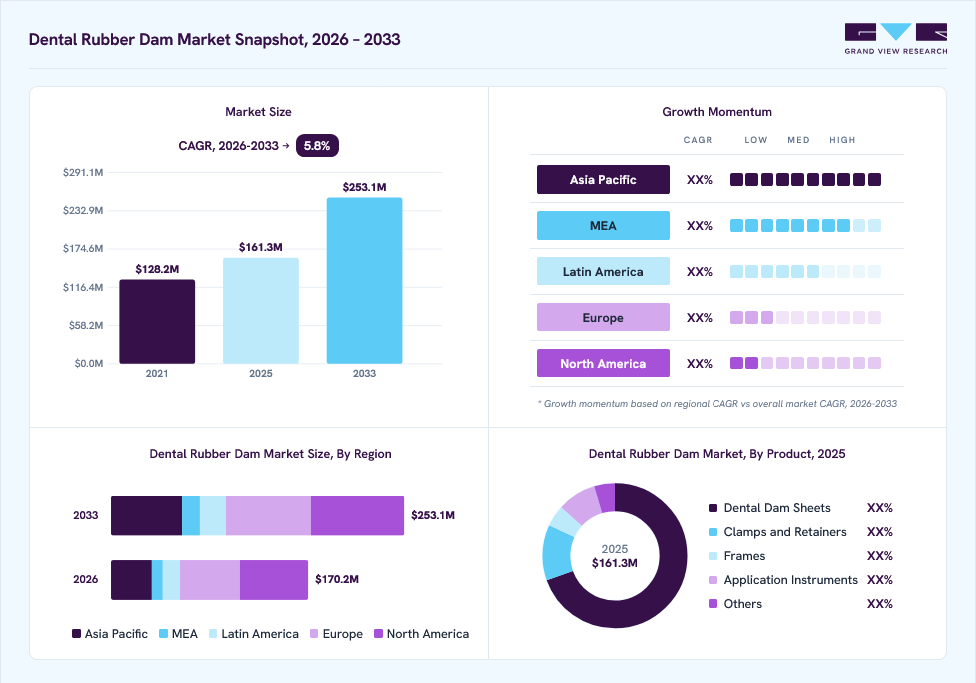
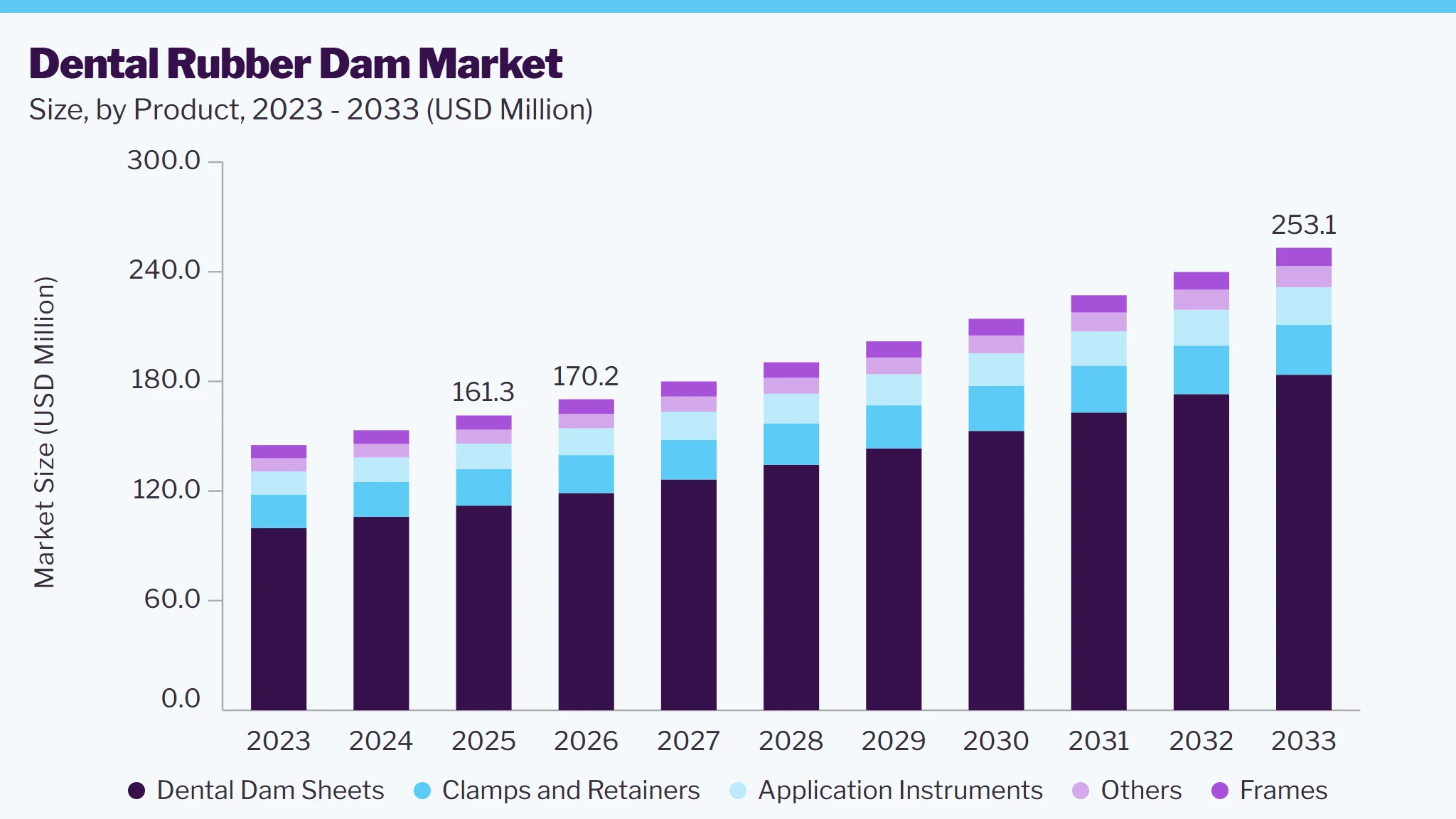
The global dental rubber dam market size was valued at USD 161.3 million in 2025 and is projected to grow from USD 170.2 million in 2026 to USD 253.1 million by 2033, at a CAGR of 5.8% from 2026 to 2033. North America dominated the market, accounting for a revenue share of 35.1% in 2025. The industry is driven by the rising global burden of dental caries, increasing adoption of endodontic procedures, and growing emphasis on effective moisture control in restorative dentistry.
 Source: Grand View Research, IR Documents, Primary Interviews, Paid DatabasesTo learn more about this report,
 Download Free Sample Report
 Key Market Trends & Insights
- By product: Dental dam sheets segment led the market with the largest revenue share of 69.4% in 2025.
- By application: Endodontics segment led the market with the largest revenue share of 53.3% in 2025.
- By end-use: Dental clinics segment led the market with the largest revenue share of 81.7% in 2025.
- By distribution channel: Dental distributors and dealers segment led the market with the largest share of 74.9% in 2025.
Regional Highlights
- Largest regional market: North America (35.1% revenue share, 2025)
- Fastest-growing regional market: Asia Pacific (highest CAGR, 2026-2033)
- By country: The U.S. led the North America market in 2025
Market Size & Forecast
- Market Size in 2025: USD 161.3 Million
- Estimated Market Size in 2026: USD 170.2 Million
- Projected Market Size by 2033: USD 253.1 Million
- CAGR (2026-2033): 5.8%
Three ways to get this report
Buy it, customize it, or ask a question.Ask an Analyst
A direct answer, usually in 1 working day
- AccessReport author, directly
- Reply timeWithin 1 working day
- No sales callDirect answer only
- FormatEmail reply
- CostFree, no cost
Get the Full Report
What the study covers
- FormatsPDF · Excel · Dashboard
- Timeline2026–2033 annual, 2025 base
- Coverage20+ countries, 5 regions
- Companies10+ key players profiled
Customize the Report
20% free customization
- IncludeCountries, segments, points
- TailorTo your product definition
- ExtendDeeper competitor detail
- OrA fully bespoke study
- Turnaround5–10 working days
 To learn more about this report, Download Free Sample Report
In addition, expansion of dental practices, professional training, and modern dental infrastructure is also expected to create favorable conditions for market development. The industry is supported by the substantial global burden of oral diseases. According to the Oral Health Foundation, around 2.5 billion people have untreated tooth decay in permanent teeth, while approximately 514 million children have untreated decay in primary teeth. In addition, severe periodontal disease affects nearly 1 billion adults worldwide. The high prevalence of dental caries and other oral conditions continues to generate demand for restorative and endodontic procedures, where effective tooth isolation and moisture control are important for clinical treatment. Furthermore, more than 3.5 billion people lack access to essential oral healthcare, indicating significant unmet demand for dental services. These factors are expected to support the adoption of dental rubber dams as dental treatment access and standardized clinical practices expand globally.Global Oral Health Burden and Access to Care Statistics
Category
Indicator
Global Statistics
Dental disease prevalence
People with untreated tooth decay in permanent teeth
2.5 billion
Children with untreated decay in primary teeth
514 million
Periodontal disease
Adults affected by severe periodontal disease
19% (~1 billion)
Edentulism
Adults aged >65 with complete tooth loss in many high-income countries
>30%
Mouth Cancer
New lip and oral cavity cancer cases annually
>377,700
Annual deaths from lip and oral cavity cancer
~177,700
Access to care
People without access to essential oral healthcare
>3.5 billion
Dental workforce
Dentists in high-income countries
Up to 60 per 100,000 population
Dentists in many low-income countries
<5 per 100,000 population
Disease burden
Annual disability-adjusted life years (DALYs) from oral diseases
>20 million
Source: Oral Health Foundation
Market Dynamics
The market is experiencing steady growth, supported by increasing adoption of endodontic procedures and growing emphasis on effective tooth isolation during restorative and pulp-treatment procedures. Growing clinical evidence supporting rubber-dam use is encouraging adoption among dental professionals. At the same time, demand for latex-free and synthetic alternatives is increasing due to latex allergy concerns. Product innovation, including preframed dams, improved clamps, and faster placement systems, is expected to reduce workflow barriers and expand adoption among general dentists and specialty practices.
The increasing use of endodontic procedures is supporting demand for dental rubber dams because effective tooth isolation is essential for maintaining a dry, contamination-free operating field during root canal treatment. Dental rubber dams help maintain a dry, contamination-free operating field, improve visibility, and reduce the risk of accidental aspiration or ingestion of dental materials and instruments. Growing awareness of evidence-based endodontic practices among dentists is encouraging greater use of isolation systems. In addition, the continued burden of dental caries and pulp-related conditions creates a sustained need for root canal treatments, particularly in aging populations.
Latex allergy and material-related limitations remain a restraint for conventional dental rubber dam products, particularly those manufactured from natural rubber latex. Exposure to latex can cause allergic reactions in susceptible patients and dental professionals, requiring appropriate precautions or the selection of latex-free alternatives. In addition, differences in elasticity, tear resistance, thickness, and handling characteristics between latex and synthetic materials can influence dentist preference and product performance. These considerations may increase product-selection complexity and encourage dental practices to maintain multiple dam types for different patients and procedures.
The development of faster and easier-to-place isolation systems represents a significant opportunity for the market because placement complexity can discourage routine use, particularly among general dentists. Products incorporating preframed designs, integrated frames, improved clamp systems, and more flexible materials can reduce chairside preparation and placement time. Simplifying the isolation process encourages dentists to use rubber dams in a wider range of restorative and endodontic procedures. Manufacturers can also focus on systems that improve patient comfort and provide reliable tooth adaptation while minimizing technical skill requirements. Such innovations can address workflow barriers and support broader adoption of dental rubber dams across general and specialist dental practices.
Market Concentration & Characteristics
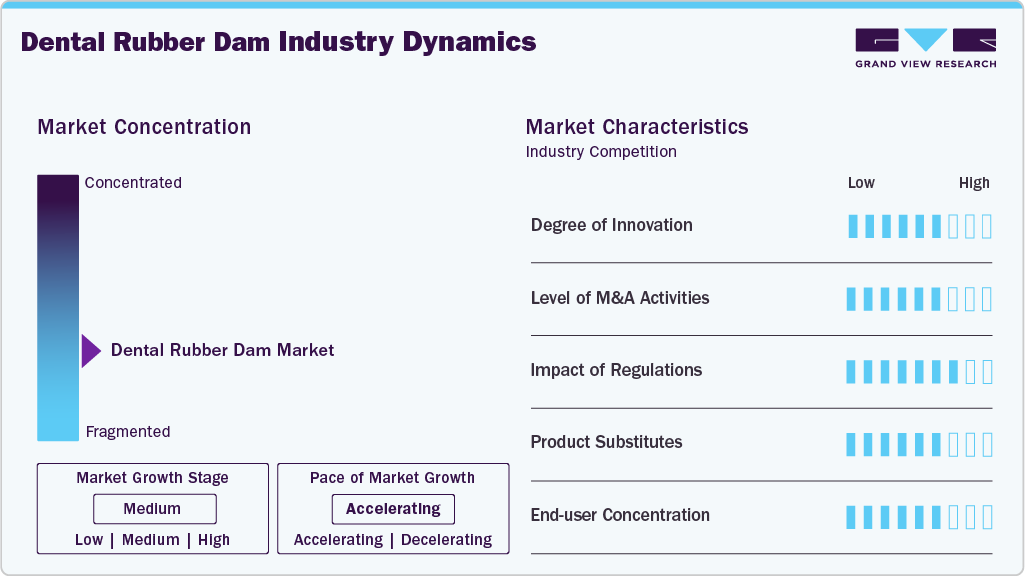
The market has a moderate degree of innovation, with manufacturers focusing primarily on improving product usability rather than introducing fundamentally new technologies. Innovation includes pre-framed dams, three-dimensional designs, improved elasticity, tear resistance, enhanced visibility, latex-free materials, and more comfortable clamp systems. These developments aim to simplify isolation and reduce placement time, addressing one of the main barriers to routine rubber-dam use. In January 2026, the National Dental Practice-Based Research Network study included 153 dentists and 1,701 analyzed RCT cases and found dental dam use of 99% among endodontists vs. 72% among general dentists. This adoption gap supports innovation focused on easier placement, improved ergonomics and workflow efficiency.
The market is characterized by low to moderate M&A activity, as rubber dams are generally part of broader dental consumables portfolios rather than standalone strategic acquisition targets. Industry consolidation is more likely to occur through acquisitions involving broader dental-product manufacturers, distributors, and infection-control portfolios. Consequently, companies can expand their presence in rubber dams through broader dental-care acquisitions, distribution partnerships, and portfolio expansion rather than through acquisitions specifically targeting rubber-dam manufacturers.
 To learn more about this report, Download Free Sample Report
 Regulations have a moderate impact on the market because dental rubber dams are patient-contact products and must meet applicable medical-device, material-safety, labeling, and quality requirements in different countries. Regulatory attention is particularly relevant to natural-rubber latex content, biocompatibility, sterilization claims, packaging, and product labeling. Requirements for latex-related warnings and appropriate material disclosure can influence product formulation and commercialization. These requirements increase compliance responsibilities while also supporting demand for clearly labeled and latex-free alternatives.
The market faces moderate substitution pressure from cotton rolls, saliva ejectors, isolation shields, absorbent systems, and other moisture-control techniques. These alternatives can be easier or faster to apply for relatively simple restorative procedures. However, rubber dams maintain an advantage in procedures requiring strong moisture control and tooth isolation, particularly endodontic treatment. Therefore, substitutes are more influential in routine restorative procedures than in procedures where complete isolation is clinically important.
The market has moderate end-use concentration, with demand distributed across general dental practices, endodontic clinics, pediatric dentistry, dental hospitals, academic institutions, and specialty practices. Endodontic practices represent an important user group because isolation is integral to root-canal procedures, while general dental practices provide a larger opportunity for penetration due to inconsistent routine adoption.
Analyst Perspective
The market is supported by increasing adoption of endodontic and restorative procedures, greater emphasis on moisture control, and growing awareness of standardized dental isolation practices. Demand is also supported by the expansion of dental clinics, specialty practices, and modern dental infrastructure across emerging markets. From an analyst’s perspective, companies offering latex-free materials, improved elasticity, easier placement, and patient-friendly designs will be better positioned to strengthen their competitive advantage. Future market leadership is expected to depend on continuous product innovation, clinical acceptance, regulatory compliance, strong distribution networks, professional training, and the ability to provide cost-effective isolation solutions for both general and specialist dental practices.
Product Insights
The dental dam sheets segment dominated the market, accounting for 69.4% share in 2025 and expected to grow at the fastest rate during the forecast period. This dominance is supported by the widespread use of dental dam sheets as the primary isolation component during endodontic and restorative procedures. Demand is further supported by the availability of different sheet configurations, materials, thicknesses, and sizes, allowing dental professionals to select products according to procedure requirements and patient needs.
The application instruments segment is expected to grow at a significant rate during the forecast period due to the increasing emphasis on efficient and controlled rubber dam placement during dental procedures. Dental dam punches, clamp forceps, and other placement instruments are essential for positioning and securing the dam, supporting proper isolation and improving procedural convenience. Growing adoption of rubber dam isolation in endodontic and restorative dentistry is expected to sustain demand for these complementary instruments.
Application Insights
The endodontics segment dominated the market, accounting for 53.3% share in 2025. This is supported by the widespread use of dental rubber dams during root canal and other endodontic procedures, where effective isolation helps maintain a dry treatment field, improve visibility, minimize contamination, and facilitate controlled clinical procedures. Increasing emphasis on standardized endodontic treatment practices and the growing adoption of isolation techniques among dental professionals are further supporting demand for dental rubber dams in this segment.
The prosthodontics segment is expected to grow at the fastest rate during the forecast period due to the increasing adoption of restorative and prosthetic dental procedures, where effective moisture and contamination control can support treatment quality. Growing demand for crowns, bridges, veneers, and other prosthodontic treatments is increasing the need for reliable isolation techniques during selected clinical procedures. In addition, advancements in restorative materials and adhesive dentistry are encouraging greater emphasis on maintaining a controlled treatment field.
End-use Insights
The dental clinics segment dominated the market, accounting for 81.7% share in 2025. This dominance is supported by the widespread preference for dental clinics as the primary setting for routine and specialized dental procedures. The expansion of dental clinic networks and increasing availability of organized dental care centers further strengthen demand for dental rubber dams. For instance, in February 2026, Clove Dental launched 48 clinics in a single day, expanding its network to 715 centers across 26 cities in India. The expansion was aimed at strengthening organized dental care through standardized clinical protocols, technology, and quality-control systems.
 To learn more about this report, Download Free Sample Report
 The hospitals segment is expected to grow at a significant rate during the forecast period due to the expansion of dental infrastructure and increasing availability of specialized dental services within hospital settings. Hospitals provide a broader range of restorative, endodontic, prosthodontic, and surgical dental procedures, creating demand for effective isolation and moisture-control solutions. Increasing investments in hospital-based dental infrastructure, modernization of dental treatment facilities, and adoption of standardized infection-control and clinical practices are further supporting the use of dental rubber dams. In addition, the growing integration of specialized dental departments and multidisciplinary treatment services within hospitals is expected to contribute to segment growth.
Distribution Channel Insights
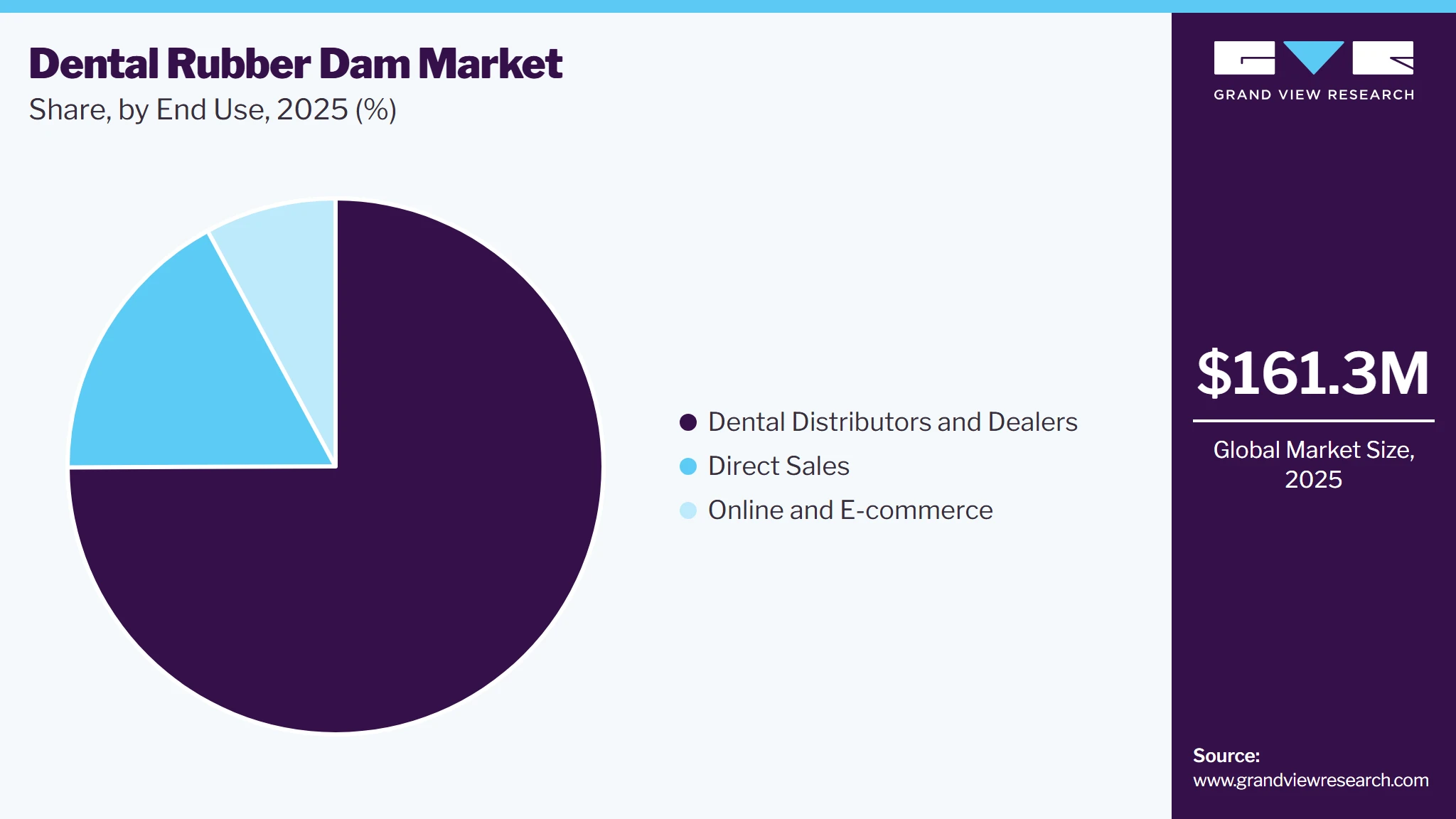
The dental distributors and dealers segment dominated the market, accounting for 74.9% share in 2025. This dominance is driven by the established role of dental distributors and dealers in supplying rubber dam sheets, clamps, frames, and application instruments to dental clinics, hospitals, and other professional users. Their broad product portfolios established relationships with dental practices, and the ability to provide multiple brands and product configurations through a single procurement channel supports widespread product availability. In addition, distributors and dealers can provide regional market coverage and facilitate regular replenishment of frequently used dental consumables, supporting continued demand through this channel.
The online and e-commerce segment is expected to grow at the fastest rate during the forecast period. Growth is driven by the increasing adoption of digital procurement channels among dental professionals and institutions, offering convenient access to a broad range of dental rubber dam sheets, clamps, frames, and application instruments. Online platforms enable dental practices to compare product specifications, materials, sizes, and prices before purchasing. For instance, in June 2025, Dentalkart expanded its offerings by launching Dentalkart Events, aimed at providing education and professional development programs for dental professionals. The initiative was intended to support users through learning opportunities and professional engagement.
Regional Insights
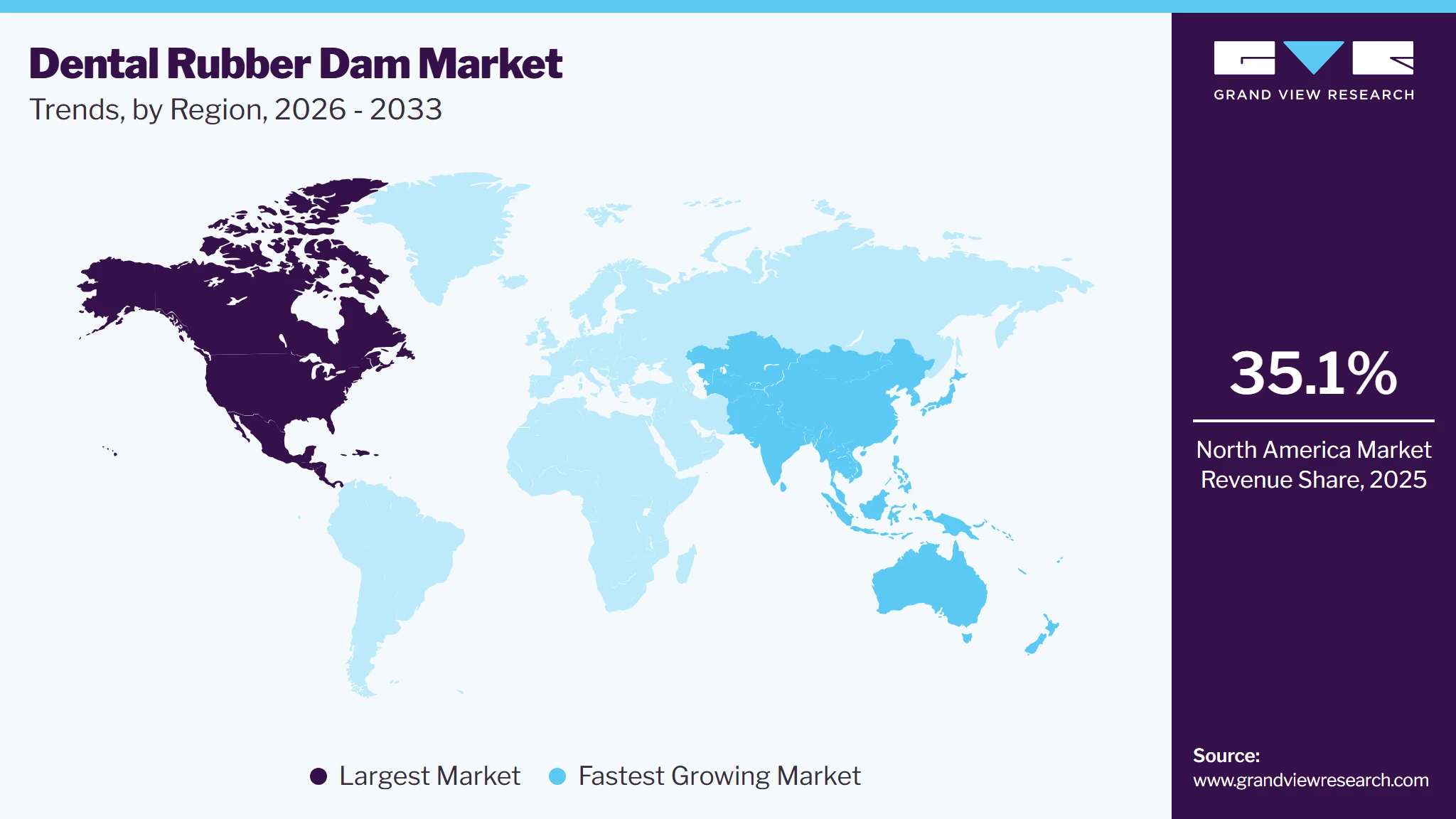
The North America dental rubber dam market dominated with the largest revenue share of 35.1% in 2025. The North American market is supported by well-established dental care infrastructure and a large base of dental professionals. The market is also supported by its extensive dental workforce and established endodontic services, and increasing emphasis on standardized clinical practices. Across the region, increasing use of endodontic and restorative procedures, and availability of latex-free and easy-to-use isolation products are expected to support dental rubber dam adoption.
 To learn more about this report, Download Free Sample Report
 U.S. Dental Rubber Dam Market Trends
The dental rubber dam market in the U.S. represents a key market because of its large dentist workforce and established endodontic practice base. For instance, according to the American Dental Association Health Policy Institute, there were 202,485 professionally active dentists in the U.S. in 2024, reflecting a large clinical workforce capable of generating demand for dental consumables and isolation products. This extensive provider base, combined with the established use of rubber-dam isolation in endodontic treatment, is expected to support continued demand for dental rubber dam products across U.S. dental practices.
Europe Dental Rubber Dam Market Trends
The dental rubber dam market in Europe is expected to grow significantly over the forecast period. Recent clinical evidence indicates that adoption remains variable between general dentists and endodontic specialists. In July 2026, a cross-sectional study of 450 Lithuanian dentists found that rubber dams were used in all endodontic procedures by 34.4% of general practitioners and 84.4% of endodontists, highlighting a significant utilization gap within European dental practice. This gap creates opportunities for manufacturers to expand adoption through improved product convenience, training and products designed to reduce the time and technical complexity associated with rubber-dam placement.
The dental rubber dam market in the UK is supported by professional clinical standards and continued demand for endodontic and restorative procedures. Regulatory and professional guidance places emphasis on appropriate infection prevention, patient safety, and effective clinical isolation during dental procedures. The market is also influenced by the adoption of latex-free alternatives, as manufacturers and dental practices need to consider material-related risks and appropriate product labeling.
Asia Pacific Dental Rubber Dam Market Trends
The dental rubber dam market in Asia Pacific is expected to grow at the fastest CAGR of 8.2% from 2026 to 2033, supported by the expansion of dental clinics, specialty practices, and organized dental-care networks across countries such as India, China, Japan, South Korea, and Australia. Increasing investments in modern dental infrastructure and the expansion of private dental chains are improving access to endodontic and restorative procedures, creating a larger potential user base for dental isolation products. For instance, in April 2026, Eka Dental Care planned to expand its network to 25+ clinics by FY27, deepening its presence across the Mumbai Metropolitan Region (India) and entering Tier 1 cities such as Pune and Bengaluru. The company reported a 25-30% surge in patient traffic in Q1 2026 and aimed to increase patient volumes by 2-2.5 times over the next 12-18 months.
The China dental rubber dam market is supported by the expansion of endodontic and restorative dental services, although routine rubber-dam adoption remains relatively limited. In August 2026, a study from researchers at Hefei Stomatological Hospital and Anhui Medical University reported that a previous survey of more than 900 dental practitioners in Hubei found 28.4% had never used rubber-dam isolation, with an average utilization rate of 32.4%. The study identified limited awareness, perceived application difficulty, time requirements, and patient discomfort as factors affecting adoption. This adoption gap is expected to create opportunities for greater professional training, wider standardization of endodontic workflows, and adoption of simpler dental rubber dam systems across Chinese dental practices.
Latin America Dental Rubber Dam Market Trends
The dental rubber dam market in Latin America is supported by a substantial dental professional base, particularly in Brazil and Argentina, creating a sizeable potential user pool for dental isolation products. In Brazil, the large and expanding dental workforce provides a substantial potential user base for dental rubber dam products. For instance, in June 2025, the Federal Council of Dentistry reported 441,686 registered dentists, including 19,415 specialists in endodontics, indicating a sizeable professional base directly relevant to procedures requiring effective tooth isolation.
Brazil Dental Workforce Statistics, 2025-2026
Statistic
Figure (2025)
Total dental registrations
800,973
Registered dentists
441,686
Registered dental specialists
148,532
Endodontic specialists
19,415
Total dental registrations milestone
800,000+
Source: Federal Council of Dentistry (CFO), Sistema Conselhos de Odontologia alcança a marca de 800 mil inscritos, 2025
Middle East & Africa Dental Rubber Dam Market Trends
The dental rubber dam market in the Middle East & Africa is supported by the gradual development of dental-care infrastructure, increasing availability of dental clinics, and efforts to expand access to oral healthcare. Countries across the region are investing in healthcare facilities, dental workforce development, and primary oral-health services, creating a broader base for dental consumables and isolation products. In Africa, WHO initiatives are encouraging countries to strengthen oral-health infrastructure, workforce capacity, equipment availability, and integration of dental services into primary care.
Key Dental Rubber Dam Company Insights
Key companies in the dental rubber dam market are focusing on increasing customer base to gain a competitive edge in the industry. Therefore, key players are taking several strategic initiatives, such as product launch, and partnerships with other major companies.
Key Dental Rubber Dam Companies
The following key companies have been profiled for the study on the dental rubber dam market
-
COLTENE Group
-
Ultradent Products Inc. (Mitsui Chemicals)
-
Kerr Corporation (Envista Holdings Corporation)
-
Ivoclar Vivadent
-
Medicom
-
Zirc Dental Products
-
Cerkamed
-
Sanctuary Dental Dam Systems
-
Crosstex International, Inc. (Cantel Medical Corp.)
-
Aseptico Inc.
-
Cranberry USA, Inc
-
Edge Endo LLC
-
National Keystone Group
Competitive Benchmarking
Category
Operating Strategies
Competitive Edge
Weakness
Established Players (COLTENE Group, Ultradent Products Inc. (Mitsui Chemicals))
- Focus on expanding dental isolation portfolios through latex and latex-free rubber dams, improved dam designs, preframed systems, specialized clamps, and accessories.
- Strengthen global distribution through dental dealers, dental practices, specialty clinics, training programs, and established distributor networks.
- Strong brand recognition, broad dental consumables portfolios, established distribution channels, product development capabilities, and relationships with dental professionals.
- Ability to offer complete isolation solutions combining rubber dams with clamps, frames, punches, and other accessories.
- Premium pricing for branded products limit adoption among cost-sensitive practices.
- Broad product portfolios can also make these companies more dependent on overall dental consumables demand rather than rubber dams alone.
Emerging Players (Cerkamed, Sanctuary Dental Dam Systems)
- Emphasize specialized dental isolation products, competitive pricing, regional distribution, and product availability through dental suppliers.
- Focus on improving product accessibility, expanding latex-free options, and targeting general dentists, endodontists, and smaller dental practices.
- Flexible product offerings, specialized focus, competitive pricing, and ability to address specific clinical requirements.
- Regional and niche-market expertise can support penetration among cost-conscious dental practices and specialty users.
- Comparatively lower global brand recognition, smaller direct distribution and service networks, and greater dependence on dental distributors.
- Limited scale relative to large diversified dental companies may constrain international expansion and product-development investment.
Recent Developments
- In April 2025, the University of Toronto published that dental student Arshia Sabet developed ComfiDam, a breathable dental dam designed to improve patient comfort by allowing airflow while preventing fluids and dental materials from passing through. The innovation was developed through ComfiDental Labs Inc. and had progressed to patenting, development, and fundraising stages.
Dental Rubber Dam Market Report Scope
Report Attribute
Details
Market size in 2025
USD 161.3 million
Estimated market size in 2026
USD 170.2 million
Projected market size by 2033
USD 253.1 million
Growth rate
CAGR of 5.8% from 2026 to 2033
Base year for estimation
2025
Actual estimates/historical data
2021 - 2024
Forecast period
2026 - 2033
Quantitative units
Revenue in USD million, and CAGR from 2026 to 2033
Report coverage
Revenue forecast, company ranking, competitive landscape, growth factors, and trends
Segments covered
Product, application, end-use, distribution channel, region
Regional scope
North America; Europe; Asia Pacific; Latin America; Middle East & Africa
Country scope
U.S.; Canada; Mexico; UK; Germany; France; Italy; Spain; Denmark; Sweden; Norway; Japan; China; India; Thailand; Australia; South Korea; Brazil; Argentina; South Africa; Saudi Arabia; UAE; Kuwait
Key companies profiled
COLTENE Group; Ultradent Products Inc. (Mitsui Chemicals); Kerr Corporation (Envista Holdings Corporation); Ivoclar Vivadent; Medicom; Zirc Dental Products; Cerkamed; Sanctuary Dental Dam Systems; Crosstex International, Inc. (Cantel Medical Corp.); Aseptico Inc.; Cranberry USA, Inc; Edge Endo LLC; National Keystone Group.
Customization scope
Free report customization (equivalent up to 8 analyst’s working days) with purchase. Addition or alteration to country, regional & segment scope
Pricing and purchase options
Avail customized purchase options to meet your exact research needs. Explore purchase options
Global Dental Rubber Dam Market Report Segmentation
This report forecasts revenue growth at the global, regional & country levels and provides an analysis of the latest industry trends and opportunities in each of the sub-segments from 2021 to 2033. For this study, Grand View Research has segmented the global dental rubber dam market report based on product, application, end-use, distribution channel, and region:
-
Product Outlook (Revenue, USD Million, 2021 - 2033)
-
Dental Dam Sheets
-
by Type
-
Unframed dental dam sheets
-
Pre-framed dental dams
-
-
by Material
-
Natural rubber latex
-
Synthetic polyisoprene
-
Nitrile-based material
-
Other synthetic/non-latex materials
-
-
by Thickness
-
Thin (≤0.17 mm)
-
Medium (>0.17 mm to ≤0.24 mm)
-
Heavy / Extra-Heavy (>0.24 mm)
-
-
by Size
-
5 × 5 inches
-
6 × 6 inches
-
Others
-
-
Clamps and Retainers
-
Frames
-
Application Instruments
-
Dental dam punches
-
Clamp forceps
-
Other placement instruments
-
Others
-
-
Application Outlook (Revenue, USD Million, 2021 - 2033)
-
Endodontics
-
Restorative Dentistry
-
Prosthodontics
-
Preventive Care
-
Others
-
-
End-use Outlook (Revenue, USD Million, 2021 - 2033)
-
Dental Clinics
-
Hospitals
-
Academic and Training Institutions
-
Other Institutional End Users
-
-
Distribution Channel Outlook (Revenue, USD Million, 2021 - 2033)
-
Direct Sales
-
Dental Distributors and Dealers
-
Online and E-commerce
-
-
Regional Outlook (Revenue, USD Million, 2021-2033)
-
North America
-
U.S.
-
Canada
-
Mexico
-
-
Europe
-
UK
-
Germany
-
France
-
Italy
-
Spain
-
Denmark
-
Sweden
-
Norway
-
-
Asia Pacific
-
Japan
-
China
-
India
-
Thailand
-
Australia
-
South Korea
-
-
Latin America
-
Brazil
-
Argentina
-
-
Middle East & Africa
-
South Africa
-
Saudi Arabia
-
UAE
-
Kuwait
-
-
Research Methodology
The dental rubber dam market figures in this report are based on a proven research process that combines executive interviews with secondary research from proprietary databases, company filings, and recognized regulatory and institutional sources. Market size is built through value-chain sizing-reconciling supply-side and demand-side estimates-and triangulated with bottom-up and top-down approaches. Every estimate passes multiple levels of expert validation before publication, with each dental rubber dam segment quantified using the revenue-capture definitions in the table below.
Segment Definition
Segment - Distribution Channel
Revenue capture definition
Direct Sales
Revenue generated from dental rubber dam products sold directly by manufacturers to dental clinics, hospitals, dental groups, endodontic practices, academic institutions, and other professional users through direct sales teams or company-operated channels.
Dental Distributors and Dealers
Revenue generated from dental rubber dam products sold through authorized dental distributors, dealers, wholesalers, and specialty dental suppliers that purchase products from manufacturers and resell them to dental practices, hospitals, laboratories, and other healthcare providers.
Online and E-commerce
Revenue generated from dental rubber dam products sold through manufacturer-owned websites, online dental supply platforms, e-commerce marketplaces, and other digital purchasing channels, where customers place orders electronically.
Estimation Model
Market Estimation Approach
Description
Bottom-Up Estimation
The market is estimated by assessing the utilization of dental rubber dam products across dental clinics, hospitals, academic and training institutions, and other institutional end users at country, regional, and global levels. The assessment considers the number and type of dental procedures requiring isolation, particularly endodontic and restorative procedures, along with rubber dam adoption rates, product usage per procedure, replacement patterns, and average selling prices.
Top-Down Approach
The market estimation begins with an assessment of the broader dental consumables and infection-control products landscape, followed by determining the portion attributable to dental rubber dam products through secondary research and industry validation. Key indicators considered include the volume of endodontic and restorative procedures, global dental disease burden, dental workforce, number of dental-care facilities, adoption of rubber-dam isolation, and regional development of dental infrastructure.
Supply-Side Analysis
The analysis considers manufacturers’ product portfolios, production capacities, product availability, average selling prices, regulatory status, distribution networks, and geographic presence. Product-level assessment covers dental dam sheets by material, thickness, size, and configuration, as well as clamps, retainers, frames, punches, forceps, and other placement instruments. The analysis also evaluates distributor relationships, direct sales, online availability, and product launches.
Delivered Customizations
This report has been delivered with the following In-depth customizations
Client Request
Customization Delivered Value Adds Dental Rubber Dam Product Portfolio & Segment Analysis
Conducted a comprehensive assessment of the dental rubber dam product portfolio, covering dental dam sheets, clamps and retainers, frames, application instruments, and other products. The analysis further evaluated dental dam sheets by type, material, thickness, and size, including unframed and pre-framed designs, latex and non-latex materials, and different thickness and size configurations.
Helps stakeholders identify high-growth product segments, understand material and design preferences, evaluate product-level demand, and optimize portfolios according to evolving clinical requirements and practitioner preferences.
Application & Clinical Utilization Analysis
Analyzed dental rubber dam utilization across endodontics, restorative dentistry, prosthodontics, preventive care, and other applications. The assessment examined the role of isolation in moisture control, treatment-field management, procedural efficiency, and clinical workflow across different dental procedures.
Enables manufacturers to identify procedure-specific demand opportunities, prioritize application segments, develop targeted products, and align product positioning with changing clinical practices.
End-user Adoption & Procurement Landscape Analysis
Evaluated adoption across dental clinics, hospitals, academic and training institutions, and other institutional end users. The analysis assessed purchasing preferences, product replacement requirements, reusable versus disposable considerations, clinical training needs, and factors influencing rubber dam adoption across different dental-care settings.
Supports manufacturers in identifying high-potential end-user segments, refining procurement strategies, strengthening distribution planning, and expanding adoption across established and emerging dental-care markets.
Frequently Asked Questions About This Report
The global dental rubber dam market size was valued at USD 161.3 million in 2025 and is estimated at USD 170.2 million for 2026.
The global dental rubber dam market is expected to grow at a CAGR of 5.8% from 2026 to 2033, reaching USD 253.1 million in 2033.
Key factors include the rising global burden of dental caries, increasing adoption of endodontic procedures, and growing emphasis on effective moisture control in restorative dentistry.
North America dominated with a 35.1% revenue share in 2025.
Asia Pacific is the fastest-growing region over the forecast period.
The dental dam sheets segment held the largest share of 69.4% in 2025 and is the fastest-growing segment over the forecast period.
The endodontics held the largest share of 53.3% in 2025, while prosthodontics is the fastest-growing segment over the forecast period.
The dental clinics held the largest share of 81.7% in 2025, while others is the fastest-growing segment over the forecast period.
The dental distributors and dealers held the largest share of 74.9% in 2025, while online and e-commerce is the fastest-growing segment over the forecast period.
Key players include COLTENE Group, Ultradent Products Inc. (Mitsui Chemicals), Kerr Corporation (Envista Holdings Corporation), Ivoclar Vivadent, Medicom, Zirc Dental Products, Cerkamed, Sanctuary Dental Dam Systems, Crosstex International, Inc. (Cantel Medical Corp.), Aseptico Inc., Cranberry USA, Inc, Edge Endo LLC, and National Keystone Group.
About the Author(s)
Medical Devices Research Team
Healthcare · Medical DevicesThis report was authored by the medical devices research team at Grand View Research - comprising two research analysts, one senior research analyst, and one industry expert - with specialized expertise in the medical devices segment of the healthcare industry. All findings are based on proprietary healthcare databases, executive interviews, and regulatory analysis, subject to internal peer review prior to publication.
Last Updated:
Speak to Analyst

Customize this report to your needs - add regions, segments, or data points, with 20% free customization.
Or view our licence options:


ISO 9001:2015 & 27001:2022 Certified
We are GDPR and CCPA compliant! Your transaction & personal information is safe and secure. For more details, please read our privacy policy.


