
- Home
- »
- Beauty & Personal Care
- »
-
Dermaplaning Tools Market Size Report, 2026 - 2033GVR Report cover
![Dermaplaning Tools Market (2026 - 2033)Report]()
Dermaplaning Tools Market (2026 - 2033)
Size, Share & Trends Analysis Report By Product (Facial Razors, Dermaplaning Scrapers), By Application (Individuals, Professionals), By End Use (Women, Men), By Distribution Channel, By Region, And Segment Forecasts
Market Size, 2025
$700.6MMarket Estimate, 2026
$750.4MMarket Forecast, 2033
$1,281.4MCAGR, 2026–2033
7.9%Dermaplaning Tools Market Size & Trends
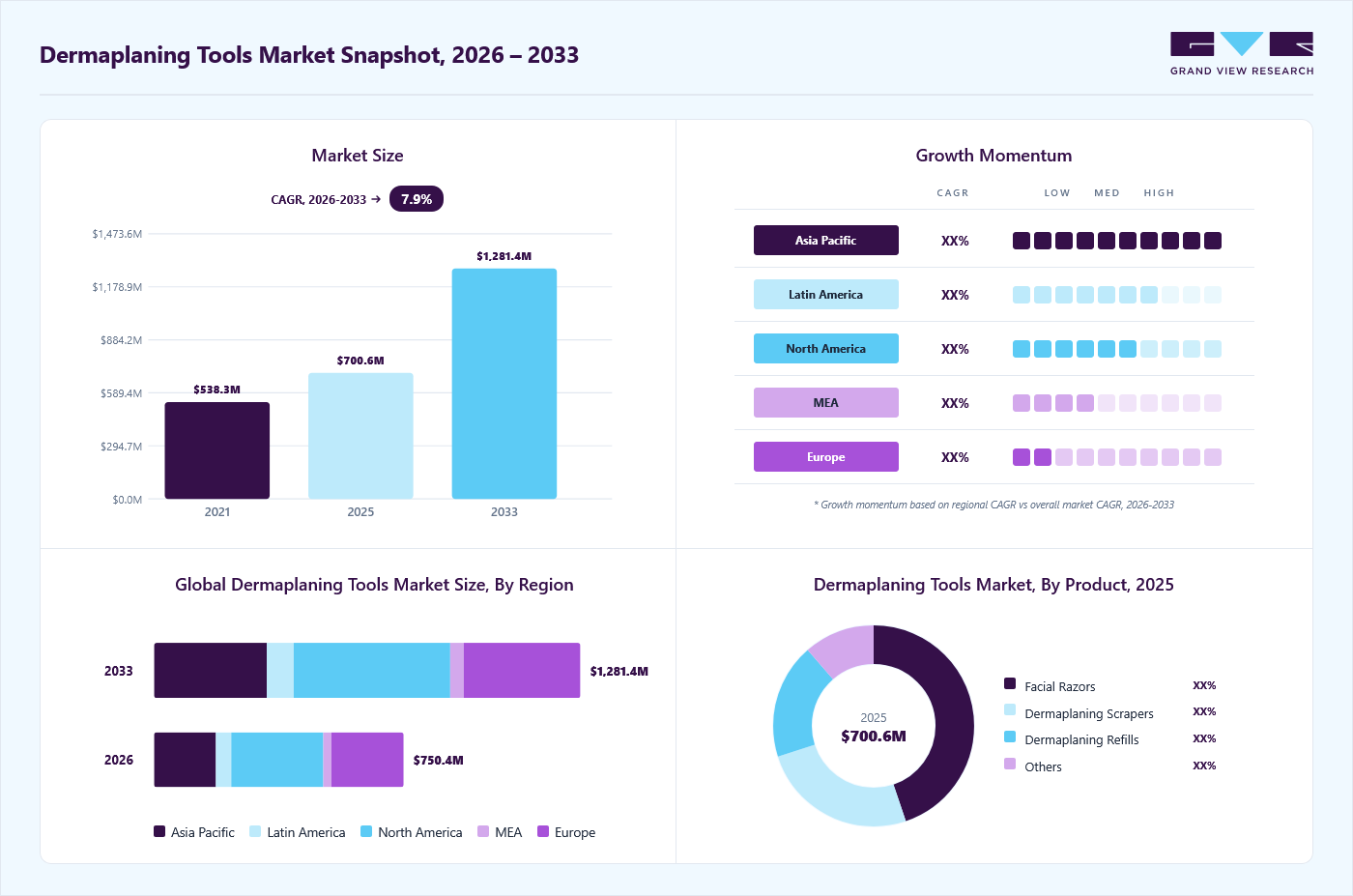
The global dermaplaning tools market size was valued at USD 700.6 million in 2025 and is projected to grow from USD 750.4 million in 2026 to USD 1,281.4 million by 2033, at a CAGR of 7.9% from 2026 to 2033. North America dominated the market, accounting for a revenue share of 36.8% in 2025. This growth is attributed to several factors such as the rising popularity of non-invasive skincare treatments, increased consumer awareness of the benefits of exfoliation and hair removal, the influence of social media and celebrity endorsements, the convenience and affordability of at-home dermaplaning tools, and the growing trend towards personalized and self-care beauty routines.
Key Market Trends & Insights
- By product: Facial razors segment led the market with the largest revenue share of 44.7% in 2025.
- By application: Women segment led the market with the largest revenue share of 84.5% in 2025.
- By distribution channel: Supermarkets & hypermarkets segment led the market with the largest revenue share of 35.2% in 2025.
Regional Highlights
- Largest regional market: North America (36.8% revenue share, 2025)
- By country: The U.S. held the largest market share in 2025.
Market Size & Forecast
- Market size in 2025: USD 700.6 Million
- Estimated market size in 2026: USD 750.4 Million
- Projected market size by 2033: USD 1281.4 Million
- CAGR (2026-2033): 7.9%
Three ways to get this report
Buy it, customize it, or ask a question.Ask an Analyst
A direct answer, usually in 1 working day
- AccessReport author, directly
- Reply timeWithin 1 working day
- No sales callDirect answer only
- FormatEmail reply
- CostFree, no cost
Get the Full Report
What the study covers
- FormatsPDF · Excel · Dashboard
- Timeline2026–2033 annual, 2025 base
- Coverage20+ countries, 5 regions
- Companies10+ key players profiled
Customize the Report
20% free customization
- IncludeCountries, segments, points
- TailorTo your product definition
- ExtendDeeper competitor detail
- OrA fully bespoke study
- Turnaround5–10 working days
Additionally, advancements in product safety and design have made these tools more accessible and appealing to a broader consumer base. Dermaplaning has gained significant traction on social media platforms, especially TikTok, where the term has amassed 3.8 billion views. This surge in popularity is not just a fleeting trend but is reinforced by celebrity endorsements from figures like Eva Mendes and Gwyneth Paltrow, who credit the procedure for making their skin look flawless before major events. The widespread visibility and positive testimonials on social media have made dermaplaning a desirable skincare treatment, contributing to its growing market. This trend highlights the increasing influence of digital platforms and celebrity culture in shaping consumer preferences in the beauty industry.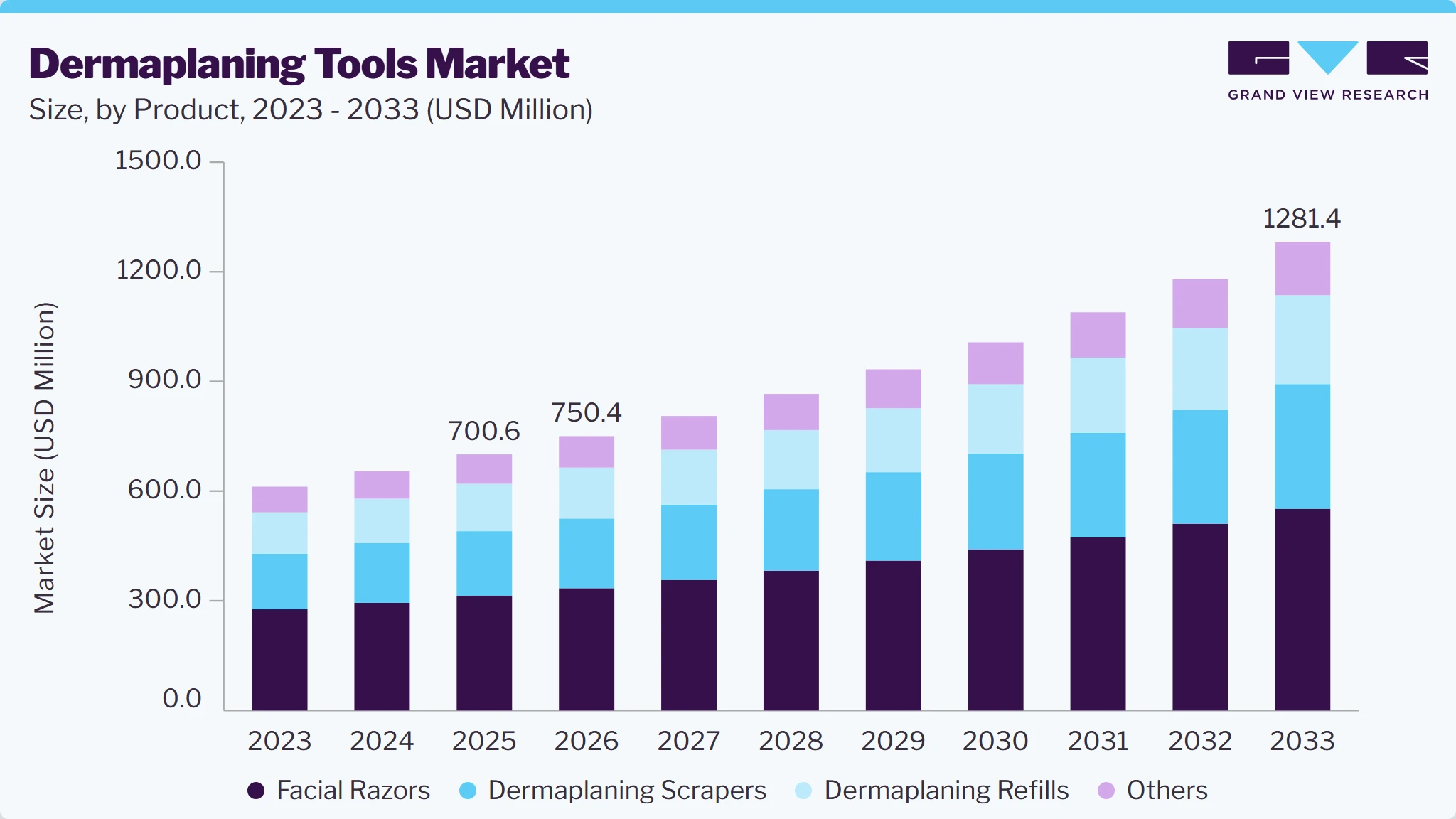
The convenience and accessibility of at-home dermaplaning tools are significant growth drivers in the market. While professional treatments offer the best results, many consumers are opting for at-home solutions, drawn by their affordability and ease of use. The availability of specially designed dermaplaning razors, which are safer and easier to use than standard blades, has facilitated this trend. Despite potential risks, the demand for DIY dermaplaning continues to rise, as it offers an efficient way to achieve effective results from the comfort of home. This shift towards at-home skincare solutions highlights a broader movement in the beauty industry towards self-care and personalized beauty routines.
Market Dynamics
The dermaplaning tools market is experiencing steady growth, driven by rising consumer awareness of advanced skincare, increasing demand for non-invasive cosmetic treatments, and the growing popularity of at-home beauty routines. Dermaplaning tools are widely used to remove dead skin cells and fine facial hair, helping improve skin texture and enhance the absorption of skincare products. The expanding influence of social media, beauty influencers, and dermatologist-recommended skincare regimens continue to support market adoption across both professional and personal-use segments.
The rising consumer preference for at-home skincare routines and minimally invasive aesthetic treatments is a key driver of the dermaplaning tools market. Increasing awareness of skin exfoliation, anti-aging benefits, and improved skincare product absorption has encouraged consumers to adopt dermaplaning as part of their regular beauty regimen. The growing influence of social media, beauty influencers, and dermatologist-backed skincare education has further accelerated product adoption. In addition, the expanding availability of user-friendly and affordable dermaplaning tools through e-commerce platforms has made professional-grade skincare more accessible to a wider consumer base, supporting sustained market growth.
The risk of skin irritation, cuts, infections, and improper usage remains a significant restraint for the dermaplaning tools market. Consumers with sensitive skin or underlying dermatological conditions may experience redness, irritation, or adverse reactions if dermaplaning is performed incorrectly or too frequently. Furthermore, the lack of professional guidance for at-home users and concerns regarding product quality and blade hygiene can discourage adoption. These factors may limit consumer confidence, particularly among first-time users, and restrain market expansion in certain regions.
Continuous product innovation and the growing demand for personalized skincare solutions present significant opportunities for the dermaplaning tools market. Manufacturers are introducing ergonomic designs, safety guards, replaceable blades, antimicrobial materials, and electric dermaplaning devices to improve user safety and convenience. Additionally, increasing collaborations between skincare brands, dermatology clinics, and aesthetic service providers, along with the rising penetration of online retail and direct-to-consumer channels, are expanding product accessibility. The growing popularity of premium skincare routines and professional-grade beauty devices for home use is expected to create new growth opportunities for market participants over the forecast period.
Analyst Perspective
The dermaplaning tools market is benefiting from the convergence of rising consumer interest in at-home skincare, increasing demand for non-invasive aesthetic treatments, and the growing influence of social media-driven beauty trends. As consumers prioritize convenient and cost-effective skincare solutions, manufacturers are expanding their portfolios with safer, ergonomically designed, and professional grade dermaplaning tools for both home and clinical use. Over the long term, competitive advantage will increase depend on product innovation, brand credibility, and integration with broader skincare ecosystems. Companies that combine high-performance tools with premium skincare products, digital consumer engagement, and dermatologist-backed recommendations are likely to strengthen customer loyalty and capture a larger share of the rapidly expanding global skincare and beauty devices market.
Product Insights
Based on product, the facial razors segment led the market with the largest revenue share of 44.7% in 2025 and is expected to grow at the fastest CAGR over the forecast period. This significant share is attributed to their ease of use, affordability, and the growing trend of at-home skincare routines. The availability of specially designed razors that are safer and more effective than traditional blades has made them a popular choice among consumers. Additionally, the increasing awareness of the benefits of regular exfoliation and hair removal for achieving a smooth, radiant complexion has further driven the demand for these products.
In November 2023, Wing It Cosmetics launched the Forever Dermaplaning Razor, an innovative at-home skincare tool designed to deliver spa-grade dermaplaning experiences. This razor features an ergonomic design, replaceable blades, and a luxurious, eco-friendly construction, offering a safe and effective solution for removing dead skin cells and fine facial hair. Paired with their range of specialized skincare products, such as the Aloe Dermaplaning Shave Serum and Collagen Fix Miracle Facial Serum, it enhances skincare routines by providing immediate and lasting benefits like smooth, radiant skin. The growing demand for such advanced, user-friendly dermaplaning razors reflects the increasing consumer interest in effective, at-home skincare solutions that offer professional results and cater to various skin needs.
The demand for dermaplaning scrapers is expected to grow at a CAGR of 8.2% from 2024 to 2030, driven by increasing consumer awareness of skincare treatments, the popularity of non-invasive beauty procedures, and the desire for healthy skin. Additionally, the rise of social media and endorsements by celebrities and beauty influencers have fueled interest in dermaplaning, making it a popular choice for achieving a flawless complexion.
Application Insights
Based on application, the individuals segment led the market with the largest revenue share of 40.6% in 2025.This is attributed to the growing trend of at-home skincare routines. The convenience of performing at-home dermaplaning without the need for salon appointments saves time and money, making it an appealing option for many. Additionally, the rise of beauty influencers and social media platforms showcasing DIY skincare routines has popularized at-home dermaplaning. The availability of safe, easy-to-use, and cost-effective dermaplaning tools has also made it accessible to a broader audience.
The demand for dermaplaning tools among professionals is expected to grow at a CAGR of 7.0% from 2024 to 2030, driven by the expanding beauty and wellness industry, the increasing preference for professional-grade treatments, and the need for high-quality, safe tools in clinical settings to deliver optimal results.
End Use Insights
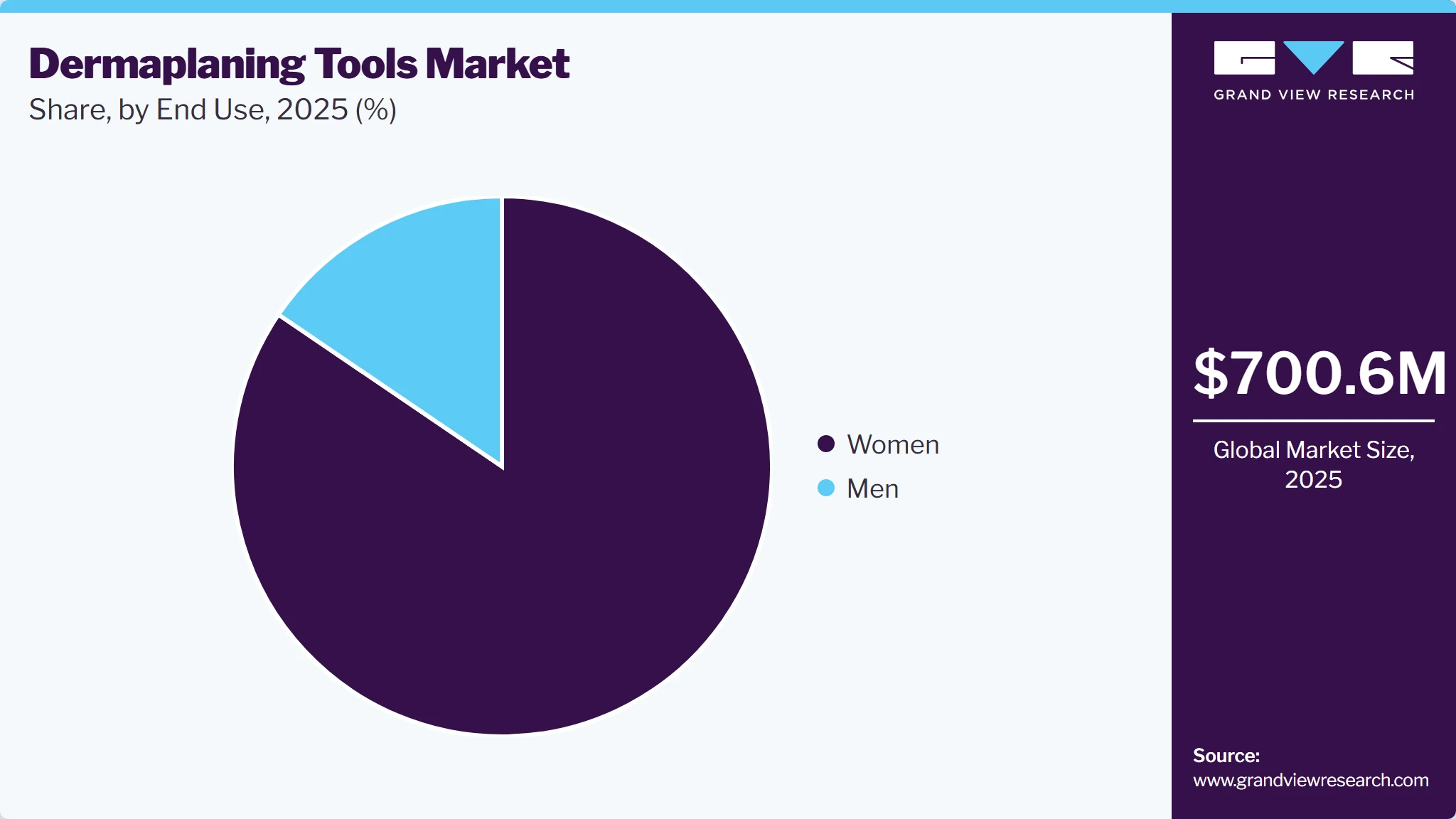
Based on end use, the women segment led the market with the largest revenue share of 84.5% in 2025. Women lay greater emphasis on facial exfoliation and skincare routines, often seeking smoother skin and enhanced makeup application. According to a YouGov survey conducted in May 2024, the demand for dermaplaning among men and women highlights notable differences. The survey reveals that 11% of women and only 2% of men have used dermaplaning on their faces. This disparity highlights the higher engagement of women with dermaplaning as part of their skincare routines, driven by their greater focus on facial exfoliation and skincare. Men, while less represented, are beginning to show increasing interest in dermaplaning, reflecting broader trends in male grooming and skincare.
The demand for dermaplaning tools among men is expected to grow at a CAGR of 7.9% from 2024 to 2030, driven by the rising trend of male grooming and skincare, with men increasingly adopting practices that enhance skin texture and address concerns like ingrown hairs and dullness. Additionally, increased awareness and marketing targeting men, along with the availability of specific products for men, are contributing to the growth in dermaplaning tools demand.
Distribution Channel Insights
Based on distribution channel, the supermarkets & hypermarkets segment led the market with the largest revenue share of 35.2% in 2025, primarily due to their wide reach and accessibility, allowing consumers to easily find and purchase these tools in-store. The convenience of shopping at these locations, combined with the ability to compare products and prices directly, drives significant consumer traffic and sales. Additionally, promotional offers and in-store displays often boost visibility and impulse purchases, further contributing to the strong market presence of dermaplaning tools in these retail channels.
Online distribution channel segment is projected to grow at a CAGR of 8.4% from 2024 to 2030, attributed to the increasing convenience and accessibility of e-commerce platforms, which allow consumers to easily browse, compare, and purchase products from the comfort of their homes. The rise of digital marketing and social media influencers also drives awareness and consumer interest encouraging more frequent online purchases.
Regional Insights
North America dominated the dermaplaning tools market with the largest revenue share of 36.8% in 2025, driven by high consumer awareness and adoption of advanced skincare routines. The strong presence of key beauty and skincare brands, along with a trend towards premium at-home beauty treatments, has fueled demand. Additionally, the region’s high disposable income and the increasing number of women incorporating dermaplaning into their regular skincare regimens contribute to its significant share.

U.S. Dermaplaning Tools Market Trends
The market in the U.S. is expected to grow at a CAGR of 7.9% from 2024 to 2030. Dermaplaning is gaining momentum in beauty routines in the U.S., driven by its effective and simple approach to exfoliation. This treatment involves using a sterile surgical scalpel to gently remove dead skin cells and fine facial hair, resulting in a smoother, more radiant complexion. Many women initially hesitated due to concerns about hair regrowth and skin irritation, but positive experiences shared online are reassuring others. The procedure's appeal lies in its quick, affordable nature, deep yet gentle exfoliation, and enhanced absorption of skincare products.
Europe Dermaplaning Tools Market Trends
The market in Europe accounted for a share of over 29% of the global market revenue in 2023. This is attributed to the region’s high standards of personal grooming and growing demand for at-home beauty treatments. The presence of established skincare brands and increasing consumer interest in innovative and effective skincare solutions further drive the Europe dermaplaning tools market.
Asia Pacific Dermaplaning Tools Market Trends
The Asia Pacific market is expected to grow at a CAGR of 8.5% from 2024 to 2030, fueled by rising consumer awareness about skincare, higher disposable incomes, and a growing focus on personal grooming. Key contributors include China, with its expanding middle class and booming beauty sector; Japan, known for its sophisticated skincare routines; South Korea, a leader in innovative beauty trends; and India, where increasing beauty consciousness and urban disposable income drive demand.
Key Dermaplaning Tools Company Insights
Key companies in the market include Schick (Edgewell Personal Care), Gillette Venus (Procter & Gamble), and others like StackedSkincare and DERMAFLASH. These companies hold significant market shares due to their innovative product offerings and strong brand presence. For instance, Gillette Venus and Schick have introduced advanced dermaplaning tools integrated with additional skincare benefits, leveraging their extensive distribution networks and marketing capabilities. The market is also witnessing the entry of specialized brands focusing on high-quality, dermatologically tested tools, which cater to the growing consumer demand for safe and effective at-home skincare solutions.
Key Dermaplaning Tools Companies
The following key companies have been profiled for this study on the dermaplaning tools market.
-
Dermaflash
-
StackedSkincare
-
Tinkle USA
-
Edgewell Personal Care
-
KITSCH
-
Leaf Shave
-
Offspring Beauty Co.
-
Tweezerman International, LLC
-
ennva
Competitive Benchmarking
Category
Operating Strategies
Competitive Edge
Weakness
Established Players (Dermaflash; Edgewell Personal Care; Tweezerman International, LLC; KITSCH; YA-MAN Ltd.)
- Expand premium dermaplaning tool portfolios, invest in ergonomic and skin-safe blade technologies, strengthen retail and e-commerce distribution, and collaborate with beauty retailers and skincare brands to increase product adoption.
- Strong brand recognition, extensive distribution networks, advanced product development capabilities, high consumer trust, and broad product portfolios across personal care and beauty segments.
- Premium pricing, higher manufacturing and marketing costs, and slower adaptation to emerging niche beauty trends compared to smaller direct-to-consumer brands.
Emerging Players (StackedSkincare; Leaf Shave; Offspring Beauty Co.; ennva; Jasclair)
- Focus on affordable and sustainable dermaplaning tools, leverage direct-to-consumer sales, expand through social media and influencer marketing, and introduce multifunctional skincare accessories targeting at-home beauty routines.
- Agile product innovation, competitive pricing, strong digital marketing presence, and the ability to quickly respond to evolving consumer preferences for at-home skincare solutions.
- Limited brand awareness, smaller distribution networks, constrained R&D and marketing budgets, and intense competition from established personal care and beauty brands.
Recent Developments
-
In March 2023, P&G's Gillette Venus launched its first-ever dermaplaning skincare line in collaboration with OLAY, introducing a complete three-step regimen. The collection includes a cleansing primer, dermaplaning razor, and hydrating serum, all designed for sensitive skin and dermatologically approved. This new product line aims to simplify dermaplaning, providing a safe and effective routine for women. Additionally, a mini hair remover is available for quick touch-ups, featuring a unique rotary system for gentle and precise hair removal.
-
In May 2022, Schick Hydro Silk introduced the Hydro Silk Dermaplaning Wand alongside a unique "Unfiltered Beauty Mirror" to promote authentic beauty and dismantle toxic beauty culture. The innovative mirror prototype allows users to livestream unedited content, encouraging self-compassion and emotional awareness by eliminating filters and social media distractions. This initiative is part of Hydro Silk's "You, Unfiltered" campaign, aiming to boost confidence and spark conversations about unrealistic beauty standards. The Dermaplaning Wand itself is a refillable tool offering seven skin benefits, including hair removal and improved skin texture, and is designed for easy, at-home dermaplaning.
Dermaplaning Tools Market Report Scope
Report Attribute
Details
Market size in 2025
USD 700.6 million
Estimated market size in 2026
USD 750.4 million
Projected market size by 2033
USD 1,281.4 million
Growth rate
CAGR of 7.9% from 2026 to 2033
Base year for estimation
2025
Historical data
2021 - 2024
Forecast period
2026 - 2033
Quantitative units
Revenue in USD million/billion and CAGR from 2026 to 2033
Report coverage
Revenue forecast, company ranking, competitive landscape, growth factors, and trends
Segments covered
Product, Application, End Use, Distribution Channel, region
Regional scope
North America; Europe; Asia Pacific; Latin America; MEA
Country scope
U.S, Canada, Mexico, Germany, UK, France, Italy, China, Japan, India, South Korea, Australia, Brazil, South Africa, UAE
Key companies profiled
Dermaflash; StackedSkincare; Tinkle USA; Edgewell Personal Care; KITSCH; Leaf Shave; Offspring Beauty Co.; Tweezerman International, LLC; ennva; Jasclair
Customization scope
Free report customization (equivalent up to 8 analysts' working days) with purchase. Addition or alteration to country, regional & segment scope.
Pricing and purchase options
Avail customized purchase options to meet your exact research needs. Explore purchase options
Global Dermaplaning Tools Market Report Segmentation
This report forecasts revenue growth at the global, regional, and country levels and provides an analysis of the latest industry trends and opportunities in each of the sub-segments from 2021 to 2033. For this study, Grand View Research has segmented the global dermaplaning tools market based on product, application, end use, distribution channel, and region.
-
Product Outlook (Revenue, USD Million, 2021 - 2033)
-
Facial Razors
-
Dermaplaning Scrapers
-
Dermaplaning Refills
-
Others
-
-
Application Outlook (Revenue, USD Million, 2021 - 2033)
-
Individuals
-
Professionals
-
-
End Use Outlook (Revenue, USD Million, 2021 - 2033)
-
Women
-
Men
-
-
Distribution Channel Outlook (Revenue, USD Million, 2021 - 2033)
-
Supermarkets & Hypermarkets
-
Specialty Beauty Stores
-
Pharmacies & Drugstores
-
Online
-
Others
-
-
Regional Outlook (Revenue, USD Million, 2021 - 2033)
-
North America
-
U.S.
-
Canada
-
Mexico
-
-
Europe
-
Germany
-
UK
-
France
-
Italy
-
-
Asia Pacific
-
China
-
Japan
-
India
-
South Korea
-
Australia
-
-
Central & South America
-
Brazil
-
-
Middle East & Africa
-
South Africa
-
UAE
-
-
Research Methodology
The dermaplaning tools market figures in this report are based on a proven research process that combines executive interviews with secondary research from proprietary databases, company filings, and recognized regulatory and institutional sources. Market size is built through value-chain sizing - reconciling supply-side and demand-side estimates - and triangulated with bottom-up and top-down approaches. Every estimate passes multiple levels of expert validation before publication, with each dermaplaning tools segment quantified using the revenue-capture definitions in the table belowd
Segment Definition
Segment - Application
Revenue capture definition
Individuals
This segment covers the revenues generated through the sales of dermaplaning tools for individual consumers using these products for personal skincare and at-home facial exfoliation. These tools are designed for convenient, safe, and cost-effective removal of dead skin cells and fine facial hair as part of regular beauty and skincare routines.
Professionals
This segment covers the revenues generated through the sales of dermaplaning tools used by professionals in dermatology clinics, medical spas, aesthetic centers, beauty salons, and skincare clinics. These tools are utilized to perform professional dermaplaning procedures that enhance skin texture, improve product absorption, and prepare the skin for advanced cosmetic treatments.
Estimation Model
Epidemiology Layer
Digital Access Layer
Behavioural Layer
Monetisation Layer
Who has a relevant skincare need?
Who can be reached through retail channels?
Who actively uses dermaplaning tools?
How much revenue is generated?
Estimate the population seeking facial hair removal, skin exfoliation, and smoother skin through at-home grooming solutions.
Apply internet, e-commerce, and beauty retail penetration to identify consumers with access to dermaplaning tools.
Estimate adoption based on skincare awareness, DIY beauty trends, social media influence, and preference for non-invasive treatments.
Multiply the active user base by the average selling price (ASP) and replacement purchase frequency to estimate total market revenue.
Delivered Customizations
This report has been delivered with the following In-depth customizations
Client Request
Customization Delivered
Value Adds
At-Home Skincare, Exfoliation & Beauty Routine Trends
Conducted a focused analysis of dermaplaning tools covering manual and electric devices, facial exfoliation routines, peach fuzz removal, skincare preparation, and at-home beauty treatment adoption trends.
Helps stakeholders identify high-growth product categories, evaluate evolving consumer skincare preferences, and assess commercialization opportunities in the personal grooming and beauty tools market.
Beauty Device Adoption & Consumer Purchasing Trends
Evaluated adoption trends across DIY skincare, premium beauty tools, professional salon usage, e-commerce expansion, reusable dermaplaning tools, and sustainable product preferences.
Provides insights into emerging beauty and personal care trends, consumer purchasing behavior, and attractive market segments to support product positioning and innovation strategies.
Product Innovation & Personalized Skincare Opportunity Assessment
Assessed demand for precision-engineered dermaplaning tools, ergonomic designs, replaceable blade systems, skin-friendly materials, and integrated skincare solutions, along with regulatory, safety, and product differentiation factors.
Supports investment and expansion strategies by identifying innovation opportunities, technology adoption, competitive differentiation, and long-term growth potential in the dermaplaning tools market.
Frequently Asked Questions About This Report
The global dermaplaning tools market was valued at USD 700.6 million in 2025 and is expected to reach USD 750.4 million in 2026.
The global dermaplaning tools market is expected to grow at a compound annual growth rate of 7.9% from 2026 to 2033 to reach USD 1,281.4 million by 2033.
North America dominated the dermaplaning tools market with a share of around 36.8% in 2025. The dermaplaning tools market in North America is driven by increasing consumer demand for non-invasive cosmetic procedures, rising awareness of skincare benefits, and the growing popularity of at-home beauty treatments.
Key players in the dermaplaning tools market are Dermaflash; StackedSkincare; Tinkle USA; Edgewell Personal Care; KITSCH; Leaf Shave; Offspring Beauty Co.; Tweezerman International, LLC; ennva; and Jasclair.
Key factors that are driving the dermaplaning tools market growth include rising consumer demand for effective, non-invasive skincare treatments, increased awareness of dermaplaning benefits, advancements in tool design, and the growing trend of at-home beauty care.
Based on product, the facial razors segment led the market with the largest revenue share of 44.7% in 2025 and is expected to grow at the fastest CAGR over the forecast period.
Based on application, the individuals segment led the market with the largest revenue share of 40.6% in 2025.
Based on end use, the women segment led the market with the largest revenue share of 84.5% in 2025.
Based on distribution channel, the supermarkets & hypermarkets segment led the market with the largest revenue share of 35.2% in 2025.
About the Author(s)
Beauty & Personal Care Research Team
Consumer Goods · Beauty & Personal CareThis report was authored by the beauty & personal care research team at Grand View Research - comprising two research analysts, one senior research analyst, and one industry expert - with specialized expertise in the beauty & personal care segment of the consumer goods industry. All findings are based on proprietary consumer goods databases, executive interviews, and regulatory analysis, subject to internal peer review prior to publication.
Last Updated:
Speak to Analyst


Customize this report to your needs - add regions, segments, or data points, with 20% free customization.
Or view our licence options:


ISO 9001:2015 & 27001:2022 Certified
We are GDPR and CCPA compliant! Your transaction & personal information is safe and secure. For more details, please read our privacy policy.


