
- Home
- »
- Medical Devices
- »
-
Dialyzer Market Size, Share & Trends Report, 2026-2033GVR Report cover
![Dialyzer Market (2026 - 2033)Report]()
Dialyzer Market (2026 - 2033)
Size, Share & Trends Analysis Report By Flux (High-Flux, Low-Flux), By Usage (Disposable, Reusable), By Membrane Material, By Sterilization Method, By End Use, By Region, And Segment Forecasts
Market Size, 2025
$6.1BMarket Estimate, 2026
$6.6BMarket Forecast, 2033
$12.1BCAGR, 2026–2033
9.0%Dialyzer Market Summary
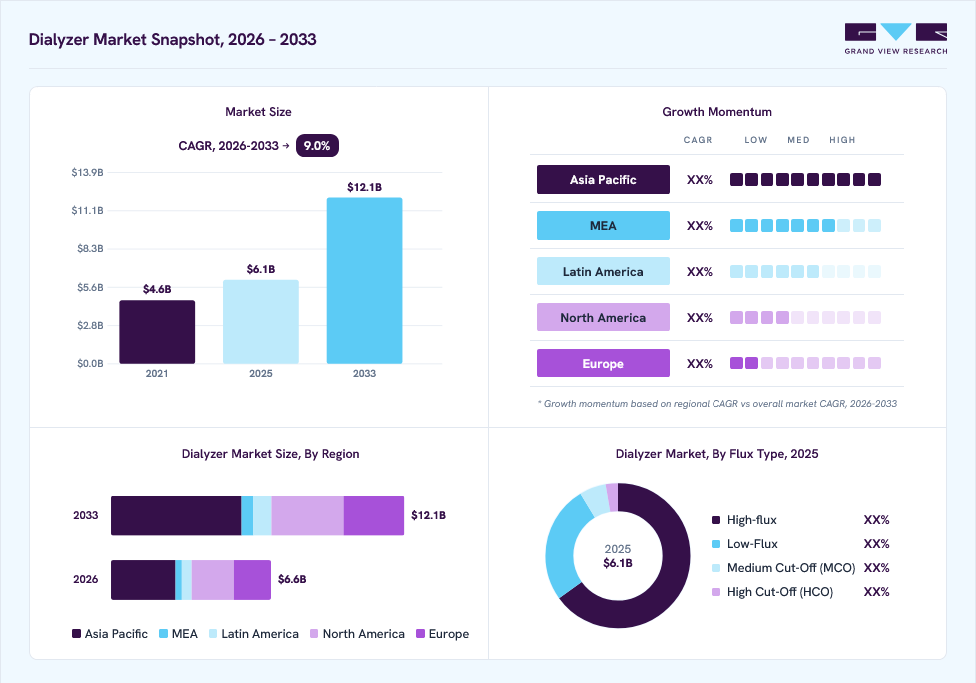
The global dialyzer market size was valued at USD 6.1 billion in 2025 and is projected to grow from USD 6.6 billion in 2026 to USD 12.1 billion by 2033, at a CAGR of 9.0% from 2026 to 2033. Asia Pacific dominated the market, accounting for the largest revenue share of 39.8% in 2025. The growth of the global dialyzer industry is primarily attributed to the increasing prevalence of chronic kidney disease (CKD) and end-stage kidney disease (ESKD), fueled by the rising incidence of diabetes, hypertension, obesity, and the growing aging population worldwide.
Key Market Trends & Insights
- By flux: The high flux segment led the market with the largest revenue share of 65.0% in 2025.
- By usage: The disposable segment led the market with the largest revenue share of 82.0% in 2025.
- By membrane material: The synthetic membranes segment led the market with the largest revenue share of 66.9% in 2025.
- By sterilization method: The ethylene oxide sterilization segment led the market with the largest revenue share of 47.6% in 2025.
- By end use: The in-center dialysis segment led the market with the largest revenue share of 87.5% in 2025.
Regional Highlights
- Largest regional market: Asia Pacific (39.8% revenue share, 2025)
- By country: China held the largest market share in 2025.
Market Size & Forecast
- Market size in 2025: USD 6.1 Billion
- Estimated market size in 2026: USD 6.6 Billion
- Projected market size by 2033: USD 12.1 Billion
- CAGR (2026-2033): 9.0%
In addition, the increasing adoption of advanced dialysis technologies, including high-volume hemodiafiltration (HVHDF), is driving growth in the dialyzer market. Healthcare providers are implementing innovative dialysis therapies that improve toxin removal, enhance treatment efficiency, and support better patient outcomes. This trend is accelerating demand for technologically advanced dialyzers that are compatible with high-performance hemodialysis and hemodiafiltration systems. For instance, in July 2026, Fresenius Medical Care announced the BEACON-US research initiative to generate real-world clinical evidence on high-volume hemodiafiltration (HVHDF) among U.S. dialysis patients. The initiative supported the nationwide rollout of HVHDF by evaluating patient outcomes, treatment effectiveness, and clinical experiences across diverse patient populations.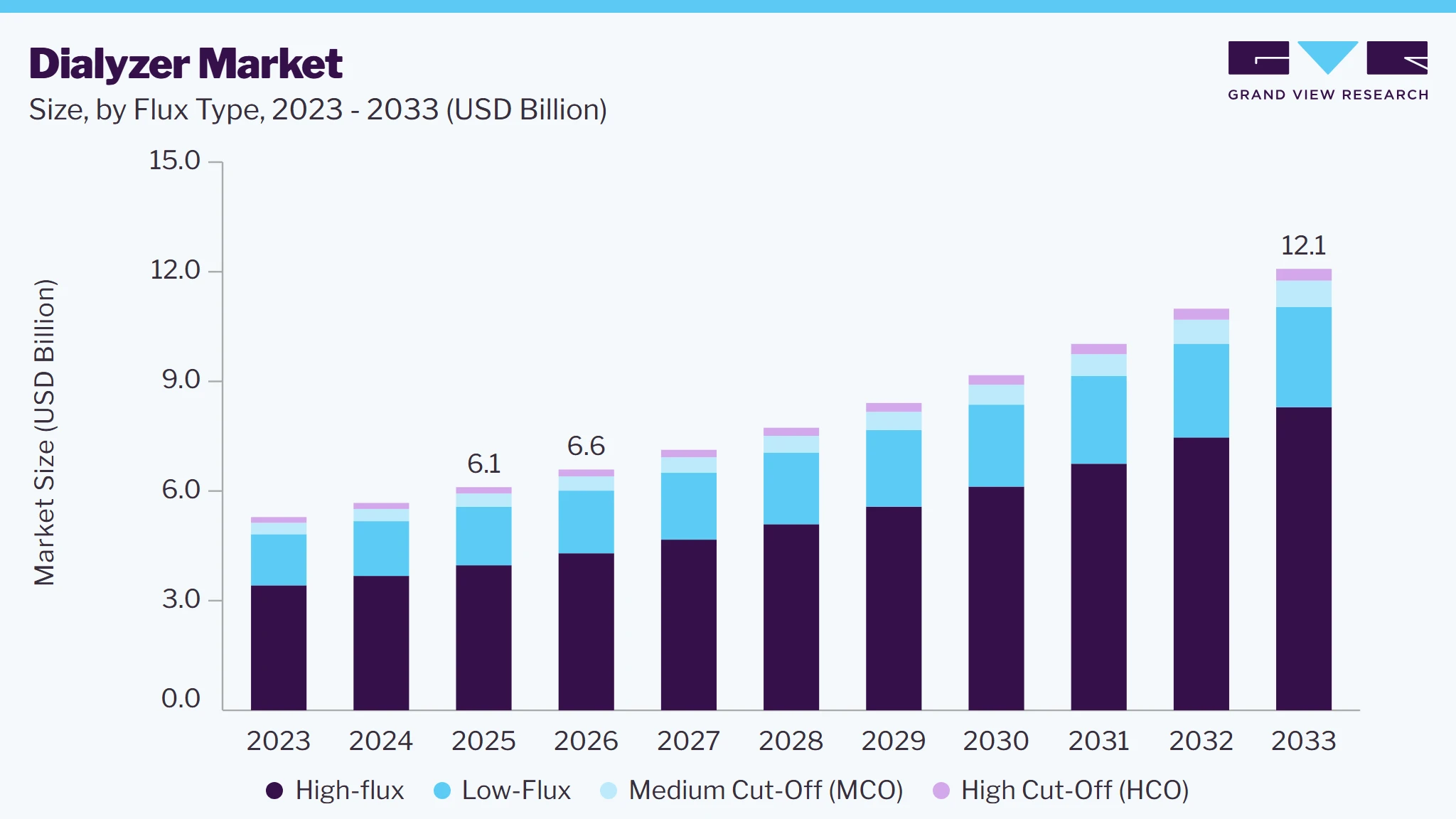
“BEACON-US reflects our commitment to innovation that is grounded in evidence,” said Helen Giza, CEO of Fresenius Medical Care. “High-volume hemodiafiltration has the potential to transform the standard of kidney care in the United States and is a key part of our FME Reignite strategy as we accelerate growth and innovation. We are excited by the benefits we are seeing through early insights from BEACON-US and the potential for this therapy to significantly improve patient outcomes.”
Governments across the world are increasing investments in dialysis infrastructure, reimbursement programs, and public healthcare initiatives to improve access to renal replacement therapy for patients with chronic kidney disease (CKD) and end-stage renal disease (ESRD). These initiatives are expanding dialysis capacity, particularly in underserved regions, thereby driving demand for dialyzers and other dialysis consumables. For instance, in August 2026, India's Pradhan Mantri National Dialysis Program (PMNDP) continued to strengthen dialysis services by expanding affordable treatment across district hospitals through public-private partnership (PPP) and in-house service delivery models. The program addresses the country's growing ESRD burden, with approximately 220,000 new ESRD patients requiring an additional 34 million dialysis sessions annually, supporting increased demand for dialyzers and dialysis infrastructure.
Chronic kidney disease (CKD) prevalence in the U.S. varies significantly across demographic groups, with higher rates observed among older adults and certain racial and ethnic populations. Adults aged 65 years and above show the highest CKD prevalence, affecting approximately one-third of this age group. CKD prevalence is also higher among women compared with men and is notably elevated among non-Hispanic Black and non-Hispanic Asian populations compared with non-Hispanic White and Hispanic adults. These demographic differences highlight the growing burden of CKD and the need for effective screening, early diagnosis, and renal care management strategies.
Prevalence of Chronic Kidney Disease (CKD) Among U.S. Adults Aged ≥18 Years by Age, Sex, and Race/Ethnicity, 2026
Age, Sex, and Race-Ethnicity
Percentage
95% CI
Est. Number (in Millions)
95% CI
18-44
5.6
4.3-7.3
6.4
4.8-8.0
45-64
12.9
11.0-15.0
10.1
8.2-11.9
65+
34.2
31.1-37.6
20.1
18.5-21.6
Men
14.1
12.4-15.9
16.9
14.9-18.9
Women
14.7
12.7-17.0
19.7
17.6-21.8
Non-Hispanic White
13.1
11.6-14.7
23.2
21.0-25.5
Non-Hispanic Black
22
16.5-28.6
6.3
5.0-7.7
Non-Hispanic Asian
16.4
12.6-21.0
2.4
1.7-3.2
Hispanic
12.1
9.3-15.5
4.6
3.6-5.5
Source: U.S. Centers for Disease Control and Prevention (CDC)
Companies offer a broad portfolio of hemodialyzers designed to support high-efficiency hemodialysis and hemodiafiltration therapies. Its dialyzer range includes FX HDF, Optiflux, and other high-flux dialyzer models featuring advanced polysulfone membrane technology, which provides high biocompatibility, efficient clearance of uremic toxins, and optimized fluid management.
Fresenius Medical Care Dialyzer Portfolio by Membrane Material and Sterilization Method
Dialyzer
Membrane (main structure)
Sterilization
FX HDF 600
Polysulfone
Inline steam
FX HDF 800
Polysulfone
Inline steam
FX HDF 1000
Polysulfone
Inline steam
Optiflux F3
Polysulfone
Ethylene oxide
Optiflux F80A
Polysulfone
Ethylene oxide
FX HDF 600
Polysulfone
Inline steam
FX HDF 800
Polysulfone
Inline steam
FX HDF 1000
Polysulfone
Inline steam
Optiflux F3
Polysulfone
Ethylene oxide
Optiflux F80A
Polysulfone
Ethylene oxide
Optiflux HF80S
Polysulfone
Inline steam
Optiflux F160NRE
Polysulfone
Electron beam
Optiflux F200NRE
Polysulfone
Electron beam
Optiflux F160NR
Polysulfone
Ethylene oxide
Optiflux F180NR
Polysulfone
Ethylene oxide
Similar analysis will be provided for other players.
Source: Company Website
Market Dynamics
The dialyzer market is experiencing steady growth due to the increasing prevalence of CKD and ESKD, along with the rising incidence of diabetes, hypertension, obesity, and an aging population worldwide. The growing number of patients requiring regular hemodialysis has significantly increased the demand for high-performance dialyzers capable of efficient toxin removal and improved patient outcomes. The market is further supported by advancements in dialyzer membrane technologies, including high-flux and biocompatible membranes, which enhance solute clearance, reduce treatment-related complications, and improve dialysis efficiency. In addition, expanding government initiatives to improve access to dialysis services, increasing investments in dialysis infrastructure, and the growing adoption of home hemodialysis are contributing to market growth. Continuous technological innovations, including advanced membrane materials and high-volume hemodiafiltration (HDF) dialyzers, along with the expansion of dialysis services in emerging economies, are expected to support sustained market growth during the forecast period.
The increasing adoption of home hemodialysis is driving demand for dialyzers specifically designed for safe, efficient, and convenient use in home settings. Healthcare providers and governments are promoting home dialysis to improve patients' quality of life, reduce hospital visits, and lower long-term healthcare costs. As more patients transition to home-based treatment, the need for reliable, high-performance, and biocompatible dialyzers continues to grow. Manufacturers are responding by developing dialyzers with enhanced membrane technologies that provide efficient toxin removal, improved biocompatibility, and ease of use for patients and caregivers. In addition, advancements in portable dialysis machines and supportive reimbursement policies in several countries are encouraging wider adoption of home hemodialysis.
The high cost of advanced high-flux and specialty dialyzers remains a significant restraint for the global dialyzer market. Compared with conventional low-flux dialyzers, advanced dialyzers incorporate high-performance synthetic membranes and enhanced biocompatible materials that improve toxin clearance and dialysis efficiency but increase manufacturing costs. In many low- and middle-income countries, healthcare providers and dialysis centers operate under limited budgets, making it difficult to adopt premium dialyzers for routine treatment. Reimbursement policies in several regions may also favor lower-cost products, limiting the penetration of advanced dialyzers despite their clinical benefits. As patients typically require multiple dialysis sessions each week, the recurring cost of premium dialyzers can place additional financial pressure on healthcare systems.
The expansion of high-flux dialyzer adoption in emerging economies presents a significant growth opportunity for the global dialyzer market. Many countries across Asia-Pacific, Latin America, the Middle East, and Africa are expanding dialysis infrastructure and improving access to renal replacement therapy to address the rising burden of CKD and ESKD. As healthcare systems modernize, dialysis centers are transitioning from conventional low-flux dialyzers to advanced high-flux dialyzers that offer improved toxin removal and better clinical outcomes. Government investments, expanding reimbursement programs, and partnerships with private dialysis providers are further supporting the adoption of advanced dialysis technologies. In addition, the establishment of new dialysis centers and the modernization of existing facilities are increasing the procurement of high-performance dialyzers. This shift toward advanced dialysis therapies is expected to create substantial long-term growth opportunities for dialyzer manufacturers.
Market Concentration & Characteristics
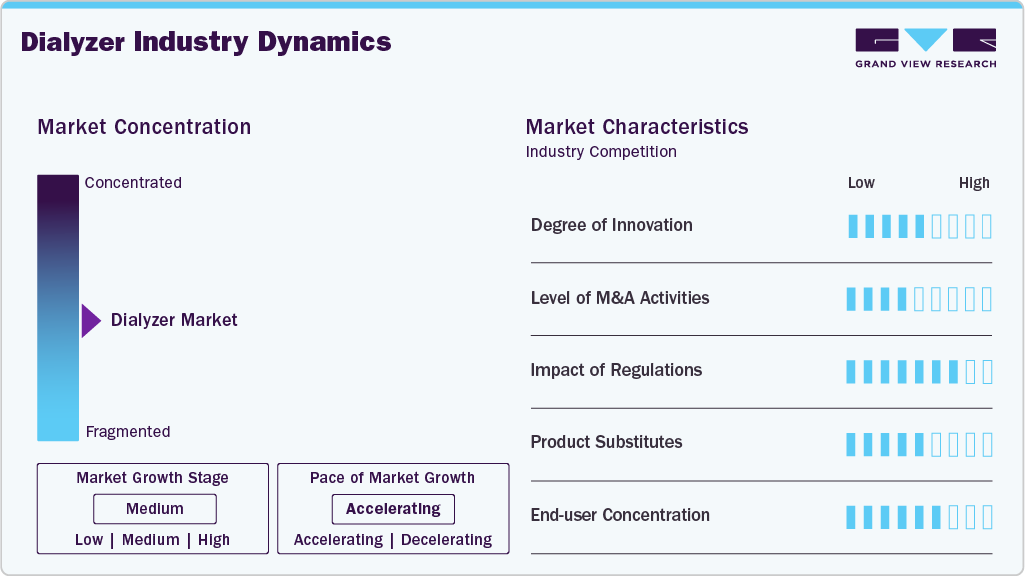
The dialyzer market is characterized by a high degree of innovation, driven by advancements in membrane materials, toxin removal efficiency, and biocompatibility. Manufacturers are developing high-flux, medium cut-off (MCO), and high-retention-onset (HRO) dialyzers that improve the clearance of middle molecules while minimizing albumin loss. There is also growing innovation in dialyzers designed for high-volume hemodiafiltration (HDF) and home hemodialysis, supporting better clinical outcomes and patient safety.
The dialyzer industry has witnessed moderate merger and acquisition activity, with leading renal care companies strengthening their dialysis product portfolios and expanding manufacturing capabilities. Rather than large-scale consolidation, companies are focusing on strategic acquisitions, manufacturing expansions, and partnerships to improve access to dialysis products and advanced membrane technologies. These initiatives help manufacturers expand their geographic presence, strengthen supply chains, and enhance product offerings for hospitals and dialysis centers. The market remains dominated by a few global manufacturers with continuous investments in production capacity and technology development.
For instance, in November 2025, Lords Mark India acquired an 85% stake in Bengaluru-based Renalyx Health Systems, with plans to increase its holding to 92% by March 2026 while allowing Renalyx to continue operating independently. The acquisition strengthened Lords Mark’s dialysis portfolio by adding Renalyx’s AI-powered, IoT-enabled sustained low-efficiency dialysis (SLED) technology, with manufacturing undertaken in collaboration with Bharat Electronics.
“This acquisition reinforces our commitment to driving self-reliance and innovation in India’s Medtech and Diagnostic ecosystem. With Renalyx Health Systems, we’re not only making advanced dialysis more accessible but also putting India on the global MedTech manufacturing map. Our goal is to scale this innovation worldwide, while ensuring that every patient, regardless of geography, has access to safe, efficient, and affordable care,” Sachidanand Upadhyay, Managing Director and CEO of Lords Mark Industries, said.
The market is significantly influenced by stringent medical device regulations governing product safety, biocompatibility, sterilization, manufacturing quality, and clinical performance. Dialyzers must comply with international standards such as ISO 8637 for hemodialyzers and quality management requirements under ISO 13485. In major markets, including the U.S. and Europe, manufacturers must obtain regulatory clearance under the U.S. FDA and the European Medical Device Regulation (EU MDR 2017/745) before commercialization. These regulatory requirements increase development costs and approval timelines but ensure product safety, quality, and clinical effectiveness.
The industry faces low to moderate substitution, as kidney transplantation and peritoneal dialysis serve as alternative renal replacement therapies for eligible patients. Kidney transplantation generally offers better long-term survival and quality of life, but is limited by donor shortages and patient eligibility. Peritoneal dialysis allows home-based treatment but is not suitable for all patients due to medical and clinical considerations. Consequently, hemodialysis remains the most widely used renal replacement therapy globally, sustaining strong demand for dialyzers.
Demand for dialyzers is highly concentrated among hospital-based dialysis units, independent dialysis centers, and specialty renal care clinics, which perform the majority of hemodialysis treatments worldwide. Large dialysis service providers account for substantial procurement of dialyzers due to the recurring nature of treatment, with most patients requiring dialysis three times per week. In addition, the gradual expansion of home hemodialysis programs is increasing demand for dialyzers designed for home use. Government-supported dialysis programs and private dialysis networks continue to play a major role in purchasing decisions and overall market growth.
Analyst Perspective
The dialyzer market is expected to witness steady growth, driven by the rising prevalence of CKD and ESKD, increasing demand for regular hemodialysis, and expanding access to dialysis services worldwide. The market is further supported by technological advancements in high-flux, medium cut-off (MCO), and biocompatible membrane technologies that improve toxin clearance, treatment efficiency, and patient outcomes. From an analyst's perspective, companies that focus on developing advanced membrane technologies, improving dialyzer performance, ensuring regulatory compliance, and offering cost-effective solutions will be better positioned to strengthen their competitive advantage. Future market leadership is expected to depend on continuous innovation in dialyzer design, expansion of manufacturing capabilities, strong partnerships with dialysis providers, and the ability to address the growing demand for efficient and accessible renal replacement therapies.
Flux Insights
The high-flux segment dominated the dialyzer market, accounting for 65.0% of the share in 2025. This dominance is supported by the increasing adoption of high-flux dialyzers for maintenance hemodialysis due to their superior clearance of middle-molecule uremic toxins, improved dialysis efficiency, and better clinical outcomes compared to low-flux dialyzers. Growing utilization of high-volume hemodiafiltration (HDF), favorable clinical guideline recommendations, and increasing preference among dialysis providers for advanced biocompatible membranes have further strengthened the demand for high-flux dialyzers across hospitals and dialysis centers.
The Medium Cut-Off (MCO) segment in the dialyzer market is expected to grow at a significant rate during the forecast period due to the increasing adoption of advanced dialysis therapies that provide enhanced removal of larger middle-molecule uremic toxins while minimizing albumin loss. Growing clinical evidence supporting improved patient outcomes, rising use of expanded hemodialysis (HDx), increasing preference for biocompatible membrane technologies, and continued innovation by leading manufacturers are expected to accelerate the adoption of MCO dialyzers across hospitals and dialysis centers. For instance, according to the National Kidney Foundation's 2025 Clinical Update, MCO dialyzers provide superior clearance of large middle molecules compared with conventional high-flux dialyzers and can be used with existing hemodialysis infrastructure without additional equipment, supporting their wider adoption in routine clinical practice.
Usage Insights
The disposable segment dominated the dialyzer market with 82.0% share in 2025. This dominance is supported by the widespread adoption of single-use dialyzers due to their lower risk of cross-contamination, elimination of reprocessing requirements, and improved compliance with infection prevention protocols. Disposable dialyzers are increasingly preferred by hospitals and dialysis centers because they simplify clinical workflows, reduce operational burden, and enhance patient safety. The growing shift toward single-use devices has been reinforced by updated infection control practices and regulatory emphasis on minimizing healthcare-associated infections. In 2024, the CDC updated the National Healthcare Safety Network (NHSN) Dialysis Event protocol by removing the dialyzer reuse variable, reflecting the declining relevance of dialyzer reuse in routine U.S. clinical practice. These trends are expected to sustain the dominance of the disposable segment throughout the forecast period.
The reusable segment is expected to grow at a significant rate during the forecast period due to the increasing focus on reducing dialysis treatment costs, minimizing medical waste, and improving resource utilization in cost-sensitive healthcare systems. Reusable dialyzers remain an important option in several emerging economies where dialysis providers seek to lower per-treatment expenses through validated reprocessing protocols. Growing investments in dialysis infrastructure, increasing demand for affordable renal replacement therapy, and adherence to standardized dialyzer reprocessing guidelines are expected to support the adoption of reusable dialyzers in selected markets.
Membrane Material Insights
The synthetic membranes segment dominated the market in 2025, accounting for 66.9% share. This dominance is supported by the superior biocompatibility, higher ultrafiltration efficiency, and improved removal of middle-molecule uremic toxins offered by synthetic membrane materials such as polysulfone (PS), polyethersulfone (PES), and polyarylethersulfone (PAES). These membranes are widely used in high-flux hemodialysis and hemodiafiltration because they reduce inflammatory responses and improve treatment performance compared with conventional cellulose membranes. In 2025, the European Dialysis Working Group Clinical Practice Guideline recommended the use of high-flux dialyzers for adults receiving hemodialysis to improve the clearance of middle molecules. As high-flux dialyzers are predominantly manufactured using synthetic membranes, these recommendations continue to strengthen demand for synthetic membrane-based dialyzers globally.
The cellulose-based membrane segment is expected to grow at a significant rate during the forecast period, due to increasing demand for affordable dialysis therapies across low- and middle-income countries, where healthcare providers prioritize cost-effective treatment options. Cellulose-based membranes remain suitable for conventional low-flux hemodialysis and continue to be adopted in hospitals with limited healthcare budgets. Expansion of dialysis services, rising government investments in renal care, and increasing numbers of patients requiring maintenance dialysis are expected to support segment growth. In 2024, the International Society of Nephrology (ISN) reported that significant disparities in access to kidney replacement therapy persist worldwide, particularly in low-resource settings, highlighting the continued need for affordable dialysis technologies. This is expected to sustain demand for cellulose-based dialyzers in emerging healthcare systems.
Sterilization Method Insights
The ethylene oxide sterilization segment dominated the dialyzer market, accounting for 47.6% of the share in 2025. This dominance is supported by the widespread use of EtO sterilization for heat- and moisture-sensitive dialyzers manufactured using advanced polymeric membrane materials. EtO provides effective low-temperature sterilization without compromising membrane integrity, filtration efficiency, or product performance, making it the preferred sterilization method for disposable dialyzers. It is also compatible with complex device geometries and sealed packaging, enabling large-scale commercial production. In January 2025, the U.S. Environmental Protection Agency (EPA) stated in its Interim Registration Review Decision that ethylene oxide is used to sterilize approximately 50% of all sterilized medical devices annually, including an estimated 95% of all surgical kits, while recognizing that alternative sterilization methods have material compatibility and scalability limitations. This continued reliance on EtO for critical medical devices supports its leading position in the dialyzer market.
The gamma/e-beam sterilization segment is expected to grow at the fastest rate during the forecast period, driven by increasing demand for residue-free, low-temperature sterilization technologies for single-use medical devices. Gamma and electron-beam (e-beam) sterilization provide rapid processing and excellent material compatibility while eliminating the use of chemical sterilants, making them attractive alternatives for sterilizing advanced polymer-based dialyzers. Growing regulatory emphasis on sustainable sterilization methods and the expansion of irradiation infrastructure are further supporting adoption. In June 2026, the International Atomic Energy Agency (IAEA) expanded global access to electron-beam technology by training experts from 21 countries using its transportable e-beam system, promoting wider industrial adoption of electron-beam applications, including medical device sterilization. These initiatives are expected to accelerate the adoption of gamma/e-beam sterilization technologies across the medical device industry, supporting the growth of this segment in the dialyzer market.
End Use Insights
The in-center dialysis segment accounted for 87.5% in 2025, exhibiting its end use dominance in the global market. This dominance is driven by the extensive network of dialysis centers, the availability of specialized nephrology care, and the ability to provide continuous monitoring for patients with end-stage kidney disease (ESKD). In-center dialysis remains the preferred treatment setting for patients requiring regular maintenance hemodialysis and management of complex comorbidities. According to Fresenius Medical Care's 2025 Annual Report, approximately 4.5 million people worldwide were receiving dialysis in 2025, of which around 4.0 million patients (89%) underwent in-center hemodialysis across nearly 53,000 dialysis centers globally. This large facility-based treatment population continues to drive demand for dialyzers used in in-center dialysis.
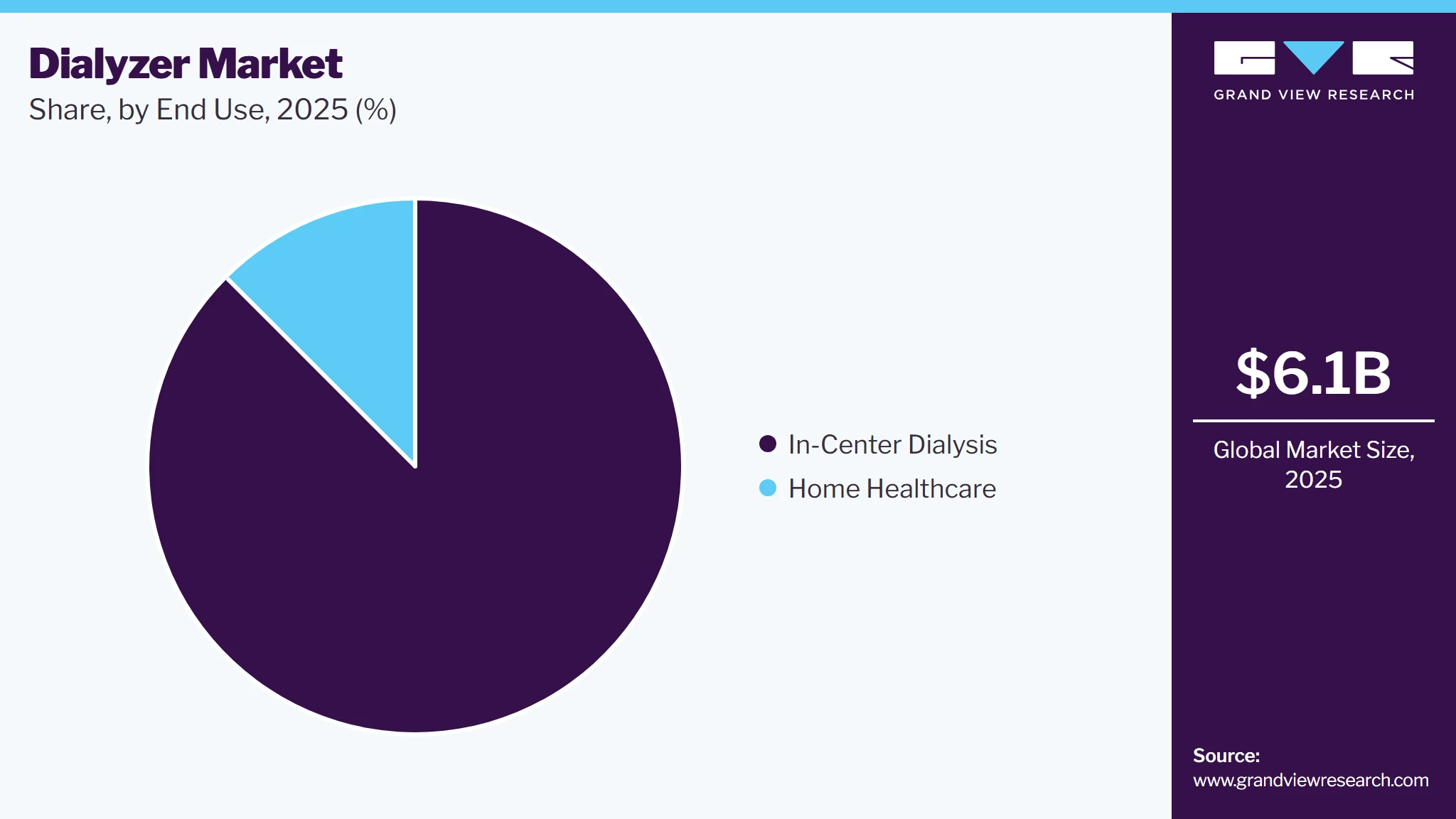
The home healthcare segment is expected to grow at the fastest rate during the forecast period. Growth is driven by increasing investments in home dialysis technologies, greater patient awareness, and healthcare policies encouraging treatment outside traditional dialysis centers. Portable dialysis systems, telehealth support, and remote patient monitoring are improving the accessibility and convenience of home hemodialysis. According to the UK Kidney Association, more than 25,000 patients in the UK receive hemodialysis, and clinical guidelines recommend that home hemodialysis should be available as part of a comprehensive renal replacement therapy program across dialysis units. In addition, the UK Kidney Association highlights that home hemodialysis supports individualized treatment schedules and improved patient convenience, encouraging healthcare providers to expand home-based dialysis services. These initiatives are expected to increase demand for dialyzers used in home healthcare settings.
Regional Insights
The North America dialyzer market held a significant share in 2025, owing to the well-established healthcare infrastructure, high healthcare expenditure, favorable reimbursement policies, and the growing prevalence of CKD and ESKD across the U.S., Canada, and Mexico. The region also benefits from the presence of leading dialysis providers and manufacturers, including Fresenius Medical Care, Baxter International, Nipro Corporation, and B. Braun, which continue to invest in advanced high-flux dialyzers and dialysis technologies. In addition, the region's extensive network of hospitals and standalone dialysis centers, coupled with continuous technological innovation and strong government support for renal care, is expected to sustain market growth throughout the forecast period.
U.S. Dialyzer Market Trends
The U.S. dialyzer market is witnessing significant growth due to the increasing prevalence of kidney failure, expanding home hemodialysis programs, and the growing adoption of high-flux dialyzers. Healthcare providers continue to invest in advanced dialysis technologies that improve treatment efficiency and patient outcomes. In March 2026, according to the U.S. Centers for Disease Control and Prevention (CDC), chronic kidney disease (CKD) remained a significant public health burden among U.S. adults, particularly among individuals with diabetes and hypertension, which are the leading risk factors for kidney failure. The CDC also reported that 87% of adults with CKD were unaware of their condition, highlighting the need for early diagnosis and timely treatment.
U.S. Chronic Kidney Disease (CKD) Prevalence and Associated Risk Factors, 2026
Parameter
Data (U.S.)
Adults (≥18 years) with Chronic Kidney Disease (CKD)
14% (approximately 37 million people)
Adults (≥18 years) with diabetes having CKD
38%
Adults (≥18 years) with Type 1 diabetes having CKD
49%
Adults (≥18 years) with Type 2 diabetes having CKD
41%
Adults (≥18 years) with prediabetes having CKD
11%
Adults (≥18 years) with high blood pressure having CKD
21%
Adults (≥20 years) with CKD unaware of their condition
87%
Source: U.S. Centers for Disease Control and Prevention (CDC)
Europe Dialyzer Market Trends
The dialyzer market in Europe is experiencing steady growth due to the increasing burden of chronic kidney disease, an aging population, and well-established renal replacement therapy programs. Countries including Germany, France, Italy, Spain, and the UK continue to invest in modern dialysis infrastructure while increasing the adoption of high-flux and medium cut-off (MCO) dialyzers to improve clinical outcomes. In addition, stringent regulatory standards under the European Medical Device Regulation (EU MDR) and the growing adoption of home hemodialysis are driving demand for technologically advanced dialyzers across the region.
The UK dialyzer market is witnessing steady growth due to the increasing prevalence of chronic kidney disease and continued investments in renal care services through the National Health Service (NHS). The growing use of high-flux dialyzers and home hemodialysis is improving treatment accessibility and patient outcomes. According to UK Kidney Care, statistics updated in January 2026, approximately 7.2 million people in the UK are living with chronic kidney disease, increasing the demand for long-term dialysis services and disposable dialyzers across hospitals and dialysis centers.
Chronic Kidney Disease (CKD) Burden in the UK (January 2026):
-
Approximately 3.25 million people in the UK have later-stage CKD (stages 3-5), where symptoms become more difficult to manage.
-
More than 70,000 people in the UK are currently receiving treatment for kidney failure (stage 5 CKD), where kidney function falls below 15%.
-
CKD contributes to approximately 40,000-45,000 premature deaths annually in the UK.
-
More than 20 people develop kidney failure every day in the UK.
-
More than 1,000 children in the UK are living with CKD.
Asia Pacific Dialyzer Market Trends
The Asia Pacific dialyzer industry dominated the global market with the largest revenue share of over 39.8% in 2025. The dialyzer market in the Asia Pacific is expected to witness the fastest growth during the forecast period due to the rapidly increasing prevalence of diabetes and hypertension, expanding dialysis infrastructure, and improving access to renal replacement therapy. Governments across China, India, Japan, and South Korea are investing in dialysis services, while private healthcare providers continue to expand dialysis center networks. In August 2026, India's Pradhan Mantri National Dialysis Program (PMNDP) continued strengthening affordable dialysis services across district hospitals through public-private partnerships, supporting increased demand for disposable dialyzers and dialysis consumables.

The China dialyzer market is witnessing strong growth due to the rising burden of chronic kidney disease, increasing healthcare expenditure, and expansion of dialysis services across public and private hospitals. The country is also strengthening domestic manufacturing of dialysis consumables, including synthetic membrane dialyzers, to improve healthcare accessibility and reduce dependence on imports. Government investments in healthcare modernization and the growing number of dialysis centers continue to support market expansion.
Latin America Dialyzer Market Trends
The dialyzer market in Latin America is expected to witness strong growth during the forecast period owing to the increasing prevalence of chronic kidney disease, improving healthcare infrastructure, and expanding access to dialysis treatment. Countries such as Brazil and Argentina continue investing in renal care services while private dialysis providers expand treatment capacity. Rising awareness regarding early diagnosis of kidney disease and government initiatives to improve dialysis accessibility are expected to increase demand for high-flux disposable dialyzers throughout the region.
MEA Dialyzer Market Trends
The dialyzer market in the Middle East & Africa is witnessing significant growth due to increasing healthcare investments, expanding dialysis infrastructure, and the rising prevalence of diabetes and hypertension, which are major risk factors for chronic kidney disease. Countries including Saudi Arabia, the UAE, and South Africa are increasing investments in renal care facilities while expanding access to dialysis services through public and private healthcare initiatives. The growing number of standalone dialysis centers and hospitals is expected to sustain demand for disposable synthetic membrane dialyzers across the region.
For instance, in May 2026, Saudi Arabia’s Ministry of Health, Ministry of Defense, and National Centre for Privatization launched the CKD Care and National Dialysis Services PPP project to provide renal care services to at least 11,500 patients. The project invited private operators to deliver hemodialysis, home dialysis, peritoneal dialysis, vascular access procedures, and related clinical services across four regional packages.
Key Dialyzer Company Insights
Some of the key companies in the dialyzer market include Fresenius Medical Care, Baxter International, Nipro Corporation, B. Braun SE, Asahi Kasei Medical, Nikkiso Co., Ltd., Toray Medical Co., Ltd., Shandong Weigao Group, Allmed Medical GmbH, Medica S.p.A., Dialife SA, JMS Co., Ltd., Farmasol, and Medtronic plc. Organizations are focusing on increasing their customer base to gain a competitive edge in the industry. Therefore, key players are taking several strategic initiatives, such as product launches and partnerships with other major companies.
Key Dialyzer Companies
The following key companies have been profiled for this study on the dialyzer market.
-
Fresenius Medical Care
-
Baxter International
-
Nipro Corporation
-
B. Braun SE
-
Asahi Kasei Medical
-
Nikkiso Co., Ltd.
-
Toray Medical Co., Ltd.
-
Shandong Weigao Group
-
Allmed Medical GmbH
-
Medica S.p.A.
-
Dialife SA
-
JMS Co., Ltd.
-
Farmasol
-
Medtronic plc
Competitive Benchmarking
Category
Operating
Strategies
Competitive Edge
Weakness
Established Players (Fresenius Medical Care, Baxter International, Nipro Corporation)
- Focus on developing advanced dialyzer technologies, including high-flux dialyzers, medium cut-off (MCO) membranes, biocompatible synthetic membranes.
- Expand global presence through strategic partnerships with dialysis providers, hospitals, and healthcare systems.
- Strong global brand recognition, extensive R&D capabilities, broad dialysis product portfolios, established manufacturing facilities, and wide distribution networks.
- These companies benefit from long-term relationships with dialysis centers, hospitals, and government healthcare programs.
- High manufacturing and R&D costs associated with advanced membrane technologies, and premium pricing may limit adoption in cost-sensitive markets.
- Increasing competition from regional manufacturers offering lower-cost dialyzers may impact margins.
Emerging Players (Shandong Weigao Group, Allmed Medical GmbH, Medica S.p.A.)
- Focus on expanding manufacturing capabilities and providing cost-effective dialyzer solutions for hospitals and standalone dialysis centers.
- These companies emphasize competitive pricing, regulatory approvals, regional partnerships, and expansion through distributors to improve market penetration.
- Competitive pricing, flexible manufacturing capabilities, growing presence in Asia-Pacific, Europe, Latin America, and Middle Eastern markets.
- Ability to address demand from cost-sensitive healthcare systems and provide alternative dialyzer options for dialysis providers seeking affordable solutions.
- Lower global brand recognition compared with leading players and smaller R&D investments may restrict penetration in developed markets.
- Dependence on distributors and limited adoption of advanced premium dialyzer technologies may affect expansion.
Recent Developments
-
In August 2026, Nipro Medical Corporation launched ELISIO-HX, a medium cut-off dialyzer with super high-flux membrane technology in the U.S. following FDA 510(k) clearance. The product expanded access to enhanced haemodialysis by enabling improved removal of middle molecules through existing dialysis infrastructure.
"Every advancement in dialysis should be measured by its potential to improve the patient experience," said Dr. Jeff Giullian, Chief Medical Officer for DaVita. "The availability of ELISIO-HX expands the range of treatment options available to nephrologists and the patients they care for, bringing an important innovation into routine practice. More choice enables more individualized care, and that's ultimately what patients deserve."
-
In September 2025, Fresenius Medical Care invested approximately EUR 312 million (~USD 367 million) to acquire additional ownership in InterWell Health (IWH), strengthening its Value-Based Care segment.
Dialyzer Market Report Scope
Report Attribute
Details
Market size in 2025
USD 6.1 billion
Estimated market size in 2026
USD 6.6 billion
Projected market size by 2033
USD 12.1 billion
Growth rate
CAGR of 9.0% from 2026 to 2033
Base year for estimation
2025
Actual estimates/Historical data
2021 - 2024
Forecast period
2026 - 2033
Quantitative units
Revenue in USD Billion and CAGR from 2026 to 2033
Report coverage
Revenue forecast, company ranking, competitive landscape, growth factors, and trends
Segments covered
Flux, usage, membrane material, sterilization method, end use, region
Regional scope
North America; Europe; Asia Pacific; Latin America; Middle East & Africa
Country scope
U.S.; Canada; Mexico; UK; Germany; France; Italy; Spain; Denmark; Sweden; Norway; Japan; China; India; Thailand; Australia; South Korea; Brazil; Argentina; South Africa; Saudi Arabia; UAE; Kuwait
Key companies profiled
Fresenius Medical Care; Baxter International; Nipro Corporation; B. Braun SE; Asahi Kasei Medical; Nikkiso Co., Ltd.; Toray Medical Co., Ltd.; Shandong Weigao Group; Allmed Medical GmbH; Medica S.p.A.; Dialife SA; JMS Co., Ltd.; Farmasol; Medtronic plc.
Customization scope
Free report customization (equivalent up to 8 analyst’s working days) with purchase. Addition or alteration to country, regional & segment scope
Pricing and purchase options
Avail customized purchase options to meet your exact research needs. Explore purchase options
Global Dialyzer Market Report Segmentation
This report forecasts revenue growth at global, regional & country levels and provides an analysis of the latest industry trends in each of the sub-segments from 2021 to 2033. For this study, Grand View Research has segmented the global dialyzer market report based on flux, usage, membrane material, sterilization method, end use, and region:
-
Flux Outlook (Revenue, USD Billion, 2021 - 2033)
-
High-Flux
-
Low-Flux
-
Medium Cut-Off (MCO)
-
High Cut-Off (HCO)
-
-
Usage Outlook (Revenue, USD Billion, 2021 - 2033)
-
Disposable
-
Reusable
-
-
Membrane Material Outlook (Revenue, USD Billion, 2021 - 2033)
-
Cellulose-Based
-
Synthetic Membranes
-
Polysulfone (PS)
-
Polyethersulfone (PES)
-
Polyarylethersulfone (PAES)
-
Others
-
-
Sterilization Method Outlook (Revenue, USD Billion, 2021 - 2033)
-
Steam Sterilization
-
Ethylene Oxide Sterilization
-
Gamma/E-beam Sterilization
-
-
End Use Outlook (Revenue, USD Billion, 2021 - 2033)
-
In-Center Dialysis
-
Hospitals
-
Standalone Dialysis Centers
-
Home Healthcare
-
-
Regional Outlook (Revenue, USD Billion, 2021 - 2033)
-
North America
-
U.S.
-
Canada
-
Mexico
-
-
Europe
-
UK
-
Germany
-
France
-
Italy
-
Spain
-
Denmark
-
Sweden
-
Norway
-
-
Asia Pacific
-
Japan
-
China
-
India
-
Thailand
-
Australia
-
South Korea
-
-
Latin America
-
Brazil
-
Argentina
-
-
Middle East & Africa
-
South Africa
-
Saudi Arabia
-
UAE
-
Kuwait
-
-
Research Methodology
The dialyzer market figures in this report are based on a proven research process that combines executive interviews with secondary research from proprietary databases, company filings, and recognized regulatory and institutional sources. Market size is built through value-chain sizing-reconciling supply-side and demand-side estimates-and triangulated with bottom-up and top-down approaches. Every estimate passes multiple levels of expert validation before publication, with each dialyzer segment quantified using the revenue-capture definitions in the table below.
Segment Definition
Segment - Usage
Revenue capture definition
Disposable
Revenue generated from single-use dialyzers designed for one hemodialysis session, offering safe and efficient blood filtration through the removal of waste products and excess fluids. These dialyzers are primarily used in hospitals, in-center dialysis facilities, and standalone dialysis centers to reduce cross-contamination risks and eliminate the need for reprocessing.
Reusable
Revenue generated from dialyzers designed for multiple dialysis sessions after undergoing cleaning, disinfection, and reprocessing procedures. These dialyzers are used in dialysis facilities seeking cost-efficient treatment solutions while maintaining strict infection control and performance standards.
Estimation Model
Step Number
Approach
Description
01
Bottom‑Up Estimation
The market is estimated by analyzing the annual volume of hemodialysis procedures performed across hospitals, in‑center dialysis facilities, standalone dialysis centers, and home healthcare settings at the country, regional, and global levels. The assessment incorporates dialyzer utilization per dialysis session, replacement frequency, adoption of disposable and reusable dialyzers, and preference for high‑flux, low‑flux, and medium cut‑off (MCO) dialyzers.
02
Top‑Down Approach
The market estimation begins with an assessment of the global renal care and dialysis equipment market, followed by evaluating the contribution of dialyzers through secondary research and expert validation. The analysis considers key market indicators such as the prevalence of chronic kidney disease (CKD) and end‑stage kidney disease (ESKD), the number of patients undergoing maintenance hemodialysis, and adoption of advanced dialysis therapies.
03
Supply‑Side Analysis
The analysis considers dialyzer production capacity, annual shipments, product portfolio segmentation (high‑flux, low‑flux, medium cut‑off, and high cut‑off dialyzers), membrane materials, sterilization methods, and distribution networks. In addition, factors such as production expansion, strategic partnerships with dialysis providers, product launches, and manufacturer revenue contribution are evaluated to estimate the overall market size and supply potential.
Delivered Customizations
This report has been delivered with the following In-depth customizations
Client Request
Customization Delivered
Value Adds
Dialyzer Product Portfolio & Technology Analysis
Conducted a comprehensive assessment of the dialyzer product portfolio, including high-flux, low-flux, medium cut-off (MCO), and high cut-off (HCO) dialyzers. Evaluated product adoption based on membrane materials such as synthetic membranes, polysulfone (PS), polyethersulfone (PES), and cellulose-based membranes, along with sterilization methods including steam, ethylene oxide (EtO), and gamma/e-beam sterilization. The analysis also examined product usage across in-center dialysis, hospitals, standalone dialysis centers, and home hemodialysis settings.
Helps stakeholders identify high-growth dialyzer segments, understand technology adoption trends, evaluate demand for advanced membrane technologies, and optimize product strategies based on evolving dialysis treatment requirements and healthcare provider preferences.
Dialysis Provider Adoption & Procurement Landscape Analysis
Analyzed the adoption of dialyzers across hospitals, in-center dialysis facilities, standalone dialysis centers, and home healthcare settings. Assessed procurement factors such as dialyzer performance, membrane characteristics, cost considerations, disposable versus reusable preferences, supply reliability, and regulatory compliance requirements. The study also evaluated the impact of CKD and ESKD prevalence, dialysis patient volumes, reimbursement policies, and government-supported dialysis programs on purchasing decisions across developed and emerging markets.
Enables manufacturers to understand key purchasing drivers, strengthen relationships with dialysis providers, optimize supply chain and distribution strategies, identify high-demand end-user segments, and expand market penetration across regional dialysis networks.
Dialyzer Manufacturer Competitiveness & Innovation Assessment
Evaluated leading dialyzer manufacturers based on product portfolio strength, membrane technology capabilities, manufacturing capacity, geographic presence, regulatory approvals, pricing strategies, and distribution networks. The assessment analyzed innovation initiatives in high-flux dialyzers, biocompatible membranes, high-volume hemodiafiltration (HDF)-compatible products, and home hemodialysis solutions. Recent product launches, manufacturing expansions, strategic partnerships, and competitive positioning strategies were also reviewed across the global dialyzer market.
Supports competitive benchmarking, identifies technology advancement opportunities, enables product differentiation, strengthens market entry and expansion strategies, and helps companies improve their competitive positioning through innovation, cost optimization, and regional growth initiatives.
About the Author(s)
Medical Devices Research Team
Healthcare · Medical DevicesThis report was authored by the medical devices research team at Grand View Research - comprising two research analysts, one senior research analyst, and one industry expert - with specialized expertise in the medical devices segment of the healthcare industry. All findings are based on proprietary healthcare databases, executive interviews, and regulatory analysis, subject to internal peer review prior to publication.
Last Updated:
Speak to Analyst


Customize this report to your needs — add regions, segments, or data points, with 20% free customization.
Or view our licence options:


ISO 9001:2015 & 27001:2022 Certified
We are GDPR and CCPA compliant! Your transaction & personal information is safe and secure. For more details, please read our privacy policy.


