
- Home
- »
- Advanced Interior Materials
- »
-
Diesel Particulate Filter Market Size Report, 2026-2033GVR Report cover

Diesel Particulate Filter Market (2026 - 2033)
Size, Share & Trends Analysis Report By Vehicle (Light Commercial Vehicles, Passenger Cars, Heavy Commercial Vehicles, Off-highway Vehicles), By Material (Cordierite, Silicon Carbide), By Type, By Region, And Segment Forecasts
Market Size, 2025
$19.1BMarket Estimate, 2026
$20.0BMarket Forecast, 2033
$27.2BCAGR, 2026–2033
4.5%Diesel Particulate Filter Market Summary
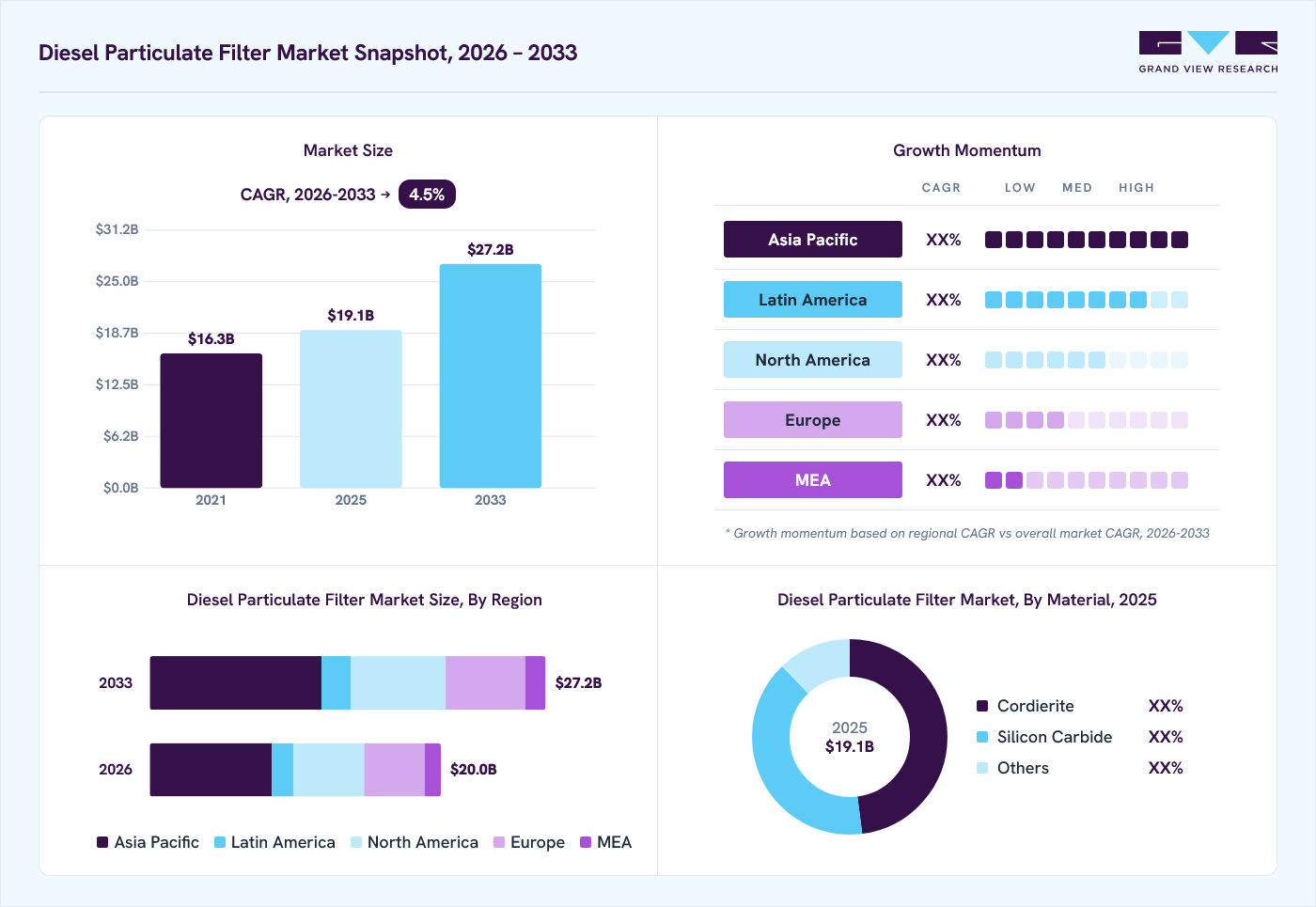
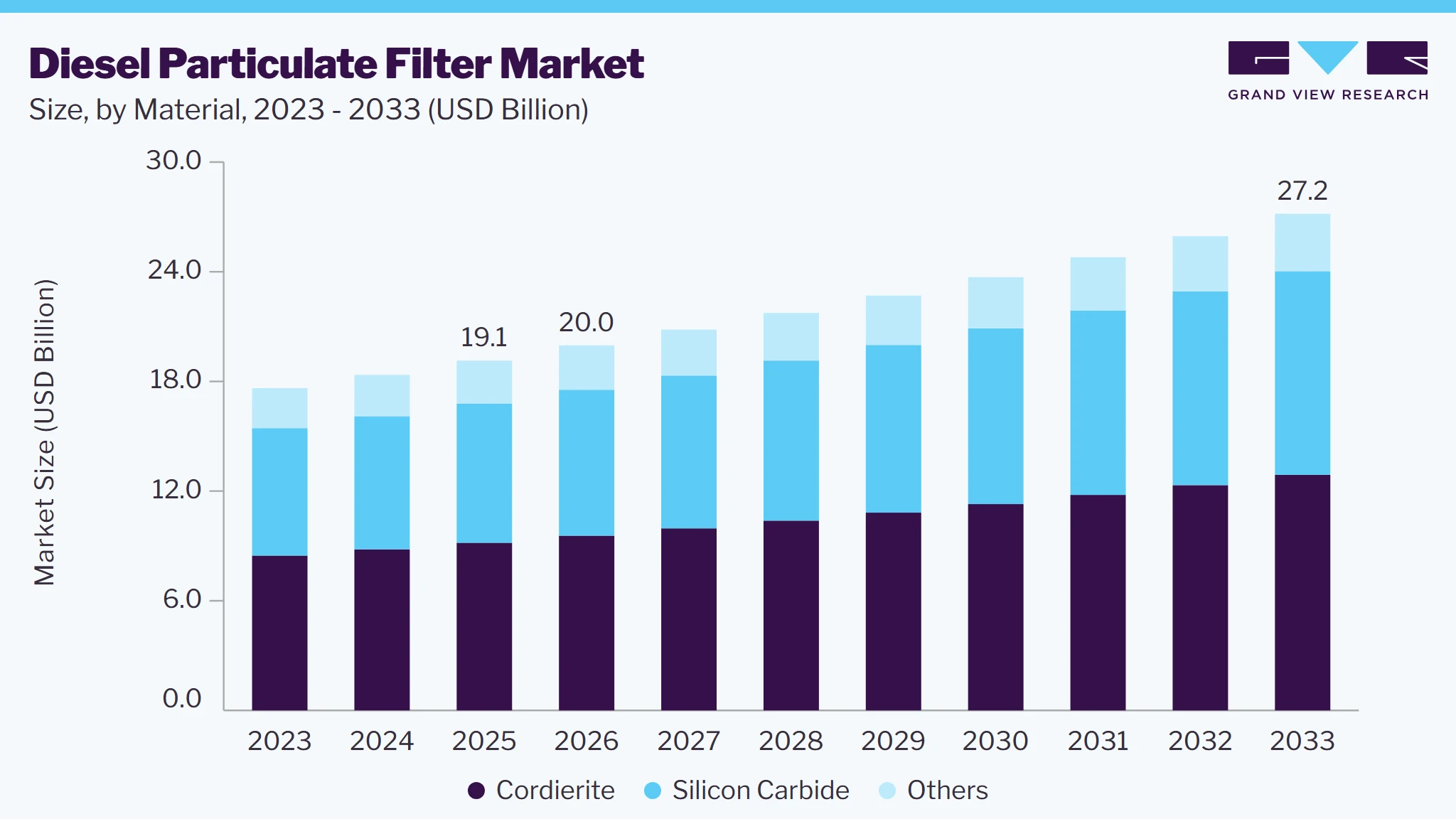
The global diesel particulate filter market size was valued at USD 19.1 billion in 2025 and is projected to grow from USD 20.0 billion in 2026 to USD 27.2 billion by 2033, at a CAGR of 4.5% from 2026 to 2033. Asia Pacific dominated the market, accounting for the largest revenue share of 41.7% in 2025. The diesel particulate filter industry is being supported by the continued tightening of vehicle emission standards across major automotive markets. Regulations increasingly focus on reducing particulate matter and particle-number emissions from diesel-powered passenger cars, commercial vehicles, and heavy-duty applications, encouraging automakers to incorporate advanced exhaust after-treatment technologies.
 Source: Grand View Research, IR Documents, Primary Interviews, Paid DatabasesTo learn more about this report,
 Download Free Sample Report
Key Market Trends & Insights
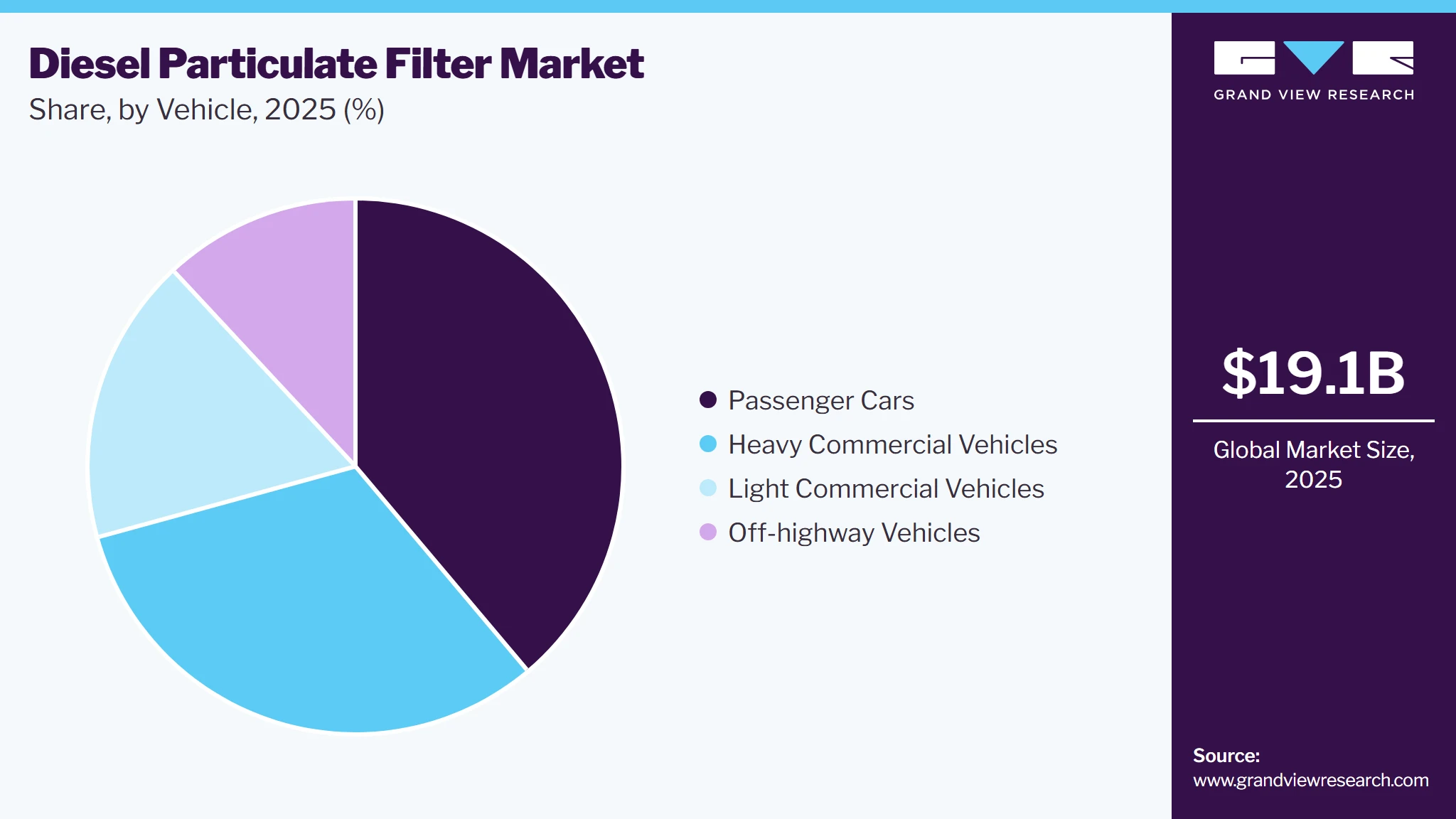
- Based on vehicle: The passenger cars segment led the market with the largest revenue share of 38.9% in 2025.
- Based on material: The cordierite segment led the market with the largest revenue share of 47.9% in 2025.
- Based on type: The disposable segment led the market with the largest revenue share of 72.0% in 2025.
Regional Highlights
- Largest Regional Market: Asia Pacific (41.7% revenue share, 2025)
- Fastest-growing regional market: Asia Pacific (highest CAGR, 2026-2033)
- By Country: China held the largest market share in 2025
Market Size & Forecast
- Market size in 2025: USD 19.1 Billion
- Estimated market size in 2026: USD 20.0 billion
- Projected market size by 2033: USD 27.2 Billion
- CAGR (2026-2033): 4.5%
Three ways to get this report
Buy it, customize it, or ask a question.Ask an Analyst
Analyst response in 1 business day
- AccessReport author, directly
- Reply timeWithin 1 working day
- No sales callDirect answer only
- FormatEmail reply
- CostFree, no cost
Get the Full Report
What the study covers
- FormatsPDF · Excel · Dashboard
- Timeline2026–2033 annual, 2025 base
- Coverage20+ countries, 5 regions
- Companies10+ key players profiled
Customize the Report
20% free customization
- IncludeCountries, segments, points
- TailorTo your product definition
- ExtendDeeper competitor detail
- OrA fully bespoke study
- Turnaround5–10 working days
 To learn more about this report, Download Free Sample Report
In addition, continued use of diesel engines across commercial transportation, construction, agriculture, mining, and other heavy-duty applications is sustaining demand for particulate-control technologies. Growth in vehicle fleets and industrial equipment, particularly in developing economies, is creating opportunities for both original-equipment DPF installations and replacement demand. Improvements in filter materials, regeneration technologies, and exhaust after-treatment systems are further supporting adoption by enabling DPFs to operate effectively under diverse driving and operating conditions.Market Dynamics
The diesel particulate filter market is shaped by a combination of tightening emission regulations, continued reliance on diesel-powered commercial and off-highway equipment, technological advancements in filtration and regeneration, and the gradual transition toward alternative powertrains. Regulatory requirements remain a key demand catalyst, while the large installed base of diesel vehicles creates ongoing replacement and retrofit opportunities. At the same time, increasing electrification of passenger and urban commercial vehicles limits long-term demand growth, making heavy-duty, off-highway, and aftermarket applications increasingly important to the market outlook.
Stringent emission regulations are a major driver for the diesel particulate filter market as governments continue to lower permissible particulate and particle-number emissions from diesel engines. Regulations are introducing tighter particle-emission requirements, encouraging vehicle and equipment manufacturers to adopt more efficient particulate filtration and advanced after-treatment systems.
The regulatory push is also extending beyond passenger vehicles into heavy-duty, commercial, and off-highway applications, creating broader demand for DPF systems. As manufacturers seek to comply with increasingly demanding emission limits, there is greater emphasis on high-efficiency substrates, improved regeneration, and durable filter designs. This regulatory environment supports both OEM installation and retrofit demand, particularly in regions where older diesel fleets are subject to stricter emissions requirements.
The increasing adoption of battery-electric and other alternative powertrains is a key restraint on the Diesel Particulate Filter market, as these vehicles do not require conventional diesel exhaust particulate filtration. Electrification is particularly affecting passenger cars and urban buses, where zero-emission vehicles are gaining acceptance and gradually reducing the addressable market for diesel-powered vehicles.
Advancements in DPF materials, catalyst coatings, and regeneration technologies present significant opportunities for market participants. Development of electronically controlled and low-temperature regeneration systems can improve soot removal while helping maintain filter performance under diverse operating conditions. At the same time, stricter particle-number requirements are driving demand for high-efficiency substrates and advanced filter designs that maintain performance during regeneration and real-world operation.
Market Concentration & Characteristics
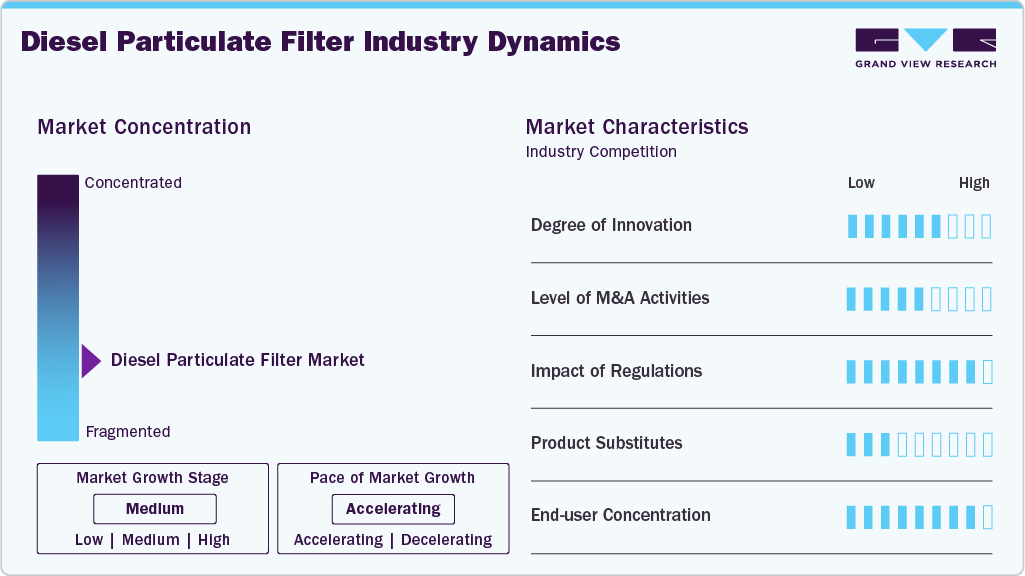
The diesel particulate filter market is fragmented, with competition spread across global emission-control manufacturers, specialized filter producers, substrate suppliers, and regional aftermarket companies. The presence of numerous suppliers serving different vehicle categories, operating conditions, and geographic markets limits the dominance of individual players. Increasing demand for advanced filtration technologies, retrofit solutions, and replacement filters further supports a diverse competitive landscape, contributing to the fragmented structure of the market.
The diesel particulate filter industry has a moderate to high degree of innovation, driven by the need to improve particulate filtration efficiency, regeneration performance, durability, and thermal resistance. Manufacturers are developing advanced substrate materials, improved catalyst coatings, and passive-active regeneration technologies to maintain filtration performance under varied driving and operating conditions. The shift toward controlling smaller particle sizes under newer emission requirements is also encouraging the development of higher-efficiency filter designs.
 To learn more about this report, Download Free Sample Report
Regulation has a significant impact on the DPF industry because emission standards directly determine the filtration and aftertreatment technologies required for diesel vehicles and equipment. Stricter particulate and particle-number limits are encouraging the adoption of more efficient DPF systems across passenger vehicles, commercial vehicles, and off-highway equipment. Regulations such as Euro 7 are also increasing the importance of maintaining emission performance during different operating conditions and throughout the vehicle's useful life.
The industry has high end-user concentration, as demand is largely connected to automotive manufacturers, commercial vehicle producers, fleet operators, and manufacturers of off-highway equipment. While large OEMs account for substantial volumes because DPFs are integrated into new vehicles and equipment, the market also has a broad aftermarket base consisting of replacement and retrofit demand. This combination creates a diversified customer structure, although major vehicle and equipment manufacturers can exert significant influence over product specifications and supplier qualification.
Analyst Perspective
The diesel particulate filter market is expected to maintain steady growth as increasingly stringent emission standards continue to require effective particulate-control systems across diesel-powered vehicles and equipment. While vehicle electrification is gradually reducing DPF demand in passenger cars, the large installed base of diesel commercial vehicles, heavy-duty trucks, construction machinery, agricultural equipment, and mining vehicles is expected to sustain demand, particularly through replacement and retrofit applications. Asia Pacific is likely to remain a key growth region, supported by expanding vehicle fleets and tightening emission regulations, while technological advancements in silicon carbide substrates, high-efficiency filtration, and regeneration systems are creating opportunities for higher-performance DPF solutions.
Material Insights
The cordierite segment dominated due to its favorable combination of low cost, low thermal expansion, good thermal shock resistance, and effective filtration performance. Its established manufacturing base and suitability for high-porosity DPF substrates have supported widespread adoption across diesel vehicle applications, particularly where cost efficiency and reliable filtration are key considerations.
The silicon carbide segment is expected to register the fastest growth of 4.9% CAGR over the forecast period, due to its high thermal conductivity, strong thermal durability, and ability to withstand the elevated temperatures associated with DPF regeneration. These characteristics allow SiC filters to handle higher soot loads and demanding thermal cycles, making the material increasingly attractive for applications requiring enhanced regeneration performance and durability.
Vehicle Insights
The passenger cars segment accounted for the largest share of the diesel particulate filter market, supported by the large installed base of diesel vehicles and the widespread adoption of particulate filtration to meet stringent emission requirements. DPF technology has become an important component of modern diesel passenger-vehicle exhaust systems, particularly as regulations place greater emphasis on particulate mass and particle-number emissions.
 To learn more about this report, Download Free Sample Report
The heavy commercial vehicles segment is expected to register the fastest growth at a CAGR of 5.0% over the forecast period, driven by continued use of diesel-powered trucks and buses and increasingly stringent emission requirements for heavy-duty engines. These vehicles generate substantial exhaust emissions due to their high engine loads and intensive operating cycles, thereby increasing the need for efficient DPF systems and advanced regeneration technologies to meet particulate emission limits.
Type Insights
The disposable DPFs segment accounted for the largest share of the market, supported by their simpler replacement-based operation and suitability for applications where periodic filter replacement is more practical than integrating complex regeneration systems. They remain relevant across selected diesel vehicles and equipment, particularly in aftermarket and specialized applications where ease of replacement and lower system complexity are important considerations.
The regenerative DPFs segment is expected to witness growth at a CAGR of 3.8% over the forecast period, as manufacturers increasingly focus on extending filter operating life and reducing the frequency of complete filter replacement. These systems remove accumulated soot through active, passive, or combined regeneration processes, helping restore filtration capacity and control exhaust backpressure. Increasing emission requirements and demand for durable after-treatment solutions are further encouraging the adoption of regenerative technologies.
Regional Insights
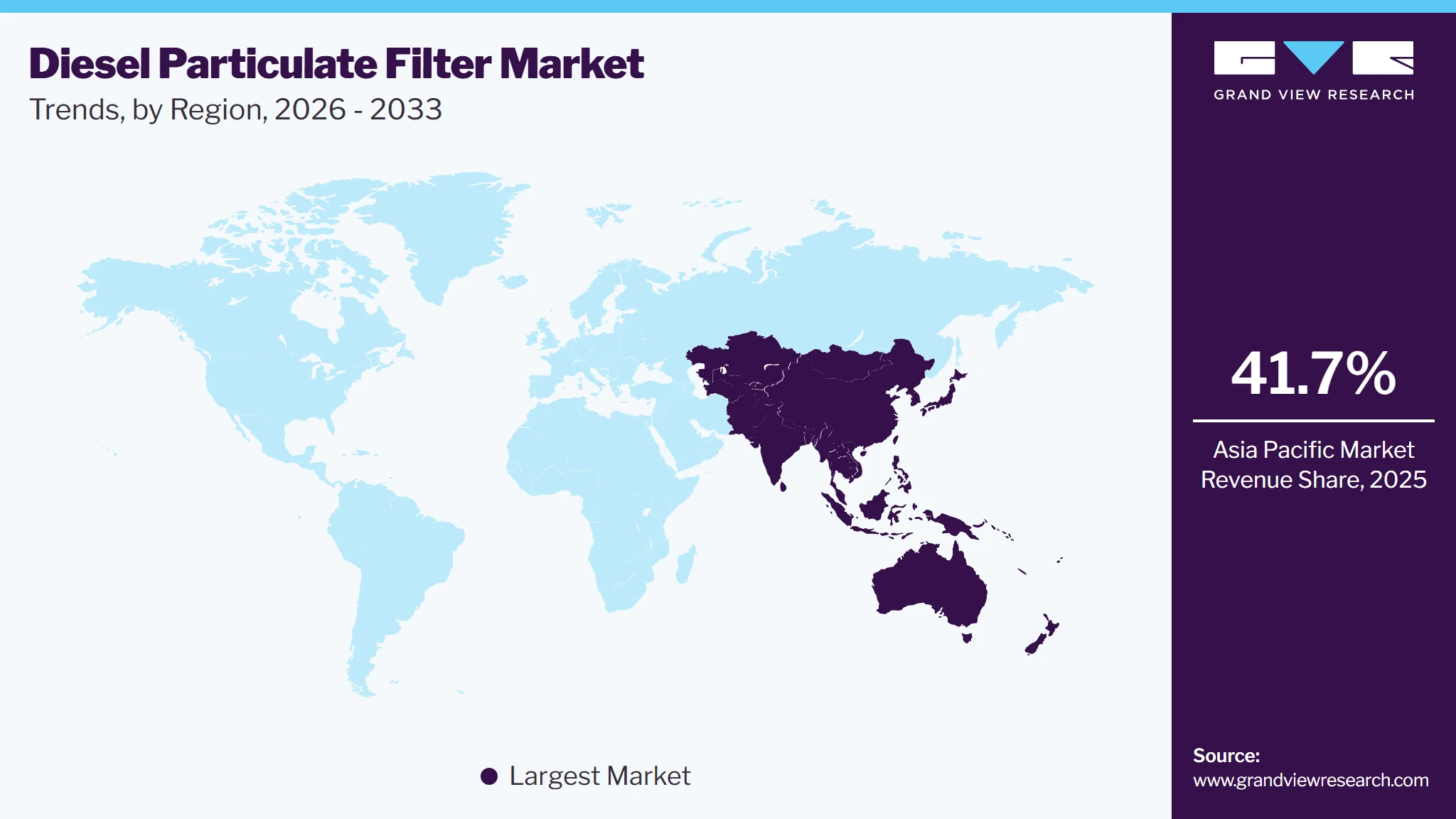
The Asia Pacific diesel particulate filter market dominated the global industry with a 41.7% share in 2025 and is expected to remain the fastest-growing regional market, supported by its large base of diesel-powered passenger and commercial vehicles, expanding manufacturing activity, and increasing adoption of stringent emission standards. China’s adoption of China VI requirements has significantly increased DPF penetration in heavy-duty vehicles, while India’s BS-VI framework is supporting demand for advanced exhaust after-treatment systems. Growing commercial transportation and off-highway equipment usage across emerging Asian economies is expected to further strengthen regional demand.
 To learn more about this report, Download Free Sample Report
The diesel particulate filter market in China led the Asia Pacific market, supported by its exceptionally large vehicle fleet and extensive commercial transportation base. According to China’s National Bureau of Statistics, the country had 366.1 million civilian motor vehicles at the end of 2025, including 197.7 million passenger cars. China also produced 34.8 million motor vehicles in 2025, highlighting the scale of its automotive industry and the substantial demand base for diesel emission-control technologies.
The India diesel particulate filter market is expected to register strong growth in the regional DPF market, supported by rising vehicle sales and continued demand for diesel-powered commercial transportation. According to the Society of Indian Automobile Manufacturers (SIAM), India recorded 1.03 million commercial vehicle sales in 2025, up 7.7% from 2024, while passenger vehicle sales reached 4.49 million units, up 5.0%. Diesel also accounted for 18.3% of passenger-vehicle sales in 2025, indicating continued demand for diesel vehicles despite increasing electrification. These factors, combined with India's BS-VI emission framework, support opportunities for DPF adoption and replacement demand.
North America Diesel Particulate Filter Market Trends
The North America diesel particulate filter market is expected to witness steady growth, supported by stringent particulate-emission requirements for heavy-duty vehicles and continued demand from trucking, construction, agriculture, and other diesel-intensive applications. The region also offers opportunities through replacement and retrofit demand across the large installed base of diesel-powered equipment. Ongoing regulatory developments for heavy-duty engines are encouraging manufacturers to enhance particulate control and after-treatment technologies.
U.S. Diesel Particulate Filter Market Trends
The U.S. dominated the North American diesel particulate filter market, supported by the extensive use of diesel engines across commercial transportation and non-road equipment. According to the U.S. EPA, diesel engines and vehicles account for about one-third of the entire U.S. transportation fleet, with diesel widely used in trucks, agricultural machinery, construction equipment, and mining equipment. This substantial installed base supports continued demand for DPFs through new vehicle applications, replacement requirements, and emission-control upgrades.
Europe Diesel Particulate Filter Market Trends
The diesel particulate filter market in Europe is projected to experience continued growth as stringent emissions legislation and fleet modernization sustain demand for advanced particulate filtration. The transition toward Euro 7 is placing greater emphasis on particle-number control and filter performance under real-world operating conditions, encouraging development of higher-efficiency DPF technologies. At the same time, increasing electrification of passenger vehicles is shifting DPF demand toward commercial vehicles, heavy-duty transportation, and retrofit applications.
The Germany diesel particulate filter market dominated the Europe industry, supported by its large automotive manufacturing base, substantial commercial vehicle fleet, and continued use of diesel-powered vehicles. The country also maintains stringent emission requirements for road vehicles and is expected to sustain demand for advanced exhaust after-treatment technologies. Germany’s strong presence in passenger vehicles, commercial transportation, and industrial equipment provides a broad application base for DPF systems.
The diesel particulate filter market in France is expected to witness notable growth, underpinned by its substantial diesel-powered commercial vehicle base. According to France’s Statistical Service (SDES), 6.6 million light commercial vehicles were in circulation as of January 2026, of which 91.6% were diesel-powered. The country also had 616,200 heavy-duty vehicles, with 96.2% equipped with diesel engines, highlighting a large installed base for particulate filtration and replacement demand.
Middle East & Africa Diesel Particulate Filter Market Trends
The diesel particulate filter market in the Middle East & Africa is expected to expand steadily, supported by growing vehicle populations, commercial transportation activity, and the continued use of diesel equipment in construction, mining, logistics, and other heavy-duty industries. Adoption of stricter fuel and vehicle emission standards in selected markets is gradually increasing the need for exhaust after-treatment technologies. However, differences in regulatory enforcement, fuel quality, and fleet modernization across countries are likely to result in uneven DPF adoption throughout the region.
The Saudi Arabia diesel particulate filter market is expected to witness steady growth, supported by the continued use of diesel-powered commercial vehicles, buses, trucks, and heavy equipment. Strong logistics activity, infrastructure development, construction, and industrial operations are sustaining demand for diesel engines across the country. In addition, efforts to improve vehicle emissions and fleet efficiency are encouraging the adoption of exhaust after-treatment technologies, while replacement demand from the existing diesel fleet is creating further opportunities for DPF suppliers.
Latin America Diesel Particulate Filter Market Trends
The diesel particulate filter market in Latin America is expected to grow as governments gradually strengthen vehicle emission standards and countries modernize their commercial and public transportation fleets. Demand is supported by the continued use of diesel-powered trucks, buses, and utility vehicles, while improving regulatory frameworks are encouraging the adoption of emission-control technologies. Increasing replacement of older vehicles and the development of cleaner transportation systems are also creating opportunities for DPF installations and aftermarket applications.
The Brazil diesel particulate filter market is expected to witness sustained growth, underpinned by its sizeable automotive and commercial transportation sector and continued use of diesel-powered trucks, buses, agricultural machinery, and other heavy-duty equipment. The country’s Proconve emissions-control program has progressively tightened limits for particulate matter and other vehicle pollutants, encouraging the adoption of advanced exhaust after-treatment technologies. The growing need to modernize older diesel fleets and comply with evolving emission requirements is expected to create opportunities for DPF installations, replacements, and retrofit applications.
Key Diesel Particulate Filter Company Insights
Some of the key players operating in the market include Johnson Matthey, Cummins Inc., Tenneco Inc.
-
Johnson Matthey is a global technology company with more than 200 years of experience and expertise in platinum group metals, catalysis, and emissions control. In the diesel emissions segment, the company offers diesel particulate filter (DPF) systems that physically capture particulate matter from diesel exhaust, using ceramic substrates such as cordierite and silicon carbide. Its portfolio includes passive and active regeneration technologies, including the patented Continuously Regenerating Trap (CRT) system, designed to maintain filtration performance across a range of operating conditions.
-
Cummins Inc. is a power technology company offering diesel and alternative-fuel engines, power systems, components, and emissions-control solutions. Its portfolio includes aftertreatment technologies for on-highway and off-highway applications, covering emission solutions designed to reduce pollutants from diesel engines. The company serves transportation and several heavy-duty sectors, including construction, mining, agriculture, and other industrial applications, supporting its presence in the diesel particulate filter and broader exhaust after-treatment market.
Key Diesel Particulate Filter Companies
The following key companies have been profiled for this study on the diesel particulate filter market:
-
Johnson Matthey
-
Cummins Inc.
-
Nett Technologies Inc.
-
CDTi Advanced Materials Inc
-
Corning Incorporated
-
Tenneco Inc.
-
Hug Engineering AG
-
IBIDEN Co., Ltd.
-
Eberspächer
-
Donaldson Company, Inc.
-
Delphi
-
HJS Emission Technology GmbH & Co. KG
-
Dinex A/S
-
Bosal
-
Rypos, Inc.
Competitive Benchmarking
Category
Operating Strategies
Competitive Edge
Weakness
Established Players (e.g., Johnson Matthey; Cummins Inc.; Corning Incorporated; Tenneco Inc.; Eberspächer)
- Invest in advanced DPF substrates, regeneration technologies, and integrated exhaust after-treatment solutions.
- Strengthen OEM partnerships and expand manufacturing capabilities across major automotive and heavy-duty markets.
- Develop products that address increasingly stringent particulate emission standards.
- Strong technical expertise and established relationships with vehicle and equipment manufacturers.
- Broad geographic presence and large-scale production capabilities.
- Diverse product portfolios covering multiple vehicles and operating conditions.
- High R&D and manufacturing costs associated with advanced DPF technologies.
- Exposure to the gradual shift from diesel toward electric and alternative powertrains.
- Dependence on automotive production volumes and changes in emission regulations.
Emerging & Regional Players (e.g., IBIDEN Co., Ltd.; Donaldson Company, Inc.; HJS Emission Technology GmbH & Co. KG; Dinex A/S; Bosal; Rypos, Inc.)
- Focus on specialized DPF solutions for aftermarket, retrofit, commercial vehicle, and off-highway applications.
- Develop application-specific products using cordierite, silicon carbide, and other advanced substrate materials.
- Expand market presence through regional partnerships and customized emission-control solutions.
- Greater flexibility in developing products for specific vehicle and operating requirements.
- Ability to target niche applications and underserved regional markets.
- Competitive positioning in aftermarket and retrofit DPF applications.
- Relatively smaller production capacity and geographic reach.
- Lower brand recognition and fewer established OEM relationships.
- Limited resources for large-scale R&D and advanced technology development.
Recent Developments
-
In July 2026, Cummins announced a phased rollout of its Model Year 2027 X10 and X15 engines in North America, aligned with evolving emissions requirements. The company plans to gradually increase production while continuing to supply selected legacy engines during the transition. The new platforms incorporate advanced emissions-control technologies designed to support regulatory compliance and improve overall engine performance.
-
In March 2026, HJS launched a premium aftermarket exhaust range for Euro 5 TX4 taxis that includes Diesel Particulate Filters (DPFs), along with diesel oxidation catalysts and exhaust silencers. The DPF uses a silicon carbide substrate, which is directly relevant to your Material Outlook segmentation. The components received homologation and E-mark certification and are intended to support Euro 6 retrofit upgrades for London TX4 taxis.
Global Diesel Particulate Filter Market Report Scope
Report Attribute
Details
Market size in 2025
USD 19.1 billion
Estimated market size in 2026
USD 20.0 billion
Projected market size by 2033
USD 27.2 billion
Growth rate
CAGR of 4.5% from 2026 to 2033
Historical data
2021 - 2024
Forecast period
2026 - 2033
Quantitative units
Revenue in USD billion and CAGR from 2026 to 2033
Report coverage
Revenue forecast, company ranking, competitive landscape, growth factors, and trends
Segments covered
Vehicle, material, type, region
Regional scope
North America; Europe; Asia Pacific; Latin America; Middle East & Africa
Country scope
U.S.; Canada; Mexico; UK; Germany; France; Spain; Italy; China; Japan; India; Australia; South Korea; Brazil; Argentina; Saudi Arabia; UAE; South Africa
Key companies profiled
Johnson Matthey; Cummins Inc.; Nett Technologies Inc.; CDTi Advanced Materials Inc.; Corning Incorporated; Tenneco Inc.; Hug Engineering AG; IBIDEN Co., Ltd.; Eberspächer; Donaldson Company, Inc.; Delphi; HJS Emission Technology GmbH & Co. KG; Dinex A/S; Bosal; Rypos, Inc.
Customization scope
Free report customization (equivalent up to 8 analysts working days) with purchase. Addition or alteration to country, regional & segment scope.
Pricing and purchase options
Avail customized purchase options to meet your exact research needs. Explore purchase options
Global Diesel Particulate Filter Market Report Segmentation
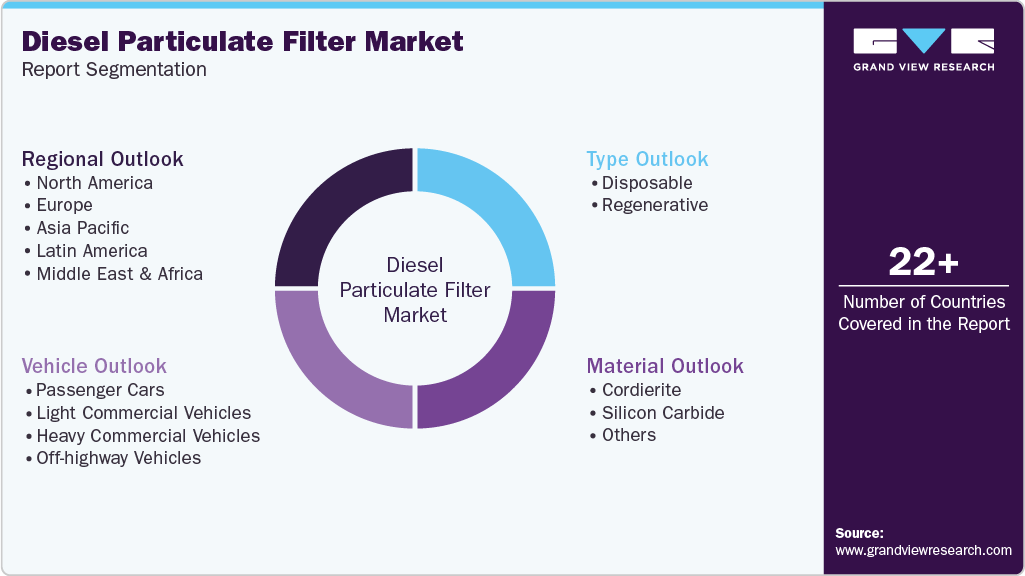
This report forecasts revenue growth at global, regional, and country levels and provides an analysis of the latest industry trends in each of the sub-segments from 2021 to 2033. For this study, Grand View Research has segmented the global diesel particulate filter market report based on vehicle, material, type, and region.
 To learn more about this report, Download Free Sample Report
-
Vehicle Outlook (Revenue, USD Billion, 2021 - 2033)
-
Passenger Cars
-
Light Commercial Vehicles
-
Heavy Commercial Vehicles
-
Off-highway Vehicles
-
-
Material Outlook (Revenue, USD Billion, 2021 - 2033)
-
Cordierite
-
Silicon Carbide
-
Others
-
-
Type Outlook (Revenue, USD Billion, 2021 - 2033)
-
Disposable
-
Regenerative
-
-
Regional Outlook (Revenue, USD Billion, 2021 - 2033)
-
North America
-
U.S.
-
Canada
-
Mexico
-
-
Europe
-
Germany
-
France
-
Italy
-
Spain
-
UK
-
-
Asia Pacific
-
China
-
India
-
Japan
-
South Korea
-
Australia
-
-
Latin America
-
Brazil
-
Argentina
-
-
Middle East & Africa
-
Saudi Arabia
-
UAE
-
South Africa
-
-
Research Methodology
The diesel particulate filter marketfigures in this report are based on a proven research process that combines executive interviews with secondary research from proprietary databases, company filings, and recognized regulatory and institutional sources. Market size is built through value-chain sizing-reconciling supply-side and demand-side estimates-and triangulated with bottom-up and top-down approaches. Every estimate passes multiple levels of expert validation before publication, with eachdiesel particulate filtersegment quantified using the revenue-capture definitions in the table below.
Segment Definition
Vehicle
Revenue Capture Definition
Passenger Cars
Revenue generated from the sale of DPF systems designed for diesel-powered passenger cars, including sedans, hatchbacks, SUVs, and other personal vehicles. This includes filters supplied for original vehicle production as well as replacement applications.
Light Commercial Vehicles
Revenue generated from the sale of DPF systems used in diesel-powered vans, pickups, delivery vehicles, and other light commercial vehicles. This includes DPFs supplied for new vehicles and replacement units required across commercial fleets.
Heavy Commercial Vehicles
Revenue generated from the sale of DPF systems designed for heavy-duty trucks, buses, and other high-load commercial vehicles. Revenue includes DPFs used in both new vehicle production and aftermarket replacement applications where higher filtration capacity and durability are required.
Off-highway Vehicles
Revenue generated from the sale of DPF systems used in non-road diesel-powered equipment, including construction machinery, agricultural equipment, mining vehicles, and other industrial equipment.
Material
Revenue Capture Definition
Cordierite
Revenue generated from the sale of DPFs manufactured with cordierite substrates, which provide a balance of filtration performance, thermal shock resistance, and cost efficiency. These filters are widely used across light-duty and other diesel vehicle applications.
Silicon Carbide
Revenue generated from the sale of DPFs manufactured using silicon carbide substrates, which are valued for their high thermal resistance, thermal conductivity, and durability. These characteristics make SiC filters suitable for applications exposed to demanding exhaust temperatures and regeneration cycles.
Others
Revenue generated from the sale of DPFs manufactured using alternative substrate materials other than cordierite and silicon carbide, including ceramic fiber, metallic, aluminum titanate, and other advanced filter materials.
Type
Revenue Capture Definition
Disposable
Revenue generated from the sale of DPFs designed to be removed and replaced after accumulating particulate matter beyond their usable capacity. These filters are mainly suited to applications where regeneration is impractical or less economical.
Regenerative
Revenue generated from the sale of DPFs designed to periodically remove accumulated soot through regeneration. These systems can use passive, active, or combined regeneration methods to restore filtration capacity, extend filter operating life, and reduce the need for frequent filter replacement.
Estimation Model
Layer Name
Key Question
Description
Vehicle & Equipment Base
How many vehicles and diesel-powered equipment require DPFs?
Estimate the addressable base of diesel-powered passenger cars, light commercial vehicles, heavy commercial vehicles, and off-highway equipment across each region and country.
DPF Fitment & Replacement
What proportion do requires DPF installation or replacement?
Determine DPF fitment rates for new diesel vehicles and equipment, along with replacement and retrofit requirements based on fleet age, emission regulations, operating conditions, and DPF replacement cycles.
DPF Unit Demand
How many DPF units are required?
Estimate annual DPF demand by vehicle, material, and product type by considering new vehicle fitment, replacement cycles, retrofit activity, and fleet expansion.
Revenue
What is the total market revenue?
Calculate market revenue by multiplying estimated DPF unit sales by the applicable average selling price, followed by aggregation across vehicles, materials, product types, countries, and regions to derive the total market value.
Customization Table
Client Request
Customization Delivered
Value Adds
Regional Segmentation
The report provides a comprehensive regional assessment covering North America, Europe, Asia Pacific, Latin America, and the Middle East & Africa, along with country-level analysis for key markets such as the U.S., Germany, France, China, India, Saudi Arabia, and Brazil. Each region includes market trends, growth drivers, regulatory influences, and country-specific demand factors.
Provides a clear understanding of regional market potential, identifies high-growth countries, and supports geographic expansion and investment decisions.
Competitive Benchmarking
The report provides a detailed assessment of key DPF manufacturers, including their product portfolios, market positioning, operating strategies, competitive advantages, and weaknesses. Market participants are further categorized into established and emerging/regional players to highlight differences in competitive positioning.
Enables comparison of competitors, identification of leading and emerging participants, assessment of competitive strengths, and understanding of strategies shaping the DPF market.
Opportunity Assessment
The report evaluates key market opportunities arising from stricter emission regulations, increasing demand for heavy commercial and off-highway diesel applications, DPF replacement and retrofit requirements, and advancements in filter materials and regeneration technologies. Opportunities are assessed across vehicles, materials, product types, and regions.
Helps to identify the most attractive growth areas, prioritize investment opportunities, and support strategic decisions related to product development, market entry, and regional expansion.
Frequently Asked Questions About This Report
The global diesel particulate filter market size was valued at USD 19.1 billion in 2025 and is expected to be USD 20.0 billion in 2026.
The global diesel particulate filter market, in terms of revenue, is expected to grow at a compound annual growth rate of 4.5% from 2026 to 2033 to reach USD 27.2 billion by 2033.
The disposable segment accounted for the largest revenue share of 72.0% in 2025, supported by its widespread use in applications where filter replacement is preferred based on operating requirements and system design.
Some of the key players operating in the global diesel particulate filter market include Johnson Matthey; Cummins Inc.; Nett Technologies Inc.; CDTi Advanced Materials Inc.; Corning Incorporated; Tenneco Inc.; Hug Engineering AG; IBIDEN Co., Ltd.; Eberspächer; Donaldson Company, Inc.; Delphi; HJS Emission Technology GmbH & Co. KG; Dinex A/S; Bosal; Rypos, Inc.
The global diesel particulate filter market is primarily driven by increasingly stringent vehicle emission regulations, growing demand for effective particulate-matter control, and the continued use of diesel-powered commercial and off-highway vehicles. Rising replacement and retrofit requirements across the existing diesel fleet, along with advancements in DPF materials and regeneration technologies, are further supporting market growth.
Asia Pacific held the largest regional share, accounting for 41.7% of the global market in 2025. The region's large vehicle fleet, expanding commercial transportation sector, and increasingly stringent emission standards are major factors supporting its leading position.
Asia Pacific is expected to be the fastest-growing region, supported by increasing vehicle production, expansion of commercial and heavy-duty transportation, tightening emission regulations, and growing adoption of diesel exhaust after-treatment technologies.
The passenger cars segment dominated the market, accounting for the largest revenue share of 38.9% in 2025, supported by the large installed base of diesel passenger vehicles and increasing adoption of emission-control systems.
The cordierite segment led the market with a 47.9% revenue share in 2025, owing to its cost-effectiveness, thermal shock resistance, and established use in DPF substrate manufacturing.
About the Author(s)
Advanced Interior Materials Research Team
Advanced Materials · Advanced Interior MaterialsThis report was authored by the advanced interior materials research team at Grand View Research - comprising two research analysts, one senior research analyst, and one industry expert - with specialized expertise in the advanced interior materials segment of the advanced materials industry. All findings are based on proprietary advanced materials databases, executive interviews, and regulatory analysis, subject to internal peer review prior to publication.
Last Updated:
Speak to Analyst

Customize this report to your needs - add regions, segments, or data points, with 20% free customization.
Or view our licence options:


ISO 9001:2015 & 27001:2022 Certified
We are GDPR and CCPA compliant! Your transaction & personal information is safe and secure. For more details, please read our privacy policy.


