
- Home
- »
- Medical Devices
- »
-
Elder Care Assistive Robots Market Size Report, 2026-2033GVR Report cover

Elder Care Assistive Robots Market (2026 - 2033)
Size, Share, And Trend Analysis Report, By Type (Physically Assistive Robots, Socially Assistive Robots), By Functionality (Monitoring And Surveillance, Mobility Assistance), By Region, And Segment Forecasts
Market Size, 2025
$3.4BMarket Estimate, 2026
$3.9BMarket Forecast, 2033
$9.8BCAGR, 2026–2033
14.2%Elder Care Assistive Robots Market Summary
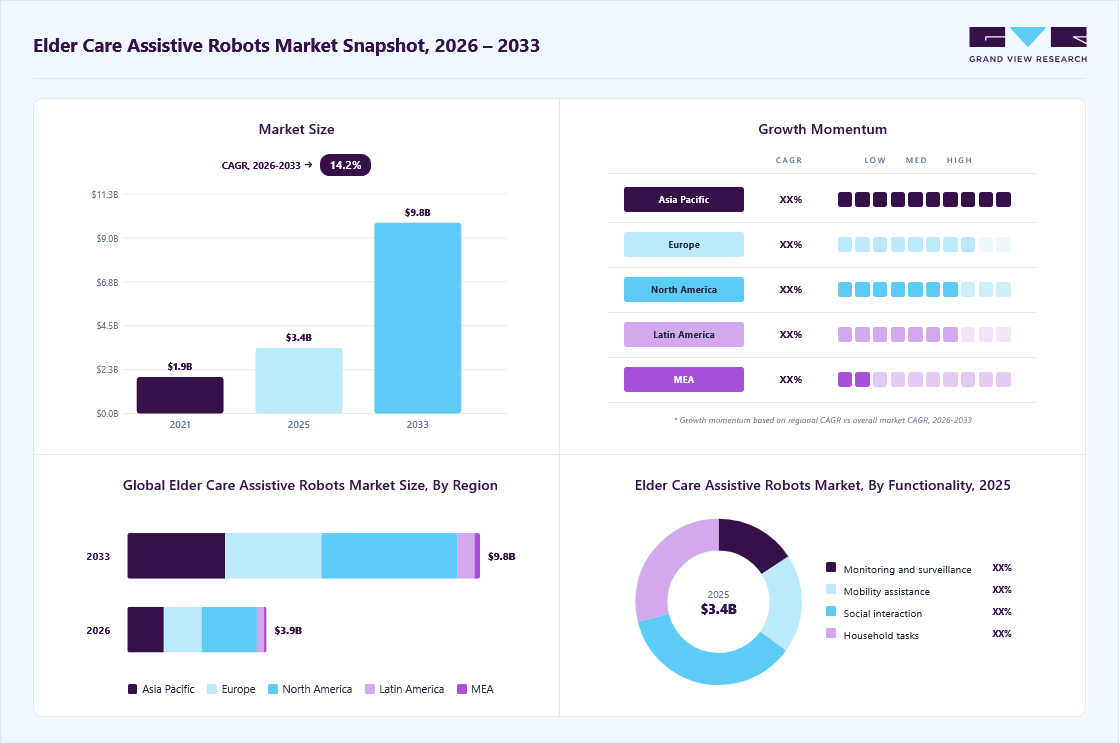
The global elder care assistive robots market size was valued at USD 3.4 billion in 2025 and is projected to grow from USD 3.9 billion in 2026 to USD 9.8 billion by 2033, at a CAGR of 14.2% from 2026 to 2033. The North America market held the largest share of 39.8% of the global market in 2025. The rising geriatric population, growing investments, and increasing shortage of caregivers are driving the demand for elder care assistive robots.
 Source: Grand View Research, IR Documents, Primary Interviews, Paid DatabasesTo learn more about this report,
 Download Free Sample Report
 Key Market Trends & Insights
- By type: The physically assistive robots segment dominated the elder care assistive robots market with a share of 55.1% in 2025.
- By functionality: The social interaction segment held the largest revenue share of 36.2% in 2025.
Regional Highlights
- Largest regional market: North America (39.8% revenue share, 2025)
- By country: The U.S. held the largest market share in 2025.
Market Size & Forecast
- Market size in 2025: USD 3.4 Billion
- Estimated market size in 2026: USD 3.9 Billion
- Projected market size by 2033: USD 9.8 Billion
- CAGR (2026-2033): 14.2%
Three ways to get this report
Buy it, customize it, or ask a question.Ask an Analyst
Analyst response in 1 business day
- AccessReport author, directly
- Reply timeWithin 1 working day
- No sales callDirect answer only
- FormatEmail reply
- CostFree, no cost
Get the Full Report
What the study covers
- FormatsPDF · Excel · Dashboard
- Timeline2026–2033 annual, 2025 base
- Coverage20+ countries, 5 regions
- Companies10+ key players profiled
Customize the Report
20% free customization
- IncludeCountries, segments, points
- TailorTo your product definition
- ExtendDeeper competitor detail
- OrA fully bespoke study
- Turnaround5–10 working days
In addition, advancements in artificial intelligence, machine learning, and sensor technologies are improving robot capabilities in monitoring, mobility assistance, and social interaction. Increasing adoption of smart home technologies and supportive government initiatives for elderly care are further accelerating market growth. Hospitals, nursing homes, and home care settings are increasingly integrating robotic solutions to improve care efficiency and patient safety.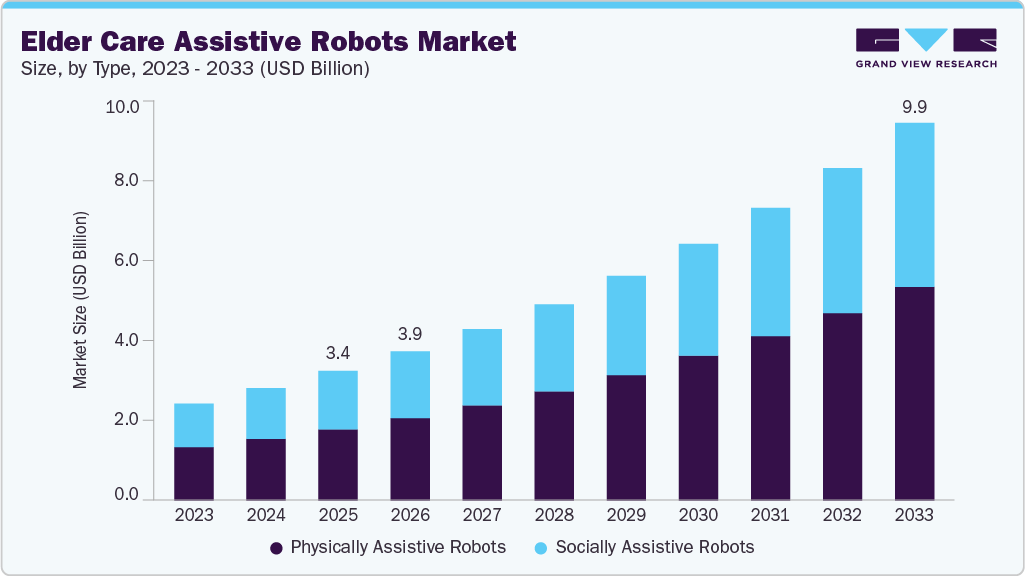 To learn more about this report, Download Free Sample Report
 The section below outlines key market factors such as an increase in the aging population, rising prevalence of chronic diseases and mobility impairments among the aging population, opportunities, and technological trends such as IoT, advanced sensors, and navigation.
Market Drivers
Growing aging population
The growing elderly population worldwide is driving market growth. According to the United Nations Population Fund’s India Ageing Report 2023, the population of individuals aged 60 and above is projected to double from 10.5% or 14.9 crore (as of July 1, 2022) to 20.8% or 34.7 crore by 2050. In addition, the World Health Organization in 2025 cited that the number of people aged 60 and above is expected to grow from 1.1 billion in 2023 to 1.4 billion by 2030. According to the People's Daily Online in March 2025, in China home to one of the world’s fastest‑growing elderly populations the number of people aged 60 and above reached 310 million by the end of 2024, representing about 22% of the total population, and this demographic shift is accelerating the adoption of robotics in elder care settings for tasks ranging from companionship and mobility assistance to health monitoring and rehabilitation support. This demographic trend significantly drives demand in the elder care assistive robots market, as healthcare systems face increasing pressure to provide continuous, efficient care.
Growing prevalence of chronic diseases and mobility impairments
The growing prevalence of chronic diseases and mobility impairments among the aging population is a significant driver for the elder care assistive robots industry. Older adults are increasingly affected by long-term health conditions such as cardiovascular diseases, diabetes, arthritis, osteoporosis, and neurodegenerative disorders, including Alzheimer’s disease and Parkinson’s disease. According to data published by the Centers for Disease Control and Prevention (CDC), more than 90% of adults aged 65 years and older have at least one chronic condition, highlighting the widespread health challenges faced by the elderly population.
Increasing shortage of caregivers
The growing shortage of caregivers is a major driver of demand in the elder care assistive robots market. Globally, the rapid growth of the aging population is significantly increasing the need for long-term care (LTC) services, while the supply of professional caregivers such as nurses, home health aides, and personal care assistants is not keeping pace. As per the Organization for Economic Co-operation and Development (OECD) 2025 data, there were, on average, 5 long-term care workers per 100 people aged 65 and above across 31 OECD countries in 2023, unchanged from 2013, indicating that workforce growth has remained stagnant and is not keeping pace with the rising elderly population. Structural challenges in the LTC sector, such as low wages, demanding working conditions, and high staff turnover, further limit the recruitment and retention of caregivers.
 To learn more about this report, Download Free Sample Report
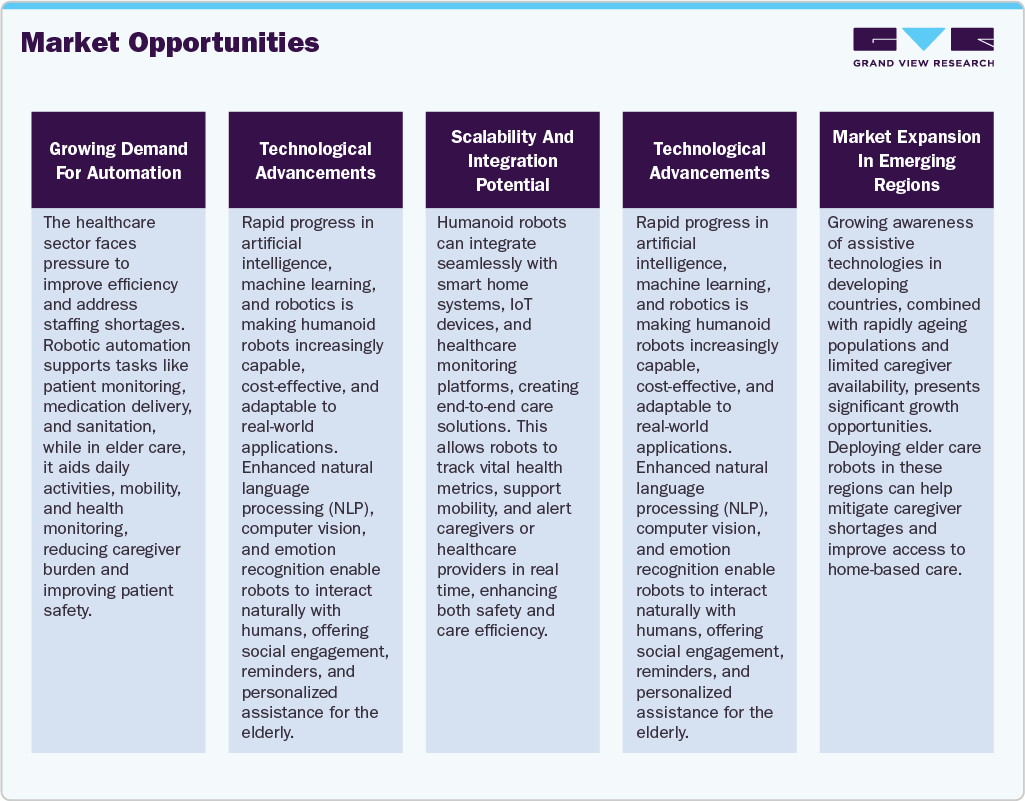
 The market for elder care assistive robots offers substantial growth opportunities driven by demographic shifts, technological advancements, healthcare workforce shortages, and increasing acceptance of automation in healthcare. As healthcare systems worldwide face rising pressure to support aging populations and manage limited caregiver resources, robotic technologies are emerging as scalable solutions to improve efficiency, patient safety, and quality of life for elderly individuals.
Technology Trends
Artificial Intelligence and Machine Learning
Modern elder care robots are increasingly equipped with AI and machine learning capabilities, enabling them to learn individual habits, predict needs, and adapt interactions in real-time. This enables personalized support, including medication reminders, activity guidance, and safety monitoring.
Connectivity and Internet of Things (IoT)
Integration with IoT networks allows robots to connect with home sensors, medical devices, and remote monitoring systems. This facilitates continuous tracking of health parameters, real-time alerts for caregivers, and improved coordination of care.
Modular and Multi-functional Designs
Robots are moving towards modular designs that allow them to perform multiple functions, from mobility assistance and medication delivery to social interaction and cognitive stimulation. Modular systems also enable easy upgrades, extending the robot’s lifespan and versatility.
Advanced Sensors and Navigation
Robust sensor technologies, including cameras, depth sensors, and proximity detectors, enhance robots’ ability to navigate safely in dynamic environments. This ensures obstacle avoidance, fall detection, and precise movement around users. For example, an eldercare robot,
Emotional Intelligence and Social Interaction
Robots are increasingly designed to recognize emotions and respond empathetically, providing companionship and mental stimulation. These features are particularly valuable in addressing loneliness and promoting emotional well-being among elderly users. Elder care assistive robots use a multimodal emotion perception system, which means they analyze multiple types of signals simultaneously to understand a user’s emotional state.
Telehealth and Remote Care Integration
By connecting to healthcare platforms, robots can assist with remote consultations, facilitate data sharing with clinicians, and support early detection of health risks. This integration supports proactive and preventive care while reducing the need for frequent in-person visits.
User-Centric Interfaces and Accessibility
Simplified controls, voice commands, and intuitive user interfaces are becoming standard to ensure that elderly users can operate robots independently and safely, regardless of technical proficiency. The technological evolution of elder care robots focuses on combining functional assistance with emotional and social support.
User Persona
Category
Primary Persona: Elderly Individuals (Direct Users)
Secondary Persona: Professional Caregivers
Specialized Persona: Mobility-Impaired Seniors
Demographics
Seniors (65+) using assistive robots for daily assistance, companionship, and safety; higher adoption among those with limited mobility or living alone
Nurses, home health aides, and family caregivers using robots to improve efficiency and reduce workload
Elderly individuals with physical disabilities or those undergoing rehabilitation
Psychographics
Value independence, dignity, and social interaction; moderate tech acceptance if intuitive
Focused on efficient, consistent care; open to tech that integrates into workflows
Prefer solutions that enhance independence and reduce reliance on caregivers
Needs / Goals
Daily assistance (reminders, communication), emotional companionship, safety monitoring
Reduce physical strain, improve care consistency, enable real-time monitoring and alerts
Assistance with physical tasks, support for independent daily living
Pain Points
Loneliness, difficulty managing medications, fear of falls/accidents
Caregiver fatigue, staff shortages, difficulty monitoring multiple patients
Limited mobility, dependence on caregivers for routine tasks
Example
ElliQ Companion Robot (Intuition Robotics): conversation, reminders, social engagement
Pepper Robot (SoftBank Robotics): engagement, activities, reduces caregiver burden
Human Support Robot (HSR) (Toyota): object retrieval and household assistance
Feature Advantage Benefit Analysis for Elder Care Robots
Feature Category
Key Capabilities
Advantage
Benefit
Mobility & Physical Assistance
Navigation, lifting support, and walking assistance for safe movement within homes and care facilities
Reduces fall risk and physical strain on caregivers
Improves elderly independence while lowering caregiver injury and liability costs
Monitoring & Safety
Fall detection, vital sign monitoring, and emergency alert systems
Enables continuous, real-time supervision without constant human presence
Faster emergency response and improved health outcomes, especially for seniors living alone
Cognitive & Social Interaction
Speech recognition, facial recognition, reminders, and companionship functions
Enhances emotional engagement and routine adherence
Improves mental well-being, medication compliance, and overall quality of life
Connectivity & Data Integration
IoT connectivity, cloud-based data sharing, integration with telehealth platforms, and caregiver dashboards
Enables remote monitoring and data-driven care decisions
Reduces unnecessary hospital visits and supports proactive care management
Funding and Strategic Investments in Elder Care Assistive Robots
Growing demand for innovative elderly care solutions has led to increased funding and strategic investments. Recent partnerships and investments highlight a strong focus on scaling deployment, expanding into new geographic markets, and commercializing advanced AI-driven companion and humanoid robots. These initiatives underscore the industry’s shift toward integrating intelligent robotic solutions within assisted living and home care settings to enhance patient engagement, improve care efficiency, and support independent aging.
Date
Company
Description
In November 2025
AJJ Medtech Holdings Limited
AJJ Medtech Holdings Limited and Autagco Ltd. signed a strategic MOU to deploy and commercialize humanoid elderly care robots across assisted living facilities in Singapore.
In September 2025
Kanematsu Corporation
Kanematsu Corporation invested in Intuition Robotics Ltd. and formed a strategic partnership to expand the ElliQ AI companion robot into the Japanese market, targeting launch in 2026.
Market Concentration & Characteristics
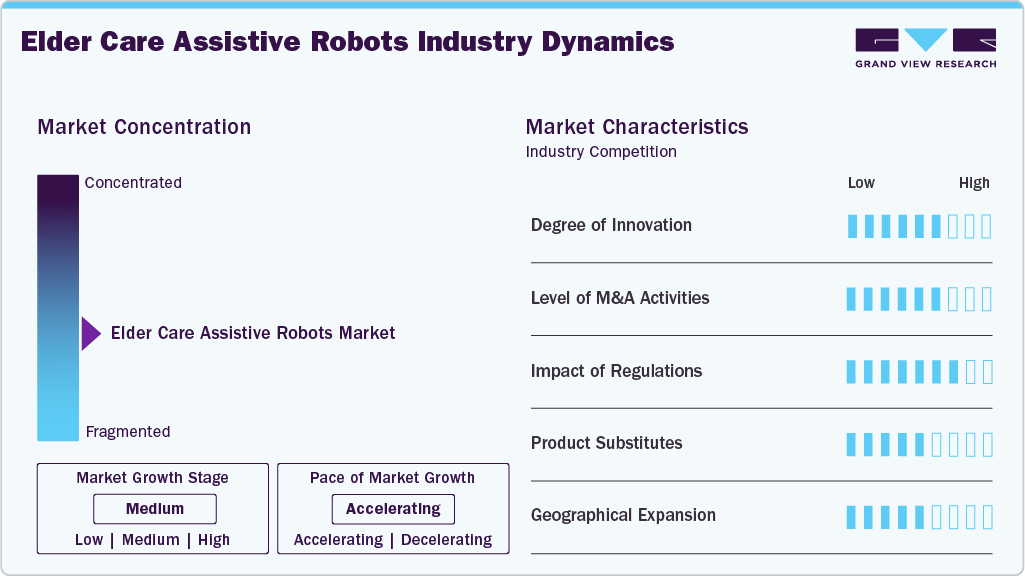
The chart below depicts the relationships among industry concentration, industry characteristics, and industry participants. There is a medium degree of innovation, a moderate level of merger & acquisition activities, a moderate to high impact of regulations, and moderate expansion of the industry.
Market Dynamics
The field of eldercare assistive robots is rapidly advancing due to the growing demand for solutions to address the needs of the aging population. These robots incorporate cutting-edge technologies such as artificial intelligence, machine learning, and advanced sensor systems to carry out a range of tasks. For instance, at CES 2024, Intuition Robotics introduced ElliQ 3, an enhanced AI robot designed to be a companion for seniors. This new version uses advanced AI to have more natural, friendly conversations, remember details from past chats, and even help seniors engage in creative activities such as painting and writing poetry.
The elder care assistive robots industry is characterized by a moderate level of merger and acquisition (M&A) activity by the leading players. This is due to several factors, including the desire to expand the business to cater to the growing demand for nanorobots. In September 2025, Kanematsu Corporation invested in Intuition Robotics Ltd. and formed a strategic partnership to expand the ElliQ AI companion robot into the Japanese market, with a 2026 launch target.
 To learn more about this report, Download Free Sample Report
 Key regulatory bodies, such as the U.S. Food and Drug Administration (FDA) and the European Medicines Agency (EMA), are increasingly focused on developing guidelines to address the unique challenges posed by assistive robotics, including issues related to user safety, data privacy, and the reliability of autonomous systems.
Elder care assistive robots have product substitutes that range from traditional to emerging solutions that cater to the needs of the elderly. Traditional substitutes encompass human caregivers such as family members, professional in-home aides, and staff in nursing homes or assisted living facilities. These human caregivers provide personalized attention, emotional support, and hands-on assistance with daily activities.
Several market players are expanding their operations into new geographic regions to strengthen their market position and expand their product portfolios. Rising collaboration will create more opportunities for elder care assistive robots. For instance, in October 2025, Diligent Robotics announced plans in the U.S. to expand its Moxi robot deployment into senior living facilities, partnering with care providers to address workforce shortages and support elder care operations.
Type Insights
The physically assistive robots segment dominated the elder care assistive robots market with a share of 55.1% in 2025 and is anticipated to register the fastest growth over the forecast period. The global increase in the elderly population and the growing prevalence of age-related disabilities are fueling market expansion. As life expectancy continues to rise, the demand for assistance with daily activities such as mobility, bathing, and feeding also increases. These robots are increasingly being adopted in home and institutional settings to support seniors with limited mobility.
The socially assistive robots segment is anticipated to witness lucrative growth over the forecast period. Growing recognition of social isolation and loneliness as critical issues among the elderly population is fostering market growth. The study published by the National Library of Medicine in September 2024 cited that most professionals supported their use for non-intimate tasks such as meal and toileting assistance. Key factors for successful adoption included user-friendly design, proper training, stakeholder education, and addressing ethical and financial concerns.
Functionality Insights
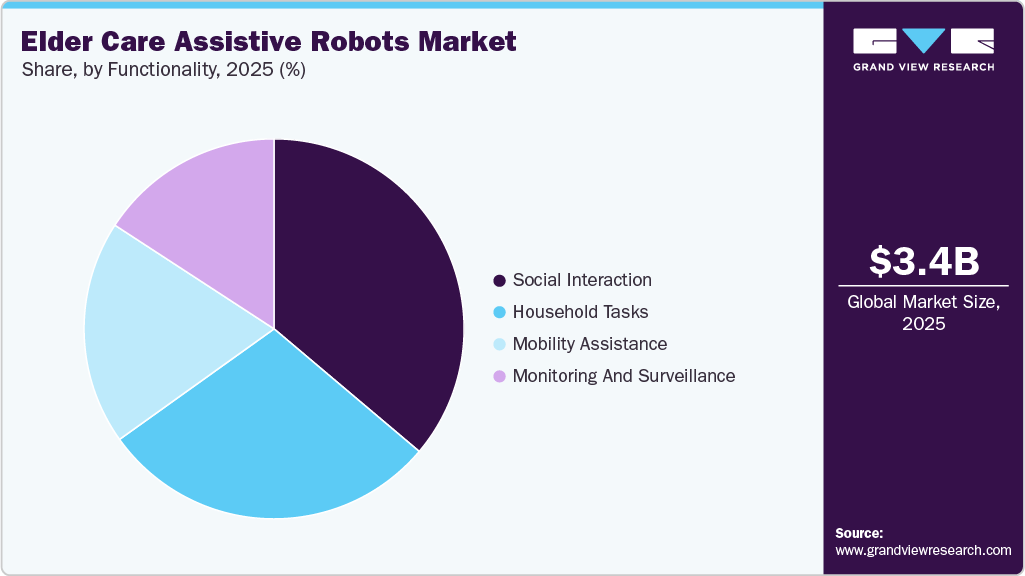
The social interaction segment held the largest revenue share of 36.2% in 2025. The growing awareness of mental health challenges faced by the elderly population is driving the demand for social interaction robots. These robots are designed to engage seniors in conversations, games, and activities, helping to reduce feelings of loneliness and social isolation. Samarth Life Management Pvt Ltd., India’s no. 1 elder care organization, stated in 2024 that robots transform elderly care by providing companionship, assisting with daily tasks, and enhancing mobility. Smart robots such as Stevie and PARO use advanced technology to reduce feelings of loneliness and help older adults live more independently, especially those who live alone or far from their families. These new tools improve their lives by mixing helpful technology with kind, caring support. These factors will contribute to market growth.
 To learn more about this report, Download Free Sample Report
 The monitoring and surveillance segment in the elder care assistive robots market is anticipated to register the fastest growth over the forecast period. The rising number of falls among older people contributes to market growth. The article titled "New Eldercare Robot with Path-Planning and Fall-Detection Capabilities" presents the design and development of an eldercare robot aimed at addressing two primary challenges faced by older people: continuous indoor tracking and fall detection. The robot integrates advanced hardware and software components, including sensors and control systems, to monitor the movements of elderly individuals within indoor environments.
Regional Insights
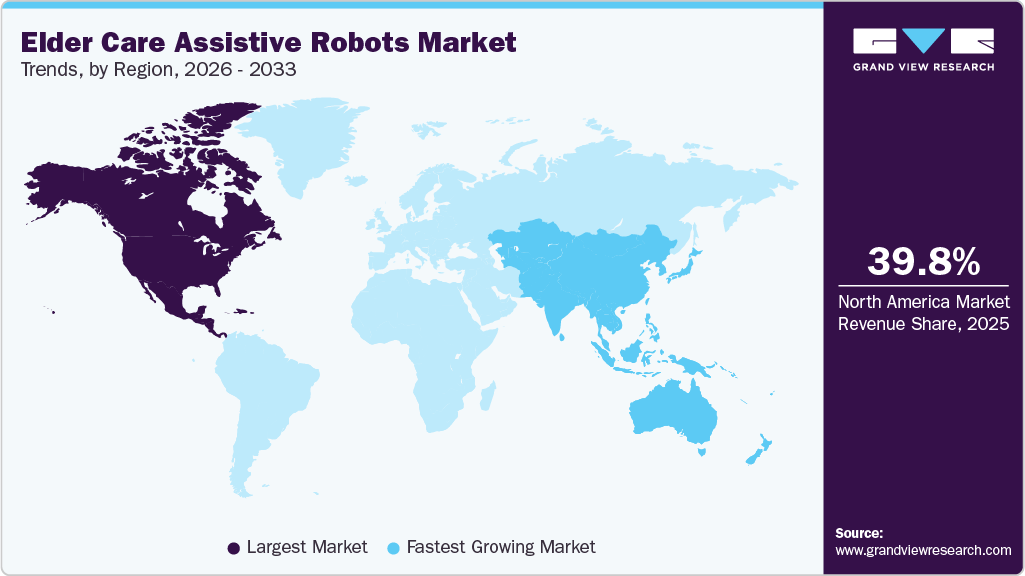
The North America elder care assistive robots industrydominated in 2025 and accounted for the largest revenue share of 39.8%, owing to its advanced healthcare infrastructure and significant investments in healthcare technology. The rapid adoption of innovative technologies and a strong focus on improving the quality of life for the elderly are accelerating regional growth. In addition, leading tech companies and robotics and AI startups contribute to the development and commercialization of advanced elder care robots.
 To learn more about this report, Download Free Sample Report
 U.S. Elder Care Assistive Robots Market Trends
Theelder care assistive robots industry in the U.S.held the largest share of 83.4% in 2025. Increasing adoption of robots in the U.S. is fostering market growth. For instance, in March 2026, a New York-based senior care technology company, Sage, announced that it raised $65 million in new funding to expand its artificial intelligence platform to support caregivers in nursing homes and assisted living facilities. The investment is expected to accelerate the development and deployment of advanced technologies that enhance care delivery and operational efficiency in elder care environments.
Europe Elder Care Assistive Robots Market Trends
Theelder care assistive robots industry in Europe is anticipated to register the significant growth during the forecast period. The European Commission's Horizon 2020 and Horizon Europe programs have granted significant funding for projects aimed at improving the use of robotics in healthcare. In addition, public awareness campaigns and advocacy groups highlight the significance of assistive technologies, promoting widespread acceptance and use of elder care robots. In March 2026, AGIBOT introduced its complete portfolio of robots, marking a strategic move into the German and broader European elder care markets.
The Germany elder care assistive robots industry is projected to register a considerable growth rate during the forecast period. The number of people needing care is increasing rapidly, and it is estimated that 670,000 caregiver positions will remain unfilled in Germany by 2050. As a result, researchers are working diligently to develop robots that can assist with some of the tasks currently performed by nurses, caregivers, and doctors.
Asia Pacific Elder Care Assistive Robots Market Trends
Theelder care assistive robots industry in the Asia Pacific is anticipated to register the fastest growth rate during the forecast period. The economic growth in countries such as Japan, China, South Korea, and India has led to rising disposable incomes, enabling more households to adopt advanced technologies to support elderly family members. In addition, the declining workforce and the high cost of human caregivers in these countries are driving the demand for automated solutions to support the elderly.
The China elder care assistive robots industry is experiencing significant growth, driven by the country’s rapidly aging population and increasing pressure on healthcare and social care systems. According to the national statistics bureau, the population aged 60 years and above reached 323.38 million, representing 23% of the country’s total population. Within this group, individuals aged 65 years and older accounted for 223.65 million, which constituted 15.9% of the total population in China.
The elder care assistive robots industry in Japan is experiencing significant growth. The official data from the Statistics Bureau of Japan highlighted that the population aged 65 years and above reached approximately 36.24 million in 2024, accounting for 29.3% of the total population, one of the highest proportions globally.
Latin America Elder Care Assistive Robots Market Trends
Theelder care assistive robots industry in Latin America is anticipated to register notable growth during the forecast period. The growing population of older adults, particularly in countries such as Brazil and Argentina, is creating long‑term demand for technologies that can support mobility, daily routines, and social engagement, especially as traditional family‑based caregiving structures evolve and urbanization increases. Additionally, the increasing prevalence of chronic diseases and mobility impairments among the elderly population is escalating regional growth.
The Brazil elder care assistive robots industry is anticipated to grow positively during the forecast period. The Country’s demographic evolution, with a rapidly growing population aged 60 and over, creating heightened demand for support solutions that enable longer independent living and safer daily routines lead to market growth. About 11% of the population is 65 or older, a share that is expected to double by 2040, and this trend is increasing pressure on families and care systems to find scalable, technology‑enabled ways to support mobility, health monitoring, and social engagement.
Middle East & Africa Elder Care Assistive Robots Market Trends
Theelder care assistive robots industry in the Middle East and Africa is anticipated to grow lucratively during the forecast period. Significant investments in healthcare infrastructure and technology are propelling market growth. Countries such as the UAE and Saudi Arabia are heavily investing in smart city projects and advanced healthcare infrastructure, which includes the integration of robotic solutions in elder care, and have launched national strategies focused on AI, smart cities, and digital health transformation, creating favorable environments for innovation in assistive robotics.
The South Africa elder care assistive robots industry is expected to register the fastest growth during the forecast period. The increasing prevalence of age-related health conditions, including mobility limitations, chronic illnesses, and cognitive decline, and the rising prevalence of dementia among the geriatric population are fostering market growth. For instance, an article published in JAMA Network in 2022, reported on studies conducted in South Africa, suggesting that the prevalence of dementia among adults aged 65 years or older ranges from 3.8% to 11.0%. Proper care for dementia patients contributes to the growth of the market.
Key Elder Care Assistive Robots Company Insights
Key participants in the market are focusing on devising innovative business growth strategies in the form of product portfolio expansions, partnerships & collaborations, mergers & acquisitions, and business footprint expansions.
Key Elder Care Assistive Robots Companies:
The following key companies have been profiled for this study on the elder care assistive robots market.
- Intuition Robotics Inc
- Toyota (GB) PLC.
- SoftBank Robotics UK Ltd.
- Blue Frog Robotics
- KOMPAÏ robotics
- Zorarobotics NV
- YUJIN ROBOT Co., Ltd.
- Panasonic Holdings Corporation
- PARO Robots U.S., Inc.
- Cyberdyne, Inc.
Recent Developments
-
In May 2025, UBTech Robotics launched a USD 20,000 consumer-grade humanoid home robot, marking a major step forward in the integration of robotics into elder care. Designed to assist with everyday tasks such as loading dishwashers, folding laundry, and providing companionship, the robot is part of UBTech’s broader strategy to address the growing shortage of caregivers.
-
In May 2025, MIT engineers announced that it has developed the Elderly Bodily Assistance Robot (E-BAR), a mobile device designed to aid seniors in daily movements and prevent falls. E-BAR follows users and provides support during walking, sitting, and standing.
-
In February 2024, Researchers at Universidad Carlos III and Robotnik developed ADAM, an advanced eldercare robot designed to assist seniors with daily tasks. Equipped with vision systems and dual arms, ADAM can perform activities such as setting tables, sweeping, and retrieving items. Its modular design and learning capabilities allow it to adapt to various home environments, enhancing safety and independence for the elderly.
Elder Care Assistive Robots Market Report Scope
Report Attribute
Details
Market size in 2025
USD 3.4 billion
Estimated market size in 2026
USD 3.9 billion
Projected market size by 2033
USD 9.8 billion
Growth rate
CAGR of 14.2% from 2026 to 2033
Actual data
2021 - 2025
Forecast data
2026 - 2033
Quantitative units
Revenue in USD million/billion and CAGR from 2026 to 2033
Report coverage
Revenue forecast, company ranking, competitive landscape, growth factors, and trends
Segments covered
Type, functionality, region
Regional scope
North America; Europe; Asia Pacific; Latin America; MEA
Country scope
U.S.; Canada; Mexico; Germany; UK; Spain; Italy; France; Norway; Denmark; Sweden; Japan; China; India; Australia; Thailand; South Korea; Brazil; Argentina; South Africa; Saudi Arabia; UAE; Kuwait
Key companies profiled
Intuition Robotics Inc; Toyota (GB) PLC.; SoftBank Robotics UK Ltd.; Blue Frog Robotics; KOMPAÏ robotics; Zorarobotics NV; YUJIN ROBOT Co., Ltd.; Panasonic Holdings Corporation; PARO Robots U.S., Inc.; Cyberdyne, Inc.
Customization scope
Free report customization (equivalent up to 8 analysts working days) with purchase. Addition or alteration to country, regional & segment scope.
Pricing and purchase options
Avail customized purchase options to meet your exact research needs. Explore purchase options
Global Elder Care Assistive Robots Market Report Segmentation
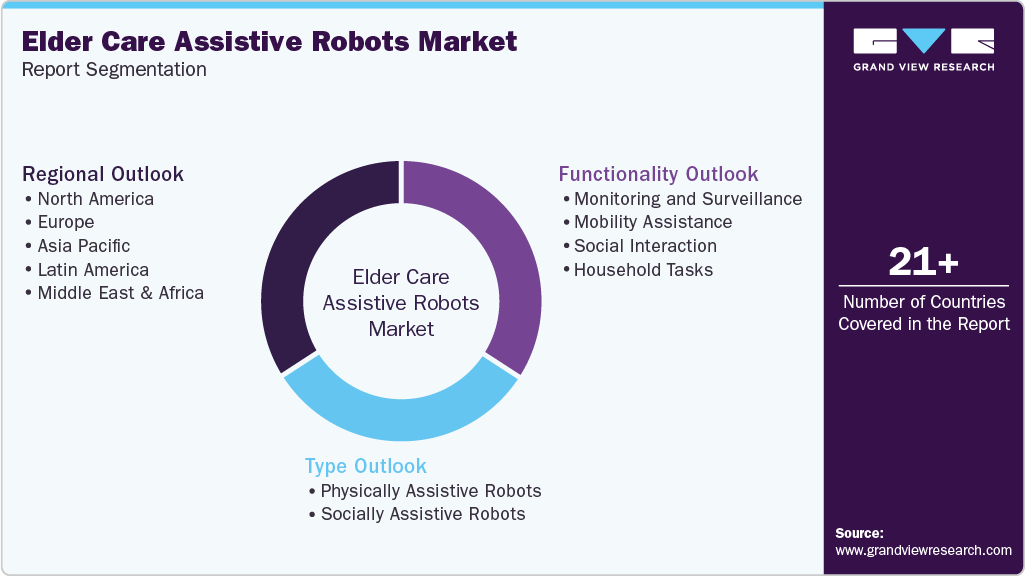
This report forecasts revenue and volume growth at the global, regional, and country level and provides an analysis on industry trends in each of the sub segments from 2021 to 2033. For this study, Grand View Research, Inc. has segmented the global elder care assistive robots market report on the basis of type, functionality, and region:
 To learn more about this report, Download Free Sample Report
 -
Type Outlook (Revenue USD Million, 2021 - 2033)
-
Physically Assistive Robots
-
Socially Assistive Robots
-
-
Functionality Outlook (Revenue USD Million, 2021 - 2033)
-
Monitoring And Surveillance
-
Mobility Assistance
-
Social Interaction
-
Household Tasks
-
-
Regional Outlook Revenue USD Million, 2021 - 2033)
-
North America
-
U.S.
-
Canada
-
Mexico
-
-
Europe
-
Germany
-
UK
-
Spain
-
Italy
-
France
-
Denmark
-
Norway
-
Sweden
-
-
Asia Pacific
-
Japan
-
China
-
India
-
Australia
-
Thailand
-
South Korea
-
-
Latin America
-
Brazil
-
Argentina
-
-
MEA
-
South Africa
-
Saudi Arabia
-
UAE
-
Kuwait
-
-
Frequently Asked Questions About This Report
The global elder care assistive robots market size was estimated at USD 3.4 billion in 2025 and is expected to reach USD 3.9 billion in 2026.
The global elder care assistive robots market is expected to grow at a compound annual growth rate of 14.2% from 2026 to 2033 to reach USD 9.8 billion by 2033.
The physically assistive robots segment dominated the elder care assistive robots market with a share of 55.1% in 2025. The global increase in the elderly population and the growing prevalence of age-related disabilities are fueling market expansion.
Some key players operating in the market include Intuition Robotics Inc, Toyota (GB) PLC., SoftBank Robotics UK Ltd., Blue Frog Robotics, KOMPAÏ robotics, Zorarobotics NV, YUJIN ROBOT Co., Ltd., Panasonic Holdings Corporation, PARO Robots U.S., Inc.
The increasing shortage of care givers will drive the demand for elder care-assistive robots. For instance, according to human resources expert Paul Osterman, there will be a national shortage of 151,000 paid direct care workers and 3.8 million unpaid family caregivers in the U.S. by 2030.
North America dominated with a 39.8% revenue share in 2025.
Asia Pacific is the fastest-growing region over the forecast period.
The social interaction segment led with a 36.2% revenue share in 2025, while the monitoring and surveillance segment is the fastest-growing.
About the Author(s)
Medical Devices Research Team
Healthcare · Medical DevicesThis report was authored by the medical devices research team at Grand View Research - comprising two research analysts, one senior research analyst, and one industry expert - with specialized expertise in the medical devices segment of the healthcare industry. All findings are based on proprietary healthcare databases, executive interviews, and regulatory analysis, subject to internal peer review prior to publication.
Last Updated:
Speak to Analyst

Customize this report to your needs - add regions, segments, or data points, with 20% free customization.
Or view our licence options:


ISO 9001:2015 & 27001:2022 Certified
We are GDPR and CCPA compliant! Your transaction & personal information is safe and secure. For more details, please read our privacy policy.


