
- Home
- »
- Medical Devices
- »
-
Exam Room Equipment Market Size Report, 2026-2033GVR Report cover

Exam Room Equipment Market (2026 - 2033)
Size, Share & Trends Analysis Report By Product (Examination Tables & Chairs, Examination Lighting, Diagnostic Equipment, Medical Carts & Storage), By Application, By End Use, By Region, and Segment Forecasts
Market Size, 2025
$8.1BMarket Estimate, 2026
$8.5BMarket Forecast, 2033
$13.1BCAGR, 2026–2033
6.3%Exam Room Equipment Market Summary
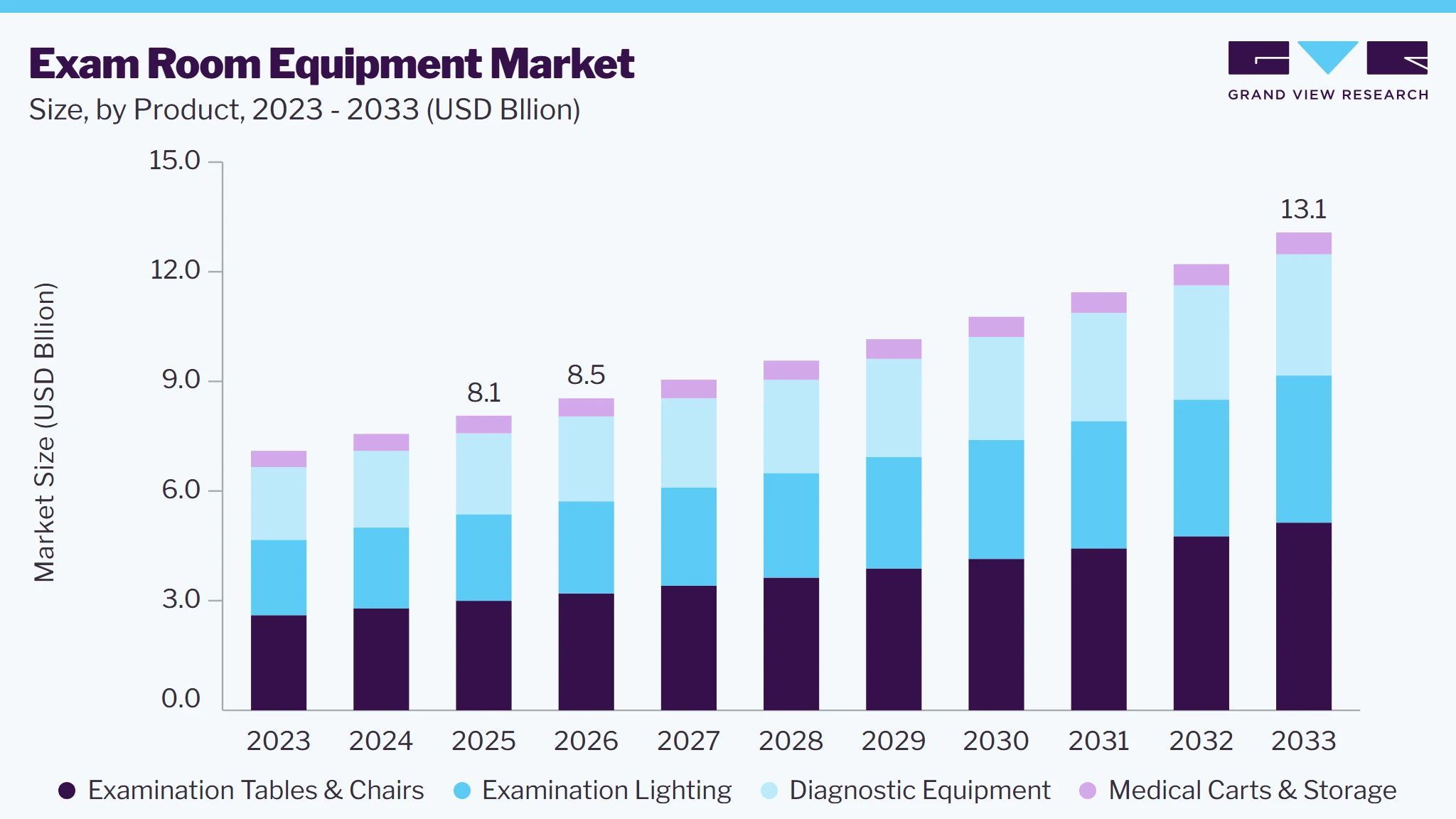
The global exam room equipment market size was valued at USD 8.1 billion in 2025 and is projected to grow from USD 8.5 billion in 2026 to USD 13.1 billion by 2033, at a CAGR of 6.3% from 2026 to 2033. North America dominated the market, accounting for a revenue share of 32.1% in 2025. Demand is supported by the expansion of outpatient healthcare services, modernization of healthcare facilities, replacement of aging equipment, and investments in improving clinical workflows.
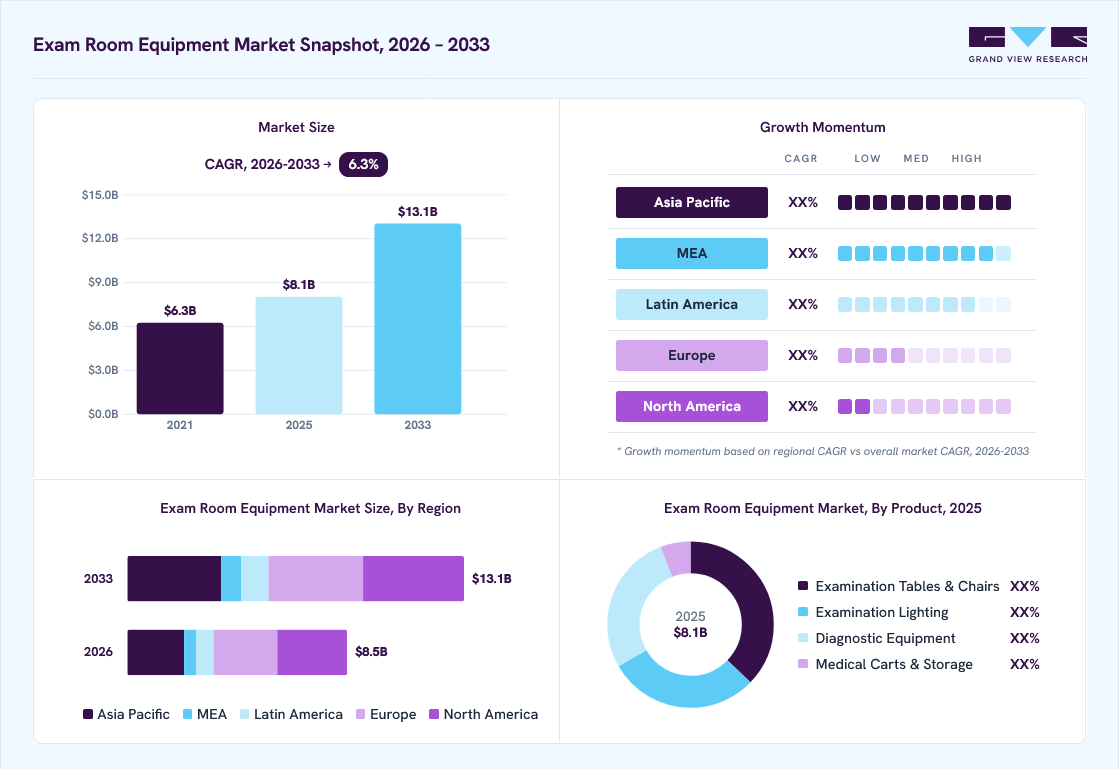 Source: Grand View Research, IR Documents, Primary Interviews, Paid DatabasesTo learn more about this report,
 Download Free Sample Report
 Key Market Trends & Insights
- By product: Examination tables & chairs segment led the market with the largest revenue share in 2025.
- By application: General examination segment led the market with the largest revenue share in 2025.
- By end use: Physician offices / private practices segment led the market with the largest revenue share in 2025.
Regional Highlights
- Largest regional market: North America (32.1% revenue share, 2025)
- By country: The U.S. held the largest market share in 2025
Market Size & Forecast
- 2025 Market Size: USD 8.1 billion
- Estimated market size in 2026: USD 8.5 billion
- Projected market size by 2033: USD 13.1 billion
- CAGR (2026-2033): 6.3%
Three ways to get this report
Buy it, customize it, or ask a question.Ask an Analyst
A direct answer, usually in 1 working day
- AccessReport author, directly
- Reply timeWithin 1 working day
- No sales callDirect answer only
- FormatEmail reply
- CostFree, no cost
Get the Full Report
What the study covers
- FormatsPDF · Excel · Dashboard
- Timeline2026–2033 annual, 2025 base
- Coverage20+ countries, 5 regions
- Companies10+ key players profiled
Customize the Report
20% free customization
- IncludeCountries, segments, points
- TailorTo your product definition
- ExtendDeeper competitor detail
- OrA fully bespoke study
- Turnaround5–10 working days
Healthcare providers are focusing on equipment that supports patient comfort, clinician ergonomics, operational efficiency, infection control, and effective utilization of available clinical space. Manufacturers are also developing equipment with improved adjustability, mobility, durability, and clinical workflows. The expansion of Ambulatory Surgical Centers (ASCs) is driving demand for exam room equipment by increasing the number of outpatient facilities that require dedicated spaces for patient assessment, consultation, and clinical evaluation. ASCs conduct preoperative assessments, physical examinations, postoperative evaluations, wound assessments, and follow-up consultations, all of which require appropriately equipped examination rooms.
 To learn more about this report, Download Free Sample Report
 The establishment of new ASCs requires investment in medical infrastructure and examination-room equipment, while existing centers replace aging equipment and upgrade clinical spaces as part of facility modernization. In addition, the shift of selected procedures from inpatient hospitals to outpatient settings is increasing ASCs' role in healthcare delivery and expanding the volume of patients managed through outpatient care pathways. This creates additional requirements for examination areas that can support patient positioning, clinical assessment, and routine procedures. As hospitals, healthcare systems, and independent operators expand ASC capacity across different specialties, the development and renovation of these facilities support demand for exam room equipment.
“In 2026, the biggest driver will be the continued shift of high-acuity procedures into the ASC setting, Payers, employers and patients all want value, and ASCs are uniquely positioned to deliver that without sacrificing quality,” said Steve Hockert, chief development officer for Solara Surgical Partners
“CMS’s approval marks a meaningful step toward expanding access to arrhythmia care, where fewer than 5% of eligible patients currently receive ablation. The decision reinforces the strong body of clinical evidence that cardiac ablations can be performed safely by highly trained electrophysiologists in well-equipped ASCs", said Michael Bodner, company group chair of electrophysiology and neurovascular at Johnson & Johnson MedTech
Number of Ambulatory Surgical Centers by State in the U.S. in 2025
State / Territory
Number
Alabama
60
Alaska
20
Arizona
246
Arkansas
84
California
933
Colorado
134
Connecticut
55
Delaware
22
District of Columbia
3
Florida
536
Georgia
424
Guam
2
Hawaii
24
Idaho
65
Illinois
135
Indiana
147
Iowa
34
Kansas
73
Kentucky
42
Louisiana
89
Maine
15
Maryland
358
Massachusetts
55
Michigan
126
Minnesota
92
Mississippi
87
Missouri
96
Montana
26
Nebraska
46
Nevada
91
New Hampshire
28
New Jersey
251
New Mexico
24
New York
192
North Carolina
153
North Dakota
15
Ohio
Upgrade report license to gain access to the complete analysis.
Oklahoma
Oregon
Pennsylvania
Puerto Rico
Rhode Island
South Carolina
South Dakota
Tennessee
Texas
Utah
Vermont
Virgin Islands
Virginia
Washington
West Virginia
Wisconsin
Wyoming
Source: Ambulatory Surgery Center Association 2025
The replacement of aging and outdated clinical equipment is supporting demand for exam room equipment as healthcare facilities upgrade older equipment to maintain operational reliability, patient safety, and efficient clinical workflows. Examination equipment is subject to regular use and requires replacement when it reaches the end of its service life, develops functional limitations, or no longer meets current facility requirements. Hospitals, physician offices, outpatient clinics, and specialty care facilities therefore allocate capital to replace outdated equipment with newer models that offer improved adjustability, mobility, durability, ergonomics, and ease of cleaning. Facility renovations and modernization programs also create opportunities to replace existing examination-room equipment as healthcare providers redesign clinical spaces and update their infrastructure. In addition, older equipment that lacks compatibility with current clinical workflows or does not support appropriate patient positioning can create operational limitations, encouraging facilities to invest in updated equipment.
For instance, in January 2025, the U.S. Department of Veterans Affairs announced an approximately USD 18.5 million expansion and renovation project at the Erie VA Medical Center in Pennsylvania. The project includes an 11,000-square-foot expansion and a 9,800-square-foot renovation to modernize the facility, with 37 exam rooms in total, including women’s clinic rooms, negative-pressure rooms, procedure rooms, and consult rooms.
Market Dynamics
The exam room equipment market is shaped by the expansion and modernization of outpatient healthcare facilities, increasing examination-room requirements, and demand for equipment that supports efficient clinical workflows. Hospitals, physician offices, ambulatory care centers, and specialty clinics are upgrading examination tables, medical carts, stools, cabinets, lighting systems, and other room equipment to improve space utilization and accommodate evolving clinical requirements. The replacement of aging equipment also drives market demand, as healthcare facilities prioritize ergonomic design, mobility, durability, and ease of cleaning. Growing outpatient care volumes are creating additional demand for standardized, well-equipped examination rooms across primary care and specialty settings.
The exam room equipment market is influenced by the growing focus on infection prevention, as healthcare facilities place greater emphasis on maintaining clean, hygienic clinical environments. Examination rooms require equipment that can withstand frequent cleaning and disinfection without compromising durability or functionality. This is increasing demand for examination tables, medical carts, cabinets, stools, and other equipment designed with smooth, accessible surfaces and materials suitable for routine disinfection. Facilities are also prioritizing equipment configurations that reduce difficult-to-clean areas and support efficient room turnover between patients. These requirements are encouraging healthcare providers to replace older equipment that is difficult to clean or maintain with newer designs aligned with infection-control practices.
The high initial cost of advanced equipment is restraining the exam room equipment market by increasing the upfront investment required for healthcare facilities to modernize examination rooms. Motorized examination tables, height-adjustable equipment, mobile medical carts, integrated storage systems, and other advanced solutions require higher capital expenditure than basic alternatives. This can impose purchasing constraints on smaller physician offices, independent clinics, and healthcare facilities operating on limited capital budgets. Thus, some facilities continue using existing equipment for longer periods rather than replacing it with newer solutions.
The need for equipment that can be relocated between examination rooms and clinical areas with limited handling effort. Portable examination tables, stools, carts, and accessory systems can support facilities with changing room configurations or shared clinical spaces. Manufacturers can differentiate products by reducing weight, adopting compact designs, offering foldable structures, and integrating mobility features while maintaining the required load capacity and durability. These solutions can also support temporary examination areas, community healthcare settings, and facilities where permanent equipment installations are impractical.
• In April 2026, MTI launched its new ADA-compliant Transfer Support for medical and dental practices. The lightweight and portable device weighs 7 lb and is designed for transfer between multiple examination rooms. Its plug-and-play design eliminates the need for dedicated transfer supports in each room, while its compact size allows storage in cabinets or drawers when not in use.
Exam room equipment is exposed to repeated patient use, frequent movement, and routine cleaning and disinfection, creating challenges for manufacturers in maintaining product durability over extended service periods. Materials, upholstery, mechanical components, and adjustable mechanisms need to withstand repeated cleaning agents and daily clinical use without deterioration. Manufacturers, therefore, need to balance durability, cleanability, patient comfort, and equipment cost while meeting healthcare facility requirements.
Market Concentration & Characteristics
The exam room equipment market is characterized by a broad range of products designed to support patient examination, positioning, storage, mobility, and clinical workflow requirements. The market includes examination tables and chairs, medical carts, stools, cabinets, procedure lights, and related accessories, with product configurations varying according to specialty, room size, and facility requirements. Manufacturers differentiate products through adjustable structures, mobility, load capacity, material selection, storage configurations, and accessory compatibility. Equipment durability, cleanability, ergonomic requirements, space utilization, maintenance needs, and total ownership costs impact purchasing decisions.
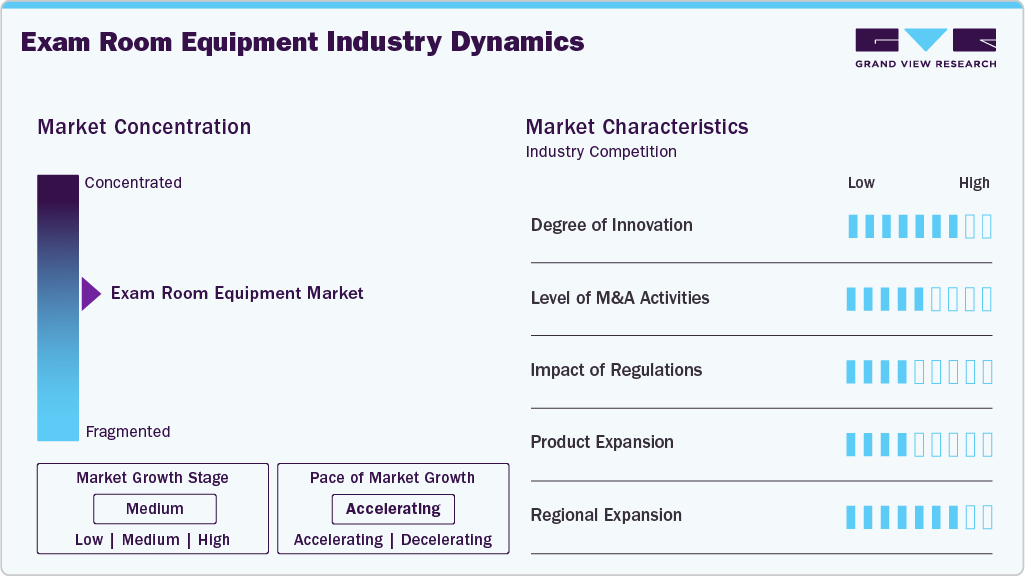
The industry has a moderate degree of innovation, with manufacturers focusing on integrated clinical environments, ergonomic designs, connected diagnostic equipment, and workflow-oriented configurations. Innovation includes wall-mounted diagnostic systems that combine multiple instruments, examination tables with powered positioning and integrated controls, mobile workstations with electronic health record connectivity, and examination lighting with improved illumination and positioning. Manufacturers are also developing modular cabinetry and storage systems that support room customization and organized clinical workflows. Integration of vital-sign measurement, digital diagnostic devices, and data connectivity is supporting more coordinated point-of-care processes.
 To learn more about this report, Download Free Sample Report
 -
In July 2024, Brewer Company introduced the next-generation FLEX PLUS and Access PLUS High-Low Power Exam Tables, featuring the EasyGlide Mobility System for one-touch, quiet movement to support exam-room reconfiguration and cleaning. The tables also incorporated ComfortGrip patient-assist handles with ADA-compliant grip surfaces, adjustable height, and powered seating and backrest options. The Access PLUS also included pass-through storage drawers, ergonomic stirrups, and a Mayo pass-through work surface.
Mergers and acquisitions in the exam room equipment industry are supporting portfolio diversification, product-line expansion, and broader access to healthcare provider networks. Manufacturers are combining complementary capabilities across examination tables, procedure chairs, medical seating, diagnostic equipment, and related clinical products. These activities also support entry into adjacent healthcare equipment categories and expansion across outpatient clinics, physician practices, ambulatory facilities, and hospitals. Acquiring companies can strengthen manufacturing capabilities, distribution networks, and product development resources while expanding their ability to address different clinical requirements.
Regulatory requirements impact product design, manufacturing processes, market entry, and compliance practices within the exam room equipment market. In the U.S., equipment such as examination tables, chairs, examination lights, diagnostic devices, and vital-sign equipment is subject to applicable U.S. Food and Drug Administration (FDA) requirements based on product classification and intended use. Electrical and electronic equipment is also subject to applicable safety standards. Accessibility requirements influence examination table and chair designs, particularly patient transfer height and access for individuals with disabilities. Manufacturers also need to address quality management, labeling, design controls, and post-market requirements, which can affect development timelines and compliance costs.
End-use concentration is distributed across hospitals, physician offices, outpatient clinics, ambulatory surgical centers, and other healthcare facilities. Hospitals use a broad range of equipment, including examination tables and chairs, diagnostic wall systems, vital-sign equipment, medical carts, storage cabinets, examination lights, and related equipment across multiple departments. Physician offices and outpatient clinics primarily require examination tables, diagnostic instruments, examination lights, medical carts, and clinical stools for routine patient assessments.
Analyst Perspective
The exam room equipment market is competitive, with manufacturers differentiated by product breadth, ergonomic design, customization capabilities, clinical functionality, and distribution reach. Established companies such as Midmark, Brewer, Hausmann Industries, Promotal, Clinton Industries, and AGA Sanitätsartikel compete by offering broad portfolios that include examination tables, medical carts, stools, cabinets, and related clinical furnishings. Companies also differentiate through electrically adjustable examination tables, mobile equipment solutions, integrated storage, and designs that support cleaning and infection-control requirements. Smaller and emerging manufacturers compete through specialized products, flexible configurations, regional distribution networks, and customer-specific solutions.
Product Insights
The examination tables & chairs segment led the market with the largest revenue share of 37.2% in 2025. Their dominance is supported by their essential role across routine consultations, physical examinations, minor procedures, and outpatient assessments. Healthcare facilities require these products across primary care, specialty clinics, hospitals, and ambulatory settings, creating broad demand. Replacement of aging furniture, ergonomic requirements for healthcare professionals, patient accessibility, adjustable positioning, and infection-control considerations also support adoption. Modern examination tables and chairs incorporate powered adjustment, height customization, patient positioning, and improved accessibility, supporting their use across different clinical workflows.
Examination lighting is expected to register significant growth within the exam room equipment product segment during the forecast period. This growth is supported by the need for consistent illumination during physical examinations, diagnostic assessments, wound evaluation, and minor clinical procedures. Healthcare facilities are upgrading examination rooms with adjustable lighting systems that provide focused illumination while supporting clinician visibility and patient positioning. LED-based examination lights are gaining adoption due to their energy efficiency, longer operating life, lower heat generation, and adjustable illumination capabilities.
Application Insights
The general examination segment led the market with the largest revenue share of 52.2% in 2025. This is supported by the broad use of examination tables, chairs, lighting, diagnostic instruments, medical carts, and other equipment across routine patient consultations and physical assessments. General examinations are conducted in primary care clinics, hospitals, outpatient departments, specialty practices, and ambulatory care facilities, creating a broad base of applications. The large volume of routine consultations, preventive health assessments, follow-up visits, and initial clinical evaluations sustains demand for general examination equipment. Healthcare facility expansion and modernization also support the installation and replacement of equipment used in general examination rooms.
Gynecological & OB/GYN examination is expected to be the fastest-growing application segment during the forecast period. Growth is supported by rising demand for women's healthcare services, including routine gynecological examinations, prenatal assessments, postpartum care, cervical screening, and other reproductive health procedures. Healthcare providers are expanding dedicated women's health services and upgrading examination rooms with equipment designed to support patient positioning, clinician access, and examination efficiency.
End Use Insights
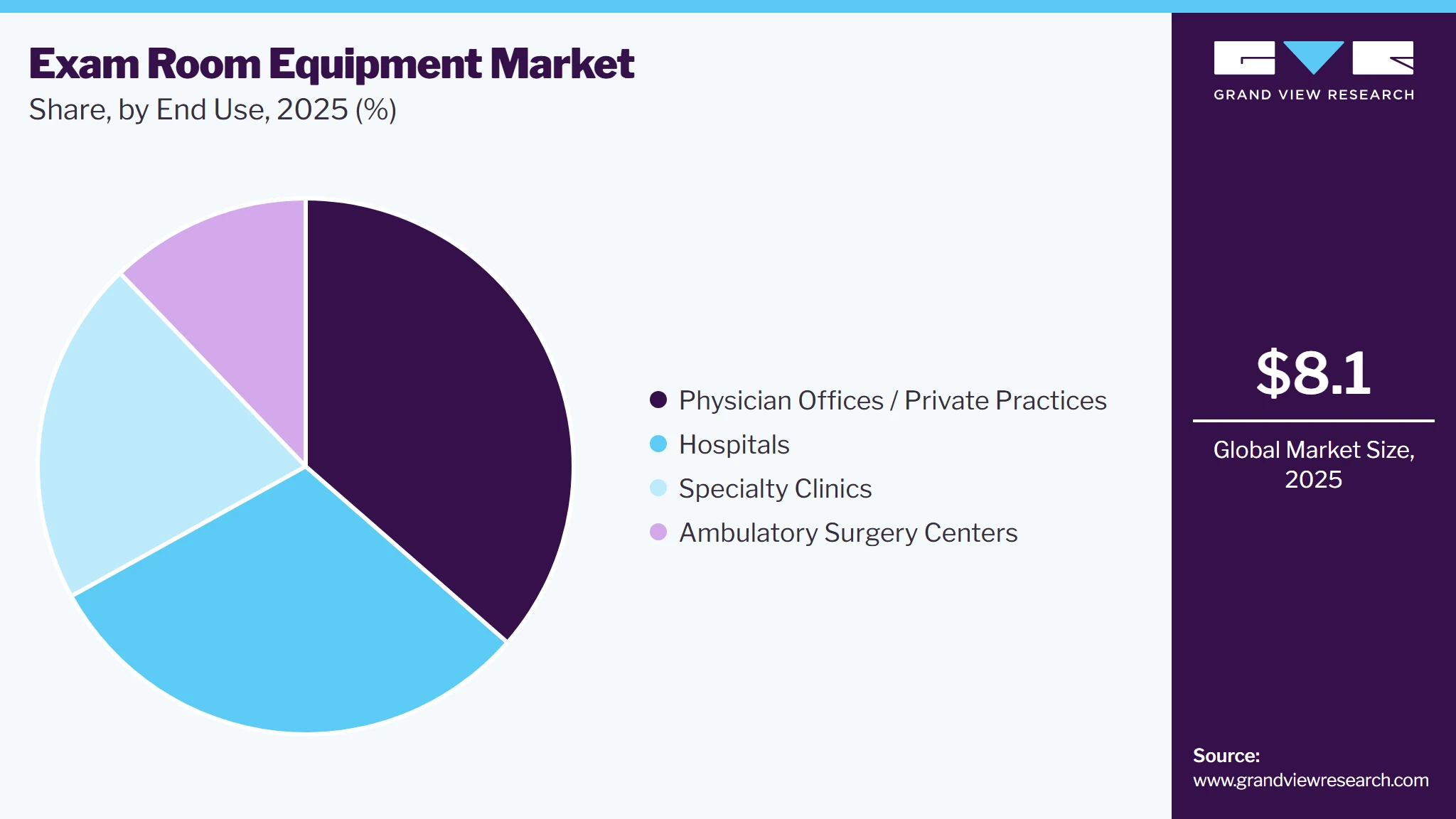
The physician offices / private practices segment led the market with the largest revenue share of 36.4% in 2025. Their dominance is supported by the large number of consultation and examination rooms required for routine patient assessments, diagnosis, follow-up visits, and preventive care. These facilities require examination tables and chairs, examination lighting, diagnostic instruments, medical carts, and other equipment to support daily clinical activities. Demand is also supported by the replacement of aging equipment, the refurbishment of existing practices, and the adoption of adjustable and ergonomically designed examination equipment.
 To learn more about this report, Download Free Sample Report
 Ambulatory Surgery Centers (ASCs) are expected to be the fastest-growing end-user segment during the forecast period. Growth is supported by the expansion of outpatient procedures, shorter hospital stays, and the increasing shift of suitable surgical services toward ambulatory settings. ASCs require examination and assessment equipment for preoperative evaluations, postoperative monitoring, minor procedures, and patient preparation. Facility expansion and modernization are creating demand for adjustable examination tables and chairs, specialized lighting, diagnostic equipment, and mobile medical carts.
Regional Insights
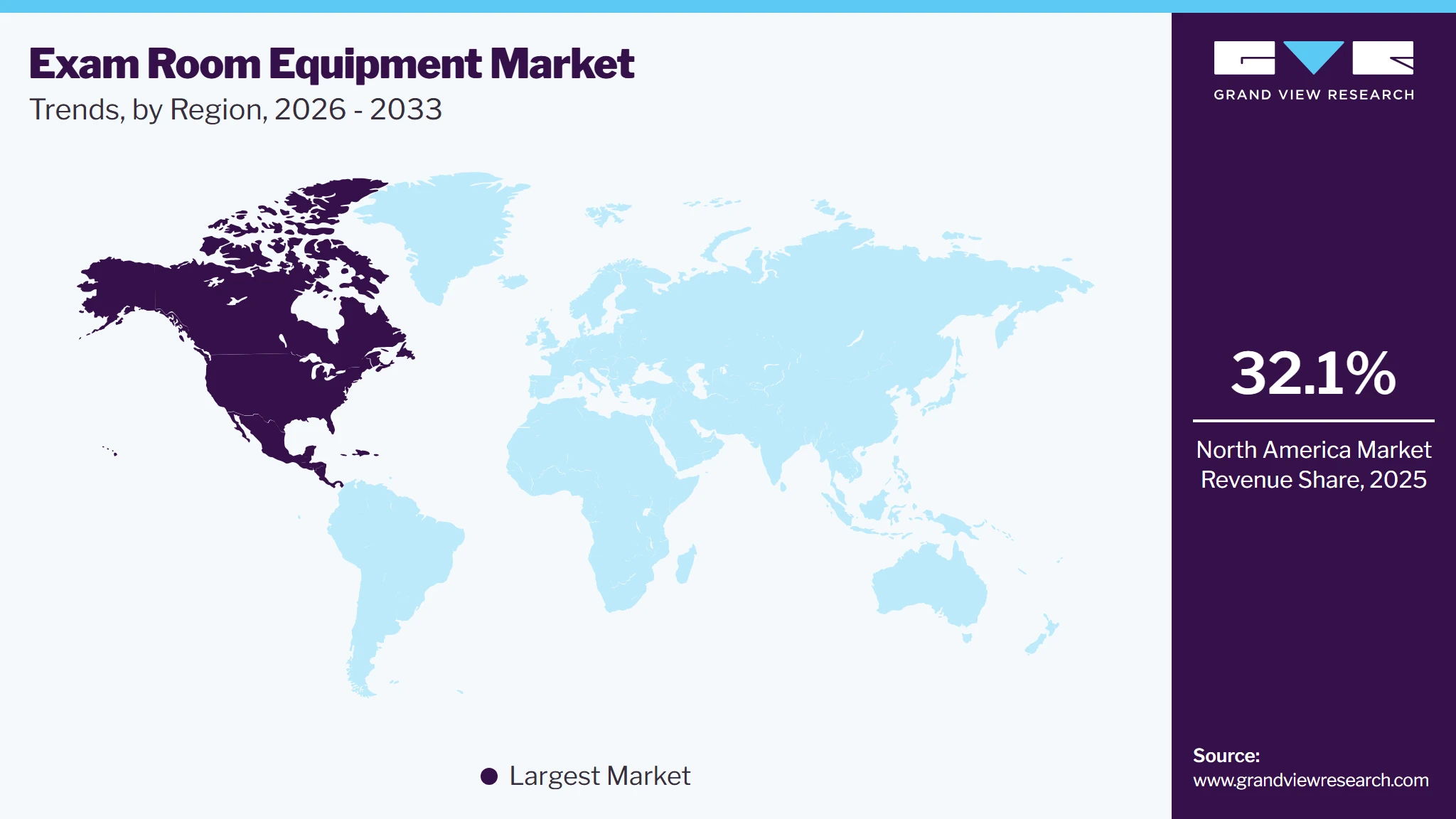
North America dominated the exam room equipment market with the largest revenue share of 32.1% in 2025, supported by its extensive network of hospitals, physician offices, health centers, urgent care facilities, and outpatient centers. In the U.S., the CDC’s National Ambulatory Medical Care Survey tracks care delivered by office-based physicians and health centers, reflecting the large outpatient care base that requires examination tables and chairs, diagnostic instruments, vital-sign equipment, examination lighting, carts, and storage systems. The region is also seeing continued development of outpatient and ambulatory care facilities, creating requirements for equipment suited to compact rooms, frequent patient turnover, accessibility, and workflow efficiency. In 2024, 27.6% of U.S. residents reported at least one urgent-care visit in the previous 12 months, while 19.0% reported a retail health clinic visit, underscoring the role of non-hospital care settings.
 To learn more about this report, Download Free Sample Report
 U.S. Exam Room Equipment Market Trends
The exam room equipment market in the U.S. is supported by the modernization of healthcare facilities and the replacement of aging clinical equipment. Healthcare providers are upgrading examination rooms to improve patient accessibility, clinical workflow, space utilization, and staff efficiency. Demand spans examination tables and chairs, examination lights, diagnostic wall systems, standalone diagnostic instruments, vital-sign equipment, medical carts, storage cabinets, and clinical stools. Healthcare facilities are also adopting equipment with powered positioning, improved mobility, integrated storage, and ergonomic designs to accommodate a range of examination procedures. The expansion of outpatient care settings is creating additional requirements for compact and adaptable examination-room equipment. From a regulatory perspective, the U.S. Food and Drug Administration (FDA), through its Center for Devices and Radiological Health (CDRH), regulates medical devices, with applicable requirements covering device classification, establishment registration and device listing, premarket submissions, labeling, and post-market reporting.
In July 2024, the U.S. Access Board issued a final rule establishing a 17-inch low transfer height for certain medical diagnostic equipment, including equipment used in examination settings. The rule became effective in September 2024 and establishes updated accessibility criteria for equipment used by patients in supine, prone, side-lying, and seated positions. This supports the shift toward examination equipment with adjustable-height and accessibility-oriented designs in U.S. healthcare facilities.
Europe Exam Room Equipment Market Trends
The exam room equipment market in Europe is supported by healthcare infrastructure modernization, expansion of primary and ambulatory care capacity, and investment in digital and patient-centered healthcare environments. European healthcare systems are upgrading consultation and treatment facilities, creating requirements for examination tables and chairs, examination lighting, diagnostic instruments, vital-sign equipment, medical carts, storage systems, and clinical stools. Regulatory oversight is governed at the European Union level by the European Commission under Regulation (EU) 2017/745 on medical devices (MDR), with national competent authorities and notified bodies responsible for conformity assessment, registration, and market surveillance. The Medical Device Coordination Group (MDCG) supports regulatory coordination and the implementation of the medical device framework across Member States. EU-funded healthcare investments also support the modernization of primary care and ambulatory facilities.
The UK exam room equipment market is supported by the modernization of NHS primary care and community healthcare facilities, as well as the expansion of diagnostic and outpatient services. NHS England’s estate planning emphasizes modern, flexible healthcare environments with consultation and examination rooms that can accommodate a range of clinical functions. The expansion of community diagnostic centers is also creating additional clinical spaces and requirements for diagnostic and examination equipment outside traditional hospital settings.
In April 2026, NHS England confirmed the development of new and expanded Community Diagnostic Centers (CDCs) across the East of England, including additional clinic and treatment-room space and new scanning and diagnostic equipment. The broader national program includes new rooms, MRI, CT, and ultrasound facilities, and additional testing and outpatient services.
“By bringing high-quality care closer to home, even more people in the region will benefit from vital checks like MRIs, CT scans and ultrasounds in a convenient location at a time that suits them, supporting the NHS’s drive to bring down waiting times even further,” said Adam Cayley, Regional Chief Operating Officer for NHS England - East of England
The exam room equipment market in Germany is being shaped by hospital restructuring, expansion of outpatient care, and healthcare digitalization. The Federal Ministry of Health (BMG) is implementing hospital reforms that introduce standardized service groups and quality requirements, while the Federal Institute for Drugs and Medical Devices (BfArM) oversees relevant medical-device regulatory responsibilities under Germany’s medical-device framework. In addition, the Medical Devices Operator Ordinance (MPBetreibV) establishes requirements for the safe operation and use of medical devices in healthcare facilities. Germany’s electronic patient record (ePA) framework is also supporting digital integration across healthcare settings, encouraging examination and consultation environments to accommodate digitally connected clinical workflows. These regulatory and healthcare delivery developments support the need for appropriately equipped examination rooms across hospitals, physician practices, and outpatient care facilities.
Asia Pacific Exam Room Equipment Market Trends
The exam room equipment market in the Asia Pacific is supported by the expansion and modernization of healthcare facilities, rising demand for outpatient and primary care services, and greater adoption of standardized clinical equipment. Healthcare providers are upgrading examination areas to improve workflow, patient handling, infection prevention, and space utilization, supporting demand for examination tables, medical carts, stools, cabinets, diagnostic equipment, and related furnishings. Regulatory development is also supporting market access and product standardization. The ASEAN Medical Device Directive (AMDD) provides a common framework that covers essential safety and performance requirements, risk classification, conformity assessment, and post-market surveillance, while individual member states continue to maintain their national requirements. The WHO has also identified planning, regulation, procurement, maintenance, replacement, and monitoring of medical devices as areas requiring stronger national systems to support a more structured approach to medical equipment management.
The India exam room equipment market is supported by the expansion of healthcare infrastructure, the increasing capacity for outpatient and primary care, and the modernization of hospitals and clinics. Demand for examination tables, medical carts, stools, cabinets, diagnostic equipment, and other clinical furnishings is supported by the development of new healthcare facilities and the replacement of aging equipment. Government initiatives focused on strengthening primary and secondary healthcare infrastructure are also creating requirements for better-equipped examination and consultation areas. In addition, India has established a regulatory framework for medical devices under the Medical Devices Rules, 2017, administered by the Central Drugs Standard Control Organization (CDSCO), covering the manufacture and import of medical devices. This regulatory framework establishes standardized requirements for medical devices entering the Indian healthcare system. Private hospital expansion, growth of ambulatory and specialty care facilities, and investments in modern clinical environments are further driving the procurement of exam room equipment.
The exam room equipment market in Japan is supported by the country’s rapidly aging population and the resulting shift in healthcare demand toward chronic disease management, outpatient consultations, and elderly-focused medical services. Japan’s Ministry of Health, Labor and Welfare indicates that the population aged 65 years and above, particularly those aged 75 years and above, continues to shape healthcare demand, while the number of patients aged 85 years and above is also expected to rise through the mid-2030s. This demographic shift is creating a need for examination environments that support frequent consultations, routine monitoring, and care for patients with multiple health conditions. Japan’s 2040 Regional Healthcare Vision also focuses on adapting healthcare delivery to an aging population, demographic shifts, and regional differences in medical needs, including stronger coordination among acute, chronic, and home-based care.
Latin America Exam Room Equipment Market Trends
The exam room equipment market in Latin America is supported by efforts to expand primary healthcare, improve outpatient services, and modernize healthcare facilities across the region. PAHO identifies primary healthcare as a central area for health-system transformation and has supported investments in infrastructure, medical technologies, and service capacity. The region also continues to address gaps in access to healthcare and in the availability of medical technologies, creating a need for better-equipped examination and consultation areas. Regulatory development is also supporting the medical-device environment. National authorities such as ANVISA in Brazil and ANMAT in Argentina oversee medical-device registration, safety, quality, and market access, while PAHO promotes regional cooperation in medical-device regulation and health-technology management.
Middle East and Africa Exam Room Equipment Market Trends
The exam room equipment market in the Middle East and Africa is supported by healthcare infrastructure development, expansion of primary and outpatient care, and efforts to improve access to essential medical technologies. In the Middle East, healthcare systems are investing in facility modernization and medical technology procurement, supported by regulatory frameworks overseen by authorities such as the Saudi Food and Drug Authority (SFDA) in Saudi Arabia and the Ministry of Health and Prevention (MOHAP) in the UAE. The SFDA regulates medical device registration, marketing authorization, establishment licensing, and post-market surveillance. In Africa, the South African Health Products Regulatory Authority (SAHPRA) regulates medical device establishments and device registration in South Africa. The WHO Eastern Mediterranean Regional Office also identifies gaps in medical device access, equipment management, maintenance, and regulatory capacity across parts of the region, underscoring ongoing needs for examination and diagnostic equipment as healthcare facilities expand.
Key Exam Room Equipment Company Insights
Key exam room equipment companies are entering the market by developing and supplying examination tables, medical carts, stools, cabinets, diagnostic equipment, and other clinical furnishings for healthcare facilities. Companies are focusing on ergonomic designs, adjustable examination platforms, mobile equipment solutions, improved storage, and integrated clinical accessories to support efficient patient examination and consultation workflows. The adoption of height-adjustable, electronically operated examination tables also supports equipment modernization, while mobile carts and modular storage systems help healthcare providers organize medical supplies in limited clinical space.
Key Exam Room Equipment Companies
The following key companies have been profiled for this study on the exam room equipment market.
-
Hausmann Industries (Dynatronics Corporation)
-
Derungs Licht AG
-
Drägerwerk AG & Co. KGaA
-
Midmark Corporation
-
United Metal Fabricators, Inc.
-
The Brewer Company
-
Clinton Industries
-
Baxter
-
Promotal
-
Cardinal Health
-
Lemi MD
-
AGA Sanitätsartikel GmbH
-
HEINE Optotechnik GmbH & Co. KG
-
Rudolf Riester GmbH (Halma plc)
-
Capsa Healthcare (Francisco Partners)
-
Omnimed (MedScience Group)
-
MTI Medical Technology Industries
-
Ergotron, Inc. (The Sterling Group)
-
TouchPoint Medical
-
Dentsply Sirona
Competitive Benchmarking
Category
Operating Strategies
Competitive Edge
Weakness
Established Players (Hausmann Industries (Dynatronics Corporation), Derungs Licht AG, Drägerwerk AG & Co. KGaA, Midmark Corporation, Clinton Industries, The Brewer Company, Baxter, Promotal, Cardinal Health, HEINE Optotechnik GmbH & Co. KG)
- Established manufacturers maintain broad product portfolios covering examination tables, carts, stools, cabinets, and accessories for diverse healthcare facilities.
- Companies expand through distributor networks, direct sales teams, healthcare contracts, and continuous product development across established regional markets.
- Established players benefit from recognized brands, extensive distribution networks, established customer relationships, and experience serving hospitals and outpatient facilities.
- Broad product portfolios enable companies to provide coordinated equipment solutions while supporting standardized procurement across multiple healthcare facility types.
- Large established organizations can face longer product development and decision-making cycles due to complex organizational structures and approval processes.
- Broad product portfolios and established manufacturing networks can increase operational complexity when addressing specialized requirements from smaller healthcare facilities.
Emerging Players (United Metal Fabricators, Inc., Lemi MD, AGA Sanitätsartikel GmbH, Omnimed (MedScience Group), MTI Medical Technology Industries)
- Emerging manufacturers focus on specialized exam room products, targeted customer segments, and flexible configurations to address specific clinical requirements.
- Companies use regional distributors, online channels, direct sales, and partnerships to expand market access while maintaining comparatively lean operations.
- Emerging players offer adaptable product designs, shorter customization cycles, and focused portfolios that address specific requirements in the examination room.
- Regional market knowledge enables emerging companies to tailor equipment specifications, pricing structures, and service models to local healthcare providers.
- Emerging players normally have narrower distribution networks and fewer established healthcare relationships than companies with longer market histories.
- Limited product portfolios and smaller service infrastructure can limit their ability to support large, multi-facility procurement requirements.
Recent Developments
-
In September 2026, Midmark expanded its Barrier-Free examination chair portfolio with the launch of the Ritter 228 and 229 Barrier-Free Examination Chairs. The height-adjustable chairs feature a 17-inch low seat height, 37-inch working height, US Access Board-compliant articulating knee crutches and patient support rails, and compatibility with patient lifts to support patient accessibility and safer transfers.
-
In June 2026, Capsa Healthcare acquired The Harloff Company, expanding its portfolio of healthcare storage and mobility solutions. The acquisition added Harloff’s clinical storage cabinets, medical procedure carts, medication storage, and endoscopic processing solutions, which are used across hospitals, clinics, ambulatory surgery centers, and long-term care facilities.
-
In 2025, HEINE introduced the new HEINE X Series, including the BETA X Otoscope and BETA X Ophthalmoscope. The BETA X Otoscope combines otoscopy with an integrated HEINE inSPECT examination light and interchangeable optical modules, while the BETA X Ophthalmoscope incorporates the AOS+ optical system and focusCONTROL.
Exam Room Equipment Market Report Scope
Report Attribute
Details
Market size in 2025
USD 8.1 billion
Estimated market size in 2026
USD 8.5 billion
Projected market size by 2033
USD 13.1 billion
Growth rate
CAGR of 6.3% from 2026 to 2033
Base year for estimation
2025
Historical data
2021 - 2024
Forecast period
2026 - 2033
Quantitative units
Revenue in USD billion and CAGR from 2026 to 2033
Report coverage
Revenue forecast, company ranking, competitive landscape, growth factors, and trends
Segments covered
Product, application, end use, region
Regional scope
North America; Europe; Asia Pacific; Latin America; MEA
Country scope
U.S.; Canada; Mexico; Germany; UK; France; Italy; Spain; Norway; Denmark; Sweden; China; Japan; India; South Korea; Australia; Thailand; Brazil; Argentina; Saudi Arabia; South Africa; UAE; Kuwait.
Key companies profiled
Hausmann Industries (Dynatronics Corporation); Derungs Licht AG; Drägerwerk AG & Co. KGaA; Midmark Corporation; United Metal Fabricators, Inc.; The Brewer Company; Clinton Industries; Baxter; Promotal; Cardinal Health; Lemi MD; AGA Sanitätsartikel GmbH; HEINE Optotechnik GmbH & Co. KG; Rudolf Riester GmbH (Halma plc); Capsa Healthcare (Francisco Partners); Omnimed (MedScience Group); MTI Medical Technology Industries; Ergotron, Inc. (The Sterling Group); TouchPoint Medical; Dentsply Sirona
Customization scope
Free report customization (equivalent up to 8 analysts' working days) with purchase. Addition or alteration to country, regional & segment scope.
Pricing and purchase options
Avail customized purchase options to meet your exact research needs. Explore purchase options
Global Exam Room Equipment Market Report Segmentation
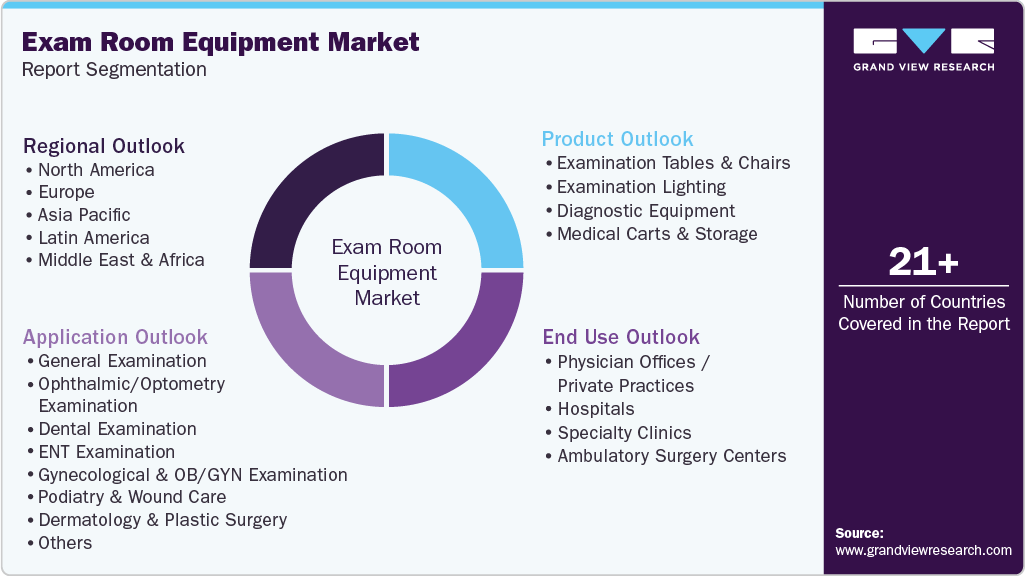
This report forecasts revenue growth at the global, regional and country levels and provides an analysis of the latest industry trends across each sub-segment from 2021 to 2033. For this study, Grand View Research has segmented the global exam room equipment market report based on product, application, end use, and region.
 To learn more about this report, Download Free Sample Report
 -
Product Outlook (Revenue, USD Billion, 2021 - 2033)
-
Examination Tables & Chairs
-
Manual Examination Tables & Chairs
-
Power/Electric Examination Tables & Chairs
-
-
Examination Lighting
-
LED Examination Lights
-
Halogen Examination Lights
-
-
Diagnostic Equipment
-
Diagnostic Wall Systems
-
Handheld Diagnostic Instruments
-
Spot-check Vital Signs Devices
-
-
Medical Carts & Storage
-
Medical/Procedure Carts
-
Instrument Stands
-
Medical Storage Cabinets
-
Fixed Cabinetry & Casework
-
-
-
Application Outlook (Revenue, USD Billion, 2021 - 2033)
-
General Examination
-
Ophthalmic/Optometry Examination
-
Dental Examination
-
ENT Examination
-
Gynecological & OB/GYN Examination
-
Podiatry & Wound Care
-
Dermatology & Plastic Surgery
-
Others
-
-
End Use Outlook (Revenue, USD Billion, 2021 - 2033)
-
Physician Offices / Private Practices
-
Hospitals
-
Specialty Clinics
-
Ambulatory Surgery Centers
-
-
Regional Outlook (Revenue, USD Billion, 2021 - 2033)
-
North America
-
U.S.
-
Canada
-
Mexico
-
-
Europe
-
Germany
-
UK
-
France
-
Italy
-
Spain
-
Norway
-
Denmark
-
Sweden
-
-
Asia Pacific
-
China
-
Japan
-
India
-
South Korea
-
Australia
-
Thailand
-
-
Latin America
-
Brazil
-
Argentina
-
-
Middle East and Africa
-
Saudi Arabia
-
South Africa
-
UAE
-
Kuwait
-
-
Research Methodology
The exam room equipment marketfigures in this report are based on a proven research process that combines executive interviews with secondary research from proprietary databases, company filings, and recognized regulatory and institutional sources. Market size is built through value-chain sizing-reconciling supply-side and demand-side estimates-and triangulated with bottom-up and top-down approaches. Every estimate passes multiple levels of expert validation before publication, with eachexam room equipment segment quantified using the revenue-capture definitions in the table below.
Segment Definition
Product
Revenue capture definition
Examination Tables & Chairs
Revenue generated from the sale of fixed, mobile, manual, and powered examination tables and chairs used for patient positioning, physical examinations, consultations, and minor clinical procedures.
Examination Lighting
Revenue is generated from the sale of fixed, mobile, wall-mounted, ceiling-mounted, and portable examination lighting systems designed to provide focused illumination for clinical examinations and minor procedures.
Diagnostic Equipment
Revenue is generated from the sale of diagnostic devices and instruments used for patient assessment, vital-sign measurement, physical examination, screening, and routine clinical evaluation within examination rooms.
Medical Carts & Storage
Revenue is generated from the sale of mobile medical carts, examination-room storage units, cabinets, shelving systems, and related equipment for organizing, storing, and transporting medical supplies and instruments.
Estimation Model
Bottom-Up Consumption & Unit Volume Modeling
Top-Down Revenue Triangulation
Demand-Side Care-Setting & Application Modeling
Supply-Side Capacity & Utilization Modeling
Data Triangulation & Market Reconciliation
Estimate installed base and annual procurement/consumption of exam-room equipment across clinics, physician offices, hospitals, ambulatory centers, and specialty practices. Build volumes by product type: Examination Tables & Chairs, Examination Lighting, Diagnostic Equipment, Medical Carts & Storage, and Other Exam Room Equipment. Multiply unit volumes by representative ASPs and replacement cycles to derive market revenue.
Analyze healthcare facility equipment spending, medical equipment budgets, and relevant outpatient/physician-office expenditure pools. Apply estimated shares attributable to exam-room equipment and reconcile with manufacturer revenues, product portfolios, and regional market splits.
Assess demand across General Medical, Ophthalmic/Optometry, Dental/Operatory, ENT, Gynecology & OB/GYN, Podiatry & Wound Care, Dermatology & Plastic Surgery, and Other Specialty rooms. Model room counts, equipment density, replacement frequency, procedure volumes, and new-room additions to estimate annual demand.
Evaluate global and regional manufacturing capacity, production volumes, supplier footprints, product launches, distributor networks, and utilization for exam tables/chairs, lighting, diagnostic equipment, carts/storage, and related products. Estimate addressable supply and revenue using capacity, ASP, and utilization assumptions.
Integrate primary research (KOLs, clinicians, distributors, manufacturers, procurement teams) with secondary sources (company reports, healthcare statistics, regulatory databases, facility databases, industry publications). Cross-check product-type and application estimates, adjust for pricing and regional differences, and reconcile forecasts into a consistent final market size.
Delivered Customizations
This report has been delivered with the following In-depth customizations
Client Request
Customization Delivered
Value Adds
ASP and Volume Analysis (Historical & Forecast)
Comprehensive ASP and volume analysis for exam room equipment across the forecast period, segmented by product type (examination tables & chairs, examination lighting, and diagnostic equipment), equipment configuration, technology level, and end use (hospitals, ambulatory surgical centers, physician offices/clinics, specialty clinics, and other healthcare facilities). The analysis incorporates equipment unit sales, replacement cycles, procurement volumes, average selling prices, installation requirements, and regional pricing differences. Forecasts are developed based on healthcare facility expansion, examination room additions, equipment replacement rates, patient consultation volumes, healthcare infrastructure investments, and the adoption of technologically advanced examination equipment.
Enables accurate revenue and unit-volume forecasting, pricing strategy development, procurement planning, assessment of premium vs. standard equipment demand, identification of high-value product categories, replacement-market assessment, and regional investment decision-making for manufacturers, distributors, and investors.
Application and Consumption Volume Analysis
Detailed assessment of equipment utilization across general examination, primary care, specialty consultations, gynecology, ENT, ophthalmology, dermatology, and other clinical examination applications. The analysis evaluates examination room density, equipment-per-room ratios, patient throughput, equipment utilization frequency, replacement and refurbishment cycles, facility-level procurement practices, and differences between hospitals, clinics, physician offices, and specialty healthcare facilities.
Supports demand forecasting, estimation of addressable equipment volumes, identification of high-utilization applications, assessment of equipment replacement requirements, facility-level procurement planning, capacity expansion analysis, and evaluation of recurring demand from replacement and refurbishment markets.
Competitive Benchmarking and Market Share Analysis
Comprehensive competitive assessment of exam room equipment manufacturers, including product portfolio benchmarking, examination table configurations, lighting technologies, diagnostic equipment offerings, electric vs. manual equipment, product specifications, weight/load capacity, mobility features, ergonomic features, connectivity/digital capabilities, regulatory status, distribution networks, geographic presence, pricing, product launches, and strategic partnerships. Market share analysis is evaluated across major geographic markets and the defined product segments.
Enables competitive positioning, market gap identification, product feature benchmarking, pricing optimization, product differentiation, distribution strategy development, partnership and acquisition evaluation, commercialization planning, and geographic expansion assessment for both established and emerging manufacturers.
About the Author(s)
Medical Devices Research Team
Healthcare · Medical DevicesThis report was authored by the medical devices research team at Grand View Research - comprising two research analysts, one senior research analyst, and one industry expert - with specialized expertise in the medical devices segment of the healthcare industry. All findings are based on proprietary healthcare databases, executive interviews, and regulatory analysis, subject to internal peer review prior to publication.
Last Updated:
Speak to Analyst

Customize this report to your needs - add regions, segments, or data points, with 20% free customization.
Or view our licence options:


ISO 9001:2015 & 27001:2022 Certified
We are GDPR and CCPA compliant! Your transaction & personal information is safe and secure. For more details, please read our privacy policy.


