
- Home
- »
- Beauty & Personal Care
- »
-
Feminine Wipes Market Size & Share Report, 2026-2033GVR Report cover

Feminine Wipes Market (2026 - 2033)
Size, Share & Trends Analysis Report By Distribution Channel (Hypermarkets & Supermarkets, Convenience Stores, Pharmacies & Drugstores, Online), By Region (North America, Europe, Asia Pacific, MEA), And Segment Forecasts
Market Size, 2025
$1.8BMarket Estimate, 2026
$1.9BMarket Forecast, 2033
$3.1BCAGR, 2026–2033
6.9%Feminine Wipes Market Size & Trends
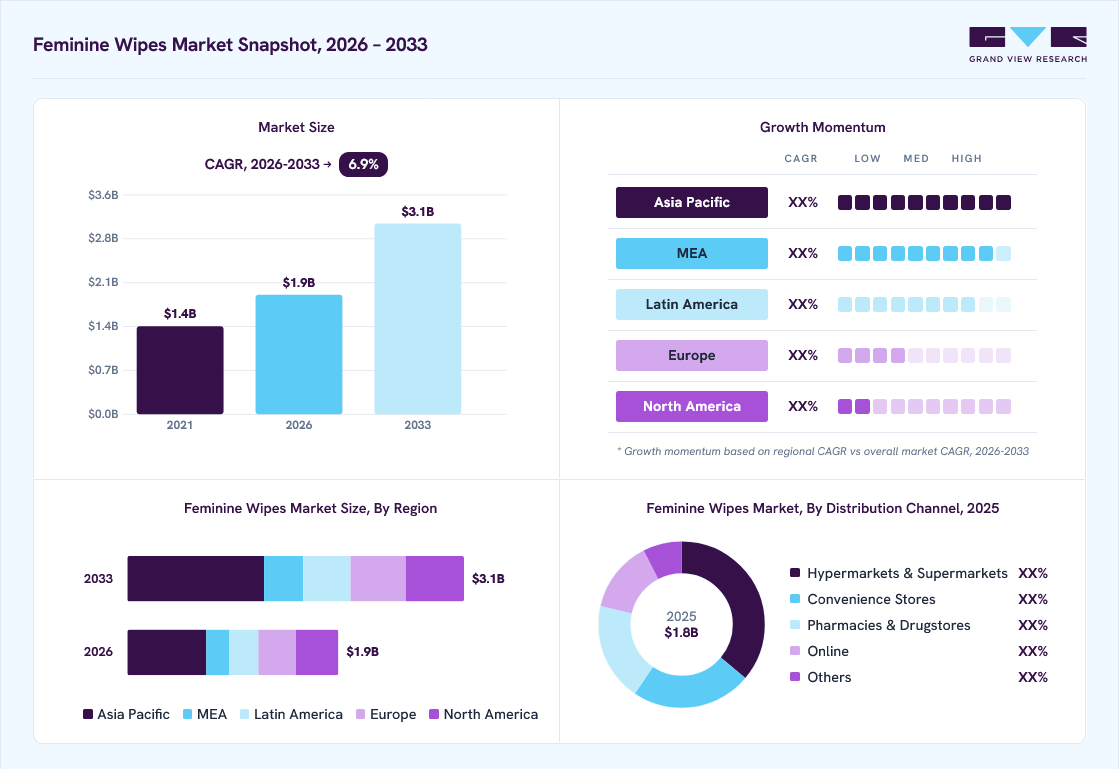
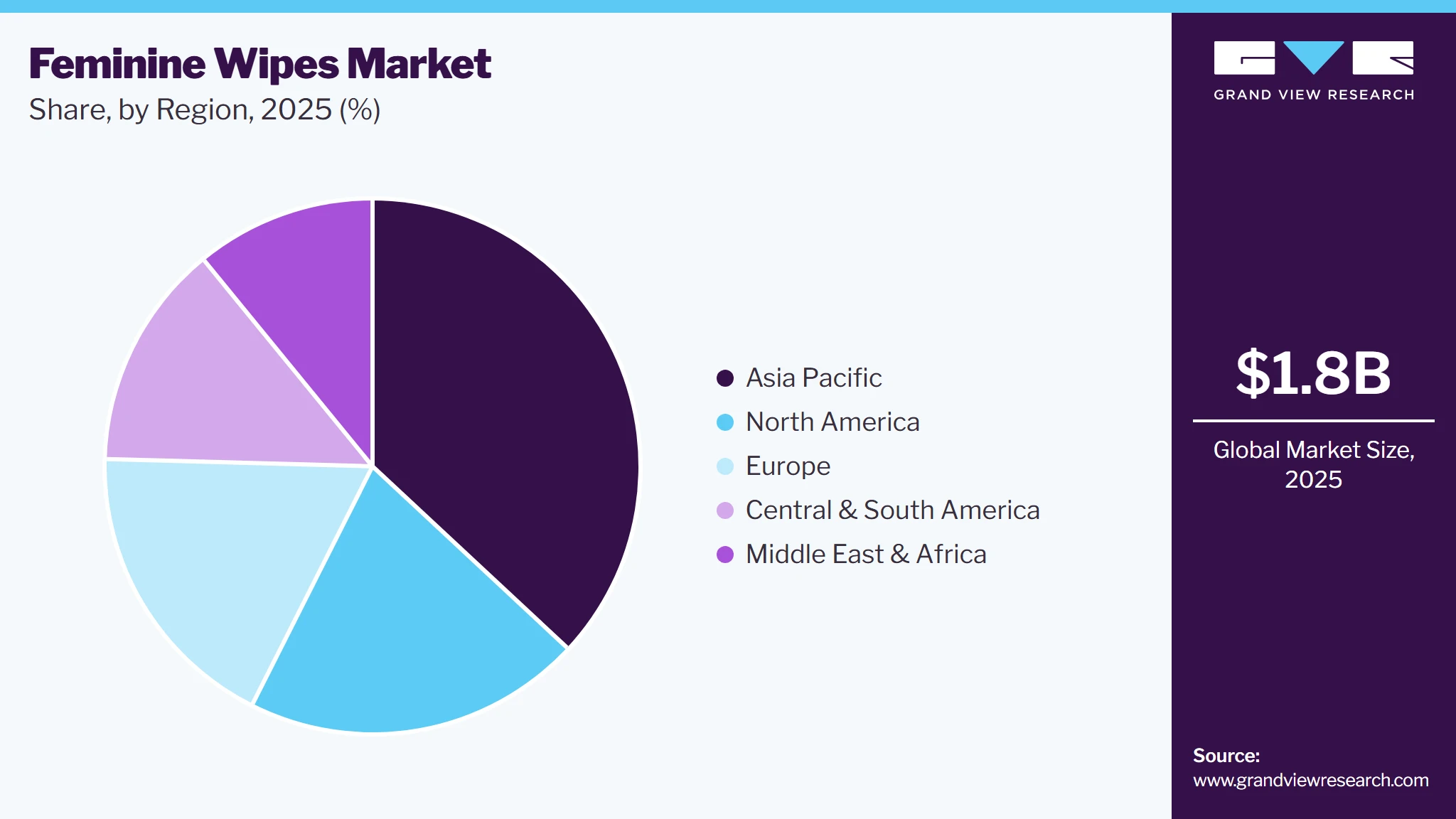
The global feminine wipes market size was valued at USD 1.8 billion in 2025 and is projected to grow from USD 1.9 billion in 2026 to USD 3.1 billion by 2033, growing at a CAGR of 6.9% from 2026 to 2033. Asia Pacific dominated the market with the largest revenue share of 36.9% in 2025. Improving female education levels, rising disposable incomes, and rising demand for convenient and discreet intimate care products are some of the prominent factors contributing to product demand worldwide.
 Source: Grand View Research, IR Documents, Primary Interviews, Paid DatabasesTo learn more about this report,
 Download Free Sample Report
Key Market Trends & Insights
- By distribution channel: Sale of feminine wipes through hypermarkets and supermarkets led the market with the largest revenue share of 36.1 % in 2025.
Regional Highlights
- Largest regional market: Asia Pacific (36.9% revenue share, 2025)
- By country: China held the largest market share in 2025.
Market Size & Forecast
- Market size in 2025: USD 1.8 Billion
- Estimated market size in 2026: USD 1.9 Billion
- Projected market size by 2033: USD 3.1 Billion
- CAGR (2026-2033): 6.9%
Three ways to get this report
Buy it, customize it, or ask a question.Ask an Analyst
Analyst response in 1 business day
- AccessReport author, directly
- Reply timeWithin 1 working day
- No sales callDirect answer only
- FormatEmail reply
- CostFree, no cost
Get the Full Report
What the study covers
- FormatsPDF · Excel · Dashboard
- Timeline2026–2033 annual, 2025 base
- Coverage20+ countries, 5 regions
- Companies10+ key players profiled
Customize the Report
20% free customization
- IncludeCountries, segments, points
- TailorTo your product definition
- ExtendDeeper competitor detail
- OrA fully bespoke study
- Turnaround5–10 working days
Feminine wipes refer to cloths/wipes that are intended to clean the vaginal area. While other intimate care products, such as sanitary pads, are typically used during menstruation, feminine wipes are marketed as ideal for daily/everyday use. The influence of social media and advertising campaigns promoting the benefits of feminine wipes has heightened consumer awareness and acceptance. Furthermore, product formulations advancements, including natural and soothing ingredients, have enhanced the appeal of feminine wipes. The expanding retail network, including online platforms, has also made these products more accessible to a broader audience.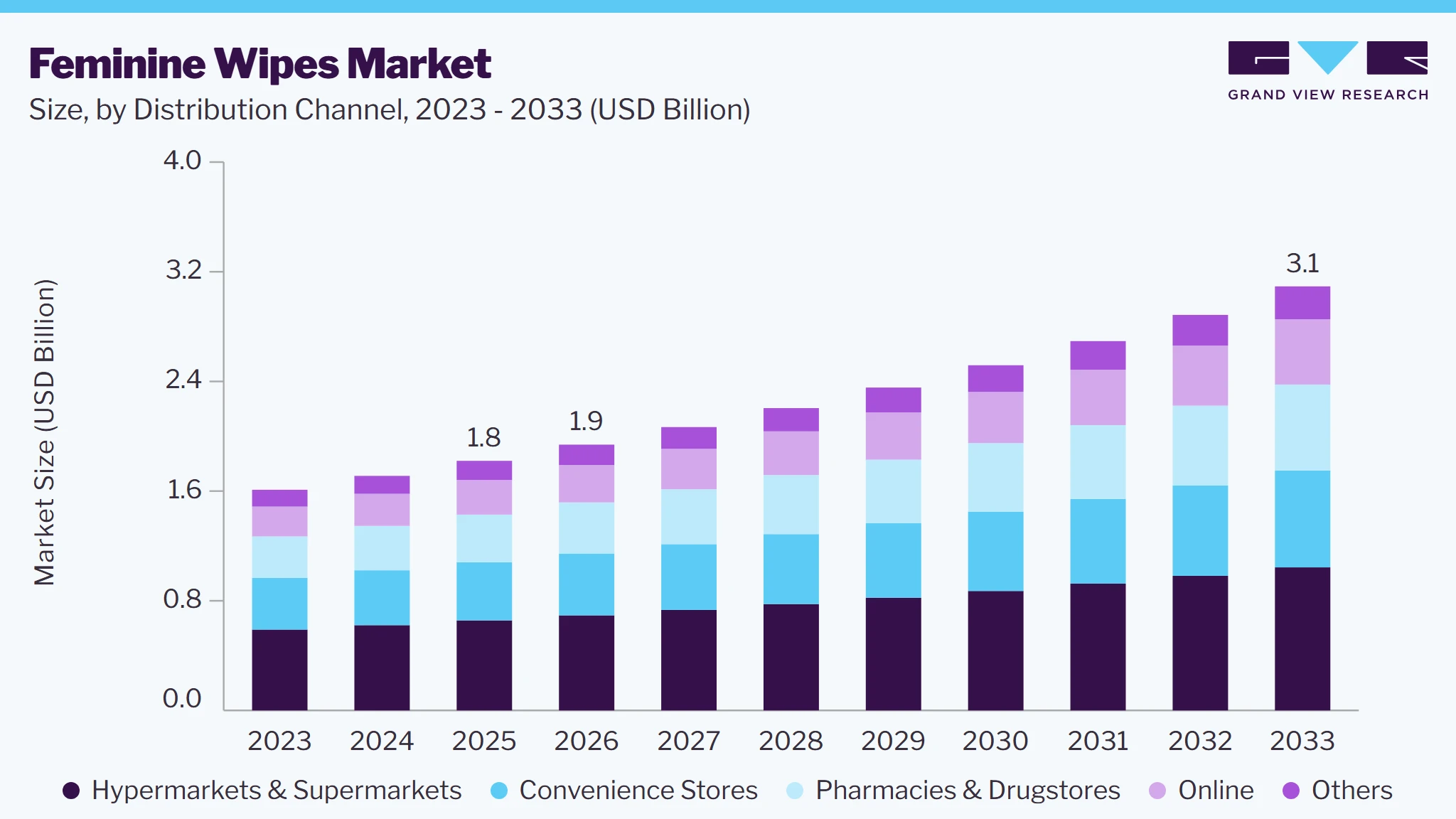 To learn more about this report, Download Free Sample Report
Beneficial properties of feminine wipes, such as ease of use, disposability, portability, and reduced risk of cross-contamination, are expected to favor market growth in the foreseeable future. Consumers worldwide prefer feminine wipes based on various factors, including cost convenience, hygiene, performance, timesaving, ease of use, disposability, and consumer-centered aesthetics.
With the rising global concerns regarding the use of chemicals and preservatives in feminine wipes, key brands are increasingly focusing on using formulas powered by herb-based ingredients (free from parabens and dyes). The global market for feminine wipes is expected to witness significant growth in the natural space throughout the forecast timeframe.
Market Dynamics
The global feminine wipes market is being driven by increasing awareness of intimate hygiene, rising disposable incomes, and growing demand for convenient personal care solutions. Consumers are increasingly incorporating feminine wipes into daily hygiene routines, menstrual care, travel, post-workout cleansing, and on-the-go freshness needs. Demand is also benefiting from greater product availability through pharmacies, supermarkets, and e-commerce channels. However, market growth remains influenced by consumer concerns about ingredient safety, skin sensitivity, and the need for intimate hygiene products beyond traditional cleansing methods.
A key driver for the feminine wipes market is the increasing emphasis on intimate hygiene and overall personal wellness. Rising health awareness, greater openness around feminine care discussions, and growing demand for convenient hygiene solutions are encouraging consumers to adopt feminine wipes as part of their daily self-care routines. The trend is particularly evident among urban consumers seeking portable and discreet hygiene products for use during menstruation, travel, work, and outdoor activities.
Market growth is constrained by concerns surrounding fragrances, preservatives, chemicals, and potential skin irritation associated with certain feminine wipe formulations. In addition, some healthcare professionals and consumers question the necessity of intimate wipes compared to traditional cleansing methods, which can limit adoption among specific consumer groups.
A significant opportunity exists in the growing demand for feminine wipes formulated with natural ingredients, pH-balanced solutions, biodegradable materials, and dermatologically or gynecologically tested claims. Manufacturers are increasingly focusing on sensitive-skin formulations, clean-label ingredients, and environmentally responsible products to address evolving consumer preferences. As consumers become more willing to pay for safety, comfort, and sustainability, premium feminine wipes are expected to drive value growth across the market.
Analyst Perspective
The feminine wipes market is evolving from a niche hygiene category into a broader intimate wellness segment, supported by growing adoption of specialized personal care products. Value is increasingly concentrated in premium formulations featuring pH-balanced ingredients, natural extracts, sensitive-skin claims, and sustainable materials. As competition intensifies, formulation quality, brand trust, product safety, and omnichannel distribution are emerging as key competitive differentiators.
Distribution Channel Insights
Based on distribution channel, sale of feminine wipes through hypermarkets and supermarkets led the market with the largest revenue share of 36.1 % in 2025, while sale of feminine wipes through online channel grows at the fastest CAGR over the forecast period. These retail channels offer a convenient one-stop shopping experience, attracting a large number of consumers. Hypermarkets and supermarkets provide an extensive range of feminine hygiene products, including feminine wipes, allowing customers to compare and choose from various brands and product options easily. These retail chains' wide reach and strong distribution networks ensure high product availability and accessibility, which is crucial for everyday essentials like feminine wipes. Additionally, frequent promotions, discounts, and loyalty programs offered by hypermarkets and supermarkets make them an attractive shopping destination for consumers looking to save on personal hygiene products.
The online channel is expected to grow at the fastest CAGR of 7.3% over the forecast period. The convenience and ease of online shopping are significant drivers, as consumers increasingly prefer to purchase personal hygiene products from the comfort of their homes. The online channel offers a vast selection of brands and product options, allowing consumers to easily compare and choose the best products to meet their needs. Additionally, the rise of digital marketing and targeted advertising has heightened the visibility and appeal of feminine wipes sold online. The availability of detailed product descriptions, customer reviews, and subscription services also enhances the online shopping experience, encouraging repeat purchases. Furthermore, frequent online promotions and discounts make buying feminine wipes online an attractive option for cost-conscious consumers.
Regional Insights
Asia Pacific dominated the Feminine Wipes market with the largest revenue share of 36.9% in 2025. The increasing awareness of personal hygiene and the growing adoption of feminine hygiene products in countries such as China, Japan, and India have significantly contributed to market growth. The rising disposable incomes and urbanization in these regions have led to higher spending on personal care products. Additionally, the expanding retail sector and the widespread availability of feminine wipes across both urban and rural areas have boosted accessibility and convenience for consumers. The influence of social media and marketing campaigns promoting the benefits of feminine hygiene products has also played a crucial role in increasing consumer awareness and acceptance. Furthermore, the introduction of innovative and eco-friendly products by key players in the market has attracted a larger consumer base, contributing to the robust growth of the feminine wipes industry in the Asia Pacific region.
 To learn more about this report, Download Free Sample Report
China Feminine Wipes Market Trends
The Feminine Wipes market in China held the largest market share of 34.4% in the Asia Pacific region in 2025
North America Feminine Wipes Market Trends
The North American feminine wipes industry was identified as a lucrative region in 2024 owing to high disposable incomes, increased urbanization, and a growing focus on health and personal hygiene. The region's preference for premium and eco-friendly personal care products and strong consumer awareness about feminine health boosts market demand.
The U.S. feminine wipes industry is expected to grow significantly over the forecast period owing to the rising health consciousness among women and the demand for convenient hygiene solutions that cater to their busy lifestyles. The growth of e-commerce has significantly contributed to this market, making it easier for consumers to purchase feminine wipes online. Additionally, innovative products featuring natural and organic ingredients, pH-balanced formulas, and eco-friendly packaging are driving consumer interest.
Europe Feminine Wipes Market Trends
Europe feminine wipes industry is expected to grow significantly at a CAGR of 4.7% over the forecast period. Educational campaigns and a cultural shift towards accepting and promoting feminine hygiene have significantly increased market uptake. Government support in the form of policies classifying sanitary products as essential items further boosts market growth. Moreover, a strong consumer preference for sustainable and natural products pushes manufacturers to innovate with environmentally friendly formulations and packaging.
Key Feminine Wipes Company Insights
Some key companies in the feminine wipes market include Procter & Gamble, Johnson & Johnson Services, Inc., Edgewell Personal Care, and others.
-
Procter & Gamble is a major player in the feminine wipes industry, known for its well-established brands such as Tampax and Always. P&G continuously innovates its product offerings, focusing on natural and organic ingredients, pH-balanced formulas, and eco-friendly packaging to meet consumer preferences.
-
Johnson & Johnson Services, Inc. is another key player in the feminine wipes industry. The company is recognized for its commitment to providing high-quality and innovative hygiene products. Johnson & Johnson offers a range of feminine hygiene products, including intimate wipes designed to maintain the pH balance of the intimate area and provide a quick and discreet way to stay fresh and clean.
Key Feminine Wipes Companies
The following key companies have been profiled for this study on the feminine wipes market.
-
Procter & Gamble
-
Johnson & Johnson Services, Inc.
-
Edgewell Personal Care
-
KCWW
-
Unicharm Corporation
-
Albaad
-
Guy & O'Neill, Inc.
-
Bodywise (UK) Limited
-
Corman SpA
-
Laclede, Inc.
Competitive Benchmarking
Category
Operating Strategies
Competitive Edge
Weakness
Established Players (Procter & Gamble, Johnson & Johnson Services, Inc., Kimberly-Clark Worldwide, Inc., Unicharm Corporation, Edgewell Personal Care)
- Focus on brand expansion, product innovation, premium formulations, and extensive retail distribution.
- Strong brand recognition, wide distribution networks, and large-scale manufacturing capabilities.
- Higher operating costs and relatively slower response to niche consumer trends.
Emerging Players (Albaad, Guy & O'Neill, Inc., Bodywise (UK) Limited, Corman SpA, Laclede, Inc.)
- Focus on intimate wellness, natural ingredients, private-label manufacturing, and niche product positioning.
- Greater flexibility, faster innovation, and stronger focus on specialized consumer needs.
- Limited brand visibility, smaller distribution footprint, and lower marketing resources.
Recent Developments
-
In November 2024, The Honey Pot Company launched its inaugural Witch Hazel Intimate Wash & Wipes, designed for postpartum recovery, particularly for new and expectant mothers. These products provide relief from irritation and support a balanced vaginal pH.
-
In January 2024, Marico launched KeepSafe, a premium range of hygiene products designed for personal and out-of-home use. The collection includes multi-purpose disinfectant spray, feminine hygiene wipes, toilet seat disinfectant, hand sanitizer, hygiene hand wipes, and an upcoming intimate wash.
Feminine Wipes Market Report Scope
Report Attribute
Details
Market size in 2025
USD 1.8 billion
Estimated market size in 2026
USD 1.9 billion
Projected market size by 2033
USD 3.1 billion
Growth rate
CAGR of 6.9 % from 2026 to 2033
Base year for estimation
2025
Historical data
2021 - 2024
Forecast period
2026 - 2033
Quantitative units
Revenue in USD million/billion and CAGR from 2026 to 2033
Report coverage
Revenue forecast, company ranking, competitive landscape, growth factors, and trends
Segments covered
Distribution channel
Regional scope
North America; Europe; Asia Pacific; Central & South America; Middle East & Africa
Country scope
U.S.; Canada; Mexico; Germany; UK; France; Italy; Spain; China; Japan; India; South Korea; Australia & New Zealand; Brazil; and South Africa
Key companies profiled
Procter & Gamble; Johnson & Johnson Services, Inc.; Edgewell Personal Care; KCWW; Unicharm Corporation; Albaad ; Guy & O'Neill, Inc. ; Bodywise (UK) Limited; Corman SpA; Laclede, Inc.
Customization scope
Free report customization (equivalent up to 8 analysts' working days) with purchase. Addition or alteration to country, regional & segment scope.
Pricing and purchase options
Avail customized purchase options to meet your exact research needs. Explore purchase options
Global Feminine Wipes Market Report Segmentation
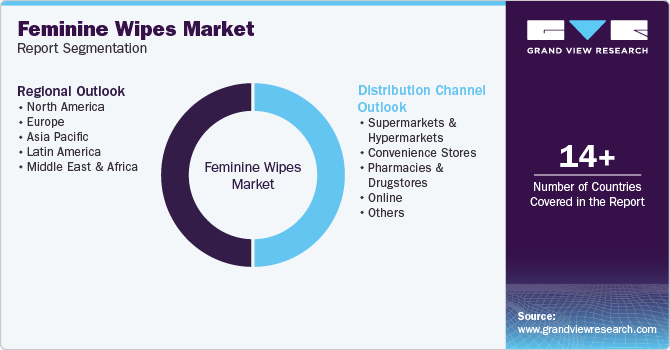
This report forecasts revenue growth at global, regional, and country levels and provides an analysis of the latest industry trends in each of the sub-segments from 2021 to 2033. For this study, Grand View Research has segmented the global feminine wipes market report based on distribution channel, and region:
 To learn more about this report, Download Free Sample Report
-
Distribution Channel Outlook (Revenue, USD Million, 2021 - 2033)
-
Supermarkets & Hypermarkets
-
Convenience Stores
-
Pharmacies & Drugstores
-
Online
-
Others
-
-
Regional Outlook (Revenue, USD Million, 2021 - 2033)
-
North America
-
U.S.
-
Canada
-
Mexico
-
-
Europe
-
Germany
-
UK
-
France
-
Italy
-
Spain
-
-
Asia Pacific
-
China
-
Japan
-
India
-
Australia & New Zealand
-
-
Latin America
-
Brazil
-
Argentina
-
-
Middle East and Africa (MEA)
-
UAE
-
South Africa
-
-
Research Methodology
The feminine wipes market figures in this report are based on a proven research process that combines executive interviews with secondary research from proprietary databases, company filings, and recognized regulatory and institutional sources. Market size is built through value-chain sizing - reconciling supply-side and demand-side estimates - and triangulated with bottom-up and top-down approaches. Every estimate passes multiple levels of expert validation before publication, with each feminine wipes segment quantified using the revenue-capture definitions in the table below.
Segment Definition
Segment - Distribution Channel
Revenue capture definition
Hypermarkets & Supermarkets
Revenue is generated from the sale of feminine wipes through hypermarkets and supermarkets that offer personal care, hygiene, and wellness products across multiple brands and product categories.
Convenience Stores
Revenue is generated through the sale of feminine wipes through convenience stores and small-format retail outlets as part of their personal hygiene and consumer goods offerings.
Pharmacies & Drugstores
Revenue is generated through the sale of feminine wipes via pharmacies, drugstores, and healthcare retail outlets offering feminine hygiene and personal care products.
Online
Revenue is generated through the sale of feminine wipes via e-commerce platforms, online pharmacies, brand-owned websites, and digital marketplaces.
Others
Revenue is generated through the sale of feminine wipes through specialty beauty retailers, department stores, wholesale clubs, healthcare facilities, and other alternative retail and distribution channels.
Estimation Model
Population Layer
Access Layer
Behavioral Layer
Monetisation Layer
Who forms the base consumer pool?
Who has access to feminine wipes products?
Who actively uses feminine wipes?
How much revenue is generated?
Total female consumers across reproductive age groups and life stages with demand for personal hygiene, intimate care, freshness, and wellness products, adjusted for demographic and hygiene awareness factors.
Consumers with access to feminine hygiene products through supermarkets, pharmacies, drug stores, convenience stores, beauty retailers, healthcare outlets, and e-commerce platforms. This layer reflects product availability across developed and emerging personal care markets.
Active users incorporating feminine wipes into daily hygiene routines, travel, menstruation management, post-workout care, and on-the-go freshness needs, filtered by product awareness, purchasing frequency, and personal care habits.
Revenue derived from active feminine wipes users multiplied by average annual spending on intimate hygiene wipes, flushable wipes, sensitive-skin formulations, individually packaged wipes, and premium feminine care products across retail and online channels.
Delivered Customizations
This report has been delivered with the following In-depth customizations
Client Request
Customization Delivered
Value Adds
Usage Occasion Analysis (Consumer Need State × Product Adoption Assessment)
Evaluated feminine wipe usage across menstruation management, travel, post-workout hygiene, daily freshness, pregnancy, and postpartum care applications to identify the primary demand drivers and purchasing triggers.
Reveals where demand is structurally concentrated, highlights high-frequency usage occasions, and supports product positioning and innovation strategies.
Ingredient & Formulation Strategy Assessment (Formulation Type × Market Positioning Analysis)
Assessed the adoption of botanical extracts, soothing ingredients, probiotic-based formulations, biodegradable substrates, and skin-friendly ingredients across feminine wipes products to identify emerging innovation trends.
Helps manufacturers prioritize R&D investments, identify formulation-led differentiation opportunities, and align product portfolios with evolving consumer preferences.
Premiumization Opportunity Analysis (Product Claims × Consumer Willingness-to-Pay Assessment)
Evaluated consumer demand for pH-balanced, fragrance-free, biodegradable, natural, dermatologist-tested, and sensitive-skin formulations to identify premium product opportunities and pricing potential.
Highlights the highest-value product attributes, supports premium product development, and helps brands capture higher-margin growth segments.
Frequently Asked Questions About This Report
The global feminine wipes market size was valued at USD 1.8 billion in 2025 and is estimated at USD 1.9 billion for 2026.
The global feminine wipes market is expected to grow at a CAGR of 6.9% from 2026 to 2033, reaching USD 3.1 million.
Key factors driving the feminine wipes market's growth include rising awareness of intimate hygiene, increasing demand for convenient personal care solutions, and growing adoption of premium feminine wellness products.
Asia Pacific dominated with a 36.9% revenue share in 2025
Asia Pacific is the fastest-growing region over the forecast period.
China led the Asia Pacific feminine wipes market with a 34.4% revenue share in 2025
India is the fastest growing country in the Asia Pacific feminine wipes market during the forecast period.
The sale of feminine wipes through hypermarkets and supermarkets accounted for the largest revenue share of 36.0% in 2025, and online sales are the fastest-growing segment.
About the Author(s)
Beauty & Personal Care Research Team
Consumer Goods · Beauty & Personal CareThis report was authored by the beauty & personal care research team at Grand View Research - comprising two research analysts, one senior research analyst, and one industry expert - with specialized expertise in the beauty & personal care segment of the consumer goods industry. All findings are based on proprietary consumer goods databases, executive interviews, and regulatory analysis, subject to internal peer review prior to publication.
Last Updated:
Speak to Analyst

Customize this report to your needs - add regions, segments, or data points, with 20% free customization.
Or view our licence options:


ISO 9001:2015 & 27001:2022 Certified
We are GDPR and CCPA compliant! Your transaction & personal information is safe and secure. For more details, please read our privacy policy.


