
- Home
- »
- Consumer F&B
- »
-
Flavored Powder Drinks Market Size & Share Report, 2033GVR Report cover

Flavored Powder Drinks Market (2026 - 2033)
Size, Share & Trend Analysis Report By Flavor (Fruit-based, Coffee-based), By Distribution Channel (Hypermarkets & Supermarkets, Convenience Stores, Online), By Region (North America, Europe, Asia Pacific), And Segment Forecasts
Market Size, 2025
$79.8BMarket Estimate, 2026
$82.2BMarket Forecast, 2033
$109.0BCAGR, 2026–2033
4.1%Flavored Powder Drinks Summary
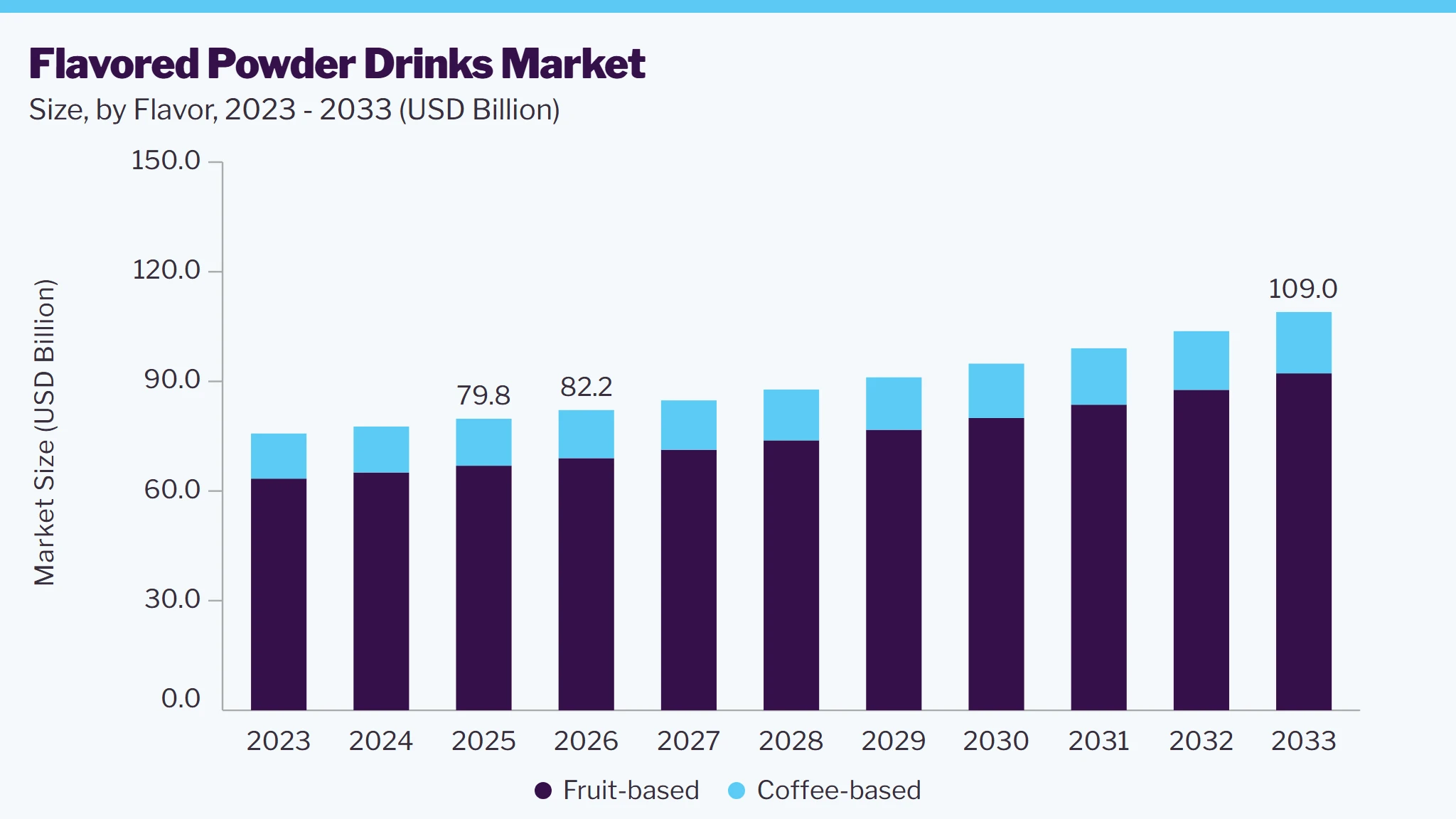
The global flavored powder drinks market size was valued at USD 79.8 billion in 2025 and projected to grow from USD 82.2 billion in 2026 to USD 109.0 billion by 2033 at a CAGR of 4.1% from 2026 to 2033. Asia Pacific dominated the market, accounting for a revenue share of 42.1% in 2025. Growth in the global flavored powder market is driven by the growing use of powdered flavoring agents across processed foods, snacks, bakery products, beverages, seasonings, and ready-to-eat meals.
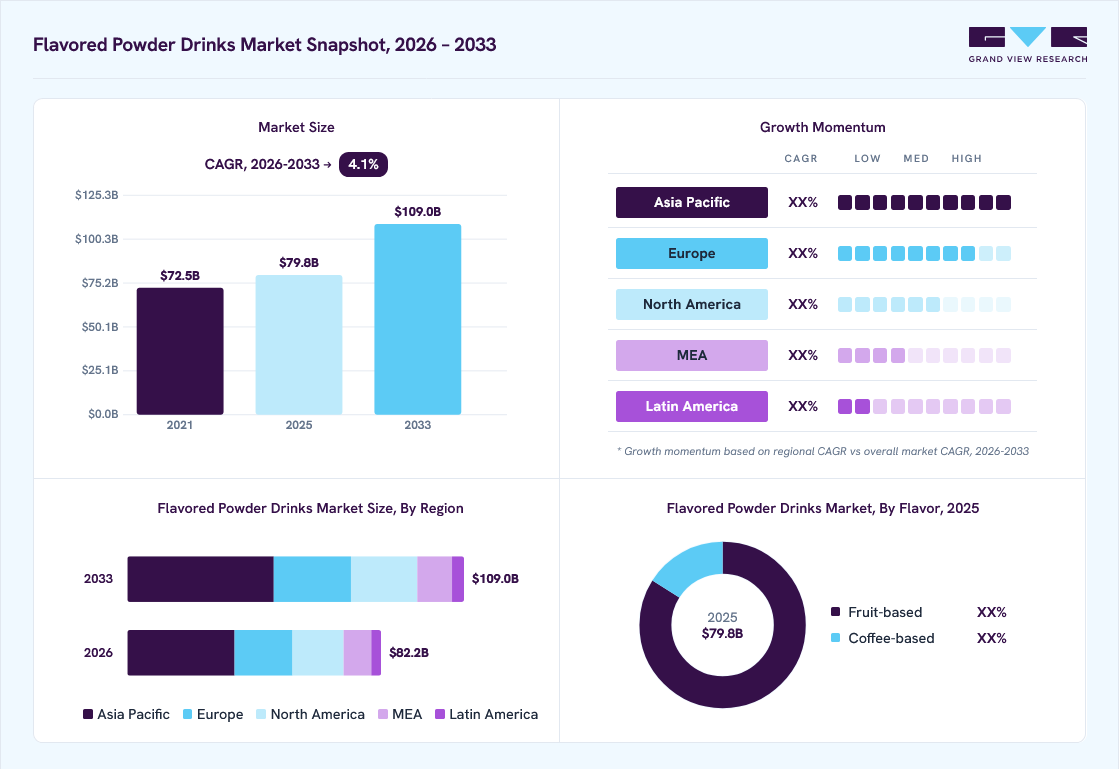 Source: Grand View Research, IR Documents, Primary Interviews, Paid DatabasesTo learn more about this report,
 Download Free Sample Report
Key Market Trends & Insights
- By flavor: Fruit-based market accounted for the largest revenue share of 83.9% in 2025.
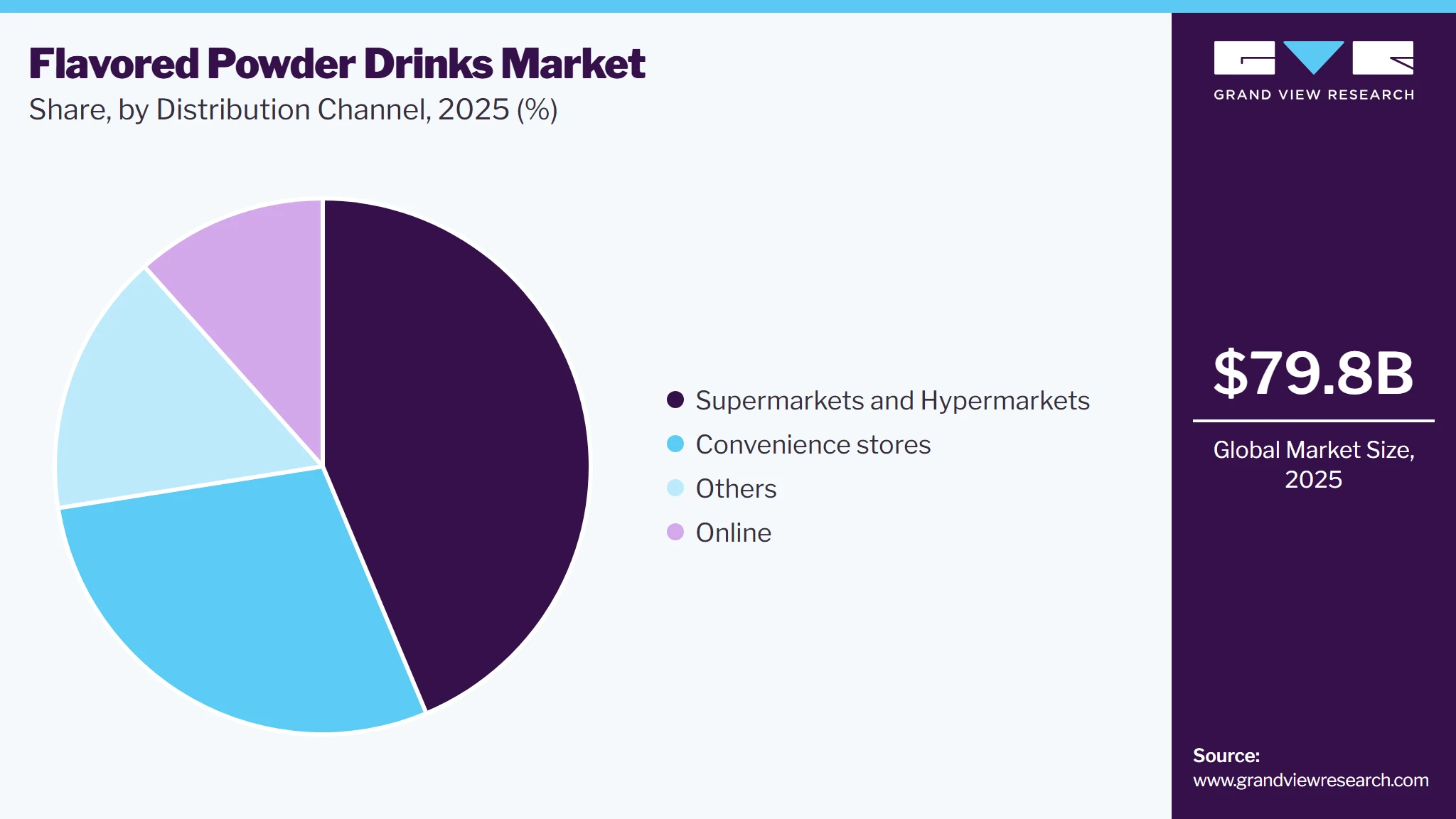
- By distribution channel: Supermarkets and hypermarkets held the largest share of 43.7% in 2025.
Regional Highlights
- Largest Region: Asia Pacific (42.1% revenue share, 2025)
- By country: China held the largest market share in 2025.
Market Size & Forecast
- Market size in 2025: USD 79.8 Billion
- Estimated market size in 2026: USD 82.2 billion
- Projected market size by 2033: USD 109.0 billion
- CAGR (2026-2033): 4.1%
Prism AI by Grand View Research Free to tryAsk a question about the flavored powder drinks marketTry asking✓Every figure cited from GVR research Prefer the report? Download free sample →The rising popularity of ready-to-mix drinks and ready-to-eat foods is enhancing global sales. Consumers who have busy work schedules can easily mix their favorite powder flavors on the go during their breakfast and enjoy healthy snacks. Powdered beverages do not require any specific temperature to maintain quality or shelf life, which makes them suitable for traveling, camping, and similar occasions are some of the factors surging the demands in the industry.
 To learn more about this report, Download Free Sample Report
Flavored powder drinks are the powder form of beverages which is one of the ways of preservation. It is made from the dried pulp of fruits and added preservatives for improving the shelf life of the flavors. These powders can be added with water, milk, coffee, or some other mixtures. The instant ready-to-drink formula is highly demanded among the students and working population to intake proteins, and vitamins with the requirement to hydrate body fluids. Besides these features, powdered drinks offer the convenience of transportation and storage increasing their adoption among consumers.
Changing consumer preferences are encouraging flavor powder manufacturers to develop formulations that cater to demand for less-sweet products and botanical ingredients. Around 71% of global consumers reported a preference for less-sweet products, while 51% expressed interest in botanical ingredients. These preferences are creating opportunities for manufacturers to develop herbal, floral, and plant-derived flavor powders for food and beverage applications, allowing brands to offer differentiated taste profiles that align with evolving consumer expectations.
In addition, manufacturers are focusing on developing flavor powders with natural flavoring agents, botanical extracts, and customized taste profiles to meet the formulation requirements of food and beverage producers. Flavor powders offer advantages such as convenient handling, ease of blending, and suitability for dry mixes, seasonings, bakery products, confectionery, and instant beverages. The growing use of powdered ingredients in packaged food formulations is also encouraging suppliers to develop products with improved flavor consistency, stability, and solubility. However, manufacturers must address challenges related to flavor retention during processing, ingredient compatibility, and maintaining consistent taste across different applications.
Market Dynamics
Consumers are showing greater interest in powdered beverages that offer convenience, hydration, and functional benefits. Powdered drink mixes are lightweight, easy to store, and simple to prepare, making them suitable for daily consumption, sports activities, travel, and on-the-go lifestyles. The availability of different flavors and formulations allows manufacturers to cater to varied consumer preferences across energy drinks, electrolyte beverages, fruit-flavored drinks, and nutritional mixes. In addition, the demand for convenient beverage preparation is encouraging brands to develop products containing vitamins, minerals, electrolytes, and other functional ingredients. These factors are creating opportunities for manufacturers to diversify their product portfolios and cater to consumers seeking convenient alternatives to ready-to-drink beverages.
Concerns regarding added sugar and artificial ingredients can create challenges for manufacturers of powdered drink mixes, particularly those producing sweetened fruit-flavored beverages and instant drink concentrates. Consumers seeking healthier beverage options may prefer products with reduced sugar content, recognizable ingredients, and transparent nutritional labeling. Reformulating products to reduce sweetness while maintaining flavor, solubility, and consumer acceptance can require adjustments to ingredient combinations and production processes. Manufacturers must also comply with food labeling, ingredient declaration, and product classification requirements across different markets. These considerations can increase formulation complexity and create additional challenges for brands seeking to maintain product quality, affordability, and consumer trust.
The growing interest in hydration, wellness, and convenient beverage preparation creates opportunities for manufacturers to develop powdered drink mixes with reduced sugar, electrolytes, vitamins, and other functional ingredients. In 2024, U.S. sports drink mix sales increased by 20.3%, while energy drink mix sales grew by 9.9%. Product innovation is also creating opportunities to combine familiar fruit flavors with alternative sweeteners and functional benefits. For example, Ocean Spray and Dyla Brands introduced powdered drink mixes with zero grams of sugar, using flavors inspired by established cranberry juice blends. Such developments demonstrate how manufacturers can extend familiar beverage brands into portable powder formats and cater to consumers seeking convenient alternatives to ready-to-drink beverages.
Analyst Perspective
The flavored powder drinks market is expected to benefit from demand for convenient beverage options, diverse flavor choices, and functional formulations. Manufacturers are focusing on product innovation, including electrolyte blends, vitamin-enriched powders, and reduced-sugar alternatives, to address changing consumer preferences. The expansion of online retail and wider product availability across supermarkets and convenience stores is also creating opportunities for market participants. However, concerns about sugar content, artificial ingredients, taste consistency, and product solubility may influence purchasing decisions. Companies that balance flavor quality, affordability, convenience, and clear ingredient labeling are better positioned to maintain consumer interest and compete in the evolving market.
Consumer Insights
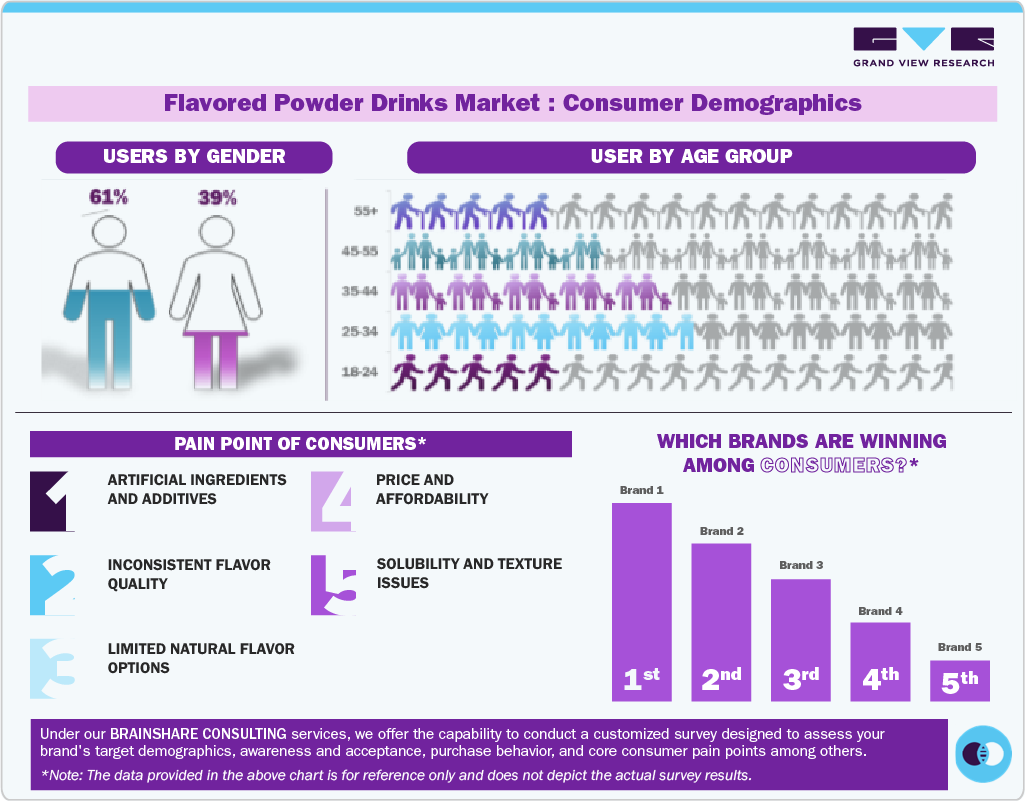
Consumers are showing greater interest in food and beverage products that offer distinctive taste experiences, convenient preparation, and a wider choice of flavor profiles. Preferences for sweet, savory, spicy, fruity, herbal, and exotic flavors influence purchasing decisions across snacks, bakery products, confectionery, instant beverages, and ready-to-eat meals. Consumers are also exploring products inspired by regional cuisines and international food cultures, encouraging manufacturers to introduce new flavor combinations. The preference for less-sweet products and interest in botanical ingredients are creating opportunities for flavor powders derived from herbs, spices, fruits, and plant-based sources. These preferences encourage food manufacturers to diversify flavor options while maintaining consistency across product formulations.
 To learn more about this report, Download Free Sample Report
Convenience, product quality, and versatility also influence consumer acceptance of products containing flavor powders. Powdered flavoring ingredients are suitable for dry mixes, instant drinks, seasoning blends, soups, and packaged snacks because they can be blended into formulations and stored with other dry ingredients. Consumers seeking quick meal preparation and convenient at-home food options contribute to demand for products with consistent taste and easy preparation. At the same time, interest in recognizable ingredients and clear product labeling encourages brands to communicate flavor sources and ingredient composition. Manufacturers must balance taste intensity, aroma, sweetness, and ingredient quality to meet different preferences while developing flavor powder formulations for diverse food and beverage applications.
Flavor Insights
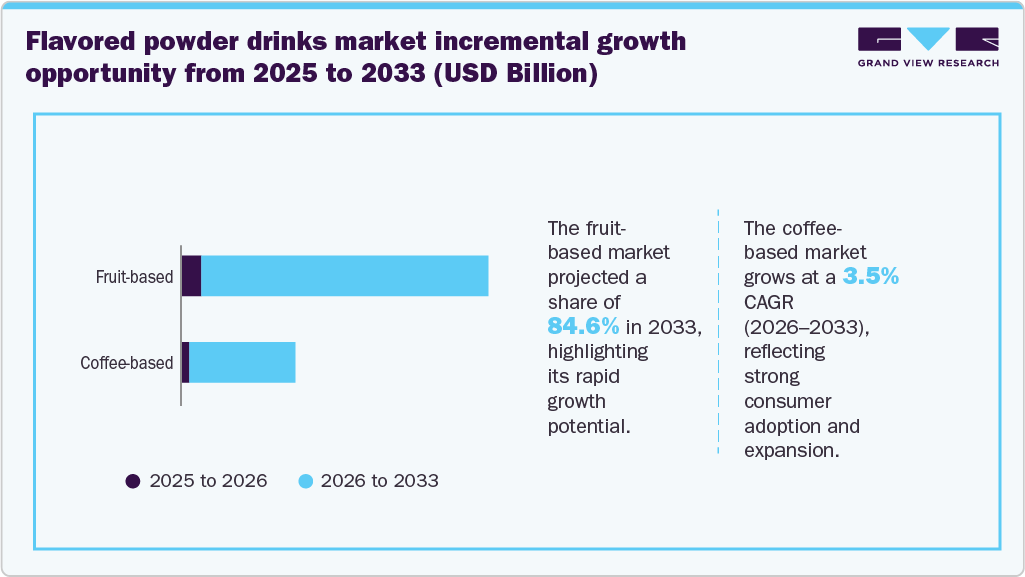
The fruit-based market accounted for the largest share of 83.9% of revenue in 2025. This is attributed to the widespread consumer preference for familiar fruit flavors, such as orange, mango, berry, and mixed fruit, across powdered beverage mixes. Fruit-based lemon, mangosteens offer a variety of taste profiles and can be used in instant drinks, hydration powders, energy beverages, and nutritional drink mixes. The availability of both traditional and exotic fruit flavors allows manufacturers to cater to diverse consumer preferences and introduce new product variants. In addition, the versatility of fruit flavors across age groups and beverage applications contributes to their strong presence in the powdered drink mixes market.
 To learn more about this report, Download Free Sample Report
The coffee-based drinks segment is projected to growing at the significantly CAGR of 3.5% from 2026 to 2033. This growth is driven by the continued demand for convenient coffee beverages that can be prepared quickly at home, in offices, and while travelling. Coffee-based powdered drink mixes offer ease of preparation, longer storage convenience, and compatibility with different formulations, such as instant cappuccino, latte, mocha, and flavored coffee drinks. The availability of variants with added milk powder, sweeteners, and flavoring ingredients allows manufacturers to cater to diverse taste preferences. In addition, product innovation involving reduced-sugar formulations, premium coffee flavors, and single-serve sachets is creating opportunities for manufacturers to attract consumers seeking convenient alternatives to freshly prepared coffee and ready-to-drink coffee products.
Distribution Channel Insights
Supermarkets and hypermarkets held the largest share of 43.7% of global revenue in the flavored powder drinks market in 2025. Supermarkets and hypermarkets maintain a strong position due to their broad product availability and established distribution networks. Consumers can compare different brands, flavors, pack sizes, and price points in one location, making these outlets a convenient option for purchasing flavored powder drinks. Retailers also offer promotional discounts, multipacks, and seasonal deals that encourage product trials and repeat purchases. In addition, the availability of established and private-label brands across different price ranges enables retailers to cater to diverse household budgets and consumption preferences.
 To learn more about this report, Download Free Sample Report
The online channel in the flavored powder drinks market is projected to grow at the fastest CAGR of 5.3% from 2026 to 2033. The growth of the online channel is driven by the convenience of home delivery, access to a wider range of brands, and the availability of product information for comparing flavors, ingredients, and prices. E-commerce platforms enable consumers to explore specialized beverage mixes, sugar-free variants, coffee powders, and functional drink formulations that may have limited availability in physical stores. Discounts, subscription options, and multipack purchases can also encourage repeat buying. In addition, direct-to-consumer websites allow manufacturers to introduce new flavors, reach niche consumer groups, and build stronger customer relationships, creating opportunities for online sales of flavored powder drinks.
Regional Insights
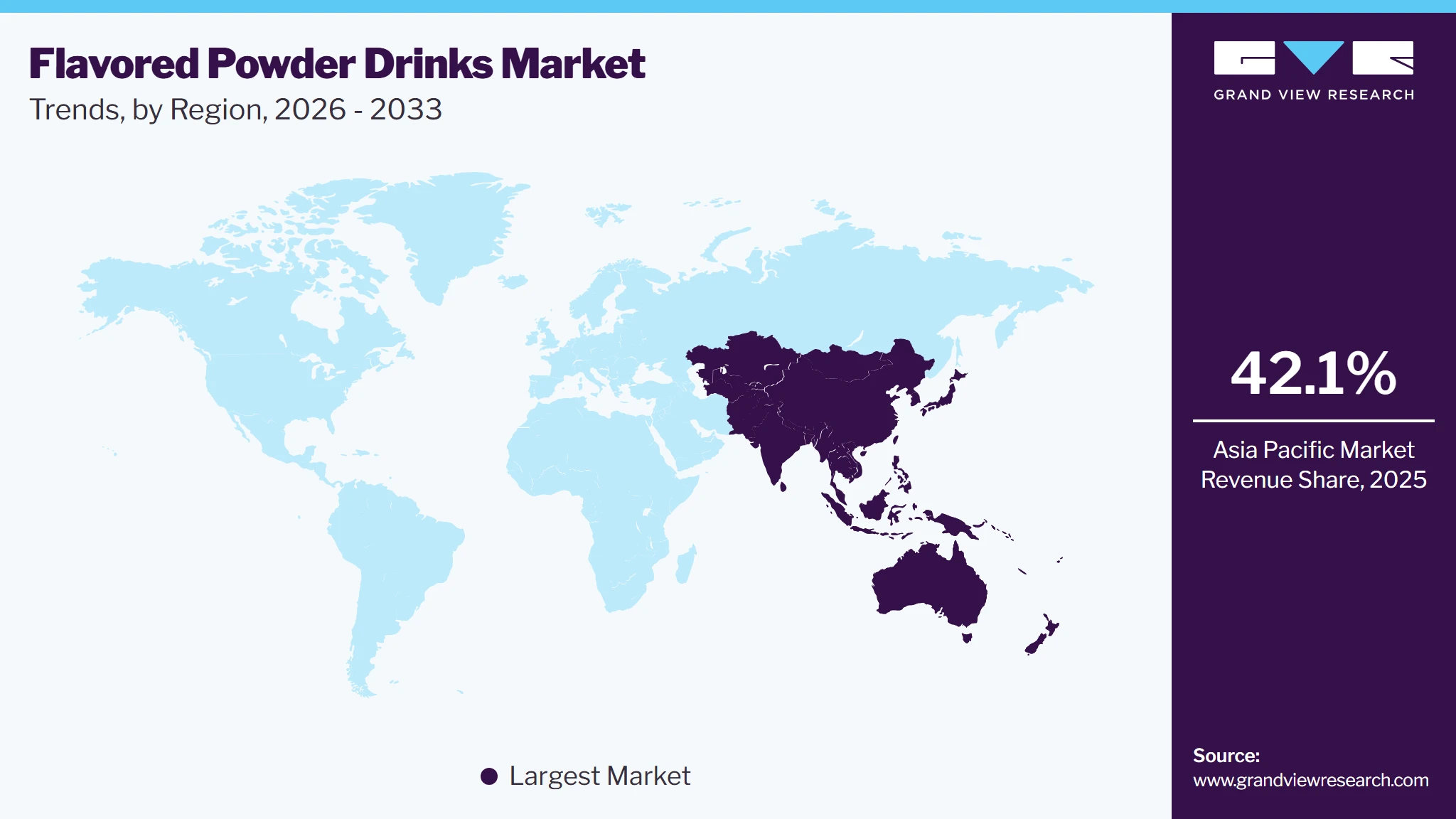
The Asia Pacific flavored powder drinks market accounted for the largest market share of 42.1% in 2025, supported by the widespread consumption of instant beverages and the availability of diverse flavor options across regional markets. Demand for affordable and convenient beverage products, combined with established distribution networks and a large consumer base, contributes to market activity. Manufacturers offer fruit-based drinks, milk-based beverage powders, instant coffee mixes, and other flavored formulations to cater to varied regional tastes and consumption habits.
 To learn more about this report, Download Free Sample Report
China Flavored Powder Drinks Market
The China led the Asia Pacific flavored powder drinks market, accounting for a significant share of 36.6% in 2025. The country's position is supported by a broad packaged beverage industry, established retail and e-commerce networks, and demand for convenient beverage preparation. Manufacturers cater to local preferences through fruit-flavored drinks, milk-based powders, tea mixes, and instant coffee products. The availability of different pack sizes and price points also enables brands to reach consumers across varied income groups and purchasing channels.
North America Flavored Powder Drinks Market
The North America flavored powder drinks market accounted for a market share of 20.2% in 2025, supported by established packaged beverage consumption patterns and the availability of diverse powdered drink formulations. Demand for convenient beverage options, flavored hydration mixes, instant coffee products, and sugar-free alternatives contributes to product adoption across the region. Established retail networks and e-commerce platforms also provide consumers with access to a wide range of brands and flavor varieties.
The U.S. led the North America flavored powder drinks market, accounting for a significant share of 84.7% in 2025. Its leading position is associated with the availability of established beverage brands, broad retail distribution, and consumer demand for convenient drink preparation. Manufacturers offer products across fruit-flavored drinks, powdered coffee, electrolyte mixes, and functional beverages to cater to different consumption occasions. Product innovation involving reduced-sugar formulations, portable sachets, and specialized hydration mixes also contributes to the diversity of the U.S. market.
Europe Flavored Powder Drinks Market
The Europe flavored powder drinks market accounted for a market share of 22.8% in 2025. Demand is supported by the availability of instant beverage products, established grocery retail networks, and consumer interest in convenient drink preparation. Differences in regional taste preferences encourage manufacturers to offer a range of fruit, coffee, chocolate, and other flavored formulations. Product development focused on ingredient transparency, reduced sugar, and alternative flavor combinations also creates opportunities across European markets.
The U.K. led the European flavored powder drinks market, accounting for a significant share of 24.0% in 2025. It is influenced by the availability of instant beverages, fruit-flavored drink mixes, and convenient products for household consumption. Supermarkets, convenience stores, and online retailers provide access to different brands and product formats. Manufacturers can also address consumer preferences through reduced-sugar options, varied flavor profiles, and single-serve packaging suited to busy lifestyles.
Central & South America Flavored Powder Drinks Market
The Central & South America flavored powder drinks market is projected to grow at a CAGR of 2.9% from 2026 to 2033. Market development is supported by demand for affordable beverage options, the availability of fruit-inspired flavors, and the use of powdered drink mixes in household consumption. Manufacturers can cater to regional preferences through tropical fruit flavors, convenient sachets, and products offered at different price points. Supermarkets, neighborhood retailers, and e-commerce platforms provide opportunities to expand product availability across the regio.
Middle East & Africa Flavored Powder Drinks Market
The Middle East & Africa flavored powder drinks industry is expected to grow at a CAGR of 3.3% from 2026 to 2033. Demand is influenced by the need for convenient beverages, varied consumer taste preferences, and the availability of powdered products that are easy to store and prepare. Fruit-flavored drink mixes and instant beverage powders offer manufacturers opportunities to serve different consumption occasions and price segments. Wider retail distribution and the introduction of new flavor combinations and reduced sugar formulations may also contribute to market development across the region.
Key Flavored Powder Drinks Company Insights
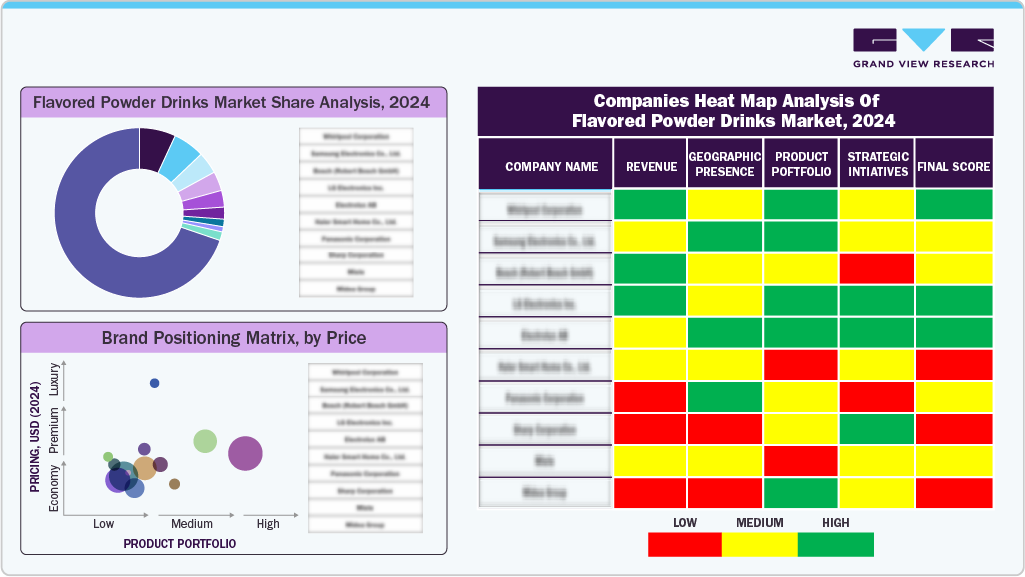
The global flavored powder drinks market is characterized by the presence of established beverage companies and specialized manufacturers competing through product innovation, brand recognition, flavor variety, pricing, and distribution networks. Key players offer a diverse range of powdered beverages, including fruit-flavored drink mixes, instant coffee, chocolate drinks, and functional hydration powders. Companies are focusing on new flavor introductions, convenient packaging formats, reduced-sugar formulations, and products tailored to regional consumer preferences to differentiate their offerings. Supermarkets, convenience stores, and e-commerce platforms remain important channels for reaching consumers, while direct-to-consumer sales provide opportunities to expand product availability.
Market competition also reflects differences in product positioning, ingredient formulations, and geographic reach. Established brands benefit from consumer familiarity and extensive distribution networks, while specialized companies can target specific preferences through electrolyte mixes, sugar-free beverages, premium coffee powders, and other functional formulations. Strategic partnerships, product launches, and expansion into online retail channels provide opportunities for companies to broaden their customer base. The competitive position of individual players varies by product category and region, and company-level market shares should be assessed using comparable, independently verified data.
 To learn more about this report, Download Free Sample Report
Key Flavored Powder Drinks Companies:
The following key companies have been profiled for this study on the flavored powder drinks market.
-
Nestle S.A.
-
The Coca-Cola Company
-
Mondelez International
-
PepsiCo, Inc.
-
Mars, Inc.
-
GlaxoSmithKline Plc
-
Unilever
-
Abbott
-
Cargill Inc.
-
Kraft Heinz
Competitive Benchmarking
Category
Operating Strategies
Competitive Edge
Weakness
Established Players (Nestlé S.A., The Coca-Cola Company, Mondelēz International, PepsiCo, Inc., Unilever, The Kraft Heinz Company)
- Expand flavored powder drink portfolios through new flavors, functional formulations, reduced-sugar options, convenient packaging, and wider retail and online distribution.
- Strong brand recognition, diversified product portfolios, established distribution networks, manufacturing capabilities, and broad geographic presence.
- Exposure to ingredient cost fluctuations, intense competition, changing consumer preferences, and regulatory requirements for product formulation and labeling.
Emerging / Specialized Players (Mars, Inc., GlaxoSmithKline plc, Abbott, Cargill Inc.)
- Focus on selected nutrition, functional beverage, food ingredient, or adjacent product categories that may complement the powdered drinks sector.
- Specialized expertise in nutrition, ingredients, product development, and established business-to-business or consumer relationships.
- Limited brand recognition, narrower distribution networks, and fewer resources for large-scale production and marketing.
Recent Developments
-
In January 2025, Celsius Holdings, Inc. introduced CELSIUS HYDRATION, a caffeine-free electrolyte powder stick range featuring zero sugar, essential electrolytes, and B vitamins, expanding its functional beverage offerings into powdered hydration products.
-
In December 2024, Ocean Spray partnered with Dyla Brands to launch powdered drink mixes featuring cranberry-inspired flavors and zero grams of sugar per serving, extending its fruit beverage portfolio into convenient, single-serve drink mixes
-
In September 2024, PepsiCo launched Gatorade Hydration Booster, an electrolyte powdered drink mixes available in multiple fruit flavors, expanding its powdered beverage portfolio into everyday hydration.
Flavored Powder Drinks Market Report Scope
Report Attribute
Details
Market size in 2025
USD 79.8 billion
Estimated market size in 2026
USD 82.2 billion
Projected market size by 2033
USD 109.0 billion
Growth Rate (Revenue)
CAGR of 4.1% from 2026 to 2033
Actual Data
2021 - 2025
Forecast period
2026 - 2033
Quantitative (Revenue) units
Revenue in USD million/billion and CAGR from 2026 to 2033
Report coverage
Revenue forecast, company ranking, competitive landscape, growth factors, and trends
Segments covered
Flavor, distribution channel
Regional Scope
North America; Europe; Asia-Pacific; Central & South America; Middle East & Africa
Country scope
U.S.; Canada; Mexico; U.K.; Germany; France; Italy; Spain; China; Japan; India; Thailand; Indonesia; South Africa; Brazil
Key companies profiled
Nestlé S.A.; The Coca-Cola Company; Mondelēz International; PepsiCo, Inc.; Mars, Inc.; GlaxoSmithKline plc; Unilever; Abbott; Cargill Inc.; and Kraft Heinz
Customization scope
Free report customization (equivalent up to 8 analysts’ working days) with purchase. Addition or alteration to country, regional & segment scope.
Pricing and purchase options
Avail customized purchase options to meet your exact research needs. Explore purchase options
Global Flavored Powder Drinks Market Report Segmentation
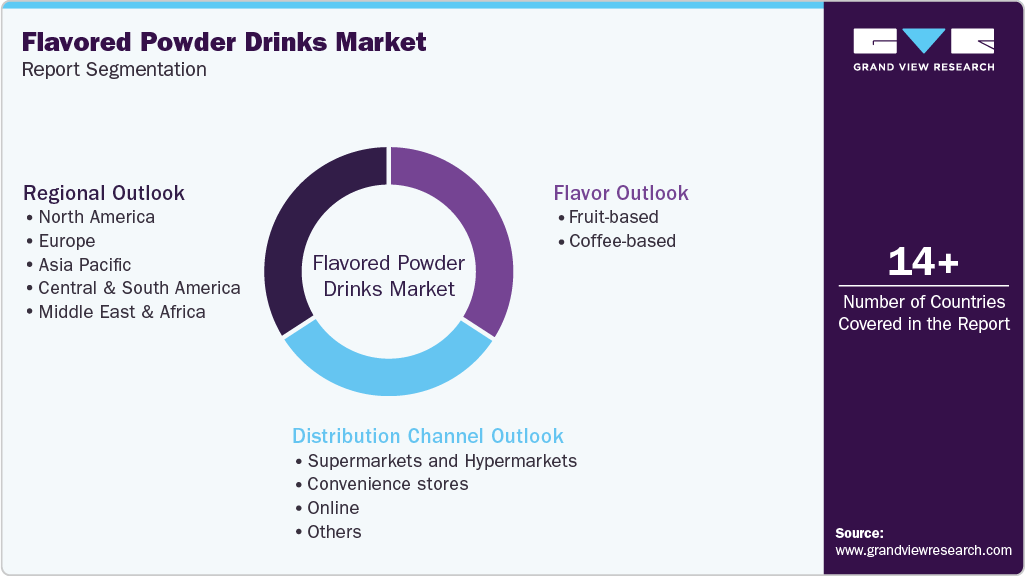
This report forecasts revenue growth at the regional and country levels and provides an analysis of the latest industry trends and opportunities in each of the sub-segments from 2021 to 2033. For the purpose of this study, Grand View Research has segmented the global flavored powder drinks market report on the basis of flavor, distribution channel, and region.
 To learn more about this report, Download Free Sample Report
-
Flavor Outlook (Revenue, USD Million, 2021 - 2033)
-
Fruit-based
-
Coffee-based
-
-
Distribution Channel Outlook (Revenue, USD Million, 2021 - 2033)
-
Supermarkets and Hypermarkets
-
Convenience stores
-
Online
-
Others
-
-
Regional Outlook (Revenue, USD Million, 2021 - 2033)
-
North America
-
U.S.
-
Canada
-
Mexico
-
-
Europe
-
U.K.
-
Germany
-
France
-
Italy
-
Spain
-
-
Asia Pacific
-
China
-
Japan
-
India
-
Thailand
-
Indonesia
-
-
Central & South America
-
Brazil
-
-
Middle East & Africa
-
South Africa
-
-
Research Methodology
The flavored powder drinks market figures in this report are based on a proven research process that combines executive interviews with secondary research from proprietary databases, company filings, and recognized regulatory and institutional sources. Market size is built through value-chain sizing-reconciling supply-side and demand-side estimates-and triangulated with bottom-up and top-down approaches. Every estimate passes multiple levels of expert validation before publication, with each flavored powder drinks segment quantified using the revenue-capture definitions in the table below.
Segment Definition
Segment - Type
Revenue capture definition
Fruit-based
This segment includes the sales of flavored powder drinks made with fruit flavors such as orange, lemon, mango, strawberry, and mixed berries.
Coffee-based
This segment includes the sales of powdered coffee drinks, such as cappuccino, latte, and mocha, formulated with coffee extracts and other ingredients.
Segment - Distribution Channel
Revenue capture definition
Hypermarkets & Supermarkets
This segment includes the sales of flavored powder drinks through large retail stores offering multiple brands, flavors, and pack sizes.
Convenience Stores
This segment includes the sales of flavored powder drinks through small retail outlets catering to quick and convenient purchases.
Online
This segment includes the sales of flavored powder drinks through e-commerce platforms, online grocery stores, and brand websites.
Others
This segment includes the sales of flavored powder drinks through specialty stores, pharmacies, wholesalers, and foodservice distributors.
Estimation Model
Layer
Key Question
Description
Target Population Layer
Who consumes flavored powder drinks?
Flavored powder drinks are consumed by children, teenagers, and adults due to their affordability, convenience, and flavor variety, serving as easy-to-prepare beverages for daily refreshment and family consumption.
Distribution Access Layer
Where can consumers purchase powdered drinks?
Consumers access these products through supermarkets, grocery stores, convenience retailers, wholesale outlets, and online platforms offering varied brands and pack sizes.
Purchase Preference Layer
What influences consumer purchasing decisions?
Purchasing decisions depend on flavor variety, sweetness, affordability, brand familiarity, ease of preparation, package size, and preferences for reduced-sugar or fortified formulations.
Monetisation Layer
How much revenue is generated?
Revenue is generated through single-serve sachets, family-size packs, bulk containers, multipacks, premium beverage mixes, and repeat purchases across retail and e-commerce channels.
Delivered Customizations
This report has been delivered with the following In-depth customizations
Client Request
Customization Delivered
Value Adds
Flavored Powder Drinks Regulatory & Market Impact Analysis
Evaluated food safety regulations, ingredient standards, sugar-related policies, nutritional labelling, and their impact on product demand and market competition.
Supports regulatory compliance, risk mitigation, and product portfolio planning across target markets.
Product Innovation & Formulation Opportunity Analysis
Assessed opportunities in new flavor development, sugar-free formulations, fortified drink powders, functional ingredients, packaging formats, and convenient serving sizes.
Helps identify innovation opportunities, improve product differentiation, and align offerings with evolving consumer preferences.
Market Expansion & Distribution Opportunity Assessment
Examined growth opportunities across supermarkets, convenience stores, e-commerce platforms, wholesalers, and emerging retail channels, considering regional demand and distribution reach.
Supports market entry decisions, channel prioritization, and long-term revenue growth planning.
Frequently Asked Questions About This Report
The global flavored powder drinks market size was valued at USD 79.8 billion in 2025 and is estimated at USD 82.2 billion in 2026.
Key factors that are driving the flavored powder drinks market growth include the rising demand among the youth and working population due to the hectic lifestyles, the rising popularity of ready-to-mix drinks and ready-to-eat foods, and powdered drinks offer the convenience of transportation and storage.
Key players include Nestlé S.A.; The Coca-Cola Company; Mondelēz International; PepsiCo, Inc.; Mars, Inc.; GlaxoSmithKline plc; Unilever; Abbott; Cargill Inc.; and Kraft Heinz
The fruit-based market accounted for the largest share of 83.9% of revenue in 2025, while coffee-based drinks segment is the fastest-growing flavor.
Supermarkets and hypermarkets held the largest share of 43.7% in 2025, while online channel segment is the fastest-growing distribution channel.
The global flavored powder drinks market is expected to grow at a CAGR of of 4.1% from 2026 to 2033, reaching USD 109.0 billion by 2033.
Asia Pacific dominated the market, accounting for a revenue share of 42.1% in 2025.
About the Author(s)
Consumer F&B Research Team
Consumer Goods · Consumer F&BThis report was authored by the consumer f&b research team at Grand View Research - comprising two research analysts, one senior research analyst, and one industry expert - with specialized expertise in the consumer f&b segment of the consumer goods industry. All findings are based on proprietary consumer goods databases, executive interviews, and regulatory analysis, subject to internal peer review prior to publication.
Last Updated:
Speak to Analyst

Customize this report to your needs - add regions, segments, or data points, with 20% free customization.
Or view our licence options:


ISO 9001:2015 & 27001:2022 Certified
We are GDPR and CCPA compliant! Your transaction & personal information is safe and secure. For more details, please read our privacy policy.


