
- Home
- »
- Consumer F&B
- »
-
Food Away From Home Market Size Report, 2026-2033GVR Report cover

Food Away From Home Market (2026 - 2033)
Size, Share & Trends Analysis Report By Type (Hospitality, Catering), By Region (North America, Asia Pacific, Central & South America, Middle East & Africa), And Segment Forecasts
Market Size, 2025
$4.7TMarket Estimate, 2026
$4.9TMarket Forecast, 2033
$7.2TCAGR, 2026–2033
5.4%Food Away From Home Market Summary
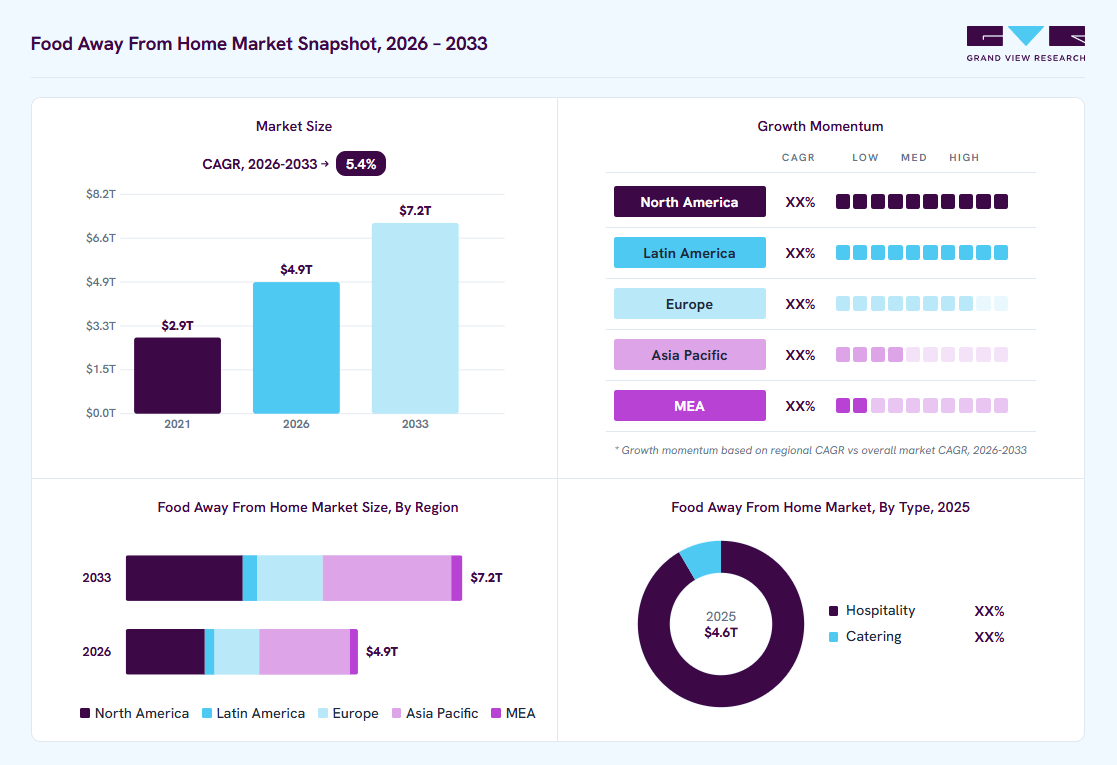
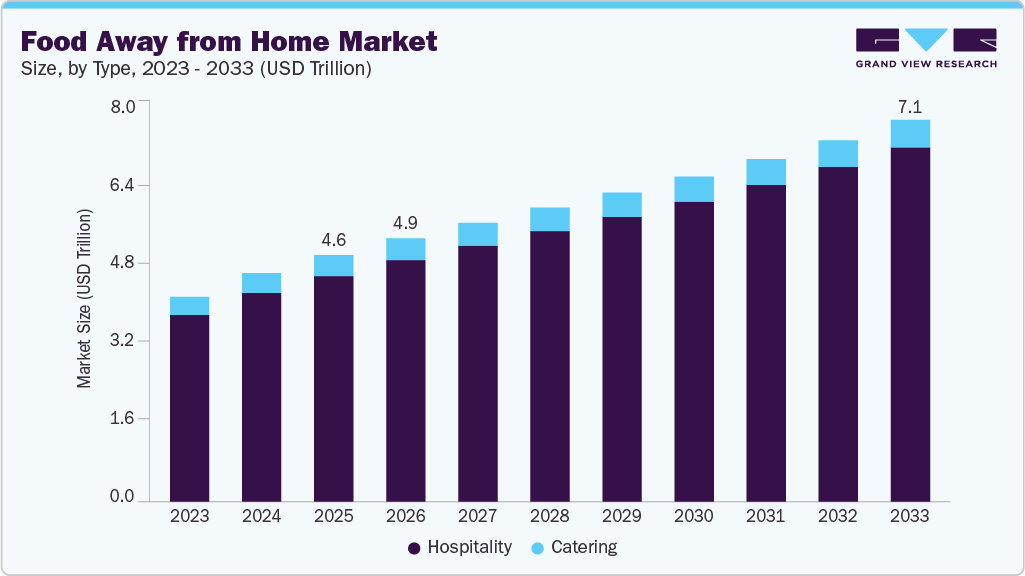
The global food away from home market size was valued at USD 4.7 trillion in 2025 and is projected to grow from USD 4.9 trillion in 2026 to USD 7.2 trillion by 2033, at a CAGR of 5.4% from 2026 to 2033. The market in Asia Pacific dominated with a revenue share of 39.2% in 2025. The industry is primarily driven by changing consumer lifestyles, including busier schedules and a growing preference for convenience, which boosts demand for dining out and takeout.
 Source: Grand View Research, IR Documents, Primary Interviews, Paid DatabasesTo learn more about this report,
 Download Free Sample Report
Key Market Trends & Insights
- By type: Hospitality segment held the largest market share of 91.5% in 2025.
Regional Highlights
- Largest regional market: Asia Pacific (39.2% revenue share, 2025)
- Fastest-growing regional market: North America (highest CAGR, 2026-2033)
- By country: China held the largest market share in 2025
Market Size & Forecast
- Market size in 2025: USD 4.7 Trillion
- Estimated market size in 2026: USD 4.9 Trillion
- Projected market size by 2033: USD 7.2 Trillion
- CAGR (2026-2033): 5.4%
Prism AI by Grand View Research Free to tryAsk a question about the food away from home marketTry asking✓Every figure cited from GVR research Prefer the report? Download free sample →Rising disposable incomes and increased urbanization also encourage spending on restaurants, cafés, and quick-service outlets. The industry is driven by menu innovation and premiumization, with consumers seeking healthier, organic, and customizable meal options. Technological integration, such as self-order kiosks, mobile payments, and loyalty programs, enhances customer convenience and engagement. For instance, according to the data published in April 2026, Taco Bell is expanding AI-powered drive-thru systems across more locations to improve order accuracy, speed, and overall customer experience. This initiative by Yum! Brands reflect a broader push toward automation to enhance convenience and engagement in quick-service dining.
 To learn more about this report, Download Free Sample Report
Moreover, labor market dynamics, including longer working hours and dual-income households, increase reliance on external food services. Moreover, aggressive marketing strategies and expansion of chain outlets into suburban and smaller cities continue to widen the customer base.
The industry is also propelled by tourism growth and higher travel frequency, which boosts spending at restaurants, hotels, and entertainment venues. Also, it has become an essential part of daily life, driven by convenience, variety, and experience. Consumers engage with diverse foodservice formats based on occasion, including full-service restaurants for social or premium dining, quick service restaurants and takeaway for speed and affordability, and cafés or pubs for casual interactions. Beyond traditional outlets, Food away from home consumption extends to hotels, leisure venues, sports events, transit, and institutional settings such as workplaces, hospitals, and schools, making it a consistent component of everyday consumption rather than an occasional choice.
 To learn more about this report, Download Free Sample Report
This growing dependence is largely influenced by evolving lifestyles. Busy schedules, urbanization, and dual-income households have reduced time for home cooking, increasing demand for accessible, ready-to-eat options. Rising disposable incomes and exposure to global cuisines have further elevated expectations regarding taste, quality, and variety. Digital platforms have strengthened this shift by enabling convenient ordering, customization, and rapid delivery, while institutional environments continue to drive demand for reliable and hygienic food solutions.
Consumers are increasingly prioritizing health, transparency, and sustainability. Demand for balanced meals, clean-label products, and personalized options is rising alongside interest in premium experiences. While food away from home offers convenience and variety, consumers remain mindful of pricing, nutrition, and consistency, shaping a more informed and experience-driven market.
Market Dynamics
The expansion of quick service restaurants and digital food delivery platforms has significantly strengthened the food-away-from-home market by enhancing convenience, speed, and accessibility. Global and regional QSR chains such as McDonald's, Burger King, and Domino's Pizza have aggressively expanded their store networks and adopted value-driven menus to attract price-sensitive consumers. At the same time, food aggregators like Uber Technologies Inc. (Uber Eats), DoorDash, and in India, platforms such as Zomato Limited have transformed consumer ordering behavior through mobile apps, real-time tracking, and personalized recommendations. This digital ecosystem has reduced friction in food purchasing by enabling doorstep delivery within minutes, thereby increasing order frequency even during non-peak dining hours. Additionally, promotional pricing, subscription-based free delivery models, and app-exclusive discounts have improved affordability. Collectively, the integration of QSR expansion and delivery technology continues to reshape consumer expectations, making FAFH more embedded in everyday consumption patterns.
The industry operates under strict food safety and regulatory frameworks that directly shape operational practices and costs. Regulatory bodies such as the World Health Organization (WHO) and national authorities enforce hygiene standards, safe food handling protocols, and traceability requirements to minimize foodborne illness risks. For instance, the Codex Alimentarius guidelines, jointly established by the WHO and FAO, serve as a global benchmark for food safety practices across foodservice operations. In addition, countries like the United States enforce the Food Safety Modernization Act (FSMA, 2011), while the European Union maintains stringent hygiene regulations under EU Food Law.
Consumer Insights for the U.S. Food Away from Home Market
From a consumer perspective, reliance on the FAFH market has steadily increased as it aligns closely with modern lifestyles and daily routines. Consumers are no longer treating eating out as an occasional activity; instead, it has become a regular part of weekly consumption. Studies from the USDA Economic Research Service show that individuals consume multiple meals outside the home each week, reflecting how deeply integrated FAFH is in everyday behavior. This shift is largely driven by time constraints, with more dual-income households and working individuals preferring convenient, ready-to-eat options over home preparation.
Consumers also rely on FAFH for accessibility and variety. Food service outlets provide consistent availability across locations such as workplaces, travel hubs, and public institutions, making them a dependable option throughout the day. Data indicate that spending on food away from home has, over time, surpassed spending on food prepared at home, highlighting a structural change in consumption patterns. Additionally, restaurants, both full-service and quick-service, account for a significant share of consumer spending, reinforcing their role as primary food access points.
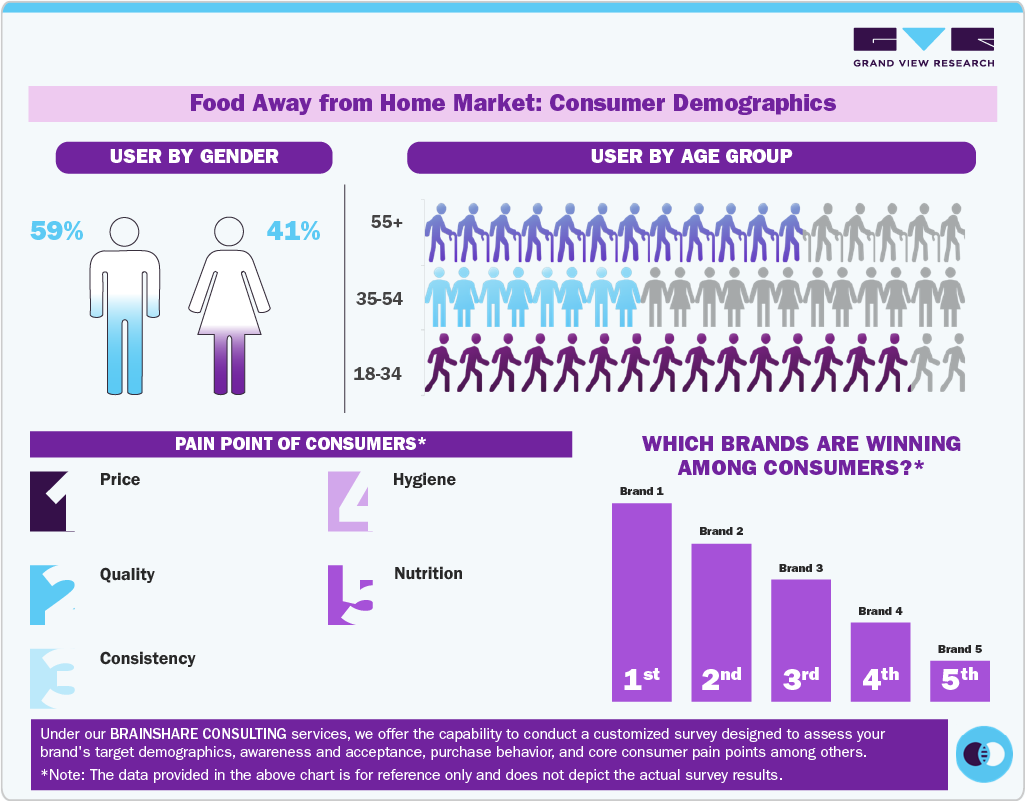
At the same time, consumer expectations are evolving. While convenience remains the core driver, there is increasing attention to food quality, hygiene, and nutritional value. Consumers are balancing the benefits of time savings and variety with concerns around health and cost, making FAFH a necessity-driven yet carefully evaluated choice. Overall, the market reflects a strong consumer dependence shaped by convenience, accessibility, and changing lifestyle needs
 To learn more about this report, Download Free Sample Report
Type Insights
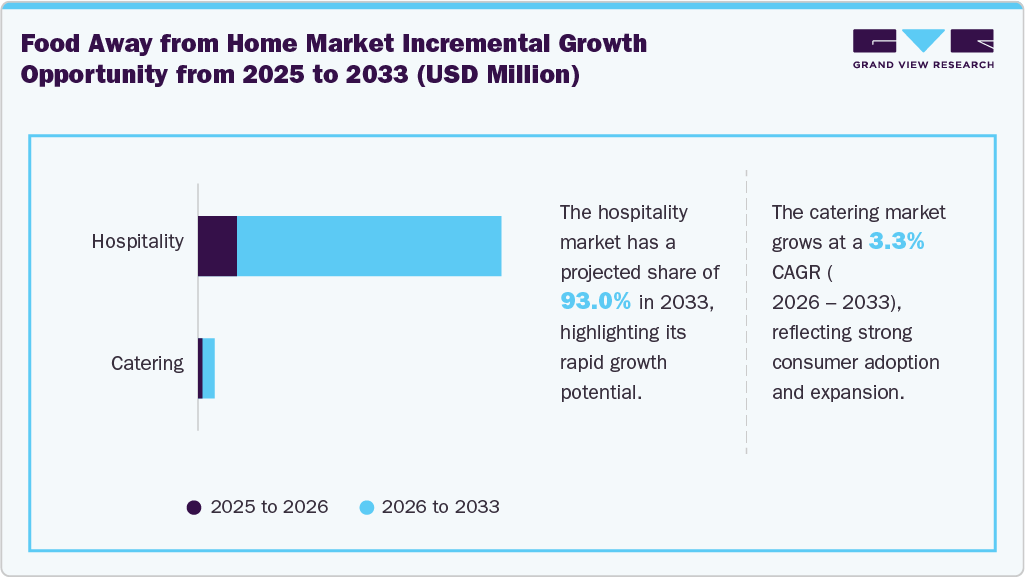
The hospitality segment accounted for the largest share of 91.5% in 2025, driven by the recovery and growth of corporate travel and large-scale business events, which increase food service demand within hotels and venues. Rising focus on experiential stays encourages hotels to enhance in-house dining and premium culinary offerings. Strong performance in meetings, incentives, conferences, and exhibitions (MICE) events supports consistent F&B consumption. Loyalty-driven guest programs and personalized service offerings further strengthen repeat usage of hospitality food services.
 To learn more about this report, Download Free Sample Report
The catering industry is projected to grow at a CAGR of 3.3% from 2026 to 2033, driven by the increasing outsourcing of food services by corporates, educational institutions, and healthcare facilities, as organizations seek to improve efficiency and focus on core operations. In addition, large-scale private events such as weddings and social gatherings continue to generate significant demand for bulk food services. The presence of long-term contracts with institutional clients also provides stable and recurring revenue streams for catering service providers. Furthermore, the growing emphasis on standardized food quality, strict safety compliance, and customized menu planning is supporting the continued expansion and professionalization of the sector.
Regional Insights
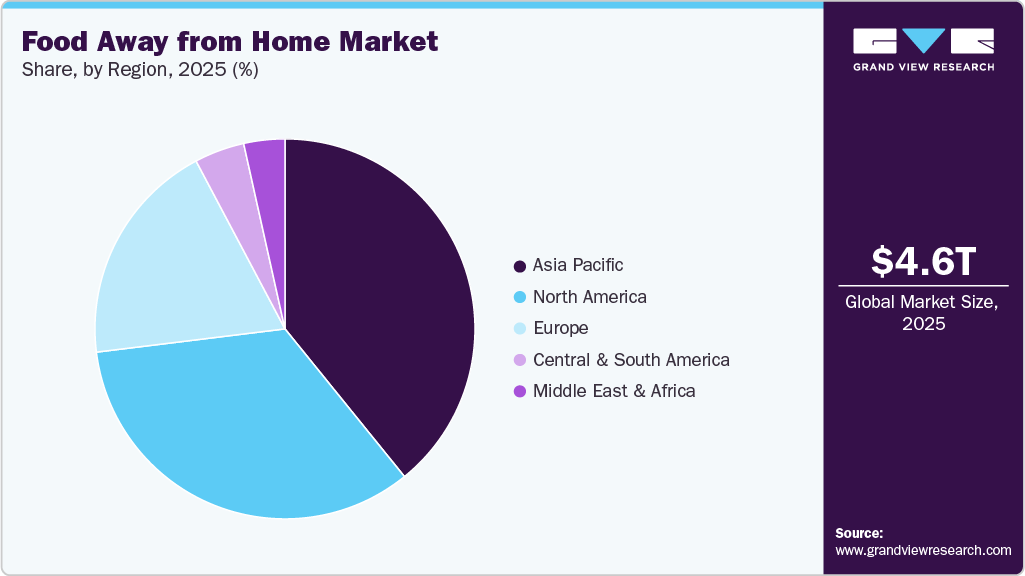
The North America food away from home market accounted for a revenue share of 33.9% in 2025. The North American market is supported by high consumer spending and a strong dining-out culture. Consumers frequently rely on restaurants, quick service outlets, and delivery options as part of their daily routines. Busy lifestyles, higher income levels, and widespread digital adoption encourage frequent ordering and eating out. Convenience, speed, and consistent quality remain key expectations, while interest in healthier options and menu transparency continues to shape purchasing decisions across the region.
U.S. Food Away from Home Market Trends
The food away from home market in the U.S. accounted for a 91.5% revenue share of the North America market in 2025. The market is driven by the steady expansion of quick-service and fast-casual dining formats that align with consumers’ need for speed and affordability. This trend is further supported by affordability pressures, as highlighted by USDA data published in September 2025, which shows that U.S. consumers spent an average of 10.4% of their disposable income on food in 2024. As a result, spending patterns increasingly favor value-oriented and convenient dining options over traditional meal preparation. Together, these factors reinforce sustained demand growth across the food-away-from-home segment.
Continuous innovation in menu offerings, including plant-based and diet-specific options, is attracting a broader customer base. Rising penetration of digital ordering ecosystems and integrated restaurant management systems is improving service efficiency and order accuracy. Additionally, increasing investment from global food service chains and consolidation within the industry is strengthening competitive intensity and market reach.
Mexicofood away from home market is expected to grow at a CAGR of 6.1% from 2026 to 2033. Mexico is experiencing rapid growth as consumers increasingly turn to foodservice for convenience and variety. Urbanization and a growing working population are key factors encouraging this shift. Traditional food culture remains influential, but there is a rising adoption of quick service formats and delivery platforms, reflecting changing consumption habits and greater openness to diverse food choices.
Europe Food Away from Home Market Trends
The food away from home market in Europe is expected to grow at a CAGR of 5.6% from 2026 to 2033. Europe presents a mature, yet evolving market where consumers balance tradition with convenience. Eating out is influenced by social habits, with cafés, casual dining, and local food service playing a strong role. While growth is steady, consumers increasingly seek value, quality, and authentic experiences. Sustainability, portion control, and food sourcing are becoming important considerations, alongside a gradual shift toward digital ordering and takeaway formats in urban areas.
The UK food away from home market accounted for a 14.9% revenue share of Europe in 2025. The UK is seeing strong growth driven by changing lifestyles and increased demand for convenience. Consumers are actively using takeaway and delivery services, supported by digital platforms. There is also a growing preference for diverse cuisines and flexible dining options, while value for money and portion quality remain important considerations in decision-making.
The food away from home market in Italy is expected to grow at a CAGR of 6.0% from 2026 to 2033. Eating out is closely linked to lifestyle and social habits. People value quality, fresh ingredients, and traditional recipes, often choosing restaurants and cafés for relaxed and meaningful dining experiences. While home-cooked meals remain important, busy urban routines are gradually increasing the need for convenient options such as takeaway and quick service formats. Consumers are becoming more open to variety but still expect authenticity and good taste. Spending is thoughtful, with a strong focus on value, portion quality, and overall dining experience.
Asia Pacific Food Away from Home Market Trends
The food away from home market in Asia Pacific accounted for a revenue share of 39.1% in 2025. Consumers are increasingly shifting toward convenient meal options due to time constraints. Street food, quick service outlets, and delivery platforms are widely used, reflecting a blend of affordability and accessibility. Younger consumers are also exploring new cuisines and formats, while digital platforms play a central role in shaping food choices and consumption frequency.
 To learn more about this report, Download Free Sample Report
China food away from home market accounted for a 45.9% revenue share of the Asia-Pacific in 2025. China holds a significant share, driven by its large population and strong adoption of digital food services. Consumers frequently use mobile platforms for ordering and payments, making convenience a key factor. There is also growing interest in premium dining and new food experiences, alongside continued demand for quick and accessible meal options.
The food away from home market in India is expected to grow at a CAGR of 6.3% from 2026 to 2033. India is emerging as a high-growth market due to rapid urbanization and a large young population. Consumers are increasingly relying on food away from home due to busy routines and rising disposable incomes. Quick service restaurants and delivery platforms are gaining strong traction, while demand for affordable, diverse, and convenient meal options continues to expand.
Central and South AmericaFood Away from Home Market Trends
The food away from home market in Central and South America is expected to grow at a CAGR of 5.7% from 2026 to 2033. The market in Central and South America is expanding as consumers gradually increase spending on food outside the home. Urban growth and changing work patterns are encouraging more frequent reliance on convenient meal options. While traditional food habits remain strong, there is a visible shift toward quick service and takeaway formats. Price sensitivity continues to influence decisions, but consumers are also showing growing interest in variety and improved service standards
Middle East & Africa Food Away from Home Market Trends
The food away from home market in the Middle East & Africa region is witnessing steady growth, supported by a young population and increasing urban development. Consumers are engaging more with foodservice due to lifestyle changes and rising exposure to global dining formats. Social dining and group occasions remain important, particularly in urban centers. Convenience, accessibility, and expanding retail and hospitality infrastructure are making FAFH a more regular part of consumer behavior across the region.
Key Food Away from Home Companies Insights
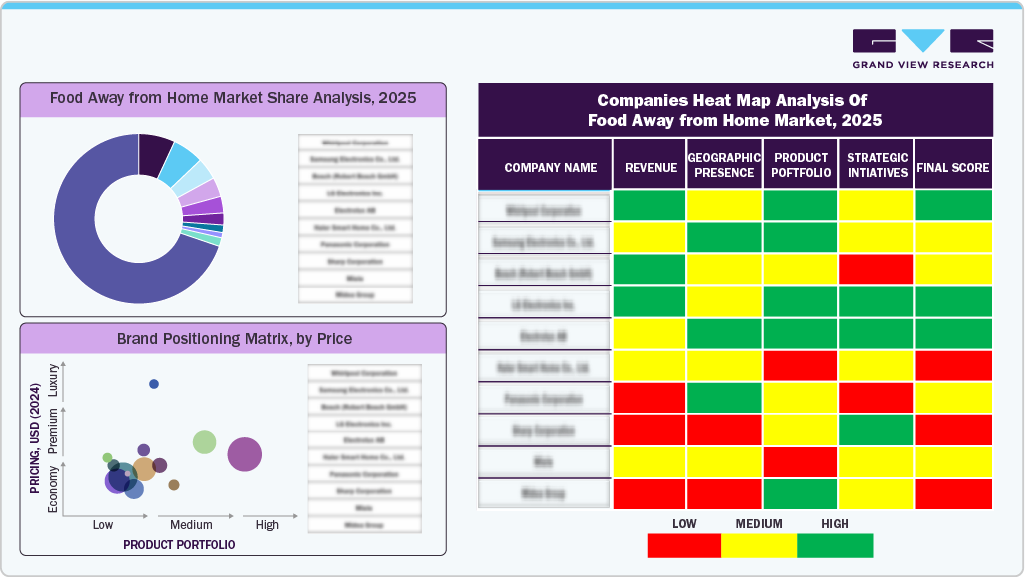
The food away-from-home (FAFH) market is highly concentrated, with a mix of dominant restaurant operators, contract caterers, and foodservice distributors shaping overall share dynamics. Leading quick-service and global brands such as McDonald’s, Starbucks, and Yum! Brands and Restaurant Brands International drive significant consumer volume across major restaurant segments. Institutional food service is strongly influenced by large players like Aramark Corporation, Compass Group PLC, Sodexo S.A, and Elior Group, which collectively serve workplaces, healthcare, and education sectors. Sysco Corporation plays a critical role as the largest food service distributor, enabling supply across the entire FAFH ecosystem. Overall, competition is defined by scale, global reach, and integrated supply chains across both commercial dining and institutional catering.
 To learn more about this report, Download Free Sample Report
Key Food Away From Home Companies:
The following key companies have been profiled for this study on the food away from home market.
- McDonald's
- Aramark Corporation
- Compass Group PLC
- Elior Group
- Restaurant Brands International (Burger King, Tim Hortons, Popeyes)
- Sodexo S.A
- Starbucks
- Sysco Corporation
- The Cheesecake Factory
- Wendy's
- Yum! Brands (KFC, Taco Bell, Pizza Hut)
Recent Developments
-
In March 2026, Sysco announced a transformative acquisition of Jetro Restaurant Depot in a deal valued at about USD 29.1 billion. The goal is to expand into the cash-and-carry wholesale channel, which serves smaller independent restaurants and foodservice operators.
-
In December 2025, Sysco acquired Ginsberg’s Foods, a century-old regional foodservice distributor based in New York, to strengthen its Northeast U.S. distribution network and customer base, with operations and staff expected to continue largely unchanged.
Food Away from Home Market Report Scope
Report Attribute
Details
Market size in 2025
USD 4.7 trillion
Estimated market size in 2026
USD 4.9 trillion
Projected market size by 2033
USD 7.2 trillion
Growth rate (revenue)
CAGR of 5.4% from 2026 to 2033
Actuals
2021 - 2025
Forecast period
2026 - 2033
Quantitative (revenue) units
Revenue in USD million/billion, and CAGR from 2026 to 2033
Report coverage
Revenue forecast, company ranking, competitive landscape, growth factors, and trends
Segments covered
Type, region
Regional scope
North America, Europe, Asia Pacific, Central & South America and Middle East Africa
Country scope
U.S.; Canada; Mexico; Germany; UK; France; Italy; Spain; Netherlands; China; Japan; India; Australia & New Zealand; South Korea; Vietnam; Thailand; Brazil; UAE; Saudi Arabia
Key companies profiled
McDonald's; Aramark Corporation; Compass Group PLC; Elior Group; Restaurant Brands International (Burger King, Tim Hortons, Popeyes); Sodexo S.A; Starbucks; Sysco Corporation; The Cheesecake Factory; Wendy's; Yum! Brands (KFC, Taco Bell, Pizza Hut)
Customization scope
Free report customization (equivalent up to 8 analysts’ working days) with purchase. Addition or alteration to country & segment scope.
Pricing and purchase options
Avail customized purchase options to meet your exact research needs. Explore purchase options
Global Food Away from Home Market Report Segmentation
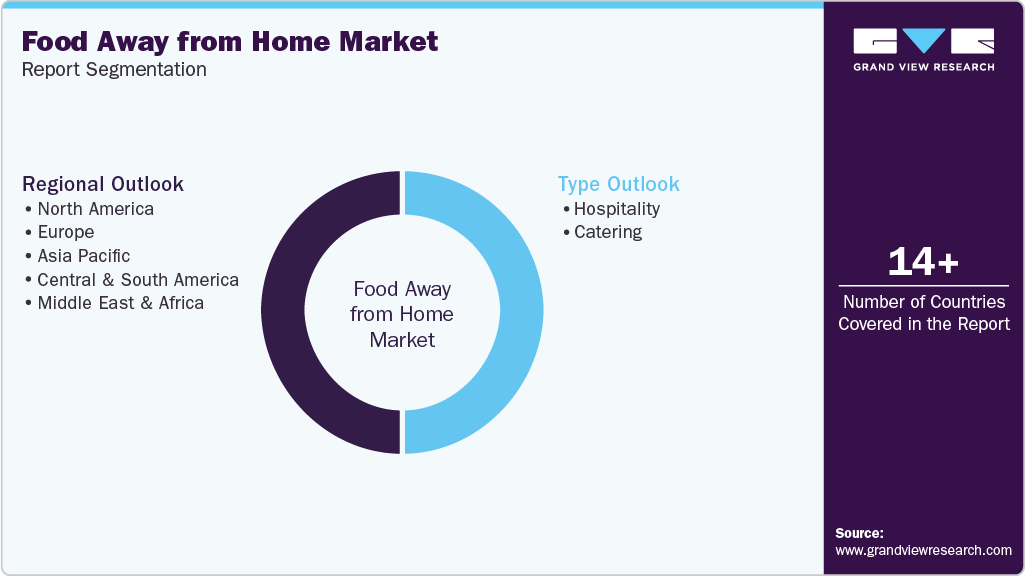
This report forecasts revenue growth at the global, regional and country levels and provides an analysis of the latest industry trends and opportunities in each of the sub-segments from 2021 to 2033. For this study, Grand View Research has segmented the global food away from home market report on the basis of type, and region.
 To learn more about this report, Download Free Sample Report
-
Type Outlook (Revenue, USD Million, 2021 - 2033)
-
Hospitality
-
Full-Service Restaurants
-
Casual Dining
-
Premium Dining
-
-
Quick Service Restaurants
-
Large Global Fastfood Brand
-
Traditional Takeaway & Delivery
-
Café & Coffee Specialist
-
Food to go Specialties
-
-
Pubs & Bars
-
Tenanted & Leased
-
Managed
-
Freehouse
-
-
Accommodation
-
Hotels
-
Beds & Breakfast
-
Holiday Camps
-
Caravan Parks
-
Youth Hostels
-
-
Leisure
-
Visitors Attraction
-
Entertainment
-
Sports stadia & track
-
Sports Club & Gym
-
Event & Mobile Caterers
-
On Board Travel
-
-
-
Catering
-
Workplace
-
Manufacturing
-
Finance & Professional
-
Other Workplace
-
-
Healthcare
-
State Hospital
-
Private Hospital
-
Care Home
-
Day Centers
-
-
Education
-
State School
-
Independent School
-
Further Education
-
Special School
-
Nurseries
-
-
Services
-
Government Services
-
-
-
-
Regional Outlook (Revenue, USD Million, 2021 - 2033)
-
North America
-
U.S.
-
Canada
-
Mexico
-
-
Europe
-
Germany
-
UK
-
France
-
Italy
-
Spain
-
Netherlands
-
-
Asia Pacific
-
China
-
Japan
-
India
-
Australia & New Zealand
-
South Korea
-
Vietnam
-
Thailand
-
-
Central & South America
-
Brazil
-
-
Middle East & Africa
-
UAE
-
Saudi Arabia
-
-
Delivered Customizations
This report has been delivered with the following In-depth customizations
Client Request
Customization Delivered
Value Adds
Regulatory Landscape Analysis
Comprehensive assessment of global regulatory frameworks influencing the Food Away From Home market, covering food safety standards, hygiene regulations, labeling requirements, labor compliance, sustainability mandates, packaging regulations, and taxation policies across major regions. Analysis includes regulatory impact on restaurants, catering providers, hospitality operators, and foodservice chains.
Support regulatory risk assessment and operational compliance planning. Help foodservice operators align business practices with evolving international food safety, sustainability, and labor regulations while minimizing legal and operational risks.
Brand Share Analysis
Detailed analysis of brand-wise market share, competitive positioning, pricing strategies, consumer reach, product portfolio, and expansion initiatives across major Food Away From Home categories, including QSRs, cafés, full-service restaurants, catering providers, and hospitality chains. Analysis also evaluates regional footprint, brand penetration, customer loyalty trends, and operational scale of leading market participants.
Benchmark brand competitiveness and identify leading market players across individual foodservice segments. Support strategic partnerships, pricing optimization, brand expansion planning, marketing strategy development, and competitive positioning within the global FAFH market.
Value Chain Analysis
Comprehensive assessment of the Food Away From Home market value chain, covering raw material suppliers, food processors, distributors, logistics providers, cloud kitchens, restaurants, catering operators, delivery platforms, and end consumers. Analysis evaluates procurement structures and supply chain efficiency.
Identify operational bottlenecks, cost optimization opportunities, supply chain risks, and efficiency improvement areas across the FAFH ecosystem. Support strategic sourcing, distribution optimization, vendor management, operational scalability, and profitability enhancement initiatives for industry participants.
Frequently Asked Questions About This Report
Asia Pacific dominated with a 39.2% revenue share in 2025.
North America is the fastest-growing region over the forecast period.
The hospitality segment led with a 91.5% revenue share in 2025, while the catering segment is the fastest-growing.
The global food away from home market size was estimated at USD 4.9 trillion in 2025 and is expected to reach USD 4.9 Trillion in 2026.
The food away from home market is expected to grow at a compound annual growth rate (CAGR) of 5.4% from 2026 to 2033 to reach USD 7.2 Trillion by 2033.
Some key players operating in the food away from home market include McDonald's.; Yum! Brands; Compass Group; Starbucks Corporation; Sodexo; Aramark; Chipotle Mexican Grill; Domino’s; Elior Group; and Nordsee.
Key factors driving growth in the food away from home market include increasing urbanization, rising disposable incomes, and changing consumer lifestyles that favor convenience and dining experiences outside the home.
About the Author(s)
Consumer F&B Research Team
Consumer Goods · Consumer F&BThis report was authored by the consumer f&b research team at Grand View Research - comprising two research analysts, one senior research analyst, and one industry expert - with specialized expertise in the consumer f&b segment of the consumer goods industry. All findings are based on proprietary consumer goods databases, executive interviews, and regulatory analysis, subject to internal peer review prior to publication.
Last Updated:
Speak to Analyst

Customize this report to your needs - add regions, segments, or data points, with 20% free customization.
Or view our licence options:


ISO 9001:2015 & 27001:2022 Certified
We are GDPR and CCPA compliant! Your transaction & personal information is safe and secure. For more details, please read our privacy policy.


