
- Home
- »
- Consumer F&B
- »
-
Food Flavors Market Size, Share, Growth Report, 2026-2033GVR Report cover

Food Flavors Market (2026 - 2033)
Size, Share & Trends Analysis Report By Flavor Type (Natural Flavors, Synthetic/ Nature Identical Flavors), By Product (Single Flavors, Compounded Flavors), By Form, By Application, By Region, And Segment Forecasts
Market Size, 2025
$21.4BMarket Estimate, 2026
$22.7BMarket Forecast, 2033
$36.5BCAGR, 2026–2033
7.0%Food Flavors Market Summary
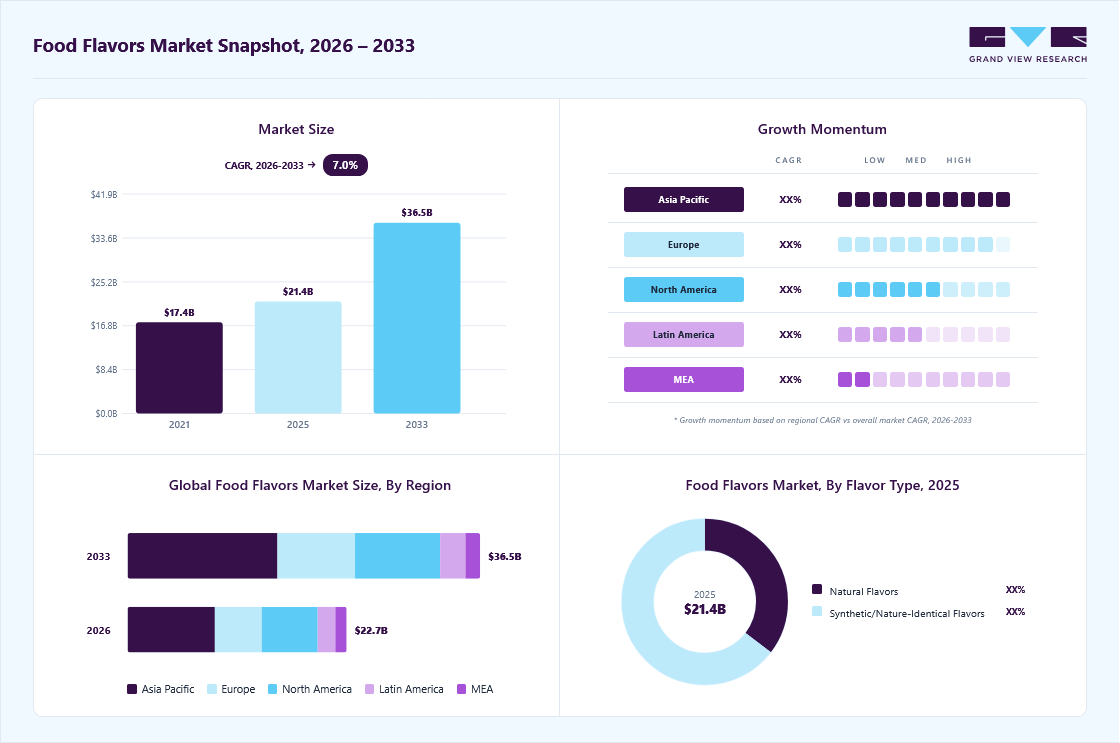
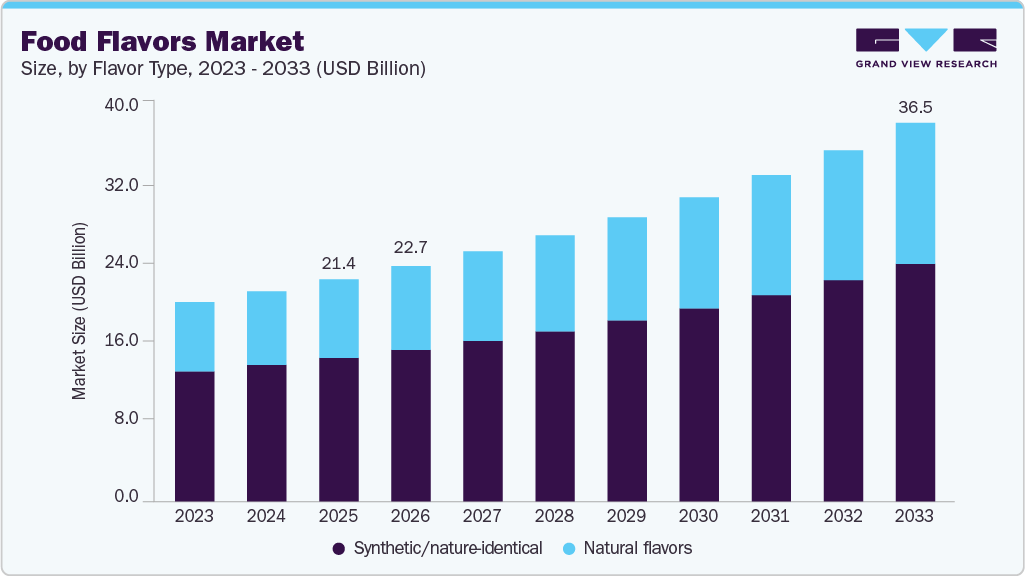
The global food flavors market size was valued at USD 21.4 billion in 2025 and is projected to grow from USD 22.7 billion in 2026 to USD 36.5 billion by 2033, at a CAGR of 7.0% from 2026 to 2033. The market in Asia Pacific dominated with a revenue share of 39.5% in 2025. The global food flavors market is driven by growing consumer demand for diverse, authentic taste experiences in processed and packaged foods.
 Source: Grand View Research, IR Documents, Primary Interviews, Paid DatabasesTo learn more about this report,
 Download Free Sample Report
Key Market Trends & Insights
- By form: Powder segment held the largest market share of 68.1% in 2025.
- By product: Single flavors segment held the largest market share of 64.9% in 2025.
- By flavor type: Synthetic/Nature-Identical flavors segment held the largest market share of 64.7% in 2025.
Regional Highlights
- Largest regional market: Asia Pacific (39.5% revenue share, 2025)
- By country: China held the largest market share in 2025
Market Size & Forecast
- Market size in 2025: USD 21.4 Billion
- Estimated market size in 2026: USD 22.7 Billion
- Projected market size by 2033: USD 36.5 Billion
- CAGR (2026-2033): 7.0%
GVR research-powered AIAsk Prism AI about the food flavors marketGet cited answers from GVR research on market growth, segments, regulations and forecasts.Start with✓ Source-linked answers ✓ Market-specific context ✓ Traceable figuresExplore Prism AI ↗
Rising urbanization, busy lifestyles, and increased consumption of convenience and ready-to-eat products are accelerating the use of food flavors. The shift toward natural, clean-label, and plant-based formulations is encouraging manufacturers to innovate with organic and bio-derived flavor solutions. For instance, in November 2025, PepsiCo announced a new “Simply NKD” line of Cheetos and Doritos that removes artificial flavors and dyes, offering the same iconic snack taste with a more natural, colorless appearance to meet evolving consumer demand. Additionally, the expansion of the foodservice industry and rapid growth in emerging economies are further fuelling market expansion worldwide.The natural food flavors segment is experiencing strong interest from food manufacturers because it helps them meet rising demand for clean-label, plant-derived ingredients that appeal to increasingly health-aware consumers. Buyers such as food processors, beverage producers, and ingredient formulators are prioritizing natural flavor systems to support product reformulation and innovation.
 To learn more about this report, Download Free Sample Report
Natural flavors, sourced from fruits, herbs, botanicals, and other plant-based materials, allow manufacturers to label products as “natural”, a claim that resonates strongly with shoppers and can improve product positioning. This trend is particularly notable in beverages, dairy alternatives, snacks, and confectionery, where flavor authenticity and ingredient transparency are key purchasing criteria. As brands face pressure to reduce artificial additives, natural flavors help maintain or enhance sensory appeal while aligning with clean-label strategies. The focus on sustainability and traceability further reinforces natural flavor sourcing as a strategic procurement priority for ingredient buyers.
For instance, in July 2025, Sensient Flavors & Extracts introduced its BioSymphony line of natural flavor compounds made through biotransformation. These products help food & beverage manufacturers create authentic taste profiles with ingredients sourced from nature. The BioSymphony range gives companies more options for premium positioning, greater taste variety, and solutions to ingredient challenges. Suppliers like Sensient are working closely with customers, showing that natural flavors are now a key part of new product development and clean-label strategies in the global food industry.
In the synthetic and nature-identical flavors segment, steady global demand for lab-produced flavor compounds demonstrates the importance of these solutions for large-scale food production. Synthetic and nature-identical flavors, such as synthetic vanillin, are engineered to deliver uniform taste profiles that help manufacturers maintain consistent sensory experiences across batches and regions. Since they do not depend on agricultural harvests, they reduce exposure to seasonal fluctuations, supply shortages, and price volatility that affect natural extracts. Their stability under heat, pressure, and long processing ensures reliable performance in bakery, beverages, confectionery, and ready-to-eat items. Predictable pricing and wide availability from large chemical producers support long-term procurement and simplify formulation planning. These advantages help food companies manage cost pressures while meeting consumer expectations for familiar flavors.
As synthetic and nature-identical flavors are produced through controlled industrial processes, suppliers can offer consistent specifications, standardized documentation, and assured volume commitments. This reduces formulation variability and minimizes production downtime caused by raw material inconsistencies. Procurement teams benefit from stable long-term contracts and predictable lead times, which support better inventory planning and cost forecasting. In addition, the scalability of lab-produced compounds allows manufacturers to expand production without worrying about agricultural yield constraints. This reliability strengthens supplier relationships and simplifies global product rollouts. As a result, synthetic and nature-identical flavors remain a strategic input for companies prioritizing efficiency, cost control, and uniform product quality across markets.
Consumer Insights
 To learn more about this report, Download Free Sample Report
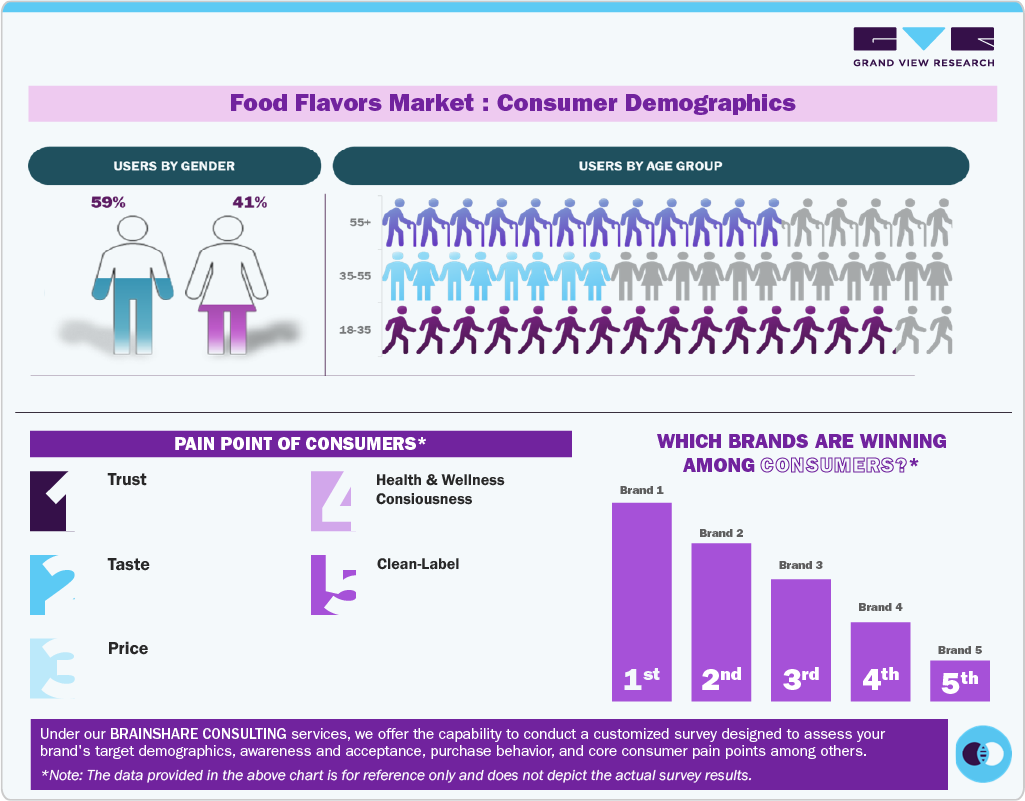
Consumers are increasingly prioritizing authentic, natural flavor experiences, favoring recognizable ingredients such as fruits, herbs, spices, and botanical extracts over artificial flavor profiles. This reflects a broader demand for simplicity, transparency, and products that feel artisanal or homemade. As a result, manufacturers are reformulating flavor systems to deliver more genuine and relatable taste experiences. Clean-label positioning and ingredient familiarity have become key purchase drivers. Brands that successfully combine authenticity with premium sensory appeal are gaining stronger consumer trust and loyalty. This trend is accelerating innovation across food and beverage categories.
 To learn more about this report, Download Free Sample Report
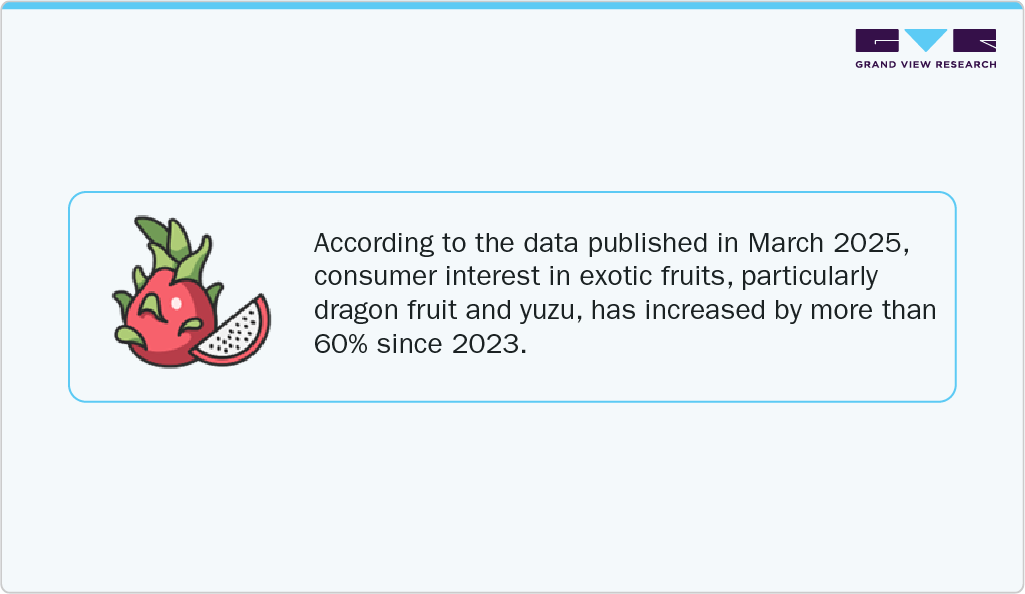
Health and wellness trends are also reshaping flavor preferences, as consumers increasingly reject excessive sweetness, synthetic enhancers, and artificial ingredients. Demand is rising for flavors that support reduced sugar, lower sodium, and functional product claims without compromising taste. For example, Pepsi’s 2026 Prebiotic Cola launch reflects growing interest in better-for-you beverages with added wellness benefits. Similarly, Monin identified yuzu as its 2025 Flavor of the Year, highlighting demand for natural, versatile, and globally inspired ingredients. Producers are investing in advanced flavor solutions that balance nutrition with sensory satisfaction. This shift creates strong opportunities in functional and clean-label innovation.
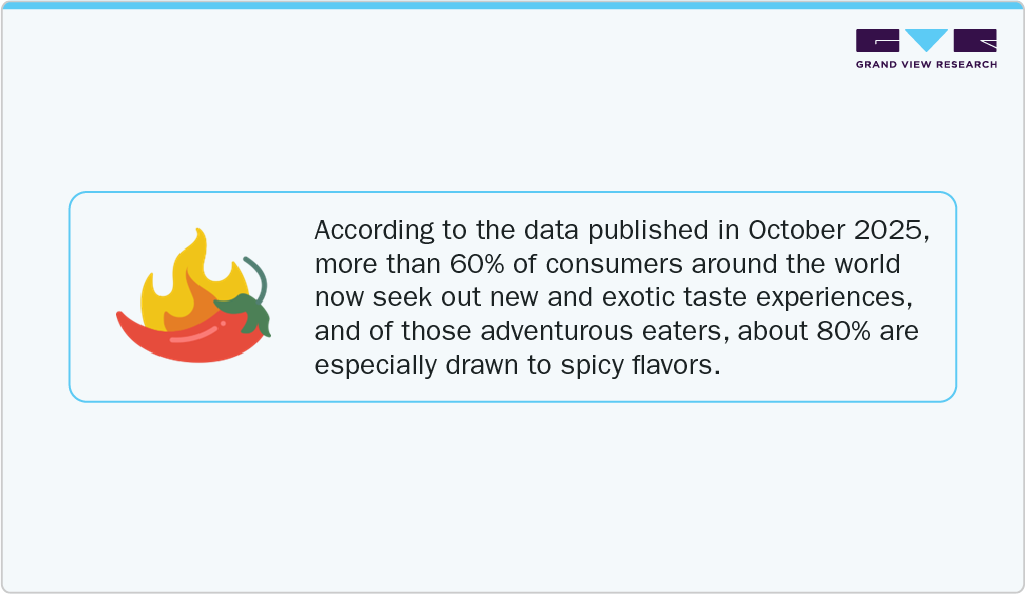
At the same time, consumer curiosity is driving demand for cultural exploration and bold taste innovation. Global cuisines, including Southeast Asian herbs and Latin American chili blends, are increasingly shaping mainstream product development. Younger consumers in particular are more open to adventurous, unexpected, and fusion flavor combinations. This creates opportunities for brands to blend traditional tastes with contemporary formats and experiences. Continuous flavor innovation is essential to capture evolving preferences and maintain market relevance. Diverse and globally inspired portfolios are becoming key growth drivers.
 To learn more about this report, Download Free Sample Report
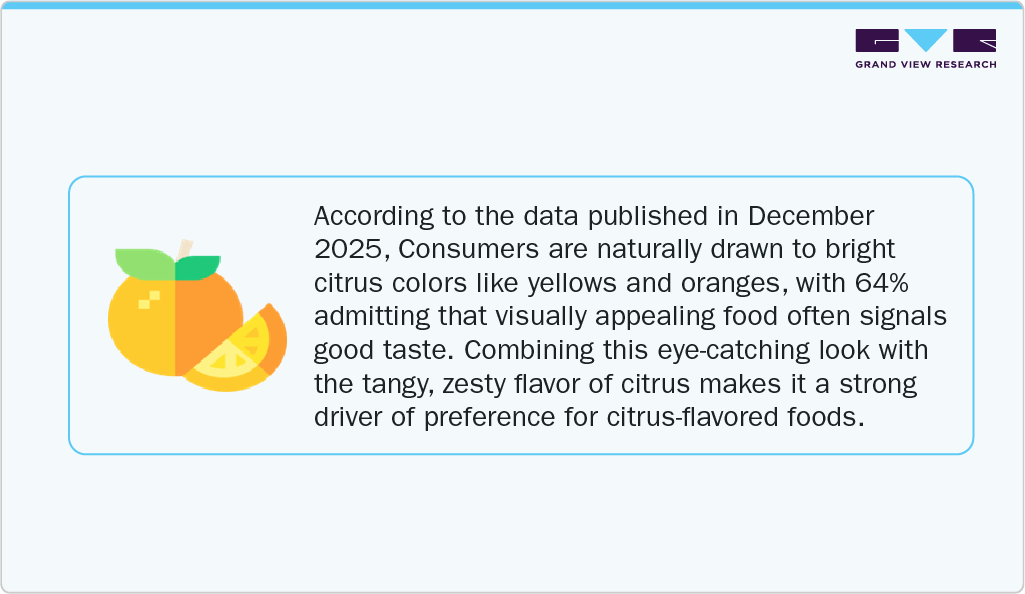
Consumer adoption of new food flavors often follows a gradual pattern, starting with early adopters who are willing to experiment with novel tastes. These consumers are typically curious, adventurous, and motivated by a desire for unique culinary experiences. Their trials often set the stage for wider acceptance, as their feedback and social sharing influence others in their network to consider trying the product. For instance, according to the Puratos data published in December 2025, Citrus fillings work seamlessly in a variety of desserts, including tarts, éclairs, cheesecakes, croissants, muffins, loaf cakes, and packaged treats. Their tangy flavor adds a lively twist, aligning perfectly with 2026 trends such as ‘texture mashups’ and ‘perfect portions,’ offering compact servings that deliver maximum sensory impact.
 To learn more about this report, Download Free Sample Report
Flavor Type Insights
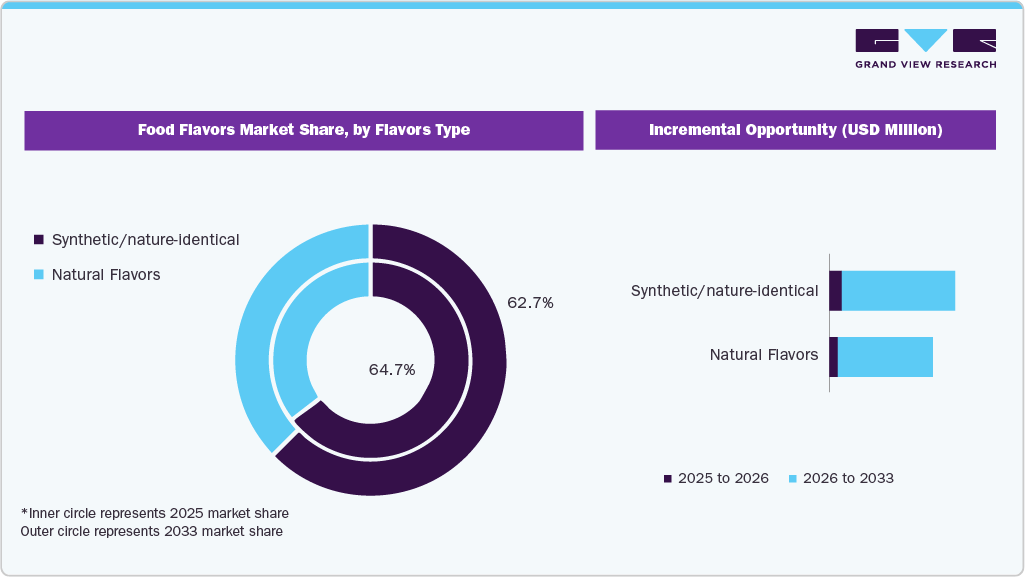
The synthetic and nature-identical food flavors market accounted for a revenue share of 64.7% in 2025. Synthetic food flavors are flavoring compounds created through chemical synthesis to replicate or enhance specific taste and aroma profiles. They are widely used by food and beverage manufacturers due to their cost efficiency, consistency, scalability, and longer shelf stability. Synthetic food flavors help brands deliver standardized taste experiences across high-volume production while managing formulation costs.
 To learn more about this report, Download Free Sample Report
Nature-identical food flavors are flavoring substances produced through chemical or biotechnological processes, but are chemically identical to compounds naturally found in nature. They offer the sensory profile of natural ingredients with improved supply reliability, cost control, and production efficiency. Food manufacturers use nature-identical food flavors to balance authenticity, performance, and affordability in product development.
The natural food flavors market is expected to grow at a CAGR of 7.8% from 2026 to 2033. Natural food flavors are taste and aroma ingredients derived from natural sources such as fruits, vegetables, herbs, spices, botanicals, dairy, or other plant and animal materials. They are used by food and beverage manufacturers to enhance product sensory appeal while meeting consumer demand for clean-label, authentic, and recognizable ingredients. Natural food flavors support product differentiation, premium positioning, and innovation across categories by delivering appealing taste experiences aligned with health and transparency trends.
Product Insights
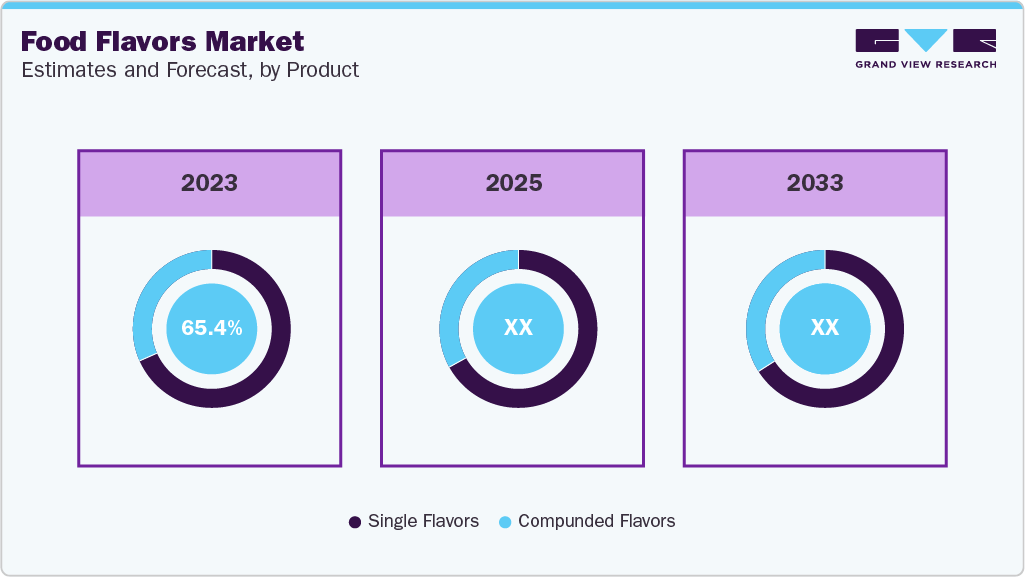
The single food flavors market accounted for a revenue share of 64.9% in 2025. Single food flavors such as citrus, berry, tropical fruit, apple, grape, vanilla, chocolate, caramel, and coffee remain highly popular in large-scale food and beverage production due to strong consumer familiarity and broad market appeal. Beverage brands commonly use citrus and berries, while bakery and dairy manufacturers favor vanilla, chocolate, and caramel. Apple, grapes, tropical fruit, and coffee flavors are widely used in juices, snacks, ready-to-drink beverages, and desserts. Their clear and recognizable taste profiles enable faster product development, efficient reformulation, and consistent brand positioning. Operationally, these flavors are easy to source in bulk, support cost predictability, and scale efficiently across production volumes. They also perform well in varied processing conditions and offer flexibility in adjusting flavor intensity without major recipe changes.
 To learn more about this report, Download Free Sample Report
Compounded food flavors are expected to grow at a CAGR of 7.7% from 2026 to 2033 in the food flavors industry. The compounded food flavors segment is becoming increasingly important for food and beverage manufacturers seeking ready-to-use, customized taste solutions that simplify product development and achieve targeted sensory outcomes. These blends combine multiple flavor components while offering added functionalities such as taste masking, mouth feel enhancement, and sweetness balancing. This enables faster prototyping, reduced formulation complexity, and consistent taste across batches and production sites. Compounded food flavors also streamline procurement by consolidating multiple ingredients through a single supplier. As brands accelerate innovation cycles, these solutions are becoming valuable tools for speed-to-market and lower development risk.
Forms Insights
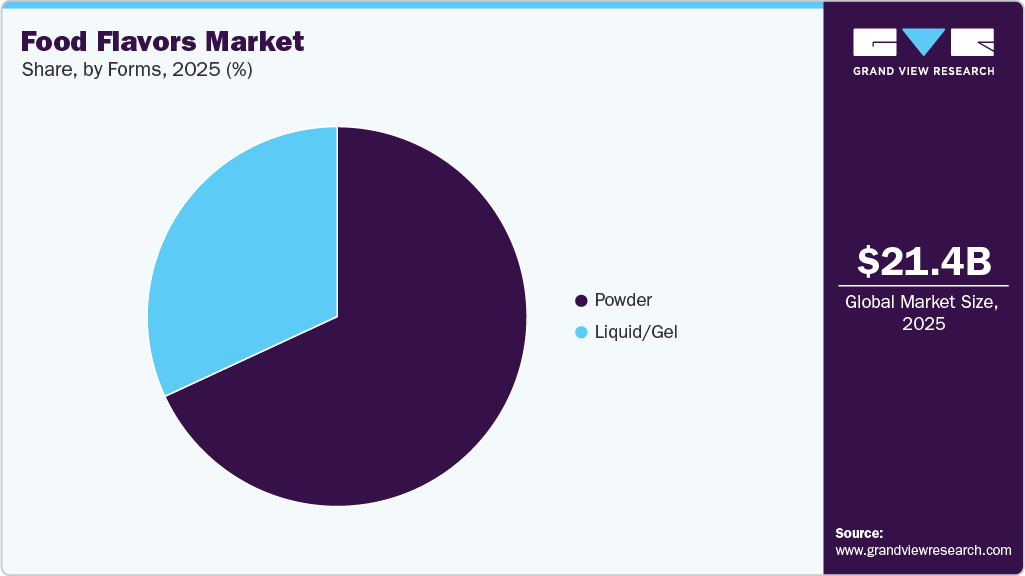
The powdered food flavors accounted for 68.1% of revenue in 2025. Powdered food flavors are widely used in snacks, bakery, instant beverages, cereals, soups, and seasoning blends due to their versatility, dry stability, and ease of mixing without affecting texture or moisture levels. Their long shelf life and resistance to heat processing, extrusion, and long-term storage make them ideal for packaged foods that require consistent taste performance. Powder formats also reduce transportation, storage, and contamination risks while supporting cost-efficient large-scale manufacturing. To meet rising demand, manufacturers are expanding capacity; for instance, in July 2025, DSM-Firmenich expanded its Parma, Italy, facility to strengthen global flavor and blend production capabilities.
 To learn more about this report, Download Free Sample Report
The liquid/gel food flavors market is expected to grow at a CAGR of 6.3% from 2026 to 2033. Liquid and gel food flavors are increasingly preferred for beverages, sauces, syrups, and functional drinks due to their fast solubility, immediate taste delivery, and compatibility with ready-to-drink applications. They are highly effective at masking notes from vitamins, minerals, plant extracts, and other functional ingredients while enabling layered, premium sensory profiles. The growing demand for bold, natural, and fruity flavors is driving innovation across hydration, energy, dairy, and plant-based beverages.
Regional Insights
The North America food flavors market is expected to grow at a CAGR of 6.2% from 2026 to 2033. North America’s food flavors market is driven by large-scale packaged food and beverage manufacturing, as well as continuous product innovation across bakery, beverages, savory, and dairy categories. Manufacturers rely on flavor systems that deliver consistent performance at scale across multiple formats, processing conditions, and retail or foodservice channels. Suppliers are focused on formulation reliability, extract standardization, taste modulation, and stability across temperature, pH, and shelf-life requirements. In 2024, FlavorSum expanded capacity in Michigan and opened an innovation center in New Jersey, while Döhler expanded its Cartersville facility with advanced production and R&D capabilities. These investments highlight strong supplier focus on local manufacturing, application support, and commercialization readiness, reinforcing North America’s position as a key food flavors market.
U.S. Food Flavors Market Trends
The food flavors industry in the U.S. accounted for 81.8% of the North America market in 2025. Packaged food & beverage production in the U.S. continues to drive demand for food flavor systems across snacks, bakery, beverages, and prepared foods. Manufacturers focus on delivering consistent taste and processing stability across large production runs. Flavor suppliers provide formulation testing and application support to meet these requirements. For instance, in 2025, T. Hasegawa U.S., a flavor manufacturer, introduced PLANTREACT, a natural reaction flavor technology designed to replicate complex savory taste profiles in plant-based proteins, expanding formulation options for U.S. food manufacturers. This development highlights ongoing innovation in flavor technologies from suppliers, tailored to the needs of manufacturers in the U.S.
Europe Food Flavors Market Trends
The Europe food flavors market is accounted for a share of 21.32% of the global market in 2025. Europe’s food flavors market is supported by steady packaged food and beverage production across bakeries, confectionery, dairy, beverages, savory foods, and ready meals. Manufacturers maintain regular reformulation and line-extension programs, driving demand for flavor systems that ensure consistent taste across multiple markets, processing conditions, and production volumes. EU food safety and labeling regulations strongly influence ingredient selection, documentation, and authorization, requiring suppliers to align portfolios with approved substances. In 2024, European Commission measures following EFSA evaluations led to restrictions and non-renewals of certain smoke flavorings, prompting formulation updates across several categories. In 2025, Givaudan showcased expanded natural flavor solutions at FI Europe, reinforcing Europe’s role as a key hub for innovation and commercialization in food flavors.
The UK food flavors market is expected to grow at a CAGR of 9.6% from 2026 to 2033. The food flavors market in UK expected to grow as manufacturers prioritize consistent taste delivery, processing reliability, and uniform batch performance across packaged foods and beverages. Producers are focused on formulation consistency and operational efficiency to support domestic retail demand and export markets. This is increasing demand for flavor systems that perform across multiple product applications and industrial processing conditions. Flavor suppliers provide technical expertise and customized formulation support to meet manufacturer requirements. Ongoing supplier investments also reflect continued commitment to the UK food manufacturing sector.
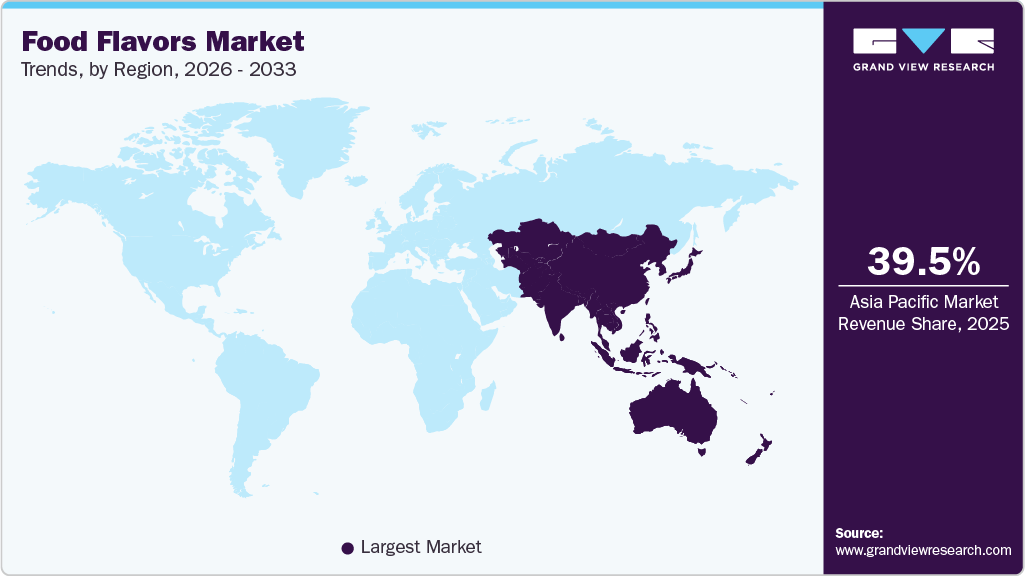
Asia Pacific Food Flavors Market Trends
The food flavors industry in Asia pacific accounted for a share of 39.47% of the global market in 2025. Demand for food flavors in Asia Pacific is rising alongside rapid growth in the food and beverage manufacturing sector, particularly across snacks, beverages, dairy, and bakery categories. Advanced solutions such as spray-dried flavors are gaining traction in markets including Thailand, Malaysia, Indonesia, and Vietnam due to their aroma retention, stability, shelf life, and handling efficiency. Increasing consumer preference for natural, clean-label, and health-focused products is driving reformulation and adoption of plant-based flavor systems. Major players such as Givaudan, dsm-firmenich, IFF, and Symrise are expanding tailored regional offerings. In August 2025, dsm-firmenich expanded facilities in India to boost local capacity and innovation, while Kerry launched a Southeast Asia campaign in January 2026 promoting citrus and spice pairings to drive menu innovation.
 To learn more about this report, Download Free Sample Report
The China food flavors market is growing due to strong demand from snack, beverage, dairy, bakery, and ready-to-eat manufacturers seeking advanced flavor solutions to enhance taste and sensory appeal. Rising consumer preference for health-focused and clean-label products is driving adoption of natural and plant-based flavor systems with minimal artificial additives. Domestic suppliers such as AAFUD INDUSTRY(ZHUHAI)CO., LTD. offer natural portfolios including vanilla, grape, and tomato flavors to support product reformulation without compromising taste. Intense market competition is also increasing demand for customized and regionally relevant profiles such as Sichuan spice blends and tropical fruit notes. Major global players including Givaudan, dsm-firmenich, and IFF maintain a strong presence in China.
The India food flavors market is expected to grow at a CAGR of 9.7% from 2026 to 2033. India’s food flavors market is growing as food and beverage manufacturers respond to rising demand for taste, health, and authentic product experiences. Popular profiles such as cardamom, saffron, rose, tamarind, and traditional spice blends are widely used across beverages, snacks, dairy, and confectionery categories. Domestic players such as Fab Flavors and The Flavors India offer customized natural extracts, bakery, beverage, and savory flavor solutions to help brands differentiate products. Manufacturers are increasingly investing in clean-label, natural, functional, and fusion flavor innovation. In April 2025, Business acquired Elixir Extracts for USD 10.1 million to expand spice extract capabilities and strengthen its ingredients portfolio.
Middle East & Africa Food Flavors Market Trends
The Middle East &Africa food flavors market is expected to grow at a CAGR of 3.9% from 2026 to 2033. The Middle East & Africa food flavors market is supported by steady demand from packaged food and beverage manufacturers seeking consistent taste across retail and food service channels. Producers regularly adapt flavors in snacks, sauces, bakery, and non-alcoholic beverages to match local preferences across Gulf and North African markets. Demand is increasing for flavor systems that perform reliably in large-scale processing, warm climates, and extended distribution conditions. In 2024, Gulfood 2024 highlighted beverage innovation and shelf-stable flavor solutions tailored to regional needs. Suppliers also provide formulation support and application testing; in 2023, Senovia launched an R&D satellite facility in the UAE to serve manufacturers across the Middle East, Africa, and Asia.
The food flavors market in South Africa accounted for a share of 39.47% of The Middle East &Africa market in 2025. The food flavors market in South Africa is driven by steady growth in packaged food and beverage manufacturing serving national retail and foodservice channels. Manufacturers continue to refine formulations to maintain consistent taste across product ranges distributed across multiple provinces. Production planning emphasizes flavor stability across processing cycles and storage conditions, supporting uniform sensory outcomes for high-volume product lines. This operating environment supports regular use of food flavors across domestic manufacturing programs. The expansion of modern retail formats and the wider availability of packaged foods across major urban centers further support the continued integration of food flavors within South Africa’s food and beverage production landscape.
Central & South America Food Flavors Market Trends
The Central & South America food flavors market is expected to grow at a CAGR of 5.3% from 2026 to 2033. Food flavor manufacturers in Central and South America are driving market growth through strategic innovation focused on diverse, authentic, and health-oriented taste solutions. Companies are expanding natural flavor portfolios using herbs, spices, fruit extracts, and botanicals to replace artificial additives and meet clean-label demand. Sabores Cosco de Centroamérica offers fruit, sweet, savory, and specialty flavors, along with essences, extracts, powders, syrups, and bases for multiple food and beverage applications. Manufacturers are also developing ethnic and fusion profiles that blend regional tastes with global influences. These initiatives are supporting growth in processed foods, ready-to-eat meals, beverages, and snacks across the region.
Brazil food flavors market is growing due to changing consumer preferences, technological innovation, and strategic industry expansion. Rising demand for natural and health-focused products is driving manufacturers to reformulate offerings and partner with flavor suppliers for authentic, high-quality taste solutions. DR Flavors & Ingredients supports this trend through natural and traceable ingredients designed for clean-label and wellness-oriented products. Manufacturers are also leveraging Brazil’s tropical fruits and regional culinary heritage to create locally relevant flavor profiles. In November 2025, Carbery Group acquired Solu taste to strengthen its flavors business and expand market presence in Brazil.
Key Food Flavors Company Insights
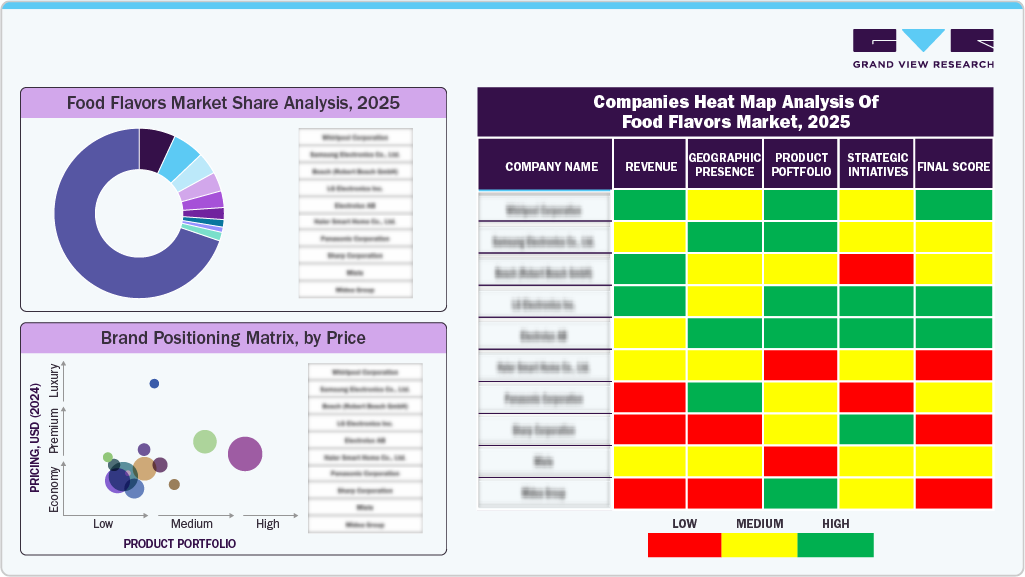
The food flavors market features several established regional companies, with major distribution firms capturing a significant market share. These companies are pursuing various strategies to gain a competitive edge, including partnerships, collaborations, and introducing new products. Additionally, they are working to enhance brand recognition through diverse media channels, online platforms, social networks, and strategic alliances to reach a broader audience.
 To learn more about this report, Download Free Sample Report
Key Food Flavors Companies
The following key companies have been profiled for this study on the food flavors market.
-
Givaudan
-
International Flavors & Fragrances Inc.
-
Firmenich SA
-
Kerry Group plc
-
Symrise AG
-
MANE
-
Sensient Technologies Corporation
-
Takasago International Corporation
-
Robertet Group
-
Huabao Flavors & Fragrances Co., Ltd.
-
Flavorchem & Orchidia Fragrances
-
Bell Flavors & Fragrances, Inc.
Recent Developments
-
In April 2026, McCormick announced a $29.1 billion merger with Unilever’s food division, combining major flavor brands like sauces and seasonings. The deal aims to expand global reach, especially in Asia and Latin America, and strengthen positioning in the flavor and seasoning segment
-
In February 2026, IFF’s Taste point division announced top flavor trends for 2026, including emerging flavors like cherry and chai-inspired profiles. This reflects increased focus on consumer-driven flavor innovation and rapid product development.
-
In April 2025, MANE completed the acquisition of Avoca, a U.S.-based specialist in fragrance fixatives and contract manufacturing, strengthening its capabilities in key scent-ingredient production. This deal marks the final step in Ashland’s divestiture of the Avoca unit and aligns with Mane’s strategy to expand its fragrance ingredients to business globally
-
In January 2025, Monin Incorporated named yuzu, a bright and complex East Asian citrus fruit, as its 2025 Flavor of the Year, forecasting it will grow in popularity across food and drink menus thanks to its versatile, bold notes and visual appeal. Their Monin Yuzu Purée, made from real fruit with no artificial ingredients, is designed to easily elevate cocktails, teas, lemonades, and culinary creations with authentic yuzu flavor.
Food Flavors Market Report Scope
Report Attribute
Details
Market size in 2025
USD 21.4 billion
Estimated market size in 2026
USD 22.7 billion
Projected market size by 2033
USD 36.5 billion
Growth rate
CAGR of 7.0% from 2026 to 2033
Actual data
2021 - 2025
Forecast period
2026 - 2033
Quantitative units
Revenue in USD million, and volume in million Tons, CAGR from 2026 to 2033
Report coverage
Revenue forecast, company ranking, competitive landscape, growth factors, and trends
Segments covered
Flavor type, product, forms, applications, region
Regional Scope
North America; Europe; Asia Pacific; Central & South America; Middle East & Africa
Country Scope
U.S.; Canada; Mexico; Germany; UK; France; Italy; Spain; China; Japan; India; Australia & New Zealand; South Korea; Brazil; South Africa
Key companies profiled
Givaudan; International Flavors & Fragrances Inc.; Firmenich SA; Kerry Group plc; Symrise AG; MANE; Sensient Technologies Corporation; Takasago International Corporation; Robertet Group.; Huabao Flavors & Fragrances Co., Ltd.; Flavorchem & Orchidia Fragrances; Bell Flavors & Fragrances, Inc.
Customization scope
Free report customization (equivalent up to 8 analysts working days) with purchase. Addition or alteration to country, regional & segment scope.
Pricing and purchase options
Avail customized purchase options to meet your exact research needs. Explore purchase options
Global Food Flavors Market Report Segmentation
This report forecasts revenue growth at the global, regional and country level and provides an analysis of the latest industry trends and opportunities in each of the sub-segments from 2021 to 2033. For the purpose of this study, Grand View Research has segmented the food flavors market report on the basis of flavor type, product, forms, application and region:
-
Flavor type Outlook (Volume, Million Tons; Revenue, USD Million; 2021 - 2033)
-
Natural Flavors
-
Synthetic Nature Identical Flavors
-
-
Product Outlook (Volume, Million Tons; Revenue, USD Million; 2021 - 2033)
-
Single Flavors
-
Citrus
-
Berry
-
Tropical Fruit
-
Apple
-
Grape
-
Vanilla
-
Chocolate
-
Caramel
-
Coffee
-
Others
-
-
Compounded Flavors
-
-
Forms Outlook (Volume, Million Tons; Revenue, USD Million; 2021 - 2033)
-
Powder
-
Liquid/Gel
-
-
Applications Outlook (Volume, Million Tons; Revenue, USD Million; 2021 - 2033)
-
Food
-
Dairy Products
-
Bakery & Confectionery
-
Snacks
-
Meat & Seafood Products
-
Sauces, Dressings & Condiments
-
Supplements & Nutrition Products
-
Pet Foods
-
Others
-
-
Beverages
-
Juices & Juice Concentrates
-
Functional Beverages
-
Carbonated Soft Drinks
-
Alcoholic Beverages
-
Others
-
-
-
Regional Outlook (Volume, Million Tons; Revenue, USD Million, 2021 - 2033)
-
North America
-
U.S.
-
Canada
-
Mexico
-
-
Europe
-
Germany
-
UK
-
France
-
Italy
-
Spain
-
-
Asia Pacific
-
China
-
Japan
-
India
-
Australia & New Zealand
-
South Korea
-
-
Central & South America
-
Brazil
-
-
Middle East & Africa
-
South Africa
-
-
Frequently Asked Questions About This Report
Asia Pacific dominated with a 39.5% revenue share in 2025.
The powder segment accounted for the largest revenue share of 68.1% in 2025.
The single flavors segment dominated the market and accounted for the largest revenue share of 64.9% in 2025.
The synthetic/nature-identical flavors accounted for a dominant share of 64.7% of the global revenue in 2025.
Key players include Givaudan; International Flavors & Fragrances Inc.; Firmenich SA; Kerry Group plc; Symrise AG; MANE; Sensient Technologies Corporation; Takasago International Corporation; Robertet Group.; Huabao Flavors & Fragrances Co., Ltd.; Flavorchem & Orchidia Fragrances; Bell Flavors & Fragrances, Inc.
The global food flavors market is driven by growing consumer demand for diverse and authentic taste experiences across processed and packaged foods. Rising urbanization, busy lifestyles, and increased consumption of convenience and ready-to-eat products are accelerating the use of food flavors.
The global food flavors market size was valued at USD 21.4 billion in 2025 and is estimated at USD 22.7 billion for 2026.
The global food flavors market is expected to grow at a CAGR of 7.0% from 2026 to 2033, reaching USD 36.5 billion by 2033.
About the Author(s)
Consumer F&B Research Team
Consumer Goods · Consumer F&BThis report was authored by the consumer f&b research team at Grand View Research - comprising two research analysts, one senior research analyst, and one industry expert - with specialized expertise in the consumer f&b segment of the consumer goods industry. All findings are based on proprietary consumer goods databases, executive interviews, and regulatory analysis, subject to internal peer review prior to publication.
Last Updated:
Speak to Analyst

Customize this report to your needs - add regions, segments, or data points, with 20% free customization.
Or view our licence options:


ISO 9001:2015 & 27001:2022 Certified
We are GDPR and CCPA compliant! Your transaction & personal information is safe and secure. For more details, please read our privacy policy.


