
- Home
- »
- Pharmaceuticals
- »
-
Gabapentin Market Size, Share & Trends Report, 2026-2033GVR Report cover

Gabapentin Market (2026 - 2033)
Size, Share & Trends Analysis Report By Dosage Form (Tablet, Capsule, Oral Solution), By Type (Generic, Branded), By Application, By Distribution Channel, By Region, And Segment Forecasts
Market Size, 2025
$2.4BMarket Estimate, 2026
$2.5BMarket Forecast, 2033
$3.6BCAGR, 2026–2033
5.1%Gabapentin Market Summary
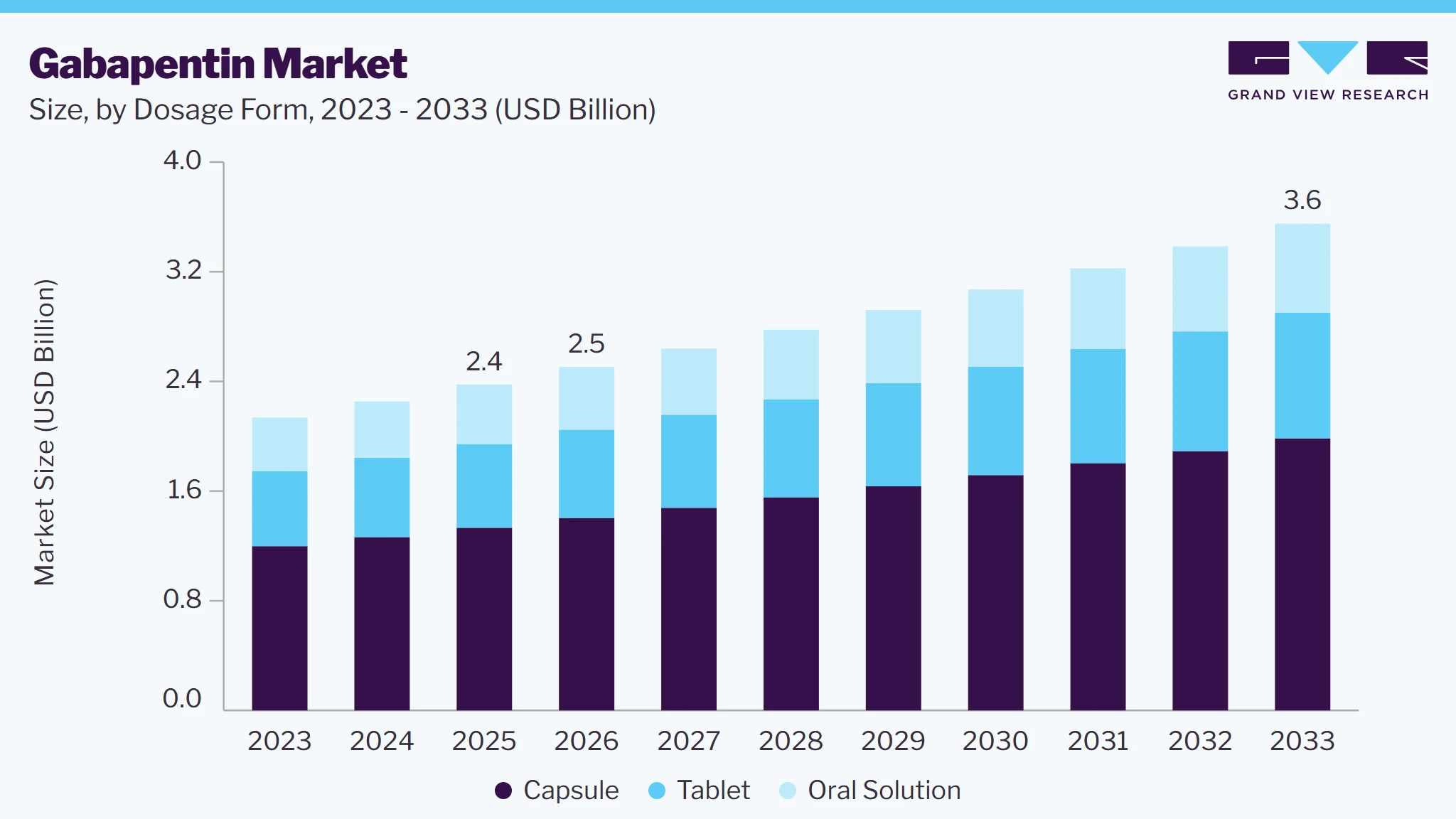
The global gabapentin market size was valued at USD 2.4 billion in 2025 and is projected to grow from USD 2.5 billion in 2026 to USD 3.6 billion by 2033, at a CAGR of 5.1% from 2026 to 2033. North America market dominated, with a revenue share of 33.4% in 2025. According to the American Academy of Neurology, neuropathic pain prevalence stood at an estimated 9.2% in the general population, escalating to nearly 20% to 30% among individuals with diabetes.
 Source: Grand View Research, IR Documents, Primary Interviews, Paid DatabasesTo learn more about this report,
 Download Free Sample Report
Key Market Trends & Insights
- By dosage form: Capsule segment led the market with the largest revenue share of 56.1% in 2025.
- By type: Generic segment led the market with the largest revenue share of 90.4% in 2025.
- By application: Epilepsy segment led the market with the largest revenue share of 49.8% in 2025.
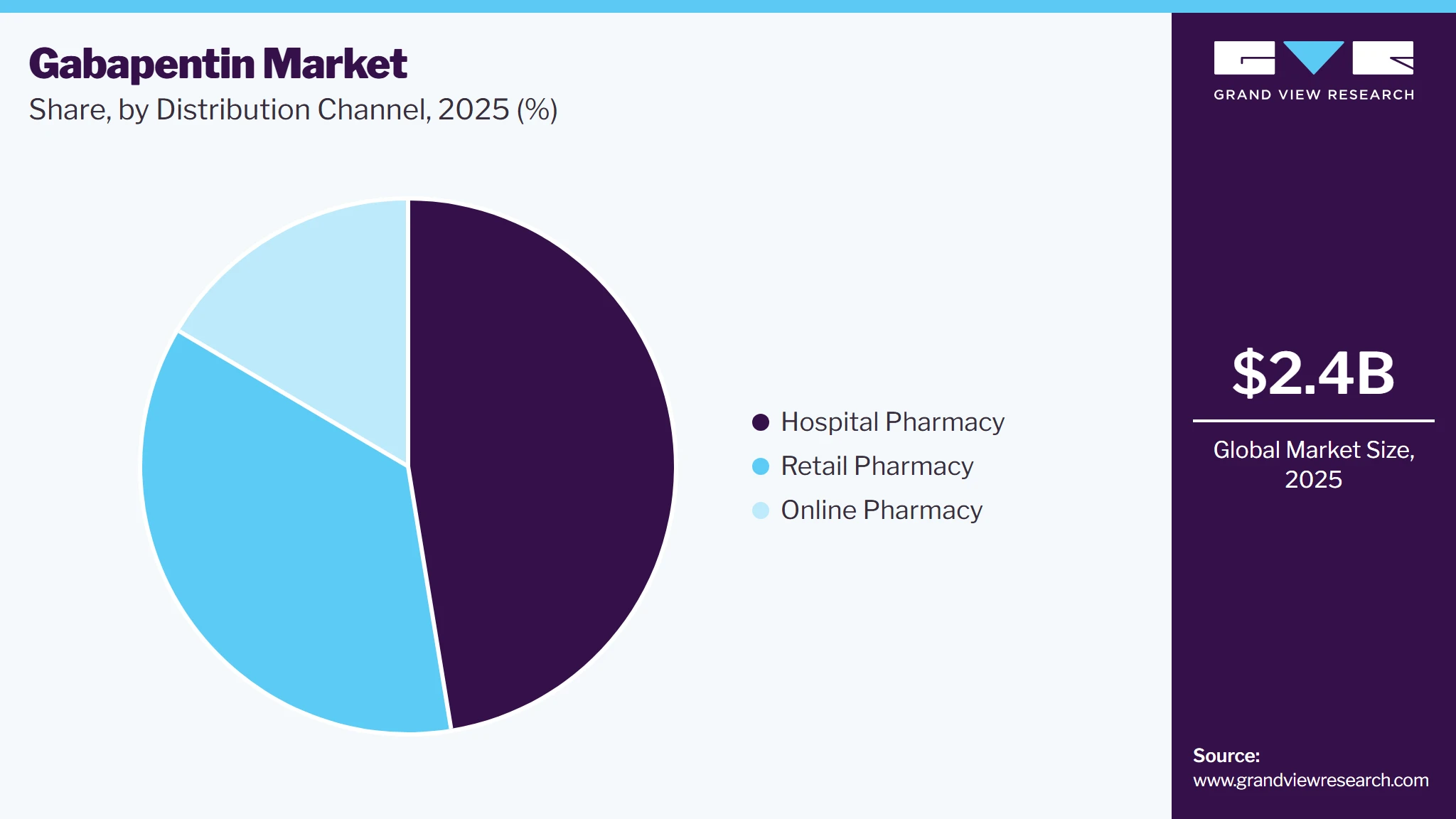
- By distribution channel: Hospital pharmacy segment led the market with the largest revenue share of 47.4% in 2025.
Regional Highlights
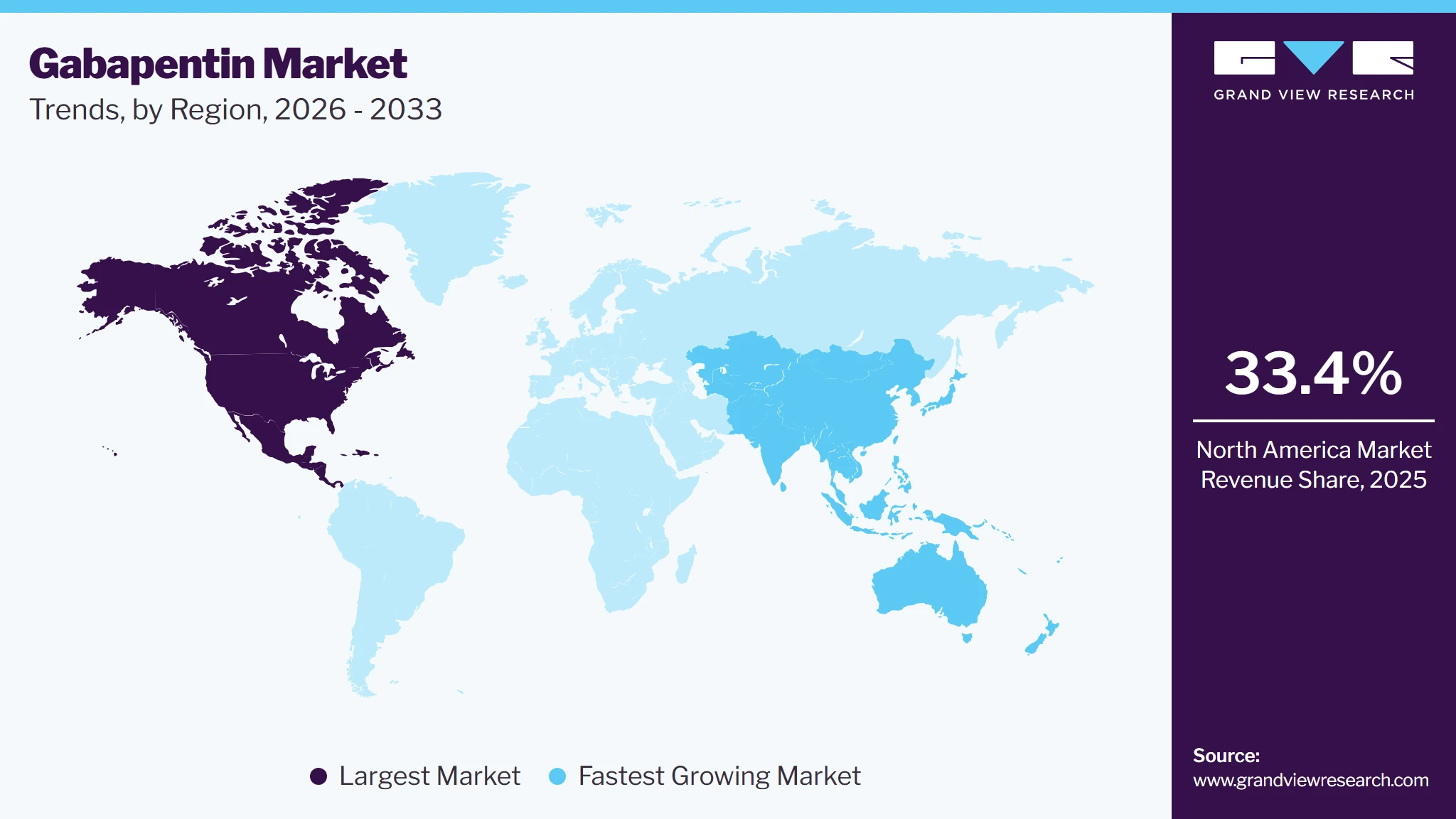
- Largest regional market: North America (33.4% revenue share, 2025)
- Fastest-growing regional market: Asia Pacific (highest CAGR, 2026-2033)
- By country: The U.S. held the largest market share in 2025.
Market Size & Forecast
- Market size in 2025: USD 2.4 Billion
- Estimated market size in 2026: USD 2.5 Billion
- Projected market size by 2033: USD 3.6 Billion
- CAGR (2026-2033): 5.1%
Prism AI by Grand View Research Free to tryAsk a question about the gabapentin marketTry asking✓Every figure cited from GVR research Prefer the report? Download free sample →This spike highlights significant public health concerns as conditions such as diabetic neuropathy, exacerbated by lifestyle changes and demographic shifts, become more prevalent. Moreover, the geriatric population, projected to constitute nearly 20% of the U.S. population by 2024, is more susceptible to chronic pain and neurological disorders, leading to increased prescriptions for Gabapentin as an effective pain management solution.
 To learn more about this report, Download Free Sample Report
Further fueling market demand, Gabapentin’s expanding applications beyond its original indication for epilepsy have gained traction. Medical professionals are increasingly prescribing the drug off-label for conditions such as anxiety and bipolar disorder, thus broadening its market appeal. Moreover, healthcare providers are favoring Gabapentin over traditional opioids as a pain management strategy. This shift is largely driven by the need to mitigate the risks associated with opioid addiction and dependency, positioning Gabapentin as a safer alternative.
Government initiatives and awareness campaigns are also pivotal in driving market growth. The World Health Organization’s Global Action Plan, introduced in July 2023, seeks to improve access to care for neurological disorders, emphasizing coordinated multi-sectoral efforts. Moreover, the U.S. National Plan, updated in 2023, underscores the importance of public education and awareness in tackling Alzheimer’s disease-a significant contributor to neurological disorders. These initiatives promote treatment accessibility and raise awareness about Gabapentin and its potential benefits.
Finally, the increasing demand for generic formulations is positively impacting the Gabapentin market, particularly in developing regions. As generic drugs become more popular due to their affordability and accessibility, this trend is expected to significantly boost the market, especially in the Asia Pacific region. Coupled with ongoing pharmaceutical R&D investments to enhance Gabapentin formulations through alternative delivery methods, the market is well-positioned for continued growth, meeting the rising demand for effective pain management solutions.
Market Dynamics
The gabapentin market is driven by the rising prevalence of epilepsy, neuropathic pain, and other chronic neurological disorders, along with increasing demand for affordable long term treatment options. The widespread availability of generic gabapentin has improved patient access across both developed and emerging markets following patent expiry. An aging global population and the growing burden of diabetes continue to increase the number of patients requiring treatment for neuropathic pain, supporting prescription demand. However, the market faces challenges due to regulatory concerns regarding misuse, abuse, and inappropriate off label prescribing, prompting stricter monitoring and prescribing requirements in several countries. Pricing competition among generic manufacturers also limits revenue growth despite stable prescription volumes. Opportunities exist through expanding healthcare access in emerging economies, increasing adoption of online pharmacy services, and continued demand for convenient oral formulations that support patient adherence. These factors are expected to maintain steady market growth while encouraging manufacturers to strengthen distribution networks and improve product availability across key regions.
The increasing prevalence of epilepsy and neuropathic pain continues to support demand for gabapentin across global healthcare systems. The drug remains a widely prescribed therapy because of its established clinical efficacy, favorable safety profile when used appropriately, and broad availability as a cost effective generic. Growing numbers of patients with diabetic peripheral neuropathy, postherpetic neuralgia, and age related neurological disorders are further contributing to prescription volumes. The expanding elderly population and improved diagnosis of chronic neurological conditions are also strengthening long term treatment demand. For instance, in April 2025, the U.S. Food and Drug Administration (FDA) approved updated prescribing information for Neurontin (gabapentin) while reaffirming its approved indications for adjunctive treatment of partial onset seizures and management of postherpetic neuralgia. The updated labeling continued to include capsules in strengths of 100 mg, 300 mg, and 400 mg, tablets in strengths of 600 mg and 800 mg, and an oral solution containing 250 mg per 5 mL, reflecting sustained clinical utilization and continued commercial availability across multiple dosage forms.
Regulatory concerns regarding misuse, dependence, and inappropriate prescribing continue to restrain the gabapentin market. Although gabapentin is an established treatment for epilepsy and neuropathic pain, evidence of misuse, particularly when combined with opioids or other central nervous system depressants, has prompted health authorities to strengthen prescribing guidance and patient monitoring. These measures may reduce unnecessary prescribing and increase compliance requirements for healthcare providers. For instance, in January 2026, the UK Medicines and Healthcare Products Regulatory Agency (MHRA) strengthened safety information for gabapentinoids by requiring updated product information and packaging to better communicate the risks of addiction, dependence, withdrawal, and tolerance. The regulatory update applied to both gabapentin and pregabalin and highlighted 4 key safety risks that healthcare professionals should consider when prescribing these medicines.
The continued expansion of generic gabapentin products presents a significant opportunity for market growth by improving affordability and patient access across developed and emerging markets. Increasing generic competition supports wider product availability through hospital pharmacies, retail pharmacies, and online pharmacies while helping healthcare systems reduce treatment costs. Manufacturers are also expanding production capabilities to ensure a stable supply of approved formulations and meet growing prescription demand. For instance, in April 2025, the U.S. Food and Drug Administration (FDA) continued to support the availability of multiple approved generic gabapentin formulations through Abbreviated New Drug Applications, including capsules in strengths of 100 mg, 300 mg, and 400 mg, tablets in strengths of 600 mg and 800 mg, and an oral solution containing 250 mg per 5 mL. The continued approval and commercialization of these formulations strengthened access to lower cost therapies and created additional opportunities for generic manufacturers in the global prescription drug market.
Analyst Perspective
The gabapentin market is expected to maintain stable growth, supported by its established role in the treatment of epilepsy, neuropathic pain, and restless legs syndrome. Although the market has largely transitioned to generics following patent expiry, sustained prescription volumes continue to create opportunities for manufacturers with efficient production and broad distribution capabilities. Increasing demand from aging populations and patients with chronic neurological disorders is expected to support long term consumption. However, pricing pressure among generic manufacturers and stricter regulatory oversight regarding misuse and prescribing practices may limit revenue expansion. Companies with reliable supply chains, regulatory compliance, and strong market access are likely to remain competitive.
Dosage Form Insights
Based on dosage form, the capsule segment led the market with the largest revenue share of 56.1% in 2025. This is attributed to their ease of administration, which makes them ideal for patients, including children and the elderly. Capsules ensure precise dosing and are favored by healthcare providers for convenience and expedited absorption, thereby improving patient compliance.
Oral solutions are expected to grow at the fastest CAGR of 5.3% over the forecast period due to their adaptable dosing capabilities, making them particularly suitable for patients who struggle with swallowing pills, such as children and the elderly. Moreover, the oral solution facilitates precise dose titration, enhancing efficacy and patient compliance in managing neuropathic pain and epilepsy.
Type Insights
Based on type, the generic segment led the market with the largest revenue share of 90.4% in 2025. Generics provide a cost-effective alternative to branded medications, expanding accessibility for a wider patient demographic. The expiration of patents for brand-name gabapentin has intensified competition, lowering prices and incentivizing healthcare providers to prescribe generics, particularly in cost-sensitive markets, amidst the rising incidence of neuropathic pain and epilepsy.
Branded gabapentin is anticipated to grow rapidly over the forecast period. Branded medications, including Neurontin, are frequently regarded as superior in quality and efficacy, fostering trust among physicians and patients. Furthermore, pharmaceutical companies allocate resources for marketing and developing innovative formulations, enhancing patient adherence, and broadening these medications' therapeutic applications.
Distribution Channel Insights
Based on distribution channel, the hospital pharmacy segment led the market with the largest revenue share of 47.4% in 2025, serving as key healthcare facilities for treating chronic conditions such as epilepsy and neuropathic pain. The implementation of electronic prescription systems improves workflow efficiency and enhances patient satisfaction and medication accuracy. Moreover, the established trust between patients and hospital pharmacies encourages medication sourcing from these outlets, ensuring better access to essential treatments such as gabapentin.
 To learn more about this report, Download Free Sample Report
Online pharmacies are projected to grow at the fastest CAGR of 7.9% over the forecast period. The global market is witnessing a significant trend toward online purchasing, fueled by the rising adoption of telehealth and e-prescriptions. This shift offers patients enhanced convenience and accessibility, enabling them to acquire medications without the necessity of in-person visits, in alignment with broader digital healthcare developments.
Application Insights
Based on application, the epilepsy segment led the market with the largest revenue share of 49.8% in 2025, owing to its proven efficacy as an anticonvulsant essential for seizure management in individuals with epilepsy. With around 50 million people affected globally, rising diagnosis rates and the increasing need for dependable treatment options significantly contribute to the growing demand for gabapentin in this segment.
Applications in neuropathic pain are expected to register the fastest growth of 5.5% over the forecast period, fueled by its effectiveness in treating conditions such as postherpetic neuralgia and diabetic neuropathy. Gabapentin is frequently prescribed for these pain types, with studies showing that 30%-40% of patients achieve substantial pain relief, thereby enhancing its attractiveness to healthcare providers and patients.
Regional Insights
North America dominated the gabapentin market with the largest revenue share of 33.4% in 2025. North America exhibits a high prevalence of neurological disorders and neuropathic pain conditions, supported by a robust healthcare infrastructure, comprehensive insurance coverage, and substantial research and development investments. Furthermore, growing awareness among healthcare providers regarding gabapentin’s efficacy is facilitating its increased adoption across various applications.
 To learn more about this report, Download Free Sample Report
U.S. Gabapentin Market Trends
The gabapentin market in the U.S. held the largest share in the North America region in 2025. The country has a significant patient population affected by conditions such as epilepsy and neuropathic pain. Elevated prescription rates, stemming from healthcare professionals’ increasing recognition of gabapentin’s benefits, substantially drive demand. Moreover, the availability of both branded and generic options improves patient accessibility.
Europe Gabapentin Market Trends
Europe gabapentin market held a substantial market share in 2024, aided by heightened awareness of neurological disorders and an aging demographic vulnerable to conditions addressed by gabapentin. Furthermore, advantageous reimbursement policies and a strong emphasis on mental health are bolstering the demand for effective treatments, positioning gabapentin as a preferred option among healthcare providers in the region.
The gabapentin market in Germany is expected to grow rapidly in the forecast period, supported by a strong healthcare system and substantial investment in pharmaceutical research. The aging population, along with rising diagnoses of neuropathic pain and epilepsy, fuels the demand for effective treatments such as gabapentin. Moreover, regulatory support plays a crucial role in market growth by ensuring the consistent availability of medications.
Asia Pacific Gabapentin Market Trends
Asia Pacific gabapentin market is expected to register the fastest CAGR of 6.4% in the forecast period. The region is witnessing an upward trend in healthcare expenditures and heightened awareness of neurological disorders. The expanding population, especially in countries such as India and China, contributes to the increased prevalence of conditions treated by gabapentin. Furthermore, advancements in healthcare infrastructure are enhancing access to medications.
The gabapentin market in India is expected to register the fastest CAGR of 6.6% in the Asia Pacific gabapentin market over the forecast period, driven by a notable increase in neurological disorders and chronic pain cases within its vast population. Enhanced healthcare spending and improved access to medications are pivotal factors in this expansion. Moreover, rising awareness of gabapentin’s efficacy across various applications is leading to increased prescriptions by healthcare providers, further fueling market demand.
Key Gabapentin Company Insights
Some key companies operating in the market include Zydus Pharmaceuticals, Inc.; GLENMARK PHARMACEUTICALS LTD.; Sun Pharmaceutical Industries Ltd., and Ascend Laboratories LLC, among others. Companies are pursuing strategic initiatives, including product launches, mergers, and partnerships, to strengthen market presence, amid rising generic competition and ongoing investments in R&D for improved formulations.
-
Glenmark Pharmaceuticals Ltd. engages actively in the production and marketing of generic formulations for neuropathic pain and epilepsy, prioritizing product diversification and accessibility by leveraging robust research and development capabilities to address increasing market demand.
-
Apotex Inc. manufactures generic Gabapentin formulations for indications such as neuropathic pain and seizures, prioritizing affordability and availability. This approach enhances the competitive landscape by offering cost-effective alternatives to branded medications, thereby improving patient access to essential treatments.
Key Gabapentin Companies:
The following key companies have been profiled for this study on the gabapentin market.
-
Zydus Pharmaceuticals, Inc.
-
GLENMARK PHARMACEUTICALS LTD.
-
Sun Pharmaceutical Industries Ltd.
-
Ascend Laboratories LLC
-
Apotex Inc.
-
Teva Pharmaceutical Industries Ltd
-
Aurobindo Pharma
-
Amneal Pharmaceuticals LLC.
-
Cipla
-
B.P. Pharma
-
Assertio Holdings, Inc.
-
Arbor Pharmaceuticals, LLC (Azurity Pharmaceuticals, Inc.)
-
Pfizer Inc.
Competitive Benchmarking
Category
Operating Strategies
Competitive Edge
Weakness
Established Players (Pfizer Inc., Teva Pharmaceutical Industries Ltd., Sun Pharmaceutical Industries Ltd., Aurobindo Pharma, Cipla, Apotex Inc., Zydus Pharmaceuticals, Inc.)
- Focus on expanding the supply of generic and branded gabapentin products through manufacturing scale, regulatory approvals, and geographic expansion. Strengthen market presence by leveraging established distribution networks, securing long term supply agreements with hospital groups, wholesalers, and retail pharmacy chains, and maintaining consistent product availability across major pharmaceutical markets.
- Strong manufacturing capabilities, broad regulatory approvals, and established relationships with healthcare providers, distributors, and pharmacy networks. Extensive global commercial presence and diversified product portfolios enable efficient production, competitive pricing, and reliable supply across developed and emerging markets.
- Intense price competition in the generic pharmaceutical market places continuous pressure on profit margins. Increasing regulatory scrutiny related to manufacturing quality, product compliance, and pharmacovigilance requirements raises operational costs and may affect market competitiveness.
Emerging Players (Amneal Pharmaceuticals LLC., Ascend Laboratories LLC, Assertio Holdings, Inc., Azurity Pharmaceuticals, Inc. (formerly Arbor Pharmaceuticals, LLC), B.P. Pharma, Glenmark Pharmaceuticals Ltd.)
- Focus on expanding market share through differentiated dosage formulations, targeted regional expansion, competitive pricing, and strategic licensing or distribution partnerships. Emphasize niche formulations such as oral liquid products and strengthen presence in underserved markets through regulatory approvals and customer focused supply strategies.
- Ability to respond quickly to regional demand, offer specialized formulations, and compete through flexible manufacturing and cost effective product offerings. Focused portfolios and agile commercial strategies support growth in selected therapeutic and geographic markets.
- Limited global commercial reach and smaller distribution networks compared with multinational pharmaceutical companies. Lower financial resources and dependence on contract manufacturing or regional markets may restrict large scale expansion and reduce competitiveness in highly consolidated pharmaceutical markets.
Recent Developments
-
In August 2024, Sun Pharmaceutical Industries Limited invested up to USD 15 million in Pharmazz Inc. to support Sovateltide’s Phase 3 trial for treating acute cerebral ischemic stroke in the U.S.
-
In January 2024, Zydus Lifesciences received USFDA approval to manufacture and market once-daily Gabapentin Tablets, 300 mg and 600 mg, for managing Postherpetic Neuralgia, with immediate launch planned.
Gabapentin Market Report Scope
Report Attribute
Details
Market size in 2025
USD 2.4 billion
Estimated market size in 2026
USD 2.5 billion
Projected market size by 2033
USD 3.6 billion
Growth rate
CAGR of 5.1% from 2026 to 2033
Historical data
2021 - 2024
Forecast period
2026 - 2033
Quantitative units
Revenue in USD million/billion and CAGR from 2026 to 2033
Report coverage
Revenue forecast, company ranking, competitive landscape, growth factors, and trends
Segments covered
Dosage form, type, application, distribution channel, region
Regional scope
North America; Europe; Asia Pacific; Latin America; MEA
Country scope
U.S.; Canada; Mexico; UK; Germany; France; Italy; Spain; Denmark; Norway; Sweden; Japan; China; India; South Korea; Australia; Thailand; Brazil; Argentina; South Africa; Saudi Arabia; UAE; Kuwait.
Key companies profiled
Zydus Pharmaceuticals, Inc.; GLENMARK PHARMACEUTICALS LTD.; Sun Pharmaceutical Industries Ltd.; Ascend Laboratories LLC; Apotex Inc.; Teva Pharmaceutical Industries Ltd; Aurobindo Pharma; Amneal Pharmaceuticals LLC.; Cipla; B.P. Pharma; Assertio Holdings, Inc.; Arbor Pharmaceuticals, LLC (Azurity Pharmaceuticals, Inc.); Pfizer Inc.
Customization scope
Free report customization (equivalent up to 8 analysts' working days) with purchase. Addition or alteration to country, regional & segment scope.
Pricing and purchase options
Avail customized purchase options to meet your exact research needs. Explore purchase options
Global Gabapentin Market Report Segmentation
This report forecasts revenue growth at global, regional, and country levels and provides an analysis of the latest industry trends in each of the sub-segments from 2021 to 2033. For this study, Grand View Research has segmented the global gabapentin market report based on dosage form, type, application, distribution channel, and region:
-
Dosage Form Outlook (Revenue, USD Million, 2021 - 2033)
-
Tablet
-
Capsule
-
Oral Solution
-
-
Type Outlook (Revenue, USD Million, 2021 - 2033)
-
Generic
-
Branded
-
-
Application Outlook (Revenue, USD Million, 2021 - 2033)
-
Epilepsy
-
Neuropathic Pain
-
Restless Legs Syndrome
-
Others
-
-
Distribution Channel Outlook (Revenue, USD Million, 2021 - 2033)
-
Hospital Pharmacies
-
Retail Pharmacies
-
Online Pharmacies
-
-
Regional Outlook (Revenue, USD Million, 2021 - 2033)
-
North America
-
U.S.
-
Canada
- Mexico
-
-
Europe
-
U.K.
-
Germany
-
France
-
Italy
-
Spain
-
Denmark
-
Sweden
-
Norway
-
-
Asia Pacific
-
Japan
-
China
-
India
-
Australia
-
South Korea
-
Thailand
-
-
Latin America
-
Brazil
-
Argentina
-
-
Middle East and Africa
-
South Africa
-
Saudi Arabia
-
UAE
-
Kuwait
-
-
Research Methodology
The gabapentin market figures in this report are based on a proven research process that combines executive interviews with secondary research from proprietary databases, company filings, and recognized regulatory and institutional sources. Market size is built through value-chain sizing-reconciling supply-side and demand-side estimates-and triangulated with bottom-up and top-down approaches. Every estimate passes multiple levels of expert validation before publication, with each gabapentin segment quantified using the revenue-capture definitions in the table below.
Segment Definition
Segment - Dosage Form
Revenue capture definition
Tablet
Revenue generated from gabapentin formulated and sold as oral tablets across all approved strengths for the treatment of epilepsy, neuropathic pain, restless legs syndrome, and other prescribed indications. All branded and generic tablet sales are captured exclusively within this segment.
Capsule
Revenue generated from gabapentin marketed in oral capsule formulations across all approved strengths for the treatment of epilepsy, neuropathic pain, restless legs syndrome, and other prescribed indications. Revenue from both branded and generic capsule products is included solely within this segment.
Oral Solution
Revenue generated from gabapentin oral solution formulations prescribed for patients requiring liquid dosage forms, including pediatric, geriatric, and dysphagic populations. All branded and generic oral solution sales are classified exclusively within this segment.
Segment - Type
Revenue capture definition
Generic
Revenue generated from generic gabapentin products marketed following patent expiry and approved by relevant regulatory authorities. This segment includes all dosage forms and indications supplied by generic manufacturers and excludes branded gabapentin products.
Branded
Revenue generated from branded gabapentin products marketed under proprietary brand names for approved indications. Sales from branded formulations across all dosage forms are captured exclusively within this segment and exclude generic products.
Segment - Application
Revenue capture definition
Epilepsy
Revenue generated from gabapentin prescribed for the management of epilepsy, including its approved use as adjunctive therapy for partial onset seizures in adults and pediatric patients. All sales associated with epilepsy treatment are included exclusively within this segment.
Neuropathic Pain
Revenue generated from gabapentin prescribed for neuropathic pain conditions, including postherpetic neuralgia, diabetic peripheral neuropathy where prescribed, and other neuropathic pain disorders. All revenue associated with neuropathic pain management is captured solely within this segment.
Restless Legs Syndrome
Revenue generated from gabapentin products prescribed for the management of restless legs syndrome, including approved and clinically accepted formulations used for symptom control. Revenue related to this indication is classified exclusively within this segment.
Others
Revenue generated from gabapentin prescribed for other approved or clinically accepted off label indications, including anxiety disorders, migraine prophylaxis, hot flashes, pruritus, alcohol withdrawal syndrome, fibromyalgia, and other neurological or pain related conditions not included in the above application segments.
Segment - Distribution Channel
Revenue capture definition
Hospital Pharmacies
Revenue generated from gabapentin products supplied through hospital pharmacies for inpatient and outpatient dispensing. This segment includes procurement by public and private hospitals and excludes sales through retail and online pharmacies.
Retail Pharmacies
Revenue generated from gabapentin dispensed through community, chain, and independent retail pharmacies based on physician prescriptions. All sales through physical pharmacy outlets are captured exclusively within this segment.
Online Pharmacies
Revenue generated from gabapentin distributed through licensed online and digital pharmacy platforms that dispense prescription medicines directly to patients. Revenue from e commerce pharmacy channels is included solely within this segment and excludes hospital and retail pharmacy sales.
Estimation Model
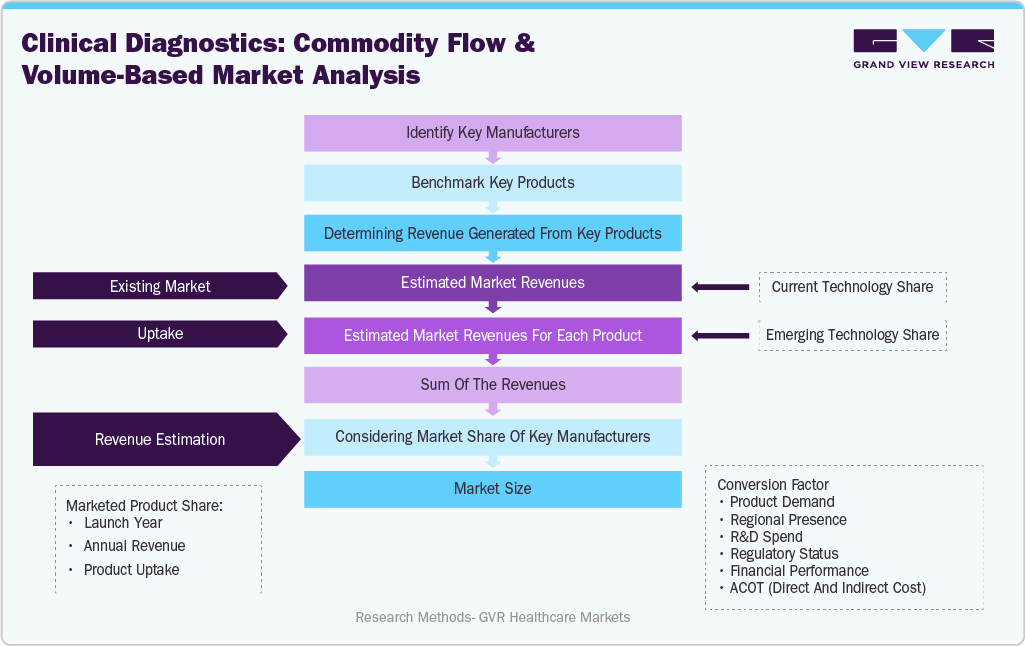
The gabapentin market was estimated using a bottom up methodology supported by extensive secondary and primary research. The study began by identifying key branded and generic manufacturers, including global and regional pharmaceutical companies involved in gabapentin production and commercialization. Product portfolios were benchmarked based on dosage form, application, regulatory approvals, geographic presence, and distribution channels. Revenue generated from gabapentin products was estimated using company annual reports, regulatory filings, prescription trends, public procurement data, and pharmaceutical sales databases. Individual product revenues were aggregated to derive the overall market size, followed by validation through manufacturer market share analysis and regional demand assessment. Market estimates were further refined by evaluating generic penetration, pricing trends, treatment adoption, healthcare expenditure, and prescription volumes across major countries. Primary interviews with industry experts, distributors, healthcare professionals, and pharmaceutical executives were conducted to validate assumptions and ensure consistency with current commercial and regulatory market conditions.
 To learn more about this report, Download Free Sample Report
Delivered Customizations
This report has been delivered with the following In-depth customizations
CLIENT REQUEST
CUSTOMIZATION DELIVERED
VALUE ADDS
Gabapentin Competitive Landscape & Generic Market Assessment
Conducted a comprehensive assessment of the global gabapentin market, evaluating branded and generic manufacturers, product portfolios, approved dosage forms, regional commercialization, regulatory approvals, pricing dynamics, and competitive positioning. The study analyzed key companies including Pfizer Inc., Teva Pharmaceutical Industries Ltd., Sun Pharmaceutical Industries Ltd., Lupin Industries Ltd., Aurobindo Pharma, Cipla, Zydus Pharmaceuticals, Glenmark Pharmaceuticals, Apotex Inc., Amneal Pharmaceuticals, and other leading generic suppliers across major pharmaceutical markets.
Helped the client identify leading manufacturers, benchmark competitive positioning, evaluate market concentration, assess generic penetration, and prioritize regional expansion, licensing, and commercialization strategies within the global gabapentin market.
Gabapentin Product Portfolio & Commercial Benchmarking Study
Delivered a detailed benchmarking analysis of gabapentin products by dosage form, indication, pricing strategy, distribution channel, regulatory approvals, and commercialization footprint. The assessment compared branded and generic portfolios, manufacturing capabilities, supply chain strategies, market access initiatives, and product differentiation across leading pharmaceutical companies operating in developed and emerging markets.
Enabled the client to evaluate product competitiveness, identify portfolio gaps, benchmark commercialization strategies, optimize market positioning, and prioritize investments in differentiated formulations, geographic expansion, and distribution partnerships.
Gabapentin Manufacturing & Supply Chain Feasibility Assessment
Conducted a strategic assessment of the gabapentin manufacturing ecosystem, evaluating active pharmaceutical ingredient sourcing, finished dosage manufacturing capabilities, regulatory compliance, quality standards, contract manufacturing opportunities, distribution infrastructure, and regional supply chain resilience. The study assessed manufacturing capacity, procurement strategies, and commercial supply networks supporting global gabapentin availability.
Supported strategic manufacturing and sourcing decisions by identifying qualified manufacturing partners, evaluating supply chain risks, strengthening procurement strategies, and improving commercial readiness through optimized production planning and regional distribution capabilities.
Frequently Asked Questions About This Report
The global gabapentin market size was valued at USD 2.4 billion in 2025 and is estimated at USD 2.5 billion in 2026.
The global gabapentin market is expected to grow at a CAGR of 5.1% from 2026 to 2033, reaching USD 3.6 billion by 2033.
North America dominated the gabapentin market with a 33.4% revenue share in 2025.
The epilepsy segment led the market with the largest revenue share of 49.8% in 2025.
Key players in the gabapentin market include Zydus Pharmaceuticals, Inc., Glenmark Pharmaceuticals Ltd., Sun Pharmaceutical Industries Ltd., Ascend Laboratories LLC, Apotex Inc., Teva Pharmaceutical Industries Ltd., Aurobindo Pharma, Amneal Pharmaceuticals LLC, Cipla, B.P. Pharma, Assertio Holdings, Inc., Azurity Pharmaceuticals, Inc. (formerly Arbor Pharmaceuticals, LLC), and Pfizer Inc.
Key factors include the rising prevalence of epilepsy and neuropathic pain, increasing incidence of diabetic peripheral neuropathy, growing geriatric population, expanding availability of affordable generic formulations, and improved access to treatment through hospital, retail, and online pharmacy channels.
Asia Pacific is the fastest-growing region over the forecast period.
The capsule segment led the market with the largest revenue share of 56.1% in 2025.
The hospital pharmacy segment led the market with the largest revenue share of 47.4% in 2025.
About the Author(s)
Pharmaceuticals Research Team
Healthcare · PharmaceuticalsThis report was authored by the pharmaceuticals research team at Grand View Research - comprising two research analysts, one senior research analyst, and one industry expert - with specialized expertise in the pharmaceuticals segment of the healthcare industry. All findings are based on proprietary healthcare databases, executive interviews, and regulatory analysis, subject to internal peer review prior to publication.
Last Updated:
Speak to Analyst

Customize this report to your needs - add regions, segments, or data points, with 20% free customization.
Or view our licence options:


ISO 9001:2015 & 27001:2022 Certified
We are GDPR and CCPA compliant! Your transaction & personal information is safe and secure. For more details, please read our privacy policy.


