
- Home
- »
- Pharmaceuticals
- »
-
Generic API Contract Manufacturing Market Report, 2033GVR Report cover

Generic API Contract Manufacturing Market (2026 - 2033)
Size, Share & Trends Analysis Report By Type (Traditional API, Highly Potent API), By Service (API Manufacturing, Intermediate Manufacturing, Analytical & Regulatory Manufacturing Support), By Application, By End Use, By Region, And Segment Forecasts
Market Size, 2025
$45.8BMarket Estimate, 2026
$49.7BMarket Forecast, 2033
$93.6BCAGR, 2026–2033
9.5%Generic API Contract Manufacturing Market Summary
The global generic API contract manufacturing market size was valued at USD 45.8 billion in 2025, is expected to grow from USD 49.7 billion in 2026 to USD 93.6 billion by 2033, at a CAGR of 9.5% from 2026 to 2033. North America dominated the market, accounting for a revenue share of 35.1% in 2025. The growth of the market is due to increasing outsourcing of API manufacturing by pharmaceutical companies, growing demand for generic medicines and upcoming patent expirations and increasing focus on supply chain diversification and localized API manufacturing.
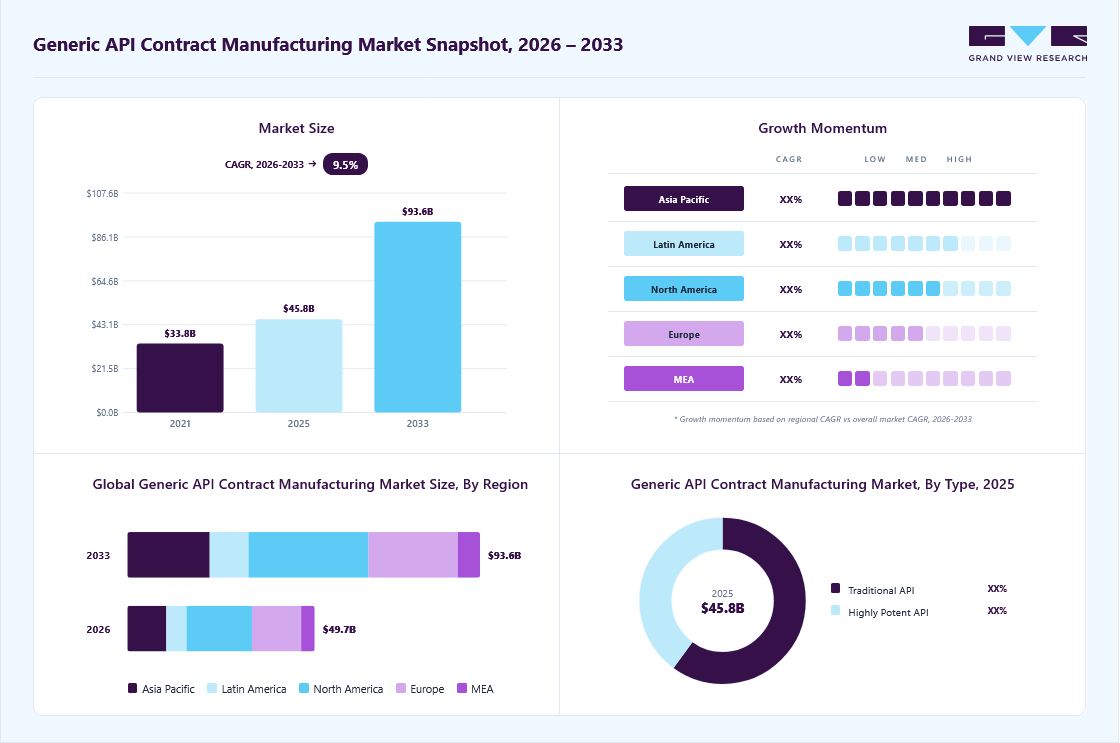 Source: Grand View Research, IR Documents, Primary Interviews, Paid DatabasesTo learn more about this report,
 Download Free Sample Report
Key Market Trends & Insights
- By type: Traditional API segment held the largest market share of 59.9% in 2025.
- By service: API manufacturing segment held the largest market share of 55.9% in 2025.
- By application: On the basis of application, oncology accounts for the largest segment of 24.8% in 2025
- By end use: Large pharmaceutical companies represented the largest segment with a share of 46.0% in 2025.
Regional Highlights
- Largest regional market: North America (35.1% revenue share, 2025)
- Fastest-growing regional market: Asia Pacific (highest CAGR, 2026-2033)
- By country: The U.S. held the largest share in 2025
Market Size & Forecast
- Market Size in 2025: USD 45.8 Billion
- Estimated Market Size in 2026: USD 49.7 Billion
- Projected Market Size by 2033: USD 93.6 Billion
- CAGR (2026-2033): 9.5%
GVR research-powered AIAsk Prism AI about the generic API contract manufacturing marketGet cited answers from GVR research on market growth, segments, regulations and forecasts.Start with✓ Source-linked answers ✓ Market-specific context ✓ Traceable figuresExplore Prism AI ↗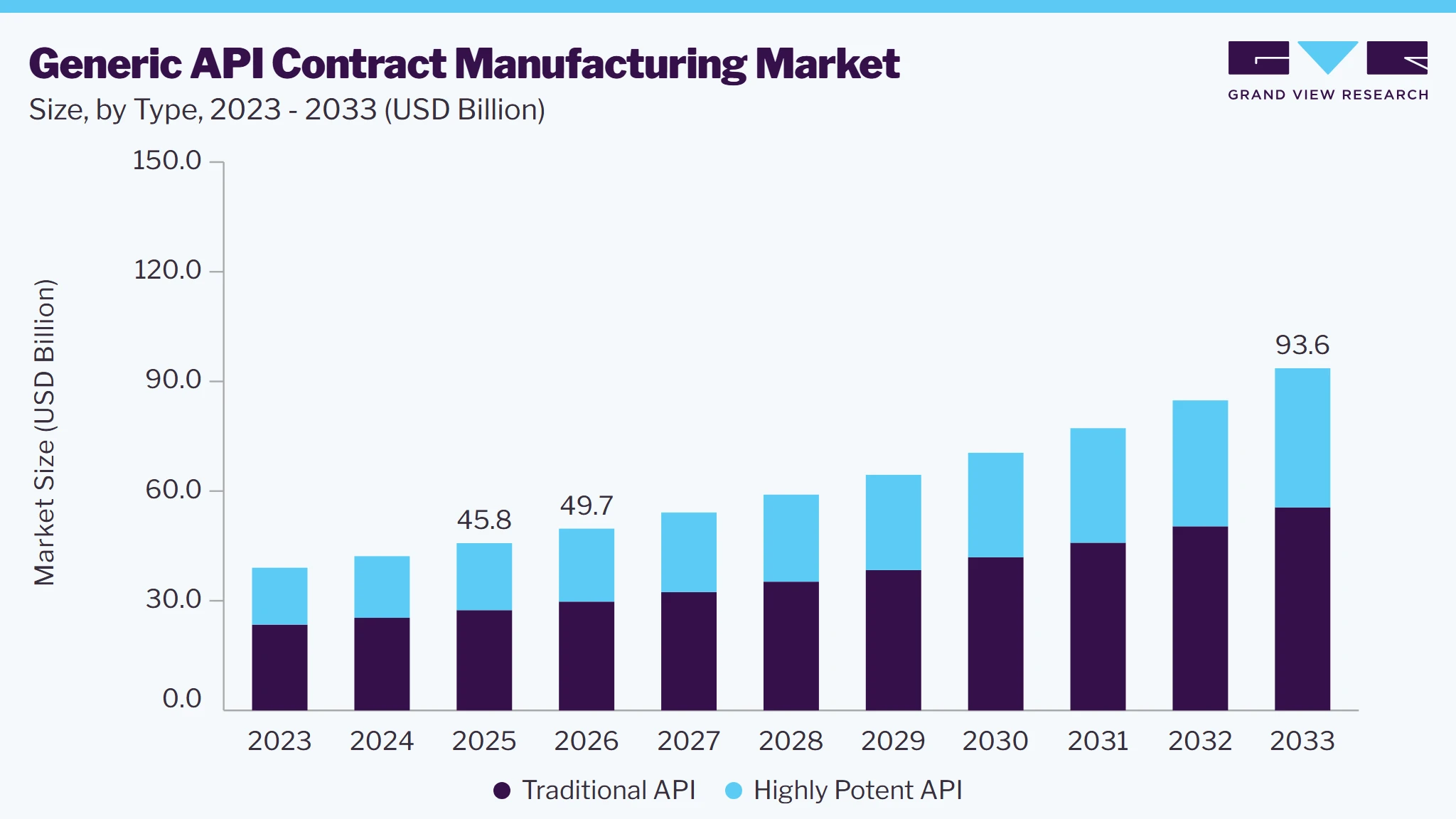 To learn more about this report, Download Free Sample Report
Market Dynamics
The generic API contract manufacturing market is driven by pharmaceutical companies seeking external manufacturing capacity, specialized chemical synthesis capabilities, and cost-efficient commercial production for off-patent active ingredients. In addition, growing generic medicine consumption, patent expirations, and demand for diversified API supply networks are increasing outsourcing requirements among large and small pharmaceutical companies. Besides this, contract manufacturers with multi-step synthesis, HPAPI containment, process optimization, scale-up, analytical testing, and regulatory documentation capabilities are positioned to address complex customer requirements. The market also benefits from pharmaceutical companies adopting secondary sourcing strategies to reduce concentration risks and improve continuity of API supply.
However, stringent GMP requirements, regulatory inspections, impurity control standards, and customer qualification procedures increase operational complexity and capital requirements. In addition, price competition for mature generic APIs can compress manufacturing margins, particularly for traditional APIs with multiple qualified suppliers. Whereas, supply volatility for key starting materials and intermediates can further affect production economics and delivery schedules.
In addition, growth opportunities are developing around highly potent APIs, complex synthetic chemistry, localized manufacturing, and integrated development-to-commercial services. Furthermore, investments in containment infrastructure, continuous process improvement, automation, analytical technologies, and flexible manufacturing capacity can expand outsourcing opportunities. Contract manufacturers capable of supporting intermediates, final APIs, regulatory documentation, and technology transfer within integrated networks can capture broader customer programs and long-term commercial supply contracts.
The increasing preference of pharmaceutical companies for outsourcing API manufacturing is driving the generic API contract manufacturing market. Besides this, outsourcing enables pharmaceutical companies to access established manufacturing infrastructure, specialized synthesis capabilities, regulatory expertise, and scalable production capacity while reducing the need for additional captive manufacturing investments. The trend is gaining significance as generic drug manufacturers manage broad product portfolios and require cost-efficient production across multiple geographies. Contract manufacturers with capabilities in complex chemistry, high-potency compounds, process optimization, and commercial-scale production are gaining opportunities for long-term customer engagements. Some of the key players have reported growing customer engagement and increasing requests for proposals within its custom synthesis business, indicating sustained pharmaceutical outsourcing activity. For instance, in April 2025, Divi’s Laboratories signed a long-term manufacturing and supply agreement with a global pharmaceutical company, supporting continued demand for external manufacturing partnerships.
Similarly, in October 2025, Cambrex announced an investment of USD 120 million to expand its U.S. API manufacturing operations in response to increasing customer demand for API development and manufacturing. Such an expansion is intended to increase large-scale manufacturing capacity and support complex API production. The expansion of outsourced manufacturing relationships is expected to increase capacity utilization, long-term commercial contracts, and revenue opportunities for generic API contract manufacturers.
Persistent pricing pressure across mature generic APIs can restrain the growth of the generic API contract manufacturing market. Multiple qualified manufacturers frequently compete for high-volume, off-patent molecules, increasing price-based competition and limiting manufacturers’ ability to pass higher raw material, energy, labor, and compliance costs to pharmaceutical customers. In addition, generic drug manufacturers facing continuing price pressure can also seek lower API procurement costs, directly affecting contract manufacturers’ margins. This pressure is particularly significant for traditional APIs manufactured through established chemical processes, where limited product differentiation increases competition based on cost, manufacturing efficiency, quality, and supply reliability.
In addition, contract manufacturers must simultaneously maintain cGMP compliance, analytical controls, environmental management systems, and regulatory documentation, creating a relatively fixed operating-cost base. Manufacturers with lower capacity utilization or inefficient production processes may therefore face margin compression when API selling prices decline. In addition, smaller contract manufacturers can be particularly affected owing to lower purchasing leverage and limited production scale. Thus, sustained pricing pressure may discourage capacity additions for mature molecules, encourage portfolio rationalization, and direct capital toward complex or highly potent APIs offering greater technical differentiation and more favorable manufacturing economics.
Growing demand for complex and highly potent generic APIs represents a significant opportunity for contract manufacturers to expand into technically differentiated, higher-value manufacturing services. These highly potent compounds require specialized containment infrastructure, occupational exposure controls, sophisticated analytical capabilities, and stringent contamination-control procedures, compared with conventional APIs. These technical barriers can limit the number of qualified suppliers and create opportunities for contract manufacturers with established high-containment capabilities.
In addition, increasing genericization of oncology and other specialty medicines is also creating demand for scalable manufacturing capacity as pharmaceutical companies seek external partners capable of managing complex synthesis and commercial production. For instance, in September 2026, Lupin Manufacturing Solutions inaugurated a dedicated high-potency oncology manufacturing block at its Vizag facility in India. The facility was designed for highly potent APIs and incorporated advanced containment and process capabilities, expanding the company’s capacity to address oncology manufacturing requirements.
Furthermore, capacity additions focused on complex chemistry and high-potency compounds can enable contract manufacturers to differentiate from suppliers competing primarily in mature, high-volume APIs. Such investments can support longer customer relationships, improve access to specialty generic programs, and broaden commercial manufacturing opportunities. In addition, contract manufacturers combining high-containment infrastructure with process development, scale-up, and regulatory capabilities are therefore positioned to capture increasing outsourcing opportunities as complex molecules lose patent protection.
Market Concentration & Characteristics
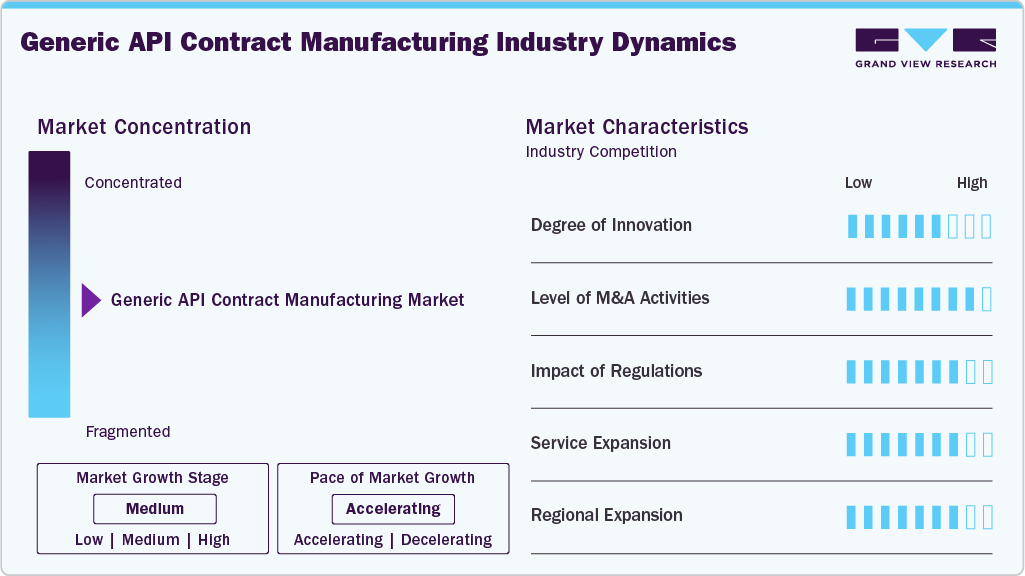
The generic API contract manufacturing market is characterized by stringent regulatory requirements, high process complexity, cost-sensitive commercial manufacturing, and long-term pharmaceutical customer relationships. Competitive positioning is influenced by synthesis expertise, production scale, HPAPI containment capabilities, regulatory compliance, supply reliability, geographic presence, process efficiency, and the ability to manage complex manufacturing programs.
The degree of innovation is moderate to high, driven by advances in continuous manufacturing, flow chemistry, process analytical technologies, automation, and advanced containment systems. The contract manufacturers are investing in process optimization, impurity control, crystallization, and high-potency manufacturing technologies to improve yields, reduce production complexity, enhance quality consistency, and support technically demanding generic API programs across therapeutic applications.
 To learn more about this report, Download Free Sample Report
The level of M&A activity is moderate, with transactions primarily aimed at expanding manufacturing capacity, acquiring specialized chemistry capabilities, entering new geographic markets, and broadening customer relationships. In addition, consolidation can provide contract manufacturers with additional facilities, technical expertise, regulatory credentials, and commercial-scale infrastructure. Acquisitions involving API manufacturing assets can also accelerate entry into complex chemistry and high-potency manufacturing categories.
The impact of regulations is high, as generic API contract manufacturers must comply with stringent GMP, quality, environmental, documentation, and regulatory requirements across customer markets. Besides this, regulatory inspections, impurity controls, data integrity requirements, process validation, change management, and DMF-related documentation influence manufacturing operations. Compliance requirements increase operating costs while favoring manufacturers with established quality systems and successful regulatory inspection histories.
Service expansion is high, as contract manufacturers broaden capabilities beyond routine API production to capture greater customer engagement across the manufacturing lifecycle. Expansion areas include process development, intermediates, scale-up, technology transfer, analytical testing, regulatory documentation, micronization, particle engineering, and specialized high-potency capabilities. Integrated service offerings can reduce customer coordination requirements and support longer-term relationships from development through commercial manufacturing.
Regional expansion is high, driven by pharmaceutical companies seeking geographically diversified manufacturing networks and improved supply continuity. Contract manufacturers are expanding existing facilities, adding production lines, and developing specialized capacity across major pharmaceutical manufacturing regions. Geographic diversification can provide closer access to customers, alternative sourcing options, and additional commercial capacity while reducing dependence on individual manufacturing locations and supporting multinational generic API supply programs.
Analyst Perspective
The generic API contract manufacturing market is progressing toward specialized, flexible, and geographically diversified manufacturing models as pharmaceutical companies reassess external production networks. In addition, commercial-scale API manufacturing remains central, while capabilities in complex synthesis, HPAPI containment, intermediates, analytical support, and technology transfer are becoming increasingly important for competitive differentiation. Contract manufacturers are expected to prioritize capacity expansion, process efficiency, automation, advanced analytical technologies, and regulatory compliance to secure long-term customer programs. Furthermore, supply-chain diversification is also increasing the strategic importance of manufacturing footprints across established and emerging pharmaceutical regions. Some of the large pharmaceutical companies are likely to favor suppliers capable of supporting scalable commercial volumes and secondary sourcing, while smaller companies benefit from flexible external infrastructure. Thus, technical capabilities, quality consistency, supply reliability, and scalable capacity will increasingly shape contract allocation and long-term customer relationships.
Impact of U.S. Tariffs on Generic API Contract Manufacturing Market
U.S. tariff policy is reshaping pharmaceutical sourcing strategies, although generic pharmaceuticals and their associated ingredients are currently exempt from Section 232 pharmaceutical tariffs. For instance, in April 2026, the U.S. imposed tariffs primarily on patented pharmaceuticals and associated ingredients while specifically excluding generic pharmaceuticals, biosimilars, and their ingredients from these measures. The exemption is subject to reassessment within one year, creating policy uncertainty for overseas generic API manufacturers supplying U.S. pharmaceutical companies. The White House
The current exemption limits immediate direct cost increases for imported generic APIs and supports continued outsourcing to established manufacturing hubs. However, broader U.S. efforts to strengthen domestic pharmaceutical production could encourage pharmaceutical companies to diversify suppliers, establish secondary sources, and evaluate U.S.-based manufacturing capacity. India remains particularly important within this environment. For instance, in February 2026, U.S.-India joint statement identified generic pharmaceuticals among products intended for potential reciprocal-tariff removal and provided for negotiated outcomes concerning generic pharmaceuticals and ingredients following the Section 232 investigation.
Furthermore, over the longer term, tariff uncertainty can create opportunities for contract manufacturers with geographically diversified facilities and flexible technology-transfer capabilities. In addition, generic API manufacturers may evaluate regional production networks, U.S. capacity additions, and dual-sourcing strategies to maintain cost competitiveness and supply continuity while reducing exposure to future trade-policy changes.
Technological Advancements
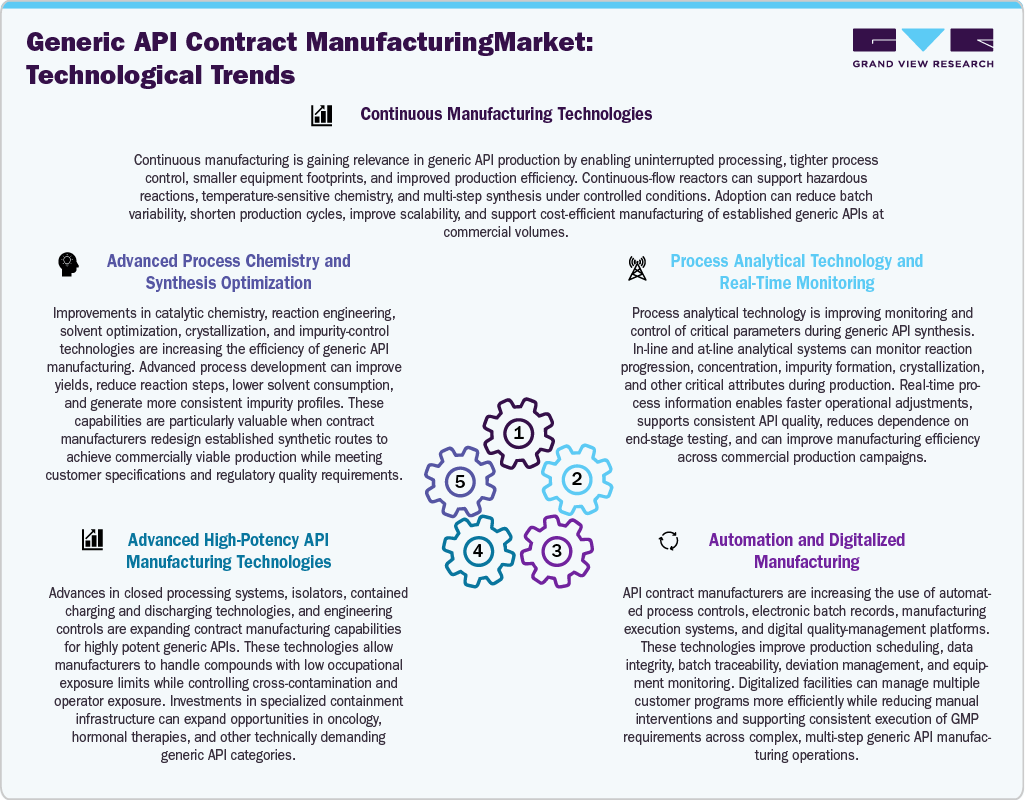
Technological advancements are improving efficiency, quality control, containment, and scalability across generic API contract manufacturing. In addition, continuous manufacturing and flow chemistry enable tighter control over reaction conditions, shorter production cycles, efficient scale-up, and safer processing of hazardous reactions. Besides this, process analytical technology and real-time monitoring allow manufacturers to track reaction progression, impurity formation, crystallization, and critical process parameters, supporting consistent API quality and faster process adjustments. In addition, automation, electronic batch records, manufacturing execution systems, and digital quality management platforms are improving batch traceability, production scheduling, data integrity, deviation management, and regulatory compliance across multi-product facilities.
 To learn more about this report, Download Free Sample Report
Furthermore, advanced containment technologies, including closed processing systems, isolators, and contained material-transfer systems, are expanding manufacturing capabilities for highly potent generic APIs, particularly for oncology and hormonal applications. In addition, advances in catalytic chemistry, reaction engineering, solvent optimization, purification, crystallization, and impurity control are improving synthetic-route efficiency. These technologies can increase yields, reduce process steps, improve product consistency, and lower material consumption. Continued adoption of integrated digital and process technologies is expected to improve manufacturing economics and support contract manufacturers handling increasingly complex generic API programs.
Pricing Model Analysis
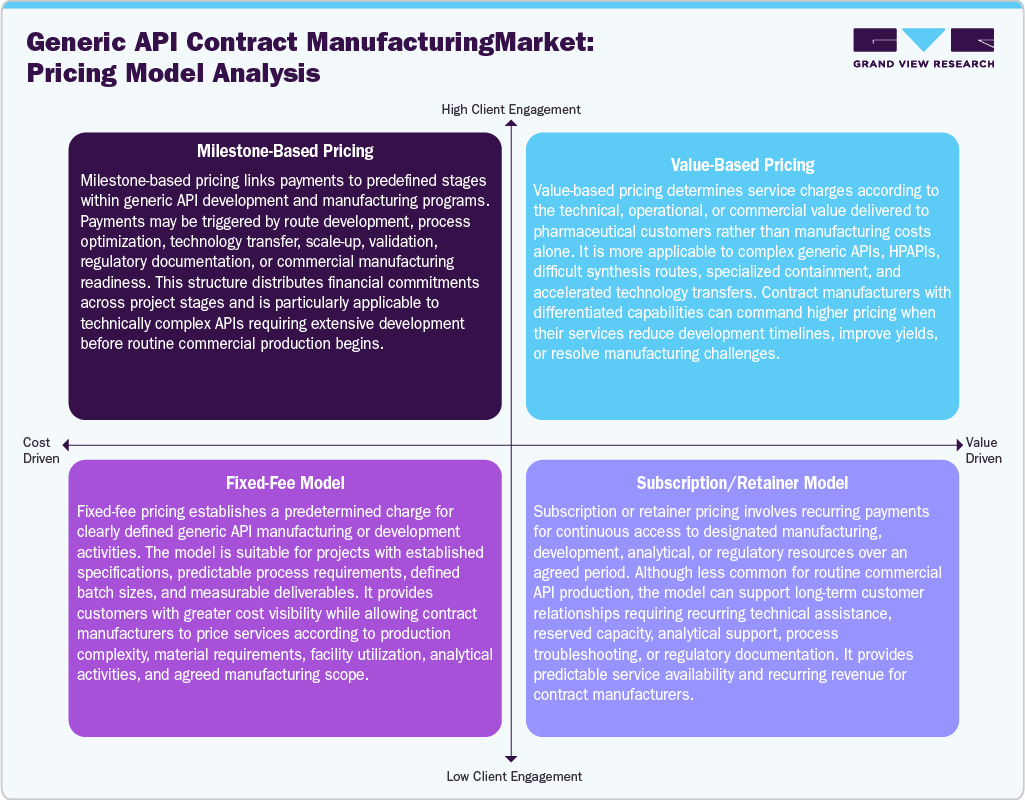
Pricing models in the generic API contract manufacturing market vary according to project complexity, manufacturing stage, production volume, technical requirements, and duration of customer engagement. Milestone-based pricing links payments to defined project stages, including process development, technology transfer, scale-up, validation, and commercial manufacturing readiness, allowing financial commitments to progress alongside project deliverables. In addition, value-based pricing considers the technical and commercial value delivered to customers and is more applicable to complex APIs, HPAPIs, specialized containment requirements, difficult synthesis routes, and manufacturing challenges where differentiated capabilities can support premium pricing.
 To learn more about this report, Download Free Sample Report
Furthermore, fixed-fee pricing establishes predetermined charges for clearly specified activities, batch sizes, manufacturing requirements, or analytical deliverables. It provides greater cost predictability and is suitable for established generic APIs with well-defined processes and specifications. Moreover, subscription or retainer models involve recurring payments for continued access to manufacturing, analytical, regulatory, or technical resources. Although less prevalent for routine API production, these arrangements can support reserved capacity, recurring analytical requirements, process troubleshooting, and long-term technical assistance.
Type Insights
On the basis of type, the traditional APIs represented the largest segment with a share of 59.9% in 2025, owing to their extensive use across established off-patent medicines for cardiovascular, metabolic, infectious, neurological, gastrointestinal, and other chronic conditions. Besides this, high commercial volumes, mature synthetic routes, recurring generic production, and broad pharmaceutical customer bases generate substantial outsourcing requirements. In addition, contract manufacturers can produce these APIs through multipurpose facilities without the extensive containment infrastructure required for highly potent molecules. Some of the established portfolios also support recurring commercial orders and manufacturing economies of scale. For instance, Curia Global reported more than 150 APIs and intermediates and over 30 years of off-patent API manufacturing experience, indicating the breadth of conventional generic API production.
The highly potent APIs are expected to register the fastest growth over the forecast period of 2026-2033, as generic competition expands into complex oncology and specialty medicines. These molecules require closed processing, containment isolators, controlled material transfer, occupational exposure management, specialized cleaning procedures, and trained personnel, limiting the number of manufacturers capable of handling them safely. The pharmaceutical companies can therefore favor external specialists rather than investing in dedicated high-containment infrastructure. In addition, contract manufacturers are responding by adding HPAPI development and production capabilities.
Service Insights
On the basis of service, the API manufacturing accounted for the largest revenue segment with a share of 55.9% in 2025, because final API production captures substantial commercial value within outsourced manufacturing engagements. Besides this, generic pharmaceutical companies require qualified suppliers capable of executing synthesis, purification, crystallization, isolation, drying, process control, validation, and commercial production according to defined specifications. In addition, recurring commercial batches create a larger revenue base than individual supporting activities. In addition, large-volume production also benefits manufacturers possessing multipurpose reactors and scalable cGMP infrastructure.
Intermediate manufacturing is the fastest growing segment over the forecast period, as generic API production frequently involves multi-step chemical synthesis requiring isolated or advanced intermediates before final API conversion. Besides this, outsourcing these stages allows pharmaceutical and API companies to access specialized reaction chemistry, purification capabilities, and scalable production while allocating final API stages across qualified facilities. Intermediate suppliers also support supply diversification and backward integration strategies for critical materials. FDA ICH Q7 guidance specifically recognizes intermediate production as part of chemical API manufacturing after introduction of the designated API starting material, with progressively stringent GMP controls as synthesis advances toward the final API.
Application Insights
On the basis of application, oncology accounts for the largest segment of 24.8% in 2025, due to the substantial presence of chemically synthesized targeted therapies and highly potent molecules requiring specialized manufacturing environments. Besides this, complex reaction sequences, stringent impurity limits, low occupational exposure limits, containment requirements, and sophisticated purification processes increase contract manufacturing value per program. In addition, generic entry following patent expiration creates opportunities for manufacturers possessing relevant chemistry and containment capabilities. For instance, in July 2026, the FDA granted first-generic approvals for afatinib dimaleate tablets, used for certain metastatic non-small cell lung cancers. Continued genericization of small-molecule oncology therapies supports outsourced API synthesis, scale-up, validation, and commercial manufacturing demand.
The cardiovascular disease is the second fastest growing over the forecast period, due to sustained demand for long-term therapies addressing hypertension, dyslipidemia, heart failure, thrombosis, and related chronic conditions. Broad generic availability across statins, beta-blockers, calcium-channel blockers, angiotensin receptor antagonists, and anticoagulants creates recurring requirements for chemically synthesized APIs. In addition, cardiovascular molecules can involve multistage synthesis and stringent impurity control, supporting specialized contract manufacturing requirements.
End Use Insights
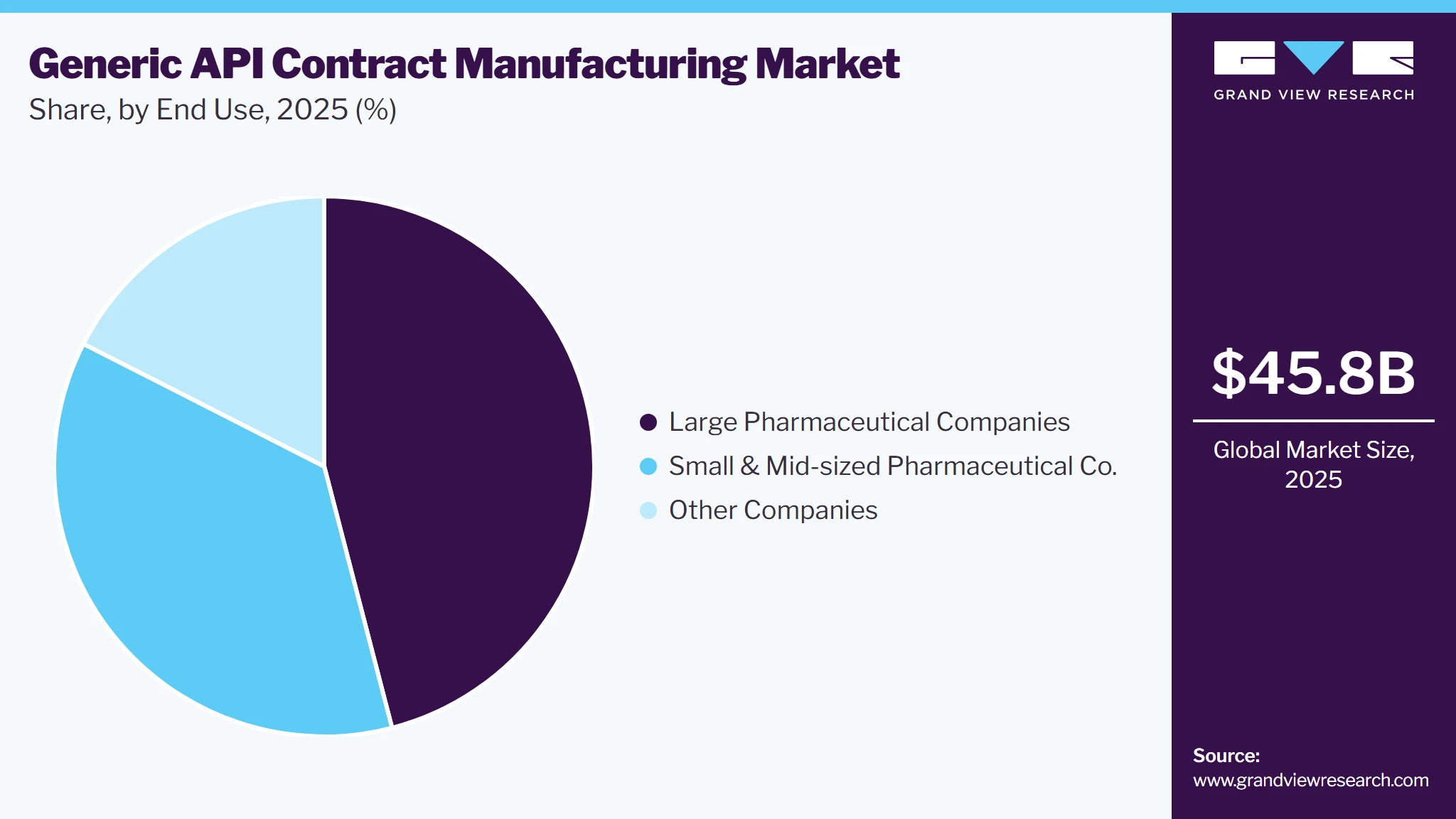
On the basis of end use, the large pharmaceutical companies represented the largest segment with a share of 46.0% in 2025, because they manage broad commercial portfolios, multiple manufacturing programs, extensive geographic markets, and substantial API volume requirements. Outsourcing allows these companies to allocate molecules across qualified manufacturing networks while maintaining internal resources for strategically important products. Their supplier strategies frequently require commercial-scale capacity, regulatory documentation, technology transfer capabilities, validated processes, and manufacturing continuity across multiple years. Large companies can also establish secondary sources for mature APIs to manage geographic concentration and capacity constraints. CDMOs with integrated development-to-commercial capabilities are positioned to capture these programs, particularly when customers require scalable production across multiple facilities and regulatory market.
 To learn more about this report, Download Free Sample Report
The small and mid-sized pharmaceutical companies are expected to register faster growth because many operate with comparatively limited internal API infrastructure while pursuing broader generic portfolios and regulated-market opportunities. In addition, contract manufacturing converts large fixed investments in reactors, containment systems, analytical laboratories, environmental controls, and specialized technical teams into externally sourced manufacturing services. Flexible CDMO networks also allow these companies to access different production scales as individual generic programs mature. Furthermore, external partners can provide process optimization, analytical development, technology transfer, validation, and commercial manufacturing through one relationship. This is particularly suitable for companies entering complex generics, where specialized infrastructure requirements can make construction of dedicated internal capacity economically difficult.
Regional Insights
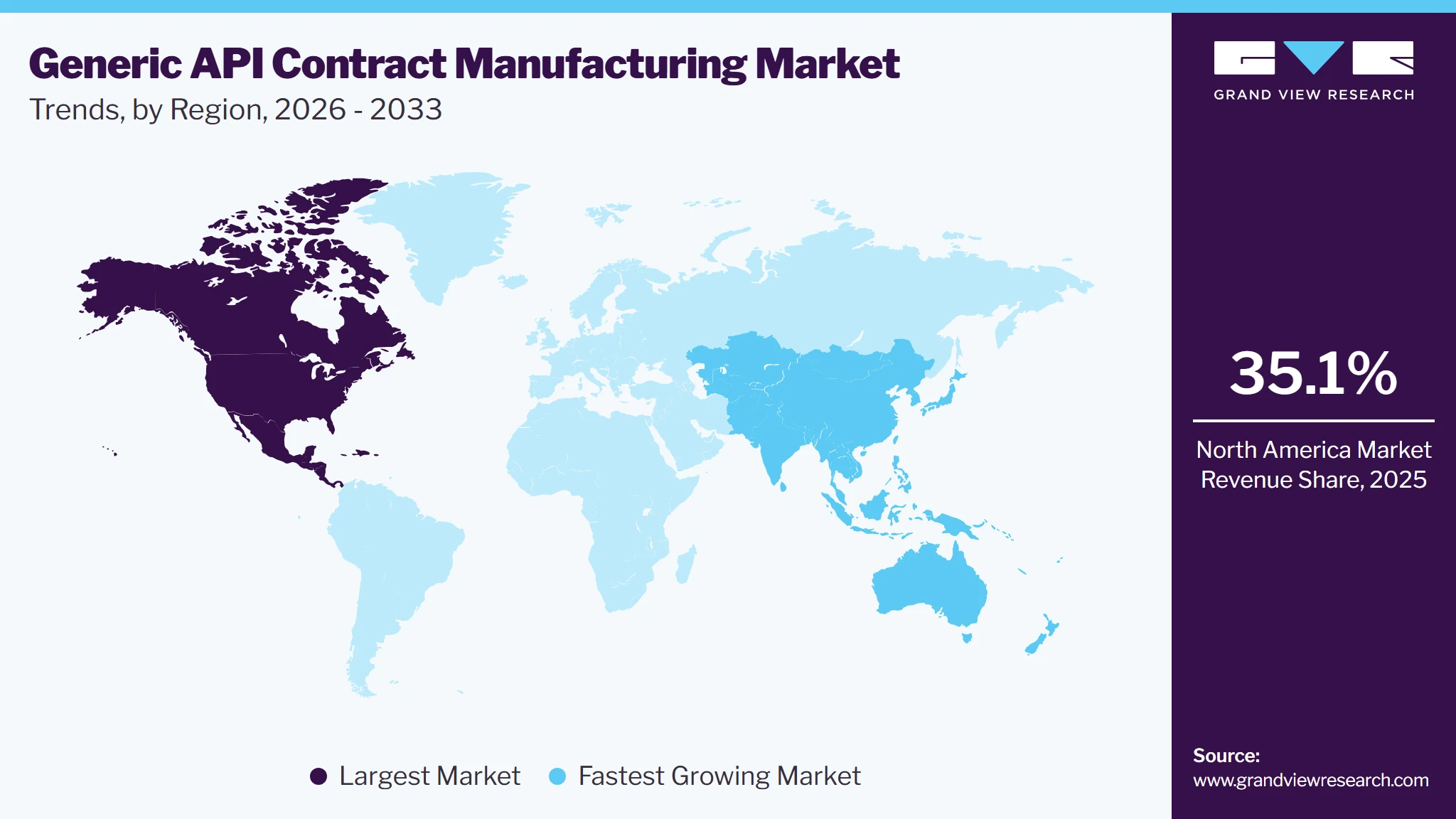
North America held the largest segment share of 35.1% in generic API contract manufacturing market in 2025, driven by increasing API supply-chain diversification, growing outsourcing initiatives, and rising demand for compliant domestic manufacturing capacity. Besides this, competition is focused on advanced chemistry, HPAPI containment, and regulatory track records. For instance, in October 2025, Cambrex announced a USD 120 million U.S. expansion to address increasing API development and manufacturing demand. In addition, USFDA regulates API facilities through cGMP requirements, inspections, DMF-related processes, and GDUFA requirements, while its PreCheck initiative supports establishment of domestic pharmaceutical manufacturing facilities.
 To learn more about this report, Download Free Sample Report
U.S. Generic API Contract Manufacturing Market Trends
The U.S. generic API contract manufacturing market is driven by rising pharmaceutical supply-chain resilience initiatives, increasing demand for domestic API capacity, and rising efforts to reduce dependence on overseas production. According to a report of USFDA of September 2025, only 9% of API manufacturers supplying the U.S. were located domestically, compared with 44% in India and 22% in China. Thus, FDA initiatives supporting domestic generic drug manufacturing create opportunities for U.S.-based API contractors. Besides this, competition favors manufacturers offering advanced synthesis, regulatory compliance, HPAPI capabilities, and reliable commercial capacity, while Asian manufacturers remain important suppliers to U.S. generic companies.
The generic API contract manufacturing market in Canada is influenced by considerable dependence on imported APIs and the need for reliable pharmaceutical supply networks. Health Canada has historically identified API manufacturing as fragmented and highly competitive, with pharmaceutical companies outsourcing production and specializing suppliers serving generic customers. In addition, import dependence creates opportunities for contract manufacturers capable of providing qualified alternative sourcing and regulatory-compliant production. Furthermore, competition includes domestic specialized manufacturers alongside established Asian and European suppliers. In addition, contract manufacturers offering complex synthesis, analytical capabilities, quality documentation, and flexible production volumes can address Canadian pharmaceutical companies seeking diversified API procurement and manufacturing arrangements.
Europe Generic API Contract Manufacturing Market Trends
The generic API contract manufacturing market in Europe is supported by established chemical synthesis expertise, rising demand for complex APIs, and increasing initiatives by pharmaceutical companies seeking regional supply security. In addition, competition favors manufacturers with high-containment infrastructure, scalable chemistry, and established regulatory documentation. For instance, in June 2026, Siegfried inaugurated a large-scale API facility in Germany, adding 100 m³ of reactor capacity for complex and high-containment manufacturing. Besides this, EU regulations require active-substance manufacturers to comply with GMP, while imported APIs generally require confirmation of GMP standards equivalent to EU requirements.
UK generic API contract manufacturing market held a significant share in 2025. The country’s market growth is due to established pharmaceutical industry, specialty chemistry expertise, and increasing attention to medicine supply security. Besides this, generic pharmaceutical companies require qualified API partners capable of maintaining consistent quality while managing cost-sensitive commercial production. In addition, competition favors technically specialized contract manufacturers offering complex synthesis, process optimization, analytical support, and flexible capacity rather than commodity-scale production alone. UK-based manufacturers, European suppliers, and Asian API producers compete for customer programs. In addition, manufacturers and importers of active substances must register with the MHRA and comply with applicable good manufacturing and distribution practices.
The generic API contract manufacturing market in Germany is anticipated to grow significantly over the forecast period. Germany benefits from a strong chemical and pharmaceutical manufacturing base that supports demand for technically complex generic API contract manufacturing. Besides this, customers seek European production options for complex synthesis, high-containment processing, and supply diversification. In addition, competition is concentrated around manufacturers possessing advanced chemistry capabilities, established quality systems, and commercial-scale infrastructure. The country is also witnessing rising investments strengthening its position in higher-value outsourced API production, where technical differentiation and regional manufacturing availability influence contract allocation.
Asia Pacific Generic API Contract Manufacturing Market Trends
Asia Pacific benefits from extensive synthetic chemistry infrastructure, cost-efficient commercial production, large technical workforces, and established generic pharmaceutical manufacturing ecosystems. In this region, India remains a major competitive center, while regional manufacturers target complex and differentiated APIs. Some of the manufactures are in generic drug substances for more than 500 customers and maintains capabilities across mature and specialty APIs. For instance, Neuland Labs in 2025, in India advanced revised Schedule M implementation, strengthening GMP and manufacturing-facility requirements and increasing quality compliance expectations among pharmaceutical manufacturers.
The generic API contract manufacturing market in China is expected to grow over the forecast period. The growth of the market is due to extensive chemical manufacturing ecosystem, large-scale intermediate production, integrated supply networks, and competitive manufacturing economics. These advantages support contract production of chemically synthesized generic APIs for domestic and international pharmaceutical companies. Besides this, competition in this country includes large integrated API manufacturers and specialized suppliers capable of progressing from intermediates to commercial API production. In addition, increasing quality expectations are encouraging investment in process controls, analytical systems, and compliant facilities. NMPA conducts inspections to assess continued GMP compliance, while export-oriented API manufacturers can obtain pharmaceutical product certificates documenting manufacturing status and GMP inspection history.
Japan's Generic API contract manufacturing market is witnessing significant growth over the forecast period. The growth of the market is due to generic medicine supply stability and concerns surrounding concentrated manufacturing and raw-material sourcing. The country also creates opportunities for qualified contract manufacturers providing alternative API sources, technology transfer, and consistent commercial supply. In addition, domestic manufacturers compete with qualified overseas API producers serving Japanese generic pharmaceutical companies under stringent customer qualification requirements.
India generic API contract manufacturing market is witnessing considerable growth due to extensive synthetic chemistry expertise, established generic pharmaceutical production, skilled technical resources, and substantial commercial capacity. In addition, competition is intense among integrated pharmaceutical companies, API specialists, and CDMOs, encouraging expansion into complex and higher-value chemistry. Some of the government initiatives are adding domestic capacity and reducing dependence on imported intermediates.
Latin America Generic API Contract Manufacturing Market Trends
The generic API contract manufacturing market in Latin America is projected to grow over the forecast period. The region’s growth is supported by expanding generic medicine requirements, efforts to strengthen pharmaceutical self-sufficiency, and opportunities to reduce dependence on imported APIs.
The generic API contract manufacturing market in Brazil is expected to grow over the forecast period. The growth is due to its sizeable domestic pharmaceutical manufacturing base and strategic interest in reducing dependence on imported pharmaceutical ingredients. Besides this, local generic producers create potential demand for regional API sourcing, technology transfer, and customized manufacturing partnerships. In addition, competition remains influenced by overseas API suppliers, particularly cost-competitive Asian manufacturers, requiring domestic contractors to differentiate through shorter supply chains, regulatory familiarity, responsiveness, and specialized production. Furthermore, Brazilian API manufacturers capable of improving scale and technical complexity can capture outsourcing programs where pharmaceutical customers prioritize supply continuity and regional sourcing
Middle East and Africa Generic API Contract Manufacturing Market Trends
Middle East & Africa is developing and is supported by pharmaceutical localization initiatives, efforts to reduce API import dependence, and increasing investment in domestic medicine production. In addition, Saudi Arabia is advancing local pharmaceutical manufacturing and technology transfer, while South Africa provides a comparatively established pharmaceutical production and regulatory environment. For instance, in April 2025, the SFDA participated in the World Local Production Forum, focusing on regulatory frameworks supporting healthcare manufacturing investment. In Africa, limited domestic API capacity creates opportunities for contract manufacturers and regional partnerships.
South Africa Generic API Contract Manufacturing Market is witnessing growth as pharmaceutical policy increasingly supports local production and reduced dependence on imported health products. in addition, domestic API capacity remains comparatively limited, creating scope for technology transfer, regional partnerships, and specialized manufacturing investments. Furthermore, competition differs from established Asian markets, with imported APIs continuing to play a substantial role while local manufacturers develop capabilities. For instance, in June 2025, SAHPRA approved a policy position supporting local manufacturing. Its API-specific GMP guidance also establishes ICH Q7-aligned manufacturing expectations for active ingredients.
Saudi Arabia is a country with emerging opportunity linked to pharmaceutical localization under national industrial development objectives and increasing interest in domestic generic medicine production. The emerging manufacturing base creates opportunities for API technology transfer, contract production partnerships, and localized supply arrangements. Besides this, competition includes international API suppliers alongside domestic pharmaceutical companies developing manufacturing capabilities. For instance, in December 2025, the SFDA's Generic Drugs Conference specifically addressed local pharmaceutical manufacturing and investment. In addition, contract manufacturers offering technology transfer, regulatory expertise, and scalable chemical manufacturing capabilities can participate as Saudi pharmaceutical production becomes increasingly localized.
Key Generic API Contract Manufacturing Company Insights
The generic API contract manufacturing market is fragmented, with competition transformed by manufacturing scale, synthetic chemistry capabilities, regulatory compliance, cost efficiency, and customer relationships. Key companies include Siegfried Holding AG, Cambrex Corporation, Aurobindo Pharma, Piramal Pharma Limited, Divi’s Laboratories Limited, Neuland Laboratories Ltd., Curia Global, Inc., Lupin Manufacturing Solutions, Dr. Reddy’s Laboratories Ltd., and LAURUS Labs. In addition, established participants compete through commercial-scale capacity, complex chemistry, HPAPI infrastructure, process development, and geographic manufacturing networks. The broader small-molecule API CDMO landscape remains fragmented, with significant production distributed among numerous specialized manufacturers. Companies are expanding differentiated capabilities and capacity to secure long-term pharmaceutical contracts. Competitive positioning is increasingly influenced by supply reliability, technology transfer capabilities, quality track records, and the ability to support complex generic API programs efficiently.
Key Generic API Contract Manufacturing Companies
The following key companies have been profiled for this study on the generic API contract manufacturing market.
-
Siegfried Holding AG
-
Cambrex Corporation
-
Aurobindo Pharma
-
Piramal Pharma Limited
-
Divi's Laboratories Limited
-
Neuland Laboratories Ltd.
-
Curia Global, Inc.
-
Lupin Manufacturing Solutions
-
Dr. Reddy’s Laboratories Ltd.
-
LAURUS Labs
Competitive Benchmarking
Operating Strategies
Competitive Edge
Weaknesses
Mature Players: Siegfried Holding AG
- Mature players focus on long-term manufacturing agreements, capacity expansion, geographic diversification, and integrated development-to-commercial capabilities. Investments target complex synthesis, HPAPI containment, process optimization, and advanced analytical infrastructure.
- Companies pursue secondary-source manufacturing opportunities and facility upgrades to deepen relationships with large pharmaceutical customers and improve commercial capacity utilization.
- Established players benefit from established regulatory track records, commercial-scale infrastructure, broad chemistry capabilities, experienced technical teams, and longstanding pharmaceutical customer relationships. Multi-site manufacturing networks provide supply flexibility, capabilities across traditional and highly potent APIs enable broader project participation. Strong quality systems technology-transfer experience support complex, long-duration commercial manufacturing contracts.
- Mature organizations face substantial fixed costs associated with large manufacturing networks, regulatory compliance, facility maintenance, and specialized infrastructure.
- Exposure to price-sensitive mature APIs can affect profitability, while complex organizational structures may reduce operational flexibility.
Emerging Players: Neuland Laboratories Ltd.
- Emerging players focus on specialized synthesis, flexible manufacturing, process optimization, and customer-specific API programs to compete with established manufacturers. Strategies include targeting complex generic APIs, expanding HPAPI capabilities, forming long-term pharmaceutical partnerships, improving regulatory compliance, adopting advanced manufacturing technologies, gradually adding commercial capacity to secure recurring outsourcing contracts.
- Emerging players benefit through operational flexibility, competitive manufacturing costs, faster decision-making, and customized customer engagement. Smaller manufacturing networks can enable rapid technology transfer, adaptable batch sizes, and focused technical support. Specialization in complex chemistry, niche APIs, or high-potency manufacturing can differentiate these companies from larger manufacturers competing across broader API portfolios.
- Emerging players often limited commercial-scale capacity, smaller geographic footprints, constrained investment resources, and shorter regulatory track records.
- Lower purchasing leverage can increase raw-material costs, while customer concentration can increase revenue volatility.
Recent Developments
-
In June 2026, Siegfried inaugurated a large-scale drug substance manufacturing facility in Minden, Germany, adding approximately 100 m³ of reactor capacity for complex and high-containment manufacturing. The expansion strengthens European API production capacity and supports pharmaceutical companies seeking scalable, technically advanced contract manufacturing and geographically diversified supply networks.
-
In March 2026, Cambrex advanced manufacturing expansions across the U.S. and Europe, including capacity additions in Iowa and Karlskoga, Sweden. These investments expand large-scale API production and development capabilities, enabling greater support for pharmaceutical customers and creating additional opportunities for geographically diversified contract manufacturing across development and commercial programs.
-
In October 2025, Cambrex announced a USD 120 million investment to expand its API manufacturing operations in Charles City, Iowa. The project adds large-scale manufacturing capacity and advanced infrastructure for complex APIs, supporting rising customer demand while expanding U.S.-based contract manufacturing capacity and strengthening domestic pharmaceutical supply-chain resilience.
Generic API Contract Manufacturing Market Report Scope
Report Attribute
Details
Market size in 2025
USD 45.8 billion
Estimated market size in 2026
USD 49.7 billion
Projected market size by 2033
USD 93.6 billion
Growth rate
CAGR of 9.5% from 2026 to 2033
Historical data
2021 - 2025
Forecast period
2026 - 2033
Quantitative units
Revenue in USD million/billion and CAGR from 2026 to 2033
Report coverage
Revenue forecast, company ranking, competitive landscape, growth factors, and trends
Segments covered
Type, service, application, end use, region
Regional scope
North America; Europe; Asia Pacific; Latin America; MEA
Country scope
U.S.; Canada; Mexico; Germany; UK; France; Italy; Spain; Norway; Denmark; Sweden; China; Japan; India; South Korea; Australia; Thailand; Brazil; Argentina; Saudi Arabia; South Africa; UAE; Kuwait; Oman; Qatar
Key companies profiled
Siegfried Holding AG; Cambrex Corporation; Aurobindo Pharma; Piramal Pharma Limited; Divi's Laboratories Limited; Neuland Laboratories Ltd.; Curia Global, Inc.; Lupin Manufacturing Solutions; Dr. Reddy’s Laboratories Ltd.; LAURUS Labs
Customization scope
Free report customization (equivalent up to 8 analysts' working days) with purchase. Addition or alteration to country, regional & segment scope.
Pricing and purchase options
Avail customized purchase options to meet your exact research needs. Explore purchase options
Global Generic API Contract Manufacturing Market Report Segmentation
This report forecasts revenue growth at global, regional, and country levels and provides an analysis of the latest industry trends in each of the sub-segments from 2021 to 2033. For this study, Grand View Research has segmented the global generic API contract manufacturing market based on type, service, application, end use and region.
-
Type Outlook (Revenue, USD Million, 2021 - 2033)
-
Traditional API
-
Highly Potent API
-
-
Service Outlook (Revenue, USD Million, 2021 - 2033)
-
API Manufacturing
-
Intermediate Manufacturing
-
Analytical & Regulatory Manufacturing Support
-
Other Services
-
-
Application Outlook (Revenue, USD Million, 2021 - 2033)
-
Oncology
-
Infectious Diseases
-
Neurological Disorders
-
Cardiovascular Disease
-
Metabolic Disorders
-
Autoimmune Diseases
-
Respiratory Diseases
-
Ophthalmology
-
Gastrointestinal Disorders
-
Other Applications
-
-
End Use Outlook (Revenue, USD Million, 2021 - 2033)
-
Large Pharmaceutical Companies
-
Small & Mid-sized Pharmaceutical Companies
-
Other Companies
-
-
Regional Outlook (Revenue, USD Million, 2021 - 2033)
-
North America
-
U.S.
-
Canada
-
Mexico
-
-
Europe
-
UK
-
Germany
-
France
-
Italy
-
Spain
-
Denmark
-
Sweden
-
Norway
-
-
Asia Pacific
-
China
-
Japan
-
India
-
Australia
-
South Korea
-
Thailand
-
-
Latin America
-
Brazil
-
Argentina
-
-
Middle East and Africa (MEA)
-
South Africa
-
Saudi Arabia
-
UAE
-
Kuwait
-
Oman
-
Qatar
-
-
Research Methodology
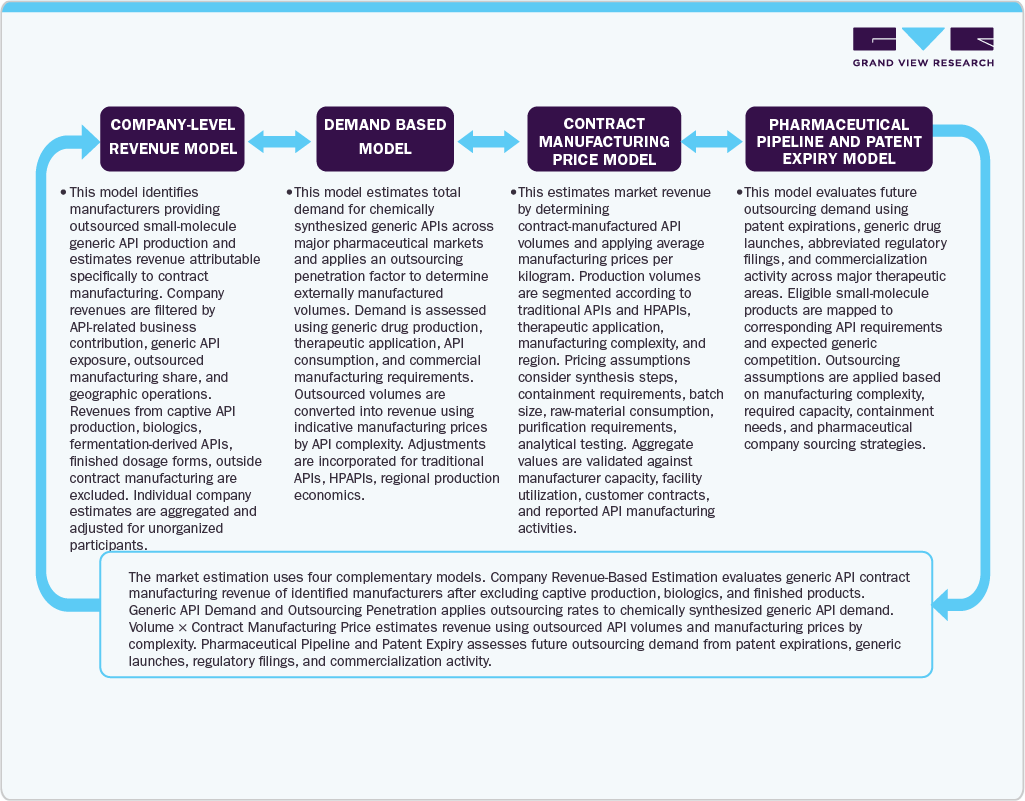
The generic API contract manufacturing market figures in this report are based on a proven research process that combines executive interviews with secondary research from proprietary databases, company filings, and recognized regulatory and institutional sources. Market size is built through value-chain sizing - reconciling supply-side and demand-side estimates - and triangulated with bottom-up and top-down approaches. Every estimate passes multiple levels of expert validation before publication, with each generic API contract manufacturing segment quantified using the revenue-capture definitions in the table below.
Segment Definition
Type Segment
Revenue Capture Definitions
Traditional API
Outsourced manufacturing of conventional chemically synthesized generic APIs requiring standard containment, synthesis, purification, and quality controls, typically produced at commercial scale for established off-patent pharmaceutical products across therapeutic applications.
Highly Potent API
Outsourced manufacturing of chemically synthesized generic APIs exhibiting high pharmacological potency and requiring specialized containment, occupational exposure controls, dedicated equipment, controlled handling, and enhanced cleaning procedures during manufacturing operations.
Service Segment
Revenue Capture Definitions
API Manufacturing
Contract manufacturing of final chemically synthesized generic active pharmaceutical ingredients according to customer specifications and regulatory requirements, covering commercial and registration-scale production for subsequent formulation into generic pharmaceutical products.
Intermediate Manufacturing
Contract manufacturing of chemically synthesized intermediates serving as input materials for subsequent processing into final generic APIs, covering customer-specific synthesis, purification, isolation, and scale-up under defined manufacturing requirements.
Analytical & Regulatory Manufacturing Support
Contract services supporting analytical characterization, quality control, validation, documentation, and regulatory compliance of generic APIs throughout manufacturing, registration, technology transfer, process changes, and ongoing commercial supply activities.
Other Services
Specialized contract services directly associated with generic API manufacturing such as packaging and labelling, process transfer and scale up that fall outside core API production, intermediate manufacturing, and analytical or regulatory support categories while supporting customer-specific manufacturing requirements.
Application Segment
Revenue Capture Definitions
Oncology
Contract manufacturing of generic APIs intended for pharmaceutical products used in cancer treatment and supportive oncology care, including conventional and highly potent chemically synthesized active substances across multiple cancer indications.
Infectious Diseases
Contract manufacturing of chemically synthesized generic APIs used in pharmaceutical products for treating or managing bacterial, viral, fungal, parasitic, and other infectious diseases across hospital, outpatient, and community-care settings.
Neurological Disorders
Contract manufacturing of chemically synthesized generic APIs used in pharmaceutical therapies for neurological and central nervous system disorders, including chronic, acute, degenerative, seizure-related, and movement-related conditions requiring pharmacological management.
Cardiovascular Disease
Contract manufacturing of chemically synthesized generic APIs incorporated into medicines for cardiovascular conditions, including hypertension, dyslipidemia, arrhythmias, heart failure, thrombosis, and other disorders affecting cardiac and vascular function.
Metabolic Disorders
Contract manufacturing of chemically synthesized generic APIs used in pharmaceutical therapies addressing metabolic diseases and related biochemical abnormalities, including diabetes, dyslipidemia, metabolic syndrome, and other disorders affecting metabolic regulation.
Autoimmune Diseases
Contract manufacturing of chemically synthesized generic APIs used to treat autoimmune and immune-mediated diseases by modulating inflammatory or immune pathways, including therapies for rheumatologic, dermatologic, gastrointestinal, and systemic autoimmune conditions.
Respiratory Diseases
Contract manufacturing of chemically synthesized generic APIs used in pharmaceutical products treating respiratory diseases, including asthma, chronic obstructive pulmonary disease, bronchospasm, airway inflammation, and other pulmonary conditions requiring pharmacological therapy.
Ophthalmology
Contract manufacturing of chemically synthesized generic APIs used in pharmaceutical products for ocular diseases and conditions, including glaucoma, inflammation, infection, dry-eye-associated treatment, and other disorders requiring pharmacological ophthalmic management.
Gastrointestinal Disorders
Contract manufacturing of chemically synthesized generic APIs used in pharmaceutical therapies for gastrointestinal and related digestive disorders, including acid-related diseases, motility conditions, nausea, inflammation, and functional gastrointestinal conditions.
Other Applications
Contract manufacturing of chemically synthesized generic APIs serving therapeutic applications not separately classified within the defined major disease categories, capturing additional pharmaceutical indications with identifiable outsourced generic API manufacturing requirements.
End Use Segment
Revenue Capture Definitions
Large Pharmaceutical Companies
Large pharmaceutical manufacturers outsourcing generic API development, intermediates, final API production, technology transfer, or related services to external manufacturers to supplement internal capabilities, diversify supply, or access specialized manufacturing infrastructure.
Small & Mid-sized Pharmaceutical Companies
Small and mid-sized pharmaceutical manufacturers outsourcing generic API activities because of limited internal synthesis capacity, specialized infrastructure requirements, development resources, regulatory capabilities, or economic constraints associated with captive manufacturing.
Other Companies
Organizations outside conventional large, small, and mid-sized pharmaceutical manufacturers that outsource qualifying generic API manufacturing or associated services for pharmaceutical development, registration, supply, licensing, or commercialization activities.
Estimation Model
 To learn more about this report, Download Free Sample Report
Delivered Customizations
This report has been delivered with the following In-depth customizations
CLIENT REQUEST
CUSTOMIZATION DELIVERED
VALUE ADDS
Detailed Segment Assessments
It provides customized analysis can evaluate outsourcing patterns across traditional and highly potent APIs and major therapeutic applications, including oncology, infectious diseases, cardiovascular, metabolic, neurological, respiratory, and other areas. The assessment can incorporate molecule complexity, manufacturing requirements, outsourcing suitability, commercial maturity, and customer demand. Additional segmentation can be developed for selected API classes or therapeutic areas based on the client’s portfolio, sourcing priorities, investment interests, or competitive benchmarking requirements.
This enables clients to identify API categories with stronger outsourcing potential and align business development, capacity planning, and portfolio strategies with addressable opportunities. Pharmaceutical companies can evaluate suitable manufacturing partners for specific molecule classes, while contract manufacturers can identify technically attractive areas for capability expansion. The analysis can support decisions concerning traditional versus HPAPI capacity, therapeutic portfolio diversification, manufacturing investments, and prioritization of customer programs based on technical requirements and commercial potential.
Competitive Benchmarking & Company Profiling
It provides customized competitor analysis can benchmark selected manufacturers across API capabilities, intermediate manufacturing, complex chemistry, HPAPI infrastructure, manufacturing locations, regulatory track records, therapeutic expertise, capacity expansions, customer relationships, and geographic presence. Clients can nominate specific companies for detailed comparison beyond the standard competitive set. The assessment can also examine recent investments, partnerships, manufacturing agreements, facility additions, technology capabilities, and strategic priorities to provide a structured view of competitive positioning within selected generic API manufacturing categories.
This provides clients with a detailed understanding of competitor capabilities, manufacturing strategies, and potential capability gaps. The benchmarking can assist contract manufacturers in identifying areas for differentiation, capacity investment, partnership development, and geographic expansion. Pharmaceutical companies can use the assessment to compare potential outsourcing partners based on technical capabilities and manufacturing footprint. Investors can evaluate how facility additions, specialized infrastructure, customer contracts, and portfolio development influence competitive positioning and longer-term participation in generic API contract manufacturing.
Regional Market Assessment
It provides customized geographic analysis can evaluate selected countries based on API manufacturing infrastructure, chemical synthesis capabilities, regulatory environment, availability of intermediates, technical workforce, operating economics, customer proximity, and supply-chain considerations. The analysis can be expanded beyond standard regional coverage to include country-specific manufacturing clusters and emerging locations. Clients can request comparisons of established API manufacturing centers with alternative sourcing destinations to assess localization opportunities, supplier diversification, manufacturing expansion, and potential entry into underserved pharmaceutical production markets..
This supports geographic sourcing and investment decisions by identifying countries suitable for contract manufacturing expansion, supplier diversification, or technology transfer. Pharmaceutical companies can assess alternative production locations to reduce concentration across individual countries or suppliers. Contract manufacturers can evaluate potential facility locations based on customer access, technical capabilities, manufacturing ecosystem, and regulatory requirements. The customization can also assist clients in assessing regional production strategies, identifying potential manufacturing partnerships, and developing geographically diversified API supply networks aligned with commercial and operational priorities.
Frequently Asked Questions About This Report
The global generic API contract manufacturing market size was valued at USD 45.8 billion in 2025, is expected to grow to 49.7 billion in 2026.
The global generic API contract manufacturing market size is projected to reach USD 93.6 billion by 2033, growing at a CAGR of 9.5% from 2026 to 2033.
Based on type, traditional API segment held the largest market share of 59.9% in 2025.
North America generic API contract manufacturing market held the largest share of 35.1% of the global market in 2025.
Key factors affecting market growth are increasing outsourcing of API manufacturing by pharmaceutical companies, growing demand for generic medicines and upcoming patent expirations and increasing focus on supply chain diversification and localized API manufacturing.
Key players include Siegfried Holding AG, Cambrex Corporation, Aurobindo Pharma, Piramal Pharma Limited, Divi's Laboratories Limited, Neuland Laboratories Ltd., Curia Global, Inc., Lupin Manufacturing Solutions, Dr. Reddy’s Laboratories Ltd., Laurus Labs.
Based on service, API manufacturing segment held the largest market share of 55.9% in 2025.
Which application segment accounted for the largest generic API contract manufacturing market share?On the basis of application, oncology accounts for the largest segment of 24.8% in 2025.
Asia Pacific is the fastest growing region over the forecast period.
About the Author(s)
Pharmaceuticals Research Team
Healthcare · PharmaceuticalsThis report was authored by the pharmaceuticals research team at Grand View Research - comprising two research analysts, one senior research analyst, and one industry expert - with specialized expertise in the pharmaceuticals segment of the healthcare industry. All findings are based on proprietary healthcare databases, executive interviews, and regulatory analysis, subject to internal peer review prior to publication.
Last Updated:
Speak to Analyst

Customize this report to your needs - add regions, segments, or data points, with 20% free customization.
Or view our licence options:


ISO 9001:2015 & 27001:2022 Certified
We are GDPR and CCPA compliant! Your transaction & personal information is safe and secure. For more details, please read our privacy policy.


