
- Home
- »
- Healthcare IT
- »
-
Healthcare AI Governance Platform Market Size Report 2033GVR Report cover

Healthcare AI Governance Platform Market (2026 - 2033)
Size, Share & Trends Analysis Report By Application (Model Validation, AI Inventory And Registry, Bias And Fairness Monitoring, AI Agent Governance), By Deployment, By End Use, By Region, And Segment Forecasts
Market Size, 2025
$1.1BMarket Estimate, 2026
$1.3BMarket Forecast, 2033
$3.9BCAGR, 2026–2033
17.3%Healthcare AI Governance Platform Market Summary
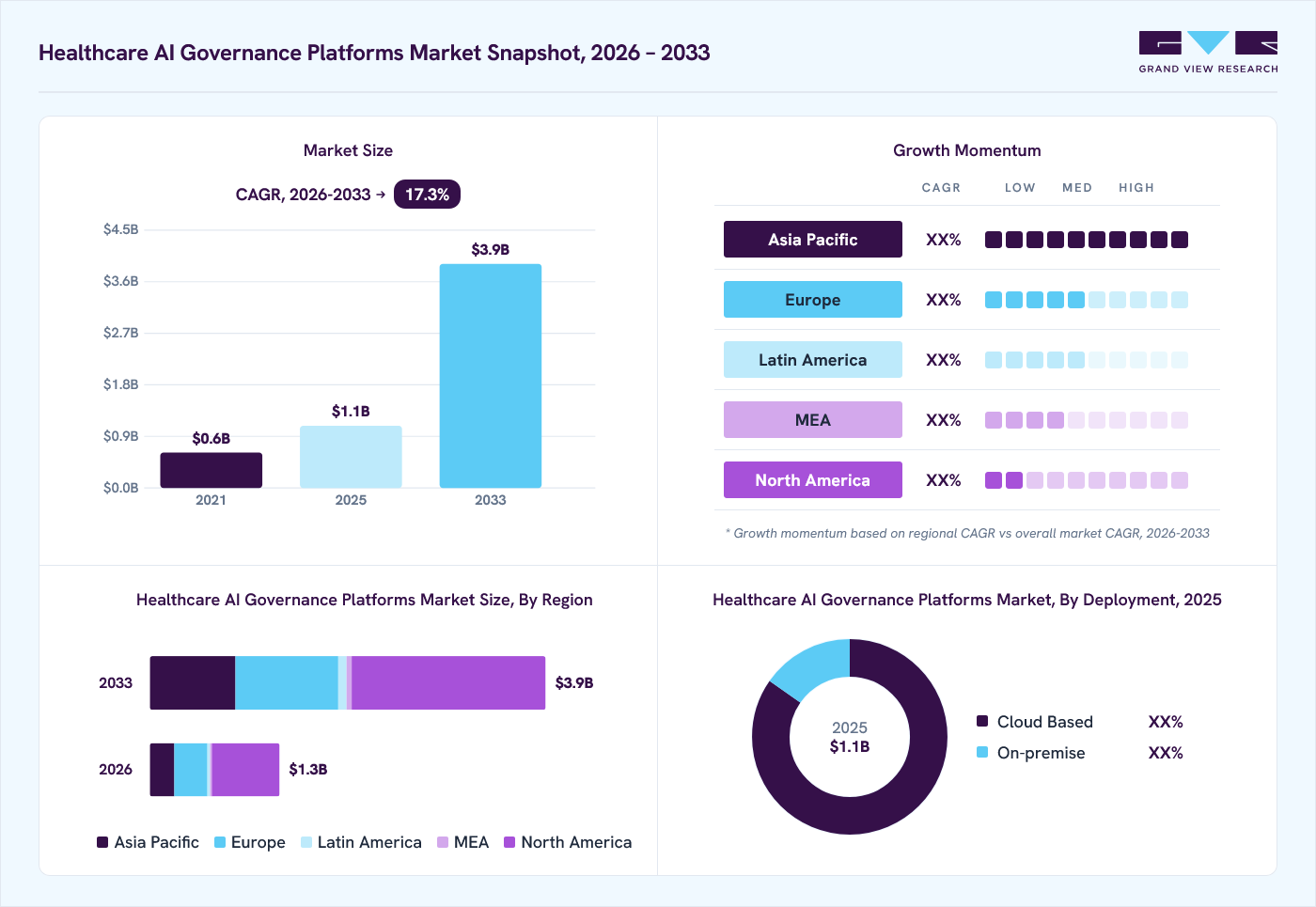
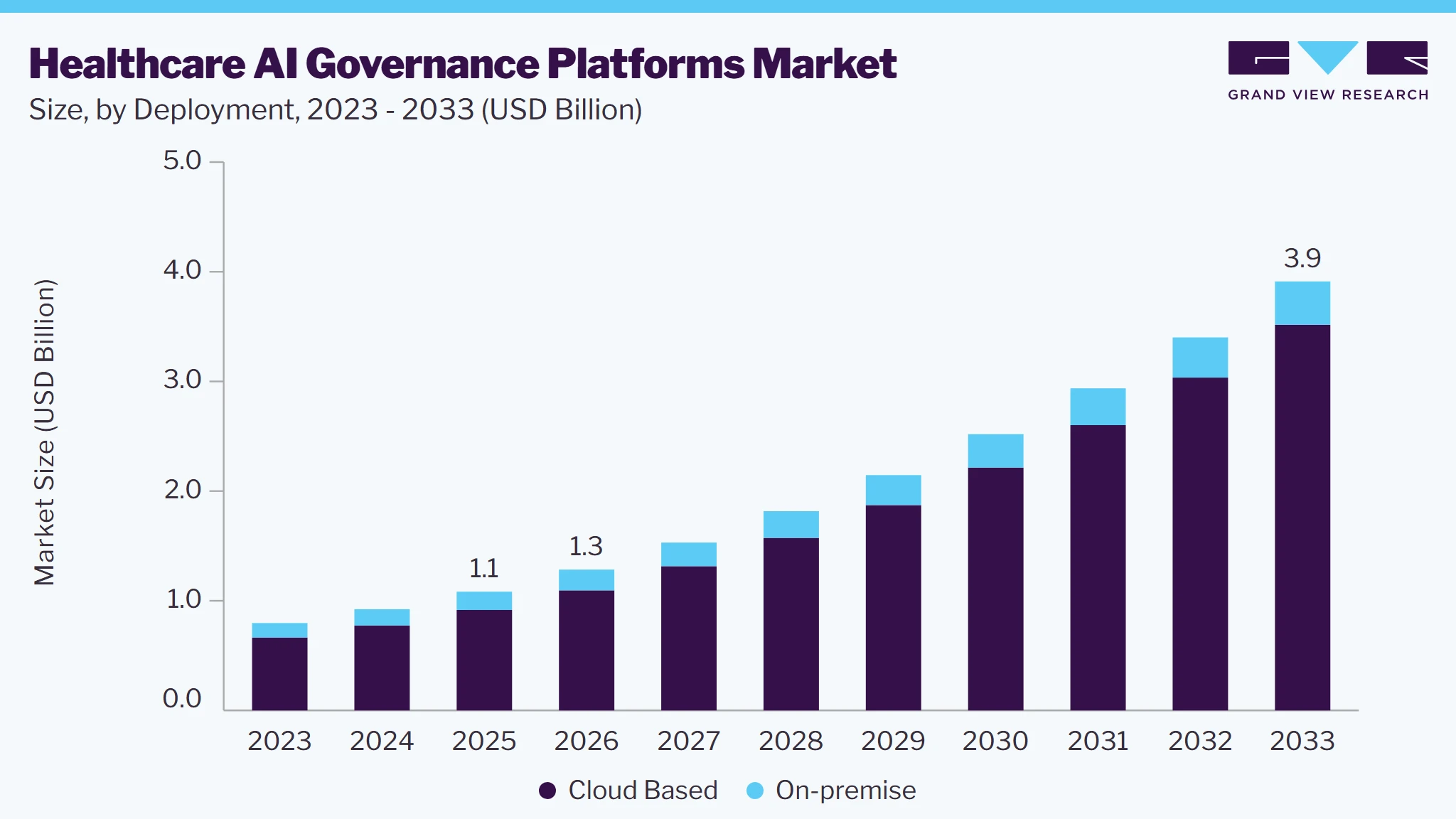
The global healthcare AI governance platform market size was valued at USD 1.1 billion in 2025 and is projected to grow from USD 1.3 billion in 2026 to USD 3.9 billion by 2033, at a CAGR of 17.3% from 2026 to 2033. North America dominated the market, accounting for accounting for a revenue share of 52.7% in 2025. The global market is experiencing rapid growth, driven by the increasing adoption of AI across healthcare and the rising need for regulatory compliance, transparency, and risk management. Growing investments in responsible AI, model monitoring, and data governance are accelerating the adoption of AI governance platforms among healthcare providers, pharmaceutical companies, and payers.
 Source: Grand View Research, IR Documents, Primary Interviews, Paid DatabasesTo learn more about this report,
 Download Free Sample Report
Key Market Trends & Insights
- By application: Model validation segment dominated the market, with a revenue share of 39.1% in 2025.
- By deployment: Cloud-based segment held the largest market share of 84.6% in 2025.
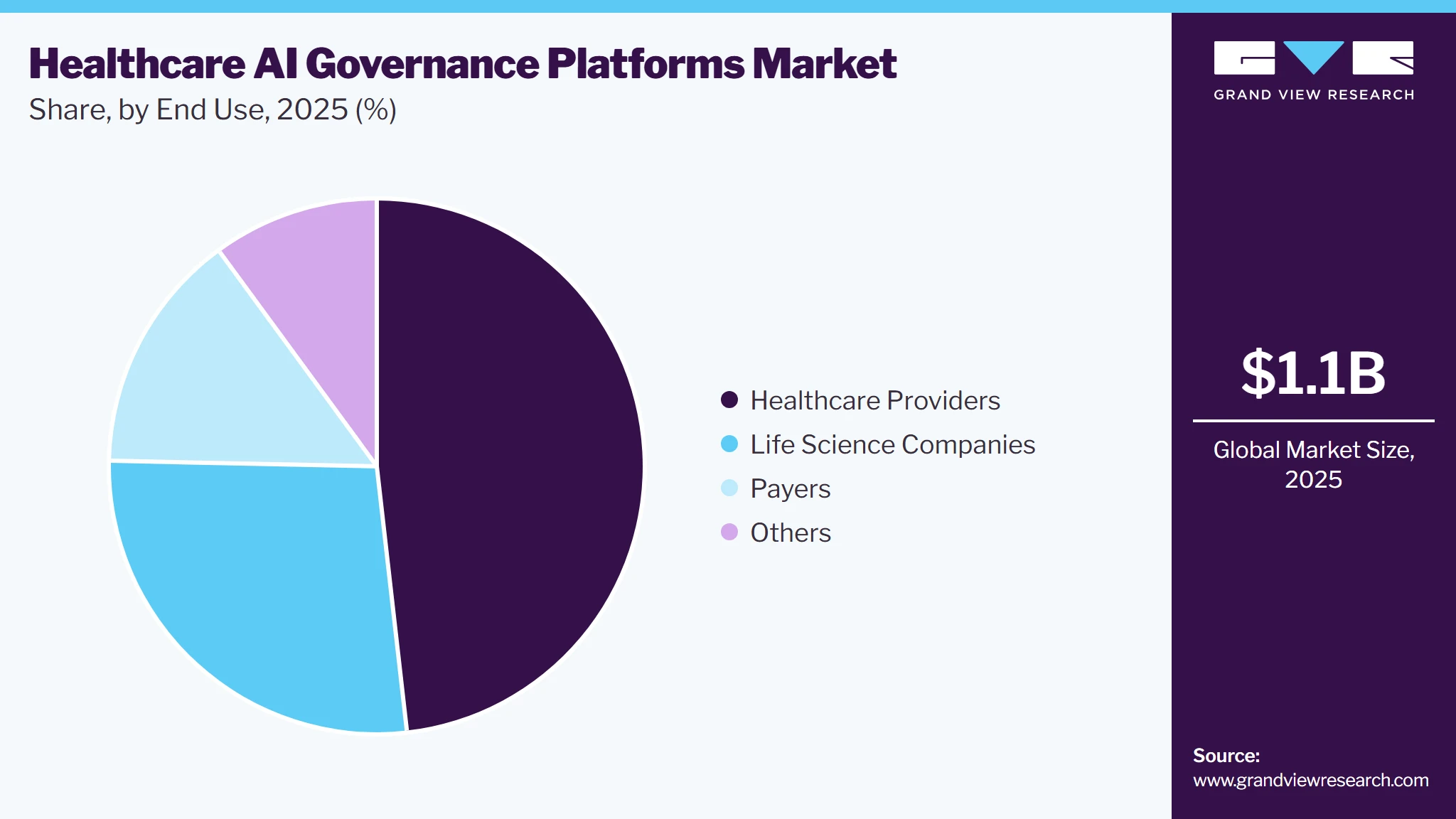
- By end use: Healthcare providers segment held the largest revenue share of 48.2% in 2025.
Regional Highlights
- Largest regional market: North America (52.7% revenue share, 2025)
- Fastest-growing regional market: Asia Pacific (highest CAGR, 2026-2033)
- By country: The U.S. held the largest market share in 2025.
Market Size & Forecast
- Market size in 2025: USD 1.1 billion
- Estimated market size in 2026: USD 1.3 billion
- Projected market size by 2033: USD 3.9 Billion
- CAGR (2026-2033): 17.3%
Three ways to get this report
Buy it, customize it, or ask a question.Ask an Analyst
Analyst response in 1 business day
- AccessReport author, directly
- Reply timeWithin 1 working day
- No sales callDirect answer only
- FormatEmail reply
- CostFree, no cost
Get the Full Report
What the study covers
- FormatsPDF · Excel · Dashboard
- Timeline2026–2033 annual, 2025 base
- Coverage20+ countries, 5 regions
- Companies10+ key players profiled
Customize the Report
20% free customization
- IncludeCountries, segments, points
- TailorTo your product definition
- ExtendDeeper competitor detail
- OrA fully bespoke study
- Turnaround5–10 working days
 To learn more about this report, Download Free Sample Report
Market Dynamics
The Healthcare AI governance platform market is witnessing significant growth, driven by the rapid adoption of artificial intelligence across the healthcare sector and increasing focus on responsible AI deployment. Growing emphasis on regulatory compliance, AI transparency, patient safety, and data privacy is encouraging healthcare organizations to invest in governance platforms. Furthermore, advancements in AI technologies, rising digital transformation initiatives, and the expanding use of generative AI are creating favorable opportunities for market expansion, supporting sustained growth over the forecast period.
Increasing AI-specific regulations are driving demand for healthcare AI governance platforms as healthcare organizations seek to ensure compliant and responsible AI deployment. AI applications used in diagnostics, clinical decision support, and medical devices are increasingly subject to requirements for risk management, transparency, human oversight, and continuous monitoring, prompting investments in governance solutions. For instance, the European Union AI Act, which entered into force in August 2024, introduced mandatory governance requirements for high-risk AI systems, including many AI-enabled medical devices. In addition, in January 2025, the U.S. FDA issued draft guidance on lifecycle management for AI-enabled device software, emphasizing documentation, risk management, and post-market monitoring. These regulatory developments are accelerating the adoption of AI governance platforms among healthcare providers and medical device manufacturers to streamline compliance and manage AI systems throughout their lifecycle.
Limited standardization across healthcare AI systems is restraining the growth of the healthcare AI governance platforms market by increasing integration complexity and implementation costs. Healthcare organizations use AI solutions from multiple vendors that operate on different data formats, interoperability standards, and governance frameworks, making it difficult to deploy a unified governance platform.
For instance, in April 2024, the U.S. Office of the National Coordinator for Health Information Technology (ONC) introduced the HTI-1 Final Rule, establishing new interoperability and AI transparency requirements for certified health IT. The rule highlights the need for consistent standards to improve the safe and reliable use of AI across healthcare systems. As organizations work to align diverse AI applications with these requirements, implementing governance platforms becomes more complex, lengthening deployment timelines and slowing market adoption.
Market Concentration & Characteristics
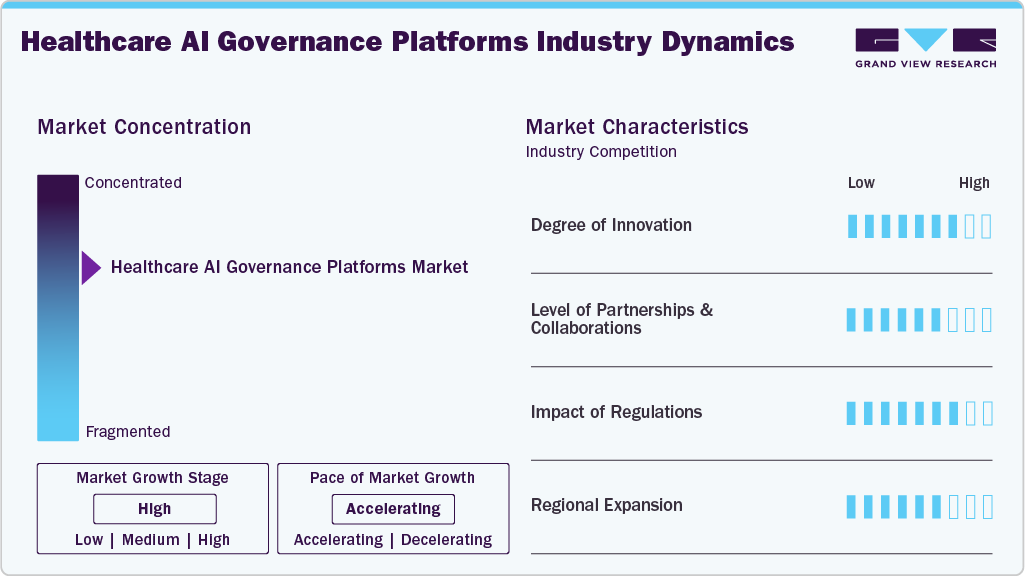
The degree of innovation in the market is high due to recent advancements, including telehealth, artificial intelligence (AI) for personalized treatments, virtual reality for rehabilitation, wearable remote-monitoring devices, and cloud platforms for data management. These technologies transform patient care, making it efficient and effective. The market remains competitive as companies strive to meet the healthcare industry's evolving needs.
Market players undergo partnerships & collaborations to enhance their position in the market. These strategic initiatives augment their domain expertise, enable an expanded portfolio of offerings, and enhance their skill set. In July 2026, Hartford HealthCare, one of New England’s largest integrated health systems, partnered with Vitea to strengthen AI governance and oversight.
 To learn more about this report, Download Free Sample Report
The global healthcare AI governance platform market is shaped by risk-based, lifecycle-oriented regulation that combines medical device, data protection, cybersecurity, and ethics requirements. In many jurisdictions, AI software used for diagnosis, triage, or clinical decision support is regulated under existing medical device frameworks, while standalone AI governance platforms must also address transparency, auditability, bias mitigation, human oversight, and model monitoring.
The market is experiencing high growth in regions such as North America and Europe, where the adoption of AI governance platforms is rising. In November 2025, Avicenna.AI, a medical imaging AI company, partnered with Ferrum Health, an AI governance suite, to expand U.S. access to advanced CT imaging AI.
Analyst Perspective
The healthcare AI governance platforms market is emerging as a foundational component of enterprise AI adoption as healthcare organizations increasingly deploy artificial intelligence across diagnostics, clinical decision support, medical imaging, operational workflows, and revenue cycle management. Growing regulatory scrutiny, along with increasing concerns about algorithmic bias, model drift, explainability, and patient safety, are driving demand for platforms that govern AI throughout its lifecycle. Healthcare providers and life sciences organizations are prioritizing governance solutions that ensure transparency, compliance, and continuous monitoring while accelerating responsible AI adoption. The competitive landscape is evolving beyond traditional MLOps capabilities toward comprehensive AI governance platforms integrating model inventory, validation, risk assessment, explainability, performance monitoring, regulatory documentation, and policy enforcement.
Application Insights
The model validation segment dominated the healthcare AI governance platforms market, accounting for the largest revenue share of 39.1% in 2025. The segment's growth is driven by the increasing adoption of AI across diagnostics, medical imaging, clinical decision support, and AI-enabled medical devices, where validating model performance, bias, explainability, and regulatory compliance is essential prior to clinical deployment. The growing regulatory emphasis on AI lifecycle management and continuous monitoring is further driving demand for model validation solutions. For instance, Pacific AI offers automated model validation and monitoring capabilities aligned with over 250+ healthcare AI laws, regulations, and standards, including the NIST AI Risk Management Framework (AI RMF) and ONC HTI1 requirements, enabling healthcare organizations to ensure compliant and trustworthy AI deployment.
The AI agent governance segment is expected to register the fastest CAGR over the forecast period. The growing adoption of autonomous AI agents for clinical documentation, patient engagement, administrative automation, and care coordination is driving demand for governance solutions that monitor agent behavior, enforce policies, and ensure regulatory compliance. In February 2025, Salesforce launched Agentforce for Health, enabling healthcare organizations to deploy AI agents across clinical and operational workflows, increasing the need for governance capabilities to ensure secure, transparent, and accountable AI agent operations. This growing adoption of agentic AI is expected to drive demand for AI agent governance solutions during the forecast period.
Deployment Insights
The cloud-based segment dominated the healthcare AI governance platforms market, accounting for the largest revenue share of 84.6% in 2025. The segment is also expected to witness the fastest CAGR over the forecast period. The growth is attributed to the increasing adoption of cloud-based AI solutions, driven by their scalability, centralized governance, real-time monitoring, and seamless integration with electronic health records (EHRs), medical imaging systems, and enterprise AI applications. In addition, cloud deployment enables healthcare organizations to efficiently manage AI models across multiple facilities while supporting evolving regulatory and security requirements.
For instance, in May 2025, Duke Health partnered with Avanade to deploy the Smart AI Governance Engine (SAIGE) on Microsoft Azure, establishing a cloud-based AI governance platform to streamline AI lifecycle management, regulatory compliance, and enterprise-wide oversight of clinical AI applications. This growing shift toward cloud-native AI governance solutions is expected to further accelerate the cloud-based deployment segment's growth during the forecast period.
End Use Insights
The healthcare providers segment dominated the market, accounting for the largest revenue share of 48.2% in 2025. The segment’s growth is driven by the increasing adoption of AI across clinical workflows, including diagnostics, medical imaging, clinical decision support, and hospital operations, creating a greater need for AI governance to ensure patient safety, regulatory compliance, and continuous model monitoring. For instance, in June 2025, Solera Health launched an enhanced AI Governance Framework to strengthen responsible and transparent AI deployment across its digital health ecosystem, reflecting the growing focus on enterprise AI governance among healthcare organizations.
 To learn more about this report, Download Free Sample Report
The payers segment is expected to register the fastest CAGR over the forecast period. The growth is attributed to the increasing use of AI for claims processing, fraud detection, prior authorization, risk adjustment, and member engagement, driving demand for governance platforms to ensure fairness, transparency, and regulatory compliance. For instance, the National Association of Insurance Commissioners (NAIC) reported in May 2025 that 84% of health insurers already use AI or machine learning across their operations, and emphasized the importance of AI governance frameworks aligned with the NAIC AI Principles and Model Bulletin. The growing adoption of AI among health insurers is expected to accelerate demand for AI governance solutions during the forecast period.
Regional Insights
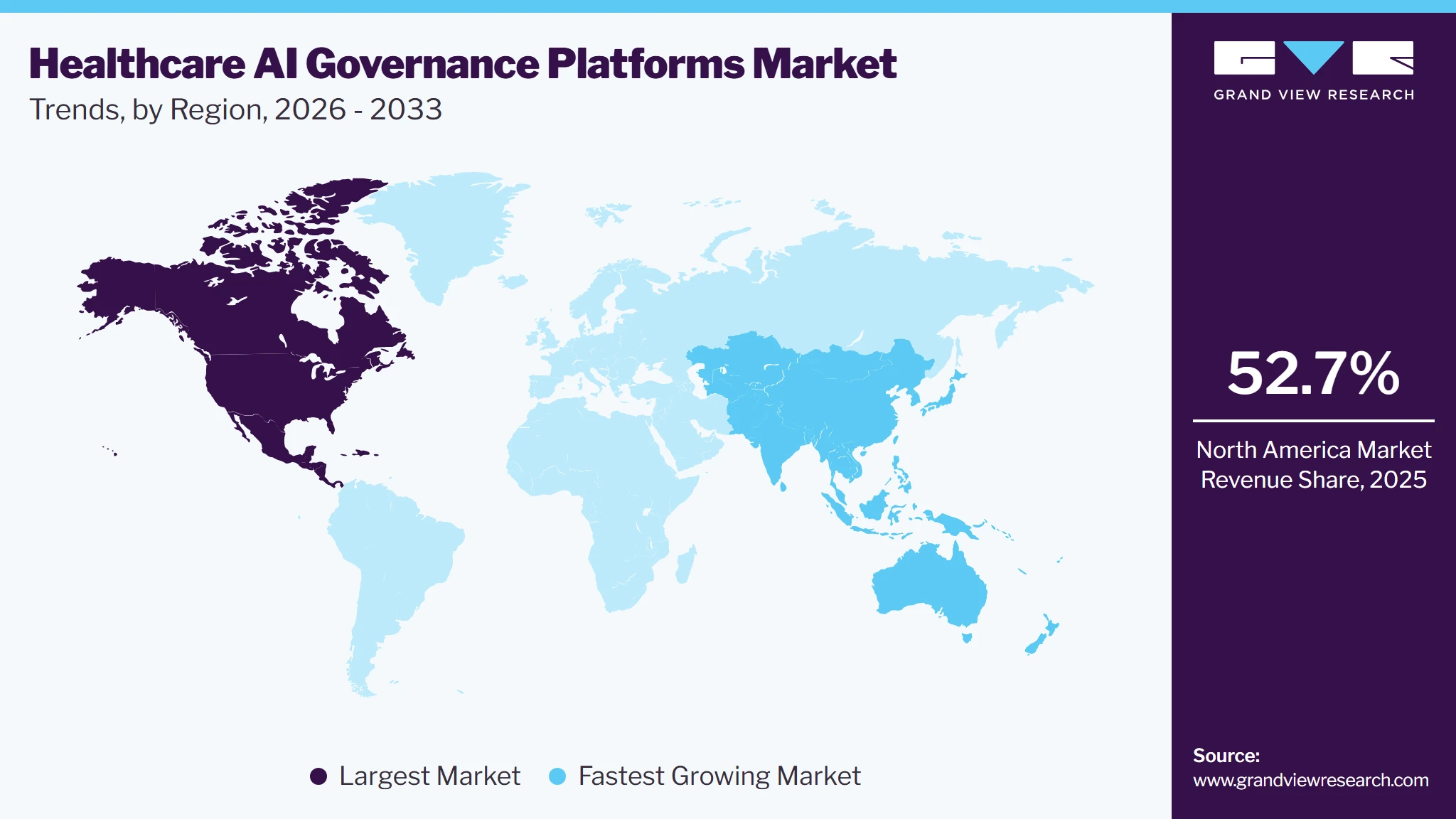
The North America healthcare AI governance platforms market accounted for the largest revenue share of 52.7% in 2025. The region's leadership is driven by widespread adoption of artificial intelligence across healthcare, a mature digital health infrastructure, and stringent regulatory requirements governing AI deployment. Healthcare providers are increasingly implementing AI governance platforms to ensure model transparency, regulatory compliance, risk management, and continuous performance monitoring. Strong investments in healthcare IT, the presence of leading technology vendors, and supportive government initiatives promoting responsible AI adoption continue to accelerate market growth across North America.
 To learn more about this report, Download Free Sample Report
U.S. Healthcare AI Governance Platforms Market Trends
The healthcare AI governance platforms market in the U.S. held the largest share of the North American market in 2025. Increasing deployment of AI across clinical decision support, medical imaging, revenue cycle management, and hospital operations has created strong demand for governance solutions that ensure accountability, explainability, and compliance. For instance, according to an article published in Business Day in July 2026, Healthcare strategists are developing enterprise AI governance frameworks to help U.S. health systems safely adopt AI, reduce risk, and support clinical decisions. Their models add human oversight, bias monitoring, and continuous assessment, aiming to cut administrative burdens, improve patient engagement, and enable digital-first, sustainable care in the U.S.
Europe Healthcare AI Governance Platforms Market Trends
The healthcare AI governance platforms market in Europe is expected to grow significantly during the forecast period. The region is witnessing growing adoption of governance platforms as healthcare organizations implement artificial intelligence while complying with stringent regulatory frameworks such as the EU AI Act and General Data Protection Regulation (GDPR). Increasing investments in digital healthcare, expanding use of AI-enabled diagnostics, and government initiatives promoting trustworthy AI are driving market growth. The focus on transparency, ethical AI deployment, and secure data management continues to support adoption across hospitals, research institutions, and healthcare networks.
The UK healthcare AI governance platforms market is expected to expand over the forecast period due to increasing integration of artificial intelligence across the National Health Service (NHS). Growing investments in digital health, responsible AI initiatives, and regulatory oversight are encouraging healthcare providers to deploy governance platforms for model validation, bias monitoring, and compliance management. Government support for healthcare innovation and expanding AI applications in diagnostics and clinical workflows continues to strengthen market growth.
The healthcare AI governance platforms market in Germany is expected to grow significantly owing to the country's advanced healthcare infrastructure and strong emphasis on digital transformation. Increasing implementation of AI in diagnostics, clinical decision support, and hospital management is driving demand for governance solutions. Compliance with the EU AI Act, GDPR, and national healthcare regulations encourages healthcare organizations to adopt platforms that support AI lifecycle management, risk assessment, and continuous monitoring.
Asia Pacific Healthcare AI Governance Platforms Market Trends
The healthcare AI governance platforms market in the Asia Pacific is anticipated to witness the fastest growth over the forecast period. Rapid healthcare digitalization, increasing investments in artificial intelligence, and expanding healthcare infrastructure are supporting market development. Governments across the region are promoting AI adoption through national digital health strategies while strengthening regulatory oversight for healthcare technologies. For instance, in July 2026, Singapore used the ATxSummit to announce new AI governance frameworks and cross-border healthcare partnerships, aiming to enhance healthy lifespans and drive responsible digital health adoption.
The healthcare AI governance platforms market in Japan is expected to grow over the forecast period. The country's aging population, advanced healthcare infrastructure, and strong adoption of artificial intelligence are driving demand for governance solutions that ensure safe and compliant AI implementation. Government support for healthcare innovation and well-established regulatory frameworks are encouraging hospitals and healthcare providers to strengthen AI governance capabilities.
The China healthcare AI governance platforms market is poised to grow significantly due to the rapid expansion of artificial intelligence across healthcare services. Government initiatives supporting digital healthcare, increased investment in AI research, and the widespread deployment of AI-enabled diagnostic systems are driving market growth. Healthcare organizations are increasingly adopting governance platforms to improve algorithm transparency, data security, and regulatory compliance while supporting large-scale AI implementation across healthcare institutions.
Latin America Healthcare AI Governance Platforms Market Trends
The healthcare AI governance platforms market in Latin America is projected to grow rapidly over the forecast period. Increasing healthcare digitalization, expanding investments in healthcare IT infrastructure, and growing adoption of artificial intelligence are creating demand for governance platforms. Governments across the region are modernizing healthcare systems and strengthening regulatory frameworks for digital health technologies, supporting wider implementation of AI governance solutions.
Middle East and Africa Healthcare AI Governance Platforms Market Trends
The healthcare AI governance platforms market in the Middle East and Africa anticipates lucrative opportunities. Governments are investing in digital transformation and artificial intelligence in healthcare to improve accessibility and operational efficiency. Growing implementation of AI-enabled healthcare solutions, increasing regulatory oversight, and expanding investments in healthcare infrastructure are driving demand for governance platforms that ensure secure, transparent, and compliant AI deployment.
Key Healthcare AI Governance Platforms Company Insights
Key players operating in the healthcare AI governance platforms market are undertaking various initiatives to strengthen their market presence and increase the reach of their products and services. Strategies such as expansion activities and partnerships are playing a key role in propelling the market growth.
Key Healthcare AI Governance Platforms Companies
The following key companies have been profiled for this study on the healthcare AI governance platforms market:
-
Ferrum
-
ModelOp
-
Monitaur
-
ValidMind
-
Holistic AI
-
Qualified health
-
Cognome, Inc
-
Vitea AI
-
Pacific AI
-
Solytics partner
Competitive Benchmarking
Category
Operating Strategies
Competitive Edge
Weakness
Established & Growth Leaders (ModelOp, Fiddler AI, ValidMind)
- Expand enterprise AI governance platforms through strategic partnerships with healthcare providers, life sciences companies, cloud vendors, and AI developers. Invest in model lifecycle management, AI risk management, bias and fairness monitoring, explainable AI (XAI), regulatory compliance automation, continuous model monitoring, and integration with MLOps, EHR, and cloud environments to support responsible AI deployment across clinical and operational workflows.
- Strong enterprise AI governance capabilities, comprehensive model validation and monitoring platforms, and proven expertise in regulated industries. Robust interoperability with leading AI/ML frameworks, cloud platforms, and healthcare IT systems, combined with advanced explainability, audit readiness, and regulatory reporting capabilities, enables enterprise-wide AI governance and compliance.
- Enterprise implementations may require significant integration effort and governance framework customization to align with diverse healthcare environments. Premium platform capabilities and subscription costs may limit adoption among smaller healthcare organizations with limited AI maturity and budgets.
Emerging & Specialized Players (Ferrum, Monitaur, Holistic AI)
- Focus on specialized AI governance capabilities including bias detection, algorithmic fairness, model validation, regulatory documentation, continuous performance monitoring, and AI assurance for healthcare applications. Leverage cloud-native architectures, API-driven integration, rapid deployment, and customer-centric product innovation to support hospitals, digital health companies, and life sciences organizations adopting clinical AI solutions.
- Greater agility in developing specialized governance tools tailored to evolving AI regulations and healthcare-specific risk management requirements. Ability to rapidly incorporate emerging AI governance standards, deliver flexible deployment models, and provide focused expertise in model transparency, fairness assessment, and trustworthy AI.
- Smaller customer base, limited global commercial presence, and lower financial resources compared with larger enterprise software providers. Narrower platform ecosystems, fewer enterprise integration capabilities, and reliance on strategic partnerships may limit adoption among large multinational healthcare organizations implementing organization-wide AI governance frameworks.
Recent Developments
-
In June 2026, Mount Sinai Health System partnered with Signal 1 to use its AI Management Platform (AIMS) to centralize oversight, governance, and performance monitoring of a growing AI portfolio, enabling system‑wide visibility, standardized evaluation, automated monitoring, and ROI tracking.
-
In June 2026, Rubrik, a security and AI operations company, joined the Coalition for Health AI (CHAI), an industry-led group developing best practices and frameworks for responsible health AI. Through CHAI, Rubrik will collaborate on cyber resilience and AI governance to help healthcare organizations securely deploy AI while protecting data, ensuring safety, and building user trust.
-
In May 2026, Hartford HealthCare and Vitea partnered to strengthen governance and oversight of AI technologies across Hartford HealthCare’s integrated system.
-
In May 2026, IndiaAI, under MeitY and implemented via Digital India Corporation, signed an MoU with ICMR to accelerate responsible AI adoption in healthcare. The partnership aligns IndiaAI’s compute, datasets, and skilling with ICMR’s biomedical expertise and MIDAS framework to build an interoperable AI ecosystem, shared datasets, subsidized GPU access, and co-developed AI solutions for priority public health challenges, with strong ethics, privacy, and regulatory safeguards.
-
In April 2026, Credo AI joined the Coalition for Health AI (CHAI) Partner Program to advance responsible AI governance in healthcare. The partnership brings Credo AI’s governance platform and implementation expertise to health systems, turning CHAI’s responsible-AI framework into enforceable, auditable controls across clinical and operational AI workflows, with emphasis on safety, equity, and regulatory alignment.
Healthcare AI Governance Platforms Market Report Scope
Report Attribute
Details
Market size in 2025
USD 1.1 billion
Estimated market size in 2026
USD 1.3 billion
Projected market size by 2033
USD 3.9 billion
Growth rate
CAGR of 17.3% from 2026 to 2033
Actual data
2021 - 2025
Forecast period
2026 - 2033
Quantitative units
Revenue in USD billion and CAGR from 2026 to 2033
Report coverage
Revenue forecast, company ranking, competitive landscape, growth factors, and trends
Segments covered
Application, deployment, end use, region
Regional scope
North America; Europe; Asia Pacific; Latin America; MEA
Country scope
U.S.; Canada; Mexico; Germany; UK; France; Italy; Spain; Denmark; Sweden; Norway; China; Japan; India; South Korea; Australia; Thailand; Brazil; Argentina; South Africa; Saudi Arabia; UAE; Kuwait
Key companies profiled
Ferrum; ModelOp; Monitaur; ValidMind; Holistic AI; Qualified Health; Cognome, Inc.; Vitea AI; Pacific AI; Solytics Partners
Customization scope
Free report customization (equivalent to 8 analysts working days) with purchase. Addition or alteration to country, regional & segment scope.
Pricing and purchase options
Avail customized purchase options to meet your exact research needs. Explore purchase options
Global Healthcare AI Governance Platforms Market Report Segmentation
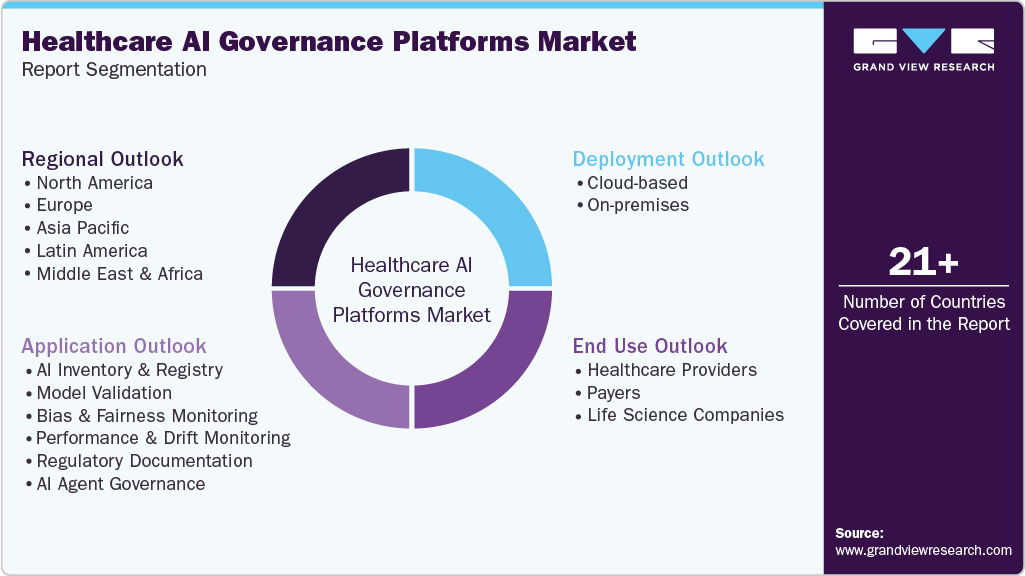
This report forecasts revenue growth at global, regional, and country levels and provides an analysis of the latest industry trends in each of the sub-segments from 2021 to 2033. For this study, Grand View Research has segmented the global healthcare AI governance platforms market report based on application, deployment, end use, and region.
 To learn more about this report, Download Free Sample Report
-
Application Outlook (Revenue, USD Billion, 2021 - 2033)
-
AI inventory and registry
-
Model validation
-
Bias and fairness monitoring
-
Performance and drift monitoring
-
Regulatory documentation
-
AI agent governance
-
-
Deployment Outlook (Revenue, USD Billion, 2021 - 2033)
-
Cloud-based
-
On-premises
-
-
End Use Outlook (Revenue, USD Billion, 2021 - 2033)
-
Healthcare providers
-
Payers
-
Life science companies
-
Pharmaceutical companies
-
Medical device companies
-
-
-
Regional Outlook (Revenue, USD Billion, 2021 - 2033)
-
North America
-
U.S.
-
Canada
-
Mexico
-
-
Europe
-
Germany
-
UK
-
France
-
Italy
-
Spain
-
Denmark
-
Sweden
-
Norway
-
-
Asia Pacific
-
China
-
Japan
-
India
-
South Korea
-
Australia
-
Thailand
-
-
Latin America
-
Brazil
-
Argentina
-
-
MEA
-
South Africa
-
Saudi Arabia
-
UAE
-
Kuwait
-
-
Research Methodology
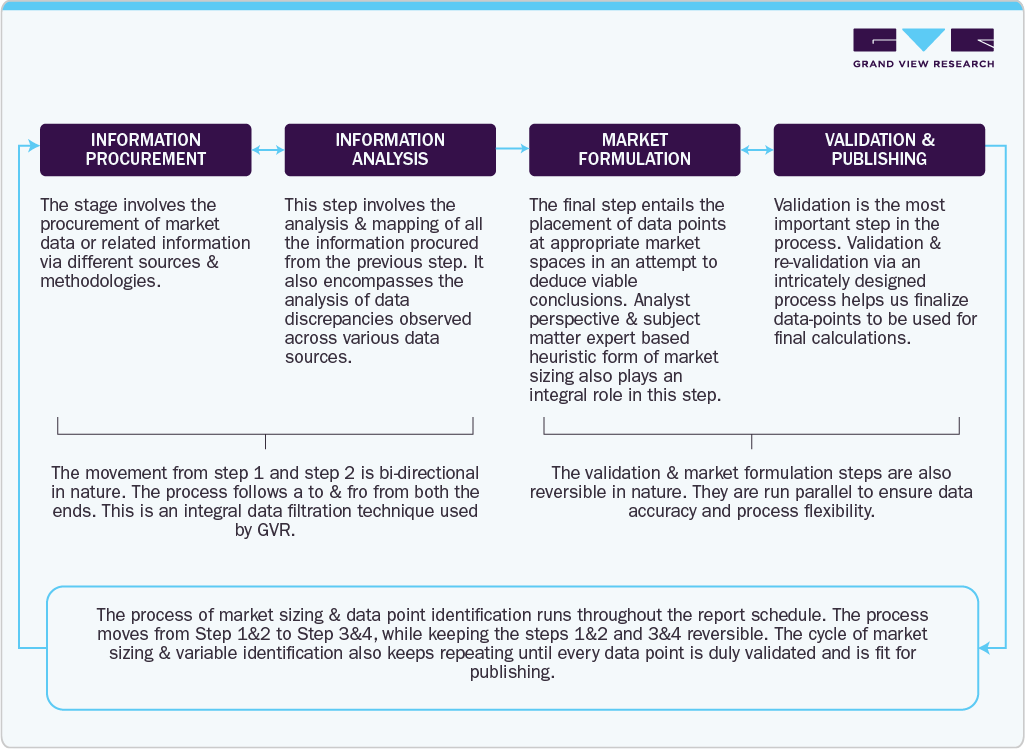
The healthcare AI governance platforms market figures in this report are based on a proven research process that combines executive interviews with secondary research from proprietary databases, company filings, and recognized regulatory and institutional sources. Market size is built through value-chain sizing-reconciling supply-side and demand-side estimates-and triangulated with bottom-up and top-down approaches. Every estimate passes multiple levels of expert validation before publication, with each healthcare AI governance platforms segment quantified using the revenue-capture definitions in the table below.
Segment Definition
Application
Revenue capture definition
AI Inventory and Registry
Solutions that provide centralized cataloging and lifecycle management of AI models deployed across healthcare organizations. These platforms maintain detailed records of model ownership, intended use, training datasets, validation status, version history, risk classification, and regulatory documentation to support governance, transparency, and compliance.
Model Validation
AI governance tools that evaluate and verify the accuracy, reliability, robustness, safety, and clinical performance of AI models before and after deployment. These solutions support model testing, benchmarking, validation against clinical datasets, and compliance with healthcare regulatory standards.
Bias and Fairness Monitoring
Solutions designed to continuously assess AI models for demographic bias, algorithmic fairness, and equitable performance across diverse patient populations. These platforms identify disparities related to age, sex, ethnicity, socioeconomic status, or geographic location to support ethical AI deployment and regulatory compliance.
Performance and Drift Monitoring
Governance platforms that continuously monitor AI model performance in real-world clinical environments by detecting model degradation, data drift, concept drift, prediction accuracy changes, and operational anomalies. These solutions trigger alerts and support model retraining to maintain clinical reliability.
Regulatory Documentation
Software that automates the creation, management, and maintenance of documentation required for regulatory submissions, audits, quality management, and AI lifecycle governance. These solutions support compliance with FDA, EU AI Act, ISO 42001, GMLP, HIPAA, and other healthcare regulations.
AI Agent Governance
Platforms that oversee the deployment, monitoring, security, accountability, and policy enforcement of autonomous AI agents used in healthcare. These solutions manage agent permissions, decision traceability, human oversight, risk controls, audit trails, and compliance throughout the operational lifecycle of AI agents.
Deployment Mode
Revenue capture definition
Cloud-based
AI governance platforms hosted on cloud infrastructure, enabling centralized governance, remote accessibility, scalable computing resources, automated software updates, multi-site collaboration, and integration with cloud-native healthcare AI applications and data platforms.
On-premises
AI governance software deployed within a healthcare organization's own data centers or private IT infrastructure. This deployment model provides greater control over sensitive healthcare data, cybersecurity, system customization, and compliance with organizational data governance policies.
End Use
Revenue capture definition
Healthcare Providers
Hospitals, health systems, physician groups, diagnostic laboratories, imaging centers, and other healthcare delivery organizations that implement AI governance platforms to manage clinical AI models, ensure regulatory compliance, monitor model performance, and promote safe, ethical AI adoption in patient care.
Payers
Public and private health insurance organizations that utilize AI governance solutions to oversee AI models used for claims processing, fraud detection, utilization management, risk adjustment, reimbursement optimization, member engagement, and population health management while ensuring transparency and regulatory compliance.
Life Science Companies
Pharmaceutical, biotechnology, and medical technology organizations that deploy AI governance platforms to manage AI applications across drug discovery, clinical development, manufacturing, regulatory affairs, quality management, commercialization, and post-market surveillance.
Pharmaceutical Companies
Drug developers and manufacturers that use AI governance solutions to validate and monitor AI models supporting target identification, clinical trial optimization, pharmacovigilance, manufacturing quality, regulatory submissions, and real-world evidence generation while maintaining compliance with global regulatory requirements.
Medical Device Companies
Manufacturers of medical devices and Software as a Medical Device (SaMD) solutions that utilize AI governance platforms to manage AI-enabled devices throughout development, validation, regulatory approval, post-market monitoring, and lifecycle management while ensuring compliance with FDA, MDR, and other international standards.
Estimation Model
 To learn more about this report, Download Free Sample Report
Market Estimation Process:
Market-specific Research Models:
Consensus-Based Estimates & Forecasting
The healthcare AI governance platforms market presents emerging to dominant opportunities, featuring global key players such as Ferrum, ModelOp, Monitaur, ValidMind; Fiddler AI; Holistic AI, Qualified health, Cognome, Inc, Vitea AI, Pacific AI, Solytics partner
To ensure a holistic approach, the GVR research team adopted a comprehensive methodology, considering multiple companies worldwide and utilizing various variables for data accuracy.
Our methodology included:
Model 1: Commodity Flow Analysis - For public players, annual reports were referenced. For private players, premium paid data sources such as S&P Global, Crunchbase, ZoomInfo, RocketReach, etc., were used for the latest revenue insights.
Model 2: Parent Market Analysis
Model 3: Country-level Multivariate Analysis Assumptions
Model 4: Segment-level Multivariate Analysis Assumptions
Model 5: Healthcare AI Governance Platforms Market CAGR Calculations
Model 1: Commodity Flow Analysis
Commodity flow analysis was employed to track the movement of healthcare AI governance platforms through the value chain, from technology providers to end users. This analysis provided insights into demand generation points, intermediary roles, and ultimate consumption patterns.
Delivered Customizations
This report has been delivered with the following In-depth customizations
Client Request
Customization Delivered
Value Adds
Healthcare AI Governance Platform Adoption & Responsible AI Management Analysis
Developed a tailored analysis of the global healthcare AI governance platforms market focused on AI inventory and registry, model validation, bias and fairness monitoring, performance and drift monitoring, regulatory documentation, AI agent governance, and enterprise AI oversight solutions. The study assessed adoption trends across hospitals, health systems, life sciences companies, payers, diagnostic organizations, and digital health providers while evaluating increasing AI deployment, evolving regulatory requirements, demand for trustworthy AI, and the need for continuous model governance driving market growth.
Enables stakeholders to understand evolving AI governance trends, identify high-growth governance applications, assess enterprise AI management opportunities, and evaluate the impact of governance platforms on regulatory compliance, model reliability, patient safety, and long-term AI adoption across healthcare organizations.
AI Model Governance, Regulatory Compliance & Risk Management Assessment
Delivered a customized evaluation of healthcare AI governance platform utilization across AI lifecycle management, model validation, explainability, bias detection, performance monitoring, audit trail generation, risk assessment, compliance reporting, and AI policy enforcement. The analysis assessed advancements in automated governance workflows, continuous model monitoring, explainable AI (XAI), generative AI governance, AI agent oversight, cloud-native governance platforms, and interoperability with healthcare IT ecosystems. Additionally, it evaluated technology innovations and implementation strategies from leading companies including Ferrum, ModelOp, Monitaur, ValidMind, Fiddler AI, and Holistic AI.
Provides actionable insights into commercially attractive governance platform segments, emerging responsible AI technologies, evolving regulatory expectations, and growth opportunities associated with transparent AI deployment, improved model performance, reduced compliance risk, enhanced organizational trust, and scalable enterprise AI governance.
Healthcare AI Infrastructure, Regulatory Environment & Competitive Landscape Assessment
Conducted a focused assessment of the healthcare AI governance ecosystem, including cloud infrastructure, AI model repositories, healthcare data governance frameworks, interoperability standards, cybersecurity, regulatory compliance, AI risk management, and competitive positioning. The analysis evaluated implementation challenges, governance maturity, model lifecycle management requirements, technology adoption barriers, enterprise integration strategies, and competitive differentiation initiatives among leading market participants such as Ferrum, ModelOp, Monitaur, ValidMind, Fiddler AI, and Holistic AI.
Supports strategic planning for AI governance implementation, responsible AI initiatives, digital health investments, regulatory readiness, technology partnerships, geographic expansion, and market entry strategies by identifying adoption drivers, operational challenges, governance requirements, revenue opportunities, infrastructure needs, and competitive advantages across the global healthcare AI governance platforms value.
Frequently Asked Questions About This Report
North America dominated with a 52.7% revenue share in 2025.
The global healthcare AI governance platform market is experiencing rapid growth, driven by the increasing adoption of AI across healthcare and the rising need for regulatory compliance, transparency, and risk management. Growing investments in responsible AI, model monitoring, and data governance are accelerating the adoption of AI governance platforms among healthcare providers, pharmaceutical companies, and payers.
Some of the key players operating in the healthcare AI governance platform market include Ferrum, ModelOp, Monitaur, ValidMind, Holistic AI, Qualified Health, Cognome, Inc., VideaHealth, Pacific AI, and Solytics Partners.
Cloud-based segment held the largest market share of 84.6% in 2025.
The healthcare providers segment dominated the market, accounting for the largest revenue share of 48.2% in 2025, while payers is the fastest growing segment in the forecast period.
Asia Pacific is the fastest-growing region over the forecast period.
The global healthcare AI governance platform market size was valued at USD 1.1 billion in 2025 and is estimated at USD 1.3 billion for 2026.
The global healthcare AI governance platform market is expected to grow at a CAGR of 17.3% from 2026 to 2033, reaching USD 3.9 billion by 2033.
The model validation segment led with a 39.1% revenue share in 2025, while the AI agent governance segment is the fastest-growing type.
About the Author(s)
Healthcare IT Research Team
Healthcare · Healthcare ITThis report was authored by the healthcare it research team at Grand View Research - comprising two research analysts, one senior research analyst, and one industry expert - with specialized expertise in the healthcare it segment of the healthcare industry. All findings are based on proprietary healthcare databases, executive interviews, and regulatory analysis, subject to internal peer review prior to publication.
Last Updated:
Speak to Analyst

Customize this report to your needs - add regions, segments, or data points, with 20% free customization.
Or view our licence options:


ISO 9001:2015 & 27001:2022 Certified
We are GDPR and CCPA compliant! Your transaction & personal information is safe and secure. For more details, please read our privacy policy.


