
- Home
- »
- Nutraceuticals & Functional Foods
- »
-
Hemp Protein Powder Market Size, Share Report, 2026-2033GVR Report cover

Hemp Protein Powder Market (2026 - 2033)
Size, Share & Trends Analysis Report By Nature (Organic, Conventional), Flavor (Unflavored, Flavored), By Distribution Channel (Hypermarkets & Supermarkets, Convenience Stores), By Region, And Segment Forecasts
Market Size, 2025
$217.3BMarket Estimate, 2026
$251.3BMarket Forecast, 2033
$699.0BCAGR, 2026–2033
15.7%Hemp Protein Powder Market Summary
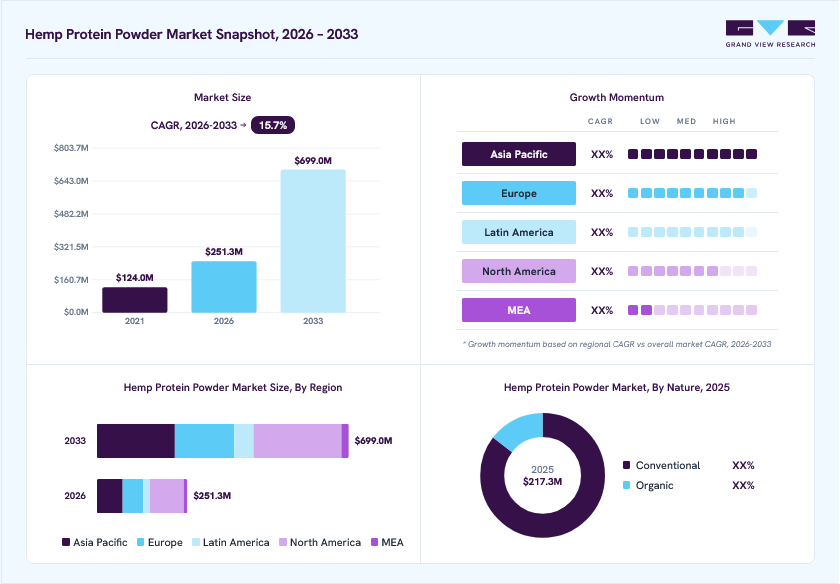
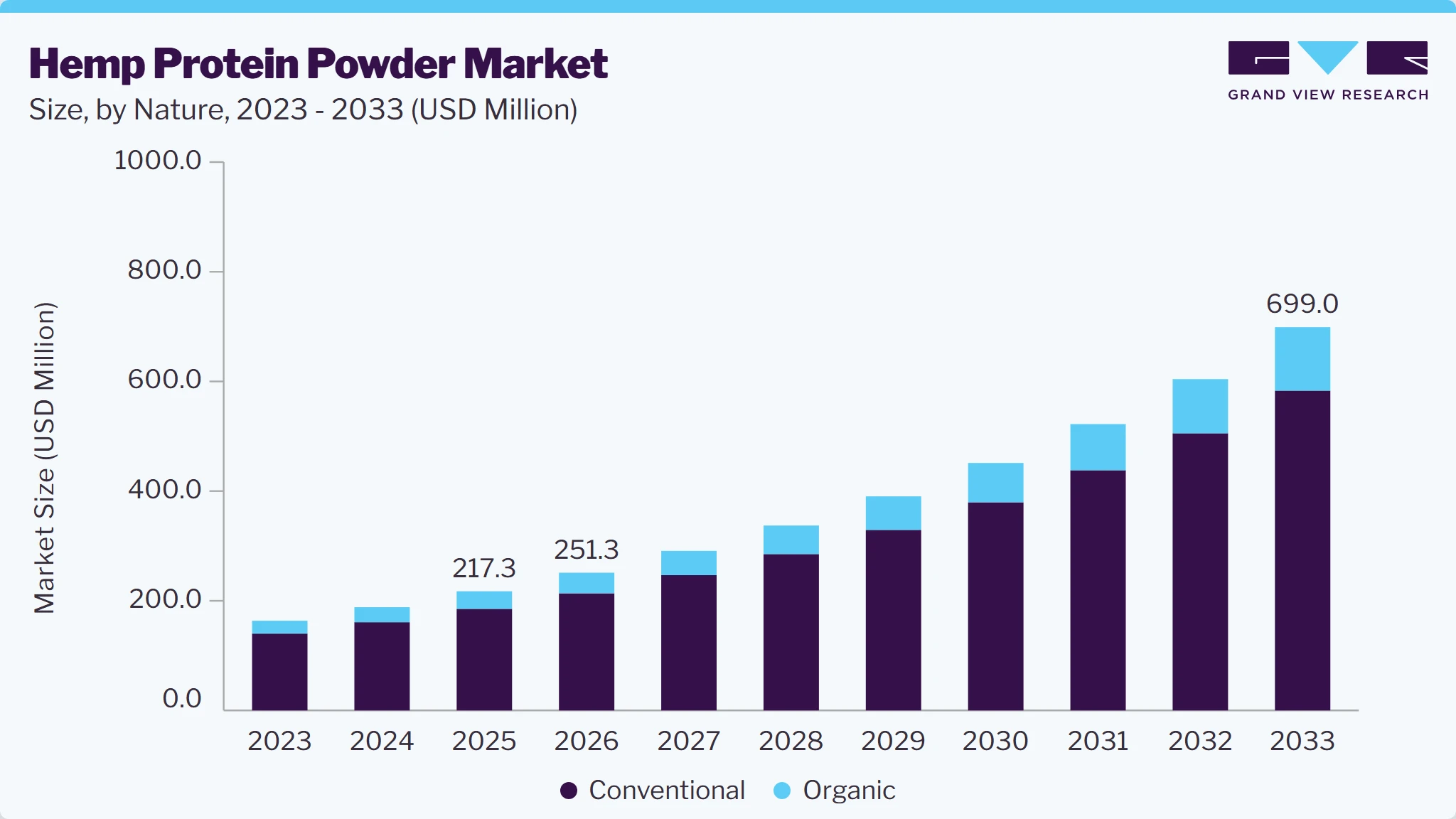
The global hemp protein powder market size was valued at USD 217.3 million in 2025 and is projected to grow from USD 251.3 million in 2026 to USD 699.0 million by 2033, at a CAGR of 15.7% from 2026 to 2033. North America dominated the market, accounting for a revenue share of 37.6% in 2025. The market is experiencing significant growth due to rising consumer awareness about the health benefits of plant-based diets.
 Source: Grand View Research, IR Documents, Primary Interviews, Paid DatabasesTo learn more about this report,
 Download Free Sample Report
Key Market Trends & Insights
- By nature: Conventional segment led the market with the largest revenue share of 85.2% in 2025
- By flavor: Flavoured segment led the market with the largest revenue share of 84.9% in 2025.
- By distribution channel: online segment led the market with the largest revenue share of 42.4% in 2025
Regional Highlights
- Largest regional market: North America (37.6% revenue share, 2025)
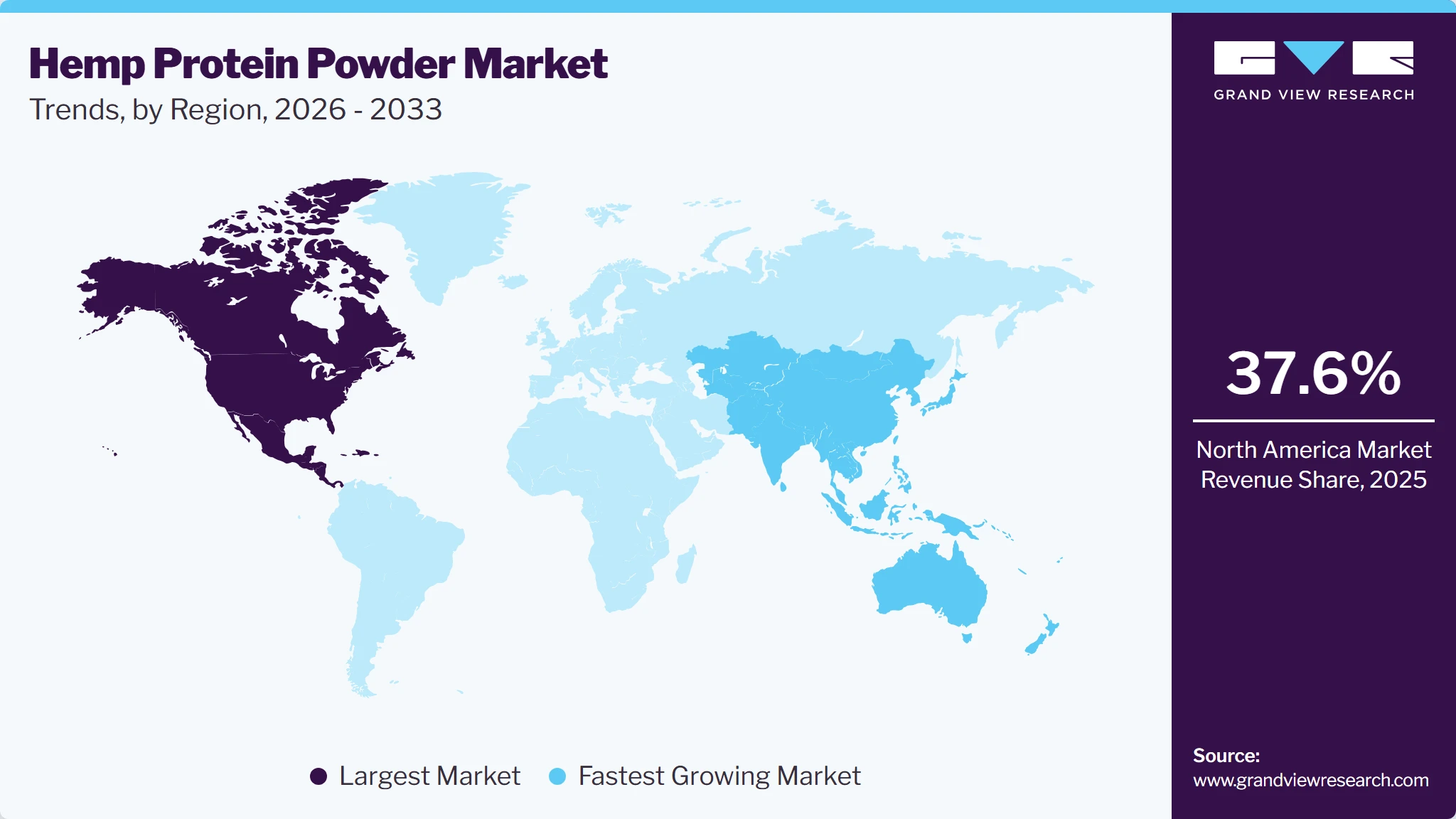
- Fastest-growing regional market: Asia Pacific (highest CAGR, 2026-2033)
- By country: The U.S. held the largest market share in 2025.
Market Size & Forecast
- Market size in 2025: USD 217.3 Million
- Estimated market size in 2026: USD 251.3 Million
- Projected market size by 2033: USD 699.0 Million
- CAGR (2026-2033): 15.7%
Three ways to get this report
Buy it, customize it, or ask a question.Ask an Analyst
Analyst response in 1 business day
- AccessReport author, directly
- Reply timeWithin 1 working day
- No sales callDirect answer only
- FormatEmail reply
- CostFree, no cost
Get the Full Report
What the study covers
- FormatsPDF · Excel · Dashboard
- Timeline2026–2033 annual, 2025 base
- Coverage20+ countries, 5 regions
- Companies10+ key players profiled
Customize the Report
20% free customization
- IncludeCountries, segments, points
- TailorTo your product definition
- ExtendDeeper competitor detail
- OrA fully bespoke study
- Turnaround5–10 working days
There is a growing trend towards veganism and vegetarianism, driven by concerns over animal welfare, environmental sustainability, and health. This shift is leading to increased demand for plant-based protein sources, including hemp protein powder.The trend of clean-label products, where consumers prefer minimally processed foods with fewer additives, is boosting the popularity of hemp protein powder. The product's versatility, allowing it to be incorporated into smoothies, baked goods, and snacks, also contributes to its rising market share.
 To learn more about this report, Download Free Sample Report
The modern lifestyle, characterized by sedentary behavior, poor dietary habits, and high stress levels, has led to a surge in lifestyle-related diseases such as obesity, diabetes, and cardiovascular conditions. These diseases are becoming increasingly common due to factors such as increased consumption of processed and high-calorie foods, lack of physical activity, and overall unhealthy living patterns.
Obesity is a major global health issue, with a significant portion of the population affected by it. Obesity increases the risk of developing other serious health problems, including type 2 diabetes, hypertension, and heart disease. The World Health Organization (WHO) reports that obesity has nearly tripled worldwide since 1975, highlighting the urgent need for dietary changes to combat this epidemic.
In response to the increasing prevalence of these lifestyle-related diseases, many consumers are becoming more health-conscious and are actively seeking out healthier dietary options. This shift is driven by the desire to improve overall health, manage weight, and reduce the risk of chronic diseases.Hemp protein powder is emerging as a popular choice for those looking to adopt a healthier diet due to its numerous nutritional benefits. Hemp protein powder is a rich source of plant-based protein, containing all nine essential amino acids. High-protein diets are beneficial for weight management, muscle building, and overall health. Protein helps in increasing satiety, reducing overall calorie intake, and maintaining lean body mass.
Hemp protein powder is also high in dietary fiber, which aids in digestion, helps regulate blood sugar levels, and supports heart health. Fiber-rich diets are essential for managing weight and preventing obesity-related conditions.In addition to protein and fiber, hemp protein powder contains essential fatty acids (omega-3 and omega-6), vitamins, and minerals that support overall health. These nutrients contribute to better cardiovascular health, improved metabolism, and reduced inflammation.
Market Dynamics
The hemp protein powder market is witnessing steady growth, driven by increasing consumer preference for plant-based nutrition, clean-label products, and sustainable dietary alternatives. Derived from hemp seeds, hemp protein powder is valued for its balanced amino acid profile, dietary fiber content, and essential nutrients, making it an attractive option for health-conscious consumers, athletes, and individuals following vegan or vegetarian lifestyles. Rising awareness regarding the nutritional benefits of plant-derived proteins, coupled with the growing adoption of preventive health and wellness practices, is supporting market expansion. Furthermore, the increasing demand for environmentally sustainable food ingredients and the continuous development of innovative protein formulations are expected to create favorable growth opportunities for the hemp protein powder market over the forecast period.
The increasing adoption of plant-based dietary patterns is emerging as a key growth driver for the hemp protein powder market. Consumers are actively seeking protein sources that align with health, wellness, and sustainability objectives, resulting in greater demand for plant-derived nutritional ingredients across food, beverage, and dietary supplement applications. Hemp protein powder is gaining attention due to its favorable nutritional composition, including essential amino acids, dietary fiber, and naturally occurring micronutrients. In addition, the ingredient's minimally processed nature aligns with the growing clean-label movement, where consumers prefer products formulated with recognizable and naturally sourced ingredients. As manufacturers continue to diversify their plant-based product portfolios, hemp protein is increasingly being incorporated into protein beverages, meal replacements, nutritional supplements, and functional food formulations, thereby supporting market expansion.
In April 2024, Burcon NutraScience Corporation and HPS Food & Ingredients announced the first commercial sales of a high-purity hemp protein isolate developed for food and beverage applications. The commercialization milestone reflects growing industry demand for hemp-derived protein ingredients and demonstrates increasing investment in the development of advanced hemp protein solutions for the plant-based nutrition sector.
Despite growing interest in plant-based nutrition, the hemp protein powder market continues to face challenges associated with the ingredient's functional and sensory limitations. Compared with conventional protein ingredients such as whey, soy, and pea protein, hemp protein generally exhibits lower solubility, reduced emulsification performance, and formulation difficulties in beverages and ready-to-drink applications. In addition, the characteristic earthy flavor, darker color, and gritty texture of hemp protein can negatively impact consumer acceptance, particularly in products where taste and mouthfeel are critical purchasing factors. These limitations often require manufacturers to invest in additional processing technologies or blend hemp protein with other plant proteins to improve product performance, thereby increasing formulation complexity and production costs. As a result, the widespread incorporation of hemp protein into mainstream food and beverage products remains relatively constrained despite increasing consumer interest in plant-based proteins.
A persistent market gap exists between hemp protein's nutritional benefits and its suitability for large-scale food manufacturing. Conventional hemp protein often struggles to meet the functionality requirements of beverage, bakery, and processed food manufacturers. This challenge has created opportunities for ingredient suppliers to develop customized hemp protein solutions tailored for specific food applications.
In February 2025, Nepra Foods announced the development of a proprietary concentrated hemp protein designed specifically for food applications. The ingredient is intended to provide improved texture, taste, and functionality compared with conventional hemp proteins, enabling broader use in bakery products and other food formulations. The initiative highlights how companies are transforming formulation limitations into opportunities for product innovation.
Analyst Perspective
The hemp protein powder market is unlikely to be won by brands selling commodity protein powders; instead, value creation will increasingly shift toward ingredient innovators capable of solving hemp protein's longstanding functionality challenges. As the market matures, competitive differentiation will depend less on sustainability claims and more on the ability to deliver high-purity, highly soluble hemp proteins that can penetrate premium categories such as sports nutrition, ready-to-drink beverages, and functional foods. The companies best positioned for long-term growth are those transforming hemp protein from a niche plant-based ingredient into a formulation-ready protein platform that can compete directly with pea and whey across mainstream food and beverage applications.
Nature Insights
Based on nature, the conventional segment led the market with the largest revenue share of 85.2% in 2025 and is expected to grow at a CAGR of 15.4% over the forecast period. Conventional hemp protein powder tends to be more cost-effective compared to organic or specialty varieties. This affordability makes it accessible to a broader segment of consumers who prioritize value for money in their purchasing decisions.Conventional hemp protein powder is often distributed through mainstream retail channels, including supermarkets, health food stores, and online platforms. Its widespread availability contributes to its dominance in the market, as consumers can easily find and purchase it.
The organic hemp protein powder segment is expected to grow at a significant CAGR from 2024 to 2030. Increasing consumer awareness and interest in health and wellness have driven the demand for organic products. Consumers perceive organic hemp protein powder as a healthier option compared to conventional varieties due to its natural cultivation methods, free from synthetic chemicals, pesticides, and GMOs.There is also a growing preference for clean-label products among consumers who seek transparency and natural ingredients in their dietary choices. Organic hemp protein powder aligns with these preferences as it is produced according to strict organic standards that prioritize sustainability and environmental responsibility.
Flavor Insights
Based on flavor, the flavoured segment led the market with the largest revenue share of 84.9% in 2025. Flavored hemp protein powder offers a more pleasant taste compared to its unflavored counterpart, which can have a natural, earthy flavor that some consumers may find less appealing. Flavors such as chocolate, vanilla, berry, or coffee can mask the hemp taste and make the protein powder more enjoyable to consume.Flavored hemp protein powder provides consumers with a variety of options to suit their taste preferences and dietary preferences. This variety allows consumers to choose flavors that complement their favorite recipes, such as smoothies, shakes, or baked goods.
Unflavored hemp protein powders are expected to grow at the fastest CAGR from 2024 to 2030. Unflavored hemp protein powder appeals to consumers looking for natural and minimally processed dietary supplements. It retains the inherent nutty and earthy flavors of hemp, appealing to those who prefer products with no added flavors or sweeteners.
Distribution Channel Insights
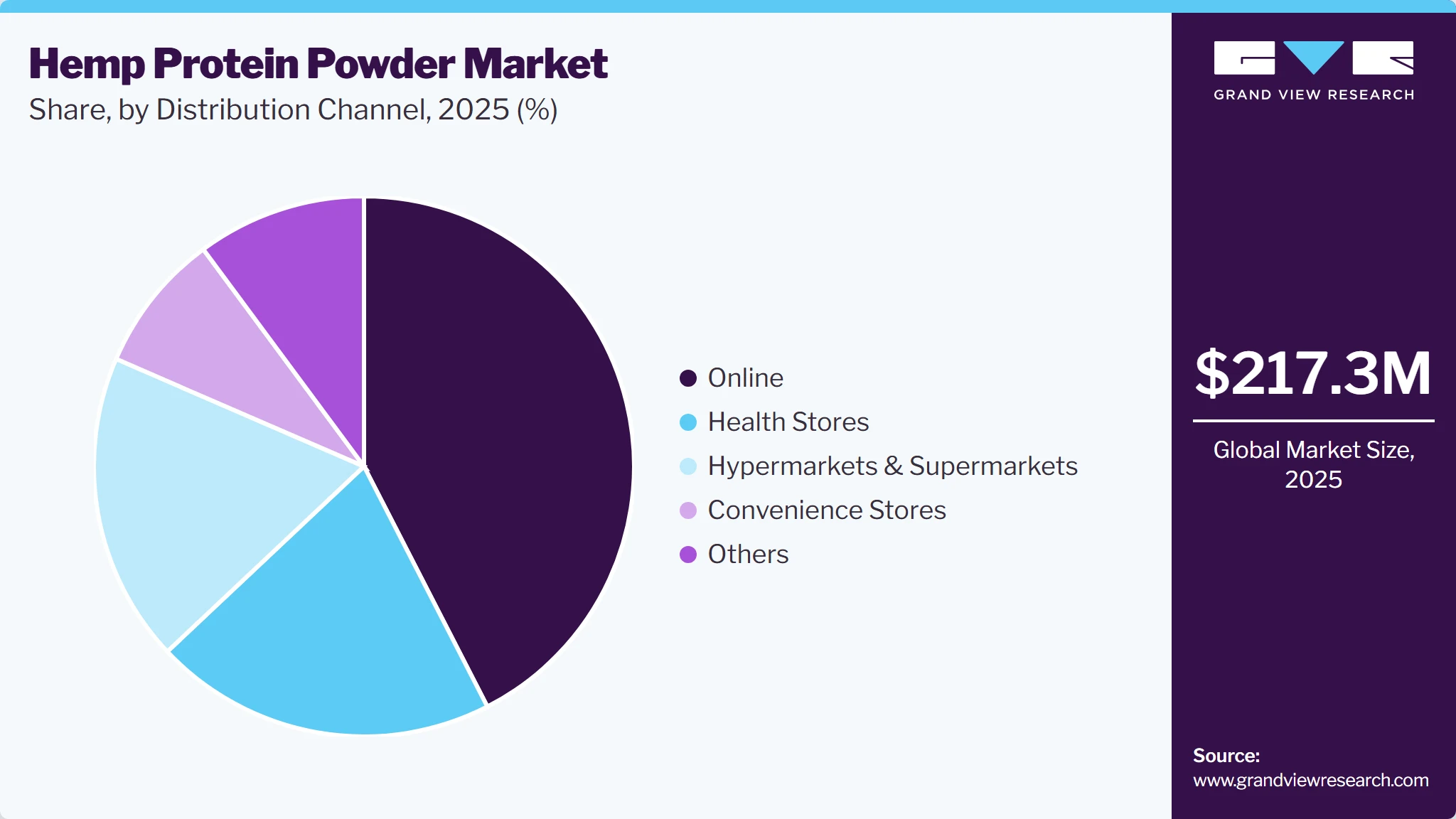
Based on distribution channel, online segment led the market with the largest revenue share of 42.4% in 2025 with the highest CAGR over the forecast period. Online retail stores typically offer a wide selection of hemp protein powder brands, flavors, and formulations. Consumers have access to a broader range of products than they might find in local stores, giving them the opportunity to explore different options and find products that suit their preferences.
 To learn more about this report, Download Free Sample Report
Health stores segment is expected to grow with a CAGR of 15.2% from 2024 to 2030. Health stores cater specifically to consumers who prioritize wellness, natural products, and dietary supplements. These stores attract health-conscious individuals seeking high-quality, nutrient-dense products like hemp protein powder to support their active lifestyles and nutritional goals.Many health stores emphasize natural, organic, and sustainably sourced products, including hemp protein powder. Consumers who prioritize clean-label ingredients, free from additives and artificial substances, are more likely to purchase hemp protein powder from these establishments.
Regional Insights
North America dominated the hemp protein powder market with the largest revenue share of 37.6% in 2025. North America, particularly the United States and Canada, has been at the forefront of developing and commercializing hemp-based products, including hemp protein powder. The region has a longer history of hemp cultivation and regulatory frameworks that support the production and sale of hemp-derived products. North American companies are leaders in product innovation, continuously introducing new formulations, flavors, and packaging options for hemp protein powder. This innovation meets diverse consumer preferences and promotes market growth.
 To learn more about this report, Download Free Sample Report
U.S. Hemp Protein Powder Market Trends
The hemp protein powder market in the U.S. held the largest share in the North America region in 2025. Hemp protein powder has gained popularity among athletes, fitness enthusiasts, and individuals leading active lifestyles in the U.S. The protein's profile and nutritional benefits support muscle recovery, energy levels, and overall fitness goals, driving demand in this demographic.
Europe Hemp Protein Powder Market Trends
Europe market is expected to grow at a CAGR of 16.1% from 2024 to 2030. Increasing consumer awareness and interest in health and wellness have driven demand for plant-based protein supplements like hemp protein powder. European consumers prioritize products that are natural, sustainable, and offer nutritional benefits, aligning well with hemp protein powder.
Asia Pacific Hemp Protein Powder Market Trends
Asia Pacific is expected to grow at a CAGR of 16.9% from 2024 to 2030. The expanding health and wellness market in the Asia Pacific includes a growing segment of consumers willing to invest in dietary supplements and functional foods. Hemp protein powder fits into this trend as a popular choice for enhancing nutritional intake. Increased availability of hemp protein powder through online platforms and health food stores has made it more accessible to consumers across the Asia Pacific region. Product innovations, such as flavored varieties and convenient packaging, also contribute to its popularity.
Key Hemp Protein Powder Company Insights
The global market is characterized by the presence of numerous well-established & regional players such as Manitoba Harvest, Navitas Organics, Nutiva, Evo Hemp, Sunwarrior, India Hemp and Co., Terrasoul Superfoods, India Hemp Organics, Anthonys Goods and Health Horizons. Companies often focus on developing new formulations, flavors, and packaging options to appeal to diverse consumer preferences. Innovation may also include introducing organic, non-GMO, or specialty hemp protein products to cater to specific market segments.
Key Hemp Protein Powder Companies:
The following key companies have been profiled for this study on the hemp protein powder market.
- Manitoba Harvest
- Navitas Organics
- Nutiva
- Evo Hemp
- Sunwarrior
- India Hemp and Co.
- Terrasoul Superfoods
- India Hemp Organics
- Anthonys Goods
- Health Horizons
Competitive Benchmarking
Category
Operating Strategies
Competitive Edge
Weakness
Established Players (Apple Inc., Google, Inc, Fitbit, Inc., Withings)
- Mature players focus on expanding hemp protein isolate and concentrate portfolios while strengthening supply chain integration from hemp sourcing to ingredient processing.
- Established players maintain a competitive advantage through proprietary processing technologies, large-scale production capabilities, and long-standing relationships with food and beverage manufacturers.
- High processing costs and continued challenges related to taste, texture, and solubility can limit scalability and margin expansion across mainstream applications.
Emerging Players (Flo Health, Inc., Clue, Glow, Inc., Wildflower Health)
- Emerging players adopt innovation-driven strategies focused on specialty hemp protein formulations, clean-label positioning, and niche plant-based nutrition segments.
- Emerging companies respond quickly to evolving consumer preferences and are often more flexible in developing customized hemp protein solutions for specific end-use markets.
- Limited production scale, lower brand recognition, and restricted access to processing infrastructure may constrain market penetration and commercial expansion.
Recent Developments
-
In April 2023, hemperella launched of an innovative new line of hemp-based superfood products, including hemp protein powder, in 900 LIDL stores across Poland and 400 LIDL stores throughout the Netherlands. This initiative was planned to make hemperella the leading hemp Superfood brand for consumers who want to maintain a healthy lifestyle..
-
In July 2023, Burcon NutraScience Corporation partnered with HPS Food and Ingredients Inc. to commercialize Burcon's first high-purity, soluble hempseed protein isolate. This collaboration aimed to capitalize on the growing demand for hempseed-based, sustainable, protein ingredients and deliver plant-based protein solutions to customers worldwide. The partnership combines Burcon's unique technology and expertise in hempseed protein extraction with HPS's access to growers and customers, enabling the launch of the world's first soluble hempseed protein isolate that is allergen-free, non-GMO, and offers superior functionality, taste, and nutrition.
Hemp Protein Powder Market Report Scope
Report Attribute
Details
Market size in 2025
USD 217.3 billion
Estimated market size in 2026
USD 251.3 billion
Projected market size by 2033
USD 699.0 billion
Growth rate
CAGR of 15.7% from 2026 to 2033
Base year for estimation
2025
Historical data
2021 - 2024
Forecast period
2026 - 2033
Quantitative units
Revenue in USD million and CAGR from 2026 to 2033
Report coverage
Revenue forecast, company ranking, competitive landscape, growth factors, and trends
Segments covered
Nature, flavor, distribution channel, region
Regional scope
North America; Europe; Asia Pacific; Central & South America; Middle East & Africa
Country scope
U.S.; Canada; Mexico; Germany; UK; France; Italy; Spain; China; Japan; India; Australia & New Zealand; Brazil; South Africa
Key companies profiled
Manitoba Harvest; Navitas Organics; Nutiva; Evo Hemp; Sunwarrior; India Hemp and Co.; Terrasoul Superfoods; India Hemp Organics; Anthonys Goods; Health Horizons
Customization scope
Free report customization (equivalent up to 8 analysts' working days) with purchase. Addition or alteration to country, regional & segment scope.
Pricing and purchase options
Avail customized purchase options to meet your exact research needs. Explore purchase options
Global Hemp Protein Powder Market Report Segmentation
This report forecasts revenue growth at the global, regional, and country levels and provides an analysis of the latest industry trends and opportunities in each of the sub-segments from 2021 to 2033. For this study, Grand View Research has segmented the global hemp protein powder market report based on nature, flavor, distribution channel, and region:
-
Nature Outlook (Revenue, USD Million, 2021 - 2033)
-
Organic
-
Conventional
-
-
Flavor Outlook (Revenue, USD Million, 2021 - 2033)
-
Unflavored/Regular
-
Flavored
-
Chocolate
-
Vanilla
-
Berry
-
Others
-
-
-
Distribution Channel Outlook (Revenue, USD Million, 2021 - 2033)
-
Hypermarkets & Supermarkets
-
Convenience Stores
-
Health Stores
-
Online
-
Others
-
-
Regional Outlook (Revenue, USD Million, 2021 - 2033)
-
North America
-
U.S.
-
Canada
-
Mexico
-
-
Europe
-
UK
-
Germany
-
France
-
Italy
-
Spain
-
-
Asia Pacific
-
China
-
Japan
-
India
-
Australia & New Zealand
-
-
Central & South America
-
Brazil
-
-
Middle East & Africa
-
South Africa
-
-
Research Methodology
The hemp protein powder market figures in this report are based on a proven research process that combines executive interviews with secondary research from proprietary databases, company filings, and recognized regulatory and institutional sources. Market size is built through value-chain sizing - reconciling supply-side and demand-side estimates - and triangulated with bottom-up and top-down approaches. Every estimate passes multiple levels of expert validation before publication, with each hemp protein powder segment quantified using the revenue-capture definitions in the table below.
Segment Definition
Segment - Nature
Revenue capture definition
Organic
This segment includes the sales of cocktail mixers produced using certified organic ingredients, including organic fruit juices, sweeteners, botanicals, and flavoring agents. Revenue is generated through the sale of organic cocktail mixers across retail, foodservice, and online distribution channels.
Conventional
This segment includes the sales of cocktail mixers produced using conventionally sourced ingredients and standard manufacturing processes. Revenue is generated through the sale of conventional cocktail mixers across retail stores, hospitality establishments, and e-commerce platforms.
Segment - Flavor
Revenue capture definition
Unflavored/Regular
This segment includes the sales of cocktail mixers without added flavors, containing base ingredients intended for customization and use in a variety of cocktail preparations. Revenue is generated through the sale of unflavored cocktail mixers across retail, foodservice, and online distribution channels.
Flavored
This segment includes the sales of cocktail mixers formulated with added flavors, including fruit, botanical, spice, and other flavor variants. Revenue is generated through the sale of flavored cocktail mixers across retail stores, hospitality establishments, and e-commerce platforms.
Estimation Model
Layer
Guiding Question
Description
Hemp Seed Production Layer
How much raw material is available?
Identify industrial hemp seed production volumes across key producing regions and determine the proportion allocated to food-grade processing and protein ingredient manufacturing.
Protein Processing Layer
How much hemp seed becomes protein ingredients?
Apply processing and extraction conversion rates to estimate the volume of hemp protein concentrates and isolates produced for commercial food, beverage, and supplement applications.
End-Use Adoption Layer
How much protein is consumed by end-use industries?
Assess hemp protein utilization across sports nutrition, dietary supplements, functional foods, plant-based beverages, and meat alternatives to determine addressable market demand.
Revenue Realization Layer
How much revenue is generated?
Multiply commercial hemp protein volumes by average selling prices across concentrates, isolates, and finished consumer products to estimate total market revenue.
Delivered Customizations
This report has been delivered with the following In-depth customizations
Client Request
Customization Delivered
Value Adds
Adoption Trends Among Vegan, Vegetarian & Flexitarian Consumers
Conducted a focused assessment of hemp protein powder adoption across vegan, vegetarian, and flexitarian consumer groups, including consumption patterns, purchase drivers, and application preferences across nutrition and functional food products.
Helps stakeholders identify high-growth consumer segments, optimize product positioning, and align marketing strategies with evolving plant-based consumption trends.
Technological Advancements in Hemp Protein Processing & Extraction
Evaluated recent advancements in hemp protein extraction, isolation, purification, and functionality enhancement technologies, including developments aimed at improving solubility, taste, texture, and protein concentration.
Provides insights into emerging innovation areas, supports product development decisions, and identifies technologies capable of enhancing competitive differentiation.
Market Share Analysis of Leading Manufacturers & Ingredient Suppliers
Assessed the competitive landscape of hemp protein powder manufacturers and ingredient suppliers, including market presence, product portfolios, strategic initiatives, and commercialization activities.
Enables benchmarking against key competitors, supports partnership and investment decisions, and highlights opportunities for market expansion and competitive positioning.
Frequently Asked Questions About This Report
Conventional segment dominated the market with a share of 85.2% in 2025.
Flavored segment is the fastest growing segment for the forecast period.
Online distribution channel segment lead the market with the largest share of 42.4% in 2025.
Asia Pacific is the fastest growing region the forecast period.
The global hemp protein powder market was estimated at USD 217.3 million in 2025 and is expected to reach USD 251.3 million in 2026.
The global hemp protein powder market is expected to grow at a compound annual growth rate of 15.7% from 2026 to 2033 to reach USD 699.0 million by 2033.
North America dominated the hemp protein powder market with a share of around 37.6% in 2025. The market is driven by product innovation, continuously introducing new formulations, flavors, and packaging options for hemp protein powder.
Key factors that are driving the hemp protein powder market growth include rising consumer awareness about the health benefits of plant-based diets
Some of the key players operating in the hemp protein powder market include Manitoba Harvest, Navitas Organics, Nutiva, Evo Hemp, Sunwarrior, India Hemp and Co., Terrasoul Superfoods, India Hemp Organics, Anthonys Goods and Health Horizons
About the Author(s)
Nutraceuticals & Functional Foods Research Team
Consumer Goods · Nutraceuticals & Functional FoodsThis report was authored by the nutraceuticals & functional foods research team at Grand View Research - comprising two research analysts, one senior research analyst, and one industry expert - with specialized expertise in the nutraceuticals & functional foods segment of the consumer goods industry. All findings are based on proprietary consumer goods databases, executive interviews, and regulatory analysis, subject to internal peer review prior to publication.
Last Updated:
Speak to Analyst

Customize this report to your needs - add regions, segments, or data points, with 20% free customization.
Or view our licence options:


ISO 9001:2015 & 27001:2022 Certified
We are GDPR and CCPA compliant! Your transaction & personal information is safe and secure. For more details, please read our privacy policy.


