
- Home
- »
- Conventional Energy
- »
-
Horizontal Directional Drilling Market Size Report, 2026-2033GVR Report cover

Horizontal Directional Drilling Market (2026 - 2033)
Size, Share & Trends Analysis Report By Application (Onshore, Offshore), By Parts Type (Rigs, Pipes, Bits, Reamers), By End Use, By Machine Type, By Tooling, By Machine Size, By Region, And Segment Forecasts
Market Size, 2025
$9.3BMarket Estimate, 2026
$10.5BMarket Forecast, 2033
$20.9BCAGR, 2026–2033
10.3%Horizontal Directional Drilling Market Summary
The global horizontal directional drilling market size was estimated at USD 9.3 billion in 2025 and is projected to grow from USD 10.5 billion in 2026 to USD 20.9 billion by 2033, growing at a CAGR of 10.3% from 2026 to 2033. The market in North America dominated with a revenue share of 33.0% in 2025. The rising demand for efficient, cost-effective, and environmentally friendly underground utility installation methods drives market growth.
 Source: Grand View Research, IR Documents, Primary Interviews, Paid DatabasesTo learn more about this report,
 Download Free Sample Report
 Key Market Trends & Insights
- By machine type: Boring machines segment led the market with the largest revenue share of 43.8% in 2025.
- By application: Onshore segment led the market with the largest revenue share of 75.0% in 2025.
- By machine size: Midi segment led the market with the largest revenue share of 46.7% in 2025.
- By parts type: Rigs segment led the market with the largest revenue share of 44.4% in 2025.
- By tooling: HDD drill rods segment led the market with the largest revenue share of 26.8% in 2025.
- By end-use: Oil & gas extraction segment led the market with the largest revenue share of 37.7% in 2025.
Regional Highlights
- Largest regional market: North America (33.0% revenue share, 2025)
- By country: The U.S. held the largest market share in 2025.
Market Size & Forecast
- Market size in 2025: USD 9.3 Billion
- Estimated market size in 2026: USD 10.5 Billion
- Projected market size by 2033: USD 20.9 Billion
- CAGR (2026-2033): 10.3%
Three ways to get this report
Buy it, customize it, or ask a question.Ask an Analyst
Analyst response in 1 business day
- AccessReport author, directly
- Reply timeWithin 1 working day
- No sales callDirect answer only
- FormatEmail reply
- CostFree, no cost
Get the Full Report
What the study covers
- FormatsPDF · Excel · Dashboard
- Timeline2026–2033 annual, 2025 base
- Coverage20+ countries, 5 regions
- Companies10+ key players profiled
Customize the Report
20% free customization
- IncludeCountries, segments, points
- TailorTo your product definition
- ExtendDeeper competitor detail
- OrA fully bespoke study
- Turnaround5–10 working days
Horizontal directional drilling (HDD) technology enables the installation of pipelines, cables, and conduits with minimal surface disruption, making it especially suitable for urban areas and challenging terrains. Key applications in oil & gas, telecommunications, water & wastewater, and power distribution sectors fuel steady adoption. In North America, market growth is primarily supported by extensive infrastructure development and government initiatives promoting sustainable utility installation. The United States leads adoption, driven by the need to upgrade aging underground pipelines, expand telecommunications networks, and deploy renewable energy infrastructure with minimal surface disruption. Increasing urbanization and regulatory support for trenchless technologies encourage the deployment of HDD systems across utility, industrial, and commercial projects. Technological advancements in drilling equipment, real-time monitoring, and precision guidance systems enhance efficiency and safety, supporting sustained market momentum throughout the forecast period.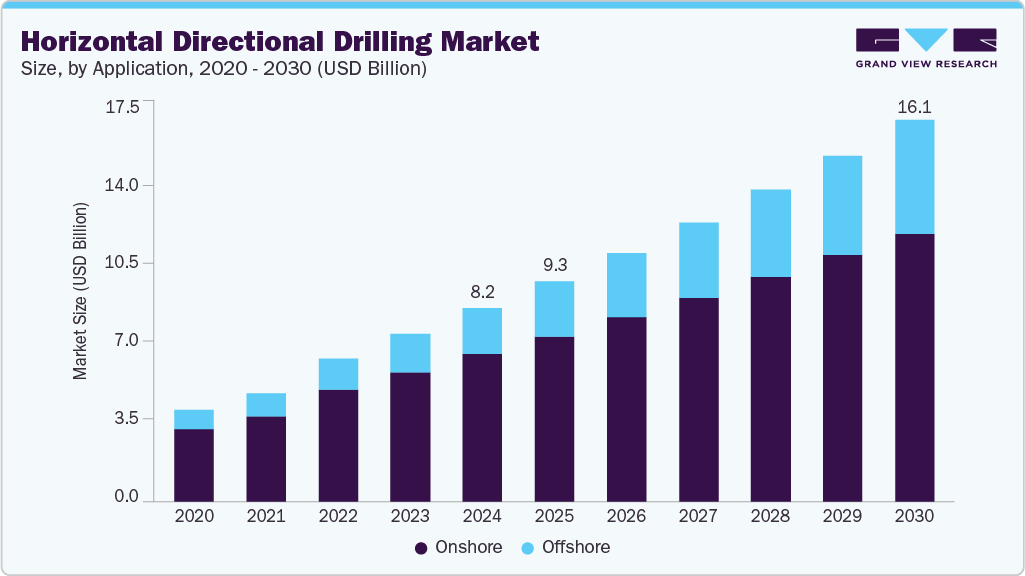 To learn more about this report, Download Free Sample Report
 Europe represents another significant growth region for the HDD market, with Germany, the UK, and France leading adoption due to stringent environmental regulations and a strong focus on minimizing the ecological impact of construction activities. Investments in urban infrastructure modernization, renewable energy projects, and underground utility networks are key drivers of regional demand. Strategic collaborations between local contractors and international HDD technology providers, combined with government incentives for trenchless construction methods, reinforce Europe’s position as a critical contributor to the global HDD market. The region’s emphasis on sustainable and low-impact construction practices is expected to accelerate the adoption of HDD systems across multiple sectors.
Market Dynamics
The global horizontal directional drilling market is witnessing significant growth as infrastructure developers, utility operators, and energy companies increasingly adopt trenchless construction technologies for underground installations. Horizontal directional drilling (HDD) enables the installation of pipelines, utility conduits, telecommunications cables, and other underground infrastructure with minimal surface disruption, making it a preferred solution for projects in urban environments and environmentally sensitive areas. Growing investments in utility modernization, pipeline replacement, and digital connectivity infrastructure are supporting market expansion across major economies.
The expansion of underground utility networks and energy infrastructure remains a key growth driver for the horizontal directional drilling market. Governments and utility operators are investing heavily in replacing aging water pipelines, natural gas distribution systems, power transmission networks, and telecommunications infrastructure. HDD technology allows these installations to be completed with minimal disturbance to existing infrastructure and surrounding communities, making it particularly attractive in densely populated urban regions.
In addition, growing investments in oil & gas pipeline projects, broadband expansion initiatives, and smart utility networks are creating sustained demand for HDD equipment and services. The increasing deployment of fiber-optic cables, renewable energy transmission infrastructure, and municipal utility upgrades continue to support market growth. As infrastructure developers prioritize construction efficiency, environmental compliance, and reduced project timelines, HDD technology is expected to witness broader adoption across multiple end-use sectors.
Despite favorable market conditions, the horizontal directional drilling market faces challenges, including high capital investment requirements and operational complexity. HDD projects require specialized drilling rigs, guidance systems, drilling fluids, and skilled operators, resulting in substantial upfront costs that may limit adoption among smaller contractors. In addition, geological uncertainties, varying soil conditions, subsurface obstacles, and complex permitting requirements can increase project risks, construction timelines, and overall operational expenses. These factors can impact project feasibility and profitability, particularly in cost-sensitive infrastructure projects and regions with stringent regulatory frameworks.
The rapid expansion of fiber-optic communication networks, broadband infrastructure, and 5G deployment is creating significant growth opportunities for the horizontal directional drilling market. Telecommunications providers increasingly use HDD technology for underground cable installation to minimize surface disruption and improve installation efficiency. In addition, investments in smart city initiatives, underground power transmission systems, modernized water infrastructure, and renewable energy projects are expected to drive sustained demand for HDD equipment and services across multiple end-use sectors.
Analyst Perspective
The horizontal directional drilling market is entering a period of strong growth as governments, utility operators, telecommunications providers, and energy companies increasingly prioritize underground infrastructure development and network modernization. Rising investments in utility replacement projects, oil & gas pipeline infrastructure, fiber-optic network deployment, and smart city initiatives are accelerating the adoption of HDD technologies across utility, telecommunications, and energy applications. While high equipment costs, project complexity, and skilled labor requirements remain key challenges, advancements in drilling equipment, guidance systems, and automation technologies are improving operational efficiency and project execution capabilities. Growing investments in broadband expansion, underground transmission networks, and water utility modernization are creating new opportunities across the value chain. In the coming years, companies that can enhance technological capabilities and deliver efficient trenchless construction solutions are expected to strengthen their competitive position in the market.
Application Insights
Based on application, the onshore segment led the market with the largest revenue share of 75.0% in 2025, primarily due to the widespread use of horizontal directional drilling (HDD) in infrastructure development, utility installation, and pipeline replacement projects. Onshore HDD enables efficient and environmentally friendly underground installation of cables, pipelines, and conduits in urban and semi-urban areas, minimizing surface disruption and reducing overall project costs. Growing investments in telecommunication networks, oil and gas distribution, and water management infrastructure have reinforced its dominance.
Governments and private developers increasingly favor HDD to meet environmental compliance standards and minimize land disturbance. Advancements in drilling fluid systems, borehole navigation, and rig automation have enhanced operational reliability and reduced risks associated with complex subsurface conditions. Continuous equipment innovation and the growing number of contractors specializing in trenchless drilling are expected to sustain onshore HDD dominance throughout the forecast period. The segment’s scalability and adaptability across diverse applications from small-diameter telecom conduits to large-diameter energy pipelines further reinforce its leadership in the global HDD market.
Machine Type Insights
Based on machine type, the boring machines segment led the market with the largest revenue share of 43.8% in 2025, driven by their extensive use in large-scale infrastructure, utility, and energy projects that require precision drilling and high operational efficiency. These machines are critical in executing complex horizontal directional drilling (HDD) operations across varied geological conditions, enabling accurate underground installation of pipelines, cables, and conduits. Technological advancements such as automated steering systems, enhanced torque capacity, and real-time monitoring have improved drilling accuracy and reduced downtime.
These machines are critical in executing complex horizontal directional drilling (HDD) operations across varied geological conditions, enabling accurate underground installation of pipelines, cables, and conduits. Technological advancements such as automated steering systems, enhanced torque capacity, and real-time monitoring have improved drilling accuracy and reduced downtime.
Technology Insights
The conventional segment held the largest revenue share of 44% in 2024, primarily due to its established presence and widespread adoption across various horizontal directional drilling (HDD) projects. Conventional HDD systems are extensively used in onshore infrastructure, utility installation, and pipeline projects where proven technology, reliability, and cost-effectiveness are prioritized. Their ability to handle diverse geological conditions and support medium to large-diameter drilling makes them a preferred choice for contractors in oil & gas, water management, telecommunication, and energy distribution sectors. The segment’s dominance reflects the balance between operational efficiency and manageable capital investment, making it accessible to small and large-scale projects.
The segment also benefits from the growing demand for trenchless technology in urban and environmentally sensitive areas, where minimal surface disruption is critical. As infrastructure development, utility expansion, and renewable energy projects continue to rise globally, the conventional HDD segment is expected to maintain its leading position throughout the forecast period.
Machine Size Insights
Based on machine size, the midi segment led the market with the largest revenue share of 46.7% in 2025. The segment's market leadership is driven by its versatility, which allows it to efficiently handle medium-scale utility, pipeline, and telecommunication installation projects across urban and suburban areas. The growing infrastructure development, modernization of utility networks, and demand for cost-effective trenchless solutions are expected to sustain the segment’s dominant position throughout the forecast period.
Midi HDD offer an optimal balance between power, maneuverability, and operational efficiency, making them ideal for urban utility installations, telecommunications networks, and medium-diameter pipeline projects. Their compact design allows for easier deployment in constrained or densely populated areas, while still providing sufficient drilling capability for most onshore infrastructure needs.
Parts Type Insights
Based on parts type, the rigs segment led the market with the largest revenue share of 44.4% in 2025, primarily due to the critical role rigs play in executing horizontal directional drilling (HDD) operations across various applications. HDD rigs are essential for installing pipelines, cables, and conduits with precision, particularly in onshore infrastructure, oil & gas, water management, and telecommunication projects. The segment’s dominance reflects the widespread adoption of robust, high-capacity rigs capable of handling medium to large-diameter drilling operations, ensuring efficiency, reliability, and reduced project timelines.
Manufacturers are increasingly offering modular and energy-efficient rigs that can be deployed quickly across diverse geographies, reducing setup and operational costs. Rising investments in urban infrastructure, renewable energy pipelines, and utility network expansion continue to drive demand for advanced HDD rigs, ensuring the segment maintains its leading position in the global market throughout the forecast period.
Tooling Insights
Based on tooling, the HDD drill rods segment led the market with the largest revenue share of 26.8% in 2025, driven by its essential role in horizontal directional drilling operations. Drill rods provide the structural connection between the rig and the drill bit, transmitting torque and thrust to navigate various geological formations. Their durability, strength, and resistance to wear and corrosion are critical factors determining drilling efficiency and project success.
Manufacturers also optimize drill rod lengths and configurations to meet project-specific requirements, increasing efficiency in urban and complex terrain installations. As global infrastructure development, utility expansion, and renewable energy projects continue to rise, the HDD drill rods segment is expected to maintain steady growth and remain a critical component of the HDD value chain throughout the forecast period.
End Use Insights
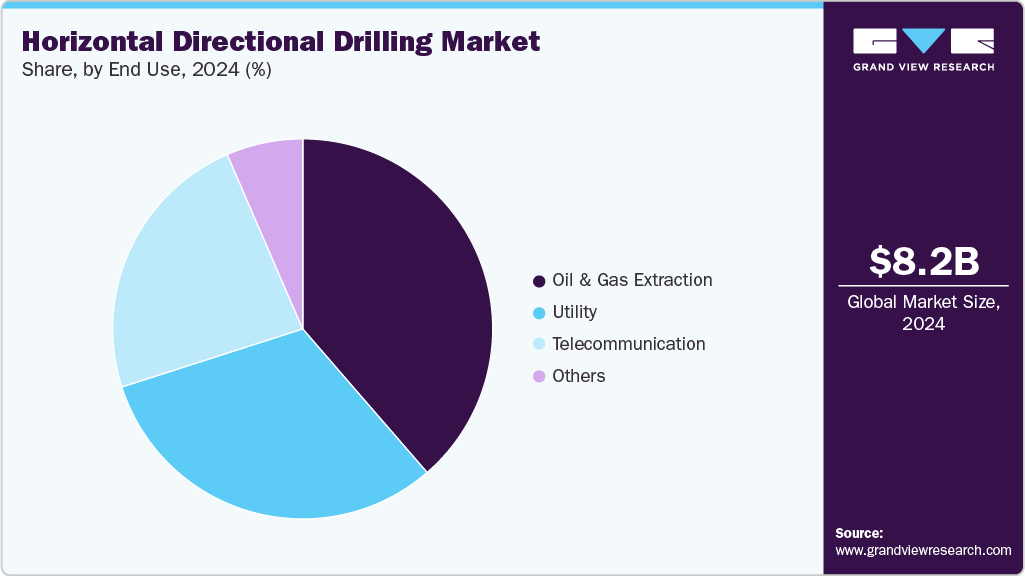
Based on end-use, the oil & gas extraction segment led the market with the largest revenue share of 37.7% in 2025, driven by the extensive use of horizontal directional drilling (HDD) technology in installing pipelines, flowlines, and related infrastructure. HDD enables efficient and precise underground placement of oil and gas pipelines, minimizing surface disruption and reducing environmental impact, which is particularly important in ecologically sensitive urban areas.
 To learn more about this report, Download Free Sample Report
 Technological advancements in HDD equipment, such as enhanced torque capacity, real-time monitoring systems, and advanced drill heads, have improved operational efficiency and reduced project timelines. In addition, the rising focus on reducing construction-related environmental damage and maintaining regulatory compliance continues to drive the adoption of HDD in the oil & gas sector, ensuring that this segment remains the leading contributor to the global HDD industry.
Regional Insights
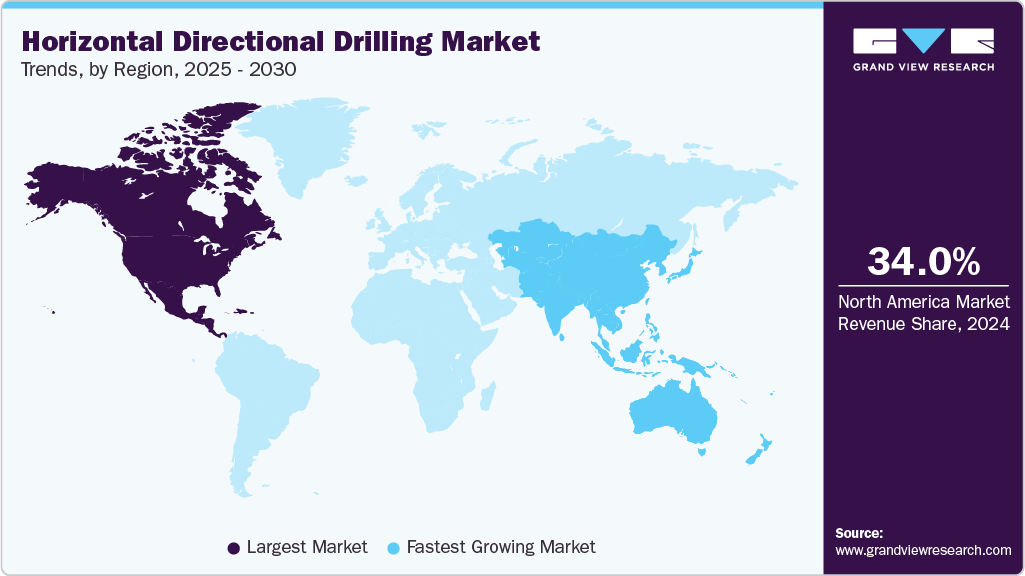
North America dominated the horizontal directional drilling market with the largest revenue share of 33.0% in 2025, driven by substantial investments in infrastructure modernization, energy pipeline expansion, and telecommunication network deployment. The U.S. leads the region, supported by federal and state-level infrastructure programs, regulatory incentives, and the adoption of trenchless construction techniques. Canada also contributes through large-scale utility projects and urban development initiatives. Strong public-private collaboration, technological innovation in HDD rigs and equipment, and increased demand for efficient underground installations reinforce North America’s position as a significant HDD market.
 To learn more about this report, Download Free Sample Report
 U.S. Horizontal Directional Drilling Market Trends
The U.S. horizontal directional drilling market held the largest share of over 68% in the North America region in 2025. The U.S. is the largest single-country HDD market, driven by high utility, oil & gas investments, and telecommunication infrastructure. Federal and state-level initiatives promoting trenchless construction and rising urbanization and industrial development have created a favorable investment environment for HDD deployment. With ongoing infrastructure development and technological innovation, the U.S. is expected to remain a leading market for HDD throughout the forecast period.
Europe Horizontal Directional Drilling Market Trends
Europe is a key market for the Horizontal Directional Drilling industry. Strong infrastructure development, urban utility modernization, and stringent environmental regulations support the region’s leadership. Countries such as Germany, France, the Netherlands, and the UK actively deploy HDD technology for pipeline installation, telecommunications networks, and energy distribution projects. Policy support, including government subsidies, research funding, and incentives for trenchless construction, combined with mature urban infrastructure, creates a favorable environment for large-scale HDD adoption. Europe’s focus on sustainable construction practices and minimizing surface disruption continues to drive market expansion and maintain its dominant position globally.
Asia Pacific Horizontal Directional Drilling Market Trends
The Asia Pacific region is emerging as the fastest-growing HDD market, driven by rapid urbanization, industrialization, and large-scale infrastructure projects in countries such as China, India, Japan, and South Korea. Governments in the region are investing heavily in pipeline networks, energy distribution systems, and telecommunication infrastructure, promoting the adoption of trenchless HDD technology. Rising electricity demand, urban utility expansion, and the need for minimally disruptive construction methods position Asia-Pacific as a critical contributor to global HDD market growth.
Latin America Horizontal Directional Drilling Market Trends
Latin America is gradually expanding its HDD market, supported by increasing investments in urban infrastructure, oil & gas pipelines, and telecommunication networks. Countries such as Brazil, Mexico, and Argentina are adopting HDD technology to reduce surface disruption, lower project costs, and accelerate installation timelines. Government policies, regional infrastructure programs, and international partnerships encourage market growth, positioning the region for steady expansion over the forecast period.
Middle East & Africa Horizontal Directional Drilling Market Trends
The Middle East & Africa (MEA) region is witnessing gradual growth in the HDD market, driven by energy infrastructure expansion, urban development, and pipeline installation projects. Key economies such as the UAE, Saudi Arabia, South Africa, and Egypt are investing in trenchless technologies to support utility networks, oil & gas pipelines, and telecommunication systems. Sub-Saharan Africa is leveraging smaller-scale HDD projects to improve infrastructure access in remote areas. Policy support, public-private collaborations, and international funding facilitate regional development, with HDD adoption expected to grow steadily over the forecast period.
Key Horizontal Directional Drilling Company Insights
Some of the key players operating in the global Horizontal Directional Drilling (HDD) market include Barbco, Inc., Vermeer Corporation, Direct Horizontal Drilling, Inc., The Charles Machine Works, Inc. (Ditch Witch), The Toro Company, Horizontal Technology, Inc., Vision Directional Drilling, Kondex Corporation U.S.A., and VMT GmbH Gesellschaft Für Vermessungstechnik.
Key Horizontal Directional Drilling Companies
The following key companies have been profiled for this study on the horizontal directional drilling market.
-
Barbco, Inc.
-
Vermeer Corporation
-
Direct Horizontal Drilling, Inc.
-
The Charles Machines Works, Inc. (Ditch Witch)
-
The Toro Company
-
Mclaughlin Group, Inc.,
-
Laney Directional Drilling Co.
-
Ellingson Companies
-
Vmt Gmbh Gesellschaft Für Vermessungstechnik
Competitive Benchmarking
Category
Operating Strategies
Competitive Edge
Weakness
Established Players (e.g., Vermeer Corporation, The Charles Machine Works, Inc. (Ditch Witch), The Toro Company, McLaughlin Group, Inc., Barbco, Inc.)
- Focus on manufacturing HDD equipment, drilling systems, tooling solutions, and trenchless construction technologies for large-scale infrastructure projects.
- Emphasize product innovation, equipment performance enhancement, dealer network expansion, aftermarket services, and strategic partnerships with contractors and utility operators.
- Benefit from strong brand recognition, established distribution channels, extensive equipment portfolios, and long-standing customer relationships.
- Large-scale manufacturing capabilities support operational efficiency, technological development, and global market penetration across utility, energy, and telecommunications sectors.
- Face significant capital requirements for research & development, manufacturing expansion, and technology integration.
- Business performance can be affected by fluctuations in infrastructure spending, construction activity, raw material costs, and economic cycles.
Emerging & Specialized Players (e.g., Direct Horizontal Drilling, Inc., Laney Directional Drilling Co., Ellingson Companies, VMT GmbH Gesellschaft für Vermessungstechnik, Digital Control Incorporated (DCI))
- Focus on specialized HDD contracting services, guidance technologies, surveying solutions, drilling support services, and niche trenchless construction applications.
- Emphasize technical expertise, project execution capabilities, precision drilling technologies, and strategic collaborations across infrastructure and utility projects.
- Benefit from specialized engineering expertise, advanced positioning and guidance technologies, and flexibility in addressing complex project requirements.
- Agile business structures support rapid technology adoption, customized service offerings, and efficient response to evolving customer needs.
- Limited operational scale and narrower geographic presence compared to large equipment manufacturers.
- Expansion often requires substantial investments in equipment fleets, skilled workforce development, technology upgrades, and long-term infrastructure contracts.
Recent Developments
-
In October 2025, Vermeer launched the enhanced D20x22 S3 horizontal directional drill in the U.S., featuring improved hydraulic protection, redesigned components, and upgraded hood design to boost reliability and productivity for urban utility contractors.
-
In January 2025, Ditch Witch launched the JT21 directional drill in the U.S., offering 40% more downhole horsepower and 53% faster carriage speed, enhancing efficiency for underground utility and fiber installations.
Horizontal Directional Drilling Market Report Scope
Report Attribute
Details
Market size in 2025
USD 9.3 billion
Estimated market size in 2026
USD 10.5 billion
Projected market size by 2033
USD 20.9 billion
Growth rate
CAGR of 10.3% from 2026 to 2033
Base year for estimation
2025
Historical data
2021 - 2024
Forecast period
2026 - 2033
Quantitative units
Revenue in USD billion and CAGR from 2026 to 2033
Report coverage
Revenue forecast, company ranking, competitive landscape, growth factors, and trends
Segments covered
Machine type, application, machine size, parts type, tooling, end-use, region.
Regional scope
North America; Europe; Asia Pacific; Latin America; Middle East & Africa
Country scope
U.S., Canada, Mexico, Germany, UK, Italy, Spain, France, Norway, China, India, Japan, Australia, Brazil, Argentina, Saudi Arabia, South Africa, UAE
Key companies profiled
Barbco, Inc.; Direct Horizontal Drilling, Inc.; Ellingson Companies; Laney Directional Drilling Co.; Mclaughlin Group, Inc.; The Charles Machines Works, Inc. (Ditch Witch); The Toro Company; Vermeer Corporation; Vmt Gmbh Gesellschaft Für Vermessungstechnik.
Customization scope
Free report customization (equivalent up to 8 analysts' working days) with purchase. Addition or alteration to country, regional & segment scope.
Pricing and purchase options
Avail customized purchase options to meet your exact research needs. Explore purchase options
Global Horizontal Directional Drilling Market Report Segmentation
This report forecasts revenue growth at global, regional, and country levels and provides an analysis of the latest industry trends in each of the sub-segments from 2021 to 2033. For the purpose of this study, Grand View Research has segmented the global horizontal directional drilling market report on the basis of machine type, application, machine size, parts type, tooling, and region:
-
Machine Type Outlook (Revenue, USD Million, 2021 - 2033)
-
Utility vibratory plow
-
Utility tractor
-
Pile driver
-
Foundation machines
-
Boring machine
-
Others
-
-
Application Outlook (Revenue, USD Million, 2021 - 2033)
-
Onshore
-
Offshore
-
-
Machine Size Outlook (Revenue, USD Million, 2021 - 2033)
-
Mini
-
Midi
-
Maxi
-
-
Parts Type Outlook (Revenue, USD Million, 2021 - 2033)
-
Rigs
-
Pipes
-
Bits
-
Reamers
-
-
Tooling Outlook (Revenue, USD Million, 2021 - 2033)
-
Transition rods
-
HDD Drill Rods
-
HDD Paddle Bits
-
HDD Drive Collars, Chucks, and Subs
-
HDD Swivels & Pulling Equipment
-
Others
-
-
End Use Outlook (Revenue, USD Million, 2021 - 2033)
-
Oil & gas extraction
-
Utility
-
Telecommunication
-
Others
-
-
Regional Outlook (Revenue, USD Million, 2021 - 2033)
-
North America
-
U.S.
-
Canada
-
Mexico
-
-
Europe
-
Germany
-
UK
-
France
-
-
Asia Pacific
-
China
-
India
-
Japan
-
South Korea
-
-
Latin America
-
Brazil
-
-
Middle East & Africa
-
Saudi Arabia
-
UAE
-
-
Research Methodology
The horizontal directional drilling market figures in this report are based on a proven research process that combines executive interviews with secondary research from proprietary databases, company filings, and recognized regulatory and institutional sources. Market size is built through value-chain sizing - reconciling supply-side and demand-side estimates - and triangulated with bottom-up and top-down approaches. Every estimate passes multiple levels of expert validation before publication, with each horizontal directional drilling segment quantified using the revenue-capture definitions in the table below.
Segment Definition
Machine Type
Revenue Capture Definition
Utility vibratory plow
Utility vibratory plows are used for installing underground utility lines, telecommunications cables, and distribution networks with minimal surface disruption. Revenue is generated through equipment sales, rentals, installation services, maintenance contracts, replacement components, and associated operational support services.
Utility tractor
Utility tractors support trenchless utility installation and underground infrastructure construction activities across municipal, utility, and telecommunications projects. Revenue capture includes equipment sales, leasing services, aftermarket components, maintenance services, and contractor support solutions.
Pile driver
Pile drivers are utilized in foundation preparation and infrastructure development projects where ground stabilization and structural support are required. Revenue is derived from equipment sales, rental services, project support activities, maintenance contracts, and replacement parts.
Foundation machines
Foundation machines are deployed for deep foundation construction, utility crossings, transportation infrastructure, and large-scale civil engineering projects. Revenue is generated through equipment sales, drilling services, foundation construction support, maintenance agreements, and related engineering services.
Boring machines
Boring machines are utilized to create underground pathways for pipelines, utility conduits, telecommunications cables, and energy infrastructure while minimizing surface disruption. Revenue is generated through equipment sales, machine rentals, drilling services, maintenance contracts, replacement components, and associated operational support services.
Others
This category comprises specialized HDD equipment utilized for niche trenchless construction and underground installation applications. Associated revenues are linked to equipment deployment, rental services, maintenance activities, replacement parts, and application-specific drilling solutions.
Application
Revenue Capture Definition
Onshore
Onshore HDD applications support the installation of underground pipelines, utility networks, telecommunications infrastructure, water systems, and power transmission assets across urban and rural environments. Revenue capture includes drilling services, equipment utilization, engineering services, project execution activities, and associated infrastructure development expenditures.
Offshore
Offshore HDD applications facilitate subsea pipeline landfalls, offshore energy projects, marine utility installations, and coastal infrastructure development. Revenue is generated through drilling services, specialized equipment deployment, engineering support, project management services, and offshore infrastructure investments.
Machine Size
Revenue Capture Definition
Mini
Mini HDD machines are used for short-distance utility installations, residential projects, and urban infrastructure applications where space is limited. Revenue capture includes equipment sales, rental services, installation projects, maintenance activities, and aftermarket support.
Midi
Midi HDD machines support medium-scale utility, telecommunications, water, and gas infrastructure installations. Revenue is generated through equipment deployment, drilling services, contractor utilization, maintenance agreements, and replacement component sales.
Maxi
Maxi HDD machines are used for large-scale pipeline crossings, energy infrastructure projects, and long-distance drilling applications that require high power and drilling capacity. Revenue is derived from equipment sales, project execution services, engineering support, maintenance contracts, and specialized operational services.
Parts Type
Revenue Capture Definition
Rigs
HDD rigs are the primary drilling equipment used for trenchless infrastructure installation across utility, energy, and telecommunications projects. Revenue is generated from equipment sales, leasing activities, maintenance services, and the purchase of replacement components.
Pipes
Pipes are essential components installed through HDD operations for water, wastewater, oil & gas, and utility transmission applications. Revenue capture includes pipe procurement, installation services, replacement activities, and associated project expenditures.
Bits
Drilling bits are used to penetrate various geological formations during HDD operations and are critical to drilling performance and efficiency. Revenue is generated through product sales, replacement demand, maintenance activities, and drilling support services.
Reamers
Reamers are used to enlarge pilot boreholes and prepare underground pathways for final product installation. Revenue is derived from equipment sales, replacement demand, drilling operations, and associated tooling services.
Tooling
Revenue Capture Definition
Transition Rods
Transition rods support drilling system connectivity and operational flexibility during HDD projects. Revenue is generated through tooling sales, replacement purchases, maintenance services, and contractor procurement activities.
HDD Drill Rods
HDD drill rods are critical components that transfer drilling force and rotational energy throughout HDD operations. Revenue capture includes product sales, replacement demand, maintenance services, and associated drilling equipment expenditures.
HDD Paddle Bits
HDD paddle bits are utilized during pilot drilling operations to create initial bore paths across varying soil conditions. Revenue is generated through tooling sales, replacement demand, drilling services, and contractor procurement activities.
HDD Drive Collars, Chucks, and Subs
These components support power transmission, equipment connectivity, and operational performance during HDD activities. Revenue is derived from product sales, replacement purchases, maintenance requirements, and equipment support services
HDD Swivels & Pulling Equipment
HDD swivels and pulling equipment facilitate the installation of product pipe and load transfer during pullback operations. Revenue capture includes equipment sales, rental services, replacement demand, and drilling support activities.
Others
This category comprises specialized HDD tooling utilized for unique geological conditions and project requirements. Associated revenues are linked to tooling sales, replacement demand, maintenance services, and application-specific drilling operations.
End-Use
Revenue Capture Definition
Oil & Gas Extraction
Oil & gas extraction HDD technology is utilized for pipeline installation, gathering systems, utility crossings, and supporting infrastructure across upstream, midstream, and downstream oil & gas operations. Revenue is generated through drilling services, equipment deployment, pipeline installation projects, engineering services, and associated infrastructure investments.
Utility
Utility companies use HDD solutions for installing and replacing water, wastewater, electrical, natural gas, and district energy infrastructure. Revenue capture includes drilling operations, infrastructure installation projects, equipment utilization, maintenance services, and engineering support activities.
Telecommunication
Telecommunication HDD technology supports the installation of fiber-optic cables, broadband networks, data transmission infrastructure, and telecommunications utility corridors. Revenue is derived from drilling services, cable installation projects, equipment deployment, engineering services, and network expansion activities.
Others
This category comprises transportation, municipal, renewable energy, and specialized infrastructure applications utilizing HDD technology for underground construction projects. Associated revenues are linked to drilling operations, equipment deployment, engineering services, project execution, and infrastructure development activities.
Estimation Model
Layer Name
Key Question
Description
HDD Infrastructure Demand Base Layer
What forms the demand base?
Identify global demand for underground infrastructure installation driven by utility modernization, pipeline expansion, urban development, telecommunications deployment, and energy infrastructure investments. Assess HDD utilization across oil & gas extraction, utility, telecommunications, and other infrastructure applications. This layer establishes the addressable market opportunity by evaluating trenchless construction demand and infrastructure development trends across major economies.
HDD Equipment & Service Availability Layer
Where are HDD solutions deployed and supported?
Estimate the availability of HDD equipment, drilling contractors, tooling systems, guidance technologies, and engineering services across key regions. Analyze HDD rig deployment, equipment manufacturing capacity, contractor presence, technology adoption, and service network availability. Assess operational readiness and industry capabilities across major markets to determine project accessibility and market growth potential.
HDD Adoption Intensity Layer
How extensively is HDD technology utilized?
Analyze the adoption intensity of horizontal directional drilling across utility installations, pipeline construction, telecommunications networks, water infrastructure projects, and energy applications. Evaluate project economics, environmental benefits, regulatory compliance requirements, urban construction challenges, and end-user investment strategies. Adoption intensity varies according to infrastructure spending, regulatory frameworks, technological capabilities, and regional construction practices.
Revenue Layer
How is market revenue generated?
Expenditures on HDD equipment, drilling services, tooling systems, engineering support, project execution activities, and infrastructure installation projects quantify market revenue. Equipment utilization rates, infrastructure investments, drilling project volumes, technology adoption levels, and contractor activity influence revenue generation. Demand from oil & gas extraction, utility, telecommunications, and other infrastructure sectors drives the overall market value.
Delivered Customizations
This report has been delivered with the following In-depth customizations
Client Request
Customization Delivered
Value Adds
Horizontal Directional Drilling Competitive Landscape Assessment
Detailed competitive landscape analysis covering HDD equipment manufacturers, drilling contractors, guidance technology providers, tooling suppliers, and trenchless construction solution providers. The study profiled key market participants based on geographic presence, organizational structure, equipment portfolio, service capabilities, project expertise, customer base, strategic partnerships, technology offerings, and investment activities related to HDD deployment and infrastructure development.
Enabled evaluation of competitive positioning, equipment capabilities, technological strengths, customer engagement strategies, and market participation across the HDD value chain.
HDD Technology & Infrastructure Assessment
Evaluation of global HDD adoption trends across conventional HDD systems, rotary steerable systems, drilling equipment, tooling solutions, and underground infrastructure applications. Included assessment of equipment deployment, technology adoption patterns, infrastructure development activity, regulatory frameworks, contractor capabilities, and regional investment trends across utility, telecommunications, energy, and municipal infrastructure sectors.
Highlighted technology adoption trends, infrastructure development opportunities, and regional market potential. Supported strategic planning, technology selection, market entry evaluation, and investment prioritization decisions.
Opportunity Assessment
Identification of high-growth opportunities associated with utility modernization, oil & gas pipeline expansion, fiber-optic network deployment, smart city initiatives, and water infrastructure development. Assessed emerging opportunities arising from trenchless construction adoption, broadband expansion programs, underground transmission projects, renewable energy infrastructure investments, and increasing demand for environmentally responsible construction solutions.
Enabled prioritization of high-value growth opportunities and emerging infrastructure segments. Supported long-term business planning, service expansion strategies, and investment decisions aligned with evolving infrastructure and utility development requirements.
Frequently Asked Questions About This Report
The global horizontal directional drilling market is expected to grow at a compound annual growth rate of 10.3% from 2026 to 2033 to reach USD 20.9 billion by 2033.
Based on end-use, oil & gas extraction accounted for largest revenue share of 37.7% in 2025.
Some of the key players operating in the horizontal directional drilling market include Barbco, Inc., Vermeer Corporation, Direct Horizontal Drilling, Inc., The Charles Machine Works, Inc. (Ditch Witch), The Toro Company, McLaughlin Group, Inc., Laney Directional Drilling Co., Ellingson Companies, and VMT GmbH Gesellschaft für Vermessungstechnik.
The key driver of the global horizontal directional drilling market is the expansion of underground utility infrastructure, pipeline construction, and fiber-optic network deployment is driving market growth.
The global horizontal directional drilling market size was valued at USD 9.3 billion in 2025 and is expected to reach USD 10.5 billion in 2026.
North America dominated the global HDD market with a revenue share of 33.0% in 2025.
U.S. dominated the North America market with a revenue share of 68.1% in 2025.
Asia Pacific is anticipated to register the fastest CAGR of 13.3% over the forecast period.
Based on machine type, boring machines accounted for the largest revenue share of 43.3% in 2025, while foundation machines are anticipated to register the fastest CAGR over the forecast period.
About the Author(s)
Conventional Energy Research Team
Energy & Power · Conventional EnergyThis report was authored by the conventional energy research team at Grand View Research - comprising two research analysts, one senior research analyst, and one industry expert - with specialized expertise in the conventional energy segment of the energy & power industry. All findings are based on proprietary energy & power databases, executive interviews, and regulatory analysis, subject to internal peer review prior to publication.
Last Updated:
Speak to Analyst

Customize this report to your needs - add regions, segments, or data points, with 20% free customization.
Or view our licence options:


ISO 9001:2015 & 27001:2022 Certified
We are GDPR and CCPA compliant! Your transaction & personal information is safe and secure. For more details, please read our privacy policy.


