
- Home
- »
- Clothing, Footwear & Accessories
- »
-
Hosiery Market Size, Share And Trends Report, 2026-2033GVR Report cover

Hosiery Market (2026 - 2033)
Size, Share & Trends Analysis Report By Type (Non-Sheer, Sheer), By End-use (Women Men), By Region (North America, Europe, Asia Pacific, Central & South America, MEA), Consumer Behavior And Competitive Analysis, And Segment Forecasts, 2026 - 2033
Market Size, 2025
$44.2BMarket Estimate, 2026
$45.2BMarket Forecast, 2033
$52.3BCAGR, 2026–2033
2.1%Hosiery Market Summary
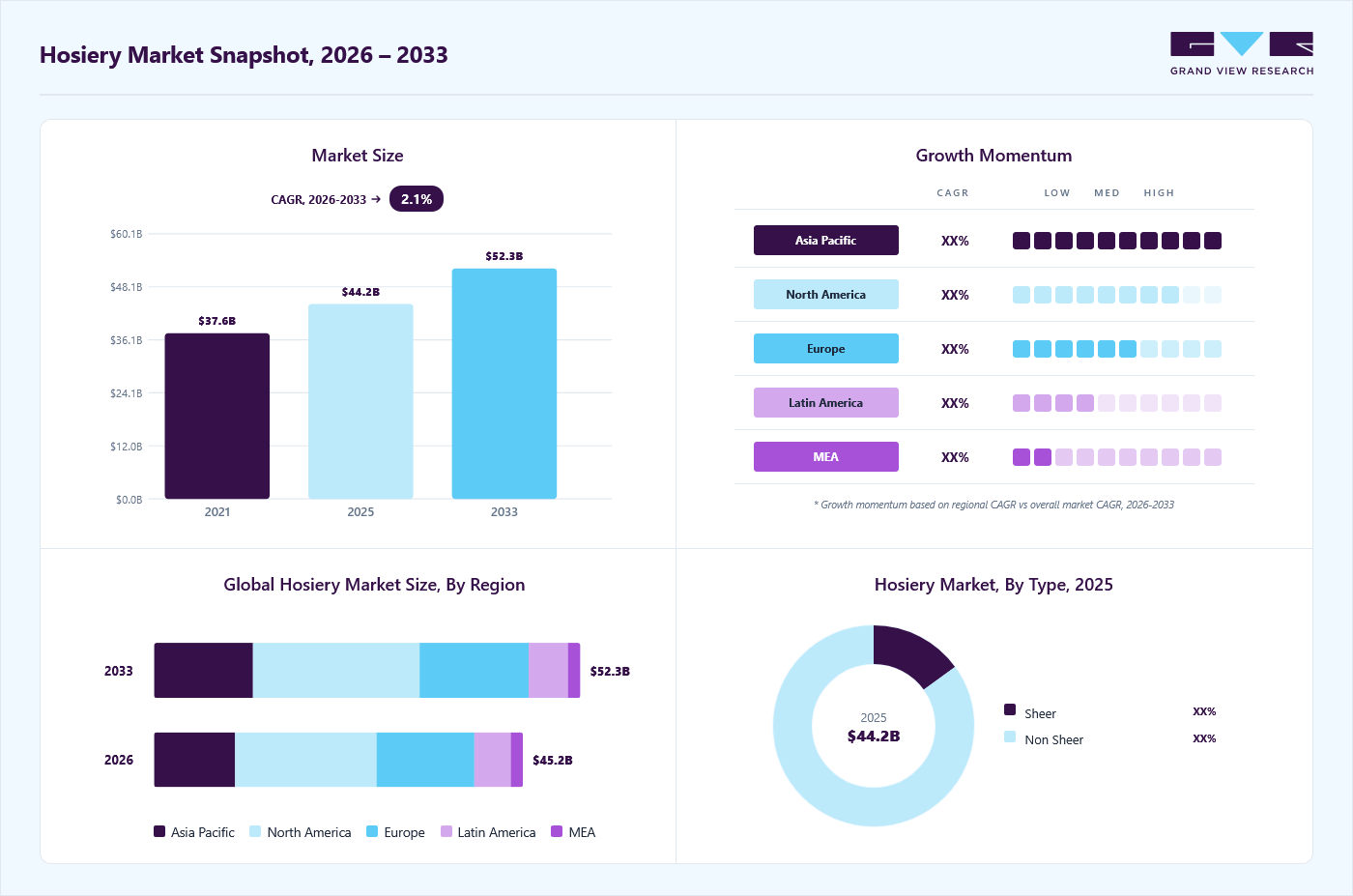
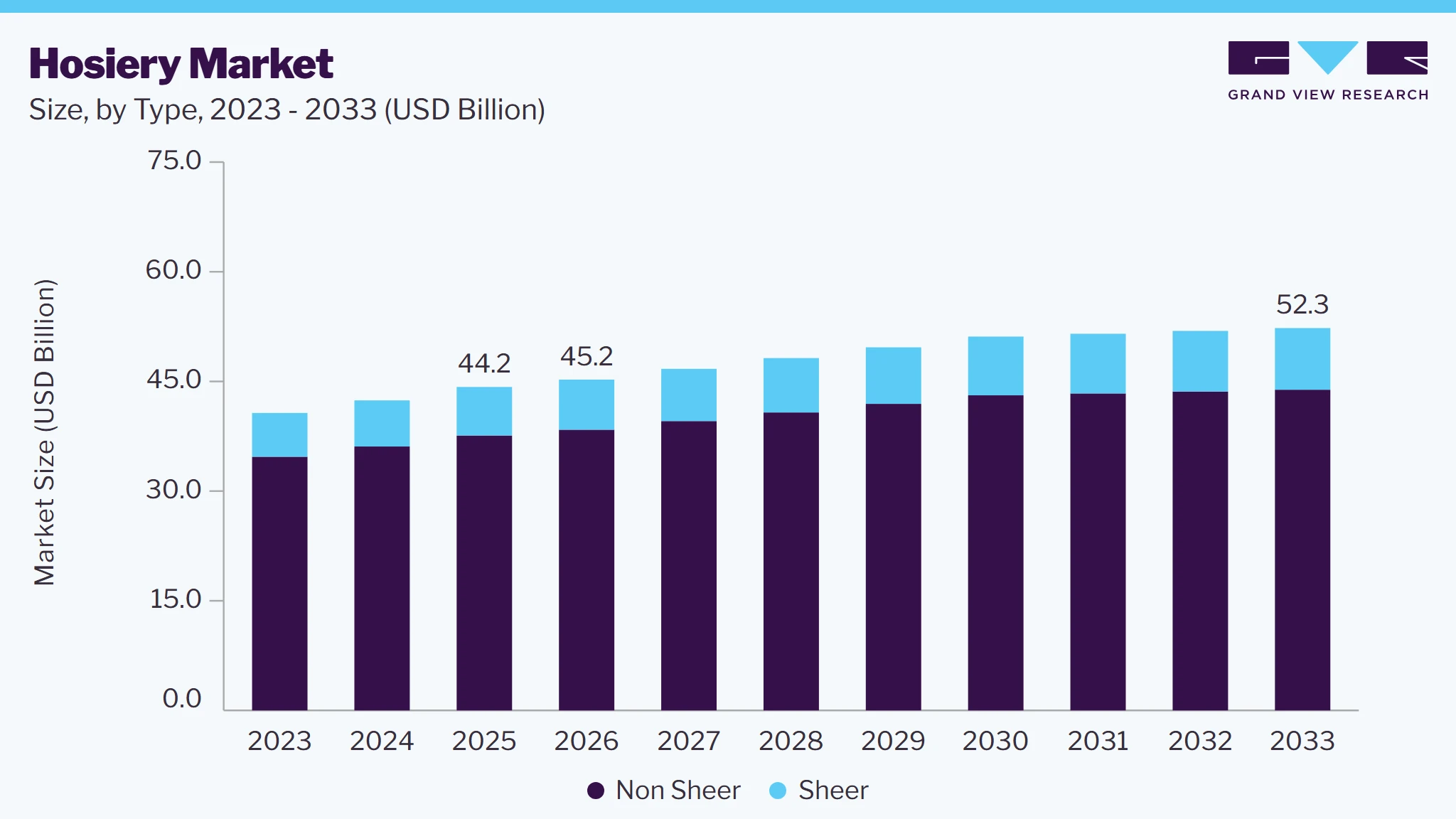
The global hosiery market size was valued at USD 44.2 billion in 2025 and is projected to grow from USD 45.2 billion in 2026 to USD 52.3 billion by 2033, at a CAGR of 2.1% from 2026 to 2033. North America dominated the hosiery market with the largest revenue share of 38.2% in 2025. The contemporary urban lifestyle, characterized by an emphasis on both personal presentation and comfort, is driving a significant increase in demand for hosiery among urban dwellers.
 Source: Grand View Research, IR Documents, Primary Interviews, Paid DatabasesTo learn more about this report,
 Download Free Sample Report
 Key Market Trends & Insights
- By type: Non-sheer segment led the market with the largest revenue share of 85.0% in 2025.
- By end use: Women segment led the market with the largest revenue share of 81.6% in 2025.
Regional Highlights
- Largest regional market: North America (38.2% revenue share, 2025)
- Fastest-growing regional market: Asia Pacific (highest CAGR, 2026-2033)
- By country: The U.S. held the largest market share in 2025.
Market Size & Forecast
- Market size in 2025: USD 44.2 Billion
- Estimated market size in 2026: USD 45.2 Billion
- Projected market size by 2033: USD 52.3 Billion
- CAGR (2026-2033): 2.1%
Three ways to get this report
Buy it, customize it, or ask a question.Ask an Analyst
Analyst response in 1 business day
- AccessReport author, directly
- Reply timeWithin 1 working day
- No sales callDirect answer only
- FormatEmail reply
- CostFree, no cost
Get the Full Report
What the study covers
- FormatsPDF · Excel · Dashboard
- Timeline2026–2033 annual, 2025 base
- Coverage20+ countries, 5 regions
- Companies10+ key players profiled
Customize the Report
20% free customization
- IncludeCountries, segments, points
- TailorTo your product definition
- ExtendDeeper competitor detail
- OrA fully bespoke study
- Turnaround5–10 working days
Hosiery garments possess inherent durability and offer essential support, mitigating leg fatigue experienced by professionals during prolonged periods of work. Recognizing this evolving consumer preference, industry players actively engage in innovative endeavors to enhance their offerings' design, material composition, and aesthetic appeal. These concerted efforts have catalyzed the global expansion of the hosiery industry.
Hosiery garments offer a range of health and wellness advantages for contemporary working women. They significantly enhance blood circulation and mitigate leg fatigue by providing essential compression and support to the lower extremities. Numerous professions, including flight attendants, hospitality staff, healthcare providers, and retail sales personnel, necessitate extended periods of standing. This prolonged standing can lead to edema, the formation of blood clots, and potentially serious conditions such as varicose veins. According to the Society of Vascular Surgery, an estimated 40 million individuals in the U.S. are affected by varicose veins, with a substantial proportion comprising women. Furthermore, over 50% of American women experience the onset of varicose veins during pregnancy. The utilization of hosiery facilitates improved blood circulation, reduces edema, and minimizes friction between the skin and clothing, thereby preventing chafing and irritation. Moreover, hosiery aids in regulating body temperature, enabling comfortable work environments, even in air-conditioned settings. Additional benefits, such as muscular support and protection against environmental elements, including wind, cold, and sun exposure, further contribute to the expanding market for hosiery garments.
 To learn more about this report, Download Free Sample Report
 Beyond the significant health and wellness advantages, the utilization of hosiery offers several key practical and functional benefits. These include enhancing personal presentation through a polished appearance, providing a wide array of styles and fashion versatility, and boosting individual confidence. Hosiery effectively conceals minor skin imperfections such as scars and bruises, creating a smooth and refined aesthetic. As a versatile garment, hosiery seamlessly complements both casual and formal attire, elevating the overall look. This versatility has established hosiery as an indispensable fashion accessory within consumers' wardrobes. Moreover, hosiery offers additional hygienic protection by minimizing exposure to sweat and dust and, in certain instances, reducing the risk of insect bites in outdoor environments. These multifaceted benefits have consistently driven demand for hosiery among women across various professional backgrounds.
Recognizing the multifaceted utility of hosiery, manufacturers are diligently focusing on advancements in hosiery knitting techniques, the incorporation of sustainable materials, and the development of innovative designs and patterns. For example, Lyocell, a biodegradable cellulose fiber derived from eucalyptus pulp, offers a sustainable alternative. Hosiery products manufactured from Lyocell exhibit exceptional recyclability, with a potential recycling rate of up to 99%. In another notable instance, Clayton, a prominent tights manufacturer, has introduced a line of tights crafted from recycled nylon, incorporating microencapsulation technology. These innovative tights contain beneficial ingredients such as aloe vera, retinol, and vitamin E to safeguard skin health. Such progressive developments are instrumental in fostering the sustainable growth of the overall hosiery industry.
Market Dynamics
The hosiery market is experiencing steady growth driven by increasing demand for comfortable, functional, and fashion-oriented legwear products across various consumer groups. Hosiery products, including socks, stockings, tights, leggings, and compression wear, have evolved beyond basic apparel necessities to become important fashion and lifestyle accessories. Growing consumer awareness regarding comfort, hygiene, and performance-based apparel, coupled with rising disposable incomes and changing fashion trends, is supporting market expansion. Additionally, advancements in textile technologies, the growing popularity of athleisure wear, and increasing penetration of e-commerce platforms are expected to further drive the growth of the hosiery market globally.
The increasing consumer preference for apparel that combines comfort, style, and functionality is a major driver of the hosiery market. Consumers are increasingly seeking hosiery products that complement fashion trends while offering enhanced comfort, durability, and performance. The growing popularity of dresses, skirts, formal wear, activewear, and athleisure fashion has contributed significantly to the demand for stockings, tights, leggings, and specialty socks across various age groups.
The expansion of the global fashion industry and rising influence of social media, celebrities, and fashion influencers are further supporting market growth. Consumers are becoming more willing to spend on premium hosiery products featuring innovative designs, superior materials, and enhanced comfort features. In addition, increasing participation in sports, fitness activities, and outdoor recreation has fueled demand for performance-oriented hosiery products, including moisture-wicking, cushioned, and compression-based variants. These trends continue to create strong growth prospects for manufacturers worldwide.
The hosiery market faces significant challenges due to intense competition from numerous domestic and international manufacturers offering products across various price points. The availability of low-cost alternatives, particularly from unorganized and private-label manufacturers, places considerable pressure on profit margins and brand differentiation efforts.
Additionally, fluctuations in raw material prices, including cotton, nylon, polyester, spandex, and other synthetic fibers, can impact manufacturing costs and pricing strategies. Fashion trends in hosiery products also change rapidly, creating inventory management challenges and increasing the risk of unsold stock. Furthermore, counterfeit products and low-quality imitations in certain markets can affect consumer confidence and hinder the growth of established brands, particularly in price-sensitive regions.
Advancements in textile technology and increasing demand for specialized hosiery products are creating substantial growth opportunities for the market. Manufacturers are increasingly introducing products featuring moisture management, antimicrobial protection, temperature regulation, seamless construction, graduated compression, and enhanced durability to meet evolving consumer preferences. The growing adoption of compression socks for sports performance, travel, and healthcare applications is further expanding the market's addressable customer base.
The rapid growth of e-commerce and direct-to-consumer retail models also presents significant opportunities for hosiery manufacturers. Online platforms enable brands to offer a wider variety of products, personalized recommendations, and subscription-based purchasing options while reaching consumers across diverse geographic regions. Additionally, increasing consumer interest in sustainable fashion is encouraging the development of hosiery products made from recycled fibers, organic materials, and environmentally responsible manufacturing processes. These innovations are expected to support long-term market growth and product premiumization globally.
Analyst Perspective
The hosiery market benefits from a unique combination of fashion relevance, functional utility, and recurring consumer demand, making it one of the more resilient segments within the apparel industry. Growth is increasingly being driven by premiumization, rising demand for comfort-focused and performance-enhancing products, and expanding participation of women in the workforce, where hosiery remains an important wardrobe staple. At the same time, innovations in sustainable materials, seamless knitting technologies, and compression-based products are creating new value-added opportunities. The companies best positioned for long-term success will be those that balance affordability with product differentiation while leveraging omnichannel distribution and fast-changing fashion trends to maintain consumer loyalty
Type Insights
Based on type, the non-sheer segment led the market with the largest revenue share of 85.0% in 2025. The dominance of this segment is primarily attributed to its broader consumer appeal, superior durability, and suitability for everyday wear across diverse climatic conditions. Non-sheer hosiery products, including opaque tights, leggings, socks, athletic hosiery, compression stockings, and thermal variants, offer greater comfort, coverage, and functionality compared to sheer alternatives. The growing popularity of athleisure fashion, rising demand for performance-oriented apparel, increasing workforce participation, and expanding use of hosiery in sports, healthcare, and occupational settings have further strengthened demand. Additionally, consumers increasingly prefer long-lasting and versatile hosiery products that provide value for money, supporting the segment’s leading market position.
The sheer segment is expected to experience the fastest CAGR from 2026 to 2033. These types of hosiery are made from lighter and thinner materials and are specially used for aesthetic purposes. Sheer hosieries are used as fashion accessories and used by corporate professionals and sales representatives. Such hosiery offers versatility to the wardrobe and makes outfits classier and more presentable. With the consistent significance of sheer hosiery in the fashion industry, the changing fashion trends are expected to drive the market for a sheer segment.
End-use Insights
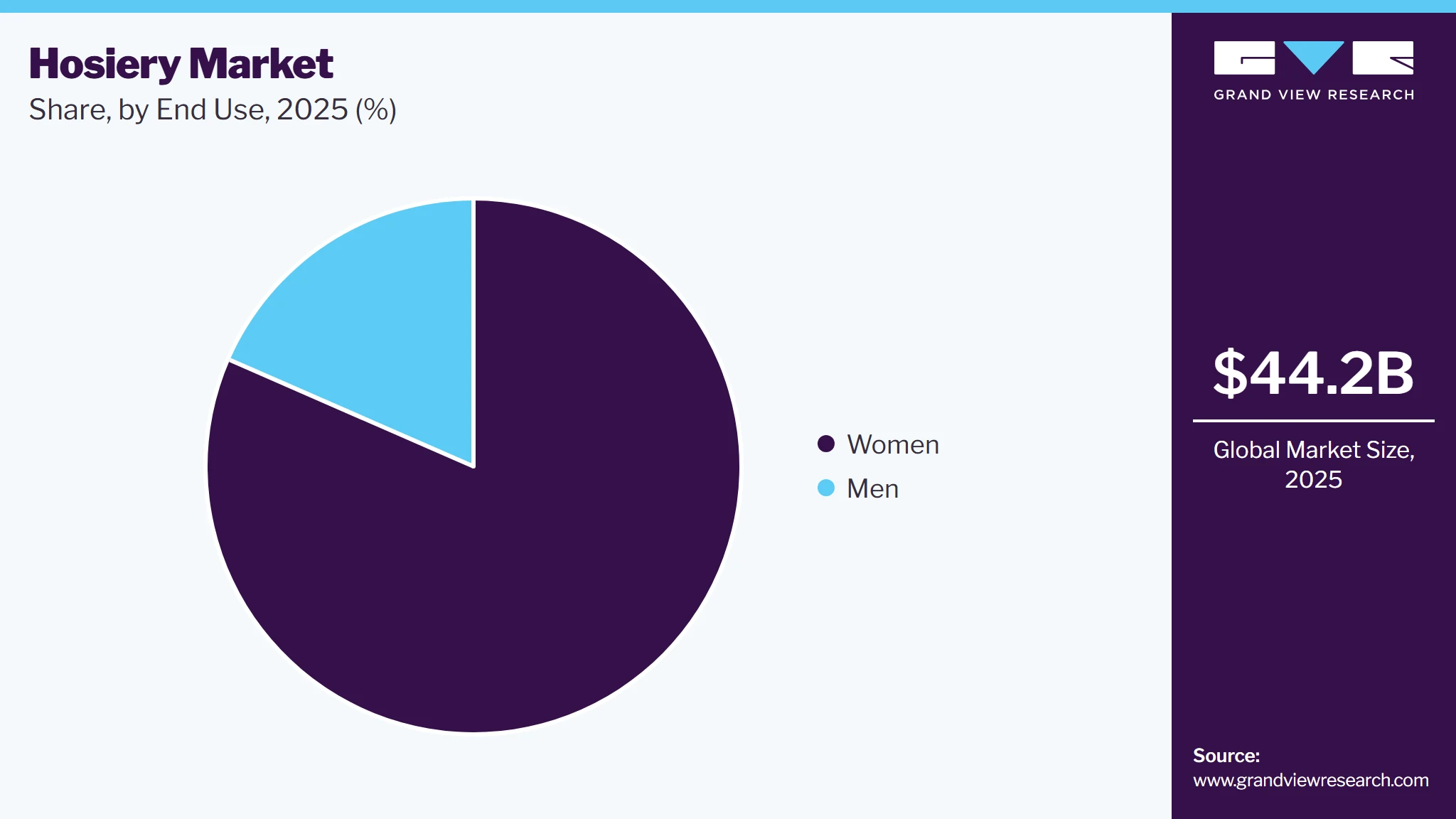
Based on end use, the women segment led the market with the largest revenue share of 81.7% in 2025, driven by the extensive use of hosiery products across fashion, formal wear, casual wear, activewear, and seasonal apparel categories. Women represent the largest consumer base for products such as tights, pantyhose, stockings, leggings, knee-highs, and shapewear hosiery, which are frequently purchased for both functional and aesthetic purposes. Rapid fashion cycles, growing influence of social media and fashion trends, increasing disposable income, and rising demand for premium and designer hosiery products continue to support market growth. Furthermore, the expansion of e-commerce channels and increasing product innovation in terms of comfort, fabric technology, and sustainability have encouraged higher purchasing frequency among female consumers, reinforcing the segment's substantial share of the global hosiery market.
 To learn more about this report, Download Free Sample Report
 The men's segment is expected to experience the fastest CAGR during the forecast period. The burgeoning popularity of athleisure wear and the increasing significance of hosiery within the realms of sports and adventure activities are pivotal drivers of growth within the men's segment of the hosiery market. Prominent sportswear and athleisure apparel manufacturers, including UNIQLO CO. LTD., Adidas America Inc., and Nike, Inc., offer a diverse range of hosiery products designed for various applications, encompassing wet weather protection and sweat-absorbent technologies. This comprehensive product portfolio is effectively attracting male consumers towards branded hosiery options, thereby fostering substantial growth within this segment.
Regional Insights
North America dominated the hosiery market with the largest revenue share of 38.2% in 2025, supported by high consumer spending on apparel, strong penetration of premium and branded products, and widespread adoption of athleisure and comfort-focused clothing. The region benefits from a mature retail ecosystem comprising department stores, specialty apparel retailers, and rapidly growing e-commerce channels. Rising demand for performance socks, compression hosiery, and fashion-oriented legwear among both men and women continues to drive market growth. In addition, frequent product innovation and strong brand presence further reinforce North America's leadership position in the global hosiery market.
 To learn more about this report, Download Free Sample Report
 U.S. Hosiery Market Trends
The hosiery market in the U.S. held the largest share of about 75.8% in the North America region in 2025. It represents the largest contributor to the North American hosiery market in 2025, driven by its large consumer base, strong purchasing power, and evolving fashion preferences. Growing demand for premium socks, activewear-compatible hosiery, and compression products has expanded product consumption across multiple demographic groups. The increasing popularity of fitness activities, sports participation, and casual workplace dress codes has supported demand for functional hosiery products. Furthermore, the presence of leading apparel brands, extensive online retail penetration, and continuous product launches are contributing to sustained market expansion across the country.
Asia Pacific Hosiery Market Trends
The Asia Pacific hosiery market is anticipated to experience the fastest CAGR during the forecast period. The burgeoning adoption of Western fashion trends, coupled with the increasing participation of women in corporate sectors, is significantly driving the demand for hosiery within this region. Moreover, hosiery occupies a prominent position within the traditional attire of Japanese, Chinese, and South Korean cultures, further contributing to the industry's growth.
China held the largest revenue share of the regional industry in 2024. Chinese consumers exhibit a strong affinity for Western fashion and aesthetic trends, readily influenced by their exposure to these trends through social media platforms. Additionally, the growing emphasis on professional appearance and the consideration of climatic factors are further contributing to the expansion of the hosiery industry within the country.
Europe Hosiery Market Trends
The European hosiery market is expected to experience significant growth during the forecast period. European consumers extensively utilize hosiery products to provide protection against inclement weather conditions and to enhance personal aesthetics. The use of hosiery is widely regarded as both hygienic and practical within the region. Consumers within this region allocate a substantial portion of their fashion expenditure towards hosiery purchases. The availability of a diverse range of hosiery products, encompassing both premium and mid-range brands, affords consumers a wide array of choices. This extensive selection significantly contributes to the robust sales of hosiery products within the European market.
Key Hosiery Company Insights
Some of the key companies operating in the global hosiery market are Gilden Activewear Inc., Hanesbrands, Spanx, Inc., Golden Lady, Gatta Hosiery USA LLC, CSP INTERNATIONAL FASHION GROUP S.P.A., Adidas America Inc., Jockey, and Carolina Hosiery. Major players in the market are continuously upgrading their products in terms of quality, design, functionality, and price. Using sustainable materials and incorporating advanced manufacturing techniques are the key trends adopted by the hosiery industry players.
-
Jockey International, Inc. is a U.S.-based underwear, hosiery, sleepwear, and sportswear manufacturer and retailer. Founded in 1876, it offers tights, leggings, pantyhose, and socks for female consumers and hosiery products for male consumers.
Key Hosiery Companies:
The following are the leading companies in the hosiery market. These companies collectively hold the largest market share and dictate industry trends.
- Hanesbrands
- Golden Lady
- Gilden Activewear
- CSP INTERNATIONAL FASHION GROUP S.P.A.
- Jockey
- Golden Lady SpA
- Adidas America, Inc.
- Gatta Hosiery USA LLC
- Carolina Hosiery
- Spanx, Inc.
Competitive Benchmarking
Category
Operating Strategies
Competitive Edge
Weakness
Established Players (Hanesbrands, Jockey, Gildan Activewear, Adidas America, Inc., Golden Lady SpA)
- Expand product portfolios across socks, tights, leggings, shapewear, and performance hosiery segments. Invest in sustainable fibers, seamless knitting technologies, and omnichannel retail networks. Strengthen brand presence through sports sponsorships, premium collections, and direct-to-consumer (DTC) platforms.
- Strong global brand recognition, extensive distribution networks, and economies of scale in manufacturing. Ability to leverage established retailer relationships and invest in product innovation, marketing, and premium positioning.
- High dependence on raw material price fluctuations and labor-intensive manufacturing processes. Large organizational structures can slow response to changing fashion trends and emerging consumer preferences.
Emerging & Specialized Players (CSP International Fashion Group S.p.A., Gatta Hosiery USA LLC, Carolina Hosiery, Spanx, Inc.)
- Focus on premium, fashion-oriented, compression, maternity, and shapewear hosiery categories. Utilize digital marketing, influencer collaborations, and niche product differentiation. Emphasize comfort, fit, body-shaping technologies, and sustainable production practices to attract targeted consumer groups.
- Greater flexibility in responding to fashion trends and consumer demands. Strong specialization in high-margin niches such as shapewear, luxury hosiery, and compression wear. Faster innovation cycles and more personalized customer engagement.
- Limited global reach and smaller distribution footprints compared to multinational competitors. Higher customer acquisition costs and lower bargaining power with suppliers and retailers. Greater vulnerability to competitive pricing pressures from large-scale manufacturers.
Recent Developments
-
In June 2023, the LYCRA Company, a U.S.-based hosiery manufacturing company, introduced its innovative Sheer Sensation technology in its hosiery products. The technology will help eliminate static build-up issues in hosiery. It also helped boost dye color absorption, allowing the company to provide hosiery in different shades of color.
-
In September 2022, Puma, a leading player in sports equipment and athleisure products company, launched a new collection made from 20% to 70% recycled material. The collection includes products such as shoes and tights. The company is committed to making its clothing and accessories from 75% of plastic by 2025.
Hosiery Market Report Scope
Report Attribute
Details
Market size in 2025
USD 44.2 billion
Estimated market size in 2026
USD 45.2 billion
Projected market size by 2033
USD 52.3 billion
Growth rate
CAGR of 2.1% from 2026 to 2033
Base year for estimation
2025
Historical data
2021 - 2024
Forecast period
2026 - 2033
Quantitative units
Revenue in USD billion and CAGR from 2026 to 2033
Report coverage
Revenue forecast, company ranking, competitive landscape, growth factors, and trends
Segments covered
Type, end use, region
Regional scope
North America; Europe; Asia Pacific; Central & South America; MEA
Country scope
U.S., Canada, Mexico, UK, Germany, France, Italy, Spain, Rest of Europe, China, India, Japan, Australia & New Zealand, South Korea, Rest of APAC, Brazil, Rest of CSA Saudi Arabia, South Africa, Rest of MEA
Key companies profiled
Hanesbrands, Golden Lady, Gilden Activewear, CSP INTERNATIONAL FASHION GROUP S.P.A., Jockey, Golden Lady SpA, Adidas America, Inc., Gatta Hosiery USA LLC, Carolina hosiery, Spanx, Inc.
Customization scope
Free report customization (equivalent up to 8 analysts' working days) with purchase. Addition or alteration to country, regional & segment scope.
Pricing and purchase options
Avail customized purchase options to meet your exact research needs. Explore purchase options
Global Hosiery Market Report Segmentation
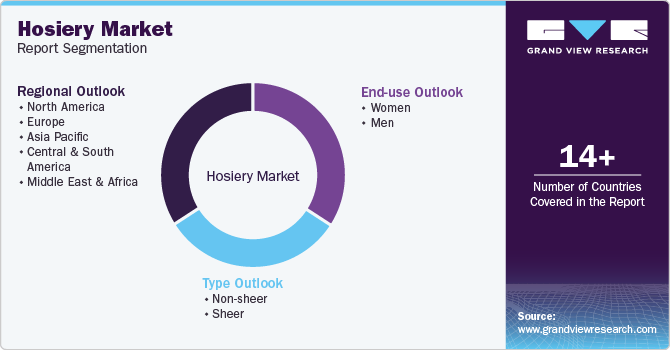
This report forecasts revenue growth at global, regional, and country levels and provides an analysis of the latest industry trends in each of the sub-segments from 2018 to 2030. For this study, grand view research has segmented the hosiery market report based on type, end-use, and region.
 To learn more about this report, Download Free Sample Report
 -
Type Outlook (Revenue, USD Billion, 2021 - 2033)
-
Non-sheer
-
Sheer
-
-
End-use Outlook (Revenue, USD Billion, 2021 - 2033)
-
Women
-
Men
-
-
Regional Outlook (Revenue, USD Billion, 2021 - 2033)
-
North America
-
U.S.
-
Canada
-
Mexico
-
-
Europe
-
UK
-
Germany
- France
-
Italy
-
Spain
-
Rest of Europe
-
-
Asia Pacific
-
China
-
India
-
Japan
-
Australia & New Zealand
-
South Korea
-
Rest of Asia Pacific
-
-
Central & South America
-
Brazil
-
Rest of Central & South America
-
-
MEA
-
Saudi Arabia
-
South Africa
-
Rest of Middle East & Africa
-
-
Research Methodology
Segment Definition
Segment - Type
Revenue capture definition
Sheer
This segment covers lightweight and transparent hosiery products including pantyhose, tights, stockings, knee-highs, and fashion legwear manufactured using fine denier yarns. The scope includes products sold through retail and online channels for everyday wear, formal occasions, fashion applications, and professional use across global markets.
Non Sheer
This segment includes opaque and semi-opaque hosiery products such as tights, socks, leggings, compression hosiery, and thermal legwear produced using higher denier fabrics. The scope covers casual, athletic, medical, workwear, and seasonal hosiery products distributed through organized and unorganized sales channels worldwide.
Segment – End User
Revenue capture definition
Men
This segment encompasses hosiery products specifically designed and marketed for male consumers, including dress socks, casual socks, athletic socks, compression socks, thermal hosiery, and specialty legwear. The scope covers products used across formal, sports, occupational, healthcare, and everyday applications in both premium and mass-market categories.
Women
This segment covers hosiery products intended for female consumers, including pantyhose, stockings, tights, leggings, fashion socks, shapewear hosiery, and compression products. The scope includes products used for fashion, professional attire, casual wear, sports activities, maternity requirements, and medical purposes across global consumer markets.
Estimation Model
Layer Title
Guiding Question
Description
Apparel-Wearing Population Layer
Who buys hosiery products?
Begin with the global population that regularly purchases apparel, including men and women across various age groups. Apply usage rates for socks, stockings, tights, leggings, and other hosiery products to identify the potential consumer base requiring hosiery for daily wear, professional attire, sports, fashion, and comfort purposes.
Retail Accessibility Layer
Who can be reached through apparel distribution channels?
Filter the eligible consumer base using apparel retail penetration, e-commerce accessibility, disposable income levels, urbanization rates, and organized retail presence. This derives the addressable market with access to hosiery products through supermarkets, specialty stores, department stores, and online platforms.
Purchase & Replacement Layer
Who actively purchases hosiery products?
Apply hosiery adoption, purchase frequency, and replacement rates across men and women. Demand is driven by everyday wear requirements, fashion trends, workplace dress codes, athletic activities, seasonal needs, and increasing preference for comfort and performance-oriented hosiery products.
Monetisation Layer
How much revenue is generated?
Multiply active buyers by annual spending on sheer and non-sheer hosiery products. Include recurring purchases resulting from frequent replacement cycles, premium product upgrades, fashion-driven purchases, and multi-pack sales to estimate total market revenue.
Customization Table
This report has been delivered with the following In-depth customizations
Client Request
Customization Delivered
Value Adds
Gender-Based Hosiery Consumption Analysis by Product Type and Region
Detailed assessment of Sheer and Non-Sheer Hosiery demand across Men and Women segments. Analysis includes purchasing behavior, usage occasions, product preferences, spending patterns, and regional adoption trends across developed and emerging markets. Country-level benchmarking can be conducted to evaluate consumer penetration and growth opportunities by gender and product category.
Identifies the most lucrative consumer segments and product categories. Supports targeted product development, marketing campaigns, and inventory planning by highlighting evolving consumer preferences and demand drivers.
Fashion Trends, Premiumization & Consumer Preference Analysis
Comprehensive evaluation of emerging fashion trends influencing hosiery demand, including luxury hosiery, compression hosiery, patented and designer products, sustainable materials, and athleisure-inspired offerings. Analysis examines premium versus mass-market adoption, consumer willingness to pay, and trend penetration across regions and demographics.
Helps manufacturers and retailers capitalize on high-margin product categories. Supports innovation strategies, premium product positioning, and identification of evolving fashion-led growth opportunities within the hosiery market.
Workwear, Casualwear & Functional Hosiery Opportunity Assessment
Analysis of hosiery demand across various usage occasions including formal wear, professional workwear, casual wear, athletic activities, compression applications, and seasonal apparel requirements. Evaluation includes category-specific growth trends, replacement cycles, and consumer spending behavior across demographic groups.
Helps companies identify emerging application areas and diversify product portfolios beyond traditional hosiery segments. Supports strategic planning for category expansion, product innovation, and long-term revenue growth.
Frequently Asked Questions About This Report
Key players in the hosiery market include Hanesbrands Inc., Gildan Activewear Inc., Wolford AG, Golden Lady Company S.p.A., Calzedonia Group, Jockey International Inc., SPANX LLC, Kayser-Roth Corporation, Falke KGaA, and Berkshire Hathaway Inc. (Fruit of the Loom).
Key factors include rising consumer spending on apparel and fashion products, growing demand for comfort and performance-oriented legwear, increasing adoption of premium and designer hosiery products, expanding e-commerce distribution channels, and continuous product innovations in fabric technology, sustainability, and functionality.
Asia Pacific is the fastest-growing region over the forecast period.
The Non-Sheer Hosiery segment led the market with an 84.9% revenue share in 2025, driven by widespread usage of socks, tights, leggings, and everyday hosiery products.
The women segment held the largest revenue share of 81.6% in 2025, while men's segment is expected to be the fastest-growing market
North America dominated the market with a 38.2% revenue share in 2025.
The global hosiery market size was valued at USD 44.2 billion in 2025 and is estimated at USD 45.2 billion for 2026.
The global hosiery market is expected to grow at a CAGR of 2.1% from 2026 to 2033, reaching USD 52.3 billion by 2033.
About the Author(s)
Clothing, Footwear & Accessories Research Team
Consumer Goods · Clothing, Footwear & AccessoriesThis report was authored by the clothing, footwear & accessories research team at Grand View Research - comprising two research analysts, one senior research analyst, and one industry expert - with specialized expertise in the clothing, footwear & accessories segment of the consumer goods industry. All findings are based on proprietary consumer goods databases, executive interviews, and regulatory analysis, subject to internal peer review prior to publication.
Last Updated:
Speak to Analyst

Customize this report to your needs - add regions, segments, or data points, with 20% free customization.
Or view our licence options:


ISO 9001:2015 & 27001:2022 Certified
We are GDPR and CCPA compliant! Your transaction & personal information is safe and secure. For more details, please read our privacy policy.


