
- Home
- »
- Clinical Diagnostics
- »
-
HPV Testing And Pap Test Market Size & Share Report, 2033GVR Report cover

HPV Testing And Pap Test Market (2026 - 2033)
Size, Share & Trends Analysis Report By Type (Pap Test, HPV Test), By Application (Cervical Cancer, Vaginal Cancer), By Product, By Technology, By End Use, By Region, And Segment Forecasts
Market Size, 2025
$3.6BMarket Estimate, 2026
$3.8BMarket Forecast, 2033
$6.2BCAGR, 2026–2033
7.2%HPV Testing And Pap Test Market Summary
The global HPV testing and pap test market size was valued at USD 3.6 billion in 2025 and is projected to grow from USD 3.8 billion in 2026 to USD 6.2 billion by 2033, at a CAGR of 7.2% from 2026 to 2033. North America dominated the market, accounting for a revenue share of 41.2% in 2025. Technological advancements in testing products, increasing prevalence of cervical cancer, and government initiatives to reduce disease burden are some of the key factors driving the market growth over the forecast period.
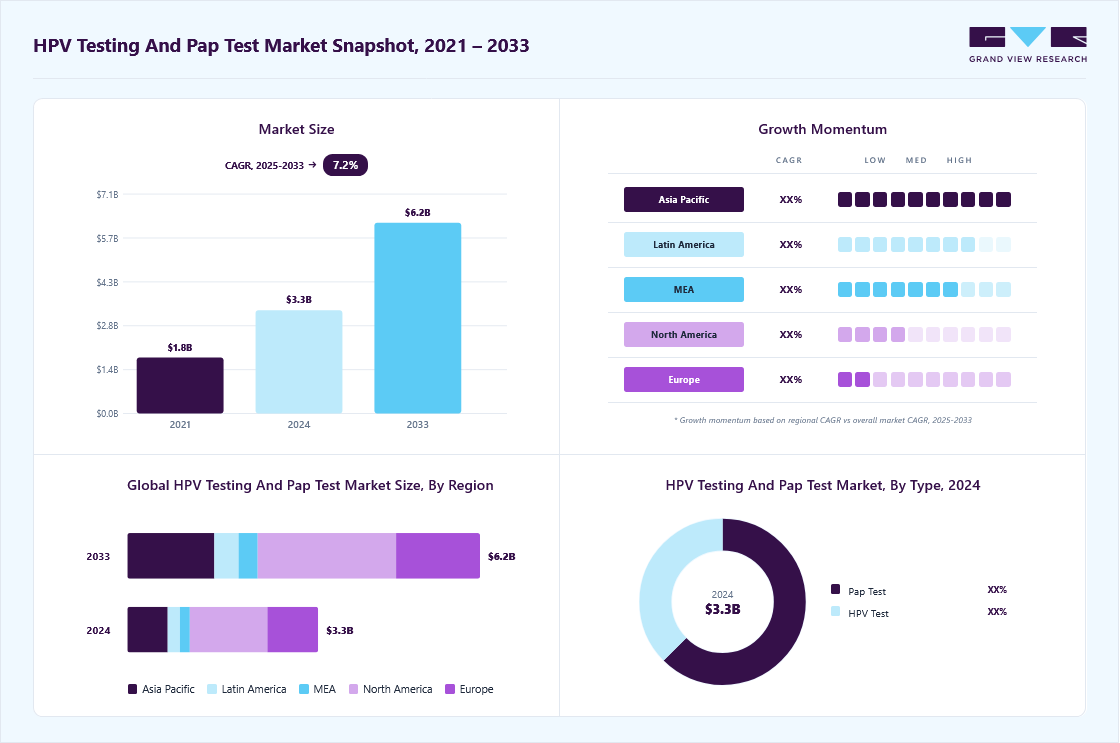 Source: Grand View Research, IR Documents, Primary Interviews, Paid DatabasesTo learn more about this report,
 Download Free Sample Report
 Key Market Trends & Insights
- By product: Pap test and HPV test segment led the market with the largest revenue share of 62.1% in 2025.
- By application: Cervical cancer segment led the market with the largest revenue share of 77.6% in 2025.
- By type: Pap test segment led the market with the largest revenue share of 62.1% in 2025.
- By technology: PCR segment led the market with the largest revenue share of 40.0% in 2025.
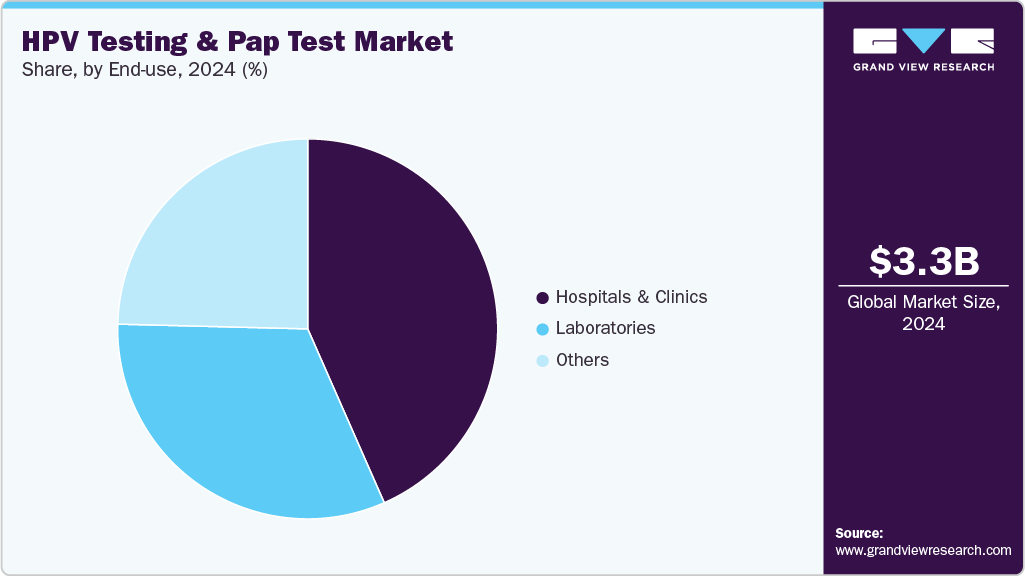
- By end-use: Hospitals & clinics segment led the market with the largest revenue share of 43.1% in 2025.
Regional Highlights
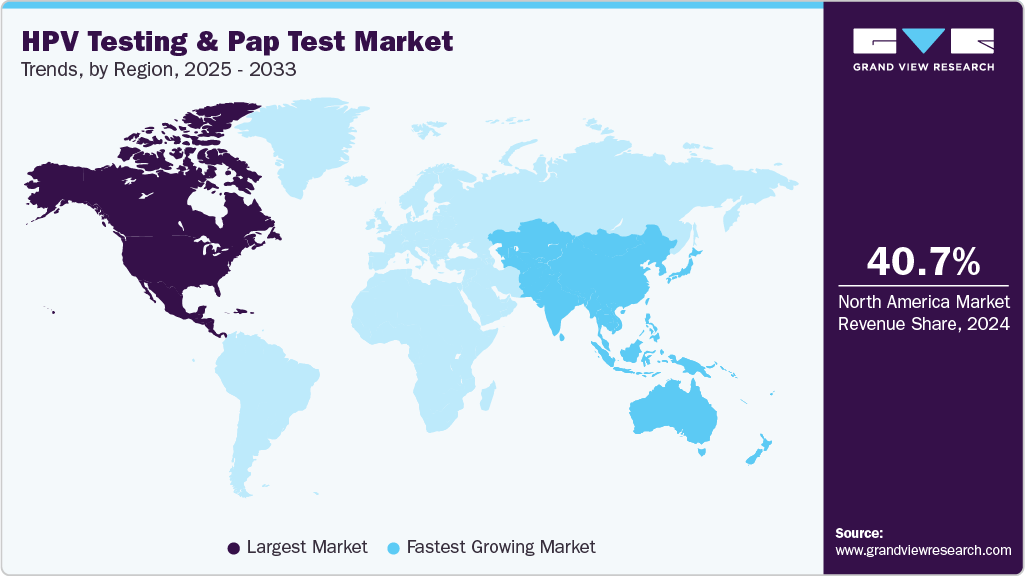
- Largest regional market: North America (41.2% revenue share, 2025)
- Fastest-growing regional market: Asia Pacific (highest CAGR, 2026-2033)
- By country: The U.S. held the largest market share in 2025.
Market Size & Forecast
- Market size in 2025: USD 3.6 Billion
- Estimated market size in 2026: USD 3.8 Billion
- Projected market size by 2033: USD 6.2 Billion
- CAGR (2026-2033): 7.2%
GVR research-powered AIAsk Prism AI about the HPV testing and pap test marketGet cited answers from GVR research on market growth, segments, regulations and forecasts.Start with✓ Source-linked answers ✓ Market-specific context ✓ Traceable figuresExplore Prism AI ↗
Cervical cancer remains a critical health issue for women worldwide. In March 2024, the WHO published a fact sheet showing that approximately 660,000 women were diagnosed with cervical cancer in 2022, and about 350,000 women died from it. The highest incidence and mortality rates are found in low- and middle-income countries, particularly in sub-Saharan Africa, Central America, and Southeast Asia, where disparities in access to vaccination, screening, and treatment continue to drive this significant health burden.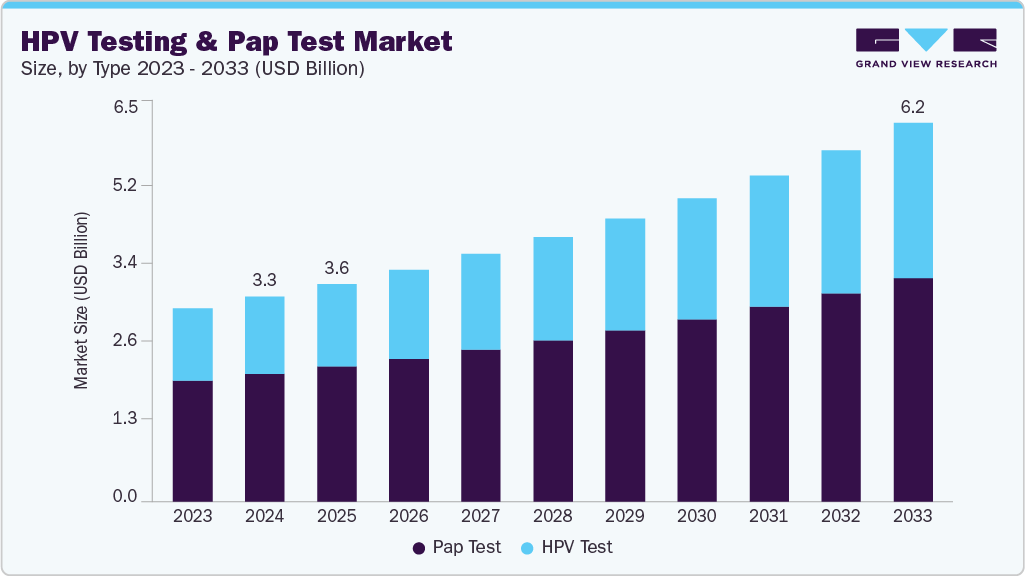 To learn more about this report, Download Free Sample Report
 Making screening and early detection must remain at the forefront of public health planning. At the root of much of this burden lies the human papillomavirus (HPV). A meta-analysis and systematic review published by the Technical University of Munich in January 2025 found that in women aged 50 and older with normal cytology, the pooled global prevalence of any HPV was 11.70% and the prevalence of high-risk HPV types was 6.45%. The high prevalence of HPV infection highlights the large population eligible for screening and emphasizes the critical role of HPV testing in cervical cancer prevention programs. Given that persistent HPV infection is the leading cause of cervical cancer, incorporating reliable HPV tests alongside Pap test is increasingly essential.
Favorable initiatives undertaken by governments for cervical cancer screening of women in the average-to-high-risk group are further anticipated to drive the market. Some of the guideline committees are ACS, the U.S. Preventive Services Task Force (USPSTF), the American Society for Colposcopy and Cervical Pathology (ASCCP), the American College of Obstetricians and Gynecologists (ACOG), and the Society of Gynecologic Oncology (SGO) is continuously increasing awareness about the disease among people. Moreover, in May 2023, the National Cervical Screening Program (NCSP) of Australia updated guidelines to prevent cervical cancer by increasing screening of women aged between 25 to 74 years.
An increase in awareness programs for screening by organizations including National Cervical Cancer Coalition (NCCC), WHO, CDC, and USPSTF is one of the major factors expected to boost market growth during the forecast period. For instance, in January 2023, the WHO launched the Cervical Cancer Elimination Strategy for the Eastern Mediterranean region and announced January as a Cervical Cancer Awareness month. Under this program, the WHO set the target to screen 70% of women aged 35 to 45 years. In addition, major market players are undertaking initiatives to increase awareness about cervical and vaginal cancer screening to detect diseases at an early stage.
The introduction of technologically advanced testing products and guidelines for utilizing novel tests is expected to further increase market growth over the forecast period. Market players are expanding their R&D activities to introduce novel and effective HPV tests for diagnosing infections. In March 2025, WHO prequalified the Alinity m HR HPV diagnostic test by Abbott, which detects DNA from 14 high-risk HPV genotypes, including genotypes 16, 18, and 45. The test's results, combined with clinical assessment and guidelines, can help guide patient management.
Market Dynamics
The HPV testing and pap test market comprises screening tests used for the early detection of cervical cancer and precancerous cervical lesions. The market includes HPV DNA/RNA tests, Pap cytology tests, co-testing (HPV + Pap), laboratory services, screening consumables, and associated diagnostic instruments. These tests are performed across hospitals, diagnostic laboratories, physician offices, community health centers, and national screening programs. Moreover, rising burden of cervical cancer is expected to drive the demand for routine screening and early diagnosis. Healthcare organizations are increasingly recommending primary HPV testing due to its higher sensitivity compared with cytology alone. This transition has significantly increased the adoption of molecular diagnostic platforms and HPV assays.
The rising burden of cervical cancer continues to be a major growth driver for the HPV testing and Pap test market, increasing demand for early detection and preventive screening. According to the World Health Organization report published in December 2025, cervical cancer remained the fourth most common cancer among women globally, with approximately 660,000 new cases and around 350,000 deaths reported in 2022, the latest validated global dataset. WHO further noted that nearly 95% of cervical cancer cases are linked to persistent infection with high-risk human papillomavirus (HPV), particularly HPV-16 and HPV-18. Because cervical cancer is highly preventable through early screening, healthcare systems are increasingly prioritizing HPV DNA testing, Pap smear cytology, and co-testing strategies, accelerating adoption across hospitals, diagnostic laboratories, and women’s health clinics. Growing disease awareness and increasing screening uptake among at-risk women continue to directly stimulate testing volumes globally.
WHO’s March 2024 HPV fact sheet highlighted that almost all sexually active individuals are likely to acquire HPV infection at some point during their lifetime, making HPV one of the most common viral infections globally. While many infections clear spontaneously, persistent infection with high-risk strains significantly increases the likelihood of precancerous cervical lesions and cancer development. WHO reported that HPV was responsible for an estimated 620,000 cancer cases in women and 70,000 cancer cases in men globally, emphasizing the growing healthcare burden associated with HPV-related malignancies. This persistent disease burden is increasing demand for routine HPV screening, HPV genotyping assays, liquid-based cytology, and Pap tests, particularly as healthcare systems shift toward preventive diagnostics and earlier intervention strategies.
One of the major restraints affecting the HPV testing and pap test market is the limited participation in cervical cancer screening programs, particularly due to low awareness, social stigma, healthcare access disparities, and inconsistent screening adherence. Despite advancements in HPV diagnostics and expanded cervical cancer prevention programs, many eligible women continue to remain under-screened or never screened, reducing the overall testing uptake. According to the World Health Organization report published in March 2024, , approximately 94% of cervical cancer deaths occur in low- and middle-income countries, where barriers such as lack of awareness, inadequate screening infrastructure, cultural sensitivities, and limited access to women’s healthcare continue to restrict participation in preventive screening. Because HPV infection is often asymptomatic, many women delay or avoid routine Pap smears and HPV testing until symptoms emerge, resulting in late-stage diagnosis and lower preventive testing rates. This directly limits the addressable testing population and slows broader market penetration.
The expansion of self-sampling and home-based HPV screening is emerging as one of the most significant opportunities in the HPV testing and pap test market, driven by efforts to improve screening participation, reduce barriers to testing, and accelerate cervical cancer prevention. Conventional Pap smear screening often faces challenges such as discomfort with pelvic examinations, scheduling barriers, limited access to gynecological services, and social stigma, leading to missed or delayed screening. To address these gaps, healthcare systems are increasingly adopting self-collected HPV testing methods, where women can collect vaginal samples at home or in non-clinical settings for laboratory-based HPV DNA analysis. According to the World Health Organization study published in March 2024, improving screening accessibility is central to achieving the global cervical cancer elimination strategy, which targets 70% screening coverage of eligible women by ages 35 and 45. Self-sampling approaches are increasingly recognized as an effective pathway to improve participation among previously under-screened populations and women reluctant to undergo clinic-based Pap testing. WHO Cervical Cancer Elimination Strategy.
Market Concentration & Characteristics
The HPV testing and Pap test market exhibits a high level of innovation, driven by rapid progress in molecular assays, self-collection devices, and AI-assisted cytology, which is shifting screening from clinic-only Pap smears toward scalable HPV-first workflows and laboratory automation. In February 2024, Hologic, Inc. announced FDA clearance of the Genius Digital Diagnostics System, the first and only AI-enabled digital cytology system designed to enhance the accuracy of both HPV and Pap tests, thereby improving cervical cancer screening.
M&A activity remains moderate, focusing on acquiring point-of-care technologies, molecular platforms, and laboratory networks to address capability gaps and increase distribution scale, rather than pursuing broad sector-wide consolidations. Large diagnostic and healthcare firms continue to acquire specialized molecular testing companies, digital health platforms, and lab networks to expand their screening offerings and enhance operational capacity.
 To learn more about this report, Download Free Sample Report
 The impact of regulations on the HPV testing and Pap test market is significant, as approvals, label expansions, and WHO prequalification determine which tests national programs and payers will purchase and where self-collection can be utilized. In December 2024, the USPSTF published a draft recommendation for HPV primary screening using either clinician- or patient-collected samples.
Analyst Perspective
The HPV testing and pap test market is expected to maintain a steady growth trajectory, driven by the increasing burden of cervical cancer and HPV infections, expanding implementation of organized cervical cancer screening programs, and growing awareness of preventive women's healthcare. The market is witnessing a gradual shift toward primary HPV molecular testing, supported by evolving clinical guidelines that recognize its superior sensitivity for detecting high-risk HPV infections. However, Pap testing continues to remain an integral component of cervical cancer screening, particularly in co-testing strategies and cytological evaluation of cervical abnormalities. Furthermore, ongoing government initiatives, favorable reimbursement in developed markets, strategic collaborations among diagnostic companies, and continuous product innovation are expected to accelerate technology adoption and strengthen the long-term growth outlook of the HPV Testing And Pap Test Market
Type Insights
Based on type, the Pap test segment led the market with the largest revenue share of 62.1% in 2025, owing to the widespread implementation of screening programs. The Pap test is used to screen for abnormalities in normal or precancerous cells that may eventually turn into cervical cancer. The test is recommended for women aged 21 years or older. The Pap test remains a cornerstone of early cervical cancer detection, particularly in regions where molecular HPV testing is still gaining ground. Its long-established infrastructure, cost-effectiveness, and integration into national screening programs continue to support strong adoption across both developed and emerging markets. Ongoing advancements, such as AI-assisted cytology and digital slide interpretation, are further enhancing diagnostic accuracy and laboratory efficiency.
The HPV testing segment is projected to grow at the fastest CAGR of 8.2% over the forecast period, due to the increasing introduction of various HPV tests and adoption of the more efficient HPV screenings. HPV-DNA testing detects high-risk strains of HPV which is the major cause of cervical cancer. Increasing adoption of these tests as primary tests, global availability, and increasing adoption due to higher sensitivity are expected to drive the HPV testing industry during the forecast period. WHO recommends that self-retrieved samples can be used for HPV DNA testing. Ongoing studies support the notion that women often feel more comfortable collecting their samples rather than visiting a testing laboratory for the same. However, women require confidence in their ability and appropriate support to carry out the sample collection. In May 2024, Roche announced U.S. FDA approval of one of the first HPV self-collection solutions, allowing individuals to collect vaginal samples in healthcare settings for cervical cancer screening.
Application Insights
Based on applications, the cervical cancer segment led the market with the largest revenue share of 77.6% in 2025. This segment is anticipated to grow at the fastest CAGR over the forecast period. This is due to the increasing investments by market players in the field and higher incidences of cervical cancer as compared to vaginal cancer.
The vaginal screening segment is projected to grow at a significant CAGR over the forecast period. Vaginal screening tests are conducted when a person is at high risk of developing cancer but shows no symptoms. The disease can be treated effectively when detected at an early stage. There are no reliable or simple tests for screening vaginal cancers. In addition, Pap tests can fail early detection of vaginal cancer as it is a comparatively rare form of cancer. However, advancements in HPV DNA testing and molecular diagnostic platforms are helping improve the sensitivity of vaginal screening for early detection.
Product Insights
Based on product, the Pap test and HPV test segment led the market with the largest revenue share of 62.1% in 2025, due to the repetitive use of these products in HPV and cervical screenings. Moreover, continuous development activities by key players operating in the market, along with the introduction of innovative consumables such as assays & kits, are anticipated to boost segment growth. Rising screening volumes and recurring test requirements continue to drive steady demand for reagents, slides, fixatives, and molecular test kits used in cytology and HPV diagnostics. Manufacturers are also focusing on developing high-throughput and automated consumable systems to improve testing accuracy and reduce turnaround times in laboratories.
The services segment is expected to witness the fastest CAGR during the forecast period, driven by the introduction of self-administered and at-home HPV screening services, which aim to increase the frequency of cervical cancer screening rates in key markets. The expansion of telehealth platforms and partnerships between diagnostic companies and healthcare providers is further supporting the accessibility of such services, particularly in underserved regions.
Technology Insights
Based on technology, the PCR segment led the market with the largest revenue share of 40.0% in 2025. This large share can be attributed to the high adoption of colposcopy and cystoscopy techniques in HPV screenings. Moreover, the cost-effectiveness of these tests compared to novel molecular diagnostics and immunoassays has increased the adoption of these tests across the globe. Furthermore, advancements in digital colposcopy systems and AI-assisted image analysis are enhancing diagnostic accuracy and enabling real-time visualization of abnormal cervical and vaginal tissues. The integration of these technologies into routine gynecological screening programs is helping clinicians improve early detection rates and streamline patient management, especially in low-resource and outpatient settings.
The PCR segment is expected to witness the fastest CAGR over the forecast period, owing to the implementation of new guidelines to utilize DNA HPV testing methods due to their higher accuracy. Moreover, the use of PCR for HPV testing improves the sensitivity of cervical cancer screening programs by early identification of risky lesions in women aged 30 and older. Moreover, the replacement of conventional tests for HPV screening with DNA tests is further expected to drive segment growth.In April 2025, the International Agency for Research on Cancer (IARC) and its partners validated and launched new HPV detection tests developed in India, specifically designed for cervical cancer screening in low- and middle-income countries.
End Use Insights
Based on end use, the hospitals & clinics segment led the market with the largest revenue share of 43.1% in 2025. A large number of patient visits, improved healthcare infrastructure, and a rising healthcare expenditure are key factors enhancing diagnostic services in hospitals and clinics. Thus, several hospitals and clinics in key markets are adopting technologically advanced solutions to provide more accurate and efficient results.
 To learn more about this report, Download Free Sample Report
 The laboratories segment plays a crucial role in the HPV and Pap test industry, driven by the high testing volumes, centralized workflows, and adoption of automated high-throughput PCR and digital cytology systems that enhance accuracy and efficiency. Laboratories serve as central hubs for processing self-collected and clinician-collected samples, ensuring standardized quality control and faster turnaround times. The growing integration of AI tools and molecular diagnostic automation is further enhancing the precision and scalability of results.
Regional Insights
North America dominated the HPV testing and pap test market with the largest revenue share of 41.2% in 2025. It is projected to maintain the lead throughout the forecast period. High awareness about early diagnosis of cervical cancer, well-established screening guidelines, and favorable healthcare reimbursement scenario are the factors driving the growth of the market in the region.
 To learn more about this report, Download Free Sample Report
 U.S. HPV Testing And Pap Test Trends
The HPV testing and pap test market in the U.S. held the largest share in the North America region in 2025. Persistent disease burden and high infection rates create ongoing demand for screening. Evolving clinical guidelines increasingly recommend HPV-first screening and self-collection for women aged 30 to 65, reducing access barriers and supporting DNA-based workflows. Advanced technologies, such as high-sensitivity PCR assays, automated high-throughput platforms, and AI-enabled digital cytology, enhance detection accuracy and laboratory efficiency. A robust lab and payer infrastructure supports wide-scale adoption of new screening models, including telehealth and mail-in or clinic self-collection options, ensuring reimbursement for guideline-based tests.
Europe HPV Testing And Pap Test Trends
Europe held a significant market share in 2024. Strong public health initiatives, updated screening guidelines, and the rapid adoption of molecular diagnostics across national programs drive the European HPV and Pap test market. WHO and EU directives promoting HPV-based primary screening have accelerated the shift from cytology to DNA testing. Meanwhile, the widespread implementation of self-sampling pilots and AI-assisted cytology tools enhances accessibility and accuracy. Well-established laboratory infrastructure and performance-based procurement policies further support scaling high-throughput testing. For instance, in June 2025, NHS England announced the rollout of a more personalized cervical screening program using advanced HPV testing and self-sampling pathways, underscoring Europe’s leadership in adopting modern screening approaches.
Asia Pacific HPV Testing And Pap Test Trends
Asia Pacific HPV testing And Pap test market is expected to register the fastest CAGR of 9.0% over the forecast period, driven by the rising incidence of cervical cancer, expanding government screening programs, and increased accessibility of molecular diagnostics across emerging economies. Growing awareness campaigns by the WHO South-East Asia Region and national health authorities are promoting the integration of HPV vaccination and screening, leading to higher testing volumes.
China dominated the Asia Pacific market in 2024 and is expected to register the fastest CAGR over the forecast period. China’s market growth is driven by large-scale screening pilots, strong central policy support for prevention, and high-profile validation studies of novel, non-invasive sampling methods that could expand reach. Notably, in September 2025, a major urine-based HPV screening clinical study led by Phase Scientific, in collaboration with Chinese hospitals, was launched as one of the world’s largest efforts to validate urine-based HPV DNA/methylation screening and AI-supported image triage, a development that, if successful, would simplify sample collection and boost screening uptake.
Key HPV Testing And Pap Test Company Insights
Some of the key companies in the HPV testing and Pap test market include Abbott, QIAGEN,Quest Diagnostics Incorporated, and others. Key players are taking several strategic initiatives, such as mergers and acquisitions, collaborations, and partnerships with other major companies.
Key HPV Testing And Pap Test Companies
The following key companies have been profiled for this study on the HPV testing and pap test market.
-
Abbott.
-
QIAGEN
-
BD.
-
Quest Diagnostics Incorporated
-
Hologic, Inc.
-
F. Hoffmann-La Roche Ltd
-
Femasys Inc.
-
Arbor Vita Corporation
-
NURX Inc.
-
Seegene Inc.
-
Thermo Fisher Scientific Inc.
-
BIOMÉRIEUX S.A.
Competitive Benchmarking
Operating Strategies
Competitive Edge
Weaknesses
Well-Established Players (Abbott, QIAGEN, BD, Quest Diagnostics Incorporated, Hologic, Inc., F. Hoffmann-La Roche Ltd., Thermo Fisher Scientific Inc., BIOMÉRIEUX S.A.)
- Focus on expanding HPV and cervical cancer screening portfolios through advanced molecular HPV assays, liquid-based cytology (LBC), automated screening platforms, PCR-based diagnostics, and integrated laboratory workflow solutions.
- Emphasize regulatory approvals, national cervical cancer screening programs, strategic collaborations with healthcare providers and laboratories, geographic expansion, and continuous product innovation to strengthen market leadership.
- Broad product portfolios spanning HPV molecular diagnostics, Pap cytology systems, laboratory automation, and diagnostic services; strong global distribution networks; established relationships with hospitals, diagnostic laboratories, and government screening programs.
- Extensive regulatory expertise and significant investments in R&D that support high-throughput, accurate, and scalable cervical cancer screening solutions.
- High R&D and commercialization costs, dependence on reimbursement policies and government-funded screening initiatives, and lengthy regulatory approval timelines.
- Relatively lower organizational agility in addressing niche or rapidly evolving screening technologies.
Emerging Players (Femasys Inc., Arbor Vita Corporation, NURX Inc., Seegene Inc.)
- Focus on developing innovative cervical cancer screening solutions, including self-sampling technologies, point-of-care diagnostics, multiplex PCR assays, telehealth-enabled screening services, and AI-supported diagnostic workflows.
- Emphasize strategic partnerships, regional market expansion, product differentiation, and clinical validation to improve accessibility and increase screening participation.
- Strong innovation capabilities, specialized expertise in targeted HPV screening technologies, flexibility in product development, and the ability to rapidly address unmet needs such as home-based screening, decentralized testing, and molecular diagnostic advancements.
- Agile business models enable faster adaptation to evolving clinical guidelines and patient preferences.
- Limited commercial scale, narrower product portfolios, smaller geographic footprint, and lower financial resources compared with established market leaders.
- Greater reliance on strategic partnerships, external funding, regulatory approvals, and successful clinical adoption may constrain long-term commercialization and global market expansion.
Recent Developments
- In October 2025, BD (Becton, Dickinson and Company) launched a new self-collection HPV testing solution for markets outside the U.S., simplifying at-home sample collection and automating lab processing with advanced robotics using the BD COR System.
HPV Testing And Pap Test Market Report Scope
Report Attribute
Details
Market size in 2025
USD 3.6 billion
Estimated market size in 2026
USD 3.8 billion
Projected market size by 2033
USD 6.2 billion
Growth rate
CAGR of 7.2% from 2026 to 2033
Historical data
2021 - 2024
Forecast period
2026 - 2033
Quantitative units
Revenue in USD million/billion and CAGR from 2026 to 2033
Report coverage
Revenue forecast, company ranking, competitive landscape, growth factors, and trends
Segments covered
Type, application, product, technology, end use, regional
Regional scope
North America; Europe; Asia Pacific; Latin America; MEA
Country scope
U.S.; Canada; Mexico; Germany; UK; France; Italy; Spain; Denmark; Sweden; Norway; Japan; China; India; South Korea; Australia; Russia; Thailand; Brazil; Singapore; Argentina; South Africa; Saudi Arabia; UAE; Kuwait
Key companies profiled
Abbott., QIAGEN, BD., Quest Diagnostics Incorporated, Hologic, Inc., F. Hoffmann-La Roche Ltd, Femasys Inc., Arbor Vita Corporation, NURX Inc., Seegene Inc., Thermo Fisher Scientific Inc., and BIOMÉRIEUX S.A.
Customization scope
Free report customization (equivalent up to 8 analysts' working days) with purchase. Addition or alteration to country, regional & segment scope.
Pricing and purchase options
Avail customized purchase options to meet your exact research needs. Explore purchase options
Global HPV Testing And Pap Test Report Segmentation
This report forecasts revenue growth at global, regional, and country levels and provides an analysis of the latest industry trends in each of the sub-segments from 2021 to 2033. For this study, Grand View Research has segmented the global HPV testing and Pap test market report based on type, application, product, technology, end use, and region:
-
Type Outlook (Revenue, USD Million, 2021 - 2033)
-
Pap Test
-
HPV Test
-
-
Application Outlook (Revenue, USD Million, 2021 - 2033)
-
Cervical Cancer Screening
-
Vaginal Cancer Screening
-
-
Product Outlook (Revenue, USD Million, 2021 - 2033)
-
Instruments
-
Consumables
-
Services
-
-
Technology Outlook (Revenue, USD Million, 2021 - 2033)
-
PCR
-
Immunodiagnostics
-
Others
-
-
End Use Outlook (Revenue, USD Million, 2021 - 2033)
-
Hospitals & Clinics
-
Laboratories
-
Others
-
-
Regional Outlook (Revenue, USD Million, 2021 - 2033)
-
North America
-
U.S.
-
Canada
-
Mexico
-
-
Europe
-
UK
-
Germany
-
Spain
-
France
-
Italy
-
Sweden
-
Denmark
-
Norway
-
Russia
-
-
Asia Pacific
-
China
-
Japan
-
India
-
Australia
-
South Korea
-
Thailand
-
Singapore
-
-
Latin America
-
Brazil
-
Argentina
-
-
Middle East & Africa
-
South Africa
-
Saudi Arabia
-
UAE
- Kuwait
-
-
Research Methodology
The HPV testing and pap test market figures in this report are based on a proven research process that combines executive interviews with secondary research from proprietary databases, company filings, and recognized regulatory and institutional sources. Market size is built through value-chain sizing-reconciling supply-side and demand-side estimates-and triangulated with bottom-up and top-down approaches. Every estimate passes multiple levels of expert validation before publication, with each HPV testing and pap test segment quantified using the revenue-capture definitions in the table below.
Segment Definition
Segment - Type
Revenue capture definition
Pap Test
Revenue is primarily captured through the provision of cervical cytology screening services, including conventional and liquid-based Pap tests, cytology consumables, specimen collection and preparation, slide processing, laboratory interpretation, pathology reporting, and associated diagnostic workflows performed for routine cervical cancer screening and follow-up evaluations.
HPV Test
Revenue is primarily captured through sales of HPV molecular diagnostic assays and associated testing services, including HPV DNA and mRNA detection kits, PCR- and signal amplification-based reagents, sample collection devices, laboratory processing, molecular analysis, result interpretation, and reporting conducted for primary cervical cancer screening, co-testing, triage, and HPV genotyping applications.
Segment - Application
Revenue capture definition
Cervical Cancer Screening
Revenue is primarily captured through the provision of cervical cancer screening services and related diagnostic products, including Pap tests, HPV molecular tests, co-testing procedures, specimen collection devices, cytology and molecular testing consumables, laboratory processing, result interpretation, pathology reporting, and follow-up diagnostic workflows performed for the early detection of cervical precancerous lesions and cancer.
Vaginal Cancer Screening
Revenue is primarily captured through the provision of diagnostic screening and evaluation services for vaginal cancer, including cytological examinations, HPV testing where clinically indicated, biopsy-related diagnostic procedures, specimen collection and processing, laboratory analysis, pathology interpretation, reporting services, and associated consumables utilized for the detection and assessment of vaginal neoplasms and precancerous conditions
Segment – Product
Revenue capture definition
Instruments
Revenue is primarily captured through sales of diagnostic instruments utilized for cervical cancer screening, including automated cytology processors, liquid-based cytology preparation systems, HPV molecular testing platforms, PCR analyzers, imaging systems, slide scanners, and laboratory automation equipment used for specimen processing, analysis, and result generation.
Consumables
Revenue is primarily captured through recurring purchases of specimen collection devices, cervical brushes, swabs, liquid-based cytology vials, HPV assay kits, reagents, test cartridges, controls, calibration materials, slides, stains, and other laboratory consumables required for routine cervical cancer screening and molecular diagnostic workflows.
Services
Revenue is primarily captured through laboratory testing and diagnostic services, including Pap smear interpretation, HPV molecular testing, cytology analysis, pathology review, specimen processing, outsourced laboratory services, quality assurance, data management, result reporting, and associated diagnostic support services performed for cervical and vaginal cancer screening programs.
Segment – Technology
Revenue capture definition
PCR
Revenue is primarily captured through sales of PCR-based HPV diagnostic assays, amplification reagents, primers, probes, extraction kits, test cartridges, and molecular diagnostic instruments, along with laboratory testing services, specimen processing, HPV genotyping, result interpretation, and reporting performed using polymerase chain reaction (PCR) technology..
Immunodiagnostics
Revenue is primarily captured through sales of immunodiagnostic assay kits, antibodies, reagents, automated immunoassay analyzers, quality controls, and associated laboratory services utilized for biomarker detection, adjunct cervical disease assessment, specimen analysis, result interpretation, and diagnostic reporting.
Others
Revenue is primarily captured through sales of diagnostic products and services based on alternative technologies, including hybrid capture assays, signal amplification methods, nucleic acid hybridization techniques, next-generation sequencing (NGS), digital cytology solutions, AI-assisted image analysis platforms, and associated consumables, laboratory processing, interpretation, and reporting services used for HPV detection and cervical cancer screening.
Estimation Model
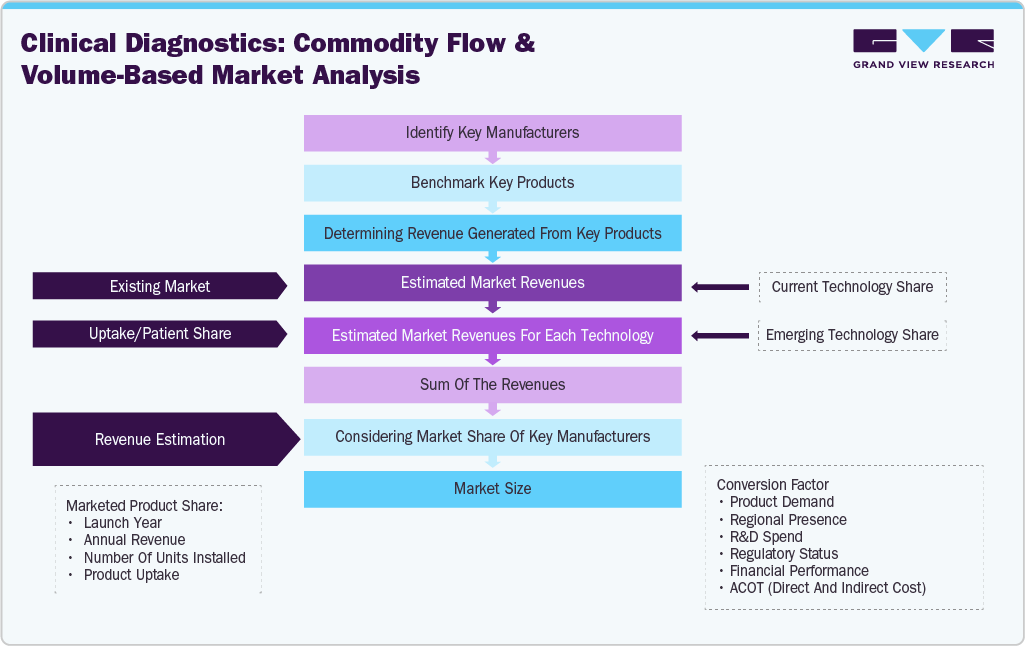
The HPV testing and pap test market was estimated using a bottom-up methodology that involved identifying leading market participants and benchmarking their HPV and PAP test-related product portfolios across instruments, consumables, and diagnostic services. Market assessment was conducted by evaluating product-level revenues, test volumes, average selling prices (ASPs), reimbursement scenarios, technology adoption rates, cervical cancer screening guidelines, patient screening rates, and company-specific financial disclosures across key applications such as cervical cancer screening, vaginal cancer screening, primary HPV testing, Pap cytology testing, co-testing, and reflex testing.
 To learn more about this report, Download Free Sample Report
 Segment-level market values were derived by estimating revenues associated with individual test types, product categories, technologies, and end-use settings, while validating the findings through screening coverage trends, disease prevalence, laboratory utilization patterns, technology penetration, and the competitive positioning of major industry participants. The final market size was established through the aggregation of segment revenues and further validated using the market share distribution of key companies operating within the global HPV and PAP test ecosystem.
Delivered Customizations
This report has been delivered with the following In-depth customizations
Client Request
Customization Delivered
Value Adds
Cervical Cancer Screening & Disease Burden Analysis
Assessment of HPV prevalence, cervical cancer incidence, screening coverage, vaccination trends, and high-risk population across key markets.
Identifies high-growth regions and key demand drivers for HPV and Pap testing.
Screening Program & End-user Adoption Analysis
Evaluation of HPV and Pap test adoption across hospitals, diagnostic laboratories, gynecology clinics, and national screening programs.
Supports market expansion planning and customer targeting strategies.
Molecular Diagnostics & Cytology Technology Assessment
Analysis of HPV DNA testing, mRNA testing, liquid-based cytology, co-testing, automation, and AI-assisted screening trends.
Tracks technology evolution and supports product positioning decisions.
Women's Health Innovation Landscape
Assessment of self-sampling HPV tests, digital cytology, biomarker-based screening, and next-generation cervical cancer diagnostics.
Highlights emerging technologies and future growth opportunities in women's health diagnostics.
Frequently Asked Questions About This Report
Key factors that are driving the HPV testing and Pap test market growth include increasing incidence rate of cervical and vaginal cancer and rising awareness created by various government organizations in order to increase cervical cancer screening.
The global HPV testing and Pap test market size was estimated at USD 3.6 billion in 2025 and is expected to reach USD 3.8 billion in 2026.
Some key players in the HPV testing and Pap test market include Abbott Laboratories, Qiagen N. V., Becton, Dickinson and Company, Quest Diagnostics, Hologic Inc., Roche, Arbor Vita Corporation, Femasys Inc., Onco Health Corporation, and Seegene Inc.
Asia Pacific HPV testing And Pap test market is expected to register the fastest CAGR over the forecast period, driven by the rising incidence of cervical cancer, expanding government screening programs, and increased accessibility of molecular diagnostics across emerging economies.
The consumables segment held the largest share in the HPV testing and Pap test market in 2025, due to the repetitive use of these products in HPV and cervical screenings.
The cervical cancer screening segment held the largest revenue share in 2025. This segment is anticipated to grow at the fastest CAGR over the forecast period.
The global HPV testing and Pap test market is expected to grow at a compound annual growth rate of 7.2% from 2026 to 2033 to reach USD 6.2 billion by 2033.
North America dominated the HPV testing and Pap test market with a share of 41.2% in 2025. This is attributable to increased cases of cervical cancer and the growing awareness amongst women due to the various government initiatives and research studies that were undertaken in this direction.
The Pap test segment dominated the market for HPV testing and Pap test in 2025 with a revenue share of 62.1%, owing to its widespread implementation in screening programs.
About the Author(s)
Clinical Diagnostics Research Team
Healthcare · Clinical DiagnosticsThis report was authored by the clinical diagnostics research team at Grand View Research - comprising two research analysts, one senior research analyst, and one industry expert - with specialized expertise in the clinical diagnostics segment of the healthcare industry. All findings are based on proprietary healthcare databases, executive interviews, and regulatory analysis, subject to internal peer review prior to publication.
Last Updated:
Speak to Analyst

Customize this report to your needs - add regions, segments, or data points, with 20% free customization.
Or view our licence options:


ISO 9001:2015 & 27001:2022 Certified
We are GDPR and CCPA compliant! Your transaction & personal information is safe and secure. For more details, please read our privacy policy.


