
- Home
- »
- Pharmaceuticals
- »
-
Immunotherapy Drugs Market Size, Share Report, 2026-2033GVR Report cover

Immunotherapy Drugs Market (2026 - 2033)
Size, Share & Trends Analysis Report By Drug Type (Monoclonal Antibodies, Immunomodulators, Vaccine), By Indication (Cancer, Infectious Diseases, Autoimmune Diseases), By Region, And Segment Forecasts
Market Size, 2025
$285.7BMarket Estimate, 2026
$317.2BMarket Forecast, 2033
$676.0BCAGR, 2026–2033
11.4%Immunotherapy Drugs Market Summary
The global immunotherapy drugs market size was valued at USD 285.7 billion in 2025 and is projected to grow from USD 317.2 billion in 2026 to USD 676.0 billion by 2033, at a CAGR of 11.4% from 2026 to 2033. The market in North America dominated with a revenue share of 41.8% in 2025. This market is primarily driven by the rising incidence of chronic diseases globally.
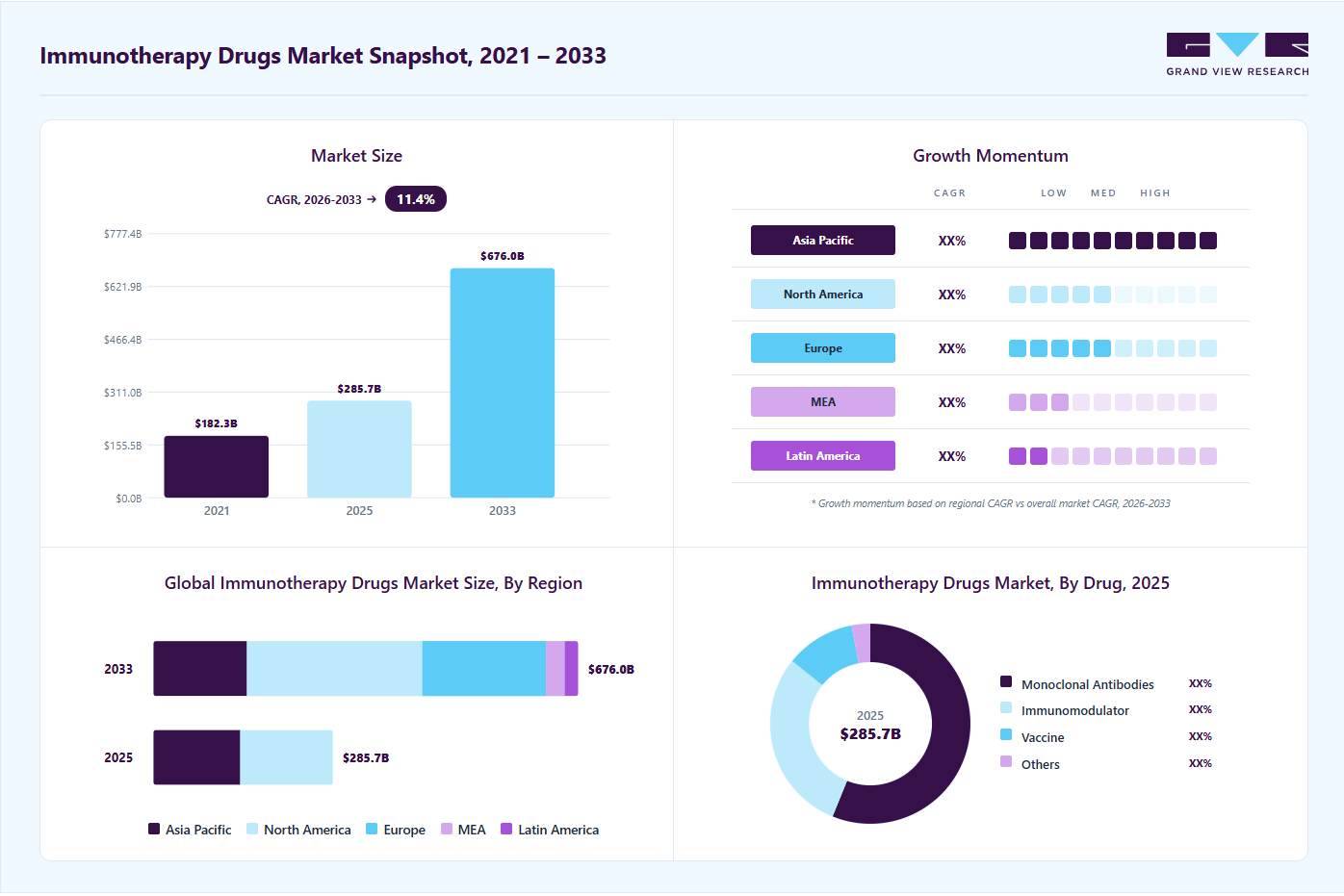 Source: Grand View Research, IR Documents, Primary Interviews, Paid DatabasesTo learn more about this report,
 Download Free Sample Report
 Key Market Trends & Insights
- By drug type: monoclonal antibodies segment accounted for the largest share of 56.16% in 2025.
- By indication: cancer segment dominated the market, accounting for 88.42% of the revenue in 2025.
Regional Highlights
- Largest regional market: North America (41.8% revenue share, 2025)
- Fastest-growing regional market: Asia Pacific (highest CAGR, 2026-2033)
- By country: The U.S. held the largest market share in 2025.
Market Size & Forecast
- Market size in 2025: USD 285.7 Billion
- Estimated market size in 2026: USD 317.2 Billion
- Projected market size by 2033: USD 676.0 Billion
- CAGR (2026-2033): 11.4%
Three ways to get this report
Buy it, customize it, or ask a question.Ask an Analyst
Analyst response in 1 business day
- AccessReport author, directly
- Reply timeWithin 1 working day
- No sales callDirect answer only
- FormatEmail reply
- CostFree, no cost
Get the Full Report
What the study covers
- FormatsPDF · Excel · Dashboard
- Timeline2026–2033 annual, 2025 base
- Coverage20+ countries, 5 regions
- Companies10+ key players profiled
Customize the Report
20% free customization
- IncludeCountries, segments, points
- TailorTo your product definition
- ExtendDeeper competitor detail
- OrA fully bespoke study
- Turnaround5–10 working days
This market was driven by the rising global burden of cancer and chronic diseases, including autoimmune and inflammatory disorders, alongside the growing limitations of conventional treatments such as chemotherapy and radiation therapy. These constraints had accelerated the shift toward immunotherapy because of its targeted mechanism of action and improved patient outcomes. For instance, February 2025, the World Health Organization reported that cancer was responsible for nearly 10 million deaths in 2020, accounting for almost one in six deaths globally. Breast cancer recorded 2.26 million cases, lung cancer 2.21 million, and colorectal cancer 1.93 million, while lung cancer caused 1.80 million deaths. The organization also estimated around 400,000 childhood cancer cases annually and noted that 30 percent of cancers in low and lower middle income countries were infection related, reinforcing demand for advanced immunotherapies.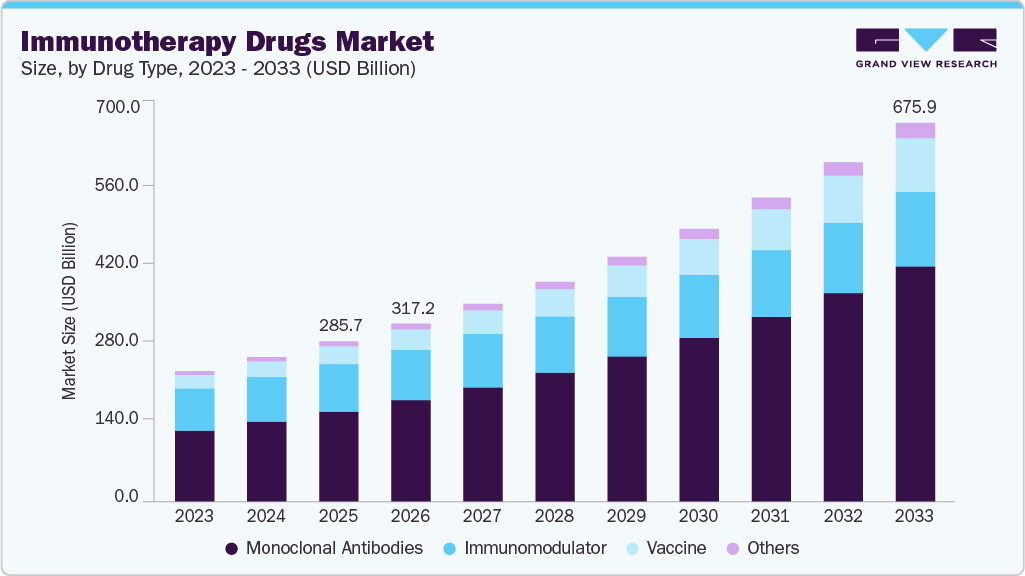 To learn more about this report, Download Free Sample Report
 Technological advancements and robust research activity play a critical role in driving the immunotherapy drugs market forward. Significant progress in immuno-oncology, particularly in immune checkpoint inhibitors, monoclonal antibodies, and cell-based therapies such as CAR-T, has transformed cancer treatment paradigms. These therapies have demonstrated strong efficacy across multiple solid tumors and hematological malignancies, leading to expanding clinical indications. Pharmaceutical and biotechnology companies are investing heavily in research and development to improve therapeutic effectiveness, reduce adverse effects, and develop next-generation immunotherapies. Strategic collaborations, mergers, and acquisitions are also accelerating innovation and pipeline expansion. Moreover, favorable regulatory frameworks, fast-track approvals, and orphan drug designations in major markets are enabling faster commercialization of novel immunotherapy drugs, thereby contributing significantly to market growth.
Beyond oncology, the immunotherapy drugs market was supported by expanding applications and improving healthcare infrastructure worldwide, which broadened overall market potential. Immunotherapies were increasingly explored for autoimmune diseases, infectious diseases, and rare genetic disorders, enabling wider clinical adoption. In developed regions, strong reimbursement systems, higher healthcare spending, and access to advanced diagnostic facilities facilitated routine use of immunotherapy drugs. At the same time, emerging economies experienced steady growth due to improvements in healthcare systems, rising medical tourism, and government initiatives aimed at strengthening cancer care delivery. Growing awareness among patients and healthcare providers, coupled with gradual improvements in the affordability of biologic therapies, further supported uptake. Together, these interconnected factors sustained long term growth prospects and continued innovation in the global immunotherapy drugs market.
Market Dynamics
The rising global prevalence of cancer, coupled with the increasing demand for advanced, targeted treatment options, is the primary driver of the Immunotherapy Drugs Market. Immunotherapy drugs are gaining significant traction due to their ability to enhance the body’s immune response against cancer cells while offering improved survival rates and reduced side effects compared to conventional chemotherapy. Growing adoption of immune checkpoint inhibitors, monoclonal antibodies, cancer vaccines, and cell-based therapies is further accelerating market expansion across hospitals and specialty oncology centers worldwide. In addition, increasing investments in oncology research, rising regulatory approvals, and expanding clinical trial activities are supporting the commercialization of innovative immunotherapy treatments. For instance, in June 2025, the U.S. Food and Drug Administration (FDA) approved Merck & Co.’s Keytruda (pembrolizumab) for resectable locally advanced head and neck squamous cell carcinoma, highlighting the growing adoption and clinical expansion of immunotherapy drugs in cancer treatment worldwide.
The high cost of immunotherapy drugs and advanced cancer treatments remains a major restraint for the Immunotherapy Drugs Market. Therapies such as immune checkpoint inhibitors, CAR-T cell therapies, and monoclonal antibodies involve substantial research, manufacturing, and administration expenses, limiting affordability for a large patient population, particularly in developing economies. In addition, reimbursement challenges, the need for expensive hospitalization, and the requirement for specialized healthcare infrastructure further restrict widespread adoption. The financial burden is especially significant in countries where patients rely heavily on out-of-pocket healthcare costs. Furthermore, variability in patient responses and immune-related adverse effects raise concerns about treatment accessibility and long-term affordability. For instance, in April 2025, The American Society of Clinical Oncology (ASCO) highlighted that the annual cost of several checkpoint inhibitor therapies in the U.S. exceeded USD 150,000 per patient, creating significant reimbursement and affordability challenges for healthcare systems and patients globally. The organization emphasized that rising oncology drug prices continue to limit equitable access to immunotherapy treatments, particularly in low- and middle-income countries.
The growing focus on personalized medicine and the development of next-generation immunotherapies present significant growth opportunities for the Immunotherapy Drugs Market. Advances in biomarker testing, precision oncology, and genetic profiling are enabling healthcare providers to deliver more targeted and effective immunotherapy treatments tailored to individual patient profiles. In addition, increasing research into CAR-T cell therapy, tumor-infiltrating lymphocyte (TIL) therapy, cancer vaccines, and combination immunotherapies is expanding the scope of cancer treatment across multiple indications. Rising investments from biotechnology companies, pharmaceutical manufacturers, and government organizations are further accelerating innovation and commercialization in the market. Furthermore, expanding regulatory support for breakthrough therapies and growing clinical trial activity are creating new opportunities for global market expansion. For instance, in May 2025, Bristol Myers Squibb presented data from more than 80 oncology studies at the ASCO 2025 Annual Meeting, highlighting advancements in personalized immunotherapy approaches, cell therapies, and precision oncology pipelines targeting over 20 cancer types. The announcement emphasized the growing industry focus on next-generation immunotherapy solutions and individualized cancer treatment strategies worldwide.
Market Concentration & Characteristics
The immunotherapy drugs market demonstrates a high degree of innovation driven by continuous scientific advancements and complex biologic development. Companies focus on novel immune targets, combination therapies, and next-generation platforms such as cell and gene-based treatments. Rapid progress in biomarker identification supports more precise patient selection and improved treatment outcomes. Ongoing clinical trials across multiple disease indications sustain a strong innovation pipeline. High investment intensity in research and development differentiates market leaders from smaller participants. This innovation-driven environment results in frequent product advancements and lifecycle expansions.
Barriers to entry in the immunotherapy drugs market remain high due to complex development processes and significant capital requirements. Biologic drug manufacturing demands advanced infrastructure, specialized expertise, and stringent quality control. Lengthy clinical development timelines increase financial risk for new entrants. Strong intellectual property portfolios held by established players limit competitive entry. High regulatory compliance requirements add operational complexity. These factors collectively restrict market participation to well-funded and experienced companies.
 To learn more about this report, Download Free Sample Report
 Regulatory frameworks strongly influence the immunotherapy drugs market by shaping development timelines and commercialization strategies. Stringent safety and efficacy standards require extensive clinical validation for biologic therapies. Approval pathways for immunotherapies often involve complex review processes due to novel mechanisms of action. Regulatory scrutiny increases development costs and extends time to market. Post-approval monitoring requirements influence product lifecycle management. These regulatory dynamics significantly affect market structure and competitive positioning.
Product substitution in the immunotherapy drugs market remains limited due to the unique mechanisms of immune-based treatments. Conventional therapies such as chemotherapy and radiation offer alternative options but differ significantly in clinical outcomes. Targeted therapies may serve as partial substitutes in select indications. Treatment selection often depends on disease stage, biomarker status, and patient response. High clinical differentiation reduces direct substitution risk for immunotherapies. This characteristic supports sustained demand for immune-based treatments.
Geographical expansion plays a key role in shaping competition within the immunotherapy drugs market. Companies are increasingly extending their presence into emerging regions to access new patient populations. Expansion strategies focus on establishing distribution networks and partnerships with regional healthcare providers. Growing diagnosis rates in developing markets support long-term demand growth. Localization of manufacturing and clinical research improves regional accessibility. These expansion efforts contribute to gradual market concentration across global regions.
Drug Type Insights
The monoclonal antibodies segment accounted for the largest share of 56.16% in 2025. This growth is driven by their clinical efficacy, high target specificity, and broad applicability across cancer and autoimmune indications. Widespread adoption of immune checkpoint inhibitors such as PD‑1, PD‑L1, and CTLA‑4 therapies boosted oncology treatment uptake. For instance, in September 2024, Elsevier reported a real‑world study on pembrolizumab in advanced non‑small cell lung cancer with PD‑L1 ≥50 percent, including 804 patients (404 women, median age 72 years, 310 aged ≥75 years). Median overall survival was 19.2 months, 5‑year survival 25.1 percent, 549 (68 percent) had died, and 266 (33 percent) received subsequent therapy, confirming long‑term efficacy. Strong pipelines, label expansions, favorable reimbursements, and investments in antibody engineering further supported market growth.
The vaccines segment is projected to grow at the fastest CAGR over the forecast period, due to. This growth can be attributed to the increasing focus on therapeutic and preventive vaccines that enhance immune response against cancer and infectious diseases. This growth can be attributed to rising research activity in cancer vaccines, growing demand for long-term disease management solutions, and expanding clinical pipelines targeting personalized immunization strategies. Advancements in antigen identification and delivery platforms are improving vaccine efficacy and safety profiles. Increasing adoption of immunotherapy vaccines in combination with other immune-based treatments is supporting broader clinical acceptance. Higher awareness of preventive healthcare and immune-based disease prevention further strengthens segment expansion. Together, these factors are expected to drive steady growth of the vaccines segment within the immunotherapy drugs market.
Indication Insights
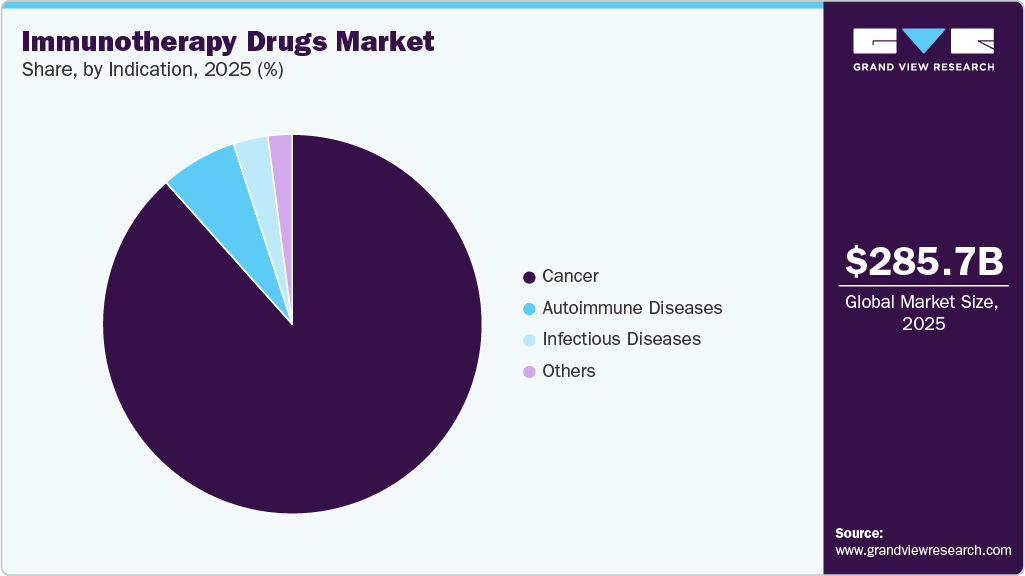
The cancer segment dominated the market, accounting for 88.42% of the revenue in 2025, driven by high cancer prevalence and widespread adoption of immune-based therapies. Immunotherapy has gained clinical acceptance by delivering durable responses, improved survival, and targeted treatment across diverse tumor types. Increasing use of immune checkpoint inhibitors, monoclonal antibodies, and cell-based therapies has expanded options for solid tumors and hematological malignancies. For instance, October to December 2024, Cancer Research Catalyst reported that the FDA issued 15 oncology approvals, including nine new therapies, bringing total annual approvals to over 60, with 11 first‑in‑class. Key approvals included Revumenib for acute leukemia, zolbetuximab for gastric cancer, inavolisib for HR-positive breast cancer, CAR T-cell therapy Aucatzyl, cosibelimab, and zanidatamab. Expansion of indications and combination therapies further strengthened growth.
 To learn more about this report, Download Free Sample Report
 On the other hand, the infectious diseases segment is anticipated to register the CAGR of 9.74% over the forecast period. This growth can be attributed to the increasing need for immune-based therapies that enhance host defense mechanisms against complex and emerging infections. Rising interest in therapeutic vaccines and immunomodulatory treatments is supporting broader clinical application within this segment. Advancements in immune response targeting and antigen-specific therapies are improving treatment effectiveness and safety. Expanding research activity focused on chronic and treatment-resistant infections is driving pipeline development. Growing integration of immunotherapy with conventional antimicrobial treatments is further supporting segment expansion within the global immunotherapy drugs market.
Regional Insights
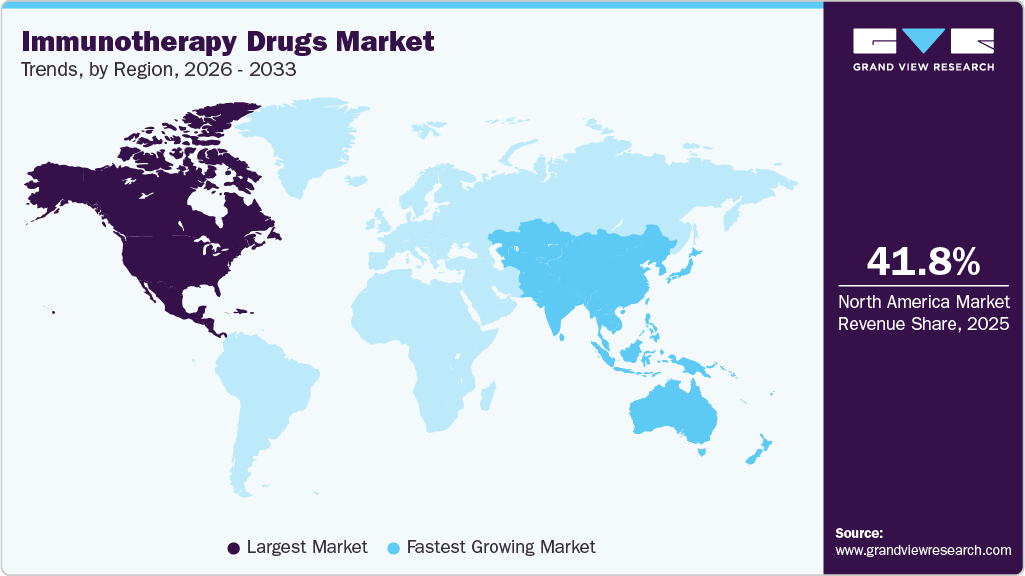
The North America immunotherapy drugs market dominated the global market, with a revenue share of 41.80% in 2025. This strong position is attributable to the high incidence of cancer and autoimmune diseases, which drives the need for effective treatments. The region benefits from advanced healthcare infrastructure and significant investments in research and development, leading to innovative therapies that enhance immune responses. In addition, favorable healthcare policies and increased spending on health services support the adoption of immunotherapy drugs. As a result, this market is expected to grow rapidly, reflecting the ongoing demand for safer and more effective cancer treatments.
 To learn more about this report, Download Free Sample Report
 U.S. Immunotherapy Drugs Market Trends
The U.S. immunotherapy drugs market is expected to witness a significant CAGR during the forecast period. High healthcare spending enables broad patient access to premium immunotherapy treatments. Strong oncology research infrastructure supports rapid innovation and clinical validation. Widespread use of precision medicine enhances treatment outcomes and adoption rates. A large pool of eligible patients sustains continuous demand for immune checkpoint inhibitors and cell-based therapies. The country remains a key hub for new immunotherapy drug launches and lifecycle expansions.
Europe Immunotherapy Drugs Market Trends
Europe immunotherapy drugs market is expected to experience significant growth, due to its well-established pharmaceutical sector. The region demonstrates steady uptake of immunotherapy across oncology and autoimmune indications. Increasing focus on personalized medicine supports clinical acceptance of immune-based treatments. Strong hospital networks enable efficient administration of advanced biologics. Continuous expansion of approved therapies across multiple cancers drives sustained growth. Europe maintains consistent market performance with balanced innovation and adoption.
The UK immunotherapy drugs market shows stable growth supported by strong clinical expertise. High prevalence of cancer encourages early adoption of advanced immunotherapy regimens. Robust research collaborations enhance the development of novel immune-based therapies. Increasing integration of immunotherapy in first-line cancer treatment boosts demand. Well-structured oncology care pathways support consistent patient access. The UK remains an important contributor to Europe’s immunotherapy landscape.
Germany immunotherapy drug market is growing due to its advanced medical infrastructure. The country demonstrates high utilization of monoclonal antibodies and checkpoint inhibitors. Strong pharmaceutical manufacturing capabilities support steady product availability. Increasing cancer screening rates expands the treated patient population. High physician confidence in biologic therapies drives prescribing volumes. Germany continues to be a key market for both established and emerging immunotherapy drugs.
France immunotherapy drug market contributes significantly through strong clinical adoption. Growing focus on innovative oncology treatments enhances immunotherapy uptake. Expansion of hospital-based cancer centers supports administration of complex biologics. Increasing use of combination therapies strengthens market demand. Continuous clinical research activity expands therapeutic applications. France maintains steady growth within the European immunotherapy market.
Asia Pacific Immunotherapy Drugs Market Trends
Asia Pacific immunotherapy drugs market is projected to grow at a CAGR of 12.45% over the forecast period. This growth can be attributed to the increasing prevalence of cancer and autoimmune diseases, leading to a rising demand for effective treatment options. The region is witnessing significant investments in healthcare infrastructure, research, and development, resulting in innovative therapies that enhance immune responses. In addition, there is a growing focus on personalized medicine, which helps customize treatments to individual patient needs, further boosting market growth. As awareness of immunotherapy options increases among healthcare providers and patients, the Asia Pacific immunotherapy drugs industry is expected to play a crucial role in shaping the future of cancer treatment in the region. Factors such as rising healthcare expenditure and government support for research initiatives also contribute to this market's positive outlook.
Japan immunotherapy drugs industry represents a mature and innovation-driven market. High adoption of novel oncology treatments supports consistent demand. Strong emphasis on precision diagnostics improves immunotherapy treatment selection. Aging population increases the prevalence of cancer and immune-related disorders. Domestic pharmaceutical innovation strengthens availability of advanced biologics. Japan remains a key contributor to Asia Pacific’s immunotherapy growth.
China immunotherapy drugs market is experiencing rapid expansion driven by a large patient population. Rising cancer burden increases demand for effective immune-based treatments. Accelerated clinical development improves access to new immunotherapy drugs. Expanding healthcare facilities support broader treatment delivery. Growing acceptance of biologic therapies enhances market penetration. China is a major growth engine within the Asia Pacific region.
Latin America Immunotherapy Drugs Market Trends
Latin America immunotherapy drugs market shows moderate growth with improving adoption trends. Increasing awareness of advanced cancer therapies supports market expansion. Growth of private healthcare facilities enhances access to immunotherapy treatments. Rising diagnosis rates expand the addressable patient population. Gradual introduction of innovative biologics strengthens treatment options. The region continues to evolve as an emerging immunotherapy market.
Brazil immunotherapy drugs market leads the Latin America market in terms of adoption. Growing cancer prevalence sustains demand for immune-based therapies. Expansion of oncology centers improves treatment accessibility. Increasing use of monoclonal antibodies supports revenue growth. Strong participation in clinical research enhances therapeutic availability. Brazil remains a focal point for immunotherapy growth in Latin America.
Middle East And Africa Immunotherapy Drugs Market Trends
The MEA immunotherapy drugs market is at a developing stage with steady progress. Rising incidence of cancer drives interest in advanced treatment options. Expansion of specialty hospitals supports immunotherapy administration. Growing physician exposure to biologic therapies improves adoption. Increasing availability of branded immunotherapy drugs strengthens market presence. The region shows long-term growth potential as access continues to improve.
Saudi Arabia immunotherapy drugs landscape represents a key market within the Middle East. Increasing investment in advanced oncology care drives therapy adoption. Expansion of specialized cancer treatment centers supports biologic drug usage. Growing awareness of immunotherapy benefits enhances prescribing trends. Rising demand for targeted cancer treatments sustains market growth. Saudi Arabia continues to emerge as a regional hub for immunotherapy utilization.
Key Immunotherapy Drugs Company Insights
Amgen Inc. and Novartis AG play a critical role in shaping the immunotherapy drugs market through strong biologics portfolios and continuous innovation in immune-based therapies. AbbVie Inc. and Pfizer Inc. maintain competitive positions by expanding immuno-oncology pipelines and advancing monoclonal antibody and combination therapy development. F. Hoffmann-La Roche Ltd and Johnson & Johnson Services, Inc. strengthen market presence through precision medicine approaches and broad clinical trial programs across multiple cancer indications. AstraZeneca and GSK plc focus on immune checkpoint inhibitors and next-generation biologics to enhance treatment efficacy. Sanofi and Bayer AG contribute through diversified immunology research, strategic partnerships, and expansion of therapeutic indications, collectively intensifying competition and innovation in the global immunotherapy drugs market.
Key Immunotherapy Drugs Companies:
The following are the leading companies in the immunotherapy drugs market. These companies collectively hold the largest market share and dictate industry trends.
- Amgen Inc.
- Novartis AG
- AbbVie Inc.
- Pfizer Inc.
- F. Hoffmann-La Roche Ltd
- Johnson & Johnson Services, Inc.
- AstraZeneca
- GSK plc.
- Sanofi
- Bayer AG
Competitive Benchmarking
Operating Strategies
Competitive Edge
Weaknesses
Mature Players: F. Hoffman-La Roche Ltd
- Mature players focus on expanding immunotherapy portfolios, strengthening biologics manufacturing capabilities, securing regulatory approvals, and establishing strategic partnerships with healthcare providers and research organizations.
- They heavily invest in clinical trials, CAR-T therapies, monoclonal antibodies, and combination immunotherapies to maintain leadership and long-term competitive positioning globally.
- Mature immunotherapy companies maintain competitive advantage through extensive global distribution networks, strong financial resources, advanced research infrastructure, diversified oncology portfolios, and broad regulatory expertise.
- Their ability to conduct large-scale clinical trials and continuously launch innovative cancer immunotherapies supports sustained market dominance worldwide.
- Mature players face challenges including high research and development expenses, lengthy approval timelines, complex biologics manufacturing processes, and pricing pressures from reimbursement systems.
- In addition, large organizational structures may reduce operational agility and slow adaptation to rapidly evolving personalized medicine and immunotherapy technologies.
Emerging Players: AstraZeneca
- Emerging players prioritize innovation-driven strategies focused on precision immunotherapy, bispecific antibodies, targeted biologics, and next-generation cell therapies.
- They emphasize strategic collaborations, licensing agreements, acquisitions, and rapid clinical development activities to accelerate commercialization, strengthen oncology pipelines, and expand their market presence globally.
- Emerging players gain competitive advantage through technological innovation, agile decision-making capabilities, and rapid adoption of advanced immunotherapy platforms.
- Their focus on personalized medicine, targeted therapies, and innovative biologics enables faster product development timelines and stronger positioning within evolving oncology treatment markets globally.
- Emerging players often face limited manufacturing capacity, restricted commercial infrastructure, lower global brand recognition, and high dependence on strategic partnerships.
- They may also experience difficulties in scaling production, obtaining widespread regulatory approvals, and competing with established pharmaceutical companies possessing stronger financial and distribution capabilities.
Recent Developments
-
In November 2025, Amgen Inc. reported that the U.S. Food and Drug Administration granted full approval to Imdelltra (tarlatamab‑dlle) for adult patients with extensive stage small cell lung cancer who had disease progression on or after platinum‑based chemotherapy, based on data from the global Phase 3 DeLLphi‑304 study that showed a 40% reduction in the risk of death and extended median overall survival to 13.6 months versus 8.3 months with standard chemotherapy (hazard ratio 0.60, 95% CI 0.47-0.77, P < 0.001) and significantly better outcomes in a trial of 509 patients. The approval followed evidence of fewer Grade 3 or greater adverse events in the Imdelltra arm (54% vs 80%) and updated NCCN Guidelines naming it a Category 1 preferred option.
-
In February 2024, AbbVie acquired ImmunoGen, significantly enhancing its oncology portfolio. ImmunoGen's lead product, ELAHERE, specifically targets folate receptor-alpha-positive ovarian cancers. This strategic acquisition aligned with AbbVie's focus on expanding its capabilities in immunotherapy and oncology.
-
In December 2023, F. Hoffmann-La Roche completed the acquisition of Telavant Holdings, Inc., owned by Roivant Sciences and Pfizer. This deal was expected to allow Roche to develop a new therapy-RVT-3101-to treat inflammatory bowel diseases such as ulcerative colitis and Crohn's disease. The acquisition was a part of Roche's strategy to strengthen its focus on gastrointestinal health and to bring innovative treatments to patients with these conditions.
Immunotherapy Drugs Market Report Scope
Report Attribute
Details
Market size in 2025
USD 285.7 billion
Estimated market size in 2026
USD 317.2 billion
Projected market size by 2033
USD 676.0 billion
Growth rate
CAGR of 11.4% from 2026 to 2033
Base year for estimation
2025
Historical data
2021 - 2024
Forecast period
2026 - 2033
Quantitative units
Revenue in USD million/billion, and CAGR from 2026 to 2033
Report coverage
Revenue forecast, company ranking, competitive landscape, growth factors, and trends
Segments covered
Drug type, indication, region
Regional scope
North America; Europe; Asia Pacific; Latin America; MEA
Country scope
U.S.; Canada; Mexico; UK; Germany; France; Italy; Spain; Denmark; Sweden; Norway; Japan; China; India; Thailand; South Korea; Australia; Brazil; Argentina; South Africa; Saudi Arabia; UAE; Kuwait
Key companies profiled
Amgen Inc.; Novartis AG; AbbVie Inc.; Pfizer, Inc.; F. Hoffmann-La Roche Ltd; Johnson & Johnson Services, Inc.; AstraZeneca; GSK plc.; Sanofi; Bayer AG
Customization scope
Free report customization (equivalent to 8 analyst working days) with purchase. Addition or alteration to country, regional & segment scope.
Pricing and purchase options
Avail customized purchase options to meet your exact research needs. Explore purchase options
Global Immunotherapy Drugs Market Report Segmentation
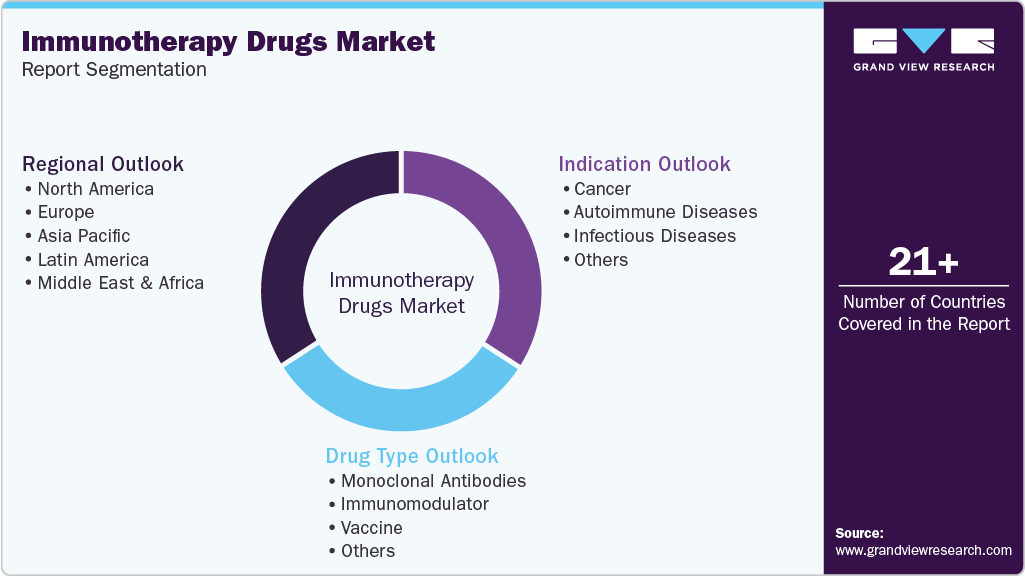
This report forecasts revenue growth and provides an analysis of the latest trends in each of the sub-segments from 2021 to 2033. For this report, Grand View Research has segmented the global immunotherapy drugs market report based on drug type, indication, and region:
 To learn more about this report, Download Free Sample Report
 -
Drug Type Outlook (Revenue, USD Million, 2021 - 2033)
-
Monoclonal Antibodies
-
Immunomodulator
-
Vaccine
-
Others
-
-
Indication Outlook (Revenue, USD Million, 2021 - 2033)
-
Cancer
-
Autoimmune Diseases
-
Infectious Diseases
-
Others
-
-
Regional Outlook (Revenue, USD Million, 2021 - 2033)
-
North America
-
U.S.
-
Canada
-
Mexico
-
-
Europe
-
UK
-
Germany
-
France
-
Italy
-
Spain
-
Denmark
-
Sweden
-
Norway
-
-
Asia Pacific
-
Japan
-
China
-
India
-
Thailand
-
South Korea
-
Australia
-
-
Latin America
-
Brazil
-
Argentina
-
-
Middle East and Africa (MEA)
-
South Africa
-
Saudi Arabia
-
UAE
-
Kuwait
-
-
Delivered Customizations
This report has been delivered with the following In-depth customizations
Client Request
Customization Delivered
Value Adds
Checkpoint Inhibitor Commercial Opportunity Assessment (U.S. & Europe)
Conducted a targeted assessment of checkpoint inhibitor therapies across the U.S., Germany, France, Italy, Spain, and the U.K. The study evaluated patient populations, oncology treatment adoption, pricing benchmarks, reimbursement scenarios, biomarker testing trends, physician prescribing behavior, and the competitive positioning of PD-1 and PD-L1 immunotherapy drugs.
Helped the client identify high-potential oncology markets, optimize commercialization strategies, evaluate reimbursement opportunities, and strengthen competitive positioning against established immunotherapy manufacturers across major cancer treatment regions.
CAR-T Cell Therapy Pipeline Benchmarking & Partnership Analysis
Delivered a comprehensive benchmarking study on CAR-T cell therapy developers, focusing on clinical-stage pipelines, manufacturing scalability, licensing agreements, research collaborations, and commercialization readiness. The assessment covered hematologic malignancies, solid tumor indications, regulatory pathways, and investment opportunities across emerging immunotherapy technologies globally.
Enabled the client to identify acquisition and partnership opportunities, evaluate white-space potential in advanced cell therapies, and prioritize strategic investments in next-generation immunotherapy platforms with strong long-term commercialization capabilities.
Cancer Immunotherapy Manufacturing & Market Expansion Feasibility Study
Conducted a regional feasibility assessment for immunotherapy manufacturing and oncology treatment expansion across Asia-Pacific and Latin America. The study analyzed biologics manufacturing infrastructure, regulatory readiness, supply chain risks, hospital adoption trends, treatment accessibility, and regional oncology demand for advanced immunotherapy drugs and biologics.
Supported long-term expansion planning by identifying emerging oncology demand centers, manufacturing investment opportunities, regional commercialization barriers, and partnership potential to strengthen immunotherapy accessibility and sustainable market penetration across developing healthcare markets.
Frequently Asked Questions About This Report
The global immunotherapy drugs market size was estimated at USD 285.7 billion in 2025 and is is estimated at USD 317.2 billion in 2033.
The global immunotherapy drugs market is expected to grow at a compound annual growth rate of 11.4% from 2026 to 2033 to reach USD 676.0 billion by 2033.
The monoclonal antibodies segment dominated the immunotherapy drugs market with a share of 56.2% in 2025 owing to increasing R&D in therapeutic monoclonal antibodies coupled with supportive government initiatives
Some key players operating in the immunotherapy drugs market include Novartis AG, AbbVie, Inc., Pfizer, Inc., F. Hoffmann-La Roche Ltd., Johnson & Johnson Services, Inc., AstraZeneca, GSK, Sanofi, Bayer AG.
Key factors that are driving the immunotherapy drugs market growth include the rising incidence of chronic diseases globally, high adoption of biosimilar drugs in immunotherapy, launch and regulatory approval of new immunotherapy drugs & favorable reimbursement policies.
North America dominated with a 41.8% revenue share in 2025.
Asia Pacific is the fastest-growing region over the forecast period.
Cancer segment held the largest revenue share of 88.4% in 2025, while infectious diseases segment is fastest-growing segment
About the Author(s)
Pharmaceuticals Research Team
Healthcare · PharmaceuticalsThis report was authored by the pharmaceuticals research team at Grand View Research - comprising two research analysts, one senior research analyst, and one industry expert - with specialized expertise in the pharmaceuticals segment of the healthcare industry. All findings are based on proprietary healthcare databases, executive interviews, and regulatory analysis, subject to internal peer review prior to publication.
Last Updated:
Speak to Analyst

Customize this report to your needs - add regions, segments, or data points, with 20% free customization.
Or view our licence options:


ISO 9001:2015 & 27001:2022 Certified
We are GDPR and CCPA compliant! Your transaction & personal information is safe and secure. For more details, please read our privacy policy.


