
- Home
- »
- Nutraceuticals & Functional Foods
- »
-
India Dietary Supplements Market Size Report, 2026-2033GVR Report cover

India Dietary Supplements Market (2026 - 2033)
Size, Share & Trends Analysis Report By Ingredients (Vitamins, Botanicals, Minerals, Protein & Amino Acids, Fibers & Specialty Carbohydrates), By Form, By Type, By Application, By End Use, By Distribution Channel, And Segment Forecasts
Market Size, 2025
$5.8BMarket Estimate, 2026
$6.6BMarket Forecast, 2033
$12.4BCAGR, 2026–2033
9.5%India Dietary Supplements Market Summary
The India dietary supplements market size was valued at USD 5.8 billion in 2025 and is projected to grow from USD 6.6 billion in 2026 to USD 12.4 billion by 2033, at a CAGR of 9.5% from 2026 to 2033. Increasing awareness of the role of dietary supplements in improving well-being, the growing availability of products from global brands, and the rising incorporation of dietary supplements into treatments for chronic diseases are key growth drivers for India dietary supplements industry.
Key Market Trends & Insights
- By ingredient: Vitamins led the India dietary supplements market and accounted for a share of 27.8% in 2025.
- By form: Powder is expected to grow at the fastest CAGR for 10.4% from 2026 to 2033.
- By type: OTC led the market and accounted for a revenue share of 77.3% in 2025.
- By application: Prenatal health is projected to grow at the fastest CAGR for 12.3% from 2026 to 2033.
Market Size & Forecast
- Market size in 2025: USD 5.8 Billion
- Estimated market size in 2026: USD 6.6 Billion
- Projected market size by 2033: USD 12.4 Billion
- CAGR (2026-2033): 9.5%
Three ways to get this report
Buy it, customize it, or ask a question.Ask an Analyst
Analyst response in 1 business day
- AccessReport author, directly
- Reply timeWithin 1 working day
- No sales callDirect answer only
- FormatEmail reply
- CostFree, no cost
Get the Full Report
What the study covers
- FormatsPDF · Excel · Dashboard
- Timeline2026–2033 annual, 2025 base
- Coverage20+ countries, 5 regions
- Companies10+ key players profiled
Customize the Report
20% free customization
- IncludeCountries, segments, points
- TailorTo your product definition
- ExtendDeeper competitor detail
- OrA fully bespoke study
- Turnaround5–10 working days
India is one of the most populous country in the world, has seen a significant increase in demand for nutrient-rich foods, functional dietary products, and supplements in recent years. This rise in demand is mainly driven by the growing prevalence of chronic non-communicable diseases (NCDs), such as diabetes, cardiovascular diseases, and cancer. Dietary supplements are increasingly utilized during the treatment of these conditions to support gut health, boost immunity, and enhance overall well-being. In addition, many young adults in urban India consume multivitamins, prebiotics, probiotics, postbiotics, and omega-3 supplements to improve their health.
 Source: Grand View Research, IR Documents, Primary Interviews, Paid DatabasesTo learn more about this report,
 Download Free Sample Report
Products such as protein powders, protein-infused bars, vitamin gummies, probiotic yogurt, and others are increasingly being adopted by urban consumers. The availability of such products through e-commerce and quick-commerce platforms in India generates greater consumer engagement. In addition, domestic market trends and local customers' preferences shape various developments in this market. For instance, in July 2024, HealthOK (Mankind), partnered with Bikanervala, a multinational food service, to promote its vegetarian multivitamin offering. The partnership is a strategic decision as both brands are vegetarian, and the organizations aim to make it easier for vegetarians to have a healthy lifestyle.
Consumer Insights
In India, more consumers are inclined to combine traditional medicine with innovation-based offerings. This includes supplements that incorporate ingredients associated with Ayurvedic practices, such as Shatavari, Ashwagandha, Triphala, and Amla. This has stimulated multiple new developments and product launches in the domestic market. For instance, in October 2024, Nutrabay, a sports nutrition startup, launched its new offering, Shilajit. With this launch, the organization aims to widen its audience and position the brand in the holistic nutrition segment.
 To learn more about this report, Download Free Sample Report
The portfolios backed by strong marketing campaigns and innovation-based advertising gain increasing customer attention. Internet marketing, AI-driven advertising, and social media marketing are increasingly used to attract customers. Rising participation in sports and outdoor activities, accompanied by growing awareness of the benefits of enhanced nutrition, is expected to increase dietary supplement consumption in India.
Market Dynamics
India's dietary supplements market is benefiting from increasing consumer awareness of nutrition, preventive health, and overall wellness. Consumers are becoming more interested in maintaining adequate intake of vitamins, minerals, protein, and other nutrients. Growing participation in fitness activities is also supporting demand for sports nutrition and performance-focused supplements. Urban consumers, in particular, are increasingly incorporating supplements into their daily health routines. The expansion of health-focused products across pharmacies, modern retail, and online platforms is improving consumer access. These factors are supporting the broader adoption of dietary supplements across different consumer groups.
Regulatory compliance remains a key restraint for companies operating in the Indian dietary supplements market. Products such as health supplements and nutraceuticals are regulated by the Food Safety and Standards Authority of India (FSSAI), with requirements covering ingredients, composition, labeling, safety, and product claims. Companies must ensure that product formulations and claims comply with the applicable standards before commercialization. Requirements related to documentation and permitted ingredients can increase product development and compliance costs. These regulations can be particularly challenging for smaller companies and new international entrants. As a result, regulatory requirements may increase the time and resources required to introduce new products.
The increasing demand for products addressing specific nutritional and wellness needs creates significant opportunities in India. Companies can develop supplements focused on areas such as immunity, digestive health, energy, sports nutrition, healthy aging, and women's health. FSSAI regulations cover categories including health supplements, nutraceuticals, probiotic and prebiotic foods, and foods for special dietary use, providing a framework for product development across several functional categories. There is also scope for products using vitamins, minerals, proteins, botanicals, and other permitted functional ingredients. Convenient formats such as powders, capsules, gummies, and ready-to-consume products can help brands target different consumer preferences. This creates opportunities for differentiated products with clear nutritional positioning and strong brand credibility.
Analyst Perspective
The India dietary supplements market is expected to benefit from rising consumer awareness of preventive health, fitness, immunity, and nutritional well-being. Growing participation in sports and fitness activities, increasing demand for vitamins, minerals, protein, herbal products, and functional nutrition, and wider availability through pharmacies, modern retail, e-commerce, and direct-selling channels are supporting market development. Established companies such as Amul, Herbalife, Abbott, Bayer, Pfizer, and GSK have an advantage through strong brand recognition, broad product portfolios, and established distribution networks, while companies such as ADM, Glanbia, and DuPont are strengthening their presence through specialized nutrition ingredients and formulation capabilities. Increasing competition, product innovation, premium offerings, and expansion of online distribution are expected to create further opportunities for market participants.
Ingredient Insights
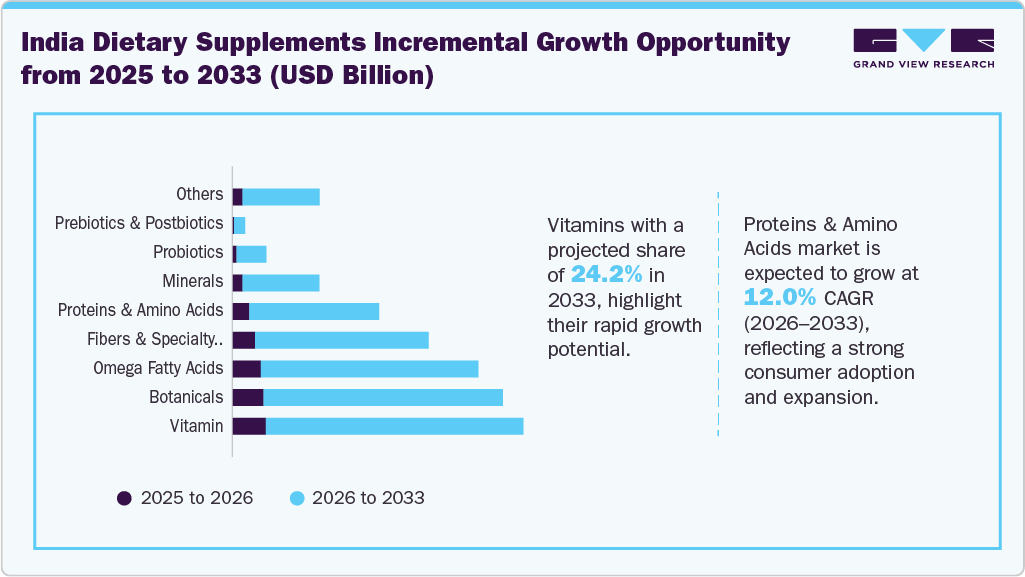
The vitamins segment dominated the Indian dietary supplements market, accounting for 27.8% of revenue in 2025. Growth of this segment is primarily driven by factors such as increasing consumption of multivitamins and vitamin-enriched, fortified foods in the country, growing availability of products such as vitamin gummies, innovation strategies adopted by key manufacturers, and greater accessibility through online marketplaces. In May 2025, Rasayanam, an emerging brand in India's health and wellness market, launched multivitamin tablets for men. The newly launched product by Rasayanam features a blend of vitamins, minerals, and other nutrients designed to support energy and immunity.
 To learn more about this report, Download Free Sample Report
The proteins & amino acids segment is likely to experience the fastest growth in the India dietary supplements market during the forecast period. Protein powders and protein liquids are increasingly adopted by Indian consumers owing to rising awareness regarding the role of protein in weight management and muscle gains. Many consumers undergoing treatment for obesity and intensive diets for weight management purchase protein-based supplements to support physical workout regimes and medications. New launches featuring innovations and novel applications are expected to drive growth in this segment over the forecast period.
Form Insights
The tablets segment dominated the India dietary supplements market, accounting for 30.9% of revenue in 2025. This growth is driven by several advantages that tablets offer, such as ease of use for consumers and improved storage convenience for manufacturers and marketers. When dietary supplements are consumed in tablet form, they undergo several processes, including disintegration, dissolution, absorption, distribution, and utilization. Tablets protect sensitive ingredients, such as vitamins, from external influences, including moisture and sunlight, while controlling dosages to desired levels. Furthermore, manufacturing tablets is more cost-effective than other supplement forms.
The powder segment is projected to experience a substantial growth CAGR at 10.4% from 2026 to 2033. This growth is largely driven by rising consumption of protein powders and the availability of powdered supplements that can be transformed into ready-to-drink liquids through specific preparation methods. Moreover, In India, increasing awareness of daily protein intake, fitness, and preventive nutrition is encouraging consumers to incorporate protein powders and other powdered supplements into their regular diets.
Type Insights
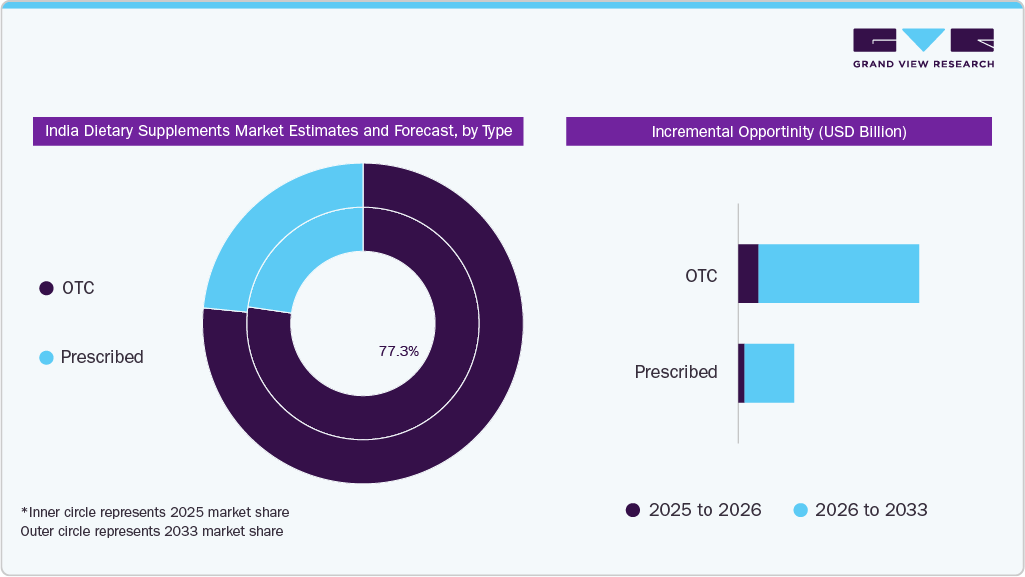
In 2025, the OTC segment accounted for the largest share of market revenue at 77.3%. This growth can be attributed to increased spending on lifestyle improvements, particularly in the health and wellness category, and a rise in self-care awareness. The significant expansion of India's e-commerce and online retail industry has also contributed to this trend. A large proportion of the country's young population, along with their growing interest in fitness and outdoor activities, is expected to further drive growth in this segment.
 To learn more about this report, Download Free Sample Report
The prescribed dietary supplements market is expected to grow at the fastest CAGR at 9.8% from 2026 to 2033. Several factors, including the increasing integration of dietary supplements into the treatment of chronic diseases and rising recommendations for nutritional supplements and nutraceuticals by health professionals, primarily drive growth in this segment. Additionally, advancements in diagnostic and testing technologies have improved the identification of lifestyle-related diseases and deficiencies, further contributing to the expansion of this market.
Application Insights
The immunity segment dominated the Indian dietary supplements market, accounting for 12.6% of revenue in 2025. This is attributed to factors such as the growing consumption of multivitamins and protein supplements designed to boost immunity, and the increasing inclusion of dietary supplements in the treatment of gut ailments, cancer, cardiovascular diseases, and other chronic non-communicable diseases. According to the WHO, nearly 77.0 million individuals aged 18 and above have type 2 diabetes in India. In recent years, the rising prevalence of lifestyle-driven health issues in urban areas has also stimulated demand for immunity boosters.
By application, the prenatal health segment is expected to grow at the fastest CAGR of 12.3% from 2026 to 2033. According to UNICEF, approximately 25 million children are born annually in India. However, nearly 35.0% of maternal deaths originate from premature births. The increasing incidence rate of pregnancy issues has resulted in a growing consumption of dietary supplements and other nutrition-enhancement products. Growing awareness among expectant mothers about nutritional deficiencies and the role of supplementation in supporting maternal and fetal health is expected to further increase demand for prenatal dietary supplements.
End Use Insights
The adult segment accounted for the largest market share, accounting for 62.9% in 2025. The demand is growing across consumer groups, including millennials, Gen X, Gen Z, and boomers, primarily due to a shift in dietary preferences from fast food and carbonated soft drinks to fortified foods and liquid nutritional supplements. This shift is mainly influenced by increasing awareness of the role of food consumption in weight management, the prevention of lifestyle-related diseases, and the risks associated with NCDs. In addition, easy access to dietary supplements through smartphone-based delivery platforms is expected to increase consumption among this user group. The key cities of India, such as Mumbai, Bengaluru, Chennai, Delhi, Hyderabad, Pune, Vizag, Cochin, Lucknow, Ahmedabad, and others, have extensive online distribution networks for these offerings, which are likely to support growth in this segment over the next few years.
The geriatric segment is anticipated to grow at a significant CAGR during the forecast period. This is attributed to the increasing demand for dietary supplements that complement treatments for orthopedic and immune issues. In addition, ingredients such as collagen are commonly used in anti-aging treatments. Rising utilization of supplements that enhance gut health and significant inclusion of dietary supplements in treating chronic diseases such as diabetes, asthma, and cardiovascular diseases are expected to facilitate market growth.
Distribution Channel Insights
The offline distribution segment held the largest revenue share, around 80.6% of the market, in 2025. The dietary supplements are commonly distributed to pharmacies, hypermarkets & supermarkets, specialty stores, and grocery stores. In addition, some prescription-based dietary supplements are distributed through practitioners and provided to patients during treatment as required. Brands prefer offline distribution owing to the improved brand visibility it ensures. Pharmacies remain an important purchase channel because consumers associate them with greater product credibility and access to a pharmacist or healthcare guidance, particularly for vitamins, minerals, and condition-specific supplements.
 To learn more about this report, Download Free Sample Report
The online distribution segment is projected to experience the fastest CAGR at 10.0% from 2026 to 2033. This growth is attributed to the increasing availability of dietary supplements, including protein powders, vitamin gummies, omega-3 supplements, prebiotic drinks, probiotic foods, and others, through e-commerce platforms and online delivery portals. In India, expanding internet and smartphone penetration, the rise of digital payments, and improved last-mile delivery are making online purchasing more convenient for supplement consumers.
Key India Dietary Supplements Company Insights
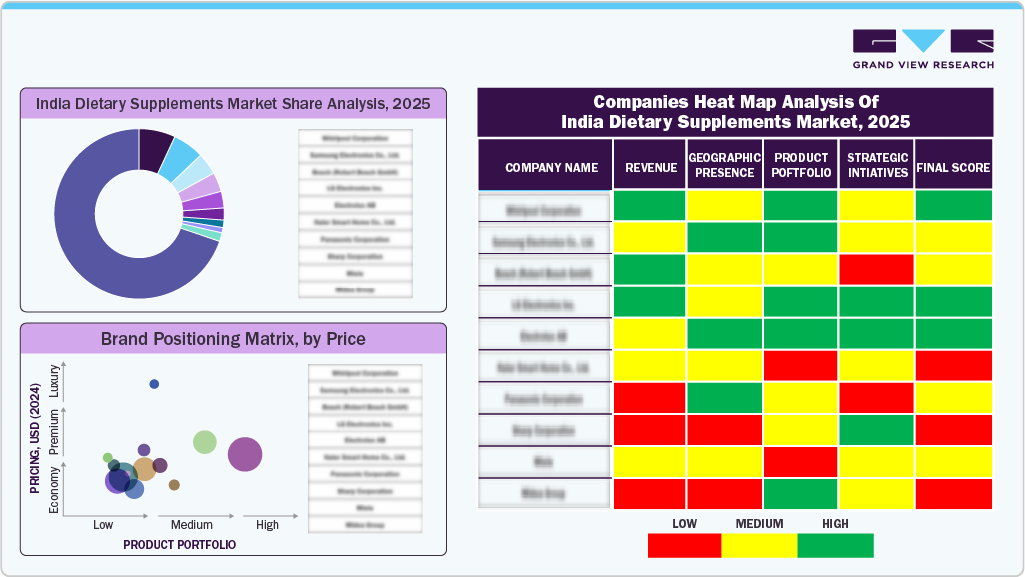
The India dietary supplements industry is becoming increasingly competitive, with established international brands, large domestic companies, and emerging direct-to-consumer players competing across vitamins, minerals, protein supplements, probiotics, botanicals, sports nutrition, and other specialized categories. Companies are strengthening their market presence through product innovation, targeted health positioning, convenient dosage formats, and expansion across pharmacies, modern retail, specialty stores, and online channels.
Strategic partnerships, new product launches, digital marketing, and influencer-led promotions are helping companies increase consumer awareness and differentiate their offerings. Players are also focusing on personalized nutrition, plant-based formulations, combination products, gummies, ready-to-mix powders, and enhanced-bioavailability formulations to address changing consumer preferences. However, increasing regulatory focus, competition from established domestic and imported brands, and the need for greater consumer trust are making product quality, regulatory compliance, transparent labeling, and strong distribution networks important for sustained growth in the Indian market.
 To learn more about this report, Download Free Sample Report
Key India Dietary Supplements Companies
-
Amway India Enterprises Pvt. Ltd
-
Amul (GCMMF)
-
Herbalife International of America, Inc.
-
ADM
-
Abbott
-
Bayer AG
-
Glanbia PLC
-
Pfizer Inc.
-
GSK plc
-
DuPont de Nemours, Inc.
Recent Development
-
For instance, in May 2026, Abbott introduced Ensure Strength Pro in India, targeting ageing adults with nutritional needs related to muscle strength, bone health, metabolism, and immunity. The product contains 31 nutrients, including 30 grams of protein, reflecting the growing focus on healthy ageing, preventive nutrition, and targeted dietary supplementation in India.
-
For instance, in November 2025, NSF partnered with the Indian Drug Manufacturers’ Association (IDMA) to develop a tailored Current Good Manufacturing Practices (cGMP) framework for nutraceutical manufacturers in India. The initiative is expected to support stronger manufacturing standards, product quality, safety, and regulatory compliance, helping improve consumer confidence in India’s growing dietary supplements market.
-
For instance, in April 2024, Nestlé India and Dr. Reddy’s Laboratories announced a joint venture to introduce innovative nutraceutical brands in India and other agreed markets. The partnership combines Nestlé Health Science’s expertise in vitamins, minerals, herbals, and supplements with Dr. Reddy’s strong commercial network, supporting portfolio expansion across wellness, women’s health, and nutrition.
India Dietary Supplements Market Report Scope
Report Attribute
Details
Market size in 2025
USD 5.8 billion
Estimated market size in 2026
USD 6.6 billion
Projected market size by 2033
USD 12.4 billion
Growth rate
CAGR of 9.5% from 2026 to 2033
Actual data
2021 - 2025
Forecast period
2026 - 2033
Quantitative units
Revenue in USD million and CAGR from 2026 to 2033
Report coverage
Revenue forecast, company ranking, competitive landscape, growth factors, trends
Segments covered
Ingredients, form, type, application, end use, distribution channel
Key companies profiled
Amway India Enterprises Pvt. Ltd; Amul (GCMMF); Herbalife International of America, Inc.; ADM; Abbott; Bayer AG; Glanbia PLC; Pfizer Inc.; GSK plc; DuPont de Nemours, Inc
Customization scope
Free report customization (equivalent up to 8 analysts working days) with purchase. Addition or alteration to country, regional & segment scope.
Pricing and purchase options
Avail customized purchase options to meet your exact research needs. Explore purchase options
India Dietary Supplements Market Report Segmentation
This report forecasts revenue growth at the country level and provides an analysis of the latest industry trends in each of the sub-segments from 2021 to 2033. For this study, Grand View Research has segmented the India dietary supplements market report based on ingredients, form, type, application, end use, and distribution channel:
-
Ingredients Outlook (Revenue, USD Billion, 2021 - 2033)
-
Vitamin
-
Multivitamin
-
Vitamin A
-
Vitamin B
-
Vitamin C
-
Vitamin D
-
Vitamin K
-
Vitamin E
-
-
Botanicals
-
Minerals
-
Calcium
-
Potassium
-
Magnesium
-
Iron
-
Zinc
-
Others (Selenium, Chromium, Copper)
-
-
Proteins & Amino Acids
-
Collagen
-
Others
-
-
Fibers & Specialty Carbohydrates
-
Omega Fatty Acids
-
Probiotics
-
Prebiotics & Postbiotics
-
Others
-
-
Form Outlook (Revenue, USD Billion, 2021 - 2033)
-
Tablets
-
Capsules
-
Soft Gels
-
Powders
-
Gummies
-
Liquid
-
Others
-
-
Type Outlook (Revenue, USD Billion, 2021 - 2033)
-
OTC
-
Prescribed
-
-
Application Outlook (Revenue, USD Billion, 2021 - 2033)
-
Bone & Joint Health
-
Gastrointestinal Health
-
Immunity
-
Cardiac Health
-
Diabetes
-
Anti-cancer
-
Lungs Detox/Cleanse
-
Skin/ Hair/ Nails
-
Sexual Health
-
Brain/Mental Health
-
Insomnia
-
Menopause
-
Anti-aging
-
Prenatal Health
-
Others
-
-
End Use Outlook (Revenue, USD Billion, 2021 - 2033)
-
Adults
-
Millennials
-
Male
-
Female
-
Pregnant Women
-
Non-pregnant Women
-
-
-
Gen X
-
Male
-
Female
-
Pregnant Women
-
Non-pregnant Women
-
-
-
Gen Z
-
Male
-
Female
-
Pregnant Women
-
Non-pregnant Women
-
-
-
Boomers
-
Male
-
Female
-
-
-
Geriatric
-
Children
-
Infants
-
-
Distribution Channel Outlook (Revenue, USD Billion, 2021 - 2033)
-
Offline
-
Hypermarkets/Supermarkets
-
Pharmacies
-
Specialty Stores
-
Practitioner
-
Others (Direct to Consumer, MLM)
-
-
Online
-
Amazon
-
Other Online Retail Stores
-
-
Research Methodology
The India dietary supplements market figures in this report are based on a proven research process that combines executive interviews with secondary research from proprietary databases, company filings, and recognized regulatory and institutional sources. Market size is built through value-chain sizing - reconciling supply-side and demand-side estimates - and triangulated with bottom-up and top-down approaches. Every estimate passes multiple levels of expert validation before publication, with each India dietary supplements segment quantified using the revenue-capture definitions in the table below.
Segment Definition
Segment - Ingredient
Revenue capture definition
Vitamins
Vitamins are dietary supplement products containing essential organic micronutrients, including vitamins A, B, C, D, E, and K, consumed to supplement dietary intake and support normal body functions.
Botanicals
Botanicals refer to supplements derived from plants, including herbs, plant extracts, and other botanical ingredients, intended to provide nutritional or physiological benefits.
Minerals
Minerals comprise dietary supplements containing essential inorganic nutrients, such as calcium, iron, magnesium, zinc, selenium, and potassium, used to complement nutritional requirements and support normal physiological functions.
Protein & Amino Acids
Protein and amino acid supplements include products formulated with protein sources or individual amino acids to support protein intake, muscle development, recovery, strength, and physical performance.
Fibers & Specialty Carbohydrates
This category covers supplements containing dietary fibers and specialty carbohydrates that are consumed to support digestive health, bowel regularity, satiety, and other nutritional functions.
Omega Fatty Acids
Omega fatty acid supplements are products containing beneficial fatty acids, primarily omega-3s such as EPA, DHA, and ALA, consumed to support cardiovascular, brain, eye, and overall health.
Probiotics
Probiotics are dietary supplement products containing live microorganisms that are consumed in adequate amounts to provide health benefits, particularly for maintaining digestive and gut health.
Prebiotics & Postbiotics
Prebiotics and postbiotics comprise functional supplements containing prebiotic ingredients or postbiotic preparations designed to support gut microbiota and digestive health through different mechanisms.
Others
The others category includes dietary supplement products that fall outside the major product groups, such as enzymes, specialized nutritional compounds, and other permitted ingredients used for targeted nutritional or physiological benefits.
Estimation Model
01
02
03
04
Consumption Profile Layer
Market Reach Layer
Innovation & Differentiation Layer
Value Generation Layer
Who consumes these supplements?
Where are they sold?
How do brands differentiate?
How do companies generate value from the market?
Adults, working professionals, fitness consumers, women, and ageing consumers form the core user base, with demand driven by immunity, nutritional gaps, sports nutrition, preventive health, and healthy ageing.
Consumers access supplements through pharmacies, drug stores, supermarkets, specialty stores, practitioners, e-commerce platforms, and direct-to-consumer websites. Online availability is expanding access across Tier-1, Tier-2, and Tier-3 cities.
Purchase conversion is influenced by specific health needs, product awareness, ingredient preferences, recommendations, affordability, brand trust, and convenience.
Companies generate revenue through product sales across offline and online channels, supported by repeat purchases, premium formulations, targeted products, subscriptions, and broader geographic penetration.
Delivered Customizations
This report has been delivered with the following In-depth customizations
Client Request
Customization Delivered
Value Adds
India-Specific Market Dynamics
Analysis of India-specific market drivers, restraints, opportunities, product formats, applications, and distribution channels based on local market conditions.
Provides a market view tailored to Indian consumer behavior, retail structure, regulatory environment, and supply-chain conditions.
Local Competitive Landscape
Classification of key supplement companies into established and emerging players, with comparison of their operating strategies, competitive advantages, product portfolios, and weaknesses.
Supports competitor benchmarking and helps identify market gaps and opportunities for product positioning.
Distribution Channel Assessment
Analysis of pharmacies, supermarkets and modern retail, specialty stores, direct selling, e-commerce platforms, and other distribution channels, including their role in supplement sales.
Helps companies select suitable distribution channels and develop effective market-entry and expansion strategies.
Frequently Asked Questions About This Report
The immunity segment dominated the Indian dietary supplements market with a revenue share of 12.6% in 2024. This is attributed to factors such as the growing consumption of multivitamins and protein supplements designed for immunity boosting and the increasing inclusion of dietary supplements in treatments of gut ailments, cancer, cardiovascular diseases, and other chronic non-communicable diseases. According to WHO, nearly 77.0 million individuals aged above 18 have type 2 diabetes in India. In recent years, the rising prevalence of lifestyle-driven health issues in urban areas has also stimulated demand for immunity boosters.
Some prominent players in the India dietary supplements market include: • Amway India Enterprises Pvt. Ltd • Amul (GCMMF) • Herbalife International of America, Inc. • ADM • Abbott • Bayer AG • Glanbia PLC • Pfizer Inc. • GSK plc • DuPont de Nemours, Inc.
Increasing awareness regarding the role of dietary supplements in facilitating improved well-being, growing availability of products offered by global brands, and rising incorporation of dietary supplements in treatments related to chronic diseases are key growth drivers for this market.
The India dietary supplements market size was estimated at USD 5.8 billion in 2025
The India dietary supplements market is projected to grow at a compound annual growth rate (CAGR) of 9.5% from 2026 to 2033.
About the Author(s)
Nutraceuticals & Functional Foods Research Team
Consumer Goods · Nutraceuticals & Functional FoodsThis report was authored by the nutraceuticals & functional foods research team at Grand View Research - comprising two research analysts, one senior research analyst, and one industry expert - with specialized expertise in the nutraceuticals & functional foods segment of the consumer goods industry. All findings are based on proprietary consumer goods databases, executive interviews, and regulatory analysis, subject to internal peer review prior to publication.
Last Updated:
Speak to Analyst

Customize this report to your needs - add regions, segments, or data points, with 20% free customization.
Or view our licence options:


ISO 9001:2015 & 27001:2022 Certified
We are GDPR and CCPA compliant! Your transaction & personal information is safe and secure. For more details, please read our privacy policy.


