
- Home
- »
- Clothing, Footwear & Accessories
- »
-
India Jewelry Market Size & Share, Industry Report, 2033GVR Report cover

India Jewelry Market (2026 - 2033) Size, Share & Trends Analysis Report By Product(Necklace Ring), By Material (Platinum, Gold), By Distribution Channel (Offline Retail Stores, Online Retail Stores), By End User (Men, Women), And Segment Forecasts
India Jewelry Market Summary
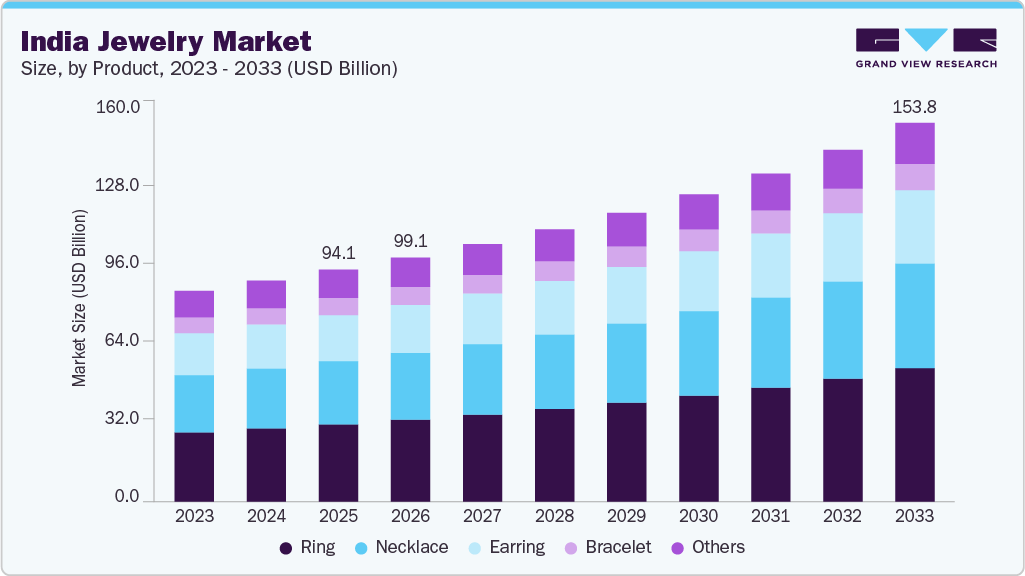
The India jewelry market size was estimated at USD 94.14 billion in 2025 and is projected to reach USD 153.77 billion by 2033, growing at a CAGR of 6.5% from 2026 to 2033. The India jewelry market is growing rapidly due to rising disposable incomes, increasing urbanization, and strong cultural demand for gold and diamond jewelry, supporting the steady expansion of the diamond jewelry market in India.
Key Market Trends & Insights
- By product, necklace market held the largest share, accounting for a share of 33.3% in 2025.
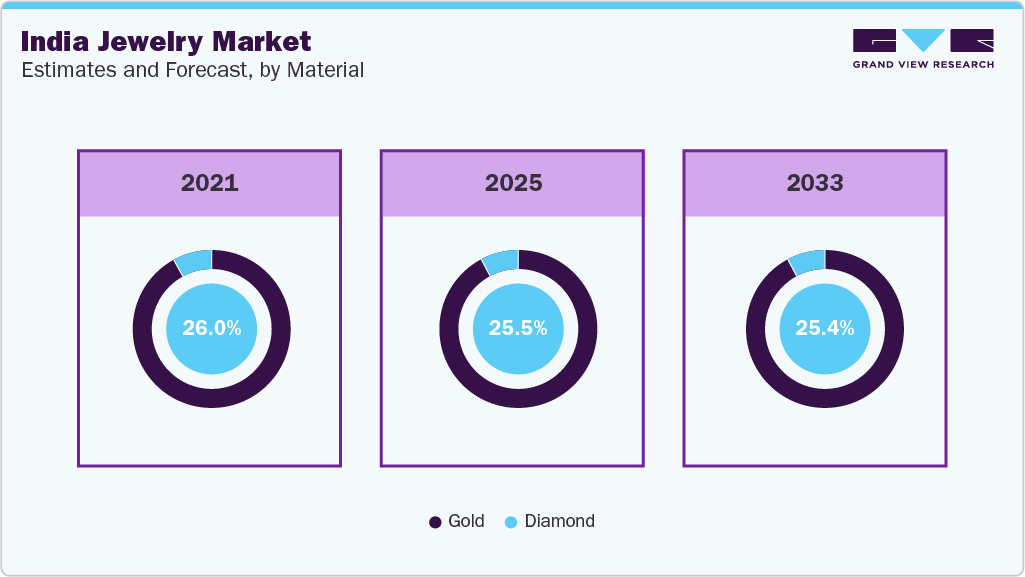
- By material, the gold jewelry market held the largest share, accounting for a share of 77.8% in 2025.
- By material, the diamond jewelry market is expected to witness the fastest CAGR of 7.4% during the forecast period.
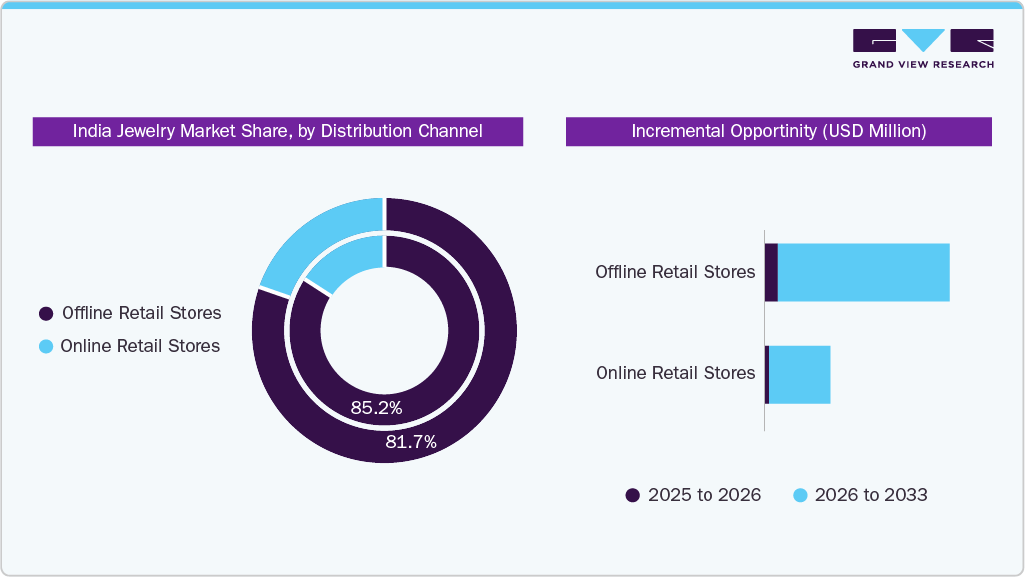
- By distribution channel, the offline retail stores led the market and accounted for a share of 85.2% in 2025.
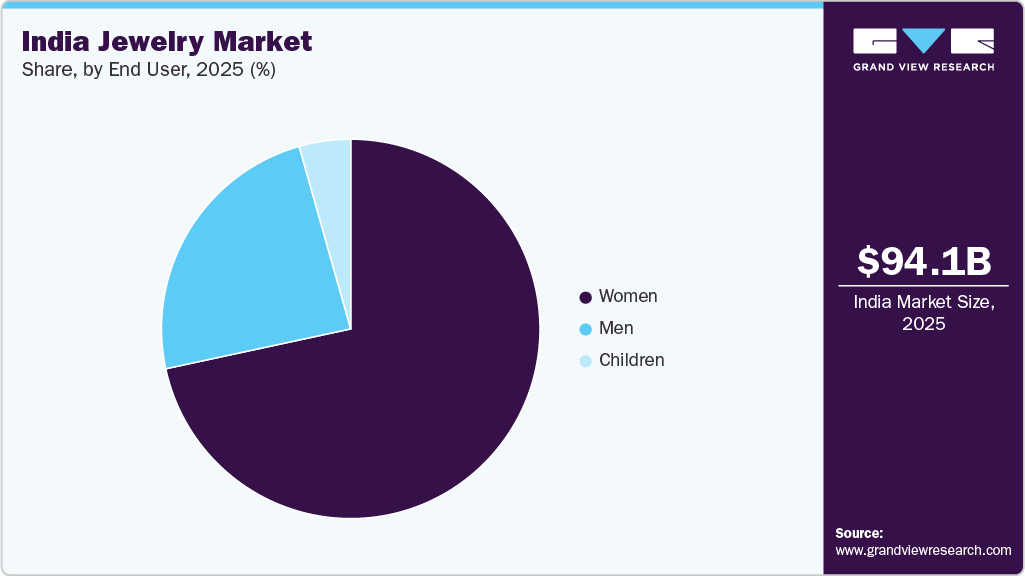
- By end user, women dominated the Europe jewelry market, with a share of 71.7% in 2025.
Market Size & Forecast
- 2025 Market Size: USD 94.14 Billion
- 2033 Projected Market Size: USD 153.77 Billion
- CAGR (2026-2033): 6.5%
Three ways to get this report
Buy it, customize it, or ask a question.Ask an Analyst
Analyst response in 1 business day
- AccessReport author, directly
- Reply timeWithin 1 working day
- No sales callDirect answer only
- FormatEmail reply
- CostFree, no cost
Get the Full Report
What the study covers
- FormatsPDF · Excel · Dashboard
- Timeline2026–2033 annual, 2025 base
- Coverage20+ countries, 5 regions
- Companies10+ key players profiled
Customize the Report
20% free customization
- IncludeCountries, segments, points
- TailorTo your product definition
- ExtendDeeper competitor detail
- OrA fully bespoke study
- Turnaround5–10 working days
In addition, expanding e-commerce, branded retail chains, and changing consumer preferences are further driving market growth. The Indian jewelry market is driven by strong wedding and festival demand, with gold jewelry viewed as both an emotional purchase and a long-term store of value. Rising financial inclusion, easier access to gold loans and installment plans, and growing acceptance of hallmarking are encouraging higher formal purchases. In addition, digital retail adoption and increasing preference for lightweight, daily-wear designs are expanding demand beyond traditional occasions, benefiting both fine jewelry and the artificial jewelry market in India.The Indian jewelry market is supported by a young population with evolving fashion sensibilities and higher spending on self-purchase jewelry. Government initiatives such as mandatory BIS hallmarking and GST compliance are improving consumer confidence and accelerating the shift toward organized retail, particularly within the diamond jewelry market in India. Growing penetration into Tier II and Tier III cities, along with regional design innovation, is further expanding the customer base. According to the YouGov PLC data published in April 2023, about 36% of Indians planned on purchasing jewelry in the next twelve months.
 Source: Grand View Research, IR Documents, Primary Interviews, Paid DatabasesTo learn more about this report,
 Download Free Sample Report
 Moreover, advancements in digital visualization and interactive design tools allow customers to personalize products with greater accuracy and confidence prior to purchase. Social media platforms and collector forums are fueling trend discovery and brand visibility, encouraging demand for distinctive, made-to-order offerings. Independent designers and emerging labels are gaining traction by launching limited-run collections, while consumer interest is increasingly shifting toward locally influenced aesthetics and event-driven special editions that enhance emotional and symbolic value, supporting growth in both organized fine jewelry and the artificial jewelry market in India.
Brand Share Analysis
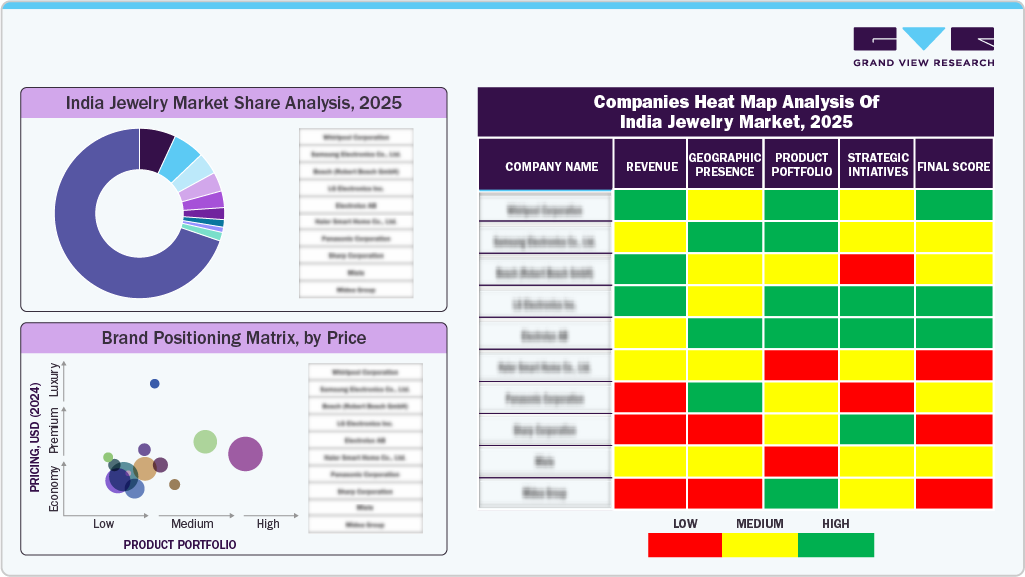
The Indian jewelry market is highly fragmented and competitive, comprising a mix of long-established national brands, strong regional players, family-owned jewelers, and emerging digital-first brands catering to varied consumer preferences, occasions, and price segments.
 To learn more about this report, Download Free Sample Report
 Established national brands such as Titan Company (Tanishq), Kalyan Jewellers, Malabar Gold and Diamonds, and PC Jeweller dominate the organized segment through strong brand trust, extensive retail networks, and a focus on quality assurance and transparent pricing. These players benefit from wide geographic presence across metro and non-metro cities, standardized gold purity, and strong positioning in wedding and everyday wear categories.
Mid-premium and contemporary brands including Bluestone, CaratLane, Reliance Jewels, and PNG Jewellers are gaining share by offering modern designs, omnichannel retail models, and competitive pricing. Their emphasis on lightweight jewelry, diamond-studded collections, and digital engagement appeals to younger, urban, and first-time jewelry buyers.
Consumer Insights for India Jewelry
 To learn more about this report, Download Free Sample Report
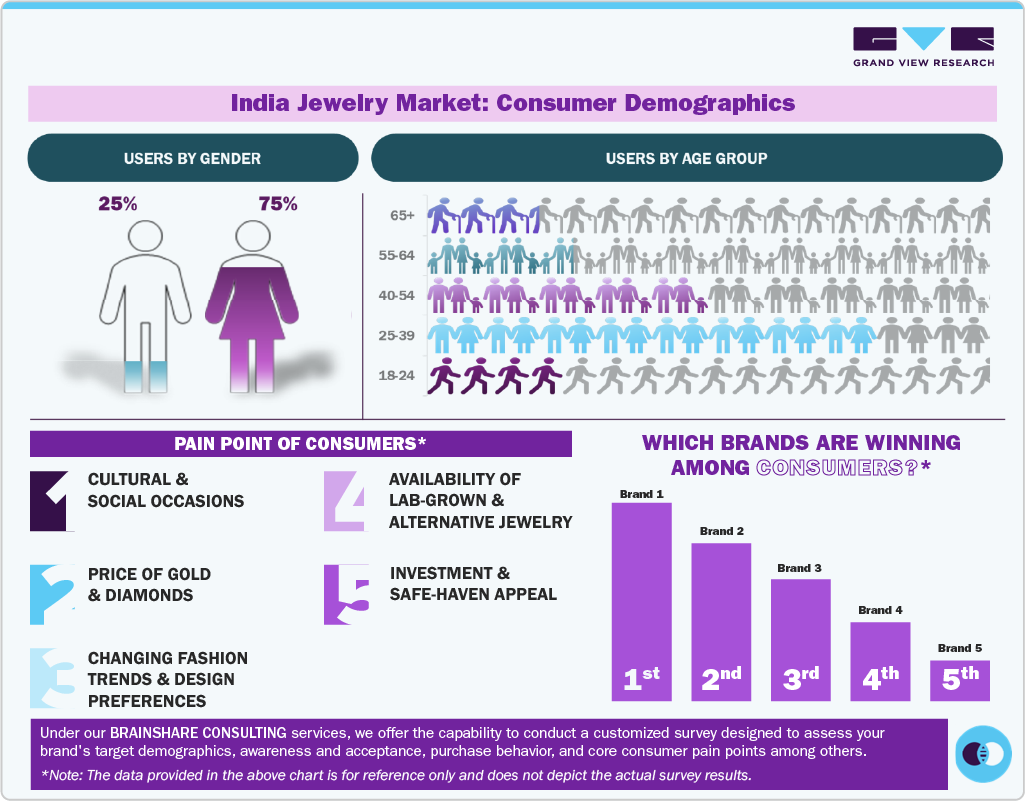
 The jewelry market exhibits varied pricing structures based on product category and consumer positioning. Luxury and heritage collections, featuring high-purity gold, platinum, and certified gemstones, are priced at the upper end due to craftsmanship, exclusivity, and brand equity. Mid-range offerings, including contemporary gold and diamond designs, are positioned for affordability and everyday wear, while entry-level jewelry made from alternative metals and synthetic stones targets price-sensitive buyers. Pricing is further influenced by factors such as customization, regional design preferences, retail format, and fluctuations in raw material costs.
Product Insights
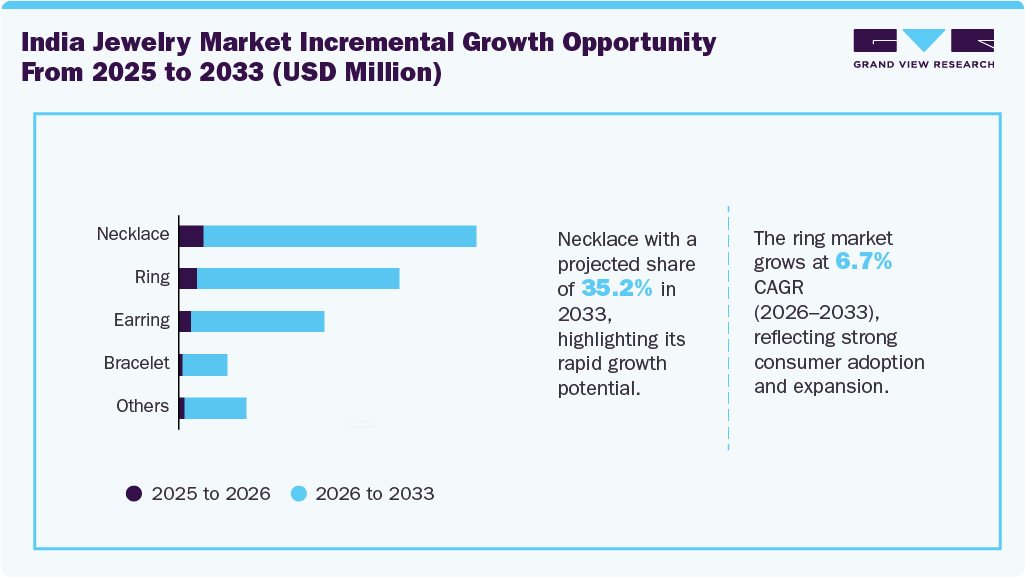
The necklace in the Indian jewelry market accounted for the largest share of 33.3% of the revenue in 2025. Necklace demand in the Indian jewelry market is primarily driven by weddings and festive occasions, where elaborate gold and diamond designs are highly preferred. Changing fashion trends and increasing popularity of lightweight, versatile, and statement pieces are encouraging frequent purchases. Celebrity endorsements, social media trends, and influencer-led styling inspire new designs and boost aspirational demand. In addition, easy financing options, e-commerce availability, and customization services are making premium and designer necklaces more accessible to a wider audience. Companies such as Joyalukkas India Ltd offers various financing options such as monthly installments, about 50% off for diamond making charge and 18% off on silver & gold jewelry making charge.
 To learn more about this report, Download Free Sample Report
 The ring market is projected to grow at a significant CAGR of 6.7% from 2026 to 2033. The ring segment in the Indian jewelry market is driven by strong cultural and ceremonial demand, particularly for weddings, engagements, and festivals. Rising preference for designer, lightweight, and personalized rings among younger consumers is boosting everyday and gifting purchases. E-commerce platforms, social media influencers, and celebrity endorsements are enhancing visibility and aspirational appeal of branded and customized rings. In addition, growing awareness of certified diamonds, hallmarking, and ethical sourcing is shaping consumer choices toward trusted and transparent jewelers. according to the YouGov PLC data published in July 2024, Tanishq, a Titan Company brand emerged as top rank in India with a recommended score of 90.2.
Material Insights
Gold jewelry in the Indian market accounted for the largest share of 77.8% of the revenue in 2025. The gold jewelry market in India is driven by deep-rooted cultural and religious significance, with high demand during weddings, festivals, and auspicious occasions. Rising disposable incomes, urbanization, and growing financial awareness encourage investment in gold as both adornment and wealth preservation. According to the data published in October 2025, gold holds a special importance in the Indian culture and is purchased during various auspicious occasions such as Dhanteras & Diwali. The cultural aspect includes religious beliefs, traditional & festivals. Contemporary styling trends are further increasing the popularity of lightweight and adaptable gold jewelry.
Table 1 Significance of gold in India
Cultural Aspect
Gold Significance
Religious Beliefs
Gold is associated with deities and used in worship.
Traditions and Festivals
Gold jewelry is exchanged as gifts and used in festivities.
Source: CoinBazaar
 To learn more about this report, Download Free Sample Report
 The diamond jewelry market is projected to grow at the fastest CAGR of 7.4% from 2026 to 2033. The diamond jewelry market in India is driven by its strong association with weddings, engagements, and festive gifting, making it a key symbol of luxury and status. Growing preference for branded, certified, and lightweight diamond designs is expanding demand among younger, urban consumers. The rising awareness and acceptance of lab-grown diamonds, along with advancements in certification and grading, are increasing consumer confidence and creating new opportunities for affordable, sustainable diamond offerings. According to the India Brand Equity Foundation data, in 2023, India produced approximately 3 million lab-grown diamonds registering over 15% of the world’s total output.
Distribution Channel Insights
The jewelry sales through the offline retail stores accounted for the largest share of around 85.2% of the revenue in 2025. Offline jewelry retail sales are driven by the tactile and experiential nature of jewelry shopping, allowing customers to see, touch, and try pieces before purchase. Trust in authenticity, hallmarking, and certified stones encourages buyers to visit physical stores. Personalized services, in-store customization, and festive or wedding promotions further boost footfall. In addition, established brand presence and knowledgeable sales staff enhance customer confidence, making offline stores a preferred channel for high-value purchases. In January 2026, Forevermark, part of the De Beers Group, inaugurated its largest-ever flagship store in Mumbai’s Khar West, covering nearly 5,000 sq ft as part of its expansion in India. The store showcases the Icon Collection and highlights the brand’s focus on meeting the growing demand for luxury diamond jewelry in the Indian market.
 To learn more about this report, Download Free Sample Report
 The jewelry sales through the online retail stores are projected to grow at the fastest CAGR of 9.3% from 2026 to 2033. Online jewelry sales are driven by convenience, allowing consumers to browse extensive collections and make purchases from home. Competitive pricing, easy EMI options, and exclusive online-only collections attract a wide range of buyers. Detailed product information, high-quality images, and virtual try-on tools enhance confidence in digital purchases. In addition, strong social media presence, influencer endorsements, and festive promotions boost awareness and drive online jewelry demand.
End User Insights
The use of jewelry among women in the global jewelry market accounted for the largest share of around 71.7% of the revenue in 2025. As the primary consumer group, women continue to shape global jewelry demand through purchases spanning everyday wear, occasions, and gifting. Evolving design preferences, combined with heightened awareness of sustainability and ethical sourcing, are reinforcing their role in driving market trends worldwide. According to the data published in July 2024 , approximately 58% females desire to receive jewelry as a gift.
 To learn more about this report, Download Free Sample Report
 The use of jewelry among children in the Indian jewelry market is projected to grow at the fastest CAGR of 6.1% from 2026 to 2033. Jewelry use among children in India is primarily driven by cultural and religious practices, with items such as gold chains, bangles, and pendants gifted during birthdays, festivals, and naming ceremonies. Parents view jewelry as both a traditional adornment and a long-term investment or wealth preservation tool. Lightweight, safe, and customizable designs are increasingly preferred to suit children’s comfort and style. In addition, branded stores and trusted jewelers offering certified and hallmarked pieces build confidence among parents when purchasing for their children. Companies such as CaratLane & Tanishq offer jewelry designed specifically for children including small studs, pendants, & rings in playful design patterns such as duck, tusker, & pineapple appealing to the younger demographic.
Key India Jewelry Companies:
- Titan Company
- Kalyan Jewellers
- Malabar Gold & Diamonds
- PC Jeweller
- Joyalukkas India Ltd.
- Senco Gold & Diamonds
- Tribhovandas Bhimji Zaveri (TBZ)
- BlueStone
- PN Gadgil Jewellers
- ORRA
Recent Developments
-
In January 2026, Forevermark, part of the De Beers Group, inaugurated its largest-ever flagship store in Mumbai’s Khar West, covering nearly 5,000 sq ft as part of its expansion in India. The store showcases the Icon Collection and highlights the brand’s focus on meeting the growing demand for luxury diamond jewelry in the Indian market.
-
In September 2025, De Beers launched its Forevermark Diamond Jewellery brand in New Delhi, making India a central market for its global retail strategy. The company plans to expand aggressively across India, targeting a fast-growing USD 20 billion (by 2030) diamond jewelry market fueled by rising incomes and evolving consumer preferences.
-
In January 2025, Ayanika, a lab‑grown diamond jewelry brand, inaugurated its flagship retail store in Mumbai’s Andheri area to showcase and sell its contemporary diamond collections. The new outlet aims to offer customers a personalized, modern shopping experience focused on innovative and sustainable diamond designs.
India Jewelry Market Report Scope
Report Attribute
Details
Market value size in 2026
USD 99.07 billion
Revenue forecast in 2033
USD 153.77 billion
Growth rate (Revenue)
CAGR of 6.5% from 2026 to 2033
Actuals
2021 - 2025
Forecast period
2026 - 2033
Quantitative (Revenue) units
Revenue in USD million/billion, and CAGR from 2026 to 2033
Report coverage
Revenue forecast, company ranking, competitive landscape, growth factors, and trends
Segments covered
Product, material, distribution channel, end user
Country scope
India
Key companies profiled
Titan Company; Kalyan Jewellers; Malabar Gold & Diamonds; PC Jeweller; Joyalukkas India Ltd.; Senco Gold & Diamonds; Tribhovandas Bhimji Zaveri (TBZ); BlueStone; PN Gadgil Jewellers; ORRA
Customization scope
Free report customization (equivalent up to 8 analysts’ working days) with purchase. Addition or alteration to country, regional & segment scope.
Pricing and purchase options
Avail customized purchase options to meet your exact research needs. Explore purchase options
India Jewelry Market Report Segmentation
This report forecasts revenue growth at the regional and country levels and provides an analysis of the latest industry trends and opportunities in each of the sub-segments from 2021 to 2033. For this study, Grand View Research has segmented the India jewelry market report on the basis of product, material, distribution channel, end user, and region.
-
Product Outlook (Revenue, USD Million, 2021 - 2033)
-
Necklace
-
Ring
-
Earring
-
Bracelet
-
Others
-
-
Material Outlook (Revenue, USD Million, 2021 - 2033)
-
Platinum
-
Gold
-
Diamond
-
Others
-
-
Distribution Channel Outlook (Revenue, USD Million, 2021 - 2033)
-
Offline Retail Stores
-
Supermarkets & Hypermarkets
-
Jewelry Stores
-
-
Online Retail Stores
-
-
End User Outlook (Revenue, USD Million, 2021 - 2033)
-
Men
-
Women
-
Children
-
Frequently Asked Questions About This Report
Some key players operating in the India jewelry market include Tanishq; Kalyan Jewellers; Senco Gold; Malabar Gold; Reliance Jewels; Joyalukkas Jewellers; Bhima Jewellers; PC Jeweller; BlueStone; and Sanjay Brothers
Key factors that are driving the India jewelry market growth include flaunting of the latest fashion trends, customers select accessories that complement or spruce up their outfits. For instance, as streetwear trends have become more popular, both men and women are accessorizing with jewelry more frequently to express their sense of individuality
The India jewelry market size was estimated at USD 94.14 billion in 2025 and is expected to reach USD 99.07 billion in 2026.
The India jewelry market is expected to grow at a compounded growth rate of 6.5% from 2026 to 2033 to reach USD 153.77 billion by 2033.
Necklace accounted for a revenue share of 33.3% in 2025. Necklaces are among the most widely used jewelry items around the world, particularly among women. Necklaces are available in a wide variety of styles and are often available with a matching set of earrings. In India, jewelers offer necklaces in traditional designs owing to the rising popularity of ethnic fashion jewelry within the country.
About the Author(s)
Clothing, Footwear & Accessories Research Team
Consumer Goods · Clothing, Footwear & AccessoriesThis report was authored by the clothing, footwear & accessories research team at Grand View Research - comprising two research analysts, one senior research analyst, and one industry expert - with specialized expertise in the clothing, footwear & accessories segment of the consumer goods industry. All findings are based on proprietary consumer goods databases, executive interviews, and regulatory analysis, subject to internal peer review prior to publication.
Last Updated:
Speak to Analyst

Customize this report to your needs - add regions, segments, or data points, with 20% free customization.
Or view our licence options:


ISO 9001:2015 & 27001:2022 Certified
We are GDPR and CCPA compliant! Your transaction & personal information is safe and secure. For more details, please read our privacy policy.


